


 购物车
购物车 个人中心
个人中心
Comedy of Errors - We came into the world like brother and brother
¥11.67
The life of William Shakespeare, arguably the most significant figure in the Western literary canon, is relatively unknown. Shakespeare was born in Stratford-upon-Avon in 1565, possibly on the 23rd April, St. George's Day, and baptised there on 26th April. Little is known of his education and the first firm facts to his life relate to his marriage, aged 18, to Anne Hathaway, who was 26 and from the nearby village of Shottery. Anne gave birth to their first son six months later. Shakespeare's first play, The Comedy of Errors began a procession of real heavyweights that were to emanate from his pen in a career of just over twenty years in which 37 plays were written and his reputation forever established. This early skill was recognised by many and by 1594 the Lord Chamberlain's Men were performing his works. With the advantage of Shakespeare's progressive writing they rapidly became London's leading company of players, affording him more exposure and, following the death of Queen Elizabeth in 1603, a royal patent by the new king, James I, at which point they changed their name to the King's Men. By 1598, and despite efforts to pirate his work, Shakespeare's name was well known and had become a selling point in its own right on title pages. No plays are attributed to Shakespeare after 1613, and the last few plays he wrote before this time were in collaboration with other writers, one of whom is likely to be John Fletcher who succeeded him as the house playwright for the King's Men. William Shakespeare died two months later on April 23rd, 1616, survived by his wife, two daughters and a legacy of writing that none have since yet eclipsed.

Pancho Finds A Home
¥8.63
Pancho Finds A Home is about a little dog who wanders into a small Mexican village that is preparing for a feast. He befriends a burro, hen and goat and prepares a special surprise for them.
Third Wheel (Diary of a Wimpy Kid #7)
¥158.82
Greg Heffley is not willing to be the odd man out.A dance at Greg's middle school has everyone scrambling to find a partner, and Greg is determined not to be left by the wayside. So he concocts a desperate plan to find someone—anyone!—to go with on the big night.But Greg's schemes go hilariously awry, and his only option is to attend the dance with his best friend, Rowley Jefferson, and a female classmate as a "group of friends." But the night is long, and anything can happen along the way. Who will arrive at the dance triumphantly, and who will end up being the third wheel?
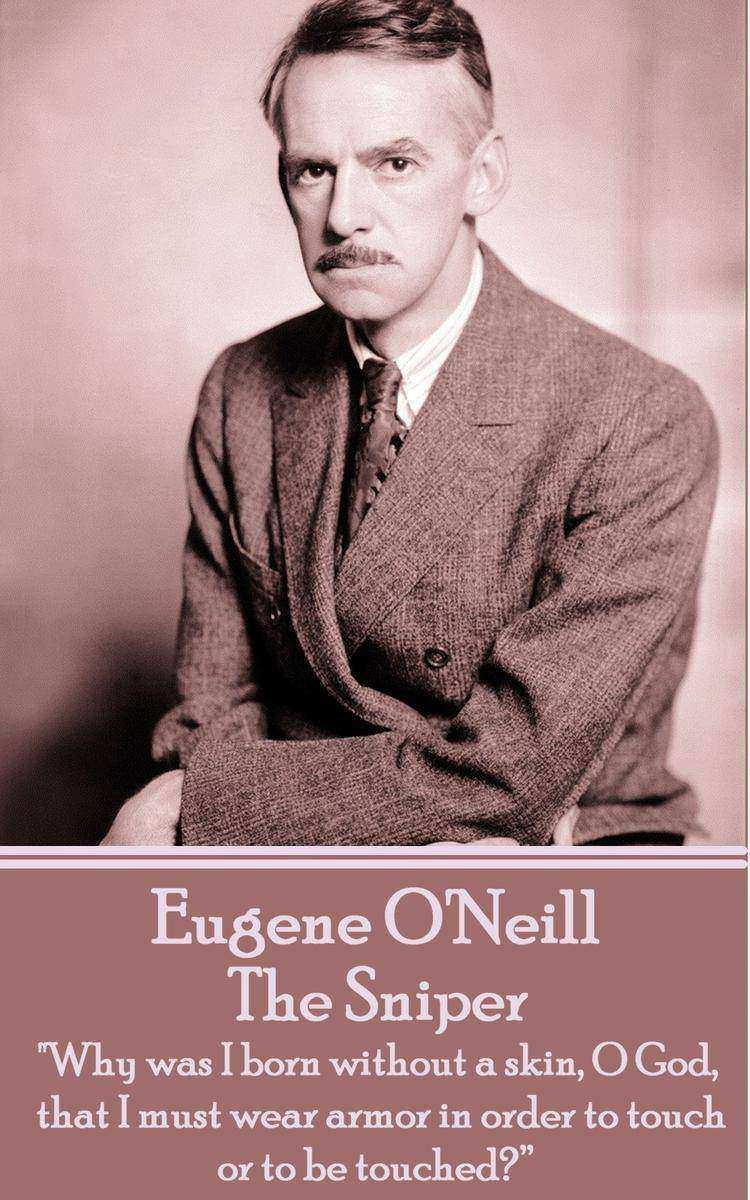
Sniper - Why was I born without a skin, O God
¥14.03
Eugene Gladstone O'Neill was born on October 16, 1888 in a hotel bedroom in what is now Times Square, New York. Much of his childhood was spent in the comfort of books at boarding schools whilst his actor father was on the road and his Mother contended with her own demons. He spent only a year at University - Princeton - and various reasons have been given for his departure. However whatever his background and education denied or added to his development it is agreed amongst all that he was a playwright of the first rank and possibly America's greatest. His introduction of realism into American drama was instrumental in its development and paved a path for many talents thereafter. Of course his winning of both the Pulitzer Prize (4 times) and the Nobel Prize are indicative of his status. His more famous and later works do side with the disillusionment and personal tragedy of those on the fringes of society but continue to build upon ideas and structures he incorporated in his early one act plays. Eugene O'Neill suffered from various health problems, mainly depression and alcoholism. In the last decade he also faced a Parkinson's like tremor in his hands which made writing increasingly difficult. But out of such difficulties came plays of the calibre of The Iceman Cometh, Long Day's Journey Into Night, and A Moon for the Misbegotten. Eugene O'Neill died in Room 401 of the Sheraton Hotel on Bay State Road in Boston, on November 27, 1953, at the age of 65. As he was dying, he whispered his last words: "e;I knew it. I knew it. Born in a hotel room and died in a hotel room."e;

Art of Moana
¥305.97
The Art of Moana is the latest title in our exceptional series showcasing artwork from the creation of Walt Disney Animations' latest releases. Three thousand years ago, the greatest sailors in the world ventured across the Pacific, discovering the many islands of Oceania. But then, for a millennium, their voyages stoppedand no one today knows why. From Walt Disney Animation Studios, Moana is a CG-animated adventure about a spirited teenager who sails out on a daring mission to prove herself a master wayfinder and fulfill her ancestors' unfinished quest. During her journey, Moana meets the once-mighty demi-god Maui and together they traverse the open ocean on an action-packed adventure, encountering enormous fiery creatures and impossible odds. The stunning artwork in this behind-the-scenes book includes character designs, storyboards, colorscripts, and much more.Copyright 2016 Disney Enterprises, Inc. All Rights Reserved

Art of Toy Story 3
¥305.97
Disney/Pixar's Toy Story 3 takes viewers back to the story that started it all. Woody, Buzz, Jessie, Mr. and Mrs. Potato Head, Rex, Slinky Dog, and Hammalongside a surprising cast of new toysreturn to the big screen for a comical new adventure in Disney Digital 3D. In The Art of Toy Story 3 internationally renowned animation historian Charles Solomon takes readers through the technical challenges, triumphs, and emotional hurdles that faced the Pixar team as they developed the toys' adventure. The Art of Toy Story 3 includes an extended introduction showcasing the story and visual development behind the first two films, as well as a gallery of over 250 pieces of concept art. Featuring storyboards, character studies, color keys, reference photos, environment art, and a special color scripts by art director Daisuke Tsutsumi, this ebook provides a memorable narrative of the entire Toy Story trilogy.

Art of Coco
¥282.43
Pixar is proud to introduce the must-have companion to the vibrant new feature film Coco. The creation of Coco's mesmerizing world is explored in detail through colorful artwork, energetic character sketches, intriguing storyboards, and spellbinding colorscripts. Featuring insights from the production team about the making of the film and production art that bursts off the page, The Art of Coco overflows with insights into the creative process behind Pixar's unique and engaging vision.Copyright 2017 Disney Enterprises, Inc. and Pixar. All rights reserved.
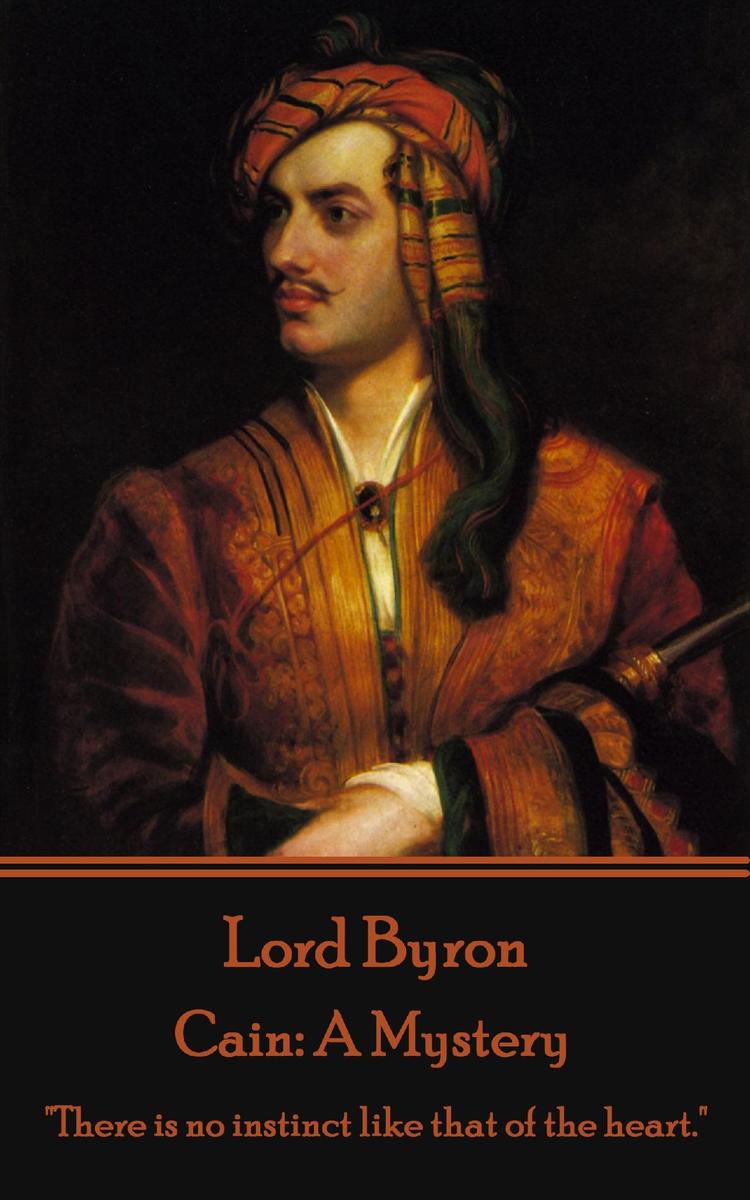
Cain: A Mystery - There is no instinct like that of the heart.
¥23.45
George Gordon Byron, 6th Baron Byron, but more commonly known as just Byron was a leading English poet in the Romantic Movement along with Keats and Shelley. Byron was born on January 22nd, 1788. He was a great traveller across Europe, spending many years in Italy and much time in Greece. With his aristocratic indulgences, flamboyant style along with his debts, and a string of lovers he was the constant talk of society. In 1823 he joined the Greeks in their war of Independence against the Ottoman Empire, both helping to fund and advise on the war's conduct. It was an extraordinary adventure, even by his own standards. But, for us, it is his poetry for which he is mainly remembered even though it is difficult to see where he had time to write his works of immense beauty. But write them he did. He died on April 19th 1824 after having contracted a cold which, on the advice of his doctors, was treated with blood-letting. This cause complications and a violent fever set in. Byron died like his fellow romantics, tragically young and on some foreign field.
Humourous Lieutenant - He never is alone that is accompanied with noble thoughts
¥26.98
John Fletcher was born in December, 1579 in Rye, Sussex. He was baptised on December 20th. As can be imagined details of much of his life and career have not survived and, accordingly, only a very brief indication of his life and works can be given. Young Fletcher appears at the very young age of eleven to have entered Corpus Christi College at Cambridge University in 1591. There are no records that he ever took a degree but there is some small evidence that he was being prepared for a career in the church. However what is clear is that this was soon abandoned as he joined the stream of people who would leave University and decamp to the more bohemian life of commercial theatre in London. The upbringing of the now teenage Fletcher and his seven siblings now passed to his paternal uncle, the poet and minor official Giles Fletcher. Giles, who had the patronage of the Earl of Essex may have been a liability rather than an advantage to the young Fletcher. With Essex involved in the failed rebellion against Elizabeth Giles was also tainted. By 1606 John Fletcher appears to have equipped himself with the talents to become a playwright. Initially this appears to have been for the Children of the Queen's Revels, then performing at the Blackfriars Theatre. Fletcher's early career was marked by one significant failure; The Faithful Shepherdess, his adaptation of Giovanni Battista Guarini's Il Pastor Fido, which was performed by the Blackfriars Children in 1608. By 1609, however, he had found his stride. With his collaborator John Beaumont, he wrote Philaster, which became a hit for the King's Men and began a profitable association between Fletcher and that company. Philaster appears also to have begun a trend for tragicomedy. By the middle of the 1610s, Fletcher's plays had achieved a popularity that rivalled Shakespeare's and cemented the pre-eminence of the King's Men in Jacobean London. After his frequent early collaborator John Beaumont's early death in 1616, Fletcher continued working, both singly and in collaboration, until his own death in 1625. By that time, he had produced, or had been credited with, close to fifty plays.
Cupid's Revenge - In being thus dishonest, for a name He call'd him Cupid
¥38.75
The English dramatists Francis Beaumont and John Fletcher, collaborated in their writing during the reign of James I of England (James VI of Scotland, 1567-1625; in England he reigned from 1603).Beaumont & Fletcher began to collaborate as writers soon after they met. After notable failures of their solo works their first joint effort, Philaster, was a success and tragicomedy was the genre they explored and built upon. There would be many further successes to follow.There is an account that at the time the two men shared everything. They lived together in a house on the Bankside in Southwark, "e;they also lived together in Bankside, sharing clothes and having one wench in the house between them."e; Or as another account puts it "e;sharing everything in the closest intimacy."e;Whatever the truth of this they were now recognised as perhaps the best writing team of their generation, so much so, that their joint names was applied to all the works in which either, or both, had a pen including those with Philip Massinger, James Shirley and Nathan Field.The first Beaumont and Fletcher folio of 1647 contained 35 plays; 53 plays were included in the second folio in 1679. Other works bring the total plays in the canon to about 55. However there appears here to have been some duplicity on the account of the publishers who seemed to attribute so many to the team. It is now thought that the work between solely by Beaumont and Fletcher amounts to approximately 15 plays, though of course further works by them were re-worked by others and the originals lost.After Beaumont's early death in 1616 Fletcher continued to write and, at his height was, by many standards, the equal of Shakespeare in popularity until his own death in 1625.
Journey to the Centre of the Earth
¥29.33
Jules Gabriel Verne was born on February 8th, 1828 on Ile Feydeau, a small artificial island on the Loire River in Nantes. His father wanted his son to take over the family law practice. Jules started along this course and despite graduating with a licence en droit in January 1851 was soon diverted by the lure of literature and by his own ambitious talents in this direction. He wrote for the theatre and for magazines and soon with the publication of his first novel; Five Weeks in a Balloon on January 31st, 1863 he had begun his career as an admired and popular author. For many, many years the works flowed, usually no less than and often more than two volumes per year. His meticulous research and imaginative setting and narratives soon established him as a top selling author and he became both famous and wealthy. By publishing firstly as a serialised book and then as a complete book sales swelled as did his reputation. His earnings increased further due to the runaway success from the stage adaptations of Le tour du monde en quatre-vingts jours (1874) and Michel Strogoff (1876), Strangely he was overlooked for honours. He was not even nominated for membership of the Academie Francaise. After the death of both his mother and Hetzel, Jules began to publish darker works but still at a prodigious rate. In 1888, Jules entered politics and was elected town councillor of Amiens, and then served for fifteen years. Jules was now entering the last period of his life. His works continued to flow albeit at a slower pace. His reconciled with his son, Michel who now became an active contributor to his father's works and, when the senior Verne died, would continue to contribute and publish his father's works, ensuring that the work was kept in the public eye and the legacy preserved. On March 24th, 1905, while ill with diabetes, Jules Verne died at his home at 44 Boulevard Longueville, Amiens. As a legacy Jules Verne is forever remembered as 'The Father of Science Fiction'. With his rigorous research Jules was not only able to make his works realistic but also to project forward and predict many new things that would eventually come to pass - either in real life or as the basis for others to use in their own science fiction. Extraordinary indeed.
Land That Time Forgot - Love is a strange master, and human nature is still stra
¥35.22
Edgar Rice Burroughs was born on September 1, 1875, in Chicago, Illinois. His early career was unremarkable. After failing to enter West Point he enlisted in the 7th Calvary but was discharged after heart problems were diagnosed. A series of short term jobs gave no indication as to a career path but finally, in 1911, married and with two young children, he turned his hand to writing. He aimed his works squarely at the very popular pulp serial magazines. His first effort 'Under The Moons Of Mars' ran in Munsey's Magazine in 1912 under the pseudonym Norman Bean. With its success he began writing full time. A continuing theme of his work was to develop series so that each character had ample opportunities to return in sequels. John Carter was in the Mars series and there was another on Venus and one on Pellucidar among others. But perhaps the best known is Tarzan. Indeed Burroughs wanted so much to capitalise upon the brand that he introduced a syndicated Tarzan comic strip, movies and merchandise. He purchased a large ranch north of Los Angeles, California, which he named "e;Tarzana."e; The surrounding communities outside the ranch voted in 1927 to adopt the name as their own. By 1932 Burroughs set up his own company to print his own books. Here we publish 'The Land That Time Forgot' a wonderfully crafted piece of science fiction that has endured as a favourite across generations.
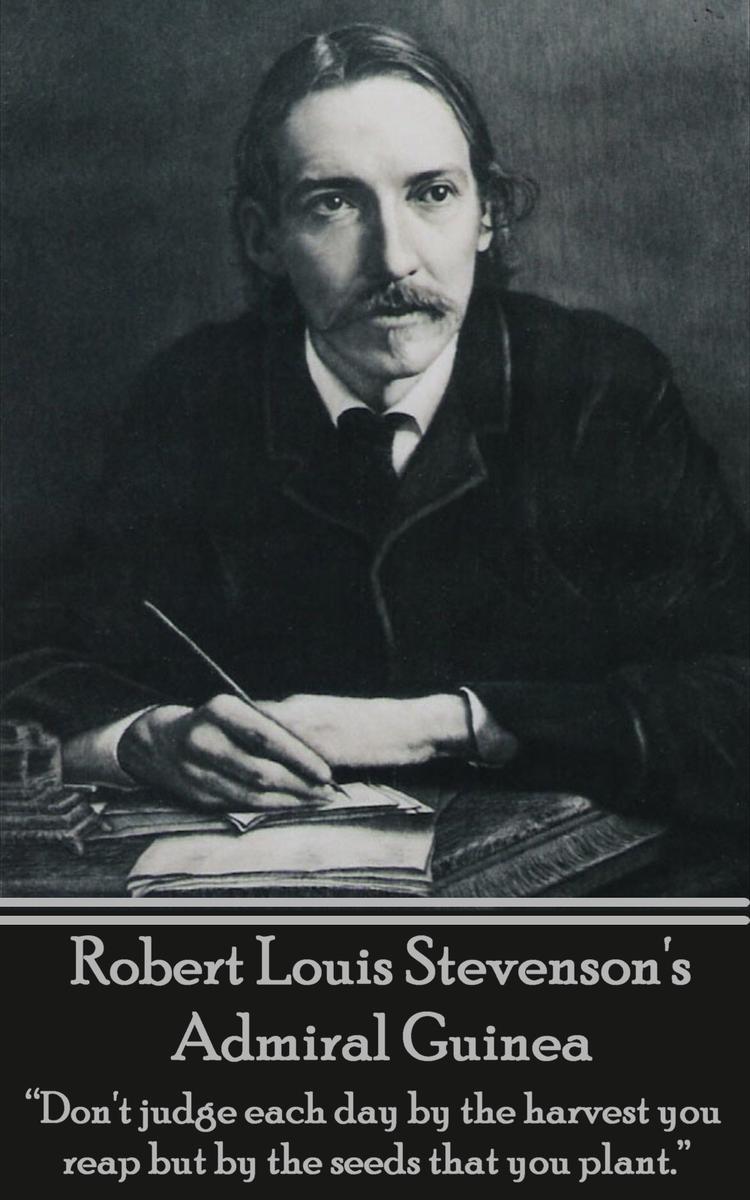
Admiral Guinea - Don't judge each day by the harvest you reap but by the seeds t
¥11.87
Robert Louis Stevenson. In the Scottish canon to be placed alongside Burns for your poems is high praise indeed but it's a rightful place for one of Scotland's finest novelists. Born in 1850 he managed to cram much into his 44 years travelling widely to France, the United States, Samoa and the South Seas. Of course he is widely feted for his classics Dr Jeckyll & Mr Hyde, Treasure Island and poetry volumes such as A Child's Garden Of Verses and short storeis such The Body Snatchers. All offer compelling examples of narration superbly reduced to their essence. This volume 'Admiral Guinea' is another distinctive facet to his works. And yes, superbly written.
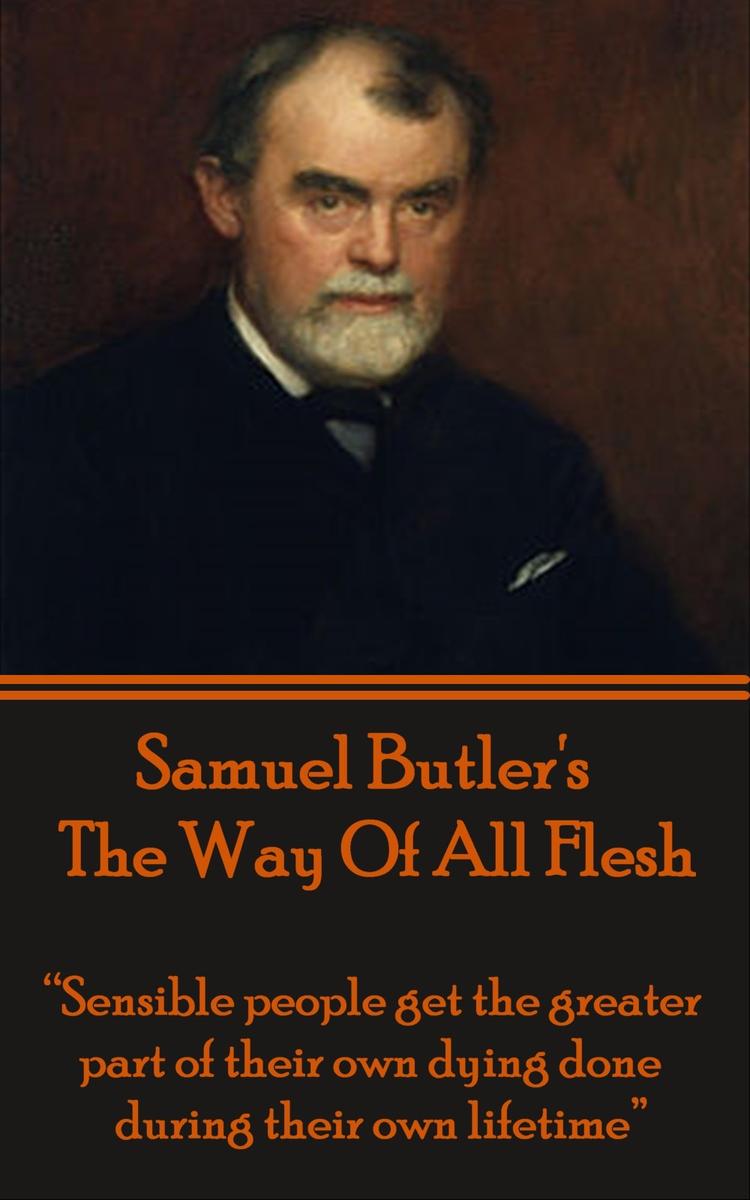
Way Of All Flesh
¥11.67
Samuel Butler (4th December 1835 - 18th June 1902) had both a father and grandfather in the church and was being groomed by his father to be a priest. However, after a first at Cambridge, he decided he wanted to be an artist. His father could not and would not consider such a thing and by mutual consent Samuel went to New Zealand to be a sheep farmer. Here he started writing which he continued on his return to London as well as taking up painting. Whilst he did have several paintings exhibited at the Royal Academy, his talent undoubtably was in his writing but the extent of which was only really apparent after his death. This was due entirely to his great work, "e;The Way of All Flesh"e; published the year after he died to tumultuous acclaim which is well illustrated by George Bernard Shaw describing it as "e;one of the summits of human achievement."e; "e;The Way of All Flesh"e; is a thinly disguised autobiographical account of his own harsh Christian upbringing as it traces the life and loves of Ernest Pontifex and his family. Along the way, it satires Victorian values and beliefs and with brilliant wit and irony offers a powerful indictment of most 19th-century institutions in England. Each generation has found that despite the book savaging Victorian hypocrisy, it still speaks to every era as ultimately the theme of young people growing up wanting a greater degree of personal freedom than their parents is very much alive and kicking in most families around the world.
Henry VIII - Men's evil manners live in brass; their virtues we write in water.
¥11.67
The life of William Shakespeare, arguably the most significant figure in the Western literary canon, is relatively unknown. Shakespeare was born in Stratford-upon-Avon in 1565, possibly on the 23rd April, St. George's Day, and baptised there on 26th April. Little is known of his education and the first firm facts to his life relate to his marriage, aged 18, to Anne Hathaway, who was 26 and from the nearby village of Shottery. Anne gave birth to their first son six months later. Shakespeare's first play, The Comedy of Errors began a procession of real heavyweights that were to emanate from his pen in a career of just over twenty years in which 37 plays were written and his reputation forever established. This early skill was recognised by many and by 1594 the Lord Chamberlain's Men were performing his works. With the advantage of Shakespeare's progressive writing they rapidly became London's leading company of players, affording him more exposure and, following the death of Queen Elizabeth in 1603, a royal patent by the new king, James I, at which point they changed their name to the King's Men. By 1598, and despite efforts to pirate his work, Shakespeare's name was well known and had become a selling point in its own right on title pages. No plays are attributed to Shakespeare after 1613, and the last few plays he wrote before this time were in collaboration with other writers, one of whom is likely to be John Fletcher who succeeded him as the house playwright for the King's Men. William Shakespeare died two months later on April 23rd, 1616, survived by his wife, two daughters and a legacy of writing that none have since yet eclipsed.
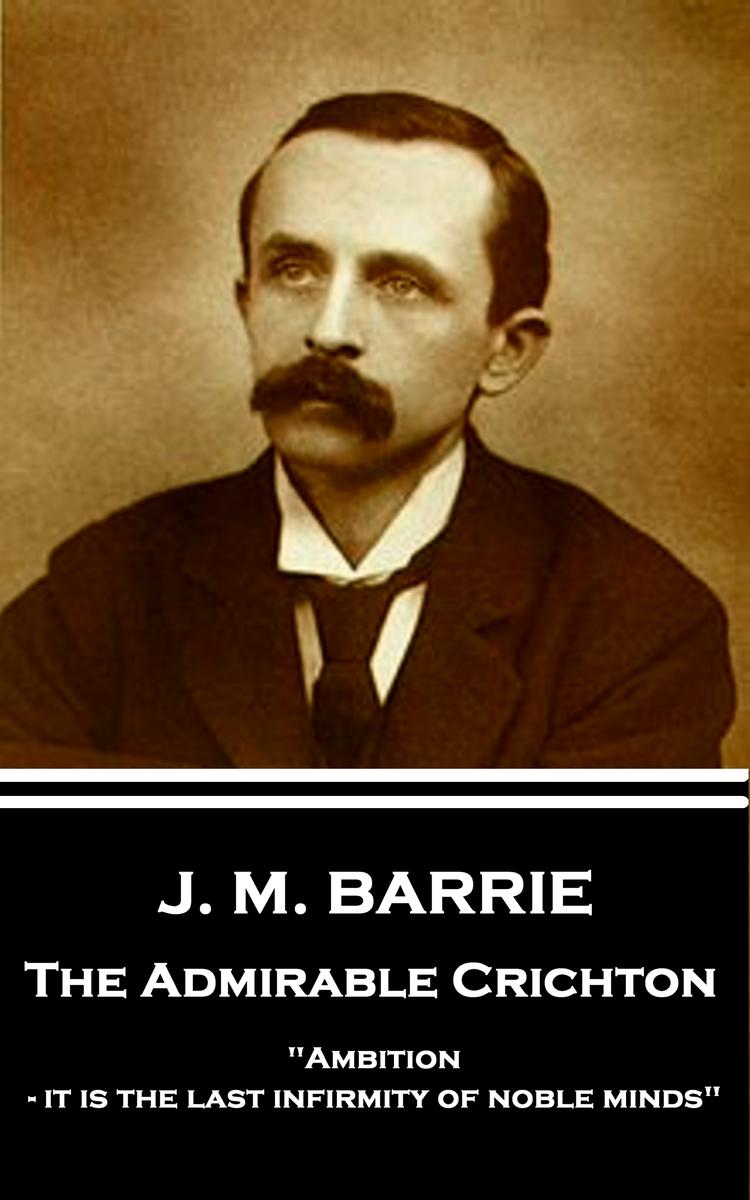
Admirable Crichton - Ambition - it is the last infirmity of noble minds
¥25.80
Sir James Matthew Barrie, 1st Baronet, OM, was born in Kirriemuir, Angus the ninth of ten children on May 9th, 1860. From early formative experiences, Barrie knew that he wished to follow a career as an author. His family wished otherwise and sought to persuade him to choose a profession, such as the ministry. The compromise was that he would attend university to study literature at the University of Edinburgh. He graduated with an M.A. on April 21st, 1882. His first job was as a staff journalist for the Nottingham Journal. The London editor of the St. James's Gazette "e;liked that Scotch thing"e; in Barrie's short stories about his mother's early life. They also served as the basis for his first novels. Barrie though was increasingly drawn to working in the theatre. His first play, a biography of Richard Savage, was only performed once and critically panned. Undaunted he immediately followed this with Ibsen's Ghost in 1891, a parody of Ibsen's plays Hedda Gabler and Ghosts. Barrie's third play, Walker, London, in 1892 led to an introduction to his future wife, a young actress by the name of Mary Ansell. The two became friends, and she helped his family to care for him when he fell very ill in 1893 and 1894. Barrie proposed and they were married, in Kirriemuir, on July 9th, 1894. By some accounts the relationship was unconsummated and indeed the couple had no children. The story of Peter Pan had begun to formulate when Barrie became acquainted with the Llewelyn Davis family in 1897, meeting George, Jack and baby Peter with their nanny in London's Kensington Gardens. In 1901 and 1902, Barrie had back-to-back theatre successes with Quality Street and The Admirable Crichton. The character of "e;Peter Pan"e; first appeared in The Little White Bird in 1902. This most famous and enduring of his works; Peter Pan, or The Boy Who Wouldn't Grow Up had its first stage performance on December 27th, 1904. Peter Pan would overshadow everything written during his career. He continued to write for the rest of his life contributing many other fine and important works. Sir James Matthew Barrie, 1st Baronet, OM, died of pneumonia on June 19th,1937 and was buried at Kirriemuir next to his parents and two of his siblings.
Comedy Of Errors
¥17.56
William Shakespeare was born in Stratford-upon-Avon in late April 1565 and baptised there on 26th April. He was one of eight children. Little is known about his life but what is evident is the enormous contribution he has made to world literature. His writing was progressive, magnificent in scope and breathtaking in execution. His plays and sonnets helped enable the English language to speak with a voice unmatched by any other. William Shakespeare died on April 23rd 1616, survived by his wife and two daughters. He was buried two days after his death in the chancel of the Holy Trinity Church. The epitaph on the slab which covers his grave includes the following passage, Good friend, for Jesus's sake forbear, To dig the dust enclosed here. Blessed me the man that spares these stones, And cursed be he that moves my bones. Here we publish from 1589 the classic 'The Comedy Of Errors'.
Land of Heart's Desire - 'When but the moons of marriage dawn and die''
¥14.03
William Butler Yeats (1865 - 1939) is best described as Ireland's national poet in addition to being one of the major twentieth-century literary figures of the English tongue. To many literary critics, Yeats represents the 'Romantic poet of modernism,' which is quite revealing about his extraordinary style that combines between the outward emphasis on the expression of emotions and the extensive use of symbolism, imagery and allusions. Yeats also wrote prose and drama and established himself as the spokesman of the Irish cause. His fame was greatly boosted mainly after he received the Nobel Prize in Literature in 1923. His life was marked by his many love stories, by his great interest in oriental mysticism and occultism as well as by political engagement since he served as an Irish senator for two terms. Today, although William Butler Yeats's contribution to literary modernism and to Irish nationalism remains incontestable.
As You Like It - All the world's a stage.
¥11.67
The life of William Shakespeare, arguably the most significant figure in the Western literary canon, is relatively unknown. Shakespeare was born in Stratford-upon-Avon in 1565, possibly on the 23rd April, St. George's Day, and baptised there on 26th April. Little is known of his education and the first firm facts to his life relate to his marriage, aged 18, to Anne Hathaway, who was 26 and from the nearby village of Shottery. Anne gave birth to their first son six months later. Shakespeare's first play, The Comedy of Errors began a procession of real heavyweights that were to emanate from his pen in a career of just over twenty years in which 37 plays were written and his reputation forever established. This early skill was recognised by many and by 1594 the Lord Chamberlain's Men were performing his works. With the advantage of Shakespeare's progressive writing they rapidly became London's leading company of players, affording him more exposure and, following the death of Queen Elizabeth in 1603, a royal patent by the new king, James I, at which point they changed their name to the King's Men. By 1598, and despite efforts to pirate his work, Shakespeare's name was well known and had become a selling point in its own right on title pages. No plays are attributed to Shakespeare after 1613, and the last few plays he wrote before this time were in collaboration with other writers, one of whom is likely to be John Fletcher who succeeded him as the house playwright for the King's Men. William Shakespeare died two months later on April 23rd, 1616, survived by his wife, two daughters and a legacy of writing that none have since yet eclipsed.
Love For Love - Heaven has no rage like love to hatred turned, Nor hell a fury l
¥21.09
William Congreve was born on January 24th, 1670 in Bardsey, West Yorkshire. Congreve's childhood was spent in Ireland (his father, a Lieutenant in the British Army had received a posting there). He was educated at Kilkenny College and then Trinity College in Dublin. After graduating he returned to London to study law at Middle Temple. However his interest in studying law soon lessened as the attraction of literature, drama, and the fashionable life began to exert its pull. This first play, The Old Bachelor, was written, to amuse himself during convalescence, and was produced at the Drury Lane Theatre in 1693. It was an enormous success. Although his playwrighting career was successful it was also very brief. Five plays authored from 1693 to 1700 would prove the entirety of his output. Although no further plays were to flow from his pen Congreve did write librettos for two operas and to begin translating the works of Moliere as well as Homer, Ovid and Horace and to write poetry. He also took an interest in politics and obtained various minor political posts, including being named Secretary of the Island of Jamaica by George I in 1714. Congreve suffered a carriage accident in late September 1728, from which he never recovered (having probably received an internal injury); William Congreve died in London on January 19th, 1729, and was buried in Poets' Corner in Westminster Abbey.
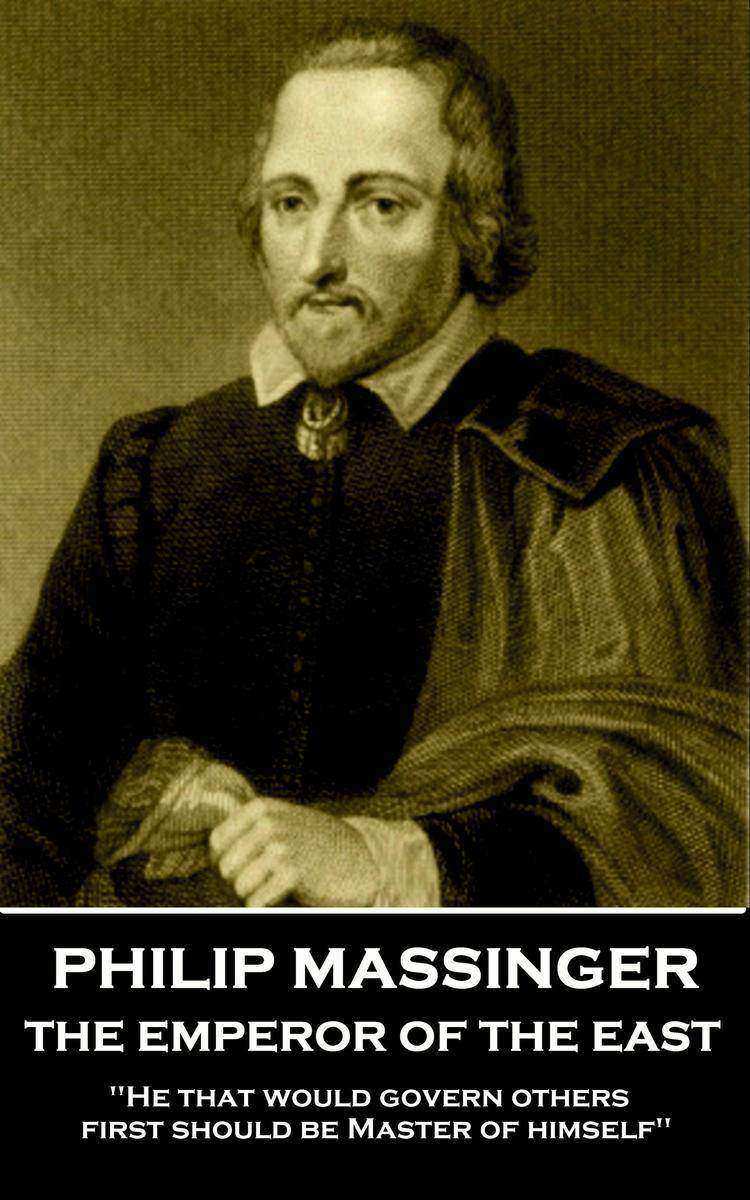
Emperor of the East - He that would govern others, first should be Master of him
¥23.45
Philip Massinger was baptized at St. Thomas's in Salisbury on November 24th, 1583.Massinger is described in his matriculation entry at St. Alban Hall, Oxford (1602), as the son of a gentleman. His father, who had also been educated there, was a member of parliament, and attached to the household of Henry Herbert, 2nd Earl of Pembroke. The Earl was later seen as a potential patron for Massinger.He left Oxford in 1606 without a degree. His father had died in 1603, and accounts suggest that Massinger was left with no financial support this, together with rumours that he had converted to Catholicism, meant the next stage of his career needed to provide an income.Massinger went to London to make his living as a dramatist, but he is only recorded as author some fifteen years later, when The Virgin Martyr (1621) is given as the work of Massinger and Thomas Dekker.During those early years as a playwright he wrote for the Elizabethan stage entrepreneur, Philip Henslowe. It was a difficult existence. Poverty was always close and there was constant pleading for advance payments on forthcoming works merely to survive.After Henslowe died in 1616 Massinger and John Fletcher began to write primarily for the King's Men and Massinger would write regularly for them until his death.The tone of the dedications in later plays suggests evidence of his continued poverty. In the preface of The Maid of Honour (1632) he wrote, addressing Sir Francis Foljambe and Sir Thomas Bland: "e;I had not to this time subsisted, but that I was supported by your frequent courtesies and favours."e;The prologue to The Guardian (1633) refers to two unsuccessful plays and two years of silence, when the author feared he had lost popular favour although, from the little evidence that survives, it also seems he had involved some of his plays with political characters which would have cast shadows upon England's alliances.Philip Massinger died suddenly at his house near the Globe Theatre on March 17th, 1640. He was buried the next day in the churchyard of St. Saviour's, Southwark, on March 18th, 1640. In the entry in the parish register he is described as a "e;stranger,"e; which, however, implies nothing more than that he belonged to another parish.


