


 购物车
 个人中心

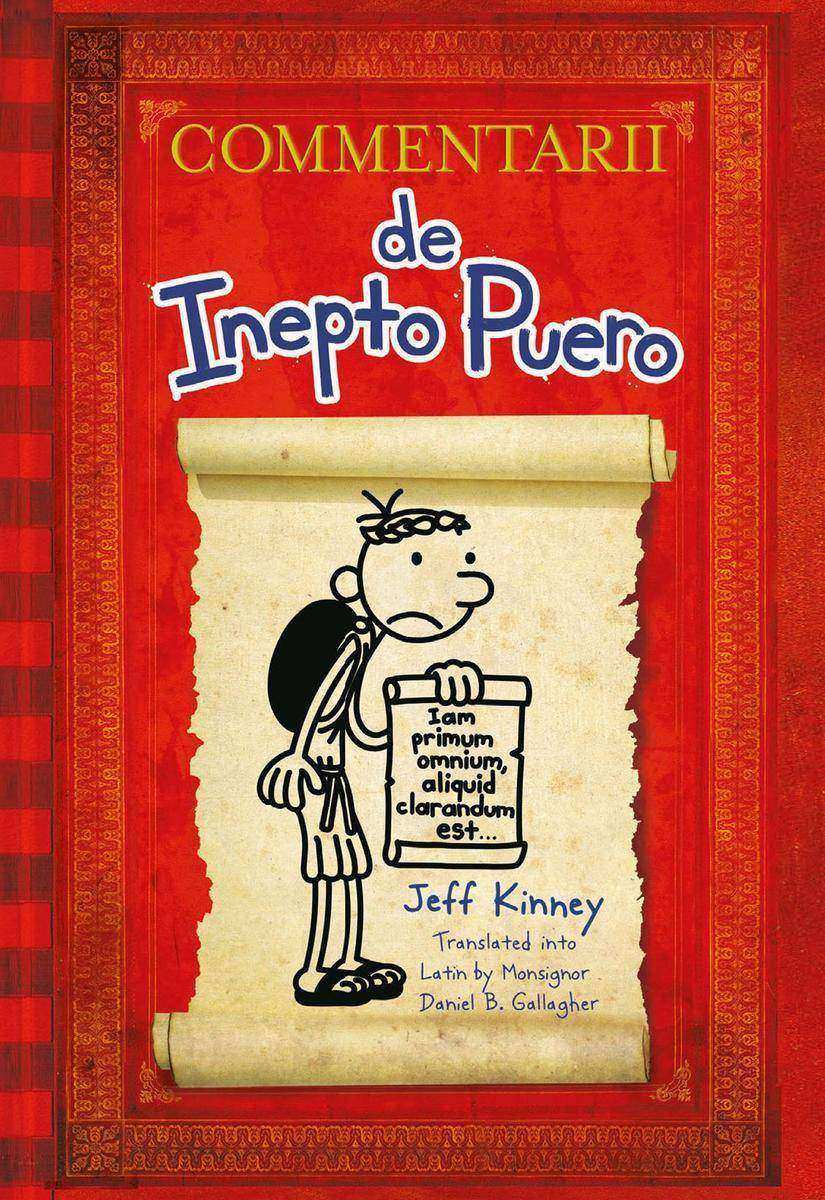
Diary of a Wimpy Kid Latin Edition - Commentarii de Inepto Puero
¥138.32
Et tu, Heffley? Thats right, international superstar Greg Heffley is now poised to conquer the classical world with this new Latin edition of the first book in Jeff Kinneys bestselling Diary of a Wimpy Kid seriesatranslated by Monsignor Daniel Gallagher, a Vatican specialistA who translates Pope Franciss Tweets into Latin. The Wimpy Kid joins beloved characters such as Winnie the Pooh, Harry Potter, the Little Prince, Bilbo Baggins, and the Grinch as the latest in an elite pantheon of childrens books selected for Latin translation. Commentarii de Inepto Puero is sure to appeal to fans of the international bestselling series as well as to readers of all ages studying Latin, either for school credit or for fun.

Art of Zootropolis
¥235.34
Disney's newest animated feature, Zootropolis, is a comedy-adventure starring Officer Judy Hopps, a rookie bunny cop who has to team up with fast-talking scam-artist fox Nick Wilde to crack her first case in the all-animal city of Zootropolis. This lushly illustrated book offers a behind-the-scenes view of the elaborate artistry involved in creating the film.

Art of Pixar Short Films
¥305.97
While Pixar Animation Studios was creating beloved feature-length films such as Monsters Inc., Ratatouille, and WALLE, it was simultaneously testing animation and storytelling techniques in dozens of memorable short films. Andre and Wally B proved that computer animation was possible; Tin Toy laid the groundwork for what would become Toy Story; and Mike's New Car exposed Pixar's finely tuned funny bone. In The Art of Pixar Short Films, animation expert and short film devotee Amid Amidi shines a spotlight on these and many more memorable vignettes from the Pixar archive. Essays and interviews illuminate more than 250 full-color pastels, pencil sketches, storyboards, and final rendered frames that were the foundation of Pixar's creative process.

Star Trek: The Next Generation Cats
¥105.85
The cats are back in their continuing mission: to boldly go where no one has gone before. This companion to the bestselling Star Trek Cats brings the many adventures of Star Trek: The Next Generation to life in a faithfully feline homage to the hit series. From encounters with the Borg to adventures on the holodeck, Captain Picard and the rest of the U.S.S. Enterprise NCC-1701-D crew are reimagined as cats with lovingly detailed and eyebrow-raising scenes from throughout the award-winning series, perfect for Star Trek fans across the Galaxy.TM 2018 CBS Studios Inc. STAR TREK and related marks and logos are trademarks of CBS Studios Inc. All Rights Reserved.
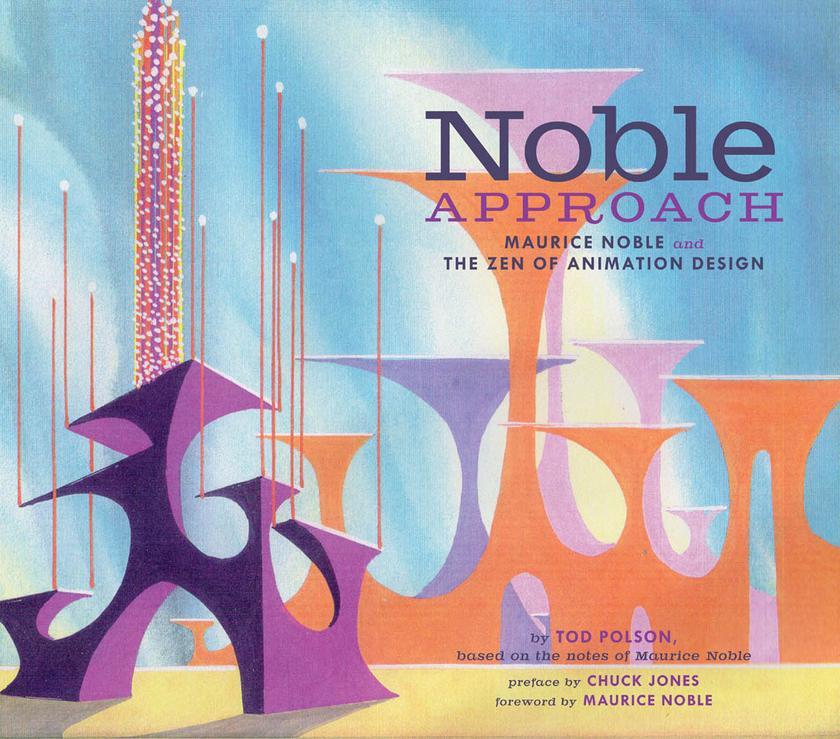
Noble Approach - Maurice Noble and the Zen of Animation Design
¥247.11
This extraordinary volume examines the life and animation philosophy of Maurice Noble, the noted American animation background artist and layout designer whose contributions to the industry span more than 60 years and include such cartoon classics as Duck Dodgers in the 24 1/2th Century, What's Opera, Doc?, and The Road Runner Show. Revered throughout the animation world, his work serves as a foundation and reference point for the current generation of animators, story artists, and designers. Written by Noble's longtime friend and colleague Tod Polson and based on the draft manuscript Noble worked on in the years before his death, this illuminating book passes on his approach to animation design from concept to final frame, illustrated with sketches and stunning original artwork spanning the full breadth of his career.

Homeland Revealed
¥200.03
An American soldier presumed killed in Iraq returns home ten years after disappearing. This is the premise of the award-winning and highly addictive Homeland. Known for its heart-pumping plot and phenomenal acting, Homeland has garnered multiple Emmys, fabulous reviews, and legions of devoted fans. This richly visual book unpacks the complex show, delving into favorite characters, conspiracy theories, and behind-the-scenes detail, while also exploring how real covert operations inspire and inform the show. Hundreds of photos capturing the intense onscreen action complement veteran writer Matt Hurwitz's narrative as he weaves in and out of the past three seasons using interviews with the creators, cast, and crew. An engrossing read in a deluxe hardcover package, Homeland Revealed is the ultimate gift for any fan of the series.Homeland TM 2014 Twentieth Century Fox Film Corporation. All Rights Reserved. Artwork 2014 Showtime Networks, Inc. A CBS Company. All Rights Reserved.
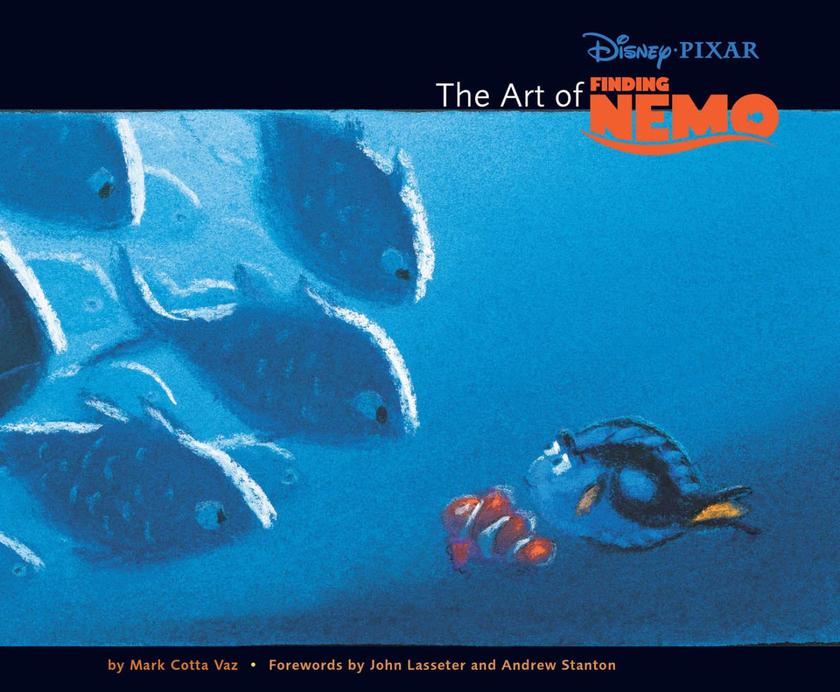
Art of Finding Nemo
¥305.97
Pixar Animation Studios, the Academy Award-winning creators of Toy Story, Toy Story 2, A Bug's Life, and Monsters, Inc., are bringing a new animated movie, Finding Nemo, to the screen this summer. This visually stunning underwater adventure follows eventful and comic journeys of two fish-a father and his son Nemo-who become separated in the Great Barrier Reef. The underwater world for the film was conceptualized and developed by the creative team of artists, illustrators, and designers at Pixar, resulting in a lush landscape rich with detail. The Art of Finding Nemo celebrates their talent, featuring concept and character sketches, storyboards, and lighting studies in a huge spectrum of media, from five-second sketches to intricate color pastels. This behind-the-scenes odyssey invites the reader into the elaborate creative process of animation films through interviews with all the key players at Pixar. There will be children's books related to Finding Nemo, but no adult titles other than this definitive volume. Revealing, insightful, and awesomely creative, The Art of Finding Nemo will delight film-goers, artists, and animation fans alike.

Star Wars Epic Yarns: A New Hope
¥58.76
Jedi apprentices and little princesses will delight in this (heart)felt retelling of the Star Wars saga. And so will Star Wars fans of any age! The series launches with the original trilogy, and every word counts in these small but perfectly formed yarns. That's because each volume features 12 iconic scenes, handcrafted in felt and pithily summarized in just a single word. The attention to detail is eye-opening; the proportions are just-right for small hands; the fun is guaranteed. In A New Hope, Princess Leia sends a hologram message through R2-D2, Luke Skywalker will learn how to use a lightsaber, and our heroes triumph. and TM Lucasfilm Ltd. Used Under Authorization

Color of Pixar
¥211.80
Bold and beautiful, this volume presents hundreds of film stills from the Pixar archives in a glorious spectrum of color. Starting with bright white images and seamlessly flowing through the colors of the rainbow, it becomes crystal clear how each frame tells a story. Bound into a gorgeous volume, The Color of Pixar encapsulates everything there is to love about the studio: the attention to detail, the playful characters, and the sheer scope of their work in over 20 years of iconic feature films.Copyright 2017 Disney Enterprises, Inc. and Pixar. All rights reserved.

Inside HBO's Game of Thrones - Seasons 1 & 2
¥46.99
HBO's Game of Thrones reigns as cable's highest-rated series. This official companion book gives fans new ways to enter this fictional world and discover more about the beloved (and reviled) characters and the electrifying plotlines. Hundreds of set photos, production and costume designs, storyboards, and insider stories reveal how the show's creators translated George R. R. Martin's best-selling fantasy series into the world of Westeros. Featuring interviews with key actors and crew members that capture the best scripted and unscripted moments from the first two seasons, as well as a preface by George R. R. Martin, this special volume offers exclusive access to this unprecedented television series.
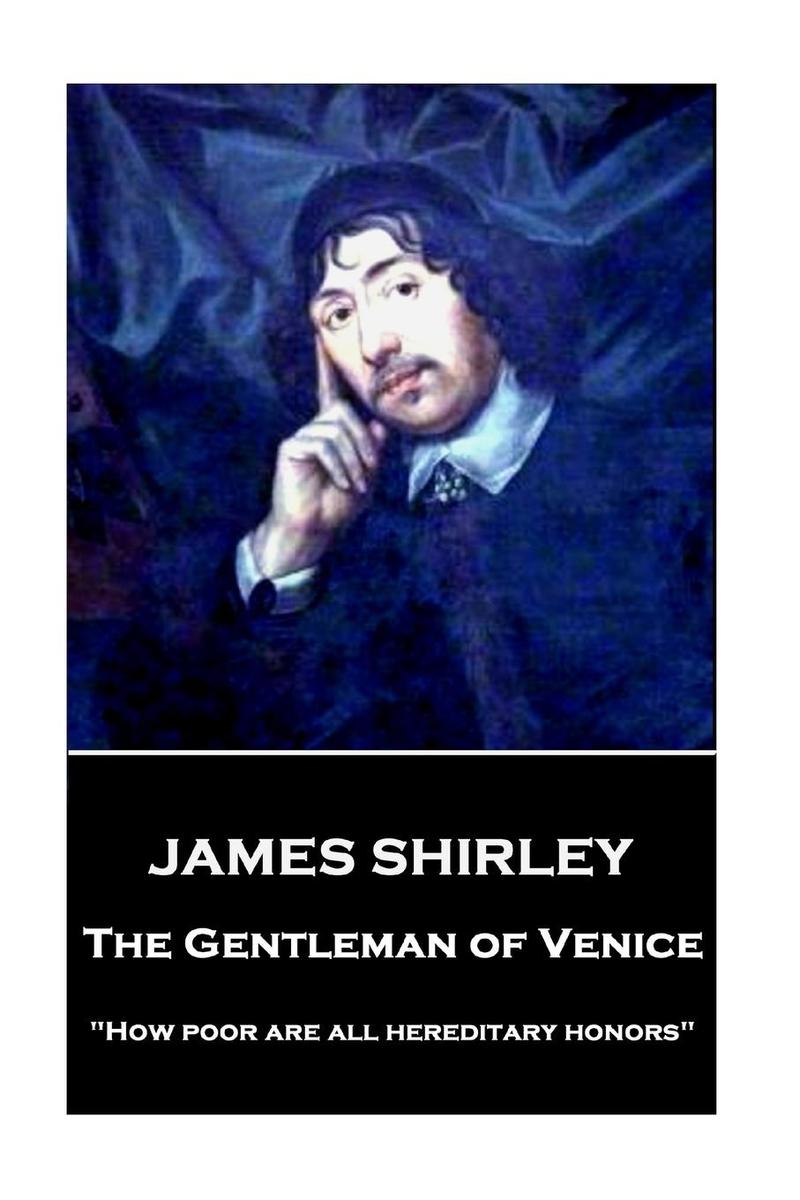
Gentleman of Venice - How poor are all hereditary honors
¥25.80
James Shirley was born in London in September 1596. His education was through a collection of England's finest establishments: Merchant Taylors' School, London, St John's College, Oxford, and St Catharine's College, Cambridge, where he took his B.A. degree in approximately 1618. He first published in 1618, a poem entitled Echo, or the Unfortunate Lovers. As with many artists of this period full details of his life and career are not recorded. Sources say that after graduating he became "e;a minister of God's word in or near St Albans."e; A conversion to the Catholic faith enabled him to become master of St Albans School from 1623-25. He wrote his first play, Love Tricks, or the School of Complement, which was licensed on February 10th, 1625. From the given date it would seem he wrote this whilst at St Albans but, after its production, he moved to London and to live in Gray's Inn. For the next two decades, he would write prolifically and with great quality, across a spectrum of thirty plays; through tragedies and comedies to tragicomedies as well as several books of poetry. Unfortunately, his talents were left to wither when Parliament passed the Puritan edict in 1642, forbidding all stage plays and closing the theatres. Most of his early plays were performed by Queen Henrietta's Men, the acting company for which Shirley was engaged as house dramatist. Shirley's sympathies lay with the King in battles with Parliament and he received marks of special favor from the Queen. He made a bitter attack on William Prynne, who had attacked the stage in Histriomastix, and, when in 1634 a special masque was presented at Whitehall by the gentlemen of the Inns of Court as a practical reply to Prynne, Shirley wrote the text-The Triumph of Peace. Shirley spent the years 1636 to 1640 in Ireland, under the patronage of the Earl of Kildare. Several of his plays were produced by his friend John Ogilby in Dublin in the first ever constructed Irish theatre; The Werburgh Street Theatre. During his years in Dublin he wrote The Doubtful Heir, The Royal Master, The Constant Maid, and St. Patrick for Ireland. In his absence from London, Queen Henrietta's Men sold off a dozen of his plays to the stationers, who naturally, enough published them. When Shirley returned to London in 1640, he finished with the Queen Henrietta's company and his final plays in London were acted by the King's Men. On the outbreak of the English Civil War Shirley served with the Earl of Newcastle. However when the King's fortunes began to decline he returned to London. There his friend Thomas Stanley gave him help and thereafter Shirley supported himself in the main by teaching and publishing some educational works under the Commonwealth. In addition to these he published during the period of dramatic eclipse four small volumes of poems and plays, in 1646, 1653, 1655, and 1659. It is said that he was "e;a drudge"e; for John Ogilby in his translations of Homer's Iliad and the Odyssey, and survived into the reign of Charles II, but, though some of his comedies were revived, his days as a playwright were over. His death, at age seventy, along with that of his wife, in 1666, is described as one of fright and exposure due to the Great Fire of London which had raged through parts of London from September 2nd to the 5th. He was buried at St Giles in the Fields, in London, on October 29th, 1666.
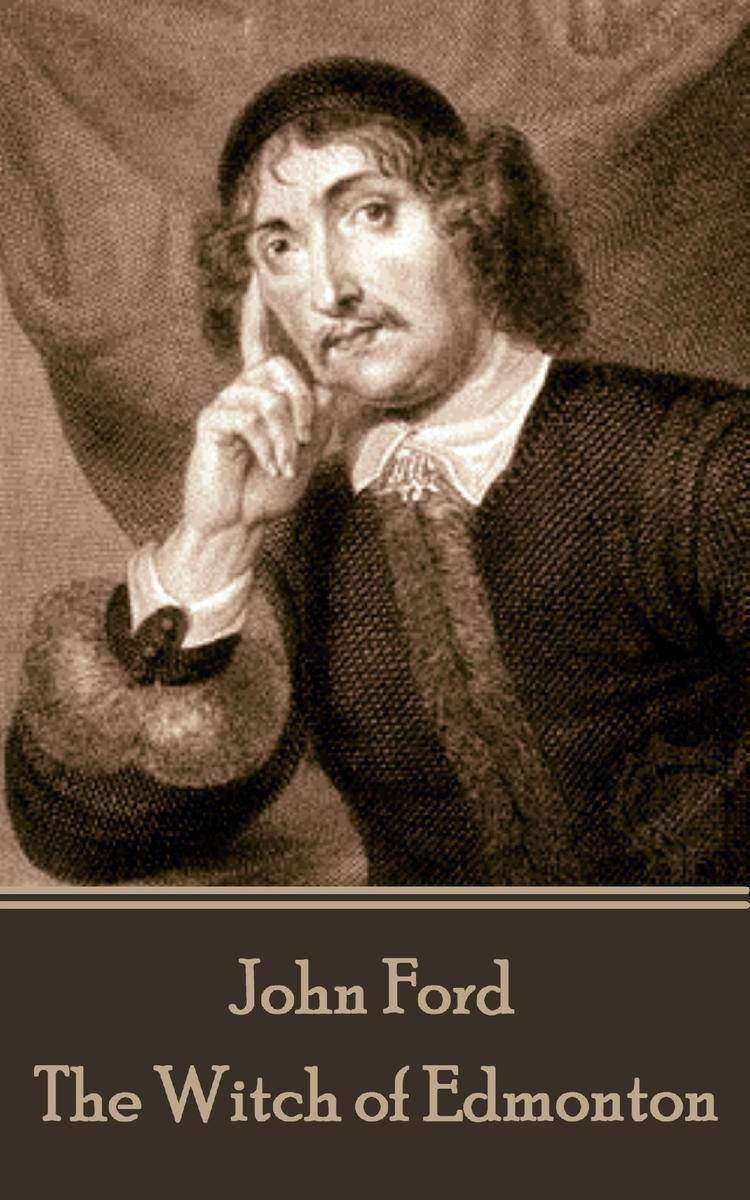
Witch of Edmonton
¥19.91
John Ford is another of England's famed literary masters. A Playwright and Poet, he was the most important writer of Tragedies during the reign of King Charles I (1625-49). His works are beautifully poetic even whilst tackling subjects from incest to the choice between true love or forced marriage. Ford's work has endured down the centuries although little is known of his life, or, in some cases, even his contributions to his own plays when written with others. As a whole though it is a legacy of classics; powerful persuasions from driven characters and compelling narratives.
Electra - Friends show their love in times of trouble, not in happiness
¥14.03
Euripides is rightly lauded as one of the great dramatists of all time. In his lifetime, he wrote over 90 plays and although only 18 have survived they reveal the scope and reach of his genius. Euripides is identified with many theatrical innovations that have influenced drama all the way down to modern times, especially in the representation of traditional, mythical heroes as ordinary people in extraordinary circumstances. As would be expected from a life lived 2,500 years ago, details of it are few and far between. Accounts of his life, written down the ages, do exist but whether much is reliable or surmised is open to debate. Most accounts agree that he was born on Salamis Island around 480 BC, to mother Cleito and father Mnesarchus, a retailer who lived in a village near Athens. Upon the receipt of an oracle saying that his son was fated to win "e;crowns of victory"e;, Mnesarchus insisted that the boy should train for a career in athletics. However, what is clear is that athletics was not to be the way to win crowns of victory. Euripides had been lucky enough to have been born in the era as the other two masters of Greek Tragedy; Sophocles and schylus. It was in their footsteps that he was destined to follow. His first play was performed some thirteen years after the first of Socrates plays and a mere three years after schylus had written his classic The Oristria. Theatre was becoming a very important part of the Greek culture. The Dionysia, held annually, was the most important festival of theatre and second only to the fore-runner of the Olympic games, the Panathenia, held every four years, in appeal. Euripides first competed in the City Dionysia, in 455 BC, one year after the death of schylus, and, incredibly, it was not until 441 BC that he won first prize. His final competition in Athens was in 408 BC. The Bacchae and Iphigenia in Aulis were performed after his death in 405 BC and first prize was awarded posthumously. Altogether his plays won first prize only five times. Euripides was also a great lyric poet. In Medea, for example, he composed for his city, Athens, "e;the noblest of her songs of praise"e;. His lyric skills however are not just confined to individual poems: "e;A play of Euripides is a musical whole....one song echoes motifs from the preceding song, while introducing new ones."e; Much of his life and his whole career coincided with the struggle between Athens and Sparta for hegemony in Greece but he didn't live to see the final defeat of his city. Euripides fell out of favour with his fellow Athenian citizens and retired to the court of Archelaus, king of Macedon, who treated him with consideration and affection. At his death, in around 406BC, he was mourned by the king, who, refusing the request of the Athenians that his remains be carried back to the Greek city, buried him with much splendor within his own dominions. His tomb was placed at the confluence of two streams, near Arethusa in Macedonia, and a cenotaph was built to his memory on the road from Athens towards the Piraeus.
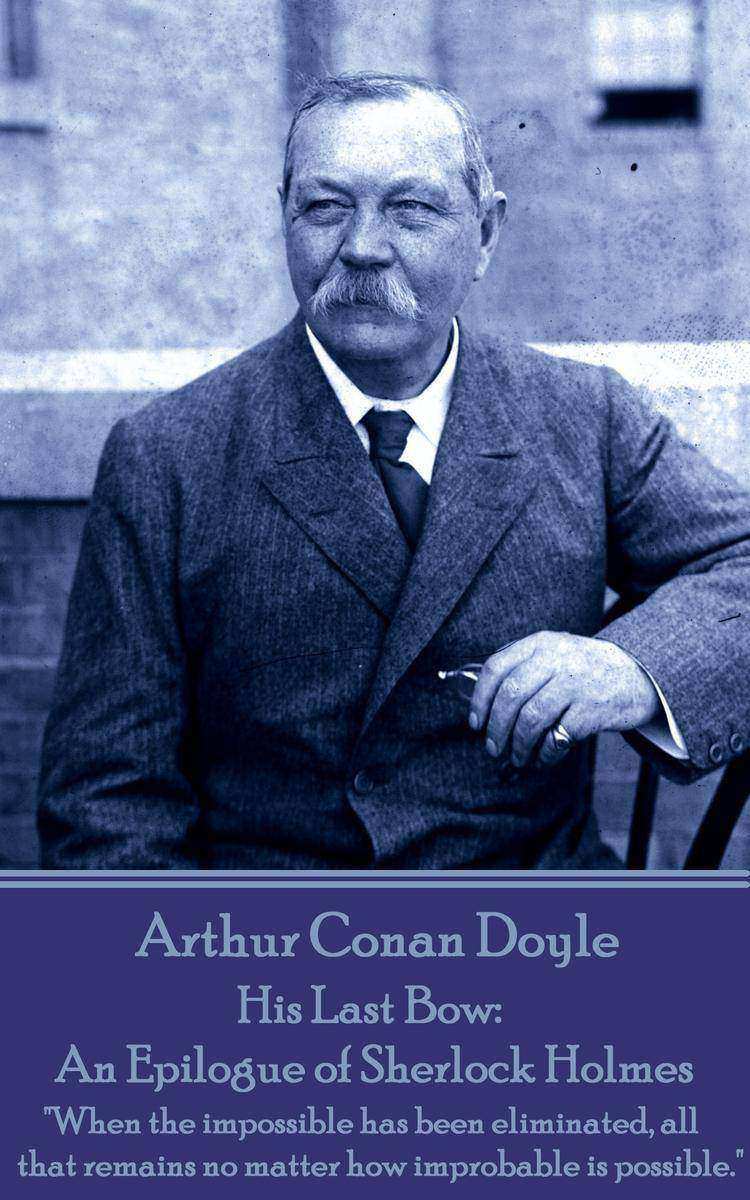
His Last Bow: An Epilogue of Sherlock Holmes
¥14.03
If ever a writer needed an introduction Arthur Conan Doyle would not be considered that man. After all, Sherlock Holmes is perhaps the foremost literary detective of any age. Add to this canon his stories of science fiction and his poems, his historical novels, his plays, his political campaigning, his efforts in establishing a Court of Appeal and there is little room for anything else. Except he was also an exceptional writer of short stories of the horrific and macabre. Something very different from what you might expect. Born in Arthur Conan Doyle was born on 22 May 1859 at 11 Picardy Place, Edinburgh, Scotland. From 1876 - 1881 he studied medicine at the University of Edinburgh following which he was employed as a doctor on the Greenland whaler Hope of Peterhead in 1880 and, after his graduation, as a ship's surgeon on the SS Mayumba during a voyage to the West African coast in 1881. Arriving in Portsmouth in June of that year with less than GBP10 (GBP700 today) to his name, he set up a medical practice at 1 Bush Villas in Elm Grove, Southsea. The practice was initially not very successful. While waiting for patients, Conan Doyle again began writing stories and composed his first novel The Mystery of Cloomber. Although he continued to study and practice medicine his career was now firmly set as a writer. And thereafter great works continued to pour out of him.

Adventure of the Red Circle - It's every man's business to see justice done.
¥14.03
If ever a writer needed an introduction Arthur Conan Doyle would not be considered that man. After all, Sherlock Holmes is perhaps the foremost literary detective of any age. Add to this canon his stories of science fiction and his poems, his historical novels, his plays, his political campaigning, his efforts in establishing a Court of Appeal and there is little room for anything else. Except he was also an exceptional writer of short stories of the horrific and macabre. Something very different from what you might expect. Born in Arthur Conan Doyle was born on 22 May 1859 at 11 Picardy Place, Edinburgh, Scotland. From 1876 - 1881 he studied medicine at the University of Edinburgh following which he was employed as a doctor on the Greenland whaler Hope of Peterhead in 1880 and, after his graduation, as a ship's surgeon on the SS Mayumba during a voyage to the West African coast in 1881. Arriving in Portsmouth in June of that year with less than GBP10 (GBP700 today) to his name, he set up a medical practice at 1 Bush Villas in Elm Grove, Southsea. The practice was initially not very successful. While waiting for patients, Conan Doyle again began writing stories and composed his first novel The Mystery of Cloomber. Although he continued to study and practice medicine his career was now firmly set as a writer. And thereafter great works continued to pour out of him.
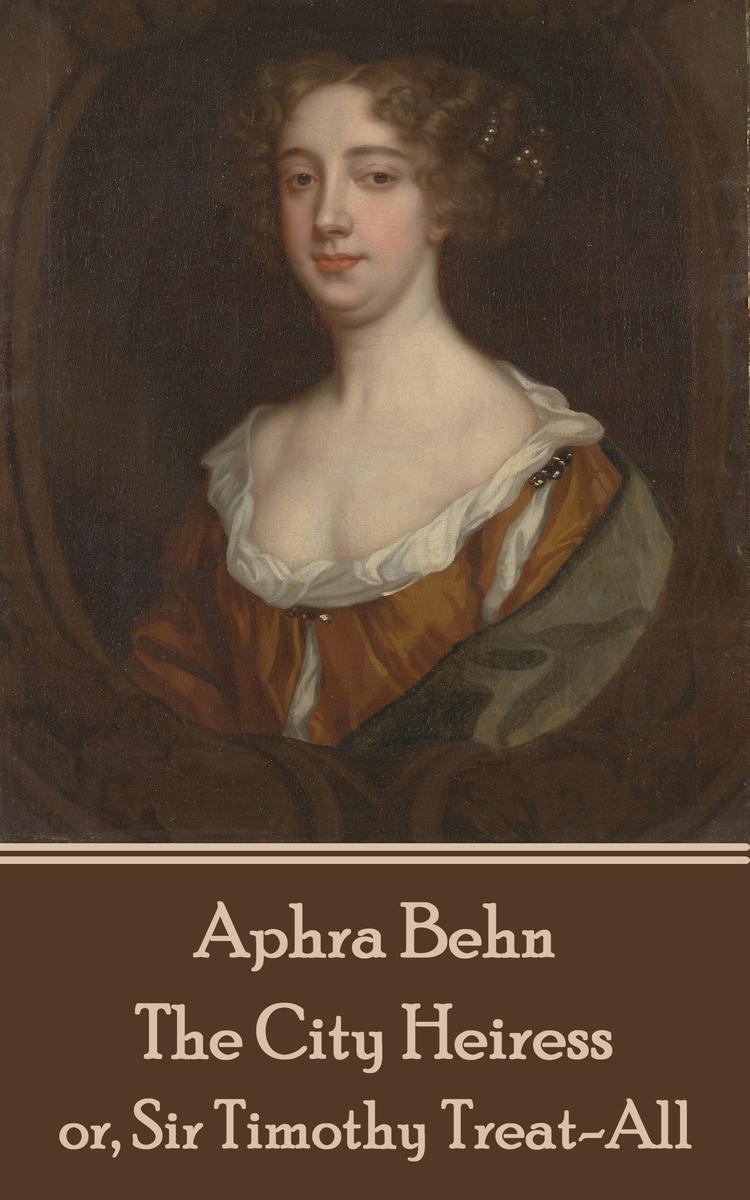
City Heiress - or, Sir Timothy Treat-All
¥23.45
Aphra Behn was a prolific and well established writer but facts about her remain scant and difficult to confirm. What can safely be said though is that Aphra Behn is now regarded as a key English playwright and a major figure in Restoration theatre. Aphra was born into the rising tensions to the English Civil War. Obviously a time of much division and difficulty as the King and Parliament, and their respective forces, came ever closer to conflict. There are claims she was a spy, that she travelled abroad, possibly as far as Surinam. By 1664 her marriage was over (though by death or separation is not known but presumably the former as it occurred in the year of their marriage) and she now used Mrs Behn as her professional name. Aphra now moved towards pursuing a more sustainable and substantial career and began work for the King's Company and the Duke's Company players as a scribe. Previously her only writing had been poetry but now she would become a playwright. Her first, "e;The Forc'd Marriage"e;, was staged in 1670, followed by "e;The Amorous Prince"e; (1671). After her third play, "e;The Dutch Lover"e;, Aphra had a three year lull in her writing career. Again it is speculated that she went travelling again, possibly once again as a spy. After this sojourn her writing moves towards comic works, which prove commercially more successful. Her most popular works included "e;The Rover"e; and "e;Love-Letters Between a Nobleman and His Sister"e; (1684-87). With her growing reputation Aphra became friends with many of the most notable writers of the day. This is The Age of Dryden and his literary dominance. From the mid 1680's Aphra's health began to decline. This was exacerbated by her continual state of debt and descent into poverty. Aphra Behn died on April 16th 1689, and is buried in the East Cloister of Westminster Abbey. The inscription on her tombstone reads: "e;Here lies a Proof that Wit can never be Defence enough against Mortality."e; She was quoted as stating that she had led a "e;life dedicated to pleasure and poetry."e;
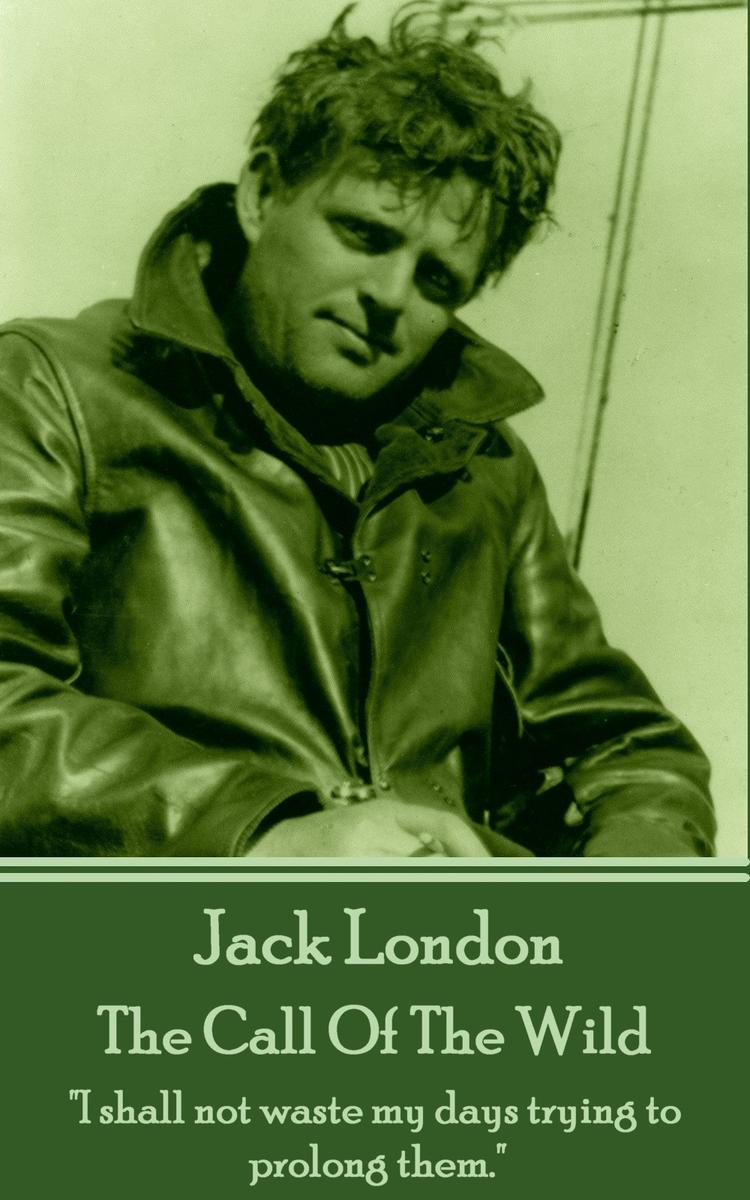
Call Of The Wild - I shall not waste my days trying to prolong them.
¥21.09
John Griffith "e;Jack"e; London was born John Griffith Chaney on January 12th, 1876 in San Francisco. His father, William Chaney, was living with his mother Flora Wellman when she became pregnant. Chaney insisted she have an abortion. Flora's response was to turn a gun on herself. Although her wounds were not severe the trauma made her temporarily deranged. In late 1876 his mother married John London and the young child was brought to live with them as they moved around the Bay area, eventually settling in Oakland where Jack completed grade school. Jack also worked hard at several jobs, sometimes 12-18 hours a day, but his dream was university. He was lent money for that and after intense studying enrolled in the summer of 1896 at the University of California in Berkeley. In 1897, at 21 , Jack searched out newspaper accounts of his mother's suicide attempt and the name of his biological father. He wrote to William Chaney, then living in Chicago. Chaney said he could not be London's father because he was impotent; and casually asserted that London's mother had relations with other men. Jack, devastated by the response, quit Berkeley and went to the Klondike. Though equally because of his continuing dire finances Jack might have taken that as the excuse he needed to leave. In the Klondike Jack began to gather material for his writing but also accumulated many health problems, including scurvy, hip and leg problems many of which he then carried for life. By the late 1890's Jack was regularly publishing short stories and by the turn of the century full blown novels. By 1904 Jack had married, fathered two children and was now in the process of divorcing. A stint as a reporter on the Russo-Japanese war of 1904 was equal amounts trouble and experience. But that experience was always put to good use in a remarkable output of work. Twelve years later Jack had amassed a wealth of writings many of which remain world classics. He had a reputation as a social activist and a tireless friend of the workers. And yet on November 22nd 1916 Jack London died in a cottage on his ranch at the age of only 40. Here we present The Call Of The Wild.

Fawn - Or, Parasitaster
¥15.21
John Marston was born to John and Maria Marston nee Guarsi, and baptised on October 7th, 1576 at Wardington, Oxfordshire.Marston entered Brasenose College, Oxford in 1592 and earned his BA in 1594. By 1595, he was in London, living in the Middle Temple. His interests were in poetry and play writing, although his father's will of 1599 hopes that he would not further pursue such vanities.His brief career in literature began with the fashionable genres of erotic epyllion and satire; erotic plays for boy actors to be performed before educated young men and members of the inns of court.In 1598, he published 'The Metamorphosis of Pigmalion's Image and Certaine Satyres', a book of poetry. He also published 'The Scourge of Villanie', in 1598. 'Histriomastix' regarded as his first play was produced 1599. It's performance kicked off an episode in literary history known as the War of the Theatres; a literary feud between Marston, Jonson and Dekker that lasted until 1602.However, the playwrights were later reconciled; Marston wrote a prefatory poem for Jonson's 'Sejanus' in 1605 and dedicated 'The Malcontent' to him. Beyond this episode Marston's career continued to gather both strength, assets and followers. In 1603, he became a shareholder in the Children of Blackfriars company. He wrote and produced two plays with the company. The first was 'The Malcontent' in 1603, his most famous play. His second was 'The Dutch Courtesan', a satire on lust and hypocrisy, in 1604-5.In 1605, he worked with George Chapman and Ben Jonson on 'Eastward Ho', a satire of popular taste and the vain imaginings of wealth to be found in the colony of Virginia.Marston took the theatre world by surprise when he gave up writing plays in 1609 at the age of thirty-three. He sold his shares in the company of Blackfriars. His departure from the literary scene may have been because of further offence he gave to the king. The king suspended performances at Blackfriars and had Marston imprisoned.On 24th September 1609 he was made a deacon and them a priest on 24th December 1609. In October 1616, Marston was assigned the living of Christchurch, Hampshire.He died (accounts vary) on either the 24th or 25th June 1634 in London and was buried in the Middle Temple Church.
Helen - To a father growing old nothing is dearer than a daughter
¥14.03
Euripides is rightly lauded as one of the great dramatists of all time. In his lifetime, he wrote over 90 plays and although only 18 have survived they reveal the scope and reach of his genius. Euripides is identified with many theatrical innovations that have influenced drama all the way down to modern times, especially in the representation of traditional, mythical heroes as ordinary people in extraordinary circumstances. As would be expected from a life lived 2,500 years ago, details of it are few and far between. Accounts of his life, written down the ages, do exist but whether much is reliable or surmised is open to debate. Most accounts agree that he was born on Salamis Island around 480 BC, to mother Cleito and father Mnesarchus, a retailer who lived in a village near Athens. Upon the receipt of an oracle saying that his son was fated to win "e;crowns of victory"e;, Mnesarchus insisted that the boy should train for a career in athletics. However, what is clear is that athletics was not to be the way to win crowns of victory. Euripides had been lucky enough to have been born in the era as the other two masters of Greek Tragedy; Sophocles and schylus. It was in their footsteps that he was destined to follow. His first play was performed some thirteen years after the first of Socrates plays and a mere three years after schylus had written his classic The Oristria. Theatre was becoming a very important part of the Greek culture. The Dionysia, held annually, was the most important festival of theatre and second only to the fore-runner of the Olympic games, the Panathenia, held every four years, in appeal. Euripides first competed in the City Dionysia, in 455 BC, one year after the death of schylus, and, incredibly, it was not until 441 BC that he won first prize. His final competition in Athens was in 408 BC. The Bacchae and Iphigenia in Aulis were performed after his death in 405 BC and first prize was awarded posthumously. Altogether his plays won first prize only five times. Euripides was also a great lyric poet. In Medea, for example, he composed for his city, Athens, "e;the noblest of her songs of praise"e;. His lyric skills however are not just confined to individual poems: "e;A play of Euripides is a musical whole....one song echoes motifs from the preceding song, while introducing new ones."e; Much of his life and his whole career coincided with the struggle between Athens and Sparta for hegemony in Greece but he didn't live to see the final defeat of his city. Euripides fell out of favour with his fellow Athenian citizens and retired to the court of Archelaus, king of Macedon, who treated him with consideration and affection. At his death, in around 406BC, he was mourned by the king, who, refusing the request of the Athenians that his remains be carried back to the Greek city, buried him with much splendor within his own dominions. His tomb was placed at the confluence of two streams, near Arethusa in Macedonia, and a cenotaph was built to his memory on the road from Athens towards the Piraeus.
Bacchae - The good and the wise lead quiet lives
¥14.03
Euripides is rightly lauded as one of the great dramatists of all time. In his lifetime, he wrote over 90 plays and although only 18 have survived they reveal the scope and reach of his genius. Euripides is identified with many theatrical innovations that have influenced drama all the way down to modern times, especially in the representation of traditional, mythical heroes as ordinary people in extraordinary circumstances. As would be expected from a life lived 2,500 years ago, details of it are few and far between. Accounts of his life, written down the ages, do exist but whether much is reliable or surmised is open to debate. Most accounts agree that he was born on Salamis Island around 480 BC, to mother Cleito and father Mnesarchus, a retailer who lived in a village near Athens. Upon the receipt of an oracle saying that his son was fated to win "e;crowns of victory"e;, Mnesarchus insisted that the boy should train for a career in athletics. However, what is clear is that athletics was not to be the way to win crowns of victory. Euripides had been lucky enough to have been born in the era as the other two masters of Greek Tragedy; Sophocles and schylus. It was in their footsteps that he was destined to follow. His first play was performed some thirteen years after the first of Socrates plays and a mere three years after schylus had written his classic The Oristria. Theatre was becoming a very important part of the Greek culture. The Dionysia, held annually, was the most important festival of theatre and second only to the fore-runner of the Olympic games, the Panathenia, held every four years, in appeal. Euripides first competed in the City Dionysia, in 455 BC, one year after the death of schylus, and, incredibly, it was not until 441 BC that he won first prize. His final competition in Athens was in 408 BC. The Bacchae and Iphigenia in Aulis were performed after his death in 405 BC and first prize was awarded posthumously. Altogether his plays won first prize only five times. Euripides was also a great lyric poet. In Medea, for example, he composed for his city, Athens, "e;the noblest of her songs of praise"e;. His lyric skills however are not just confined to individual poems: "e;A play of Euripides is a musical whole....one song echoes motifs from the preceding song, while introducing new ones."e; Much of his life and his whole career coincided with the struggle between Athens and Sparta for hegemony in Greece but he didn't live to see the final defeat of his city. Euripides fell out of favour with his fellow Athenian citizens and retired to the court of Archelaus, king of Macedon, who treated him with consideration and affection. At his death, in around 406BC, he was mourned by the king, who, refusing the request of the Athenians that his remains be carried back to the Greek city, buried him with much splendor within his own dominions. His tomb was placed at the confluence of two streams, near Arethusa in Macedonia, and a cenotaph was built to his memory on the road from Athens towards the Piraeus.

One Day More - Art is long and life is short, and success is very far off.
¥17.56
Born in 1857 in Poland, Joseph Conrad became a British citizen just before he turned 30. In the intervening years he lost both parents, becoming an orphan at 11, being thereafter raised by an uncle, who let the boy go to Marseille at age 16, where he began to work on merchant ships - which at times included stints of gun running and the intrigue of political conspiracy. At age 36 his life turned from one of ships to one of literary pursuit. Conrad brought to English literature both a fresh layer of style and a deeper examination of the human psyche in a wealth of works. He wrote many novels, which are correctly regarded today as some of the finest in English literature. Among their canon are Lord Jim, Nostromo, The Shadow Line, and of course Heart of Darkness.


