


 购物车
 个人中心


Two Strings To Your Bow - 'I wish, with all my heart, he was under ground''
¥26.98
Robert Jephson was born in Ireland in 1736, the son of Archdeacon John Jephson. His education was at Ryder's grammar school and then the Reverend Roger Ford's school before he was admitted to Trinity College, Dublin in 1751. He left without a degree.Jephson now joined the British Army with a commission in the 73rd Regiment of Foot. Among his postings was one to the Caribbean. He left, for health reasons and retired with the rank of Captain.An appointment was offered as master of the horse to the lord-lieutenant of Ireland. Whilst in this office he wrote and had published, in the Mercury newspaper, a collection of articles that defended the lord-lieutenant's administration. These were later published in book form as 'The Bachelor', or 'Speculations of Jeoffry Wagstaffe'. Jepson held the office under twelve successive viceroys and gained a pension of GBP300, which was later doubled.He entered the Irish House of Commons in 1773 and sat for St Johnstown (County Longford) until 1776. Between 1777 and 1783, he served as Member of Parliament for Old Leighlin and thereafter represented Granard from 1783 to 1790In 1775 he added playwright, dramatist and poet to his military and political career strands. His plays gathered much interest. Among them his tragedy 'Braganza' was successfully performed at Drury Lane in 1775, 'Conspiracy' in 1796, 'The Law of Lombardy' in 1779, and 'The Count of Narbonne' (adapted from Horace Walpole's 'The Castle of Otranto') at Covent Garden in 1781. In 1788 he published 'Extempore Ludicrous Miltonic Verses' and, in 1794, the heroic poem 'Roman Portraits', and 'The Confessions of Jacques Baptiste Couteau', a satire on the excesses of the French Revolution. Robert Jephson died at Blackrock, near Dublin, on the 31st of May 1803.
Anne of Green Gables Collection (Illustrated)
¥23.45
Table Of ContentsANNE OF GREEN GABLESANNE of the ISLANDAnnes House of DreamsCHRONICLES OF AVONLEAFURTHER CHRONICLES OF AVONLEATHE GOLDEN ROADKILMENY OF THE ORCHARDLucy Maud Montgomery Short Stories, 1896 to 1901Lucy Maud Montgomery Short Stories, 1902 to 1903Lucy Maud Montgomery Short Stories, 1904Lucy Maud Montgomery Short Stories, 1905 to 1906Lucy Maud Montgomery Short Stories, 1907 to 1908Short Stories 1909 to 1922RAINBOW VALLEYRilla of Ingleside
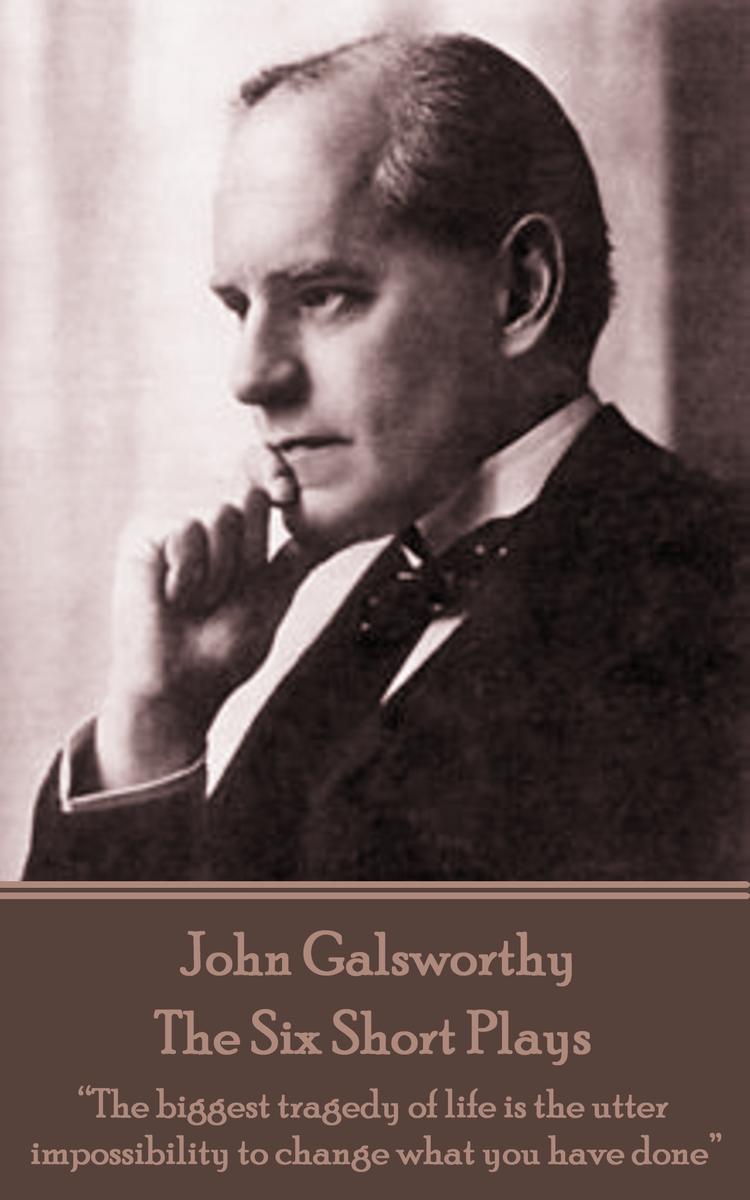
Six Short Plays
¥21.09
John Galsworthy was born at Kingston Upon Thames in Surrey, England, on August 14th 1867 to a wealthy and well established family. His schooling was at Harrow and New College, Oxford before training as a barrister and being called to the bar in 1890. However, Law was not attractive to him and he travelled abroad becoming great friends with the novelist Joseph Conrad, then a first mate on a sailing ship. In 1895 Galsworthy began an affair with Ada Nemesis Pearson Cooper, the wife of his cousin Major Arthur Galsworthy. The affair was kept a secret for 10 years till she at last divorced and they married on 23rd September 1905. Galsworthy first published in 1897 with a collection of short stories entitled "e;The Four Winds"e;. For the next 7 years he published these and all works under his pen name John Sinjohn. It was only upon the death of his father and the publication of "e;The Island Pharisees"e; in 1904 that he published as John Galsworthy. His first play, The Silver Box in 1906 was a success and was followed by "e;The Man of Property"e; later that same year and was the first in the Forsyte trilogy. Whilst today he is far more well know as a Nobel Prize winning novelist then he was considered a playwright dealing with social issues and the class system. Here we publish Villa Rubein, a very fine story that captures Galsworthy's unique narrative and take on life of the time. He is now far better known for his novels, particularly The Forsyte Saga, his trilogy about the eponymous family of the same name. These books, as with many of his other works, deal with social class, upper-middle class lives in particular. Although always sympathetic to his characters, he reveals their insular, snobbish, and somewhat greedy attitudes and suffocating moral codes. He is now viewed as one of the first from the Edwardian era to challenge some of the ideals of society depicted in the literature of Victorian England. In his writings he campaigns for a variety of causes, including prison reform, women's rights, animal welfare, and the opposition of censorship as well as a recurring theme of an unhappy marriage from the women's side. During World War I he worked in a hospital in France as an orderly after being passed over for military service. He was appointed to the Order of Merit in 1929, after earlier turning down a knighthood, and awarded the Nobel Prize in 1932 though he was too ill to attend. John Galsworthy died from a brain tumour at his London home, Grove Lodge, Hampstead on January 31st 1933. In accordance with his will he was cremated at Woking with his ashes then being scattered over the South Downs from an aeroplane.
Comedy of Errors - We came into the world like brother and brother
¥11.67
The life of William Shakespeare, arguably the most significant figure in the Western literary canon, is relatively unknown. Shakespeare was born in Stratford-upon-Avon in 1565, possibly on the 23rd April, St. George's Day, and baptised there on 26th April. Little is known of his education and the first firm facts to his life relate to his marriage, aged 18, to Anne Hathaway, who was 26 and from the nearby village of Shottery. Anne gave birth to their first son six months later. Shakespeare's first play, The Comedy of Errors began a procession of real heavyweights that were to emanate from his pen in a career of just over twenty years in which 37 plays were written and his reputation forever established. This early skill was recognised by many and by 1594 the Lord Chamberlain's Men were performing his works. With the advantage of Shakespeare's progressive writing they rapidly became London's leading company of players, affording him more exposure and, following the death of Queen Elizabeth in 1603, a royal patent by the new king, James I, at which point they changed their name to the King's Men. By 1598, and despite efforts to pirate his work, Shakespeare's name was well known and had become a selling point in its own right on title pages. No plays are attributed to Shakespeare after 1613, and the last few plays he wrote before this time were in collaboration with other writers, one of whom is likely to be John Fletcher who succeeded him as the house playwright for the King's Men. William Shakespeare died two months later on April 23rd, 1616, survived by his wife, two daughters and a legacy of writing that none have since yet eclipsed.
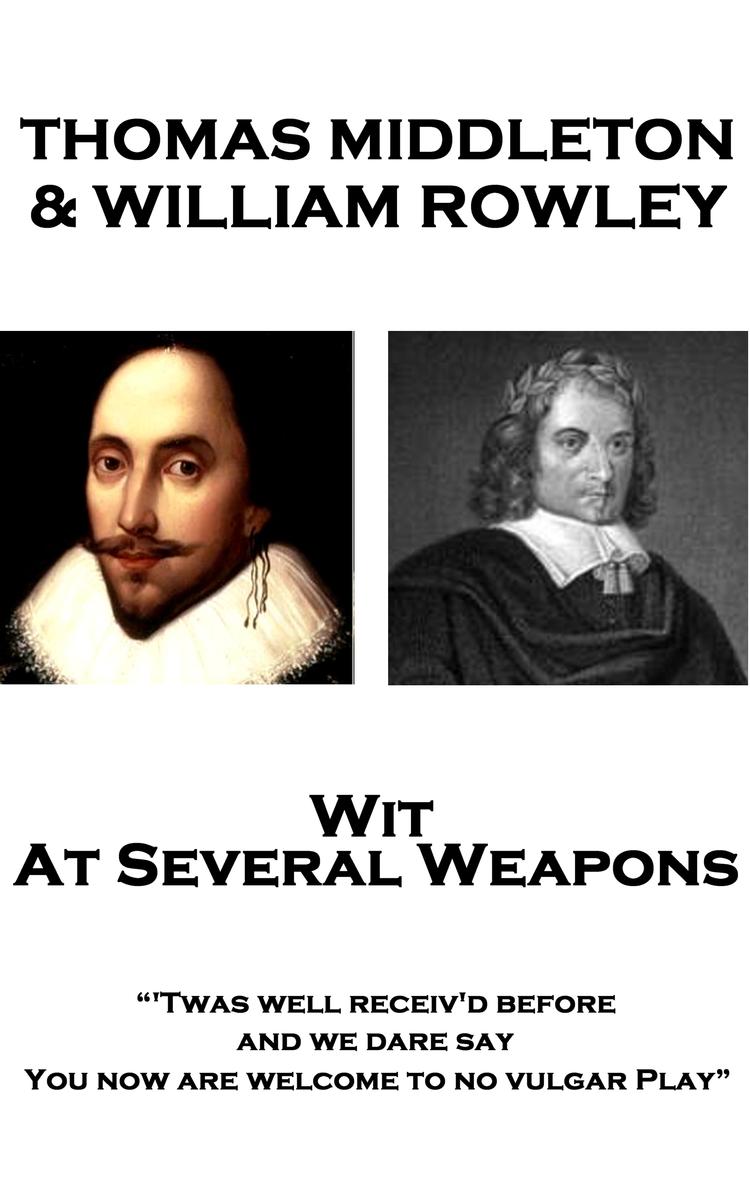
Wit At Several Weapons - Twas well receiv'd before
¥23.45
The play was originally attributed to John Fletcher & Francis Beaumont and printed in their early folios. However, though there is some minor work by Fletcher the play, in modern times, has been now attributed to Middleton & Rowley.Thomas Middleton was born in London in April 1580 and baptised on 18th April. Middleton was aged only five when his father died. His mother remarried but this unfortunately fell apart into a fifteen year legal dispute regarding the inheritance due Thomas and his younger sister.By the time he left Oxford, at the turn of the Century, Middleton had and published Microcynicon: Six Snarling Satirese which was denounced by the Archbishop of Canterbury and publicly burned. In the early years of the 17th century, Middleton wrote topical pamphlets. One - Penniless Parliament of Threadbare Poets was reprinted several times and the subject of a parliamentary inquiry.These early years writing plays continued to attract controversy. His writing partnership with Thomas Dekker brought him into conflict with Ben Jonson and George Chapman in the so-called War of the Theatres. His finest work with Dekker was undoubtedly The Roaring Girl, a biography of the notorious Mary Frith.In the 1610s, Middleton began another playwriting partnership, this time with the actor William Rowley, producing another slew of plays including Wit at Several Weapons and A Fair Quarrel. The ever adaptable Middleton seemed at ease working with others or by himself. His solo writing credits include the comic masterpiece, A Chaste Maid in Cheapside, in 1613.In 1620 he was officially appointed as chronologer of the City of London, a post he held until his death. The 1620s saw the production of his and Rowley's tragedy, and continual favourite, The Changeling, and of several other tragicomedies. However in 1624, he reached a peak of notoriety when his dramatic allegory A Game at Chess was staged by the King's Men. Though Middleton's approach was strongly patriotic, the Privy Council silenced the play after only nine performances at the Globe theatre, having received a complaint from the Spanish ambassador.Middleton for his part was exonerated but it is the last play recorded as having been written by Middleton.Thomas Middleton died at his home at Newington Butts in Southwark in the summer of 1627, and was buried on July 4th, in St Mary's churchyard which today survives as a public park in Elephant and Castle.William Rowley is thought to have been born around 1585 but an exact date is not known.As an actor his early forte was playing 'clown characters' thus helping to carry the low comedy of the play. He began his career working for Queen Anne's Men at the Red Bull Theatre. In 1609. Along with several other actors he founded the Duke of York's Men, which, in 1612, became known as Prince Charles's Men.From here on Rowley's career was spent almost exclusively writing and clowning for this company. It was located, in its time, at several playhouses, including the Curtain, the Hope, and the Red Bull. Although when writing one of his main contributions was to provide the comic sub-plot on several other plays, including The Changeling, A Fair Quarrel, and The Maid in the Mill, he wrote substantial portions of the main narrative as well.Only two surviving plays are generally accepted as solo works by Rowley: A Shoemaker, a Gentleman (circa 1607-9) and All's Lost by Lust (1619). Evidence exists that three other works were authored solely by Rowley: Hymen's Holidays or Cupid's Vagaries (1612), A Knave in Print (1613), and The Fool Without Book (also 1613) but unfortunately none have survived to be further examined. In conjunction with other writers including Thomas Middleton and John Fletcher he wrote several other plays.The exact time and nature of his death is unknown but records show that William Rowley was buried on 11th February 1626 in the graveyard of St James's, Clerkenwell in London.
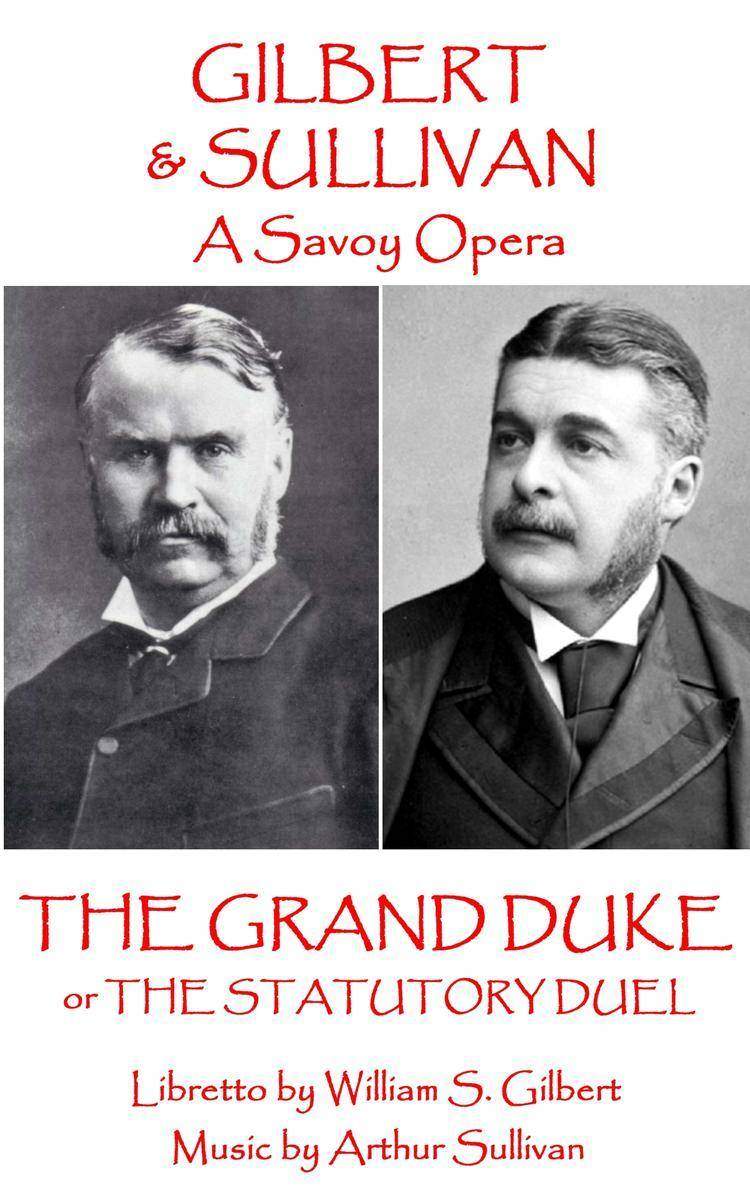
Grand Duke - or The Stuatory Duel
¥26.98
The partnership between William Schwenck Gilbert and Arthur Seymour Sullivan and their canon of Savoy Operas is rightly lauded by all lovers of comic opera the world over. Gilbert's sharp, funny words and Sullivan's deliciously lively and hummable tunes create a world that is distinctly British in view but has the world as its audience. Both men were exceptionally talented and gifted in their own right and wrote much, often with other partners, that still stands the test of time. However, together as a team they created Light or Comic Operas of a standard that have had no rivals equal to their standard, before or since. That's quite an achievement. To be recognised by the critics is one thing but their commercial success was incredible. The profits were astronomical, allowing for the building of their own purpose built theatre - The Savoy Theatre. Beginning with the first of their fourteen collaborations, Thespis in 1871 and travelling through many classics including The Sorcerer (1877), H.M.S. Pinafore (1878), The Pirates of Penzance (1879), The Mikado (1885), The Gondoliers (1889) to their finale in 1896 with The Grand Duke, Gilbert & Sullivan created a legacy that is constantly revived and admired in theatres and other media to this very day.
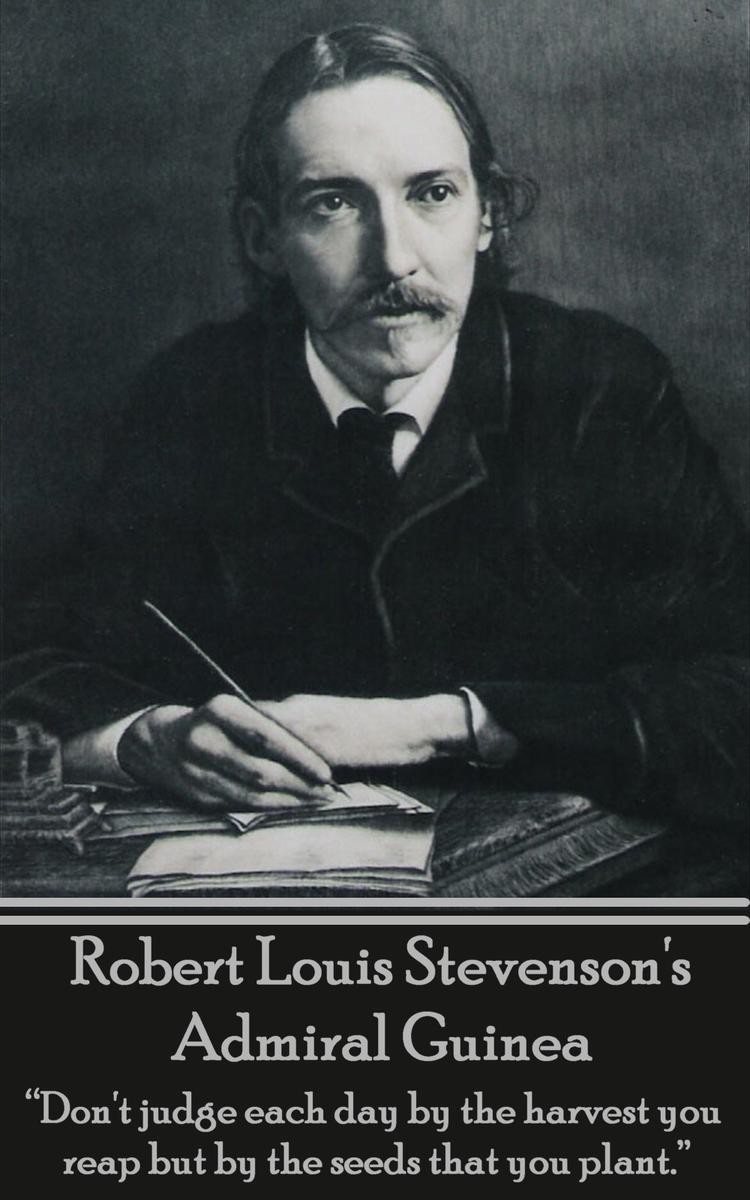
Admiral Guinea - Don't judge each day by the harvest you reap but by the seeds t
¥11.87
Robert Louis Stevenson. In the Scottish canon to be placed alongside Burns for your poems is high praise indeed but it's a rightful place for one of Scotland's finest novelists. Born in 1850 he managed to cram much into his 44 years travelling widely to France, the United States, Samoa and the South Seas. Of course he is widely feted for his classics Dr Jeckyll & Mr Hyde, Treasure Island and poetry volumes such as A Child's Garden Of Verses and short storeis such The Body Snatchers. All offer compelling examples of narration superbly reduced to their essence. This volume 'Admiral Guinea' is another distinctive facet to his works. And yes, superbly written.
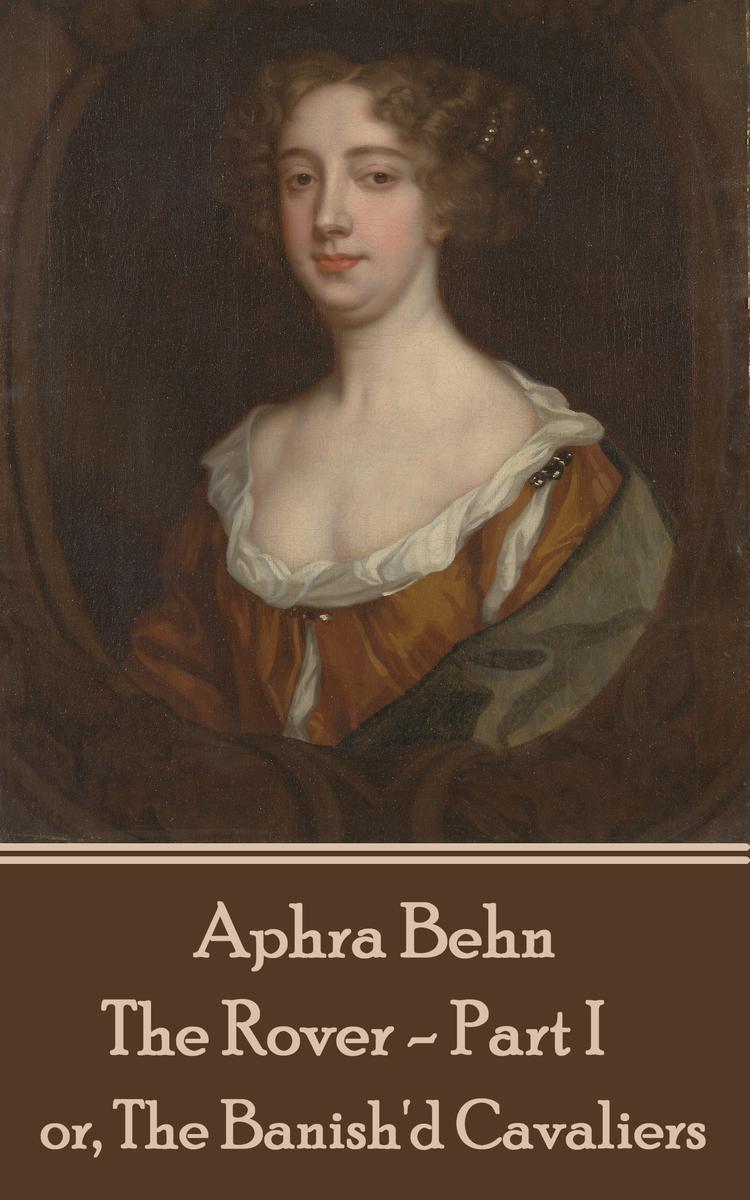
Rover - Part I - or, The Banish'd Cavaliers
¥23.45
Aphra Behn was a prolific and well established writer but facts about her remain scant and difficult to confirm. What can safely be said though is that Aphra Behn is now regarded as a key English playwright and a major figure in Restoration theatre. Aphra was born into the rising tensions to the English Civil War. Obviously a time of much division and difficulty as the King and Parliament, and their respective forces, came ever closer to conflict. There are claims she was a spy, that she travelled abroad, possibly as far as Surinam. By 1664 her marriage was over (though by death or separation is not known but presumably the former as it occurred in the year of their marriage) and she now used Mrs Behn as her professional name. Aphra now moved towards pursuing a more sustainable and substantial career and began work for the King's Company and the Duke's Company players as a scribe. Previously her only writing had been poetry but now she would become a playwright. Her first, "e;The Forc'd Marriage"e;, was staged in 1670, followed by "e;The Amorous Prince"e; (1671). After her third play, "e;The Dutch Lover"e;, Aphra had a three year lull in her writing career. Again it is speculated that she went travelling again, possibly once again as a spy. After this sojourn her writing moves towards comic works, which prove commercially more successful. Her most popular works included "e;The Rover"e; and "e;Love-Letters Between a Nobleman and His Sister"e; (1684-87). With her growing reputation Aphra became friends with many of the most notable writers of the day. This is The Age of Dryden and his literary dominance. From the mid 1680's Aphra's health began to decline. This was exacerbated by her continual state of debt and descent into poverty. Aphra Behn died on April 16th 1689, and is buried in the East Cloister of Westminster Abbey. The inscription on her tombstone reads: "e;Here lies a Proof that Wit can never be Defence enough against Mortality."e; She was quoted as stating that she had led a "e;life dedicated to pleasure and poetry."e;
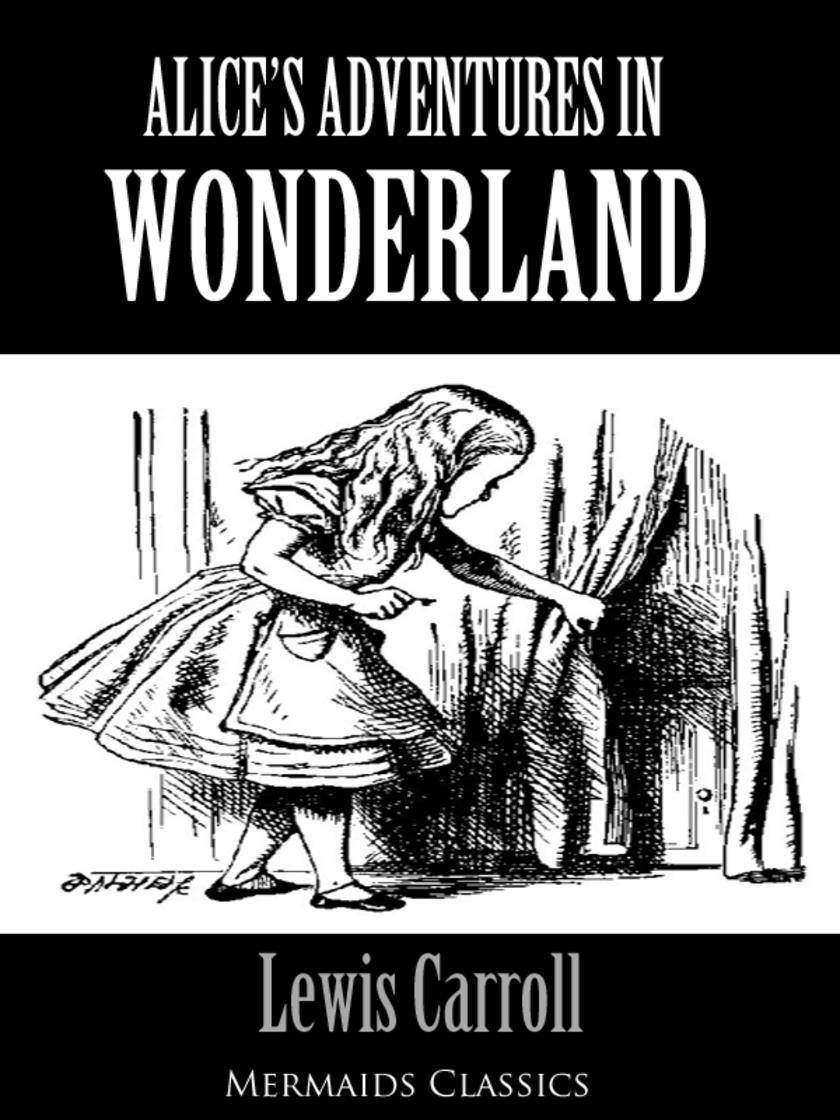
Alice's Adventures in Wonderland - An Original Classic (Mermaids Classics)
¥11.67
Alices Adventures in Wonderland (also known as Alice in Wonderland) by Lewis Carroll - aka Charles Lutwidge Dodgson (1832 1898) is an 1865 childrens fantasy novel portraying a young girl named Alice who spots a rabbit with a pocket watch and follows him until she falls down a rabbit hole. The rabbit hole leads her to a fantasy world called Wonderland where she meets many anthropomorphic creatures. Illustrations within this novel are the original illustrations by John Tenniel.Mermaids Classics, an imprint of Mermaids Publishing brings the very best of classic literature to a modern era of digital reading by producing high quality books in ebook format.
Sense and Sensibility
¥11.67
Sense and Sensibility, by Jane Austen is a romantic fiction novel about the Dashwood sisters Elinor and Marianne who go through love, romance, hardship and heartbreak. The scene is set in Southwest England between the years 1792 and 1797 and it follows the story how the two sisters are forced to live in a relatives estate due to the death of their father who leaves them with an inadequate inheritance. The novel was originally published in 1811 under the pseudonym A Lady and was Jane Austens first novel.This digital edition is beautifully formatted with an active Table of Contents that goes directly to each chapter. Mermaids Classics, an imprint of Mermaids Publishing brings the very best of old book classics to a modern era of digital reading by producing high quality books in ebook format.
Billy Lynn's Long Halftime Walk
¥62.78
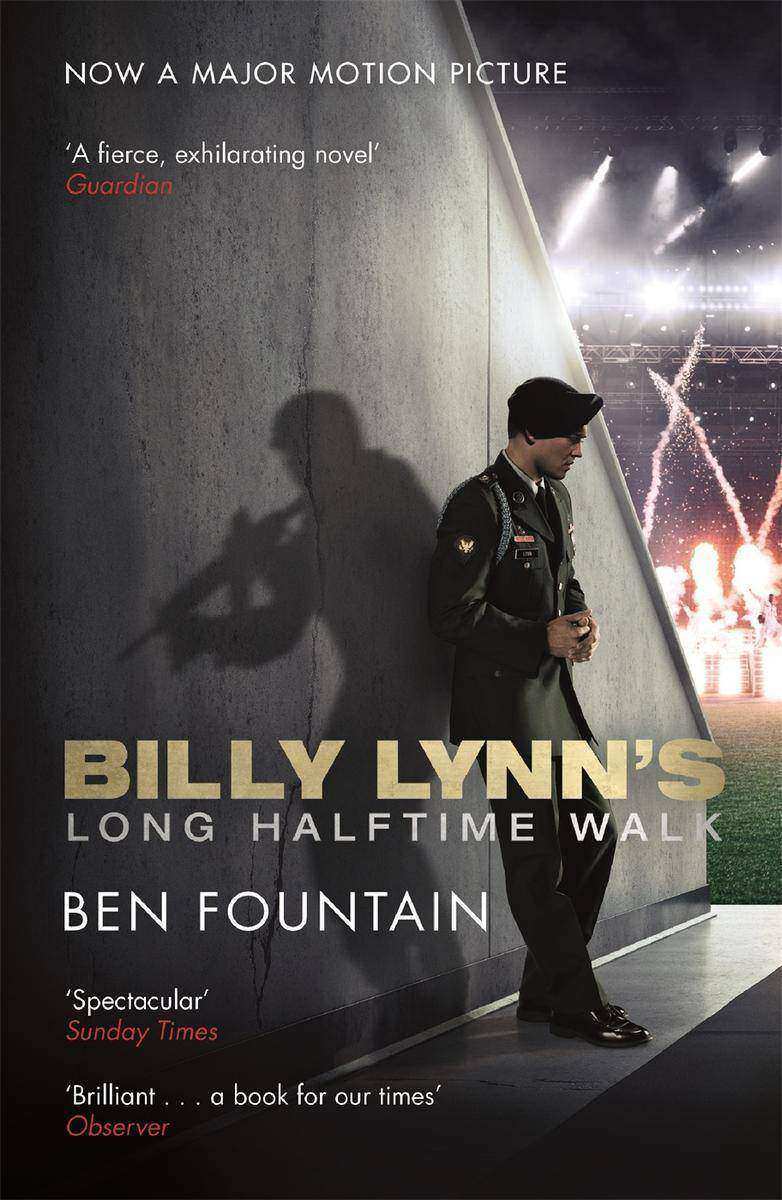
NOW A MAJOR MOTION PICTURE BY OSCAR-WINNING DIRECTOR ANG LEEBilly Lynn is home from Iraq. And he's a YouTube sensation. Tonight, with the nation's eyes on him, Billy steps out onto the field at the Dallas Cowboys' Thanksgiving football game. Tomorrow, he must go back to war.
Countess Cathleen - The world is full of magic things
¥35.22
William Butler Yeats (1865 - 1939) is best described as Ireland's national poet in addition to being one of the major twentieth-century literary figures of the English tongue. To many literary critics, Yeats represents the 'Romantic poet of modernism,' which is quite revealing about his extraordinary style that combines between the outward emphasis on the expression of emotions and the extensive use of symbolism, imagery and allusions. Yeats also wrote prose and drama and established himself as the spokesman of the Irish cause. His fame was greatly boosted mainly after he received the Nobel Prize in Literature in 1923. His life was marked by his many love stories, by his great interest in oriental mysticism and occultism as well as by political engagement since he served as an Irish senator for two terms. Today, although William Butler Yeats's contribution to literary modernism and to Irish nationalism remains incontestable. Here we publish a collection of his remarkable plays that allow us to fully immerse ourselves in his talents.
Scarlet Letter - She had not known the weight until she felt the freedom.
¥14.03
Set in 17th-century New England, Nathaniel Hawthorne's masterpiece, The Scarlet Letter, is a novel that combines the romantic style with the historical genre and a number of Gothic conventions and themes, namely the themes of sin, guilt, repentance and mortification. The book tells the tragic story of Hester Prynne who has to wear the letter "e;A"e; on her breast as a token of shame for having committed adultery and given birth to an illegitimate child that she named Pearl . Furthermore, Prynne is doubly punished for not accepting to reveal the identity of her lover. As her stigmatization by the conservative community intensifies, a highly respected minister, Arthur Dimmesdale, intervenes with local authorities to prevent her separation from her child. The narrative then focuses on the character of the churchman who appears to be suffering from poor physical and psychological health. It is only later in the story that readers understand the secret behind Dimmesdale's self-inflicted tortures. Being Pearl's biological father, he lacks the courage to publically assume his responsibilities the way Prynne does. As the narrative approaches its end, one its most emotional climactic scenes shows the three members of the cursed family together on the public scaffold where Dimmesdale finally recognizes his sin and passes away on the spot.
Noble Spanish Soldier - Com'st thou to mock my tortures with her triumphs?
¥26.98
Thomas Dekker was a playwright, pamphleteer and poet who, perhaps, deserves greater recognition than he has so far gained. Despite the fact only perhaps twenty of his plays were published, and fewer still survive, he was far more prolific than that. Born around 1572 his peak years were the mid 1590's to the 1620's - seven of which he spent in a debtor's prison. His works span the late Elizabethan and Caroline eras and his numerous collaborations with Ford, Middleton, Webster and Jonson say much about his work. His pamphlets detail much of the life in these times, times of great change, of plague and of course that great capital city London a swirling mass of people, power, intrigue.
Love Of Life & Other Stories - You can't wait for inspiration. You have to go af
¥23.45
John Griffith &quote;Jack&quote; London was born John Griffith Chaney on January 12th, 1876 in San Francisco. His father, William Chaney, was living with his mother Flora Wellman when she became pregnant. Chaney insisted she have an abortion. Flora's response was to turn a gun on herself. Although her wounds were not severe the trauma made her temporarily deranged. In late 1876 his mother married John London and the young child was brought to live with them as they moved around the Bay area, eventually settling in Oakland where Jack completed grade school. Jack also worked hard at several jobs, sometimes 12-18 hours a day, but his dream was university. He was lent money for that and after intense studying enrolled in the summer of 1896 at the University of California in Berkeley. In 1897, at 21 , Jack searched out newspaper accounts of his mother's suicide attempt and the name of his biological father. He wrote to William Chaney, then living in Chicago. Chaney said he could not be London's father because he was impotent; and casually asserted that London's mother had relations with other men. Jack, devastated by the response, quit Berkeley and went to the Klondike. Though equally because of his continuing dire finances Jack might have taken that as the excuse he needed to leave. In the Klondike Jack began to gather material for his writing but also accumulated many health problems, including scurvy, hip and leg problems many of which he then carried for life. By the late 1890's Jack was regularly publishing short stories and by the turn of the century full blown novels. By 1904 Jack had married, fathered two children and was now in the process of divorcing. A stint as a reporter on the Russo-Japanese war of 1904 was equal amounts trouble and experience. But that experience was always put to good use in a remarkable output of work. Twelve years later Jack had amassed a wealth of writings many of which remain world classics. He had a reputation as a social activist and a tireless friend of the workers. And yet on November 22nd 1916 Jack London died in a cottage on his ranch at the age of only 40. Here we present Love Of Life & Other Stories.
Admirable Crichton - Ambition - it is the last infirmity of noble minds
¥25.80
Sir James Matthew Barrie, 1st Baronet, OM, was born in Kirriemuir, Angus the ninth of ten children on May 9th, 1860. From early formative experiences, Barrie knew that he wished to follow a career as an author. His family wished otherwise and sought to persuade him to choose a profession, such as the ministry. The compromise was that he would attend university to study literature at the University of Edinburgh. He graduated with an M.A. on April 21st, 1882. His first job was as a staff journalist for the Nottingham Journal. The London editor of the St. James's Gazette "e;liked that Scotch thing"e; in Barrie's short stories about his mother's early life. They also served as the basis for his first novels. Barrie though was increasingly drawn to working in the theatre. His first play, a biography of Richard Savage, was only performed once and critically panned. Undaunted he immediately followed this with Ibsen's Ghost in 1891, a parody of Ibsen's plays Hedda Gabler and Ghosts. Barrie's third play, Walker, London, in 1892 led to an introduction to his future wife, a young actress by the name of Mary Ansell. The two became friends, and she helped his family to care for him when he fell very ill in 1893 and 1894. Barrie proposed and they were married, in Kirriemuir, on July 9th, 1894. By some accounts the relationship was unconsummated and indeed the couple had no children. The story of Peter Pan had begun to formulate when Barrie became acquainted with the Llewelyn Davis family in 1897, meeting George, Jack and baby Peter with their nanny in London's Kensington Gardens. In 1901 and 1902, Barrie had back-to-back theatre successes with Quality Street and The Admirable Crichton. The character of "e;Peter Pan"e; first appeared in The Little White Bird in 1902. This most famous and enduring of his works; Peter Pan, or The Boy Who Wouldn't Grow Up had its first stage performance on December 27th, 1904. Peter Pan would overshadow everything written during his career. He continued to write for the rest of his life contributing many other fine and important works. Sir James Matthew Barrie, 1st Baronet, OM, died of pneumonia on June 19th,1937 and was buried at Kirriemuir next to his parents and two of his siblings.
Comedy Of Errors
¥17.56
William Shakespeare was born in Stratford-upon-Avon in late April 1565 and baptised there on 26th April. He was one of eight children. Little is known about his life but what is evident is the enormous contribution he has made to world literature. His writing was progressive, magnificent in scope and breathtaking in execution. His plays and sonnets helped enable the English language to speak with a voice unmatched by any other. William Shakespeare died on April 23rd 1616, survived by his wife and two daughters. He was buried two days after his death in the chancel of the Holy Trinity Church. The epitaph on the slab which covers his grave includes the following passage, Good friend, for Jesus's sake forbear, To dig the dust enclosed here. Blessed me the man that spares these stones, And cursed be he that moves my bones. Here we publish from 1589 the classic 'The Comedy Of Errors'.
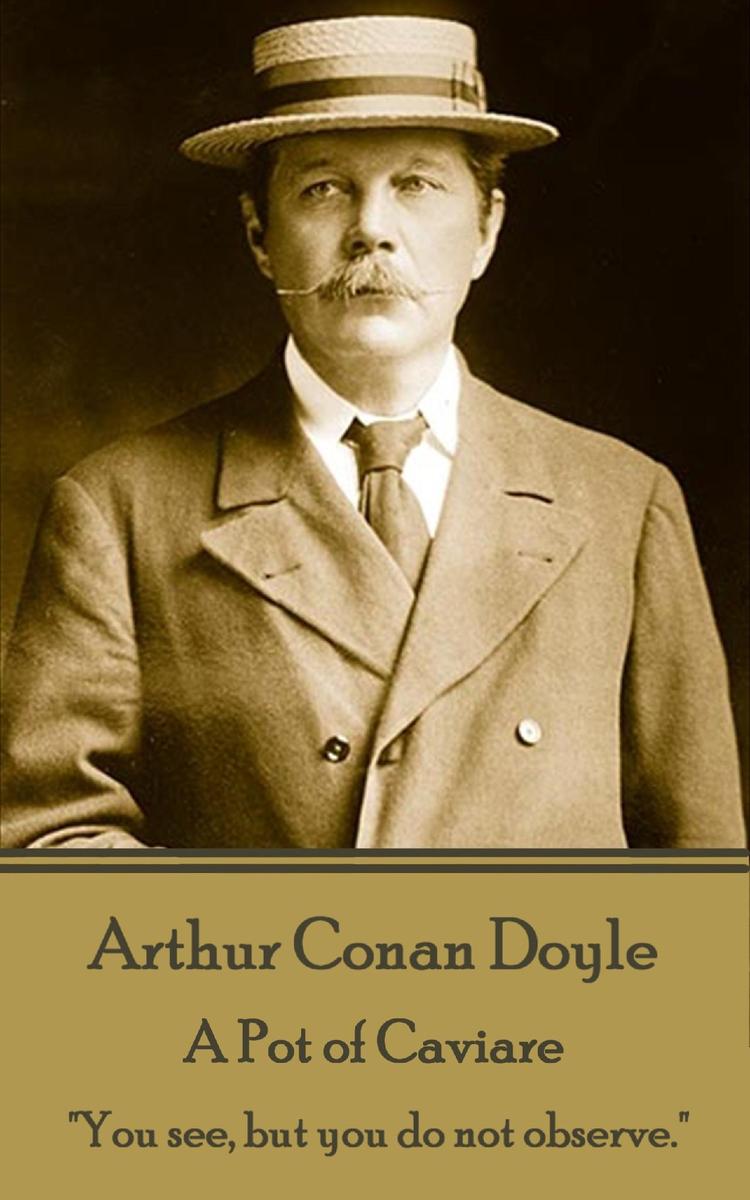
Pot of Caviare - You see, but you do not observe.
¥11.67
If ever a writer needed an introduction Arthur Conan Doyle would not be considered that man. After all, Sherlock Holmes is perhaps the foremost literary detective of any age. Add to this canon his stories of science fiction and his poems, his historical novels, his plays, his political campaigning, his efforts in establishing a Court Of Appeal and there is little room for anything else. Except he was also an exceptional writer of short stories of the horrific and macabre. Something very different from what you might expect. Born in Arthur Conan Doyle was born on 22 May 1859 at 11 Picardy Place, Edinburgh, Scotland. From 1876 - 1881 he studied medicine at the University of Edinburgh following which he was employed as a doctor on the Greenland whaler Hope of Peterhead in 1880 and, after his graduation, as a ship's surgeon on the SS Mayumba during a voyage to the West African coast in 1881. Arriving in Portsmouth in June of that year with less than GBP10 (GBP700 today) to his name, he set up a medical practice at 1 Bush Villas in Elm Grove, Southsea. The practice was initially not very successful. While waiting for patients, Conan Doyle again began writing stories and composed his first novel The Mystery of Cloomber. Although he continued to study and practice medicine his career was now firmly set as a writer. And thereafter great works continued to pour out of him.

Red Room - There are poisons that blind you, and poisons that open your eyes.
¥29.33
Johan August Strindberg was born on January 22nd 1849 in Stockholm in Sweden. It was only at the age of 32 that Strindberg managed to break through as a playwright with 'Master Olef'. Of course with a predecessor as famous as Henrik Ibsen overshadowing everything it was difficult, perhaps, to make headway. However Stringberg took to the task, exploring a wide range of styles, experimenting at every opportunity and with The Red Room wrote what is lauded as the first modern Swedish novel. His career spanned some 60 plays and another 30 novels and associated texts. Whilst he was prolific writer he was also something of a polymath, a telegrapher, theosophist, painter, photographer and alchemist. Much of the 1890's was spent abroad but several psychotic attacks between 1894 to 1896 (referred to as his "e;Inferno crisis"e;) led to his hospitalisation and return to Sweden. His works continued to expand and reshape the boundaries of theatre and many are considered classics and deservedly so. Strindberg became ill with pneumonia during Christmas 1911 and never recovered completely. On April 9th 1912 he at last premiered in New York at the Berkeley Theatre with 'The Father'. He died on 14 May 1912 at the age of 63. Strindberg was interred in the Norra begravningsplatsen in Stockholm.
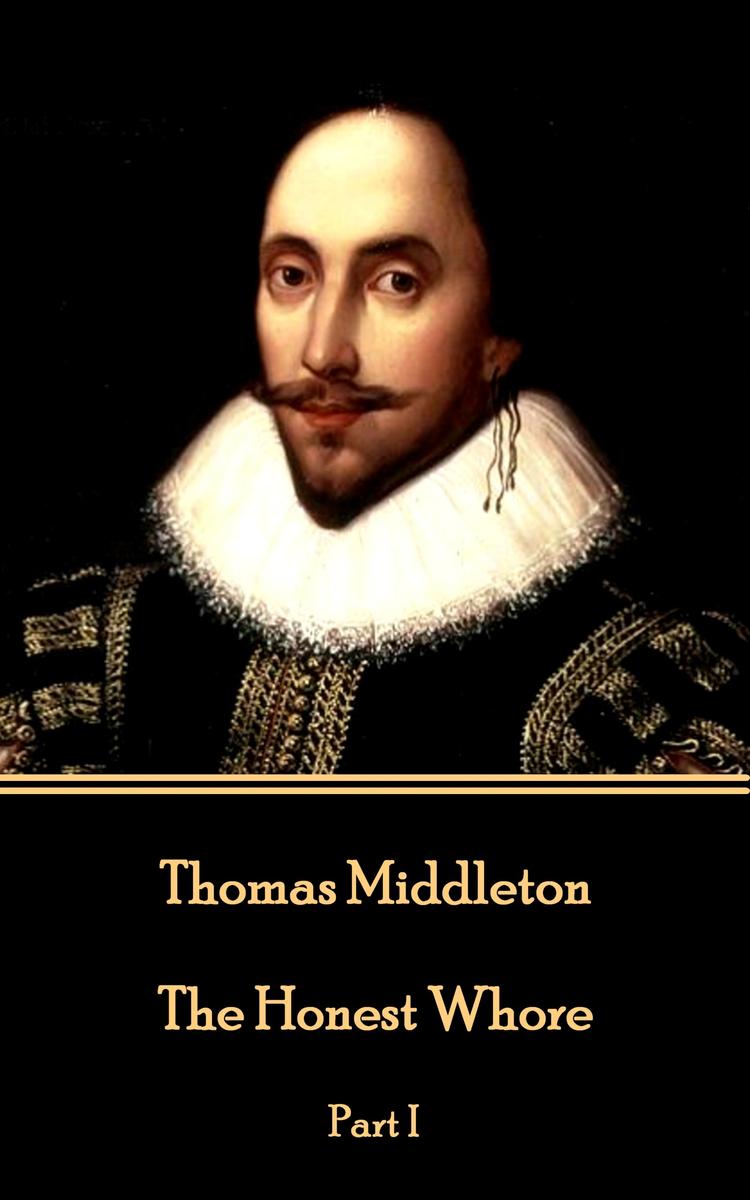
Honest Whore - Part I
¥23.45
Thomas Middleton was born in London in April 1580 and baptised on 18th April. Middleton was aged only five when his father died. His mother remarried but this unfortunately fell apart into a fifteen year legal dispute regarding the inheritance due Thomas and his younger sister. By the time he left Oxford, at the turn of the Century, Middleton had and published Microcynicon: Six Snarling Satirese which was denounced by the Archbishop of Canterbury and publicly burned. In the early years of the 17th century, Middleton wrote topical pamphlets. One - Penniless Parliament of Threadbare Poets was reprinted several times and the subject of a parliamentary inquiry. These early years writing plays continued to attract controversy. His writing partnership with Thomas Dekker brought him into conflict with Ben Jonson and George Chapman in the so-called War of the Theatres. His finest work with Dekker was undoubtedly The Roaring Girl, a biography of the notorious Mary Frith. In the 1610s, Middleton began another playwriting partnership, this time with the actor William Rowley, producing another slew of plays including Wit at Several Weapons and A Fair Quarrel. The ever adaptable Middleton seemed at ease working with others or by himself. His solo writing credits include the comic masterpiece, A Chaste Maid in Cheapside, in 1613. In 1620 he was officially appointed as chronologer of the City of London, a post he held until his death. The 1620s saw the production of his and Rowley's tragedy, and continual favourite, The Changeling, and of several other tragicomedies. However in 1624, he reached a peak of notoriety when his dramatic allegory A Game at Chess was staged by the King's Men. Though Middleton's approach was strongly patriotic, the Privy Council silenced the play after only nine performances at the Globe theatre, having received a complaint from the Spanish ambassador. What happened next is a mystery. It is the last play recorded as having being written by Middleton. Thomas Middleton died at his home at Newington Butts in Southwark in the summer of 1627, and was buried on July 4th, in St Mary's churchyard which today survives as a public park in Elephant and Castle.

Gibson Upright
¥29.33
Booth Tarkington was born on July 29, 1869 in Indianapolis, Indiana. He is one of only three novelists to win the Pulitzer Prize more than once. When you look through the quality of his work it is easy to understand why. The Magnificent Ambersons, Alice Adams, Penrod, Penrod And Sam - all classics. The Penrod novels depict a typical upper-middle class American boy of 1910 vintage, revealing a fine, bookish sense of American humor. At one time, his Penrod series was as well known andregarded as Twain's Huckleberry Finn. Much of Tarkington's work consists of satirical and closely observed studies of the American class system and its foibles. Coming as he did from a patrician Midwestern family that lost much of its wealth after the Panic of 1873 the foundations for that outlook are clear. Today, he is best known for his novel The Magnificent Ambersons which contrasted the decline of the "e;old money"e; Amberson dynasty with the rise of "e;new money"e; industrial tycoons in the years between the American Civil War and World War I. In this volume you have an opportunity to read one his plays, The Gibson Upright


