


 购物车
购物车 个人中心
个人中心

Tears Within The Heart
¥19.52
Writings about the journey through life from a young adults life experiences.
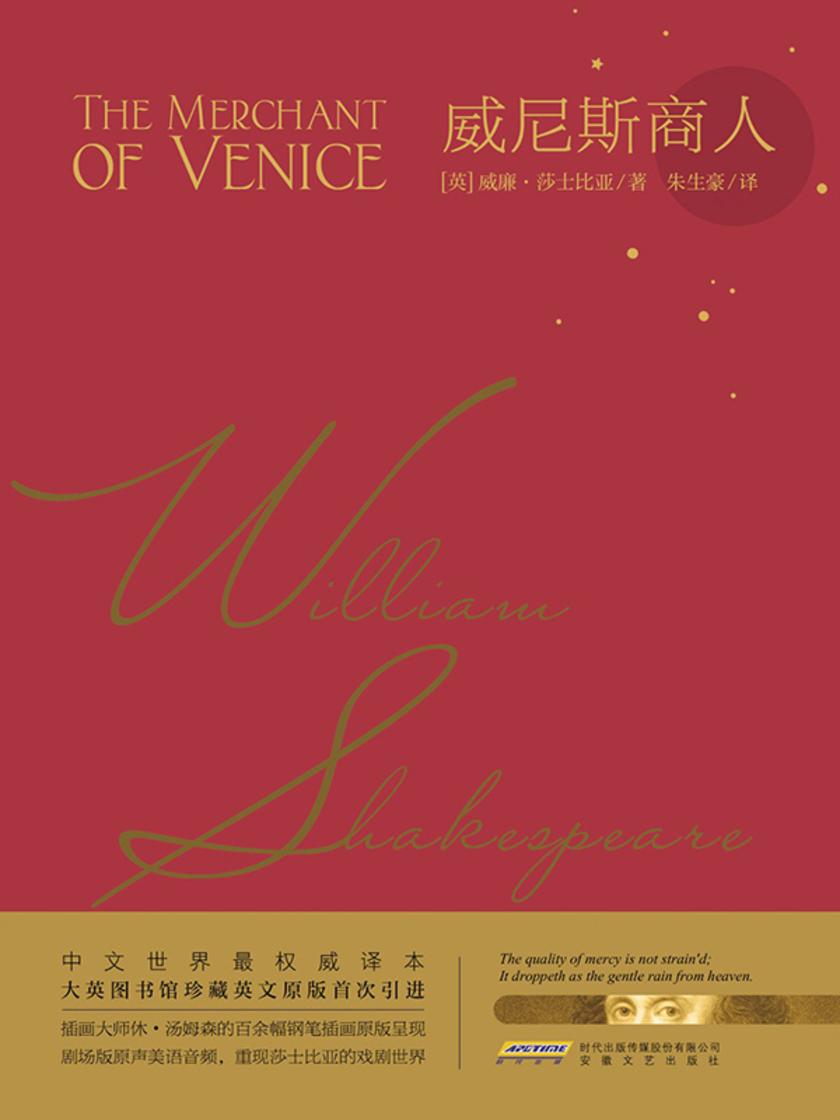
莎士比亚戏剧典藏:威尼斯商人
¥12.99
《威尼斯商人》 是莎士比亚早期的重要作品,是一部具有极大讽刺性的喜剧。主要讲述了威尼斯商人安东尼奥为了帮助好友巴萨尼奥成婚,向犹太人高利贷者夏洛克借了三千金币。夏洛克因为安东尼奥借给别人钱不要利息,影响了他的生意,又侮辱过他,所以借机报复,在借约上戏言三个月期满还不上钱,就从安东尼奥身上割下一磅肉抵债。安东尼奥因船失事,不能如期还钱,夏洛克就提起公诉,要安东尼奥履行借约。 为救安东尼奥的性命,巴萨尼奥的未婚妻鲍西亚假扮律师,利用智慧巧妙地让夏洛克无法执行割一磅肉而败诉,害人不成反而失去财产。
Speckled Band - Women are naturally secretive, and they like to do their own sec
¥26.98
If ever a writer needed an introduction Arthur Conan Doyle would not be considered that man. After all, Sherlock Holmes is perhaps the foremost literary detective of any age. Add to this canon his stories of science fiction and his poems, his historical novels, his plays, his political campaigning, his efforts in establishing a Court Of Appeal and there is little room for anything else. Except he was also an exceptional writer of short stories of the horrific and macabre. Something very different from what you might expect. Born in Arthur Conan Doyle was born on 22 May 1859 at 11 Picardy Place, Edinburgh, Scotland. From 1876 - 1881 he studied medicine at the University of Edinburgh following which he was employed as a doctor on the Greenland whaler Hope of Peterhead in 1880 and, after his graduation, as a ship's surgeon on the SS Mayumba during a voyage to the West African coast in 1881. Arriving in Portsmouth in June of that year with less than GBP10 (GBP700 today) to his name, he set up a medical practice at 1 Bush Villas in Elm Grove, Southsea. The practice was initially not very successful. While waiting for patients, Conan Doyle again began writing stories and composed his first novel The Mystery of Cloomber. Although he continued to study and practice medicine his career was now firmly set as a writer. And thereafter great works continued to pour out of him.

Tumble-Down Dick - Let no man be sorry he has done good, because others have don
¥23.45
Henry Fielding was born at Sharpham Park, near Glastonbury, in Somerset on April 22nd 1707. His early years were spent on his parents' farm in Dorset before being educated at Eton.An early romance ended disastrously and with it his removal to London and the beginnings of a glittering literary career; he published his first play, at age 21, in 1728.He was prolific, sometimes writing six plays a year, but he did like to poke fun at the authorities. His plays were thought to be the final straw for the authorities in their attempts to bring in a new law. In 1737 The Theatrical Licensing Act was passed. At a stroke political satire was almost impossible. Fielding was rendered mute. Any playwright who was viewed with suspicion by the Government now found an audience difficult to find and therefore Theatre owners now toed the Government line.Fielding was practical with the circumstances and ironically stopped writing to once again take up his career in the practice of law and became a barrister after studying at Middle Temple. By this time he had married Charlotte Craddock, his first wife, and they would go on to have five children. Charlotte died in 1744 but was immortalised as the heroine in both Tom Jones and Amelia. Fielding was put out by the success of Samuel Richardson's Pamela, or Virtue Rewarded. His reaction was to spur him into writing a novel. In 1741 his first novel was published; the successful Shamela, an anonymous parody of Richardson's novel. Undoubtedly the masterpiece of Fielding's career was the novel Tom Jones, published in 1749. It is a wonderfully and carefully constructed picaresque novel following the convoluted and hilarious tale of how a foundling came into a fortune.Fielding was a consistent anti-Jacobite and a keen supporter of the Church of England. This led to him now being richly rewarded with the position of London's Chief Magistrate. Fielding continued to write and his career both literary and professional continued to climb. In 1749 he joined with his younger half-brother John, to help found what was the nascent forerunner to a London police force, the Bow Street Runners. Fielding's ardent commitment to the cause of justice in the 1750s unfortunately coincided with a rapid deterioration in his health. Such was his decline that in the summer of 1754 he travelled, with Mary and his daughter, to Portugal in search of a cure. Gout, asthma, dropsy and other afflictions forced him to use crutches. His health continued to fail alarmingly.Henry Fielding died in Lisbon two months later on October 8th, 1754.
Mordred - 'Our Order knows no greater name. Did I not match it with a charge as
¥23.45
Sir Henry John Newbolt, CH was born on 6th June 1862 in Bilston, Wolverhampton, the son of the vicar of St Mary's Church, the Rev. Henry Francis Newbolt, and his second wife, Emily nee Stubbs. After his father's death, in 1866, the family moved to Walsall.There Newbolt attended Queen Mary's Grammar School, Walsall, and Caistor Grammar School, from where he gained a scholarship to Clifton College, where he was head of the school and editor of the school magazine. Upon graduation from Corpus Christi College, Oxford, he was called to the bar at Lincoln's Inn in 1887 and practised until 1899.He married Margaret Edwina nee Duckworth, of the prominent publishing family, and they had two children: Margaret Cecilia (1890) and Arthur Francis (1893).Behind the steady Edwardian facade lay intimate complications; a menage a trois. His wife had a long-running affair with her cousin, Laura Isabella 'Ella' Coltman to whom Newbolt had dedicated one of his own poems and was also involved with. Newbolt divided his time between the two women so there was no jealousy. Although it could equally be argued they divided their time.His first book was a novel, 'Taken from the Enemy' (1892), and this was followed in 1895 by a play, the tragedy, 'Mordred'. But it was with 'Admirals All' (1897), that his reputation was set. There followed further volumes of uplifting verse, including 'The Island Race' (1898), 'The Sailing of the Long-ships' (1902), 'Songs of the Sea' (1904) and 'Songs of the Fleet' (1910). Among the most stirring and patriotically heroic of his poems are the often anthologised 'Vitai Lampada' and 'Drake's Drum'.As well as writing he was also, from October 1900 to September 1904, the editor of the Monthly Review. In 1914, Newbolt published Aladore, a fantasy novel about a bored, dutiful knight who abandons his estate to pursue his heart's desire and woo a half-fae enchantress. As the First World War engulfed Europe, Newbolt, and another 20 British writers, were absorbed into the War Propaganda Bureau. Their talents were put to use promoting Britain's interests and to maintain public opinion in favour of the war.He was knighted in 1915 and became the Controller of Telecommunications at the Foreign Office. Among his war poems was 'The War Films', printed in The Times on 14th October 1916, in reference to the shock cinema audiences felt on seeing footage of the Battle of the Somme.Newbolt was knighted in 1915 and was appointed Companion of Honour in 1922.In 1921 he authored the government Report 'The Teaching of English in England' which helped to establish the foundations for modern English Studies and professionalised the teaching of English Literature. With it he established a canon, and was unequivocal that English must become the linguistic and literary standard throughout the Empire.Newbolt was also part of an inner advisory circle of Asquith's government and also advised on policy in Ireland.Sir Henry John Newbolt, CH died at his home in Campden Hill, Kensington, London, on 19th April 1938, at the age of 75. He is buried in the churchyard of St Mary's church on an island in the lake on the Orchardleigh Estate of the Duckworth family in Somerset.
Acharnians - A man's homeland is wherever he prospers
¥11.67
The reality is that little is known of Aristophanes actual life but eleven of his forty plays survive intact and upon those rest his deserved reputation as the Father of Comedy or, The Prince of Ancient Comedy. Accounts agree that he was born sometime between 456BC and 446 BC. Many cities claim the honor of his birthplace and the most probable story makes him the son of Philippus of gina, and therefore only an adopted citizen of Athens, a distinction which, at times could be cruel, though he was raised and educated in Athens. His plays are said to recreate the life of ancient Athens more realistically than any other author could. Intellectually his powers of ridicule were feared by his influential contemporaries; Plato himself singled out Aristophanes' play The Clouds as a slander that contributed to the trial and condemning to death of Socrates and although other satirical playwrights had also caricatured the philosopher his carried the most weight. His now lost play, The Babylonians, was denounced by the demagogue Cleon as a slander against the Athenian polis. Aristophanes seems to have taken this criticism to heart and thereafter caricatured Cleon mercilessly in his subsequent plays, especially The Knights. His life and playwriting years were undoubtedly long though again accounts as to the year of his death vary quite widely. What can be certain is that his legacy of surviving plays is in effect both a treasured legacy but also in itself the only surviving texts of Ancient Greek comedy.
Adventure of the Dying Detective - There are always some lunatics about
¥14.03
If ever a writer needed an introduction Arthur Conan Doyle would not be considered that man. After all, Sherlock Holmes is perhaps the foremost literary detective of any age. Add to this canon his stories of science fiction and his poems, his historical novels, his plays, his political campaigning, his efforts in establishing a Court of Appeal and there is little room for anything else. Except he was also an exceptional writer of short stories of the horrific and macabre. Something very different from what you might expect. Born in Arthur Conan Doyle was born on 22 May 1859 at 11 Picardy Place, Edinburgh, Scotland. From 1876 - 1881 he studied medicine at the University of Edinburgh following which he was employed as a doctor on the Greenland whaler Hope of Peterhead in 1880 and, after his graduation, as a ship's surgeon on the SS Mayumba during a voyage to the West African coast in 1881. Arriving in Portsmouth in June of that year with less than GBP10 (GBP700 today) to his name, he set up a medical practice at 1 Bush Villas in Elm Grove, Southsea. The practice was initially not very successful. While waiting for patients, Conan Doyle again began writing stories and composed his first novel The Mystery of Cloomber. Although he continued to study and practice medicine his career was now firmly set as a writer. And thereafter great works continued to pour out of him.

Ulysses
¥23.45
Nicholas Rowe was born in Little Barford, Bedfordshire, England, on June 20th, 1674. He was educated at Highgate School, and then at Westminster School under the tutelage of Dr. Busby.In 1688, Rowe became a King's Scholar, and then in 1691 gained entrance into Middle Temple. This was his father's decision (he was a barrister) who felt that his son had made sufficient progress to study law. While at Middle Temple, he decided that studying law was easier if seen as a system of rational government and impartial justice and not as a series of precedents, or collection of positive precepts.On his father's death, when he was nineteen, he became the master of a large estate and an independent fortune. His future path now was to ignore law and write poetry with a view to eventually writing plays.The Ambitious Stepmother, Rowe's first play, produced in 1700 at Lincoln's Inn Fields by Thomas Betterton and set in Persepolis, was well received. This was followed in 1701 by Tamerlane. In this play the conqueror Timur represented William III, and Louis XIV is denounced as Bajazet. It was for many years regularly acted on the anniversary of William's landing at Torbay. In 1704, he tried his hand at comedy, with The Biter at Lincoln's Inn Fields. The play is said to have amused no one except the author, and Rowe returned to tragedy in Ulysses (1706). For Johnson, this play was to share the fate of many such plays based on mythological heroes, as, "e;We have been too early acquainted with the poetical heroes to expect any pleasure from their revival"e;The Royal Convert (1707) dealt with the persecutions endured by Aribert, son of Hengist and the Christian maiden Ethelinda. The story was set in England in an obscure and barbarous age. Rodogune was a tragic character, of high spirit and violent passions, yet with a wicked with a soul that would have been heroic if it had been virtuous.Rowe is however well known for his work on Shakespeare's plays. He published the first 18th century edition of Shakespeare in six volumes in 1709. His practical knowledge of the stage helped him divide the plays into scenes and acts, with entrances and exits of the players noted. The spelling of names was normalized and each play prefixed with a dramatis personae. This 1709 edition was also the first to be illustrated, a frontispiece engraving being provided for each play. Unfortunately, Rowe based his text on the discredited Fourth Folio, a failing which many succeeding him also followed.Rowe also wrote a short biography of William Shakespeare, entitled, Some Account of the Life of Mr. William Shakespeare.In Dublin in 1712 a revival of his earlier play, Tamerlane, at a time when political passions were running high, the performance provoked a serious riot.The Tragedy of Jane Shore, played at Drury Lane with Mrs Oldfield in the title role in 1714. It ran for nineteen nights, and kept the stage longer than any other of Rowe's works. In the play, which consists chiefly of domestic scenes and private distress, the wife is forgiven because she repents, and the husband is honoured because he forgives.Whilst his plays met with little success at the time his poems were received extremely well. Although he was not prolific nor his output large the quality was high. With the accession to the throne of George I he was made a surveyor of customs, and then, in 1715, he succeeded Nahum Tate as poet laureate. It was the high point of his artistic life.He was also appointed clerk of the council to the Prince of Wales, and in 1718 was nominated by Lord Chancellor Parker as clerk of the presentations in Chancery. Nicholas Rowe died on December 6th, 1718, and was buried in Westminster Abbey.Rowe married first a daughter of a Mr Parsons and left a son John. By his second wife Anne, nee Devenish, he had a daughter Charlotte.
12 Years A Slave - The original story behind the Oscar Winning Best Picture.
¥21.09
Twelve Years A Slave is subtitled Narrative of Solomon Northup, citizen of New York, kidnapped in Washington city in 1841, and rescued in 1853 from a cotton plantation near the Red River in Louisiana. This subtitle accurately describes the book which is entirely based on the true story of Solomon Northup as told to and edited by David Wilson. The book was published in 1853 and became a bestseller following Uncle Tom's Cabin which was set in the same kind of Louisiana cotton plantation that some of Twelve Years A Slave is set, but the book subsequently faded until the sixties and is now universally acclaimed following the award winning film. Solomon was born in 1808 to a father who had been a slave to the Northup family of Rhode Island but then freed and grew up in Minerva New York State. He married Anne who he had three children with and worked as a raftsmen, farmer and fiddle player. He gained a good reputation as a fiddle player and was tricked accepting an engagement that led to his kidnap and was subsequently taken to a slave market in Washington D.C. and then by ship to New Orleans in horrific conditions that resulted in the death of one of his fellow travellers. The injustice and indignity he suffered under a range of masters, some of whom beat him badly for alleging he was a free man, is accurately recounted in this truly remarkable story which relates the misery and inhumane treatment that so many slaves received in the South by their white masters. Finally through a Canadian abolitionist Solomon's plight was communicated to his family who struggled to locate him as no one knew him by his real name and he was being sold by one master to another but finally after 12 long years he was a free man again and reunited with his family. Whether you see the film or not, do not miss this unique and compelling narrative that captures the intensity of events, the characters and locations of Solomon Northup's enslavement.
Rosamund, Queen of the Lombards - Today will die tomorrow.
¥14.03
Algernon Charles Swinburne was born on April 5th, 1837, in London, into a wealthy Northumbrian family. He was educated at Eton and at Balliol College, Oxford, but did not complete a degree. In 1860 Swinburne published two verse dramas but achieved his first literary success in 1865 with Atalanta in Calydon, written in the form of classical Greek tragedy. The following year "e;Poems and Ballads"e; brought him instant notoriety. He was now identified with "e;indecent"e; themes and the precept of art for art's sake. Although he produced much after this success in general his popularity and critical reputation declined. The most important qualities of Swinburne's work are an intense lyricism, his intricately extended and evocative imagery, metrical virtuosity, rich use of assonance and alliteration, and bold, complex rhythms. Swinburne's physical appearance was small, frail, and plagued by several other oddities of physique and temperament. Throughout the 1860s and 1870s he drank excessively and was prone to accidents that often left him bruised, bloody, or unconscious. Until his forties he suffered intermittent physical collapses that necessitated removal to his parents' home while he recovered. Throughout his career Swinburne also published literary criticism of great worth. His deep knowledge of world literatures contributed to a critical style rich in quotation, allusion, and comparison. He is particularly noted for discerning studies of Elizabethan dramatists and of many English and French poets and novelists. As well he was a noted essayist and wrote two novels. In 1879, Swinburne's friend and literary agent, Theodore Watts-Dunton, intervened during a time when Swinburne was dangerously ill. Watts-Dunton isolated Swinburne at a suburban home in Putney and gradually weaned him from alcohol, former companions and many other habits as well. Much of his poetry in this period may be inferior but some individual poems are exceptional; "e;By the North Sea,"e; "e;Evening on the Broads,"e; "e;A Nympholept,"e; "e;The Lake of Gaube,"e; and "e;Neap-Tide."e; Swinburne lived another thirty years with Watts-Dunton. He denied Swinburne's friends access to him, controlled the poet's money, and restricted his activities. It is often quoted that 'he saved the man but killed the poet'. Algernon Charles Swinburne died on April 10th, 1909 at the age of seventy-two.
Exploits of Brigadier Gerard - There is nothing more deceptive than an obvious f
¥29.33
If ever a writer needed an introduction Arthur Conan Doyle would not be considered that man. After all, Sherlock Holmes is perhaps the foremost literary detective of any age. Add to this canon his stories of science fiction and his poems, his historical novels, his political campaigning, his efforts in establishing a Court Of Appeal and there is little room for anything else. Born in Arthur Conan Doyle was born on 22 May 1859 at 11 Picardy Place, Edinburgh, Scotland. From 1876 - 1881 he studied medicine at the University of Edinburgh following which he was employed as a doctor on the Greenland whaler Hope of Peterhead in 1880 and, after his graduation, as a ship's surgeon on the SS Mayumba during a voyage to the West African coast in 1881. Arriving in Portsmouth in June of that year with less than GBP10 (GBP700 today to his name, he set up a medical practice at 1 Bush Villas in Elm Grove, Southsea. The practice was initially not very successful. While waiting for patients, Conan Doyle again began writing stories and composed his first novel The Mystery of Cloomber. Although he continued to study and practice medicine his career was now firmly set as a writer. And thereafter great works continued to pour out of him. Here we one of those pieces for which his fame does not spread quite so far but which is an essential part of his work - 'The Exploits of Brigadier Gerard'.
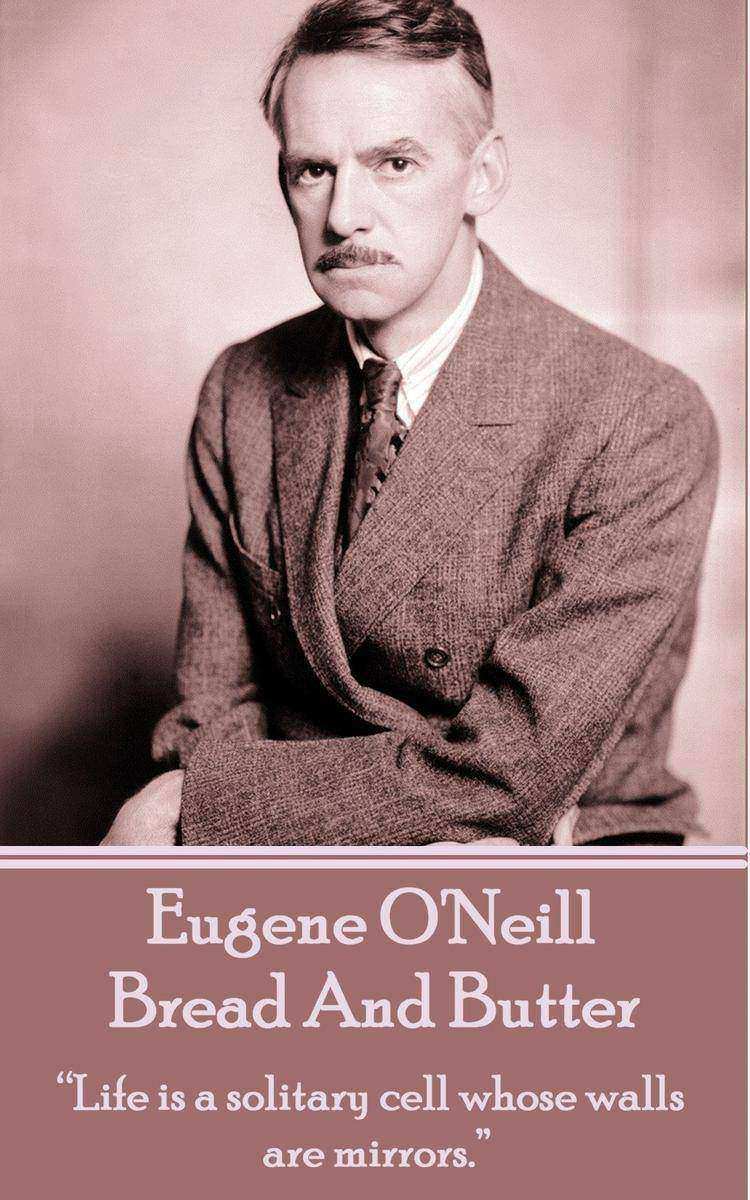
Bread And Butter - Life is a solitary cell whose walls are mirrors.
¥23.45
Eugene Gladstone O'Neill was born on October 16, 1888 in a hotel bedroom in what is now Times Square, New York. Much of his childhood was spent in the comfort of books at boarding schools whilst his actor father was on the road and his Mother contended with her own demons. He spent only a year at University - Princeton - and various reasons have been given for his departure. However whatever his background and education denied or added to his development it is agreed amongst all that he was a playwright of the first rank and possibly America's greatest. His introduction of realism into American drama was instrumental in its development and paved a path for many talents thereafter. Of course his winning of both the Pulitzer Prize (4 times) and the Nobel Prize are indicative of his status. His more famous and later works do side with the disillusionment and personal tragedy of those on the fringes of society but continue to build upon ideas and structures he incorporated in his early one act plays. Eugene O'Neill suffered from various health problems, mainly depression and alcoholism. In the last decade he also faced a Parkinson's like tremor in his hands which made writing increasingly difficult. But out of such difficulties came plays of the calibre of The Iceman Cometh, Long Day's Journey Into Night, and A Moon for the Misbegotten. Eugene O'Neill died in Room 401 of the Sheraton Hotel on Bay State Road in Boston, on November 27, 1953, at the age of 65. As he was dying, he whispered his last words: "e;I knew it. I knew it. Born in a hotel room and died in a hotel room."e;
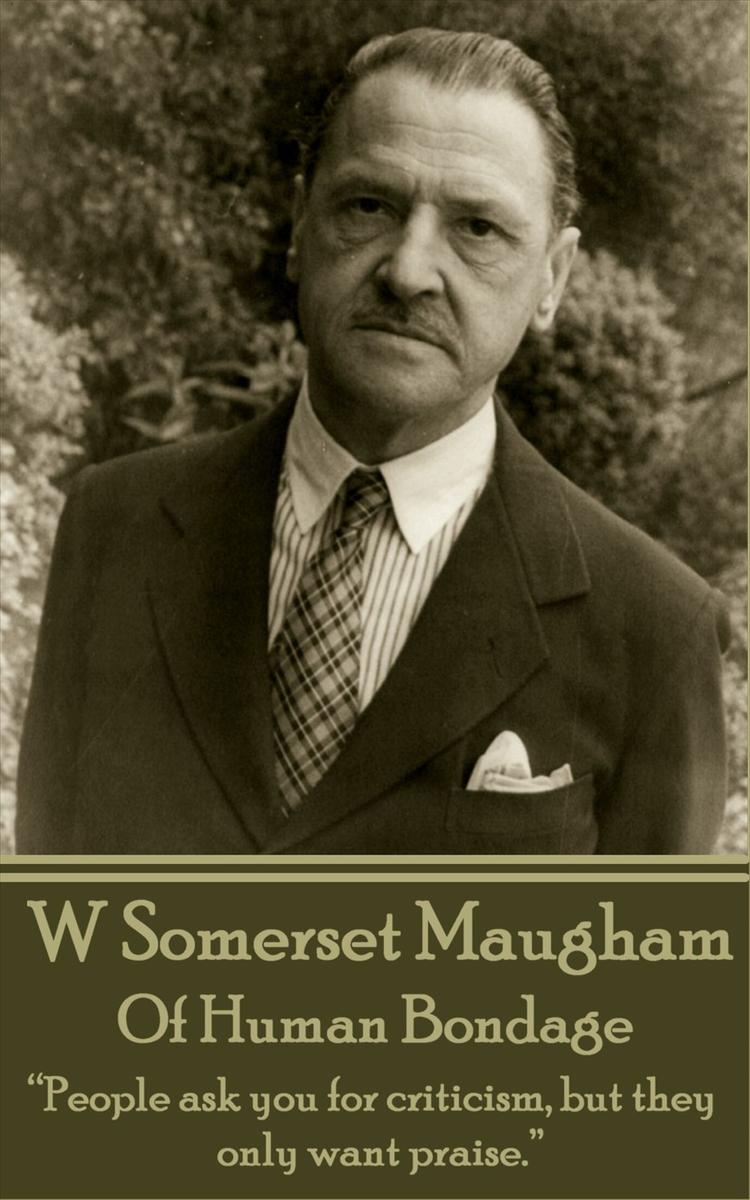
Of Human Bondage
¥46.99
William Somerset Maugham's Of Human Bondage is generally considered to be an autobiographical fiction where the different events happening to the protagonist, Philip, stand for the hardships that Maugham himself faced throughout his life. The story begins when Phillip successively loses both parents and is sent to stay in his uncle's vicarage in a small Kent village named Blackstable. Being taken from one of Spinoza's works, the title alludes to the novel's deeply-philosophical aspect and pressing existential and theological questions. The narrative recounts Phillip's different experiences with women, mainly his rather masochistic love for the hospital waitress, Mildred, who keeps on disappointing him. It also speaks about his constant wavering between different fields of study, namely theology, art and medicine. His uncle's collection of books provides him with continuous flights into the world of fiction and helps him enrich his imagination and worldly experience. By the end of the novel, Phillip seems to give up his philosophical idealism and to finally apprehend that life should be taken simply in order to be lived fully and happily. The happy resolution parallels Maugham's life achievements as a wealthy and prized playwright and novelist.
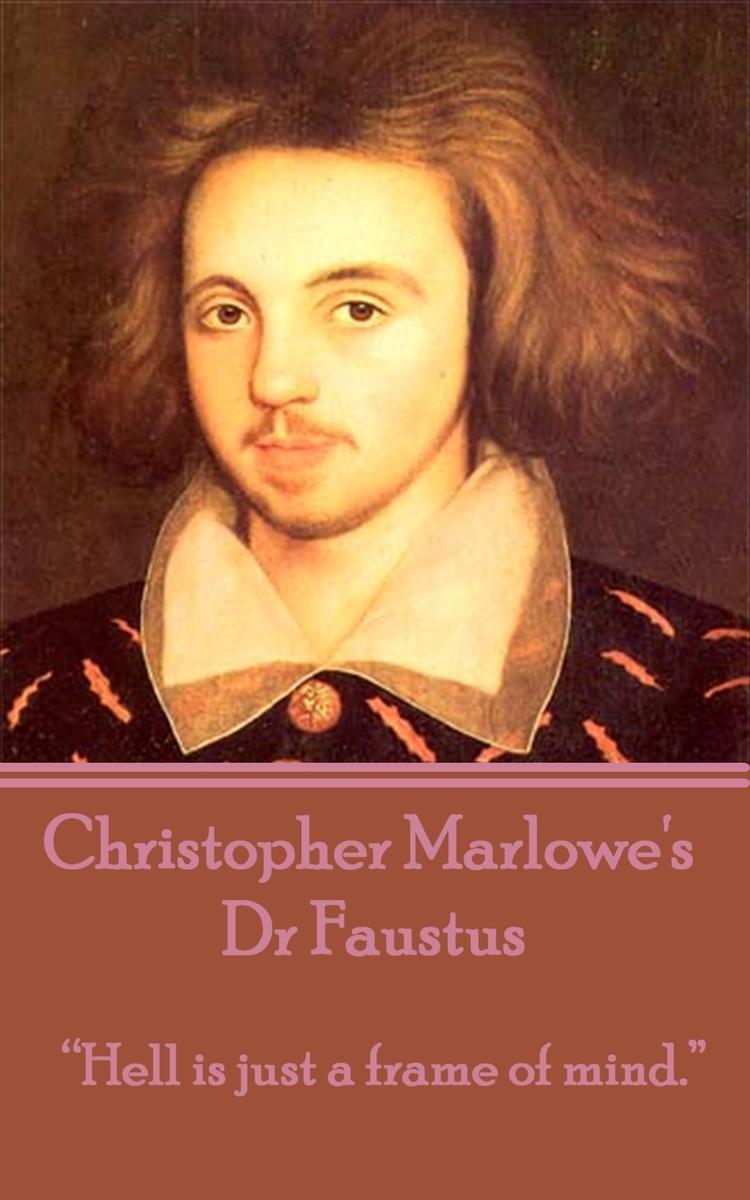
Dr Faustus - Hell is just a frame of mind.
¥9.32
In this foundational classic play, Christopher Marlowe beautifully retells the legend of Doctor Faustus in a masterful combination of verse and prose. The celebrated moral of the play is about how excessive ambition and unlimited lust for knowledge and power lead to self-destruction and damnation. The protagonist in the story is a talented lower-class man who is obsessed with the study of sciences and the secrets of life. His excessive academic ambition and his reliance solely on logic and reason lead him to cogitate about the nature of the world and its existence and to question the utility of the "e;doctrine of Divinity."e; Unsatisfied with the knowledge that pure and experimental sciences can offer, he eventually decides to explore the curious world of Black Magic. Through the recital of a strange incantation, Faustus succeeds in summoning a devil called Mephistopheles who informs him that he will only obey his orders once a pact is signed between Faustus and the devil's master: Lucifer. The pact is signed by Faustus' own blood and stipulates that in return of Mephistopheles' services, which unexpectedly turn to be unworthy by the end, he must give his soul over to Lucifer. The denouement of the play opens the floor for different speculations about Faustus' damnation or salvation.
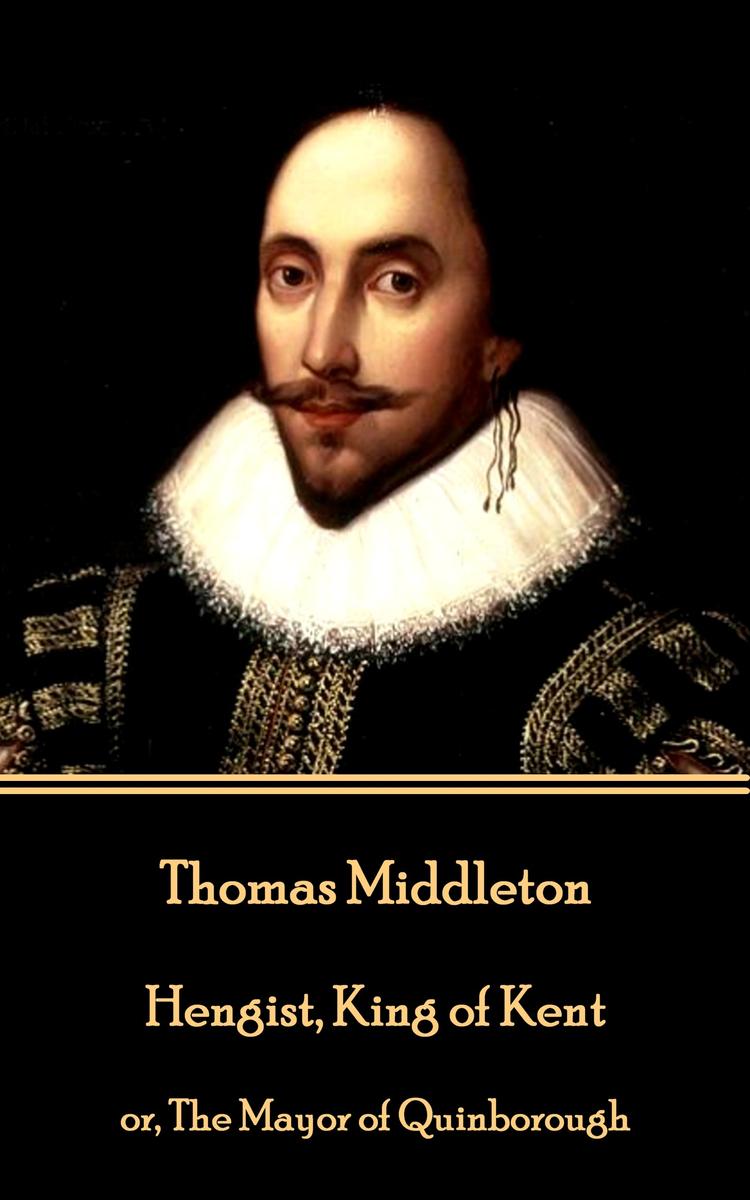
Hengist, King of Kent - or, The Mayor of Quinborough
¥23.45
Thomas Middleton was born in London in April 1580 and baptised on 18th April. Middleton was aged only five when his father died. His mother remarried but this unfortunately fell apart into a fifteen year legal dispute regarding the inheritance due Thomas and his younger sister. By the time he left Oxford, at the turn of the Century, Middleton had and published Microcynicon: Six Snarling Satirese which was denounced by the Archbishop of Canterbury and publicly burned. In the early years of the 17th century, Middleton wrote topical pamphlets. One - Penniless Parliament of Threadbare Poets was reprinted several times and the subject of a parliamentary inquiry. These early years writing plays continued to attract controversy. His writing partnership with Thomas Dekker brought him into conflict with Ben Jonson and George Chapman in the so-called War of the Theatres. His finest work with Dekker was undoubtedly The Roaring Girl, a biography of the notorious Mary Frith. In the 1610s, Middleton began another playwriting partnership, this time with the actor William Rowley, producing another slew of plays including Wit at Several Weapons and A Fair Quarrel. The ever adaptable Middleton seemed at ease working with others or by himself. His solo writing credits include the comic masterpiece, A Chaste Maid in Cheapside, in 1613. In 1620 he was officially appointed as chronologer of the City of London, a post he held until his death. The 1620s saw the production of his and Rowley's tragedy, and continual favourite, The Changeling, and of several other tragicomedies. However in 1624, he reached a peak of notoriety when his dramatic allegory A Game at Chess was staged by the King's Men. Though Middleton's approach was strongly patriotic, the Privy Council silenced the play after only nine performances at the Globe theatre, having received a complaint from the Spanish ambassador. What happened next is a mystery. It is the last play recorded as having being written by Middleton. Thomas Middleton died at his home at Newington Butts in Southwark in the summer of 1627, and was buried on July 4th, in St Mary's churchyard which today survives as a public park in Elephant and Castle.
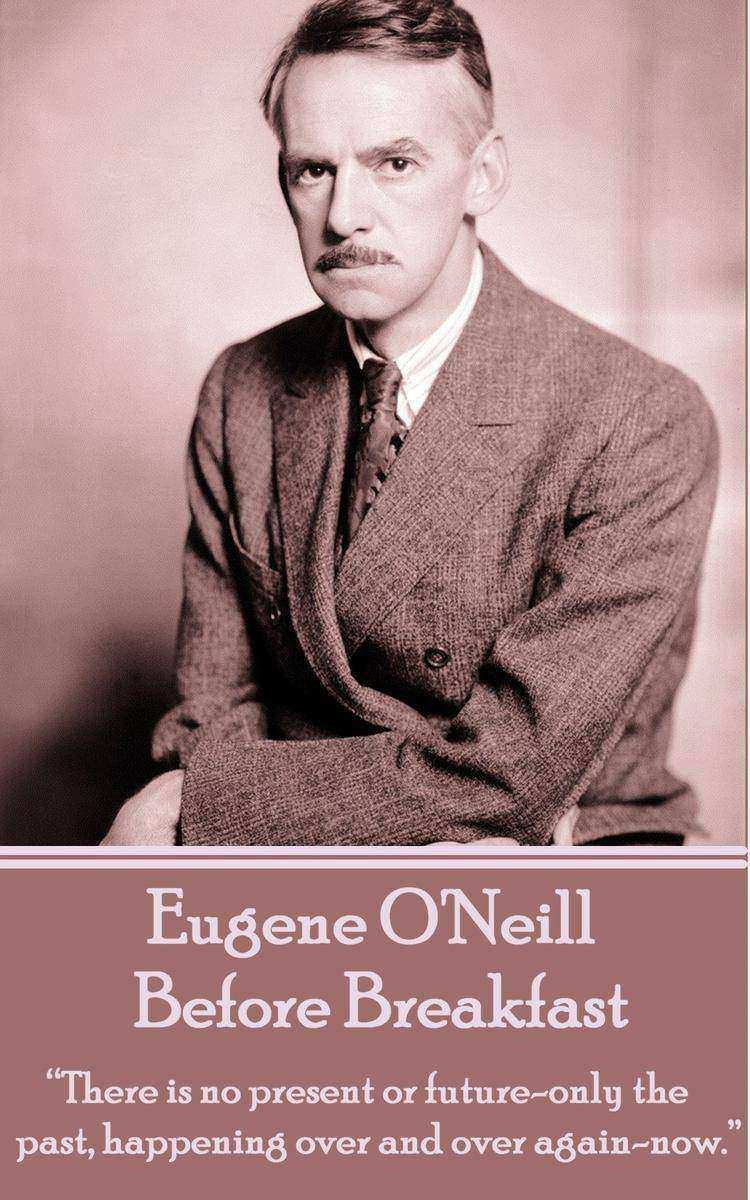
Before Breakfast - There is no present or future-only the past, happening over a
¥23.45
Eugene Gladstone O'Neill was born on October 16, 1888 in a hotel bedroom in what is now Times Square, New York. Much of his childhood was spent in the comfort of books at boarding schools whilst his actor father was on the road and his Mother contended with her own demons. He spent only a year at University - Princeton - and various reasons have been given for his departure. However whatever his background and education denied or added to his development it is agreed amongst all that he was a playwright of the first rank and possibly America's greatest. His introduction of realism into American drama was instrumental in its development and paved a path for many talents thereafter. Of course his winning of both the Pulitzer Prize (4 times) and the Nobel Prize are indicative of his status. His more famous and later works do side with the disillusionment and personal tragedy of those on the fringes of society but continue to build upon ideas and structures he incorporated in his early one act plays. Eugene O'Neill suffered from various health problems, mainly depression and alcoholism. In the last decade he also faced a Parkinson's like tremor in his hands which made writing increasingly difficult. But out of such difficulties came plays of the calibre of The Iceman Cometh, Long Day's Journey Into Night, and A Moon for the Misbegotten. Eugene O'Neill died in Room 401 of the Sheraton Hotel on Bay State Road in Boston, on November 27, 1953, at the age of 65. As he was dying, he whispered his last words: "e;I knew it. I knew it. Born in a hotel room and died in a hotel room."e;
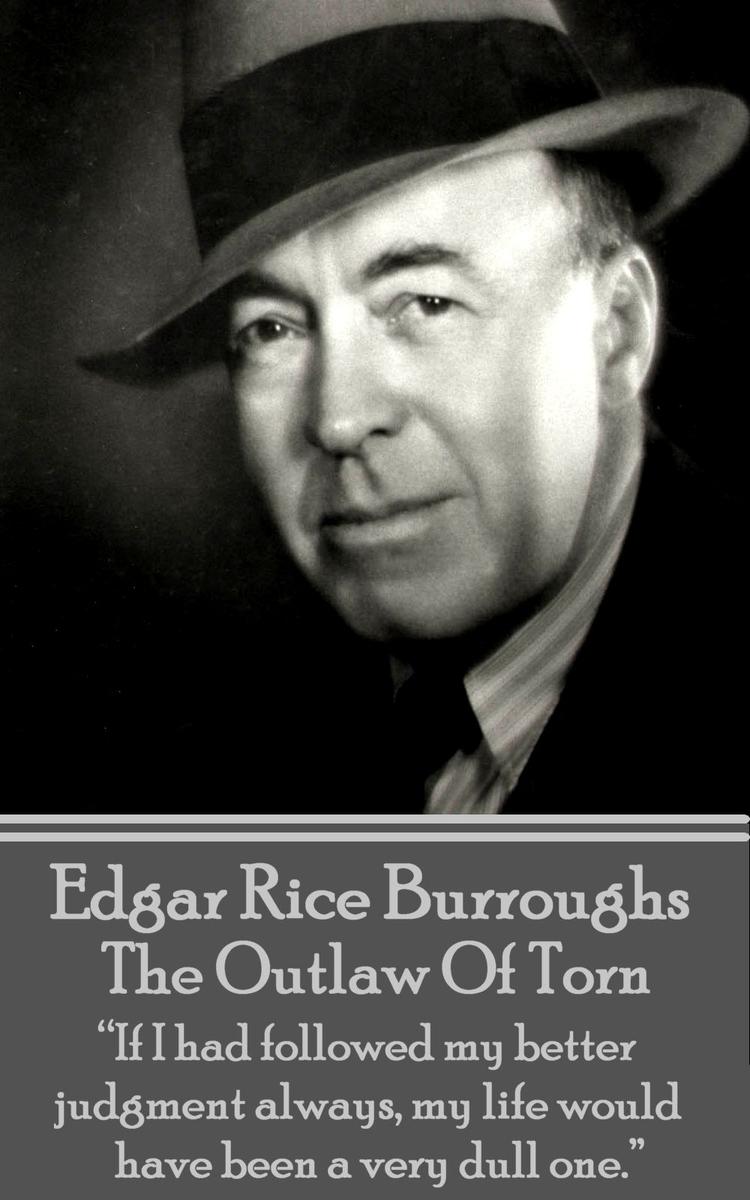
Outlaw Of Torn - If I had followed my better judgment always
¥35.22
Edgar Rice Burroughs was born on September 1, 1875, in Chicago, Illinois. His early career was unremarkable. After failing to enter West Point he enlisted in the 7th Calvary but was discharged after heart problems were diagnosed. A series of short term jobs gave no indication as to a career path but finally, in 1911, married and with two young children, he turned his hand to writing. He aimed his works squarely at the very popular pulp serial magazines. His first effort 'Under The Moons Of Mars' ran in Munsey's Magazine in 1912 under the pseudonym Norman Bean. With its success he began writing full time. A continuing theme of his work was to develop series so that each character had ample opportunities to return in sequels. John Carter was in the Mars series and there was another on Venus and one on Pellucidar among others. But perhaps the best known is Tarzan. Indeed Burroughs wanted so much to capitalise upon the brand that he introduced a syndicated Tarzan comic strip, movies and merchandise. He purchased a large ranch north of Los Angeles, California, which he named "e;Tarzana."e; The surrounding communities outside the ranch voted in 1927 to adopt the name as their own. By 1932 Burroughs set up his own company to print his own books. Here we publish 'The Outlaw Of Torn' somewhat different to what the title might suggest in the hands of an ordinary writer but in the hands of Edgar Rice Burroughs the title is just the beginning.....
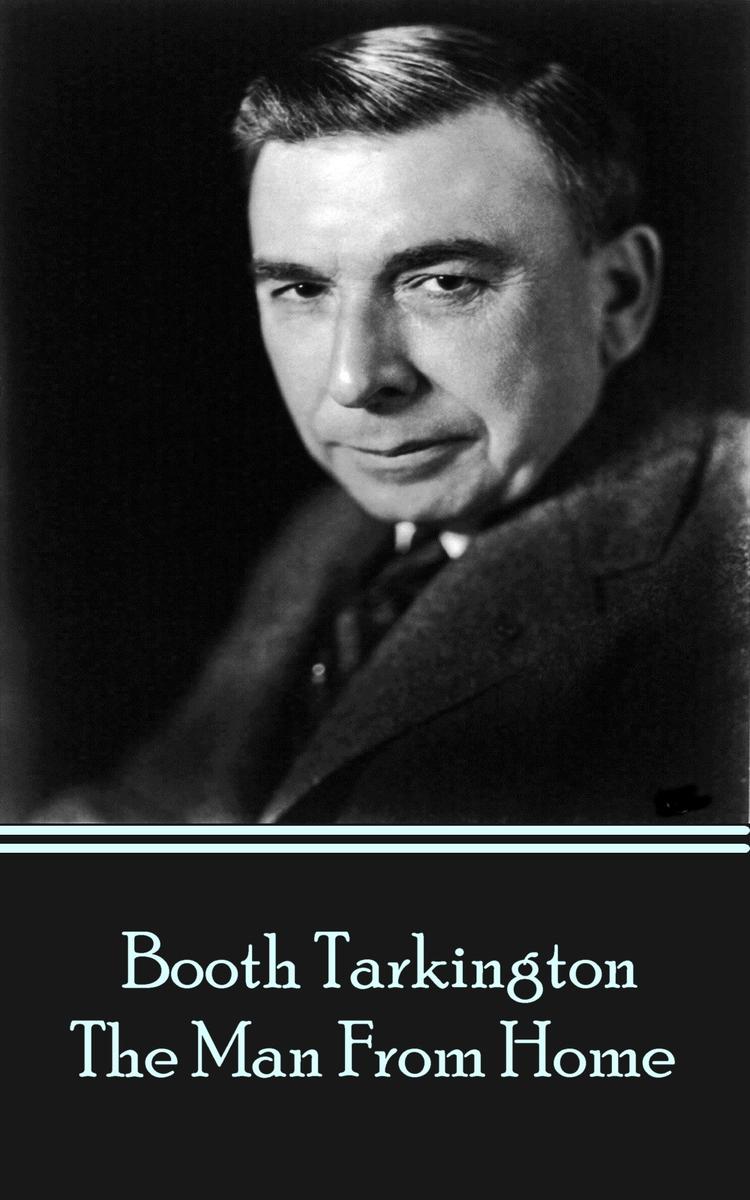
Man From Home
¥29.33
Booth Tarkington was born on July 29, 1869 in Indianapolis, Indiana. He is one of only three novelists to win the Pulitzer Prize more than once. When you look through the quality of his work it is easy to understand why. The Magnificent Ambersons, Alice Adams, Penrod, Penrod And Sam - all classics. The Penrod novels depict a typical upper-middle class American boy of 1910 vintage, revealing a fine, bookish sense of American humor. At one time, his Penrod series was as well known andregarded as Twain's Huckleberry Finn. Much of Tarkington's work consists of satirical and closely observed studies of the American class system and its foibles. Coming as he did from a patrician Midwestern family that lost much of its wealth after the Panic of 1873 the foundations for that outlook are clear. Today, he is best known for his novel The Magnificent Ambersons which contrasted the decline of the "e;old money"e; Amberson dynasty with the rise of "e;new money"e; industrial tycoons in the years between the American Civil War and World War I. In this volume you have an opportunity to read one his plays, The Man From Home.
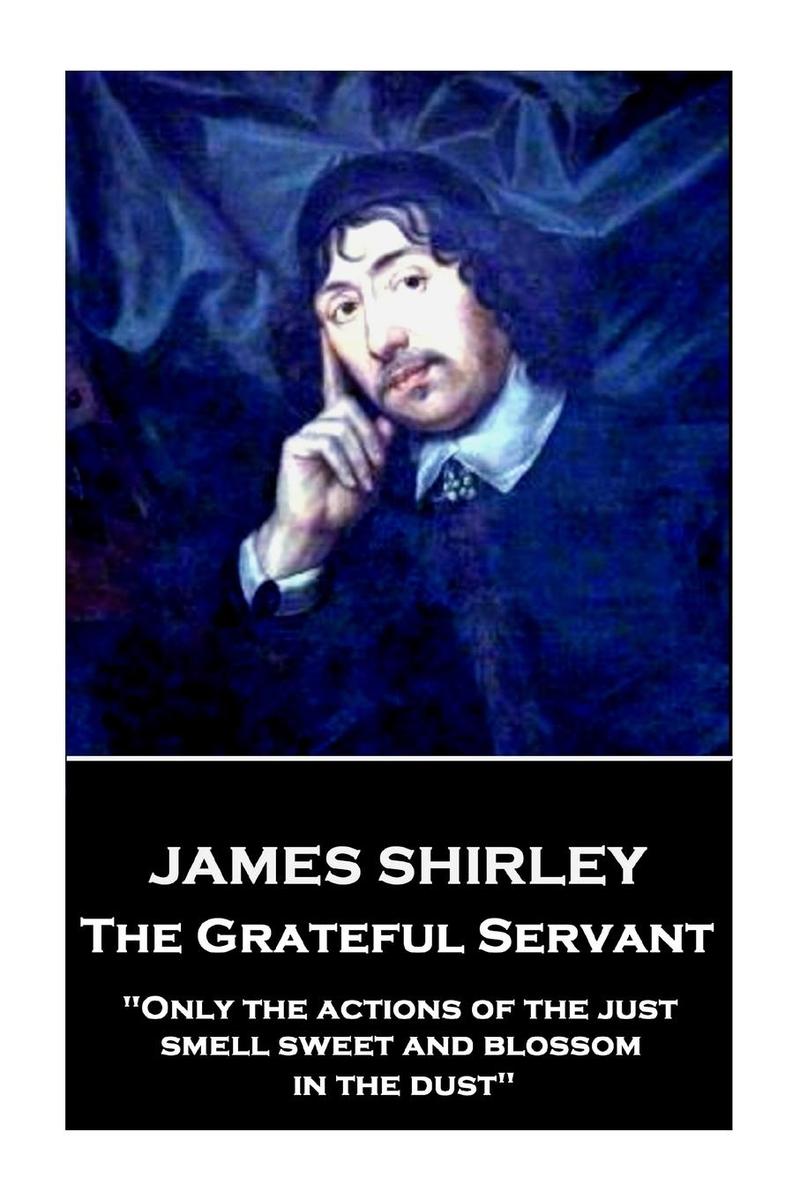
Grateful Servant - Only the actions of the just smell sweet and blossom in the d
¥25.80
James Shirley was born in London in September 1596. His education was through a collection of England's finest establishments: Merchant Taylors' School, London, St John's College, Oxford, and St Catharine's College, Cambridge, where he took his B.A. degree in approximately 1618. He first published in 1618, a poem entitled Echo, or the Unfortunate Lovers. As with many artists of this period full details of his life and career are not recorded. Sources say that after graduating he became "e;a minister of God's word in or near St Albans."e; A conversion to the Catholic faith enabled him to become master of St Albans School from 1623-25. He wrote his first play, Love Tricks, or the School of Complement, which was licensed on February 10th, 1625. From the given date it would seem he wrote this whilst at St Albans but, after its production, he moved to London and to live in Gray's Inn. For the next two decades, he would write prolifically and with great quality, across a spectrum of thirty plays; through tragedies and comedies to tragicomedies as well as several books of poetry. Unfortunately, his talents were left to wither when Parliament passed the Puritan edict in 1642, forbidding all stage plays and closing the theatres. Most of his early plays were performed by Queen Henrietta's Men, the acting company for which Shirley was engaged as house dramatist. Shirley's sympathies lay with the King in battles with Parliament and he received marks of special favor from the Queen. He made a bitter attack on William Prynne, who had attacked the stage in Histriomastix, and, when in 1634 a special masque was presented at Whitehall by the gentlemen of the Inns of Court as a practical reply to Prynne, Shirley wrote the text-The Triumph of Peace. Shirley spent the years 1636 to 1640 in Ireland, under the patronage of the Earl of Kildare. Several of his plays were produced by his friend John Ogilby in Dublin in the first ever constructed Irish theatre; The Werburgh Street Theatre. During his years in Dublin he wrote The Doubtful Heir, The Royal Master, The Constant Maid, and St. Patrick for Ireland. In his absence from London, Queen Henrietta's Men sold off a dozen of his plays to the stationers, who naturally, enough published them. When Shirley returned to London in 1640, he finished with the Queen Henrietta's company and his final plays in London were acted by the King's Men. On the outbreak of the English Civil War Shirley served with the Earl of Newcastle. However when the King's fortunes began to decline he returned to London. There his friend Thomas Stanley gave him help and thereafter Shirley supported himself in the main by teaching and publishing some educational works under the Commonwealth. In addition to these he published during the period of dramatic eclipse four small volumes of poems and plays, in 1646, 1653, 1655, and 1659. It is said that he was "e;a drudge"e; for John Ogilby in his translations of Homer's Iliad and the Odyssey, and survived into the reign of Charles II, but, though some of his comedies were revived, his days as a playwright were over. His death, at age seventy, along with that of his wife, in 1666, is described as one of fright and exposure due to the Great Fire of London which had raged through parts of London from September 2nd to the 5th. He was buried at St Giles in the Fields, in London, on October 29th, 1666.
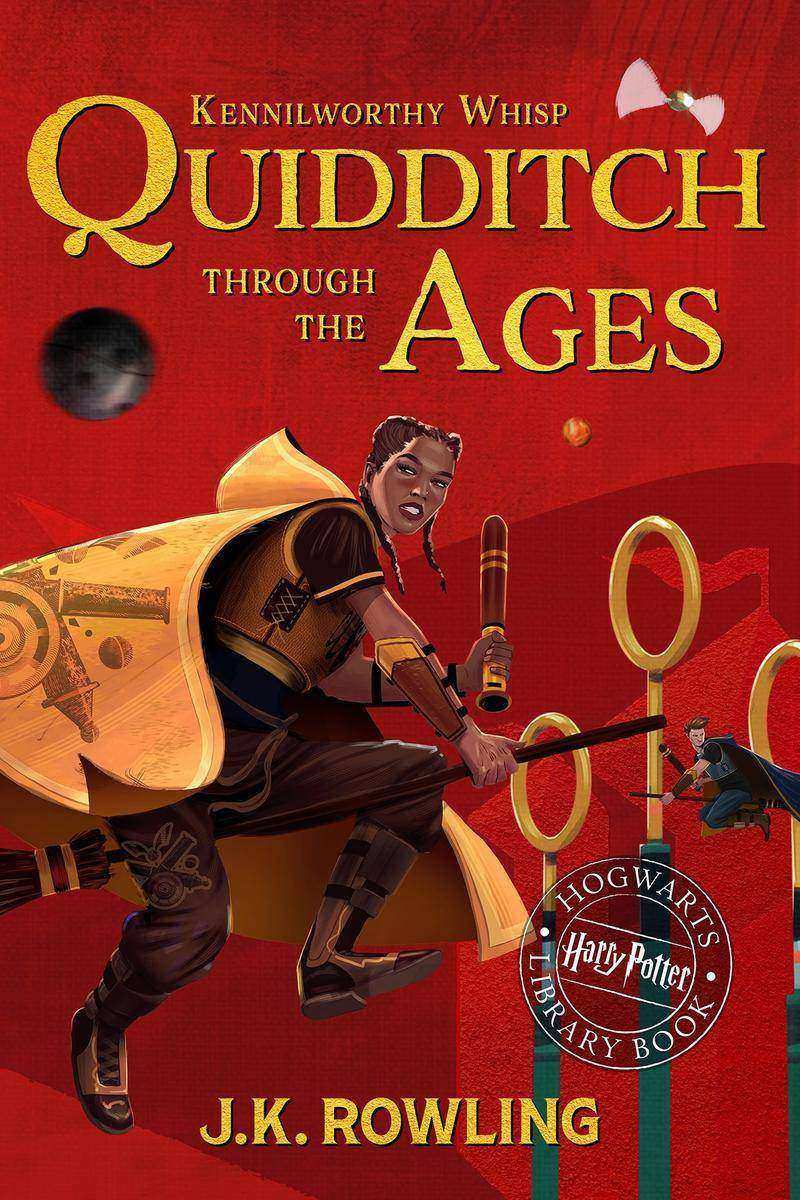
Quidditch Through the Ages
¥20.00
A perennial bestseller in the wizarding world and one of the most popular books in the Hogwarts School library, Quidditch Through the Ages contains all you will ever need to know about the history, the rules - and the breaking of the rules - of the noble sport of Quidditch. Packed with fascinating facts, this definitive guide by the esteemed Quidditch writer Kennilworthy Whisp charts the game's history from its early origins in the medieval mists on Queerditch Marsh, through to the modern-day sport loved by so many wizard and Muggle families around the world. With comprehensive coverage of famous Quidditch teams, the commonest fouls, the development of racing brooms, and much more, this is a must-have sporting bible for all Harry Potter fans, Quidditch lovers and players, whether the weekend amateur or the seasoned Chudley Cannons season-ticket holder.At least 15% of the net retail price* of this eBook will be available to Comic Relief and Lumos Foundation for their work with children and young people to help them have a better life. 20% of these monies will be used by Comic Relief and 80% will be used by Lumos Foundation.Comic Relief is a registered charity in the UK with charity nos. 326568 (England/Wales) and SC039730 (Scotland). Lumos Foundation is a registered charity in the UK with no. 1112575.* The net retail price means the price paid by the consumer less applicable sales taxes

Beyond: The Stars
¥26.07
Three thrilling short stories of adventure among the stars: Node Of Thought A spaceship pilot on a solo mission between the stars begins to see visions of other people. Are they trace thoughts from others who’ve passed that way? It’s not just an academic question when the ship’s computer starts to obey commands that aren’t his. ? Marathon of the Devil In a death-defying marathon on a desert planet, Eli Marone has managed to get lost. It’s now a race for survival, especially when the barren world might not be so lifeless after all. ? The Rift Twenty-seven years after a reckless experiment created a vast rift across the galaxy, a survey ship’s crew encounters a being with strange abilities and an even stranger disability. What they learn will test every belief they’ve ever had. Praise for Scott Overton: “A storyteller of boundless skill…a writer to watch.” “A gifted wordsmith.”


