购物车
 个人中心

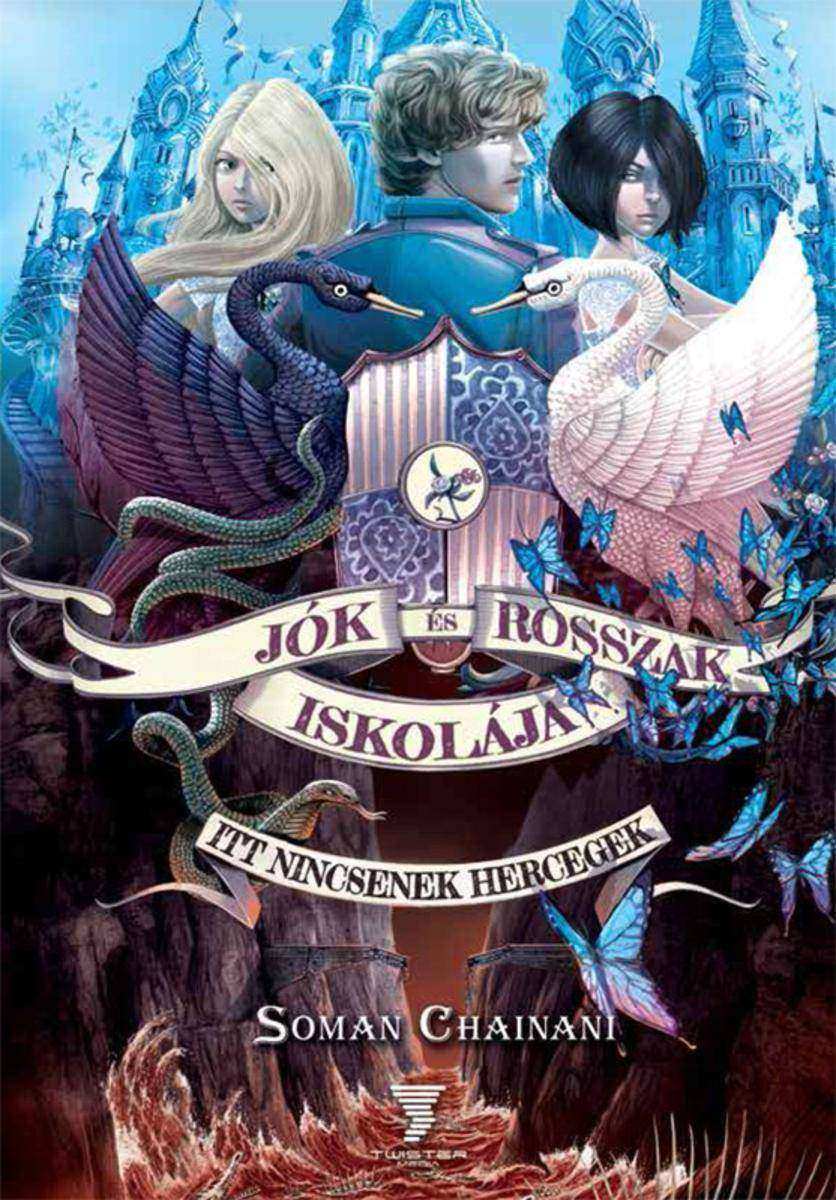
Jók és rosszak iskolája – Itt nincsenek hercegek
¥68.83
Автор – лауреат Пултцервсько прем Понад 60 тижнв у списку бестселерв The New York Times Входить до довгого списку рейтингу Financial Times Як звички впливают на життя Як, змнивши лише один шаблон поведнки, рзн люди змогли досягти успху: стати директором, придбати будинок, пробгти марафон В основу ц книжки лягли нтерв’ю з трьома сотнями науковцв директорв пдпримств, дослдження, проведен в десятках компанй. Проаналзувавши все це, автор зрозумв, як кожна людина може контролювати сво звички, щоб досягти успху. Дзнавшись, як створюються та руйнуються звички, ви зможете перебудувати шаблони поведнки, як соб забажате. Ви зрозумте, як змусити себе не палити, менше сти, займатися спортом, не кричати на близьких, ефективнше працювати. Avtor – laureat Pultcervs'ko prem Ponad 60 tizhnv u spisku bestselerv The New York Times Vhodit' do dovgogo spisku rejtingu Financial Times Jak zvichki vplivajut na zhittja Jak, zmnivshi lishe odin shablon povednki, rzn ljudi zmogli dosjagti usphu: stati direktorom, pridbati budinok, probgti marafon V osnovu c knizhki ljagli nterv’ju z tr'oma sotnjami naukovcv direktorv pdprimstv, dosldzhennja, proveden v desjatkah kompanj. Proanalzuvavshi vse ce, avtor zrozumv, jak kozhna ljudina mozhe kontroljuvati svo zvichki, shhob dosjagti usphu. Dznavshis', jak stvorjujut'sja ta rujnujut'sja zvichki, vi zmozhete perebuduvati shabloni povednki, jak sob zabazhate. Vi zrozumte, jak zmusiti sebe ne paliti, menshe sti, zajmatisja sportom, ne krichati na bliz'kih, efektivnshe pracjuvati.

Dubliners
¥28.04
We sailed from Peru, (where we had continued for the space of one whole year) for China and Japan, by the South Sea; taking with us victuals for twelve months; and had good winds from the east, though soft and weak, for five months space, and more. But the wind came about, and settled in the west for many days, so as we could make little or no way, and were sometime in purpose to turn back. But then again there arose strong and great winds from the south, with a point east, which carried us up (for all that we could do) towards the north; by which time our victuals failed us, though we had made good spare of them. So that finding ourselves, in the midst of the greatest wilderness of waters in the world, without victuals, we gave ourselves for lost men and prepared for death. Yet we did lift up our hearts and voices to God above, who showeth his wonders in the deep, beseeching him of his mercy, that as in the beginning he discovered the face of the deep, and brought forth dry land, so he would now discover land to us, that we might not perish. And it came to pass that the next day about evening we saw within a kenning before us, towards the north, as it were thick clouds, which did put us in some hope of land; knowing how that part of the South Sea was utterly unknown; and might have islands, or continents, that hitherto were not come to light. Wherefore we bent our course thither, where we saw the appearance of land, all that night; and in the dawning of the next day, we might plainly discern that it was a land; flat to our sight, and full of boscage; which made it show the more dark. And after an hour and a half's sailing, we entered into a good haven, being the port of a fair city; not great indeed, but well built, and that gave a pleasant view from the sea: and we thinking every minute long, till we were on land, came close to the shore, and offered to land. But straightways we saw divers of the people, with bastons in their hands (as it were) forbidding us to land; yet without any cries of fierceness, but only as warning us off, by signs that they made. Whereupon being not a little discomforted, we were advising with ourselves, what we should do. During which time, there made forth to us a small boat, with about eight persons in it; whereof one of them had in his hand a tipstaff of a yellow cane, tipped at both ends with blue, who came aboard our ship, without any show of distrust at all. And when he saw one of our number, present himself somewhat before the rest, he drew forth a little scroll of parchment (somewhat yellower than our parchment, and shining like the leaves of writing tables, but otherwise soft and flexible,) and delivered it to our foremost man. In which scroll were written in ancient Hebrew, and in ancient Greek, and in good Latin of the school, and in Spanish, these words: Land ye not, none of you; and provide to be gone from this coast, within sixteen days, except you have further time given you. Meanwhile, if you want fresh water or victuals, or help for your sick, or that your ship needeth repairs, write down your wants, and you shall have that, which belongeth to mercy. This scroll was signed with a stamp of cherubim: wings, not spread, but hanging downwards; and by them a cross. This being delivered, the officer returned, and left only a servant with us to receive our answer. F. BACON About Author: Francis Bacon, 1561 – 1626), was an English philosopher, statesman, scientist, jurist, orator, essayist, and author. He served both as Attorney General and Lord Chancellor of England. After his death, he remained extremely influential through his works, especially as philosophical advocate and practitioner of the scientific method during the scientific revolution.Bacon has been called the father of empiricism. His works established and popularised inductive methodologies for scientific inquiry, often called the Baconian method, or simply the scientific method. His demand for a planned procedure of investigating all things natural marked a new turn in the rhetorical and theoretical framework for science, much of which still surrounds conceptions of proper methodology today.Bacon was knighted in 1603, and created Baron Verulam in 1618 and Viscount St. Alban in 1621; as he died without heirs, both peerages became extinct upon his death. He famously died of pneumonia, contracted while studying the effects of freezing on the preservation of meat. The succession of James I brought Bacon into greater favour. He was knighted in 1603. In another shrewd move, Bacon wrote his Apologies in defence of his proceedings in the case of Essex, as Essex had favoured James to succeed to the throne. The following year, during the course of the uneventful first parliament session, Bacon married Alice Barnham. In June 1607 he was at last rewarded with the office of solicitor general. The following year, he began working as the Clerkship of the Star Chamber. Despite a generous income, old debts still co

Emile
¥28.04
Underground* *The author of the diary and the diary itself are, of course, imaginary. Nevertheless it is clear that such persons as the writer of these notes not only may, but positively must, exist in our society, when we consider the circumstances in the midst of which our society is formed. I have tried to expose to the view of the public more distinctly than is commonly done, one of the characters of the recent past. He is one of the representatives of a generation still living. In this fragment, entitled "Underground," this person introduces himself and his views, and, as it were, tries to explain the causes owing to which he has made his appearance and was bound to make his appearance in our midst. In the second fragment there are added the actual notes of this person concerning certain events in his life.--AUTHOR'S NOTE. II am a sick man.... I am a spiteful man. I am an unattractive man. I believe my liver is diseased. However, I know nothing at all about my disease, and do not know for certain what ails me. I don't consult a doctor for it, and never have, though I have a respect for medicine and doctors. Besides, I am extremely superstitious, sufficiently so to respect medicine, anyway (I am well-educated enough not to be superstitious, but I am superstitious). No, I refuse to consult a doctor from spite. That you probably will not understand. Well, I understand it, though. Of course, I can't explain who it is precisely that I am mortifying in this case by my spite: I am perfectly well aware that I cannot "pay out" the doctors by not consulting them; I know better than anyone that by all this I am only injuring myself and no one else. But still, if I don't consult a doctor it is from spite. My liver is bad, well--let it get worse! I have been going on like that for a long time--twenty years. Now I am forty. I used to be in the government service, but am no longer. I was a spiteful official. I was rude and took pleasure in being so. I did not take bribes, you see, so I was bound to find a recompense in that, at least. (A poor jest, but I will not scratch it out. I wrote it thinking it would sound very witty; but now that I have seen myself that I only wanted to show off in a despicable way, I will not scratch it out on purpose!) When petitioners used to come for information to the table at which I sat, I used to grind my teeth at them, and felt intense enjoyment when I succeeded in making anybody unhappy. I almost did succeed. For the most part they were all timid people--of course, they were petitioners. But of the uppish ones there was one officer in particular I could not endure. He simply would not be humble, and clanked his sword in a disgusting way. I carried on a feud with him for eighteen months over that sword. At last I got the better of him. He left off clanking it. That happened in my youth, though. But do you know, gentlemen, what was the chief point about my spite? Why, the whole point, the real sting of it lay in the fact that continually, even in the moment of the acutest spleen, I was inwardly conscious with shame that I was not only not a spiteful but not even an embittered man, that I was simply scaring sparrows at random and amusing myself by it. I might foam at the mouth, but bring me a doll to play with, give me a cup of tea with sugar in it, and maybe I should be appeased. I might even be genuinely touched, though probably I should grind my teeth at myself afterwards and lie awake at night with shame for months after. That was my way.

Evolution of Love
¥18.74
In these times of ours, though concerning the exact year there is no need to be precise, a boat of dirty and disreputable appearance, with two figures in it, floated on the Thames, between Southwark bridge which is of iron, and London Bridge which is of stone, as an autumn evening was closing in. The figures in this boat were those of a strong man with ragged grizzled hair and a sun-browned face, and a dark girl of nineteen or twenty, sufficiently like him to be recognizable as his daughter. The girl rowed, pulling a pair of sculls very easily; the man, with the rudder-lines slack in his hands, and his hands loose in his waistband, kept an eager look out. He had no net, hook, or line, and he could not be a fisherman; his boat had no cushion for a sitter, no paint, no inscription, no appliance beyond a rusty boathook and a coil of rope, and he could not be a waterman; his boat was too crazy and too small to take in cargo for delivery, and he could not be a lighterman or river-carrier; there was no clue to what he looked for, but he looked for something, with a most intent and searching gaze. The tide, which had turned an hour before, was running down, and his eyes watched every little race and eddy in its broad sweep, as the boat made slight head-way against it, or drove stern foremost before it, according as he directed his daughter by a movement of his head. She watched his face as earnestly as he watched the river. But, in the intensity of her look there was a touch of dread or horror. Allied to the bottom of the river rather than the surface, by reason of the slime and ooze with which it was covered, and its sodden state, this boat and the two figures in it obviously were doing something that they often did, and were seeking what they often sought. Half savage as the man showed, with no covering on his matted head, with his brown arms bare to between the elbow and the shoulder, with the loose knot of a looser kerchief lying low on his bare breast in a wilderness of beard and whisker, with such dress as he wore seeming to be made out of the mud that begrimed his boat, still there was a business-like usage in his steady gaze. So with every lithe action of the girl, with every turn of her wrist, perhaps most of all with her look of dread or horror; they were things of usage. 'Keep her out, Lizzie. Tide runs strong here. Keep her well afore the sweep of it.' Trusting to the girl's skill and making no use of the rudder, he eyed the coming tide with an absorbed attention. So the girl eyed him. But, it happened now, that a slant of light from the setting sun glanced into the bottom of the boat, and, touching a rotten stain there which bore some resemblance to the outline of a muffled human form, coloured it as though with diluted blood. This caught the girl's eye, and she shivered. 'What ails you?' said the man, immediately aware of it, though so intent on the advancing waters; 'I see nothing afloat.' The red light was gone, the shudder was gone, and his gaze, which had come back to the boat for a moment, travelled away again. Wheresoever the strong tide met with an impediment, his gaze paused for an instant. At every mooring-chain and rope, at every stationery boat or barge that split the current into a broad-arrowhead, at the offsets from the piers of Southwark Bridge, at the paddles of the river steamboats as they beat the filthy water, at the floating logs of timber lashed together lying off certain wharves, his shining eyes darted a hungry look. After a darkening hour or so, suddenly the rudder-lines tightened in his hold, and he steered hard towards the Surrey shore. Always watching his face, the girl instantly answered to the action in her sculling; presently the boat swung round, quivered as from a sudden jerk, and the upper half of the man was stretched out over the stern.

Плетем из газетных трубочек. Мебель
¥17.74
Andersena pasakas: ?Lakstīgala”, ?Sliktais princis”, ?Rū?ītis”. Trīs brīni??īgas, visiem zināmas un lasītāju iecienītas pasakas vienā grāmati?ā. ?Lakstīgala” - tā ir skaista pasaka par necilu putni?u, kas dzīvoja kāda ?īnas ?eizara dārzā. Lakstīgalas burvīgās dziesmas spēja sagādāt ne tikai prieku, bet arī dziedināja slimo ?eizaru. ?? ?Sliktais princis” – ?ī pasaka vēstī par cietsirdīgu un ne?ēlīgu valdnieku, kur? nolēma gūt varu pār visu pasauli, pastāvīgi karojot. ?Rū?ītis” – tas ir stāsts par elfu, kur? pārticībā dzīvoja bagāta tirgotāja mājā un kuru sajūsmināja nabadzīga studenta, grāmatu un dzejas cienītāja, pasaule. ? Andersena pasakas ir burvju stāsti, kuros apslēptas svarīgas patiesības un morāles vērtības. Tās iepriecina mūsdienu bērnus tāpat kā pirms gadiem vi?u vecākus un vecvecākus.? Katra pasaka ir veidota ar skaistām un krāsainām ilustrācijām.

Blacksheep! Blacksheep!
¥8.01
Blacksheep! Blacksheep!

That Girl Montana
¥8.01
That Girl Montana

Das schwache Herz
¥8.01
Das schwache Herz

El jugador
¥8.01
El jugador
The Night-Born
¥8.01
The Night-Born

Croc-Blanc
¥8.01
Croc-Blanc

Zehru of Xollar
¥8.01
Zehru of Xollar

La Prisonniere
¥8.01
La Prisonniere

Le Temps retrouvé
¥8.01
Le Temps retrouvé
La Voilette bleue
¥8.01
La Voilette bleue

Romana 510. (Nem tudlak feledni)
¥18.72
Romana 510. (Nem tudlak feledni)

Júlia 517. (Hivatali valóságshow)
¥18.72
Júlia 517. (Hivatali valóságshow)

Júlia 515. (A sárkányszelídít?)
¥18.72
Júlia 515. (A sárkányszelídít?)

Szívhang 566–567. - Isten hozott a szigeten!
¥40.79
Szívhang 566–567. - Isten hozott a szigeten!

Bianca 259–260. (Mr. Darling, Kifogtam az aranyhalat)
¥48.97
Bianca 259–260. (Mr. Darling, Kifogtam az aranyhalat)

Romana 501. (A gyémántnél becsesebb)
¥18.72
Romana 501. (A gyémántnél becsesebb)