


 购物车
购物车 个人中心
个人中心
The Carpenter's Wife (Mills & Boon Love Inspired)
¥25.60
No one wanted roots more than Rock Dempsey, who worked as a minister and a carpenter in his small community. He dreamed of meeting a woman whose feet were firmly planted on the ground, a companion to share everything with. Sometimes this dream seemed too far from reality. But then he met Ana Hanson. Tearoom owner Ana Hanson felt she worked harder than most. Nothing ever came easy and, to make matters worse, she' d never had luck in the romance department. It was difficult to believe in faith… until she met Rock Dempsey, who was there in her time of need. Who would have thought that what she needed… was him?

The Doctor's Christmas (Mills & Boon Love Inspired)
¥31.10
God could not have chosen a worse time to send Dr. Grant Hardesty to Button Gap. Three abandoned children were depending on Maggie Davis' s clandestine care until their mother returned. Maggie didn' t think she could trust the by-the-book doctor with her secret. Until she got a glimpse into his soul… and God' s mysterious ways became as clear as a starry night. Maggie knew her trust was well placed as this once-aloof doctor opened his heart to the children… and her. But as Grant' s time in Button Gap ended, she prayed for one more miracle. Could God make this man who seemed to have everything recognize that it all meant nothing without Maggie' s love?

The Forgiving Heart (Mills & Boon Love Inspired)
¥25.60
RHETT WHEELER COULDN'T BELIEVE HIS EYES The most beautiful lady cop he'd ever seen had picked up his sixteen-year-old son for shoplifting! But Brandon was a good kid, not a juvenile delinquent. So why did this angel in blue think she could tell him how to raise his son? Officer Callie Brockman could be tough as nails and hard as ice, but Rhett Wheeler made her melt like snow on the Fourth of July! Callie was drawn to the single dad and yearned to help him come to terms with his troubled teen. Maybe even bring some joy into their lives….

The Marrying Kind (Mills & Boon Love Inspired)
¥31.10
THE ANSWER TO HER PRAYERS… Taylor Rollins was struggling to save her family; the last thing she needed was to be unemployed. She prayed for help, never dreaming God's answer would be a fake engagement to CEO Nick Langan III! Yet the deal Nick offered was too good to pass up…and so was Nick. Nick needed a fiancée fast–and Taylor more than fit the bill. He had planned on keeping the relationship all business. Though the more time he spent with her, the more Nick wanted Taylor in his life for good. But how was he going to convince her that her pretend CEO fiancé was ready to become her loving husband?

The Reluctant Hero (Mills & Boon Love Inspired)
¥31.10
JUST WHEN SHE NEEDED A HERO… Reporter Stephanie Maguire had found herself in a dangerous situation, when rugged Derek Kane rushed in to the rescue. But no sooner had he brought her to safety than he fled the scene, leaving the lovely reporter's nose twitching for information about her hero. Derek wanted to keep Stephanie safe–from him and his past. He was nobody's hero. The time he spent doing good deeds for others was to pay for his mistakes. But little did Derek know that his steady faith and warm heart had already hooked Stephanie, and she wasn't about to give up on his story–or his love….
Twin Wishes (Mills & Boon Love Inspired) (Fairweather, Book 2)
¥31.10
ONE WOMAN'S DREAM Julianne Quinn had always dreamed of finding the perfect man and having children. She found every reason to surround herself with toddlers, but was devastated to learn that she couldn't have children of her own. No amount of goldfish or stray pets could appease Julianne's loneliness. When handsome widower Luke O'Hara moved to town with his twins, Julianne found herself falling in love with the man's reluctant smile and his children. Luke's sudden marriage proposal offered Julianne everything she had always wanted–or did it? Though their devotion to the twins was at the heart of their union, would Julianne and Luke admit their deep love for one another?

Undercover Angel (Mills & Boon Love Inspired)
¥31.10
ANGEL IN DISGUISE… Police officer Angel Morelli was on a mission to save teens from a local drug ring. Posing as a high school student, Angel never expected to fall in love with her history teacher, handsome green-eyed Jake Weston. Suddenly, keeping her identity a secret was pure torture! Though a devoted teacher, Jake carried around grief that made him bury his faith. But strange things began to happen when Angel walked into his classroom. He soon discovered that she wasn't a student at all! Stranger still, this spunky woman made him believe in happiness again. Would she be the answer to his secret prayers?

Unforgettable Faith (Mills & Boon Love Inspired)
¥25.60
HER LIFE HAD REACHED A CROSSROADS Schoolteacher Faith Richards hopped on a motorcycle, hoping to outrun the God she felt had forsaken her. God, however, had other ideas…. Faith's bike spun out on a country road in Willow Creek, Nebraska, dumping her at the feet of blue-eyed, flaxen-haired hunk Daniel Whitman, a man who seemed to look right past her leather jacket and into her soul. She'd been rescued by the local pastor! Dan's hard work for the Lord left him little time for love, but his loyal parishioners were convinced that Faith was the answer to their prayers. And they made sure that she stayed in town long enough for Pastor Dan to get to know her, and for the Lord to work in His mysterious ways….

A Baby by Easter (Mills & Boon Love Inspired) (Love For All Seasons, Book 2)
¥31.10
After learning her marriage is a hoax, twenty-one-year-old Susannah Wells and her unborn baby have nowhere to turn. So she goes to her former foster sister's home. There she encounters a friend of the family–a handsome lawyer, caring for his special-needs sister. Needing a job and a safe haven, Susannah is grateful when David Foster hires her as caregiver for his sibling. She knows it's difficult for David to let others ease his burdens. Until he shows her just what a blessing she and her Easter baby are to him.
An Amish Christmas (Mills & Boon Love Inspired) (Brides of Amish Country, Book
¥31.10
When Karen Imhoff finds a beaten man lying unconscious by the road in her Amish community, she doesn't hesitate to help. "John Doe" needs a place to stay while he regains his memory, and she has a room to rent. The handsome Englisher proves invaluable around the family farm, yet his presence wreaks havoc with her emotions. Karen has her younger siblings to care for. She can't fall for an outsider who doesn't know his own identity. But as Christmas draws closer, the simple grace of this life–and this woman–could inspire John to make Karen's dreams come true….

City of Jasmine
¥54.74
Set against the lush, exotic European colonial outposts of the 1920s, New York Times bestselling author Deanna Raybourn delivers the captivating tale of one woman who embarks upon a journey to see the world—and ends up finding intrigue, danger and a love beyond all reason. Famed aviatrix Evangeline Starke never expected to see her husband, adventurer Gabriel Starke, ever again. They had been a golden couple, enjoying a whirlwind courtship amid the backdrop of a glittering social set in pre-war London until his sudden death with the sinking of the Lusitania. Five years later, beginning to embrace life again, Evie embarks upon a flight around the world, collecting fame and admirers along the way. In the midst of her triumphant tour, she is shocked to receive a mysterious—and recent—photograph of Gabriel, which brings her ambitious stunt to a screeching halt. With her eccentric aunt Dove in tow, Evie tracks the source of the photo to the ancient City of Jasmine, Damascus. There she discovers that nothing is as it seems. Danger lurks at every turn, and at stake is a priceless relic, an artefact once lost to time and so valuable that criminals will stop at nothing to acquire it—even murder. Leaving the jewelled city behind, Evie sets off across the punishing sands of the desert to unearth the truth of Gabriel’s disappearance and retrieve a relic straight from the pages of history.Along the way, Evie must come to terms with the deception that parted her from Gabriel and the passion that will change her destiny forever.…
House of Glass
¥45.03
Bestselling author Sophie Littlefield delivers a riveting, ripped-from-the-headlines story about a family put to the ultimate test Jen Glass has worked hard to achieve the ideal life: a successful career, a beautiful home in an affluent suburb of Minneapolis, a seemingly perfect family. But inside the Glass house, everything is spinning out of Jen's control. Her marriage to her husband, Ted, is on the brink of collapse; her fifteen-year-old daughter grows more distant each day; and her five-year-old son barely speaks a word. Jen is on the verge of breaking, but nothing could have prepared her for what is to come…. On an evening that was supposed to be like any other, two men force their way into the Glasses’ home, but what begins as a common robbery takes an even more terrifying turn. Held hostage in the basement for more than forty-eight hours, Jen and Ted must put aside their differences if they are to have any hope of survival. They will stop at nothing to keep their family safe—even if it means risking their own lives. A taut and emotional tale of a family brought together by extraordinary forces, House of Glass is a harrowing exploration of both the lengths a mother will go to protect her children, and the power of tragedy to teach us what truly matters.

Lassoed by Fortune (Mills & Boon Cherish) (The Fortunes of Texas: Welcome to Hor
¥31.10
Aspiring chef Julia Tierney holds the distinction of being the only woman in Horseback Hollow who ever turned gorgeous cowboy Liam ‘Fortune’ Jones down. But there’s something about Liam that keeps her coming back for more…

Mom for the CEO's Daughter (Fast Fiction)
¥11.77
"Fast Fiction Romantic - short stories with a Happy Ever After When CEO Gabe Fulton invites his assistant to his beach house, Kara Kincaid can't wait to spend two sun-soaked weeks with her boss. They're in Charleston to seal a lucrative deal in private, but Kara's determined to show Gabe a side of herself he's never noticed at the office: the Kara who favors bikinis over blouses, who's just as happy building sandcastles with his four-year-old as she is building a business empire. And this Kara is definitely not interested in keeping things professional. But Gabe recently divorced a woman who loved his money more than she ever loved him—or their daughter. Kara can tell those wounds are still fresh. And with a troubled past of her own, she'll have to work overtime to prove she's in it for the man, not his billions.

Protecting the Widow's Heart (Mills & Boon Love Inspired) (Home to Dover, Book 3
¥31.10
To Love and Protect Ginger Sloan’s had enough of heartache. She just wants a peaceful place where she and her son can start over and feel safe. Getting stranded in a lakeside cabin outside Dover, Mississippi isn’t part of her plan. Then again, neither is falling for the cabin’s handsome owner. Injured on the job, detective Tyler Durrant retreats to his cabin to heal. He’s shocked to find the single mom and her son there. And surprised at the way Ginger affects his heart. For the first time in years, he has hope for the future, but can he convince Ginger that she can find safe haven in his arms? Home to Dover: A small town with a big heart

Summer Kisses (Mills & Boon Heartwarming)
¥30.61
Her carefully crafted fa?ade is unravelling…fast. Rebecca MacKenzie’s career as a caregiver for the elderly suited her perfectly. Ease their suffering, hop back in the motor home and move on. Caring without commitment. It was ideal for someone trying to outrun her memories…and mistakes. Someone determined to stay detached. Flynn Harris, her new patient’s grandson, is weakening her resolve in every way. His scrutiny, his suspicion – and worst of all, his kisses – are more than distracting. They’re dangerous because she’s teetering on the edge of caring – and revealing her secrets. And…staying.
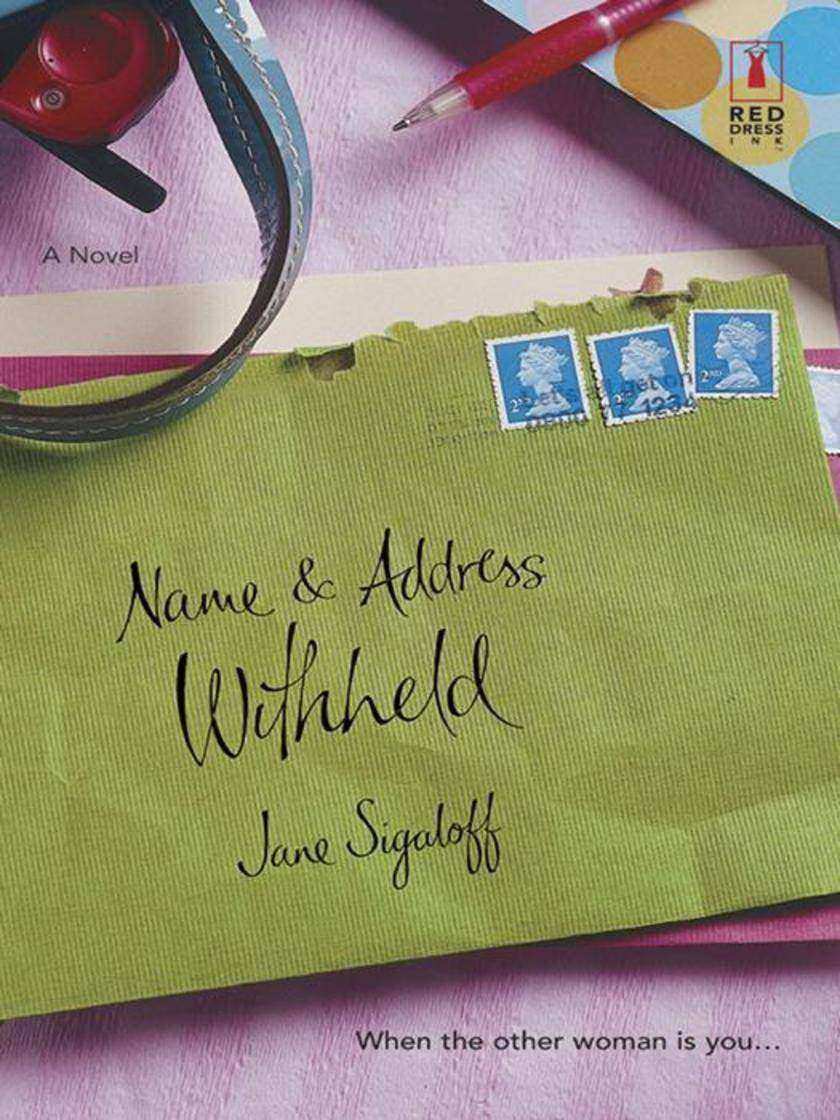
Name and Address Withheld (Mills & Boon Silhouette)
¥39.24
Dear Lizzie, My marriage is in dire straits. I know you must get hundreds of people writing to you with this problem, but I think my husband may be having an affair…. –Name & Address Withheld Lizzie Ford is an urban sexpert, and her hip London magazine column and radio show are bombarded with romantic casualties on a daily basis. What a relief that, after years in the dating jungle, Lizzie herself has finally leaped off the shelf into the arms of Matt Baker–an advertising genius with enough charm to win over even Lizzie's man-cynical best friend. Little does Lizzie know there's more to Matt Baker than witty one-liners and bedroom eyes. Or that this innocent, seemingly anonymous note from a reader is about to catapult her into a scorching scandal, forcing Lizzie to confront some compelling home truths about life, love–and loyalty….

The Girl Next Door (Mills & Boon Intrigue) (Shadow Agents: Guts and Glory, Book
¥31.10
When Gabrielle Harper’s gutsy investigative reporting attracts a serial killer, her new neighbour begins keeping an eye on her. Cooper Marshall, an Elite Operations Division specialist, knows when the time comes he’ll protect Gabrielle – even if it means breaking his cover…

No Safe Place (Mills & Boon Silhouette)
¥25.60
How did they keep finding her? For years, professor Elizabeth Larocca had prepared for the day her late husband's dangerous secret life would catch up to her. So when her husband's dead body showed up for the second time and his former associates arrived on her doorstep, Liz took her daughter and ran. But every haven she found was compromised, as if someone knew all her plans. Now Liz had to choose whom to trust: her husband's former partner or a mystery man who warned her against him. On a trail of kidnapping, blackmail and murder, could the professor outwit two trained agents and keep herself and her daughter safe from harm?

The Lawman's Honor (Mills & Boon Love Inspired) (Whisper Falls, Book 4)
¥31.10
Love’s Duty As assistant police chief, Heath Monroe never expected he’d ever need rescuing. But that’s exactly what Cassie Blackwell does when she pulls him out of a car wreckage. He’s surprised at the beautiful widow’s strength and joyous spirit. But he’s been burned before and is cautious to get involved. Especially since his investigation into the town’s drug operation might implicate Cassie’s late husband! Yet the more time he spends with her, the deeper he falls. Will he have to choose between duty and his growing love—or is there a way he can have both? Whisper Falls: Where every prayer is answered…

Bombshell (Mills & Boon Silhouette)
¥39.24
There should be a four-letter word for beauty. She has more shoes than Sarah Jessica Parker and a skin-care system that could make Madonna swoon, but unlike her celebrity counterparts, Grace Noonan doesn't have it all. Her latest utterly-eligible-yet-maddeningly-unavailable boyfriend has just revealed that having sex with her is one thing and having babies quite another, forcing Grace to move on–again. And now that her employer–a top cosmetics company once devoted to "beauty beyond thirty"–is pursuing a teenaged supermodel as its future face, this thirty-four-year-old marketing exec is starting to wonder if she is going to get it all before the closing credits. Could it be time for Grace to back out of the beauty race and trade the singles scene for the sperm bank? Or is there something even this savvy bombshell has yet to discover about life and love in New York City?


