


 购物车
 个人中心


On the Nature of Limbs
¥229.55
The most prominent naturalist in Britain before Charles Darwin, Richard Owen made empirical discoveries and offered theoretical innovations that were crucial to the proof of evolution. Among his many lasting contributions to science was the first clear definition of the term homology-"e;the same organ in different animals under every variety of form and function."e; He also graphically demonstrated that all vertebrate species were built on the same skeletal plan and devised the vertebrate archetype as a representation of the simplest common form of all vertebrates.Just as Darwin's ideas continue to propel the modern study of adaptation, so too will Owen's contributions fuel the new interest in homology, organic form, and evolutionary developmental biology. His theory of the archetype and his views on species origins were first offered to the general public in On the Nature of Limbs, published in 1849. It reemerges here in a facsimile edition with introductory essays by prominent historians, philosophers, and practitioners from the modern evo-devo community.
Freudian Robot
¥247.21
The identity and role of writing has evolved in the age of digital media. But how did writing itself make digital media possible in the first placeLydia H. Liu offers here the first rigorous study of the political history of digital writing and its fateful entanglement with the Freudian unconscious.Liu's innovative analysis brings the work of theorists and writers back into conversation with one another to document significant meetings of minds and disciplines. She shows how the earlier avant-garde literary experiments with alphabetical writing and the word-association games of psychoanalysis contributed to the mathematical making of digital media. Such intellectual convergence, she argues, completed the transformation of alphabetical writing into the postphonetic, ideographic system of digital media, which not only altered the threshold of sense and nonsense in communication processes but also compelled a new understanding of human-machine interplay at the level of the unconscious.Ranging across information theory, cybernetics, modernism, literary theory, neurotic machines, and psychoanalysis, The Freudian Robot rewrites the history of digital media and the literary theory of the twentieth century.

Mapping the Nation
¥247.21
In the nineteenth century, Americans began to use maps in radically new ways. For the first time, medical men mapped diseases to understand and prevent epidemics, natural scientists mapped climate and rainfall to uncover weather patterns, educators mapped the past to foster national loyalty among students, and Northerners mapped slavery to assess the power of the South. After the Civil War, federal agencies embraced statistical and thematic mapping in order to profile the ethnic, racial, economic, moral, and physical attributes of a reunified nation. By the end of the century, Congress had authorized a national archive of maps, an explicit recognition that old maps were not relics to be discarded but unique records of the nation's past.All of these experiments involved the realization that maps were not just illustrations of data, but visual tools that were uniquely equipped to convey complex ideas and information. In Mapping the Nation, Susan Schulten charts how maps of epidemic disease, slavery, census statistics, the environment, and the past demonstrated the analytical potential of cartography, and in the process transformed the very meaning of a map.Today, statistical and thematic maps are so ubiquitous that we take for granted that data will be arranged cartographically. Whether for urban planning, public health, marketing, or political strategy, maps have become everyday tools of social organization, governance, and economics. The world we inhabit-saturated with maps and graphic information-grew out of this sea change in spatial thought and representation in the nineteenth century, when Americans learned to see themselves and their nation in new dimensions.

Divas in the Convent
¥253.10
When eight-year-old Lucrezia Orsina Vizzana (1590-1662) entered one of the preeminent convents in Bologna in 1598, she had no idea what cloistered life had in store for her. Thanks to clandestine instruction from a local maestro di cappella-and despite the church hierarchy's vehement opposition to all convent music-Vizzana became the star of the convent, composing works so thoroughly modern and expressive that a recent critic described them as "e;historical treasures."e; But at the very moment when Vizzana's works appeared in 1623-she would be the only Bolognese nun ever to publish her music-extraordinary troubles beset her and her fellow nuns, as episcopal authorities arrived to investigate anonymous allegations of sisterly improprieties with male members of their order.?Craig A. Monson retells the story of Vizzana and the nuns of Santa Cristina to elucidate the role that music played in the lives of these cloistered women. Gifted singers, instrumentalists, and composers, these nuns used music not only to forge links with the community beyond convent walls, but also to challenge and circumvent ecclesiastical authority. Monson explains how the sisters of Santa Cristina-refusing to accept what the church hierarchy called God's will and what the nuns perceived as a besmirching of their honor-fought back with words and music, and when these proved futile, with bricks, roof tiles, and stones. These women defied one Bolognese archbishop after another, cardinals in Rome, and even the pope himself, until threats of excommunication and abandonment by their families brought them to their knees twenty-five years later. By then, Santa Cristina's imaginative but frail composer literally had been driven mad by the conflict.?Monson's fascinating narrative relies heavily on the words of its various protagonists, on both sides of the cloister wall, who emerge vividly as imaginative, independent-minded, and not always sympathetic figures. In restoring the musically gifted Lucrezia Orsina Vizzana to history, Monson introduces readers to the full range of captivating characters who played their parts in seventeenth-century convent life.?
History of the Federal Reserve, Volume 1
¥265.87
Allan H. Meltzer's monumental history of the Federal Reserve System tells the story of one of America's most influential but least understood public institutions. This first volume covers the period from the Federal Reserve's founding in 1913 through the Treasury-Federal Reserve Accord of 1951, which marked the beginning of a larger and greatly changed institution.To understand why the Federal Reserve acted as it did at key points in its history, Meltzer draws on meeting minutes, correspondence, and other internal documents (many made public only during the 1970s) to trace the reasoning behind its policy decisions. He explains, for instance, why the Federal Reserve remained passive throughout most of the economic decline that led to the Great Depression, and how the Board's actions helped to produce the deep recession of 1937 and 1938. He also highlights the impact on the institution of individuals such as Benjamin Strong, governor of the Federal Reserve Bank of New York in the 1920s, who played a key role in the adoption of a more active monetary policy by the Federal Reserve. Meltzer also examines the influence the Federal Reserve has had on international affairs, from attempts to build a new international financial system in the 1920s to the Bretton Woods Agreement of 1944 that established the International Monetary Fund and the World Bank, and the failure of the London Economic Conference of 1933.Written by one of the world's leading economists, this magisterial biography of the Federal Reserve and the people who helped shape it will interest economists, central bankers, historians, political scientists, policymakers, and anyone seeking a deep understanding of the institution that controls America's purse strings."e;It was 'an unprecedented orgy of extravagance, a mania for speculation, overextended business in nearly all lines and in every section of the country.' An Alan Greenspan rumination about the irrational exuberance of the late 1990sTry the 1920 annual report of the board of governors of the Federal Reserve. . . . To understand why the Fed acted as it did-at these critical moments and many others-would require years of study, poring over letters, the minutes of meetings and internal Fed documents. Such a task would naturally deter most scholars of economic history but not, thank goodness, Allan Meltzer."e;-Wall Street Journal"e;A seminal work that anyone interested in the inner workings of the U. S. central bank should read. A work that scholars will mine for years to come."e;-John M. Berry, Washington Post"e;An exceptionally clear story about why, as the ideas that actually informed policy evolved, things sometimes went well and sometimes went badly. . . . One can only hope that we do not have to wait too long for the second installment."e;-David Laidler, Journal of Economic Literature"e;A thorough narrative history of a high order. Meltzer's analysis is persuasive and acute. His work will stand for a generation as the benchmark history of the world's most powerful economic institution. It is an impressive, even awe-inspiring achievement."e;-Sir Howard Davies, Times Higher Education Supplement
Designing Machine Learning Systems with Python
¥80.65
Design efficient machine learning systems that give you more accurate results About This Book Gain an understanding of the machine learning design process Optimize machine learning systems for improved accuracy Understand common programming tools and techniques for machine learning Develop techniques and strategies for dealing with large amounts of data from a variety of sources Build models to solve unique tasks Who This Book Is For This book is for data scientists, scientists, or just the curious. To get the most out of this book, you will need to know some linear algebra and some Python, and have a basic knowledge of machine learning concepts. What You Will Learn Gain an understanding of the machine learning design process Optimize the error function of your machine learning system Understand the common programming patterns used in machine learning Discover optimizing techniques that will help you get the most from your data Find out how to design models uniquely suited to your task In Detail Machine learning is one of the fastest growing trends in modern computing. It has applications in a wide range of fields, including economics, the natural sciences, web development, and business modeling. In order to harness the power of these systems, it is essential that the practitioner develops a solid understanding of the underlying design principles. There are many reasons why machine learning models may not give accurate results. By looking at these systems from a design perspective, we gain a deeper understanding of the underlying algorithms and the optimisational methods that are available. This book will give you a solid foundation in the machine learning design process, and enable you to build customised machine learning models to solve unique problems. You may already know about, or have worked with, some of the off-the-shelf machine learning models for solving common problems such as spam detection or movie classification, but to begin solving more complex problems, it is important to adapt these models to your own specific needs. This book will give you this understanding and more. Style and approach This easy-to-follow, step-by-step guide covers the most important machine learning models and techniques from a design perspective.

Implementing Microsoft Dynamics NAV - Third Edition
¥99.18
Explore the capabilities of Dynamics NAV 2016 and discover all you need to implement it About This Book Learn the key roles of your Dynamics NAV partner and the roles within your customer’s organization Create configuration packages and perform data migration on your own Find out how to troubleshoot your problems effectively with your Dynamics NAV partner Who This Book Is For This book is for Dynamics NAV partners and end users who want to know everything about Dynamics NAV implementations. It is aimed at those who want to be project managers or get involved with Dynamics NAV, but do not have the expertise to write code themselves. What You Will Learn Study the roles within a Dynamics NAV partner and within a customer’s company Create reusable data migration packages Work with the debugger to pinpoint error messages Get to grips with the key tables used in data reporting and analysis Successfully upgrade your installation to the latest version Manage and expand your existing installation with additional functionalities Explore the free third-party add-ons that can leverage your existing installation In Detail Microsoft Dynamics NAV 2016 is an Enterprise Resource Planning (ERP) application used in all kinds of organizations around the world. It provides a great variety of functionality out-of-the-box in different topics such as accounting, sales, purchase processing, logistics, or manufacturing. It also allows companies to grow the application by customizing the solution to meet specific requirements. This book is a hands-on tutorial on working with a real Dynamics NAV implementation. You will learn about the team from your Microsoft Dynamics NAV partner as well as the team within the customer’s company. This book provides an insight into the different tools available to migrate data from the client’s legacy system into Microsoft Dynamics NAV. If you are already live with Microsoft Dynamics NAV, this books talks about upgrades and what to expect from them. We’ll also show you how to implement additional or expanding functionalities within your existing Microsoft Dynamics NAV installation, perform data analysis, debug error messages, and implement free third-party add-ons to your existing installation. This book will empower you with all the skills and knowledge you need for a successful implementation. Style and approach This book is step-by-step guide to implementing Dynamics NAV from start to finish.
OpenStack Networking Essentials
¥71.93
Build and manage networks in OpenStack using Neutron About This Book Deploy an all-in-one cloud based on OpenStack Liberty (2015.2) using RDO Learn the fundamentals of the Neutron API including networks, subnets, and ports, and how to manage these resources in the cloud Build simple virtual network infrastructures in the cloud Who This Book Is For The book is for those who are new to OpenStack and Neutron who want to learn the cloud networking fundamentals and get started with OpenStack networking. Prior networking experience along with a virtual or physical server is recommended to follow along with the concepts demonstrated in the book. What You Will Learn Install the latest Liberty (2015.2) release of OpenStack using RDO in VirtualBox Discover the basics of the Neutron API, including networks, subnets, and ports Interact with Neutron using the CLI and Horizon dashboard Create networks and subnets that provide connectivity to instances Implement software routers that connect networks and provide network address translation Secure instances using Neutron's security group functionality In Detail The OpenStack Networking API offers users the ability to create and manage both basic and complex network architectures that blend the virtual and physical network infrastructure. This book kicks off by describing various components of Openstack Neutron and installing Ubuntu OpenStack based on Canonical's process. Further on, you will use various methods to interface with Neutron to create and manage network resources. You will also get to grips with the relationship between ports, networks, and subnets through diagrams and explanations, and see how the logical components are implemented via plugins and agents. Moving forward, you will learn how virtual switches are implemented and how to build Neutron routers. You will also configure networks, subnets, and routers to provide connectivity to instances using simple examples. At the end, you will configure and manage security groups, and will observe how these rules translate to iptables rules on the host machines. By the end of the book, you will be able to build basic network architectures using Neutron networks and routers in no time. Style and approach An easy-to-follow guide that covers the networking features of OpenStack and the core Neutron API components providing a solid foundation to deploy networks and instances.
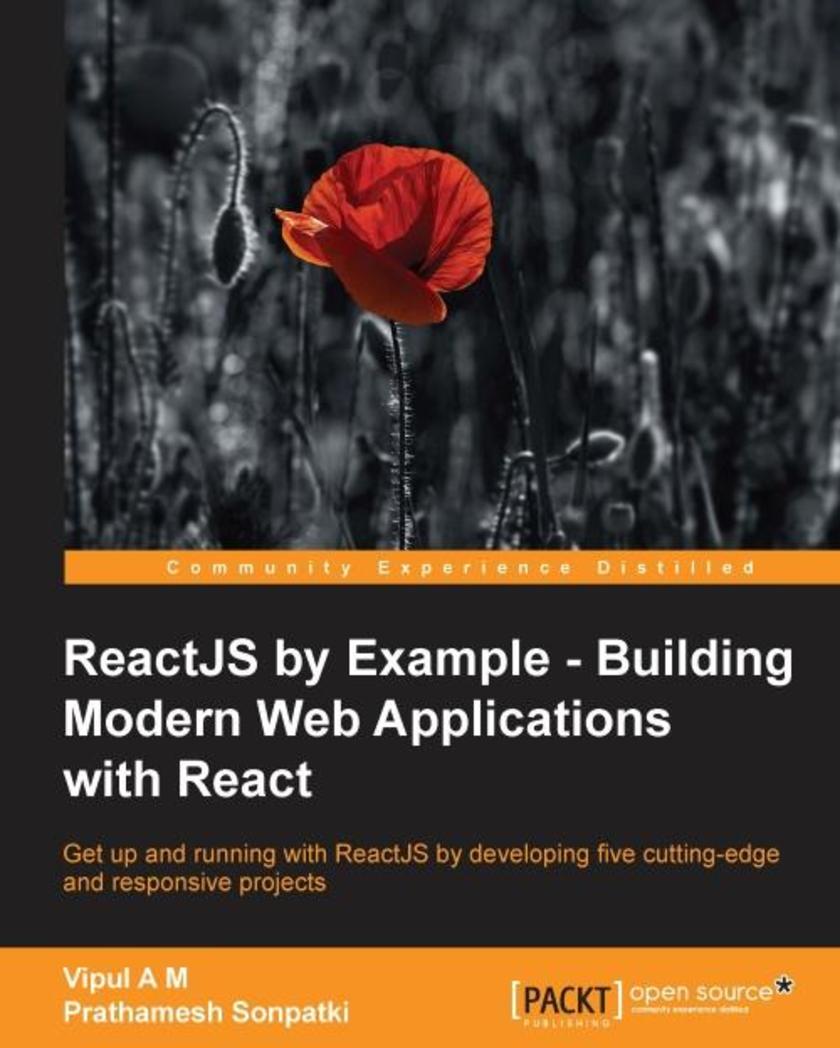
ReactJS by Example - Building Modern Web Applications with React
¥80.65
Get up and running with ReactJS by developing five cutting-edge and responsive projects About This Book Create pragmatic real-world applications while learning React and its modern developer tools Build sustainable user interfaces by transforming data into components of UI Learn how to generate reusable ReactJS components effectively Who This Book Is For If you are a web developer and wish to learn ReactJS from scratch, then this book is tailor-made for you. Good understanding of Java*, HTML, and CSS is expected. What You Will Learn Create, reuse, and compose React components using JSX Share data between various React components and techniques for data flow within a React app Handle user interactions with the help of event handlers and dynamic components Set up and use various next generation ES2015/ES6 features with React Understand the performance and immutability features of React using React add-ons Learn the techniques of Animation in React Use data stores to store model-related data and information Create a flux-based React application by using Reflux library In Detail ReactJS is an open-source JavaScript library that brings the power of reactive programming to web applications and sites. It aims to address the challenges encountered in developing single-page applications, and is intended to help developers build large, easily scalable and changing web apps. Starting with a project on Open Library API, you will be introduced to React and JSX before moving on to learning about the life cycle of a React component. In the second project, building a multi-step wizard form, you will learn about composite dynamic components and perform DOM actions. You will also learn about building a fast search engine by exploring server-side rendering in the third project on a search engine application. Next, you will build a simple frontpage for an e-commerce app in the fourth project by using data models and React add-ons. In the final project you will develop a complete social media tracker by using the flux way of defining React apps and know about the best practices and use cases with the help of ES6 and redux. By the end of this book, you will not only have a good understanding of ReactJS but will also have built your very own responsive frontend applications from scratch. Style and approach An easy-to-follow program to learn ReactJS with the help of real world projects. Each topic is explained within the context of a project and provides plenty of tips and tricks for using ReactJS.
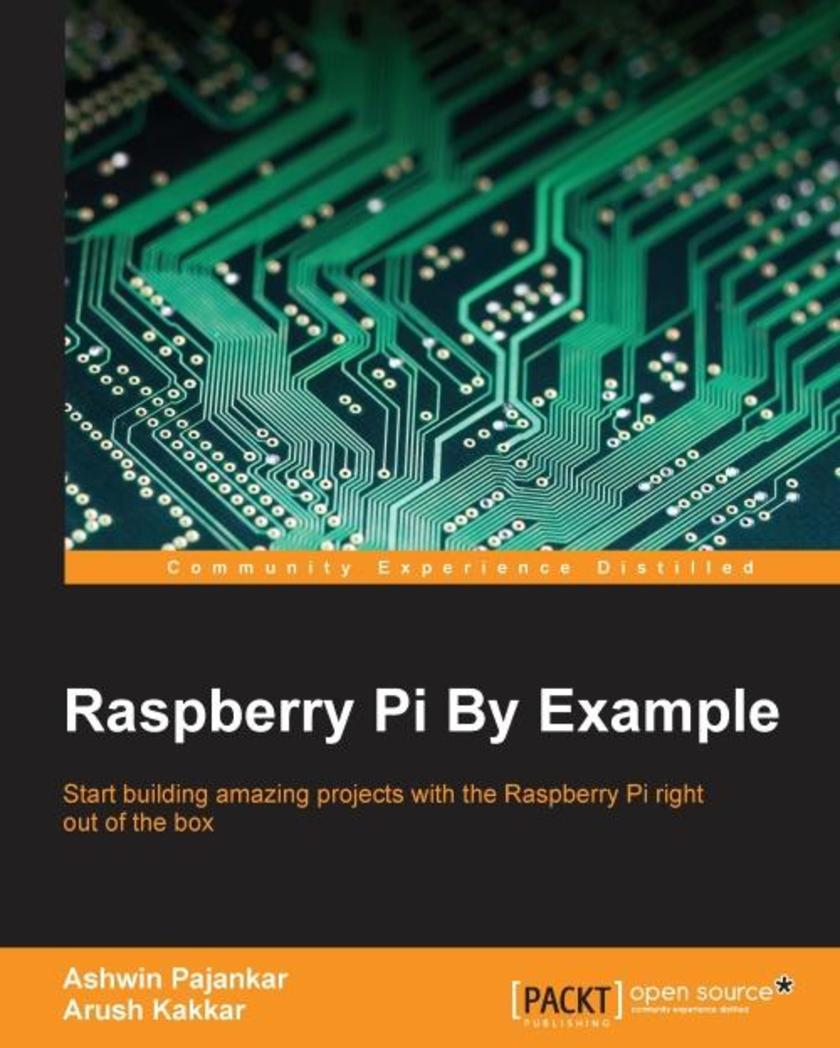
Raspberry Pi By Example
¥71.93
Start building amazing projects with the Raspberry Pi right out of the box About This Book Explore the vast range of opportunities provided by Raspberry Pi and other hardware components such as a webcam, the Pi camera, and sensors Get hands-on experience with coding, networking, and hardware with the Raspberry Pi platform Learn through ample screenshots that offer a play-by-play account of how to implement Raspberry-Pi-based real-life projects Who This Book Is For What's the best way to learn how to use your Raspberry PiBy example! If you want something exciting to do whilst getting to grips with what your Pi can offer, this is the book for you. With both simple and complex projects, you'll create a wide variety of cool toys and functions with your Raspberry Pi - all with minimal coding experience necessary. What You Will Learn Set up your Raspberry Pi and get it ready for some interesting real-life projects Work with images, videos, webcams, and the Pi camera and create amazing time-lapse videos Explore the amazing world of Minecraft Pi Get to know how to use PiGlow for GPIO programming Interface your Pi with Grove Sensors and implement IoT applications Build your own cluster with Raspberry Pi Understand the networking and network programming fundamentals In Detail Want to put your Raspberry Pi through its paces right out of the boxThis tutorial guide is designed to get you learning all the tricks of the Raspberry Pi through building complete, hands-on hardware projects. Speed through the basics and then dive right in to development! Discover that you can do almost anything with your Raspberry Pi with a taste of almost everything. Get started with Pi Gaming as you learn how to set up Minecraft, and then program your own game with the help of Pygame. Turn the Pi into your own home security system with complete guidance on setting up a webcam spy camera and OpenCV computer vision for image recognition capabilities. Get to grips with GPIO programming to make a Pi-based glowing LED system, build a complete functioning motion tracker, and more. Finally, get ready to tackle projects that push your Pi to its limits. Construct a complete Internet of Things home automation system with the Raspberry Pi to control your house via Twitter; turn your Pi into a super-computer through linking multiple boards into a cluster and then add in advanced network capabilities for super speedy processing! Style and approach This step-by-step guide to building Raspberry-Pi-based projects is explained in a conversational and easy-to-follow style. Each topic is explained sequentially in the process of creating real-life projects, and detailed explanations of the basic and advanced features of various Python libraries are also included.
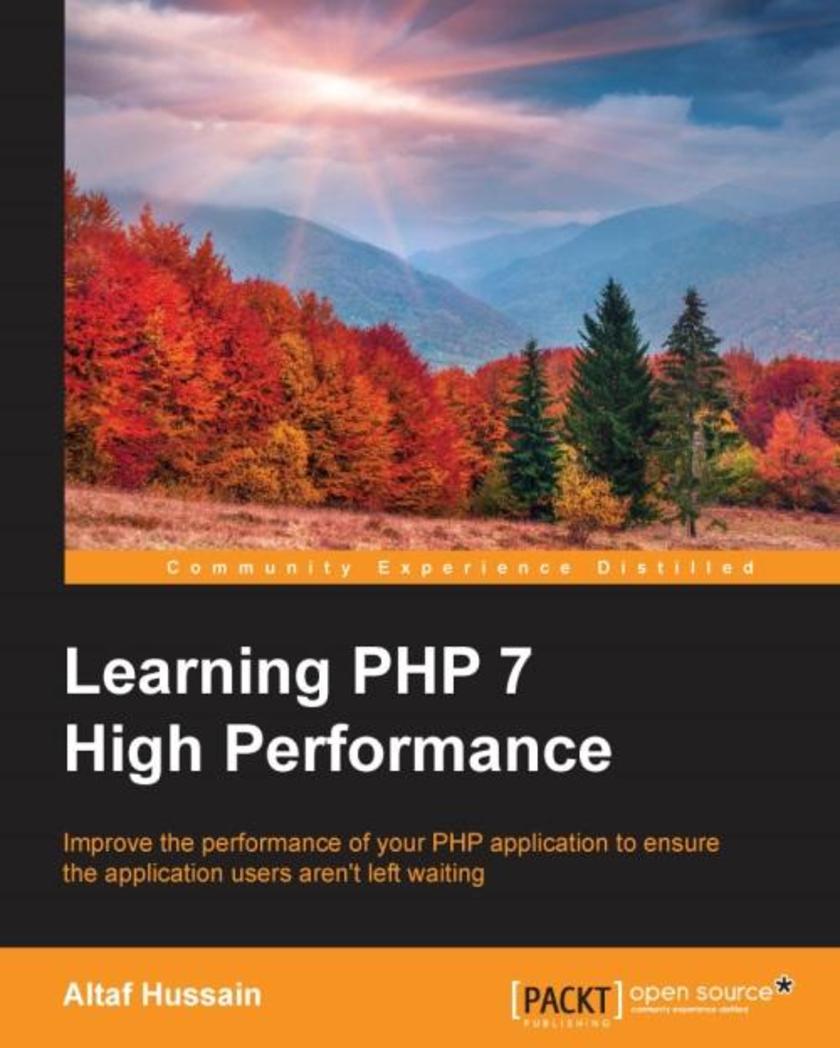
Learning PHP 7 High Performance
¥71.93
Improve the performance of your PHP application to ensure the application users aren't left waiting About This Book · Make the optimum use of PHP coding to improve your programming productivity · Leverage the potential of PHP for server-side programming, memory management, and object-oriented programming · Packed with real-life examples to help the readers implement concepts as they learn Who This Book Is For This book is for those who have basic experience in PHP programming. If you are developing performance-critical applications, then this book is for you. What You Will Learn · Setup high performance development and production environment for PHP 7 · Discover new OOP features in PHP 7 to achieve high performance · Improve your PHP applications' performance · Attain improved database performance · Benchmark PHP applications to optimize them · Write quality code by learning to improve code reusability, simplicity, and expressiveness · Get rid of the bottlenecks in your PHP 7 applications by writing PHP code optimally · Tackle issues related to web applications, such as high user dependency and large datasets In Detail PHP is a great language for building web applications. It is essentially a server-side *ing language that is also used for general-purpose programming. PHP 7 is the latest version, providing major backward-compatibility breaks and focusing on high performance and speed. This fast-paced introduction to PHP 7 will improve your productivity and coding skills. The concepts covered will allow you, as a PHP programmer, to improve the performance standards of your applications. We will introduce you to the new features in PHP 7 and then will run through the concepts of object-oriented programming (OOP) in PHP 7. Next, we will shed some light on how to improve your PHP 7 applications' performance and database performance. Through this book, you will be able to improve the performance of your programs using the various benchmarking tools discussed. At the end, the book discusses some best practices in PHP programming to help you improve the quality of your code. Style and approach The book is a step-by-step guide to improve the quality of your code in PHP through real-time examples. The book takes a practical approach to improving the quality of your code.
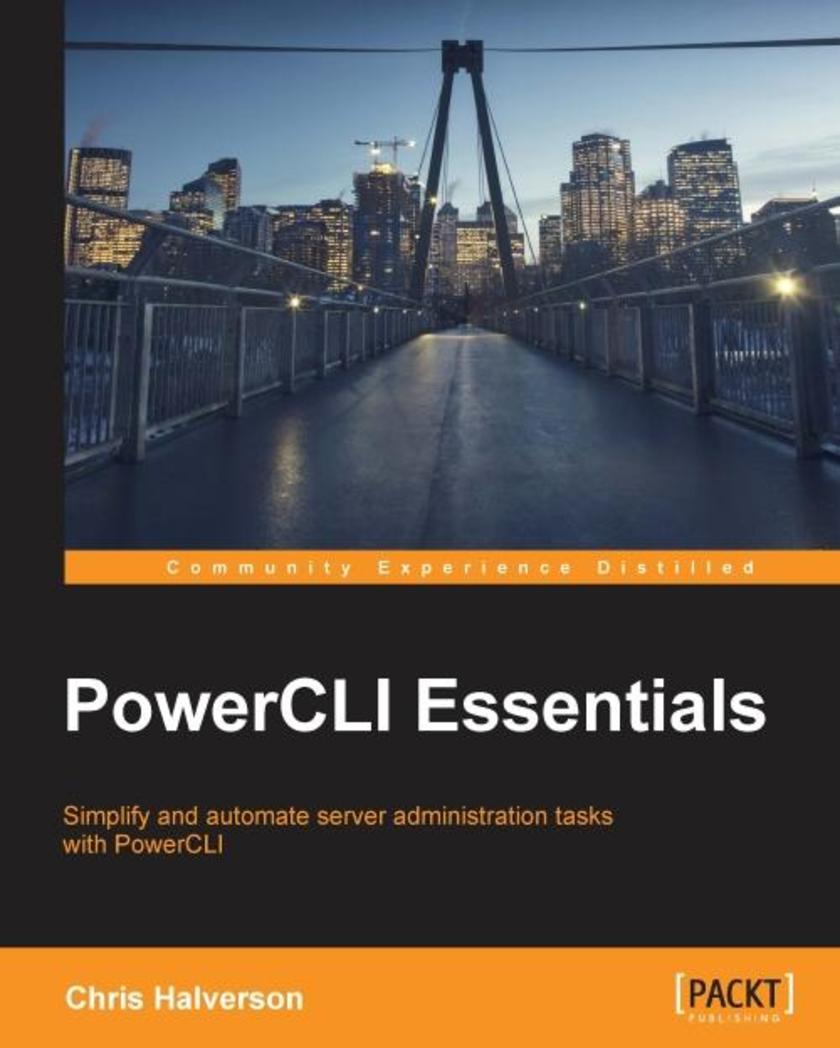
PowerCLI Essentials
¥71.93
Simplify and automate server administration tasks with PowerCLI About This Book Automate VMware’s VSphere environment by learning the essentials of PowerCLI Impress your peers by developing *s to perform administration tasks Discover the intricate workings of PowerCLI through simple and real-life examples Who This Book Is For PowerCLI Essentials is focused toward virtualization professionals and system administrators who want to discover and learn about the automation techniques associated with PowerCLI for complex virtual environments. What You Will Learn Download and install PowerCLI and its basics as well as the basics of PowerShell Enchance your scritping experience Build longer *s and simpler reports Relate a task in VMware administration to a PowerCLI * Discover methods to acquire and change information remotely Set up orchestrator to manage your workflow In Detail Have you ever wished you could automatically get a report with all the relevant information about your VMware environments in exactly the format you wantOr that you could automate a crucial task that needs to be performed on a regular basisPowerful Command Line Interface (PowerCLI) *s do all these things and much more for VMware environments. PowerCLI is a command-line interface tool used to automate VMware vSphere environments. It is used to handle complicated administration tasks through use of various cmdlets and *s, which are designed to handle certain aspects of VSphere servers and to help you manage them. This book will show you the intricacies of PowerCLI through real-life examples so that you can discover the art of PowerCLI *ing. At the start, you will be taught to download and install PowerCLI and will learn about the different versions of it. Moving further, you will be introduced to the GUI of PowerCLI and will find out how to develop single line *s to duplicate running tasks, produce simple reports, and simplify administration. Next, you will learn about the methods available to get information remotely. Towards the end, you will be taught to set up orchestrator and build workflows in PowerShell with update manager and SRM *s. Style and approach Each and every topic in this book is explained in a very easy-to-follow fashion with real-life, simple examples so you’ll get an idea not only about working with PowerCLI, but will also get an idea about *ing.
Lucretian Renaissance
¥447.34
With The Lucretian Renaissance, Gerard Passannante offers a radical rethinking of a familiar narrative: the rise of materialism in early modern Europe. Passannante begins by taking up the ancient philosophical notion that the world is composed of two fundamental opposites: atoms, as the philosopher Epicurus theorized, intrinsically unchangeable and moving about the void; and the void itself, or nothingness. Passannante considers the fact that this strain of ancient Greek philosophy survived and was transmitted to the Renaissance primarily by means of a poem that had seemingly been lost-a poem insisting that the letters of the alphabet are like the atoms that make up the universe.?By tracing this elemental analogy through the fortunes of Lucretius's On the Nature of Things, Passannante argues that, long before it took on its familiar shape during the Scientific Revolution, the philosophy of atoms and the void reemerged in the Renaissance as a story about reading and letters-a story that materialized in texts, in their physical recomposition, and in their scattering.?From the works of Virgil and Macrobius to those of Petrarch, Poliziano, Lambin, Montaigne, Bacon, Spenser, Gassendi, Henry More, and Newton, The Lucretian Renaissance recovers a forgotten history of materialism in humanist thought and scholarly practice and asks us to reconsider one of the most enduring questions of the period: what does it mean for a text, a poem, and philosophy to be "e;reborn"e;?

Perspectives on Food-Safety Issues of Animal-Derived Foods
¥410.35
As recent stories in the news have shown, maintaining the integrity of the food supply is of critical importance to the consumer. Thousands of Americans die each year from food-borne illnesses, and millions more get sick. Tremendous strides have been made to reduce the incidence of food-borne diseases originating from animal-derived foods, but food safety and food-borne pathogens continue to remain problematic throughout the world. Food-safety scientists from around the nation continue to conduct groundbreaking research not only to understand causative factors in food-borne pathogen prevalence but to develop novel intervention strategies for limiting contamination in all phases of food animal production. The twenty-four essays in this book highlight research efforts of researchers from the tristate Food Safety Consortium established in 1988 by Congress as a research alliance of food-safety scientists at the University of Arkansas, Iowa State University, and Kansas State University. Members of the consortium conduct research through an annual grant approved by Congress and administered by the U.S. Department of Agriculture. Its mission is to conduct extensive investigation into all areas of poultry, beef, and pork meat production, from the farm to the consumer's table. In addition to the consortium researchers, collaborative university researchers, government officials, and industry personnel provide timely reviews of their latest findings with regard to five significant subject areas: preharvest food-borne pathogen ecology and intervention strategies, postharvest food-borne pathogen ecology, rapid methods and detection strategies for food-borne pathogens, antibiotics and antimicrobials in food safety, and emerging issues in food safety. Progress in these research areas provides opportunities to further enhance protection of animal-derived foods from farm to fork.

Collateral Knowledge
¥265.87
It has been more than twelve years since this project began.This book draws upon seventeen months of fieldwork conducted in Tokyo between summer 1997 and fall 2001 followed by frequent research visits in the years that followed.Research and writing were supported by the American Bar Foundation, a Howard Fellowship, an American Council of Learned Societies Fellowship, a residential fellowship at Girton College, Cambridge, and research grants from the Social Science Research Council, the Japan Foundation, and the National Endowment for the Humanities.During that time, I held visiting positions at the University of Tokyo Faculty of Law, the Department of Anthropology at Keio University, and the Institute of Social Science at the University of Tokyo.I am grateful to each of these institutions for their hospitality, and in particular to professors Yoshiko Terao, Satoshi Tanahashi, and Yuji Genda, respectively, for making each of these affiliations possible.

Republic of Love
¥270.76
At the heart of The Republic of Love are the voices of three musicians-queer nightclub star Zeki Muren, arabesk originator Orhan Gencebay, and pop diva Sezen Aksu-who collectively have dominated mass media in Turkey since the early 1950s. Their fame and ubiquity have made them national icons-but, Martin Stokes here contends, they do not represent the official version of Turkish identity propagated by anthems or flags; instead they evoke a much more intimate and ambivalent conception of Turkishness.Using these three singers as a lens, Stokes examines Turkey's repressive politics and civil violence as well as its uncommonly vibrant public life in which music, art, literature, sports, and journalism have flourished. However, Stokes's primary concern is how Mren, Gencebay, and Aksu's music and careers can be understood in light of theories of cultural intimacy. In particular, he considers their contributions to the development of a Turkish concept of love, analyzing the ways these singers explore the private matters of intimacy, affection, and sentiment on the public stage.

After Life
¥270.76
Life is one of our most basic concepts, and yet when examined directly it proves remarkably contradictory and elusive, encompassing both the broadest and the most specific phenomena. We can see this uncertainty about life in our habit of approaching it as something at once scientific and mystical, in the return of vitalisms of all types, and in the pervasive politicization of life. In short, life seems everywhere at stake and yet is nowhere the same.In After Life, Eugene Thacker clears the ground for a new philosophy of life by recovering the twists and turns in its philosophical history. Beginning with Aristotle's originary formulation of a philosophy of life, Thacker examines the influence of Aristotle's ideas in medieval and early modern thought, leading him to the work of Immanuel Kant, who notes the inherently contradictory nature of "life in itself." Along the way, Thacker shows how early modern philosophy's engagement with the problem of life affects thinkers such as Gilles Deleuze, Georges Bataille, and Alain Badiou, as well as contemporary developments in the "speculative turn" in philosophy.At a time when life is categorized, measured, and exploited in a variety of ways, After Life invites us to delve deeper into the contours and contradictions of the age-old question, "what is life?"
Marine Macroecology
¥394.36
Pioneered in the late 1980s, the concept of macroecology-a framework for studying ecological communities with a focus on patterns and processes-revolutionized the field. Although this approach has been applied mainly to terrestrial ecosystems, there is increasing interest in quantifying macroecological patterns in the sea and understanding the processes that generate them. Taking stock of the current work in the field and advocating a research agenda for the decades ahead, Marine Macroecology draws together insights and approaches from a diverse group of scientists to show how marine ecology can benefit from the adoption of macroecological approaches.Divided into three parts, Marine Macroecology first provides an overview of marine diversity patterns and offers case studies of specific habitats and taxonomic groups. In the second part, contributors focus on process-based explanations for marine ecological patterns. The third part presents new approaches to understanding processes driving the macroecolgical patterns in the sea. Uniting unique insights from different perspectives with the common goal of identifying and understanding large-scale biodiversity patterns, Marine Macroecology will inspire the next wave of marine ecologists to approach their research from a macroecological perspective.

Maternal Effects in Mammals
¥353.16
Evolutionary maternal effects occur whenever a mother's phenotypic traits directly affect her offspring's phenotype, independent of the offspring's genotype. Some of the phenotypic traits that result in maternal effects have a genetic basis, whereas others are environmentally determined. For example, the size of a litter produced by a mammalian mother-a trait with a strong genetic basis-can affect the growth rate of her offspring, while a mother's dominance rank-an environmentally determined trait-can affect the dominance rank of her offspring. The first volume published on the subject in more than a decade, Maternal Effects in Mammals reflects advances in genomic, ecological, and behavioral research, as well new understandings of the evolutionary interplay between mothers and their offspring. Dario Maestripieri and Jill M. Mateo bring together a learned group of contributors to synthesize the vast literature on a range of species, highlight evolutionary processes that were previously overlooked, and propose new avenues of research. Maternal Effects in Mammals will serve as the most comprehensive compendium on and stimulus for interdisciplinary treatments of mammalian maternal effects.

A Grammar of Murder
¥282.53
The dark shadows and offscreen space that force us to imagine violence we cannot see. The real slaughter of animals spliced with the fictional killing of men. The missing countershot from the murder victim's point of view. Such images, or absent images, Karla Oeler contends, distill how the murder scene challenges and changes film.?Reexamining works by such filmmakers as Renoir, Hitchcock, Kubrick, Jarmusch, and Eisenstein, Oeler traces the murder scene's intricate connections to the great breakthroughs in the theory and practice of montage and the formulation of the rules and syntax of Hollywood genre. She argues that murder plays such a central role in film because it mirrors, on multiple levels, the act of cinematic representation. Death and murder at once eradicate life and call attention to its former existence, just as cinema conveys both the reality and the absence of the objects it depicts. But murder shares with cinema not only this interplay between presence and absence, movement and stillness: unlike death, killing entails the deliberate reduction of a singular subject to a disposable object. Like cinema, it involves a crucial choice about what to cut and what to keep.

Sorcery in the Black Atlantic
¥253.10
Girls abused in London and torsos of black boys found in the Thames; African boys disappearing from school and child traffic in Africa; child sacrifice and Brazilian Pentecostal exorcism. Unrelated events are swiftly connected in an uncanny work of prestidigitation, including hitech digital images of torsos and forensic drawings of abused children. Les correspondances symboliques, Baudelaire would say, or contiguous magic, in Frazer’s more prosaic de*ion. It all could make sense, if we believe in our fears, suspicions, gossip, and prejudices. Furthermore, this incredible work of prestidigitation was engineered by two respectable institutions, known for their enlightened search of truth: the BBC and Scotland Yard. But where was the evidence that all these things were connectedThe “exorcism scandal” bewitched the media in Britain for the whole month of June, until some dissenting voices started to talk about a “racist witch hunt.” 5 By then, however, a population of hundreds of thousands of Africans, in particular Pentecostal Africans, was already under suspicion. “What if some of that was true?” some people still may ask. In fact, shortly before completing this introduction, the local London newspaper Evening Standard published a two-page report on an African church in the United Kingdom, with the title “Miracles and claims of baby-snatching,” mixing rumors of child trafficking, sorcery, syncretism, and extreme wealth. 6 That is how sorcery works: not by fully demonstrating its power, but by opening a possible doubt; one is never fully sure it is not true.


