


 购物车
购物车 个人中心
个人中心

War's Waste
¥229.55
With US soldiers stationed around the world and engaged in multiple conflicts, Americans will be forced for the foreseeable future to come to terms with those permanently disabled in battle.?At the moment, we accept rehabilitation as the proper social and cultural response to the wounded, swiftly returning injured combatants to their civilian lives. But this was not always the case, as Beth Linker reveals in her provocative new book, War's Waste.?Linker explains how, before entering World War I, the United States sought a way to avoid the enormous cost of providing injured soldiers with pensions, which it had done since the Revolutionary War. Emboldened by their faith in the new social and medical sciences, reformers pushed rehabilitation as a means to "e;rebuild"e; disabled soldiers, relieving the nation of a monetary burden and easing the decision to enter the Great War. Linker's narrative moves from the professional development of orthopedic surgeons and physical therapists to the curative workshops, or hospital spaces where disabled soldiers learned how to repair automobiles as well as their own artificial limbs. The story culminates in the postwar establishment of the Veterans Administration, one of the greatest legacies to come out of the First World War.

Wittgenstein's Ladder
¥241.33
Marjorie Perloff, among our foremost critics of twentieth-century poetry, argues that Ludwig Wittgenstein provided writers with a radical new aesthetic, a key to recognizing the inescapable strangeness of ordinary language. Taking seriously Wittgenstein's remark that "e;philosophy ought really to be written only as a form of poetry,"e; Perloff begins by discussing Wittgenstein the "e;poet."e; What we learn is that the poetics of everyday life is anything but banal."e;This book has the lucidity and the intelligence we have come to expect from Marjorie Perloff.-Linda Munk, American Literature"e;[Perloff] has brilliantly adapted Wittgenstein's conception of meaning and use to an analysis of contemporary language poetry."e;-Linda Voris, Boston Review"e;Wittgenstein's Ladder offers significant insights into the current state of poetry, literature, and literary study. Perloff emphasizes the vitality of reading and thinking about poetry, and the absolute necessity of pushing against the boundaries that define and limit our worlds."e;-David Clippinger, Chicago Review"e;Majorie Perloff has done more to illuminate our understanding of twentieth century poetic language than perhaps any other critic. . . . Entertaining, witty, and above all highly original."e;-Willard Bohn, Sub-Stance

Romantic Machine
¥247.21
In the years immediately following Napoleon's defeat, French thinkers in all fields set their minds to the problem of how to recover from the long upheavals that had been set into motion by the French Revolution. Many challenged the Enlightenment's emphasis on mechanics and questioned the rising power of machines, seeking a return to the organic unity of an earlier age and triggering the artistic and philosophical movement of romanticism. Previous scholars have viewed romanticism and industrialization in opposition, but in this groundbreaking volume John Tresch reveals how thoroughly entwined science and the arts were in early nineteenth-century France and how they worked together to unite a fractured society.Focusing on a set of celebrated technologies, including steam engines, electromagnetic and geophysical instruments, early photography, and mass-scale printing, Tresch looks at how new conceptions of energy, instrumentality, and association fueled such diverse developments as fantastic literature, popular astronomy, grand opera, positivism, utopian socialism, and the Revolution of 1848. He shows that those who attempted to fuse organicism and mechanism in various ways, including Alexander von Humboldt and Auguste Comte, charted a road not taken that resonates today.Essential reading for historians of science, intellectual and cultural historians of Europe, and literary and art historians, The Romantic Machine is poised to profoundly alter our understanding of the scientific and cultural landscape of the early nineteenth century.

Lost Second Book of Aristotle's "e;Poetics"e;
¥247.21
Of all the writings on theory and aesthetics-ancient, medieval, or modern-the most important is indisputably Aristotle's Poetics, the first philosophical treatise to propound a theory of literature. In the Poetics, Aristotle writes that he will speak of comedy-but there is no further mention of comedy. Aristotle writes also that he will address catharsis and an analysis of what is funny. But he does not actually address any of those ideas. The surviving Poetics is incomplete.Until today. Here, Walter Watson offers a new interpretation of the lost second book of Aristotle's Poetics. Based on Richard Janko's philological reconstruction of the epitome, a summary first recovered in 1839 and hotly contested thereafter, Watson mounts a compelling philosophical argument that places the statements of this summary of the Aristotelian text in their true context. Watson renders lucid and complete explanations of Aristotle's ideas about catharsis, comedy, and a summary account of the different types of poetry, ideas that influenced not only Cicero's theory of the ridiculous, but also Freud's theory of jokes, humor, and the comic.Finally, more than two millennia after it was first written, and after five hundred years of scrutiny, Aristotle's Poetics is more complete than ever before. Here, at last, Aristotle's lost second book is found again.
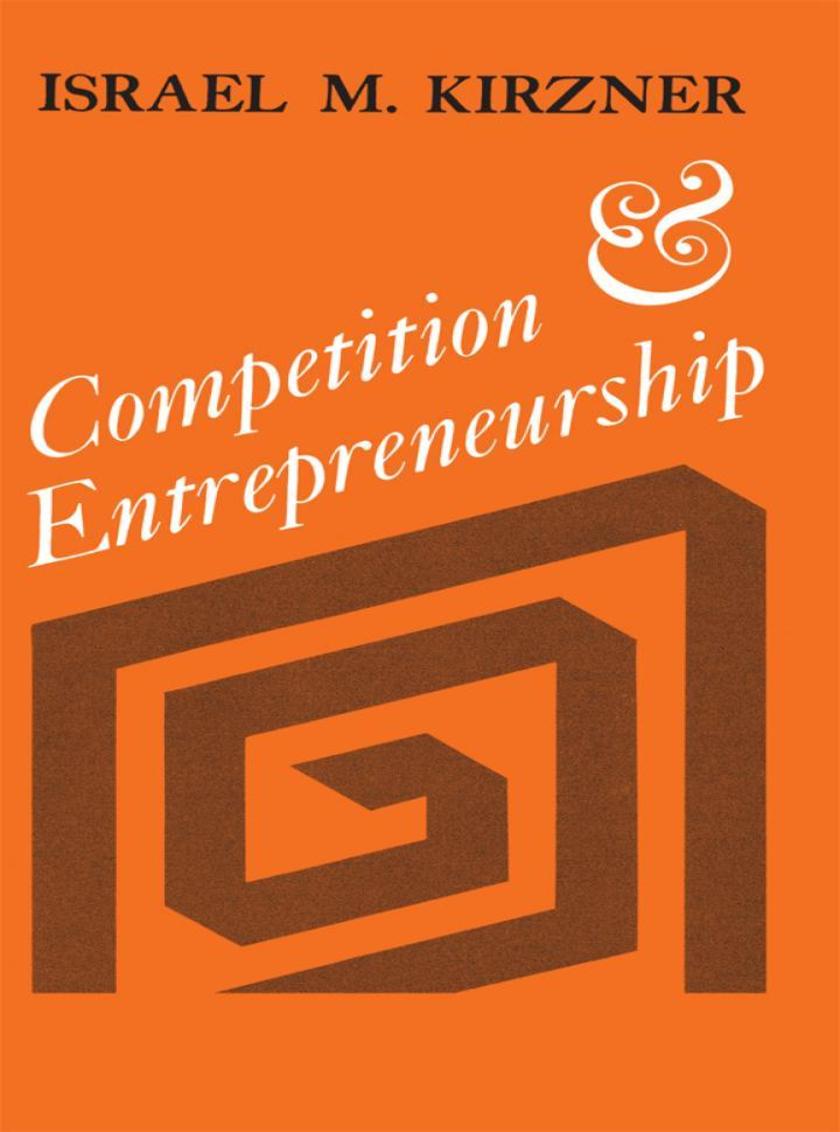
Competition and Entrepreneurship
¥241.33
Stressing verbal logic rather than mathematics, Israel M. Kirzner provides at once a thorough critique of contemporary price theory, an essay on the theory of entrepreneurship, and an essay on the theory of competition. Competition and Entrepreneurship offers a new appraisal of quality competition, of selling effort, and of the fundamental weaknesses of contemporary welfare economics.Kirzner's book establishes a theory of the market and the price system which differs from orthodox price theory. He sees orthodox price theory as explaining the configuration of prices and quantities that satisfied the conditions for equilibrium. Mr. Kirzner argues that "e;it is more useful to look to price theory to help understand how the decisions of individual participants in the market interact to generate the market forces which compel changes in prices, outputs, and methods of production and in the allocation of resources."e;Although Competition and Entrepreneurship is primarily concerned with the operation of the market economy, Kirzner's insights can be applied to crucial aspects of centrally planned economic systems as well. In the analysis of these processes, Kirzner clearly shows that the rediscovery of the entrepreneur must emerge as a step of major importance.
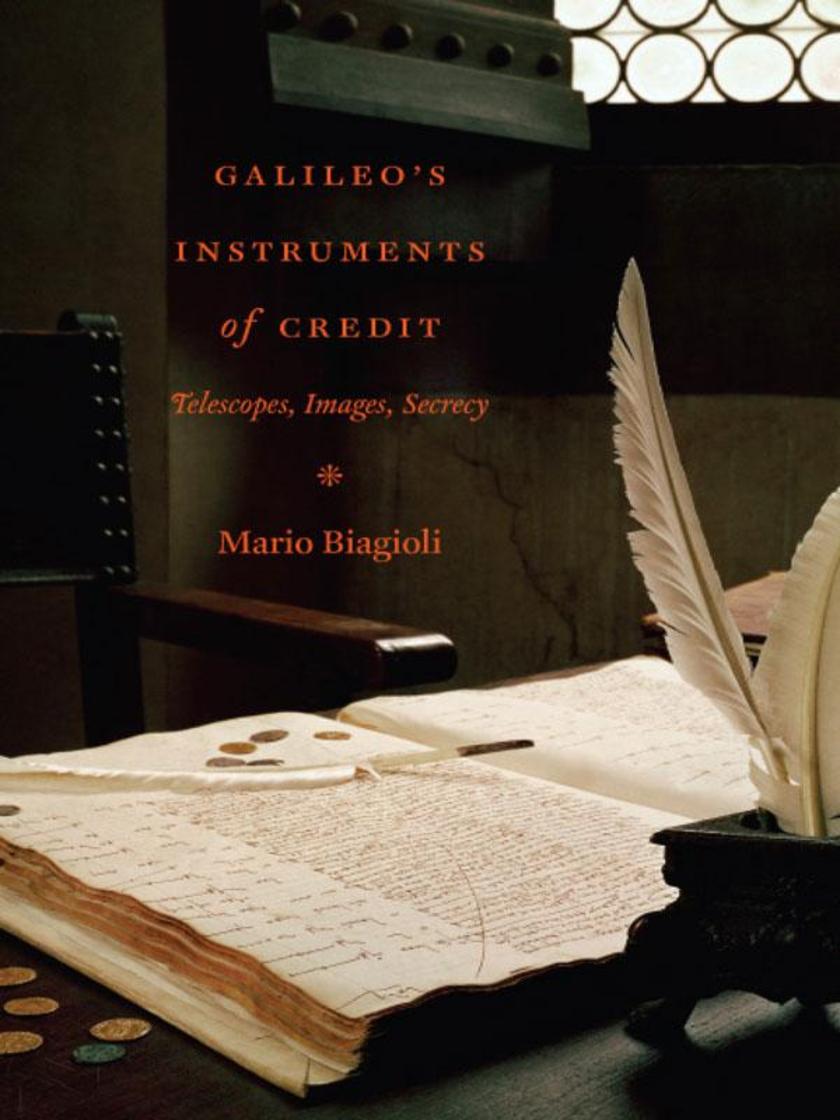
Galileo's Instruments of Credit
¥229.55
In six short years, Galileo Galilei went from being a somewhat obscure mathematics professor running a student boarding house in Padua to a star in the court of Florence to the recipient of dangerous attention from the Inquisition for his support of Copernicanism. In that brief period, Galileo made a series of astronomical discoveries that reshaped the debate over the physical nature of the heavens: he deeply modified the practices and status of astronomy with the introduction of the telescope and pictorial evidence, proposed a radical reconfiguration of the relationship between theology and astronomy, and transformed himself from university mathematician into court philosopher.Galileo's Instruments of Credit proposes radical new interpretations of several key episodes of Galileo's career, including his early telescopic discoveries of 1610, the dispute over sunspots, and the conflict with the Holy Office over the relationship between Copernicanism and Scripture. Galileo's tactics during this time shifted as rapidly as his circumstances, argues Mario Biagioli, and the pace of these changes forced him to respond swiftly to the opportunities and risks posed by unforeseen inventions, further discoveries, and the interventions of his opponents.Focusing on the aspects of Galileo's scientific life that extend beyond the framework of court culture and patronage, Biagioli offers a revisionist account of the different systems of exchanges, communication, and credibility at work in various phases of Galileo's career. Galileo's Instruments of Credit will find grateful readers among scholars of science studies, historical epistemology, visual studies, Galilean science, and late Renaissance astronomy.
Desperately Seeking Certainty
¥229.55
Irreverent, provocative, and engaging, Desperately Seeking Certainty attacks the current legal vogue for grand unified theories of constitutional interpretation. On both the Right and the Left, prominent legal scholars are attempting to build all of constitutional law from a single foundational idea. Dan Farber and Suzanna Sherry find that in the end no single, all-encompassing theory can successfully guide judges or provide definitive or even sensible answers to every constitutional question. Their book brilliantly reveals how problematic foundationalism is and shows how the pragmatic, multifaceted common law methods already used by the Court provide a far better means of reaching sound decisions and controlling judicial discretion than do any of the grand theories.
Political Theory of The Federalist
¥188.35
In The Political Theory of"e;The Federalist,"e; David F. Epstein offers a guide to the fundamental principles of American government as they were understood by the framers of the Constitution. Epstein here demonstrates the remarkable depth and clarity of The Federalist's argument, reveals its specifically political (not merely economic) view of human nature, and describes how and why the American regime combines liberal and republican values."e;While it is a model of scholarly care and clarity, this study deserves an audience outside the academy. . . . David F. Epstein's book is a fine demonstration of just how much a close reading can accomplish, free of any flights of theory or fancy references."e;-New Republic"e;Epstein's strength lies in two aspects of his own approach. One is that he reads the text with uncommon closeness and sensitivity; the other is an extensive knowledge of the European political thought which itself forms an indispensable background to the minds of the authors."e;-Times Literary Supplement

Darkness Visible
¥188.35
One of the best books ever written on one of humanity's greatest epics, W. R. Johnson's classic study of Vergil's Aeneid challenges centuries of received wisdom. Johnson rejects the political and historical reading of the epic as a record of the glorious prehistory of Rome and instead foregrounds Vergil's enigmatic style and questioning of the heroic myths.With an approach to the text that is both grounded in scholarship and intensely personal, and in a style both rhetorically elegant and passionate, Johnson offers readings of specific passages that are nuanced and suggestive as he focuses on the "e;somber and nourishing fictions"e; in Vergil's poem. A timeless work of scholarship, Darkness Visible will enthrall classicists as well as students and scholars of the history of criticism-specifically the way in which politics influence modern readings of the classics-and of poetry and literature.
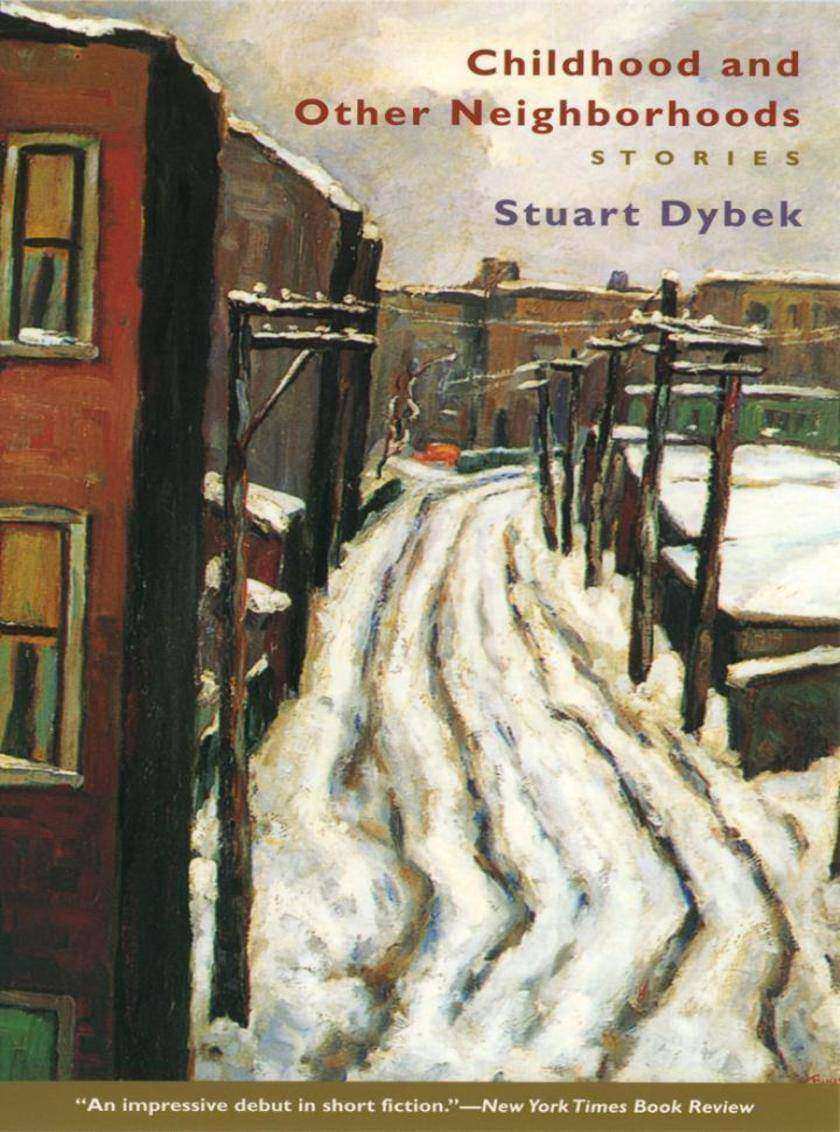
Childhood and Other Neighborhoods
¥188.35
In Stuart Dybek's Chicago, wonder lurks in unexpected places-in garbage-strewn alleys, gloomy basement apartments, abandoned rooms at the top of rickety stairs periodically rumbled by passing el trains. Transformed through the wide eyes of Dybek's adolescent heroes, these grimy urban backwaters become exotic landscapes of fear-filled possibility, of dreams not yet turned to nightmares. Chronicling what happens when Old World faith meets the dark side of the American dream, Dybek's poignant stories of coming of age in Chicago alternately appall, amaze, and just simply entertain.

Shakespeare and the Law
¥311.96
William Shakespeare is inextricably linked with the law. Legal documents make up most of the records we have of his life, and trials, lawsuits, and legal terms permeate his plays. Gathering an extraordinary team of literary and legal scholars, philosophers, and even sitting judges,?Shakespeare and the Law demonstrates that Shakespeare's thinking about legal concepts and legal practice points to a deep and sometimes vexed engagement with the law's technical workings, its underlying premises, and its social effects.The book's opening essays offer perspectives on law and literature that emphasize both the continuities and contrasts between the two fields. The second section considers Shakespeare's awareness of common law thinking and common law practice, while the third inquires into Shakespeare's general attitudes toward legal systems. The fourth part of the book looks at how law enters into conversation with issues of politics and community, whether in the plays, in Shakespeare's world, or in our own world. Finally, a colloquy among Supreme Court Justice Stephen Breyer, Judge Richard Posner, Martha C. Nussbaum, and Richard Strier covers everything from the ghost in?Hamlet?to the nature of judicial discretion.
Teaching Artist Handbook, Volume One
¥165.81
Teaching Artist Handbook is based on the premise that teaching artists have the unique ability to engage students as fellow artists. In their schools and communities, teaching artists put high quality art-making at the center of their practice and open doors to powerful learning across disciplines.This book is a collection of essays, stories, lists, examples, dialogues, and ideas, all offered with the aim of helping artists create and implement effective teaching based on their own expertise and strengths. The Handbook addresses three core questions: "e;What will I teach?"e; "e;How will I teach it?"e; and "e;How will I know if my teaching is working?"e; It also recognizes that teaching is a dynamic process that requires critical reflection and thoughtful adjustment in order to foster a supportive artistic environment.Instead of offering rigid formulas, this book is centered on practice-the actual doing and making of teaching artist work. Experience-based and full of heart, the Teaching Artist Handbook will encourage artists of every experience level to create an original and innovative practice that inspires students and the artist.

Front Page Economics
¥353.16
In an age when pundits constantly decry overt political bias in the media, we have naturally become skeptical of the news. But the bluntness of such critiques masks the highly sophisticated ways in which the media frame important stories. In Front Page Economics, Gerald Suttles delves deep into the archives to examine coverage of two major economic crashes-in 1929 and 1987-in order to systematically break down the way newspapers normalize crises.Poring over the articles generated by the crashes-as well as the people in them, the writers who wrote them, and the cartoons that ran alongside them-Suttles uncovers dramatic changes between the ways the first and second crashes were reported. In the intervening half-century, an entire new economic language had arisen and the practice of business journalism had been completely altered. Both of these transformations, Suttles demonstrates, allowed journalists to describe the 1987 crash in a vocabulary that was normal and familiar to readers, rendering it routine.A subtle and probing look at how ideologies are packaged and transmitted to the casual newspaper reader, Front Page Economics brims with important insights that shed light on our own economically tumultuous times.

Panaceia's Daughters
¥353.16
Panaceia's Daughters provides the first book-length study of noblewomen's healing activities in early modern Europe. Drawing on rich archival sources, Alisha Rankin demonstrates that numerous German noblewomen were deeply involved in making medicines and recommending them to patients, and many gained widespread fame for their remedies. Turning a common historical argument on its head, Rankin maintains that noblewomen's pharmacy came to prominence not in spite of their gender but because of it.?Rankin demonstrates the ways in which noblewomen's pharmacy was bound up in notions of charity, class, religion, and household roles, as well as in expanding networks of knowledge and early forms of scientific experimentation. The opening chapters place noblewomen's healing within the context of cultural exchange, experiential knowledge, and the widespread search for medicinal recipes in early modern Europe. Case studies of renowned healers Dorothea of Mansfeld and Anna of Saxony then demonstrate the value their pharmacy held in their respective roles as elderly widow and royal consort, while a study of the long-suffering Duchess Elisabeth of Rochlitz emphasizes the importance of experiential knowledge and medicinal remedies to the patient's experience of illness.

Document Raj
¥394.36
Historians of British colonial rule in India have noted both the place of military might and the imposition of new cultural categories in the making of Empire, but Bhavani Raman, in Document Raj, uncovers a lesser-known story of power: the power of bureaucracy. Drawing on extensive archival research in the files of the East India Company's administrative offices in Madras, she tells the story of a bureaucracy gone awry in a fever of documentation practices that grew ever more abstract-and the power, both economic and cultural, this created.?In order to assert its legitimacy and value within the British Empire, the East India Company was diligent about record keeping. Raman shows, however, that the sheer volume of their document production allowed colonial managers to subtly but substantively manipulate records for their own ends, increasingly drawing the real and the recorded further apart. While this administrative sleight of hand increased the company's reach and power within the Empire, it also bolstered profoundly new orientations to language, writing, memory, and pedagogy for the officers and Indian subordinates involved. Immersed in a subterranean world of delinquent scribes, translators, village accountants, and entrepreneurial fixers, Document Raj maps the shifting boundaries of the legible and illegible, the legal and illegitimate, that would usher India into the modern world.

Calle Florista
¥147.15
This World and That OneSometimes you defy it,I am not that, watching a strangercry like a dog when she thinks she's aloneat the kitchen window, hands forgottenunder the running tap.The curtains blow out, flap the other side of the sill.In you one hole fills another,stacked like cups.You remember your hands.Connie Voisine's third book of poems centers on the border between the United States and Mexico, celebrating the stunning, severe desert landscape found there. This setting marks the occasion as well for Voisine to explore themes of splitting and friction in both human and political contexts. Whose space is this border, she asks, and what voice can possibly tell the story of this place?In a wry, elegiac mode, the poems of Calle Florista take us both to the edge of our country and the edge of our faith in art and the world. This is mature work, offering us poems that oscillate between the articulation of complex, private sensibilities and the directness of a poet cracking the private self open-and making it vulnerable to the wider world.

Moment of Racial Sight
¥394.36
The Moment of Racial Sight overturns the most familiar form of racial analysis in contemporary culture: the idea that race is constructed, that it operates by attaching visible marks of difference to arbitrary meanings and associations. Searching for the history of the constructed racial sign, Irene Tucker argues that if people instantly perceive racial differences despite knowing better, then the underlying function of race is to produce this immediate knowledge. Racial perception, then, is not just a mark of acculturation, but a part of how people know one another.?Tucker begins her investigation in the Enlightenment, at the moment when skin first came to be used as the primary mark of racial difference. Through Kant and his writing on the relation of philosophy and medicine, she describes how racialized skin was created as a mechanism to enable us to perceive the likeness of individuals in a moment. From there, Tucker tells the story of instantaneous racial seeing across centuries-from the fictive bodies described but not seen in Wilkie Collins's realism to the medium of common public opinion in John Stuart Mill, from the invention of the notion of a constructed racial sign in Darwin's late work to the institutionalizing of racial sight on display in the HBO series The Wire. Rich with perceptive readings of unexpected texts, this ambitious book is an important intervention in the study of race.

Novel Science
¥394.36
Novel Science is the first in-depth study of the shocking, groundbreaking, and sometimes beautiful writings of the gentlemen of the "e;heroic age"e; of geology and of the contribution these men made to the literary culture of their day. For these men, literature was an essential part of the practice of science itself, as important to their efforts as mapmaking, fieldwork, and observation. The reading and writing of imaginative literatures helped them to discover, imagine, debate, and give shape and meaning to millions of years of previously undiscovered earth history.?Borrowing from the historical fictions of Walter Scott and the poetry of Lord Byron, they invented geology as a science, discovered many of the creatures we now call the dinosaurs, and were the first to unravel and map the sequence and structure of stratified rock. As Adelene Buckland shows, they did this by rejecting the grand narratives of older theories of the earth or of biblical cosmogony: theirs would be a humble science, faithfully recording minute details and leaving the big picture for future generations to paint. Buckland also reveals how these scientists-just as they had drawn inspiration from their literary predecessors-gave Victorian realist novelists such as George Eliot, Charles Kingsley, and Charles Dickens a powerful language with which to create dark and disturbing ruptures in the too-seductive sweep of story.
Seeing Double
¥447.34
The poet Charles Baudelaire (1821-1867) has been labeled the very icon of modernity, the scribe of the modern city, and an observer of an emerging capitalist culture. Seeing Double reconsiders this iconic literary figure and his fraught relationship with the nineteenth-century world by examining the way in which he viewed the increasing dominance of modern life. In doing so, it revises some of our most common assumptions about the unresolved tensions that emerged in Baudelaire's writing during a time of political and social upheaval.Franoise Meltzer argues that Baudelaire did not simply describe the contradictions of modernity; instead, his work embodied and recorded them, leaving them unresolved and often less than comprehensible. Baudelaire's penchant for looking simultaneously backward to an idealized past and forward to an anxious future, while suspending the tension between them, is part of what Meltzer calls his "e;double vision"e;-a way of seeing that produces encounters that are doomed to fail, poems that can't advance, and communications that always seem to falter. In looking again at the poet and his work, Seeing Double helps to us to understand the prodigious transformations at stake in the writing of modern life.
Forms of Attention
¥129.49
Sir Frank Kermode, the British scholar, instructor, and author, was an inspired critic.?Forms of Attention is based on a series of three lectures he gave on canon formation, or how we choose what art to value. The essay on Botticelli traces the artist's sudden popularity in the nineteenth century for reasons that have more to do with poetry than painting. In the second essay, Kermode reads Hamlet from a very modern angle, offering a useful (and playful) perspective for a contemporary audience. The final essay is a defense of literary criticism as a process and conversation that, while often conflating knowledge with opinion, keeps us reading great art and working with-and for-literature.?"e;Kermode's volume has the virtue of a lecturer's accessible style designed for a listening audience. It is also self-consciously spare of 'naked criticism.' There is, nonetheless, an abundance of learned commentary, steady substance, and unveiled critical excellence. Which is to say the volume is a useful and engaging reflection of its learned author."e;-London Review of Books
Learning to Look
¥123.61
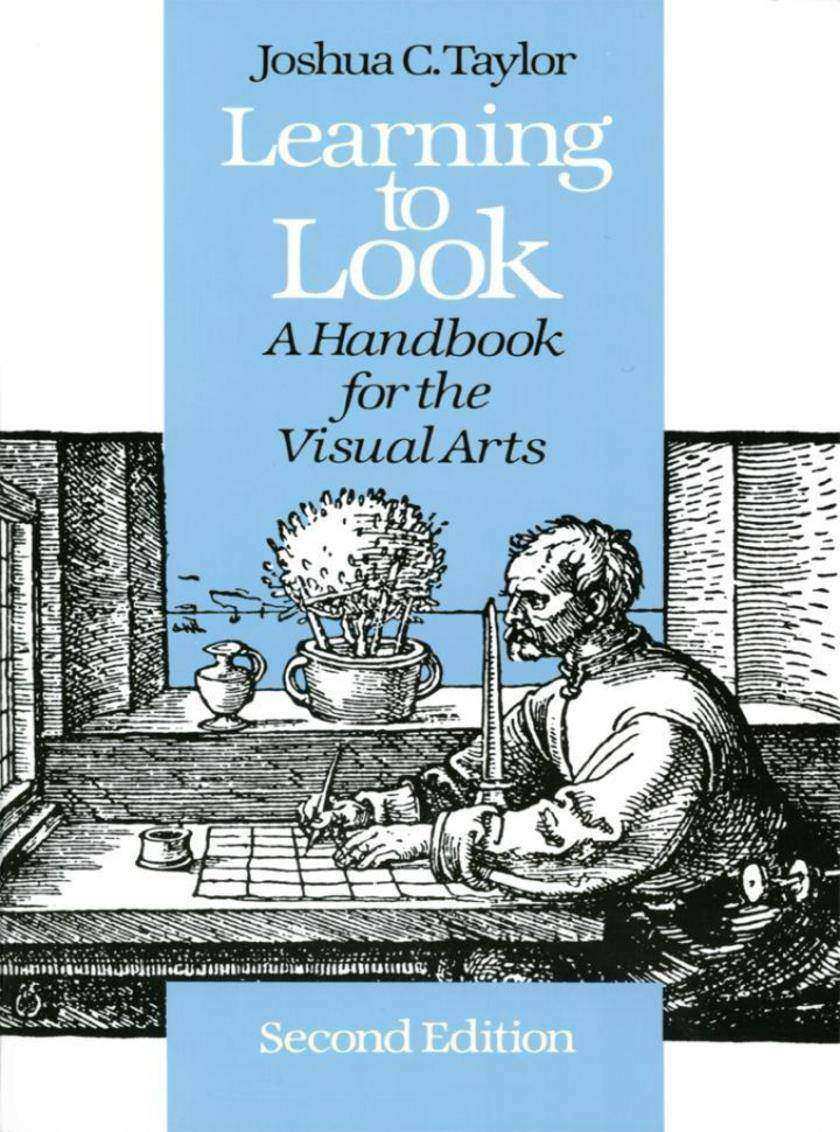
Sometimes seeing is more difficult for the student of art than believing. Taylor, in a book that has sold more than 300,000 copies since its original publication in 1957, has helped two generations of art students "e;learn to look."e;This handy guide to the visual arts is designed to provide a comprehensive view of art, moving from the analytic study of specific works to a consideration of broad principles and technical matters. Forty-four carefully selected illustrations afford an excellent sampling of the wide range of experience awaiting the explorer.The second edition of Learning to Look includes a new chapter on twentieth-century art. Taylor's thoughtful discussion of pure forms and our responses to them gives the reader a few useful starting points for looking at art that does not reproduce nature and for understanding the distance between contemporary figurative art and reality.


