


 购物车
购物车 个人中心
个人中心
Henry VI, Part III - To weep is to make less the depth of grief.
¥11.67
The life of William Shakespeare, arguably the most significant figure in the Western literary canon, is relatively unknown. Shakespeare was born in Stratford-upon-Avon in 1565, possibly on the 23rd April, St. George's Day, and baptised there on 26th April. Little is known of his education and the first firm facts to his life relate to his marriage, aged 18, to Anne Hathaway, who was 26 and from the nearby village of Shottery. Anne gave birth to their first son six months later. Shakespeare's first play, The Comedy of Errors began a procession of real heavyweights that were to emanate from his pen in a career of just over twenty years in which 37 plays were written and his reputation forever established. This early skill was recognised by many and by 1594 the Lord Chamberlain's Men were performing his works. With the advantage of Shakespeare's progressive writing they rapidly became London's leading company of players, affording him more exposure and, following the death of Queen Elizabeth in 1603, a royal patent by the new king, James I, at which point they changed their name to the King's Men. By 1598, and despite efforts to pirate his work, Shakespeare's name was well known and had become a selling point in its own right on title pages. No plays are attributed to Shakespeare after 1613, and the last few plays he wrote before this time were in collaboration with other writers, one of whom is likely to be John Fletcher who succeeded him as the house playwright for the King's Men. William Shakespeare died two months later on April 23rd, 1616, survived by his wife, two daughters and a legacy of writing that none have since yet eclipsed.
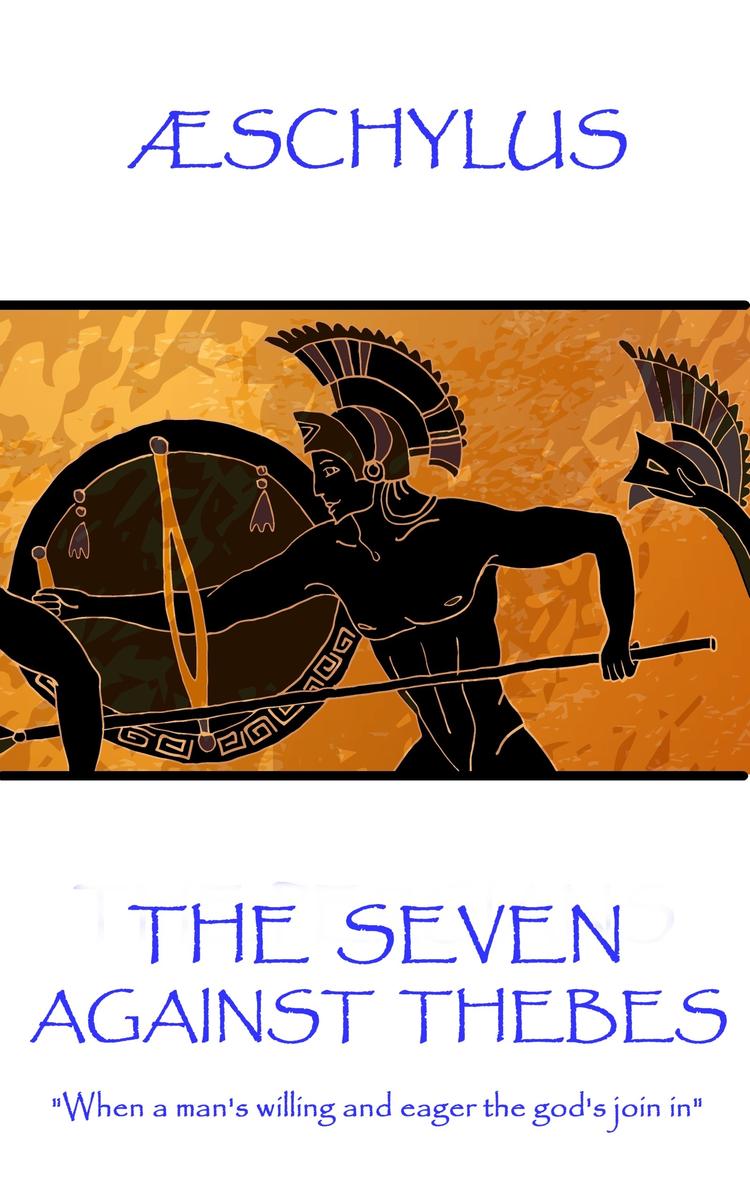
Seven Against Thebes - When a man's willing and eager the god's join in
¥11.67
schylus is often regarded as the father of Greek tragedy; he moved play writing from the simple interaction of a single character and a chorus to one where many characters interact and thereby create more dynamic and dramatic situations. schylus, was the son of Euphorion, and a scion of a Eupatrid or noble family. He was born at Eleusis 525 B.C., or, as the Greeks calculated time, in the fourth year of the 63rd Olympiad. He first worked at a vineyard and whilst there claimed to have been visited by Dionysis in a dream and told to turn his attention to the tragic art. It was a dream that would deliver a rich and incredible legacy through his writing talents. His earliest tragedy, composed when he was twenty-six years of age, failed to win the fabled Dionysia, (a revered festival of theatre) and it was not until fifteen years later that he gained this victory in 484BC going on to win it again in 472 BC (for The Persians), 467 BC (for Seven Against Thebes) and 463 BC (for The Suppliants). schylus was also known for his military skills and was ready to fight in defence of Athens whenever the call was made. He and his brother, Cynegeirus, fought against Darius's invading Persian army at the Battle of Marathon in 490 BCE and, although the Greeks won against overwhelming odds, Cynegeirus died in the battle, which had a naturally had a profound effect on schylus. He made several visits to the important Greek city of Syracuse in Sicily at the invitation of the tyrant Hieron, and it is thought that he also travelled extensively in the region of Thrace. His writing continued to be the envy of others. With the series of plays of which Seven Against Thebes was a part, his supremacy was undisputed. He was the "e;father of tragedy."e; schylus made many changes to dramatic form. The importance of the chorus was demoted and a second added to give prominence to the dialogue and making that interchange the leading feature of the play. He removed all deeds of bloodshed from the public view, and in their place provided various spectacular elements, improving the costumes, making the masks more expressive and convenient, and probably adopting the cothurnus to increase the stature of the performers. Finally, he established the custom of contending for the prize with trilogies, an inter-connecting set of three independent dramas. The closing years of the life of schylus were mainly spent in Sicily, which he had first visited soon after his defeat at the Dionysia by Sophocles. schylus returned to Athens to produce his Orestean trilogy, probably the finest of his works, although the Eumenides, the last of the three plays, revealed so openly his aristocratic tendencies that he became extremely unpopular, and returned to Sicily for the last time in 458 BCE and it was there that he died, while visiting the city of Gela in 456 or 455 BCE.
Julius Caesar - Men at some time are masters of their fates.
¥11.67
The life of William Shakespeare, arguably the most significant figure in the Western literary canon, is relatively unknown. Shakespeare was born in Stratford-upon-Avon in 1565, possibly on the 23rd April, St. George's Day, and baptised there on 26th April. Little is known of his education and the first firm facts to his life relate to his marriage, aged 18, to Anne Hathaway, who was 26 and from the nearby village of Shottery. Anne gave birth to their first son six months later. Shakespeare's first play, The Comedy of Errors began a procession of real heavyweights that were to emanate from his pen in a career of just over twenty years in which 37 plays were written and his reputation forever established. This early skill was recognised by many and by 1594 the Lord Chamberlain's Men were performing his works. With the advantage of Shakespeare's progressive writing they rapidly became London's leading company of players, affording him more exposure and, following the death of Queen Elizabeth in 1603, a royal patent by the new king, James I, at which point they changed their name to the King's Men. By 1598, and despite efforts to pirate his work, Shakespeare's name was well known and had become a selling point in its own right on title pages. No plays are attributed to Shakespeare after 1613, and the last few plays he wrote before this time were in collaboration with other writers, one of whom is likely to be John Fletcher who succeeded him as the house playwright for the King's Men. William Shakespeare died two months later on April 23rd, 1616, survived by his wife, two daughters and a legacy of writing that none have since yet eclipsed.
King Lear - The worst is not, So long as we can say, 'This is the worst.'
¥11.67
The life of William Shakespeare, arguably the most significant figure in the Western literary canon, is relatively unknown. Shakespeare was born in Stratford-upon-Avon in 1565, possibly on the 23rd April, St. George's Day, and baptised there on 26th April. Little is known of his education and the first firm facts to his life relate to his marriage, aged 18, to Anne Hathaway, who was 26 and from the nearby village of Shottery. Anne gave birth to their first son six months later. Shakespeare's first play, The Comedy of Errors began a procession of real heavyweights that were to emanate from his pen in a career of just over twenty years in which 37 plays were written and his reputation forever established. This early skill was recognised by many and by 1594 the Lord Chamberlain's Men were performing his works. With the advantage of Shakespeare's progressive writing they rapidly became London's leading company of players, affording him more exposure and, following the death of Queen Elizabeth in 1603, a royal patent by the new king, James I, at which point they changed their name to the King's Men. By 1598, and despite efforts to pirate his work, Shakespeare's name was well known and had become a selling point in its own right on title pages. No plays are attributed to Shakespeare after 1613, and the last few plays he wrote before this time were in collaboration with other writers, one of whom is likely to be John Fletcher who succeeded him as the house playwright for the King's Men. William Shakespeare died two months later on April 23rd, 1616, survived by his wife, two daughters and a legacy of writing that none have since yet eclipsed.
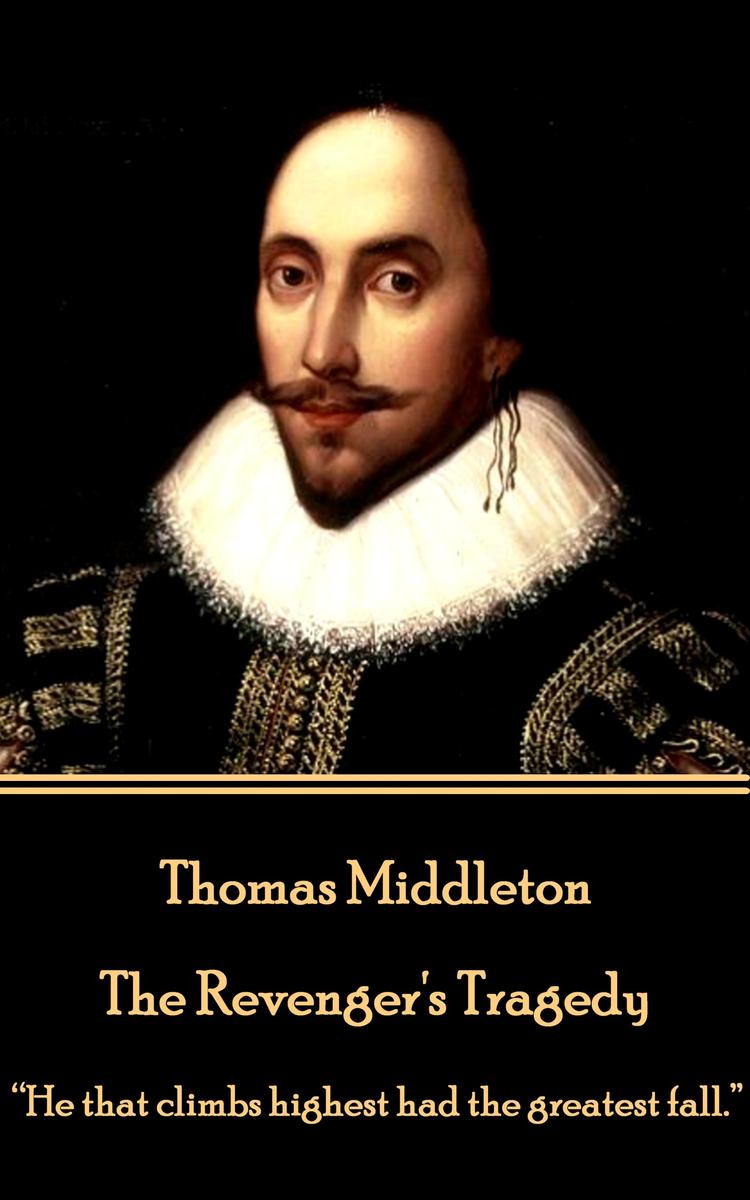
Revenger's Tragedy - He that climbs highest had the greatest fall.
¥23.45
Thomas Middleton was born in London in April 1580 and baptised on 18th April. Middleton was aged only five when his father died. His mother remarried but this unfortunately fell apart into a fifteen year legal dispute regarding the inheritance due Thomas and his younger sister. By the time he left Oxford, at the turn of the Century, Middleton had and published Microcynicon: Six Snarling Satirese which was denounced by the Archbishop of Canterbury and publicly burned. In the early years of the 17th century, Middleton wrote topical pamphlets. One - Penniless Parliament of Threadbare Poets was reprinted several times and the subject of a parliamentary inquiry. These early years writing plays continued to attract controversy. His writing partnership with Thomas Dekker brought him into conflict with Ben Jonson and George Chapman in the so-called War of the Theatres. His finest work with Dekker was undoubtedly The Roaring Girl, a biography of the notorious Mary Frith. In the 1610s, Middleton began another playwriting partnership, this time with the actor William Rowley, producing another slew of plays including Wit at Several Weapons and A Fair Quarrel. The ever adaptable Middleton seemed at ease working with others or by himself. His solo writing credits include the comic masterpiece, A Chaste Maid in Cheapside, in 1613. In 1620 he was officially appointed as chronologer of the City of London, a post he held until his death. The 1620s saw the production of his and Rowley's tragedy, and continual favourite, The Changeling, and of several other tragicomedies. However in 1624, he reached a peak of notoriety when his dramatic allegory A Game at Chess was staged by the King's Men. Though Middleton's approach was strongly patriotic, the Privy Council silenced the play after only nine performances at the Globe theatre, having received a complaint from the Spanish ambassador. What happened next is a mystery. It is the last play recorded as having being written by Middleton. Thomas Middleton died at his home at Newington Butts in Southwark in the summer of 1627, and was buried on July 4th, in St Mary's churchyard which today survives as a public park in Elephant and Castle.
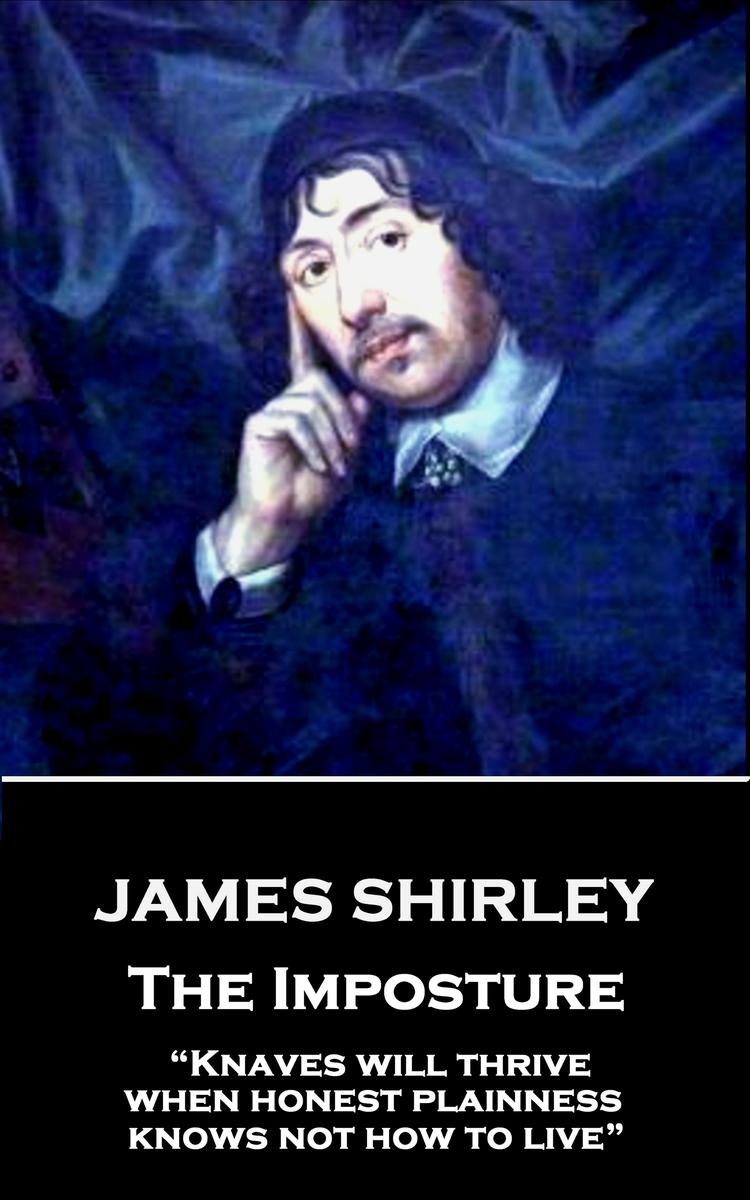
Imposture - Knaves will thrive when honest plainness knows not how to live
¥25.80
James Shirley was born in London in September 1596. His education was through a collection of England's finest establishments: Merchant Taylors' School, London, St John's College, Oxford, and St Catharine's College, Cambridge, where he took his B.A. degree in approximately 1618. He first published in 1618, a poem entitled Echo, or the Unfortunate Lovers. As with many artists of this period full details of his life and career are not recorded. Sources say that after graduating he became "e;a minister of God's word in or near St Albans."e; A conversion to the Catholic faith enabled him to become master of St Albans School from 1623-25. He wrote his first play, Love Tricks, or the School of Complement, which was licensed on February 10th, 1625. From the given date it would seem he wrote this whilst at St Albans but, after its production, he moved to London and to live in Gray's Inn. For the next two decades, he would write prolifically and with great quality, across a spectrum of thirty plays; through tragedies and comedies to tragicomedies as well as several books of poetry. Unfortunately, his talents were left to wither when Parliament passed the Puritan edict in 1642, forbidding all stage plays and closing the theatres. Most of his early plays were performed by Queen Henrietta's Men, the acting company for which Shirley was engaged as house dramatist. Shirley's sympathies lay with the King in battles with Parliament and he received marks of special favor from the Queen. He made a bitter attack on William Prynne, who had attacked the stage in Histriomastix, and, when in 1634 a special masque was presented at Whitehall by the gentlemen of the Inns of Court as a practical reply to Prynne, Shirley wrote the text-The Triumph of Peace. Shirley spent the years 1636 to 1640 in Ireland, under the patronage of the Earl of Kildare. Several of his plays were produced by his friend John Ogilby in Dublin in the first ever constructed Irish theatre; The Werburgh Street Theatre. During his years in Dublin he wrote The Doubtful Heir, The Royal Master, The Constant Maid, and St. Patrick for Ireland. In his absence from London, Queen Henrietta's Men sold off a dozen of his plays to the stationers, who naturally, enough published them. When Shirley returned to London in 1640, he finished with the Queen Henrietta's company and his final plays in London were acted by the King's Men. On the outbreak of the English Civil War Shirley served with the Earl of Newcastle. However when the King's fortunes began to decline he returned to London. There his friend Thomas Stanley gave him help and thereafter Shirley supported himself in the main by teaching and publishing some educational works under the Commonwealth. In addition to these he published during the period of dramatic eclipse four small volumes of poems and plays, in 1646, 1653, 1655, and 1659. It is said that he was "e;a drudge"e; for John Ogilby in his translations of Homer's Iliad and the Odyssey, and survived into the reign of Charles II, but, though some of his comedies were revived, his days as a playwright were over. His death, at age seventy, along with that of his wife, in 1666, is described as one of fright and exposure due to the Great Fire of London which had raged through parts of London from September 2nd to the 5th. He was buried at St Giles in the Fields, in London, on October 29th, 1666.
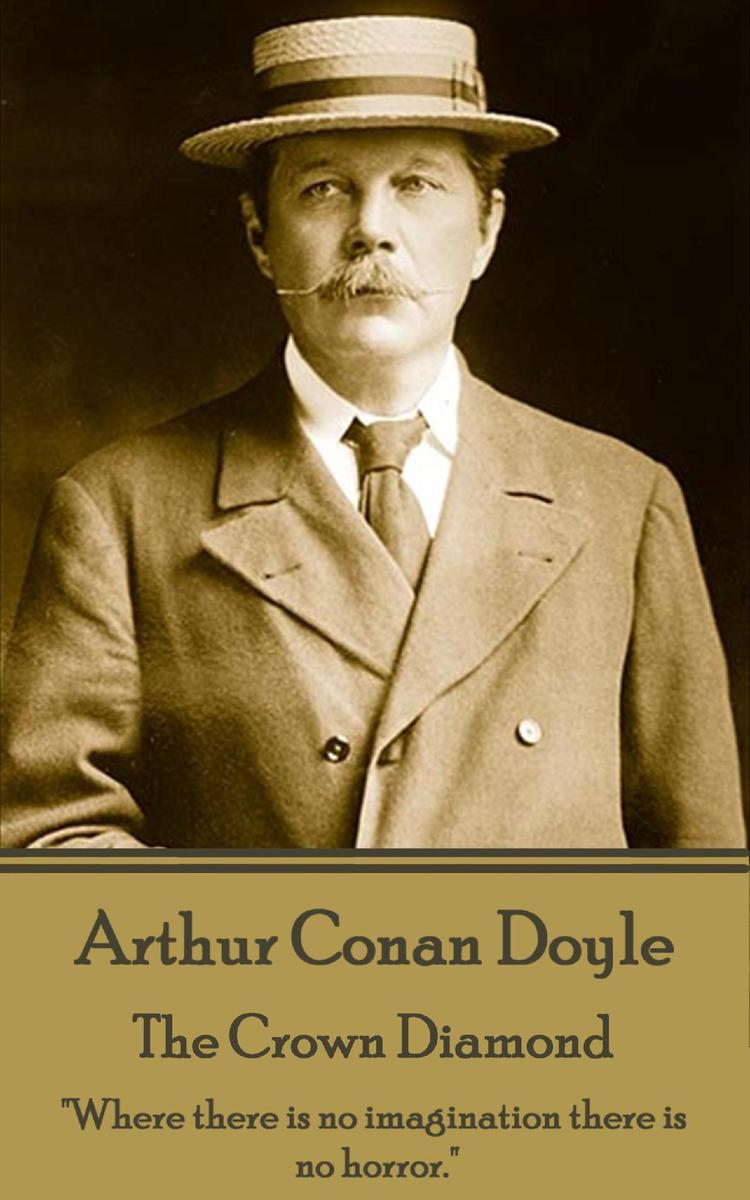
Crown Diamond - Where there is no imagination there is no horror.
¥11.67
If ever a writer needed an introduction Arthur Conan Doyle would not be considered that man. After all, Sherlock Holmes is perhaps the foremost literary detective of any age. Add to this canon his stories of science fiction and his poems, his historical novels, his plays, his political campaigning, his efforts in establishing a Court Of Appeal and there is little room for anything else. Except he was also an exceptional writer of short stories of the horrific and macabre. Something very different from what you might expect. Born in Arthur Conan Doyle was born on 22 May 1859 at 11 Picardy Place, Edinburgh, Scotland. From 1876 - 1881 he studied medicine at the University of Edinburgh following which he was employed as a doctor on the Greenland whaler Hope of Peterhead in 1880 and, after his graduation, as a ship's surgeon on the SS Mayumba during a voyage to the West African coast in 1881. Arriving in Portsmouth in June of that year with less than GBP10 (GBP700 today) to his name, he set up a medical practice at 1 Bush Villas in Elm Grove, Southsea. The practice was initially not very successful. While waiting for patients, Conan Doyle again began writing stories and composed his first novel The Mystery of Cloomber. Although he continued to study and practice medicine his career was now firmly set as a writer. And thereafter great works continued to pour out of him.
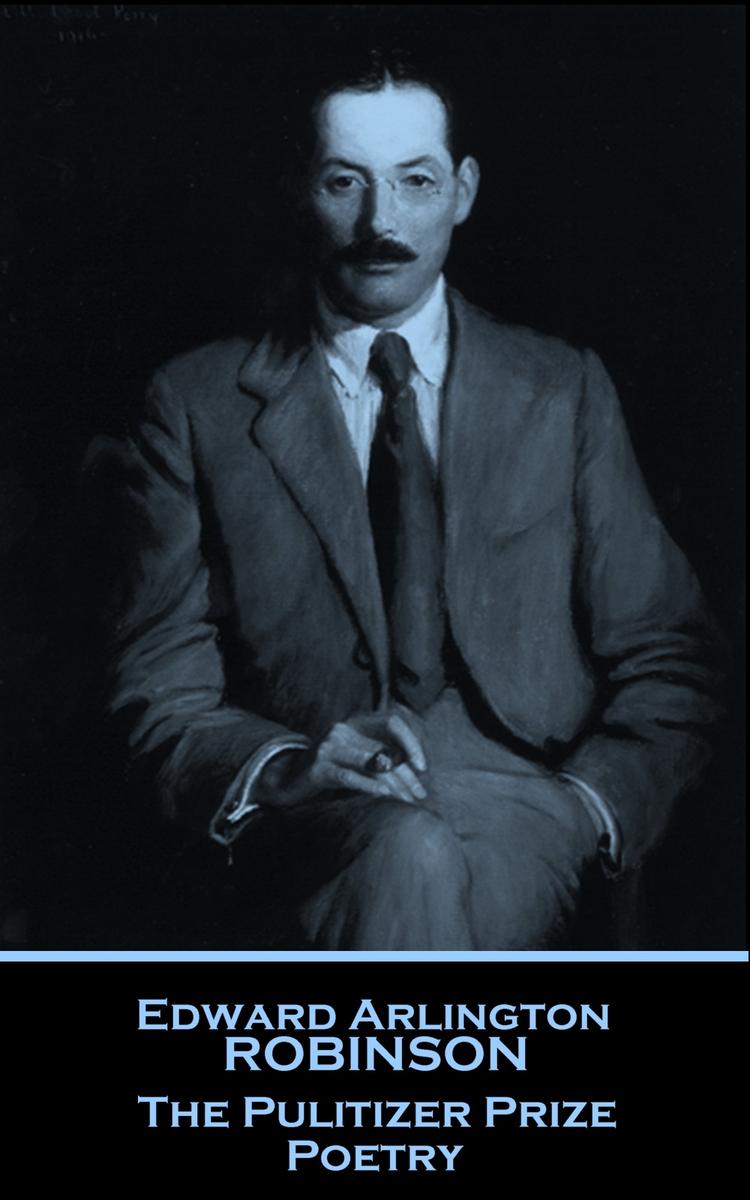
Pulitzer Prize Poetry
¥58.76
Poetry is a fascinating use of language. With almost a million words at its command it is not surprising that the English language have produced some of the most beautiful, moving and descriptive verse through the centuries. In this series we look at individual poets who have shaped and influenced their craft and cement their place in our heritage. In this volume we look at the works of Edwin Arlington Robinson who won the Pulitzer Prize for Poetry three times including the very first ever awarded.
Electra - To a father growing old nothing is dearer than a daughter
¥14.03
Euripides is rightly lauded as one of the great dramatists of all time. In his lifetime, he wrote over 90 plays and although only 18 have survived they reveal the scope and reach of his genius. Euripides is identified with many theatrical innovations that have influenced drama all the way down to modern times, especially in the representation of traditional, mythical heroes as ordinary people in extraordinary circumstances. As would be expected from a life lived 2,500 years ago, details of it are few and far between. Accounts of his life, written down the ages, do exist but whether much is reliable or surmised is open to debate. Most accounts agree that he was born on Salamis Island around 480 BC, to mother Cleito and father Mnesarchus, a retailer who lived in a village near Athens. Upon the receipt of an oracle saying that his son was fated to win "e;crowns of victory"e;, Mnesarchus insisted that the boy should train for a career in athletics. However, what is clear is that athletics was not to be the way to win crowns of victory. Euripides had been lucky enough to have been born in the era as the other two masters of Greek Tragedy; Sophocles and schylus. It was in their footsteps that he was destined to follow. His first play was performed some thirteen years after the first of Socrates plays and a mere three years after schylus had written his classic The Oristria. Theatre was becoming a very important part of the Greek culture. The Dionysia, held annually, was the most important festival of theatre and second only to the fore-runner of the Olympic games, the Panathenia, held every four years, in appeal. Euripides first competed in the City Dionysia, in 455 BC, one year after the death of schylus, and, incredibly, it was not until 441 BC that he won first prize. His final competition in Athens was in 408 BC. The Bacchae and Iphigenia in Aulis were performed after his death in 405 BC and first prize was awarded posthumously. Altogether his plays won first prize only five times. Euripides was also a great lyric poet. In Medea, for example, he composed for his city, Athens, "e;the noblest of her songs of praise"e;. His lyric skills however are not just confined to individual poems: "e;A play of Euripides is a musical whole....one song echoes motifs from the preceding song, while introducing new ones."e; Much of his life and his whole career coincided with the struggle between Athens and Sparta for hegemony in Greece but he didn't live to see the final defeat of his city. Euripides fell out of favour with his fellow Athenian citizens and retired to the court of Archelaus, king of Macedon, who treated him with consideration and affection. At his death, in around 406BC, he was mourned by the king, who, refusing the request of the Athenians that his remains be carried back to the Greek city, buried him with much splendor within his own dominions. His tomb was placed at the confluence of two streams, near Arethusa in Macedonia, and a cenotaph was built to his memory on the road from Athens towards the Piraeus.
Plutus - What an unhppy fate, to be the slave of a fool
¥11.67
The reality is that little is known of Aristophanes actual life but eleven of his forty plays survive intact and upon those rest his deserved reputation as the Father of Comedy or, The Prince of Ancient Comedy. Accounts agree that he was born sometime between 456BC and 446 BC. Many cities claim the honor of his birthplace and the most probable story makes him the son of Philippus of gina, and therefore only an adopted citizen of Athens, a distinction which, at times could be cruel, though he was raised and educated in Athens. His plays are said to recreate the life of ancient Athens more realistically than any other author could. Intellectually his powers of ridicule were feared by his influential contemporaries; Plato himself singled out Aristophanes' play The Clouds as a slander that contributed to the trial and condemning to death of Socrates and although other satirical playwrights had also caricatured the philosopher his carried the most weight. His now lost play, The Babylonians, was denounced by the demagogue Cleon as a slander against the Athenian polis. Aristophanes seems to have taken this criticism to heart and thereafter caricatured Cleon mercilessly in his subsequent plays, especially The Knights. His life and playwriting years were undoubtedly long though again accounts as to the year of his death vary quite widely. What can be certain is that his legacy of surviving plays is in effect both a treasured legacy but also in itself the only surviving texts of Ancient Greek comedy.
Strife - Idealism increases in direct proportion to one's distance from the prob
¥29.33
John Galsworthy first published in 1897 with a collection of short stories entitled "e;The Four Winds"e;. For the next 7 years he published these and all works under his pen name John Sinjohn. It was only upon the death of his father and the publication of "e;The Island Pharisees"e; in 1904 that he published as John Galsworthy. His first play was The Silver Box, an immediate success when it debuted in 1906 and was followed by "e;The Man of Property"e; later that same year and was the first in the Forsyte trilogy. Whilst today he is far more well know as a Nobel Prize winning novelist then he was considered a playwright dealing with social issues and the class system. We publish here 'Strife' a great example of both his writing and his demonstration of how the class system worked at the time. He was appointed to the Order of Merit in 1929, after earlier turning down a knighthood, and awarded the Nobel Prize in 1932 though he was too ill to attend. John Galsworthy died from a brain tumour at his London home, Grove Lodge, Hampstead on January 31st 1933. In accordance with his will he was cremated at Woking with his ashes then being scattered over the South Downs from an aeroplane.
Pride And Prejudice
¥23.45
Pride and Prejudice (1813) is one of the most popular novels of the English tongue in which Jane Austen tells the story of Elizabeth Bennet, a beautiful twenty-year-old woman whose liveliness and intelligence do not prevent her from having false impressions and prejudgments about the people surrounding her. The young woman lives with her middle-class family and her best friend Charlotte Lucas. As the plot unfolds, Elizabeth develops a romantic relationship with a man from a higher social rank and a much wealthier background named Mr. Darcy. The latter gentleman is intelligent, handsome and well-mannered. Nonetheless, he generally leaves a negative impression on strangers who do not know his true nature by showing a proud and haughty attitude, refusing to dance at balls and behaving in a reserved manner. Austen gradually elucidates, nonetheless, that what is often seen by strangers as a condescending behavior is just the awkward appearance of a kind and virtuous gentleman. After numerous bursts of rather childish big-headedness and misunderstanding, Elizabeth and Mr. Darcy eventually overcome their pride and prejudice. By the very end of the narrative, Elizabeth accepts Mr. Darcy's proposal when their love for each other succeeds in vanquishing their self-love. We've also included a concise and informative biography of Jane's works and life at the end of the book. We hope it helps to give a little context and colour about how her life interacted with her art.
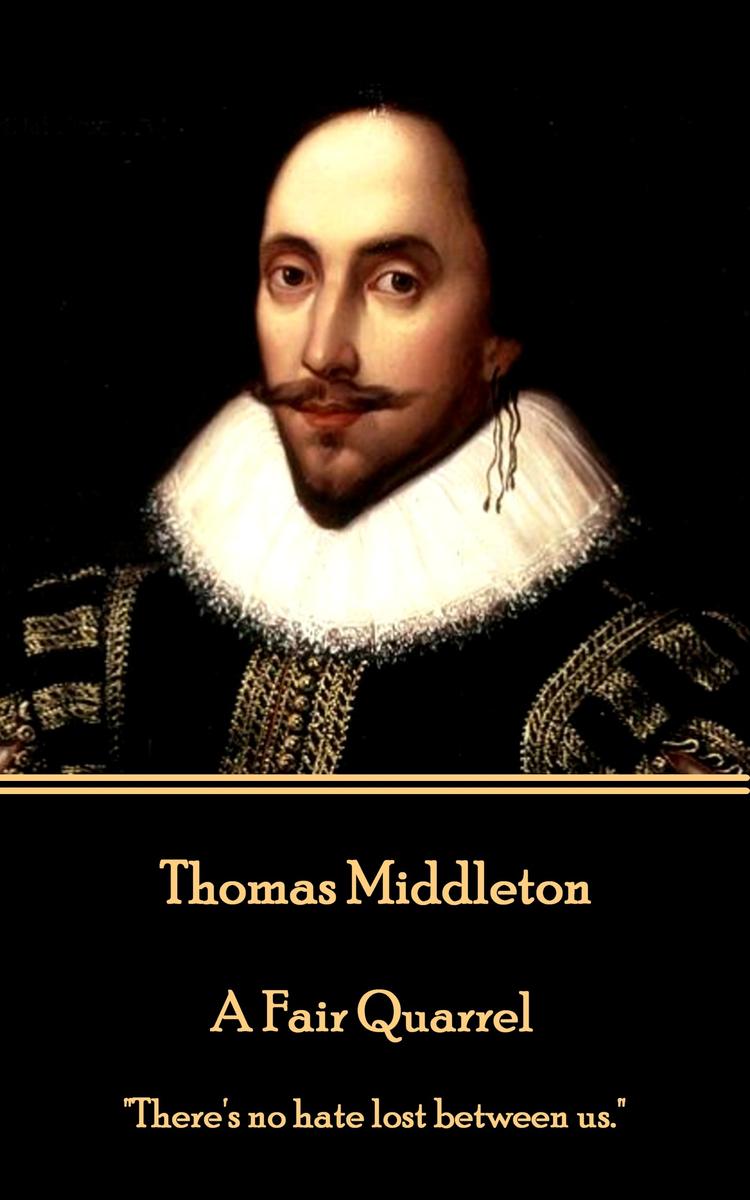
Fair Quarrel - There's no hate lost between us.
¥23.45
Thomas Middleton was born in London in April 1580 and baptised on 18th April. Middleton was aged only five when his father died. His mother remarried but this unfortunately fell apart into a fifteen year legal dispute regarding the inheritance due Thomas and his younger sister. By the time he left Oxford, at the turn of the Century, Middleton had and published Microcynicon: Six Snarling Satirese which was denounced by the Archbishop of Canterbury and publicly burned. In the early years of the 17th century, Middleton wrote topical pamphlets. One - Penniless Parliament of Threadbare Poets was reprinted several times and the subject of a parliamentary inquiry. These early years writing plays continued to attract controversy. His writing partnership with Thomas Dekker brought him into conflict with Ben Jonson and George Chapman in the so-called War of the Theatres. His finest work with Dekker was undoubtedly The Roaring Girl, a biography of the notorious Mary Frith. In the 1610s, Middleton began another playwriting partnership, this time with the actor William Rowley, producing another slew of plays including Wit at Several Weapons and A Fair Quarrel. The ever adaptable Middleton seemed at ease working with others or by himself. His solo writing credits include the comic masterpiece, A Chaste Maid in Cheapside, in 1613. In 1620 he was officially appointed as chronologer of the City of London, a post he held until his death. The 1620s saw the production of his and Rowley's tragedy, and continual favourite, The Changeling, and of several other tragicomedies. However in 1624, he reached a peak of notoriety when his dramatic allegory A Game at Chess was staged by the King's Men. Though Middleton's approach was strongly patriotic, the Privy Council silenced the play after only nine performances at the Globe theatre, having received a complaint from the Spanish ambassador. What happened next is a mystery. It is the last play recorded as having being written by Middleton. Thomas Middleton died at his home at Newington Butts in Southwark in the summer of 1627, and was buried on July 4th, in St Mary's churchyard which today survives as a public park in Elephant and Castle.
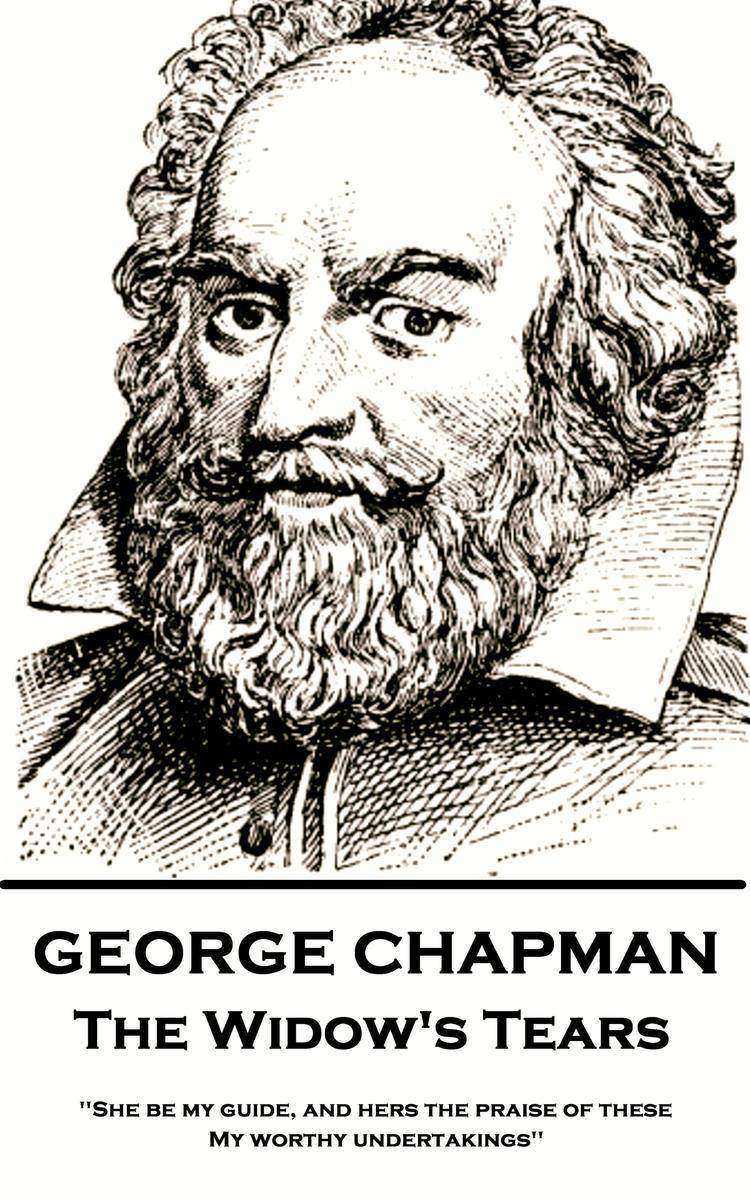
Widow's Tears - 'She be my guide, and hers the praise of these, My worthy undert
¥15.21
George Chapman was born at Hitchin in Hertfordshire in about 1559. There is some evidence that Chapman attended Oxford University but did not obtain a degree, but the evidence is rather scant.During the first part of the early 1590s Chapman was in Europe, in military action in the Low Countries fighting under the famed English general Sir Francis Vere. It is from this period that his earliest published works are found including the obscure philosophical poems The Shadow of Night (1594) and Ovid's Banquet of Sense (1595). By the end of the 1590s, Chapman had become a successful playwright, working for the Elizabethan Theatrical entrepreneur, Philip Henslowe, and later for the Children of the Chapel.From 1598 he published his translation of the Iliad in installments. In 1616 the complete Iliad and Odyssey appeared in The Whole Works of Homer, the first complete English translation, which until Alexander Pope's, was the most popular in the English language and was the entry point for most English readers of these magnificent poems. The great Ben Jonson was also using Chapman's talents in the play Eastward Ho (1605), co-written with John Marston. Both Chapman and Jonson landed in jail over some satirical references to the Scots in the play but both were quick to say that Marston was the culprit.Chapman also wrote one of the most successful masques of the Jacobean era, The Memorable Masque of the Middle Temple and Lincoln's Inn, performed on February 15th, 1613. Another masque, The Masque of the Twelve Months, performed on Twelfth Night 1619 is also now given as Chapman's.George Chapman died in London on May 12th, 1634 having lived his latter years in poverty and debt. He was buried at St Giles in the Fields.

Pilgrim - Speak boldly and speak truly, shame the devil
¥26.98
John Fletcher was born in December, 1579 in Rye, Sussex. He was baptised on December 20th. As can be imagined details of much of his life and career have not survived and, accordingly, only a very brief indication of his life and works can be given. Young Fletcher appears at the very young age of eleven to have entered Corpus Christi College at Cambridge University in 1591. There are no records that he ever took a degree but there is some small evidence that he was being prepared for a career in the church. However what is clear is that this was soon abandoned as he joined the stream of people who would leave University and decamp to the more bohemian life of commercial theatre in London. The upbringing of the now teenage Fletcher and his seven siblings now passed to his paternal uncle, the poet and minor official Giles Fletcher. Giles, who had the patronage of the Earl of Essex may have been a liability rather than an advantage to the young Fletcher. With Essex involved in the failed rebellion against Elizabeth Giles was also tainted. By 1606 John Fletcher appears to have equipped himself with the talents to become a playwright. Initially this appears to have been for the Children of the Queen's Revels, then performing at the Blackfriars Theatre. Fletcher's early career was marked by one significant failure; The Faithful Shepherdess, his adaptation of Giovanni Battista Guarini's Il Pastor Fido, which was performed by the Blackfriars Children in 1608. By 1609, however, he had found his stride. With his collaborator John Beaumont, he wrote Philaster, which became a hit for the King's Men and began a profitable association between Fletcher and that company. Philaster appears also to have begun a trend for tragicomedy. By the middle of the 1610s, Fletcher's plays had achieved a popularity that rivalled Shakespeare's and cemented the pre-eminence of the King's Men in Jacobean London. After his frequent early collaborator John Beaumont's early death in 1616, Fletcher continued working, both singly and in collaboration, until his own death in 1625. By that time, he had produced, or had been credited with, close to fifty plays.
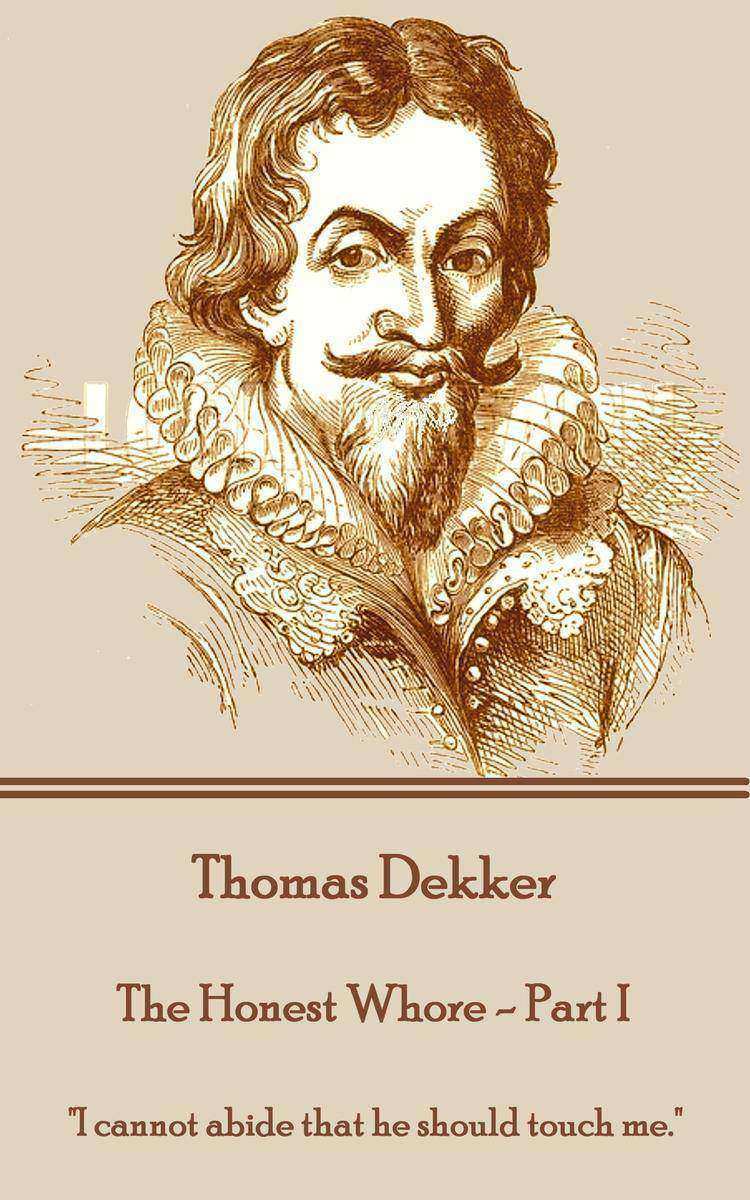
Honest Whore - Part I - I cannot abide that he should touch me.
¥26.98
Thomas Dekker was a playwright, pamphleteer and poet who, perhaps, deserves greater recognition than he has so far gained. Despite the fact only perhaps twenty of his plays were published, and fewer still survive, he was far more prolific than that. Born around 1572 his peak years were the mid 1590's to the 1620's - seven of which he spent in a debtor's prison. His works span the late Elizabethan and Caroline eras and his numerous collaborations with Ford, Middleton, Webster and Jonson say much about his work. His pamphlets detail much of the life in these times, times of great change, of plague and of course that great capital city London a swirling mass of people, power, intrigue.
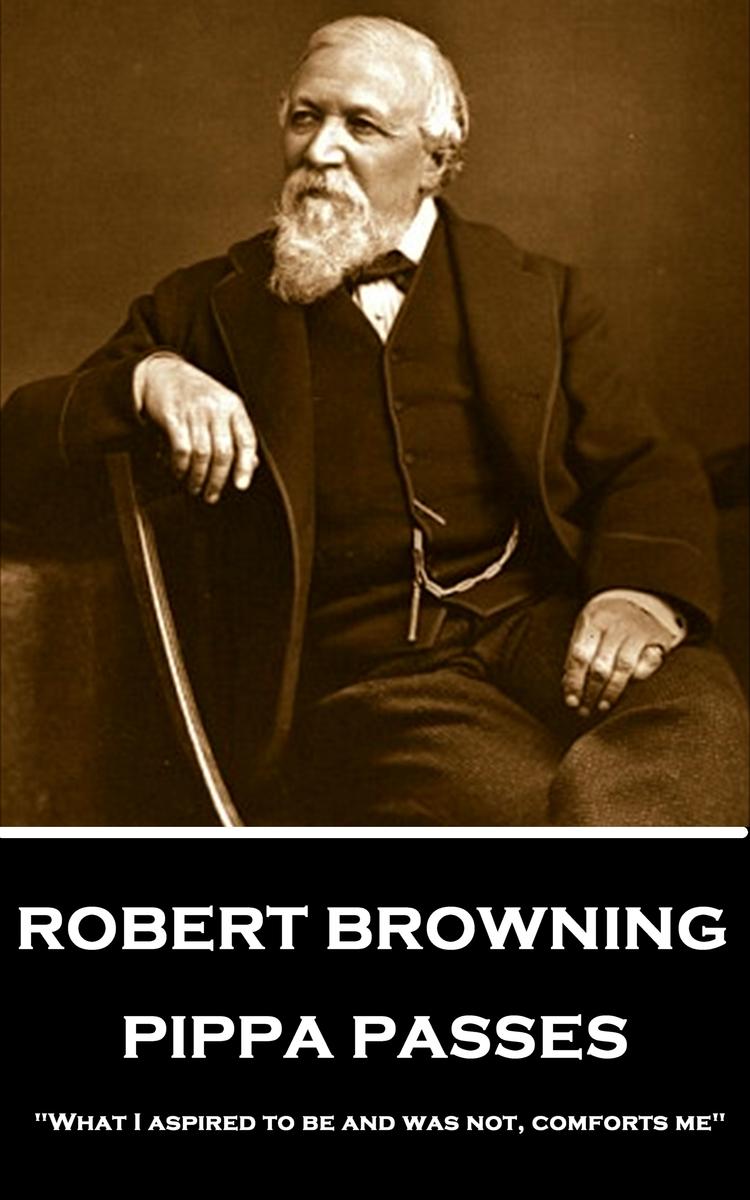
Pippa Passes - What I aspired to be and was not, comforts me
¥14.03
Robert Browning is one of the most significant Victorian Poets and, of course, English Poetry.Much of his reputation is based upon his mastery of the dramatic monologue although his talents encompassed verse plays and even a well-regarded essay on Shelley during a long and prolific career. He was born on May 7th, 1812 in Walmouth, London. Much of his education was home based and Browning was an eclectic and studious student, learning several languages and much else across a myriad of subjects, interests and passions. Browning's early career began promisingly. The fragment from his intended long poem Pauline brought him to the attention of Dante Gabriel Rossetti, and was followed by Paracelsus, which was praised by both William Wordsworth and Charles Dickens. In 1840 the difficult Sordello, which was seen as willfully obscure, brought his career almost to a standstill. Despite these artistic and professional difficulties his personal life was about to become immensely fulfilling. He began a relationship with, and then married, the older and better known Elizabeth Barrett. This new foundation served to energise his writings, his life and his career. During their time in Italy they both wrote much of their best work. With her untimely death in 1861 he returned to London and thereafter began several further major projects. The collection Dramatis Personae (1864) and the book-length epic poem The Ring and the Book (1868-69) were published and well received; his reputation as a venerated English poet now assured. Robert Browning died in Venice on December 12th, 1889.
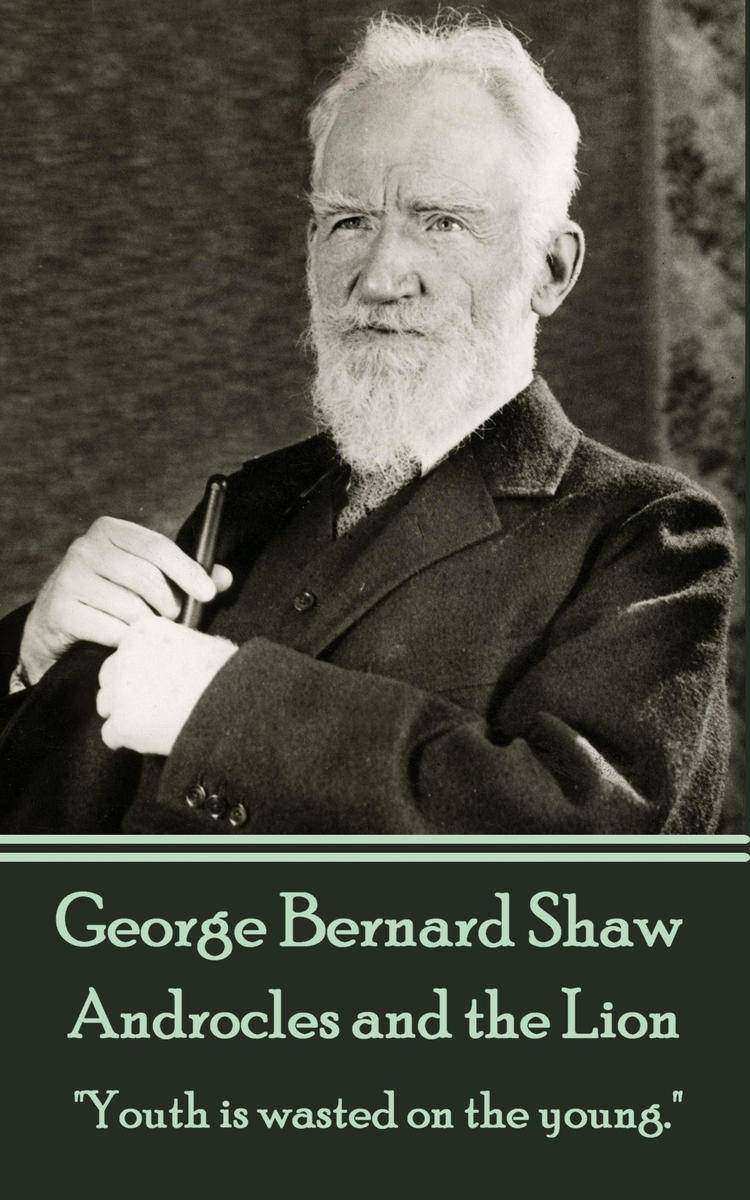
Androcles and the Lion - Youth is wasted on the young.
¥29.33
George Bernard Shaw was born on July 26th, 1856 in Synge Street, Dublin. His career began modestly initially working for some years in an Estate office but a thirst for reading and knowledge moved his career to writing several novels, none of which were published for several years. He wrote as a critic for several years, mainly on the theatre where his campaigning helped moved Victorian theatre towards a more realistic form. Shaw also took up his fervent socialist views at this point, a cause he would be indelibly linked with throughout his long and productive life. An initial foray into writing a play in 1885 only came to fruition in 1892 and with it his path as one of the leading playwrights of the 20th century was set. Shaw was also a fervent Fabian and a co-founder of the London School of Economics. Saint Joan in 1923 gained Shaw yet another international success. This led in 1925 to his being awarded the Nobel Prize for Literature for his contributions to literature. The citation praised his work as "e;... marked by both idealism and humanity, its stimulating satire often being infused with a singular poetic beauty"e;. In 1938 he added an Academy Award for his work on Pygmalion. Shaw remains the only person ever to win a Nobel Prize and an Oscar. He refused all other awards, even a knighthood. George Bernard Shaw died on November 2nd, 1950 at the age of 94, of renal failure precipitated by injuries incurred by a fall whilst pruning a tree.
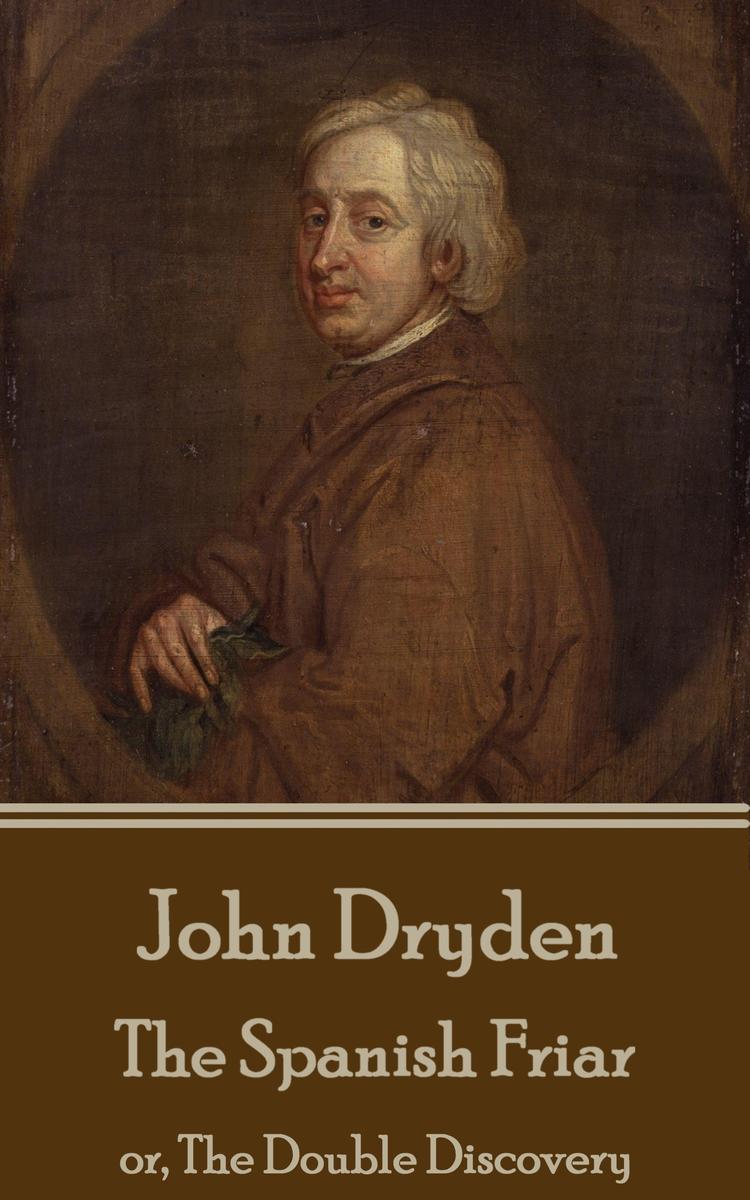
Spanish Friar - or, The Double Discovery
¥21.09
John Dryden was born on August 9th, 1631 in the village rectory of Aldwincle near Thrapston in Northamptonshire. As a boy Dryden lived in the nearby village of Titchmarsh, Northamptonshire. In 1644 he was sent to Westminster School as a King's Scholar. Dryden obtained his BA in 1654, graduating top of the list for Trinity College, Cambridge that year. Returning to London during The Protectorate, Dryden now obtained work with Cromwell's Secretary of State, John Thurloe. At Cromwell's funeral on 23 November 1658 Dryden was in the company of the Puritan poets John Milton and Andrew Marvell. The setting was to be a sea change in English history. From Republic to Monarchy and from one set of lauded poets to what would soon become the Age of Dryden. The start began later that year when Dryden published the first of his great poems, Heroic Stanzas (1658), a eulogy on Cromwell's death. With the Restoration of the Monarchy in 1660 Dryden celebrated in verse with Astraea Redux, an authentic royalist panegyric. With the re-opening of the theatres after the Puritan ban, Dryden began to also write plays. His first play, The Wild Gallant, appeared in 1663 but was not successful. From 1668 on he was contracted to produce three plays a year for the King's Company, in which he became a shareholder. During the 1660s and '70s, theatrical writing was his main source of income. In 1667, he published Annus Mirabilis, a lengthy historical poem which described the English defeat of the Dutch naval fleet and the Great Fire of London in 1666. It established him as the pre-eminent poet of his generation, and was crucial in his attaining the posts of Poet Laureate (1668) and then historiographer royal (1670). This was truly the Age of Dryden, he was the foremost English Literary figure in Poetry, Plays, translations and other forms. In 1694 he began work on what would be his most ambitious and defining work as translator, The Works of Virgil (1697), which was published by subscription. It was a national event. John Dryden died on May 12th, 1700, and was initially buried in St. Anne's cemetery in Soho, before being exhumed and reburied in Westminster Abbey ten days later.
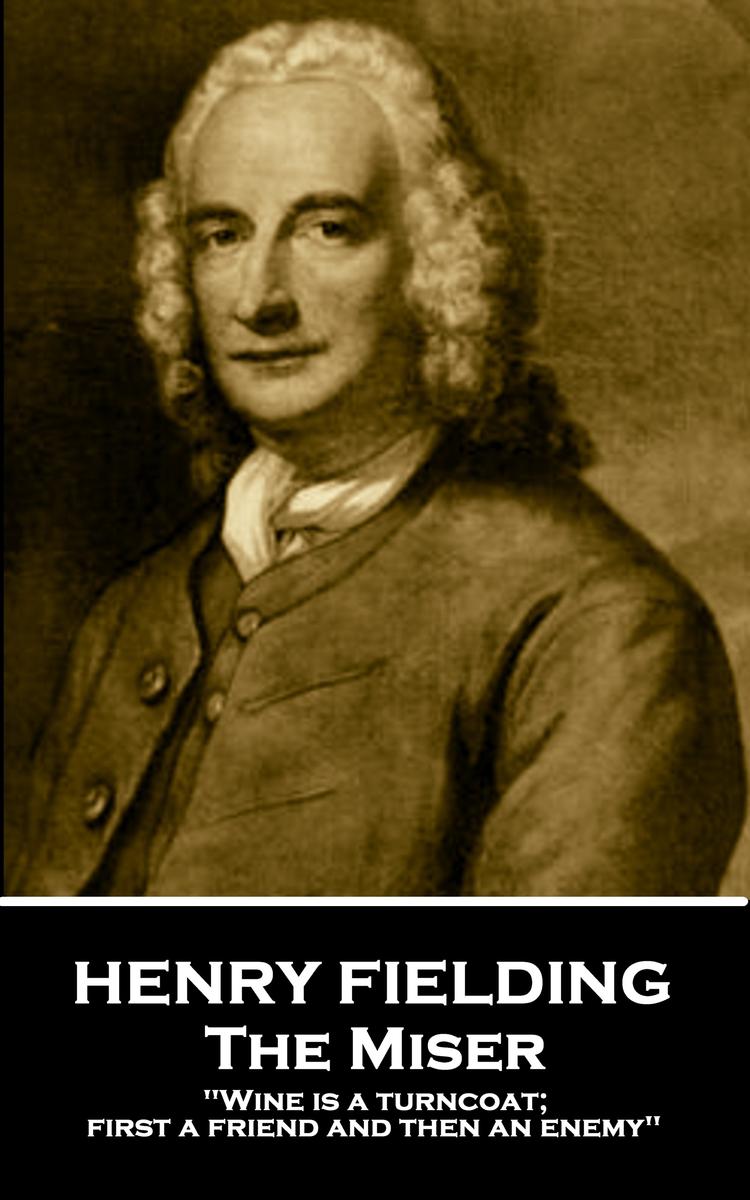
Miser - Wine is a turncoat; first a friend and then an enemy
¥14.03
Henry Fielding was born at Sharpham Park, near Glastonbury, in Somerset on April 22nd 1707. His early years were spent on his parents' farm in Dorset before being educated at Eton.An early romance ended disastrously and with it his removal to London and the beginnings of a glittering literary career; he published his first play, at age 21, in 1728.He was prolific, sometimes writing six plays a year, but he did like to poke fun at the authorities. His plays were thought to be the final straw for the authorities in their attempts to bring in a new law. In 1737 The Theatrical Licensing Act was passed. At a stroke political satire was almost impossible. Fielding was rendered mute. Any playwright who was viewed with suspicion by the Government now found an audience difficult to find and therefore Theatre owners now toed the Government line.Fielding was practical with the circumstances and ironically stopped writing to once again take up his career in the practice of law and became a barrister after studying at Middle Temple. By this time he had married Charlotte Craddock, his first wife, and they would go on to have five children. Charlotte died in 1744 but was immortalised as the heroine in both Tom Jones and Amelia.Fielding was put out by the success of Samuel Richardson's Pamela, or Virtue Rewarded. His reaction was to spur him into writing a novel. In 1741 his first novel was published; the successful Shamela, an anonymous parody of Richardson's novel.Undoubtedly the masterpiece of Fielding's career was the novel Tom Jones, published in 1749. It is a wonderfully and carefully constructed picaresque novel following the convoluted and hilarious tale of how a foundling came into a fortune.Fielding was a consistent anti-Jacobite and a keen supporter of the Church of England. This led to him now being richly rewarded with the position of London's Chief Magistrate. Fielding continued to write and his career both literary and professional continued to climb.In 1749 he joined with his younger half-brother John, to help found what was the nascent forerunner to a London police force, the Bow Street Runners. Fielding's ardent commitment to the cause of justice in the 1750s unfortunately coincided with a rapid deterioration in his health. Such was his decline that in the summer of 1754 he travelled, with Mary and his daughter, to Portugal in search of a cure. Gout, asthma, dropsy and other afflictions forced him to use crutches. His health continued to fail alarmingly.Henry Fielding died in Lisbon two months later on October 8th, 1754.
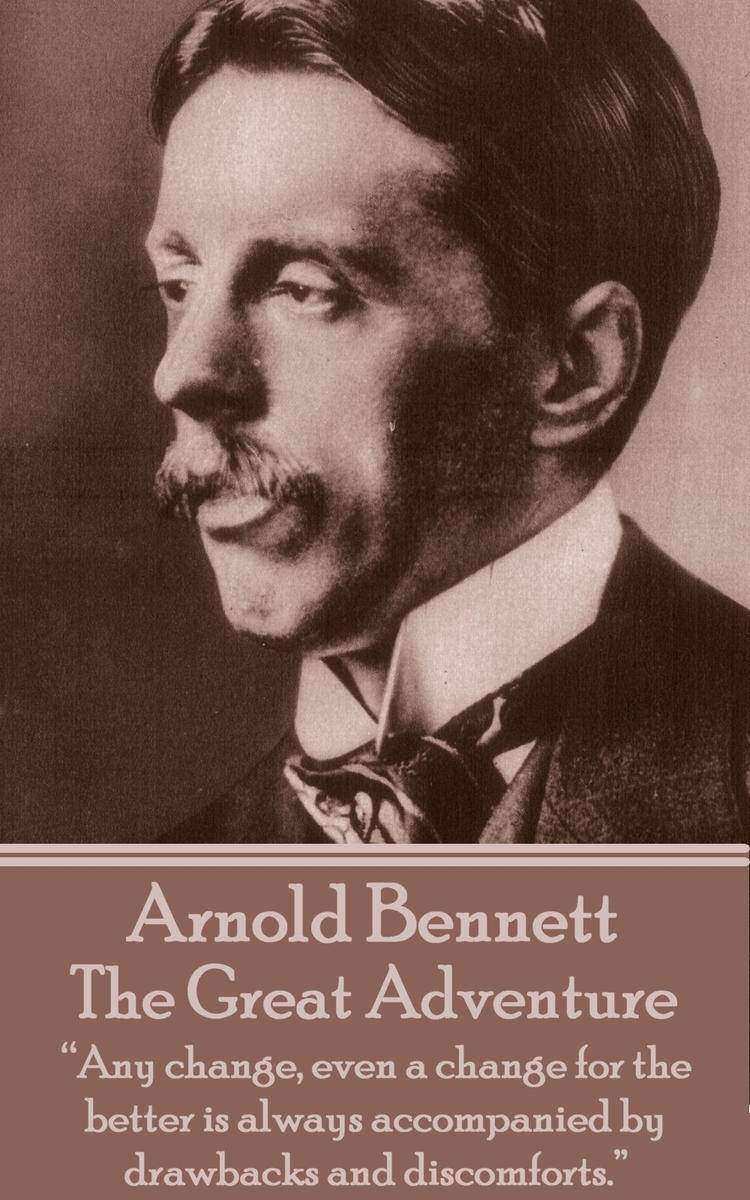
Great Adventure - Any change
¥29.33
Arnold Bennett was born in 1867 in Hanley, one of the six towns that formed the Potteries that later joined together to become Stoke-on-Trent - the area in which most of his works are located. For a short time he worked for his solicitor father before realising that to advance his life he would need to become his own man. Moving to London at 21, he obtained work as a solicitor's clerk and gradually moved into a career of Journalism. At the turn of the century he turned full time to writing and shortly thereafter, in 1903, he moved to Paris. In 1908 Bennett published The Old Wives' Tale, to great acclaim. With this, his reputation was set. Clayhanger and The Old Wives' Tale are perhaps his greatest and most lauded novels. But standing next to these are many fine short stories. Bennett bathes us in vignettes of life, replete with characters that are easy to immerse ourselves in, whatever their ambitions may be. Here we publish his play 'The Great Adventure'. As with anything written by Bennett it's a fabulous showcase for his literary talents.


