


 购物车
购物车 个人中心
个人中心
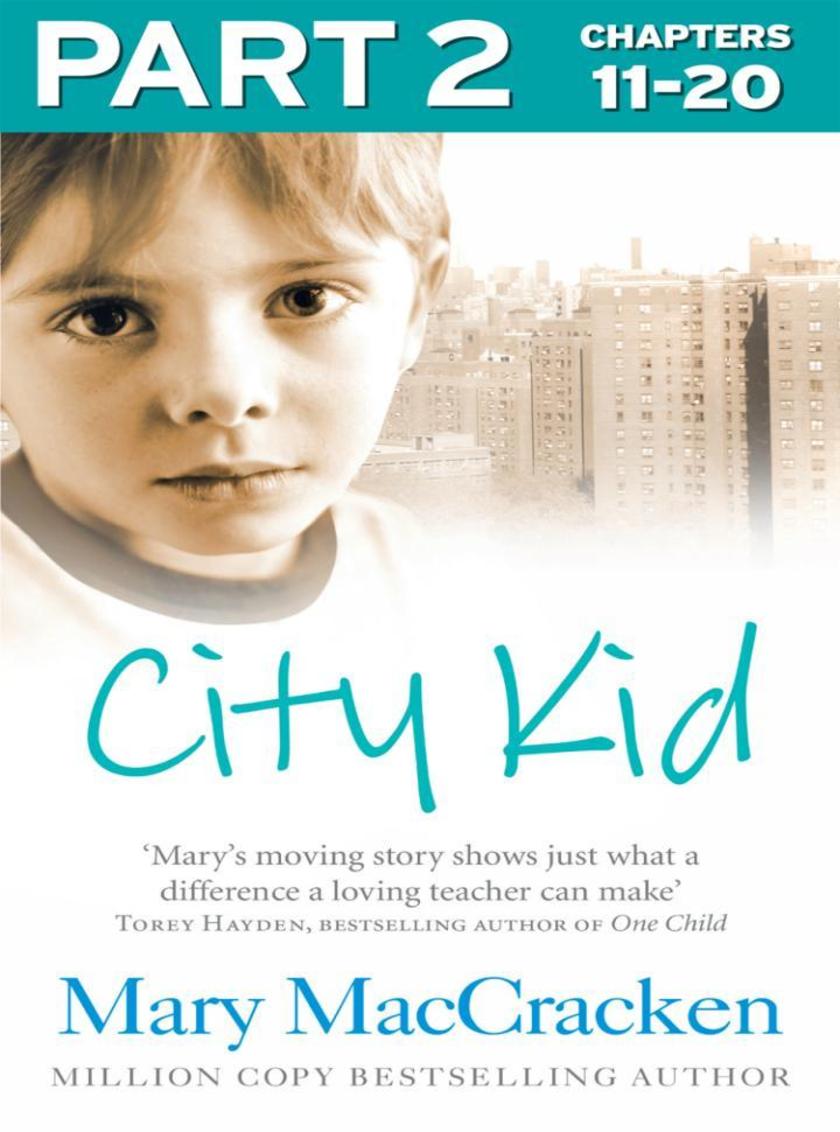
City Kid: Part 2 of 3
¥28.45
City Kid can either be read as a full-length eBook or in 3 serialised eBook-only parts. This is PART 2 of 3. You can read Part 2 one week ahead of release of the full-length eBook and paperback. From the author of international bestsellers A Circle of Children and Lovey comes an inspiring true story of a gifted teacher’s determination to understand the ‘rotten’ city kid everyone has given up on. Sitting quiet and withdrawn at a battered school desk, Luke had the looks of a shy angel – and a past that special needs teacher Mary MacCracken could barely believe. Already Luke had been picked up 24 times by the police. He’d set over a dozen major fires, and had a staggering record of thefts. No adult could reach him, no teacher could control him, and no policeman could cow him. All this – and Luke was only seven and a half years old. Trying to help Luke was Mary MacCracken’s job – and a seemingly impossible challenge. This is the remarkable story of how the impossible came true.
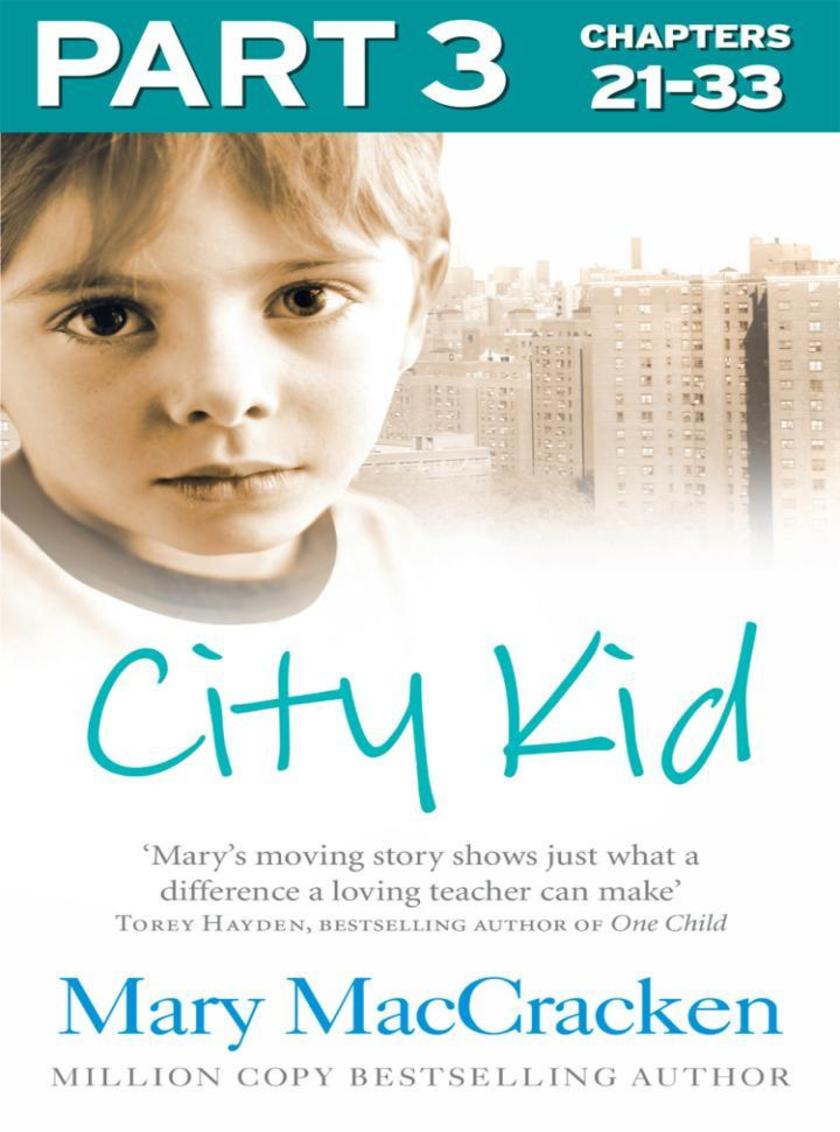
City Kid: Part 3 of 3
¥47.48
City Kid can either be read as a full-length eBook or in 3 serialised eBook-only parts. This is PART 3 of 3. You can read Part 3 on release of the full-length eBook and paperback. From the author of international bestsellers A Circle of Children and Lovey comes an inspiring true story of a gifted teacher’s determination to understand the ‘rotten’ city kid everyone has given up on. Sitting quiet and withdrawn at a battered school desk, Luke had the looks of a shy angel – and a past that special needs teacher Mary MacCracken could barely believe. Already Luke had been picked up 24 times by the police. He’d set over a dozen major fires, and had a staggering record of thefts. No adult could reach him, no teacher could control him, and no policeman could cow him. All this – and Luke was only seven and a half years old. Trying to help Luke was Mary MacCracken’s job – and a seemingly impossible challenge. This is the remarkable story of how the impossible came true.
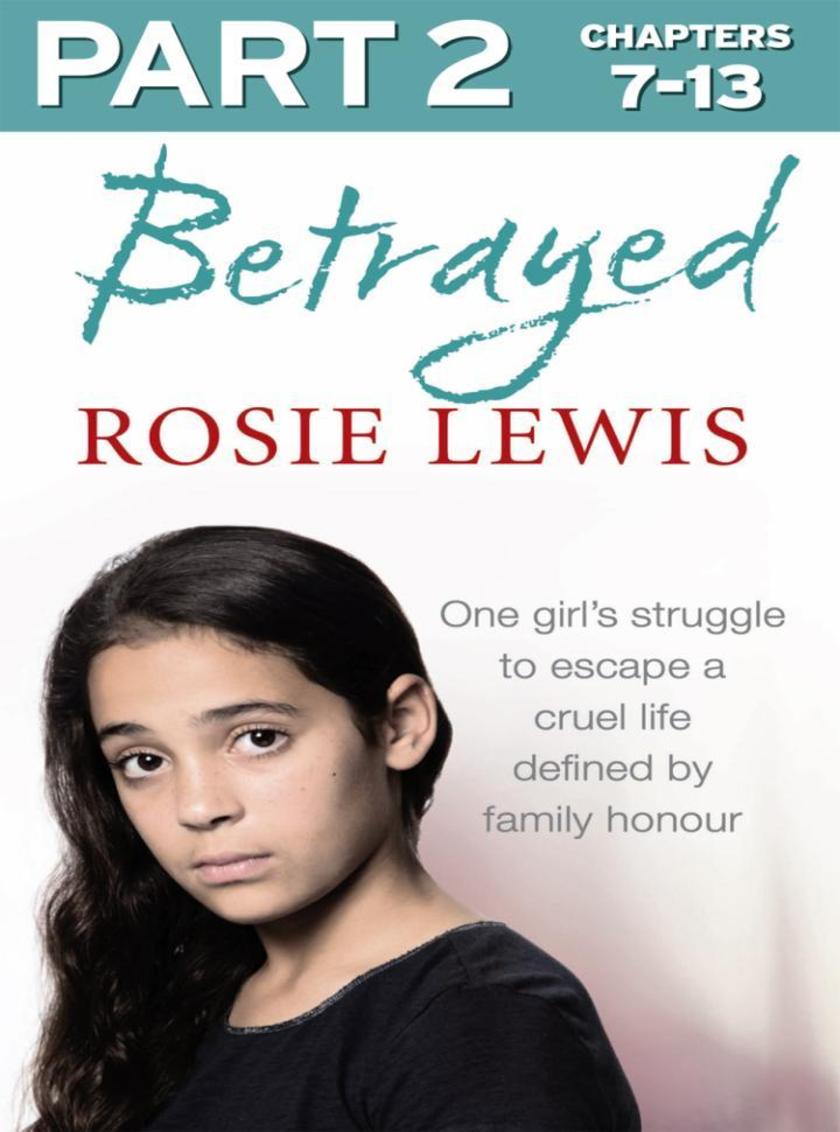
Betrayed: Part 2 of 3
¥28.45
Betrayed can either be read as a full-length eBook or in 3 serialised eBook-only parts. This is PART 2 of 3. You can read Part 2 one week ahead of release of the full-length eBook and paperback. In the much-anticipated follow-up to Sunday Times bestseller Trapped, foster carer Rosie Lewis tells the heartbreaking true story of 13-year-old Zadie. When the young teenage girl runs away and is discovered hiding on the city streets by the police, it is clear that all is not as it should be. Taught to believe that Westerners should not be trusted, when Zadie is initially delivered into the experienced hands of foster carer Rosie she is polite and well-behaved, but understandably suspicious of the family around her. Through Rosie’s support and understanding, gradually Zadie begins to settle into her new surroundings, but loyalty to her relatives, and fear of bringing shame on those around her, prevents her from confessing the horrifying truth about her troubled past. When the shocking truth finally emerges, Rosie and her family can hardly believe that Zadie had managed to keep the shocking secrets to herself for so long.

Trilogy Collection (Tales of the Notorious Hudson Family)
¥182.47
The first three titles in a series of gritty family sagas, Our Vinnie, My Uncle Charlie and My Mam Shirley chart the lives of three of the most infamous members of Yorkshire’s real-life notorious criminal family, the Hudsons. Dramatic and shocking, these three explosive true stories document a community forsaken by society - one brother’s unrelenting determination to take justice into his own hands, one man’s ascendancy to power, and the tragedy that brought it all crashing down, and, finally, the vivid account of the ‘Tucker’ girls; the resourceful women at the helm of a notorious Bradford family who will never be forgotten.
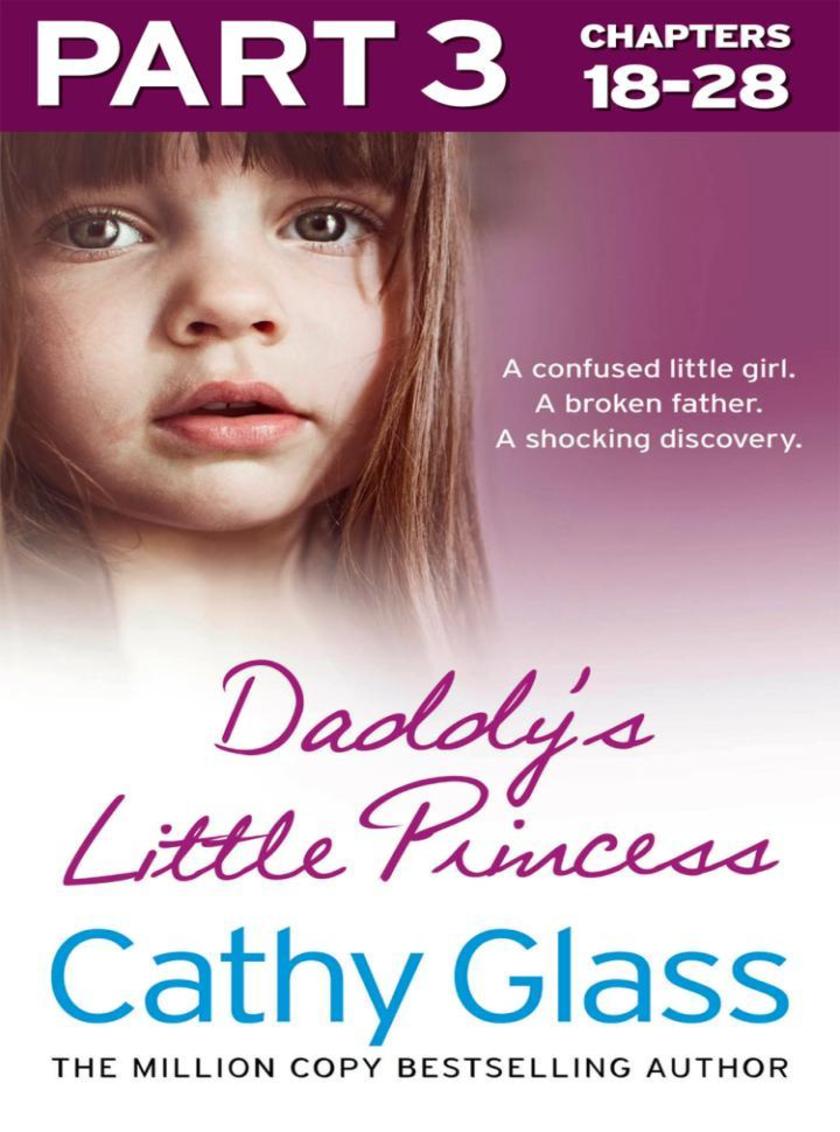
Daddy’s Little Princess: Part 3 of 3
¥47.48
The latest title from the internationally bestselling author and foster carer Cathy Glass. Beth is a sweet-natured child who appears to have been well looked after. But it isn’t long before Cathy begins to have concerns that the relationship between Beth and her father is not as it should be. Little Beth, aged 7, has been brought up by her father Derek after her mother left when she was a toddler. When Derek is suddenly admitted to hospital with psychiatric problems Beth is taken into care and arrives at Cathy’s. Beth and her father clearly love each other very much and Derek spoils his daughter, treating her like a princess, but there is something bothering Cathy, something she can’t quite put her finger on. Meanwhile Cathy’s husband is working away a lot and coming home less at weekends. Then, suddenly, everything changes. Events take a dramatic turn for both Beth and Cathy and her family; as Cathy strives to pick up the pieces all their lives are changed forever.
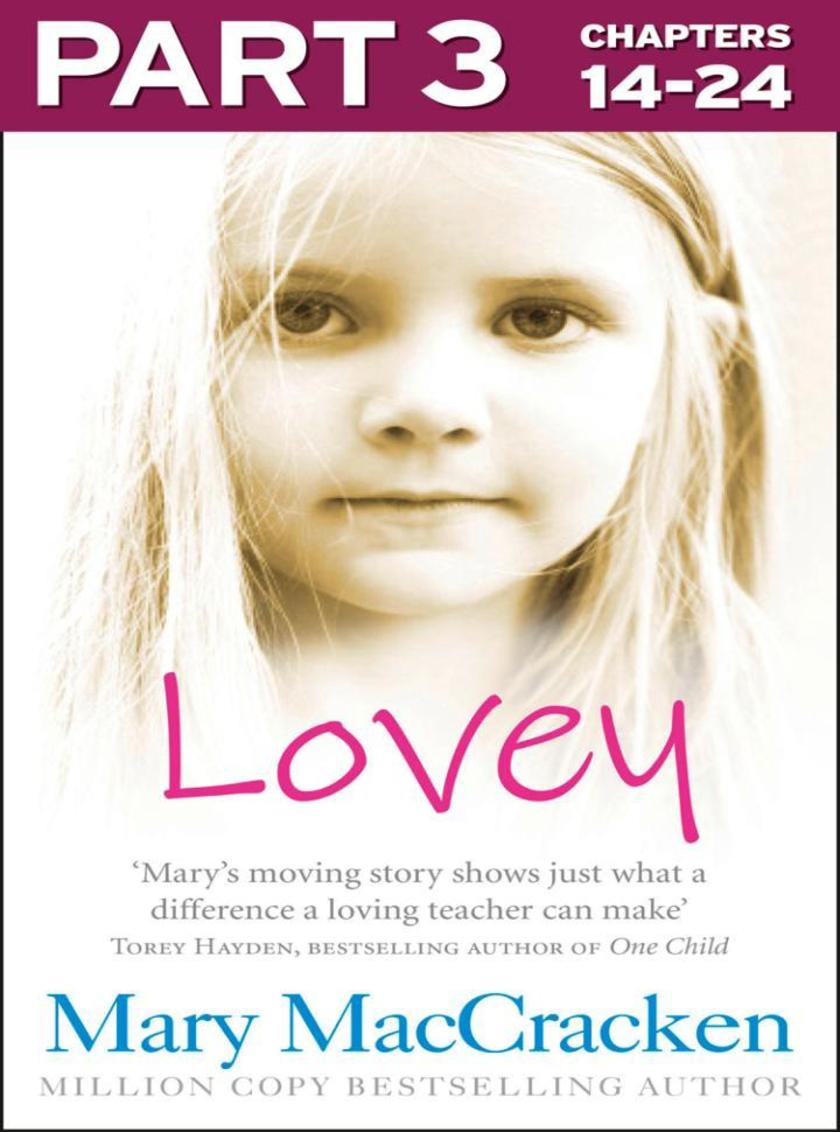
Lovey: Part 3 of 3
¥47.48
Lovey can either be read as a full-length eBook or in 3 serialised eBook-only parts. This is PART 3 of 3. You can read Part 3 1 week ahead of release of the full-length eBook and paperback. This deeply moving memoir tells the story of Hannah: a child who has been beaten and abused; a girl full of loneliness and rage; a student no one but learning disabilities teacher Mary MacCracken could reach. Mary had reservations about eight-year-old Hannah joining her class. The three emotionally disturbed boys she was currently looking after had been making steady progress, and Hannah, who had a reputation for being a withdrawn and incredibly troubled child, would only be a disruptive influence. For the first fortnight Hannah retired to a cupboard and refused to come out. Howling almost non-stop she was displaying the worst symptoms that Mary had ever seen. How could Mary help a child who had been shut up in closets and treated like an animal? What could she say to a child who had been locked out of her own home, and beaten by both her brother and her father? How could she reach this lost girl? This is the remarkable story of Hannah and Mary’s journey together. Deep within Hannah, Mary recognises an amazing strength. And with love, skill and patience, she gradually starts to make a difference. It’s a long road to recovery, but Mary never gives up. As this moving true story unfolds, we feel Mary’s joy, we share her hope and, in time, her faith that Hannah will be okay.

Poems, Letters and Memories of Philip Sidney Nairn
¥110.46
A poignant memoir and tribute to the Oxford poet Nairn by the author who went on to create The Worm Ouroboros and the groundbreaking Zimiamvia fantasy trilogy. Eric Rucker Eddison’s first book, originally published privately in hardback during the First World War, is a poignant memoir and tribute to the Oxford poet Philip Sidney Fletcher Nairn, whose work was so inspired by his Scottish ancestry, life in the Lake District, and his subsequent travels across Asia. This first official paperback edition includes a poignant and evocative biography, a dozen photographs, and more than 50 of Nairn’s poems, and marks the centenary of his untimely death in Kuala Lumpur in May 1914, aged just 30 years old.
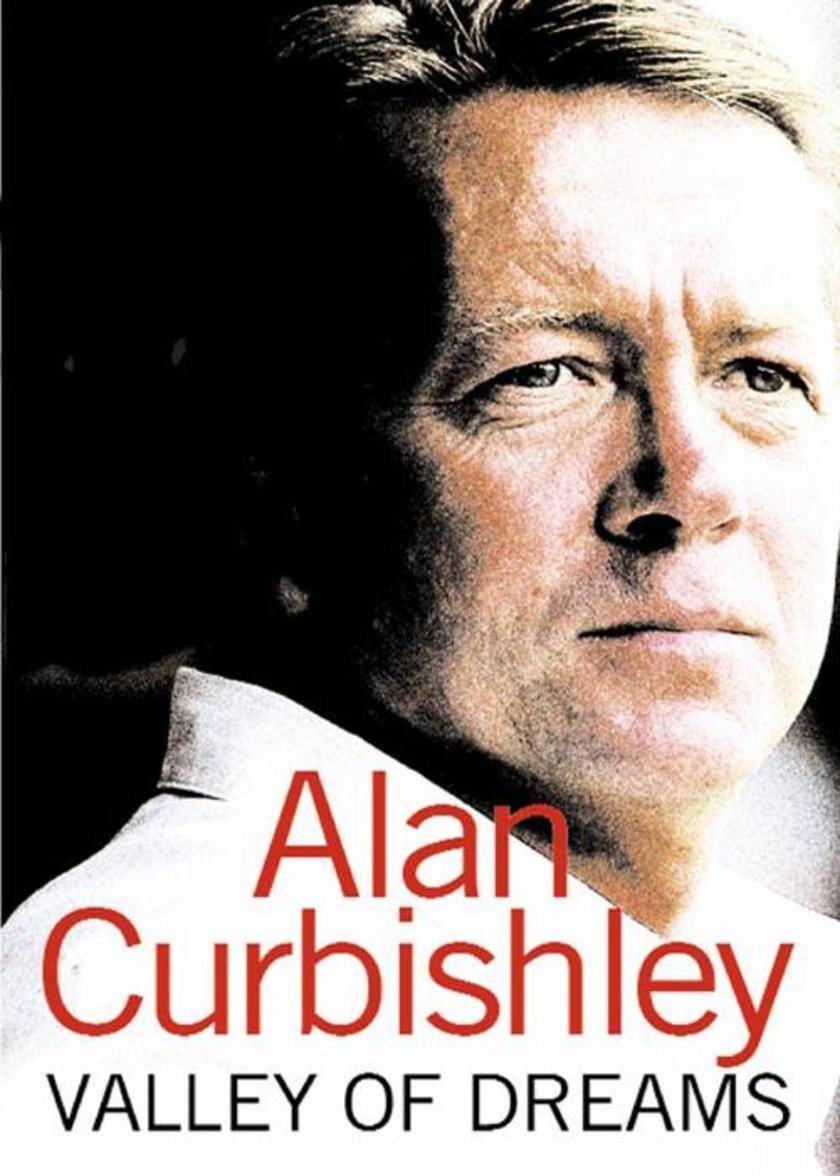
Valley of Dreams (Text Only)
¥125.18
Charlton Athletic represent a model of how a Premiership football club should be run. Former manager Alan Curbishley reveals the secrets of the club’s success – from the boardroom and manager’s office down to the dressing room and pitchside – and reflects on how the club went from homeless strugglers to challenging football’s elite. Alan Curbishley encountered most of football's ill winds during the 15 years he was coach, co-manager, then sole manager of Charlton – a club once homeless, with gates of less than 3000, forced to sell players to pay the wages and to buy replacement kit for the first team, and teetering on the brink of extinction. Galvanised by fans, staff, forward-thinking board members and a shrewd manager, the Addicks now find themselves firmly established with the Premiership big boys and a shining example of how a successful football club should be run. In his book, Curbishley opens the lid on the soap opera that is Charlton FC. He writes about the political manoeuvrings behind the club's departure and then emotional return to The Valley. He describes how the they were torn asunder by drugs allegations involving three of its players, including a youthful Lee Bowyer. He re-lives the tortuous rollercoaster ride of falling out of the Premiership two years later before returning in 1999/2000. And he gives an insider's view of the club's success in establishing itself in the world’s toughest league, including a full update on their 2005/06 season. He also talks candidly about being shortlisted for the England manager’s job. His book is a radical insight into the workings of a football club and its staff, and is sure to attract widespread interest from football fans across the country. Note that it has not been possible to include the same picture content that appeared in the original print version.
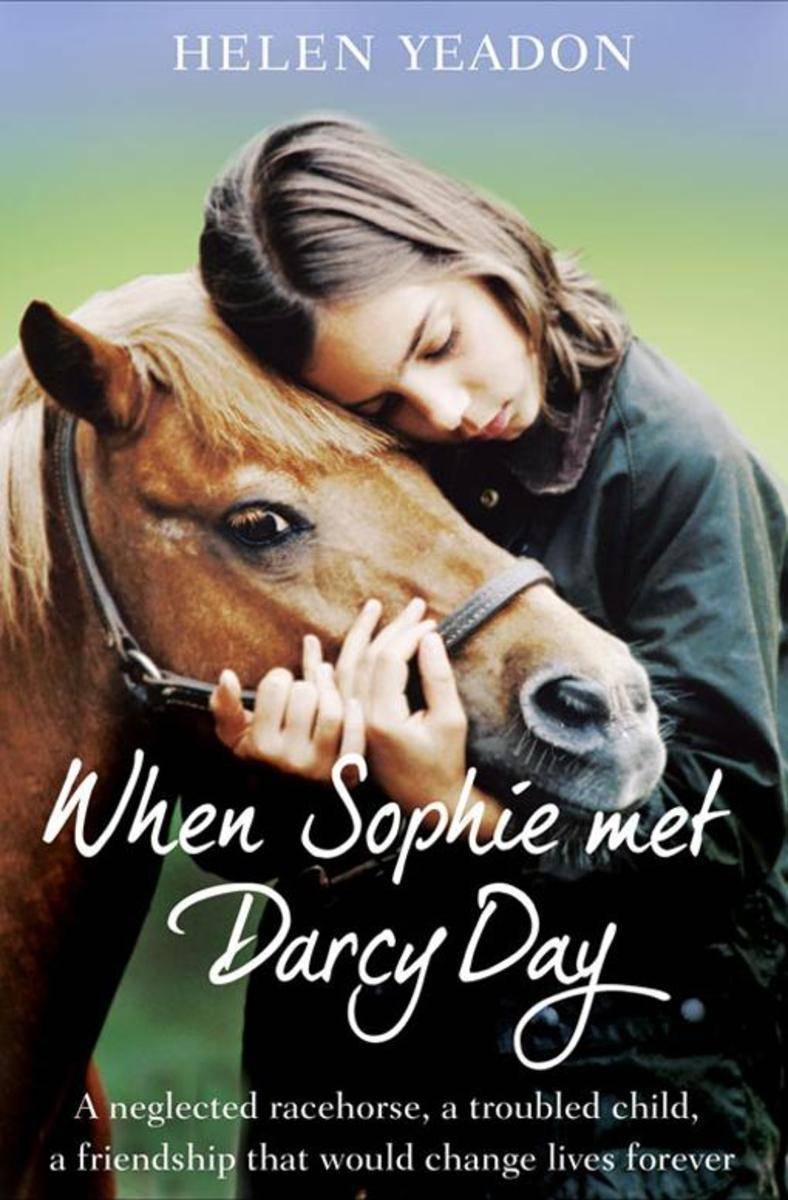
When Sophie Met Darcy Day
¥63.77
A heartwarming collection of stories from a woman who brings together disadvantaged children and abandoned racehorses, with remarkable results. Thirteen-year-old Sophie hadn’t uttered a word to anyone for over two years when she got out of her parents car at a remote farm in Devon. Her parents were beside themselves with worry, and at the end of their tether, but try as they might, nothing seemed to make a difference. They’d heard about a place called Greatwood through friends - where owners Helen and Michael Yeadon looked after retired racehorses - and decided to take Sophie along for a visit. Helen asked Sophie to help her change the dressings on the infected cuts on the legs of Darcy Day, one of their more troubled horses, and it was instantly clear that these two had some kind of special connection. Darcy Day would normally back away from people, but this time she lowered her head and stepped forward, to let Sophie stroke her nose. It was the start of an incredible relationship that would transform both horse and child, and it gave Michael and Helen an idea. They registered as a charity, moved to bigger premises, and began inviting children with a wide range of learning disabilities to volunteer to help with the animals. The results were amazing - traumatised horses and anxious or disturbed children bonded with each other, and every week little miracles were happening before their eyes. Boys with diagnoses such as Asperger’s Syndrome or Attention-Deficit Hyperactivity Disorder, or those who’d been excluded from school for unruly behaviour, flourished through the discipline of working on the farm. Girls made timid and anxious by abusive backgrounds or school bullies came out of the shells. In this book are twenty of the most incredible tales of children who were given back their futures by the unique and extraordinary institution of Greatwood.
The Pale Abyssinian: The Life of James Bruce, African Explorer and Adventurer (T
¥61.51
The biography of one of Britain’s greatest explorers by a brilliant young writer. The achievements of James Bruce are the stuff of legends. In a time when Africa was an unexplored blank on the map, he discovered the source of the Blue Nile, lived with the Emperor of Abyssinia at court in Gondar, commanded the Emperor’s horse guard in battle and fell in love with a princess. After twelve years of travels, and having cheated death on countless occasions, Bruce returned to England from his Herculean adventures only to be ridiculed and despised as a fake by Samuel Johnson and the rest of literary London. It was only when explorers penetrated the African Interior one hundred years later and were asked if they were friends with a man called Bruce, that it was finally confirmed that Bruce really had achieved what he had claimed. The Pale Abyssinian is the brilliantly told story of a man’s battle against almost insurmountable odds in a world nobody in Europe knew existed. Born in 1730, the son of a Scottish laird, James Bruce was an enormous man of six foot four with dark red hair, and he had to use all of his bearing and his wits to survive the ferocious physical battles and vicious intrigues at court in Abyssinia (Ethiopia today). His biographer, Miles Bredin, through ingenious detective work both in Bruce’s journals and in Ethiopia itself, has also unearthed a darker mission behind his travels: a secret quest to find the lost Ark of the Covenant. A highly talented and daring young writer, Miles Bredin has created a stunning account of the life and adventures of an extraordinary man. The Pale Abyssinian will re-establish once and for all the name of one of Britain’s greatest explorers who penetrated the African Interior over a century before the likes of Stanley, Livingstone and Burton set foot on the continent. Note that it has not been possible to include the same picture content that appeared in the original print version.

Browning (Text Only)
¥72.99
This edition does not include illustrations. A major biography of the most modern and the most underrated of English Literature's Great Victorians. Henry James called Robert Browning (1812–89) 'a tremendous and incomparable modern', and the immediacy and colloquial energy of his poetry has ensured its enduring appeal. This biography sets out to do the same for his life, animating the stereotypes (romantic hero, poetic exile, eminent man of letters) that have left him neglected by modern biographers. He has been seen primarily as one half of that romantic pair, the Brownings; and while the courtship, elopement and marriage of Elizabeth Barrett and Robert Browning remains a perennially seductive subject (and one Finlayson evokes vividly, quoting extensively from their daily letters and contemporary accounts) there is far more to Browning than that. Chronological in structure, this book is divided into three sections which deal with his life's major themes: adolescence and ambition, marriage and money, paternity and poetry. Browning explores the many experiences that inspired his writing, his education and passions, his relationships with family and friends, his continual financial struggles and revulsion at being seen as a fortune-hunter, his most unVictorian approach to marriage (sexual equality, his helping wean Elizabeth off morphine and nursing her through various illnesses), fatherhood and fame (inviting a leading member of the Browning Society to watch him burning a trunk of personal letters): all of which contribute to a fascinating portrait of a highly unconventional Victorian. At once witty and moving, this critical biography will revolutionise perceptions of the poet – and of the man.
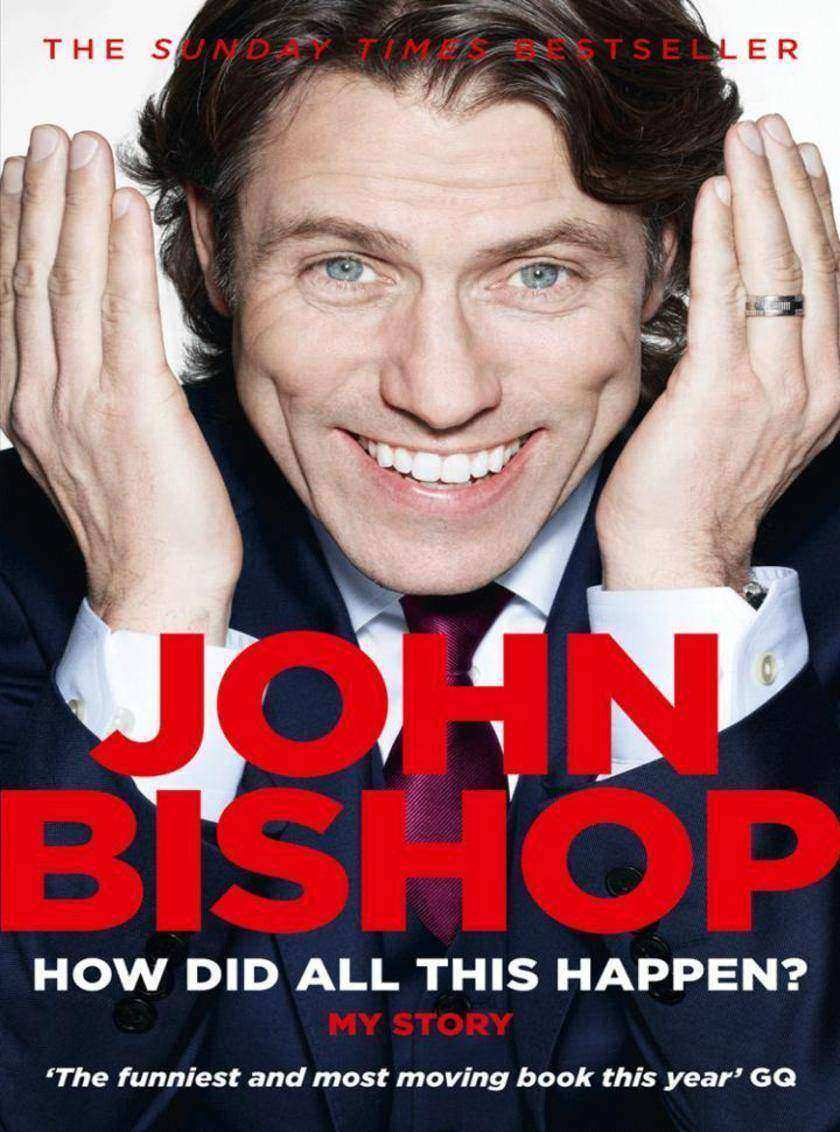
How Did All This Happen?
¥69.26
If you’re a man of a certain age you’ll know there comes a point in life when getting a sports car and over-analysing your contribution to society sounds like a really good idea. With a good job in sales and marketing and a nice house in Manchester that he shared with his wife and kids, John Bishop was no different when he turned the dreaded 4-0. But instead of spanking a load of cash on a car that would have made him look like a senior stylist at Vidal Sassoon, he stumbled onto a pathway that ultimately lead him to become one of the nation’s best loved comedians. It was a gamble, but boy, did it pay off. How Did All This Happen? is the story of how a boy who, growing up on a council estate dreaming of ousting Kenny Dalglish from Liverpool FC’s starting line-up, suddenly found himself on stage in front of thousands of people nationwide, at an age when he should have known better. In his own inimitable style, John guides us through his life from leaving the estate and travelling the globe on a shoe string, to marriage, kids and the split that led him to being on a stage complaining to strangers one night – the night that changed his life and started his journey to stardom. Wonderfully entertaining and packed with colourful reminiscences and comical anecdotes, this is a heart-warming, life-affirming and ultimately very, very funny memoir from one of the nation’s greatest comedians.

The Girls Who Went to War:Heroism, heartache and happiness in the wartime women’
¥58.86
The personal accounts of three young women who joined up in 1940. In the summer of 1940, Britain stood alone against Germany. The British Army stood at just over one and a half million men, while the Germans had three times that many, and a population almost twice the size of ours from which to draw new waves of soldiers. Clearly, in the fight against Hitler, manpower alone wasn’t going to be enough. Eighteen-year-old Jessie Ward defied her mother to join the ATS, Margery Pott signed up for the Women’s Auxiliary Air Force, and nanny Kathleen Skin the WRNS. They left quiet homes for the rigours of training, the camaraderie of the young women who worked together so closely and to face a war that would change their lives for ever. Overall, more than half a million women served in the armed forces during the Second World War. This book tells the story of just three of them – one from the Army, one from the Navy and one from the Air Force. But in their stories are reflected the lives of hundreds of thousands of others like them – ordinary girls who went to war, wearing their uniforms with pride.

Queen Victoria:A Life of Contradictions
¥66.22
A fresh, witty, accessible life of Queen Victoria. Not since Lytton Strachey has the irony, contradictions and influence of this Queen been treated with such flourish or biographical insight. 'Queen Victoria had a very complicated and psychologically fascinating personality and only a very talented biographer could get to the key of her character. Fortunately in Matthew Dennison's pithy, well-researched, beautifully written and very accessible book, she has found one' Andrew Roberts Queen Victoria is Britain’s queen of contradictions. In her combination of deep sentimentality and bombast; cultural imperialism and imperial compassion; fear of intellectualism and excitement at technology; romanticism and prudishness, she became a spirit of the age to which she gave her name. Victoria embraced photography, railway travel and modern art; she resisted compulsory education for the working classes, recommended for a leading women’s rights campaigner ‘a good whipping’ and detested smoking. She may or may not have been amused. Meanwhile she reinvented the monarchy and wrestled with personal reinvention. She lived in the shadow of her mother and then under the tutelage of her husband; finally she embraced self-reliance during her long widowhood. Fresh, witty and accessible, Queen Victoria is a compelling assessment of Victoria’s mercurial character and impact, written with the irony, flourish and insight that this Queen and her rule so richly deserve.

Two More Sleeps
¥9.71
This is the heart-breaking tale of Angell, a young girl desperately loved but inadequately cared for by her troubled mother Nicki. Abandoned and left barely clothed beneath a park bench on a freezing cold day in winter, the bewildered child is rescued by police and passed into the loving and compassionate care of the Lewis family. But when foster carer Rosie takes Angell into her home and heart, she wonders whether Angell’s mother will ever return for her daughter? Or will Angell be destined to spend the rest of her childhood in care?
Unexpected: A True Short Story
¥9.71
A dramatic and heartwarming story from foster carer, Rosie Lewis. Ellen, a 28-year-old office worker is so shocked by the sudden birth of her baby that she abandons the newborn in hospital. Foster carer Rosie Lewis begins visiting baby Hope in hospital, then a week later she is released into her care. At first Rosie struggles to understand how any mother could abandon a small baby, but when Ellen begins daily visits with Hope, Rosie sees a young woman traumatised by a dark secret. Rosie wants to help the young woman and the baby in her care and must fight to bring them together.
Our Vinnie - Part 3 of 3
¥18.93
Our Vinnie can either be read as a full-length eBook or in 3 serialised eBook-only parts. This is PART 3 of 3. You can read Part 3 one week ahead of the full-length eBook and paperback. The infamous Canterbury Estate in Bradford, a hotbed of crime, drink and drugs, was a law unto itself in the ’70s. So when one of their own was wronged in any way, the community always had its own way of dealing with it. The first title in a series of gritty family sagas, Our Vinnie accounts the dramatic true story of a brother’s determination to avenge his younger sister’s rape. Josie was just 11 when her Vinnie, then 14, was taken away to a detention centre. Distraught by his absence and left alone with indifferent parents, when she escapes from one of their rows she naively enters the house of a neighbour, Melvin, who – horrifically – leads her upstairs and overpowers her. Convinced by her friend Carol, Josie tells her sister Lyndsey about the rape but, with Vinnie out of the picture, Lyndsey uses the information for her own ends. When Vinnie returns, hardened by years inside the system, his outrage on discovering the truth is severe. And with new abuses continually coming to light, a cataclysmic series of violent events begins to spiral out of control… Dramatic and shocking, Our Vinnie is an unbelievable page-turner, documenting a community forsaken by society, and one brother’s unrelenting determination to take justice into his own hands.

My Mam Shirley - Part 3 of 3
¥18.93
My Mam Shirley can either be read as a full-length eBook or in 3 serialised eBook-only parts. This is PART 3 of 3. You can read Part 3 one week ahead of the full-length eBook and paperback.
Lost in France:The Story of England's 1998 World Cup Campaign
¥57.09
An essential fly-on-the-wall account of the biggest World Cup tournament ever staged. 1998 is the year the World Cup comes home. Almost 70 years since Jules Rimet’s dream first came to fruition, France plays host for the first time to the greatest sporting event in the world. And, with a record-breaking 32 nations competing, the 1998 tournament will be the largest and most widely publicised football extravaganza in history. While following the sporting action, Mark Palmer will also travel around France to speak to fans, players, coaches, competition organisers and journalists, to present the inside story of the World Cup as the drama unfolds. With unrivalled access to the English and French FAs, as well as world regulating body FIFA, Palmer will balance the official view of the tournament with fans’ own experiences – all the while comparing the breaking story to how it is being reported back home.
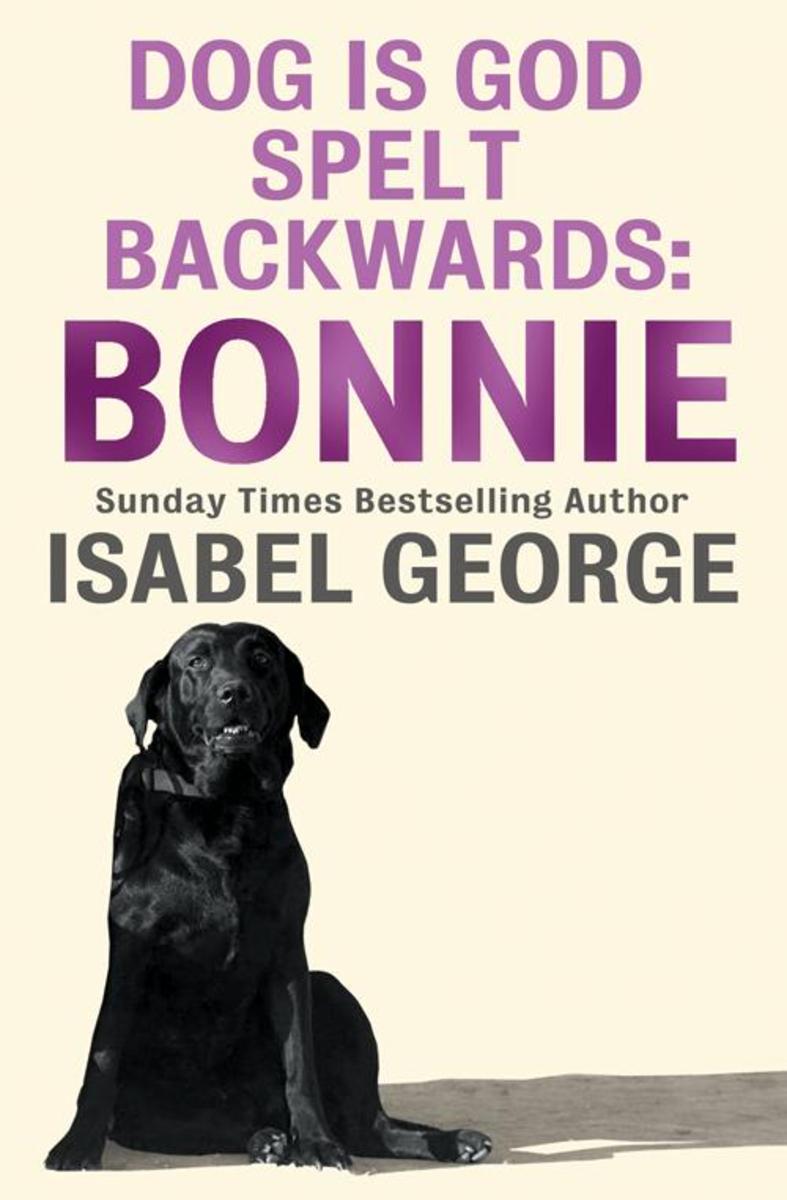
DOG Is GOD Spelt Backwards:Bonnie
¥15.60
An inspiring and heart-warming short story of canine devotion and bravery. When Corporal Jenny Chester was matched with Arms and Explosives search dog Bonnie it felt like the best Christmas present ever. Friends from day one, partners beyond doubt, through service in Bosnia and Iraq they shared food on the run, sleeping in bags in the cold and shade of the same tree. A bond made in wartime that created a partnership for life. Extracted from the bestselling title The Dog That Saved My Life.

Fearless Under Fire:Tangye
¥15.60
An inspiring and heart-warming short story of canine devotion and bravery. A brave and loyal companion to the British soldiers in conflict in Afghanistan, Tangye began his years as a puppy mascot. Before long he was inseparable from the servicemen on the base, who he lived and patrolled with for five years. He accompanied the bomb disposal unit several times and became a target for the enemy. But he was also a much loved companion for soldiers in the time of need. Extracted from the bestselling title Beyond The Call Of Duty, this is the story of dog who was a resident comedian and constant comforter, and the fight of the men he accompanied to bring him back with them to the UK.


