


 购物车
 个人中心

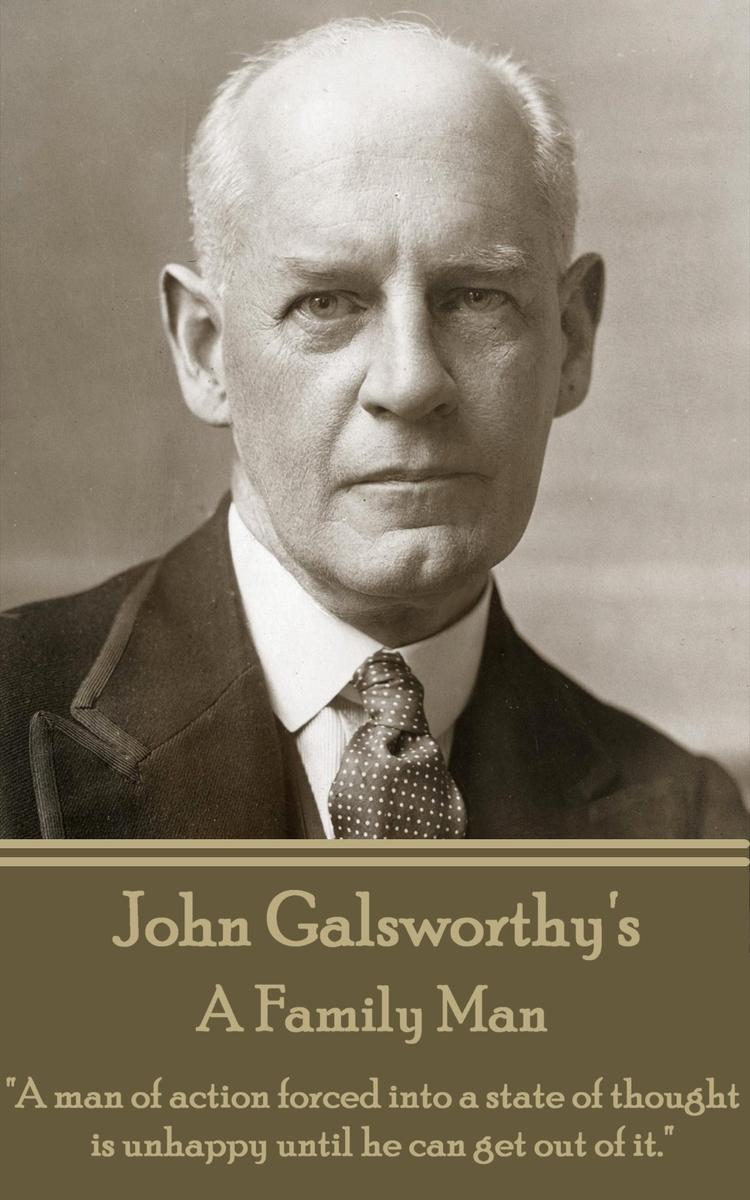
Family Man - A man of action forced into a state of thought is unhappy until he
¥29.33
John Galsworthy first published in 1897 with a collection of short stories entitled "e;The Four Winds"e;. For the next 7 years he published these and all works under his pen name John Sinjohn. It was only upon the death of his father and the publication of "e;The Island Pharisees"e; in 1904 that he published as John Galsworthy. His first play was The Silver Box, an immediate success when it debuted in 1906 and was followed by "e;The Man of Property"e; later that same year and was the first in the Forsyte trilogy. Whilst today he is far more well know as a Nobel Prize winning novelist then he was considered a playwright dealing with social issues and the class system. We publish here 'A Family Man' a great example of both his writing and his demonstration of how the class system worked at the time. He was appointed to the Order of Merit in 1929, after earlier turning down a knighthood, and awarded the Nobel Prize in 1932 though he was too ill to attend. John Galsworthy died from a brain tumour at his London home, Grove Lodge, Hampstead on January 31st 1933. In accordance with his will he was cremated at Woking with his ashes then being scattered over the South Downs from an aeroplane.
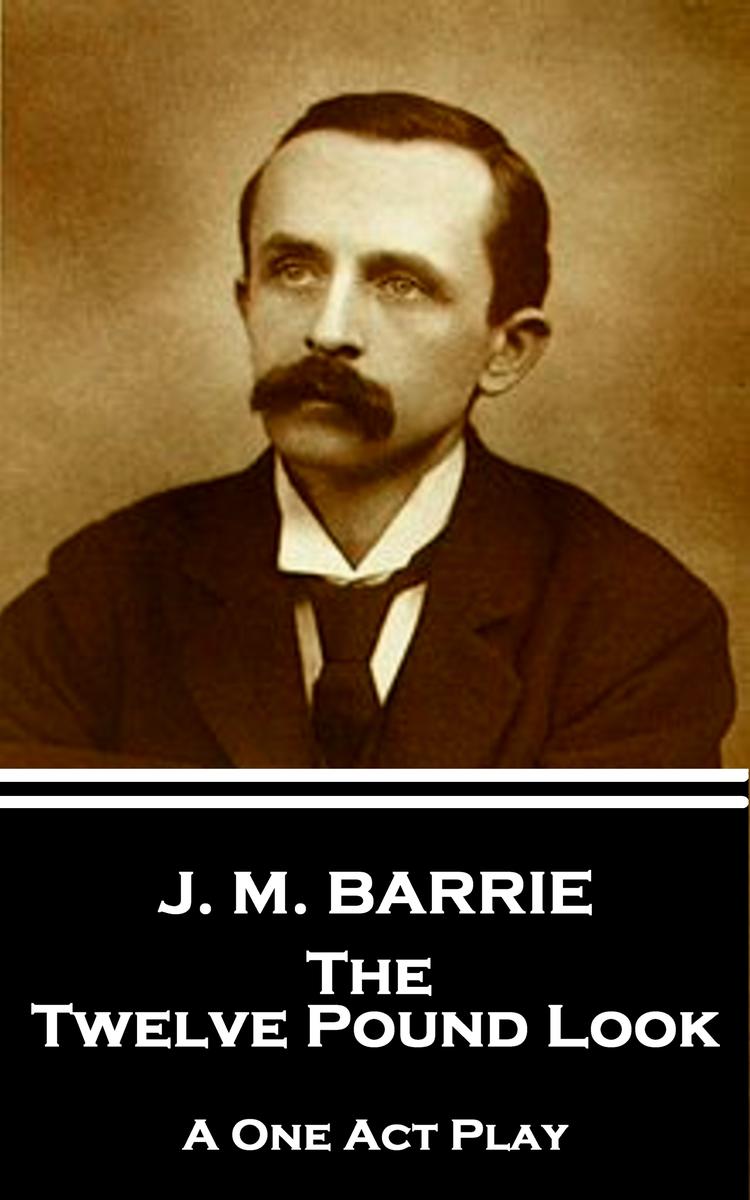
Twelve Pound Look - A One Act Play
¥11.67
Sir James Matthew Barrie, 1st Baronet, OM, was born in Kirriemuir, Angus the ninth of ten children on May 9th, 1860. From early formative experiences, Barrie knew that he wished to follow a career as an author. His family wished otherwise and sought to persuade him to choose a profession, such as the ministry. The compromise was that he would attend university to study literature at the University of Edinburgh. He graduated with an M.A. on April 21st, 1882. His first job was as a staff journalist for the Nottingham Journal. The London editor of the St. James's Gazette "e;liked that Scotch thing"e; in Barrie's short stories about his mother's early life. They also served as the basis for his first novels. Barrie though was increasingly drawn to working in the theatre. His first play, a biography of Richard Savage, was only performed once and critically panned. Undaunted he immediately followed this with Ibsen's Ghost in 1891, a parody of Ibsen's plays Hedda Gabler and Ghosts. Barrie's third play, Walker, London, in 1892 led to an introduction to his future wife, a young actress by the name of Mary Ansell. The two became friends, and she helped his family to care for him when he fell very ill in 1893 and 1894. Barrie proposed and they were married, in Kirriemuir, on July 9th, 1894. By some accounts the relationship was unconsummated and indeed the couple had no children. The story of Peter Pan had begun to formulate when Barrie became acquainted with the Llewelyn Davis family in 1897, meeting George, Jack and baby Peter with their nanny in London's Kensington Gardens. In 1901 and 1902, Barrie had back-to-back theatre successes with Quality Street and The Admirable Crichton. The character of "e;Peter Pan"e; first appeared in The Little White Bird in 1902. This most famous and enduring of his works; Peter Pan, or The Boy Who Wouldn't Grow Up had its first stage performance on December 27th, 1904. Peter Pan would overshadow everything written during his career. He continued to write for the rest of his life contributing many other fine and important works. Sir James Matthew Barrie, 1st Baronet, OM, died of pneumonia on June 19th,1937 and was buried at Kirriemuir next to his parents and two of his siblings.
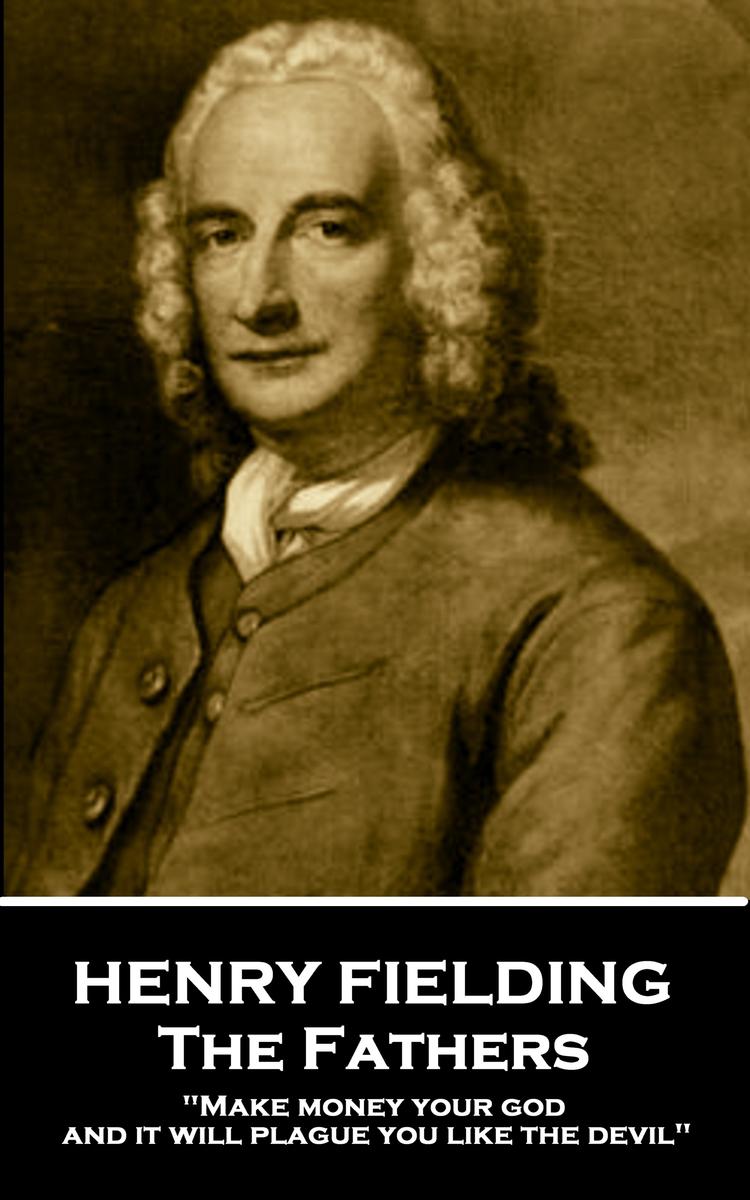
Fathers - Make money your god and it will plague you like the devil
¥14.03
Henry Fielding was born at Sharpham Park, near Glastonbury, in Somerset on April 22nd 1707. His early years were spent on his parents' farm in Dorset before being educated at Eton.An early romance ended disastrously and with it his removal to London and the beginnings of a glittering literary career; he published his first play, at age 21, in 1728.He was prolific, sometimes writing six plays a year, but he did like to poke fun at the authorities. His plays were thought to be the final straw for the authorities in their attempts to bring in a new law. In 1737 The Theatrical Licensing Act was passed. At a stroke political satire was almost impossible. Fielding was rendered mute. Any playwright who was viewed with suspicion by the Government now found an audience difficult to find and therefore Theatre owners now toed the Government line.Fielding was practical with the circumstances and ironically stopped writing to once again take up his career in the practice of law and became a barrister after studying at Middle Temple. By this time he had married Charlotte Craddock, his first wife, and they would go on to have five children. Charlotte died in 1744 but was immortalised as the heroine in both Tom Jones and Amelia.Fielding was put out by the success of Samuel Richardson's Pamela, or Virtue Rewarded. His reaction was to spur him into writing a novel. In 1741 his first novel was published; the successful Shamela, an anonymous parody of Richardson's novel.Undoubtedly the masterpiece of Fielding's career was the novel Tom Jones, published in 1749. It is a wonderfully and carefully constructed picaresque novel following the convoluted and hilarious tale of how a foundling came into a fortune.Fielding was a consistent anti-Jacobite and a keen supporter of the Church of England. This led to him now being richly rewarded with the position of London's Chief Magistrate. Fielding continued to write and his career both literary and professional continued to climb.In 1749 he joined with his younger half-brother John, to help found what was the nascent forerunner to a London police force, the Bow Street Runners. Fielding's ardent commitment to the cause of justice in the 1750s unfortunately coincided with a rapid deterioration in his health. Such was his decline that in the summer of 1754 he travelled, with Mary and his daughter, to Portugal in search of a cure. Gout, asthma, dropsy and other afflictions forced him to use crutches. His health continued to fail alarmingly.Henry Fielding died in Lisbon two months later on October 8th, 1754.
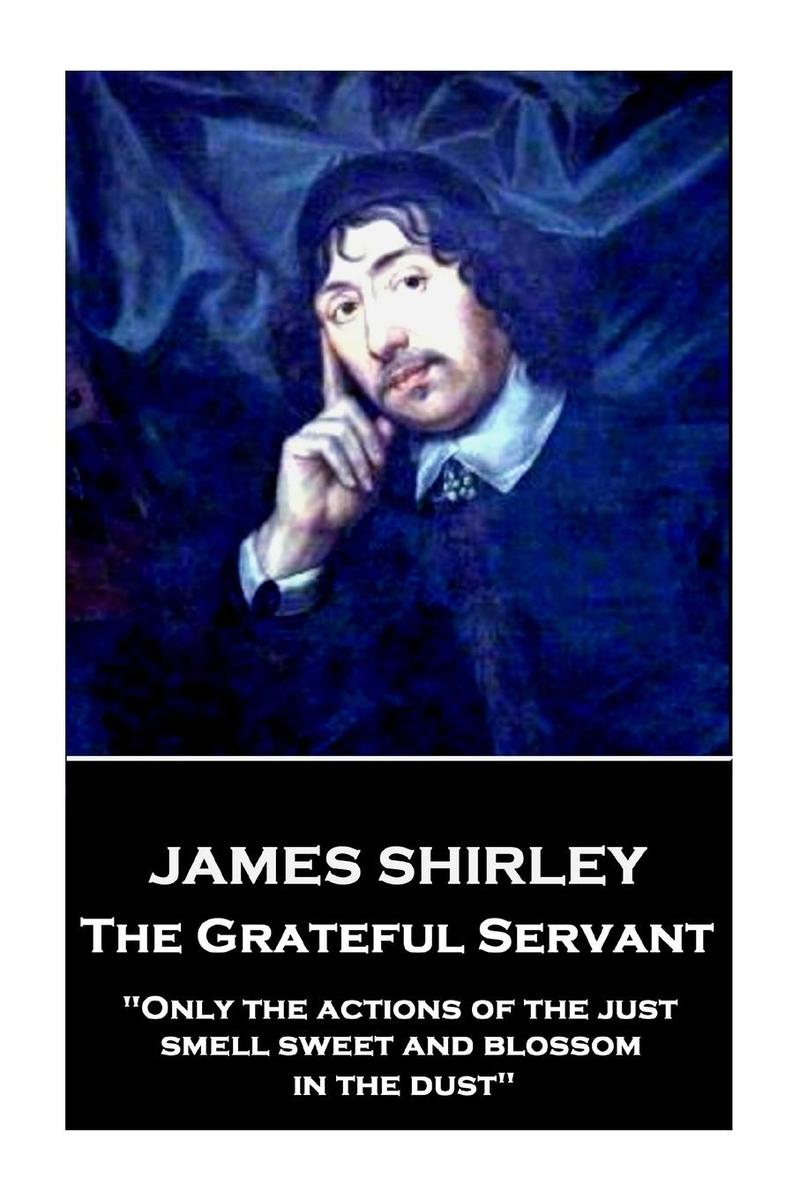
Grateful Servant - Only the actions of the just smell sweet and blossom in the d
¥25.80
James Shirley was born in London in September 1596. His education was through a collection of England's finest establishments: Merchant Taylors' School, London, St John's College, Oxford, and St Catharine's College, Cambridge, where he took his B.A. degree in approximately 1618. He first published in 1618, a poem entitled Echo, or the Unfortunate Lovers. As with many artists of this period full details of his life and career are not recorded. Sources say that after graduating he became "e;a minister of God's word in or near St Albans."e; A conversion to the Catholic faith enabled him to become master of St Albans School from 1623-25. He wrote his first play, Love Tricks, or the School of Complement, which was licensed on February 10th, 1625. From the given date it would seem he wrote this whilst at St Albans but, after its production, he moved to London and to live in Gray's Inn. For the next two decades, he would write prolifically and with great quality, across a spectrum of thirty plays; through tragedies and comedies to tragicomedies as well as several books of poetry. Unfortunately, his talents were left to wither when Parliament passed the Puritan edict in 1642, forbidding all stage plays and closing the theatres. Most of his early plays were performed by Queen Henrietta's Men, the acting company for which Shirley was engaged as house dramatist. Shirley's sympathies lay with the King in battles with Parliament and he received marks of special favor from the Queen. He made a bitter attack on William Prynne, who had attacked the stage in Histriomastix, and, when in 1634 a special masque was presented at Whitehall by the gentlemen of the Inns of Court as a practical reply to Prynne, Shirley wrote the text-The Triumph of Peace. Shirley spent the years 1636 to 1640 in Ireland, under the patronage of the Earl of Kildare. Several of his plays were produced by his friend John Ogilby in Dublin in the first ever constructed Irish theatre; The Werburgh Street Theatre. During his years in Dublin he wrote The Doubtful Heir, The Royal Master, The Constant Maid, and St. Patrick for Ireland. In his absence from London, Queen Henrietta's Men sold off a dozen of his plays to the stationers, who naturally, enough published them. When Shirley returned to London in 1640, he finished with the Queen Henrietta's company and his final plays in London were acted by the King's Men. On the outbreak of the English Civil War Shirley served with the Earl of Newcastle. However when the King's fortunes began to decline he returned to London. There his friend Thomas Stanley gave him help and thereafter Shirley supported himself in the main by teaching and publishing some educational works under the Commonwealth. In addition to these he published during the period of dramatic eclipse four small volumes of poems and plays, in 1646, 1653, 1655, and 1659. It is said that he was "e;a drudge"e; for John Ogilby in his translations of Homer's Iliad and the Odyssey, and survived into the reign of Charles II, but, though some of his comedies were revived, his days as a playwright were over. His death, at age seventy, along with that of his wife, in 1666, is described as one of fright and exposure due to the Great Fire of London which had raged through parts of London from September 2nd to the 5th. He was buried at St Giles in the Fields, in London, on October 29th, 1666.
Rhesus - Question everything. Learn something. Answer nothing
¥14.03
Euripides is rightly lauded as one of the great dramatists of all time. In his lifetime, he wrote over 90 plays and although only 18 have survived they reveal the scope and reach of his genius. Euripides is identified with many theatrical innovations that have influenced drama all the way down to modern times, especially in the representation of traditional, mythical heroes as ordinary people in extraordinary circumstances. As would be expected from a life lived 2,500 years ago, details of it are few and far between. Accounts of his life, written down the ages, do exist but whether much is reliable or surmised is open to debate. Most accounts agree that he was born on Salamis Island around 480 BC, to mother Cleito and father Mnesarchus, a retailer who lived in a village near Athens. Upon the receipt of an oracle saying that his son was fated to win "e;crowns of victory"e;, Mnesarchus insisted that the boy should train for a career in athletics. However, what is clear is that athletics was not to be the way to win crowns of victory. Euripides had been lucky enough to have been born in the era as the other two masters of Greek Tragedy; Sophocles and schylus. It was in their footsteps that he was destined to follow. His first play was performed some thirteen years after the first of Socrates plays and a mere three years after schylus had written his classic The Oristria. Theatre was becoming a very important part of the Greek culture. The Dionysia, held annually, was the most important festival of theatre and second only to the fore-runner of the Olympic games, the Panathenia, held every four years, in appeal. Euripides first competed in the City Dionysia, in 455 BC, one year after the death of schylus, and, incredibly, it was not until 441 BC that he won first prize. His final competition in Athens was in 408 BC. The Bacchae and Iphigenia in Aulis were performed after his death in 405 BC and first prize was awarded posthumously. Altogether his plays won first prize only five times. Euripides was also a great lyric poet. In Medea, for example, he composed for his city, Athens, "e;the noblest of her songs of praise"e;. His lyric skills however are not just confined to individual poems: "e;A play of Euripides is a musical whole....one song echoes motifs from the preceding song, while introducing new ones."e; Much of his life and his whole career coincided with the struggle between Athens and Sparta for hegemony in Greece but he didn't live to see the final defeat of his city. Euripides fell out of favour with his fellow Athenian citizens and retired to the court of Archelaus, king of Macedon, who treated him with consideration and affection. At his death, in around 406BC, he was mourned by the king, who, refusing the request of the Athenians that his remains be carried back to the Greek city, buried him with much splendor within his own dominions. His tomb was placed at the confluence of two streams, near Arethusa in Macedonia, and a cenotaph was built to his memory on the road from Athens towards the Piraeus.
Little Dream - One's eyes are what one is, one's mouth is what one becomes.
¥14.03
John Galsworthy was born at Kingston Upon Thames in Surrey, England, on August 14th 1867 to a wealthy and well established family. His schooling was at Harrow and New College, Oxford before training as a barrister and being called to the bar in 1890. However, Law was not attractive to him and he travelled abroad becoming great friends with the novelist Joseph Conrad, then a first mate on a sailing ship. In 1895 Galsworthy began an affair with Ada Nemesis Pearson Cooper, the wife of his cousin Major Arthur Galsworthy. The affair was kept a secret for 10 years till she at last divorced and they married on 23rd September 1905. Galsworthy first published in 1897 with a collection of short stories entitled "e;The Four Winds"e;. For the next 7 years he published these and all works under his pen name John Sinjohn. It was only upon the death of his father and the publication of "e;The Island Pharisees"e; in 1904 that he published as John Galsworthy. His first play, The Silver Box in 1906 was a success and was followed by "e;The Man of Property"e; later that same year and was the first in the Forsyte trilogy. Whilst today he is far more well know as a Nobel Prize winning novelist then he was considered a playwright dealing with social issues and the class system. Here we publish Villa Rubein, a very fine story that captures Galsworthy's unique narrative and take on life of the time. He is now far better known for his novels, particularly The Forsyte Saga, his trilogy about the eponymous family of the same name. These books, as with many of his other works, deal with social class, upper-middle class lives in particular. Although always sympathetic to his characters, he reveals their insular, snobbish, and somewhat greedy attitudes and suffocating moral codes. He is now viewed as one of the first from the Edwardian era to challenge some of the ideals of society depicted in the literature of Victorian England. In his writings he campaigns for a variety of causes, including prison reform, women's rights, animal welfare, and the opposition of censorship as well as a recurring theme of an unhappy marriage from the women's side. During World War I he worked in a hospital in France as an orderly after being passed over for military service. He was appointed to the Order of Merit in 1929, after earlier turning down a knighthood, and awarded the Nobel Prize in 1932 though he was too ill to attend. John Galsworthy died from a brain tumour at his London home, Grove Lodge, Hampstead on January 31st 1933. In accordance with his will he was cremated at Woking with his ashes then being scattered over the South Downs from an aeroplane.
Short Plays Vol 1 - The worst thing about some men is that when they are not dru
¥35.22
William Butler Yeats (1865 - 1939) is best described as Ireland's national poet in addition to being one of the major twentieth-century literary figures of the English tongue. To many literary critics, Yeats represents the 'Romantic poet of modernism,' which is quite revealing about his extraordinary style that combines between the outward emphasis on the expression of emotions and the extensive use of symbolism, imagery and allusions. Yeats also wrote prose and drama and established himself as the spokesman of the Irish cause. His fame was greatly boosted mainly after he received the Nobel Prize in Literature in 1923. His life was marked by his many love stories, by his great interest in oriental mysticism and occultism as well as by political engagement since he served as an Irish senator for two terms. Today, although William Butler Yeats's contribution to literary modernism and to Irish nationalism remains incontestable. Here we publish a collection of his short plays that offer a rich harvest from the talents of such an esteemed artist.
Jane Annie, or The Good Conduct Prize - There is nothing more deceptive than an
¥26.98
If ever a writer needed an introduction Arthur Conan Doyle would not be considered that man. After all, Sherlock Holmes is perhaps the foremost literary detective of any age. Add to this canon his stories of science fiction and his poems, his historical novels, his plays, his political campaigning, his efforts in establishing a Court Of Appeal and there is little room for anything else. Except he was also an exceptional writer of short stories of the horrific and macabre. Something very different from what you might expect. Born in Arthur Conan Doyle was born on 22 May 1859 at 11 Picardy Place, Edinburgh, Scotland. From 1876 - 1881 he studied medicine at the University of Edinburgh following which he was employed as a doctor on the Greenland whaler Hope of Peterhead in 1880 and, after his graduation, as a ship's surgeon on the SS Mayumba during a voyage to the West African coast in 1881. Arriving in Portsmouth in June of that year with less than GBP10 (GBP700 today) to his name, he set up a medical practice at 1 Bush Villas in Elm Grove, Southsea. The practice was initially not very successful. While waiting for patients, Conan Doyle again began writing stories and composed his first novel The Mystery of Cloomber. Although he continued to study and practice medicine his career was now firmly set as a writer. And thereafter great works continued to pour out of him.
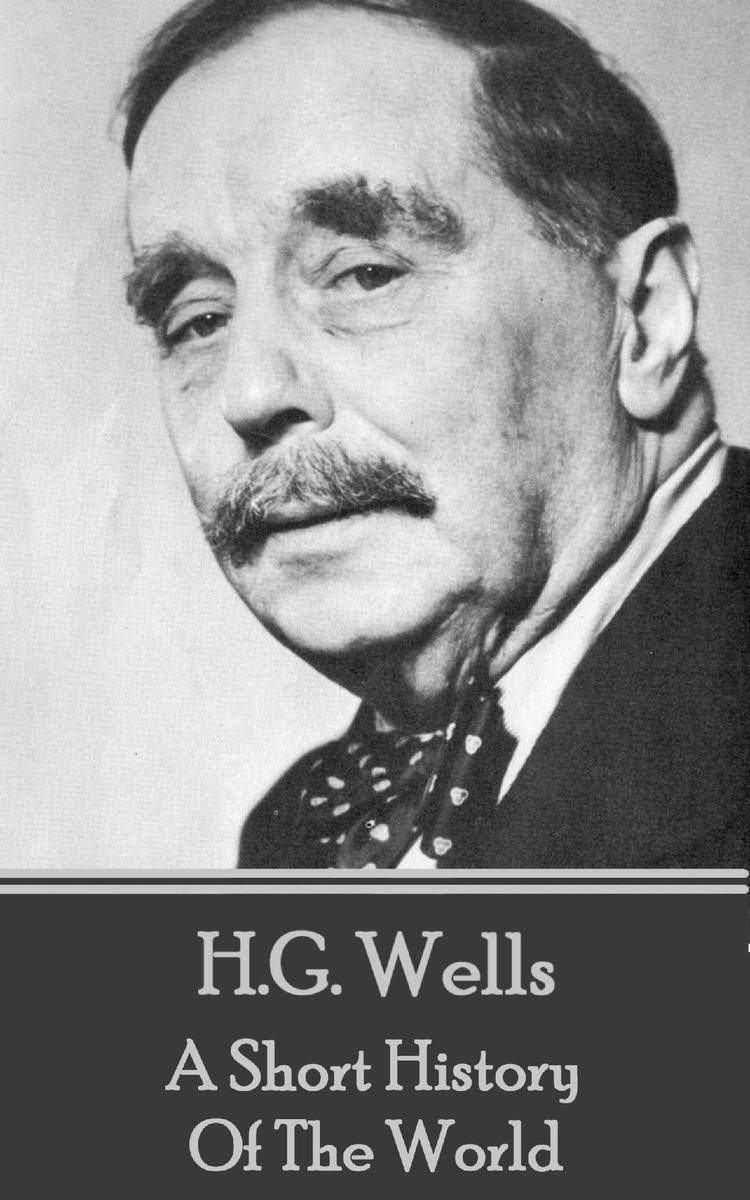
Short History of the World
¥44.65
Herbert George Wells was born on September 21st, 1866 at Atlas House, 46 High Street, Bromley, Kent. He was the youngest of four siblings and his family affectionately knew him as 'Bertie'. The first few years of his childhood were spent fairly quietly, and Wells didn't display much literary interest until, in 1874, he accidentally broke his leg and was left to recover in bed, largely entertained by the library books his father regularly brought him. Through these Wells found he could escape the boredom and misery of his bed and convalescence by exploring the new worlds he encountered in these books. From these humble beginnings began a career that was, after several delays, to be seen as one of the most brilliant of modern English writers. Able to write comfortably in a number of genres he was especially applauded for his science fiction works such as The Time Machine and War of the Worlds but his forays into the social conditions of the times, with classics such as Kipps, were almost as commercially successful. His short stories are miniature masterpieces many of which bring new and incredible ideas of science fiction to the edge of present day science fact. Wells also received four nominations for the Nobel Prize in Literature. Despite a strong and lasting second marriage his affairs with other women also brought the complications of fathering other children. His writings and work against fascism, as well as the promotion of socialism, brought him into increasing doubts with and opposition to religion. His writings on what the world could be in works, such as A Modern Utopia, are thought provoking as well as being plausible, especially when viewed from the distressing times they were written in. His diabetic condition pushed him to create what is now the largest Diabetes charity in the United Kingdom. Wells even found the time to run twice for Parliament. It was a long, distinguished and powerfully successful career by the time he died, aged 79, on August 13th, 1946.
Earl of Essex - 'In hour malignant, to o'erturn the state''
¥14.03
Henry Jones was born at Beaulieu, near Drogheda, County Louth, Ireland in 1721. His working life began when he was apprenticed to a bricklayer. Jones, however, was keen to better himself and studied hard in his private time. He fashioned some complimentary verses, addressed to the corporation of Drogheda and together with some lines 'On Mr. Pope's Death', managed to attract the attention of Lord-chief-justice Singleton, who lived at Beaulieu.In 1745 he obtained employment at the parliament house at Dublin. Jones, used the position to promote his literary talents and celebrated the arrival of Lord Chesterfield as lord-lieutenant of Ireland in a poem that was then presented to Chesterfield by Singleton. Chesterfield asked Jones to accompany him on his return to London in 1748. There, he and his friends helped Jones to publish, by subscription, 'Poems on Several Occasions' in 1749, which delivered a handsome profit for the young poet. Jones is though more noted as a dramatist and that, primarily, is due to his tragedy, 'The Earl of Essex' which he completed in 1752. Chesterfield introduced both the play and Jones to Colley Cibber, the Poet Laureate, who then introduced Jones to the manager of Covent Garden Theatre. Cibber would later attempt to secure the laureateship for Jones after his own death.'The Earl of Essex', after being revised by Chesterfield and Cibber, was premiered at Covent Garden on 21st Feb. 1753, and played for seventeen sold-out nights. It was a triumph, and was equally well received in Dublin and then later in the provinces. It brought Jones over GBP500, a large sum even by today's standards. The play was printed soon after its production, and eventually sold through four editions.The success, unfortunately, was to be the ruin of Jones. His drunken habits, indolence, raw manners, and harshly arrogant temper appalled most of his patrons who soon withdrew their support. However, he seemed adept at keeping on good terms with Chesterfield for some years longer, but at length even he gave up on the relationship when Jones borrowed money from his servant. Jones did continue to write and had made progress on a tragedy entitled 'Harold,' and, on that thin security, managed to raise money as an advance from booksellers. He was rather more successful in his revelries with the acting profession. Jones continued to be on friendly terms with many of the leading actors although in his often drunk state he would harangue the more minor actors as 'parrots', but he repaid them with puffs and panegyrics. His charm and ease with a few lines were valuable commodities.Whenever he was an inmate of sponging-houses he contrived to flatter any bailiff's daughter or wife with verses on their beauty or talents, and, in the process, secured himself more comfortable quarters than he perhaps deserved. Henry Jones died in the parish workhouse in April 1770.After his death, Reddish, the actor of Drury Lane, acquired Jones's manuscripts, which included 'Harold' and three acts of an unfinished tragedy, 'The Cave of Idra.' This was completed by Paul Hiffernan, and re-titled 'The Heroine of the Cave,' was produced for Reddish's benefit on 25th March 1774.
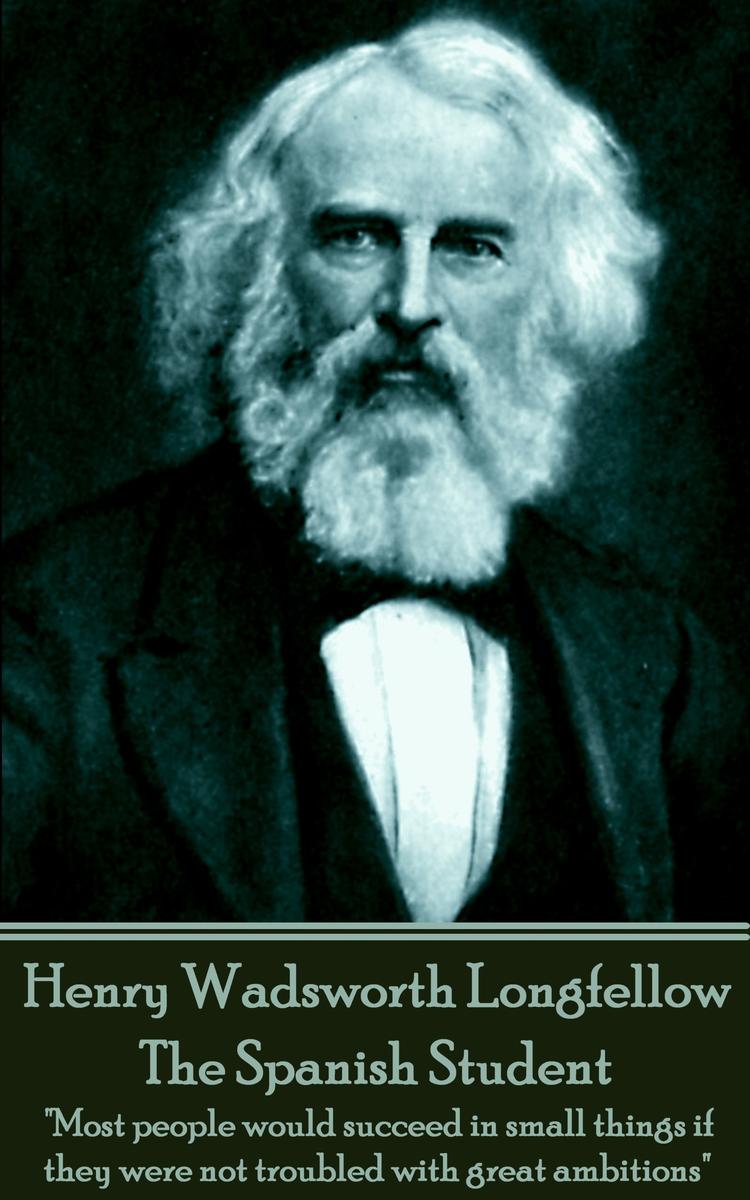
Spanish Student
¥17.56
Henry Wadsworth Longfellow was born on February 27th, 1807 in Portland, Maine. As a young boy, it was obvious that he was very studious and he quickly became fluent in Latin. He published his first poem, "e;The Battle of Lovell's Pond"e;, in the Portland Gazette on November 17th, 1820. He was already thinking of a career in literature and, in his senior year, wrote to his father: "e;I will not disguise it in the least... the fact is, I most eagerly aspire after future eminence in literature, my whole soul burns most ardently after it, and every earthly thought centers in it...."e; After graduation travels in Europe occupied the next three years and he seemed to easily absorb any language he set himself to learn. On September 14th, 1831, Longfellow married Mary Storer Potter. They settled in Brunswick. His first published book was in 1833, a translation of poems by the Spanish poet Jorge Manrique. He also published a travel book, Outre-Mer: A Pilgrimage Beyond the Sea. During a trip to Europe Mary became pregnant. Sadly, in October 1835, she miscarried at some six months. After weeks of illness she died, at the age of 22 on November 29th, 1835. Longfellow wrote "e;One thought occupies me night and day... She is dead - She is dead! All day I am weary and sad"e;. In late 1839, Longfellow published Hyperion, a book in prose inspired by his trips abroad. Ballads and Other Poems was published in 1841 and included "e;The Village Blacksmith"e; and "e;The Wreck of the Hesperus"e;. His reputation as a poet, and a commercial one at that, was set. On May 10th, 1843, after seven years in pursuit of a chance for new love, Longfellow received word from Fanny Appleton that she agreed to marry him. On November 1st, 1847, the epic poem Evangeline was published. In 1854, Longfellow retired from Harvard, to devote himself entirely to writing. The Song of Haiwatha, perhaps his best known and enjoyed work was published in 1855. On July 10th, 1861, after suffering horrific burns the previous day. In his attempts to save her Longfellow had also been badly burned and was unable to attend her funeral. He spent several years translating Dante Alighieri's Divine Comedy. It was published in 1867. Longfellow was also part of a group who became known as The Fireside Poets which also included William Cullen Bryant, John Greenleaf Whittier, James Russell Lowell, and Oliver Wendell Holmes Snr. Longfellow was the most popular poet of his day. As a friend once wrote to him, "e;no other poet was so fully recognized in his lifetime"e;. Some of his works including "e;Paul Revere's Ride"e; and "e;The Song of Haiwatha"e; may have rewritten the facts but became essential parts of the American psyche and culture. Henry Wadsworth Longfellow died, surrounded by family, on Friday, March 24th, 1882. He had been suffering from peritonitis.
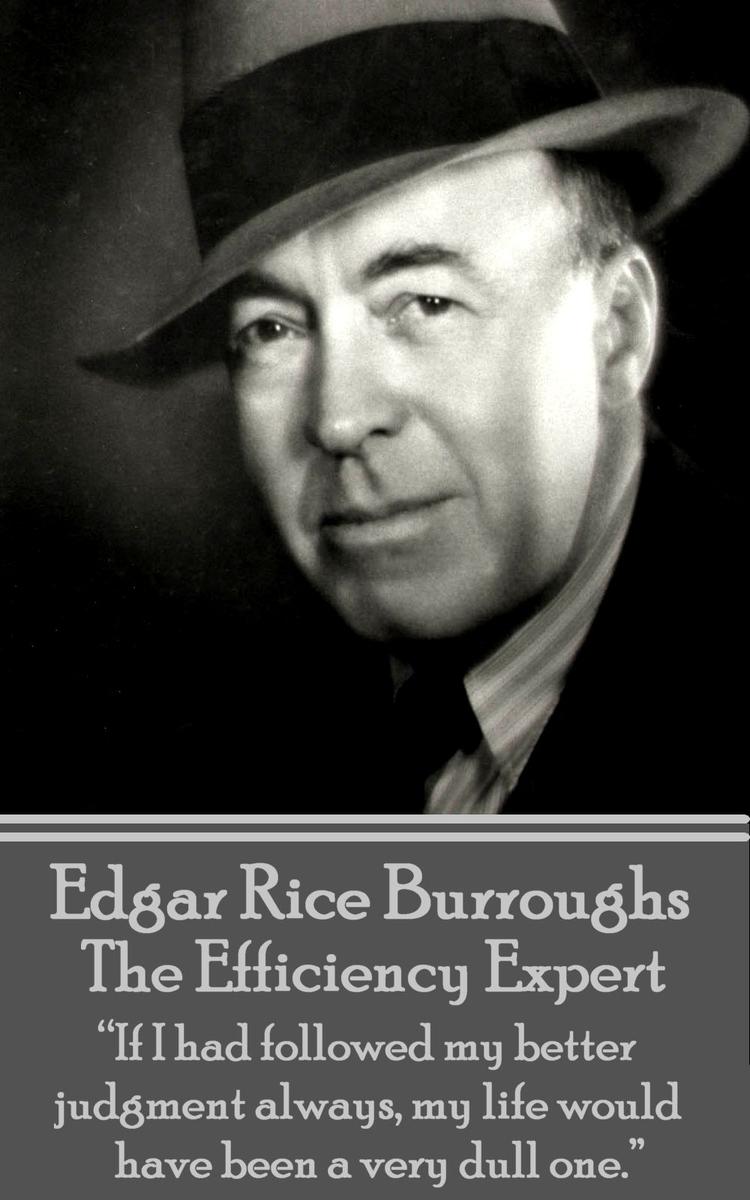
Efficiency Expert - If I had followed my better judgment always
¥35.22
Edgar Rice Burroughs was born on September 1, 1875, in Chicago, Illinois. His early career was unremarkable. After failing to enter West Point he enlisted in the 7th Calvary but was discharged after heart problems were diagnosed. A series of short term jobs gave no indication as to a career path but finally, in 1911, married and with two young children, he turned his hand to writing. He aimed his works squarely at the very popular pulp serial magazines. His first effort 'Under The Moons Of Mars' ran in Munsey's Magazine in 1912 under the pseudonym Norman Bean. With its success he began writing full time. A continuing theme of his work was to develop series so that each character had ample opportunities to return in sequels. John Carter was in the Mars series and there was another on Venus and one on Pellucidar among others. But perhaps the best known is Tarzan. Indeed Burroughs wanted so much to capitalise upon the brand that he introduced a syndicated Tarzan comic strip, movies and merchandise. He purchased a large ranch north of Los Angeles, California, which he named "e;Tarzana."e; The surrounding communities outside the ranch voted in 1927 to adopt the name as their own. By 1932 Burroughs set up his own company to print his own books. Here we publish 'The Efficiency Expert' somewhat different to what the title might suggest in the hands of an ordinary writer but in the hands of Edgar Rice Burroughs the title is just the beginning.....
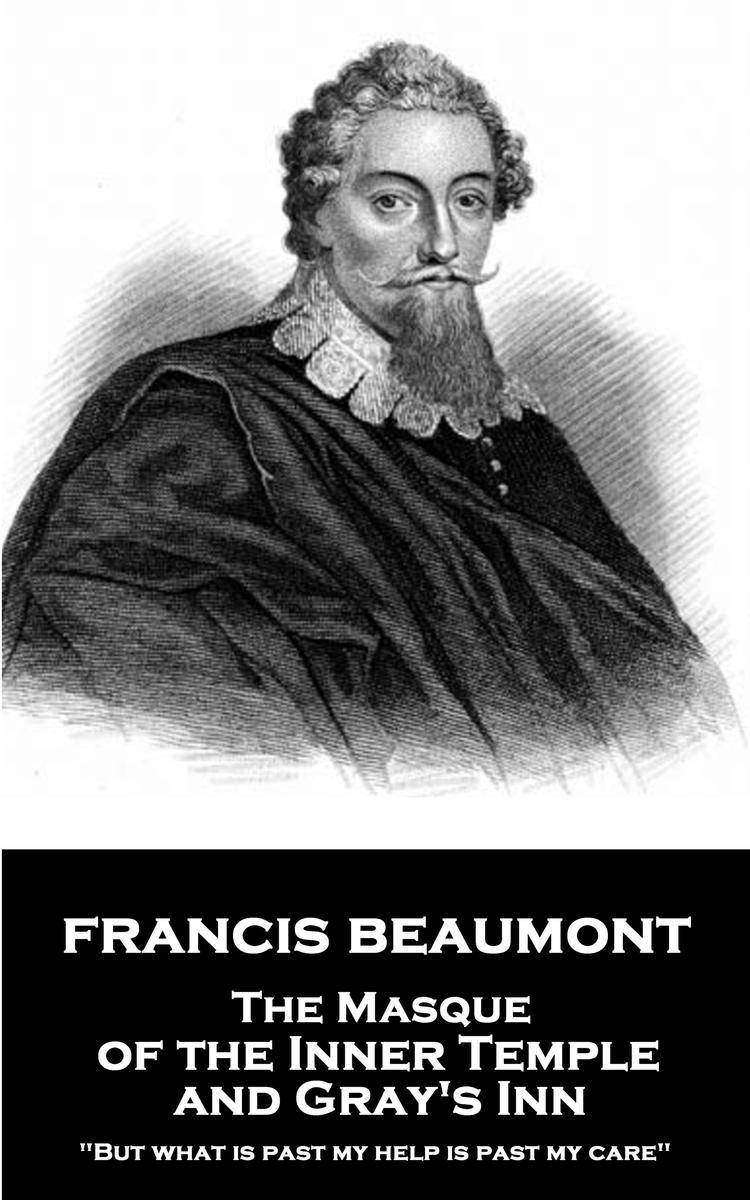
Masque of the Gentlemen of Grays-Inne & the Inner-Temple - But what is past my h
¥15.21
Francis Beaumont was born in 1584 near the small Leicestershire village of Thringstone. Unfortunately precise records of much of his short life do not exist.The first date we can give for his education is at age 13 when he begins at Broadgates Hall (now Pembroke College, Oxford). Sadly, his father died the following year, 1598. Beaumont left university without a degree and entered the Inner Temple in London in 1600. A career choice of Law taken previously by his father.The information to hand is confident that Beaumont's career in law was short-lived. He was quickly attracted to the theatre and soon became first an admirer and then a student of poet and playwright Ben Jonson. Jonson at this time was a cultural behemoth; very talented and a life full of volatility that included frequent brushes with the authorities.Beaumont's first work was Salmacis and Hermaphroditus, it debuted in 1602.By 1605, Beaumont had written commendatory verses to Volpone one of Ben Jonson's masterpieces.His solo playwriting career was limited. Apart from his poetry there were only two; The Knight of the Burning Pestle was first performed by the Children of the Blackfriars company in 1607. The audience however was distinctly unimpressed.The Masque of the Gentlemen of Grays-Inne and the Inner-Temple was written for part of the wedding festivities for the Princess Elizabeth, daughter of King James I and Frederick V, Elector Palatine. It was performed on 20 February 1613 in the Banqueting House at Whitehall Palace.By that point his collaboration with John Fletcher, which was to cover approximately 15 plays together with further works later revised by Philip Massinger, was about to end after his stroke and death later that year.That collaboration is seen as one of the most significant and fruitful of the English theatre.
Electra - Trust dies but mistrust blossoms
¥11.67
The village of Colonus, near Athens, was, in the year 495 BC, the birthplace of Sophocles. Sophocles place in Greek Tragedy is assured. His birth places him between the two other giants of Greek tragedy; schylus and Euripides. He was 30 years younger than schylus, the reigning master of drama and was fifteen years older than Euripides, who would, in turn, usurp Sophocles. Sophocles was a handsome and agile youth and selected, at the age of sixteen, to lead with dance and lyre the chorus which celebrated the triumph of Athens and its Allies over Persia at the battle at Salamis. Sophocles career as a dramatist was marked by a victory in competition with schylus, under exceptional circumstances. At the time the remains of the hero Theseus were being removed by Cimon from the isle of Scyros to Athens and, at the same time, a contest involving the two dramatists was being held. schylus was lauded at the time as the supreme dramatist but Sophocles was popular if inexperienced. The first prize was awarded to Sophocles, greatly to the disgust of the veteran schylus, who taking umbrage, soon afterward departed for Sicily. By all accounts Sophocles would now write and exhibit tragedies and satyric dramas for the next sixty years. The canon of his work varies to between 120 and 180 plays, naturally a number were fillers and not of his highest standard but the prodigious output is extraordinary. In the annual Dionysia, the number of first prizes he won is put at between eighteen and twenty-four, with many more second prizes. On this basis alone schylus and Euripides were left a long way behind. So far from being dulled with age and toil, his powers seem only to have assumed a mellower tone, a more touching pathos, a sweeter and gentler mode of thought and expression. Sophocles was spared the misery of witnessing the final overthrow of his country, dying, at the age or around 90 after a long life full of triumphs and honours, a few months before the defeat of Aegospotami brought the downfall of his beloved Athens. This naval Battle of Aegospotami took place in 405 BC and decisively determined the outcome of the Peloponnesian War. In the battle, a Spartan fleet under Lysander destroyed the Athenian navy. This effectively ended the war, since Athens could not import grain or communicate with its empire without control of the sea. There are only seven dramas of Sophocles that have survived. It can be argued that Sophocles and his works were the high-water mark of Athenian excellence. He is rightly lauded and we can only wonder at the splendours he wrote that are now lost to us.
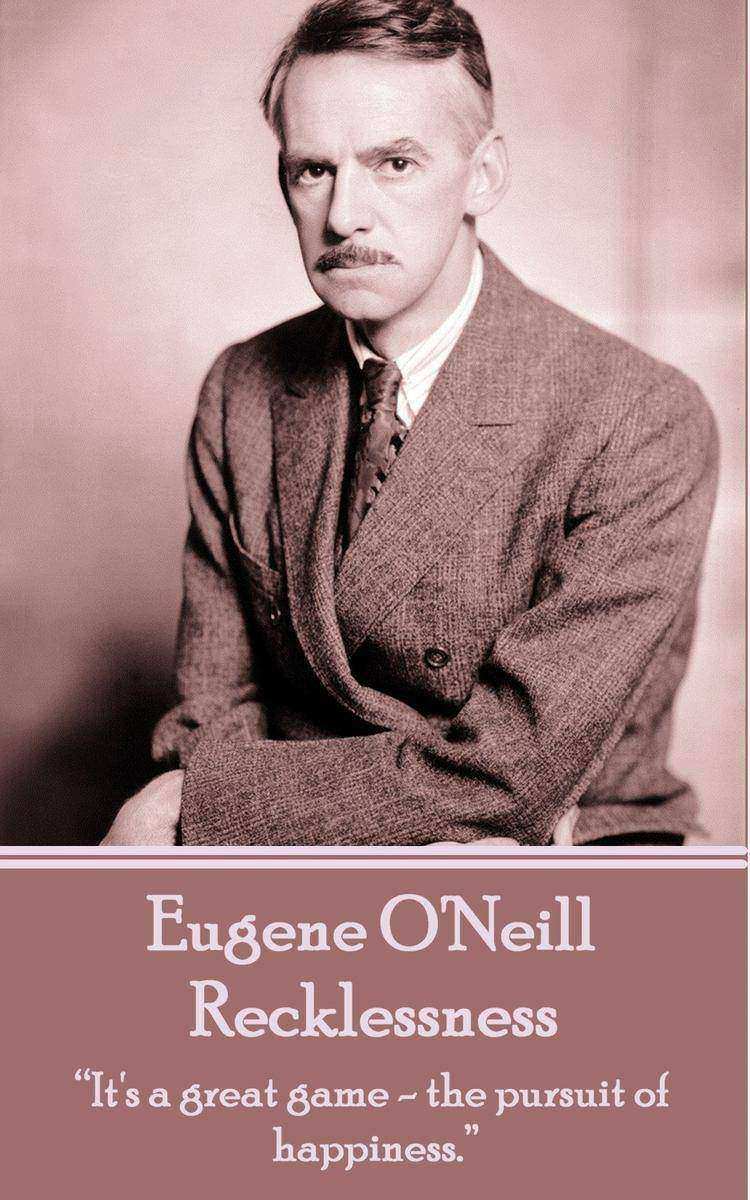
Recklessness - It's a great game - the pursuit of happiness.
¥14.03
Eugene Gladstone O'Neill was born on October 16, 1888 in a hotel bedroom in what is now Times Square, New York. Much of his childhood was spent in the comfort of books at boarding schools whilst his actor father was on the road and his Mother contended with her own demons. He spent only a year at University - Princeton - and various reasons have been given for his departure. However whatever his background and education denied or added to his development it is agreed amongst all that he was a playwright of the first rank and possibly America's greatest. His introduction of realism into American drama was instrumental in its development and paved a path for many talents thereafter. Of course his winning of both the Pulitzer Prize (4 times) and the Nobel Prize are indicative of his status. His more famous and later works do side with the disillusionment and personal tragedy of those on the fringes of society but continue to build upon ideas and structures he incorporated in his early one act plays. Eugene O'Neill suffered from various health problems, mainly depression and alcoholism. In the last decade he also faced a Parkinson's like tremor in his hands which made writing increasingly difficult. But out of such difficulties came plays of the calibre of The Iceman Cometh, Long Day's Journey Into Night, and A Moon for the Misbegotten. Eugene O'Neill died in Room 401 of the Sheraton Hotel on Bay State Road in Boston, on November 27, 1953, at the age of 65. As he was dying, he whispered his last words: "e;I knew it. I knew it. Born in a hotel room and died in a hotel room."e;
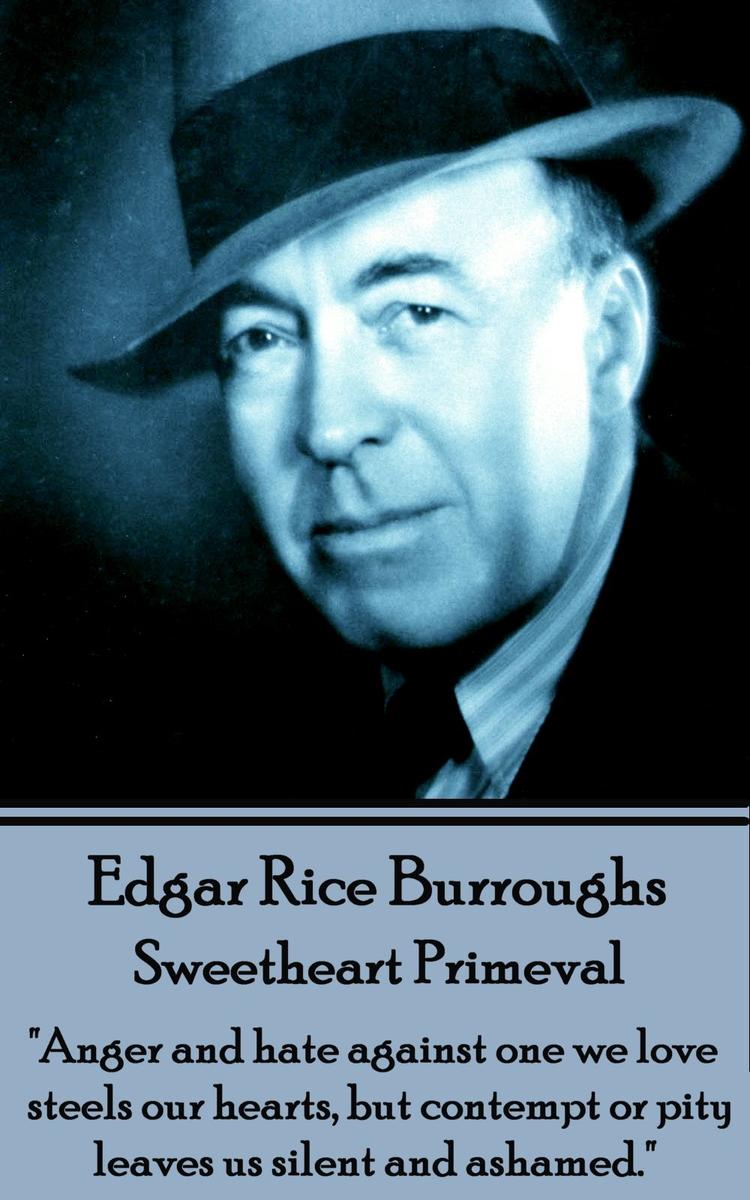
Sweetheart Primeval
¥29.33
Edgar Rice Burroughs was born on September 1, 1875, in Chicago, Illinois. His early career was unremarkable. After failing to enter West Point he enlisted in the 7th Calvary but was discharged after heart problems were diagnosed. A series of short term jobs gave no indication as to a career path but finally, in 1911, married and with two young children, he turned his hand to writing. He aimed his works squarely at the very popular pulp serial magazines. His first effort 'Under The Moons Of Mars' ran in Munsey's Magazine in 1912 under the pseudonym Norman Bean. With its success he began writing full time. A continuing theme of his work was to develop series so that each character had ample opportunities to return in sequels. John Carter was in the Mars series and there was another on Venus and one on Pellucidar among others. But perhaps the best known is Tarzan. Indeed Burroughs wanted so much to capitalise upon the brand that he introduced a syndicated Tarzan comic strip, movies and merchandise. He purchased a large ranch north of Los Angeles, California, which he named "e;Tarzana."e; The surrounding communities outside the ranch voted in 1927 to adopt the name as their own. By 1932 Burroughs set up his own company to print his own books. Here we publish 'Sweetheart Primeval' in the hands of Edgar Rice Burroughs a few steps back in time is just the start of an extraordinary journey.....
Merchant of Venice - But love is blind, and lovers cannot see.
¥11.67
The life of William Shakespeare, arguably the most significant figure in the Western literary canon, is relatively unknown. Shakespeare was born in Stratford-upon-Avon in 1565, possibly on the 23rd April, St. George's Day, and baptised there on 26th April. Little is known of his education and the first firm facts to his life relate to his marriage, aged 18, to Anne Hathaway, who was 26 and from the nearby village of Shottery. Anne gave birth to their first son six months later. Shakespeare's first play, The Comedy of Errors began a procession of real heavyweights that were to emanate from his pen in a career of just over twenty years in which 37 plays were written and his reputation forever established. This early skill was recognised by many and by 1594 the Lord Chamberlain's Men were performing his works. With the advantage of Shakespeare's progressive writing they rapidly became London's leading company of players, affording him more exposure and, following the death of Queen Elizabeth in 1603, a royal patent by the new king, James I, at which point they changed their name to the King's Men. By 1598, and despite efforts to pirate his work, Shakespeare's name was well known and had become a selling point in its own right on title pages. No plays are attributed to Shakespeare after 1613, and the last few plays he wrote before this time were in collaboration with other writers, one of whom is likely to be John Fletcher who succeeded him as the house playwright for the King's Men. William Shakespeare died two months later on April 23rd, 1616, survived by his wife, two daughters and a legacy of writing that none have since yet eclipsed.
Speckled Band - Women are naturally secretive, and they like to do their own sec
¥26.98
If ever a writer needed an introduction Arthur Conan Doyle would not be considered that man. After all, Sherlock Holmes is perhaps the foremost literary detective of any age. Add to this canon his stories of science fiction and his poems, his historical novels, his plays, his political campaigning, his efforts in establishing a Court Of Appeal and there is little room for anything else. Except he was also an exceptional writer of short stories of the horrific and macabre. Something very different from what you might expect. Born in Arthur Conan Doyle was born on 22 May 1859 at 11 Picardy Place, Edinburgh, Scotland. From 1876 - 1881 he studied medicine at the University of Edinburgh following which he was employed as a doctor on the Greenland whaler Hope of Peterhead in 1880 and, after his graduation, as a ship's surgeon on the SS Mayumba during a voyage to the West African coast in 1881. Arriving in Portsmouth in June of that year with less than GBP10 (GBP700 today) to his name, he set up a medical practice at 1 Bush Villas in Elm Grove, Southsea. The practice was initially not very successful. While waiting for patients, Conan Doyle again began writing stories and composed his first novel The Mystery of Cloomber. Although he continued to study and practice medicine his career was now firmly set as a writer. And thereafter great works continued to pour out of him.

Tumble-Down Dick - Let no man be sorry he has done good, because others have don
¥23.45
Henry Fielding was born at Sharpham Park, near Glastonbury, in Somerset on April 22nd 1707. His early years were spent on his parents' farm in Dorset before being educated at Eton.An early romance ended disastrously and with it his removal to London and the beginnings of a glittering literary career; he published his first play, at age 21, in 1728.He was prolific, sometimes writing six plays a year, but he did like to poke fun at the authorities. His plays were thought to be the final straw for the authorities in their attempts to bring in a new law. In 1737 The Theatrical Licensing Act was passed. At a stroke political satire was almost impossible. Fielding was rendered mute. Any playwright who was viewed with suspicion by the Government now found an audience difficult to find and therefore Theatre owners now toed the Government line.Fielding was practical with the circumstances and ironically stopped writing to once again take up his career in the practice of law and became a barrister after studying at Middle Temple. By this time he had married Charlotte Craddock, his first wife, and they would go on to have five children. Charlotte died in 1744 but was immortalised as the heroine in both Tom Jones and Amelia. Fielding was put out by the success of Samuel Richardson's Pamela, or Virtue Rewarded. His reaction was to spur him into writing a novel. In 1741 his first novel was published; the successful Shamela, an anonymous parody of Richardson's novel. Undoubtedly the masterpiece of Fielding's career was the novel Tom Jones, published in 1749. It is a wonderfully and carefully constructed picaresque novel following the convoluted and hilarious tale of how a foundling came into a fortune.Fielding was a consistent anti-Jacobite and a keen supporter of the Church of England. This led to him now being richly rewarded with the position of London's Chief Magistrate. Fielding continued to write and his career both literary and professional continued to climb. In 1749 he joined with his younger half-brother John, to help found what was the nascent forerunner to a London police force, the Bow Street Runners. Fielding's ardent commitment to the cause of justice in the 1750s unfortunately coincided with a rapid deterioration in his health. Such was his decline that in the summer of 1754 he travelled, with Mary and his daughter, to Portugal in search of a cure. Gout, asthma, dropsy and other afflictions forced him to use crutches. His health continued to fail alarmingly.Henry Fielding died in Lisbon two months later on October 8th, 1754.
Mordred - 'Our Order knows no greater name. Did I not match it with a charge as
¥23.45
Sir Henry John Newbolt, CH was born on 6th June 1862 in Bilston, Wolverhampton, the son of the vicar of St Mary's Church, the Rev. Henry Francis Newbolt, and his second wife, Emily nee Stubbs. After his father's death, in 1866, the family moved to Walsall.There Newbolt attended Queen Mary's Grammar School, Walsall, and Caistor Grammar School, from where he gained a scholarship to Clifton College, where he was head of the school and editor of the school magazine. Upon graduation from Corpus Christi College, Oxford, he was called to the bar at Lincoln's Inn in 1887 and practised until 1899.He married Margaret Edwina nee Duckworth, of the prominent publishing family, and they had two children: Margaret Cecilia (1890) and Arthur Francis (1893).Behind the steady Edwardian facade lay intimate complications; a menage a trois. His wife had a long-running affair with her cousin, Laura Isabella 'Ella' Coltman to whom Newbolt had dedicated one of his own poems and was also involved with. Newbolt divided his time between the two women so there was no jealousy. Although it could equally be argued they divided their time.His first book was a novel, 'Taken from the Enemy' (1892), and this was followed in 1895 by a play, the tragedy, 'Mordred'. But it was with 'Admirals All' (1897), that his reputation was set. There followed further volumes of uplifting verse, including 'The Island Race' (1898), 'The Sailing of the Long-ships' (1902), 'Songs of the Sea' (1904) and 'Songs of the Fleet' (1910). Among the most stirring and patriotically heroic of his poems are the often anthologised 'Vitai Lampada' and 'Drake's Drum'.As well as writing he was also, from October 1900 to September 1904, the editor of the Monthly Review. In 1914, Newbolt published Aladore, a fantasy novel about a bored, dutiful knight who abandons his estate to pursue his heart's desire and woo a half-fae enchantress. As the First World War engulfed Europe, Newbolt, and another 20 British writers, were absorbed into the War Propaganda Bureau. Their talents were put to use promoting Britain's interests and to maintain public opinion in favour of the war.He was knighted in 1915 and became the Controller of Telecommunications at the Foreign Office. Among his war poems was 'The War Films', printed in The Times on 14th October 1916, in reference to the shock cinema audiences felt on seeing footage of the Battle of the Somme.Newbolt was knighted in 1915 and was appointed Companion of Honour in 1922.In 1921 he authored the government Report 'The Teaching of English in England' which helped to establish the foundations for modern English Studies and professionalised the teaching of English Literature. With it he established a canon, and was unequivocal that English must become the linguistic and literary standard throughout the Empire.Newbolt was also part of an inner advisory circle of Asquith's government and also advised on policy in Ireland.Sir Henry John Newbolt, CH died at his home in Campden Hill, Kensington, London, on 19th April 1938, at the age of 75. He is buried in the churchyard of St Mary's church on an island in the lake on the Orchardleigh Estate of the Duckworth family in Somerset.
Wounds of Civil War
¥21.09
As can be easily understood presenting an exact chronicle of the facts in the life of a 16th Century playwright is often difficult. Thomas Lodge is no exception. Thomas Lodge, born around 1558 in west Ham, was the second son of Sir Thomas Lodge, the Lord Mayor of London, and his third wife Anne. Lodge was educated at Merchant Taylors' School and thence to Trinity College, Oxford; taking his BA in 1577 and his MA in 1581. Lodge, disregarded his parents career wishes in order to take up literature. When the penitent Stephen Gosson published his Schoole of Abuse in 1579, Lodge responded with Defence of Poetry, Music and Stage Plays (1579 or 1580). His pamphlet was banned, but appears to have been circulated privately. Already in 1580 Lodge had published a volume of poems entitled Scillaes Metamorphosis, Enterlaced with the Unfortunate Love of Glaucus, also more briefly known as Glaucus and Scilla. Lodge seems to have married his first wife Joan in or shortly before 1583, when, "e;impressed with the uncertainty of human life"e;, he made a will. That his family viewed his conduct at the time with disdain may be noted by the absence of his name from his father's will in 1583. The marriage of Lodge and Joan produced a daughter, Mary. However, without an income from his family Lodge would have to provide it by other means. The debate in pamphlets between Lodge and Gosson continued with Gosson's Playes Confuted in Five Actions; and Lodge retorting with his Alarum Against Usurers (1585)-a "e;tract for the times"e;. That same year, 1585, he produced his first tale written in prose and verse, The Delectable History of Forbonius and Prisceria. Lodge appears to have been at sea on a number of long voyages. Usually these are described as 'freebooting voyages', an interchangeable term also used for piracy and plunder. Many nations endorsed these tactics and it seems fairly safe to suggest that these voyages were a source of revenue which would keep Joan and Mary with their heads above water. These long voyages also provided something else that Lodge would have been keen to gather and usefully use; time. During the expedition to Terceira and the Canaries (around 1586), to set aside the tedium of his voyage, Lodge composed his prose tale of Rosalynde, Euphues Golden Legacie, which, printed in 1590, would later be used by Shakespeare as the basis for As You Like It. Before starting on his next voyage, this time to South America, Lodge published a historical romance, The History of Robert, Second Duke of Normandy, surnamed Robert the Devil; and he left behind him for publication Catharos Diogenes in his Singularity, a discourse on the immorality of Athens (London). Both appeared in 1591. By now Lodge was on a voyage with Thomas Cavendish to Brazil and the Straits of Magellan and would only be able to return home in 1593. Whilst he was travelling another romance in the manner of Lyly, Euphues Shadow, the Battaile of the Sences, appeared in 1592. At either end of this voyage Lodge appears to have worked on some dramas, most notably with Robert Greene. It is thought that in 1590, together with Greene, he wrote A Looking Glass for London and England (published 1594). He had already written The Wounds of Civil War (produced perhaps as early as 1587, and published in 1594, and put on as a play reading at the Globe Theatre on 7 February 1606), a good second-rate piece in the half-chronicle fashion of its age. His second historical romance, the Life and Death of William Longbeard (1593), was more successful than the first. Lodge also brought back with him from the new world voyage A Margarite of America (published 1596), a romance between a Peruvian prince and a daughter of the king of Muscovy interspersed with many lyrics. The composition of Phillis, a volume and an early sonnet cycle sequence (an increasingly popular format in Elizabethan times), was published with the narrative poem, The Complaynte of Elsired, in 1593. A Fig for Momus was published in 1595 and gained him the accolade of being the earliest English satirist. This work contains eclogues addressed to Daniel and others as well as an epistle addressed to Michael Drayton. In the latter part of his life-possibly about 1596, when he published his Wits Miserie and the World's Madnesse, which is dated from Low Leyton in Essex, and the religious tract Prosopopeia (if, as seems probable, it was his), in which he repents of his "e;lewd lines"e; of other days-he became a Catholic and engaged in the practice of medicine, for which Wood says he qualified himself by a degree at Avignon, in France, in 1600. Two years later he received the degree of M.D. from Oxford University. Early in 1606 he seems to have left England, to escape the persecution then directed against the Catholics; and a letter from him dated 1610 thanks the English ambassador in Paris for enabling him to return in safety. At some point in his later life Lodge appears to have married again. T


