


 购物车
购物车 个人中心
个人中心
Earl of Essex - 'In hour malignant, to o'erturn the state''
¥14.03
Henry Jones was born at Beaulieu, near Drogheda, County Louth, Ireland in 1721. His working life began when he was apprenticed to a bricklayer. Jones, however, was keen to better himself and studied hard in his private time. He fashioned some complimentary verses, addressed to the corporation of Drogheda and together with some lines 'On Mr. Pope's Death', managed to attract the attention of Lord-chief-justice Singleton, who lived at Beaulieu.In 1745 he obtained employment at the parliament house at Dublin. Jones, used the position to promote his literary talents and celebrated the arrival of Lord Chesterfield as lord-lieutenant of Ireland in a poem that was then presented to Chesterfield by Singleton. Chesterfield asked Jones to accompany him on his return to London in 1748. There, he and his friends helped Jones to publish, by subscription, 'Poems on Several Occasions' in 1749, which delivered a handsome profit for the young poet. Jones is though more noted as a dramatist and that, primarily, is due to his tragedy, 'The Earl of Essex' which he completed in 1752. Chesterfield introduced both the play and Jones to Colley Cibber, the Poet Laureate, who then introduced Jones to the manager of Covent Garden Theatre. Cibber would later attempt to secure the laureateship for Jones after his own death.'The Earl of Essex', after being revised by Chesterfield and Cibber, was premiered at Covent Garden on 21st Feb. 1753, and played for seventeen sold-out nights. It was a triumph, and was equally well received in Dublin and then later in the provinces. It brought Jones over GBP500, a large sum even by today's standards. The play was printed soon after its production, and eventually sold through four editions.The success, unfortunately, was to be the ruin of Jones. His drunken habits, indolence, raw manners, and harshly arrogant temper appalled most of his patrons who soon withdrew their support. However, he seemed adept at keeping on good terms with Chesterfield for some years longer, but at length even he gave up on the relationship when Jones borrowed money from his servant. Jones did continue to write and had made progress on a tragedy entitled 'Harold,' and, on that thin security, managed to raise money as an advance from booksellers. He was rather more successful in his revelries with the acting profession. Jones continued to be on friendly terms with many of the leading actors although in his often drunk state he would harangue the more minor actors as 'parrots', but he repaid them with puffs and panegyrics. His charm and ease with a few lines were valuable commodities.Whenever he was an inmate of sponging-houses he contrived to flatter any bailiff's daughter or wife with verses on their beauty or talents, and, in the process, secured himself more comfortable quarters than he perhaps deserved. Henry Jones died in the parish workhouse in April 1770.After his death, Reddish, the actor of Drury Lane, acquired Jones's manuscripts, which included 'Harold' and three acts of an unfinished tragedy, 'The Cave of Idra.' This was completed by Paul Hiffernan, and re-titled 'The Heroine of the Cave,' was produced for Reddish's benefit on 25th March 1774.
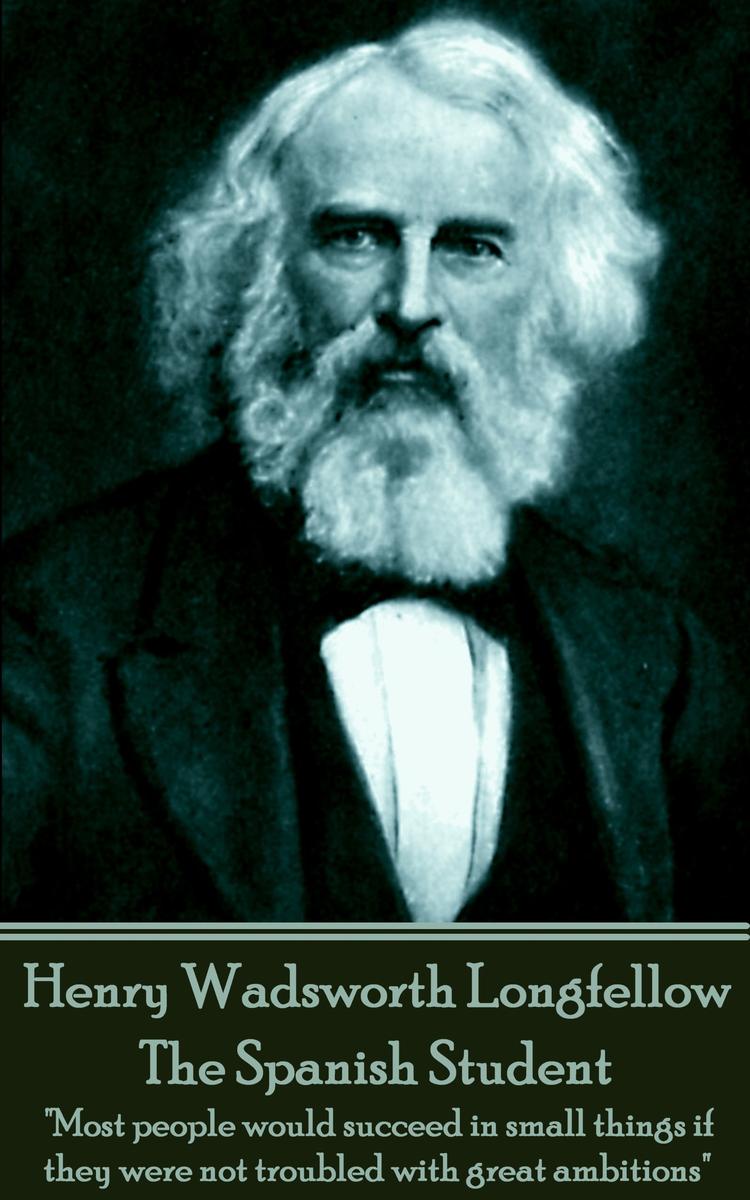
Spanish Student
¥17.56
Henry Wadsworth Longfellow was born on February 27th, 1807 in Portland, Maine. As a young boy, it was obvious that he was very studious and he quickly became fluent in Latin. He published his first poem, "e;The Battle of Lovell's Pond"e;, in the Portland Gazette on November 17th, 1820. He was already thinking of a career in literature and, in his senior year, wrote to his father: "e;I will not disguise it in the least... the fact is, I most eagerly aspire after future eminence in literature, my whole soul burns most ardently after it, and every earthly thought centers in it...."e; After graduation travels in Europe occupied the next three years and he seemed to easily absorb any language he set himself to learn. On September 14th, 1831, Longfellow married Mary Storer Potter. They settled in Brunswick. His first published book was in 1833, a translation of poems by the Spanish poet Jorge Manrique. He also published a travel book, Outre-Mer: A Pilgrimage Beyond the Sea. During a trip to Europe Mary became pregnant. Sadly, in October 1835, she miscarried at some six months. After weeks of illness she died, at the age of 22 on November 29th, 1835. Longfellow wrote "e;One thought occupies me night and day... She is dead - She is dead! All day I am weary and sad"e;. In late 1839, Longfellow published Hyperion, a book in prose inspired by his trips abroad. Ballads and Other Poems was published in 1841 and included "e;The Village Blacksmith"e; and "e;The Wreck of the Hesperus"e;. His reputation as a poet, and a commercial one at that, was set. On May 10th, 1843, after seven years in pursuit of a chance for new love, Longfellow received word from Fanny Appleton that she agreed to marry him. On November 1st, 1847, the epic poem Evangeline was published. In 1854, Longfellow retired from Harvard, to devote himself entirely to writing. The Song of Haiwatha, perhaps his best known and enjoyed work was published in 1855. On July 10th, 1861, after suffering horrific burns the previous day. In his attempts to save her Longfellow had also been badly burned and was unable to attend her funeral. He spent several years translating Dante Alighieri's Divine Comedy. It was published in 1867. Longfellow was also part of a group who became known as The Fireside Poets which also included William Cullen Bryant, John Greenleaf Whittier, James Russell Lowell, and Oliver Wendell Holmes Snr. Longfellow was the most popular poet of his day. As a friend once wrote to him, "e;no other poet was so fully recognized in his lifetime"e;. Some of his works including "e;Paul Revere's Ride"e; and "e;The Song of Haiwatha"e; may have rewritten the facts but became essential parts of the American psyche and culture. Henry Wadsworth Longfellow died, surrounded by family, on Friday, March 24th, 1882. He had been suffering from peritonitis.
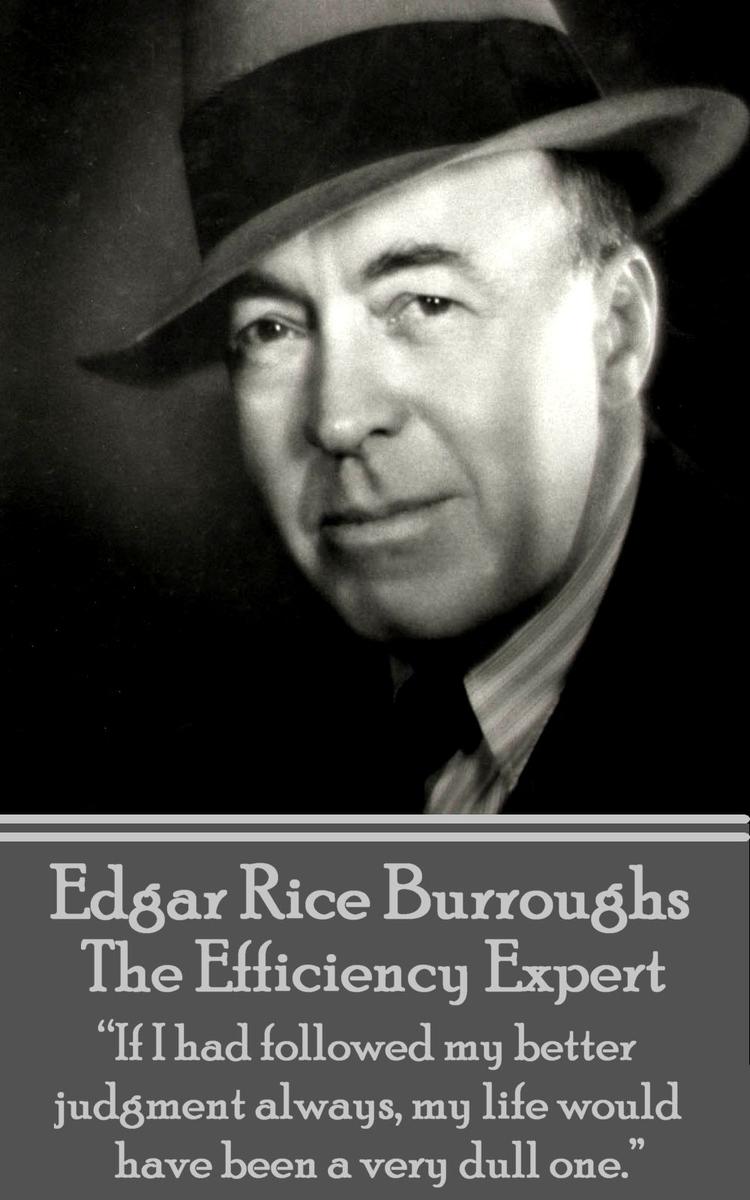
Efficiency Expert - If I had followed my better judgment always
¥35.22
Edgar Rice Burroughs was born on September 1, 1875, in Chicago, Illinois. His early career was unremarkable. After failing to enter West Point he enlisted in the 7th Calvary but was discharged after heart problems were diagnosed. A series of short term jobs gave no indication as to a career path but finally, in 1911, married and with two young children, he turned his hand to writing. He aimed his works squarely at the very popular pulp serial magazines. His first effort 'Under The Moons Of Mars' ran in Munsey's Magazine in 1912 under the pseudonym Norman Bean. With its success he began writing full time. A continuing theme of his work was to develop series so that each character had ample opportunities to return in sequels. John Carter was in the Mars series and there was another on Venus and one on Pellucidar among others. But perhaps the best known is Tarzan. Indeed Burroughs wanted so much to capitalise upon the brand that he introduced a syndicated Tarzan comic strip, movies and merchandise. He purchased a large ranch north of Los Angeles, California, which he named "e;Tarzana."e; The surrounding communities outside the ranch voted in 1927 to adopt the name as their own. By 1932 Burroughs set up his own company to print his own books. Here we publish 'The Efficiency Expert' somewhat different to what the title might suggest in the hands of an ordinary writer but in the hands of Edgar Rice Burroughs the title is just the beginning.....

Girl From Hollywood
¥35.22
Edgar Rice Burroughs was born on September 1, 1875, in Chicago, Illinois. His early career was unremarkable. After failing to enter West Point he enlisted in the 7th Calvary but was discharged after heart problems were diagnosed. A series of short term jobs gave no indication as to a career path but finally, in 1911, married and with two young children, he turned his hand to writing. He aimed his works squarely at the very popular pulp serial magazines. His first effort 'Under The Moons Of Mars' ran in Munsey's Magazine in 1912 under the pseudonym Norman Bean. With its success he began writing full time. A continuing theme of his work was to develop series so that each character had ample opportunities to return in sequels. John Carter was in the Mars series and there was another on Venus and one on Pellucidar among others. But perhaps the best known is Tarzan. Indeed Burroughs wanted so much to capitalise upon the brand that he introduced a syndicated Tarzan comic strip, movies and merchandise. He purchased a large ranch north of Los Angeles, California, which he named "e;Tarzana."e; The surrounding communities outside the ranch voted in 1927 to adopt the name as their own. By 1932 Burroughs set up his own company to print his own books. Here we publish 'The Girl From Hollywood' a gentle title that in the hands of an ordinary writer might be just so but in the hands of Edgar Rice Burroughs the title is just the beginning.....
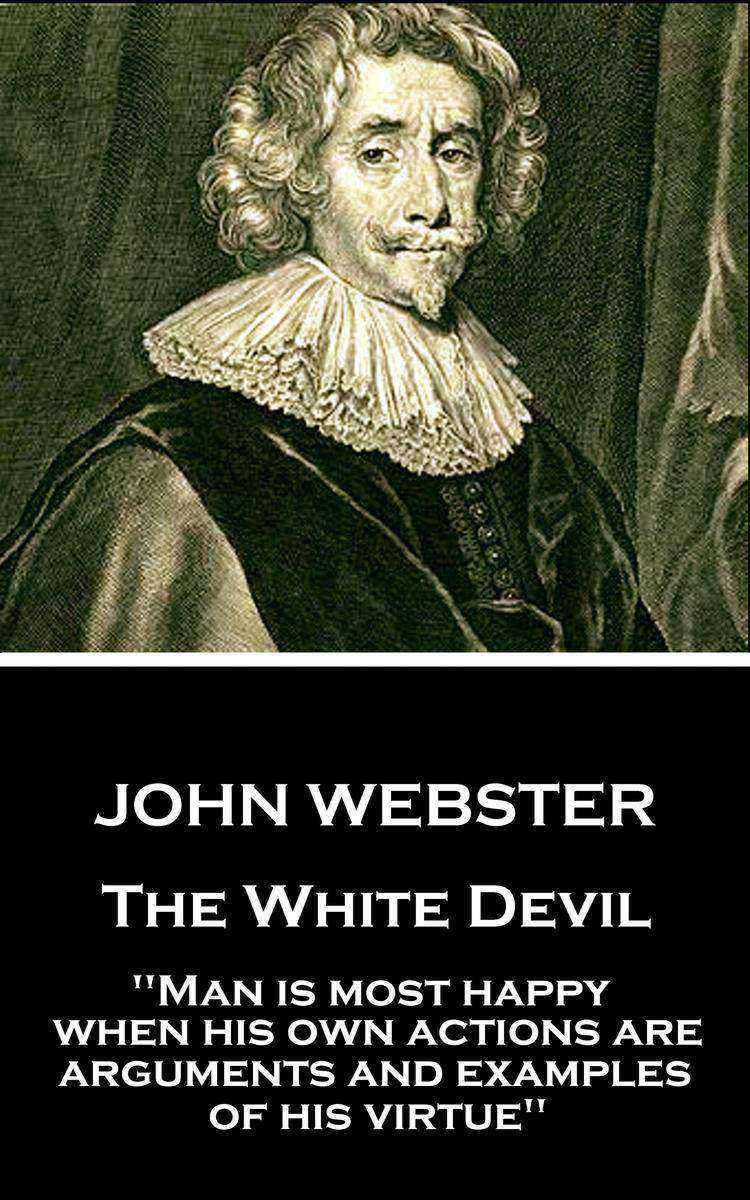
White Devil - Man is most happy, when his own actions are arguments and examples
¥25.80
John Webster is known primarily for his two Jacobean tragedies, The Duchess of Malfi and The White Devil. Much of the detail and chronology of his life that led to these two pivotal works is, however, unknown. His father, a carriage maker also named John Webster, married a blacksmith's daughter, Elizabeth Coates, on November 4th, 1577, and it is likely that Webster was born within a year or two in or near London. The family lived in St. Sepulchre's parish. Both his father and his uncle, Edward Webster, were Freemen of the Merchant Taylors' Company and Webster attended Merchant Taylors' School in Suffolk Lane, London. Some accounts say he began to study law but nothing is certain although there are some legal aspects to his later works to suggest this may have been so. By 1602, Webster was employed working as part of various teams of playwrights on history plays, though unfortunately most were never printed and therefore do not survive. These include a tragedy Caesar's Fall (written with Michael Drayton, Thomas Dekker, Thomas Middleton and Anthony Munday), and a collaboration with Thomas Dekker; Christmas Comes but Once a Year (1602). This factory line assembly of plays may seem rather odd to us today but plays then ran for much shorter durations and consequently a steady supply had to be assured. Webster's relationship with Dekker seems to have been a good one. Together they wrote Sir Thomas Wyatt, printed in 1607, although it is thought first performed in 1602 and two city comedies, Westward Ho! in 1604 and Northward Ho! in 1605. It seems Webster also adapted, in 1604, John Marston's The Malcontent for staging by the King's Men. On March 18th, 1606 Webster married the 17-year-old Sara Peniall at St Mary's Church, Islington. Sara was 7 months pregnant and marrying during Lent required the issuing of a special permit, hence the certainty of the date. Their first child, John, was baptised at the parish of St Dunstan-in-the-West on March 8th, 1606. Records show that on the death of a neighbour, who died in 1617, several bequests were made to the Webster family and it is therefore thought that other children were born to the couple. Despite his ability to write comedy, and to collaborate with others, Webster is remembered best for his sole authorship on two brooding English tragedies based on Italian sources. The White Devil, retells the intrigues involving Vittoria Accoramboni, an Italian woman assassinated at the age of 28. It was performed at the open-air Red Bull Theatre in 1612 but was unsuccessful, perhaps being too high brow for a working-class audience. In 1614 The Duchess of Malfi was first performed by the King's Men, most probably in the indoor Blackfriars Theatre and to a more high-brow audience. It proved to be more successful. The play Guise, based on French history, was also written but him but no text has survived. Webster wrote one more play on his own: The Devil's Law Case (c. 1617-1619), a tragicomedy. He continued to write thereafter but always in collaboration and usually city comedies; Anything for a Quiet Life (c. 1621), with Thomas Middleton, and A Cure for a Cuckold (c. 1624), with William Rowley. In 1624, he also co-wrote a topical play about a recent scandal, Keep the Widow Waking (with John Ford, Rowley and Dekker). The play itself is lost, although its plot is known from a court case. There is also some certainty that he contributed to the tragicomedy The Fair Maid of the Inn with John Fletcher, John Ford, and Phillip Massinger. His Appius and Virginia, was probably written with Thomas Heywood, and is of uncertain date. It is believed, mainly from Thomas Heywood's Hierarchie of the Blessed Angels (licensed 7 November 1634) that speaks of him in the past tense that John Webster had died at some point in that year of 1634.
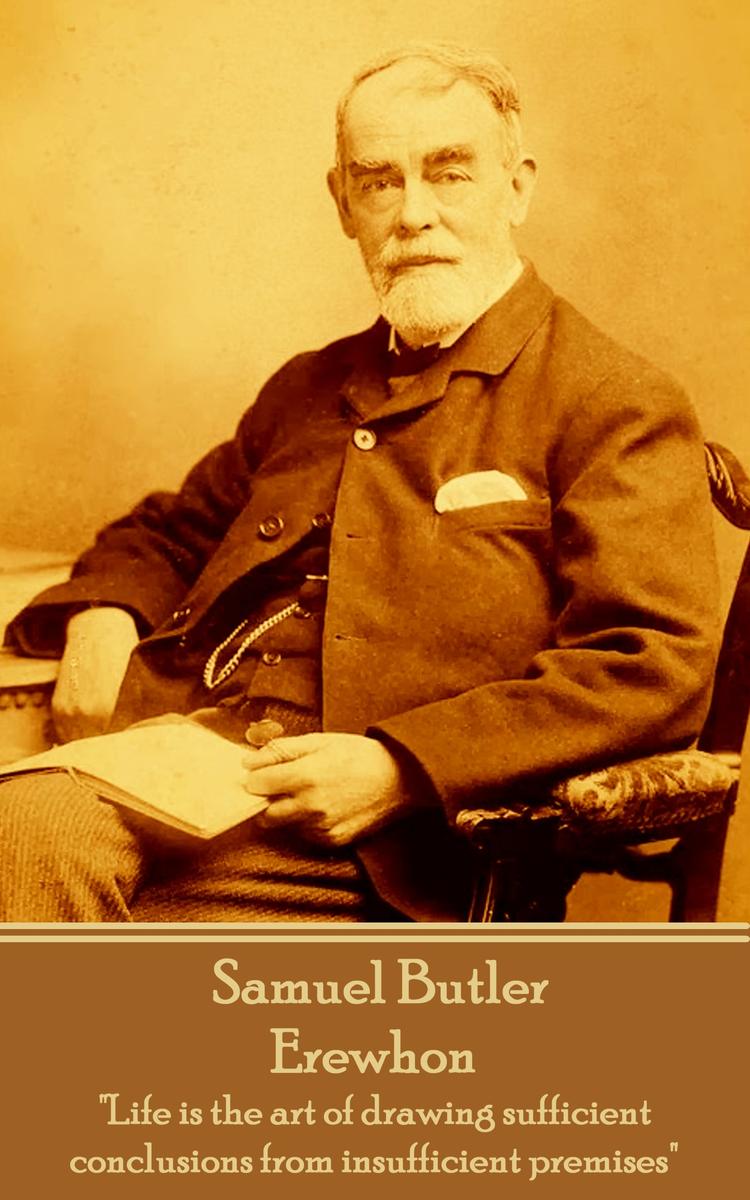
Erewhon - Life is the art of drawing sufficient conclusions from insufficient pr
¥38.75
Samuel Butler was born on 4th December 1835 at the village rectory in Langar, Nottinghamshire.His relationship with his parents, especially his father, was largely antagonistic. His education began at home and included frequent beatings, as was all too common at the time.Under his parents' influence, he was set to follow his father into the priesthood. He was schooled at Shrewsbury and then St John's College, Cambridge, where he obtained a first in Classics in 1858.After Cambridge he went to live in a low-income parish in London 1858-59 as preparation for his ordination into the Anglican clergy; there he discovered that baptism made no apparent difference to the morals and behaviour of his new peers. He began to question his faith. Correspondence with his father about the issue failed to set his mind at peace, inciting instead his father's wrath.As a result, the young Butler emigrated in September 1859 to New Zealand. He was determined to change his life.He wrote of his arrival and life as a sheep farmer on Mesopotamia Station in 'A First Year in Canterbury Settlement' (1863). After a few years he sold his farm and made a handsome profit. But the chief achievement of these years were the drafts and source material for much of his masterpiece 'Erewhon'.Butler returned to England in 1864, settling in rooms in Clifford's Inn, near Fleet Street, where he would live for the rest of his life.In 1872, he published his Utopian novel 'Erewhon' which made him a well-known figure.He wrote a number of other books, including a moderately successful sequel, 'Erewhon Revisited' before his masterpiece and semi-autobiographical novel 'The Way of All Flesh' appeared after his death. Butler thought its tone of satirical attack on Victorian morality too contentious to publish during his life time and thereby shied away from further potential problems.Samuel Butler died aged 66 on 18th June 1902 at a nursing home in St John's Wood Road, London. He was cremated at Woking Crematorium, and accounts say his ashes were either dispersed or buried in an unmarked grave.
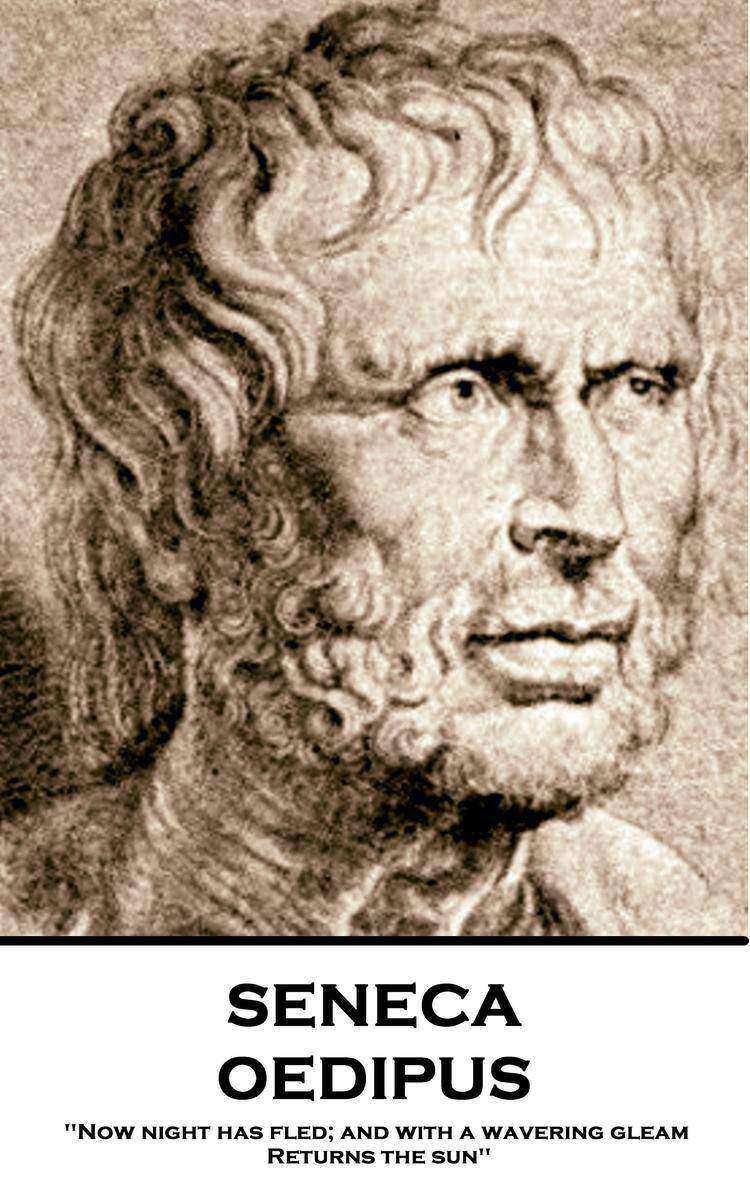
Oedipus - 'Now night has fled; and with a wavering gleam Returns the sun''
¥14.03
Lucius Annaeus Seneca, more readily known as Seneca the Younger, was born at Cordoba in the Roman province of Baetica in Hispania in approx 4 BC.Seneca attests that he was taken to Rome at a young age and educated in literature, grammar, and rhetoric; the standard education of high-born Romans. He also received philosophical training.Much of his life is not well documented but accounts do lean towards a pattern of ill-health at times. His breathing difficulties are thought to be the result of asthma and during his mid-twenties he contracted tuberculosis.He was sent to Egypt to live with his aunt, whose husband, Gaius Galerius, was Prefect of Egypt. In 31 AD he returned to Rome with her and, with her influence, was elected quaestor and with it the right to sit in the Roman Senate.Seneca's early career as a senator was successful and he was fulsomely praised for his oratory. A story related that emperor Caligula was so offended by Seneca's oratorical success that he ordered him to commit suicide. Seneca's ill-health prevented that.In 41 AD, Claudius became emperor, and Seneca was promptly cited by the new empress Messalina of adultery with Julia Livilla, the sister of Caligula and Agrippina.After trial the Senate pronounced a death sentence, which Claudius then commuted to exile. Seneca was to now spend the next eight years in Corsica. From this period of exile survive two of his earliest works-both consolations.In 49 AD Agrippina married her uncle Claudius, and through her Seneca was recalled to Rome. Agrippina appointed him, as tutor to her son, the future emperor Nero.Nero's early rule, during which he followed the advice of Seneca and Burrus, was competent. However, within a few years both Seneca and Burrus had lost their influence.In 58 AD the senator Publius Suillius Rufus made a series of public attacks on him saying that, Seneca had acquired a personal fortune of three hundred million sestertii. In response, Seneca brought a series of prosecutions for corruption against him. Suillius was dispatched into exile.After Burrus's death in 62 AD, Seneca's influence further declined. He adopted a quiet lifestyle at his country estates, concentrating on his studies and seldom visiting Rome. It was during these final few years that he composed two of his greatest works: 'Naturales Quaestiones'-an encyclopedia of the natural world; and his 'Letters to Lucilius'-which document his philosophical thoughts.In AD 65, Seneca was caught up in the aftermath of the Pisonian plot to kill Nero. Nero ordered him to kill himself. Seneca followed tradition by opening several veins in order to bleed to death. It was a sad conclusion for a man who has been called the first great Western thinker on the complex nature and role of gratitude in human relationships.
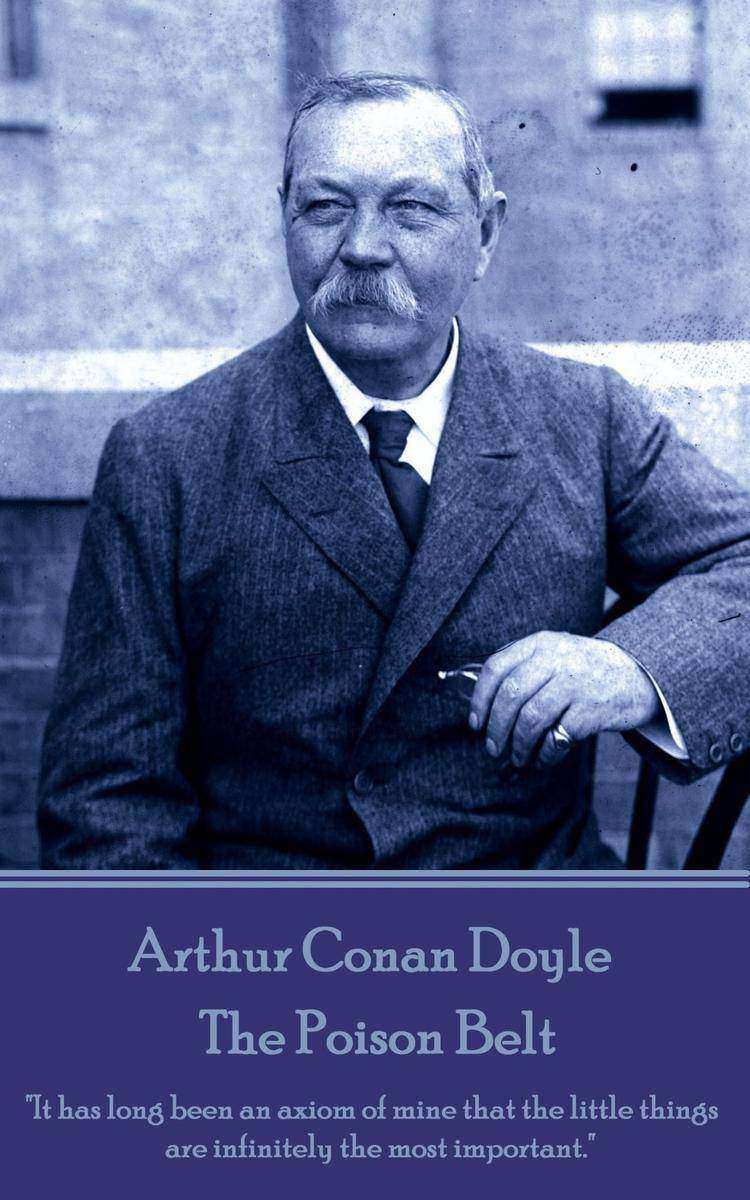
Arthur Conan Doyle
¥21.09
Arthur Conan Doyle's The Poison Belt is another work of fiction by the author of the celebrated masterpiece The Adventures of Sherlock Holmes. The novella centers around apocalyptic disasters that threaten to end human existence on Earth. Professor Challenger, an English scientist who is interested in preserving nature and human life, anticipates the Earth's contact with a poison belt of ether. The dangerous gas is believed to have the power to suffocate all living beings to death. Professor Challenger invites his closest companions, Malone, Roxton and Summerlee, to join him and his wife in his house. They are asked to bring oxygen tanks with them to find that Challenger has prepared a sealed room to protect their lives. Later, from their little shelter, Challenger's team watch the destruction of the outside world and the dying of almost everything. When they finally run out of oxygen, they are pushed to get out of the sealed room. Yet, to their surprise, they do not die. The Earth has passed through the poison belt and humanity has survived.
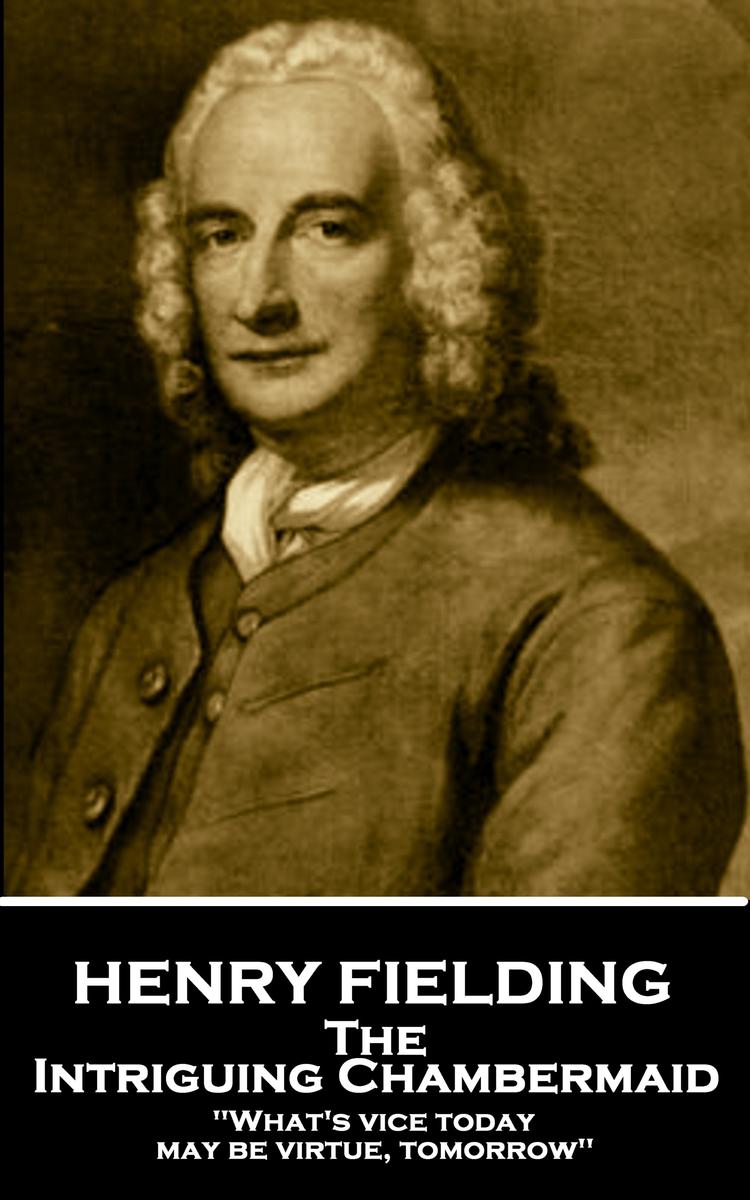
Intriguing Chambermaid - What's vice today may be virtue, tomorrow
¥14.03
Henry Fielding was born at Sharpham Park, near Glastonbury, in Somerset on April 22nd 1707. His early years were spent on his parents' farm in Dorset before being educated at Eton.An early romance ended disastrously and with it his removal to London and the beginnings of a glittering literary career; he published his first play, at age 21, in 1728.He was prolific, sometimes writing six plays a year, but he did like to poke fun at the authorities. His plays were thought to be the final straw for the authorities in their attempts to bring in a new law. In 1737 The Theatrical Licensing Act was passed. At a stroke political satire was almost impossible. Fielding was rendered mute. Any playwright who was viewed with suspicion by the Government now found an audience difficult to find and therefore Theatre owners now toed the Government line.Fielding was practical with the circumstances and ironically stopped writing to once again take up his career in the practice of law and became a barrister after studying at Middle Temple. By this time he had married Charlotte Craddock, his first wife, and they would go on to have five children. Charlotte died in 1744 but was immortalised as the heroine in both Tom Jones and Amelia.Fielding was put out by the success of Samuel Richardson's Pamela, or Virtue Rewarded. His reaction was to spur him into writing a novel. In 1741 his first novel was published; the successful Shamela, an anonymous parody of Richardson's novel.Undoubtedly the masterpiece of Fielding's career was the novel Tom Jones, published in 1749. It is a wonderfully and carefully constructed picaresque novel following the convoluted and hilarious tale of how a foundling came into a fortune.Fielding was a consistent anti-Jacobite and a keen supporter of the Church of England. This led to him now being richly rewarded with the position of London's Chief Magistrate. Fielding continued to write and his career both literary and professional continued to climb.In 1749 he joined with his younger half-brother John, to help found what was the nascent forerunner to a London police force, the Bow Street Runners. Fielding's ardent commitment to the cause of justice in the 1750s unfortunately coincided with a rapid deterioration in his health. Such was his decline that in the summer of 1754 he travelled, with Mary and his daughter, to Portugal in search of a cure. Gout, asthma, dropsy and other afflictions forced him to use crutches. His health continued to fail alarmingly.Henry Fielding died in Lisbon two months later on October 8th, 1754.
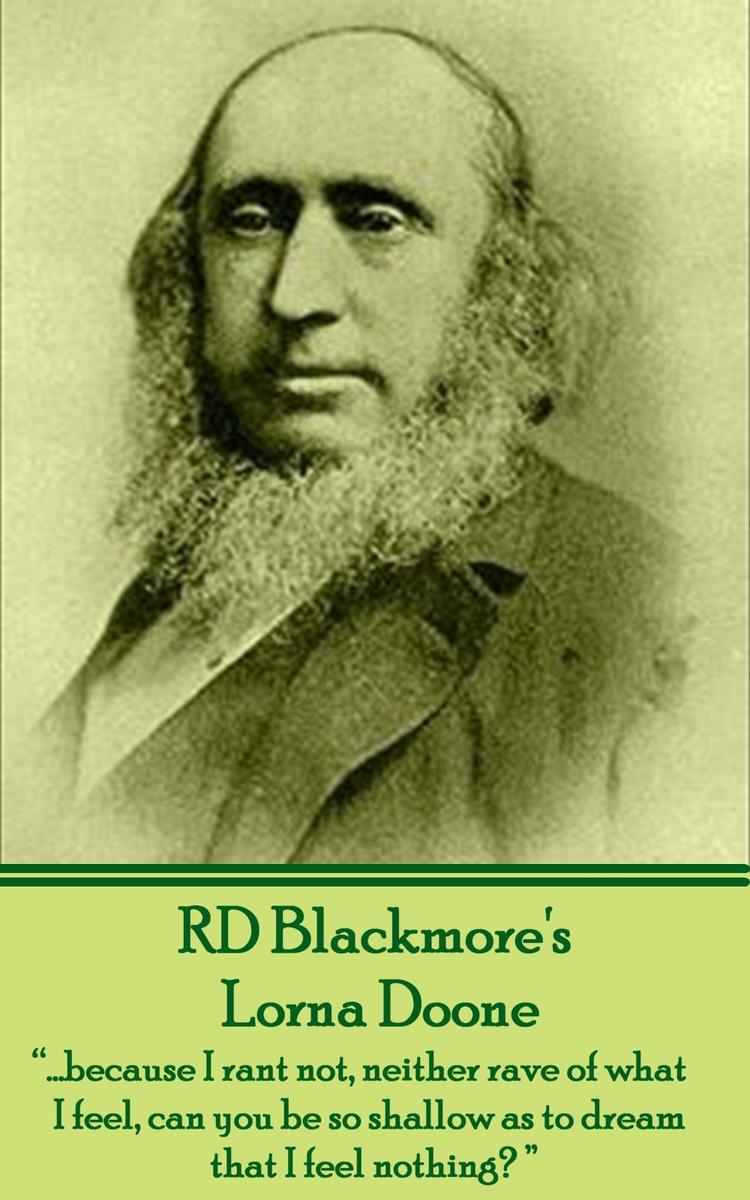
Lorna Doone - ....because I rant not, neither rave of what I feel
¥23.45
Lorna Doone is a romance that tells the story of a seventeenth-century successful farmer, John Ridd, whose father is killed by the Doones, a clan of unruly brigands living in the wilderness. When John once accidently ventures into the clan's area, he meets the beautiful Lorna and falls in love with her. In order to rescue his beloved from the life that she hates, he has to go through a long and violent struggle with his rival Carver Doone who also claims Lorna's hand. He eventually succeeds in helping her escape from the clan to his family's home which is later attacked by Carver. Later, a family friend reveals to them that Lorna does not really belong to the Doone clan and that she was kidnapped after a raid during which her noble and extremely wealthy mother was murdered. As an heiress to her mother's fortunes, Lorna is now legally asked to leave for London and become her great-uncle's ward. Political upheaval shakes the whole kingdom and John is arrested for false accusations. After being brought to London and absolved from guilt, he meets Lorna who is still in love with him. Lorna is eventually allowed to go back to the country and marry John. In the midst of their wedding ceremony, Carver suddenly enters the church and hits Lorna. John follows him and they engage in a fight that ends in Carver's death.
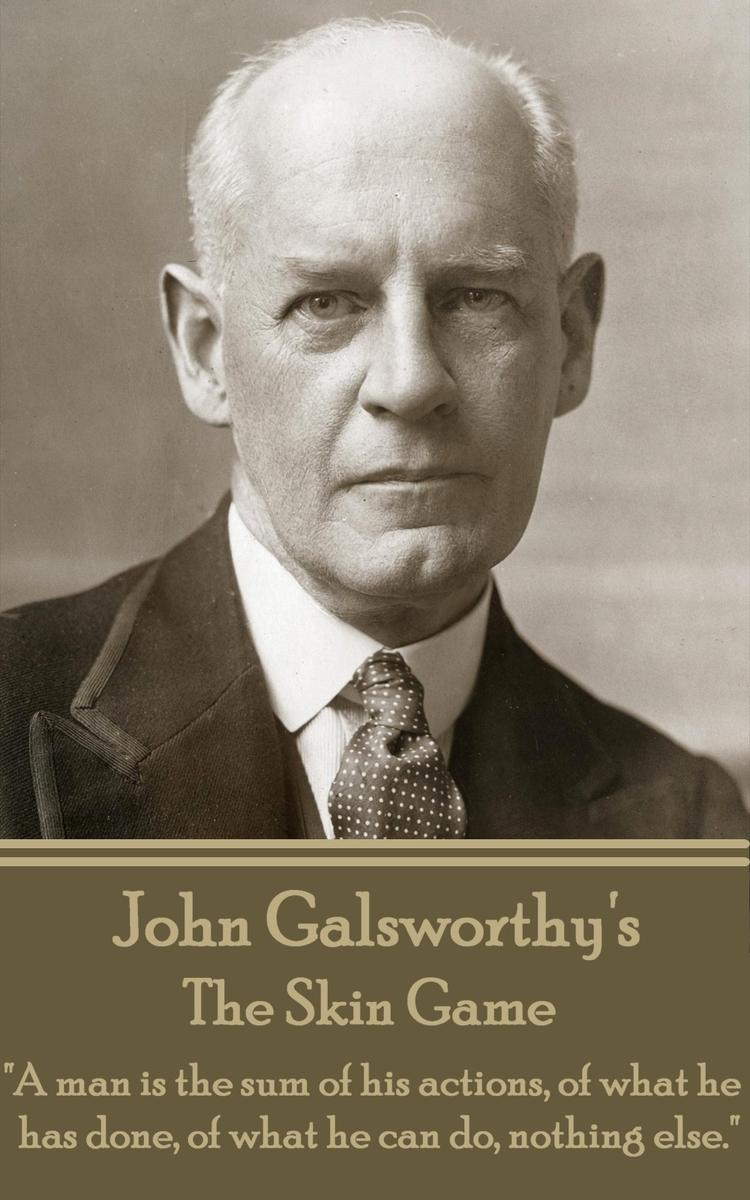
Skin Game - A man is the sum of his actions, of what he has done, of what he can
¥29.33
John Galsworthy first published in 1897 with a collection of short stories entitled "e;The Four Winds"e;. For the next 7 years he published these and all works under his pen name John Sinjohn. It was only upon the death of his father and the publication of "e;The Island Pharisees"e; in 1904 that he published as John Galsworthy. His first play was The Silver Box, an immediate success when it debuted in 1906 and was followed by "e;The Man of Property"e; later that same year and was the first in the Forsyte trilogy. Whilst today he is far more well know as a Nobel Prize winning novelist then he was considered a playwright dealing with social issues and the class system. We publish here 'The Skin Game' a great example of both his writing and his demonstration of how the class system worked at the time. He was appointed to the Order of Merit in 1929, after earlier turning down a knighthood, and awarded the Nobel Prize in 1932 though he was too ill to attend. John Galsworthy died from a brain tumour at his London home, Grove Lodge, Hampstead on January 31st 1933. In accordance with his will he was cremated at Woking with his ashes then being scattered over the South Downs from an aeroplane.
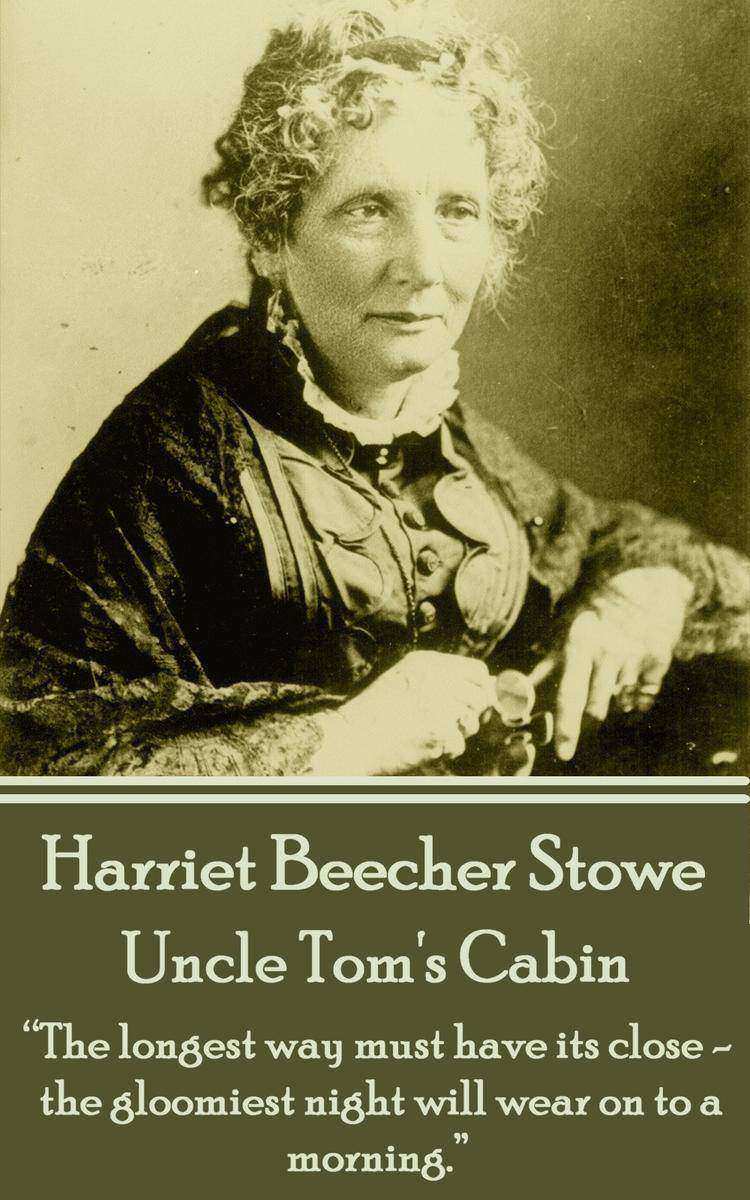
Uncle Tom's Cabin - We first make our habits, then our habits make us.
¥41.10
Harriet Elisabeth Beecher Stowe was born in Litchfield, Connecticut, on June 14th 1811. Over the course of her Life Harriet wrote more than twenty books including travel memoirs and collections of letters and articles. Her stand out work is undoubtedly 'Uncle Tom's Cabin' about the life of African Americans under slavery. It reached millions as both a book and a play and was influential in setting both the tone and the agenda for anti slavery forces in the North and for unyielding anger in the South. When she was invited to the White House by Lincoln he is rumoured to have said "e;so you are the little woman who wrote the book that started this great war."e; In the 1870s, Stowe's brother, Henry Ward, also an abolitionist, was accused of adultery and a national scandal ensured. Harriet fled to Florida unable to bear the attacks on her brother, who she believed innocent. Harriet was among the founders of the Hartford Art School, which later became part of the University of Hartford. She was also influential in the call for women to have a better standing in society and considered the cause as just as necessary as the abolition of slavery. With the death of her husband Calvin Stowe in 1886, after a half century together, Harriet's own health started to decline rapidly. By 1888 it was reported in The Washington Post that due to dementia she had started "e;writing Uncle Tom's Cabin over again. She imagined that she was engaged in the original composition, and for several hours every day she industriously inscribed long passages of the book, almost word for word, unconsciously from memory, the authoress imagining that she composed the matter as she went along. To her diseased mind the story was brand new and she frequently exhausted herself with labor which she regarded as freshly created."e; Harriet Beecher Stowe died on July 1, 1896, at age eighty-five in Hartford, Connecticut. She is buried in the historic cemetery at Phillips Academy in Andover, Massachusetts.
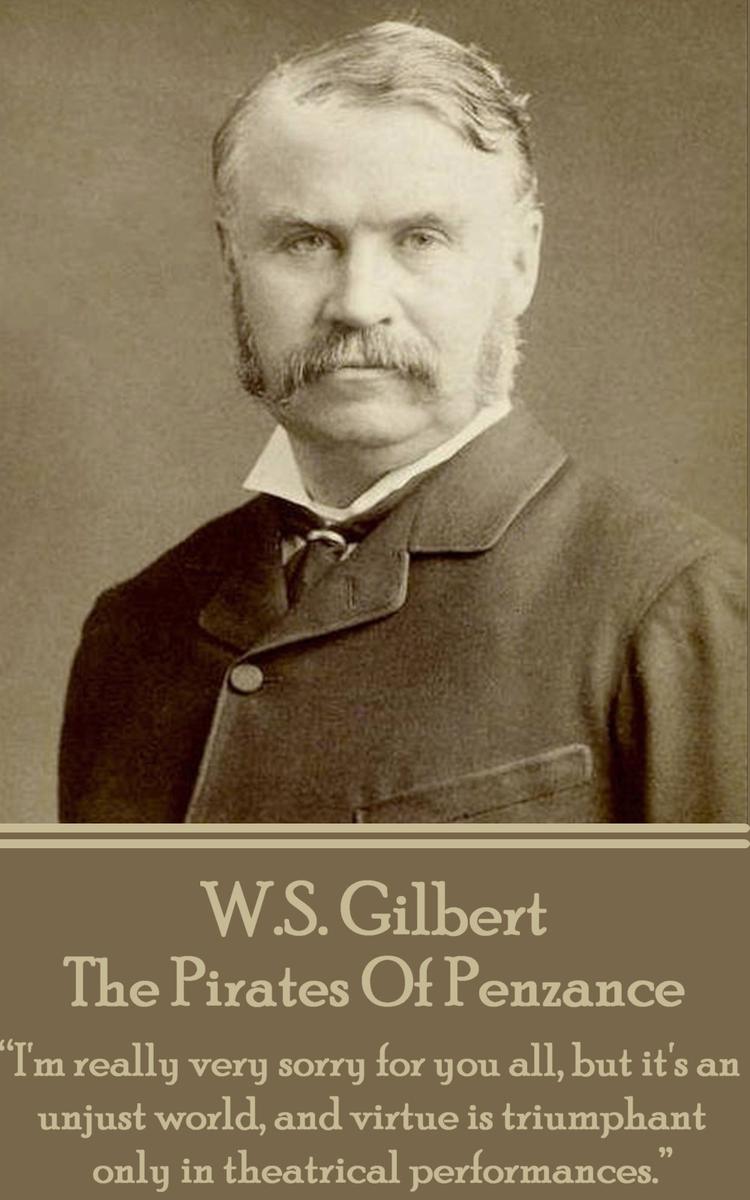
Pirates Of Penzance
¥15.21
Sir William Schwenck Gilbert was born at 17 Southampton Street just off the Strand in London on November 18th 1836. He was a man of a great many talents; dramatist, librettist, poet and illustrator. Of course he is better known as the collaborator with Arthur Sullivan of 14 light comic operas under that world famous moniker Gilbert & Sullivan. They continue to be performed and to entertain millions every year from commercial theatres down to amateur dramatic societies and schools. Here we publish his libretto for The Pirates Of Penzance.
Much Ado About Nothing
¥17.56
William Shakespeare was born in Stratford-upon-Avon in late April 1565 and baptised there on 26th April. He was one of eight children. Little is known about his life but what is evident is the enormous contribution he has made to world literature. His writing was progressive, magnificent in scope and breathtaking in execution. His plays and sonnets helped enable the English language to speak with a voice unmatched by any other. William Shakespeare died on April 23rd 1616, survived by his wife and two daughters. He was buried two days after his death in the chancel of the Holy Trinity Church. The epitaph on the slab which covers his grave includes the following passage, Good friend, for Jesus's sake forbear, To dig the dust enclosed here. Blessed me the man that spares these stones, And cursed be he that moves my bones. Here we publish his comedy from 1598 'Much Ado About Nothing'.
Lady from the Sea (1888)
¥23.45
Henrik Ibsen (20th March, 1828 - 23rd May, 1906) is often referred to as the father of realism and ranked just below Shakespeare as Europe's greatest ever playwright especially as his plays are performed most frequently throughout the world after Shakespeare's. He was Norwegian and although set his plays in Norway, he wrote them in Danish and lived most of his professional life in Italy and Germany. His affect on the theatre is still evident today and shapes the distinction of plays being art as opposed to entertainment since he broke down all previous traditions and explored issues, developed characterisation, revealed uncomfortable truths, challenged assumptions and brokedown facades in ourselves as well as society. These factors are clearly demonstrated in The Lady from the Sea, the lady being Ellida, the daughter of a lighthouse keeper who therefore grew up by the open sea and has a deep love for it. She married Dr Wangel who had two daughters by his former wife, Bolette and Hilda and they had a son who died as a baby. Her husband recognises the strains put on the marriage by the infant death and is concerned for Ellida's mental health but more important to Ellida is the return of her former love who she had promised to wait for. She does decide between the two men and her reasons make for good reading in this symbolic play.
What Katy Did At School (Mermaids Classics)
¥35.22
What Katy Did At School (1873) by Sarah Chauncey Woolsey (aka Susan Coolidge) (1835-1905) is the sequel to the classic childrens novel What Katy Did which is based on a young 12 year tomboyish type of girl named Katy Carr who endures an accident by falling off a swing and becomes an invalid. Her cousin Helen also an invalid teaches Katy how to be a happier and kinder person by appreciating and making the most of what she has and how to be optimistic and cheerful especially around her siblings. At the end of the story, Katy learns to walk.Mermaids Classics, an imprint of Mermaids Publishing brings the very best of old classic literature to a modern era of digital reading by producing high quality books in ebook format. All of the Mermaids Classics epublications are reproductions of classic antique books that were originally published in print format, mostly over a century ago and are now republished in digital format as ebooks. Begin to build your collection of digital books by looking for more literary gems from Mermaids Classics.
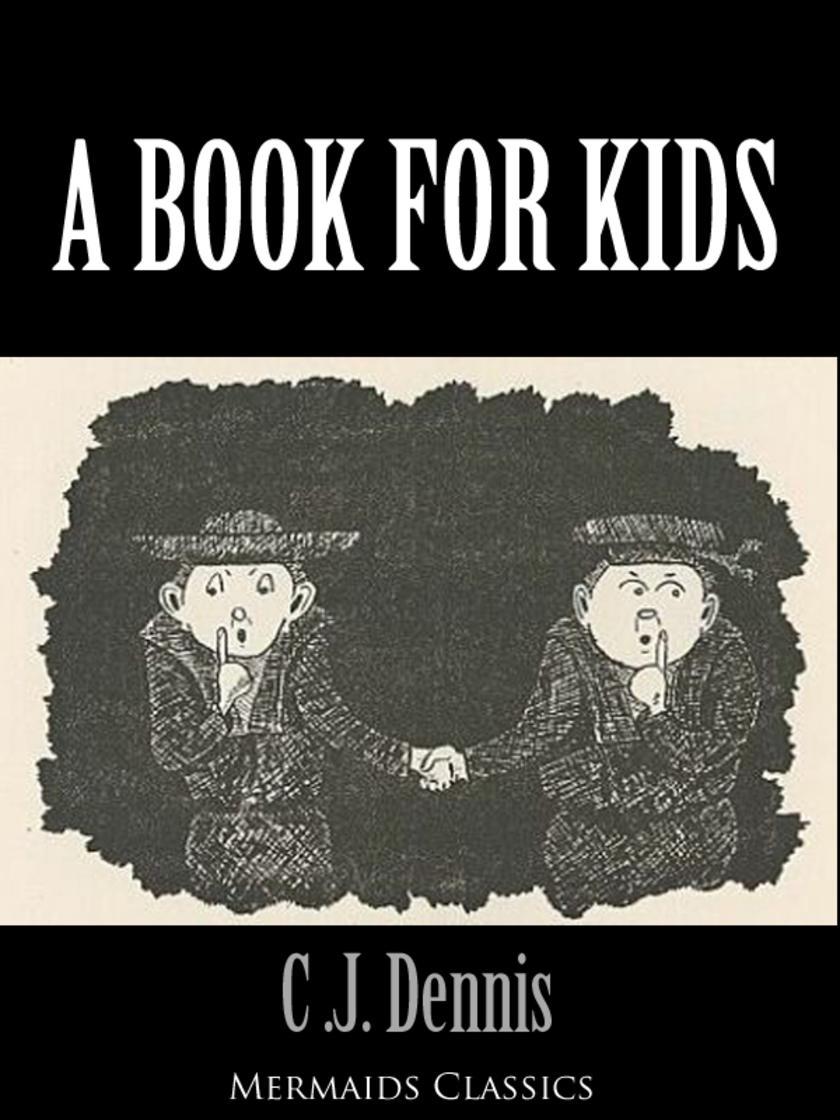
Book For Kids (Mermaids Classics)
¥35.22
A Book For Kids, is a collection of childrens verses and stories written and illustrated by C.J. Dennis (1876 - 1938). C.J. Dennis is considered as one of Australias most famous poets of the early 20th century. His original book was published in 1921 (reissued as Roundabout, 1935) in a physical book format and is now republished in ebook format by Mermaids Classics. This digital edition is beautifully formatted with an active Table of Contents that goes directly to each chapter. Mermaids Classics, an imprint of Mermaids Publishing brings the very best of classic literature to a modern era of digital reading by producing high quality books in ebook format.

Pickwick Papers (Mermaids Classics)
¥35.22
The Pickwick Papers (1836), by Charles Dickens (1812-1870) follows the travelling adventures of Samuel Pickwick. Samuel is the president of the Pickwick Club and along with a few other members they set out on a journey to discover anything interesting about life and report it back to those remaining members of the Club.Mermaids Classics, an imprint of Mermaids Publishing brings the very best of old classic literature to a modern era of digital reading by producing high quality books in ebook format. All of the Mermaids Classics epublications are reproductions of classic antique books that were originally published in print format, mostly over a century ago and are now republished in digital format as ebooks. Begin to build your collection of digital books by looking for more literary gems from Mermaids Classics.

Villette (Mermaids Classics)
¥35.22
Villette is a novel by Charlotte Bront, published in 1853. After an unspecified family disaster, protagonist Lucy Snowe travels to the fictional city of Villette to teach at an all-girls school where she is unwillingly pulled into both adventure and romance. (Citation from Wikipedia: The free Encyclopaedia)Mermaids Classics, an imprint of Mermaids Publishing brings the very best of old classic literature to a modern era of digital reading by producing high quality books in ebook format. All of the Mermaids Classics epublications are reproductions of classic antique books that were originally published in print format, mostly over a century ago and are now republished in digital format as ebooks. Begin to build your collection of digital books by looking for more literary gems from Mermaids Classics.
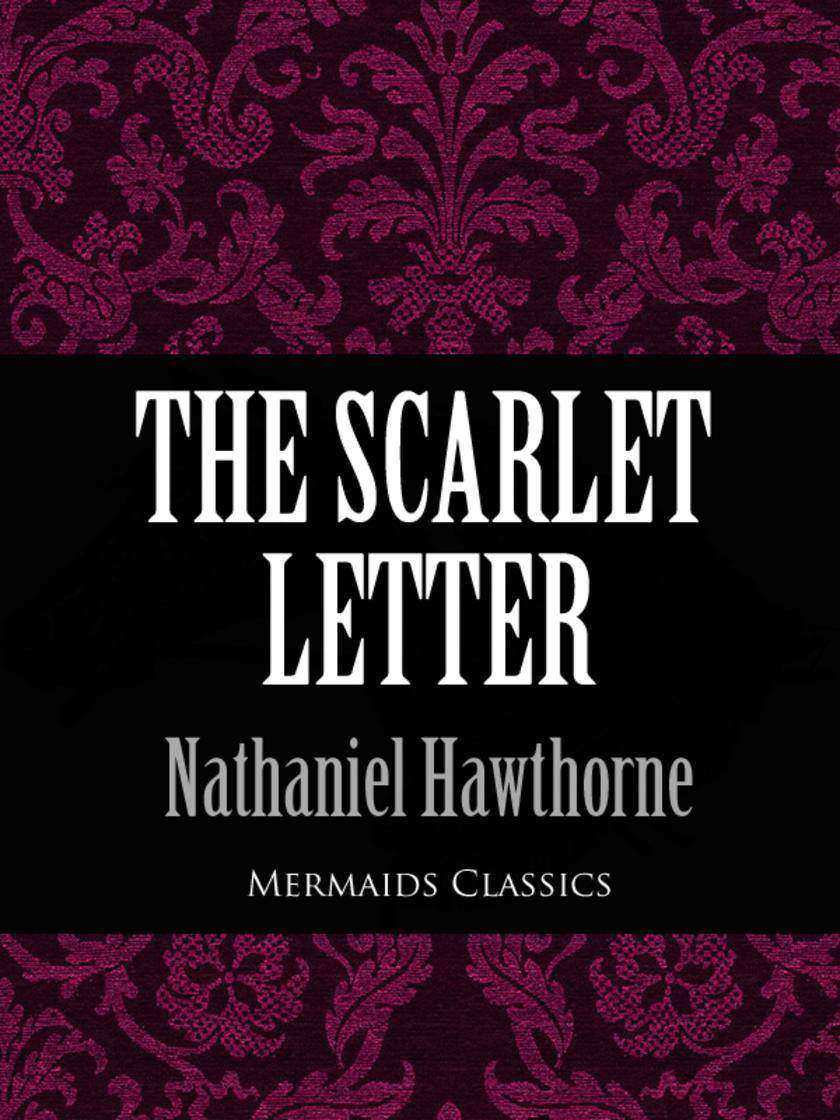
Scarlet Letter (Mermaids Classics)
¥35.22
The Scarlet Letter (1850) is a historical romantic fiction novel written by American author Nathaniel Hawthorne (1804-1864). It is considered to be his magnum opus. Set in 17th-century Puritan Boston, Massachusetts during the years 1642 to 1649, it tells the story of Hester Prynne, who conceives a daughter through an adulterous affair and struggles to create a new life of repentance and dignity. Throughout the book, Hawthorne explores themes of legalism, sin and guilt. (Citation from Wikipedia: The free Encyclopaedia)Mermaids Classics, an imprint of Mermaids Publishing brings the very best of old classic literature to a modern era of digital reading by producing high quality books in ebook format. All of the Mermaids Classics epublications are reproductions of classic antique books that were originally published in print format, mostly over a century ago and are now republished in digital format as ebooks. Begin to build your collection of digital books by looking for more literary gems from Mermaids Classics.

Asset Class Mastery: Maximize Profits From Forex, Futures, and Cryptos
¥34.79
This unique book is an intensive combination of three asset classes, forex, futures, and cryptocurrencies. You begin in the world of currencies, travel to commodities and ending?in cryptocurrencies.?As with all of Wayne's books, the emphasis is on practical applications with a personal touch.?The results from past students and readers confirms their effectiveness. The book includes the following and much more! - Step-by-step guide to understanding from beginner forex into?advanced technical analysis indicators - Strategic trading tactics - Using crops and energy sector seasonality to your advantage - Beginner to advanced commodities trading strategies - Bitcoin and Cryptocurrency Trading Tactics - Trader psychology (bonus chapter) - Using multiple time frames -Selecting the correct trading partner This is a combination of?Wayne's books: Tested Forex Strategies, Futures Trading Strategies, and The Guide To Mastering Bitcoin & Cryptocurrencies.


