


 购物车
 个人中心


Dose-Response Curve: A Tutorial Study Guide
¥32.62
Dose-Response Curve: A Tutorial Study Guide
Universe: The Solar System and Beyond
¥24.44
Universe: The Solar System and Beyond

Nervous System: A Tutorial Study Guide
¥48.97
Nervous System: A Tutorial Study Guide

Motor System: A Tutorial Study Guide
¥32.62
Motor System: A Tutorial Study Guide
The Story of the Heavens
¥24.44
The Story of the Heavens

Everything About Mars
¥24.44
Everything About Mars
Brain Imaging Techniques: A Tutorial Study Guide
¥32.62
Brain Imaging Techniques: A Tutorial Study Guide
Great Astronomers
¥24.44
Great Astronomers
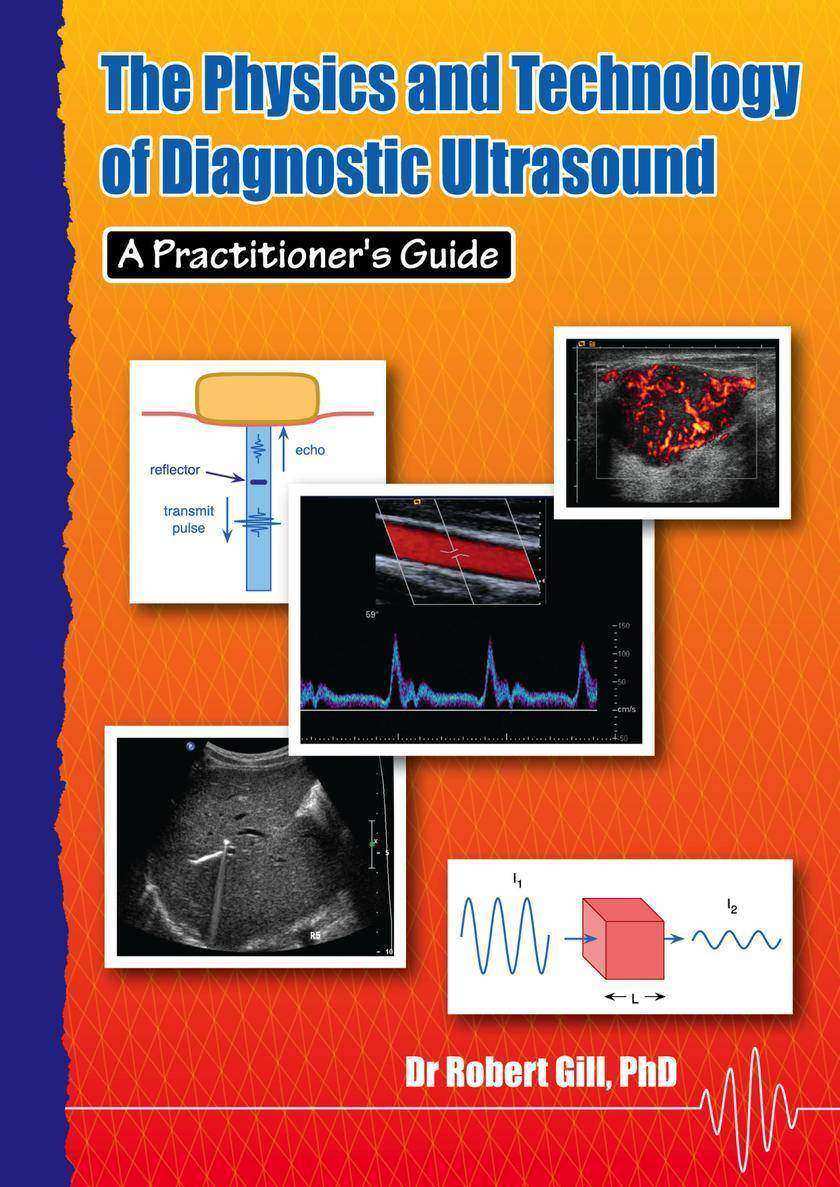
The Physics and Technology of Diagnostic Ultrasound: A Practitioner's Guide
¥232.01
The Physics and Technology of Diagnostic Ultrasound: A Practitioner's Guide
Euthyphro
¥9.24
On the Origin of Species, published on 24 November 1859, is a work of scientific literature by Charles Darwin which is considered to be the foundation of evolutionary biology. Its full title was On the Origin of Species by Means of Natural Selection, or the Preservation of Favoured Races in the Struggle for Life. For the sixth edition of 1872, the short title was changed to The Origin of Species. Darwin's book introduced the scientific theory that populations evolve over the course of generations through a process of natural selection. It presented a body of evidence that the diversity of life arose by common descent through a branching pattern of evolution. Darwin included evidence that he had gathered on the Beagle expedition in the 1830s and his subsequent findings from research, correspondence, and experimentation. Various evolutionary ideas had already been proposed to explain new findings in biology. There was growing support for such ideas among dissident anatomists and the general public, but during the first half of the 19th century the English scientific establishment was closely tied to the Church of England, while science was part of natural theology. Ideas about the transmutation of species were controversial as they conflicted with the beliefs that species were unchanging parts of a designed hierarchy and that humans were unique, unrelated to other animals. The political and theological implications were intensely debated, but transmutation was not accepted by the scientific mainstream. The book was written for non-specialist readers and attracted widespread interest upon its publication. As Darwin was an eminent scientist, his findings were taken seriously and the evidence he presented generated scientific, philosophical, and religious discussion. The debate over the book contributed to the campaign by T. H. Huxley and his fellow members of the X Club to secularise science by promoting scientific naturalism. Within two decades there was widespread scientific agreement that evolution, with a branching pattern of common descent, had occurred, but scientists were slow to give natural selection the significance that Darwin thought appropriate. During the "eclipse of Darwinism" from the 1880s to the 1930s, various other mechanisms of evolution were given more credit. With the development of the modern evolutionary synthesis in the 1930s and 1940s, Darwin's concept of evolutionary adaptation through natural selection became central to modern evolutionary theory, and it has now become the unifying concept of the life sciences. Summary of Darwin's theory: Darwin's theory of evolution is based on key facts and the inferences drawn from them, which biologist Ernst Mayr summarised as follows: ? Every species is fertile enough that if all offspring survived to reproduce the population would grow (fact).? Despite periodic fluctuations, populations remain roughly the same size (fact).? Resources such as food are limited and are relatively stable over time (fact).? A struggle for survival ensues (inference).? Individuals in a population vary significantly from one another (fact).? Much of this variation is inheritable (fact).? Individuals less suited to the environment are less likely to survive and less likely to reproduce; individuals more suited to the environment are more likely to survive and more likely to reproduce and leave their inheritable traits to future generations, which produces the process of natural selection (inference).? This slowly effected process results in populations changing to adapt to their environments, and ultimately, these variations accumulate over time to form new species (inference).

Pataki Emma naplója
¥58.29
Восстановление зрения без вмешательства врачей! Здесь детально описаны самые действенные методики улучшения зрения Э. Аветисова, М. Норбекова, П. Брэгга, У. Бейтса. Книга расскажет, как избавиться от проблем со зрением, а тесты позволят выявить различные заболевания глаз на ранней стадии. Также вы узнаете о проверенных веками способах восстановления зрения с помощью йоги, аюрведы, цигуна и др. Средства народной медицины, упражнения и рекомендации по лечебному питанию помогут излечить глаукому, катаракту и др. Vosstanovlenie zrenija bez vmeshatel'stva vrachej! Zdes' detal'no opisany samye dejstvennye metodiki uluchshenija zrenija Je. Avetisova, M. Norbekova, P. Brjegga, U. Bejtsa. Kniga rasskazhet, kak izbavit'sja ot problem so zreniem, a testy pozvoljat vyjavit' razlichnye zabolevanija glaz na rannej stadii. Takzhe vy uznaete o proverennyh vekami sposobah vosstanovlenija zrenija s pomoshh'ju jogi, ajurvedy, ciguna i dr. Sredstva narodnoj mediciny, uprazhnenija i rekomendacii po lechebnomu pitaniju pomogut izlechit' glaukomu, kataraktu i dr.

Да ли ?е Срби?а шугава
¥27.96
Автор книги?– кандидат медицинских наук, врач с?многолетним опытом – просто и?понятно рассказывает о?здоровье и?отвечает на?самые распространенные вопросы. ? Предвестники серьезных недугов ??Факторы риска заболеваний сердца ??Тест на?определение склонности к?гипертонии ? Симптомы и диагностика распространенных заболеваний ??При каких признаках нужно немедленно обращаться к?врачу ??Традиционные и?народные способы профилактики и?лечения артериальной гипертензии, ишемической болезни, стенокардии, аритмии, сердечной недостаточности и?др. ??Лечение травами ??Лечебное питание ??Лечебная физкультура и?многое другое. Avtor knigi?– kandidat medicinskih nauk, vrach s?mnogoletnim opytom – prosto i?ponjatno rasskazyvaet o?zdorov'e i?otvechaet na?samye rasprostranennye voprosy. ? Predvestniki ser'eznyh nedugov ??Faktory riska zabolevanij serdca ??Test na?opredelenie sklonnosti k?gipertonii ? Simptomy i diagnostika rasprostranennyh zabolevanij ??Pri kakih priznakah nuzhno nemedlenno obrashhat'sja k?vrachu ??Tradicionnye i?narodnye sposoby profilaktiki i?lechenija arterial'noj gipertenzii, ishemicheskoj bolezni, stenokardii, aritmii, serdechnoj nedostatochnosti i?dr. ??Lechenie travami ??Lechebnoe pitanie ??Lechebnaja fizkul'tura i?mnogoe drugoe.
Azi cant jazz
¥24.44
sszefoglaló knyvem olyan témát mutat be, amivel már tbb ismeretterjeszt írásban találkozhatott az olvasó, ám ezúttal olyan részletekkel és érdekességekkel találkozunk, amit eme knyvek alig, vagy egyáltalán nem taglalnak. E szerzeményben végigkvetjük a Fld mélyérl induló izzó anyagot, a kérgen át a felszínig, ahol tüzet és pusztítást zúdít mindenre és mindenkire a kzelben. Bemutatom, hogy mi lesz a kihlt lávából, és milyen formákat hoz létre. Ezen külnleges természeti képzdmények kialakulását és fejdését vesszük górcs alá. Megismerkedünk pár külnleges tzhányóval, amik pusztításuk révén rendkívüli hatással voltak nemcsak krnyezetükre, hanem az emberiségre is. Olyan ismereteket mutatunk be, amelyek meglepetést okozhatnak az olvasóknak.
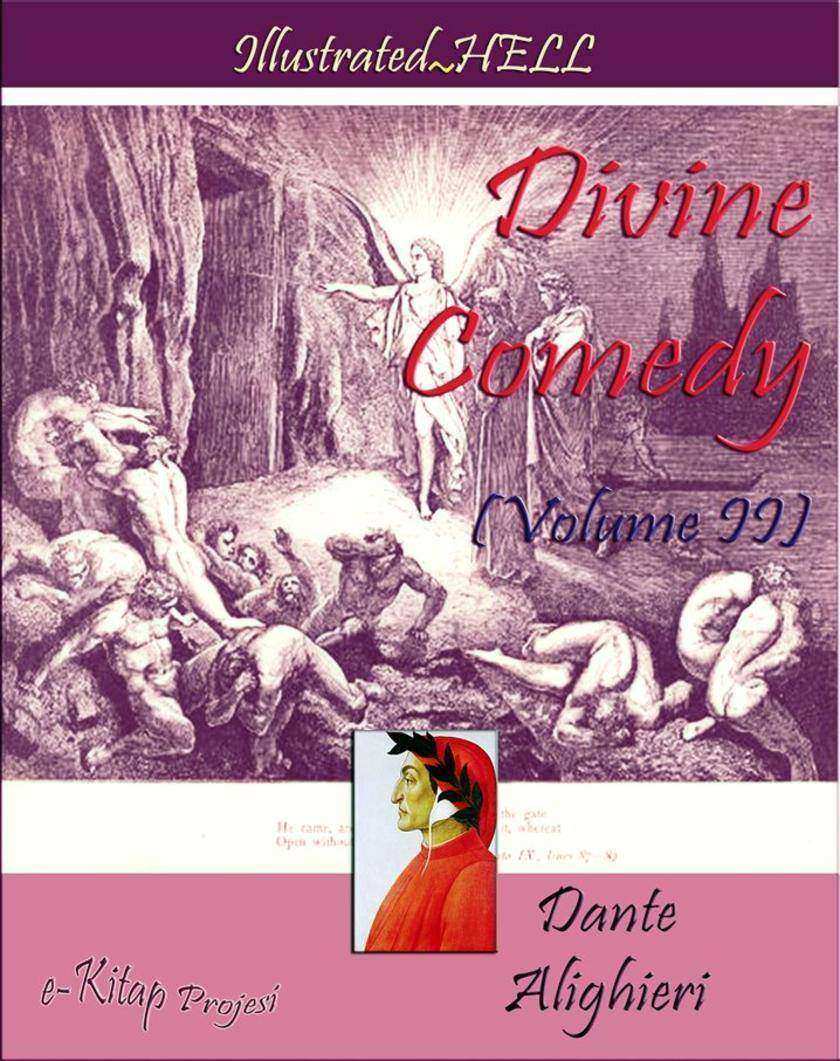
Divine Comedy (Volume II): Illustrated Hell
¥18.74
Micrographia is a historic book by Robert Hooke, detailing the then thirty-year-old Hooke's observations through various lenses. Published in September 1665, the first major publication of the Royal Society, it was the first scientific best-seller, inspiring a wide public interest in the new science of microscopy. It is also notable for coining the biological term cell. Observations: Hooke most famously describes a fly's eye and a plant cell (where he coined that term because plant cells, which are walled, reminded him of a monk's quarters). Known for its spectacular copperplate engravings of the miniature world, particularly its fold-out plates of insects, the text itself reinforces the tremendous power of the new microscope. The plates of insects fold out to be larger than the large folio itself, the engraving of the louse in particular folding out to four times the size of the book. Although the book is best known for demonstrating the power of the microscope, Micrographia also describes distant planetary bodies, the wave theory of light, the organic origin of fossils, and various other philosophical and scientific interests of its author. Publication: Published under the aegis of The Royal Society, the popularity of the book helped further the society's image and mission of being "the" scientifically progressive organization of London. Micrographia also focused attention on the miniature world, capturing the public's imagination in a radically new way. This impact is illustrated by Samuel Pepys' reaction upon completing the tome: "the most ingenious book that I ever read in my life." Hooke also selected several objects of human origin; among these objects were the jagged edge of a honed razor and the point of a needle, seeming blunt under the microscope. His goal may well have been as a way to contrast the flawed products of mankind with the perfection of nature (and hence, in the spirit of the times, of biblical creation). About Author: Robert Hooke (1635 – 1703) was an English natural philosopher, architect and polymath.His adult life comprised three distinct periods: as a scientific inquirer lacking money; achieving great wealth and standing through his reputation for hard work and scrupulous honesty following the great fire of 1666, but eventually becoming ill and party to jealous intellectual disputes. These issues may have contributed to his relative historical obscurity. He was at one time simultaneously the curator of experiments of the Royal Society and a member of its council, Gresham Professor of Geometry and a Surveyor to the City of London after the Great Fire of London, in which capacity he appears to have performed more than half of all the surveys after the fire. He was also an important architect of his time – though few of his buildings now survive and some of those are generally misattributed – and was instrumental in devising a set of planning controls for London whose influence remains today. Allan Chapman has characterised him as "England's Leonardo".Robert Gunther's Early Science in Oxford, a history of science in Oxford during the Protectorate, Restoration and Age of Enlightenment, devotes five of its fourteen volumes to Hooke.Hooke studied at Wadham College during the Protectorate where he became one of a tightly knit group of ardent Royalists led by John Wilkins. Here he was employed as an assistant to Thomas Willis and to Robert Boyle, for whom he built the vacuum pumps used in Boyle's gas law experiments. He built some of the earliest Gregorian telescopes and observed the rotations of Mars and Jupiter. In 1665 he inspired the use of microscopes for scientific exploration with his book, Micrographia. Based on his microscopic observations of fossils, Hooke was an early proponent of biological evolution. He investigated the phenomenon of refraction, deducing the wave theory of light, and was the first to suggest that matter expands when heated and that air is made of small particles separated by relatively large distances. He performed pioneering work in the field of surveying and map-making and was involved in the work, though his plan for London on a grid system was rejected in favour of rebuilding along the existing routes. He also came near to an experimental proof that gravity follows an inverse square law, and hypothesised that such a relation governs the motions of the planets, an idea which was subsequently developed by Newton.

TOTAL WAR: Attila kardja
¥34.58
Not many years ago the group Insecta was held even by Zoologists to include numberless small creatures—centipedes, spiders, mites, etc.—which further study has shown to present essential differences of structure, and in popular language any fairly minute animal is still an insect, just as any insect is popularly a “fly”—or, in the United States, a “bug.” Scientifically the use of the term Insect is now much restricted, though still extensive enough in all conscience, since it includes many more than a quarter of a million known species. Zoologists recognise a large group of animals characterised by having no internal skeleton but a more or less firm external coating of a peculiar substance called chitin, often strengthened by calcareous deposits, which necessitates the presence of joints in their bodies, and especially in their limbs if they are to move freely, just as medieval suits of armour required to be jointed. These are the Arthropoda. One subdivision of this group consists of aquatic animals, breathing by gills, and known as Crustacea. Crabs, lobsters, shrimps and “water-fleas” are familiar examples, and with the exception of the so-called land-crabs the only Crustaceans habitually found on land are wood-lice. The other Arthropoda are air-breathing, and since their characteristic breathing organs are branching tubes known as tracheae, the term Tracheata is sometimes used to include them all. They fall naturally into three divisions, the Myriapoda, the Insecta and the Arachnida, and it is in this last-named division that we shall find the spiders. The Myriapoda are the centipedes and millipedes, and having said this we may dismiss them, for insects and arachnids are strictly limited as to legs; and no myriapod can ever be mistaken for a spider. The Arachnida are so varied in structure that it is not easy to give characteristics common to them all, and to any general statement there are bound to be exceptions, but for practical purposes it may be said that while an insect, when mature, has only six legs, and a pair of feelers or antennae of quite different structure, Arachnids have normally eight legs, and their feeling organs are not antennae but leg-like “pedipalps.”

Lose Your Fear of Flying
¥29.33
Are you amongst those who fly because they have to, yet dread it? You are in good company. There are many like you who reluctantly fly, perhaps because of work or due to the fact they won't allow their fears to curtail their enjoyment of life. Statistics are of no help. What can help, though, is a better understanding of exactly what is happening during a typical flight from the only vantage point that counts, your passenger seat. This eBook uses friendly language and terminology to clearly explain the sounds and noises you hear that may worry you and it tells you the truth about turbulence and adverse weather. Rest assured. It's good news. The format is simple. You are guided through a complete flight from boarding an aircraft, through taxiing to take-off, climb, cruise, descent and finally to landing. Along the way you will become familiar with the different stages of flight and what sounds and sensations you may expect. You will learn about an aircrafts capabilities, crew training, air traffic control and the systems in place to ensure your safety. More importantly you will learn that you do not need to concern yourself with the discomfort of a bumpy flight. Flying without fear....... It can happen.
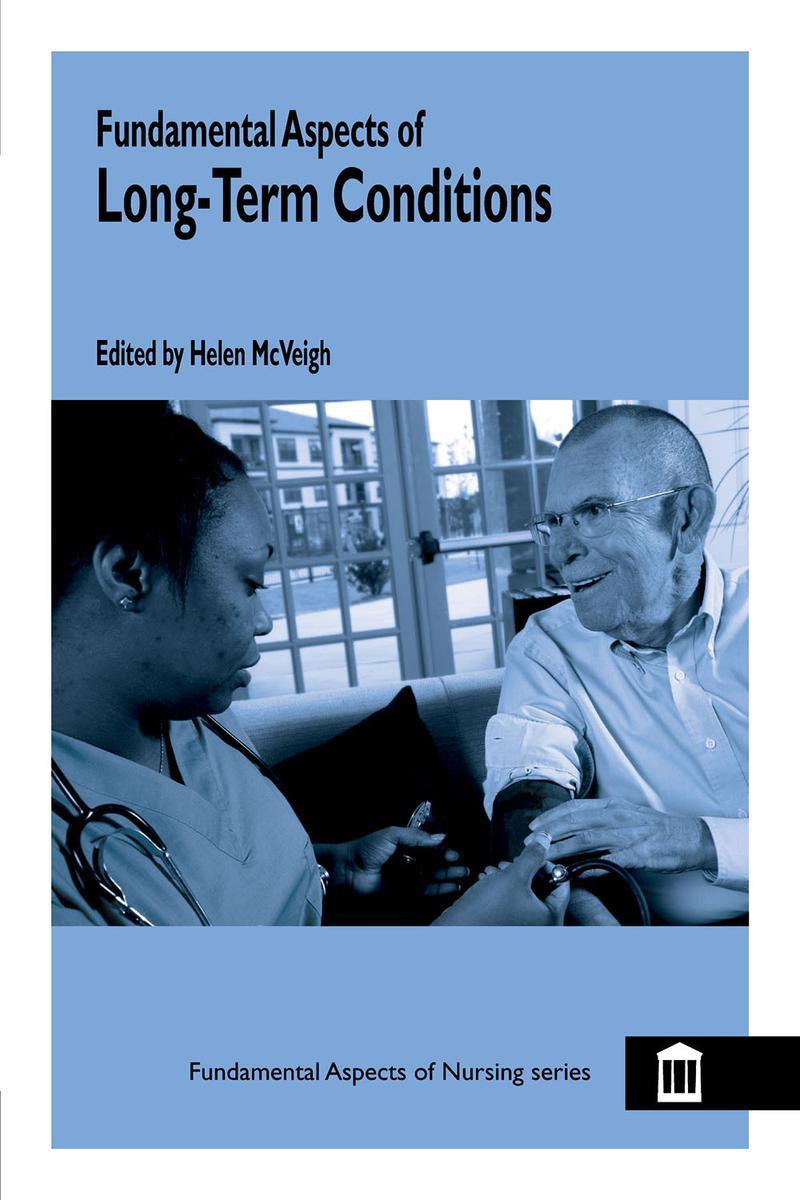
Fundamental Aspects of Long Term Conditions
¥186.29
Underpinned by relevant epidemiology, demography and policy, this book explores the management of long-term conditions. It discusses communication and multidisciplinary working, including discussion of the student nurse's role. Each chapter includes learning points and uses a questioning/reflective approach, which draws on the reader's own experiences.

Ben Goes to the Dentist
¥48.95
Will Bartholomew the panda have to take Ben's place when the Campbell family visit the dentist?

Indigo Awakes
¥58.76
This debut novel is truly inspiring. Beautifully written in simple language, the author shows us a way to live free of fear. Indigo is tired of conflict with her partner and her. But then a quiet voice within begins to demand change; intense dreams and synchronicities show her an alternative path. Indigo begins a journey into the unknown exploring her own spirituality. This book vibrates with positive energy.
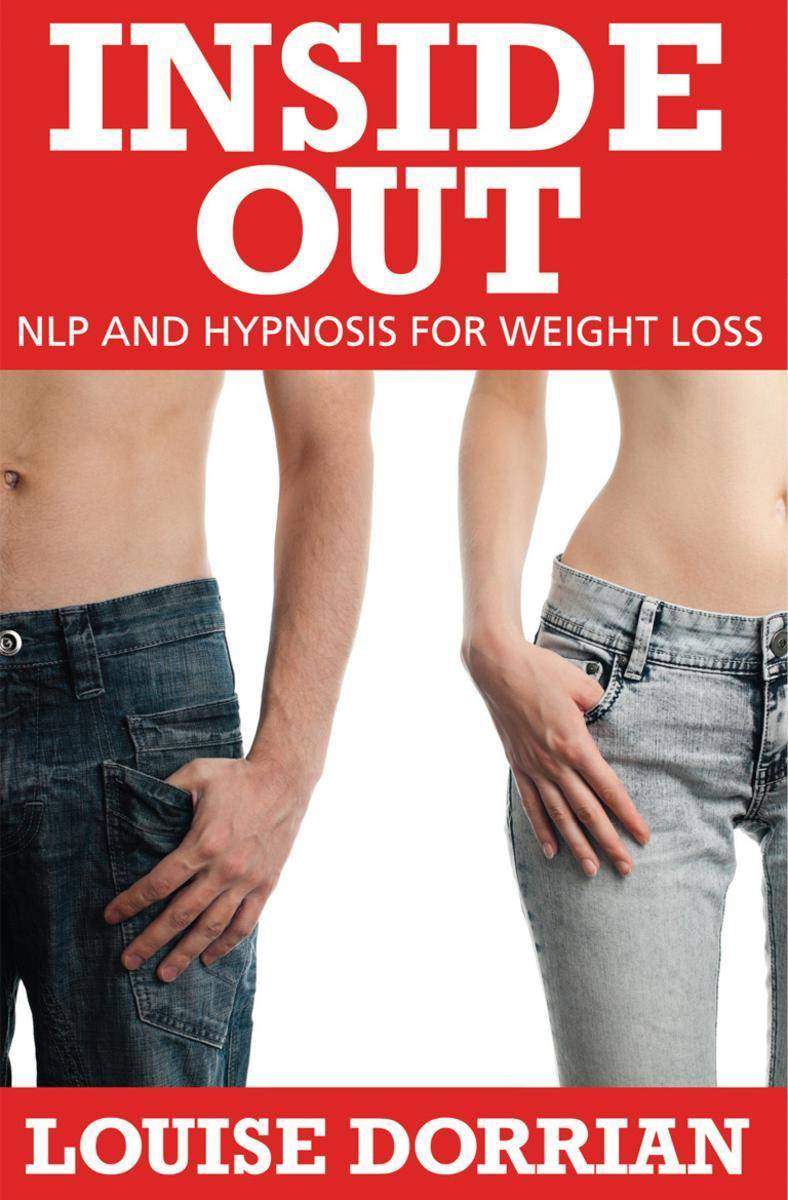
Inside Out
¥53.86
Inside-Out Weight Loss focuses on changing relationships with food by 're-programming' behaviour. Understanding that control and choice around food is managed at an unconscious level Louise Dorrian gently guides you to develop an awareness of food habits and compulsions that stem from 'thought processes' and result in overeating. Easy to understand and use techniques change the unhelpful thought processes and combine with the hypnotic recordings to transform your relationship with food and eating behaviours. Already proven to be successful and result in weight loss with Louise's private clients this program is available for the first time in book format and mp3 downloads. No diets, eating plans or strict regimes, just a natural, easy and rewarding route to weight loss and wellbeing.

Dealing with Negative People
¥19.52
A busy person's guide to help you to deal with a negative person. This guide covers dealing with negative people at home and at work regardless of their position in relation to the reader. It provides practical and proven tips and strategies to getting people to cheer up and get on with life. It also helps to identify the more serious issue of stress.


