


 购物车
购物车 个人中心
个人中心
The Aeneid: "Illustrated"
¥18.74
"Where ocean bathes earth's footstool these sea-bowersBedeck its solid wavelets: wise was heWho blended shore with deep, with seaweed flowers,And Naiads' rivulets with Nereids' sea." Strictly speaking the peninsula on which the city stands is of the form of a trapezium. It juts out into the sea, beating back as it were the fierce waves of the Bosphorus, and forcing them to turn aside from their straight course and widen into the Sea of Marmora, which the ancients called the Propontis, narrowing again as it forces its way between the near banks of the Hellespont, which rise abrupt and arid from the European side, and slope gently away in Asia to the foot of Mount Ida. Northwards there is the little bay of the Golden Horn, an arm as it were of the Bosphorus, into which run the streams which the Turks call the Sweet Waters of Europe. The mouth of the harbour is no more than five hundred yards across. The Greeks of the Empire spanned it by a chain, supported here and there on wooden piles, fragments of which still remain in the Armoury that was once the church of S. Irene. Within is safe anchorage in one of the finest harbours of the world. South of the Golden Horn, on the narrow tongue of land—narrow it seems as seen from the hills of the northern shore—is the city of Constantine and his successors in empire, seated, like the old Rome, on seven hills, and surrounded on three sides by sea, on the fourth by the still splendid, though shattered, medi?val walls. Northwards are the two towns, now linked together, of Pera and Galata, that look back only to the trading settlements of the Middle Ages.The single spot united, as Gibbon puts it, the prospects of beauty, of safety, and of wealth: and in a masterly description that great historian has collected the features which made the position, "formed by Nature for the centre and capital of a great monarchy," attractive to the first colonists, and evident to Constantine as the centre where he could best combine and command the power of the Eastern half of his mighty Empire. Byzantium Before Constantine.It is impossible to approach Constantinople without seeing the beauty and the wonder of its site. Whether you pass rapidly down the Bosphorus, between banks crowned with towers and houses and mosques, that stretch away hither and thither to distant hills, now bleak, now crowned with dark cypress groves; or up from the Sea of Marmora, watching the dome of S. Sophia that glitters above the closely packed houses, till you turn the point which brings you to the Golden Horn, crowded with shipping and bright with the flags of many nations; or even if you come overland by the sandy wastes along the shore, looking across the deep blue of the sea to the islands and the snow-crowned mountains of Asia, till you break through the crumbling wall within sight of the Golden Gate, and find yourself at a step deep in the relics of the middle ages; you cannot fail to wonder at the splendour of the view which meets your eyes. Sea, sunlight, the quaint houses that stand close upon the water's edge, the white palaces, the crowded quays, and the crowning glory of the Eastern domes and the medi?val walls—these are the elements that combine to impress, and the impression is never lost. Often as you may see again the approach to the imperial city, its splendour and dignity and the exquisite beauty of colour and light will exert their old charm, and as you put foot in the New Rome you will feel all the glamour of the days that are gone by.

Пока не взошла луна (Poka ne vzoshla luna)
¥18.07
Щороку ми д?зна?мося дедал? б?льше нових сл?в у галуз? економ?ки, комп’ютерних технолог?й ? маркетингу, натом?сть невпинно убож?? наш лексикон у сфер? етики й морал?. Дев?д Брукс б’? на сполох: очевидно, що сучасне сусп?льство у гонитв? за новац?ями нехту? усталеними етичними принципами, втрача? моральн? стимули й ?деали, руйну? св?й духовний стрижень. ?ДНК особистост?? про те, як переглянути власн? пр?оритети ? зосередитися на внутр?шн?х чеснотах. Вона покаже, як деяким людям вдалося проторувати шлях до сильного характеру ? стати г?дною особист?стю. ?хн? ?стор?? стануть для читача певними ор??нтирами у пошуках власно? стратег?? гартування характеру, допоможуть п?знати себе, в?днайти душевну гармон?ю ? щастя.

Вазочки, конфетницы, корзинки.
¥17.74
Капталзм свобода — класика полтико-економчно лтератури ХХ столття — як нколи актуальна для Украни. Нобелвський лауреат Млтон Фрдман розгляда зв’язок мж економчною та полтичною свободою. Вн опису, чому варто обмежити вплив держави в економку, децентралзувати владу, забезпечити гнучкий валютний курс, роздержавити сфери освти соцального забезпечення.

The Critique of Pure Reason
¥28.04
Piping down the valleys wild,?Piping songs of pleasant glee,?On a cloud I saw a child,?And he laughing said to me:??"Pipe a song about a Lamb!"?So I piped with merry cheer.?"Piper, pipe that song again;"?So I piped: he wept to hear.??"Drop thy pipe, thy happy pipe;?Sing thy songs of happy cheer!"?So I sang the same again,?While he wept with joy to hear.??"Piper, sit thee down and write?In a book, that all may read."?So he vanish'd from my sight;?And I pluck'd a hollow reed,??And I made a rural pen,?And I stain'd the water clear,?And I wrote my happy songs?Every child may joy to hear. ?

Закусочные и сладкие пироги, пирожки, тарты, киши
¥17.74
Багато людей не визначають пр?оритет?в, не формулюють мети життя ?, як насл?док, просто пливуть за теч??ю. Так? люди ризикують опинитися не там, де хот?ли. Коли житт?ва р?ка почина? кидати тебе на порогах, де шукати рят?вний круг, як не втратити весло, що допоможе повернутися на обраний шлях? Автори ц??? книжки — в?домий блогер Майкл Гаят ? б?знес-тренер Ден?ел Гаркав? — вважають, що вряту? ефективний житт?вий план. ??Книжка ?Дивись уперед? покрокова ?нструкц?я з? створення карти д?й, яка стане вашим найважлив?шим проектом. Книжка стане в нагод? ус?м, хто хоче розвиватись ? зм?нюватись, та вважа?, що життя ма? приносити рад?сть.

Тринадцята казка (Trinadcjata kazka)
¥27.22
Одного дня життя дев’ятир?чного хлопчика повн?стю зм?нилося. Дитяча ц?кав?сть обернулася страшною пожежею, внасл?док яко? хлопчик отримав оп?ки майже усього т?ла. Пробувши у л?карн? п’ять м?сяц?в, в?н пережив ампутац?ю пальц?в та бол?сну реаб?л?тац?ю. Але якщо рубц? на т?л? можна прикрити одягом, то що робити ?з душевними шрамами? Чи можна п?сля цього мр?яти про повноц?нне щасливе життя? ?У полум’?? — це книга-спов?дь про незламн?сть, пошук себе ? велику роботу на шляху до усп?ху. Вона написана на основ? реальних под?й, як? зм?нили життя багатьох людей.

Торты нашего детства. Мамочкина вкуснятина!
¥17.99
Книга объединяет два главных прижизненных издания основателя и ярчайшего представителя поэзии абсурда. Эдвард Лир (1812-1888) – прославленный английский поэт и художник, отец литературного лимерика, жанра, оказавшего заметное влияние на литературу конца XIX и всего XX века. Лимерики (216 забавных пятистиший) приведены на языке оригинала с параллельными переводами, выполненными лучшим российским интерпретатором поэзии нонсенса Борисом Архипцевым, и сопровождаются авторскими иллюстрациями. Переводчик посвятил работе более 20 лет жизни, добившись уникального результата, невиданной прежде полноты раскрытия авторского замысла в сочетании с красотой и естественностью звучания русского стиха. ?…Архипцев переводит Эдварда Лира, как благочестивый толковник – Писание: он передает и смысл, и звук. Точен – часто до мельчайших деталей. Звучен – до самой лихой эквилибристики…??Н. Горбаневская. Книга погружает читателя в атмосферу тонкого английского юмора, превосходно переданного переводчиком, в мир абсурда, делая его близким и понятным человеку любого возраста – от младшего школьного до старшего пенсионного. Издательство Animedia Company желает вам приятного чтения.

Плетем из газет, бумаги, картона (Pletem iz gazet, bumagi, kartona)
¥17.74
Rū?ītis ?ī skaistā pasaka ir mazā elfa dzīves stāsts. Vi?? mitinājās bagāta tirgotāja mājā un vienmēr bija pārticis.? ?ajā mājā dzīvoja arī kāds trūcīgs students, kur? bie?i cieta badu, jo visu naudu tērēja grāmatām. Kādu dienu Rū?ītis ieskatījās studenta istabi?ā pa atslēgas caurumu. Ko vi?? tur ieraudzīja? Kas notika tālāk? Lasiet pa?i! ?ajā burvju pasakā ir daudzas svarīgas patiesības un morāles vērtības. Tās saturs, noska?a un krāsainās ilustrācijas noteikti iepriecinās visus bērnus
The Lost World
¥18.74
Leonardo's views of aesthetic are all important in his philosophy of life and art. The worker's thoughts on his craft are always of interest. They are doubly so when there is in them no trace of literary self-consciousness to blemish their expression. He recorded these thoughts at the instant of their birth, for a constant habit of observation and analysis had early developed with him into a second nature. His ideas were penned in the same fragmentary way as they presented themselves to his mind, perhaps with no intention of publishing them to the world. But his ideal of art depended intimately, none the less, on the system he had thrown out seemingly in so haphazard a manner. The long obscurity of the Dark Ages lifted over Italy, awakening to a national though a divided consciousness. Already two distinct tendencies were apparent. The practical and rational, on the one hand, was soon to be outwardly reflected in the burgher-life of Florence and the Lombard cities, while at Rome it had even then created the civil organization of the curia. The novella was its literary triumph. In art it expressed itself simply, directly and with vigour. Opposed to this was the other great undercurrent in Italian life, mystical, religious and speculative, which had run through the nation from the earliest times, and received fresh volume from mediaeval Christianity, encouraging ecstatic mysticism to drive to frenzy the population of its mountain cities. Umbrian painting is inspired by it, and the glowing words of Jacopone da Todi expressed in poetry the same religious fervour which the life of Florence and Perugia bore witness to in action. Italy developed out of the relation and conflict of these two forces the rational with the mystical. Their later union in the greater men was to form the art temperament of the Renaissance. The practical side gave it the firm foundation of rationalism and reality on which it rested; the mystical guided its endeavour to picture the unreal in terms of ideal beauty.The first offspring of this union was Leonardo. Since the decay of ancient art no painter had been able to fully express the human form, for imperfect mastery of technique still proved the barrier. Leonardo was the first completely to disengage his personality from its constraint, and make line express thought as none before him could do. Nor was this his only triumph, but rather the foundation on which further achievement rested. Remarkable as a thinker alone, he preferred to enlist thought in the service of art, and make art the handmaid of beauty. Leonardo saw the world not as it is, but as he himself was. He viewed it through the atmosphere of beauty which filled his mind, and tinged its shadows with the mystery of his nature. From his earliest years, the elements of greatness were present in Leonardo. But the maturity of his genius came unaffected from without. He barely noticed the great forces of the age which in life he encountered. After the first promise of his boyhood in the Tuscan hills, his youth at Florence had been spent under Verrocchio as a master, in company with those whose names were later to brighten the pages of Italian art. At one time he contemplated entering the service of an Oriental prince. Instead, he entered that of Caesar Borgia, as military engineer, and the greatest painter of the age became inspector of a despot's strongholds. But his restless nature did not leave him long at this. Returning to Florence he competed with Michelangelo; yet the service of even his native city could not retain him. His fame had attracted the attention of a new patron of the arts, prince of the state which had conquered his first master. In this his last venture, he forsook Italy, only to die three years later at Amboise, in the castle of the French king.

Лечение радикулита и ревматизма народными средствами
¥8.91
Das Buch enth?lt drei wundersch?ne M?rchen. ?Die Hirtin und der Schornsteinfeger“ ist eine fr?hliche Geschichte über Porzellanfiguren, die eine alte Kommode bewohnen. ?Das kleine M?dchen mit den Schwefelh?lzern“ ist eine traurige Erz?hlung über ein M?dchen, das Streichh?lzer am Heiligabend verkaufen muss. “Fünf aus einer Schote“ ist eine rührende Geschichte über ein krankes M?dchen, in dessen Leben unerwartet ein kleines Erbsenkorn auftaucht. Alle Erz?hlungen sind sch?n und farbig illustriert. Die Hirtin und der Schornsteinfeger Die Helden des M?rchens sind Porzellanfiguren: eine Hirtin, ein Schornsteinfeger und ein alter? Chinese, der will, dass die hübsche Hirtin einen geschnitzten Feldwebel heiratet. Das M?dchen ist damit nicht einverstanden, weil sein kleines Herz schon lange für den?? Schornsteinfeger schl?gt. Was passiert weiter?? Das k?nnt ihr hier erfahren. Die Erz?hlung ist sch?n und farbig illustriert. Das kleine M?dchen mit den Schwefelh?lzern Dies ist eines der berühmtesten M?rchen,? das jedes Kind lesen sollte. Es ist eine berührende? Geschichte über? ein armes M?dchen, das? an einem kalten Heiligabend versucht Schwefelh?lzer an die? Passanten zu verkaufen. Was wird mit dem M?dchen weiter geschehen? Ihr k?nnt es hier lesen. Die Erz?hlung ist sch?n und farbig illustriert. Fünf aus einer Schote Es ist eine Erz?hlung über eine kleine Erbse, die durch einen Spalt im Dachgeschoss in eine Wohnung reinf?llt. Dort lebt eine Frau mit ihrer kleinen Tochter, Karolina. Das M?dchen ist? schwer krank und kann seit langem? sein Bett nicht verlassen. Karolina beobachtet mit Neugier die Pflanze, die aus dem Korn w?chst. Was passiert im Leben des M?dchens?? Lest weiter!? Die Erz?hlung ist sch?n und farbig illustriert.?

Улучшаем зрение народными средствами
¥8.91
Die Hirtin und der Schornsteinfeger Die Helden des M?rchens sind Porzellanfiguren: eine Hirtin, ein Schornsteinfeger und ein alter? Chinese, der will, dass die hübsche Hirtin einen geschnitzten Feldwebel heiratet. Das M?dchen ist damit nicht einverstanden, weil sein kleines Herz schon lange für den?? Schornsteinfeger schl?gt. Was passiert weiter?? Das k?nnt ihr hier erfahren. Die Erz?hlung ist sch?n und farbig illustriert.
Mon Agent
¥11.77
Realmente, o estudo dos fluidos e das for?as radiantes leva, necessariamente, às formas invisíveis da vida, pois a elas se relaciona fortemente. E por aí que a Ciência nova chegará a reconhecer a existência do mundo dos espíritos e que as imensas perspectivas do Além se abrir abrir?o diante dela.'
The Valley of Fear: Illustrated
¥18.74
Darwin, ?nsan dahil tüm canl? türlerinin do?al se?i-lim yoluyla bir ya da birka? ortak ata-dan evrildi?ini ?ne sürmü? ve o günün ?artlar?na g?re bu teoriyi destekleyen pek ?ok kan?t sunmu?tur. Darwin'in fikirleri üzerine in?a edilen modern evrim teorisi, bugün biyoloji biliminin temeli ve birle?tirici ??esidir. Evrimin ger?ekle?ti?i ger?e?i Charles Darwin'in ya?ad??? d?nemde, do?al se?ilim teorisinin evrimin ana a??klamas? oldu?u ise 1930'lu y?llarda bilim dünyas? taraf?ndan kabul g?rmü?tür. Darwin'in orijinal teorileri modern evrimsel biyolojinin temelini olu?turmakta, hayat?n ?e?itlili?i üzerine birle?tirici bir mant?ksal a??klama sunmaktad?r. Darwin'in Hayat? da dahil Evrim teorisi ve türlerin k?keni eserini tüm y?nleriyle ele alan bu ba?ucu eserini mutlaka okuman?z? ?neriyoruz.. DARW?N K?MD?R? ?nsan dahil tüm?canl??türlerinin?do?al se?ilim?yoluyla bir ya da birka??ortak atadan?evrildi?ini??ne sürmü? ve o günün ?artlar?na g?re bu teoriyi destekleyen pek ?ok kan?t sunmu?tur.?Darwin'in fikirleri üzerine in?a edilen modern?evrim teorisi, bugün?biyoloji?biliminin temeli ve birle?tirici ??esidir. Evrimin ger?ekle?ti?i ger?e?i Charles Darwin'in ya?ad??? d?nemde, do?al se?ilim teorisinin evrimin ana a??klamas? oldu?u ise 1930'lu y?llarda bilim dünyas? taraf?ndan kabul g?rmü?tür.?Darwin'in orijinal teorileri modern evrimsel biyolojinin temelini olu?turmakta, hayat?n ?e?itlili?i üzerine birle?tirici bir mant?ksal a??klama sunmaktad?r. Darwin'in?do?a tarihine?duydu?u ilgi, ?nce?Edinburgh ?niversitesi'nde?t?p, sonra?Cambridge ?niversitesi'nde?teoloji?okurken geli?ti. Beagle?gemisinde yapt??? be? senelik yolculuk s?ras?nda, zaman?n me?hur jeolo?u?Charles Lyell'?n ortaya att???, ge?mi?teki jeolojik süre?lerin bugünkülerle ayn? oldu?unu savunan teoriyi destekleyecek pek ?ok g?zlem yapt? ve iyi bir jeolog olarak ünlendi.?Ayn? yolculukta, canl?lar?n co?rafi da??l?m? ve?fosiller?üzerine yapt??? dikkatli g?zlemler sonucunda, türlerin birbirine d?nü?ümüyle ilgilenmeye ba?lad? ve 1838'de?do?al se?ilim?fikrini geli?tirdi.?Daha ?nce benzer fikirlerin "sapk?nl?k" olarak nitelendirildi?ini ve bast?r?ld???n? g?rmü? oldu?undan, uzun süre fikirlerini en yak?n arkada?lar? d???nda kimseye a?mad?.?Olas? itirazlara en iyi ?ekilde cevap verebilmek i?in ara?t?rma yapmaya ve kan?t toplamaya ba?lad?.?1858'de?Alfred Russell Walla-ce'dan ald??? bir mektubu okuyunca, Wallace-'?n da kendisininkine benzer bir teori geli?tirdi?ini anlad?, ve nihayet teorisini yay?mlamaya karar verdi. 1859'da yay?mlad????On the Origin of Speci-es?(Türlerin K?keni ?zerine) adl? kitab?, canl?lar?n ortak atalardan evrilerek ?e?itlendi?i fikrinin geni? kabul g?rmesini sa?lad?. Daha sonra yay?mlad????The Descent of Man, and Selection in Relation to Sex?(?nsan?n Türeyi?i, ve Cinsiyete Mahsus Se?ilim) kitab?nda insan evrimini ve cinsel se?ilim fikrini inceledi.?The Expression of the Emotions in Man and Animals (?nsan ve Hayvanlarda Duygular?n ?fadesi) adl? kitab?nda ise insanlar?n ve hayvanlar?n duygular?n? ifade edi? ?ekilleri aras?ndaki benzerlikleri ortaya koydu.
Through the Looking-Glass
¥18.74
Adler i?in Freud’dan ayr?ld?ktan sonraki y?llar olduk?a üretken ge?mi?tir. Bireysel psikoloji derne?i h?zla büyümü? ve Adler ?nemli yay?mlar yay?mlam??t?r. Bu süre i?inde olduk?a geli?tirdi?i kuram?na “Bireysel Psikoloji” ad?n? vermi?tir. Adler de Freud gibi 1. Dünya sava??ndan ?nemli ?l?üde etkilenir. Bu s?rada ciddi ekonomik s?k?nt?lar ya?aman?n yan?nda Adler kuram?nda da kimi ?nemli de?i?ikliklere gitmi?tir. Sosyal ilgi ve merhametin insandaki motivasyonunun k??e ta?lar? olabilece?ini belirtmi?tir.? Bu kitapta , moden psikolojinin kurucular?ndan birisi olan Alfred Adler'in tüm moden psikoloji ?al??malar?n?n bir ?zetini ve hayat hikayesini bulacaks?n?z.. ?Adler kendi g?rü?lerini ?ok daha iyi yans?taca??n? dü?ündü?ü “Bireysel Psikoloji” ismini se?ti. Freud ve Adler’in birbirleriyle anla?amaman?n tek nedeni fikir ayr?l?klar? de?ildi. Bu antla?mazl???n ve ayr?l???n tek nedeni de birbirlerini sevmemeleriydi. Ki?ilikleri bak?m?ndan pek birbirlerine benzemiyorlard?. Bu antla?mazl?klar ve ayr?l?ktan sonra Freud ve Adler aras?ndaki ili?ki birbirlerine kar?? olduk?a sert bir tutum i?inde kald?lar. Freud’un Adler’e olan ?fkesi hi? dinmemi? ve Adler’in ?lümü haberini ald???nda bu habere üzülen bir arkada??na “Senin Adler’e duydu?un sempatiyi anl?yorum. Viyana’n?n k?yünde do?mu? Yahudi ?ocuk i?in Aberdeen’de ?lmek duyulmam?? bir ba?ar? ve onun ne kadar ileri gitti?inin kan?t?d?r. Dünya, psikanalize kar?? ??kma hizmetinden ?türü onu ger?ekten zengin bir bi?imde ?düllendirdi” diyerek kar??l?k vermi?tir. Adler i?in Freud’dan ayr?ld?ktan sonraki y?llar olduk?a üretken ge?mi?tir. Bireysel psikoloji derne?i h?zla büyümü? ve Adler ?nemli yay?mlar yay?mlam??t?r. Bu süre i?inde olduk?a geli?tirdi?i kuram?na “Bireysel Psikoloji” ad?n? vermi?tir.
War of the Worlds
¥23.30
The Wizard was written in the year 1896 by Henry Rider Haggard. This book is one of the most popular novels of Henry Rider Haggard, and has been translated into several other languages around the world.This book is published by Booklassic which brings young readers closer to classic literature globally.
A Treatise on Painting: "Translated from the Original Italian"
¥36.54
Tickets, Please!' was written in the year 1919 by David Herbert Lawrence. This book is one of the most popular novels of David Herbert Lawrence, and has been translated into several other languages around the world.This book is published by Booklassic which brings young readers closer to classic literature globally.

Az árny csábítása
¥43.41
Karinthy legismertebb, legnépszer?bb m?ve mindmáig az ?gy írtok ti. Ez a m? hozta meg számára az ismertséget, ezzel a k?nyvével aratta els? igazi, nagy sikerét. A kávéházi játékokból, nemzedéktársainak kigúnyolásából alakult karikatúrasorozat id?vel tudatos enciklopédiává b?vült, s nemcsak a magyar szerz?k arcképcsarnoka teljesedett ki, hanem világirodalmi és m?faji tematikával is gazdagodott. Máig ható sikerének titka, hogy Karinthy a célba vett írói egyéniség egész karakterét, az alkotói modor és modorosság torzképét rajzolta meg. K?tetünk a Még mindig így írtok ti méltán híres gy?jteményén túl a korabeli lapokban megjelent k?zlések legjobb gúnyrajzait is tartalmazza.

A várúr
¥80.03
"When Jesus arrives, Hades bids his servants to bolt and lock the doors, but to no avail; Jesus shatters the gates and enters. He seizes Satan and binds him in iron chains, then consigning him into Hades’s keeping until the second coming. Jesus next turns his attention to the patriarchs. He raises up Adam, along with all the prophets and the saints. Together, they all depart up out of Hades, and ascend into Paradise.) The “Harrowing of Hell” portion of that Gospel was widely circulated in other compilations of religious literature, most notably in the Golden Legend of the lives of the saints, compiled by Jacob of Voragine in the 13th century." The literary versions of the “Harrowing of Hell” in turn gave rise to many works of art, including the “mystery play” tradition of medieval religious drama. Most commonly, however, people would learn about Jesus’s descent into the underworld from the artwork which decorated the churches and cathedrals of Europe. A Dialogue in Hades, this illlustrated version of the book, gives a many perspective to the readers, With WELL ILLUSTRATIONS BY MURAT UKRAY {E-KITAP PROJESI}..
Zsiványok
¥85.76
Summary: Sara Crewe, a pupil at Miss Minchin's London school, is left in poverty when her father dies, but is later rescued by a mysterious benefactor. ?"Once on a dark winter's day, when the yellow fog hung so thick and heavy in the streets of London that the lamps were lighted and the shop windows blazed with gas as they do at night, an odd-looking little girl sat in a cab with her father and was driven rather slowly through the big thoroughfares." ? She sat with her feet tucked under her, and leaned against her father, who held her in his arm, as she stared out of the window at the passing people with a queer old-fashioned thoughtfulness in her big eyes. ? She was such a little girl that one did not expect to see such a look on her small face. It would have been an old look for a child of twelve, and Sara Crewe was only seven. The fact was, however, that she was always dreaming and thinking odd things and could not herself remember any time when she had not been thinking things about grown-up people and the world they belonged to. She felt as if she had lived a long, long time. ? "The Little Princes, in this Illustrated book, a fantastic girl who Principally, she was thinking of what a queer thing it was that at one time one was in India in the blazing sun, and then in the middle of the ocean, and then driving in a strange vehicle through strange streets where the day was as dark as the night. She found this so puzzling that she moved closer to her father.." Illustrated by Murat UKray, By e-Kitap Projesi

Hétf? csont nélkül
¥58.45
The dual purpose of the revision of this work has been simplification and amplification.?The language has been recast in parts and there have been added sub-titles within each chapter, cross-references and an index. Ideas such as "Religion as law," the Logos of Philo and the development of Messianism have been made as simple as these subjects admit of.??In seeking illustrations to vivify the narrative it is unfortunate that so little is available. Ah! if we had pictures of Hillel, of Akiba the Martyr, of Judah the Saint, of the Jamnia Academy, of the splendor of the Babylonian Exilarch. But this very absence of pictures is in itself a bit of Jewish history.??This new edition contains quotations from the literature of the periods covered, from the Apocrypha, Philo, Josephus and the Mishna. Three chapters have been added, two on "Stories and Sayings of the Sages of the Talmud" and one on "Rabbi Judah and his times."?Other chapters have been placed in more logical sequence. Both the Chronological Tables and the Notes are fuller. A new feature has been introduced in a "theme for discussion" at the close of each chapter that may be found helpful to study circles and Chautauqua societies. This has also been introduced in the recently issued "Modern Jewish History."??The author expresses his grateful indebtedness to Dr. David de Sola Pool for a most careful reading of the manuscript and for many corrections and suggestions; also to Mr. Philip Cowen for the aid rendered in collecting the illustrations. The author has availed himself of writings that have appeared on this epoch since the edition of 1904. He hopes he has succeeded in producing a more readable book.??When the impatient youth demands, like the heathen from Hillel, a definition of Judaism, bid him "go and learn" the history of the Jew. Let him follow the fascinating story from hoar antiquity, when the obscure Hebrews, "leaving kindred and father's house," took a bold and new departure for the land that God would show—the land that would show God.??Point to the colossal figure of Moses on Sinai, "greatest of the prophets," who gave the first uplifting impulse with his Ten Words of Faith and Duty. Trace with him the soul struggle of this "fewest of all peoples" to reach the truth of divinity—beginning with a crude conception that became steadily more exalted and more clarified with each successive age, until, at last, the idea is realized of an all-pervading Spirit, with "righteousness and justice as the pillars of His throne," the "refuge of all generations."??Make clear to him how the revelation of the divine will came to be expressed in Law. And, how the preservation and development of this Law, in the interpreting hands of prophets, scribes, rabbis, poets and philosophers, became henceforth the controlling motif of the history of the Jew, his modus vivendi, whether under Babylonians, Persians, Greeks, Romans, Arabians or Franks. Help him to see that through it the Jew held in his keeping the religious fate of Orient and Occident, that took from him their respective impressions of Islamism and Christianity.??Let him see the "God-intoxicated" teaching his message by living it; the Suffering Servant whose martyrdom brought healing to his smiters.??Then, perhaps, he may understand that no one definition can completely express the Faith of the Jew and his place in the divine economy. But with this glimpse of his history the grandeur of his inheritance will sink into his consciousness, becoming part of himself, and he will be thrilled with the tremendous responsibility devolving upon him as a member of the priest-people, the witnesses of God, whose mission was and is to "bring light to the Gentiles—that salvation may reach to the ends of the earth."??By e-Kitap Projesi, Illustrated by Murat Ukray..
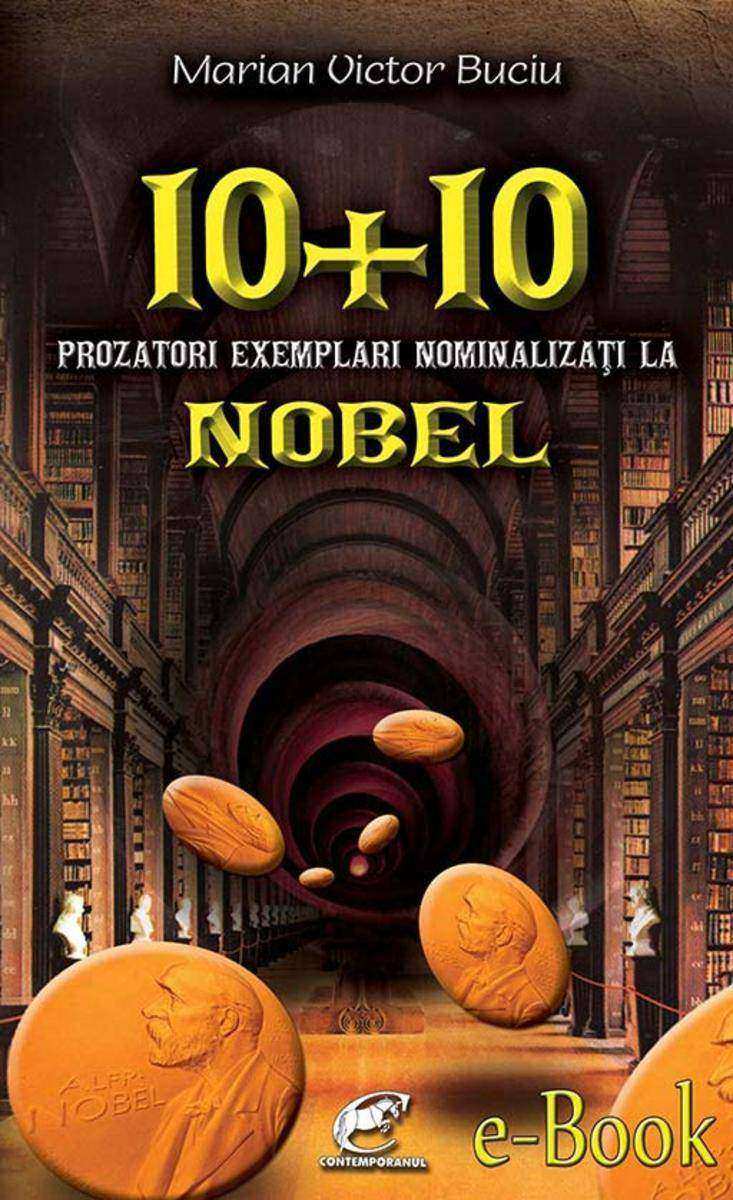
10 plus 10 prozatori exemplari nominaliza?i la Nobel
¥40.79
Candide is characterised by its sarcastic tone, as well as by its erratic, fantastical and fast-moving plot. A picaresque novel with a story similar to that of a more serious bildungsroman, it parodies many adventure and romance clichés, the struggles of which are caricatured in a tone that is mordantly matter-of-fact. Still, the events discussed are often based on historical happenings, such as the Seven Years' War and the 1755 Lisbon earthquake. As philosophers of Voltaire's day contended with the problem of evil, so too does Candide in this short novel, albeit more directly and humorously. Voltaire ridicules religion, theologians, governments, armies, philosophies, and philosophers through allegory; most conspicuously, he assaults Leibniz and his optimism. Voltaire's men and women point his case against optimism by starting high and falling low. A modern could not go about it after this fashion.?He would not plunge his people into an unfamiliar misery. He would just keep them in the misery they were born to. But such an account of Voltaire's procedure is as misleading as the plaster cast of a dance. Look at his procedure again. Mademoiselle Cunégonde, the illustrious Westphalian, sprung from a family that could prove seventy-one quarterings, descends and descends until we find her earning her keep by washing dishes in the Propontis. The aged faithful attendant, victim of a hundred acts of rape by negro pirates, remembers that she is the daughter of a pope, and that in honor of her approaching marriage with a Prince of Massa-Carrara all Italy wrote sonnets of which not one was passable. We do not need to know French literature before Voltaire in order to feel, although the lurking parody may escape us, that he is poking fun at us and at himself. His laughter at his own methods grows more unmistakable at the last, when he caricatures them by casually assembling six fallen monarchs in an inn at Venice. A modern assailant of optimism would arm himself with social pity. There is no social pity in "Candide." Voltaire, whose light touch on familiar institutions opens them and reveals their absurdity, likes to remind us that the slaughter and pillage and murder which Candide?witnessed among the Bulgarians was perfectly regular, having been conducted according to the laws and usages of war. Had Voltaire lived today he would have done to poverty what he did to war. Pitying the poor, he would have shown us poverty as a ridiculous anachronism, and both the ridicule and the pity would have expressed his indignation. About Author: VOLTAIREFran?ois-Marie Arouet (1694 – 1778), known by his nom de plume Voltaire, was a French Enlightenment writer, historian and philosopher famous for his wit, his attacks on the established Catholic Church, and his advocacy of freedom of religion, freedom of expression, and separation of church and state. Voltaire was a versatile writer, producing works in almost every literary form, including plays, poems, novels, essays, and historical and scientific works. He wrote more than 20,000 letters and more than 2,000 books and pamphlets. He was an outspoken advocate, despite the risk this placed him in under the strict censorship laws of the time. As a satirical polemicist, he frequently made use of his works to criticize intolerance, religious dogma, and the French institutions of his day.


