万本电子书0元读

万本电子书0元读

59元6本 胡适的北大哲学课·肆
胡适的北大哲学课·肆
胡适
¥11.99
1917年7月,胡适受蔡元培之邀就任国立北京大学文科教授,讲授中国古代哲学史、中国名学、英文高等修辞学。胡适一边教学,一边编写教材。顾颉刚曾对同窗傅斯年推荐:“胡先生讲的的确不差,他有眼光、有胆量、有断制,确是一个有能力的哲学史家。”   自1919年至1937年间。胡适多次在北京大学讲授中国哲学史,而且主要是讲中古哲学史和近世哲学史,其中1919年2月出版的《中国哲学史大纲》(卷上)就是在讲义的内容基础上修定而成。胡适是首位采用了西方近代哲学的体系和方法研究中国哲学的人,由于他的出现,中国的思想史才初具规模。他在中国哲学史,甚至在各种专史和通史的研究方面,都是创性的,他觉得是中国哲学思想史的山鼻祖。   《胡适的北大哲学课》以胡适在北京大学的所有哲学讲义为母本,再综合胡适关于中国哲学的其他著作整理而成,力求为读者构建一个*全的胡适哲学体系,让读者*直的感受哲学大师的风采。
我们与恶的距离:关于邪恶的哲学思考
我们与恶的距离:关于邪恶的哲学思考
[挪]拉斯·弗雷德里克·H·史文德森
¥41.40
哲学家拉斯·弗雷德里克·H.史文德森对邪恶现象行了哲学审视。他结合来自哲学、文学、心理学、神学和科学(生物学),以及流行文化对邪恶现象的观察,介绍了从古至今哲学家们关于邪恶的思想,抽丝剥茧,试图从复杂性中解析出邪恶的根源和本质。 ·什么是邪恶? ·我们如何抗邪恶? ·从古至今,神学家、哲学家和科学家是如何看待邪恶的? ·在现代和后现代社会,我们如何对邪恶定性? ·思考关于邪恶的概念能为我们理解自身带来何种贡献? 史文德森认为,我们的知识盲让我们对邪恶存在着错误的论断,认为它是一个神学、自然科学或社会科学,甚至是哲学的主题。实际上,邪恶应该是在道德和政治领域处理的具体问题。我们既可能是邪恶的受害者,也可能是作恶者。只有将邪恶视为人性的一面,我们才能理解并它。
儒家与康德(增订版)
儒家与康德(增订版)
李明辉
¥36.00
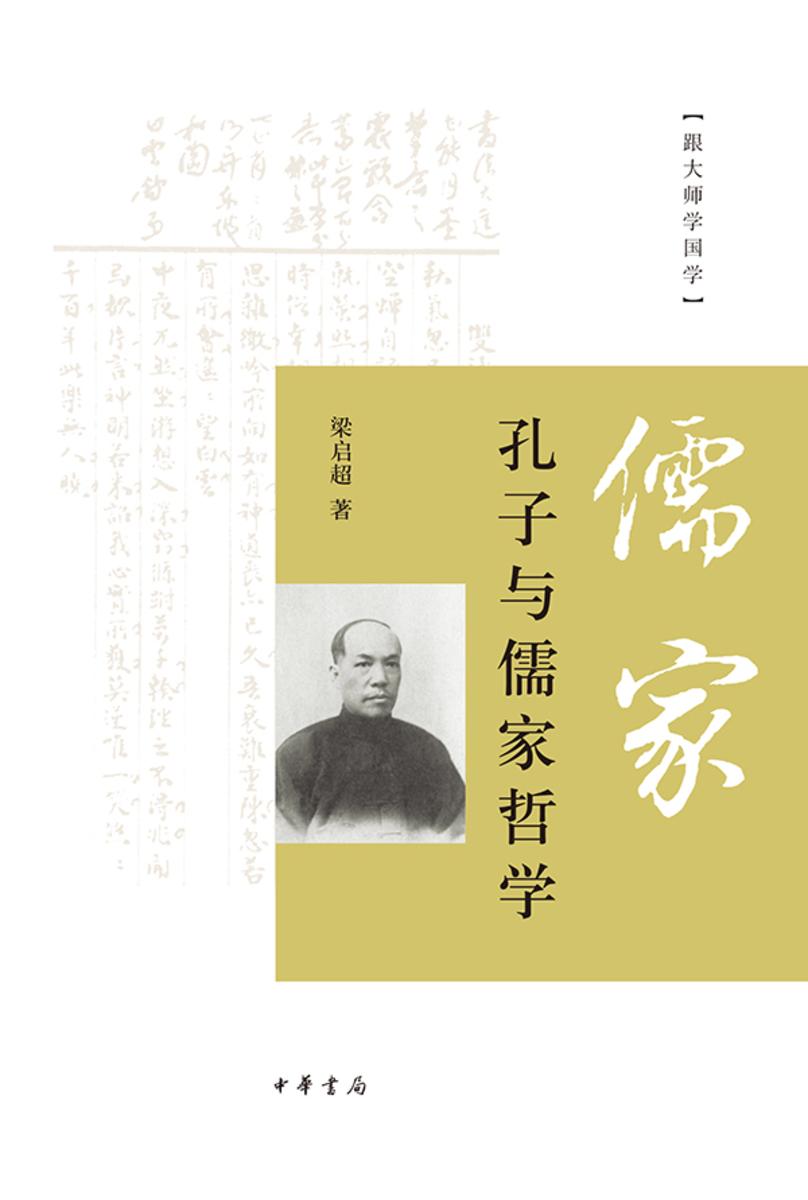
儒家是中国传统文化与哲学的主流,康德则在西方哲学中建立了*个自律伦理学系统,两者都有深刻而完整的内涵,深远地影响了东西方社会,至今依然如此。 康德提出“自律”的道德原则,建立了自律伦理学,康德对西方伦理学思考所造成的这种根本转向被称为“伦理学中的哥白尼式革命”。康德从人所共有的道德意识出发说明道德的本质,儒家则主圣人之道本乎人心,仁义道德不离人伦日用。东西方圣哲的思想就在人*根本的道德意识之基础上,如电光石火般交会,碰撞出思想的火花。 李明辉教授《儒家与康德》(增订版)以自律道德为主要论述的切,试图阐明康德的“自律”概念,探讨儒家的自律伦理学,并比较康德的“幸福”概念与儒家的“义利之辨”。
智慧与思维五部曲
智慧与思维五部曲
尼古拉斯•克里斯塔基斯;史蒂芬•平克;斯科特•佩奇;丹尼尔•丹尼特;布鲁斯•胡德
¥172.80
融合了哲学、历史学、人类学、社会学、遗传学、进化生物学、经济学、流行病学等多个学 科领域,作者克里斯塔基斯提出了一个令人瞩目的观点:基因不仅影响着我们身体的结构与 功能,影响着我们心智的结构与功能,影响着我们的行为,更影响着我们我们社会的结构与 功能。我们每个人都天生携带着进化的蓝图,可以用来建设一个美好的社会。进化使我们天 生良善。
《论语》的处世智慧
《论语》的处世智慧
李圩子
¥3.99
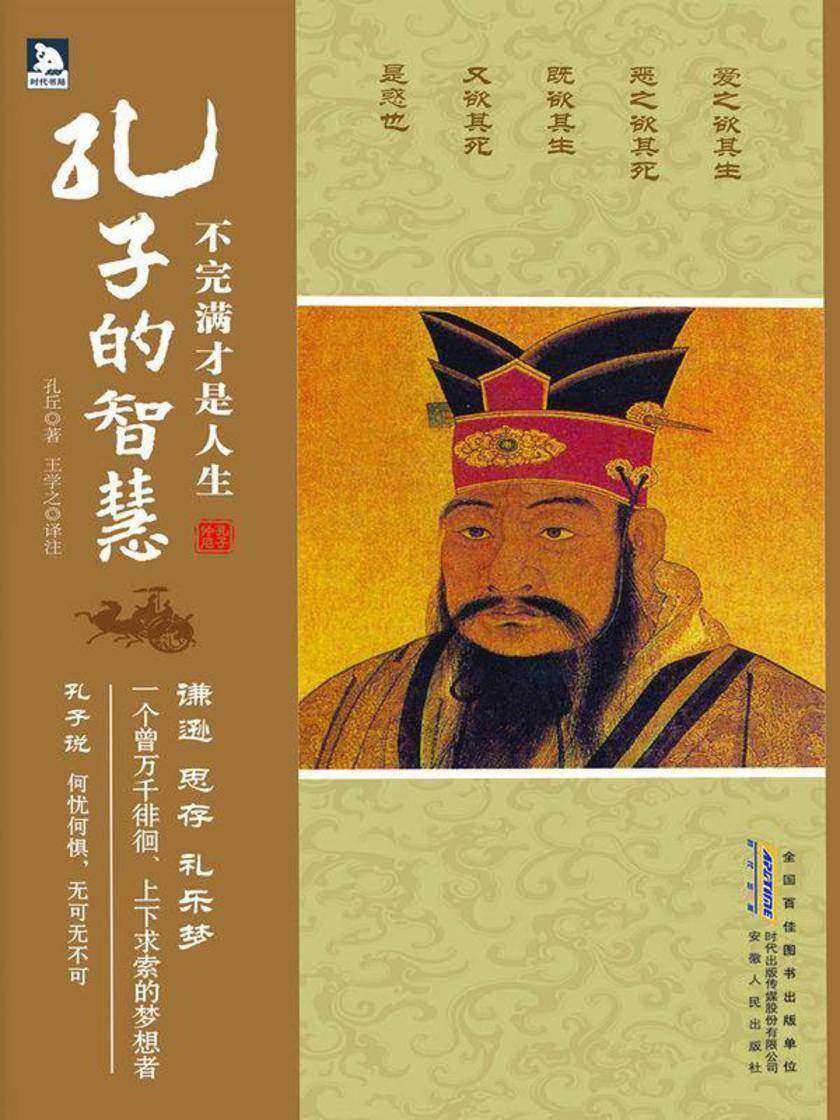
《论语》一书是孔子及其部分弟子言行的汇编,该书生 动形象并较为详尽地记录了孔子的学、思、行及其人格形象。 《论语》的处世智慧处处可以体现。金玉良 言更是随处采撷,如为人、处世、从政、管理、学习、言说、 交友、交往、财富、教育、伦理等智慧。   告诉我们,当今社会,竞争激烈,我们每个人的身心或许都会出现这 样或那样的问题,如果我们能够沉静用心,时不时地回到孔子 那里,便可以汲取到意想不到的人生处世智慧,更好地服务当 下的生活,为我所用。
功利主义儒家——陈亮对朱熹的挑战
功利主义儒家——陈亮对朱熹的挑战
(美)田浩
¥19.40
南宋时期,中国文明正面临严重危机,而正是对社会与政治问题。的忧患,在当时的儒者间引发了“道德伦理”与“事功伦理”之争。“明道谊而计功利”,遂成为冲出程朱框架的新口号,显示出儒学发展的新倾向。在“责任伦理”的原则已成为共识的今天,重新回顾这段思想脉络,或可为儒家文化对现代社会的回应,寻找到传统的哲学资源。 中国思想史这门学科的使命,乃在于潜心到过去的生存境遇下,考察古人的思维过程。田浩教授的这本成名作,在新发现的陈亮作品的支持下,具体探讨了陈亮思想的演变过程,尤其是在宋代的特定历史背景下,参照着两位论辩对手的具体阅历及性格,展示了陈亮、朱熹间的“道德与事功”之辩,从而再现了中国思想的丰富性、复杂性和历史性。缘此,本书被汉学宗师史华慈推许为自己所读到的“以西方语言叙述宋代儒学思想多种特征的*生动、*易理解的作品之一。
Politics: A Treatise on Government
Aristotle
¥40.79
The Politics of Aristotle is the second part of a treatise of which the Ethics is the first part. It looks back to the Ethics as the Ethics looks forward to the Politics. For Aristotle did not separate, as we are inclined to do, the spheres of the statesman and the moralist. In the Ethics he has described the character necessary for the good life, but that life is for him essentially to be lived in society, and when in the last chapters of the Ethics he comes to the practical application of his inquiries, that finds expression not in moral exhortations addressed to the individual but in a description of the legislative opportunities of the statesman.
Poetics
Poetics
Aristotle
¥40.79
Aristotle's Poetics is the earliest surviving work of dramatic theory and the first extant philosophical treatise to focus on literary theory. In it, Aristotle offers an account of what he calls poetry.
On Dreams
On Dreams
Aristotle
¥40.79
We must, in the next place, investigate the subject of the dream, and first inquire to which of the faculties of the soul it presents itself, i.e. whether the affection is one which pertains to the faculty of intelligence or to that of sense-perception; for these are the only faculties within us by which we acquire knowledge.
On the Heavens
On the Heavens
Aristotle
¥40.79
The science which has to do with nature clearly concerns itself for the most part with bodies and magnitudes and their properties and movements, but also with the principles of this sort of substance, as many as they may be. For of things constituted by nature some are bodies and magnitudes, some possess body and magnitude, and some are principles of things which possess these. Now a continuum is that which is divisible into parts always capable of subdivision, and a body is that which is every way divisible.
Emile
Emile
Jean-Jacques Rousseau
¥40.79
Emile is a treatise on the nature of education and on the nature of man written by Jean-Jacques Rousseau, who considered it to be the best and most important of all his writings. During the French Revolution, Emile served as the inspiration for what became a new national system of education.
Walden
Walden
Henry David Thoreau
¥40.79
I went to the woods because I wished to live deliberately, to front only the essential facts of life, and see if I could not learn what it had to teach, and not, when I came to die, discover that I had not lived. I did not wish to live what was not life, living is so dear; nor did I wish to practice resignation, unless it was quite necessary. I wanted to live deep and suck out all the marrow of life, to live so sturdily and Spartan-like as to put to rout all that was not life, to cut a broad swath and shave close, to drive life into a corner, and reduce it to its lowest terms, and, if it proved to be mean, why then to get the whole and genuine meanness of it, and publish its meanness to the world; or if it were sublime, to know it by experience, and be able to give a true account of it in my next excursion.
The Doctrine of the Mean
Confucius
¥40.79
The Doctrine of the Mean is a text rich with symbolism and guidance to perfecting oneself. The person who follows the mean is on a path of duty and must never leave it. A superior person is cautious, a gentle teacher and shows no contempt for his or her inferiors.
The Spanish Wars
The Spanish Wars
Julius Caesar
¥40.79
On the defeat of Pharnaces and reduction of Africa, those who escaped from those battles fled to young Cn. Pompey, who had taken possession of Further Spain, while Caesar was detained in Italy in exhibiting games. Pompey began to throw himself on the protection of every state, in order the more readily to establish the means of defense against him. Accordingly, with a considerable force which had been collected, partly by entreaty, partly by force, he began to lay waste the province. Under these circumstances some states voluntarily sent him supplies, others shut the gates of their towns against him. If any of these chanced to fall into his hands by assault, although some citizen in it had deserved well of Cn. Pompey (his father), yet some cause was alleged against him on account of the greatness of his wealth, so that, he being dispatched, his fortune might become the reward of the soldiers.
Walden and Civil Disobedience
Henry David Thoreau
¥40.79
Walden follows Thoreau's experiences over the course of two years, two months, and two days in a cabin he built near Walden Pond, amidst woodland owned by his friend and mentor Ralph Waldo Emerson. In Civil Disobedience Thoreau argues that individuals should not permit governments to overrule or atrophy their consciences, and that they have a duty to avoid allowing such acquiescence to enable the government to make them the agents of injustice.
Excursions
Excursions
Henry David Thoreau
¥40.79
An anthology of several essays by American transcendentalist Henry David Thoreau. The book includes an introduction entitled 'Biographical Sketch' in which fellow transcendentalist Ralph Waldo Emerson provides a description of Thoreau and nine of nine of Thoreau's essays: Natural History of Massachusetts, A Walk to Wachusett, The Landlord, A Winter Walk, The Succession of Forest Trees, Walking, Autumnal Tints, Wild Apples, and Night and Moonlight.
The Civil Wars, Book 2
Julius Caesar
¥40.79
While these things were going forward in Spain, Caius Trebonius, Caesar's lieutenant, who had been left to conduct the assault of Massilia, began to raise a mound, vineae, and turrets against the town, on two sides; one of which was next the harbor and docks, the other on that part where there is a passage from Gaul and Spain to that sea which forces itself up the mouth of the Rhone. For Massilia is washed almost on three sides by the sea, the remaining fourth part is the only side which has access by land.
Meteorology
Meteorology
Aristotle
¥40.79
We have already discussed the first causes of nature, and all natural motion, also the stars ordered in the motion of the heavens, and the physical element-enumerating and specifying them and showing how they change into one another-and becoming and perishing in general. There remains for consideration a part of this inquiry which all our predecessors called meteorology. It is concerned with events that are natural, though their order is less perfect than that of the first of the elements of bodies. They take place in the region nearest to the motion of the stars. Such are the milky way, and comets, and the movements of meteors.
On the Motion of Animals
Aristotle
¥40.79
Elsewhere we have investigated in detail the movement of animals after their various kinds, the differences between them, and the reasons for their particular characters (for some animals fly, some swim, some walk, others move in various other ways); there remains an investigation of the common ground of any sort of animal movement whatsoever.
There is No Thinker Only Thought
J. Krishnamurti
¥73.49
In these talks given in New Delhi, Bombay, London, Saanen, Paris and Madras, Krishnamurti begins by defining what he means by the word discussion and what it means to go beyond thought. "I think, before we begin, it should be made clear what we mean by discussion. To me it is a process of discovery through exposing oneself to the fact. That is, in discussing I discover myself, the habit of my thought, the way I proceed to think, my reactions, the way I reason, not only intellectually but inwardly. It is really exposing oneself not merely verbally but actually so that the discussion becomes a thing worth while - to discover for ourselves how we think. Because, I feel if we could be serious enough for an hour or a little more and really fathom and delve into ourselves as much as we can, we shall be able to release, not through any action of will, a certain sense of energy which is all the time awake, which is beyond thought."
Choiceless Awareness
J. Krishnamurti
¥73.49
In these talks in India , Krishnamurti begins by stating his intention to begin answering questions put forth to him by others. He points out that if an answer is to be right, the question itself must also be. "...a serious question put by a serious person, by an earnest person who is seeking out the solution of a very difficult problem, then, obviously, there will be an answer befitting that question."? An extensive compendium of Krishnamurti's talks and discussions in the USA, Europe, India, New Zealand, and South Africa from 1933 to 1967—the Collected Works have been carefully authenticated against existing transcripts and tapes. Each volume includes a frontispiece photograph of Krishnamurti , with question and subject indexes at the end. The content of each volume is not limited to the subject of the title, but rather offers a unique view of Krishnamurti's extraordinary teachings in selected years. The Collected Works offers the reader the opportunity to explore the early writings and dialogues in their most complete and authentic form.