


 购物车
 个人中心


Плетем из газетных трубочек. Мебель
¥17.74
Andersena pasakas: ?Lakstīgala”, ?Sliktais princis”, ?Rū?ītis”. Trīs brīni??īgas, visiem zināmas un lasītāju iecienītas pasakas vienā grāmati?ā. ?Lakstīgala” - tā ir skaista pasaka par necilu putni?u, kas dzīvoja kāda ?īnas ?eizara dārzā. Lakstīgalas burvīgās dziesmas spēja sagādāt ne tikai prieku, bet arī dziedināja slimo ?eizaru. ?? ?Sliktais princis” – ?ī pasaka vēstī par cietsirdīgu un ne?ēlīgu valdnieku, kur? nolēma gūt varu pār visu pasauli, pastāvīgi karojot. ?Rū?ītis” – tas ir stāsts par elfu, kur? pārticībā dzīvoja bagāta tirgotāja mājā un kuru sajūsmināja nabadzīga studenta, grāmatu un dzejas cienītāja, pasaule. ? Andersena pasakas ir burvju stāsti, kuros apslēptas svarīgas patiesības un morāles vērtības. Tās iepriecina mūsdienu bērnus tāpat kā pirms gadiem vi?u vecākus un vecvecākus.? Katra pasaka ir veidota ar skaistām un krāsainām ilustrācijām.

Звичайна вдячн?сть
¥20.44
Osnovu svake pri?e ove zbirke ?ini istra?ivanje emotivnog i erotskog u odnosu dve ?ene, ali ovo ?tivo nije samo to; Ana Kala se poigrava sa ?anrovima, pa je njena osnovna tema nekada obra?ena kao romansa, nekada kao triler, a nekad kao nau?na fantastika.Knjiga sadr?i veoma eksplicitne opise erotskih scena i nije namenjena maloletnicima, kao ni onima koji su neskloni kvir literaturi.

Економ?ка. ?нструкц?я з використання
¥33.03
Il libro della giungla di Rudyard Kipling è tra i romanzi per ragazzi più amati. Si presenta come una raccolta di racconti a cui ha fatto seguito Il secondo libro della giungla nel 1895. Le storie del libro della giungla narrano del piccolo Mowgli, "il cucciolo d’uomo" rapito da una tigre, Shere Khan, e poi adottato dai lupi che lo educano insegnandogli come riuscire a sopravvivere nella giungla.
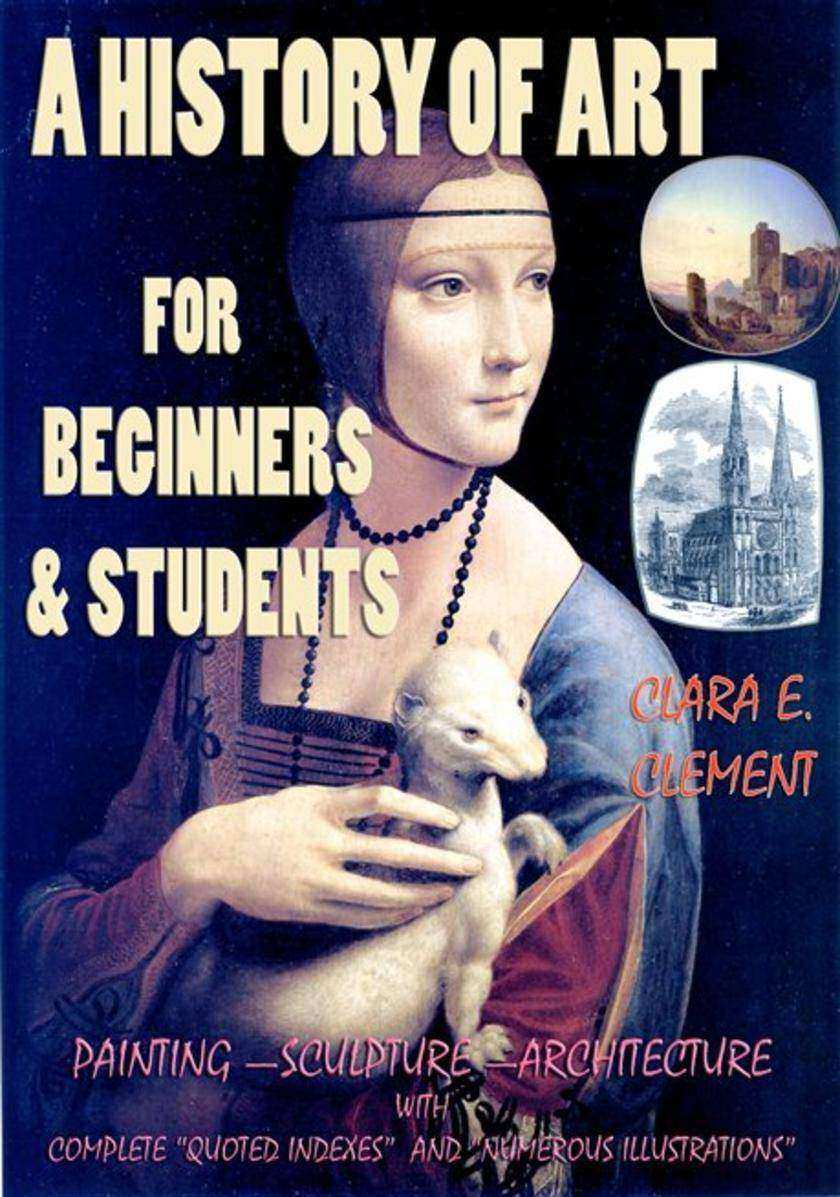
A History of Art for Beginners and Students
¥24.44
A kis szellem minden éjjel pontban éjfélkor f?lébred. Vígan járja Bagolyk? várának ?sszes termét, és meglátogatja ?reg barátját, Uhu bácsit. De k?zben arról ábrándozik, milyen jó lenne nappal látni a világot! Csupán egyetlenegyszer… Addig nem nyugszik, míg egy ver?fényes napon a kívánsága váratlanul nem teljesül. Ekkor izgalmas kalandok sora veszi kezdetét, és nemcsak a kis szellem számára… A Kolibri Klasszikusok sorozatban a Torzonborz-t?rténetek után egy újabb Otfried Preussler meseh?s, a kis szellem válhat generációk kedvencévé.
A Dialogue in Hades: "Illustrated"
¥8.09
t lány, t nézpont, t knyv. Cherry trténete, a Cseresznyés ábránd az els. Cherry Costello élete hamarosan rkre megváltozik. Somersetbe kltzik az apukájával, ahol egy új anyuka és egy csomó vadiúj testvér vár rá. Rgtn az els napon megismeri Shay Fletchert, aki annyira szívdgleszt, hogy az már kzveszélyes. Csakhogy Shay foglalt: Cherry új mostohatestvérével, Honey-val jár. Cherry pontosan tudja, milyen kockázatos Shayjel barátkoznia – hiszen ezzel mindent tnkretehet. Csakhogy ez még nem jelenti azt, hogy távol is tudja tartani magát tle… Csajok és csokik. Egy knyvsorozat, melyben minden testvérnek megvan a maga trténete… Neked melyik lány lesz a kedvenced Talán a Cseresznyés ábránd fhse, Cherry Az a lány, akinek tejeskávé szín a bre, stétbarna szeme pedig mandulavágású. Akinek élénk a képzelete, szórakoztató a társaságában lenni, és aki mindig kiáll magáért. Cathy Cassidy nyolc-kilencéves korában írta meg els képesknyvét kisccsének, és azóta ontja magából a trténeteket. Magyarul elsként a Csajok és csokik-sorozata (a Cseresznyés ábránd az 1. ktet) jelenik meg, melynek a vagány Tanberry-nvérek a fhsei, de mellettük feltnik néhány szupermen srác is, valamint Cathy egyik legnagyobb szerelme, a csokoládé is fontos szerepet kap. Cathy Skóciában él a családjával. Az sszes munka kzül, amivel valaha megpróbálkozott, az írást szereti a legjobban – hiszen amikor ír, mást sem kell csinálnia, mint ébren álmodozni egész álló nap.

?szintén hazudva
¥58.04
36 тижн?в у списку бестселер?в The New York Times! Евел?н пережива? глибоку особисту кризу. Вона знайомиться з? старенькою Н?нн?, яка, попри важку долю, не втрача? жаги до життя. Н?нн? розпов?да? Евел?н ?стор?? ?хнього м?стечка: про д?вчину, яка п?сля загибел? брата знаходить сили жити дал?; про розбите серце красун? Рут; про мандр?вного роб?тника, який закохався в Рут; про безроб?тних, яких у кафе ?Зупинка? годували безкоштовно... Ц? ?стор?? мають таку силу, що зм?нюють на краще життя тих, хто ?х чита?. 36 tizhn?v u spisku bestseler?v The New York Times! Evel?n perezhiva? gliboku osobistu krizu. Vona znajomit'sja z? staren'koju N?nn?, jaka, popri vazhku dolju, ne vtracha? zhagi do zhittja. N?nn? rozpov?da? Evel?n ?stor?? ?hn'ogo m?stechka: pro d?vchinu, jaka p?slja zagibel? brata znahodit' sili zhiti dal?; pro rozbite serce krasun? Rut; pro mandr?vnogo rob?tnika, jakij zakohavsja v Rut; pro bezrob?tnih, jakih u kafe ?Zupinka? goduvali bezkoshtovno... C? ?stor?? majut' taku silu, shho zm?njujut' na krashhe zhittja tih, hto ?h chita?.

A Thousand Years of Jewish History: Illustrated
¥32.62
Minden bonyodalom azzal kezd?dik, hogy Ríviai Geralt kardjainak rejtélyes módon lába kél. Ezt k?veti egy démonidéz? rejtélye, egy furcsa hajóút és egy meglehet?sen fordulatos királyi esküv?. A régi barát, K?k?rcsin szokás szerint most is Geralt ?segítségére siet”, akár akarja a vaják, akár nem. Felbukkan egy varázslón? is, aki megpróbálja irányítani Geraltot, szokás szerint. ?s ismét akadnak olyanok, akik a vaják útjába állnak, szokás szerint. Ez a k?tet Sapkowski utolsó regénye a Vaják-világban, és a sagához csak k?nny? szállal kapcsolódik, de a szerz? nem okoz csalódást: ismét egyszerre szembesülünk népek sorsával és az egyes ember drámájával, de mindezt ismét olyan gazdag képzeletvilággal ?tv?zve és olyan humorral tálalva, ami letehetetlenné teszi a k?tetet. Szokás szerint.
Candide: Illustrated
¥18.74
High into air are the great New York buildings lifted by a ray whose source no telescope can find.It seemed only fitting and proper that the greatest of all leaps into space should start from Roosevelt Field, where so many great flights had begun and ended. Fliers whose names had rung—for a space—around the world, had landed here and been received by New York with all the pomp of visiting kings. Fliers had departed here for the lands of kings, to be received by them when their journeys were ended. Of course Lucian Jeter and Tema Eyer were disappointed that Franz Kress had beaten them out in the race to be first into the stratosphere above fifty-five thousand feet. There was a chance that Kress would fail, when it would be the turn of Jeter and Eyer. They didn't wish for his failure, of course. They were sports-men as well as scientists; but they were just human enough to anticipate the plaudits of the world which would be showered without stint upon the fliers who succeeded. The warship simply vanished into the night sky. "At least, Tema," said Jeter quietly, "we can look his ship over and see if there is anything about it that will suggest something to us. Of course, whether he succeeds or fails, we shall make the attempt as soon as we are ready.""Indeed, yes," replied Eyer. "For no man will ever fly so high that another may not fly even higher. Once planes are constructed of unlimited flying radius ... well, the universe is large and there should be no end of space fights for a long time."

Ion
¥33.03
Ppuica Dadece, o poveste captivant de la un capt la altul, ce mpletete elemente de realitate cu fire de vis i de fantezie, este un ghid pentru adolesceni i tineri, nvndu-i s se fereasc de rcilele societii de astzi i s slujeasc forelor binelui i progresului.Lucrarea poate fi citit n egal msur de maturi, ntruct vorbete pe limba copilului din noi. Fiecare dintre noi poart cu sine, ascuns adnc n fiina sa, un copil... o fragilitate care se vrea ocrotit i cultivat. Carina Ebenstein tie s ajung acolo, n profundul sufletelor noastre i s ne transmit un mesaj de rar frumusee i poezie.Personajele i ntmplrile din cartea de fa ne dau ncredere n puterea valorilor spirituale perene ale omului.“ – Vasile Poenaru

Fugara
¥57.96
Cele mai bune texte SF ?i fantasy votate de Science Fiction and Fantasy Writers of America.?n viitorul devastat ecologic, b?rba?i supu?i modific?rii genetice sunt angaja?i s? reproduc? dansurile de ?mperechere specifice p?s?rilor disp?rute ale c?ror gene le poart? ei acum… Diminuarea luminii soarelui ?i sile?te pe ultimii supravie?uitori de pe P?m?nt s? se ascund? ?n ad?ncurile oceanelor ?nghe?ate… sunt doar c?teva subiecte incitante dintr-un volum care con?ine c??tig?toarele premiilor Nebula din cele trei categorii de fic?iune scurt?, un fragment din romanul recompensat cu Nebula, c??tig?toarele premiului Rhysling ?i Solstice ?i un fragment din romanul distins cu Premiul Andre Norton.

?i tu po?i fi Supernanny 2. Cu copilul la ?coal?
¥90.84
Cartea I din Trilogia Confluen?eiOra?ele ?i ma?in?riile str?vechi, aflate ?n dezintegrare pe planeta Confluen?a sunt at?t de misterioase, ?nc?t par magice. Plecat din necropola Aeolis spre enigmatica metropol? Ys, Yama descoper? secretele trecutului s?u, pe m?sur? ce este prins ?n iure?ul unui r?zboi de interese politice ?i religioase.?Prin Copilul fluviului, McAuley ?ncepe o trilogie care descrie dispari?ia unei civiliza?ii uluitoare.“ – Washington Post?O saga SF/fantasy ambi?ioas?, ce se desf??oar? pe o planet? unde tehnologiile sunt str?vechi ?i interzise.“ – Library Journal?…o fuziune de hard SF ?i fantasy… un viitor incredibil de fantastic, dar care, ?n timp, se dovede?te a fi guvernat de ra?iunea ?tiin?ific?.“ – Locus

Scream Loud/Quiet Strength
¥146.74
The Lockwood Lions’ crosstown rivals, the Grovehill Giants, seem to have it all. Or do they? When the cheer squad and the ballers get together, it always gets intense. But there are two sides to every story—whose side are you on? Each novel in the flip is approximately 30,000 words–170 pages. The ladies of Savvy Girl—Skylar, Ariel, Vanessa, Victoria, and Yaris—have their ups and downs. But they won’t let their drama interfere with the state title. The ballers of Fresh Guy—Ford, Ryder, Emerson, Stone, and Hagen—are tough athletes and grand showboaters. But can they take it to the Dome? Scream Loud: Vanessa House has a lot on her mind. She’s not perfect like her shy half-sister Victoria. Plus living with her father and his new wife in a cushy lifestyle makes her feel guilty about the struggles her mom and siblings have to endure. Hooking up with a wild friend, she gets out of control. Quiet Strength: After GHH loses their star kicker to the rival high school, Emerson thinks that he’s the best guy to take ER Stone’s place. But the coach won’t give him any play time because the season has already started. Emerson has another reason for wanting to make the team. Her name is Vanessa House.

Little Women
¥18.74
In offering this study to a public accustomed only to the unquestioning acceptance of the home as something perfect, holy, quite above discussion, a word of explanation is needed. First, let it be clearly and definitely stated, the purpose of this book is to maintain and improve the home. Criticism there is, deep and thorough; but not with the intention of robbing us of one essential element of home life—rather of saving us from conditions not only unessential, but gravely detrimental to home life. Every human being should have a home; the single person his or her home; and the family their home. The home should offer to the individual rest, peace, quiet, comfort, health, and that degree of personal expression requisite; and these conditions should be maintained by the best methods of the time. The home should be to the child a place of happiness and true development; to the adult a place of happiness and that beautiful reinforcement of the spirit needed by the world's workers. We are here to perform our best service to society, and to find our best individual growth and expression; a right home is essential to both these uses. The place of childhood's glowing memories, of youth's ideals, of the calm satisfaction of mature life, of peaceful shelter for the aged; this is not attacked, this we shall not lose, but gain more universally. What is here asserted is that our real home life is clogged and injured by a number of conditions which are not necessary, which are directly inimical to the home; and that we shall do well to lay these aside. As to the element of sanctity—that which is really sacred can bear examination, no darkened room is needed for real miracles; mystery and shadow belong to jugglers, not to the truth. The home is a human institution. All human institutions are open to improvement. This specially dear and ancient one, however, we have successfully kept shut, and so it has not improved as have some others.
Lords of the Stratosphere
¥9.24
It is a cumulative tale that does not tell the story of Jack's house, or even of Jack who built the house, but instead shows how the house is indirectly linked to other things and people, and through this method tells the story of "The man all tattered and torn", and the "Maiden all forlorn", as well as other smaller events, showing how these are interlinked. Origins: It has been argued that the rhyme is derived from an Aramaic hymn Chad Gadya (lit., "One Young Goat") in Sepher Haggadah, first printed in 1590; but although this is an early cumulative tale that may have inspired the form, the lyrics bear little relationship. It was suggested by James Orchard Halliwell that the reference to the "priest all shaven and shorn" indicates that the English version is probably very old, presumably as far back as the mid-sixteenth century. There is a possible reference to the song in The Boston New Letter of 12 April 1739 and the line: "This is the man all forlorn, &c". However, it did not appear in print until it was included in Nurse Truelove's New-Year's-Gift, or the Book of Books for Children, printed in London in 1755. It was printed in numerous collections in the late eighteenth and early nineteenth centuries. Randolph Caldecott produced an illustrated version in 1878. Cherrington Manor, a handsome timber-framed house in North East Shropshire, England, is reputed to be the actual house that Jack built. There is a former malt house in the grounds. Syntactic structure: Each sentence in the story is an example of an increasingly deeply nested relative clause. The last version, "This is the horse...", would be quite difficult to untangle if the previous ones were not present. See the Noun Phrase for more details about postmodification of the noun phrase in this manner. References in popular culture: The rhyme continues to be a popular choice for illustrated children's books, with recent examples by Simms Taback and Quentin Blake showing how illustrators can introduce a fresh angle and humour into a familiar tale. The popularity of the rhyme can be seen in its use in a variety of other cultural contexts..
Notre-Dame de Paris
¥28.04
An afternoon of a cold winter’s day, when the sun shone forth with chilly brightness, after a long storm, two children asked leave of their mother to run out and play in the new-fallen snow. The elder child was a little girl, whom, because she was of a tender and modest disposition, and was thought to be very beautiful, her parents, and other people who were familiar with her, used to call Violet. But her brother was known by the style and title of Peony, on account of the ruddiness of his broad and round little phiz, which made everybody think of sunshine and great scarlet flowers. The father of these two children, a certain Mr. Lindsey, it is important to say, was an excellent, but exceedingly matter-of-fact sort of man, a dealer in hardware, and was sturdily accustomed to take what is called the common-sense view of all matters that came under his consideration. With a heart about as tender as other people’s, he had a head as hard and impenetrable, and therefore, perhaps, as empty, as one of the iron pots which it was a part of his business to sell. The mother’s character, on the other hand, had a strain of poetry in it, a trait of unworldly beauty—a delicate and dewy flower, as it were, that had survived out of her imaginative youth, and still kept itself alive amid the dusty realities of matrimony and motherhood. So, Violet and Peony, as I began with saying, besought their mother to let them run out and play in the new snow; for, though it had looked so dreary and dismal, drifting downward out of the gray sky, it had a very cheerful aspect, now that the sun was shining on it. The children dwelt in a city, and had no wider play-place than a little garden before the house, divided by a white fence from the street, and with a pear-tree and two or three plum-trees overshadowing it, and some rose-bushes just in front of the parlor windows. The trees and shrubs, however, were now leafless, and their twigs were enveloped in the light snow, which thus made a kind of wintry foliage, with here and there a pendent icicle for the fruit. “Yes, Violet,—yes, my little Peony,” said their kind mother; “you may go out and play in the new snow.”

The Ace of Clubs: Part 3 of the Red Dog Conspiracy
¥24.44
From New York Times best selling author Patricia Loofbourrow ... The one secret which could destroy everything ... Could you betray your people to buy your freedom? After financial disaster and the zeppelin bombing, the city of Bridges is reeling. Three of the four Families are implicated, and an inquest is called to investigate. After her failure to prove Jack Diamond's guilt in David Bryce's kidnapping and the deaths of her friends, private eye and mobster's moll Jacqueline Spadros has had enough. While she and her former lover Joseph Kerr try to learn who killed their family friend, they also begin making plans to leave the city. Her tormentors, however, are just getting started. As their web of lies and forgery draws ever tighter, Jacqui begins to see how deep the conspiracy against her and the Spadros Family really goes. When she's called as a witness in the inquest, the secrets Jacqui has kept over the years come back to cause her serious trouble. Will she be able to escape Bridges? Or will she be forced to face the terrible consequences of her lies and trickery once and for all? Scroll up, order your copy, and continue the adventure! Note: This is part 3 of a 13-part serial steampunk noir novel, the Red Dog Conspiracy. While it's not mandatory to have read The Jacq of Spades (part 1) and The Queen of Diamonds (part 2), it's highly recommended that you do so before venturing forth. Warning : language, alcohol/smoking, sexual content, infidelity, and attempted rape.

Peter Cotterell's Treasure
¥13.98
The Mole had been working very hard all the morning, spring-cleaning his little home. First with brooms, then with dusters; then on ladders and steps and chairs, with a brush and a pail of whitewash; till he had dust in his throat and eyes, and splashes of whitewash all over his black fur, and an aching back and weary arms. Spring was moving in the air above and in the earth below and around him, penetrating even his dark and lowly little house with its spirit of divine discontent and longing. It was small wonder, then, that he suddenly flung down his brush on the floor, said 'Bother!' and 'O blow!' and also 'Hang spring-cleaning!' and bolted out of the house without even waiting to put on his coat. Something up above was calling him imperiously, and he made for the steep little tunnel which answered in his case to the gavelled carriage-drive owned by animals whose residences are nearer to the sun and air. So he scraped and scratched and scrabbled and scrooged and then he scrooged again and scrabbled and scratched and scraped, working busily with his little paws and muttering to himself, 'Up we go! Up we go!' till at last, pop! his snout came out into the sunlight, and he found himself rolling in the warm grass of a great meadow. 'This is fine!' he said to himself. 'This is better than whitewashing!' The sunshine struck hot on his fur, soft breezes caressed his heated brow, and after the seclusion of the cellarage he had lived in so long the carol of happy birds fell on his dulled hearing almost like a shout. Jumping off all his four legs at once, in the joy of living and the delight of spring without its cleaning, he pursued his way across the meadow till he reached the hedge on the further side. 'Hold up!' said an elderly rabbit at the gap. 'Sixpence for the privilege of passing by the private road!' He was bowled over in an instant by the impatient and contemptuous Mole, who trotted along the side of the hedge chaffing the other rabbits as they peeped hurriedly from their holes to see what the row was about. 'Onion-sauce! Onion-sauce!' he remarked jeeringly, and was gone before they could think of a thoroughly satisfactory reply. Then they all started grumbling at each other. 'How STUPID you are! Why didn't you tell him——' 'Well, why didn't YOU say——' 'You might have reminded him——' and so on, in the usual way; but, of course, it was then much too late, as is always the case. It all seemed too good to be true. Hither and thither through the meadows he rambled busily, along the hedgerows, across the copses, finding everywhere birds building, flowers budding, leaves thrusting—everything happy, and progressive, and occupied. And instead of having an uneasy conscience pricking him and whispering 'whitewash!' he somehow could only feel how jolly it was to be the only idle dog among all these busy citizens. After all, the best part of a holiday is perhaps not so much to be resting yourself, as to see all the other fellows busy working.

Planet of Dreams
¥4.58
Strumming a harp while floating on a white cloud might be Paradise for some people, but it would bore others stiff. Given an unlimited chance to choose your ideal world, what would you specify—palaces or log cabins? I'll take beer, son, and thanks again for the offer. As you can see, I'm kinda down on my luck. I know what you're thinking, but I'm not really on the bum. I usually make out all right—nothing fancy, mind you, but it's a living. Odd jobs in the winter and spring, follow the harvests in the summer and fall. Things are slack right now.You? Electronics, huh? Used to know a fellow in electronics.... His name was Joe Shannon, used to work for Stellar Electric up in Fremont. Young fellow, not more'n twenty-five or so. Rail thin, wispy hair, serious look—you know, the one suit, absent-minded type. Joe was a brain. A triple-A, gold-plated, genuine genius. Had a wife named Marge. Not beautiful but pretty and a nice figure and a cook you never saw the likes of. Like I say, she was married to Joe but Joe was married to his work and after you'd been around a while, you could tell there was friction. But that ain't the beginning.

М?зер? (M?zer?)
¥27.06
нод дитяч мр збуваються. Дан Таарт керу найбльшою в кран залзницею. Генк Рарден запроваджу революцйну технологю в металург. Еллс Ваятт перетворю Богом забуту землю на промисловий рай. У хнх руках — наймогутнш корпорац, що вд них залежить доля крани. Вони — сучасн атланти. хня релгя — економка, хня вдповдальнсть — тягар усього свту. Колись вони мряли змнити життя суспльства, а тепер м доводиться чути, що вся хня праця лише помножу несправедливсть. Що всм людям потрбн однаков права можливост. Спершу атланти лише знизували плечима. Але настане той день, коли м остаточно набридне тримати цей свт на свох плечах. вони пдуть.
Meditations
¥18.23
Mr. Hungerton, her father, really was the most tactless person upon earth,—a fluffy, feathery, untidy cockatoo of a man, perfectly good-natured, but absolutely centered upon his own silly self. If anything could have driven me from Gladys, it would have been the thought of such a father-in-law. I am convinced that he really believed in his heart that I came round to the Chestnuts three days a week for the pleasure of his company, and very especially to hear his views upon bimetallism, a subject upon which he was by way of being an authority. For an hour or more that evening I listened to his monotonous chirrup about bad money driving out good, the token value of silver, the depreciation of the rupee, and the true standards of exchange. "Suppose," he cried with feeble violence, "that all the debts in the world were called up simultaneously, and immediate payment insisted upon,—what under our present conditions would happen then?" I gave the self-evident answer that I should be a ruined man, upon which he jumped from his chair, reproved me for my habitual levity, which made it impossible for him to discuss any reasonable subject in my presence, and bounced off out of the room to dress for a Masonic meeting. At last I was alone with Gladys, and the moment of Fate had come! All that evening I had felt like the soldier who awaits the signal which will send him on a forlorn hope; hope of victory and fear of repulse alternating in his mind. She sat with that proud, delicate profile of hers outlined against the red curtain. How beautiful she was! And yet how aloof! We had been friends, quite good friends; but never could I get beyond the same comradeship which I might have established with one of my fellow-reporters upon the Gazette,—perfectly frank, perfectly kindly, and perfectly unsexual. My instincts are all against a woman being too frank and at her ease with me. It is no compliment to a man. Where the real sex feeling begins, timidity and distrust are its companions, heritage from old wicked days when love and violence went often hand in hand. The bent head, the averted eye, the faltering voice, the wincing figure—these, and not the unshrinking gaze and frank reply, are the true signals of passion. Even in my short life I had learned as much as that—or had inherited it in that race memory which we call instinct. Gladys was full of every womanly quality. Some judged her to be cold and hard; but such a thought was treason. That delicately bronzed skin, almost oriental in its coloring, that raven hair, the large liquid eyes, the full but exquisite lips,—all the stigmata of passion were there. But I was sadly conscious that up to now I had never found the secret of drawing it forth. However, come what might, I should have done with suspense and bring matters to a head to-night. She could but refuse me, and better be a repulsed lover than an accepted brother. So far my thoughts had carried me, and I was about to break the long and uneasy silence, when two critical, dark eyes looked round at me, and the proud head was shaken in smiling reproof. "I have a presentiment that you are going to propose, Ned. I do wish you wouldn't; for things are so much nicer as they are." I drew my chair a little nearer. "Now, how did you know that I was going to propose?" I asked in genuine wonder."Don't women always know? Do you suppose any woman in the world was ever taken unawares? But—oh, Ned, our friendship has been so good and so pleasant! What a pity to spoil it! Don't you feel how splendid it is that a young man and a young woman should be able to talk face to face as we have talked?" "I don't know, Gladys. You see, I can talk face to face with—with the station-master." I can't imagine how that official came into the matter; but in he trotted, and set us both laughing. "That does not satisfy me in the least. I want my arms round you, and your head on my breast, and—oh, Gladys, I want——"

Metamorphosis: {Illustrated}
¥9.24
The third novel, The Vicomte de Bragelonne (serialized October, 1847—January, 1850), has enjoyed a strange history in its English translation. It has been split into three, four, or five volumes at various points in its history. The five-volume edition generally does not give titles to the smaller portions, but the others do. In the three-volume edition, the novels are entitled The Vicomte de Bragelonne, Louise de la Valliere, and The Man in the Iron Mask. For the purposes of this etext, I have chosen to split the novel as the four-volume edition does, with these titles: The Vicomte de Bragelonne, Ten Years Later, Louise de la Valliere, and The Man in the Iron Mask. In the first three etexts: The Vicomte de Bragelonne (Etext 2609): It is the year 1660, and D'Artagnan, after thirty-five years of loyal service, has become disgusted with serving King Louis XIV while the real power resides with the Cardinal Mazarin, and has tendered his resignation. He embarks on his own project, that of restoring Charles II to the throne of England, and, with the help of Athos, succeeds, earning himself quite a fortune in the process. D'Artagnan returns to Paris to live the life of a rich citizen, and Athos, after negotiating the marriage of Philip, the king's brother, to Princess Henrietta of England, likewise retires to his own estate, La Fere. Meanwhile, Mazarin has finally died, and left Louis to assume the reigns of power, with the assistance of M. Colbert, formerly Mazarin's trusted clerk. Colbert has an intense hatred for M. Fouquet, the king's superintendent of finances, and has resolved to use any means necessary to bring about his fall. With the new rank of intendant bestowed on him by Louis, Colbert succeeds in having two of Fouquet's loyal friends tried and executed. He then brings to the king's attention that Fouquet is fortifying the island of Belle-Ile-en-Mer, and could possibly be planning to use it as a base for some military operation against the king. Louis calls D'Artagnan out of retirement and sends him to investigate the island, promising him a tremendous salary and his long-promised promotion to captain of the musketeers upon his return. At Belle-Isle, D'Artagnan discovers that the engineer of the fortifications is, in fact, Porthos, now the Baron du Vallon, and that's not all. The blueprints for the island, although in Porthos's handwriting, show evidence of another script that has been erased, that of Aramis. D'Artagnan later discovers that Aramis has become the bishop of Vannes, which is, coincidentally, a parish belonging to M. Fouquet. Suspecting that D'Artagnan has arrived on the king's behalf to investigate, Aramis tricks D'Artagnan into wandering around Vannes in search of Porthos, and sends Porthos on an heroic ride back to Paris to warn Fouquet of the danger. Fouquet rushes to the king, and gives him Belle-Isle as a present, thus allaying any suspicion, and at the same time humiliating Colbert, just minutes before the usher announces someone else seeking an audience with the king. Ten Years Later (Etext 2681): As 1661 approaches, Princess Henrietta of England arrives for her marriage, and throws the court of France into complete disorder. The jealousy of the Duke of Buckingham, who is in love with her, nearly occasions a war on the streets of Le Havre, thankfully prevented by Raoul's timely and tactful intervention. After the marriage, though, Monsieur Philip becomes horribly jealous of Buckingham, and has him exiled. Before leaving, however, the duke fights a duel with M. de Wardes at Calais. De Wardes is a malicious and spiteful man, the sworn enemy of D'Artagnan, and, by the same token, that of Athos, Aramis, Porthos, and Raoul as well. Both men are seriously wounded, and the duke is taken back to England to recover. Raoul's friend, the Comte de Guiche, is the next to succumb to Henrietta's charms, and Monsieur obtains his exile as well, though De Guiche soon effects a reconciliation.


