


 购物车
 个人中心


Why I Fight
¥84.16
Street fighting. Brazilian jujitsu. Grappling. Welcome to BJ Penn's island. Don't worry, he won't hurt you (much). For the last decade, BJ Penn has been one of the most successful and feared fighters in the Ultimate Fighting Championship (UFC), rising through the ranks to become, pound for pound, one of the best in the world. Along the way, people have been quick to judge, praise, criticize, and hype him. They have torn him down only to build him back up. They have spilled ink and blood trying to understand what makes him the provocative and controversial fighter that he is.Why I Fight is the answer that everyone critics, fans, commentators, pundits, and perhaps even Dana White, current president of the UFC has been waiting for. In his own words, Penn tells the story of his life spent fighting, explaining what led a scrappy teenager from the rough streets of Hilo, Hawaii, onto the biggest stage in all of mixed martial arts (MMA). From his earliest days, becoming one of the preeminent practitioners of Brazilian jujitsu in the world, to his first MMA fights and his battles with UFC champions like Matt Hughes and Georges St-Pierre, Penn shows that in life, just like in the Octagon, he is never one to back down from a fight.A blunt and brutal look at his hardest-fought victories and his most frustrating defeats, Why I Fight is the story of how BJ Penn became one of only two fighters in UFC history to hold belts in two different weight classes. It is the story of a kid from Hawaii who loved to fight. It is the story of a true prodigy.
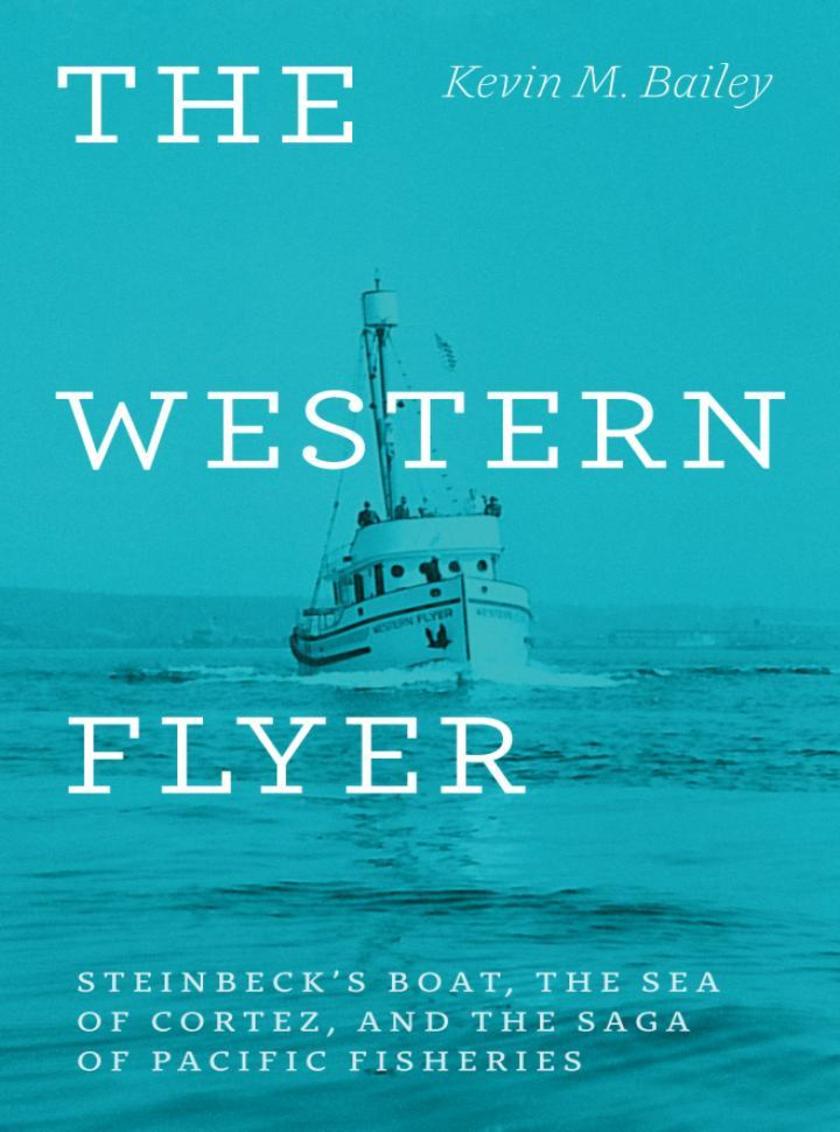
Western Flyer
¥147.15
In January 2010, the Gemini was moored in the Swinomish Slough on a Native American reservation near Anacortes, Washington. Unbeknownst to almost everyone, the rusted and dilapidated boat was in fact the most famous fishing vessel ever to have sailed: the original Western Flyer, immortalized in John Steinbeck's nonfiction classic The Log from the Sea of Cortez.In this book, Kevin M. Bailey resurrects this forgotten witness to the changing tides of Pacific fisheries. He draws on the Steinbeck archives, interviews with family members of crew, and more than three decades of working in Pacific Northwest fisheries to trace the depletion of marine life through the voyages of a single ship. After Steinbeck and his friend Ed Ricketts-a pioneer in the study of the West Coast's diverse sea life and the inspiration behind "e;Doc"e; in Cannery Row-chartered the boat for their now-famous 1940 expedition, the Western Flyer returned to its life as a sardine seiner in California. But when the sardine fishery in Monterey collapsed, the boat moved on: fishing for Pacific ocean perch off Washington, king crab in the Bering Sea off Alaska, and finally wild Pacific salmon-all industries that would also face collapse.As the Western Flyer herself faces an uncertain future-a businessman has bought her, intending to bring the boat to Salinas, California, and turn it into a restaurant feature just blocks from Steinbeck's grave-debates about the status of the California sardine, and of West Coast fisheries generally, have resurfaced. A compelling and timely tale of a boat and the people it carried, of fisheries exploited, and of fortunes won and lost, The Western Flyer is environmental history at its best: a journey through time and across the sea, charting the ebb and flow of the cobalt waters of the Pacific coast.
Integrating the Inner City
¥265.87
For many years Chicago's looming large-scale housing projects defined the city, and their demolition and redevelopment-via the Chicago Housing Authority's Plan for Transformation-has been perhaps the most startling change in the city's urban landscape in the last twenty years. The Plan, which reflects a broader policy effort to remake public housing in cities across the country, seeks to deconcentrate poverty by transforming high-poverty public housing complexes into mixed-income developments and thereby integrating once-isolated public housing residents into the social and economic fabric of the city. But is the Plan an ambitious example of urban regeneration or a not-so-veiled effort at gentrification?In the most thorough examination of mixed-income public housing redevelopment to date, Robert J. Chaskin and Mark L. Joseph draw on five years of field research, in-depth interviews, and volumes of data to demonstrate that while considerable progress has been made in transforming the complexes physically, the integrationist goals of the policy have not been met. They provide a highly textured investigation into what it takes to design, finance, build, and populate a mixed-income development, and they illuminate the many challenges and limitations of the policy as a solution to urban poverty. Timely and relevant, Chaskin and Joseph's findings raise concerns about the increased privatization of housing for the poor while providing a wide range of recommendations for a better way forward.

Great Paleolithic War
¥365.93
Following the discovery in Europe in the late 1850s that humanity had roots predating known history and reaching deep into the Pleistocene era, scientists wondered whether North American prehistory might be just as ancient. And why notThe geological strata seemed exactly analogous between America and Europe, which would lead one to believe that North American humanity ought to be as old as the European variety. This idea set off an eager race for evidence of the people who might have occupied North America during the Ice Age-a long, and, as it turned out, bitter and controversial search.?In The Great Paleolithic War, David J. Meltzer tells the story of a scientific quest that set off one of the longest-running feuds in the history of American anthropology, one so vicious at times that anthropologists were deliberately frightened away from investigating potential sites. Through his book, we come to understand how and why this controversy developed and stubbornly persisted for as long as it did; and how, in the process, it revolutionized American archaeology.
Translation as Muse
¥329.62
Poetry is often said to resist translation, its integration of form and meaning rendering even the best translations problematic. Elizabeth Marie Young disagrees, and with?Translation as Muse, she uses the work of the celebrated Roman poet Catullus to mount a powerful argument that translation can be an engine of poetic invention.Catullus has long been admired as a poet, but his efforts as a translator have been largely ignored. Young reveals how essential translation is to his work: many poems by Catullus that we tend to label as lyric originals were in fact shaped by Roman translation practices entirely different from our own. By rereading Catullus through the lens of translation, Young exposes new layers of ingenuity in Latin poetry even as she illuminates the idiosyncrasies of Roman translation practice, reconfigures our understanding of translation history, and questions basic assumptions about lyric poetry itself.


从零开始学韩语到脱口秀:韩语发音、单词、口语速成全攻略
¥17.37
《从零开始学韩语:韩语发音、单词、口语速成全攻略》一书包含了韩语40音、单词、会话、语法、敬语等多个环节,内容涵盖了各种生活场景的实用会话,从易到难,仔细阅读完这本书,你就会发现,原本对于韩语一窍不通的自己,已慢慢拥有了*基本的韩语交际能力。
History of the Federal Reserve, Volume 1
¥265.87
Allan H. Meltzer's monumental history of the Federal Reserve System tells the story of one of America's most influential but least understood public institutions. This first volume covers the period from the Federal Reserve's founding in 1913 through the Treasury-Federal Reserve Accord of 1951, which marked the beginning of a larger and greatly changed institution.To understand why the Federal Reserve acted as it did at key points in its history, Meltzer draws on meeting minutes, correspondence, and other internal documents (many made public only during the 1970s) to trace the reasoning behind its policy decisions. He explains, for instance, why the Federal Reserve remained passive throughout most of the economic decline that led to the Great Depression, and how the Board's actions helped to produce the deep recession of 1937 and 1938. He also highlights the impact on the institution of individuals such as Benjamin Strong, governor of the Federal Reserve Bank of New York in the 1920s, who played a key role in the adoption of a more active monetary policy by the Federal Reserve. Meltzer also examines the influence the Federal Reserve has had on international affairs, from attempts to build a new international financial system in the 1920s to the Bretton Woods Agreement of 1944 that established the International Monetary Fund and the World Bank, and the failure of the London Economic Conference of 1933.Written by one of the world's leading economists, this magisterial biography of the Federal Reserve and the people who helped shape it will interest economists, central bankers, historians, political scientists, policymakers, and anyone seeking a deep understanding of the institution that controls America's purse strings."e;It was 'an unprecedented orgy of extravagance, a mania for speculation, overextended business in nearly all lines and in every section of the country.' An Alan Greenspan rumination about the irrational exuberance of the late 1990sTry the 1920 annual report of the board of governors of the Federal Reserve. . . . To understand why the Fed acted as it did-at these critical moments and many others-would require years of study, poring over letters, the minutes of meetings and internal Fed documents. Such a task would naturally deter most scholars of economic history but not, thank goodness, Allan Meltzer."e;-Wall Street Journal"e;A seminal work that anyone interested in the inner workings of the U. S. central bank should read. A work that scholars will mine for years to come."e;-John M. Berry, Washington Post"e;An exceptionally clear story about why, as the ideas that actually informed policy evolved, things sometimes went well and sometimes went badly. . . . One can only hope that we do not have to wait too long for the second installment."e;-David Laidler, Journal of Economic Literature"e;A thorough narrative history of a high order. Meltzer's analysis is persuasive and acute. His work will stand for a generation as the benchmark history of the world's most powerful economic institution. It is an impressive, even awe-inspiring achievement."e;-Sir Howard Davies, Times Higher Education Supplement

Shaky Game
¥265.87
In this new edition, Arthur Fine looks at Einstein's philosophy of science and develops his own views on realism. A new Afterword discusses the reaction to Fine's own theory."e;What really led Einstein . . . to renounce the new quantum orderFor those interested in this question, this book is compulsory reading."e;-Harvey R. Brown, American Journal of Physics"e;Fine has successfully combined a historical account of Einstein's philosophical views on quantum mechanics and a discussion of some of the philosophical problems associated with the interpretation of quantum theory with a discussion of some of the contemporary questions concerning realism and antirealism. . . . Clear, thoughtful, [and] well-written."e;-Allan Franklin, Annals of Science"e;Attempts, from Einstein's published works and unpublished correspondence, to piece together a coherent picture of 'Einstein realism.' Especially illuminating are the letters between Einstein and fellow realist Schrdinger, as the latter was composing his famous 'Schrdinger-Cat' paper."e;-Nick Herbert, New Scientist"e;Beautifully clear. . . . Fine's analysis is penetrating, his own results original and important. . . . The book is a splendid combination of new ways to think about quantum mechanics, about realism, and about Einstein's views of both."e;-Nancy Cartwright, Isis
Lyric Powers
¥288.41
The authority of poetry varies from one period to another, from one culture to another. For Robert von Hallberg, the authority of lyric poetry has three sources: religious affirmation, the social institutions of those who speak the idioms from which particular poems are made, and the extraordinary cognition generated by the formal and musical resources of poems. Lyric Powers helps students, poets, and general readers to recognize the pleasures and understand the ambitions of lyric poetry.To explain why a reader might prefer one kind of poem to another, von Hallberg analyzes-beyond the political and intellectual significance of poems-the musicality of both lyric poetry and popular song, including that of Tin Pan Alley and doo-wop. He shows that poets have distinctive intellectual resources-not just rhetorical resources-for examining their subjects, and that the power of poetic language to generalize, not particularize, is what justly deserves a critic's attention.The first book in more than a decade from this respected critic, Lyric Powers will be celebrated as a genuine event by readers of poetry and literary criticism.
Plant Physics
¥329.62
From Galileo, who used the hollow stalks of grass to demonstrate the idea that peripherally located construction materials provide most of the resistance to bending forces, to Leonardo da Vinci, whose illustrations of the parachute are alleged to be based on his study of the dandelion's pappus and the maple tree's samara, many of our greatest physicists, mathematicians, and engineers have learned much from studying plants.?A symbiotic relationship between botany and the fields of physics, mathematics, engineering, and chemistry continues today, as is revealed in Plant Physics. The result of a long-term collaboration between plant evolutionary biologist Karl J. Niklas and physicist Hanns-Christof Spatz, Plant Physics presents a detailed account of the principles of classical physics, evolutionary theory, and plant biology in order to explain the complex interrelationships among plant form, function, environment, and evolutionary history. Covering a wide range of topics-from the development and evolution of the basic plant body and the ecology of aquatic unicellular plants to mathematical treatments of light attenuation through tree canopies and the movement of water through plants' roots, stems, and leaves-Plant Physics is destined to inspire students and professionals alike to traverse disciplinary membranes.
Not without Madness
¥488.54
Opera often seems to arouse either irrational enthusiasm or visceral dislike. Such madness, as Goethe wrote, is indispensable in all theater, and yet in practice, sentiment and passion must be balanced by sense and reason. Exploring this tension between madness and reason, Not without Madness presents new analytical approaches to thinking about eighteenth- and nineteenth-century opera through the lenses of its historical and cultural contexts.?In these twelve essays, Fabrizio Della Seta explores the concept of opera as a dramatic event and an essential moment in the history of theater. Examining the meaning of opera and the devices that produce and transmit this meaning, he looks at the complex verbal, musical, and scenic mechanisms in parts of La sonnambula, Ernani, Aida, Le nozze di Figaro, Macbeth, and Il trovatore. He argues that approaches to the study of opera must address performance, interpretation, composition, reception, and cultural ramifications. Purely musical analysis does not make sense unless we take into account music's dramatic function. Containing many essays available for the first time in English, Not without Madness bridges recent divisions in opera studies and will attract musicologists, musicians, and opera lovers alike.
Paul Klee
¥370.82
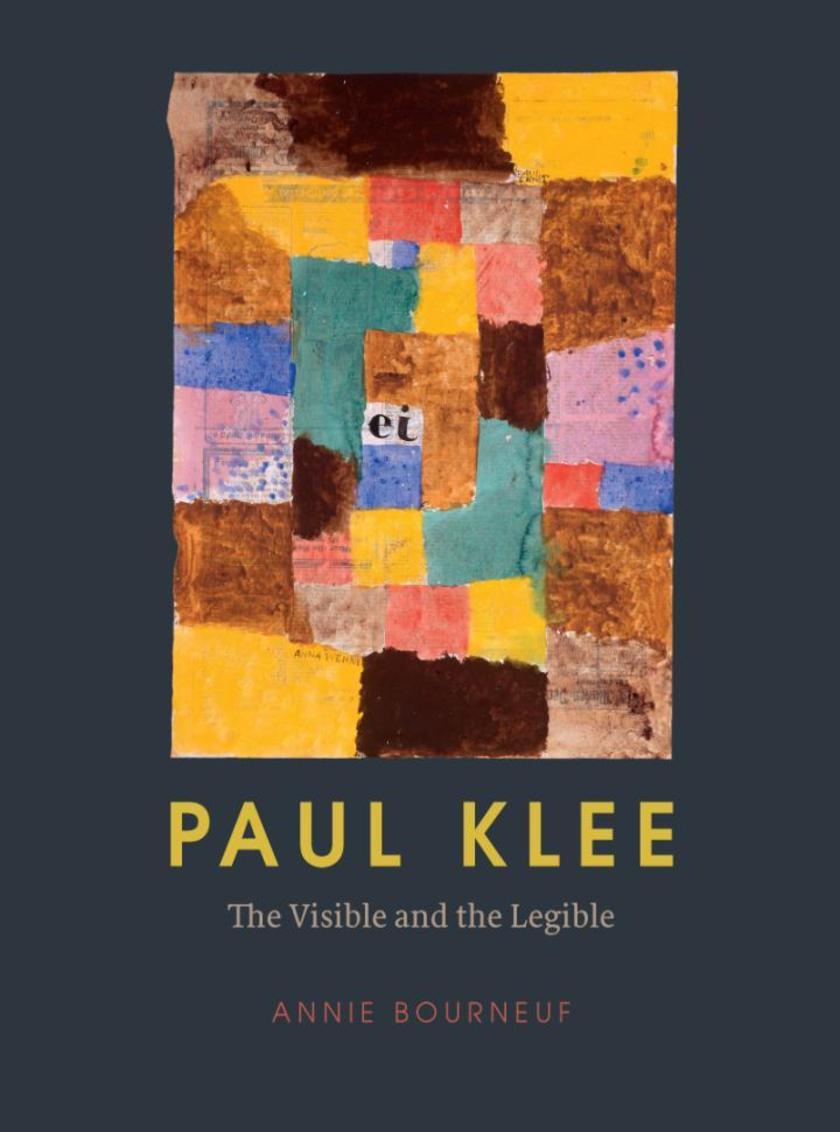
The fact that Paul Klee (1879-1940) consistently intertwined the visual and the verbal in his art has long fascinated commentators from Walter Benjamin to Michel Foucault. However, the questions it prompts have never been satisfactorily answered-until now. In?Paul Klee, Annie Bourneuf offers the first full account of the interplay between the visible and the legible in Klee's works from the 1910s and 1920s.Bourneuf argues that Klee joined these elements to invite a manner of viewing that would unfold in time, a process analogous to reading. From his elaborate titles to the small scale he favored to his metaphoric play with materials, Klee created forms that hover between the pictorial and the written. Through his unique approach, he subverted forms of modernist painting that were generally seen to threaten slow, contemplative viewing. Tracing the fraught relations among seeing, reading, and imagining in the early twentieth century, Bourneuf shows how Klee reconceptualized abstraction at a key moment in its development.
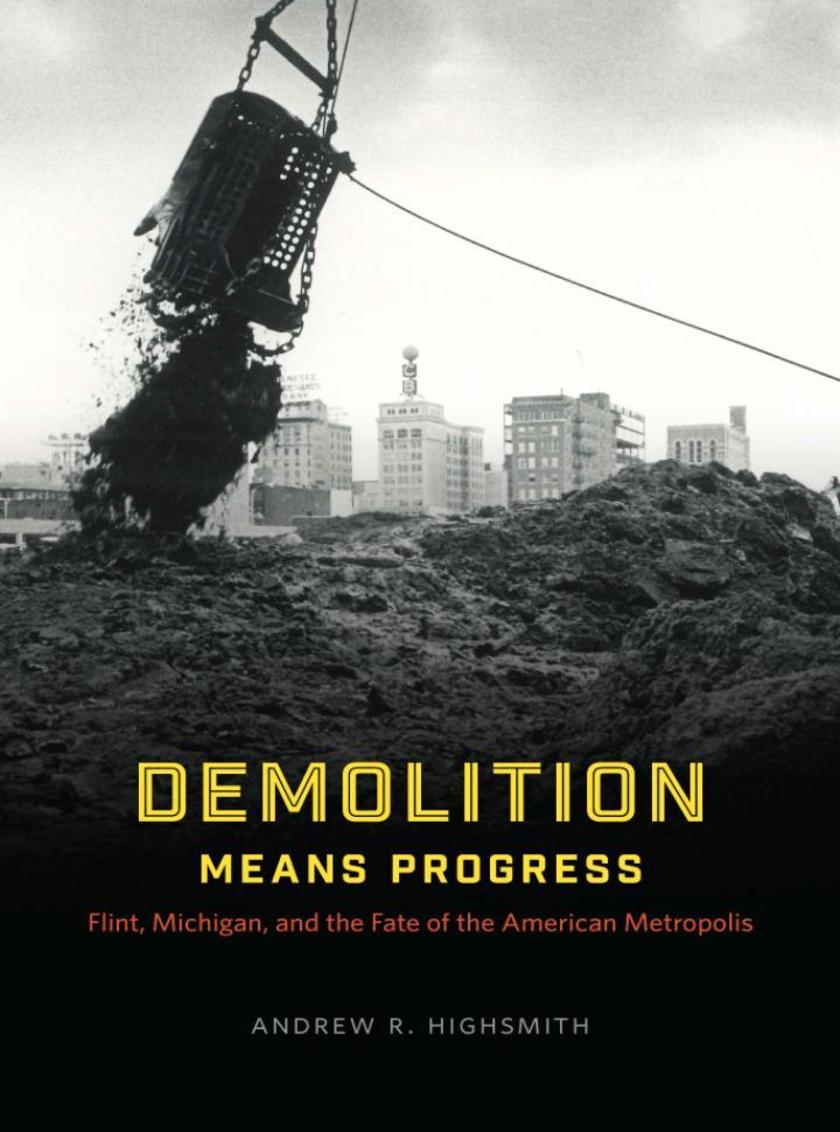
Demolition Means Progress
¥370.82
In 1997, after General Motors shuttered a massive complex of factories in the gritty industrial city of Flint, Michigan, signs were placed around the empty facility reading, "e;Demolition Means Progress,"e; suggesting that the struggling metropolis could not move forward to greatness until the old plants met the wrecking ball. Much more than a trite corporate slogan, the phrase encapsulates the operating ethos of the nation's metropolitan leadership from at least the 1930s to the present. Throughout, the leaders of Flint and other municipalities repeatedly tried to revitalize their communities by demolishing outdated and inefficient structures and institutions and overseeing numerous urban renewal campaigns-many of which yielded only more impoverished and more divided metropolises. After decades of these efforts, the dawn of the twenty-first century found Flint one of the most racially segregated and economically polarized metropolitan areas in the nation.In one of the most comprehensive works yet written on the history of inequality and metropolitan development in modern America, Andrew R. Highsmith uses the case of Flint to explain how the perennial quest for urban renewal-even more than white flight, corporate abandonment, and other forces-contributed to mass suburbanization, racial and economic division, deindustrialization, and political fragmentation. Challenging much of the conventional wisdom about structural inequality and the roots of the nation's "e;urban crisis,"e; Demolition Means Progress shows in vivid detail how public policies and programs designed to revitalize the Flint area ultimately led to the hardening of social divisions.
Vital Minimum
¥370.82
What constitutes a needWho gets to decide what people do or do not needIn modern France, scientists, both amateur and professional, were engaged in defining and measuring human needs. These scientists did not trust in a providential economy to distribute the fruits of labor and uphold the social order. Rather, they believed that social organization should be actively directed according to scientific principles. They grounded their study of human needs on quantifiable foundations: agricultural and physiological experiments, demographic studies, and statistics.The result was the concept of the "e;vital minimum"e;--the living wage, a measure of physical and social needs. In this book, Dana Simmons traces the history of this concept, revealing the intersections between technologies of measurement, such as calorimeters and social surveys, and technologies of wages and welfare, such as minimum wages, poor aid, and welfare programs. In looking at how we define and measure need, Vital Minimum raises profound questions about the authority of nature and the nature of inequality.

Honest Courtesan
¥241.33
The Venetian courtesan has long captured the imagination as a female symbol of sexual license, elegance, beauty, and unruliness. What then to make of the cortigiana onesta-the honest courtesan who recast virtue as intellectual integrity and offered wit and refinement in return for patronage and a place in public lifeVeronica Franco (1546-1591) was such a woman, a writer and citizen of Venice, whose published poems and familiar letters offer rich testimony to the complexity of the honest courtesan's position.Margaret F. Rosenthal draws a compelling portrait of Veronica Franco in her cultural social, and economic world. Rosenthal reveals in Franco's writing a passionate support of defenseless women, strong convictions about inequality, and, in the eroticized language of her epistolary verses, the seductive political nature of all poetic contests. It is Veronica Franco's insight into the power conflicts between men and women-and her awareness of the threat she posed to her male contemporaries-that makes her literary works and her dealings with Venetian intellectuals so pertinent today.Combining the resources of biography, history, literary theory, and cultural criticism, this sophisticated interdisciplinary work presents an eloquent and often moving account of one woman's life as an act of self-creation and as a complex response to social forces and cultural conditions."e;A book . . . pleasurably redolent of Venice in the 16th-century. Rosenthal gives a vivid sense of a world of salons and coteries, of intricate networks of family and patronage, and of literary exchanges both intellectual and erotic."e;-Helen Hackett, Times Higher Education SupplementThe Honest Courtesan is the basis for the film Dangerous Beauty (1998) directed by Marshall Herskovitz. (The film was re-titled The Honest Courtesan for release in the UK and Europe in 1999.)

Making Gray Gold
¥241.33
This first hand report on the work of nurses and other caregivers in a nursing home is set powerfully in the context of wider political, economic, and cultural forces that shape and constrain the quality of care for America's elderly. Diamond demonstrates in a compelling way the price that business-as-usual policies extract from the elderly as well as those whose work it is to care for them.In a society in which some two million people live in 16,000 nursing homes, with their numbers escalating daily, this thought-provoking work demands immediate and widespread attention."e;[An] unnerving portrait of what it's like to work and live in a nursing home. . . . By giving voice to so many unheard residents and workers Diamond has performed an important service for us all."e;-Diane Cole, New York Newsday"e;With Making Gray Gold, Timothy Diamond describes the commodification of long-term care in the most vivid representation in a decade of round-the-clock institutional life. . . . A personal addition to the troublingly impersonal national debate over healthcare reform."e;-Madonna Harrington Meyer, Contemporary Sociology
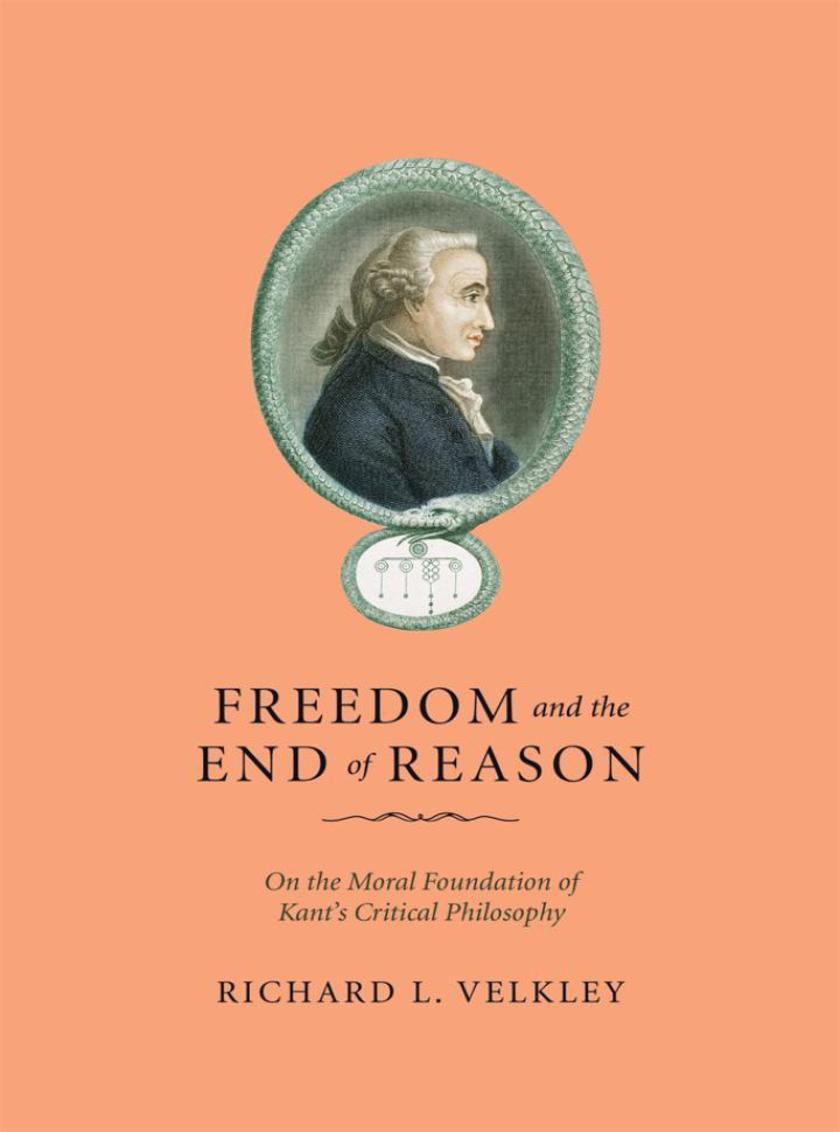
Freedom and the End of Reason
¥229.55
In Freedom and the End of Reason, Richard L. Velkley offers an influential interpretation of the central issue of Kant's philosophy and an evaluation of its position within modern philosophy's larger history. He persuasively argues that the whole of Kantianism-not merely the Second Critique-focuses on a "e;critique of practical reason"e; and is a response to a problem that Kant saw as intrinsic to reason itself: the teleological problem of its goodness. Reconstructing the influence of Rousseau on Kant's thought, Velkley demonstrates that the relationship between speculative philosophy and practical philosophy in Kant is far more intimate than generally has been perceived. By stressing a Rousseau-inspired notion of reason as a provider of practical ends, he is able to offer an unusually complete account of Kant's idea of moral culture.
Little Magazine in Contemporary America
¥229.55
Little magazines have often showcased the best new writing in America. Historically, these idiosyncratic, small-circulation outlets have served the dual functions of representing the avant-garde of literary expression while also helping many emerging writers become established authors. Although changing technology and the increasingly harsh financial realities of publishing over the past three decades would seem to have pushed little magazines to the brink of extinction, their story is far more complicated.In this collection, Ian Morris and Joanne Diaz gather the reflections of twenty-three prominent editors whose little magazines have flourished over the past thirty-five years. Highlighting the creativity and innovation driving this diverse and still vital medium, contributors offer insights into how their publications sometimes succeeded, sometimes reluctantly folded, but mostly how they evolved and persevered. Other topics discussed include the role of little magazines in promoting the work and concerns of minority and women writers, the place of universities in supporting and shaping little magazines, and the online and offline future of these publications.Selected contributorsBetsy Sussler, BOMB; Lee Gutkind, Creative Nonfiction; Bruce Andrews, L=A=N=G=U=A=G=E; Dave Eggers, McSweeney's; Keith Gessen, n+1; Don Share, Poetry; Jane Friedman, VQR; Amy Hoffman, Women's Review of Books; and more.?

What Did the Romans Know?
¥229.55
What did the Romans know about their worldQuite a lot, as Daryn Lehoux makes clear in this fascinating and much-needed contribution to the history and philosophy of ancient science. Lehoux contends that even though many of the Romans' views about the natural world have no place in modern science-the umbrella-footed monsters and dog-headed people that roamed the earth and the stars that foretold human destinies-their claims turn out not to be so radically different from our own.?Lehoux draws upon a wide range of sources from what is unquestionably the most prolific period of ancient science, from the first century BC to the second century AD. He begins with Cicero's theologico-philosophical trilogy On the Nature of the Gods, On Divination, and On Fate, illustrating how Cicero's engagement with nature is closely related to his concerns in politics, religion, and law. Lehoux then guides readers through highly technical works by Galen and Ptolemy, as well as the more philosophically oriented physics and cosmologies of Lucretius, Plutarch, and Seneca, all the while exploring the complex interrelationships between the objects of scientific inquiry and the norms, processes, and structures of that inquiry. This includes not only the tools and methods the Romans used to investigate nature, but also the Romans' cultural, intellectual, political, and religious perspectives. Lehoux concludes by sketching a methodology that uses the historical material he has carefully explained to directly engage the philosophical questions of incommensurability, realism, and relativism.?By situating Roman arguments about the natural world in their larger philosophical, political, and rhetorical contexts, What Did the Romans Knowdemonstrates that the Romans had sophisticated and novel approaches to nature, approaches that were empirically rigorous, philosophically rich, and epistemologically complex.
Anam Cara
¥94.10
Discover the Celtic Circle of Belonging John O'Donohue, poet, philosopher, and scholar, guides you through the spiritual landscape of the Irish imagination. In Anam Cara, Gaelic for "soul friend," the ancient teachings, stories, and blessings of Celtic wisdom provide such profound insights on the universal themes of friendship, solitude, love, and death as: Light is generous The human heart is never completely born Love as ancient recognition The body is the angel of the soul Solitude is luminous Beauty likes neglected places The passionate heart never ages To benatural is to be holy Silence is the sister of the divine Death as an invitation to freedom

A-Rod
¥90.77
Alex Rodriguez is the highest-paid player in the history of baseball, a once-in-a-generation talent poised to break many of the sport's most hallowed records. In 2007 he became the youngest player, at 32, ever to hit 500 home runs, solidifying his status as the greatest player in the modern game, and months later he signed a contract that would keep him with the Yankees through the end of his career. His reputation changed drastically in February 2009 when Selena Roberts broke the news in Sports Illustrated that A-Rod had used performance-enhancing drugs during his 2003 MVP season with the Texas Rangers. Her report prompted a contrite Rodriguez to admit illegal drug use during his 2001–2003 seasons with the Rangers, who had signed him to the most expensive contract in Major League Baseball history. Although he admitted to three seasons of steroid use, the man teammates call "A-Fraud" was still hiding the truth. In the first definitive biography of Alex Rodriguez, Roberts assembles the strands of a bizarre and extraordinary life: from his boyhood in New York and the Dominican Republic through his near-mythic high school career and fast track to the big leagues, the whole of A-Rod's career mirrors the rise and fall of the steroid generation. Roberts goes beyond the sensational headlines, probing A-Rod's childhood to reveal a man torn by obligation to his family and the pull of his insatiable hedonism, a conflict--epitomized by his relationship with Madonna and devotion to Kabbalah--that led to the end of his six-year marriage. Roberts sheds new light on A-Rod's abuse of performance-enhancing drugs, a practice he appears to have begun as early as high school and that extended into his Yankee years. She chronicles his secretive real estate deals, gets inside the negotiations for his latest record-breaking contract with the Yankees, and examines the insecurities that compel him to seek support from a motivational guru before every game. In A-Rod, Roberts captures baseball's greatest player as a tragic figure in pinstripes: the man once considered the clean exception of the steroid generation revealed as an unmistakable product of its greed and dissolution.


