


 购物车
购物车 个人中心
个人中心

HarperCollins e-books
¥198.54
Polish poet and essayist Zbigniew Herbert easily stands beside Nobel Prize laureates Milosz and Szymborska as part of a remarkable literary tradition. Though Herbert is very much an Eastern European writer, the urgency, vitality, and relevance of his work extend far beyond the borders of his particular region and his particular time. His fascination with other subjects from painting to all things Dutch enriched the scope and depth of his poetry, and made for compelling explorations in his essays and short prose pieces.The first collected English edition of his prose work, this outstanding volume consists of four books Labryinth on the Sea, Still Life with a Bridle, King of the Ants, and Barbarian in the Garden. Brilliant and erudite, dazzling and witty, these essays survey the geography of humanity, its achievements and its foibles. From Western civilization's past, as witnessed through the Greek and Roman landscape, to musings on the artistic that celebrate the author's discriminating eye, poetic sensibility, and gift for irony, humor, and the absurd; from a sage retelling of myths and tales that became twentieth-century philosophical parables of human behavior to thoughts on art, culture, and history inspired by journeys in France, Italy, and the Netherlands, Collected Prose is a rich compendium that celebrates the mastery and wisdom of a remarkable artist.
Dey Street Books
¥95.11
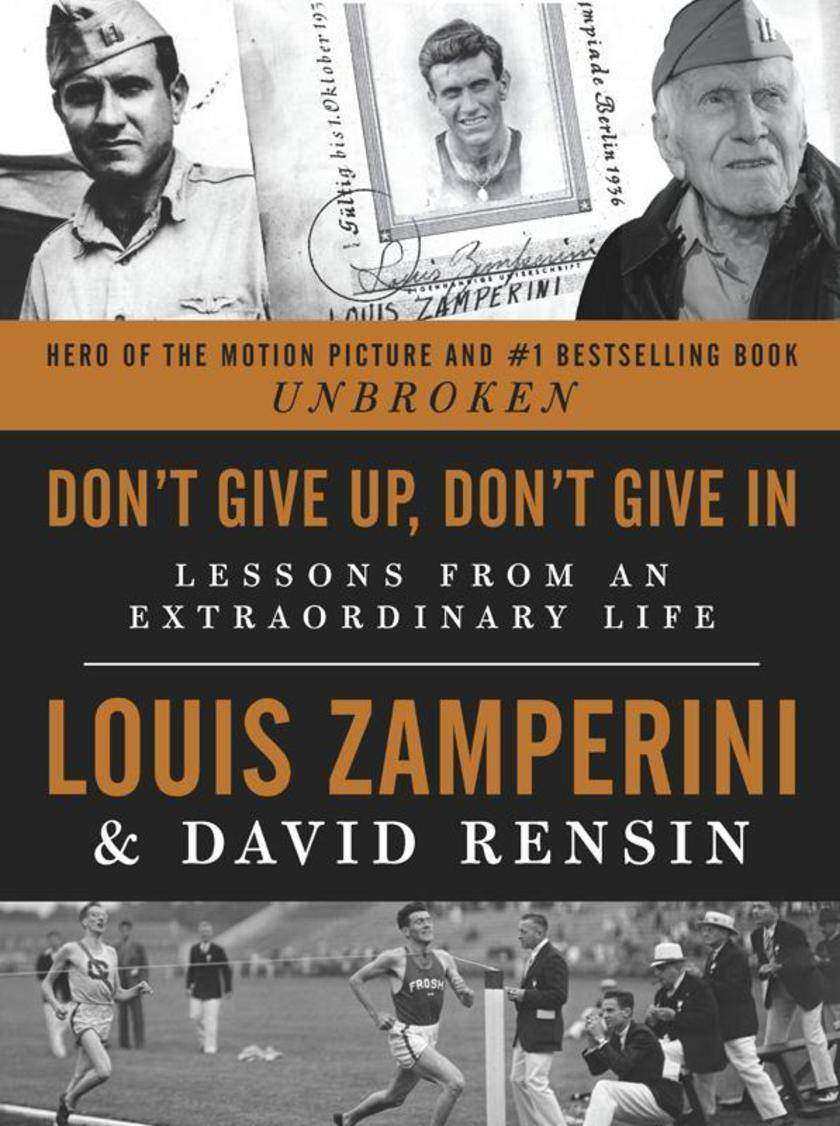
Champion. Survivor. Hero. Legend. Completed just two days before Louis Zamperini's death at age 97, Don't Give Up, Don't Give In shares a lifetime of wisdom, insight, and humor from one of America's most inspiring lives. Zamperini's story has touched millions through Laura Hillenbrand's biography Unbroken, soon to be a major motion picture directed by Angelina Jolie. Now, in his own words, Louis Zamperini reveals, with warmth and great charm, the essential values and lessons that sustained him throughout his remarkable journey. He was a youthful troublemaker from California who turned his life around to become a 1936 Olympian and a world-class miler at the University of Southern California. Putting aside his superstar track career, Louis Zamperini volunteered for the army before Pearl Harbor and was thrust into the violent combat of World War II as a B-24 bombardier. While on a rescue mission, his plane went down in the middle of the Pacific Ocean, where he survived, against all odds, drifting two thousand miles in a small raft for forty-seven days. His struggle was only beginning: Zamperini was captured by the Japanese and, for more than two years, he courageously endured torture and psychological abuse in a series of prisoner-of-war camps. He returned home to face more dark hours, but in 1949 Zamperini's life was transformed by a spiritual rebirth that would guide him through the next sixty-five years of his long and happy life. Cowritten with longtime collaborator David Rensin, Louis Zamperini's Don't Give Up, Don't Give In is an extraordinary last testament that captures the wisdom of a life lived to the fullest. A son of Italian immigrants, Louis Zamperini (1917–2014) was a U.S. Olympic runner, World War II bombardier, and POW survivor. After the war, he returned to the United States to found the Victory Boys Camp for at-risk youth and became an inspirational speaker. Zamperini's story was told in his 2003 autobiography Devil at My Heels, as well as in Laura Hillenbrand's 2010 biography Unbroken. David Rensin worked closely with Louis Zamperini for many years and cowrote Devil at My Heels, as well as fifteen other books, including five New York Times bestsellers.

Final Analysis
¥55.31
In October 2002, Susan Polk, a housewife and mother of three, was arrested for the murder of her husband, Felix. The arrest in her sleepy northern California town kicked off what would become one of the most captivating murder trials in recent memory, as police, local attorneys, and the national media sought to unravel the complex web of events that sent this seemingly devoted housewife over the edge.Now, with the exclusive access and in-depth reporting that made A Deadly Game a number one New York Times bestseller, Catherine Crier turns an analytical eye to the story of Susan Polk, delving into her past and examining how over twenty years of marriage culminated in murder. Tracing the family's history, Crier skillfully maneuvers the murky waters of the Polk's marriage, looking at the real story behind Susan, Felix, and their unorthodox courtship. When Susan was in high school, Felix, who was more than twenty years her senior, had been her psychologist, and it was during their sessions that the romantic entanglement began. From these troubling origins grew a difficult marriage, one which produced three healthy boys but also led to disturbing accusations of abuse from both spouses.With extraordinary detail, Crier dissects this dangerous relationship between husband and wife, exposing their psychological motivations and the painful impact that these motivations had on their sons, Adam, Eli, and Gabriel. Drawing on sources from all sides of the case, Crier masterfully reconstructs the tumultuous chronology of the Polk family, telling the story of how Susan and Felix struggled to control their rambunctious sons and their disintegrating marriage in the years and months leading up to Felix's death.But the history of the Polk family is only half the story. Here Crier also elucidates the methodical police work of the murder investigation, revealing never-before-seen photos and writings from the case file. In addition, she carefully scrutinizes the many twists and turns of the remarkable trial, exploring Susan's struggles with her defense attorneys and her shocking decision to represent herself.Dark, psychological, and terrifying, Final Analysis is a harrowing look at the recesses of the human mind and the trauma that reveals them.

Titian
¥221.49
Born in the mountains above Venice in the late fifteenth century, Tiziano Vecellio or Titian was the greatest painter of the Venetian High Renaissance. A poetic visionary and a technical master of oils, he painted everything, from frescoes and grand altarpieces to mythological stories and portraits works described by his contemporaries as "mirrors of nature."Sheila Hale's rich biography is the first since 1877 to examine all contemporary accounts of Titian's life and work as well as recent art historical scholarship, some of it previously unpublished. Her book charts the extraordinary transformation of Titian's style: from the radiant, minutely realized masterpieces of his youth, to the more freely painted work of his middle years, to the dark, tragic, sometimes terrifying visions of his old age. Drawing on the latest scientific examinations of his paintings, Hale seeks to explain the evolution of his methods and his art. In doing so, she also gives many different voices from Titian's lifetime to today free reign to explore, praise, and sometimes doubt his genius.When Titian died in 1576, in his late eighties, he had spent the whole of his working life in Venice the most celebrated city in Europe traveling as little as possible despite the clamor for his presence at the great courts of the continent. He had witnessed wars, Ottoman invasions, and the rising Protestant threat to the Catholic Church. He had become the favored painter of both Charles V the most powerful man in the world and his son, Philip II of Spain, who became Titian's most important patron.Sheila Hale's masterly biography presents Titian through the lens of the turbulent times in which he lived and explores how this innovative sixteenth-century master conveyed in his paintings a kind of truth that few other artists have been able to communicate, which has fascinated Titian's admirers and followers ever since.
William Morrow
¥132.87
The New One Minute Manager offers a way for you to succeed sooner with less stress in changing times both at work and at home.Based on the original book The One Minute Manager that helped millions of people around the world in organizations large and small, this new version of the classic story deals with a new world.The book will help you find meaning in your work and inspire you to discover new ways to help your organization adapt and prosper.The New One Minute Manager is a concise, easily read story that reveals three very practical secrets: One Minute Goals, One Minute Praisings, and One Minute Re-Directs, the new third secret.The story is based on studies in the behavioral sciences and medicine that support why these apparently simple methods work so well with so many people. And by the book's end, you will know how to apply what you discover to your own situation and enjoy the benefits.
Harper
¥147.48
The history of the Irish in baseball is much richer than anyone realizes. From early discrimination to later domination, from Mike Kelly, a society star in the 1880s, to the managerial fame of Connie Mack (né McGillicuddy), early Irish players and managers helped shape the game of baseball in every way. From the first curveball to the first players' unions, Irishmen took America's national pastime and made it their own, turning it into the glorious game we know today, as more recent players have kept alive the Irish tradition of setting records. A wild, fun, fact-filled celebration of the Irish in baseball, The Emerald Diamond intersperses interviews with current players with tales of such players as Dan Brouthers, who at 6'2" and well over 200 pounds, was the game's home-run king until Babe Ruth came along; and includes lively anecdotes about such colorfully nicknamed ballplayers as Tony "the Count" Mullane, Mike "King" Kelly, James "Pud" Galvin, Hugh "One-Arm" Daily, Frank "Silk" O'Loughlin, and "Iron Man" Joe McGinnity. Just a few of the great Irish athletes featured as well are Mickey Cochrane (for whom Mickey Mantle was named); Charles Comiskey; Ed Walsh, the last pitcher to win 40 games in a single season; and Ed Delahanty, whose prodigious life and mysterious death continue to be a source of intrigue. With decade-by-decade profiles of exciting Irish figures on the field and off, The Emerald Diamond also offers important discussion on cultural and political themes relevant to their times.

The Great Upheaval
¥99.42
It is an era that redefined history. As the 1790s began, a fragile America teetered on the brink of oblivion, Russia towered as a vast imperial power, and France plunged into revolution. But in contrast to the way conventional histories tell it, none of these remarkable events occurred in isolation.Now, for the first time, acclaimed historian Jay Winik masterfully illuminates how their fates combined in one extraordinary moment to change the course of civilization. A sweeping, magisterial drama featuring the richest cast of characters ever to walk upon the world stage, including Washington, Jefferson, Louis XVI, Robespierre, and Catherine the Great, The Great Upheaval is a gripping, epic portrait of this tumultuous decade that will forever transform the way we see America's beginnings and our world

HarperCollins e-books
¥90.73
In this engrossing work of history, Lee Kennett brilliantly brings General Sherman's 1864 invasion of Georgia to life by capturing the ground-level experiences of the soldiers and civilians who witnesses the bloody campaign. From the skirmish at Buzzard Roost Gap all the way to Savannah ten months later, Kennet follows the notorious, complex Sherman, who attacked the devastated the heart of the Confederacy's arsenal. Marching Through Georgia describes, in gripping detail, the event that marked the end of the Old South.

HarperCollins e-books
¥90.77
Duty First is a penetrating account of a year inside one of America's premier schools for leadership -- the United States Military Academy -- as it celebrates the bicentennial of its founding. Ed Ruggero, a former West Point cadet and professor, takes an incisive look at how this elite school builds the "leaders of character" who will command the nation's military.Writing with deep insight and superb narrative skill, Ruggero follows the cadet's tumultuous lives: the initial grueling training; the strict student hierarchy and intense classroom work; and the interaction between the lowly first-year plebes and the upper-class cadets who train them. Duty First also shows the role played by the majors, captains, and sergeants, who oversee everything that happens at this unique institution.

Dey Street Books
¥151.53
The quintessential self-made man, master of brand identity, New York Times bestselling author, and award-winning executive KISS's Gene Simmons shares his manifesto for business success.KISS did not become one of the most successful rock bands in history by accident. Long before he first took the stage, Gene Simmons had a clear-cut operating plan for the business. Over the past forty years, KISS has sold more than 100 million CDs and DVDs worldwide and manages 5,000 licensed merchandise items from comic books and coffins to action figures and video games. The band received a star on the Hollywood Walk of Fame, and in 2014 was inducted into the Rock and Roll Hall of Fame. In addition to KISS, Simmons's lucrative ventures include two hit reality shows, a professional sports team, a restaurant chain, and a record label. A recipient of the Forbes Lifetime Achievement Award, this brilliant executive runs all of his businesses on his own no personal assistant, few handlers, and as little red tape as possible.In Me, Inc., Simmons gives aspiring entrepreneurs the critical tools they need to succeed. He discusses how to build a solid business strategy, harness the countless tools available in the digital age, educate yourself, and be the architect for the business entity that is you. Inspired by The Art of War, Me, Inc. is organized around thirteen specific, easy-to-understand principles for success "The Art of More" drawn from Simmons's own triumphs and failures. From finding the confidence necessary to get started, to surrounding yourself with the right people, to knowing when to pull the plug and when to double-down, these principles can help you attain the freedom and wealth of your dreams.

Illustrators 54
¥252.65
This 54th edition of the Society of Illustrators Annual represents the very best work created throughout the year. These volumes have been collected and treasured for decades by those interested in the art of illustration, and are not only an invaluable source for art buyers, but also keep professional artists abreast of current trends and serve as inspirational teaching tools for art students and those entering the field.Highlights include: Revealing commentary by individual artists describing the creative process behind their works. Gold and Silver Medal winners in seven categories. Biographies of the artists elected to the prestigious Illustrators Hall of Fame, along with examples of their work. Profiles of the Hamilton King Award and the Richard Gangel Art Director Award winners.

City Parks
¥280.71
City Parks illuminates the spirit and beauty of the world's most loved city parks: an extraordinary visual and poetic journey from London to Brooklyn, Calcutta to Chicago, and Paris to San Francisco, captured in breathtaking photographs and the evocative words of celebrated writers and personalities.

Modern Girl's Guide to Life
¥145.49
With information on entertaining, etiquette, housekeeping, basic home repair, decorating, sex, and beauty, The Modern Girl's Guide to Life became a sensational bestseller as young women everywhere discovered this indispensable book covered everything they should know . . . but might not. Now, in this revised edition of the classic, style maven Jane Buckingham reveals more of the helpful tips and secrets that get passed down from generation to generation, but that many of us have somehow missed.Full of practical, definitive advice on the basics the day-to-day necessities like finding a bra that fits, balancing a checkbook, making a decent cup of coffee, and hemming a pair of pants The Modern Girl's Guide to Life, Revised Edition includes new topics such as: Social Media 101: where you should and shouldn't be online Online dating: should you, shouldn't you, and how you can find the right guy Sexting: dos and don'ts Online flash sales: Are you really savingTips and tricks for eating organic, shopping at farmers' markets, and juicing safely Updated recipes, including vegan and gluten-free How to find the exercise you won't skip out on doing Interview etiquette: everything from what to wear to what to say Updated financial section . . . and more! Modern Girl guru Jane Buckingham includes loads of savvy counsel to help us feel more refined, in charge, and together as we navigate the rocky terrain that is twenty-first-century womanhood.

Jewish Holidays
¥149.48
The coeditor of the enormously popular Jewish Catalog "help[s] readers understand more fully the meaning of our holidays and thereby to observe these festivals . . . with a greater devotion and joy."--Rabbi Alexander M. Schindler

Hopper
¥95.39
James Dean to Hopper I saw what you did today. Today you were great. Jack Nicholson to Hopper We're geniuses, you know thatIsn't it great to be a geniusThe chopper-riding hippie outlaw in Easy Rider. The prophetic madman in the jungle in Apocalypse Now. The terrifying psychopath in Blue Velvet. The kid gone wrong in Rebel Without a Cause. The actor taken under the wing of James Dean who longed to be the next Orson Welles. The hell-raising director who revolutionized Hollywood. An enigmatic man from Dodge City, Kansas, on an endless quest to realize the American Dream.Dennis Hopper has been described as a rebel, an icon, an addict plagued by demons, and one of the most important champions of the pop-art movement. Friend to Warhol, muse to David Lynch, mentor to Sean Penn, champion of Ice-T, Dennis Hopper built a career that was a half-century of rebellion waged at the edge of American popular culture.Tom Folsom's Hopper is a wild ride through Dennis's many lives. Featuring hundreds of interviews with Hopper's fellow actors, artists, musicians, and residents of Taos, New Mexico (where he spent much of his most manic time), as well as his ex-wives and many other people who knew him, Hopper takes you on an extraordinary and sometimes troubling journey. From Dennis's early days with his grandparents on a dusty farm in Kansas, where he watched trains go by on their way to Los Angeles, to his formative time in Hollywood as one of a bright new crop of actors straddling the edge of the studio system, to the rebellious 1960s and the start of the independent film movement, to the drug-addled 1970s and beyond, when Hopper staged one of the greatest Hollywood comebacks of all time Tom Folsom has crafted a biography as unconventional as Dennis Hopper himself.

The Opposite Of Spoiled: Raising Kids Who Are Grounded, Generous, And Smart Abou
¥90.51
We may not realize it, but children are hyperaware of money. They have scores of questions about its nuances that parents often don't answer, or know how to answer well. But for Ron Lieber, a personal finance columnist and father, good parenting means talking about money with our kids much more often. When parents avoid these conversations, they lose a tremendous opportunity not just to model important financial behaviors, but also to imprint lessons about what their family cares about most.Written in a warm, accessible voice, grounded in real-world stories from families with a range of incomes, The Opposite of Spoiled is a practical guidebook for parents that is rooted in timeless values. Lieber covers all the basics: the best ways to handle the tooth fairy, allowance, chores, charity, savings, birthdays, holidays, cell phones, splurging, clothing, cars, part-time jobs, and college tuition. But he also identifies a set of traits and virtues like modesty, patience, generosity, and perspective that parents hope their young adults will carry with them out into the world.In The Opposite of Spoiled, Ron Lieber delivers a taboo-shattering manifesto that will help every parent embrace the connection between money and values to help them raise young adults who are grounded, unmaterialistic, and financially wise beyond their years.

Collusion
¥151.53
Never before has the so-called mainstream media shown such naked political bias as in the 2012 presidential election. In 2012 Barack Obama was narrowly reelected, with naked support from a liberal media desperate to hide his failures, trumpet his accomplishments, and discredit his GOP rivals. Bachmann, Perry, Cain, Gingrich, Santorum: one by one the media took them apart using hidden-camera exposés, innuendo from anonymous accusers, repetition of harmful sound bites, and irrelevant—even untrue—storytelling. As soon as Mitt Romney emerged as the Republican Party's nominee, the liberal media went to work in earnest. They repeated Obama's campaign caricatures that Romney terrified his family dog, enjoyed firing people, and was nothing more than a willing tool of wealthy radical-right extremists. The Washington Post published a 5,400-word "exposé" on the allegation that in 1965 he may have pinned down a boy and cut his hair. Those same Post readers were then treated to 5,500 words on Barack Obama's lifelong love of basketball. Unquestionably, 2012 was the year when the liberal news media did all in their power to steal the presidential election—and they arguably succeeded. Media Research Center Founder and President Brent Bozell and MRC Director of Media Analysis Tim Graham provide the dramatic and conclusive evidence to prove this point—and show conservatives how to put an end to the leftist media agenda threatening democracy itself.

On Your Case
¥99.65
The legal guide every woman needs to protect herself and her familyIf your best friend had a law degree, she would offer the useful counsel Lisa Green delivers in On Your Case. From dating, marriage, and kids to divorce, retirement, and aging parents, On Your Case offers smart, jargon-free lessons on how to solve the legal challenges that arise over the course of every woman's lifetime. A lawyer and television legal analyst herself, Lisa shares court cases and real-life legal horror stories (including her own) to illustrate how readers can not only solve problems, but learn how to protect themselves before a crisis hits.Lisa's warm, inviting voice imparts essential information about these important topics and many more: Relationships: online dating, pre- and post-nuptial agreements, engagement, and marriage Separation and divorce: splitting without anxiety, child custody and support, pet custody disputes, domestic violence Babies, children, and teens: pregnancy and adoption, advocating for a special needs child, misbehaving teens Work: employment and household help Online legal issues: privacy, copyright, and social media Midlife and elder care: wills, medical decisions, and power of attorney Legal help: hiring a lawyer and DIY Always clear and often funny, Lisa will help you take legal charge of your life, telling it to you straight without putting you to sleep or scaring you to death. She provides all the essential tools and inspiration necessary to care for yourself, your assets, your family, and your career.
13 Things Mentally Strong People Don't Do
¥151.53
The Ultimate Guide to Mastering Your Mental StrengthEveryone knows that regular exercise and weight training lead to physical strength. But how do we strengthen ourselves mentally for the truly tough timesAnd what should we do when we face these challengesOr as psychotherapist Amy Morin asks, what should we avoid when we encounter adversityThrough her years counseling others and her own experiences navigating personal loss, Morin realized it is often the habits we cannot break that are holding us back from true success and happiness. Indulging in self-pity, agonizing over things beyond our control, obsessing over past events, resenting the achievements of others, or expecting immediate positive results holds us back. This list of things mentally strong people don't do resonated so much with readers that when it was picked up by Forbes.com it received ten million views.Now, for the first time, Morin expands upon the thirteen things from her viral post and shares her tried-and-true practices for increasing mental strength. Morin writes with searing honesty, incorporating anecdotes from her work as a college psychology instructor and psychotherapist as well as personal stories about how she bolstered her own mental strength when tragedy threatened to consume her.Increasing your mental strength can change your entire attitude. It takes practice and hard work, but with Morin's specific tips, exercises, and troubleshooting advice, it is possible to not only fortify your mental muscle but also drastically improve the quality of your life.

Desperate Sons
¥155.02
A groundbreaking narrative a historical political thriller that explores the role of the Sons of Liberty in the American Revolution.More than two hundred years ago, a group of British colonists in America decided that the conditions under which they were governed had become intolerable. Angry and frustrated that King George III and the British Parliament had ignored their lawful complaints and petitions, they decided to take action.Knowing that their deeds often directed at individuals and property were illegal, and punishable by imprisonment and even death, these agitators plotted and conducted their missions in secret to protect their identities as well as the identities of those who supported them. Calling themselves the Sons of Liberty, they gathered together in a radical society committed to imposing forcible change. Those determined men including second cousins Samuel and John Adams, Paul Revere, Patrick Henry, and John Hancock saw themselves as patriots. Yet to the Crown, and to many of the Sons' fellow colonists, the revolutionaries were terrorists who deserved death for their treason.In this gripping narrative, Les Standiford reveals how this group of intelligent, committed men, motivated by economics and political belief, began a careful campaign of interlocking events that would channel feelings of vague injustice into an armed rebellion of common cause, which would defeat an empire and give birth to a radical political experiment a new nation known as the United States.
The Confidence Code
¥99.65
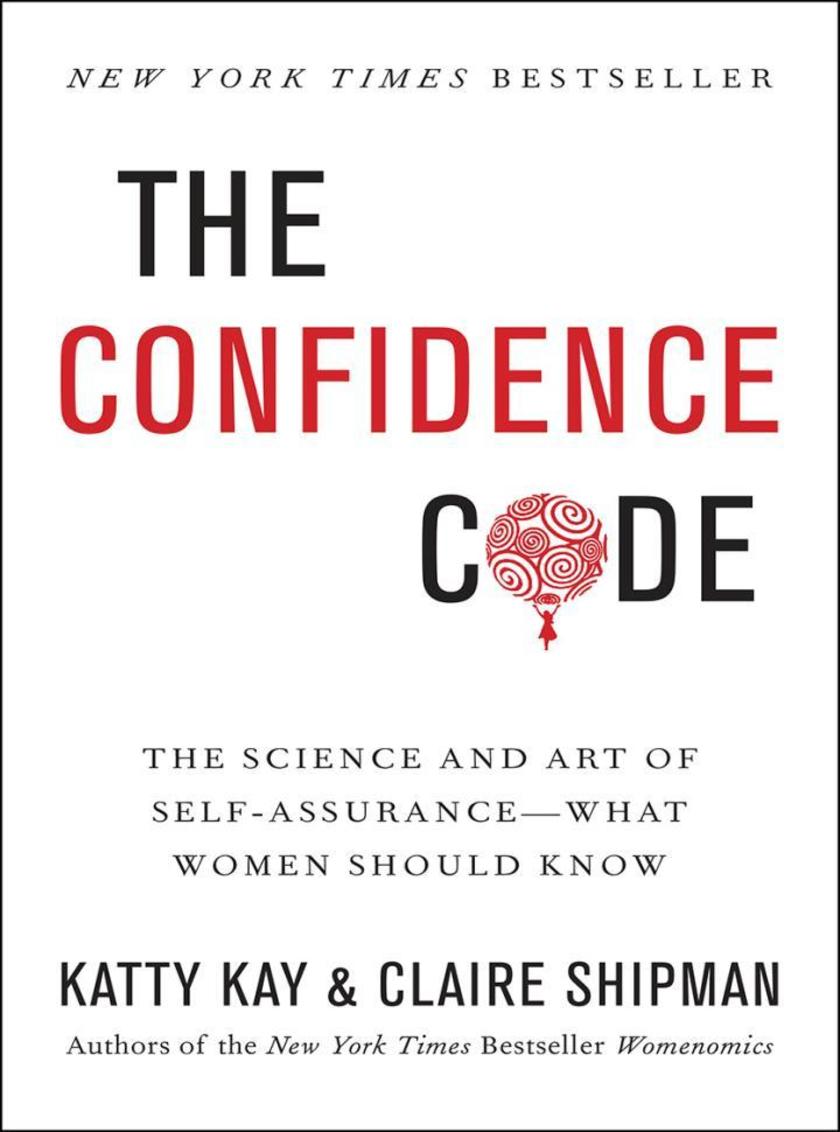
Confidence. We want it. We need it. But it can be maddeningly enigmatic and out of reach. The authors of the New York Times bestseller Womenomics deconstruct this essential, elusive, and misunderstood quality and offer a blueprint for bringing more of it into our lives.Is confidence hardwired into the DNA of a lucky few or can anyone learn itIs it best expressed by bravado, or is there another way to show confidenceWhich is more important: confidence or competenceWhy do so many women, even the most successful, struggle with feelings of self-doubtIs there a secret to channeling our inner confidenceIn The Confidence Code, journalists Katty Kay and Claire Shipman travel to the frontiers of neuroscience on a hunt for the confidence gene and reveal surprising new research on its roots in our brains. They visit the world's leading psychologists who explain how we can all chose to become more confident simply by taking action and courting risk, and how those actions change our physical wiring. They interview women leaders from the worlds of politics, sports, the military, and the arts to learn how they have tapped into this elemental resource. They examine how a lack of confidence impacts our leadership, success, and fulfillment.Ultimately, they argue, while confidence is partly influenced by genetics, it is not a fixed psychological state. That's the good news. You won't discover it by thinking positive thoughts or by telling yourself (or your children) that you are perfect as you are. You also won't find it by simply squaring your shoulders and faking it. But it does require a choice: less people pleasing and perfectionism and more action, risk taking, and fast failure.Inspiring, insightful, and persuasive, The Confidence Code shows that by acting on our best instincts and by daring to be authentic, women can feel the transformative power of a life on confidence.


