


 购物车
购物车 个人中心
个人中心
The Rough Riders
¥8.09
Dodo Collections brings you another classic from Theodore Roosevelt, ‘The Rough Riders’. ? In 1898, as the Spanish-American War was escalating, Theodore Roosevelt assembled an improbable regiment of Ivy Leaguers, cowboys, Native Americans, African-Americans, and Western Territory land speculators. This group of men, which became known as the Rough Riders, trained for four weeks in the Texas desert and then set sail for Cuba. Over the course of the summer, Roosevelt's Rough Riders fought valiantly, and sometimes recklessly, in the Cuban foothills, incurring casualties at a far greater rate than the Spanish. ? Roosevelt kept a detailed diary from the time he left Washington until his triumphant return from Cuba later that year. The Rough Riders was published to instant acclaim in 1899. Robust in its style and mesmerizing in its account of battle, it is exhilarating, illuminating, and utterly essential reading for every armchair historian and at-home general. ? Theodore Roosevelt, Jr., also known as T.R., and to the public (but never to friends and intimates) as Teddy, was the twenty-sixth President of the United States, and a leader of the Republican Party and of the Progressive Movement. He became the youngest President in United States history at the age of 42. He served in many roles including Governor of New York, historian, naturalist, explorer, author, and soldier. Roosevelt is most famous for his personality: his energy, his vast range of interests and achievements, his model of masculinity, and his "cowboy" persona.
Drum-Taps
¥8.09
Dodo Collections brings you another classic from Walt Whitman, ‘Drum-Taps’. Drum-taps is a collection of poetry by Walt Whitman first published in 1865. The collection originally consisted of 53 poems (not including the 18 poems of Sequel to Drum-Taps added later in the year). Walter "Walt" Whitman (May 31, 1819 – March 26, 1892) was an American poet, essayist and journalist. A humanist, he was a part of the transition between transcendentalism and realism, incorporating both views in his works. Whitman is among the most influential poets in the American canon, often called the father of free verse. His work was very controversial in its time, particularly his poetry collection Leaves of Grass, which was described as obscene for its overt sexuality. Born in Huntington on Long Island, Whitman worked as a journalist, a teacher, a government clerk, and—in addition to publishing his poetry—was a volunteer nurse during the American Civil War. Early in his career, he also produced a temperance novel, Franklin Evans (1842). Whitman's major work, Leaves of Grass, was first published in 1855 with his own money. The work was an attempt at reaching out to the common person with an American epic. He continued expanding and revising it until his death in 1892. After a stroke towards the end of his life, he moved to Camden, New Jersey, where his health further declined. When he died at age 72, his funeral became a public spectacle. Whitman's sexuality is often discussed alongside his poetry. Though biographers continue to debate his sexuality, he is usually described as either homosexual or bisexual in his feelings and attractions. However, there is disagreement among biographers as to whether Whitman had actual sexual experiences with men. Whitman was concerned with politics throughout his life. He supported the Wilmot Proviso and opposed the extension of slavery generally. His poetry presented an egalitarian view of the races, though his attitude in life reflected many of the racial prejudices common to nineteenth-century America and his opposition to slavery was not necessarily based on belief in the equality of races per se. At one point he called for the abolition of slavery, but later he saw the abolitionist movement as a threat to democracy.
Mastering JavaScript Functional Programming
¥334.25
Master Functional Programming techniques with this comprehensive guide for writing cleaner, safer, high-performing JavaScript codes About This Book Become proficient and skilled with Functional Programming in JavaScript to solve real-world development problems Successfully apply Functional Programming concepts and techniques to everyday JavaScript programming Bring modularity, reusability, testability, and performance to your web apps Who This Book Is For If you are a JavaScript developer and want to apply functional programming techniques, then this book is for you. Only a basic knowledge of the concepts of functional programming is required for this book. What You Will Learn Create more reliable code with closures and immutable data Convert existing methods into pure functions, and loops into recursive methods Develop more powerful applications with currying and function composition Separate the logic of your system from implementation details Implement composition and chaining techniques to simplify coding Use functional programming techniques where it makes the most sense In Detail Functional programming is a programming paradigm for developing software using functions. Learning to use functional programming is a good way to write more concise code, with greater concurrency and performance. The JavaScript language is particularly suited to functional programming. This book provides comprehensive coverage of the major topics in functional programming with JavaScript to produce shorter, clearer, and testable programs. You'll delve into functional programming; including writing and testing pure functions, reducing side-effects, and other features to make your applications functional in nature. Specifically, we'll explore techniques to simplify coding, apply recursion for loopless coding, learn ways to achieve immutability, implement design patterns, and work with data types. By the end of this book, you'll have developed the JavaScript skills you need to program functional applications with confidence. Style and approach This book takes an easy-to-follow, step-by-step tutorial approach. You will make the most of JavaScript programming with a focus on the progression of functional programming techniques, styles, and detailed information about JavaScript libraries.

The Crusade of the Excelsior
¥8.09
Classic novel. According to Wikipedia: "Bret Harte (August 25, 1836[2] – May 6, 1902) was an American author and poet, best remembered for his accounts of pioneering life in California. He was born in Albany, New York. ... He moved to California in 1853, later working there in a number of capacities, including miner, teacher, messenger, and journalist. He spent part of his life in the northern California coast town now known as Arcata, then just a mining camp on Humboldt Bay. His first literary efforts, including poetry and prose, appeared in The Californian, an early literary journal edited by Charles Henry Webb. In 1868 he became editor of The Overland Monthly, another new literary magazine, but this one more in tune with the pioneering spirit of excitement in California. His story, "The Luck of Roaring Camp," appeared in the magazine's second edition, propelling Harte to nationwide fame... Determined to pursue his literary career, in 1871 he and his family traveled back East, to New York and eventually to Boston, where he contracted with the publisher of The Atlantic Monthly for an annual salary of $10,000, "an unprecedented sum at the time." His popularity waned, however, and by the end of 1872 he was without a publishing contract and increasingly desperate. He spent the next few years struggling to publish new work (or republish old), delivering lectures about the gold rush, and even selling an advertising jingle to a soap company. In 1878 Harte was appointed to the position of United States Consul in the town of Krefeld, Germany and then to Glasgow in 1880. In 1885 he settled in London. During the thirty years he spent in Europe, he never abandoned writing, and maintained a prodigious output of stories that retained the freshness of his earlier work. He died in England in 1902 of throat cancer and is buried at Frimley."
The Valley of Fear, Fourth of the Four Sherlock Holmes Novels
¥8.09
The four Sherlock Holmes novels are: A Study in Scarlet, Sign of the Four, The Hound of the Baskervilles, and The Valley of Fear. According to Wikipedia: "Sir Arthur Ignatius Conan Doyle, (22 May 1859 – 7 July 1930) was an author most noted for his stories about the detective Sherlock Holmes, which are generally considered a major innovation in the field of crime fiction, and for the adventures of Professor Challenger. He was a prolific writer whose other works include science fiction stories, historical novels, plays and romances, poetry, and non-fiction."
History of a Plague in London
¥8.09
The Introduction begins: "The father of Daniel Defoe was a butcher in the paris h of St. Giles's, Cripplegate, London. In this parish, probably, Daniel Defoe was born in 1661, the year after the restoration of Charles II. The boy's parents wished him to become a dissenting minister, and so intrusted his education to a Mr. Morton who kept an academy for the training of nonconformist divines. How long Defoe staid at this school is not known. He seems to think himself that he staid there long enough to become a good scholar; for he declares that the pupils were "made masters of the English tongue, and more of them excelled in that particular than of any school at that time." If this statement be true, we can only say that the other schools must have been very bad indeed. Defoe never acquired a really good style, and can in no true sense be called a "master of the English tongue."

Neural Network Programming with TensorFlow
¥297.10
Neural Networks and their implementation decoded with TensorFlow About This Book Develop a strong background in neural network programming from scratch, using the popular Tensorflow library. Use Tensorflow to implement different kinds of neural networks – from simple feedforward neural networks to multilayered perceptrons, CNNs, RNNs and more. A highly practical guide including real-world datasets and use-cases to simplify your understanding of neural networks and their implementation. Who This Book Is For This book is meant for developers with a statistical background who want to work with neural networks. Though we will be using TensorFlow as the underlying library for neural networks, book can be used as a generic resource to bridge the gap between the math and the implementation of deep learning. If you have some understanding of Tensorflow and Python and want to learn what happens at a level lower than the plain API syntax, this book is for you. What You Will Learn Learn Linear Algebra and mathematics behind neural network. Dive deep into Neural networks from the basic to advanced concepts like CNN, RNN Deep Belief Networks, Deep Feedforward Networks. Explore Optimization techniques for solving problems like Local minima, Global minima, Saddle points Learn through real world examples like Sentiment Analysis. Train different types of generative models and explore autoencoders. Explore TensorFlow as an example of deep learning implementation. In Detail If you're aware of the buzz surrounding the terms such as "machine learning," "artificial intelligence," or "deep learning," you might know what neural networks are. Ever wondered how they help in solving complex computational problem efficiently, or how to train efficient neural networks? This book will teach you just that. You will start by getting a quick overview of the popular TensorFlow library and how it is used to train different neural networks. You will get a thorough understanding of the fundamentals and basic math for neural networks and why TensorFlow is a popular choice Then, you will proceed to implement a simple feed forward neural network. Next you will master optimization techniques and algorithms for neural networks using TensorFlow. Further, you will learn to implement some more complex types of neural networks such as convolutional neural networks, recurrent neural networks, and Deep Belief Networks. In the course of the book, you will be working on real-world datasets to get a hands-on understanding of neural network programming. You will also get to train generative models and will learn the applications of autoencoders. By the end of this book, you will have a fair understanding of how you can leverage the power of TensorFlow to train neural networks of varying complexities, without any hassle. While you are learning about various neural network implementations you will learn the underlying mathematics and linear algebra and how they map to the appropriate TensorFlow constructs. Style and Approach This book is designed to give you just the right number of concepts to back up the examples. With real-world use cases and problems solved, this book is a handy guide for you. Each concept is backed by a generic and real-world problem, followed by a variation, making you independent and able to solve any problem with neural networks. All of the content is demystified by a simple and straightforward approach.
O Pioneers! The Song of the Lark, and My Antonia
¥8.09
Three classic novels by Willa Cather. According to Wikipedia: "Willa Sibert Cather (December 7, 1873[1] – April 24, 1947) was an American author who achieved recognition for her novels of frontier life on the Great Plains, in works such as O Pioneers!, My ?ntonia, and The Song of the Lark. In 1923 she was awarded the Pulitzer Prize for One of Ours (1922), a novel set during World War I. Cather grew up in Nebraska and graduated from the University of Nebraska. She lived and worked in Pittsburgh for ten years, then at age 33 she moved to New York where she lived for the rest of her life."
The Two Noble Kinsmen
¥8.09
Play sometimes attributed to John Fletcher and William Shakespeare. According to Wikipedia: "William Shakespeare (baptised 26 April 1564 – died 23 April 1616) was an English poet and playwright, widely regarded as the greatest writer in the English language and the world's pre-eminent dramatist. He is often called England's national poet and the "Bard of Avon" (or simply "The Bard"). His surviving works consist of 38 plays, 154 sonnets, two long narrative poems, and several other poems. His plays have been translated into every major living language, and are performed more often than those of any other playwright."

The Guns of Europe
¥8.09
Adventure historical novel, set during World War I, first published in 1915. This is the first book of Altshelers three-book World War Series. The others are The Hosts of the Air and The Forest of Swords.
A Child's Garden of Verses
¥8.09
80 illustrations, some color, some black-and-white. According to Wikipedia: "A Child's Garden of Verses is a collection of poetry for children by the Scottish author Robert Louis Stevenson. The collection first appeared in 1885 under the title Penny Whistles, but has been reprinted many times, often in illustrated versions. It contains about 65 poems including the cherished classics "Foreign Children," "The Lamplighter," "The Land of Counterpane," "Bed in Summer," "My Shadow" and "The Swing."
Julius Caesar, Bilingual Editon
¥8.09
The Shakespeare tragedy, in English with line numbers and translated to German by August Wilhelm von Schlegel. According to Wikipedia: "The ghost of Caesar taunts Brutus about his imminent defeat. (Copperplate engraving by Edward Scriven from a painting by Richard Westall: London, 1802.) The Tragedy of Julius Caesar, also known simply as Julius Caesar, is a tragedy by William Shakespeare, believed to have been written in 1599. It portrays the 44 BC conspiracy against the Roman dictator Julius Caesar, his assassination and the defeat of the conspirators at the Battle of Philippi. It is one of several Roman plays that Shakespeare wrote, based on true events from Roman history, which also include Coriolanus and Antony and Cleopatra."
The Chessmen of Mars
¥8.09
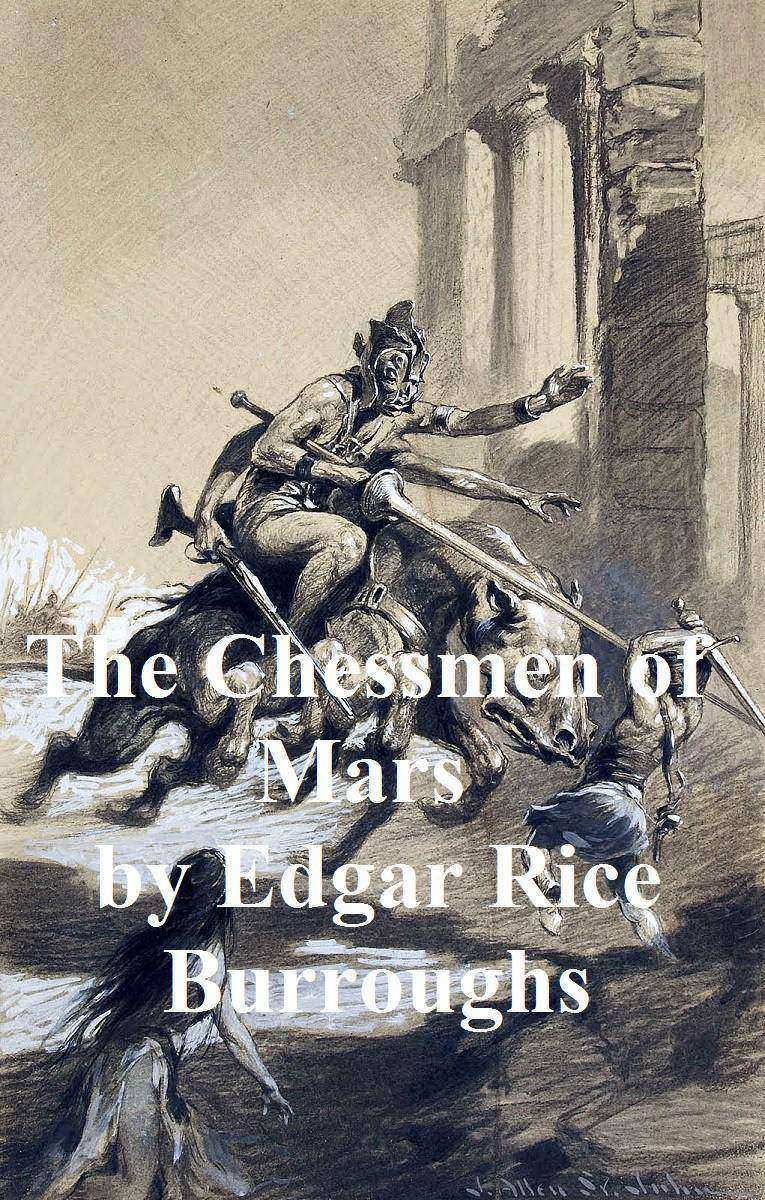
Science fiction adventure, first published in 1922. According to Wikipedia: "Edgar Rice Burroughs (1875 – 1950) was an American author, best known for his creation of the jungle hero Tarzan and the heroic John Carter, although he produced works in many genres."
Robur the Conqueror
¥8.09
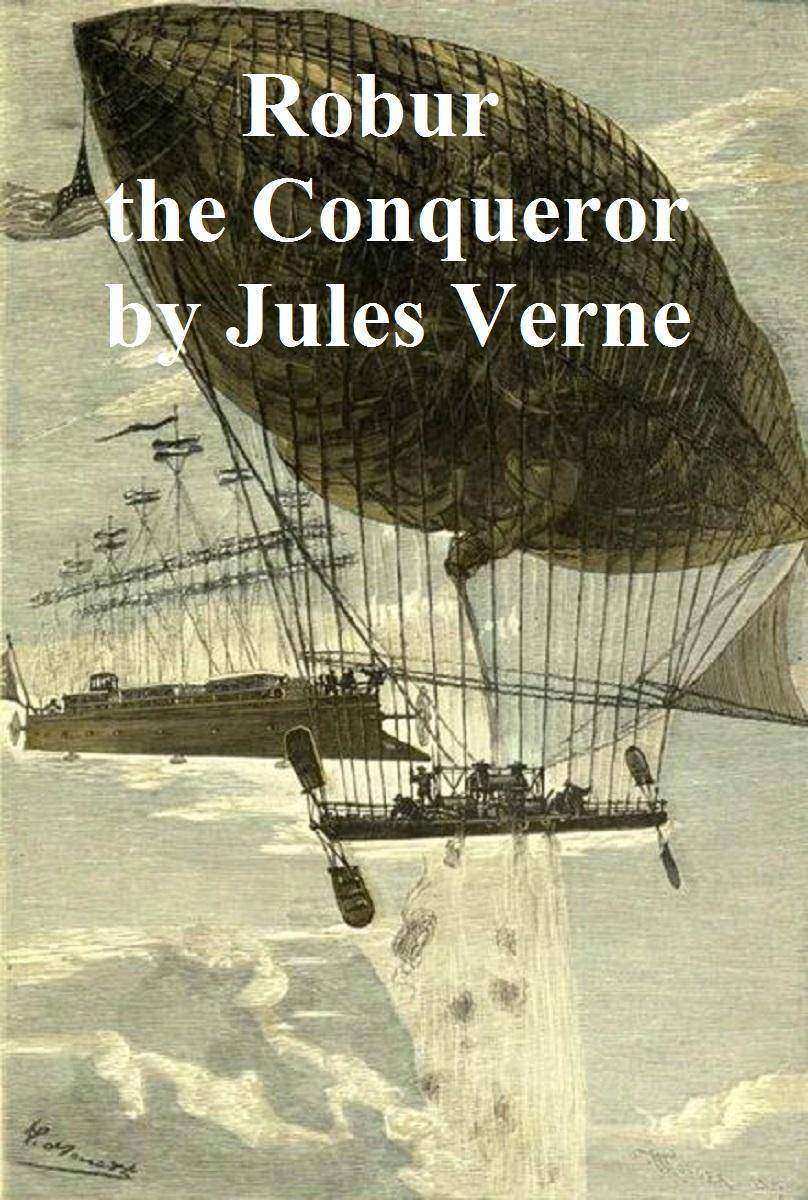
Science fiction novel first published in 1886. The Master of the World is the sequel to this story. According to Wikipedia: "Jules Gabriel Verne (February 8, 1828 – March 24, 1905) was a French author who pioneered the science-fiction genre. He is best known for his novels Journey to the Center of the Earth (written in 1864), From the Earth to the Moon (1865), Twenty Thousand Leagues Under the Sea (1869–1870), and Around the World in Eighty Days (1873). Verne wrote about space, air, and underwater travel before navigable aircraft and practical submarines were invented, and before any means of space travel had been devised. Consequently he is often referred to as the "Father of science fiction", along with H. G. Wells. Verne is the second most translated author of all time, only behind Agatha Christie with 4162 translations, according to Index Translationum. Some of his work has been made into films."
La Mechante Femme Mise a la Raison (The Taming of the Shrew in French)
¥8.09
Comédie de Shakespeare, traduite en fran?ais par Fran?ois Pierre Guillaume Guizot (1787 - 1874), historien fran?ais et homme d'?tat. Publié en 1862. Selon Wikipedia: "La Mégère apprivoisée est une comédie de William Shakespeare, qui aurait été écrite entre 1590 et 1591. La pièce commence par un dispositif d'encadrement, souvent appelé l'Induction, dans lequel un malicieux Nobleman trompe un bricoleur bourré du nom de Sly pour lui faire croire qu'il est lui-même un noble.Le noble a ensuite joué pour la diversion de Sly.Le complot principal dépeint la parade de Petruchio, un gentilhomme de Vérone, et Katherina, la musaraigne obstinée et opini?tre. Initialement, Katherina est une participante involontaire dans la relation, mais Petruchio la tempère avec divers tourments psychologiques - le ?domptage? - jusqu'à ce qu'elle devienne une épouse docile et obéissante.La sous-intrigue présente une compétition entre les prétendants de la s?ur plus désirable de Katherina, Bianca. "

The Tempest/ Der Sturm: Bilingual edition
¥8.09
Klassische Shakespeare-Romantik auf Englisch mit Zeilennummern und in deutscher ?bersetzung. Laut Wikipedia: "The Tempest ist ein Stück von William Shakespeare geschrieben. Viele Gelehrte glauben, dass es in 1610-11 geschrieben wurde, obwohl einige Forscher für eine frühere Datierung argumentiert haben. W?hrend als Kom?die aufgelistet, als es ursprünglich in der ersten ver?ffentlicht wurde Folio von 1623, viele moderne Redakteure haben seitdem das Spiel als eine Romanze bezeichnet, die vor der Schlie?ung der Theater im Jahre 1642 keine nennenswerte Aufmerksamkeit auf sich zog und nach der Restauration nur in adaptierten Versionen Popularit?t erlangte den originalen Shakespeare-Text in der Mitte des 19. Jahrhunderts wieder einzuführen, und im 20. Jahrhundert haben Kritiker und Gelehrte eine signifikante Neubewertung des Spielwerts vorgenommen, in dem Ma?e, als es jetzt als eines von Shakespeares gr??ten Werken gilt. "
La Morte Darthur
¥8.09
According to Wikipedia: "a compilation by Sir Thomas Malory of Romance tales about the legendary King Arthur, Guinevere, Lancelot, and the Knights of the Round Table. Malory interprets existing French and English stories about these figures and adds original material (the Gareth story). First published in 1485 by William Caxton, Le Morte d'Arthur is today perhaps the best-known work of Arthurian literature in English. Many modern Arthurian writers have used Malory as their principal source, including T. H. White in his popular The Once and Future King and Tennyson in The Idylls of the King... Sir Thomas Malory (c. 1405 – 14 March 1471) was an English writer, the author or compiler of Le Morte d'Arthur. The antiquary John Leland (1506–1552) believed him to be Welsh, but most modern scholars, beginning with G.L. Kittridge in 1894, assume that he was Sir Thomas Malory of Newbold Revel in Warwickshire, who was a knight, land-owner and Member of Parliament. The surname appears in various spellings, including Maillorie, Mallory, Mallery, and Maleore. The name comes from the Old French adjective maleüré (from Latin male auguratus) meaning ill-omened or unfortunate."
The Adventures of Bobby Orde
¥8.09
According to Wikipedia: "Stewart Edward White (12 March 1873 – September 18, 1946) was an American author... From about 1900 until about 1922, he wrote fiction and non-fiction about adventure and travel, with an emphasis on natural history and outdoor living. Starting in 1922, he and his wife Elizabeth "Betty" Grant White wrote numerous books they claimed were received through channelling with spirits. They also wrote of their travels around the state of California... White's books were popular at a time when America was losing its vanishing wilderness. He was a keen observer of the beauties of nature and human nature, yet could render them in a plain-spoken style. Based on his own experience, whether writing camping journals or Westerns, he included pithy and fun details about cabin-building, canoeing, logging, gold-hunting, and guns and fishing and hunting. "
Sacred and Profane Love: A Novel in Three Episodes
¥8.09
Dodo Collections brings you another classic from Arnold Bennett, ‘"Sacred and Profane Love: A Novel in Three Episodes."’ ? Enoch Arnold Bennett (always known as Arnold Bennett) was one of the most remarkable literary figures of his time, a product of the English Potteries that he made famous as the Five Towns. Yet he could hardly wait to escape his home town, and he did so by the sheer force of his ambition to succeed as an author. In his time he turned his hand to every kind of writing, but he will be remembered for such novels as The Old Wives' Tale, the Clayhanger trilogy (Clayhanger, Hilda Lessways, and These Twain), and The Card. He also wrote such intriguing self-improvement books as Literary Taste, How To Live on 24 Hours a Day, The Human Machine, etc. ? After a local education Bennett finished his education at the University of London and for a time was editor of Woman magazine. After 1900 he devoted himself entirely to writing; dramatic criticism was one of his foremost interests. Bennett is best known, however, for his novels, several of which were written during his residence in France. ? Bennett's infancy was spent in genteel poverty, which gave way to prosperity as his father succeeded as a solicitor. From this provincial background he became a novelist. ? His enduring fame is as a Chronicler of the Potteries towns, the setting and inspiration of some of his most famous and enduring literary work and the place where he grew up.
Practical Instruction for Detectives
¥8.09
First published in 1916. According to the Preface: " Having been connected for many years with two of the largest and most successful private detective agencies in this country, both as an operator and as an official, and having been requested to outline briefly and concisely the most modern and up-to-date methods employed by leading detectives and private detective agencies of today, I shall confine myself in these pages to facts and a few personal experiences. I will endeavor to show that any person possessed of average intelligence, and who will use good common sense, can become a successful detective, regardless of his present or previous occupation."
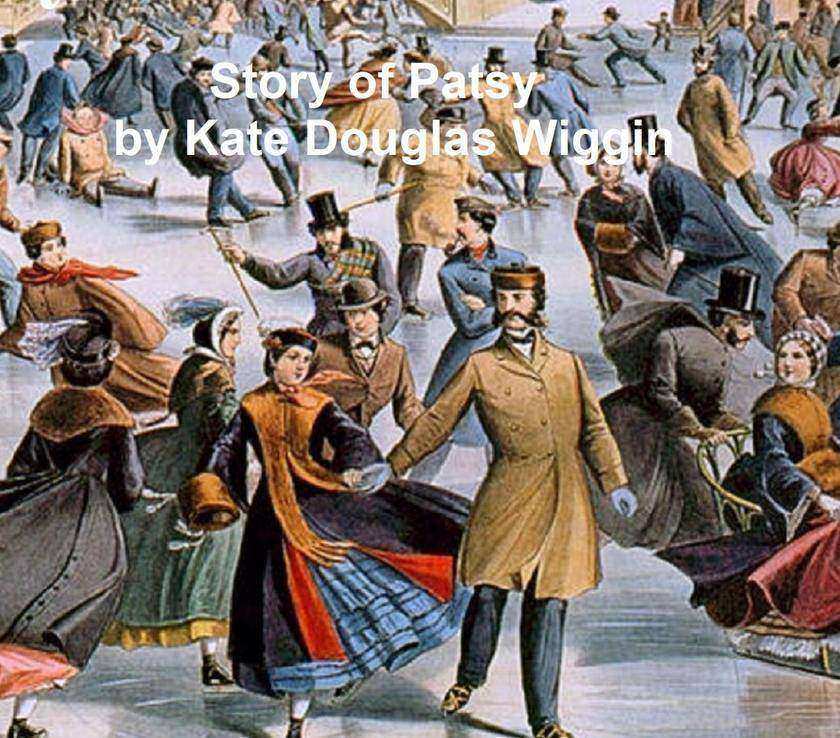
The Story of Patsy
¥8.09
Classic short story for very young children. According to Wikipedia: "Kate Douglas Wiggin ( 1856 - 1923) was an American children's author and educator. Kate Douglas Smith Wiggin was born in Philadelphia, and was of Welsh descent. She started the first free kindergarten in San Francisco in 1878 (the Silver Street Free Kindergarten). With her sister in the 1880s she also established a training school for kindergarten teachers. She was also a writer of children's books, the best known being The Birds' Christmas Carol (1887) and Rebecca of Sunnybrook Farm (1903)."


