


 购物车
购物车 个人中心
个人中心
They Call Me Carpenter: A Tale of the Second Coming
¥8.09
Classic novel. According to Wikipedia: "Upton Beall Sinclair, Jr. (1878 - 1968), was a prolific American author who wrote over 90 books in many genres and was widely considered to be one of the best investigators advocating socialist views. He achieved considerable popularity in the first half of the 20th century. He gained particular fame for his 1906 novel The Jungle, which dealt with conditions in the U.S. meat packing industry and caused a public uproar that partly contributed to the passage of the Pure Food and Drug Act and the Meat Inspection Act in 1906."

The Bobbsey Twins on a Houseboat
¥8.09
According to Wikipedia: "Laura Lee Hope is a pseudonym used by the Stratemeyer Syndicate for the Bobbsey Twins and several other series of children's novels. Actual writers taking up the pen of Laura Lee Hope include Edward Stratemeyer, Howard and Lilian Garis, Elizabeth Ward, Harriet (Stratemeyer) Adams, and Nancy Axelrad. Laura Lee Hope was first used as a pseudonym in 1904 for the debut of the Bobbsey Twins. Series: The Bobbsey Twins (1904-), The Outdoor Girls (23 vols. 1913-1933), The Moving Picture Girls (7 vols. 1914-1916), Bunny Brown (20 vols. 1916-1931), Six Little Bunkers (14 vols. 1918-1930), Make Believe Stories (12 vols. c. 1920-1923), Blythe Girls (12 vols. 1925-1932)."
A House of Gentlefolk
¥8.09
Classic Russian novel. According to Wikipedia: "Ivan Sergeyevich Turgenev 1818 - 1883) was a Russian novelist and playwright. His novel Fathers and Sons is regarded as one of the major works of 19th-century fiction."

The Sagebrusher, A Story of the West
¥8.09
Classic western. According to Wikipedia: "Emerson Hough (1857-1923) was an American author, best known for writing western stories. Hough was born in Newton, Iowa, and graduated from the University of Iowa with a law degree. He moved to White Oaks, New Mexico, and practiced law there but eventually turned to literary work by taking camping trips and writing about them for publication. He is best known as a novelist, writing The Mississippi Bubble as well as The Covered Wagon, about Oregon Trail pioneers, which later became successful as a movie, running 59 weeks at the Criterion Theater in New York City, passing the record set by Birth of a Nation. Other notable works included Story of the Cowboy, Way of the West, Singing Mouse Stories, and Passing of the Frontier, and writing the "Out-of-Doors" column for the Saturday Evening Post."
Works of Spielhagen, Storm, and Raabe
¥8.09
This collection includes works by Friedrich Spielhagen, Theodor Storm, and Wilhelm Raabe. The German Classics Of The Nineteenth And Twentieth Centuries, Volume 11, edited by Kuno Francke.

Opportunities in Aviation
¥8.09
First published in 1920. Job opportunities in aviation soon after World War I. "Any ordinary, active man, provided he has reasonably good eyesight and nerve, can fly, and fly well. If he has nerve enough to drive an automobile through the streets of a large city, and perhaps argue with a policeman on the question of speed limits, he can take himself off the ground in an airplane, and also land—a thing vastly more difficult and dangerous. We hear a great deal about special tests for the flier—vacuum-chambers, spinning-chairs, co-ordination tests—there need be none of these. The average man in the street, the clerk, the laborer, the mechanic, the salesman, with proper training and interest can be made good, if not highly proficient pilots. If there may be one deduction drawn from the experience of instructors in the Royal Air Force, it is that it is the training, not the individual, that makes the pilot."
Saint Smith and Other Stories
¥8.09
Saint Smith and Other Stories consists of two novellas and six short stories. "Saint Smith" focuses on Charlie, a would-be experimental film maker, Sarah his traditional Bible-believing mother, and Irene the clever ironic uninhibited German woman he marries. "The Barracks" takes place in basic training at Fort Polk, Louisiana, at the time of the Viet Nam War. The six stories deal with puzzles of human nature and the meaning of life.
Some Reminiscences
¥8.09
Conrad's autobiography. According to Wikipedia: "Joseph Conrad (1857 – 1924) was a Polish-born English novelist. Many critics regard him as one of the greatest novelists in the English language—a fact that is remarkable, as he did not learn to speak English fluently until he was in his twenties (and always with a strong Polish accent). He became a naturalized British subject in 1886. Conrad is recognized as a master prose stylist. Some of his works have a strain of romanticism, but more importantly he is recognized as an important forerunner of modernist literature. His narrative style and anti-heroic characters have influenced many writers, including Ernest Hemingway, D. H. Lawrence, F. Scott Fitzgerald, Graham Greene, William S. Burroughs, Joseph Heller, V.S. Naipaul, Italo Calvino and J. M. Coetzee."
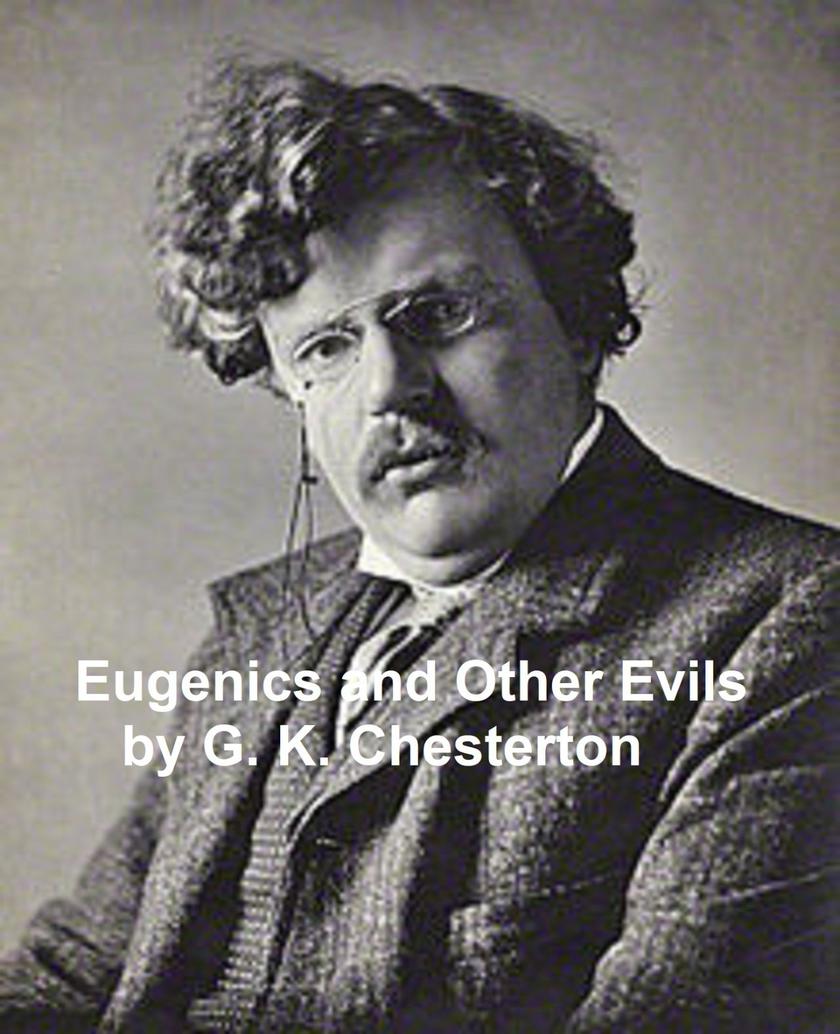
Eugenics and Other Evils
¥8.09
Classic collection of essays. According to Wikipedia: "Gilbert Keith Chesterton (1874 - 1936) was an influential English writer of the early 20th century. His prolific and diverse output included journalism, philosophy, poetry, biography, Christian apologetics, fantasy and detective fiction. Chesterton has been called the "prince of paradox." He wrote in an off-hand, whimsical prose studded with startling formulations. For example: "Thieves respect property. They merely wish the property to become their property that they may more perfectly respect it."[2] He is one of the few Christian thinkers who are equally admired and quoted by both liberal and conservative Christians, and indeed by many non-Christians. Chesterton's own theological and political views were far too nuanced to fit comfortably under the "liberal" or "conservative" banner."
Footprints in the Forest
¥8.09
Classic adventure novel. According to Wikipedia: "Edward Sylvester Ellis (April 11, 1840 – June 20, 1916) was an American author who was born in Ohio and died at Cliff Island, Maine. Ellis was a teacher, school administrator, and journalist, but his most notable work was that that he performed as author of hundreds of dime novels that he produced under his name and a number of noms de plume. Notable works by Ellis include The Huge Hunter, or the Steam Man of the Prairies and Seth Jones, or the Captives of the Frontier. Internationally, Edward S. Ellis is probably best known for his Deerhunter novels widely read by young boys up to the 1950s (together with works by James Fenimore Cooper and Karl May). In the mid-1880s, after a fiction-writing career of some thirty years, Ellis eventually turned his pen to more serious works of biography, history, and persuasive writing."

Electricity for Boys
¥8.09
Publisher's warning -- This book was originally published in 1914. It does an excellent job of explaining basics of electricity. It is also of historical interest. But electricity can be dangerous. The readily available tools and supplies of today differ from those common at the time this book was written. Before engaging in actual experiments or projects, you should consult an up-to-date guide, and not rely solely on the information you see here. With over 120 illustrations. "A working guide, in the successive steps of electricity, described in simple terms... The author has adopted the unique plan of setting forth the fundamental principles in each phase of the science, and practically applying the work in the successive stages. It shows how the knowledge has been developed, and the reasons for the various phenomena, without using technical words so as to bring it within the compass of every boy. It has a complete glossary of terms." 127 black-and-white illustrations.
Whirligigs
¥8.09
Classic short story collection, including O. Henry's most famous story -- The Ransom of Red Chief. According to Wikipedia: "O. Henry was the pseudonym of the American writer William Sydney Porter (September 11, 1862 – June 5, 1910). O. Henry's short stories are well known for their wit, wordplay, warm characterization and clever twist endings... O. Henry's stories are famous for their surprise endings, to the point that such an ending is often referred to as an "O. Henry ending." He was called the American answer to Guy de Maupassant. Both authors wrote twist endings, but O. Henry stories were much more playful and optimistic. His stories are also well known for witty narration. Most of O. Henry's stories are set in his own time, the early years of the 20th century. Many take place in New York City and deal for the most part with ordinary people: lerks, policemen, waitresses. Fundamentally a product of his time, O. Henry's work provides one of the best examples of catching the entire flavor of an age written in the English language. Whether roaming the cattle-lands of Texas, exploring the art of the "gentle grafter," or investigating the tensions of class and wealth in turn-of-the-century New York, O. Henry had an inimitable hand for isolating some element of society and describing it with an incredible economy and grace of language. Some of his best and least-known work resides in the collection Cabbages and Kings, a series of stories which each explore some individual aspect of life in a paralytically sleepy Central American town while each advancing some aspect of the larger plot and relating back one to another in a complex structure which slowly explicates its own background even as it painstakingly erects a town which is one of the most detailed literary creations of the period. The Four Million was his first collection of stories. It opens with a reference to Ward McAllister's "assertion that there were only 'Four Hundred' people in New York City who were really worth noticing. But a wiser man has arisen—the census taker—and his larger estimate of human interest has been preferred in marking out the field of these little stories of the 'Four Million.'" To O. Henry, everyone in New York counted. He had an obvious affection for the city, which he called "Bagdad-on-the-Subway,"[3] and many of his stories are set there—but others are set in small towns and in other cities."
Embarrassments
¥8.09
Collection of classic Henry James long stories. According to Wikipedia: "Henry James, (1843 – 1916), son of theologian Henry James Sr., brother of the philosopher and psychologist William James and diarist Alice James, was an American-born British author. He is one of the key figures of 19th century literary realism; the fine art of his writing has led many academics to consider him the greatest master of the novel and novella form. He spent much of his life in England and became a British subject shortly before his death. He is primarily known for a series of major novels in which he portrayed the encounter of America with Europe. His plots centered on personal relationships, the proper exercise of power in such relationships, and other moral questions. His method of writing from the point of view of a character within a tale allowed him to explore the phenomena of consciousness and perception, and his style in later works has been compared to impressionist painting."
Bartleby, the Scrivener. A Story of Wall-Street
¥8.09
Accordingto Wikipedia: "Bartleby, the Scrivener: A Story of Wall Street is a novella by the American novelist Herman Melville (1819–1891). It first appeared anonymously in two parts in the November and December 1853 editions of Putnam's Magazine, and was reprinted with minor textual alterations in his The Piazza Tales in 1856. Herman Melville wrote the story as an emotional response to the fact that Pierre was published to bad reviews. Christopher Sten writes in "Bartleby, the Transcendentalist: Melville's Dead Letter to Emerson" Melville found inspiration in Ralph Waldo Emerson's essays, particularly "The Transcendentalist" which shows parallels to "Bartleby". Bartleby is a kind of clerk, a copyist, "who obstinately refuses to go on doing the sort of writing demanded of him." During the spring of 1851, Melville felt similarly about his work on Moby Dick. Thus, Bartleby can be seen to represent Melville’s frustration with his own situation as a writer, and the story itself is “about a writer that forsakes conventional modes because of an irresistible preoccupation with the most baffling philosophical questions... Though no great success at the time of publication, "Bartleby the Scrivener" is now among the most noted of American short stories."
C. Auguste Dupin, Detective: Three Mystery Stories
¥8.09
This file includes all three of Edgar Allan Poe's mystery stories featuring Detective C. August Dupin: The Murders in the Rue Morgue, The Mystery of Marie Roget, and The Purloined Letter. According to Wikipedia: "Dupin is not a professional detective and his motivations for solving the mysteries change throughout the three stories. Using what Poe termed "ratiocination", Dupin combines his considerable intellect with creative imagination, even putting himself in the mind of the criminal. His talents are strong enough that he appears able to read the mind of his companion, the unnamed narrator of all three stories."
The Witch of the Middle Ages
¥8.09
History of witchcraft in the Middle Ages. According to Wikipedia: "Jules Michelet (21 August 1798 – 9 February 1874) was a French historian. He was born in Paris to a family with Huguenot traditions." The Preface begins: "In this translation of a work rich in the raciest beauties and defects of an author long since made known to the British public, the present writer has striven to recast the trenchant humour, the scornful eloquence, the epigrammatic dash of Mr. Michelet, in language not all unworthy of such a word-master. How far he has succeeded others may be left to judge. In one point only is he aware of having been less true to his original than in theory he was bound to be."

Nada the Lily
¥8.09
Dodo Collections brings you another classic from H. Rider Haggard, ‘Nada the Lily.’ ? “On the third day he asked Zweete how it was that his left hand was white and shriveled, and who were Umslopogaas and Nada, of whom he had let fall some words. Then the old man told him the tale that is set out here. Day by day he told some of it till it was finished. It was the past that spoke to his listener, telling of deeds long forgotten, of deeds that are no more known. And because the history of Nada the Lily and of those with whom her life was intertwined moved him strangely, and in many ways, he has done more, he has printed it that others may judge of it. . . .” ? Sir Henry Rider Haggard was an English writer of adventure novels set in exotic locations, predominantly Africa, and the creator of the Lost World literary genre. His stories, situated at the lighter end of the scale of Victorian literature, continue to be popular and influential. He was also involved in agricultural reform and improvement in the British Empire. ? His breakout novel was King Solomon's Mines (1885), which was to be the first in a series telling of the multitudinous adventures of its protagonist, Allan Quatermain. ? Haggard was made a Knight Bachelor in 1912 and a Knight Commander of the Order of the British Empire in 1919. He stood unsuccessfully for Parliament as a Conservative candidate for the Eastern division of Norfolk in 1895. The locality of Rider, British Columbia, was named in his memory.
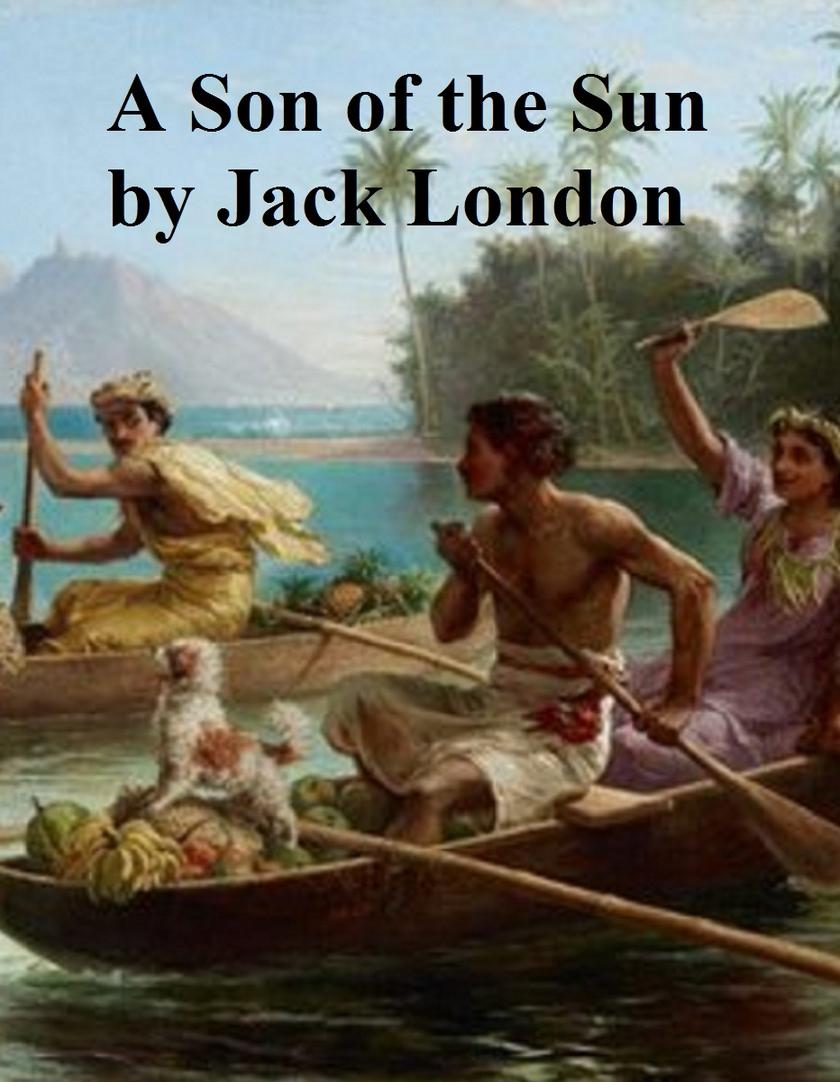
A Son of the Sun
¥8.09
Classic Jack London novel. According to Wikipedia: "Jack London (1876 – 1916) was an American author who wrote The Call of the Wild, White Fang, and The Sea Wolf along with many other popular books. A pioneer in the then-burgeoning world of commercial magazine fiction, he was one of the first Americans to make a lucrative career exclusively from writing."
The Night Horseman
¥8.09
Dodo Collections brings you another classic from Max Brand, ‘The Night Horseman.’ ? A man, a dog, and a horse. The call of the wild geese. A very smart doctor from the east who finds there is a lot to learn from these desert people. A woman loved by three men. A gunslinger who has a debt to settle. Max Brand brings them all together in another one of his over three hundred exciting western tales. Brand is not your typical western writer. ? Frederick Schiller Faust (1892-1944) was an American fiction author known primarily for his thoughtful and literary Westerns. Faust wrote mostly under pen names, and today he is primarily known by one, Max Brand. Others include George Owen Baxter, Martin Dexter, Evin Evans, David Manning, Peter Dawson, John Frederick, and Pete Morland. Faust was born in Seattle. He grew up in central California and later worked as a cowhand on one of the many ranches of the San Joaquin Valley. Faust attended the University of California, Berkeley, where he began to write frequently. During the 1910s, Faust started to sell stories to the many emerging pulp magazines of the era. In the 1920s, Faust wrote furiously in many genres, achieving success and fame, first in the pulps and later in the upscale "slick" magazines. His love for mythology was, however, a constant source of inspiration for his fiction and his classical and literary inclinations. The classical influences are particularly noticeable in his first novel The Untamed (1919), which was also made into a motion picture starring Tom Mix in 1920.

Trailin'!
¥8.09
Dodo Collections brings you another classic from Max Brand, ‘Trailin'!’ ? Trailin’ tells the story of Anthony Bard, a young aristocrat from the east with a hunger for adventure, who sees his father murdered in the yard of their home. This starts young Anthony on a trail of vengeance that leads him to the far west. Here, Anthony, a tenderfoot with a knack for survival must track down a legendary outlaw who waits for him, not with a gun, but with a story. Along the way he braves the elements, resists a band of cold-blooded killers and finds love. A classic western revenge plot…..with a twist. ? Frederick Schiller Faust (1892-1944) was an American fiction author known primarily for his thoughtful and literary Westerns. Faust wrote mostly under pen names, and today he is primarily known by one, Max Brand. Others include George Owen Baxter, Martin Dexter, Evin Evans, David Manning, Peter Dawson, John Frederick, and Pete Morland. Faust was born in Seattle. He grew up in central California and later worked as a cowhand on one of the many ranches of the San Joaquin Valley. Faust attended the University of California, Berkeley, where he began to write frequently. During the 1910s, Faust started to sell stories to the many emerging pulp magazines of the era. In the 1920s, Faust wrote furiously in many genres, achieving success and fame, first in the pulps and later in the upscale "slick" magazines. His love for mythology was, however, a constant source of inspiration for his fiction and his classical and literary inclinations. The classical influences are particularly noticeable in his first novel The Untamed (1919), which was also made into a motion picture starring Tom Mix in 1920.
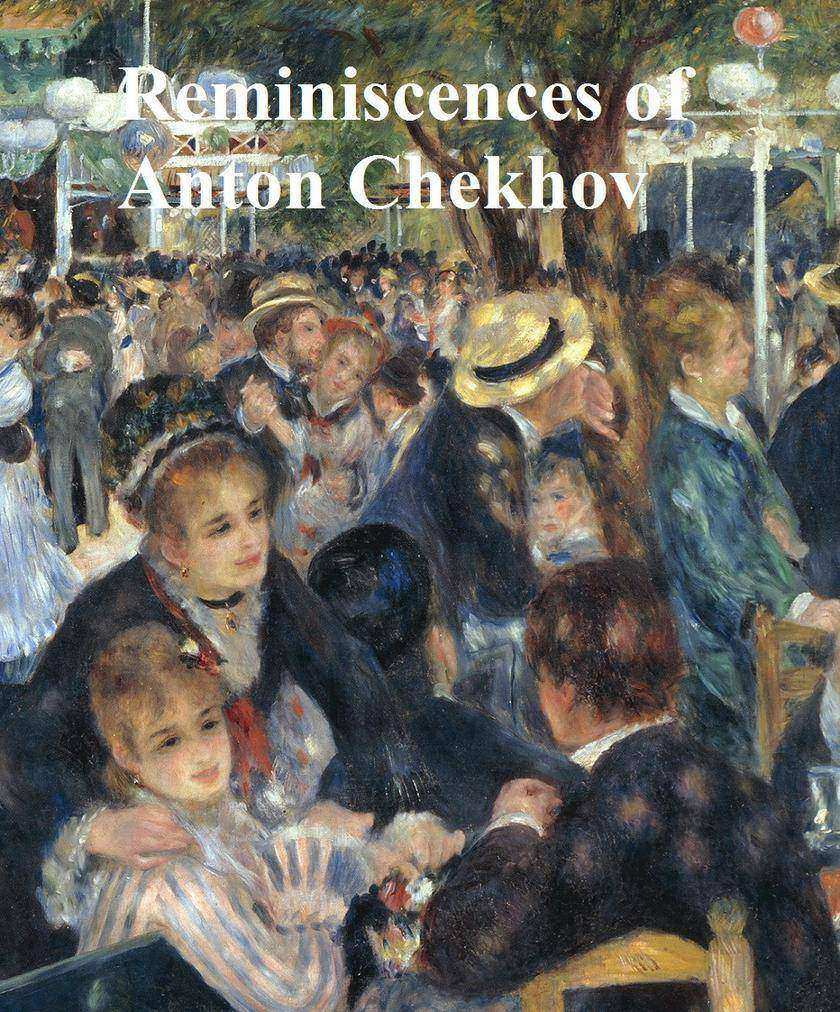
Reminiscences of Anton Chekhov
¥8.09
This collection of short biographies about Chekhov includes: Fragments of Recollections by Gorky, To Chekhov's Memory by Kuprin, and A. P. Chekhov by Bunin.


