


 购物车
 个人中心

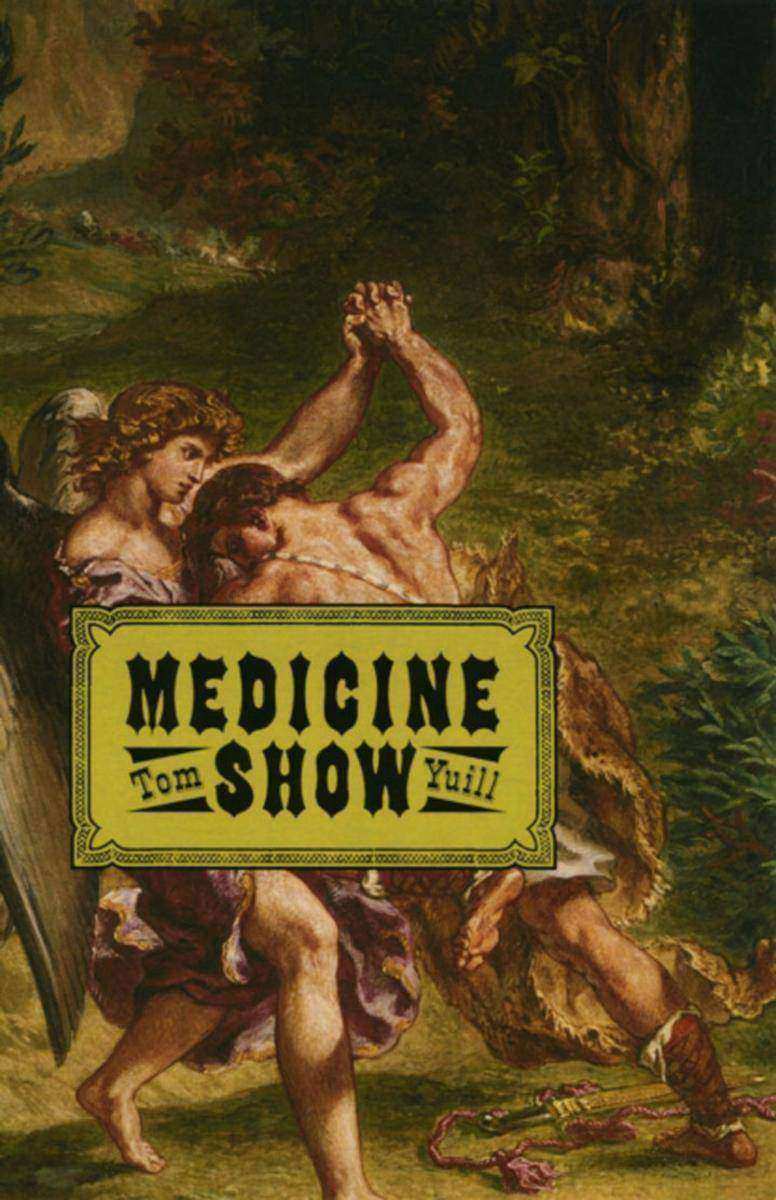
Medicine Show
¥117.72
In Medicine Show, inner conflict is wonderfully realized in the clash of down-home plain speech and European high culture utterances. Freely translating and adapting Catullus (Latin), Villon (Middle French), Corbiere (French), Hikmet (Turkish), and Orpheus (Greek), and placing them alongside Jagger and Richards, skinheads, and psalms, Tom Yuill's book mirrors an old-style hawking of wares, with all the charm and absurdity that results when high culture meets pop, when city meets small town, and when provincialism confronts urbanity. Here, the poems talk to one another, one poem nudging the cusps of many others, those poems touching still others' circumferences. Yuill, by invoking the Rolling Stones as muses and as background music, offers cover versions of Shakespeare, Keats, and Dylan Thomas, ultimately giving us a new kind of verse, funneled through the languages and rhythms of his masters' voices.

Recalculating
¥147.15
Long anticipated, Recalculating is Charles Bernstein's first full-length collection of new poems in seven years. As a result of this lengthy time under construction, the scope, scale, and stylistic variation of the poems far surpasses Bernstein's previous work. Together, the poems of Recalculating take readers on a journey through the history and poetics of the decades since the end of the Cold War as seen through the lens of social and personal turbulence and tragedy.?The collection's title, the now-familiar GPS expression, suggests a change in direction due to a mistaken or unexpected turn. For Bernstein, formal invention is a necessary swerve in the midst of difficulty. As in all his work since the 1970s, he makes palpable the idea that radically new structures, appropriated forms, an aversion to received ideas and conventions, political engagement, and syntactic novelty will open the doors of perception to exuberance and resonance, from giddiness to pleasure to grief. But at the same time he cautions, with typical deflationary ardor, "e;The pen is tinier than the sword."e; In these poems, Bernstein makes good on his claim that "e;the poetry is not in speaking to the dead but listening to the dead."e;?In doing so, Recalculating incorporates translations and adaptations of Baudelaire, Cole Porter, Mandelstam, and Paul Celan, as well as several tributes to writers crucial to Bernstein's work and a set of epigrammatic verse essays that combine poetics with wry observation, caustic satire, and aesthetic slapstick.?Formally stunning and emotionally charged, Recalculating makes the familiar strange-and in a startling way, makes the strange familiar. Into these poems, brimming with sonic and rhythmic intensity, philosophical wit, and multiple personae, life events intrude, breaking down any easy distinction between artifice and the real. With works that range from elegy to comedy, conceptual to metrical, expressionist to ambient, uproarious to procedural, aphoristic to lyric, Bernstein has created a journey through the dark striated by bolts of imaginative invention and pure delight.?

Instructions for American Servicemen in France during World War II
¥100.06
"e;You are about to play a personal part in pushing the Germans out of France. Whatever part you take-rifleman, hospital orderly, mechanic, pilot, clerk, gunner, truck driver-you will be an essential factor in a great effort."e;?As American soldiers fanned out from their beachhead in Normandy in June of 1944 and began the liberation of France, every soldier carried that reminder in his kit. A compact trove of knowledge and reassurance, Instructions for American Servicemen in France during World War II was issued to soldiers just before they embarked for France to help them understand both why they were going and what they'd find when they got there. After lying unseen in Army archives for decades, this remarkable guide is now available in a new facsimile edition that reproduces the full text and illustrations of the original along with a new introduction by Rick Atkinson setting the book in context. Written in a straightforward, personal tone, the pamphlet is equal parts guidebook, cultural snapshot, and propaganda piece. A central aim is to dispel any prejudices American soldiers may have about the French-especially relating to their quick capitulation in 1940. Warning soldiers that the defeat "e;is a raw spot which the Nazis have been riding"e; since the occupation began, Instructions is careful to highlight France's long historical role as a major U.S. ally. Following that is a brief, fascinating sketch of the French character ("e;The French are mentally quick;"e; "e;Rich or poor, they are economical"e;) and stark reminders of the deprivation the French have endured under occupation. Yet an air of reassuring confidence pervades the final section of the pamphlet, which reads like a straightforward tourists' guide to Paris and the provinces-like a promise of better days to come once the soldiers complete their mission.Written by anonymous War Department staffers to meet the urgent needs of the moment, with no thought of its historical value, Instructionsfor American Servicemen in France during World War II nevertheless brings to vivid life the closing years of World War II-when optimism was growing, but a long, demanding road still lay ahead.

We Wanna Boogie: The Rockabilly Roots of Sonny Burgess and the Pacers
¥225.63
Rock and roll pioneer and Newport native Sonny Burgess is a member of the Rockabilly Hall of Fame. In this book full of personal interviews and remembrances, Burgess and his band tell of their original recordings for Sun Records in the 1950s; their shows with greats such as Elvis Presley, Johnny Cash, and Jerry Lee Lewis; and their success in the contemporary rockabilly revival. This also is the history of a once prominent and spirited Delta community of extensive agricultural wealth. Newport was home to numerous music clubs that hosted national artists as well as illicit backroom gambling. Burgess is a product of this history, and his vivacious music is shaped by his hometown and the dramatic transformation of southern rural life it witnessed.

Sounds of Capitalism
¥206.01
From the early days of radio through the rise of television after World War II to the present, music has been used more and more to sell goods and establish brand identities. And since the 1920s, songs originally written for commercials have become popular songs, and songs written for a popular audience have become irrevocably associated with specific brands and products. Today, musicians move flexibly between the music and advertising worlds, while the line between commercial messages and popular music has become increasingly blurred.Timothy D. Taylor tracks the use of music in American advertising for nearly a century, from variety shows like The Clicquot Club Eskimos to the rise of the jingle, the postwar upsurge in consumerism, and the more complete fusion of popular music and consumption in the 1980s and after. The Sounds of Capitalism is the first book to tell truly the history of music used in advertising in the United States and is an original contribution to this little-studied part of our cultural history. ?

Fragments and Assemblages
¥223.67
In Fragments and Assemblages, Arthur Bahr expands the ways in which we interpret medieval manu*s, examining the formal characteristics of both physical manu*s and literary works. Specifically, Bahr argues that manu* compilations from fourteenth-century London reward interpretation as both assemblages and fragments: as meaningfully constructed objects whose forms and textual contents shed light on the city's literary, social, and political cultures, but also as artifacts whose physical fragmentation invites forms of literary criticism that were unintended by their medieval makers. Such compilations are not simply repositories of data to be used for the reconstruction of the distant past; their physical forms reward literary and aesthetic analysis in their own right. The compilations analyzed reflect the full vibrancy of fourteenth-century London's literary cultures: the multilingual codices of Edwardian civil servant Andrew Horn and Ricardian poet John Gower, the famous Auchinleck manu* of texts in Middle English, and Chaucer's Canterbury Tales. By reading these compilations as both formal shapes and historical occurrences, Bahr uncovers neglected literary histories specific to the time and place of their production. The book offers a less empiricist way of interpreting the relationship between textual and physical form that will be of interest to a wide range of literary critics and manu* scholars.

War's Waste
¥229.55
With US soldiers stationed around the world and engaged in multiple conflicts, Americans will be forced for the foreseeable future to come to terms with those permanently disabled in battle.?At the moment, we accept rehabilitation as the proper social and cultural response to the wounded, swiftly returning injured combatants to their civilian lives. But this was not always the case, as Beth Linker reveals in her provocative new book, War's Waste.?Linker explains how, before entering World War I, the United States sought a way to avoid the enormous cost of providing injured soldiers with pensions, which it had done since the Revolutionary War. Emboldened by their faith in the new social and medical sciences, reformers pushed rehabilitation as a means to "e;rebuild"e; disabled soldiers, relieving the nation of a monetary burden and easing the decision to enter the Great War. Linker's narrative moves from the professional development of orthopedic surgeons and physical therapists to the curative workshops, or hospital spaces where disabled soldiers learned how to repair automobiles as well as their own artificial limbs. The story culminates in the postwar establishment of the Veterans Administration, one of the greatest legacies to come out of the First World War.

Front Page Economics
¥353.16
In an age when pundits constantly decry overt political bias in the media, we have naturally become skeptical of the news. But the bluntness of such critiques masks the highly sophisticated ways in which the media frame important stories. In Front Page Economics, Gerald Suttles delves deep into the archives to examine coverage of two major economic crashes-in 1929 and 1987-in order to systematically break down the way newspapers normalize crises.Poring over the articles generated by the crashes-as well as the people in them, the writers who wrote them, and the cartoons that ran alongside them-Suttles uncovers dramatic changes between the ways the first and second crashes were reported. In the intervening half-century, an entire new economic language had arisen and the practice of business journalism had been completely altered. Both of these transformations, Suttles demonstrates, allowed journalists to describe the 1987 crash in a vocabulary that was normal and familiar to readers, rendering it routine.A subtle and probing look at how ideologies are packaged and transmitted to the casual newspaper reader, Front Page Economics brims with important insights that shed light on our own economically tumultuous times.

Panaceia's Daughters
¥353.16
Panaceia's Daughters provides the first book-length study of noblewomen's healing activities in early modern Europe. Drawing on rich archival sources, Alisha Rankin demonstrates that numerous German noblewomen were deeply involved in making medicines and recommending them to patients, and many gained widespread fame for their remedies. Turning a common historical argument on its head, Rankin maintains that noblewomen's pharmacy came to prominence not in spite of their gender but because of it.?Rankin demonstrates the ways in which noblewomen's pharmacy was bound up in notions of charity, class, religion, and household roles, as well as in expanding networks of knowledge and early forms of scientific experimentation. The opening chapters place noblewomen's healing within the context of cultural exchange, experiential knowledge, and the widespread search for medicinal recipes in early modern Europe. Case studies of renowned healers Dorothea of Mansfeld and Anna of Saxony then demonstrate the value their pharmacy held in their respective roles as elderly widow and royal consort, while a study of the long-suffering Duchess Elisabeth of Rochlitz emphasizes the importance of experiential knowledge and medicinal remedies to the patient's experience of illness.
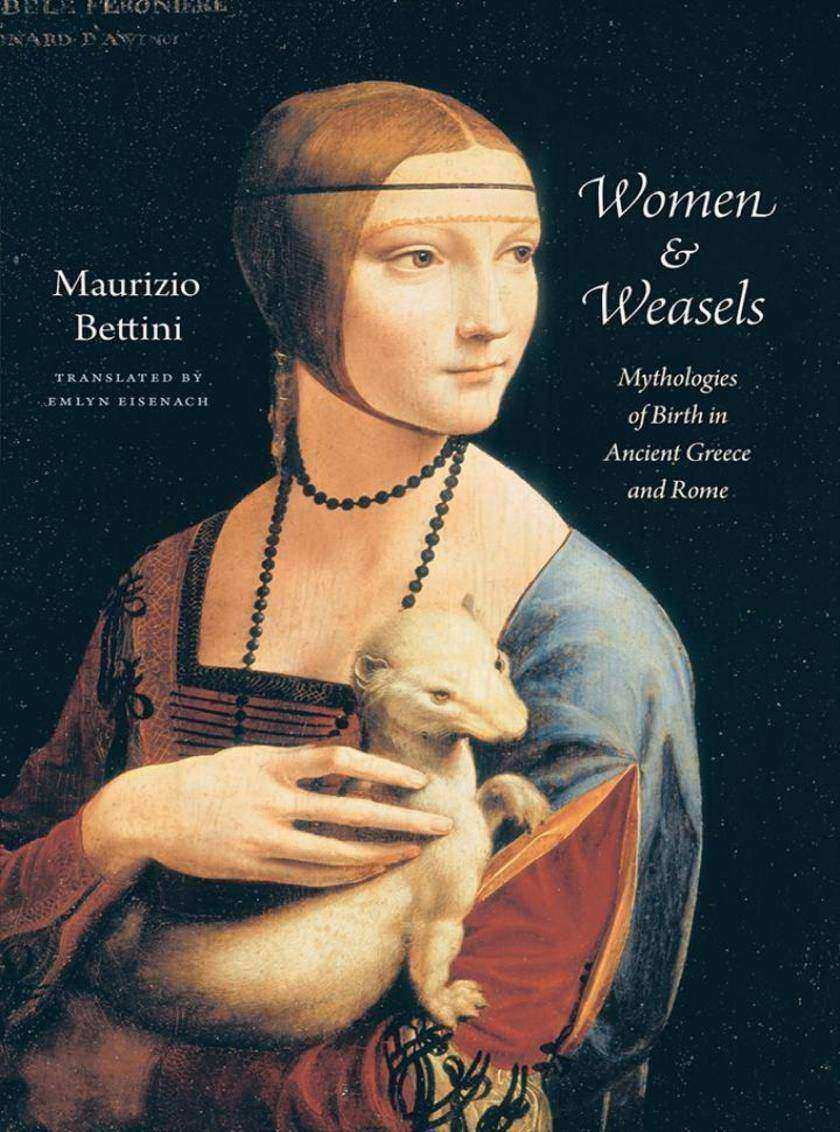
Women and Weasels
¥535.63
If you told a woman her sex had a shared, long-lived history with weasels, she might deck you. But those familiar with mythology know better: that the connection between women and weasels is an ancient and favorable one, based in the Greek myth of a midwife who tricked the gods to ease Heracles's birth-and was turned into a weasel by Hera as punishment. Following this story as it is retold over centuries in literature and art,?Women and Weasels?takes us on a journey through mythology and ancient belief, revising our understanding of myth, heroism, and the status of women and animals in Western culture. ?Maurizio Bettini recounts and analyzes a variety of key literary and visual moments that highlight the weasel's many attributes. We learn of its legendary sexual and childbearing habits and symbolic association with witchcraft and midwifery, its role as a domestic pet favored by women, and its ability to slip in and out of tight spaces. The weasel, Bettini reveals, is present at many unexpected moments in human history, assisting women in labor and thwarting enemies who might plot their ruin. With a parade of symbolic associations between weasels and women-witches, prostitutes, midwives, sisters-in-law, brides, mothers, and heroes-Bettini brings to life one of the most venerable and enduring myths of Western culture.

Wicked Intelligence
¥453.22
In late seventeenth-century London, the most provocative images were produced not by artists, but by scientists. Magnified fly-eyes drawn with the aid of microscopes, apparitions cast on laboratory walls by projection machines, cut-paper figures revealing the "e;exact proportions"e; of sea monsters-all were created by members of the Royal Society of London, the leading institutional platform of the early Scientific Revolution. Wicked Intelligence reveals that these natural philosophers shaped Restoration London's emergent artistic cultures by forging collaborations with court painters, penning art theory, and designing triumphs of baroque architecture such as St Paul's Cathedral. ?Matthew C. Hunter brings to life this archive of experimental-philosophical visualization and the deft cunning that was required to manage such difficult research. Offering an innovative approach to the scientific image-making of the time, he demonstrates how the Restoration project of synthesizing experimental images into scientific knowledge, as practiced by Royal Society leaders Robert Hooke and Christopher Wren, might be called "e;wicked intelligence."e; Hunter uses episodes involving specific visual practices-for instance, concocting a lethal amalgam of wax, steel, and sulfuric acid to produce an active model of a comet-to explore how Hooke, Wren, and their colleagues devised representational modes that aided their experiments. Ultimately, Hunter argues, the craft and craftiness of experimental visual practice both promoted and menaced the artistic traditions on which they drew, turning the Royal Society projects into objects of suspicion in Enlightenment England.?The first book to use the physical evidence of Royal Society experiments to produce forensic evaluations of how scientific knowledge was generated, Wicked Intelligence rethinks the parameters of visual art, experimental philosophy, and architecture at the cusp of Britain's imperial power and artistic efflorescence.
Between History and Myth
¥453.22
All groups tell stories about their beginnings. Such tales are oft-repeated, finely wrought, and usually much beloved. Among those institutions most in need of an impressive creation account is the state: it's one of the primary ways states attempt to legitimate themselves. But such founding narratives invite revisionist retellings that modify details of the story in ways that undercut, ironize, and even ridicule the state's ideal self-representation. Medieval accounts of how Norway was unified by its first king provide a lively, revealing, and wonderfully entertaining example of this process.?Taking the story of how Harald Fairhair unified Norway in the ninth century as its central example, Bruce Lincoln illuminates the way a state's foundation story blurs the distinction between history and myth and how variant tellings of origin stories provide opportunities for dissidence and subversion as subtle-or not so subtle-modifications are introduced through details of character, incident, and plot structure. Lincoln reveals a pattern whereby texts written in Iceland were more critical and infinitely more subtle than those produced in Norway, reflecting the fact that the former had a dual audience: not just the Norwegian court, but also Icelanders of the twelfth and thirteenth centuries, whose ancestors had fled from Harald and founded the only non-monarchic, indeed anti-monarchic, state in medieval Europe.?Between History and Myth will appeal not only to specialists in Scandinavian literature and history but also to anyone interested in memory and narrative.

Reading Clocks, Alla Turca
¥453.22
Up until the end of the eighteenth century, the way Ottomans used their clocks conformed to the inner logic of their own temporal culture. However, this began to change rather dramatically during the nineteenth century, as the Ottoman Empire was increasingly assimilated into the European-dominated global economy and the project of modern state building began to gather momentum.In Reading Clocks, Alla Turca, Avner Wishnitzer unravels the complexity of Ottoman temporal culture and for the first time tells the story of its transformation. He explains that in their attempt to attain better surveillance capabilities and higher levels of regularity and efficiency, various organs of the reforming Ottoman state developed elaborate temporal constructs in which clocks played an increasingly important role. As the reform movement spread beyond the government apparatus, emerging groups of officers, bureaucrats, and urban professionals incorporated novel time-related ideas, values, and behaviors into their self-consciously "e;modern"e; outlook and lifestyle. Acculturated in the highly regimented environment of schools and barracks, they came to identify efficiency and temporal regularity with progress and the former temporal patterns with the old political order.Drawing on a wealth of archival and literary sources, Wishnitzer's original and highly important work presents the shifting culture of time as an arena in which Ottoman social groups competed for legitimacy and a medium through which the very concept of modernity was defined. Reading Clocks, Alla Turca breaks new ground in the study of the Middle East and presents us with a new understanding of the relationship between time and modernity.

Golden Rules
¥453.22
Fresh water has become scarce and will become even more so in the coming years, as continued population growth places ever greater demands on the supply of fresh water. At the same time, options for increasing that supply look to be ever more limited. No longer can we rely on technological solutions to meet growing demand. What we need is better management of the available water supply to ensure it goes further toward meeting basic human needs. But better management requires that we both understand the history underlying our current water regulation regime and think seriously about what changes to the law could be beneficial.For Golden Rules, Mark Kanazawa draws on previously untapped historical sources to trace the emergence of the current framework for resolving water-rights issues to California in the 1850s, when Gold Rush miners flooded the newly formed state. The need to circumscribe water use on private property in support of broader societal objectives brought to light a number of fundamental issues about how water rights ought to be defined and enforced through a system of laws. Many of these issues reverberate in today's contentious debates about the relative merits of government and market regulation. By understanding how these laws developed across California's mining camps and common-law courts, we can also gain a better sense of the challenges associated with adopting new property-rights regimes in the twenty-first century.

Geographies of Philological Knowledge
¥447.34
Geographies of Philological Knowledge examines the relationship between medievalism and colonialism in the nineteenth-century Hispanic American context through the striking case of the Creole Andres Bello (1781-1865), a Venezuelan grammarian, editor, legal scholar, and politician, and his lifelong philological work on the medieval heroic narrative that would later become Spain's national epic, the Poem of the Cid. Nadia R. Altschul combs Bello's study of the poem and finds throughout it evidence of a "e;coloniality of knowledge."e;?Altschul ?reveals how, during the nineteenth century, the framework for philological scholarship established in and for core European nations-France, England, and especially Germany-was exported to Spain and Hispanic America as the proper way of doing medieval studies. She argues that the global designs of European philological scholarship are conspicuous in the domain of disciplinary historiography, especially when examining the local history of a Creole Hispanic American like Bello, who is neither fully European nor fully alien to European culture. Altschul likewise highlights Hispanic America's intellectual internalization of coloniality and its understanding of itself as an extension of Europe. A timely example of interdisciplinary history, interconnected history, and transnational study, Geographies of Philological Knowledge breaks with previous nationalist and colonialist histories and thus forges a new path for the future of medieval studies.
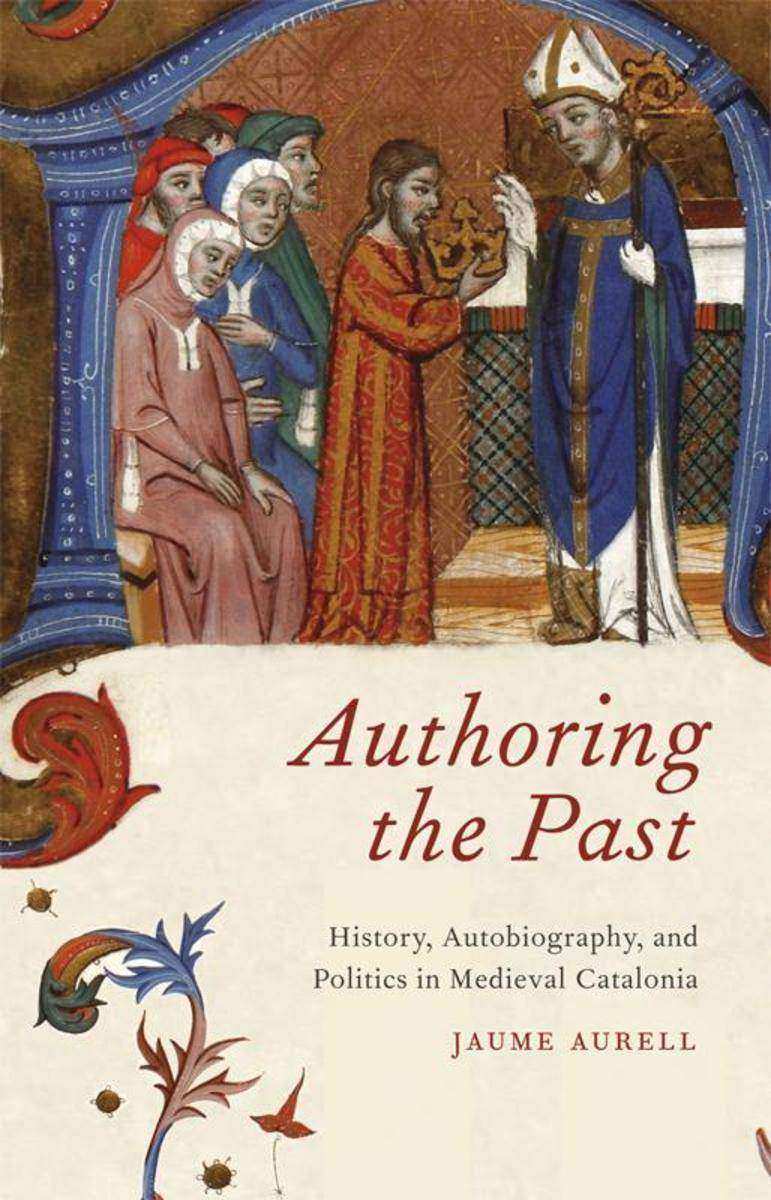
Authoring the Past
¥447.34
Authoring the Past surveys medieval Catalan historiography, shedding light on the emergence and evolution of historical writing and autobiography in the Middle Ages, on questions of authority and authorship, and on the links between history and politics during the period. Jaume Aurell examines texts from the late twelfth to the late fourteenth century-including the Latin Gesta comitum Barcinonensium and four texts in medieval Catalan: James I's Llibre dels fets, the Crnica of Bernat Desclot, the Crnica of Ramon Muntaner, and the Crnica of Peter the Ceremonious-and outlines the different motivations for the writing of each.?For Aurell, these chronicles are not mere archaeological artifacts but rather documents that speak to their writers' specific contemporary social and political purposes. He argues that these Catalonian counts and Aragonese kings were attempting to use their role as authors to legitimize their monarchical status, their growing political and economic power, and their aggressive expansionist policies in the Mediterranean. By analyzing these texts alongside one another, Aurell demonstrates the shifting contexts in which chronicles were conceived, written, and read throughout the Middle Ages.The first study of its kind to make medieval Catalonian writings available to English-speaking audiences, Authoring the Past will be of interest to scholars of history and comparative literature, students of Hispanic and Romance medieval studies, and medievalists who study the chronicle tradition in other languages.
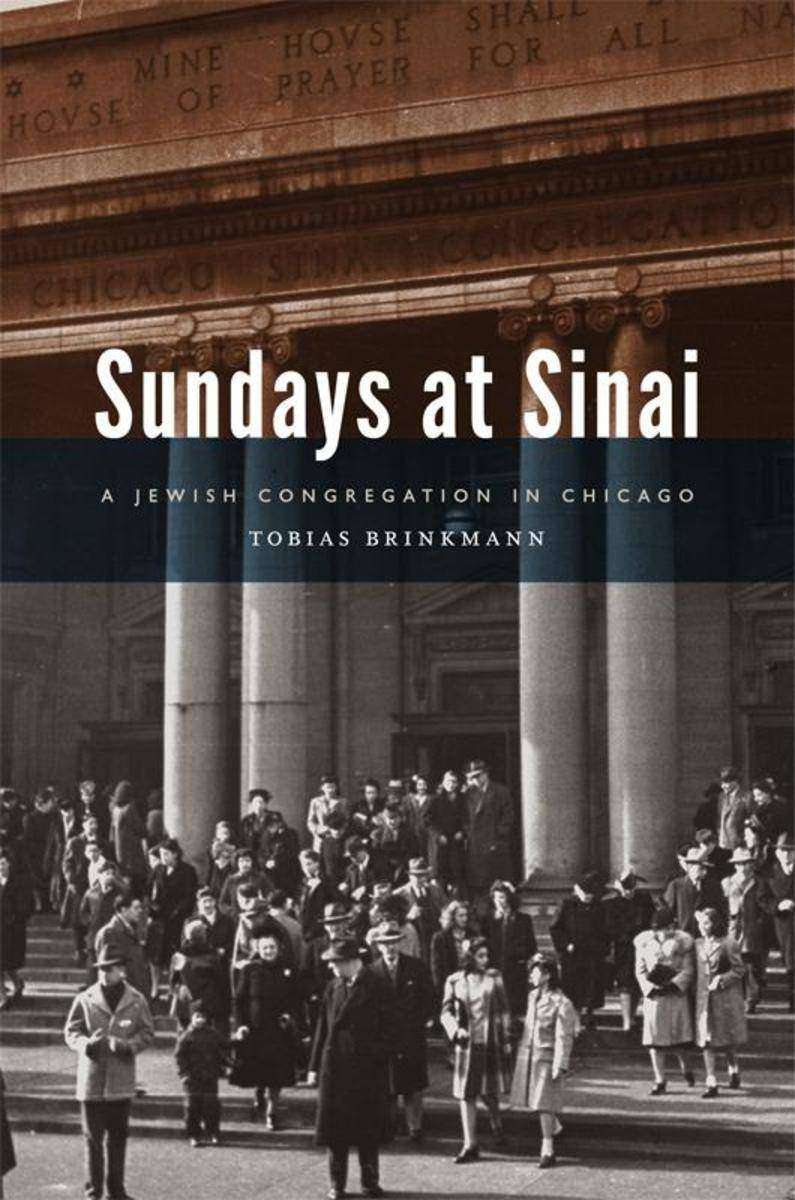
Sundays at Sinai
¥447.34
First established 150 years ago, Chicago Sinai is one of America's oldest Reform Jewish congregations. Its founders were upwardly mobile and civically committed men and women, founders and partners of banks and landmark businesses like Hart Schaffner & Marx, Sears & Roebuck, and the giant meatpacking firm Morris & Co. As explicitly modern Jews, Sinai's members supported and led civic institutions and participated actively in Chicago politics. Perhaps most radically, their Sunday services, introduced in 1874 and still celebrated today, became a hallmark of the congregation.In Sundays at Sinai, Tobias Brinkmann brings modern Jewish history, immigration, urban history, and religious history together to trace the roots of radical Reform Judaism from across the Atlantic to this rapidly growing American metropolis. ?Brinkmann shines a light on the development of an urban reform congregation, illuminating Chicago Sinai's practices and history, and its contribution to Christian-Jewish dialogue in the United States. Chronicling Chicago Sinai's radical beginnings in antebellum Chicago to the present, Sundays at Sinai is the extraordinary story of a leading Jewish Reform congregation in one of America's great cities.

The Horse and His Boy 纳尼亚传奇3(彩色插图版)
¥50.33
Illustrations in this ebook appear in vibrant full color on a full color ebook device, and in rich black and white on all other devices. Narnia . . . where horses talk . . . where treachery is brewing . . . where destiny awaits. On a desperate journey, two runaways meet and join forces. Though they are only looking to escape their harsh and narrow lives, they soon find themselves at the center of a terrible battle. It is a battle that will decide their fate and the fate of Narnia itself. The Horse and His Boy is the third book in C.S. Lewis The Chronicles of Narnia a series that has become part of the canon of classic literature, drawing readers of all ages into a magical land with unforgettable characters for over fifty years. This is a novel that stands on its own, but if you would like to return to Narnia, read Prince Caspian , the fourth book in The Chronicles of Narnia.

The Lion, the Witch and the Wardrobe 纳尼亚传奇2(彩色插图版)
¥50.33
Illustrations in this ebook appear in vibrant full color on a full-color ebook device, and in rich black and white on all other devices. Narnia . . . a land frozen in eternal winter . . . a country waiting to be set free Four adventurers step through a wardrobe door and into the land of Narnia, a land enslaved by the power of the White Witch. But when almost all hope is lost, the return of the Great Lion, Aslan, signals a great change . . . and a great sacrifice. The Lion, the Witch and the Wardrobe is the second book in C.S. Lewis's The Chronicles of Narnia , a series that has become part of the canon of classic literature, drawing readers of all ages into a magical land with unforgettable characters for over fifty years. This is a stand-alone read, but if you would like to explore more of the Narnian realm, pick up The Horse and His Boy , the third book in The Chronicles of Narnia . Supports the Common Core State Standards.
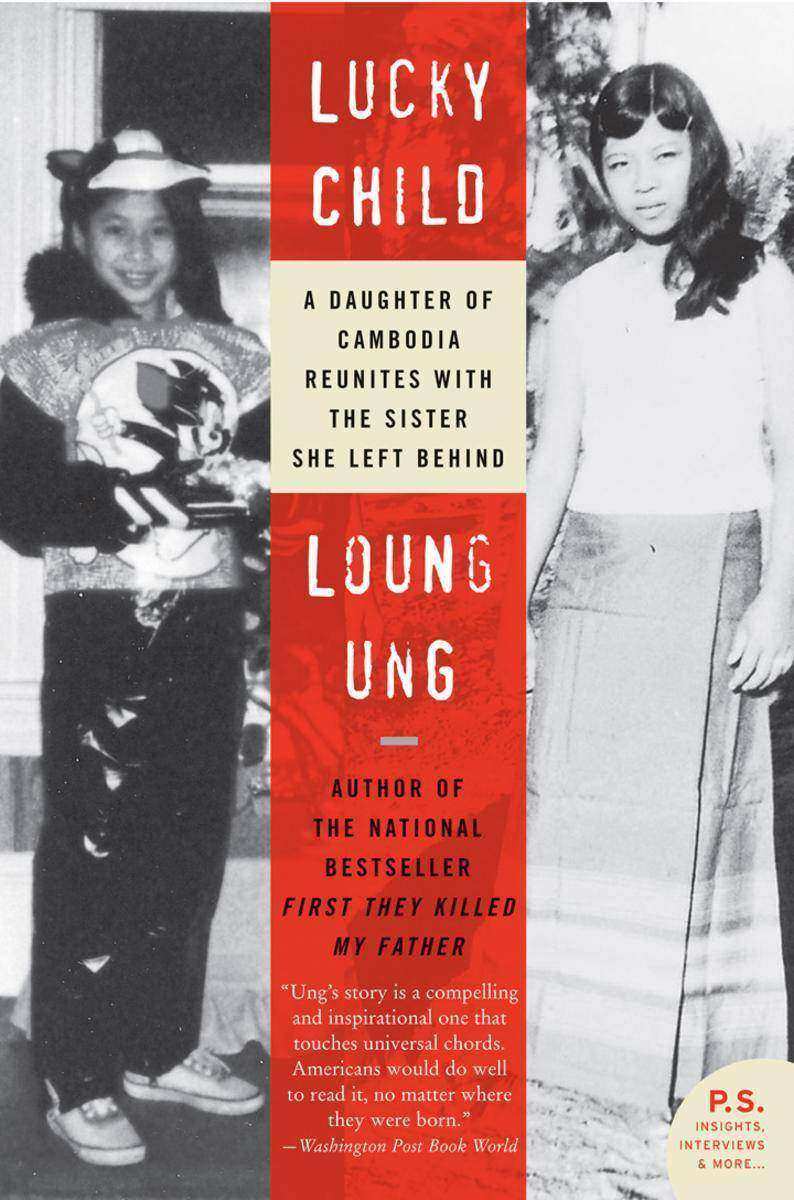
Lucky Child
¥90.77
After enduring years of hunger, deprivation, and devastating loss at the hands of the Khmer Rouge, ten-year-old Loung Ung became the "lucky child," the sibling chosen to accompany her eldest brother to America while her one surviving sister and two brothers remained behind. In this poignant and elegiac memoir, Loung recalls her assimilation into an unfamiliar new culture while struggling to overcome dogged memories of violence and the deep scars of war. In alternating chapters, she gives voice to Chou, the beloved older sister whose life in war-torn Cambodia so easily could have been hers. Highlighting the harsh realities of chance and circumstance in times of war as well as in times of peace, Lucky Child is ultimately a testament to the resilience of the human spirit and to the salvaging strength of family bonds.

The Governator
¥145.91
Who is the real Arnold SchwarzeneggerInvestigative journalist and number one New York Times bestselling author Ian Halperin reveals the true and untold story about this larger-than-life and often outrageous figure From his childhood in Austria to his rise as a star ofAmerican conservative politics, the story of ArnoldSchwarzenegger life reads like the * of a HollywoodB-movie penned by Horatio Alger. In this exclusivepeek behind the curtain, award-winning scoop hunterIan Halperin wades through the myths and rumors todiscover the real Arnold behind the icon, a man definedby unbridled ambition and an unending quest for power. Based on extensive research, undercover forays, andcandid interviews with many of the Terminator closefriends and peers, Halperin brings the myth to life with: a riveting journey through Schwarzenegger pastto explore his relationship with his abusive father andhis feelings toward the Nazi party. insights into the shadowy world of bodybuildingand Schwarzenegger early steroid use. an investigation of Schwarzenegger reputation asa bully and a womanizer, including his alleged affairs and public accusations of sexual harassment behavior that earned him the nickname the Groper.an in-depth look at his long-standing fascination withthe Kennedys and his remarkably seamless assimilation into his wife fabled family. a detailed look into Maria startling weight loss. an analysis of Schwarzenegger political career,revealing him to be a surprisingly effective and talentedgovernor. the behind-the-scenes machinations of the Kennedyfamily to influence Schwarzenegger political agenda. And finally Halperin uncovers the never-before-told details of an incredible and audacious plan for Schwarzenegger to attempt to rewrite the Constitution and run for president of the United States.


