


 购物车
购物车 个人中心
个人中心
Galloway and the Borders (Collins New Naturalist Library, Book 101)
¥192.67
Another volume in the widely-read New Naturalist series, this book is an in-depth study of the natural developments and history of Galloway and surrounding areas. Often overlooked due to the reputation of natural habitat in other parts of the country, the author here conveys the diversity and magnificence of nature in the south of Scotland. Galloway and the borders is an extremely varied region, from saltmarshes and shingle beaches to rocky islands and seabird stations. The wide range of hills, displaying a wealth of rich colours, give the area its dominant character. The varied selection of flora and fauna only add to the diversity.
The Gecko’s Foot: How Scientists are Taking a Leaf from Nature's Book
¥72.40
A cutting-edge science book in the style of ‘Fermat’s Last Theorem’ and ‘Chaos’ from an exciting and accessible new voice in popular science writing. Bio-inspiration is a form of engineering but not in the conventional sense. Extending beyond our established and preconceived notions, scientists, architects and engineers are looking at imitating nature by manufacturing 'wet' materials such as spider silk or the surface of the gecko's foot. The amazing power of the gecko's foot has long been known – it can climb a vertical glass wall and even walk upside down on the ceiling – but no ideas could be harnessed from it because its mechanism could not be seen with the power of optical microscopes. Recently however the secret was solved by a team of scientists in Oregon who established that the mechanism really is dry, and that it does not involve suction, capillary action or anything else the lay person might imagine. Each foot has half a million bristles and each bristle ramifies into hundreds of finer spatula-shaped projections. The fine scale of the gecko's foot is beyond the capacity of conventional microengineering, but a team of nanotechnologists have already made a good initial approximation. The gecko's foot is just one of many examples of this new 'smart' science. We also discover, amongst other things, how George de Mestral's brush with the spiny fruits of the cocklebur inspired him to invent Velcro; how the shape of leaves opening from a bud has inspired the design of solar-powered satellites; and the parallels between cantilever bridges and the spines of large mammals such as the bison. The new 'smart' science of Bio-inspiration is going to produce a plethora of products over the next decades that will transform our lives, and force us to look at the world in a completely new way. It is science we will be reading about in our papers very soon; it is the science of tomorrow's world.

A Farmer’s Life for Me: How to live sustainably, Jimmy’s way
¥147.35
In this practical guide TV farmer Jimmy Doherty imparts his experience and ideas to show you how to achieve the self-sufficient lifestyle and add to your life whether growing for your own pleasure – or profit! Farmer, entrepreneur and TV presenter Jimmy Doherty is living proof that you can successfully grow and rear your own food. Whatever your circumstances and whether you have a window box or a couple of acres, this book is full of ideas and suggestions to help you get started. Using Jimmy's knowledge and experience, this book will take you through all the realties to consider on the road to self-sufficiency, but above all it shows just how achievable it can be to grow and even sell your own produce. Focusing on the two main areas, what you can grow and what you can rear, this book will answer all of your questions, offer you the most useful and practical advice and show you how you can apply these ideas to suit your situation. So, if you want to make your own juices, bread or honey to sell at a local farmers market, save yourself the big grocery bills with your own vegetable garden, sell your own pork sausages or lamb burgers to local restaurants or rear your own turkey for your Christmas dinner this book will give you the practical knowledge and the confidence to actually do it. Jimmy covers everything from the skills to equipment to environmentalism to marketing and even shows that you don't necessarily need any land to live the self-sufficient lifestyle. Practical, realistic but full of good advice and encouragement, and case studies and essays to inspire you, A Farmer's Life for Me is the ultimate guide to the business of self-sufficiency.
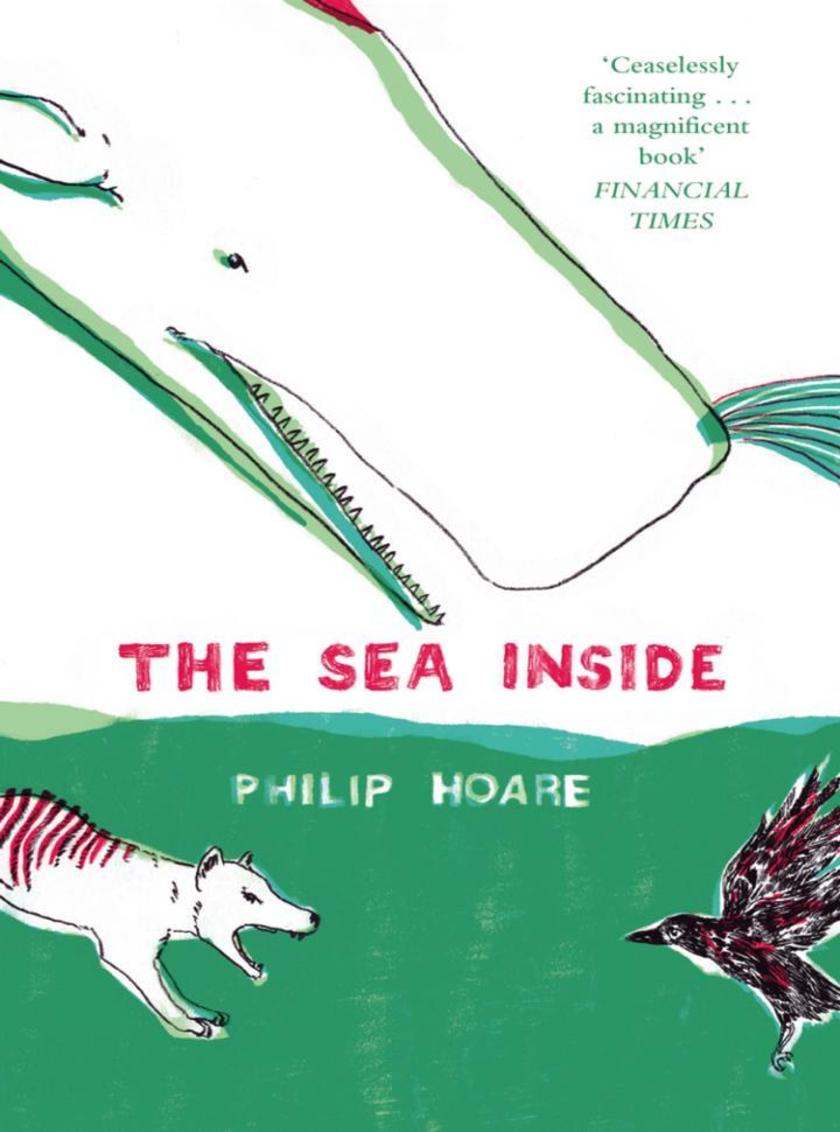
The Sea Inside
¥81.03
A startling new book, his most personal to date, from Philip Hoare, co-curator of ’Moby Dick: Big Read and winner of the 2009 Samuel Johnson Prize for ‘Leviathan’. The sea surrounds us. It gives us life, provides us with the air we breathe and the food we eat. It is ceaseless change and constant presence. It covers two-thirds of our planet. Yet caught up in our everyday lives, we barely notice it. In ‘The Sea Inside’, Philip Hoare sets out to rediscover the sea, its islands, birds and beasts. He begins on the south coast where he grew up, a place of almost monastic escape. From there he travels to the other side of the world – the Azores, Sri Lanka, New Zealand – in search of encounters with animals and people. Navigating between human and natural history, he asks what these stories mean for us now. Along the way we meet an amazing cast; from scientists to tattooed warriors; from ravens to whales and bizarre creatures that may, or may not, be extinct. Part memoir, part fantastical travelogue, ‘The Sea Inside’ takes us on an astounding journey of discovery.
The Earth: An Intimate History (Text Only)
¥95.75
This ebook edition does not include illustrations. ‘The Earth is a true delight: full of awe-inspiring details… it blends travel, history, reportage and science to creat an unforgettable picture of our ancient earth.’ Sunday Times The face of the Earth, criss-crossed by chains of mountains like the scars of old wounds has changed constantly over billions of years, and the testament of the remote past is all around us. In this book, Richard Fortey teaches us how to read its character, laying out the dominions of the world before us. He shows how everything – human culture, natural history, even the shape of cities – roots back to a deeper geological truth. Far from being the driest of sciences, he proves that geology informs all our lives in the most intimate way. Nothing in this book seems to be at rest. The surface of the Earth dilates and collapses; seas and mountains rise and fall; continents move. We climb the Alps, wallow in Icelandic hot springs, dive down to the ocean floor; we explore the barren rocks of Newfoundland, walk through the lush ecosystems of Hawaii, cross the salt flats of Oman and saunter along the San Andreas Fault. And Fortey is the ideal guide, his de*ions of natural beauty as memorable as the best travel-writers, his prose as gripping as the best novelist, his crystal-clear scientific explanations fascinating and often surprising. Note that it has not been possible to include the same picture content that appeared in the original print version.

Survival of the Sickest: The Surprising Connections Between Disease and Longevit
¥81.03
In this groundbreaking and absorbing book Dr. Sharon Moalem, delves back into the evolution of man to offer a radical perspective on survival, the human body, and our understanding of disease. Survival of the Sickest will change the way you think about your body. Dr. Moalem investigates peculiar and puzzling features of human biology to reveal the answers to such provocative questions as: ? Why do we need to pee when we’re cold? ? Can a person rust to death? ? Why are Greeks hairier than Africans? ? Can the tanning salon lower cholesterol? ? Why are leeches back in vogue? ? Can sunglasses cause sunburns? ? Who gets drunk faster – Europeans or Asians? In considering the question of why diseases exist, Dr Moalem proposes that most common diseases came into existence for very good reasons. Diabetes, hemochromatosis, cystic fibrosis and sickle cell anemia may all exist because, at some time in our past, they helped our ancestors survive some grand challenge to human existence. In turn, he also discovers that genetic and cultural differences have led to each race having different and unique ways of reacting to their environment and subsequently how they become susceptible to certain diseases. Survival of the Sickest is a book about life – yours, ours and every little living thing under the sun. About how we all got here, where we're all going and what we can do about it. Revelatory and written in an utterly engaging fashion, Sharon Moalem's book will change the way you think about your body.
Broken: Part 1 of 3: A traumatised girl. Her troubled brother. Their shocking se
¥28.45
Rosie Lewis is a full-time foster carer. She has been working in this field for over a decade. Before that, she worked in the special units team in the police force.Based in northern England, Rosie writes under a pseudonym to protect the identities of the children she looks after.
Broken: A traumatised girl. Her troubled brother. Their shocking secret.
¥58.86
Rosie Lewis is a full-time foster carer. She has been working in this field for over a decade. Before that, she worked in the special units team in the police force.Based in northern England, Rosie writes under a pseudonym to protect the identities of the children she looks after.
Time Travel
¥73.58
JAMES GLEICK (around.com) is our leading chronicler of science and technology, the best-selling author of Chaos: Making a New Science, Genius: The Life and Science of Richard Feynman, and The Information: A History, a Theory, a Flood. His books have been translated into thirty languages.
Fossils, Finches and Fuegians: Charles Darwin’s Adventures and Discoveries on th
¥73.58
Professor Richard Keynes is the great-grandson of Charles Darwin. A Fellow of the Royal Society since 1959 and a former Professor of Physiology at Cambridge University, Richard Keynes has edited a number of Darwin publications – including The Beagle Record and Charles Darwin’s Beagle Diary. He lives in Cambridge.
Why Men Don’t Iron: The New Reality of Gender Differences
¥61.51
Anne Moir is a trained geneticist and television producer. Her previous books are Brain Sex and Mind to Crime. Her husband was a philosopher and writer.

The Energy of Life: (Text Only)
¥69.26
Guy Brown is a Royal Society Research Fellow in the Department of Biochemistry at the University of Cambridge. He is one of the world’s leading authorities on human bioenergetics. This is his first book.
Fragile Lives: A Heart Surgeon’s Stories of Life and Death on the Operating Tabl
¥66.22
Steve Westaby is a celebrated world-famous heart surgeon who is renowned for being the first surgeon in history to fit a patient with a new type of artificial heart. During his 35 year career as a surgeon he worked at several of the UK’s top hospitals and performed over 11,000 heart operations. He won the Ray C. Fish Award for Scientific Achievement (2004). In 2004 Steve Westaby was featured in the BBC documentary Your Life in Their Hands which is a long-running series on the subject of surgery.
RISINGTIDEFALLINGSTAR
¥73.58
Philip Hoare is the author of several books, including ‘Serious Pleasures: The Life of Stephen Tennant’; ‘Noel Coward’; ‘Oscar Wilde’s Last Stand’; ‘Spike Island’; ‘England’s Lost Eden’; ‘Leviathan, or, The Whale’, winner of the 2009 Samuel Johnson Prize for non-fiction; and ‘The Sea Inside’. He lives in Southampton.
Collins Stars and Planets Guide (Collins Guides)
¥139.99
Ian Ridpath has been a full-time writer, broadcaster, and lecturer on astronomy and space since 1972. He is a Fellow of the Royal Astronomical Society, as well as a member of the Society of Authors and of the Association of British Science Writers.Wil Tirion is the world's leading celestial cartographer, having designed the first ever star atlas in 1981. Together Ian and Wil have also produced ‘Collins Pocket Guide Stars and Planets’ and ‘Collins Gem Stars’.www.ianridpath.comwww.wil-tirion.com
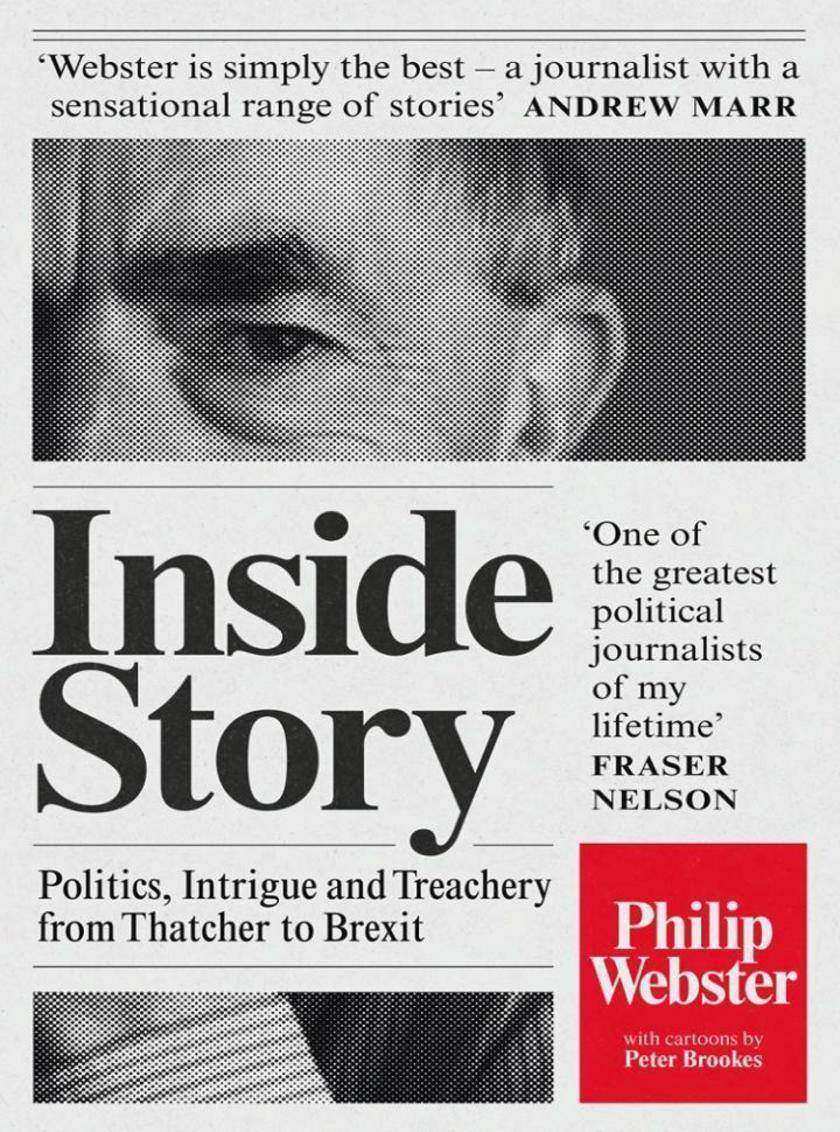
Inside Story: Politics, Intrigue and Treachery from Thatcher to Brexit
¥73.58
Philip Webster was Political Editor of The Times from 1993 to 2010 having previously been Chief Political Correspondent. Later, As Assistant Editor (Politics), he was in charge of The Times Red Box political website and was the first editor of the ground-breaking Red Box daily briefing email. He became a Lobby correspondent in 1981 after working as a reporter and subeditor on the paper for the previous eight years. He began his career on the Eastern Daily Press in Norwich. He is a lifelong and passionate supporter of Norwich City FC.
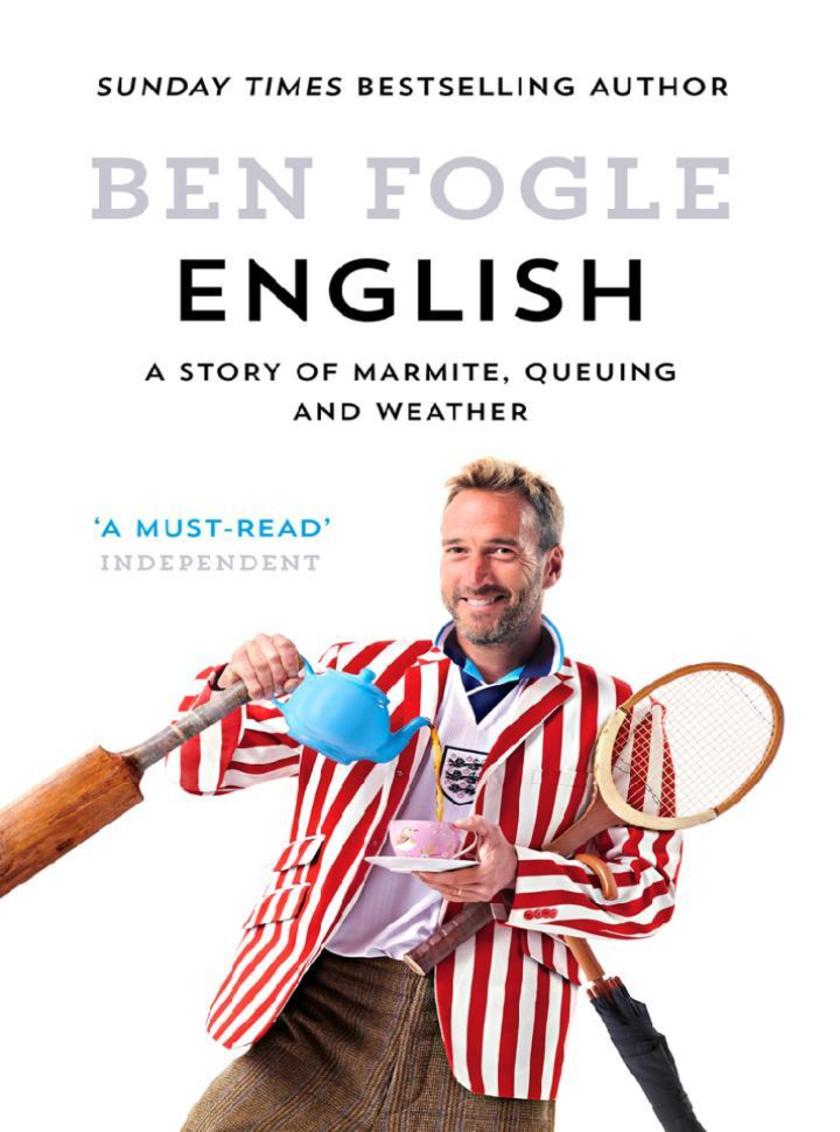
English: A Story of Marmite, Queuing and Weather
¥66.22
Ben Fogle is the quintessential Englishman. An explorer, he loves Marmite and dogs. He owns far too many wax jackets and Wellington boots and he loves to grumble about the weather. He often apologises and can be found at the back of most queues. He had wonky teeth until the dentist sorted them out. He drives an old Land Rover and eats fish and chips. He never travels without some English tea. He lives in London with his wife Marina, his two children Ludo and Iona and his beloved black Labrador, Storm (of course).

Neuropolis: A Brain Science Survival Guide
¥147.35
Robert Newman has written six books including the novels The Trade Secret and The Fountain at the Centre of the World. His previous book The Entirely Accurate Encyclopaedia of Evolution was made into a radio series which won a BBC Audio Drama Award in 2017 for Best Scripted Comedy. He has been a stand-up comedian for thirty years and has performed to sell-out crowds from London to Paris to Texas. His most recent stand-up show is The Brain Show.
Genome: The Autobiography of a Species in 23 Chapters
¥81.03
Matt Ridley received his BA and D Phil at Oxford researching the evolution of behaviour. He has been science editor, Washington correspondent and American editor of The Economist. He has a regular column in the Daily Telegraph. He is also the author of The Red Queen (1993) and The Origins of Virtue (1996). Matt Ridley is currently the chairman of The International Centre for Life.
The Sickening Mind: Brain, Behaviour, Immunity and Disease
¥68.57
Paul Martin, PhD, is a former Cambridge lecturer in biology and Fellow of Wolfson College who received many awards and scholarships for his ground-breaking psychobiological research, but who tired of the stultifying life of the Oxbridge academic to become a governmental policy analyst. His previous book, co-authored with Patrick Bateson, is Measuring Behaviour (CUP, 1986; 2nd edn, 1993).
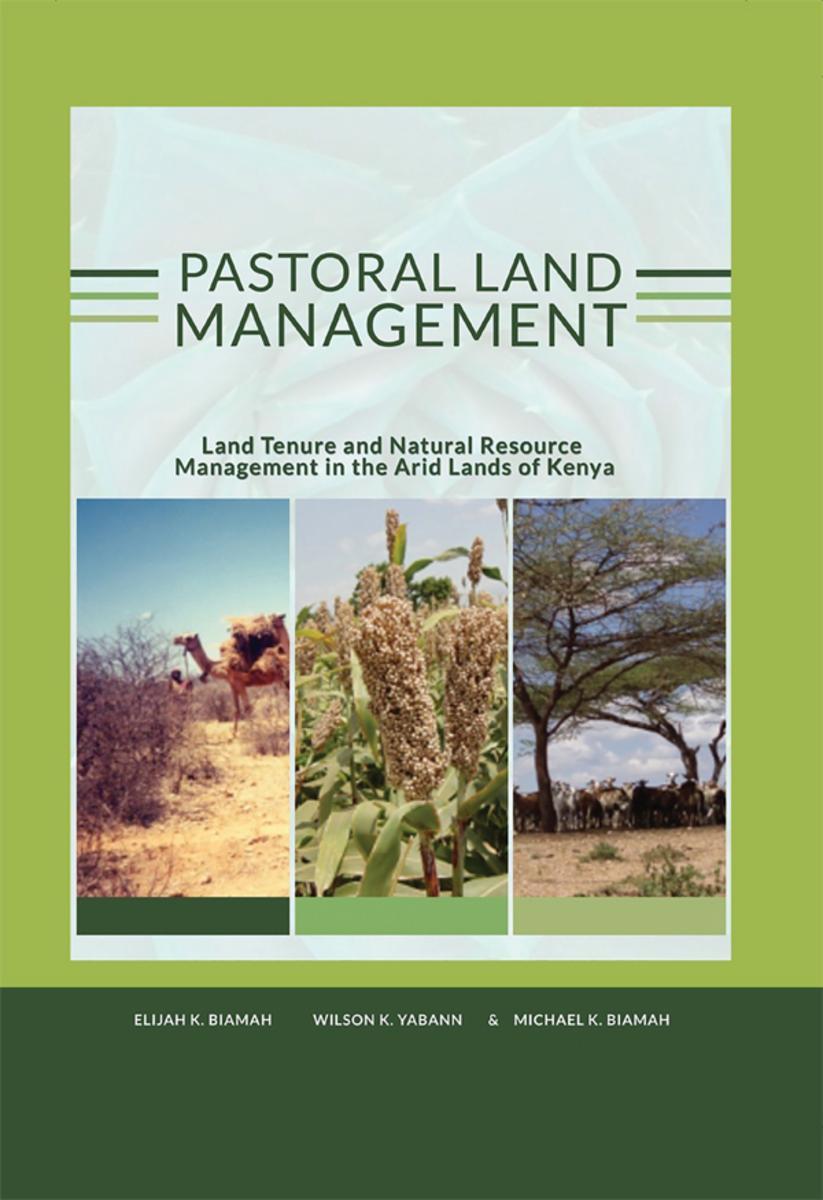
Pastoral land management
¥105.13
In the arid lands of Kenya, the social structure system associated with traditional pastoralism has evolved useful mechanisms for achieving sustainable resource utilization within fragile dryland environments. The sustainability of traditional pastoralism in Kenya is no longer feasible due to the increasing pressure on a shrinking resource base. This uncertainty with the sustainability of this traditional life style, calls for a radical shift in thinking from traditional to commercial pastoralism. Commercial pastoralism allows for the emergence of dynamic pastoralism which adapts quickly to technological changes and evolving market conditions in a fast changing pastoral environment. Whereas this futuristic form of pastoralism must recognize pastoral communities as legal entities and accord them the rights of control and disposal or transfer, it should also bestow the rights of access and use on individual pastoralists. The individualization of the right of land disposal or transfer in non-enlightened pastoral communities has led to the emergence of destitution and poverty in pastoral areas of Kenya. This book publication provides valuable information on emerging issues and options on pastoral land management in Kenya. It is based on a three year study on Land Tenure and Natural Resource Management in the Arid Lands of Kenya. It also does provide the requisite information for the formulation of a policy and legal framework on sustainable pastoral land management in Kenya.


