


 购物车
购物车 个人中心
个人中心
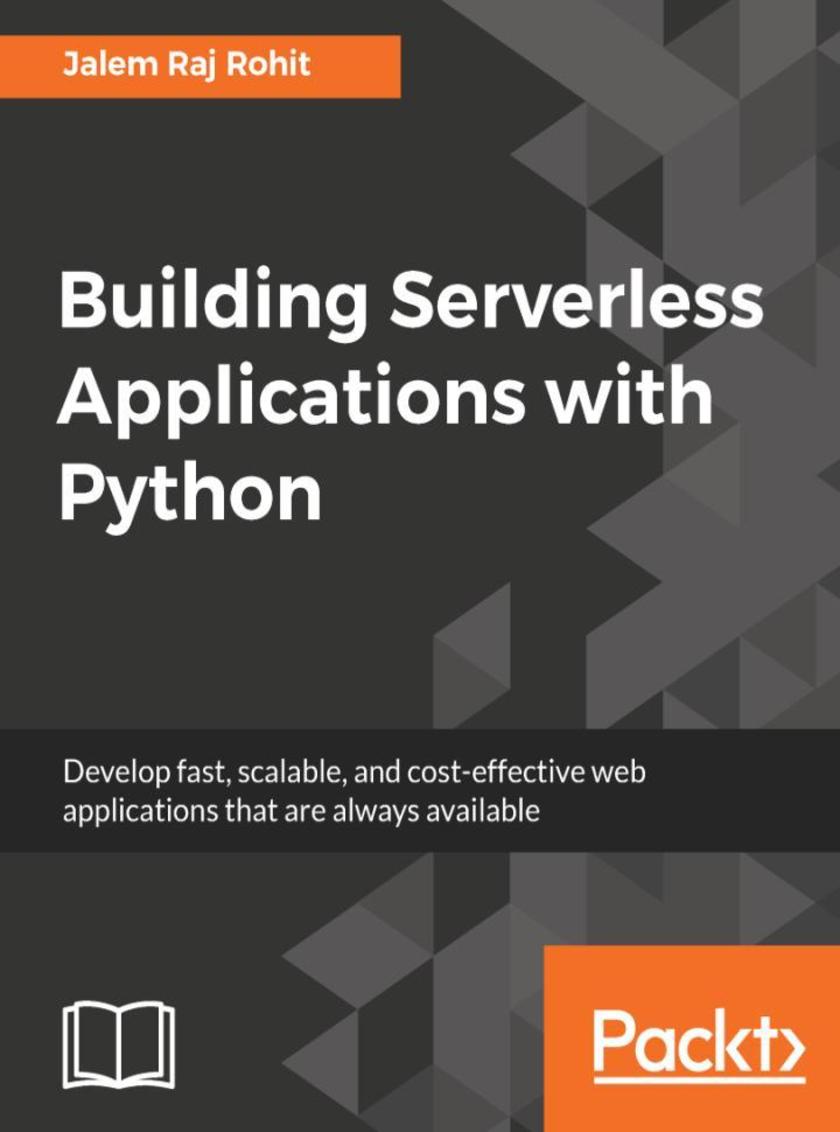
Building Serverless Applications with Python
¥90.46
Building efficient Python applications at minimal cost by adopting serverless architectures About This Book ? Design and set up a data flow between cloud services and custom business logic ? Make your applications efficient and reliable using serverless architecture ? Build and deploy scalable serverless Python APIs Who This Book Is For This book is for Python developers who would like to learn about serverless architecture. Python programming knowledge is assumed. What You Will Learn ? Understand how AWS Lambda and Microsoft Azure Functions work and use them to create an application ? Explore various triggers and how to select them, based on the problem statement ? Build deployment packages for Lambda functions ? Master the finer details about building Lambda functions and versioning ? Log and monitor serverless applications ? Learn about security in AWS and Lambda functions ? Scale up serverless applications to handle huge workloads and serverless distributed systems in production ? Understand SAM model deployment in AWS Lambda In Detail Serverless architectures allow you to build and run applications and services without having to manage the infrastructure. Many companies have adopted this architecture to save cost and improve scalability. This book will help you design serverless architectures for your applications with AWS and Python. The book is divided into three modules. The first module explains the fundamentals of serverless architecture and how AWS lambda functions work. In the next module, you will learn to build, release, and deploy your application to production. You will also learn to log and test your application. In the third module, we will take you through advanced topics such as building a serverless API for your application. You will also learn to troubleshoot and monitor your app and master AWS lambda programming concepts with API references. Moving on, you will also learn how to scale up serverless applications and handle distributed serverless systems in production. By the end of the book, you will be equipped with the knowledge required to build scalable and cost-efficient Python applications with a serverless framework. Style and approach The book takes a pragmatic approach, using a real-world example to demonstrate building efficient, secure, and scalable serverless applications.
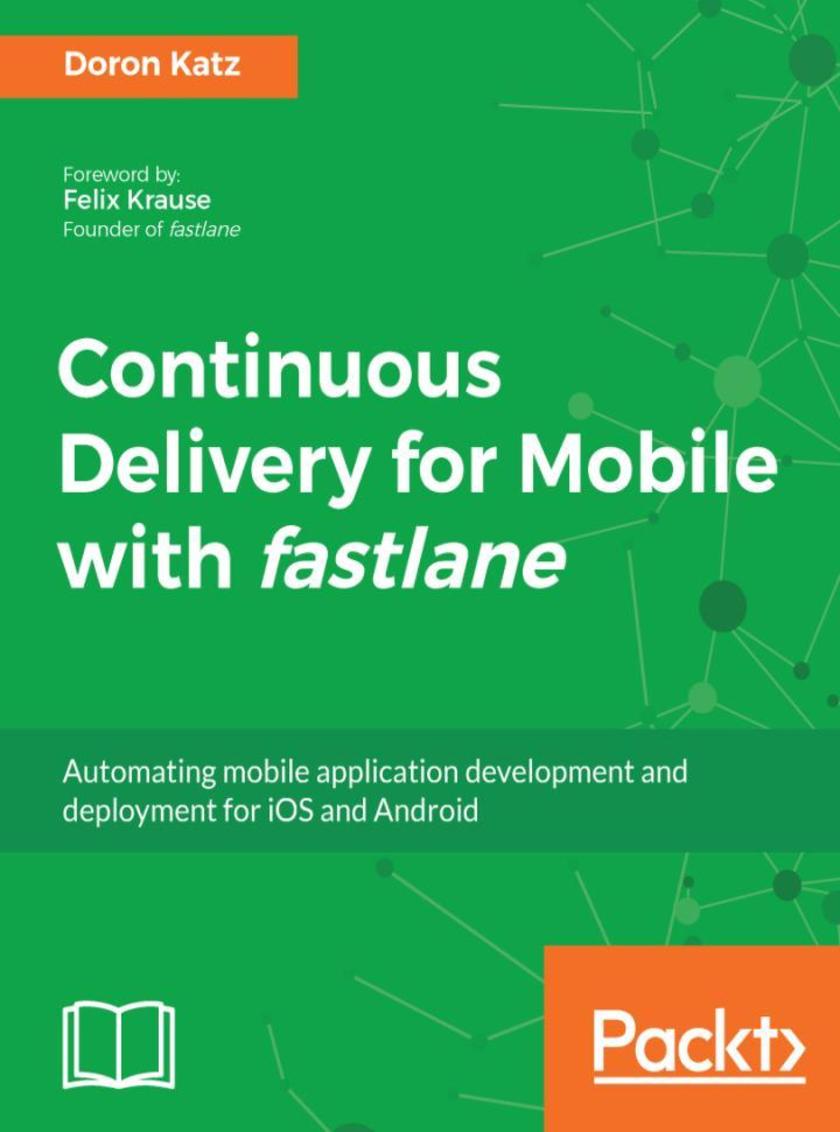
Continuous Delivery for Mobile with fastlane
¥81.74
Learn continuous deployment and automation with code-signing, continuous testing, building, deploying, and releasing of your app. About This Book ? A practical guide on automating your mobile development pipeline with Fastlane, Jenkins, and Slack. ? Build, test, run and deploy your mobile application release with this end to end guide. ? Implement Continuous Integration, delivery, and deployment practices to optimize your application development workflow for faster and efficient release builds. Who This Book Is For This book is intended for mobile developers who are keen on incorporating Continuous integration and deployment practices in their workflow. What You Will Learn ? Harness the fastlane tools for the Continuous Deployment strategy ? Integrate Continuous Deployment with existing Continuous Integration. ? Automate upload of screenshots across all device screen-sizes ? Manage push notifications, provisioning profiles, and code-signing certificates ? Orchestrate automated build and deployments of new versions of your app ? Regulate your TestFlight users and on-board new testers In Detail Competitive mobile apps depend strongly on the development team’s ability to deliver successful releases, consistently and often. Although continuous integration took a more mainstream priority among the development industry, companies are starting to realize the importance of continuity beyond integration and testing. This book starts off with a brief introduction to fastlane—a robust command-line tool that enables iOS and Android developers to automate their releasing workflow. The book then explores and guides you through all of its features and utilities; it provides the reader a comprehensive understanding of the tool and how to implement them. Themes include setting up and managing your certificates and provisioning and push notification profiles; automating the creation of apps and managing the app metadata on iTunes Connect and the Apple Developer Portal; and building, distributing and publishing your apps to the App Store. You will also learn how to automate the generation of localized screenshots and mesh your continuous delivery workflow into a continuous integration workflow for a more robust setup. By the end of the book, you will gain substantial knowledge on delivering bug free, developer-independent, and stable application release cycle. Style and approach A step by step guide taking the readers through all the tools of fastlane.
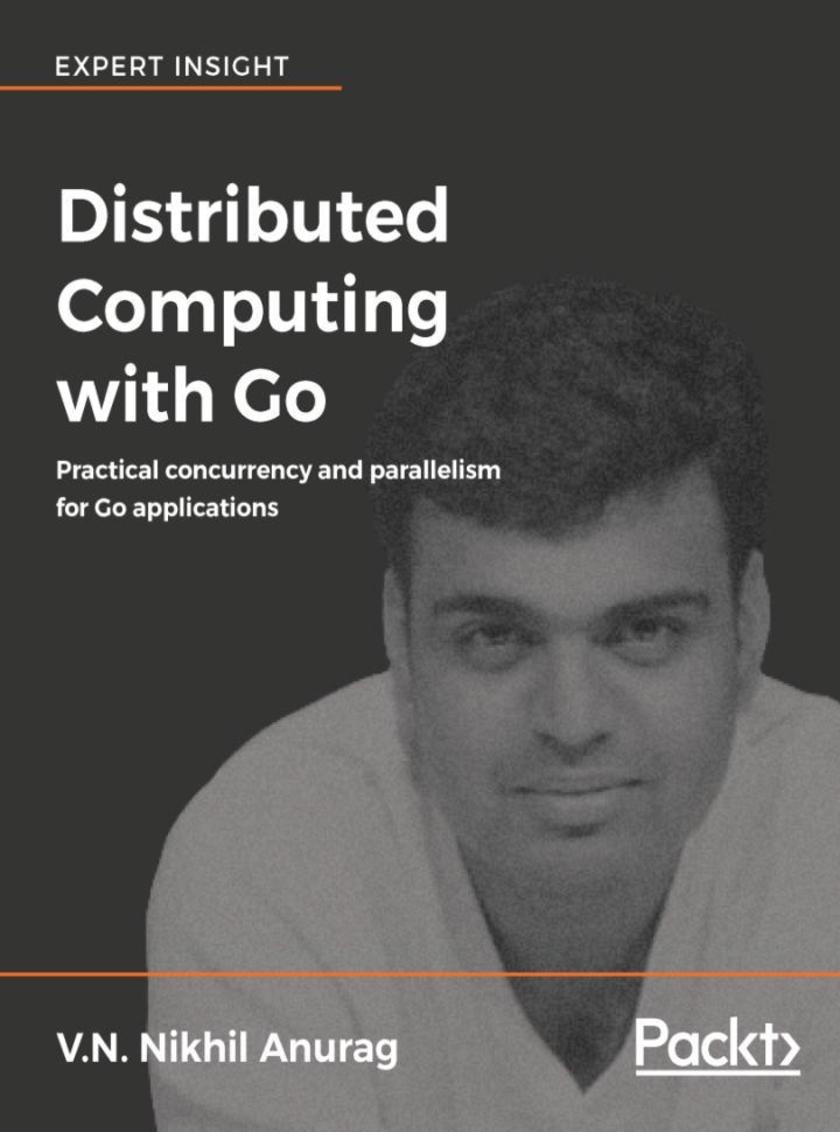
Distributed Computing with Go
¥73.02
A tutorial leading the aspiring Go developer to full mastery of Golang's distributed features. About This Book ? This book provides enough concurrency theory to give you a contextual understanding of Go concurrency ? It gives weight to synchronous and asynchronous data streams in Golang web applications ? It makes Goroutines and Channels completely familiar and natural to Go developers Who This Book Is For This book is for developers who are familiar with the Golang syntax and have a good idea of how basic Go development works. It would be advantageous if you have been through a web application product cycle, although it’s not necessary. What You Will Learn ? Gain proficiency with concurrency and parallelism in Go ? Learn how to test your application using Go's standard library ? Learn industry best practices with technologies such as REST, OpenAPI, Docker, and so on ? Design and build a distributed search engine ? Learn strategies on how to design a system for web scale In Detail Distributed Computing with Go gives developers with a good idea how basic Go development works the tools to fulfill the true potential of Golang development in a world of concurrent web and cloud applications. Nikhil starts out by setting up a professional Go development environment. Then you’ll learn the basic concepts and practices of Golang concurrent and parallel development. You’ll find out in the new few chapters how to balance resources and data with REST and standard web approaches while keeping concurrency in mind. Most Go applications these days will run in a data center or on the cloud, which is a condition upon which the next chapter depends. There, you’ll expand your skills considerably by writing a distributed document indexing system during the next two chapters. This system has to balance a large corpus of documents with considerable analytical demands. Another use case is the way in which a web application written in Go can be consciously redesigned to take distributed features into account. The chapter is rather interesting for Go developers who have to migrate existing Go applications to computationally and memory-intensive environments. The final chapter relates to the rather onerous task of testing parallel and distributed applications, something that is not usually taught in standard computer science curricula. Style and approach Distributed Computing with Go takes you through a series of carefully graded tutorials, building ever more sophisticated applications.
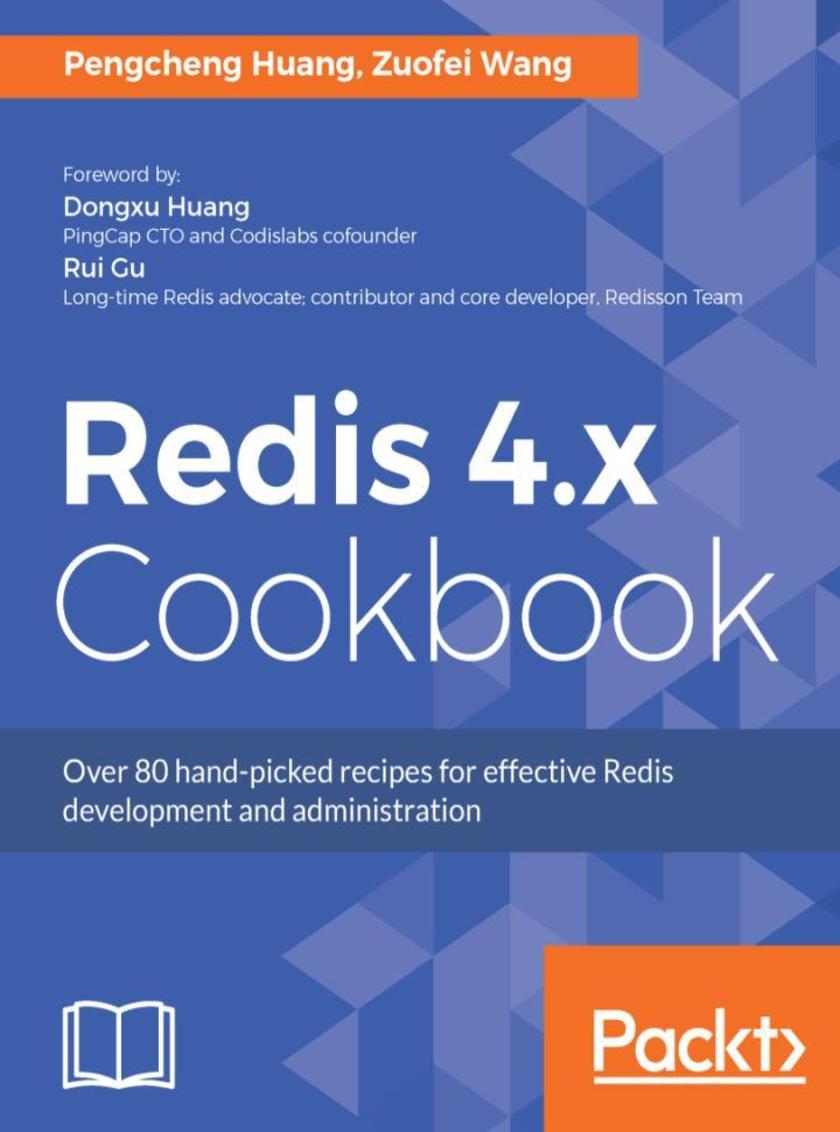
Redis 4.x Cookbook
¥73.02
Leverage the power of Redis 4.x to develop, optimize and administer your Redis solutions with ease About This Book ? Build, deploy and administer high performance and scalable applications in Redis ? Covers a range of important tasks - including development and administration of Redis ? A practical guide that takes your understanding of Redis to the next level Who This Book Is For This book is for database administrators, developers and architects who want to tackle the common and not so common problems associated with the different development and administration-related tasks in Redis. A fundamental understanding of Redis is expected to get the best out of this book. What You Will Learn ? Install and configure your Redis instance ? Explore various data types and commands in Redis ? Build client-side applications as well as a Big Data framework with Redis ? Manage data replication and persistence in Redis ? Implement high availability and data sharding in Redis ? Extend Redis with Redis Module ? Benchmark, debug, fine-tune and troubleshoot various issues in Redis In Detail Redis is considered the world's most popular key-value store database. Its versatility and the wide variety of use cases it enables have made it a popular choice of database for many enterprises. Based on the latest version of Redis, this book provides both step-by-step recipes and relevant the background information required to utilize its features to the fullest. It covers everything from a basic understanding of Redis data types to advanced aspects of Redis high availability, clustering, administration, and troubleshooting. This book will be your great companion to master all aspects of Redis. The book starts off by installing and configuring Redis for you to get started with ease. Moving on, all the data types and features of Redis are introduced in detail. Next, you will learn how to develop applications with Redis in Java, Python, and the Spring Boot web framework. You will also learn replication tasks, which will help you to troubleshoot replication issues. Furthermore, you will learn the steps that need to be undertaken to ensure high availability on your cluster and during production deployment. Toward the end of the book, you will learn the topmost tasks that will help you to troubleshoot your ecosystem efficiently, along with extending Redis by using different modules. Style and approach This book is a rich collection of recipes that will come in handy when you are working with Redis. It addresses your common and not-so-common pain points, so this is a book of Redis that you must have on the shelf.
Virtual Reality Blueprints
¥73.02
Join the virtual reality revolution by creating immersive 3D games and applications with Cardboard VR, Gear VR, OculusVR, and HTC Vive About This Book ? Develop robust, immersive VR experiences that are easy on the eye. ? Code 3D games and applications using Unity 3D game engine. ? Learn the basic principles of virtual reality applications Who This Book Is For If you are a game developer and a VR enthusiast now looking to get stuck into the VR app development process by creating VR apps for different platforms, then this is the book for you. Familiarity with the Unity game engine and the C# language is key to getting the most from this book. What You Will Learn ? Use Unity assets to create object simulation. ? Implement simple touch controls in your application. ? Apply artificial intelligence to achieve player and character interaction. ? Add *s for movement, tracking, grasping, and spawning. ? Create animated walkthroughs, use 360-degree media, and build engaging VR experiences. ? Deploy your games on multiple VR platforms. In Detail Are you new to virtual reality? Do you want to create exciting interactive VR applications? There's no need to be daunted by the thought of creating interactive VR applications, it's much easier than you think with this hands-on, project-based guide that will take you through VR development essentials for desktop and mobile-based games and applications. Explore the three top platforms—Cardboard VR, Gear VR, and OculusVR —to design immersive experiences from scratch. You’ll start by understanding the science-fiction roots of virtual reality and then build your first VR experience using Cardboard VR. You'll then delve into user interactions in virtual space for the Google Cardboard then move on to creating a virtual gallery with Gear VR. Then you will learn all about virtual movements, state machines, and spawning while you shoot zombies in the Oculus Rift headset. Next, you'll construct a Carnival Midway, complete with two common games to entertain players. Along the way, you will explore the best practices for VR development, review game design tips, discuss methods for combating motion sickness and identify alternate uses for VR applications Style and approach A project-based guide with every project built across chapters.
Microservice Patterns and Best Practices
¥81.74
Explore the concepts and tools you need to discover the world of microservices with various design patterns About This Book ? Get to grips with the microservice architecture and build enterprise-ready microservice applications ? Learn design patterns and the best practices while building a microservice application ? Obtain hands-on techniques and tools to create high-performing microservices resilient to possible fails Who This Book Is For This book is for architects and senior developers who would like implement microservice design patterns in their enterprise application development. The book assumes some prior programming knowledge. What You Will Learn ? How to break monolithic application into microservices ? Implement caching strategies, CQRS and event sourcing, and circuit breaker patterns ? Incorporate different microservice design patterns, such as shared data, aggregator, proxy, and chained ? Utilize consolidate testing patterns such as integration, signature, and monkey tests ? Secure microservices with JWT, API gateway, and single sign on ? Deploy microservices with continuous integration or delivery, Blue-Green deployment In Detail Microservices are a hot trend in the development world right now. Many enterprises have adopted this approach to achieve agility and the continuous delivery of applications to gain a competitive advantage. This book will take you through different design patterns at different stages of the microservice application development along with their best practices. Microservice Patterns and Best Practices starts with the learning of microservices key concepts and showing how to make the right choices while designing microservices. You will then move onto internal microservices application patterns, such as caching strategy, asynchronism, CQRS and event sourcing, circuit breaker, and bulkheads. As you progress, you'll learn the design patterns of microservices. The book will guide you on where to use the perfect design pattern at the application development stage and how to break monolithic application into microservices. You will also be taken through the best practices and patterns involved while testing, securing, and deploying your microservice application. At the end of the book, you will easily be able to create interoperable microservices, which are testable and prepared for optimum performance. Style and approach Comprehensive guide that uses architectural patterns with the best choices involved in application development
Regression Analysis with R
¥73.02
Build effective regression models in R to extract valuable insights from real data About This Book ? Implement different regression analysis techniques to solve common problems in data science - from data exploration to dealing with missing values ? From Simple Linear Regression to Logistic Regression - this book covers all regression techniques and their implementation in R ? A complete guide to building effective regression models in R and interpreting results from them to make valuable predictions Who This Book Is For This book is intended for budding data scientists and data analysts who want to implement regression analysis techniques using R. If you are interested in statistics, data science, machine learning and wants to get an easy introduction to the topic, then this book is what you need! Basic understanding of statistics and math will help you to get the most out of the book. Some programming experience with R will also be helpful What You Will Learn ? Get started with the journey of data science using Simple linear regression ? Deal with interaction, collinearity and other problems using multiple linear regression ? Understand diagnostics and what to do if the assumptions fail with proper analysis ? Load your dataset, treat missing values, and plot relationships with exploratory data analysis ? Develop a perfect model keeping overfitting, under-fitting, and cross-validation into consideration ? Deal with classification problems by applying Logistic regression ? Explore other regression techniques – Decision trees, Bagging, and Boosting techniques ? Learn by getting it all in action with the help of a real world case study. In Detail Regression analysis is a statistical process which enables prediction of relationships between variables. The predictions are based on the casual effect of one variable upon another. Regression techniques for modeling and analyzing are employed on large set of data in order to reveal hidden relationship among the variables. This book will give you a rundown explaining what regression analysis is, explaining you the process from scratch. The first few chapters give an understanding of what the different types of learning are – supervised and unsupervised, how these learnings differ from each other. We then move to covering the supervised learning in details covering the various aspects of regression analysis. The outline of chapters are arranged in a way that gives a feel of all the steps covered in a data science process – loading the training dataset, handling missing values, EDA on the dataset, transformations and feature engineering, model building, assessing the model fitting and performance, and finally making predictions on unseen datasets. Each chapter starts with explaining the theoretical concepts and once the reader gets comfortable with the theory, we move to the practical examples to support the understanding. The practical examples are illustrated using R code including the different packages in R such as R Stats, Caret and so on. Each chapter is a mix of theory and practical examples. By the end of this book you will know all the concepts and pain-points related to regression analysis, and you will be able to implement your learning in your projects. Style and approach An easy-to-follow step by step guide which will help you get to grips with real world application of Regression Analysis with R
Mastering PostgreSQL 10
¥73.02
Master the capabilities of PostgreSQL 10 to efficiently manage and maintain your database About This Book ? Your one-stop guide to mastering advanced concepts in PostgreSQL 10 with ease ? Master query optimization, replication, and high availability with PostgreSQL ? Extend the functionalities of your PostgreSQL instance to suit your organizational needs with minimal effort Who This Book Is For If you are a PostgreSQL data architect or an administrator and want to understand how to implement advanced functionalities and master complex administrative tasks with PostgreSQL 10, then this book is perfect for you. Prior experience of administrating a PostgreSQL database and a working knowledge of SQL are required to make the best use of this book. What You Will Learn ? Get to grips with the advanced features of PostgreSQL 10 and handle advanced SQL ? Make use of the indexing features in PostgreSQL and fine-tune the performance of your queries ? Work with stored procedures and manage backup and recovery ? Master replication and failover techniques ? Troubleshoot your PostgreSQL instance for solutions to common and not-so-common problems ? Learn how to migrate your database from MySQL and Oracle to PostgreSQL without any hassle In Detail PostgreSQL is an open source database used for handling large datasets (big data) and as a JSON document database. This book highlights the newly introduced features in PostgreSQL 10, and shows you how you can build better PostgreSQL applications, and administer your PostgreSQL database more efficiently. We begin by explaining advanced database design concepts in PostgreSQL 10, along with indexing and query optimization. You will also see how to work with event triggers and perform concurrent transactions and table partitioning, along with exploring SQL and server tuning. We will walk you through implementing advanced administrative tasks such as server maintenance and monitoring, replication, recovery, high availability, and much more. You will understand common and not-so-common troubleshooting problems and how you can overcome them. By the end of this book, you will have an expert-level command of advanced database functionalities and will be able to implement advanced administrative tasks with PostgreSQL 10. Style and approach This mastering-level guide delves into the advanced functionalities of PostgreSQL 10
Azure Serverless Computing Cookbook
¥80.65
Over 50 recipes to help you build applications hosted on Serverless architecture using Azure Functions. About This Book ? Enhance Azure Functions with continuous deployment using Visual Studio Team Services ? Learn to deploy and manage cost-effective and highly available serverless applications using Azure Functions ? This recipe-based guide will teach you to build a robust serverless environment Who This Book Is For If you are a Cloud administrator, architect, or developer who wants to build scalable systems and deploy serverless applications with Azure functions, then this book is for you. Prior knowledge and hands-on experience with core services of Microsoft Azure is required. What You Will Learn ? Develop different event-based handlers supported by serverless architecture supported by Microsoft Cloud Platform – Azure ? Integrate Azure Functions with different Azure Services to develop Enterprise-level applications ? Get to know the best practices in organizing and refactoring the code within the Azure functions ? Test, troubleshoot, and monitor the Azure functions to deliver high-quality, reliable, and robust cloud-centric applications ? Automate mundane tasks at various levels right from development to deployment and maintenance ? Learn how to develop statefulserverless applications and also self-healing jobs using DurableFunctions In Detail Microsoft provides a solution to easily run small segment of code in the Cloud with Azure Functions. Azure Functions provides solutions for processing data, integrating systems, and building simple APIs and microservices. The book starts with intermediate-level recipes on serverless computing along with some use cases on benefits and key features of Azure Functions. Then, we’ll deep dive into the core aspects of Azure Functions such as the services it provides, how you can develop and write Azure functions, and how to monitor and troubleshoot them. Moving on, you’ll get practical recipes on integrating DevOps with Azure functions, and providing continuous integration and continous deployment with Visual Studio Team Services. It also provides hands-on steps and tutorials based on real-world serverless use cases, to guide you through configuring and setting up your serverless environments with ease. Finally, you’ll see how to manage Azure functions, providing enterprise-level security and compliance to your serverless code architecture. By the end of this book, you will have all the skills required to work with serverless code architecture, providing continuous delivery to your users. Style and approach This recipe-based guide explains the different features of Azure Function by taking a real-world application related to a specific domain. You will learn how to implement automation and DevOps and discover industry best practices to develop applications hosted on serverless architecture using Azure functions.
AWS Networking Cookbook
¥80.65
Over 50 recipes covering all you need to know about AWS networking About This Book ? Master AWS networking concepts with AWS Networking Cookbook. ? Design and implement highly available connectivity and multi-regioned AWS solutions ? A recipe-based guide that will eliminate the complications of AWS networking. ? A guide to automate networking services and features Who This Book Is For This book targets administrators, network engineers, and solution architects who are looking at optimizing their cloud platform's connectivity. Some basic understanding of AWS would be beneficial. What You Will Learn ? Create basic network in AWS ? Create production grade network in AWS ? Create global scale network in AWS ? Security and Compliance with AWS Network ? Troubleshooting, best practices and limitations of AWS network ? Pricing model of AWS network components ? Route 53 and Cloudfront concepts and routing policies ? VPC Automation using Ansible and CloudFormation In Detail This book starts with practical recipes on the fundamentals of cloud networking and gradually moves on to configuring networks and implementing infrastructure automation. This book then supplies in-depth recipes on networking components like Network Interface, Internet Gateways, DNS, Elastic IP addresses, and VPN CloudHub. Later, this book also delves into designing, implementing, and optimizing static and dynamic routing architectures, multi-region solutions, and highly available connectivity for your enterprise. Finally, this book will teach you to troubleshoot your VPC's network, increasing your VPC's efficiency. By the end of this book, you will have advanced knowledge of AWS networking concepts and technologies and will have mastered implementing infrastructure automation and optimizing your VPC. Style and approach A set of exciting recipes on using AWS Networking services more effectively.
Continuous Delivery with Docker and Jenkins
¥80.65
Unleash the combination of Docker and Jenkins in order to enhance the DevOps workflow About This Book ? Build reliable and secure applications using Docker containers. ? Create a complete Continuous Delivery pipeline using Docker, Jenkins, and Ansible. ? Deliver your applications directly on the Docker Swarm cluster. ? Create more complex solutions using multi-containers and database migrations. Who This Book Is For This book is indented to provide a full overview of deep learning. From the beginner in deep learning and artificial intelligence to the data scientist who wants to become familiar with Theano and its supporting libraries, or have an extended understanding of deep neural nets. Some basic skills in Python programming and computer science will help, as well as skills in elementary algebra and calculus. What You Will Learn ? Get to grips with docker fundamentals and how to dockerize an application for the Continuous Delivery process ? Configure Jenkins and scale it using Docker-based agents ? Understand the principles and the technical aspects of a successful Continuous Delivery pipeline ? Create a complete Continuous Delivery process using modern tools: Docker, Jenkins, and Ansible ? Write acceptance tests using Cucumber and run them in the Docker ecosystem using Jenkins ? Create multi-container applications using Docker Compose ? Managing database changes inside the Continuous Delivery process and understand effective frameworks such as Cucumber and Flyweight ? Build clustering applications with Jenkins using Docker Swarm ? Publish a built Docker image to a Docker Registry and deploy cycles of Jenkins pipelines using community best practices In Detail The combination of Docker and Jenkins improves your Continuous Delivery pipeline using fewer resources. It also helps you scale up your builds, automate tasks and speed up Jenkins performance with the benefits of Docker containerization. This book will explain the advantages of combining Jenkins and Docker to improve the continuous integration and delivery process of app development. It will start with setting up a Docker server and configuring Jenkins on it. It will then provide steps to build applications on Docker files and integrate them with Jenkins using continuous delivery processes such as continuous integration, automated acceptance testing, and configuration management. Moving on you will learn how to ensure quick application deployment with Docker containers along with scaling Jenkins using Docker Swarm. Next, you will get to know how to deploy applications using Docker images and testing them with Jenkins. By the end of the book, you will be enhancing the DevOps workflow by integrating the functionalities of Docker and Jenkins. Style and approach The book is aimed at DevOps Engineers, developers and IT Operations who want to enhance the DevOps culture using Docker and Jenkins.

Raspberry Pi Zero W Wireless Projects
¥63.21
Build DIY wireless projects using the Raspberry Pi Zero W board About This Book ? Explore the functionalities of the Raspberry Pi Zero W with exciting projects ? Master the wireless features (and extend the use cases) of this $10 chip ? A project-based guide that will teach you to build simple yet exciting projects using the Raspberry Pi Zero W board Who This Book Is For If you are a hobbyist or an enthusiast and want to get your hands on the latest Raspberry Pi Zero W to build exciting wireless projects, then this book is for you. Some prior programming knowledge, with some experience in electronics, would be useful. What You Will Learn ? Set up a router and connect Raspberry Pi Zero W to the internet ? Create a two-wheel mobile robot and control it from your Android device ? Build an automated home bot assistant device ? Host your personal website with the help of Raspberry Pi Zero W ? Connect Raspberry Pi Zero to speakers to play your favorite music ? Set up a web camera connected to the Raspberry Pi Zero W and add another security layer to your home automation In Detail The Raspberry Pi has always been the go–to, lightweight ARM-based computer. The recent launch of the Pi Zero W has not disappointed its audience with its $10 release. "W" here stands for Wireless, denoting that the Raspberry Pi is solely focused on the recent trends for wireless tools and the relevant use cases. This is where our book—Raspberry Pi Zero W Wireless Projects—comes into its own. Each chapter will help you design and build a few DIY projects using the Raspberry Pi Zero W board. First, you will learn how to create a wireless decentralized chat service (client-client) using the Raspberry Pi's features?. Then you will make a simple two-wheel mobile robot and control it via your Android device over your local Wi-Fi network. Further, you will use the board to design a home bot that can be connected to plenty of devices in your home. The next two projects build a simple web streaming security layer using a web camera and portable speakers that will adjust the playlist according to your mood. You will also build a home server to host files and websites using the board. Towards the end, you will create free Alexa voice recognition software and an FPV Pi Camera, which can be used to monitor a system, watch a movie, spy on something, remotely control a drone, and more. By the end of this book, you will have developed the skills required to build exciting and complex projects with Raspberry Pi Zero W. Style and approach A step-by-step guide that will help you design and create simple yet exciting projects using the Raspberry Pi Zero W board.
Exploring Experience Design
¥71.93
Learn how to unify Customer Experience, User Experience and more to shape lasting customer engagement in a world of rapid change. About This Book ? An introductory guide to Experience Design that will help you break into XD as a career by gaining A strong foundational knowledge ? Get acquainted with the various phases of a typical Experience Design workflow ? Work through the key process and techniques in XD, supported by most of the common use cases Who This Book Is For This book is for designers who wish to enter the field of UX Design, especially Programmers, Content Strategists, and Organizations keen to understand the core concepts of UX Design. What You Will Learn ? Understand why Experience Design (XD) is at the forefront of business priorities, as organizations race to innovate products and services in order to compete for customers in a global economy driven by technology and change ? Get motivated by the numerous professional opportunities that XD opens up for practitioners in wide-ranging domains, and by the stories of real XD practitioners ? Understand what experience is, how experiences are designed, and why they are effective ? Gain knowledge of user-centered design principles, methodologies, and best practices that will improve your product (digital or physical) ? Get to know your X’s and D’s—understand the differences between XD and UX, CX, IxD, IA, SD, VD, PD, and other design practices In Detail We live in an experience economy in which interaction with products is valued more than owning them. Products are expected to engage and delight in order to form the emotional bonds that forge long-term customer loyalty: Products need to anticipate our needs and perform tasks for us: refrigerators order food, homes monitor energy, and cars drive autonomously; they track our vitals, sleep, location, finances, interactions, and content use; recognize our biometric signatures, chat with us, understand and motivate us. Beautiful and easy to use, products have to be fully customizable to match our personal preferences. Accomplishing these feats is easier said than done, but a solution has emerged in the form of Experience design (XD), the unifying approach to fusing business, technology and design around a user-centered philosophy. This book explores key dimensions of XD: Close collaboration among interdisciplinary teams, rapid iteration and ongoing user validation. We cover the processes, methodologies, tools, techniques and best-practices practitioners use throughout the entire product development life-cycle, as ideas are transformed to into positive experiences which lead to perpetual customer engagement and brand loyalty. Style and approach An easy-to-understand guide, filled with real-world use cases on process, design, and techniques, helping you build a strong foundation in Experience Design.
JBoss: Developer's Guide
¥80.65
Build your own enterprise applications and integration flows with JBoss and its products About This Book ? Build fast, smart, and flexible applications using JBoss ? Couple one or more JBoss products to effectively solve various business problems ? Explore the JBoss product ecosystem for improving the performance of your projects Who This Book Is For If you are a Java developer who wants to have a complete view of the JBoss ecosystem or quickly explore a specific JBoss Product, then this is the book you want. Integrators and consultants, familiar with JBoss, who want integrate several JBoss products within their ongoing project will also find this book useful. What You Will Learn ? Create new applications or integrate existing systems with JBoss products ? Setup and manage a JBoss domain ? Setup and manage a JBoss Fuse cluster with Fabric and Apache Karaf ? Create and deploy OSGi applications on JBoss Fuse containers ? Manage enterprise data with JBoss Datagrid ? Aggregate various data sources with JBoss Data virtualization to offer data as a service ? Optimize your business and workflows with both JBoss Business RulesManagement System and JBoss Business Process Management platforms. In Detail Have you often wondered what is the best JBoss product to solve a specific problem? Do you want to get started with a specific JBoss product and know how to integrate different JBoss products in your IT Systems? Then this is the book for you. Through hands-on examples from the business world, this guide presents details on the major products and how you can build your own Enterprise services around the JBoss ecosystem. Starting with an introduction to the JBoss ecosystem, you will gradually move on to developing and deploying clustered application on JBoss Application Server, and setting up high availability using undertow or HA proxy loadbalancers. As you are moving to a micro service archicture, you will be taught how to package existing Java EE applications as micro service using Swarm or create your new micro services from scratch by coupling most popular Java EE frameworks like JPA, CDI with Undertow handlers. Next, you will install and configure JBoss Data grid in development and production environments, develop cache based applications and aggregate various data source in JBoss data virtualization. You will learn to build, deploy, and monitor integration scenarios using JBoss Fuse and run both producers/consumers applications relying on JBoss AMQ. Finally, you will learn to develop and run business workflows and make better decisions in your applications using Drools and Jboss BPM Suite Platform. Style and Approach The book works through the major JBoss products, with examples and instructions to help you understand each product and how they work together.
Beginning C# Hands-On - The Core Language
¥71.93
A C# beginners guide to the core parts of the C# language! About This Book ? Learn C#, Visual Studio, and Object Oriented Programming ? See practical examples of all the core C# language features so that you can easily master them yourself ? Use the C# programming language to work with code and data, which can be applied to other programming languages as well ? Complete a variety of programming assignments for hands-on practice, as you move through the course Who This Book Is For This book will appeal to anyone who is interested in learning how to program in C#. Previous programming experience will help you get through the initial sections with ease, although, it’s not mandatory to possess any experience at all. What You Will Learn ? Learn C#, Visual Studio, and object-oriented programming ? Learn all the core C# language syntax with hands-on working examples ? Learn everything from basic variable assignments to complex multidimensional arrays ? Go through practical examples of all the core C# language features so that you can easily master them yourself ? Use the C# programming language to work with code and data, which can be applied to other programming languages as well In Detail Beginning C# Hands-On - The Core Language teaches you core C# language and syntax in a working Visual Studio environment. This book covers everything from core language through to more advanced features such as object-oriented programming techniques. This book is for C# beginners who need a practical reference to core C# language features. You'll also gain a view of C# through web programming with web forms, so you'll learn HTML, basic CSS, and how to use a variety of controls, such as buttons and drop-down lists. You'll start with the fundamentals of C# and Visual Studio, including defining variables, interacting with users, and understanding data types, data conversions, and constants. You'll move on to checking conditions using if/else blocks, and see how to use loops to do things such as repeat blocks of code. After covering various operators to evaluate and assign control structures, you'll see how to use arrays to store collections of data. By the time you’ve finished the book, you’ll know how to program the vital elements of the core C# language. These are the building blocks that you can then combine to build complex C# programs. Style and approach A comprehensive book that blends theory with just the right amount of practical code implementations, to help you get up and running with the C# programming language. You’ll also get to work with other tools and technologies that complement C# programming. Each core part of the C# language is coded as you learn, and code output is tested every time to verify the syntax is working as expected, so it’s easy for you to learn directly from the working code examples.

Island Promises: Hawaiian Holiday / Hawaiian Reunion / Hawaiian Retreat (Mills &
¥45.03
Destination wedding guest list: The Ex-Wife Megan McNeil is genuinely happy to escort her little girls to their father’s wedding in Kauai, Hawaii—even though she feels like a third wheel. One gorgeous groomsman definitely disagrees. But are they both carrying too much baggage to begin a new romance? The Best Man Devlin Marshall won't let anything spoil his buddy's big day—not even his own rocky marriage. Secrets and mistrust have divided him from his Amy, but the love in the air seems to be catching…. The Sister Family comes first. Deep down, Gabi Foster knows it, but this holiday is hurting her career. Can a sweet, sexy surfing instructor convince her that love is worth more than a business deal?
Practical Game AI Programming
¥90.46
Jump into the world of Game AI development About This Book ? Move beyond using libraries to create smart game AI, and create your own AI projects from scratch ? Implement the latest algorithms for AI development and in-game interaction ? Customize your existing game AI and make it better and more efficient to improve your overall game performance Who This Book Is For This book is for game developers with a basic knowledge of game development techniques and some basic programming techniques in C# or C++. What You Will Learn ? Get to know the basics of how to create different AI for different type of games ? Know what to do when something interferes with the AI choices and how the AI should behave if that happens ? Plan the interaction between the AI character and the environment using Smart Zones or Triggering Events ? Use animations correctly, blending one animation into another and rather than stopping one animation and starting another ? Calculate the best options for the AI to move using Pruning Strategies, Wall Distances, Map Preprocess Implementation, and Forced Neighbours ? Create Theta algorithms to the AI to find short and realistic looking paths ? Add many characters into the same scene and make them behave like a realistic crowd In Detail The book starts with the basics examples of AI for different game genres and directly jumps into defining the probabilities and possibilities of the AI character to determine character movement. Next, you’ll learn how AI characters should behave within the environment created. Moving on, you’ll explore how to work with animations. You’ll also plan and create pruning strategies, and create Theta algorithms to find short and realistic looking game paths. Next, you’ll learn how the AI should behave when there is a lot of characters in the same scene. You'll explore which methods and algorithms, such as possibility maps, Forward Chaining Plan, Rete Algorithm, Pruning Strategies, Wall Distances, and Map Preprocess Implementation should be used on different occasions. You’ll discover how to overcome some limitations, and how to deliver a better experience to the player. By the end of the book, you think differently about AI. Style and approach The book has a step-by-step tutorial style approach. The algorithms are explained by implementing them in #.
vSphere High Performance Cookbook - Second Edition
¥90.46
Over 80 recipes to help you improve vSphere 6.5's performance and solve problems before they arise About This Book ? The practical recipes provide cost-effective and high performance for any application running in a virtual machine ? Contains best practices and troubleshooting techniques to resolve vSphere 6.5 performance issues ? Get a comprehensive coverage of performance issues and solutions including vCenter Server design and virtual machine and application tuning Who This Book Is For If you are a system administrator and are planning to deploy vSphere 6.5 in your organization and want to maximize its performance, then this book is for you. Prior knowledge of the vSphere 6.5 concepts is essential. What You Will Learn ? Understand the VMM Scheduler, cache aware CPU Scheduler, NUMA aware CPU Scheduler, and more during the CPU Performance Design phase ? Get to know the virtual memory reclamation technique, host ballooning monitoring, and swapping activity ? Choose the right platform while designing your vCenter Server, redundant vCenter design, and vCenter SSO and its deployment ? Learn how to use various performance simulation tools ? Design VCSA Server Certificates to minimize security threats ? Use health check tools for storage and boost vSphere 6.5's performance with VAAI and VASA In Detail vSphere is a mission-critical piece of software for many businesses. It is a complex tool, and incorrect design and deployment can create performance related issues that can negatively affect the business. This book is focused on solving these problems as well as providing best practices and performance-enhancing techniques. This edition is fully updated to include all the new features in version 6.5 as well as the latest tools and techniques to keep vSphere performing at its best. This book starts with interesting recipes, such as the interaction of vSphere 6.5 components with physical layers such as CPU, memory, and networking. Then we focus on DRS, resource control design, and vSphere cluster design. Next, you'll learn about storage performance design and how it works with VMware vSphere 6.5. Moving on, you will learn about the two types of vCenter installation and the benefits of each. Lastly, the book covers performance tools that help you get the most out of your vSphere installation. By the end of this book, you will be able to identify, diagnose, and troubleshoot operational faults and critical performance issues in vSphere 6.5. Style and approach This cookbook is written in a practical, helpful style with numerous recipes focusing on answering and providing solutions to common and not-so-common performance issues and problems.
Practical Predictive Analytics
¥90.46
Make sense of your data and predict the unpredictable About This Book ? A unique book that centers around develop six key practical skills needed to develop and implement predictive analytics ? Apply the principles and techniques of predictive analytics to effectively interpret big data ? Solve real-world analytical problems with the help of practical case studies and real-world scenarios taken from the world of healthcare, marketing, and other business domains Who This Book Is For This book is for those with a mathematical/statistics background who wish to understand the concepts, techniques, and implementation of predictive analytics to resolve complex analytical issues. Basic familiarity with a programming language of R is expected. What You Will Learn ? Master the core predictive analytics algorithm which are used today in business ? Learn to implement the six steps for a successful analytics project ? Classify the right algorithm for your requirements ? Use and apply predictive analytics to research problems in healthcare ? Implement predictive analytics to retain and acquire your customers ? Use text mining to understand unstructured data ? Develop models on your own PC or in Spark/Hadoop environments ? Implement predictive analytics products for customers In Detail This is the go-to book for anyone interested in the steps needed to develop predictive analytics solutions with examples from the world of marketing, healthcare, and retail. We'll get started with a brief history of predictive analytics and learn about different roles and functions people play within a predictive analytics project. Then, we will learn about various ways of installing R along with their pros and cons, combined with a step-by-step installation of RStudio, and a de*ion of the best practices for organizing your projects. On completing the installation, we will begin to acquire the skills necessary to input, clean, and prepare your data for modeling. We will learn the six specific steps needed to implement and successfully deploy a predictive model starting from asking the right questions through model development and ending with deploying your predictive model into production. We will learn why collaboration is important and how agile iterative modeling cycles can increase your chances of developing and deploying the best successful model. We will continue your journey in the cloud by extending your skill set by learning about Databricks and SparkR, which allow you to develop predictive models on vast gigabytes of data. Style and Approach This book takes a practical hands-on approach wherein the algorithms will be explained with the help of real-world use cases. It is written in a well-researched academic style which is a great mix of theoretical and practical information. Code examples are supplied for both theoretical concepts as well as for the case studies. Key references and summaries will be provided at the end of each chapter so that you can explore those topics on their own.
Daniel Arbuckle’s Mastering Python
¥71.93
Gain a thorough understanding of operating in a Python development environment, and some of the most important advanced topics with Daniel Arbuckle. This dynamic, concise book is full of real-world solutions for Python 3.6 problems, and advanced-level concepts such as reactive programming, microservices, ctypes and Cython. About This Book ? Covers the latest and advanced concepts of Python such as parallel processing with Python 3.6 ? Explore the Python language from its basic installation and setup to concepts such as reactive programming and microservices ? Get introduced to the mechanism for rewriting code in a compiled language along with ctypes and Cython tools Who This Book Is For If you are a programmer and are familiar with the basics of Python, and you want to broaden your knowledge base to develop projects better and faster, this book is for you. Even if you are not familiar with Python, Daniel Arbuckle's Mastering Python starts with the basics and takes you on a journey to become an expert in the technology. What You Will Learn ? Get to grips with the basics of operating in a Python development environment ? Build Python packages to efficiently create reusable code ? Become proficient at creating tools and utility programs in Python ? Use the Git version control system to protect your development environment from unwanted changes ? Harness the power of Python to automate other software ? Distribute computational tasks across multiple processors ? Handle high I/O loads with asynchronous I/O to get a smoother performance ? Take advantage of Python's metaprogramming and programmable syntax features ? Get acquainted with the concepts behind reactive programming and RxPy In Detail Daniel Arbuckle's Mastering Python covers the basics of operating in a Python development environment, before moving on to more advanced topics. Daniel presents you with real-world solutions to Python 3.6 and advanced-level concepts, such as reactive programming, microservices, ctypes, and Cython tools. You don't need to be familiar with the Python language to use this book, as Daniel starts with a Python primer. Throughout, Daniel highlights the major aspects of managing your Python development environment, shows you how to handle parallel computation, and helps you to master asynchronous I/O with Python 3.6 to improve performance. Finally, Daniel will teach you the secrets of metaprogramming and unit testing in Python, helping you acquire the perfect skillset to be a Python expert. Daniel will get you up to speed on everything from basic programming practices to high-end tools and techniques, things that will help set you apart as a successful Python programmer. Style and Approach Daniel Arbuckle's Mastering Python covers basic to advanced-level concepts in computer science. If you are a beginner, then Daniel will help you get started. If you are experienced, he will expand your knowledge base.
Learning Elasticsearch
¥90.46
Store, search, and analyze your data with ease using Elasticsearch 5.x About This Book ? Get to grips with the basics of Elasticsearch concepts and its APIs, and use them to create efficient applications ? Create large-scale Elasticsearch clusters and perform analytics using aggregation ? This comprehensive guide will get you up and running with Elasticsearch 5.x in no time Who This Book Is For If you want to build efficient search and analytics applications using Elasticsearch, this book is for you. It will also benefit developers who have worked with Lucene or Solr before and now want to work with Elasticsearch. No previous knowledge of Elasticsearch is expected. What You Will Learn ? See how to set up and configure Elasticsearch and Kibana ? Know how to ingest structured and unstructured data using Elasticsearch ? Understand how a search engine works and the concepts of relevance and scoring ? Find out how to query Elasticsearch with a high degree of performance and scalability ? Improve the user experience by using autocomplete, geolocation queries, and much more ? See how to slice and dice your data using Elasticsearch aggregations. ? Grasp how to use Kibana to explore and visualize your data ? Know how to host on Elastic Cloud and how to use the latest X-Pack features such as Graph and Alerting In Detail Elasticsearch is a modern, fast, distributed, scalable, fault tolerant, and open source search and analytics engine. You can use Elasticsearch for small or large applications with billions of documents. It is built to scale horizontally and can handle both structured and unstructured data. Packed with easy-to- follow examples, this book will ensure you will have a firm understanding of the basics of Elasticsearch and know how to utilize its capabilities efficiently. You will install and set up Elasticsearch and Kibana, and handle documents using the Distributed Document Store. You will see how to query, search, and index your data, and perform aggregation-based analytics with ease. You will see how to use Kibana to explore and visualize your data. Further on, you will learn to handle document relationships, work with geospatial data, and much more, with this easy-to-follow guide. Finally, you will see how you can set up and scale your Elasticsearch clusters in production environments. Style and approach This comprehensive guide will get you started with Elasticsearch 5.x, so you build a solid understanding of the basics. Every topic is explained in depth and is supplemented with practical examples to enhance your understanding.


