


 购物车
购物车 个人中心
个人中心
Raspberry Pi LED Blueprints
¥54.49
Design, build, and test LED-based projects using the Raspberry Pi About This Book Implement real LED-based projects for Raspberry Pi Learn to interface various LED modules such as LEDs, 7-segment, 4-digits 7 segment, and dot matrix to Raspberry Pi Get hands-on experience by exploring real-time LEDs with this project-based book Who This Book Is For This book is for those who want to learn how to build Raspberry Pi projects utilising LEDs, 7 segment, 4-digits 7 segment, and dot matrix modules. You also will learn to implement those modules in real applications, including interfacing with wireless modules and the Android mobile app. However, you don't need to have any previous experience with the Raspberry Pi or Android platforms. What You Will Learn Control LEDs, 7 segments, and 4-digits 7 segment from a Raspberry Pi Expand Raspberry Pi’s GPIO Build a countdown timer Build a digital clock display Display numbers and characters on dot matrix displays Build a traffic light controller Build a remote home light control with a Bluetooth low energy module and Android Build mobile Internet-controlled lamps with a wireless module and Android In Detail Blinking LED is a popular application when getting started in embedded development. By customizing and utilising LED-based modules into the Raspberry Pi board, exciting projects can be obtained. A countdown timer, a digital clock, a traffic light controller, and a remote light controller are a list of LED-based inspired project samples for Raspberry Pi. An LED is a simple actuator device that displays lighting and can be controlled easily from a Raspberry Pi. This book will provide you with the ability to control LEDs from Raspberry Pi, starting from describing an idea through designing and implementing several projects based on LEDs, such as, 7-segments, 4-digits 7 segment, and dot matrix displays. Beginning with step-by-step instructions on installation and configuration, this book can either be read from cover to cover or treated as an essential reference companion to your Raspberry Pi. Samples for the project application are provided such as a countdown timer, a digital clock, a traffic light controller, a remote light controller, and an LED-based Internet of Things, so you get more practice in the art of Raspberry Pi development. Raspberry Pi LED Blueprints is an essential reference guide full of practical solutions to help you build LED-based applications. Style and approach This book follows a step-by-step approach to LED-based development for Raspberry Pi, explained in a conversational and easy-to-follow style. Each topic is explained sequentially in the process of building an application, and detailed explanations of the basic and advanced features are included.
Computer Vision for the Web
¥54.49
Unleash the power of the Computer Vision algorithms in JavaScript to develop vision-enabled web contentAbout This BookExplore the exciting world of image processing, and face and gesture recognition, and implement them in your websiteDevelop wonderful web projects to implement Computer Vision algorithms in an effective wayA fast-paced guide to help you deal with real-world Computer Vision applications using JavaScript libraries Who This Book Is For If you have an interest in Computer Vision or wish to apply Computer Vision algorithms such as face, custom object, and gesture recognition for an online application, then this book is ideal for you. Prior understanding of the JavaScript language and core mathematical concepts is recommended.What You Will LearnApply complex Computer Vision algorithms in your applications using JavaScriptPut together different JavaScript libraries to discover objects in photosGet to grips with developing simple computer vision applications on your ownUnderstand when and why you should use different computer vision methodsApply various image filters to images and videosRecognize and track many different objects, including face and face particles using powerful face recognition algorithmsExplore ways to control your browser without touching the mouse or keyboard In Detail JavaScript is a dynamic and prototype-based programming language supported by every browser today. JavaScript libraries boast outstanding functionalities that enable you to furnish your own Computer Vision projects, making it easier to develop JavaScript–based applications, especially for web-centric technologies. It makes the implementation of Computer Vision algorithms easier as it supports scheme-based functional programming.This book will give you an insight into controlling your applications with gestures and head motion and readying them for the web. Packed with real-world tasks, it begins with a walkthrough of the basic concepts of Computer Vision that the JavaScript world offers us, and you’ll implement various powerful algorithms in your own online application. Then, we move on to a comprehensive analysis of JavaScript functions and their applications.?Furthermore, the book will show you how to implement filters and image segmentation, and use tracking.js and jsfeat libraries to convert your browser into Photoshop. Subjects such as object and custom detection, feature extraction, and object matching are covered to help you find an object in a photo. You will see how a complex object such as a face can be recognized by a browser as you move toward the end of the book. Finally, you will focus on algorithms to create a human interface. By the end of this book, you will be familiarized with the application of complex Computer Vision algorithms to develop your own applications, without spending much time learning sophisticated theory.Style and approach This book is an easy-to-follow project-based guide that throws you directly into the excitement of the Computer Vision theme. A “more in less” approach is followed by important concepts explained in a to-the-point, easy-to-understand manner.
ASP.NET Web API Security Essentials
¥63.21
Take the security of your ASP.NET Web API to the next level using some of the most amazing security techniques around About This Book This book has been completely updated for ASP.NET Web API 2.0 including the new features of ASP.NET Web API such as Cross-Origin Resource Sharing (CORS) and OWIN self-hosting Learn various techniques to secure ASP.NET Web API, including basic authentication using authentication filters, forms, Windows Authentication, external authentication services, and integrating ASP.NET’s Identity system An easy-to-follow guide to enable SSL, prevent Cross-Site Request Forgery (CSRF) attacks, and enable CORS in ASP.NET Web API Who This Book Is For This book is intended for anyone who has previous knowledge of developing ASP.NET Web API applications. Good working knowledge and experience with C# and.NET Framework are prerequisites for this book. What You Will Learn Secure your web API by enabling Secured Socket Layer (SSL) Manage your application’s user accounts by integrating ASP.NET’s Identity system Ensure the security of your web API by implementing basic authentication Implement forms and Windows authentication to secure your web API Use external authentication such as Facebook and Twitter to authenticate a request to a web API Protect your web API from CSRF attacks Enable CORS in your web API to explicitly allow some cross-origin requests while rejecting others Fortify your web API using OAuth2 In Detail This book incorporates the new features of ASP.NET Web API 2 that will help you to secure an ASP.NET Web API and make a well-informed decision when choosing the right security mechanism for your security requirements. We start by showing you how to set up a browser client to utilize ASP.NET Web API services. We then cover ASP.NET Web API’s security architecture, authentication, and authorization to help you secure a web API from unauthorized users. Next, you will learn how to use SSL with ASP.NET Web API, including using SSL client certificates, and integrate the ASP.NET Identity system with ASP.NET Web API. We’ll show you how to secure a web API using OAuth2 to authenticate against a membership database using OWIN middleware. You will be able to use local logins to send authenticated requests using OAuth2. We also explain how to secure a web API using forms authentication and how users can log in with their Windows credentials using integrated Windows authentication. You will come to understand the need for external authentication services to enable OAuth/OpenID and social media authentication. We’ll then help you implement anti-Cross-Site Request Forgery (CSRF) measures in ASP.NET Web API. Finally, you will discover how to enable Cross-Origin Resource Sharing (CORS) in your web API application. Style and approach Each chapter is dedicated to a specific security technique, in a task-based and easy-to-follow way. Most of the chapters are accompanied with source code that demonstrates the step-by-step guidelines of implementing the technique, and includes an explanation of how each technique works.
Amazon EC2 Cookbook
¥63.21
Over 40 hands-on recipes to develop and deploy real-world applications using Amazon EC2 About This Book Design and build applications using Amazon EC2 and a range of supporting AWS tools Find highly effective solutions to your AWS Cloud-based application development, deployment, and infrastructural issues A comprehensive set of recipes to implement your product’s functional and non-functional requirements Who This Book Is For This book is targeted at Cloud-based developers who have prior exposure to AWS concepts and features. Some experience in building small applications and creating some proof-of-concept applications is required. What You Will Learn Select and configure the right EC2 instances Create, configure, and secure a Virtual Private Cloud Create an AWS CloudFormation template Use AWS Identity and Access Management to secure access to EC2 instances Configure auto-scaling groups using CloudWatch Choose and use the right data service such as SimpleDB and DynamoDB for your cloud applications Access key AWS services using client tools and AWS SDKs Deploy AWS applications using Docker containers In Detail Amazon Elastic Compute Cloud (Amazon EC2) is a web service that provides flexible and resizable compute capacity in the cloud. The main purpose of Amazon EC2 is to make web-scale cloud computing easier for the developers. It offers developers and companies the raw building blocks like load balancers, object stores and virtual machines running on general hardware (that is, Amazon runs a multitude of hardware components but presents them as a generic utility to its users) with accessible APIs in order to create scalable software products This book covers designing, developing, and deploying scalable, highly available, and secure applications on the AWS platform. By following the steps in the recipes, you will be able to effectively and systematically resolve issues related to development, deployment, and infrastructure for enterprise-grade cloud applications or products. This book starts with helping you choose and configure the right EC2 instances to meet your application-specific requirements. The book then moves on to creating a CloudFormation template and will teach you how to work with stacks. You will then be introduced to using IAM services to configure users, groups, roles, and multi-factor authentication. You will also learn how to connect AD to AWS IAM. Next, you will be using AWS data services and accessing other AWS services including Route 53, Amazon S3, and AWS SES (Amazon Simple Email Service). Finally, you will be deploying AWS applications using Docker containers. Style and approach This book contains a rich set of recipes that cover not only the full spectrum of real-world cloud application development using Amazon EC2, but also the services and security of the applications. The book contains easy-to-follow recipes with step-by-step instructions to leverage EC2 within your applications.
Learning D
¥90.46
Leverage the modern convenience and modelling power of the D programming language to develop software with native efficiency About This Book Acquire the skills to understand the fundamentals of D through its support for imperative and object-oriented programming Take advantage of D’s powerful compile-time features, templates and ranges to apply generative, generic, and functional style A systematic guide that will help you become familiar with the concepts in D with the help of simple and easy-to-understand examples Who This Book Is For This book is intended for those with some background in a C-family language who want to learn how to apply their knowledge and experience to D. Perhaps you’re a college student looking to use D for hobby projects, or a career programmer interested in expanding your skillset. This book will help you get up to speed with the language and avoid common pitfalls that arise when translating C-family experience to D. What You Will Learn Compile programs with DMD and manage projects with DUB Work efficiently by binding your D programs with new and existing C libraries Generate code at compile-time to enhance runtime performance Implement complex templates for more powerful generic code Write idiomatic D with range-based functional pipelines Use the DUB repository to find a link with a variety of D libraries Implement a web-app in D from the ground up In Detail D is a modern programming language that is both powerful and efficient. It combines multiple paradigms in a way that opens up a whole new world of software design. It is used to develop both desktop and web applications, with future targets including mobile, and is available on multiple platforms. It is familiar to anyone with some experience in one or more of the C-family languages. However, hidden in the similarities are several differences that can be surprising when trying to apply common idioms from other languages. When learning D on your own, this can make it more time-consuming to master. In order to make the most of the language and become an idiomatic D programmer, it’s necessary to learn how to think in D. This book familiarizes you with D from the ground up, with a heavy focus on helping you to avoid surprises so that you can take your D knowledge to the next level more quickly and painlessly. Your journey begins with a taste of the language and the basics of compiling D programs with DMD, the reference D compiler developed by Digital Mars, and DUB, a community-developed build utility and package manager. You then set out on an exploration of major language features. This begins with the fundamentals of D, including built-in types, conditionals, loops and all of the basic building-blocks of a D program, followed by an examination of D’s object-oriented programming support. You’ll learn how these features differ from languages you may already be familiar with. Next up are D’s compile-time features, such as Compile-Time Function Evaluation and conditional compilation, then generic programming with templates. After that, you’ll learn the more advanced features of ranges and functional pipeline programming. To enhance your D experience, you are next taken on a tour of the D ecosystem and learn how to make D interact with C. Finally, you get a look at D web development using the vibe.d project and the book closes with some handy advice on where to go next. Style and approach A friendly guide to the D programming language and its ecosystem that walks programmers through all they need to know for a painless experience in learning D.
Flask Blueprints
¥80.65
Dive into the world of the Flask microframework to develop an array of web applications About This Book Structure, compose, and build powerful Flask HTML-based applications and JSON/XML-based APIs using advanced application design patterns Integrate third-party Flask extensions for tasks such as social authentication, sending emails, and interacting with databases and cache layers Build a series of Flask applications of increasing complexity Who This Book Is For If you are a Python web developer who has developed basic Flask applications and now wants to build a series of more complex web applications, then this is the book for you. What You Will Learn Use the virtualenv Python package to effectively isolate your development environments Convert a simple one-file Flask application into a more full-fledged multi-package application Integrate Flask-Login for simple user authentication, Flask-WTF for forms, and Flask-SQLAlchemy for database interactions Explore URL routing and dispatching in a blueprint structured application Create your own signals and consume them within your application Learn to leverage Werkzeug, the WSGI library that powers much of Flask Implement custom exceptions for handling non-20x response codes Write your own CLI tools for administrative and development tasks of your Flask application using Flask-Script/Click Build your Flask extensions to encapsulate reusable behaviors across your applications Integrate your application with open source JavaScript-based graphing libraries to create simple data visualizations In Detail Flask is a small but powerful web development framework for Python. Though Flask is termed a micro-framework, it is no way lacking in functionality; there are many extensions available to Flask which helps it to function at the same level as other large frameworks such as Django and Ruby on Rails. This book will demonstrate how to develop a series of web application projects with the Python web micro-framework, and leverage extensions and external Python libraries and APIs to extend the development of a variety of larger and more complex web applications. The book will start by explaining Python’s Virtualenv library and how to create and switch between multiple virtual environments. You’ll first build an SQL database-backed application, which will use Flask-WTF, Flask-SQLAlchemy, Jinja templates, and other methods. Next you’ll move on to a timeline application, built using concepts including pytest-Flask, the Blinker package, data modelling for user timelines, exception handling, and creating and organizing CLI tools. Moving on, you’ll discover how to implement a photo timeline application where you’ll explore topics such as writing and running celery tasks, API error handling and testing, and Werkzeug middlewares. Finally, the book walks you through creating an application which fetches data from GitHub and stores it locally. You will also learn how to install and configure Flask-Click extension. Style and approach This book covers how to effectively use the Flask micro-framework to develop a series of web applications. Each chapter focusses on the development of an application increasing in complexity with easy steps to follow.
Maven Essentials
¥45.77
Get started with the essentials of Apache Maven and get your build automation system up and running quickly About This Book Explore the essentials of Apache Maven essentials to arm yourself with all the ingredients needed to develop a comprehensive build automation system Identify the extension points in Apache Maven and learn more about them in-depth Improve developer productivity by optimizing the build process with best practices in Maven using this compact guide Who This Book Is For The book is ideal for for experienced developers who are already familiar with build automation, but want to learn how to use Maven and apply its concepts to the most difficult scenarios in build automation. What You Will Learn Comprehend the key concepts in Apache Maven Build your own custom plugins and get to know how Maven extension points are used Troubleshoot build issues with greater confidence Optimize Maven’s configuration settings Write custom lifecycles and extensions Get hands-on and create a Maven assembly Explore the best practices to design a build system that improves developer productivity In Detail Maven is the #1 build tool used by developers and it has been around for more than a decade. Maven stands out among other build tools due to its extremely extensible architecture, which is built on of the concept of convention over configuration. It’s widely used by many open source Java projects under Apache Software Foundation, Sourceforge, Google Code, and more. Maven Essentials is a fast-paced guide to show you the key concepts in Maven and build automation. We get started by introducing you to Maven and exploring its core concepts and architecture. Next, you will learn about and write a Project Object Model (POM) while creating your own Maven project. You will also find out how to create custom archetypes and plugins to establish the most common goals in build automation. After this, you’ll get to know how to design the build to prevent any maintenance nightmares, with proper dependency management. We then explore Maven build lifecycles and Maven assemblies. Finally, you will discover how to apply the best practices when designing a build system to improve developer productivity. Style and approach This book is a practical and compact guide that will show you how to use Apache Maven in an optimal way to address enterprise build requirements. It provides technical guidance to get you started with Maven and build automation.

Packet Analysis with Wireshark
¥63.21
Leverage the power of Wireshark to troubleshoot your networking issues by using effective packet analysis techniques and performing improved protocol analysis About This Book Gain hands-on experience of troubleshooting errors in TCP/IP and SSL protocols through practical use cases Identify and overcome security flaws in your network to get a deeper insight into security analysis This is a fast-paced book that focuses on quick and effective packet captures through practical examples and exercises Who This Book Is For If you are a network or system administrator who wants to effectively capture packets, a security consultant who wants to audit packet flows, or a white hat hacker who wants to view sensitive information and remediate it, this book is for you. This book requires decoding skills and a basic understanding of networking. What You Will Learn Utilize Wireshark's advanced features to analyze packet captures Locate the vulnerabilities in an application server Get to know more about protocols such as DHCPv6, DHCP, DNS, SNMP, and HTTP with Wireshark Capture network packets with tcpdump and snoop with examples Find out about security aspects such as OS-level ARP scanning Set up 802.11 WLAN captures and discover more about the WAN protocol Enhance your troubleshooting skills by understanding practical TCP/IP handshake and state diagrams In Detail Wireshark provides a very useful way to decode an RFC and examine it. The packet captures displayed in Wireshark give you an insight into the security and flaws of different protocols, which will help you perform the security research and protocol debugging. The book starts by introducing you to various packet analyzers and helping you find out which one best suits your needs. You will learn how to use the command line and the Wireshark GUI to capture packets by employing filters. Moving on, you will acquire knowledge about TCP/IP communication and its use cases. You will then get an understanding of the SSL/TLS flow with Wireshark and tackle the associated problems with it. Next, you will perform analysis on application-related protocols. We follow this with some best practices to analyze wireless traffic. By the end of the book, you will have developed the skills needed for you to identify packets for malicious attacks, intrusions, and other malware attacks. Style and approach This is an easy-to-follow guide packed with illustrations and equipped with lab exercises to help you reproduce scenarios using a sample program and command lines.
Python GUI Programming Cookbook
¥80.65
Over 80 object-oriented recipes to help you create mind-blowing GUIs in Python About This Book Use object-oriented programming to develop amazing GUIs in Python Create a working GUI project as a central resource for developing your Python GUIs Packed with easy-to-follow recipes to help you develop code using the latest released version of Python Who This Book Is For If you are a Python programmer with intermediate level knowledge of GUI programming and want to learn how to create beautiful, effective, and responsive GUIs using the freely available Python GUI frameworks, this book is for you. What You Will Learn Create amazing GUIs with Python’s built-in Tkinter module Customize the GUIs by using layout managers to arrange the GUI widgets Advance to an object-oriented programming style using Python Develop beautiful charts using the free Matplotlib Python module Use threading in a networked environment to make the GUIs responsive Discover ways to connect the GUIs to a database Understand how unit tests can be created and internationalize the GUI Extend the GUIs with free Python frameworks using best practices In Detail Python is a multi-domain, interpreted programming language. It is a widely used general-purpose, high-level programming language. It is often used as a *ing language because of its forgiving syntax and compatibility with a wide variety of different eco-systems. Its flexible syntax enables developers to write short *s while at the same time, they can use object-oriented concepts to develop very large projects. Python GUI Programming Cookbook follows a task-based approach to help you create beautiful and very effective GUIs with the least amount of code necessary. This book uses the simplest programming style, using the fewest lines of code to create a GUI in Python, and then advances to using object-oriented programming in later chapters. If you are new to object-oriented programming (OOP), this book will teach you how to take advantage of the OOP coding style in the context of creating GUIs written in Python. Throughout the book, you will develop an entire GUI application, building recipe upon recipe, connecting the GUI to a database. In the later chapters, you will explore additional Python GUI frameworks, using best practices. You will also learn how to use threading to ensure your GUI doesn’t go unresponsive. By the end of the book, you will be an expert in Python GUI programming to develop a common set of GUI applications. Style and approach Every recipe in this programming cookbook solves a problem you might encounter in your programming career. At the same time, most of the recipes build on each other to create an entire, real-life GUI application.
JavaScript Unlocked
¥54.49
Improve your code maintainability, performance, and security through practical expert insights and unlock the full potential of JavaScript About This Book Improve your JavaScript code for better maintainability and performance Discover how to implement scalable application architecture with JavaScript Learn to use JavaScript behind the browser, including its command-line tools, desktop apps, and native mobile apps Who This Book Is For JavaScript Unlocked is for those JS developers who want to see just how far they can push their favourite language through practical insight and techniques. What You Will Learn Make your code readable and expressive by using simple syntax of JavaScript Grasp existing JavaScript collections such as arrays and array-like objects Develop abstract data types in most effective way to extend JavaScript into a more flexible and powerful programming language Examine the pros and cons of JavaScript by implementing real-time code examples Flourish real-time mini-projects by using JavaScript on server side to develop desktop as well as mobile applications Work on parallel tasks with asynchronous JavaScript Improve code maintainability and readability and boost apps performance through JavaScript In Detail JavaScript stands bestride the world like a colossus. Having conquered web development, it now advances into new areas such as server *ing, desktop and mobile development, game *ing, and more. One of the most essential languages for any modern developer, the fully-engaged JavaScript programmer need to know the tricks, non-documented features, quirks, and best practices of this powerful, adaptive language. This all-practical guide is stuffed with code recipes and keys to help you unlock the full potential of JavaScript. Start by diving right into the core of JavaScript, with power user techniques for getting better maintainability and performance from the basic building blocks of your code. Get to grips with modular programming to bring real power to the browser, master client-side JavaScript *ing without jQuery or other frameworks, and discover the full potential of asynchronous coding. Do great things with HTML5 APIs, including building your first web component, tackle the essential requirements of writing large-scale applications, and optimize JavaScript’s performance behind the browser. Wrap up with in-depth advice and best practice for debugging and keeping your JavaScript maintainable for scaling, long-term projects. With every task demonstrated in both classic ES5 JavaScript and next generation ES6-7 versions of the language, Whether read cover-to-cover or dipped into for specific keys and recipes, JavaScript Unlocked is your essential guide for pushing JavaScript to its limits.Style and approachThis practice-oriented cookbook is packed full of code examples put in the form: problem, classical solution, and methods to optimize webpage in both JavaScript ES5 and ES6 language editions. But this thorough guide is best-suited to those who like to “learn by doing” as the topics are covered using real-life examples and tutorials.
Getting Started with React Native
¥54.49
Learn to build modern native iOS and Android applications using JavaScript and the incredible power of React About This Book Learn to design and build a fully-featured application using the newest cutting-edge framework from Facebook Leverage your JavaScript skills to become a native app developer Develop custom UI components, implement smooth navigation, and access native features such as geolocation and local storage Who This Book Is For This book is for web developers who want to learn to build fast, good-looking, native mobile applications using the skills they already have. If you already have some JavaScript knowledge or are using React on the web, then you will be able to quickly get up and running with React Native for iOS and Android. What You Will Learn Set up the React Native environment on both devices and emulators Gain an in-depth understanding of how React Native works behind the scenes Write your own custom native UI components Learn the ins and outs of screen navigation Master the art of layout and styles Work with device-exclusive data such as geolocation Develop native modules in Objective-C and Java that interact with JavaScript Test and deploy your application for a production-ready environment In Detail React Native is a game-changing approach to hybrid mobile development. Web developers can leverage their existing skills to write mobile applications in JavaScript that are truly native without using cross-compilation or web views. These applications have all of the advantages of those written in Objective-C or Java, combined with the rapid development cycle that JavaScript developers are accustomed to. Web developers who want to develop native mobile applications face a high barrier to entry, because they are forced to learn platform-specific languages and frameworks. Numerous hybrid technologies have tried to simplify this process, but have failed to achieve the performance and appearance that users expect. This book will show you all the advantages of true native development that React Native has without the steep learning curve, leveraging the knowledge you already have. We do this by getting you up and running quickly with a sample application. Next, we’ll introduce you to the fundamentals of creating components and explain how React Native works under the hood. Once you have established a solid foundation, you will dive headfirst into developing a real-world application from start to finish. Along the way, we will demonstrate how to create multiple screens and navigate between them,use layout and style native UI components, and access native APIs such as local storage and geolocation. Finally, we tackle the advanced topic of Native modules, which demonstrates that there are truly no limits to what you can do with React Native. Style and approach This book provides a simple and easy way to build mobile applications in JavaScript. Each topic takes you through the life cycle of creating a fully-functional native app, with detailed explanations of the entire process.
Red Hat Enterprise Linux Server Cookbook
¥90.46
Over 60 recipes to help you build, configure, and orchestrate RHEL 7 Server to make your everyday administration experience seamless About This Book Create fully unattended installations and deploy configurations without breaking a sweat Discover and kick-start the newest RHEL 7 configuration and management tools through an easy-to-follow, practical approach for a lazy system management Be guided by an experienced RHEL expert who is a certified Linux engineer with a passion for open source and open standards Who This Book Is For Red Hat Enterprise Linux Server Cookbook is for RHEL 7 system administrators and DevOps in need of a practical reference guide to troubleshoot common issues and quickly perform tasks. What You Will Learn Set up and configure RHEL 7 Server Use NetworkManager to configure all aspects of your network Manage virtual environments using libvirt Set up software repositories Secure and monitor your RHEL environment Configure SELinux, and create and apply its policies Create kickstart *s to automatically deploy RHEL 7 systems Use Orchestration and configuration management tools to manage your environment In Detail Dominating the server market, the Red Hat Enterprise Linux operating system gives you the support you need to modernize your infrastructure and boost your organization’s efficiency. Combining both stability and flexibility, RHEL helps you meet the challenges of today and adapt to the demands of tomorrow. This practical Cookbook guide will help you get to grips with RHEL 7 Server and automating its installation. Designed to provide targeted assistance through hands-on recipe guidance, it will introduce you to everything you need to know about KVM guests and deploying multiple standardized RHEL systems effortlessly. Get practical reference advice that will make complex networks setups look like child’s play, and dive into in-depth coverage of configuring a RHEL system. Also including full recipe coverage of how to set up, configuring, and troubleshoot SELinux, you’ll also discover how secure your operating system, as well as how to monitor it. Style and approach This practical guide is packed full of hands-on recipes that provide quick solutions to the problems faced when building your RHEL 7 system from scratch using orchestration tools. Each topic is explained sequentially in the process of setting up a system and binding everything together.
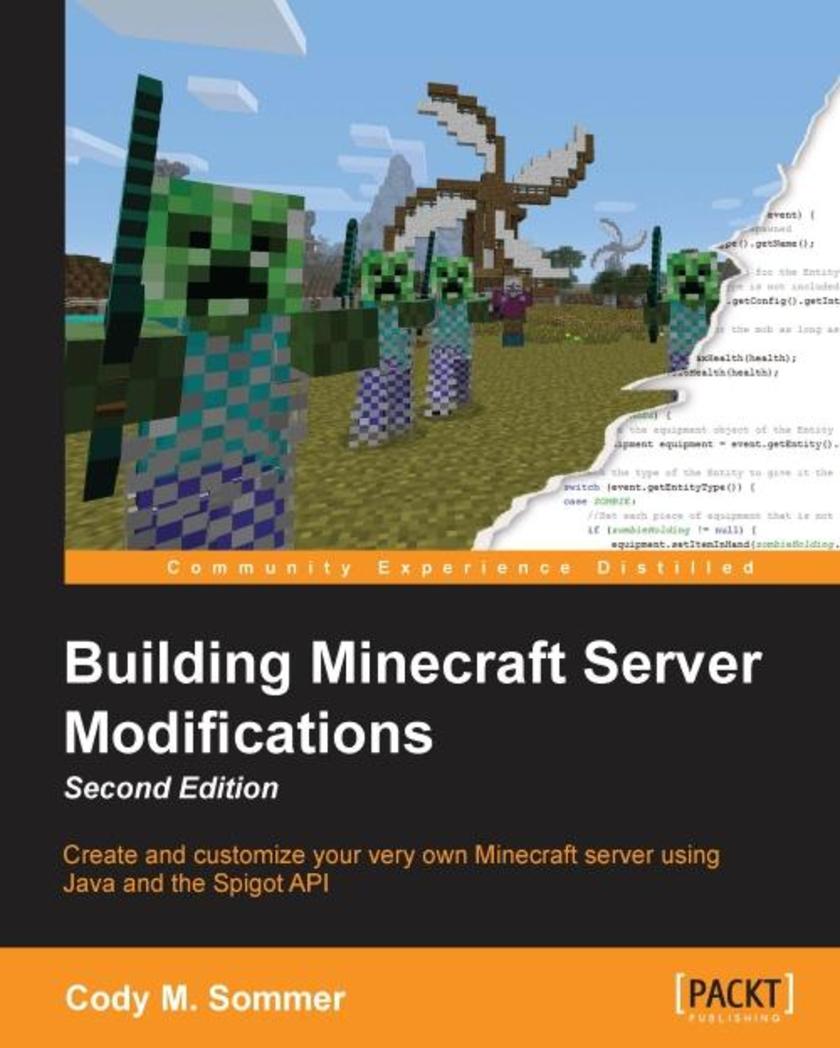
Building Minecraft Server Modifications - Second Edition
¥54.49
Create and customize your very own Minecraft server using Java and the Spigot API About This Book Set up a Minecraft server that you control Use object-oriented programming to modify Minecraft regardless of your level of experience This interactive guide will help you create a unique experience for you and your friends Who This Book Is For This book is great for anyone who is interested in customizing their Minecraft server. Whether you are new to programming, Java, Bukkit, or even Minecraft itself, this book has you covered. All you need is a valid Minecraft account. If you are interested in programming as a career or hobby, this book will get you started. If you are simply interested in playing Minecraft with your friends, then this book will help you make that experience even more enjoyable. What You Will Learn Install and run a Spigot server for free on your home PC Adjust the server settings to customize Minecraft to your liking Install an IDE and configure a project to write code Install and test plugins on a Spigot server Test your plugins through debugging the code Program in game commands and permissions Get to know advanced programming concepts such as event-driven programming, configuration files, saving/loading data, and scheduled tasks Implement configuration files to make your plugins customizable Save and load your plugin's data to persist across server restarts In Detail Minecraft is a sandbox game that allows you to play it in any way you want. Coupled with a multiplayer server powered by Spigot, you can customize the game even more! Using the Bukkit API, anyone interested in learning how to program can control their Minecraft world by developing server plugins. This book is a great introduction to software development through the wonderful world of Minecraft. We start by instructing you through how to set up your home PC for Minecraft server development. This includes an IDE complete with the required libraries as well as a Spigot server to test on. You will be guided through writing code for several different plugins. Each chapter teaches you new skills to create plugins of increasing complexity, and each plugin adds a new concept of the Bukkit API By the end of the book, you will have all the knowledge you need about the API to successfully create any type of plugin. You can then practice and build your Java skills through developing more mods for their server. Style and approach This hands-on guide is filled with interactive examples to help you modify Minecraft. Programming terms and concepts are explained along the way so even those who have never written code before can keep up.
Mahara ePortfolios: Beginner’s Guide
¥80.65
This book will provide you with step-by-step instructions to get started with Mahara and create an impressive electronic portfolio. The book is packed with many useful examples and screenshots for easy and quick learning. Pick up this book if you want to get started with Mahara. This book is for you if: You are an employee, student or other type of learner wanting to maintain online documentation of your projects and share it with a particular assessor/CPD Manager/teacher/trainer for feedback. You are a teacher or mentor wanting to set up an e-portfolio for your students or employees in order to encourage and advance personalized and reflective learning. You are a professional wanting to share your journals and project documents with your team by sharing your existing knowledge and creating new knowledge in communities of professional practice. You are a human resources professional who wants a software application which will enable your team to generate, capture and transfer tacit knowledge. No previous experience of Mahara is required
IBM Cognos TM1 Developers Certification guide
¥116.62
This book is packed with real word examples. Each major certification topic is covered in a separate chapter, which helps to make understanding of concepts easier. At the end of each chapter, you will find a variety of practice questions to strengthen and test your learning. If you are a beginner to intermediate level Cognos TM1 developer looking to add an important IBM certification to your resume but don’t know where to start, this book is for you!
jQuery for Designers: Beginner’s Guide
¥71.93
Part of Packt’s Beginner’s Guide series, each chapter focuses on a specific part of your website and how to improve its design with the use of jQuery. There are plenty of screenshots and practical step-by-step instructions making it easy to apply jQuery to your site. This book is for designers who have the basics of HTML and CSS, but want to extend their knowledge by learning to use JavaScript and jQuery.
Monkey Game Development Beginners Guide
¥90.46
The first two chapters will provide you with grounding in Monkey. In each subsequent chapter you will create a complete game deployable to either iOS, Android, HTML5, FLASH, OSX, Windows and XNA. The last chapter will show you how to monetize the games so you can be commercially successful in the app development world. Do you want to quickly create games deployable to all the major desktop and mobile platforms?, if so look no further. You will learn how to utilize the highly versatile Monkey compiler to create 2d games deployable almost anywhere. No game development or programming experience is required.
Responsive Web Design with HTML5 and CSS3
¥71.93
This book will lead you, step by step and with illustrative screenshots, through a real example. Are you writing two websites – one for mobile and one for larger displaysOr perhaps you’ve heard of Responsive Design but are unsure how to bring HTML5, CSS3, or responsive design all together. If so, this book provides everything you need to take your web pages to the next level – before all your competitors do!
iOS 5 Essentials
¥71.93
Each chapter will take you through a new major feature of iOS 5. You will learn how to integrate each feature into your applications. If you ever wanted to learn about the latest features of iOS 5 and learn how to incorporate Twitter, iCloud and Core Image framework effects functionality into your applications, then this book is for you. You should have a good knowledge of programming experience with Objective-C, and have used Xcode 4. iPhone programming experience is not required.
SAP NetWeaver MDM 7-1 Administrators Guide
¥125.34
This book is written in an easy-to-read style, with a strong emphasis on real-world, practical examples with step-by-step explanations. This book will appeal to administrators who are responsible for implementing and managing SAP NetWeaver MDM in their systems. Basic knowledge of MDM is desirable, but not knowledge of SAP NetWeaver MDM. If you are already familiar with NetWeaver it will be easy for you to follow the book.
Oracle Information Integration, Migration, and Consolidation
¥99.18
This enormously practical guide, interspersed with numerous real-life case studies and actual business scenarios, shows readers when, where, and how to use Oracle's wide range of data integration products. If you are a DBA, application or data architect, or data integration specialist who is running an Oracle database or middleware and you want to learn about the latest on Oracle's information integration platform, then this book is for you. You can also benefit from this book if you are an application developer or technical and project lead with a focus on master data management, data warehousing, and data consolidation. You should have working experience with Oracle Database, data integration, consolidation, and migration, as well as some familiarity with integration middleware products and information service buses.


