


 购物车
购物车 个人中心
个人中心

Essays on Paul Bourget
¥8.09
Short collection of short essays, including "What Paul Bourget Thinks of Us" and "A Little Note to M. Paul Bourget". According to Wikipedia: "Samuel Langhorne Clemens (November 30, 1835 - April 21, 1910), better known by the pen name Mark Twain, was a humorist, satirist, lecturer and writer from the United States of America. Twain is most noted for his novels Adventures of Huckleberry Finn, which has since been called the Great American Novel, and The Adventures of Tom Sawyer. He is also known for his quotations. During his lifetime, Twain became a friend to presidents, artists, leading industrialists and European royalty. Twain enjoyed immense public popularity, and his keen wit and incisive satire earned him praise from both critics and peers. American author William Faulkner called Twain 'the father of American literature.'"
Shorter Prose Pieces
¥8.09
Short collection of short pieces, including Phrases And Philosophies for the Use of The Young, Mrs. Langtry as Hester Grazebrook, Slaves of Fashion, Woman's Dress, More Radical Ideas upon Dress Reform, Costume, The American Invasion, Sermons in Stones at Bloomsbury, and L'Envoi. According to Wikipedia: "Oscar Fingal O'Flahertie Wills Wilde (1854 - 1900) was an Irish playwright, novelist, poet, and author of short stories. Known for his barbed wit, he was one of the most successful playwrights of late Victorian London, and one of the greatest celebrities of his day. As the result of a famous trial, he suffered a dramatic downfall and was imprisoned for two years of hard labour after being convicted of the offence of 'gross indecency.'"
The Human Drift
¥8.09
Classic Jack London short stories, including The Human Drift, Small-Boat Sailing, Four Horses and a Sailor, Nothing that Ever Came to Anything, That Dead Men Rise up Never, A Classic of the Sea, A Wicked Woman (Curtain Raiser), and The Birth Mark (Sketch). According to Wikipedia: "Jack London (1876 – 1916) was an American author who wrote The Call of the Wild, White Fang, and The Sea Wolf along with many other popular books. A pioneer in the then-burgeoning world of commercial magazine fiction, he was one of the first Americans to make a lucrative career exclusively from writing."

The Americanism of George Washington
¥8.09
Short essay, first published in 1906. According to Wikipedia: "Washington is seen as a symbol of the United States and republicanism in practice. His devotion to civic virtue made him an exemplary figure among early American politicians. Washington died in 1799, and in his funeral oration, Henry Lee said that of all Americans, he was "first in war, first in peace, and first in the hearts of his countrymen." Washington has been consistently ranked by scholars as one of the greatest U.S. Presidents."
Tales of the Fish Patrol
¥8.09
Classic Jack London short stories. According to Wikipedia: "Jack London (1876 – 1916) was an American author who wrote The Call of the Wild, White Fang, and The Sea Wolf along with many other popular books. A pioneer in the then-burgeoning world of commercial magazine fiction, he was one of the first Americans to make a lucrative career exclusively from writing."
On the Makaloa Mat, Island Tales
¥8.09
Classic Jack London stories, including On the Makaloa Mat, The Bones of Kahekili, When Alice Told her Soul, Shin-Bones, The Water Baby, The Tears of Ah Kim, and The Kanaka Surf. According to Wikipedia: "Jack London (1876 – 1916) was an American author who wrote The Call of the Wild, White Fang, and The Sea Wolf along with many other popular books. A pioneer in the then-burgeoning world of commercial magazine fiction, he was one of the first Americans to make a lucrative career exclusively from writing."
Tales of the Klondyke
¥8.09
Classic Jack London stories, including The God of His Fathers, The Great Interrogation, Which Make Men Remember, Siwash, The Man with the Gash, Jan the Unrepentant, Grit of Women, Where the Trail Forks, A Daughter of the Aurora, At the Rainbow's End, and The Scorn of Women. According to Wikipedia: "Jack London (1876 – 1916) was an American author who wrote The Call of the Wild, White Fang, and The Sea Wolf along with many other popular books. A pioneer in the then-burgeoning world of commercial magazine fiction, he was one of the first Americans to make a lucrative career exclusively from writing."
France at War
¥8.09
Classic Kipling novel. According to Wikipedia: "Joseph Rudyard Kipling (1865 – 1936) was an English author and poet. Born in Bombay, British India (now Mumbai), he is best known for his works The Jungle Book (1894) and Rikki-Tikki-Tavi (1902), his novel, Kim (1901); his poems, including Mandalay (1890), Gunga Din (1890), If— (1910); and his many short stories, including The Man Who Would Be King (1888). He is regarded as a major "innovator in the art of the short story"; his children's books are enduring classics of children's literature; and his best works speak to a versatile and luminous narrative gift. Kipling was one of the most popular writers in English, in both prose and verse, in the late 19th and early 20th centuries.[2] The author Henry James said of him: "Kipling strikes me personally as the most complete man of genius (as distinct from fine intelligence) that I have ever known." In 1907, he was awarded the Nobel Prize in Literature, making him the first English language writer to receive the prize, and to date he remains its youngest recipient. Among other honours, he was sounded out for the British Poet Laureateship and on several occasions for a knighthood, all of which he declined.
The Light that Failed
¥8.09
Classic Kipling novel. According to Wikipedia: "Joseph Rudyard Kipling (1865 – 1936) was an English author and poet. Born in Bombay, British India (now Mumbai), he is best known for his works The Jungle Book (1894) and Rikki-Tikki-Tavi (1902), his novel, Kim (1901); his poems, including Mandalay (1890), Gunga Din (1890), If— (1910); and his many short stories, including The Man Who Would Be King (1888). He is regarded as a major "innovator in the art of the short story"; his children's books are enduring classics of children's literature; and his best works speak to a versatile and luminous narrative gift. Kipling was one of the most popular writers in English, in both prose and verse, in the late 19th and early 20th centuries.[2] The author Henry James said of him: "Kipling strikes me personally as the most complete man of genius (as distinct from fine intelligence) that I have ever known." In 1907, he was awarded the Nobel Prize in Literature, making him the first English language writer to receive the prize, and to date he remains its youngest recipient. Among other honours, he was sounded out for the British Poet Laureateship and on several occasions for a knighthood, all of which he declined."
The Birds' Christmas Carol, a short story
¥8.09
Short story, one of Wiggins' best. According to Wikipedia: "Kate Douglas Wiggin ( 1856 - 1923) was an American children's author and educator. Kate Douglas Smith Wiggin was born in Philadelphia, and was of Welsh descent. She started the first free kindergarten in San Francisco in 1878 (the Silver Street Free Kindergarten). With her sister in the 1880s she also established a training school for kindergarten teachers. She was also a writer of children's books, the best known being The Birds' Christmas Carol (1887) and Rebecca of Sunnybrook Farm (1903)."

The Day's Work
¥8.09
Classic Kipling short stories, including THE BRIDGE-BUILDERS, A WALKING DELEGATE, THE SHIP THAT FOUND HERSELF, THE TOMB OF HIS ANCESTORS, THE DEVIL AND THE DEEP SEA, WILLIAM THE CONQUEROR, .007, THE MALTESE CAT, BREAD UPON THE WATERS", AN ERROR IN THE FOURTH DIMENSION, MY SUNDAY AT HOME, and THE BRUSHWOOD BOY. According to Wikipedia: "Joseph Rudyard Kipling (1865 – 1936) was an English author and poet. Born in Bombay, British India (now Mumbai), he is best known for his works The Jungle Book (1894) and Rikki-Tikki-Tavi (1902), his novel, Kim (1901); his poems, including Mandalay (1890), Gunga Din (1890), If— (1910); and his many short stories, including The Man Who Would Be King (1888). He is regarded as a major "innovator in the art of the short story"; his children's books are enduring classics of
The Huge Hunter: Or the Steam Man of the Prairies
¥8.09
Classic adventure novel. According to Wikipedia: "Edward Sylvester Ellis (April 11, 1840 – June 20, 1916) was an American author who was born in Ohio and died at Cliff Island, Maine. Ellis was a teacher, school administrator, and journalist, but his most notable work was that that he performed as author of hundreds of dime novels that he produced under his name and a number of noms de plume. Notable works by Ellis include The Huge Hunter, or the Steam Man of the Prairies and Seth Jones, or the Captives of the Frontier. Internationally, Edward S. Ellis is probably best known for his Deerhunter novels widely read by young boys up to the 1950s (together with works by James Fenimore Cooper and Karl May). In the mid-1880s, after a fiction-writing career of some thirty years, Ellis eventually turned his pen to more serious works of biography, history, and persuasive writing."
In the Pecos Country
¥8.09
Classic adventure novel. According to Wikipedia: "Edward Sylvester Ellis (April 11, 1840 – June 20, 1916) was an American author who was born in Ohio and died at Cliff Island, Maine. Ellis was a teacher, school administrator, and journalist, but his most notable work was that that he performed as author of hundreds of dime novels that he produced under his name and a number of noms de plume. Notable works by Ellis include The Huge Hunter, or the Steam Man of the Prairies and Seth Jones, or the Captives of the Frontier. Internationally, Edward S. Ellis is probably best known for his Deerhunter novels widely read by young boys up to the 1950s (together with works by James Fenimore Cooper and Karl May). In the mid-1880s, after a fiction-writing career of some thirty years, Ellis eventually turned his pen to more serious works of biography, history, and persuasive writing."
A Journey into the Interior of the Earth
¥8.09
Classic adventure novel. According to Wikipedia: "Jules Gabriel Verne (February 8, 1828-March 24, 1905) was a French author who pioneered the science-fiction genre. He is best known for novels such as Journey to the Center of the Earth (1864), Twenty Thousand Leagues under the Sea (1870), and Around the World in Eighty Days (1873). Verne wrote about space, air, and underwater travel before air travel and practical submarines were invented, and before practical means of space travel had been devised. He is the third most translated author in the world, according to Index Translationum. Some of his books have been made into films. Verne, along with H. G. Wells, is often popularly referred to as the "Father of Science Fiction"
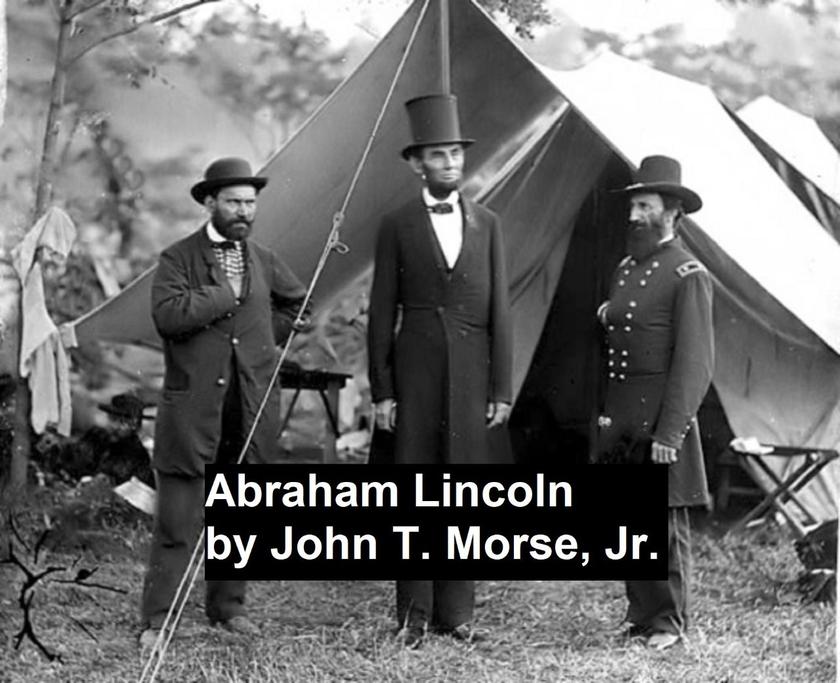
Abraham Lincoln
¥8.09
Classic biography of Lincoln, first published in 1899. According to Wikipedia: "According to Wikipedia: "Abraham Lincoln is a 2-volume biography of Abraham Lincoln written by John Torrey Morse (1840-1937). Originally published in 1893, the New York times found it to be "for its scope, admirable. It will even stand up and appear respectable in the most distinguished company of Lincoln biographies that might be assembled." The author is "a sane biographer, who brings to the task of writing about Lincoln a mind that aspires to see clear and think straight, instead of one held slavishly subject to a heart's desire to make Lincoln out a hero without fault or blemish." The Atlantic Monthly noted that Morse had "attempted a bit of scientific painting and not a portraiture to the life. The book is a criticism, consequently, rather than an appreciation." They also noted that Morse concentrates mostly on the five years that Lincoln was in office... In 1987, Gabor Boritt noted that Morse was the first biographer to have "fully exemplified as well as diagnosed the above ailment [the schism between the self-serving, not very admirable politician that Lincoln was up until 1860 versus the later "unparalleled greatness"]." Morse has written of "the insoluble problem of two men - two lives - one following the other with no visible link... we have physically one creature, morally and mentally two beings."
Skyrider
¥8.09
Classic western. According to Wikipedia: "Bertha Muzzy Sinclair or Sinclair-Cowan, née Muzzy (November 15, 1871 – July 23, 1940), best known by her pseudonym B. M. Bower, was an American novelist who wrote fictional stories about the American Old West... She wrote 57 Western novels, several of which were turned into films."
A Cardinal Sin
¥8.09
According to Wikipedia: "Joseph Marie Eugène Sue (20 January 1804 – 3 August 1857) was a French novelist… His naval experiences supplied much of the materials of his first novels, Kernock le pirate (1830), Atar-Gull (1831), La Salamandre (2 vols., 1832), La Coucaratcha (4 vols., 1832-1834), and others, which were composed at the height of the Romantic movement of 1830. In the quasi-historical style he wrote Jean Cavalier, ou Les Fanatiques des Cevennes (4 vols., 1840) and Lautréaumont (2 vols., 1837). He was strongly affected by the Socialist ideas of the day, and these prompted his most famous works: Les Mystères de Paris (10 vols., 1842-1843) and Le Juif errant (tr. "The Wandering Jew") (10 vols., 1844-1845), which were among the most popular specimens of the roman-feuilleton. He followed these up with some singular and not very edifying books: Les Sept pêchés capitaux (16 vols., 1847-1849), which contained stories to illustrate each of the Seven Deadly Sins, Les Mystères du peuple (1849-1856), which was suppressed by the censor in 1857, and several others, all on a very large scale, though the number of volumes gives an exaggerated idea of their length. Some of his books, among them Le Juif Errant and the Mystères de Paris, were dramatized by himself, usually in collaboration with others. His period of greatest success and popularity coincided with that of Alexandre Dumas, père, with whom he has been compared. Sue has neither Dumas's wide range of subject, nor, above all, his faculty of conducting the story by means of lively dialogue; he has, however, a command of terror which Dumas seldom or never attained... Seven years after the publication of Sue's Les Mystères du peuple, a French revolutionary named Maurice Joly plagiarized aspects of the work for his anti-Napoleon III pamphlet, Dialogues in Hell between Machiavelli and Montesquieu, which in turn was later adapted by the Prussian Hermann Goedsche into an 1868 work entitled Biarritz, in which Goedsche substituted Jews for Sue's infernal Jesuit conspirators. Ultimately, this material became incorporated directly into the notorious anti-Semitic hoax, The Protocols of the Elders of Zion."
Anne of the Island
¥8.09
Classic children's novel. According to Wikipedia: "Lucy Maud Montgomery, (always called "Maud" by family and friends) and publicly known as L. M. Montgomery, (1874-1942) was a Canadian author, best known for a series of novels beginning with Anne of Green Gables, published in 1908. Anne of Green Gables was an immediate success. The central character, Anne, an orphaned girl, made Montgomery famous in her lifetime and gave her an international following. The first novel was followed by a series of sequels with Anne as the central character. The novels became the basis for the highly acclaimed 1985 CBC television miniseries, Anne of Green Gables and several other television movies and programs, including Road to Avonlea, which ran in Canada and the U.S. from 1990-1996."
Anne's House of Dreams
¥8.09
Classic children's novel. According to Wikipedia: "Lucy Maud Montgomery, (always called "Maud" by family and friends) and publicly known as L. M. Montgomery, (1874-1942) was a Canadian author, best known for a series of novels beginning with Anne of Green Gables, published in 1908. Anne of Green Gables was an immediate success. The central character, Anne, an orphaned girl, made Montgomery famous in her lifetime and gave her an international following. The first novel was followed by a series of sequels with Anne as the central character. The novels became the basis for the highly acclaimed 1985 CBC television miniseries, Anne of Green Gables and several other television movies and programs, including Road to Avonlea, which ran in Canada and the U.S. from 1990-1996."

In Happy Valley
¥8.09
Classic western. According to Wikipedia: "Born in Stony Point, Kentucky to John William Fox, Sr., and Minerva Worth Carr, Fox studied English at Harvard University. He graduated in 1883 before becoming a reporter in New York City. After working for both New York Times and the New York Sun, he published a successful serialization of his first novel, A Mountain Europa, in Century magazine in 1892. Two moderately successful short story collections followed, as well as his first conventional novel, The Kentuckians in 1898. Fox gained a following as a war correspondent, working for Harper's Weekly in Cuba during the Spanish-American War of 1898, where he served with the "Rough Riders." Six years later he traveled to Asia to report on the Russo-Japanese War for Scribner's magazine. Though he occasionally wrote for periodicals, after 1904, Fox dedicated much of his attention to fiction. The Little Shepherd of Kingdom Come (published in 1903) and The Trail of the Lonesome Pine (published in 1908) are arguably his most well known and successful works, entering the New York Times top ten list of bestselling novels for 1903, 1904, 1908, and 1909 respectively. Many of his works reflected the naturalist style, his childhood in Kentucky's Bluegrass region, and his life among the coal miners of Big Stone Gap, Virginia. Many of his novels were historical romances or period dramas set in that region."
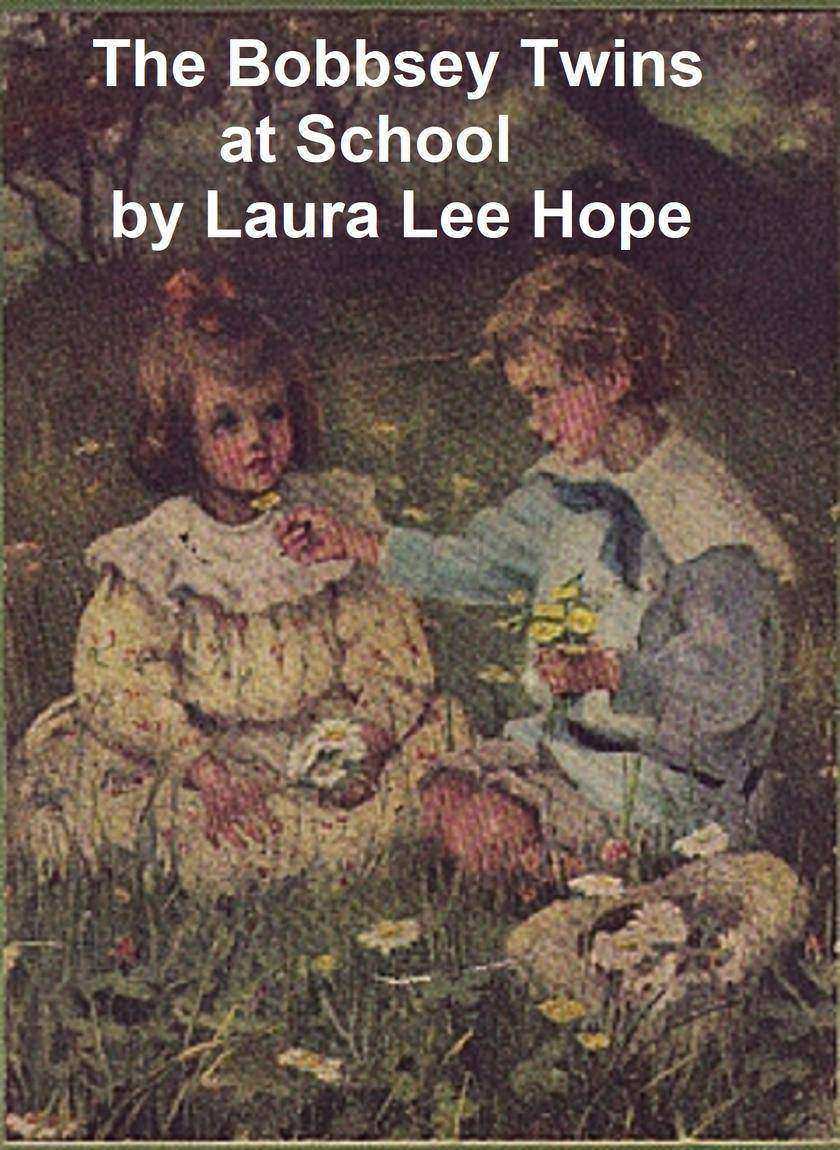
The Bobbsey Twins at School
¥8.09
According to Wikipedia: "Laura Lee Hope is a pseudonym used by the Stratemeyer Syndicate for the Bobbsey Twins and several other series of children's novels. Actual writers taking up the pen of Laura Lee Hope include Edward Stratemeyer, Howard and Lilian Garis, Elizabeth Ward, Harriet (Stratemeyer) Adams, and Nancy Axelrad. Laura Lee Hope was first used as a pseudonym in 1904 for the debut of the Bobbsey Twins. Series: The Bobbsey Twins (1904-), The Outdoor Girls (23 vols. 1913-1933), The Moving Picture Girls (7 vols. 1914-1916), Bunny Brown (20 vols. 1916-1931), Six Little Bunkers (14 vols. 1918-1930), Make Believe Stories (12 vols. c. 1920-1923), Blythe Girls (12 vols. 1925-1932)."


