


 购物车
购物车 个人中心
个人中心

Coping with Crisis:A Counsellor's Guide to the Restabilization Process
¥65.99
In the wake of a catastrophic event, the witness may discover or experience unsettling emotions which can trigger subsequent behaviors. These reactions can lead to a number of consequences, some of which are unproductive. Restabilization is a practical means of addressing these reactions and the resultant issues. It is a four-step process of self-discovery guided, but not led, by a counselor; aimed at restoring someone's confidence and improving their capability to deal with life's problems. The person is encouraged, and enabled, to view the event as a learning experience with an opportunity to improve their performance in relation to unexpected problems. The four stages of the process are described in detail, together with examples of model sessions and rules of engagement which serve to ensure the effectiveness of the process. There are also some Communication Exercises designed to ensure unemotional but sympathetic communication between the counselor and their client. In addition, the Dark Serpent Dilemma and Technique offers a pragmatic way of approaching and solving the problems which life throws at all of us from time to time. Once the concept is understood it can be applied as a way of ensuring the optimum reaction to any significant event or situation. About the Author For several years, Jim Burtles was Principal Consultant with Safetynet PLC, where he taught business executives how to cope with, and plan for, minor emergencies, disasters and absolute catastrophes. Safetynet was a pioneering disaster recovery and business continuity company which specialized in dealing with business emergencies. Such events might range in scale from a faulty air-conditioning system to the aftermath of major earthquakes or terrorist attacks. The original concept of Safetynet was centered on the complex computer-based operations of the modern business. However, experience soon taught Safetynet's founders that the whole of the business environment had to be taken into account. Therefore, personnel problems and many other aspects needed to be taken into consideration. Jim acquired his expertise in disaster recovery and emergency management through direct exposure to dozens of real-life disasters, almost a hundred emergencies and countless problem situations. He also benefited from the indirect experience of many more, gained from talking to, and working with, victims of various crises. In his current role, as a Director of Total Continuity Management, he is now working with senior executives of international corporations and government departments to help them develop complete emergency response plans and processes which include appropriate counseling and training programs to cope with emergency Coping with Crisis is book #5 in the Explorations in Metapsychology Series from Loving Healing Press (www.LovingHealing.com)

The Confessions of Jean-Jacques Rousseau by Jean-Jacques Rousseau (Illustrated)
¥8.09
This eBook features the unabridged text of ‘The Confessions of Jean-Jacques Rousseau’ from the bestselling edition of ‘The Collected Works of Jean-Jacques Rousseau’. Having established their name as the leading publisher of classic literature and art, Delphi Classics produce publications that are individually crafted with superior formatting, while introducing many rare texts for the first time in digital print. The Delphi Classics edition of Rousseau includes original annotations and illustrations relating to the life and works of the author, as well as individual tables of contents, allowing you to navigate eBooks quickly and easily.eBook features:* The complete unabridged text of ‘The Confessions of Jean-Jacques Rousseau’* Beautifully illustrated with images related to Rousseau’s works* Individual contents table, allowing easy navigation around the eBook* Excellent formatting of the textPlease visit www.delphiclassics.com to learn more about our wide range of titles
Sirens
¥24.44
THE BLUE PLANETS WORLD SERIES Earth finally receives a message from space: “You only live on land. Allow us to live in the seas.” Rison will implode soon. They desperately need a new blue planet, a water planet. But Earth is crowded. Will humans be able to open their hearts to an alien race? Sirens, Book 2 He’s an alien. She’s not quite human. Can they survive an epic battle under the sea? Jake Rose’s girlfriend, Em Tullis, has mysteriously disappeared, leaving only a one-word clue: “Phoke.” His search takes him around the world to fabled Aberforth Hills in the North Sea, home of earth’s native aquatic people, the Mer—who are now known as Phoke. They’ve remained hidden for centuries, only emerging now in a desperate search for a cure to a Rionian water-borne illness. The intergalactic negotiations have just become impossibly complicated. Rison needs a refuge for thousands of their people before their planet implodes in a science-gone-wrong scenario. Originally, they asked Earth, “You only live on land. Allow us to live in the seas.” But Earth’s seas aren’t empty! With the Phoke at the negotiation table, Rison’s hope look bleak. Even worse, when Jake finds Em, she’s infected with a Risonian water-borne organism that threatens her life.????????????????????????????????? For fans of Ender's Game or I Am Number Four comes a new character-driven science fiction series, The Blue Planet’s World series. Sirens, the second novel, follows Jake and Em as they fight for survival of their species, both in space and under the sea. ALSO IN THE BLUE PLANETS WORLD SERIES SLEEPERS, Book 1 A rogue militia. A diabolical sabotage.? Is an alien teen is the only hope for either blue planet? Sleepers is the first book of an exciting science fiction series that forces a dying world to beg for refuge on Earth. A test-tube baby, fifteen-year-old Jake Rose is half human and half alien. After living with his mother on Rison for most of his life, he finally comes to Earth to live with his human father’s grandparents on Bainbridge Island in Puget Sound. His mother, Dayexi Quad-de is Rison’s ambassador to Earth. She’s tasked with finding Risonians a new home on Earth in a peaceful manner. Jake accidentally discovers that Earth’s elite ELLIS forces are tying to sabotage Mt. Rainier and make it explode so that they can blame it on the Risonian aliens. Can Jake stop them in time or will they ruin the Risonians chances at a refuge on Earth? Pilgrims, Book 3 A deadly microbe. A race against time. Who will survive? Pilgrims is the exciting conclusion of an epic science fiction series that pits Risonians and Earthlings against inevitable implosion of a planet. A small team from Earth travels to Rison to find the cure for a water-borne disease that threatens the Phoke, the mermen and mermaids of Earth. But Rison’s implosion is pending. In a rush against time, they must deal with the politics of desperate men and the tricks of a dying planet. Will they find the cure and escape in time?
My Dirty Dog:My Informative Essay
¥32.62
Dennis and Mellie, cousins, celebrate Grandma's birthday and then write informative or expository essays.
How I Went Out to Service by Louisa May Alcott (Illustrated)
¥8.09
This eBook features the unabridged text of ‘How I Went Out to Service’ from the bestselling edition of ‘The Complete Works of Louisa May Alcott’. Having established their name as the leading publisher of classic literature and art, Delphi Classics produce publications that are individually crafted with superior formatting, while introducing many rare texts for the first time in digital print. The Delphi Classics edition of Alcott includes original annotations and illustrations relating to the life and works of the author, as well as individual tables of contents, allowing you to navigate eBooks quickly and easily.eBook features:* The complete unabridged text of ‘How I Went Out to Service’* Beautifully illustrated with images related to Alcott’s works* Individual contents table, allowing easy navigation around the eBook* Excellent formatting of the textPlease visit www.delphiclassics.com to learn more about our wide range of titles
Gargoyles:A Tale of Two Miracles
¥24.44
FOR THOSE WHO DARE THE IMPOSSIBLE Laurel could stay home and watch her future crumble. Instead, she risks everything. Searching for a better future, she enters a mysterious stone world where everything is backward. Pretty is ugly and ugly is pretty. Unless Laurel completes the quest in three days, she may be trapped. You'll be drawn into the medieval world of stone masons and cathedral builders, entertainers and herbalists. And gargoyles. This haunting tale will become a legend in your heart and mind. MIRACLES COME AT A HIGH PRICE Will Laurel succeed? Impossible. She needs a miracle. Or two. This is a rich, surprising, and sometimes disturbing historical tale of gargoyles, and those who carve the creatures from solid stone. There's darkness in this cautionary tale for teens, that nevertheless pulls off not one, but two miracles, and brings Laurel home to stay. An apt, if unexpected ending. A brilliant coming of age, sword & sorcery tale. BUY NOW to follow Laurel's harrowing journey toward miracles.
Therese Raquin by Emile Zola (Illustrated)
¥8.09
This eBook features the unabridged text of ‘Therese Raquin’ from the bestselling edition of ‘The Complete Works of Emile Zola’. Having established their name as the leading publisher of classic literature and art, Delphi Classics produce publications that are individually crafted with superior formatting, while introducing many rare texts for the first time in digital print. The Delphi Classics edition of Zola includes original annotations and illustrations relating to the life and works of the author, as well as individual tables of contents, allowing you to navigate eBooks quickly and easily.eBook features:* The complete unabridged text of ‘Therese Raquin’* Beautifully illustrated with images related to Zola’s works* Individual contents table, allowing easy navigation around the eBook* Excellent formatting of the textPlease visit www.delphiclassics.com to learn more about our wide range of titles
His Masterpiece by Emile Zola (Illustrated)
¥8.09
This eBook features the unabridged text of ‘His Masterpiece’ from the bestselling edition of ‘The Complete Works of Emile Zola’. Having established their name as the leading publisher of classic literature and art, Delphi Classics produce publications that are individually crafted with superior formatting, while introducing many rare texts for the first time in digital print. The Delphi Classics edition of Zola includes original annotations and illustrations relating to the life and works of the author, as well as individual tables of contents, allowing you to navigate eBooks quickly and easily.eBook features:* The complete unabridged text of ‘His Masterpiece’* Beautifully illustrated with images related to Zola’s works* Individual contents table, allowing easy navigation around the eBook* Excellent formatting of the textPlease visit www.delphiclassics.com to learn more about our wide range of titles

The Hounds of Annwn 1-5:A Virginian in Elfland
¥123.75
A bundle of books from The Hounds of Annwn - Books 1-5----To Carry the Horn –Book 1 of The Hounds of AnnwnNEW JOB, NEW FAMILY, AND IN TWO WEEKS THE END OF A WORLD HE’S JUST DISCOVERED, IF HE CAN’T RISE TO THE CHALLENGE.George Talbot Traherne is just doing his job on a fine autumn morning, keeping the hounds together for the huntsman of the Rowanton Hunt in Virginia along the Blue Ridge Mountain. Doesn’t pay to get distracted by a white stag in unfamiliar territory, though. Next thing you know, you might find yourself… somewhere else.The land is the same but not the people. Their huntsman has just been murdered, and George is tapped for the job. It’s an emergency — the Wild Hunt is only two weeks away, and if it doesn’t happen on schedule, the antlered god Cernunnos will take the realm from its ruler Gwyn ap Nudd and find someone who can mete out justice with the Hounds of Hell in his place.----The Ways of Winter – Book 2 of The Hounds of AnnwnTRAPPED BEHIND ENEMY LINES, CAN HE FIND THE STRENGTH TO DEFEND ALL THAT HE VALUES MOST, OR EVEN JUST TO SURVIVE?It’s the dead of winter and George Talbot Traherne, the new human huntsman for the Wild Hunt, is in trouble. The damage in Gwyn ap Nudd’s domain reveals the deadly powers of a dangerous foe who has mastered an unstoppable weapon and threatens the fae dominions in both the new and the old worlds.----King of the May – Book 3 of The Hounds of AnnwnMORE VALUABLE AS A WEAPON THAN A KINGMAKER, HE MUST MAKE HIS OWN CHOICES TO SECURE THE FUTURE.George Talbot Traherne, the human huntsman for the Wild Hunt, had hoped to settle into a quiet life with his new family, but it was not to be. Gwyn ap Nudd, Prince of Annwn, has plans to secure his domain in the new world from the overbearing interference of his father Lludd, the King of Britain.----Bound into the Blood – Book 4 of The Hounds of AnnwnDISTURBING THE FAMILY SECRETS COULD BRING RUIN TO EVERYTHING HE’S WORKED SO HARD TO BUILD.George Talbot Traherne, the human huntsman for the Wild Hunt, is preparing for the birth of his child by exploring the family papers about his parents and their deaths. When his improved relationship with his patron, the antlered god Cernunnos, is jeopardized by an unexpected opposition, he finds he must choose between loyalty to family and loyalty to a god.----Tales of Annwn – A Story Collection from The Hounds of AnnwnTHE CALL: A very young Rhian discovers her beast-sense and rushes to the rescue of an errant hound.UNDER THE BOUGH: Angharad hasn’t lived with anyone for hundreds of years, but now she is ready to tie the knot with George Talbot Traherne, the human who has entered the fae otherworld to serve as huntsman for the Wild Hunt. As soon as she can make up her mind, anyway.NIGHT HUNT: George Talbot Traherne goes night hunting for fox in Virginia and thinks about the choices he has made.CARIAD: Benitoe and Luhedoc are off to fetch horses for the Golden Cockerel Inn in Edgewood. Luhedoc needs to relearn an important lesson about confidence.THE EMPTY HILLS: George Talbot Traherne shows a bit of the human world to family and friends, hoping to share some of the sense of wonder he discovered when he encountered the fae otherworld.
Labour by Emile Zola (Illustrated)
¥8.09
This eBook features the unabridged text of ‘Labour’ from the bestselling edition of ‘The Complete Works of Emile Zola’. Having established their name as the leading publisher of classic literature and art, Delphi Classics produce publications that are individually crafted with superior formatting, while introducing many rare texts for the first time in digital print. The Delphi Classics edition of Zola includes original annotations and illustrations relating to the life and works of the author, as well as individual tables of contents, allowing you to navigate eBooks quickly and easily.eBook features:* The complete unabridged text of ‘Labour’* Beautifully illustrated with images related to Zola’s works* Individual contents table, allowing easy navigation around the eBook* Excellent formatting of the textPlease visit www.delphiclassics.com to learn more about our wide range of titles

My Bipolar Life:Guide to Maintenance & Recovery
¥32.62
THE CHALLENGE OF LIVING LIFE AS BOTH A BIPOLAR AND AN ALCOHOLIC. Jane S. is one of the 60-percent (or more) of "manic depressives" (persons severely bipolar) who are also alcoholics. Her bipolar life story covers forty-seven years of sobriety and forty-five years on lithium therapy, how her illnesses have interacted, and particularly how much of the shape of her life -- and her achievement of her life's goals (including, for the last forty-seven years, sobriety) -- has been shaped by her bipolarity. This book is important reading for those dealing with "manic depression," either in those close to them or in themselves, and even more for those who suffer from both of Jane's diseases. Her memories include, literally, the good (paying cash down for her first Mustang, though that was because she didn't know how to work a bank account), the bad (the sailboat she was on being boarded by the Coast Guard off Maryland), and the ugly (hearing her head being dribbled like a basketball outside her side-room in the hospital) -- and the very good, the white-light dream that began her recovery from alcoholism. She is believed to have been on lithium therapy for her condition longer than anyone else in the United States.
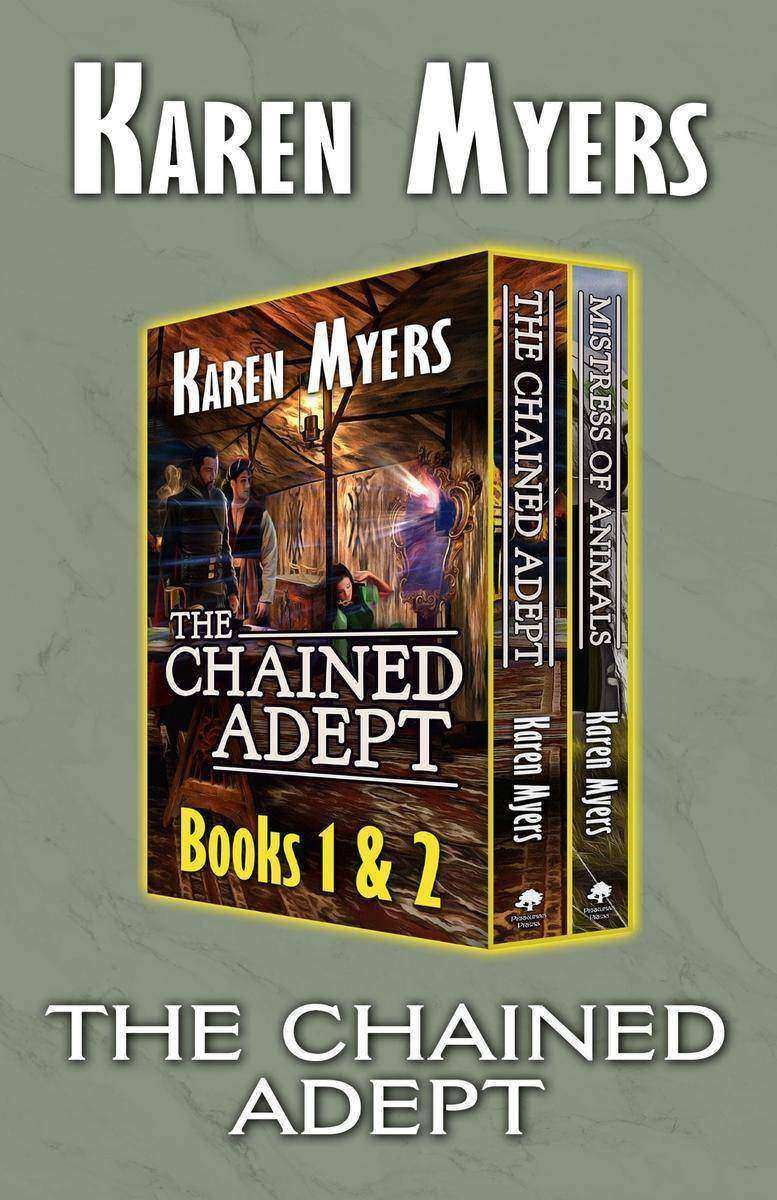
The Chained Adept (1-2):A Lost Wizard's Tale
¥81.67
A bundle of books from The Chained Adept - Books 1-2. ---A STRONG WIZARD WITH UNANSWERED QUESTIONS AND A CHAIN AROUND HER NECK. The Chained Adept - Book 1 of The Chained AdeptPenrys’s past is unknown, but she’s got a better grip on her future: find out where she came from, discover what happened to her, and figure out how the unremovable chain around her neck makes her different from other wizards.What any of this has to do with the renewal of an ugly war between neighboring countries, half a world away, is just something she’ll have to sort out, along with the rumors of wizards where they don’t belong.Assuming, of course, that no one removes her as a threat before she can find her footing.All she wants is a firm foundation for the rest of her life, with a side helping of retribution, and if she has to fix things along the way, well, so be it.---AN ERRANT CHILD WITH DISASTROUS POWERS AND NO ONE TO STAND IN HER WAY. Mistress of Animals - Book 2 of The Chained AdeptPenrys, the wizard with a chain and an unknown past, is drafted to find out what has happened to an entire clan of the nomadic Zannib. Nothing but their empty tents remain, abandoned on the autumn steppe with their herds.This wasn't a detour she'd planned on making, but there's little choice. Winter is coming, and hundreds are missing.The locals don't trust her, but that's nothing new. The question is, can she trust herself, when she discovers what her life might have been? Assuming, of course, that the price of so many dead was worth paying for it.
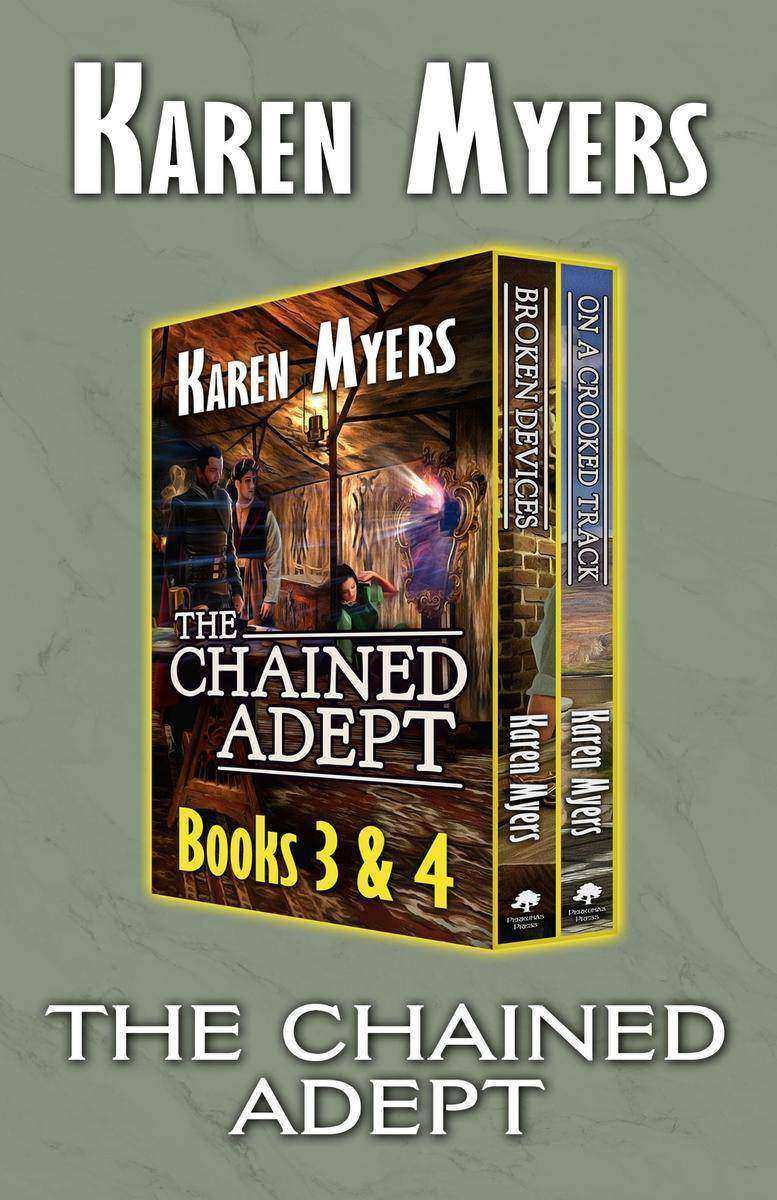
The Chained Adept (3-4):A Lost Wizard's Tale
¥81.67
A bundle of books from The Chained Adept - Books 3-4. ---CHAINS WITHOUT WIZARDS AND A RISING COUNT OF THE DEAD. Broken Devices - Book 3 of The Chained AdeptThe largest city in the world has just discovered its missing wizards. It seems the Kigali empire has ignited a panic that threatens internal ruin and the only chained wizard it knows that’s still alive is Penrys.The living wizards and the dead are not her people, not unless she makes them so. All they have in common is a heavy chain and a dead past—the lives that were stolen from them are beyond recall.What remains are unanswered questions about who made them this way. And why. And what Penrys plans to do to find out.---SETTING A TRAP TO CATCH THE MAKERS OF CHAINED WIZARDS. On a Crooked Track - Book 4 of The Chained AdeptA clue has sent Penrys back to Ellech, the country where she first appeared four short years ago with her mind wiped, her body stripped, and her neck chained. It's time to enlist the help of the Collegium of Wizards which sheltered her then.Things don't work out that way, and she finds herself retracing a dead scholar's crooked track and setting herself up as a target to confirm her growing suspicions. But what happens to bait when the prey shows its teeth?In this conclusion to the series, tracking old crimes brings new dangers, and a chance for redemption.

Titus Andronicus by William Shakespeare (Illustrated)
¥8.09
This eBook features the unabridged text of ‘Titus Andronicus’ from the bestselling edition of ‘The Complete Works of William Shakespeare’. Having established their name as the leading publisher of classic literature and art, Delphi Classics produce publications that are individually crafted with superior formatting, while introducing many rare texts for the first time in digital print. The Delphi Classics edition of Shakespeare includes original annotations and illustrations relating to the life and works of the author, as well as individual tables of contents, allowing you to navigate eBooks quickly and easily.eBook features:* The complete unabridged text of ‘Titus Andronicus’* Beautifully illustrated with images related to Shakespeare’s works* Individual contents table, allowing easy navigation around the eBook* Excellent formatting of the textPlease visit www.delphiclassics.com to learn more about our wide range of titles

The Two Gentlemen of Verona by William Shakespeare (Illustrated)
¥8.09
This eBook features the unabridged text of ‘The Two Gentlemen of Verona’ from the bestselling edition of ‘The Complete Works of William Shakespeare’. Having established their name as the leading publisher of classic literature and art, Delphi Classics produce publications that are individually crafted with superior formatting, while introducing many rare texts for the first time in digital print. The Delphi Classics edition of Shakespeare includes original annotations and illustrations relating to the life and works of the author, as well as individual tables of contents, allowing you to navigate eBooks quickly and easily.eBook features:* The complete unabridged text of ‘The Two Gentlemen of Verona’* Beautifully illustrated with images related to Shakespeare’s works* Individual contents table, allowing easy navigation around the eBook* Excellent formatting of the textPlease visit www.delphiclassics.com to learn more about our wide range of titles
The Secret Agent by Joseph Conrad (Illustrated)
¥8.09
This eBook features the unabridged text of ‘The Secret Agent’ from the bestselling edition of ‘The Complete Works of Joseph Conrad’. Having established their name as the leading publisher of classic literature and art, Delphi Classics produce publications that are individually crafted with superior formatting, while introducing many rare texts for the first time in digital print. The Delphi Classics edition of Conrad includes original annotations and illustrations relating to the life and works of the author, as well as individual tables of contents, allowing you to navigate eBooks quickly and easily.eBook features:* The complete unabridged text of ‘The Secret Agent’* Beautifully illustrated with images related to Conrad’s works* Individual contents table, allowing easy navigation around the eBook* Excellent formatting of the textPlease visit www.delphiclassics.com to learn more about our wide range of titles

Duelo de Cora??es
¥41.45
Lady Caroline Faye, é a mais recente bela debutante, de maior sucesso da última temporada social de Londres. O inescrupuloso sir Montagu Reversby, ardilosamente, convence-a a ir de carruagem com ele, de Londres a Sevenoaks. Sob o pretexto de existir um defeito no eixo da carruagem, os dois param em uma estalagem, no campo. Horrorizada, lady Caroline compreende que sir Montagu afinal simulou o acidente apenas para passar a noite com ela. Desesperada, a bela jovem foge dele e embrenha-se na mata. Ali, encontra o atraente lord Brecon, um homem que, n?o só consegue livrá-la da situa??o delicada em que se encontrava, como também irá roubar-lhe o cora??o com uma paix?o arrebatadora e inesperada… e ela por sua vez, seguindo o seu instinto, vai ao seu encontro, ao Castelo de Brecon, fingindo-se passar por uma dama de companhia procurando trabalho, arriscando toda a sua reputa??o, para poder salvar Lord Brecon, de uma armadilha montada por seu primo, Gervase Warlingham, que tudo fará, para que Vane seja acusado de um crime que n?o cometera. Caroline vai ser o seu anjo da guarda, testemunha fundamental para provar a sua inocência… e é com esta intriga, no meio de suspense e romance, que se desenvolve esta fascinante história, no centro do Castelo de Brecon, em Cuckhurst, Kent.
The Rover by Joseph Conrad (Illustrated)
¥8.09
This eBook features the unabridged text of ‘The Rover’ from the bestselling edition of ‘The Complete Works of Joseph Conrad’. Having established their name as the leading publisher of classic literature and art, Delphi Classics produce publications that are individually crafted with superior formatting, while introducing many rare texts for the first time in digital print. The Delphi Classics edition of Conrad includes original annotations and illustrations relating to the life and works of the author, as well as individual tables of contents, allowing you to navigate eBooks quickly and easily.eBook features:* The complete unabridged text of ‘The Rover’* Beautifully illustrated with images related to Conrad’s works* Individual contents table, allowing easy navigation around the eBook* Excellent formatting of the textPlease visit www.delphiclassics.com to learn more about our wide range of titles

A Dan?bio ao Entardecer
¥41.45
A bela e adorável Lady Aletha Ling, aguardava ansiosamente pela sua primeira temporada social. Mas o seu pai, o Duque de Buclington, sabia muito bem que a aristocrática posi??o da sua querida filha, cheia de riqueza e beleza, seria a presa perfeita para todos os ca?adores de fortuna. Assim, querendo protegê-la a todo o custo, fez um casamento arranjado, custando a Aletha, todos os seus sonhos t?o esperados. Assustada, ela decide fugir, viajando com o mordomo do seu pai até à Hungria, onde ele está supervisionando, a compra de alguns belos cavalos. Ambos viajam mascarados, ela vai como sua neta e plebleia. V?o para a Hungria e na sua viagem, conhece o Príncipe Miklós, pelo qual se apaixona! Mas agora como plebleia, como se poderá apaixonar por um Príncepe, se fugida, n?o tem condi??o social para poder se apaixonar por um Nobre. Mas será que Aletha, revelaria o seu segredo? Será que o Príncepe Miklós, apaixonado, seria capaz de renunciar a sua Croa? E na Hungria, os violinos ciganos vibravam, enchendo o ar com uma doce melodia de ironia… e só Aletha poderia decidir o seu destino…

The Village of Stepanchikovo by Fyodor Dostoyevsky
¥8.09
This eBook features the unabridged text of ‘The Village of Stepanchikovo’ from the bestselling edition of ‘The Complete Works of Fyodor Dostoyevsky’. Having established their name as the leading publisher of classic literature and art, Delphi Classics produce publications that are individually crafted with superior formatting, while introducing many rare texts for the first time in digital print. The Delphi Classics edition of Dostoyevsky includes original annotations and illustrations relating to the life and works of the author, as well as individual tables of contents, allowing you to navigate eBooks quickly and easily. eBook features:* The complete unabridged text of ‘The Village of Stepanchikovo’* Beautifully illustrated with images related to Dostoyevsky’s works* Individual contents table, allowing easy navigation around the eBook* Excellent formatting of the textPlease visit www.delphiclassics.com to learn more about our wide range of titles

The Island Of Love
¥51.91
Sir Robert Westbury has two young daughters – Heloise, the beautiful “English Rose” and her demure older sister Lydia, who lives with the fact that her father is disappointed that she was not a son! Since their mother died when they were children, self-effacing Lydia has grown accustomed to taking care of Heloise pandering to her every whim. When it is announced that her sister is to marry the dashingly handsome Earl of Royston – and that he is whisking Heloise away to be married in the exotic paradise of Hawaii – Lydia is expected to accompany her as a “lady’s maid”. Unlike her sullen sister, she is thrilled by the prospect – and, transfixed by the Earl’s charisma and charm, she begins to fall in love with the man she can never have. But Fate takes a hand in the shape of a storm on the voyage that casts Lydia and the Earl overboard and washes them up alone on a desert island: the Island of Love, which will change Lydia’s life forever.


