


 购物车
购物车 个人中心
个人中心
Bitter Roots
¥288.41
For over a century, plant specialists worldwide have sought to transform healing plants in African countries into pharmaceuticals. And for equally as long, conflicts over these medicinal plants have endured, from stolen recipes and toxic tonics to unfulfilled promises of laboratory equipment and usurped personal patents. In Bitter Roots, Abena Dove Osseo-Asare draws on publicly available records and extensive interviews with scientists and healers in Ghana, Madagascar, and South Africa to interpret how African scientists and healers, rural communities, and drug companies-including Pfizer, Bristol-Myers Squibb, and Unilever-have sought since the 1880s to develop drugs from Africa's medicinal plants.?Osseo-Asare recalls the efforts to transform six plants into pharmaceuticals: rosy periwinkle, Asiatic pennywort, grains of paradise, Strophanthus, Cryptolepis, and Hoodia.?Through the stories of each plant, she shows that herbal medicine and pharmaceutical chemistry have simultaneous and overlapping histories that cross geographic boundaries. At the same time, Osseo-Asare sheds new light on how various interests have tried to manage the rights to these healing plants and probes the challenges associated with assigning ownership to plants and their biochemical components.A fascinating examination of the history of medicine in colonial and postcolonial Africa, Bitter Roots will be indispensable for scholars of Africa; historians interested in medicine, biochemistry, and society; and policy makers concerned with drug access and patent rights.
Everyday Troubles
¥288.41
From roommate disputes to family arguments, trouble is inevitable in interpersonal relationships. In Everyday Troubles, Robert M. Emerson explores the beginnings and development of the conflicts that occur in our relationships with the people we regularly encounter-family members, intimate partners, coworkers, and others-and the common responses to such troubles.To examine these issues, Emerson draws on interviews with college roommates, diaries documenting a wide range of irritation with others, conversations with people caring for family members suffering from Alzheimer's, studies of family interactions, neighborly disputes, and other personal accounts. He considers how people respond to everyday troubles: in non-confrontational fashion, by making low-visibility, often secretive, changes in the relationship; more openly by directly complaining to the other person; or by involving a third party, such as friends or family. He then examines how some relational troubles escalate toward extreme and even violent responses, in some cases leading to the involvement of outside authorities like the police or mental health specialists.By calling attention to the range of possible reactions to conflicts in interpersonal relationships, Emerson also reminds us that extreme, even criminal actions often result when people fail to find ways to deal with trouble in moderate, non-confrontational ways. Innovative and insightful, Everyday Troubles is an illuminating look at how we deal with discord in our relationships.

Shared Future
¥288.41
Faith-based community organizers have spent decades working for greater equality in American society, and more recently have become significant players in shaping health care, finance, and immigration reform at the highest levels of government.In A Shared Future, Richard L. Wood and Brad R. Fulton draw on a new national study of community organizing coalitions and in-depth interviews of key leaders in this field to show how faith-based organizing is creatively navigating the competing aspirations of America's universalist and multiculturalist democratic ideals, even as it confronts three demons bedeviling American politics: economic inequality, federal policy paralysis, and racial inequity. With a broad view of the entire field and a distinct empirical focus on the PICO National Network, Wood and Fulton's analysis illuminates the tensions, struggles, and deep rewards that come with pursuing racial equity within a social change organization and in society. Ultimately, A Shared Future offers a vision for how we might build a future that embodies the ethical democracy of the best American dreams.
Neighborhood That Never Changes
¥282.53
Newcomers to older neighborhoods are usually perceived as destructive, tearing down everything that made the place special and attractive. But as A Neighborhood That Never Changes demonstrates, many gentrifiers seek to preserve the authentic local flavor of their new homes, rather than ruthlessly remake them. Drawing on ethnographic research in four distinct communities-the Chicago neighborhoods of Andersonville and Argyle and the New England towns of Provincetown and Dresden-Japonica Brown-Saracino paints a colorful portrait of how residents new and old, from wealthy gay homeowners to Portuguese fishermen, think about gentrification.The new breed of gentrifiers, Brown-Saracino finds, exhibits an acute self-consciousness about their role in the process and works to minimize gentrification's risks for certain longtime residents. In an era of rapid change, they cherish the unique and fragile, whether a dilapidated house, a two-hundred-year-old landscape, or the presence of people deeply rooted in the place they live. Contesting many long-standing assumptions about gentrification, Brown-Saracino's absorbing study reveals the unexpected ways beliefs about authenticity, place, and change play out in the social, political, and economic lives of very different neighborhoods.
Of War and Men
¥306.07
Fathers in the fifties tend to be portrayed as wise and genial pipe-smokers or distant, emotionless patriarchs. This common but limited stereotype obscures the remarkable diversity of their experiences and those of their children. To uncover the real story of fatherhood during this transformative era, Ralph LaRossa takes the long view-from the attack on Pearl Harbor up to the election of John F. Kennedy-revealing the myriad ways that World War II and its aftermath shaped men.Offering compelling accounts of people both ordinary and extraordinary, Of War and Men digs deep into the terrain of fatherhood. LaRossa explores the nature and aftereffects of combat, the culture of fear during the Cold War, the ways that fear altered the lives of racial and sexual minorities, and how the civil rights movement affected families both black and white. Overturning some calcified myths, LaRossa also analyzes the impact of suburbanization on fathers and their kids, discovering that living in the suburbs often strengthened their bond. And finally, looking beyond the idealized dad enshrined in TV sitcoms, Of War and Men explores the brutal side of family life in the postwar years. LaRossa's richly researched book dismantles stereotypes while offering up a fascinating and incisive chronicle of fatherhood in all its complexity.
Articulating the World
¥247.21
Naturalism as a guiding philosophy for modern science both disavows any appeal to the supernatural or anything else transcendent to nature, and repudiates any philosophical or religious authority over the workings and conclusions of the sciences. A longstanding paradox within naturalism, however, has been the status of scientific knowledge itself, which seems, at first glance, to be something that transcends and is therefore impossible to conceptualize within scientific naturalism itself.?In Articulating the World, Joseph Rouse argues that the most pressing challenge for advocates of naturalism today is precisely this: to understand how to make sense of a scientific conception of nature as itself part of nature, scientifically understood. Drawing upon recent developments in evolutionary biology and the philosophy of science, Rouse defends naturalism in response to this challenge by revising both how we understand our scientific conception of the world and how we situate ourselves within it.
Masters of Uncertainty
¥247.21
Though we commonly make them the butt of our jokes, weather forecasters are in fact exceptionally good at managing uncertainty. They consistently do a better job calibrating their performance than stockbrokers, physicians, or other decision-making experts precisely because they receive feedback on their decisions in near real time. Following forecasters in their quest for truth and accuracy, therefore, holds the key to the analytically elusive process of decision making as it actually happens.In Masters of Uncertainty, Phaedra Daipha develops a new conceptual framework for the process of decision making, after spending years immersed in the life of a northeastern office of the National Weather Service. Arguing that predicting the weather will always be more craft than science, Daipha shows how forecasters have made a virtue of the unpredictability of the weather. Impressive data infrastructures and powerful computer models are still only a substitute for the real thing outside, and so forecasters also enlist improvisational collage techniques and an omnivorous appetite for information to create a locally meaningful forecast on their computer screens. Intent on capturing decision making in action, Daipha takes the reader through engrossing firsthand accounts of several forecasting episodes (hits and misses) and offers a rare fly-on-the-wall insight into the process and challenges of producing meteorological predictions come rain or come shine. Combining rich detail with lucid argument, Masters of Uncertainty advances a theory of decision making that foregrounds the pragmatic and situated nature of expert cognition and casts into new light how we make decisions in the digital age.
Iberian Imperialism and Language Evolution in Latin America
¥329.62
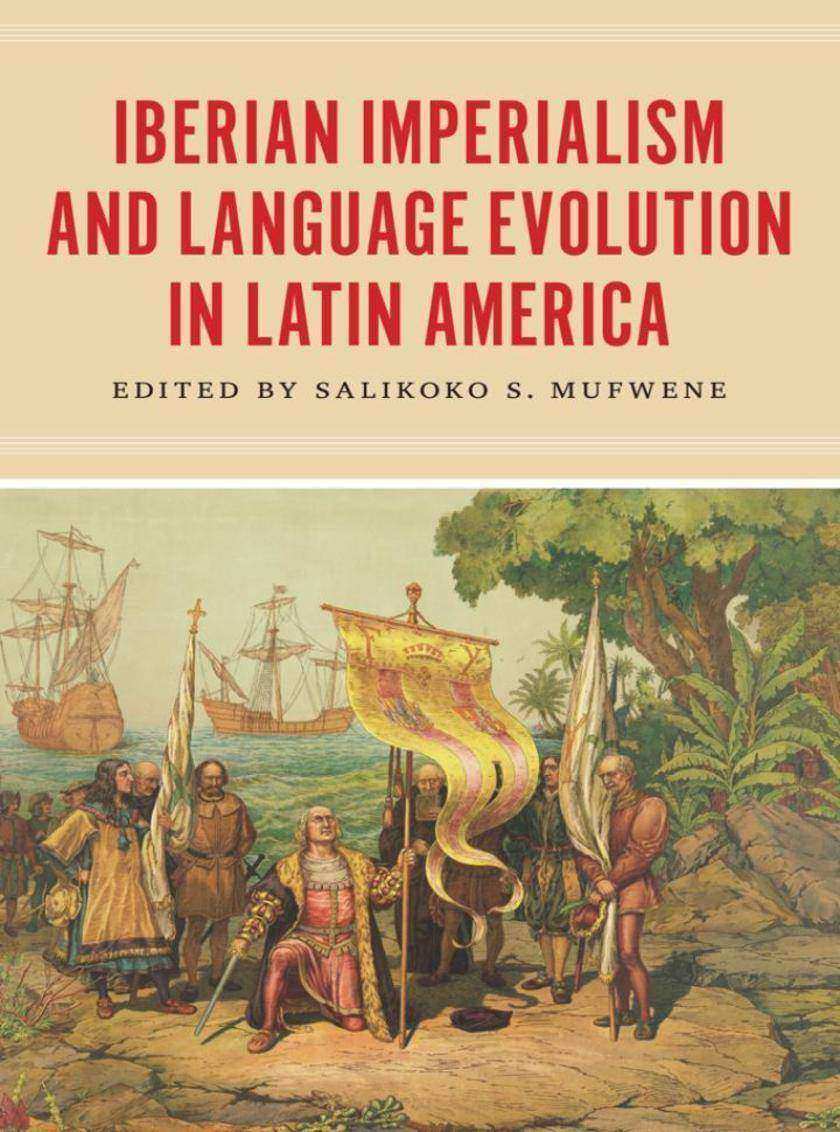
As rich as the development of the Spanish and Portuguese languages has been in Latin America, no single book has attempted to chart their complex history. Gathering essays by sociohistorical linguists working across the region, Salikoko S. Mufwene does just that in this book. Exploring the many different contact points between Iberian colonialism and indigenous cultures, the contributors identify the crucial parameters of language evolution that have led to today's state of linguistic diversity in Latin America.?The essays approach language development through an ecological lens, exploring the effects of politics, economics, cultural contact, and natural resources on the indigenization of Spanish and Portuguese in a variety of local settings. They show how languages adapt to new environments, peoples, and practices, and the ramifications of this for the spread of colonial languages, the loss or survival of indigenous ones, and the way hybrid vernaculars get situated in larger political and cultural forces. The result is a sophisticated look at language as a natural phenomenon, one that meets a host of influences with remarkable plasticity. ?

Comparative Approach in Evolutionary Anthropology and Biology
¥353.16
Comparison is fundamental to evolutionary anthropology. When scientists study chimpanzee cognition, for example, they compare chimp performance on cognitive tasks to the performance of human children on the same tasks. And when new fossils are found, such as those of the tiny humans of Flores, scientists compare these remains to other fossils and contemporary humans. Comparison provides a way to draw general inferences about the evolution of traits and therefore has long been the cornerstone of efforts to understand biological and cultural diversity. Individual studies of fossilized remains, living species, or human populations are the essential units of analysis in a comparative study; bringing these elements into a broader comparative framework allows the puzzle pieces to fall into place, creating a means of testing adaptive hypotheses and generating new ones.?With this book, Charles L. Nunn intends to ensure that evolutionary anthropologists and organismal biologists have the tools to realize the potential of comparative research. Nunn provides a wide-ranging investigation of the comparative foundations of evolutionary anthropology in past and present research, including studies of animal behavior, biodiversity, linguistic evolution, allometry, and cross-cultural variation. He also points the way to the future, exploring the new phylogeny-based comparative approaches and offering a how-to manual for scientists who wish to incorporate these new methods into their research.

Culture of Disaster
¥394.36
From antiquity through the Enlightenment, disasters were attributed to the obscure power of the stars or the vengeance of angry gods. As philosophers sought to reassess the origins of natural disasters, they also made it clear that humans shared responsibility for the damages caused by a violent universe. This far-ranging book explores the way writers, thinkers, and artists have responded to the increasingly political concept of disaster from the Enlightenment until today.?Marie-Hlne Huet argues that post-Enlightenment culture has been haunted by the sense of emergency that made natural catastrophes and human deeds both a collective crisis and a personal tragedy. From the plague of 1720 to the cholera of 1832, from shipwrecks to film dystopias, disasters raise questions about identity and memory, technology, control, and liability. In her analysis, Huet considers anew the mythical figures of Medusa and Apollo, theories of epidemics, earthquakes, political crises, and films such as Blow-Up and Blade Runner. With its scope and precision, The Culture of Disaster will appeal to a wide public interested in modern culture, philosophy, and intellectual history.

Man Who Thought He Was Napoleon
¥370.82
The Man Who Thought He Was Napoleon?is built around a bizarre historical event and an off-hand challenge. The eventIn December 1840, nearly twenty years after his death, the remains of Napoleon were returned to Paris for burial-and the next day, the director of a Paris hospital for the insane admitted fourteen men who claimed to be Napoleon. The challenge, meanwhile, is the claim by great French psychiatrist Jean-Etienne-Dominique Esquirol (1772-1840) that he could recount the history of France through asylum registries.From those two components, Laure Murat embarks on an exploration of the surprising relationship between history and madness. She uncovers countless stories of patients whose delusions seem to be rooted in the historical or political traumas of their time, like the watchmaker who believed he lived with a new head, his original having been removed at the guillotine. In the troubled wake of the Revolution, meanwhile, French physicians diagnosed a number of mental illnesses tied to current events, from "e;revolutionary neuroses"e; and "e;democratic disease"e; to the "e;ambitious monomania"e; of the Restoration. How, Murat asks, do history and psychiatry, the nation and the individual psyche, interface?A fascinating history of psychiatry-but of a wholly new sort-The Man Who Thought He Was Napoleon?offers the first sustained analysis of the intertwined discourses of madness, psychiatry, history, and political theory.

Islanded
¥370.82
How did the British come to conquer South Asia in the late eighteenth and early nineteenth centuriesAnswers to this question usually start in northern India, neglecting the dramatic events that marked Britain's contemporaneous subjugation of the island of Sri Lanka. In Islanded, Sujit Sivasundaram reconsiders the arrival of British rule in South Asia as a dynamic and unfinished process of territorialization and state building, revealing that the British colonial project was framed by the island's traditions and maritime placement and built in part on the model they provided.?Using palm-leaf manu*s from Sri Lanka to read the official colonial archive, Sivasundaram tells the story of two sets of islanders in combat and collaboration. He explores how the British organized the process of "e;islanding"e;: they aimed to create a separable unit of colonial governance and trade in keeping with conceptions of ethnology, culture, and geography. But rather than serving as a radical rupture, he reveals, islanding recycled traditions the British learned from Kandy, a kingdom in the Sri Lankan highlands whose customs-from strategies of war to views of nature-fascinated the British. Picking up a range of unusual themes, from migration, orientalism, and ethnography to botany, medicine, and education, Islanded is an engaging retelling of the advent of British rule.
Protocols of Liberty
¥370.82
The fledgling United States fought a war to achieve independence from Britain, but as John Adams said, the real revolution occurred "e;in the minds and hearts of the people"e; before the armed conflict ever began. Putting the practices of communication at the center of this intellectual revolution, Protocols of Liberty shows how American patriots-the Whigs-used new forms of communication to challenge British authority before any shots were fired at Lexington and Concord. ?To understand the triumph of the Whigs over the Brit-friendly Tories, William B. Warner argues that it is essential to understand the communication systems that shaped pre-Revolution events in the background. He explains the shift in power by tracing the invention of a new political agency, the Committee of Correspondence; the development of a new genre for political expression, the popular declaration; and the emergence of networks for collective political action, with the Continental Congress at its center. From the establishment of town meetings to the creation of a new postal system and, finally, the Declaration of Independence, Protocols of Liberty reveals that communication innovations contributed decisively to nation-building and continued to be key tools in later American political movements, like abolition and women's suffrage, to oppose local custom and state law.

After They Closed the Gates
¥370.82
In 1921 and 1924, the United States passed laws to sharply reduce the influx of immigrants into the country. By allocating only small quotas to the nations of southern and eastern Europe, and banning almost all immigration from Asia, the new laws were supposed to stem the tide of foreigners considered especially inferior and dangerous. However, immigrants continued to come, sailing into the port of New York with fake passports, or from Cuba to Florida, hidden in the holds of boats loaded with contraband liquor. Jews, one of the main targets of the quota laws, figured prominently in the new international underworld of illegal immigration. However, they ultimately managed to escape permanent association with the identity of the "e;illegal alien"e; in a way that other groups, such as Mexicans, thus far, have not.In?After They Closed the Gates,?Libby Garland tells the untold stories of the Jewish migrants and smugglers involved in that underworld, showing how such stories contributed to growing national anxieties about illegal immigration. Garland also helps us understand how Jews were linked to, and then unlinked from, the specter of illegal immigration. By tracing this complex history, Garland offers compelling insights into the contingent nature of citizenship, belonging, and Americanness.

World More Concrete
¥370.82
Many people characterize urban renewal projects and the power of eminent domain as two of the most widely despised and often racist tools for reshaping American cities in the postwar period. In?A World More Concrete, N. D. B. Connolly uses the history of South Florida to unearth an older and far more complex story.Connolly captures nearly eighty years of political and land transactions to reveal how real estate and redevelopment created and preserved metropolitan growth and racial peace under white supremacy.Using a materialist approach, he offers a long view of capitalism and the color line, following much of the money that made land taking and Jim Crow segregation profitable and preferred ?approaches to governing cities throughout the twentieth century.A World More Concrete?argues that black and white landlords, entrepreneurs, and even liberal community leaders used tenements and repeated land dispossession to take advantage of the poor and generate remarkable wealth.Through a political culture built on real estate, South Florida's landlords and homeowners advanced property rights and white property rights, especially, at the expense of more inclusive visions of equality. For black people and many of their white allies, uses of eminent domain helped to harden class and color lines.Yet, for many reformers, confiscating certain kinds of real estate through eminent domain also promised to help improve housing conditions, to undermine the neighborhood influence of powerful slumlords, and to open new opportunities for suburban life for black Floridians.Concerned more with winners and losers than with heroes and villains,?A World More Concrete?offers a sober assessment of money and power in Jim Crow America.It shows how negotiations between powerful real estate interests on both sides of the color line gave racial segregation a remarkable capacity to evolve, revealing property owners' power to reshape American cities in ways that can still be seen and felt today.

Cartophilia
¥370.82
The period between the French Revolution and World War II was a time of tremendous growth in both mapmaking and map reading throughout Europe. There is no better place to witness this rise of popular cartography than in Alsace-Lorraine, a disputed borderland that the French and Germans both claimed as their national territory. Desired for its prime geographical position and abundant natural resources, Alsace-Lorraine endured devastating wars from 1870 to 1945 that altered its borders four times, transforming its physical landscape and the political allegiances of its citizens. For the border population whose lives were turned upside down by the French-German conflict, maps became essential tools for finding a new sense of place and a new sense of identity in their changing national and regional communities.?Turning to a previously undiscovered archive of popular maps, Cartophilia reveals Alsace-Lorraine's lively world of citizen mapmakers that included linguists, ethnographers, schoolteachers, hikers, and priests. Together, this fresh group of mapmakers invented new genres of maps that framed French and German territory in original ways through experimental surveying techniques, orientations, scales, colors, and iconography. In focusing on the power of "e;bottom-up"e; maps to transform modern European identities, Cartophilia argues that the history of cartography must expand beyond the study of elite maps and shift its emphasis to the democratization of cartography in the modern world.
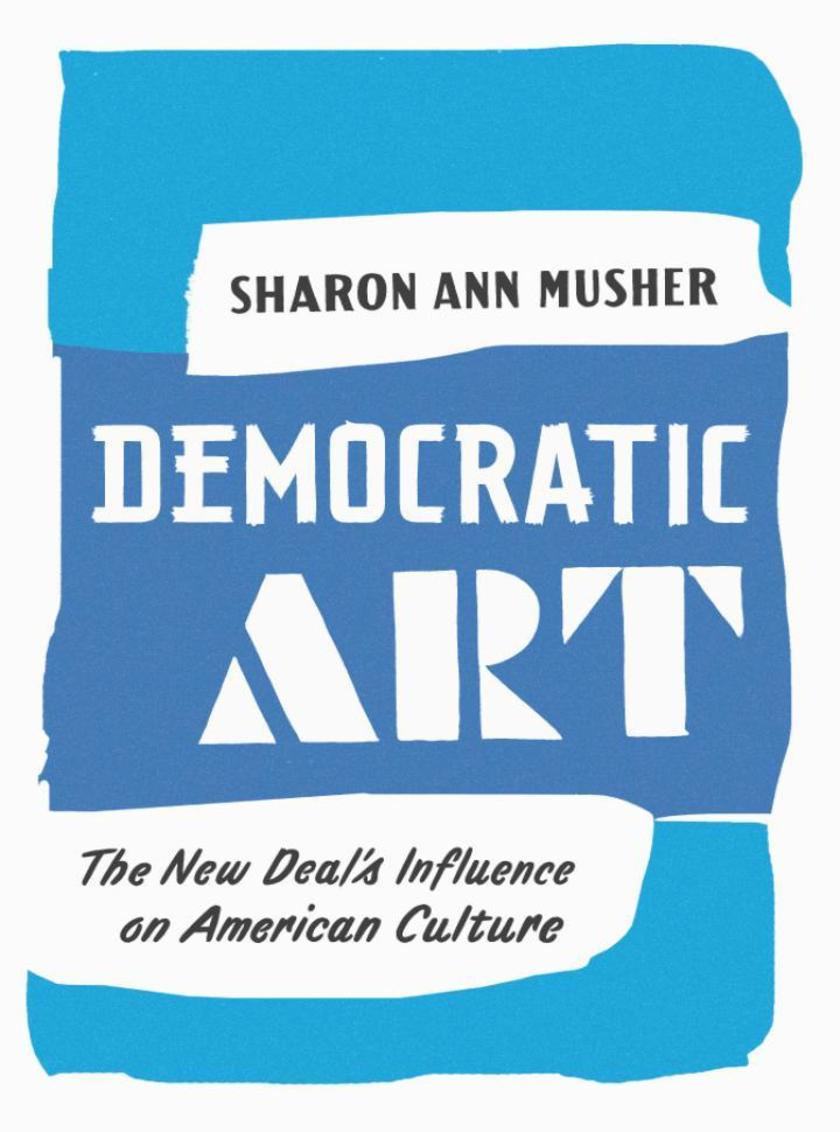
Democratic Art
¥370.82
Throughout the Great Recession American artists and public art endowments have had to fight for government support to keep themselves afloat. It wasn't always this way. At its height in 1935, the New Deal devoted $27 million-roughly $461 million today-to supporting tens of thousands of needy artists, who used that support to create more than 100,000 works. Why did the government become so involved with these artists, and why weren't these projects considered a frivolous waste of funds, as surely many would be today?In Democratic Art, Sharon Musher explores these questions and uses them as a springboard for an examination of the role art can and should play in contemporary society. Drawing on close readings of government-funded architecture, murals, plays, writing, and photographs, Democratic Art examines the New Deal's diverse cultural initiatives and outlines five perspectives on art that were prominent at the time: art as grandeur, enrichment, weapon, experience, and subversion. Musher argues that those engaged in New Deal art were part of an explicitly cultural agenda that sought not just to create art but to democratize and Americanize it as well. By tracing a range of aesthetic visions that flourished during the 1930s, this highly original book outlines the successes, shortcomings, and lessons of the golden age of government funding for the arts.
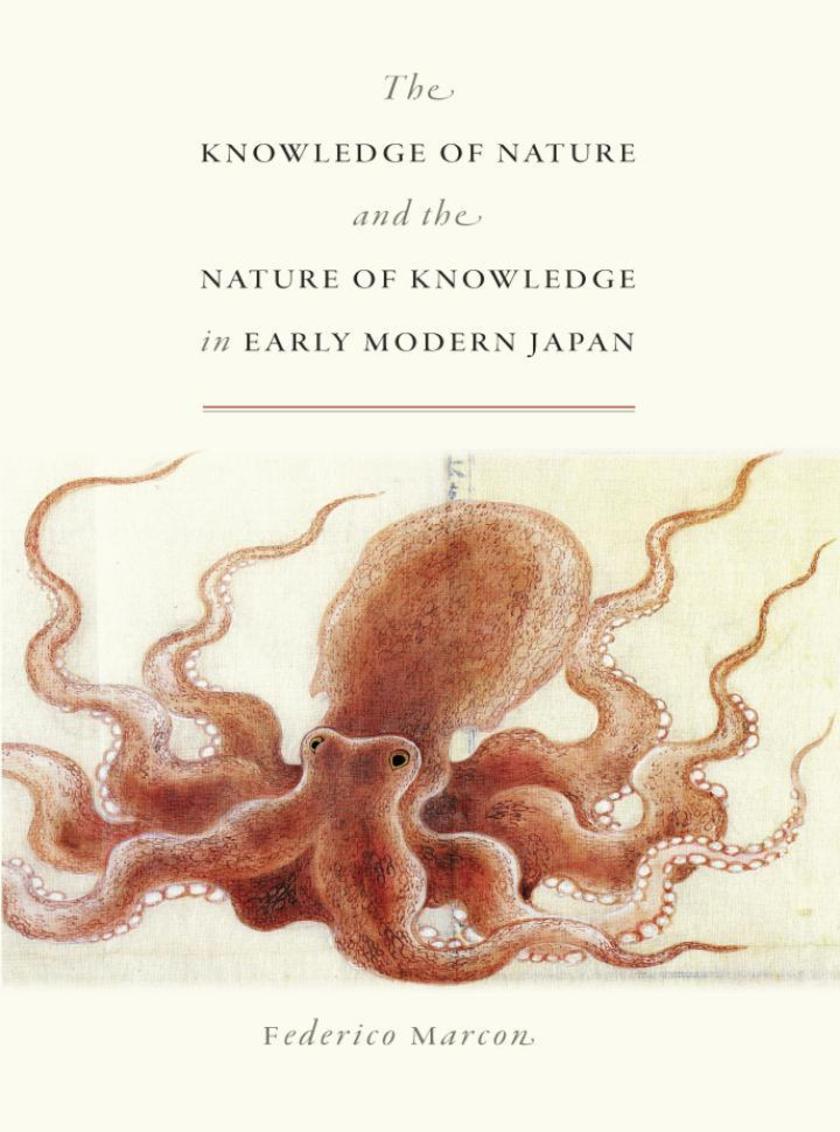
Knowledge of Nature and the Nature of Knowledge in Early Modern Japan
¥370.82
Between the early seventeenth and the mid-nineteenth century, the field of natural history in Japan separated itself from the discipline of medicine, produced knowledge that questioned the traditional religious and philosophical understandings of the world, developed into a system (called honzogaku) that rivaled Western science in complexity-and then seemingly disappeared. Or did itIn The Knowledge of Nature and the Nature of Knowledge in Early Modern Japan, Federico Marcon recounts how Japanese scholars developed a sophisticated discipline of natural history analogous to Europe's but created independently, without direct influence, and argues convincingly that Japanese natural history succumbed to Western science not because of suppression and substitution, as scholars traditionally have contended, but by adaptation and transformation.?The first book-length English-language study devoted to the important field of honzogaku, The Knowledge of Nature and the Nature of Knowledge in Early Modern Japan will be an essential text for historians of Japanese and East Asian science, and a fascinating read for anyone interested in the development of science in the early modern era.

Emptiness
¥288.41
For many Christians in America, becoming filled with Christ first requires being empty of themselves-a quality often overlooked in religious histories. In Emptiness, John Corrigan highlights for the first time the various ways that American Christianity has systematically promoted the cultivation of this feeling. ?Corrigan examines different kinds of emptiness essential to American Christianity, such as the emptiness of deep longing, the emptying of the body through fasting or weeping, the emptiness of the wilderness, and the emptiness of historical time itself. He argues, furthermore, that emptiness is closely connected to the ways Christian groups differentiate themselves: many groups foster a sense of belonging not through affirmation, but rather avowal of what they and their doctrines are not. Through emptiness, American Christians are able to assert their identities as members of a religious community.Drawing much-needed attention to a crucial aspect of American Christianity, Emptiness expands our understanding of historical and contemporary Christian practices.?

Tags
¥21.51
From Walter Dean Myers, the New York Times bestselling author of Monster, comes this 20-page one-act play. Tags is a look at life and death in New York City, complete with a shocking end.Four New York City teens are shot down in the prime of life. They move through limbo, re-creating their distinctive tags in a Harlem walk-up so that they can "live" forever. But what's the pointHow can you think of living forever if you're already dead?Walter Dean Myers was the New York Times bestselling author of Monster, the winner of the first Michael L. Printz Award; a former National Ambassador for Young People's Literature; and an inaugural NYC Literary Honoree. Myers received every single major award in the field of children's literature. He was the author of two Newbery Honor Books and six Coretta Scott King Awardees. He was the recipient of the Margaret A. Edwards Award for lifetime achievement in writing for young adults, a three-time National Book Award Finalist, as well as the first-ever recipient of the Coretta Scott King–Virginia Hamilton Award for Lifetime Achievement.Epic Reads Impulse is a digital imprint with new releases each month.

The Secrets of Attraction
¥56.08
Set in the same world as The Promise of Amazing, this smart, surprising, and romantic follow-up to Robin Constantine's debut novel follows two New Jersey teens as they become friends and fall in love. Perfect for fans of Stephanie Perkins, Sarah Mlynowski, and Jennifer E. Smith.Madison Pryce thinks she's got everything figured out—she's working on a portfolio for a summer art program and hanging with her friends. Plus she has her hot boyfriend, Zach. But then a visit from a family friend turns Maddie's life upside down.Jesse McMann is still reeling from a breakup that shattered his heart and his band. Then pride (and some goading from his bass player and fellow barista) forces him to find a new drummer—and the inspiration to write music again.Kismet arrives in the unlikely form of Grayson Barrett, who tries out for Jesse's band, and whose girlfriend is BFFs with the cute girl who orders a chai latte after yoga every Thursday: Maddie. What Jesse and Maddie thought they knew about the secrets of attraction and the rules of romance changes once they start falling for each other.


