


 购物车
购物车 个人中心
个人中心
Delphi Complete Works of Martial (Illustrated)
¥24.44
Considered to be the creator of the modern epigram, the Roman poet Martial produced twelve books of Epigrams, featuring short, witty poems that vividly illustrate daily life in Imperial Rome, whilst hilariously satirising the poet’s friends and enemies. This comprehensive eBook presents the complete extant works of Martial, with contextual illustrations, a special dual English and Latin section, informative introductions and the usual Delphi bonus material. (Version 1) * Beautifully illustrated with images relating to Martial's life and works * Features the complete works of Martial, in both English translation and the original Latin * Concise introductions to the poetry * Includes Walter C. A. Ker’s translation, previously appearing in the Loeb Classical Library edition, first time in digital print * Excellent formatting of the texts * Easily locate the epigrams you want to read with detailed contents tables * Includes Martial's rare apocryphal works, first time in digital print * Provides a special dual English and Latin text, allowing readers to compare the texts epigram by epigram – ideal for students * Features a bonus biography – discover Martial's ancient world * Scholarly ordering of texts into chronological order and literary genres Please note: some of Ker’s translations of the more ‘obscene’ epigrams are in Italian. We regret that no suitable English alternatives are available in the public domain at present. Please visit www.delphiclassics.com to browse through our range of exciting titles CONTENTS: The Translations ON THE SPECTACLES EPIGRAMS The Latin Text LIST OF LATIN TEXT The Dual Texts DUAL LATIN AND ENGLISH TEXTS The Biography INTRODUCTION TO MARTIAL by Walter C. A. Ker Please visit www.delphiclassics.com to browse through our range of exciting titles

The Well-Beloved by Thomas Hardy (Illustrated)
¥8.09
This eBook features the unabridged text of ‘The Well-Beloved’ from the bestselling edition of ‘The Complete Works of Thomas Hardy’. Having established their name as the leading publisher of classic literature and art, Delphi Classics produce publications that are individually crafted with superior formatting, while introducing many rare texts for the first time in digital print. The Delphi Classics edition of Hardy includes original annotations and illustrations relating to the life and works of the author, as well as individual tables of contents, allowing you to navigate eBooks quickly and easily.eBook features:* The complete unabridged text of ‘The Well-Beloved’* Beautifully illustrated with images related to Hardy’s works* Individual contents table, allowing easy navigation around the eBook* Excellent formatting of the textPlease visit www.delphiclassics.com to learn more about our wide range of titles
A Mother Scorned
¥0.01
I didn’t intend to kill Teddy. Sure, I had motive (hated him), means (trusted to my care), and opportunity (no one else in the house), but really and truly, it was an accident...
The Portrait of a Lady by Henry James (Illustrated)
¥8.09
This eBook features the unabridged text of ‘The Portrait of a Lady’ from the bestselling edition of ‘The Complete Works of Henry James’. Having established their name as the leading publisher of classic literature and art, Delphi Classics produce publications that are individually crafted with superior formatting, while introducing many rare texts for the first time in digital print. The Delphi Classics edition of James includes original annotations and illustrations relating to the life and works of the author, as well as individual tables of contents, allowing you to navigate eBooks quickly and easily.eBook features:* The complete unabridged text of ‘The Portrait of a Lady’* Beautifully illustrated with images related to James’s works* Individual contents table, allowing easy navigation around the eBook* Excellent formatting of the textPlease visit www.delphiclassics.com to learn more about our wide range of titles

Wired
¥23.14
Billionaire Chester P. Hiddles has never been married, but not for lack of trying. Five engagements have gone kaput. Forget love. At this point, the owner of GameGeek would settle for a committed relationship with a woman who enjoys his company—not just his money. Robotic engineer Shannon Brown has never been interested in marriage. Her robots not only offer the ultimate in sexual gratification, but also perfect companionship for the lonely. Well, the lonely and the rich.? When an interfering goddess decides two geeks need a shove toward love, it’ll take a couple of misbehavin’ sex-bots for Chester and Shannon to end up on the run—and into each other’s arms.?

The Early Life of Thomas Hardy by Florence Hardy (Illustrated)
¥8.09
This eBook features the unabridged text of ‘The Early Life of Thomas Hardy by Florence Hardy’ from the bestselling edition of ‘The Complete Works of Thomas Hardy’. Having established their name as the leading publisher of classic literature and art, Delphi Classics produce publications that are individually crafted with superior formatting, while introducing many rare texts for the first time in digital print. The Delphi Classics edition of Hardy includes original annotations and illustrations relating to the life and works of the author, as well as individual tables of contents, allowing you to navigate eBooks quickly and easily.eBook features:* The complete unabridged text of ‘The Early Life of Thomas Hardy by Florence Hardy’* Beautifully illustrated with images related to Hardy’s works* Individual contents table, allowing easy navigation around the eBook* Excellent formatting of the textPlease visit www.delphiclassics.com to learn more about our wide range of titles
Think And Grow Rich
¥8.75
Think and Grow Rich' is the world's most widely acclaimed motivational book on success ever published. It became the must-have bible of prosperity and success for millions of readers since its initial publication in 1937. Napoleon Hill, America's most beloved motivational author, devoted 25 years to finding out how the wealthy became that way. After interviewing over 500 of the most affluent men and women of his time, he uncovered the secret to great wealth. By understanding and applying the thirteen simple steps that constitute Hill's formula, you can achieve your goals, change your life and join the ranks of the rich and successful. This book has changed countless lives and it can change yours!

William Shakespeare Complete Works – World’s Best Collection: 220+ Plays, Sonnet
¥8.09
William Shakespeare Complete Works World's Best Collection This is the world’s best William Shakespeare collection, including the most complete set of Shakespeare’s works available plus many free bonus materials. William Shakespeare Shakespeare is the first name we think of when we think of English literature. His works have an absolutely timeless quality. The ‘Must-Have’ Complete Collection In this irresistible collection you get a full set of Shakespeare’s work, including not only all his plays, poetry, annotations and commentaries on those, but also his rare, hard-to-find Apocryphal Plays. Apocryphal Plays The Apocryphal Plays, as they are known, were not as widely published as Shakespeare’s well-known works, due to not being included in the famous ‘First Folio’ published by his fellow actors. As a result, they are extremely sought-after. Electrifying argument rages over them, often being discussed more than Shakespeare’s more familiar works. The Most Famous Commentaries This ultimate collection also contains some of the most famous commentaries on Shakespeare’s works, from some of the most celebrated literature experts in history: Samuel Johnson - known as the most quoted man after Shakespeare, Johnson’s famous ‘Preface to Shakespeare’ is one of the authorities on The Bard. He also created amazing Annotations of Shakespeare’s plays. All are included. William Hazlitt - We include hs in depth analysis, Characters Of Shakespeare’s Plays, explores each play and its players. Samuel Taylor Coleridge -?His Critical Analysis is considered highly influential and extremely insightful. Shakespeare Biographies This collection also included 2 full length biographies: Life Of Shakespeare By Sidney Lee A Study In Shakespeare By Algernon Charles Swinburne Bonuses In addition, you also receive in this collection: Life of Shakespeare – A quick biography about Shakespeare’s intriguing life. Apocryphal Explanation - Commentary about the fascinating Apocryphal Plays. Get It Now This is the best Shakespeare collection you can get, so get it now and start enjoying and being inspired by his world! Works Included: Comedies, including: Merchant Of Venice Midsummer Night’s Dream Much Ado About Nothing Twelfth Night Histories, including: Henry V Richard Iii Henry Viii Tragedies, including: Romeo & Juliet Titus Andronicus Julius Caesar Macbeth Hamlet Othello Apocrypha, Including: Thomas Cromwell Edward Iii Sir Thomas More Mucedrous Merry Devil Of Edmonton All Poems and Sonnets

Alice in wonderland: {Illustrated}
¥8.09
This is illustrated and translated version od the "Jaufry the Knight and the Fair Brunissende" & “A Tale of the Times of King Arthur" Now of a tale of chivalry, of proper fashion, great allurement, full of-wise and courteous instances, and wherein abound acts of great prowess, strange adventures, assaults, encounters, and dread battles, you may list the telling. An it amuse you, I will relate thereof all that I do know, or that it please you to give ear unto. Let me know only that which ye desire, and if ye be inclined to listen in good sooth. When the minstrel doth indeed recite, neither should hearers buy nor sell, nor in low voice hold council; for thus the recital is lost to him who speaketh, and they methinks who listen cannot find therein great pleasure. I come, then, to recount to you tidings of the court of good King Arthur; he who was so worthy, so valiant, and so wise, that his name shall never die, but whereof shall eternally be spoken the mighty things he did; and the good knights, all for their prowess known, whom he did gather at his famed Round Table. In that court, the fairest and most loyal that ever shone beneath the stars, all men did find that counsel and that aid of which they stood in need. There triumphed right, and there were wrongs redressed. There dames and damsels, widows and orphans attacked unjustly, or disinherited by force, ne'er failed to meet with champions. The oppressed of all conditions there did find a refuge, and none e'er sought protection there in vain. Give, then, sweet welcome to a poem the fruit of such good place, and deign to listen unto it in peace. The troubadour who rhymed it never knew King Arthur; but he heard the entire story told at the court of the king of Aragon, the best of monarchs in this world. * Don Pedro III., killed in 1213 at the battle of Muret. A worthy father and a famous son, lord of goodly fortunes, humble in heart, and frank in nature as in mind, the king of Aragon loveth God and feareth Him; he maintaineth faith and loyalty, peace and justice: thus God protecteth him, giveth him the victory when he raiseth his banner against the infidel, and placeth him above all those who are alike worthy and bold. Where shall we seek youthful brows wearing a crown which emitteth rays of greater splendour He giveth good gifts to minstrels and to knights, and his court is the resort of all those who are esteemed brave and courteous. It was before him the troubadour heard related, by a stranger-knight of kin to Arthur and Sir Gawain, the song he here hath rhymed; and whereof the first adventure occurred while the king of the Round Table held his court at Carlisle on the day of Pentecost. The Adventure of the Forest Twas on the day of Pentecost, a feast which to Carlisle had drawn a host of knights, that Arthur, King of Briton's isle, his crown placed on his brows, and to the old monastic church proceeded to hear mass. And with him went a brilliant train, the Knights of the Round Table. There were Sir Gawain, Lancelot du Lac, Tristrem, and Ivan bold, Eric frank of heart, and Quex the seneschal, Percival and Calogrant, Cliges the worthy, Coedis the handsome knight, and Caravis short i' the arm; the whole of his bright court, indeed, was there, and many more whose names I have forgot. When mass was done, they to the palace home returned 'mid laughter and loud noise, the thoughts of each on pleasure only bent. Each on arrival gave his humour play. Some spoke of love, and some of chivalry; and some of ventures they were going to seek. Quex at this moment came into the hall, holding a branch of apple in his hand. All made room for him; for there were few who did not fear his tongue and the hard words which it was wont to utter. This baron bold held nothing in respect. E'en of the best he ever said the worst. But this apart, he was a brave stout knight, in council sage, a valiant man of war, and lord of lineage high..

Losing Your Head
¥0.01
Charlie Davies has never solved a murder before - or committed one, although it might have crossed her mind. Especially when it comes to James McKenzie.? When rich boy James is accused of killing his uncle, he bets Charlie twenty grand that she can't find the real culprit, and she simply can't resist. The money, that is - she has no trouble resisting him, no matter how symmetrical his stupid face is.? What James doesn't know is?that Charlie has an advantage: she's just begun working at a private investigation company. OK, so she's the receptionist, but it's a start, right?? What Charlie doesn't know is, well, a lot. But she'd better learn fast, or James will win the bet. As Charlie investigates, things get more and more dangerous. She needs to find the murderer soon, or it won't just be her money and reputation on the line...?She might lose her head.? A hilarious sleuthing series for anyone who loves to laugh out loud on their crime-solving adventures. If you enjoy chick-lit murder mysteries with a snarky heroine, give Charlie Davies a try! Contains some swearing.
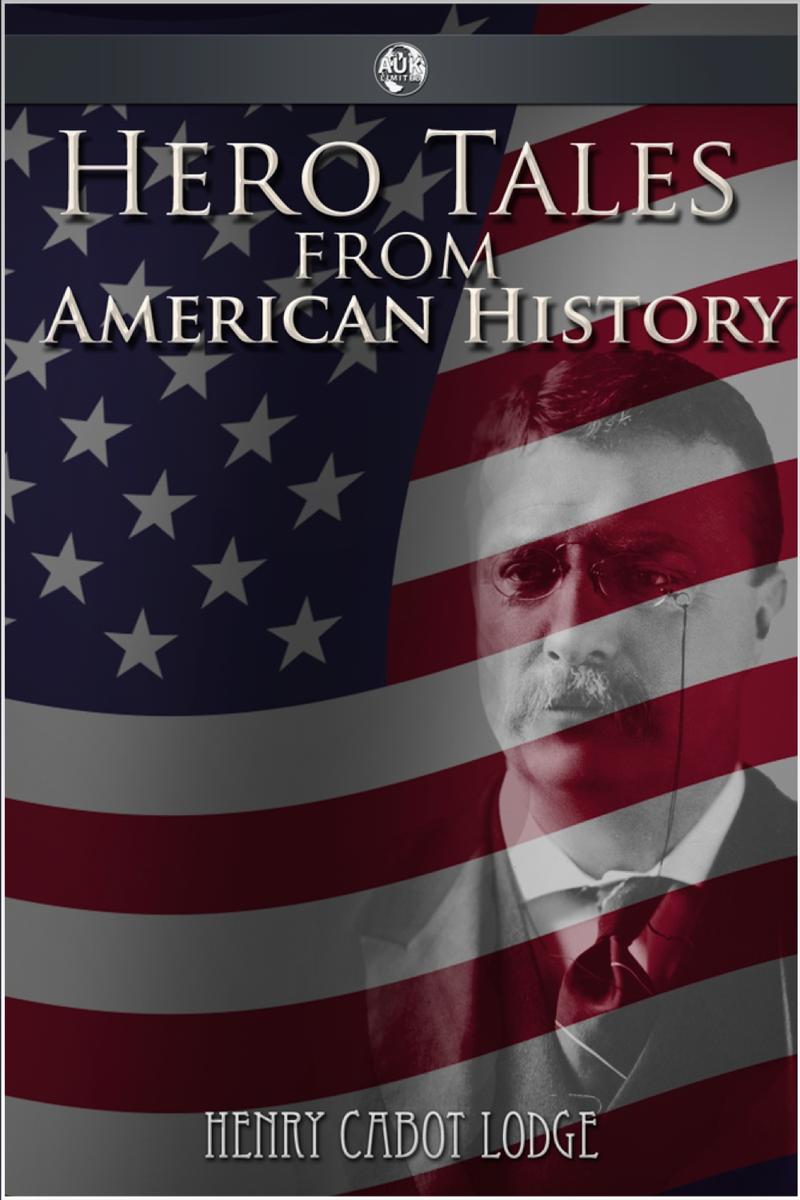
Hero Tales from American History
¥19.52
A fascinating look at some of the greatest heroes of American history, written by Theodore Roosevelt and his friend Henry Cabot Lodge, the eminent historian.Includes writings on: George Washington, Abraham Lincoln, General Grant, John Quincy Adams, and the battles of Gettysburg, New Orleans and the Alamo.

The Plague 鼠疫(英文版)
¥29.99
《鼠疫》以阿尔及利亚奥兰城突发鼠疫为背景,借医生里厄等市民的抗疫斗争,探讨灾难下人性的坚守、荒诞与存在的意义。
A Tale of Two Cities
¥7.93
A Tale of Two Cities

Imperfect Love
¥0.01
At 24 years old, Holly Scallanger has the perfect life. Everything a girl could want; a beautiful man, a stunning home, as well as being in the midst of preparing for the wedding of her dreams. This all vanishes the night she catches her fiancé, Brandon Morgan, in bed with her worst nightmare, Donna Sinclair, just a week before Holly is set to walk down the aisle. Attempting to recover from his betrayal, Holly swears off the affections of men in order to pick up the pieces of her crumbling life. Unfortunately, meeting Jake 'Hooligan' Peters is not part of her plan. The tall, dark-haired and handsome as hell med student, sweeps Holly away from the pain of her past and reveals to her the bright future that lies ahead. That is, until she falls pregnant just as Jake begins his internship at P&E; his family's hospital. Will this love at first sight lead her to the fairytale she has always craved? Or, will she fall victim to a betrayal of the heart yet again?
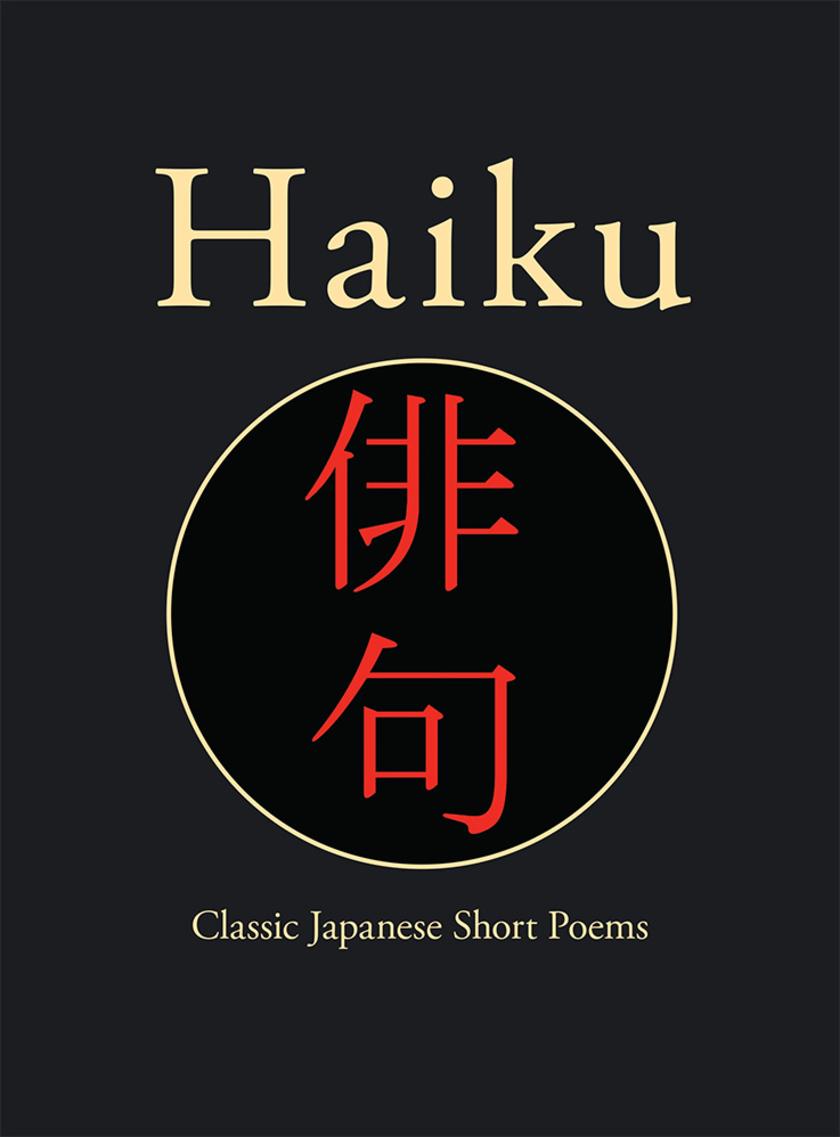
Haiku: Classic Japanese Short Poems
¥40.79
Haiku is an ancient form of Japanese poetry. Its structure has become popular in other languages and today it is probably the best know form of poetry worldwide. There are few rules to haiku, but they are strict: 17 phonetic sounds, a sense of cutting images or ideas, and a reference to a season. From those restrictions, poets have written about many things, from the year’s first blossom to aging, from mosquitoes humming to insects singing, from catching one’s shadow to crossing a stream in the summer. Haiku features 90 classic poems from four poets: Matsuo Bashō, Yosa Buson, Kobayashi Issa and Masaoka Shiki which range across more than 200 years of Japanese poetry. In Haiku , each poem is presented in Japanese script, along with romanized Japanese (romaji) and an English translation. Beautifully produced in traditional Chinese binding and with a timeless design, Haiku is an expert introduction and celebration of one of the most beautiful and accessible forms of poetry in the world.
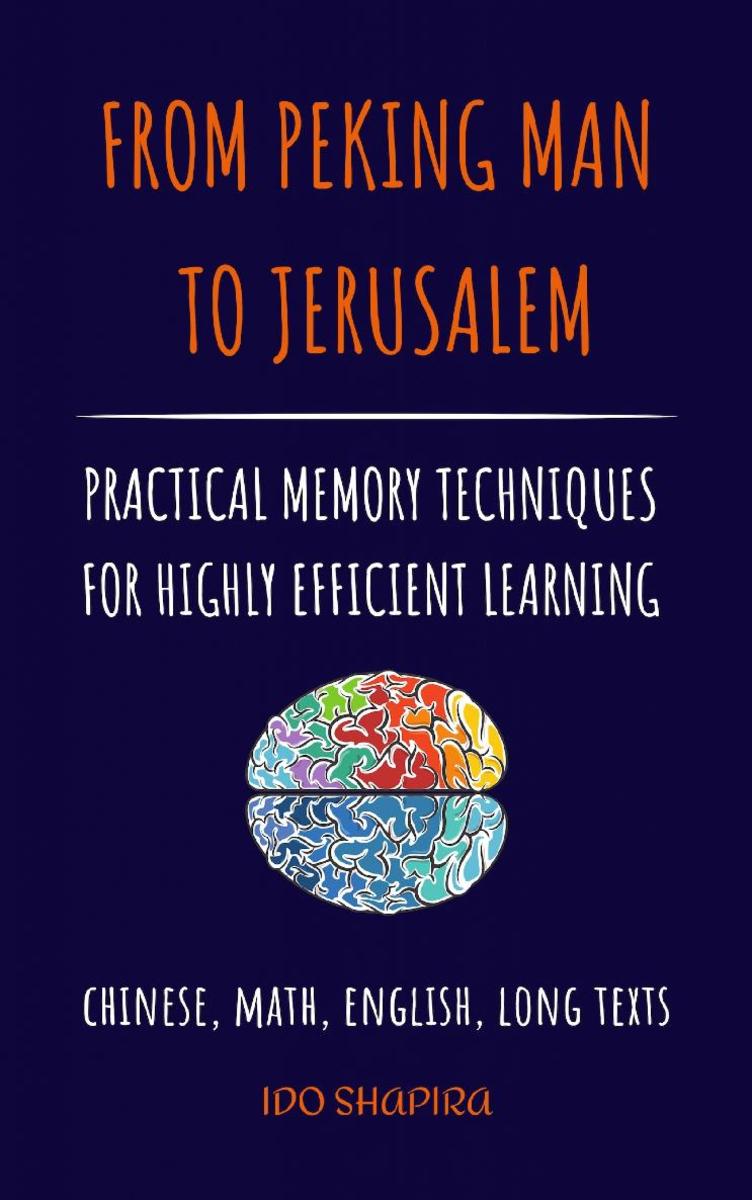
From Peking Man to Jerusalem
¥24.44
Discover the fascinating world of practical memory techniques that will teach you how to remember huge quantities of information in a very short time. The memory methods presented in this book are exactly the same methods that I taught my friends at Fudan University after I was asked how I could study just one night for an exam and still get high grades, remember hundreds of new words that we learned in Chinese in the exact order in which they appear in the textbooks and easily use complex mathematical formulas. After a short practice, they, too, managed to attain the same achievements that seemed impossible to them at first. The first thing I made clear to them was that my memory was completely average, that I had no particular talent for remembering information, and that the ability to easily remember large quantities of information was a matter of attitude rather than luck. Technique rather than talent. And if it’s a matter of technique, then anyone can learn it and use it. You will learn how Bill Gates memorized the license plate numbers of all of his employees; how Matteo Ricci, an Italian missionary in China, was able to recite from memory long Chinese poems after reading it once shortly after he arrived to China; how to learn English (or any other language) quickly; how to remember complicated math formulas and much more. In the process of reading the book you will encounter remarkable characters, ranging from Peking Man who roamed the plains of east Asia hundreds of thousands of years ago to Jewish teenagers who compete in the annual bible competition in Jerusalem. From an Italian missionary in China to an American man who lives in Thailand and reads a book every day. From a Greek philosopher to an improvisation actress in Beijing named Chakamisha. Beside acquiring exceptional memory abilities, the techniques presented in the book will also boost your creativity to new heights and open a door to a thinking approach most people never get to experience.

The Wind in the Willows
¥8.01
The Wind in the Willows

The MELT Method
¥110.71
Release stuck stress with MELT Over a decade ago, Sue Hitzmann was at the height of her career as an international fitness presenter and instructor. She appeared to be in perfect health, yet she was experiencing debilitating pain in her foot. With a master degree in exercise science and advanced training in neuromuscular therapy, she thought it would be easy to find out what was going on in her body, but even the most prominent doctors and physical therapists couldn't explain what was wrong. Although she was only in her twenties, Hitzmann career was threatened and her quality of life was in decline. Hitzmann learned the hard way that diet, exercise, and muscular strength are not the foundation of a healthy, pain-free body. As she sought the true source of her pain, she radically changed her focus from fitness to hands-on bodywork. In her quest to live an active, pain-free life, she became fascinated by the emerging science of connective tissue, or fascia, which surrounds all aspects of your body, including your muscles, bones, nerves, and organs. The researchers she met were discovering that connective tissue the system of the body that supports, protects, and stabilizes was responsive, adaptable, and renewable. What Hitzmann came to realize is that connective tissue dehydration is the underlying cause of the daily aches, stiffness, and strain that leads to pain, as well as weight gain, sleep problems, and many other seemingly unrelated issues. Through her personal exploration and private practice, she developed the MELT Method, and has since trained thousands of instructors in the science and application of Hands-Off Bodywork. MELT can help you fall asleep more easily and sleep more soundly, have more energy during the day, improve your posture, reduce stress and tension, shed excess body fat, and reduce cellulite. While it may seem too good to be true, it worked for more than 200,000 people so far. Translated into eight languages, The MELT Method is now helping people around the world. Live your best, most youthful and vibrant life possible. Free yourself of chronic pain and be healthy and active with MELT!

Emma
¥55.93
I never have been in love; it is not my way, or my nature; and I do not think I ever shall. Emma Woodhouse is certain of one thing: that she an excellent matchmaker . . . even though she never been in love. Emma dives into the game of finding an admirer for her newest project, Harriet Smith. But Emma quickly realizes she in over her head and that she might lose everything if she keeps playing. Beautifully presented for a modern teen audience, this is the must-have edition of Jane Austen timeless romantic satire.

Outlaw Platoon
¥95.11
In combat, men measure up. Or don't. There are no second chances. In this vivid account of the U.S. Army's legendary 10th Mountain Division's heroic stand in the mountains of Afghanistan, Captain Sean Parnell shares an action-packed and highly emotional true story of triumph, tragedy, and the extraordinary bonds forged in battle. At twenty-four years of age, U.S. Army Ranger Sean Parnell was named commander of a forty-man elite infantry platoon a unit that came to be known as the Outlaws and was tasked with rooting out Pakistan-based insurgents from a mountain valley along Afghanistan's eastern frontier. Parnell and his men assumed they would be facing a ragtag bunch of civilians, but in May 2006 what started out as a routine patrol through the lower mountains of the Hindu Kush became a brutal ambush. Barely surviving the attack, Parnell's men now realized that they faced the most professional and seasoned force of light infantry the U.S. Army had encountered since the end of World War II. What followed was sixteen months of close combat, over the course of which the platoon became Parnell's family: from Staff Sergeant Greg Greeson, the wise, chain-smoking veteran who never lost his cool; to Specialist Robert Pinholt, a buttoned-down conservative with the heart of a warrior and the mind of an economist; to Staff Sergeant Phil Baldwin, the platoon's voice of calm and reason, a man who sacrificed everything following the events of 9/11 career, home, financial stability to serve his country. But the cost of battle was high for these men: Over 80 percent were wounded in action, putting their casualty rate among the highest since Gettysburg, and not all of them made it home. A searing and unforgettable story of friendship in battle, Outlaw Platoon brings to life the intensity and raw emotion of those sixteen months, showing how the fight reshaped the lives of Parnell and his men and how the love and faith they found in one another ultimately kept them alive.

Seekers #6: Spirits in the Stars
¥39.13
On the unforgiving Arctic Ice . . . United once again, Toklo, Lusa, Kallik, and Ujurak continue across the ice. Conditions are harsh and especially treacherous for the black bear and grizzly bears who are not used to the brutal cold, never-ending snow, and limited food. But the bears are certain now that they're on the right course, and with the stars still guiding them, they push forward. When they reach land at last, the group is overjoyed, but something is not right. The bears who live here are ill. What's wrong with themWhat can the foursome do to helpIs aiding these strangers the ultimate goal of their questUjurak just might hold the key to their mission in his paws, yet it's Lusa the new bears are especially interested in. Three young cubs, each from different backgrounds, and their mysterious shape-shifting companion have grown up together in their long and dangerous journey to save the wild. Now, when their task appears more difficult than ever, the bears must make a critical decision . . . and for one bear the path ends here.


