


 购物车
购物车 个人中心
个人中心

God and Hillary Clinton
¥90.54
For nearly three decades political observers have sought to understand the complex relationship between Hillary Clinton's faith and her politics. Now, in this first spiritual biography of the former first lady, acclaimed historian Paul Kengor sets out to answer the elusive question: What does Hillary Clinton believeBased on exhaustive research, God and Hillary Clinton tells the surprising story of Hillary's spiritual evolution, detailing the interaction between her lifelong religious beliefs and her personal history that has made her the politician she is today. Offering an in-depth spiritual chronology of Clinton's life, author Paul Kengor also analyzes the fraught relationship between her faith and her secular policies most notably how she reconciles her pro-choice stance on abortion with her Christian beliefs and scrutinizes how these policies have changed over the course of her political career. What emerges is an unexpected portrait of a political figure whose ideals have been shaped by both the power of her politics and the depth of her religious devotion.
101 Poems to Get You Through the Day (and Night)
¥90.54
This is an anthology designed to help you get through the stresses of modern life. For rapid and effective relief around the clock, 24-7, without side effects, try a poem -- whatever the time of the day (or night), you can be sure that some poet, past or present, has been there too.To help you find the right poem at the right time, the organization of the book is like that of a book of hours. Starting with Getting Up, it then moves on to those other morning traumas: Stepping on the Scale and Looking into the Mirror.As the day moves on there are sections to cover everything, from Office Politics to Off to School. And if by five p.m. your head is throbbing, dig into the poems in the Take 5 section and let the world recede. By the end of the day you may want to look for inspiration among the poems in Going Home, but if you are intent on veering from the straight and narrow, then turn to the Behaving Badly poems and you'll find you're in good company. Anyone who feels vaguely guilty about settling down in front of the TV instead of taking café society by storm should turn to the poems in the Not Tonight section.
Introduction to Business
¥90.54
The Collins College Outline for Introduction to Business provides students with a detailed overview of the basic business studies curriculum. This guide covers business foundations, the global economy, company structure and formation, personnel and production management, labor-management relations, marketing concepts and logistics, statistical analysis, financial strategies, careers in business, and much more. Completely revised and updated by Dr. H. James Williams, Introduction to Business includes practical "test yourself" sections with answers and complete explanations at the end of each chapter. Also included are bibliographies for further reading, as well as charts, graphs, and illustrations.The Collins College Outlines are a completely revised, in-depth series of study guides for all areas of study, including the Humanities, Social Sciences, Mathematics, Science, Language, History, and Business. Featuring the most up-to-date information, each book is written by a seasoned professor in the field and focuses on a simplified and general overview of the subject for college students and, where appropriate, Advanced Placement students. Each Collins College Outline is fully integrated with the major curriculum for its subject and is a perfect supplement for any standard textbook.
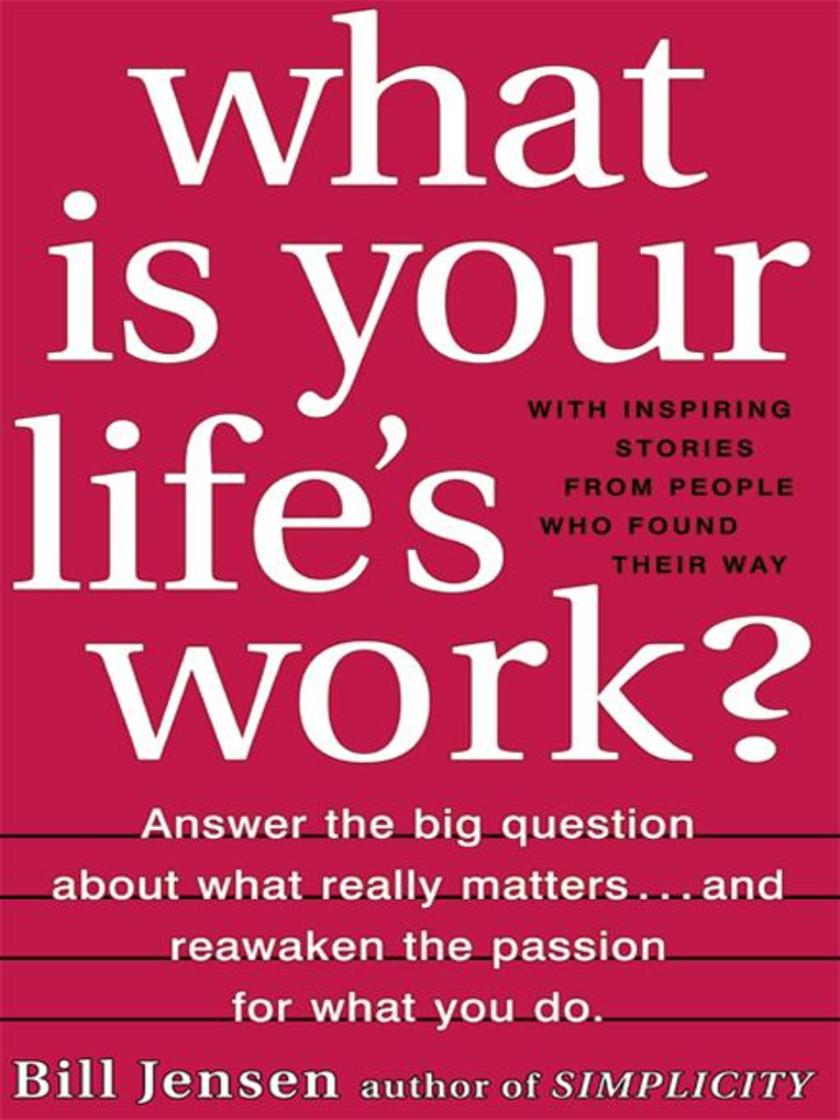
What is Your Life's Work?
¥128.85
What Is Your Life's Workcaptures a most extraordinary moment in each of our lives the time when we sit down with loved ones and attempt to answer the big question about what really matters. Bill Jensen has created a wonderfully practical space for you to explore who you are, what you stand for, what you believe in, what's risky, what's not, what's worth it, what you're struggling with, and what you've accomplished.He has captured the intimate exchanges between mothers and daughters, fathers and sons, and caring teammates all talking about what really matters at work, and in life. Their conversations are as real as yours would be: "Don't kiss tush, beware carnivorous sheep." "Honey, there are no shortcuts." "My daughter was limp with pain ... and I'm worried about deadlines. What was I thinking?!?!" "Speak up if you don't agree." "Be a respectful rebel." In What Is Your Life's Workyou will discover a new way to see and know who you are in today's more-better-faster world. Exposed is what usually stays private; the raw truths we've all experienced, the personal frailties and mistakes we'd like to hide, and the proudest achievements we'd like to celebrate.In the letters and work diaries of others, we see ourselves. In their struggles, we see our own.Bill Jensen has made it his life's work to battle corporate stupidity and help us all simplify our workdays, take more control, and rediscover our passions. As your trail guide and partner, he will take you through five distinct discoveries that thousands have encountered in finding their voices: Finding Yourself Finding the Lessons to Be Learned,the Questions to Be Asked Finding the Choices That Really Matter Finding the Courage to Choose Finding Joy, Serenity, and FulfillmentWhile it touches your heart and lifts your soul, What Is Your Life's Workdoes not shy away from difficult introspection. You are an active participant in this book. Yes, you will find value here stories of people like you, new ways of looking at what really matters, or simple confirmation that others have chosen the same path as you.But the ultimate takeaway asks something of you in return: Take something from this book and pay it forward. Start a new conversation with a loved one about what really matters about your own life's work.You will get back even more than you give. You will have brought these pages to life.

Alek
¥78.55
Since the day she was scouted by a modeling agent while shopping at a London street fair when she was just nineteen, Alek Wek's life has been nothing short of a fantasy. When she's not the featured model in print campaigns for hip companies, or gracing the cover of Elle, she is working the runways of Paris, New York, and Milan to model for the world's leading designers, including Karl Lagerfeld for Chanel. But nothing in her early years prepared her for the life of a model.Born in Wau, in the southern Sudan, Alek knew only a few years of peace with her family before they were caught up in a ruthless civil war that pitted outlaw militias, the Muslim-dominated government, and southern rebels against each other in a brutal conflict that killed nearly two million people. Here is her daring story of fleeing the war on foot and her escape to London, where her rise from young model to supermodel was all the more notable because of Alek's non-European looks. A probe into the Sudanese conflict and an inside look into the life of a most unique supermodel, Alek is a book that will inspire as well as inform.
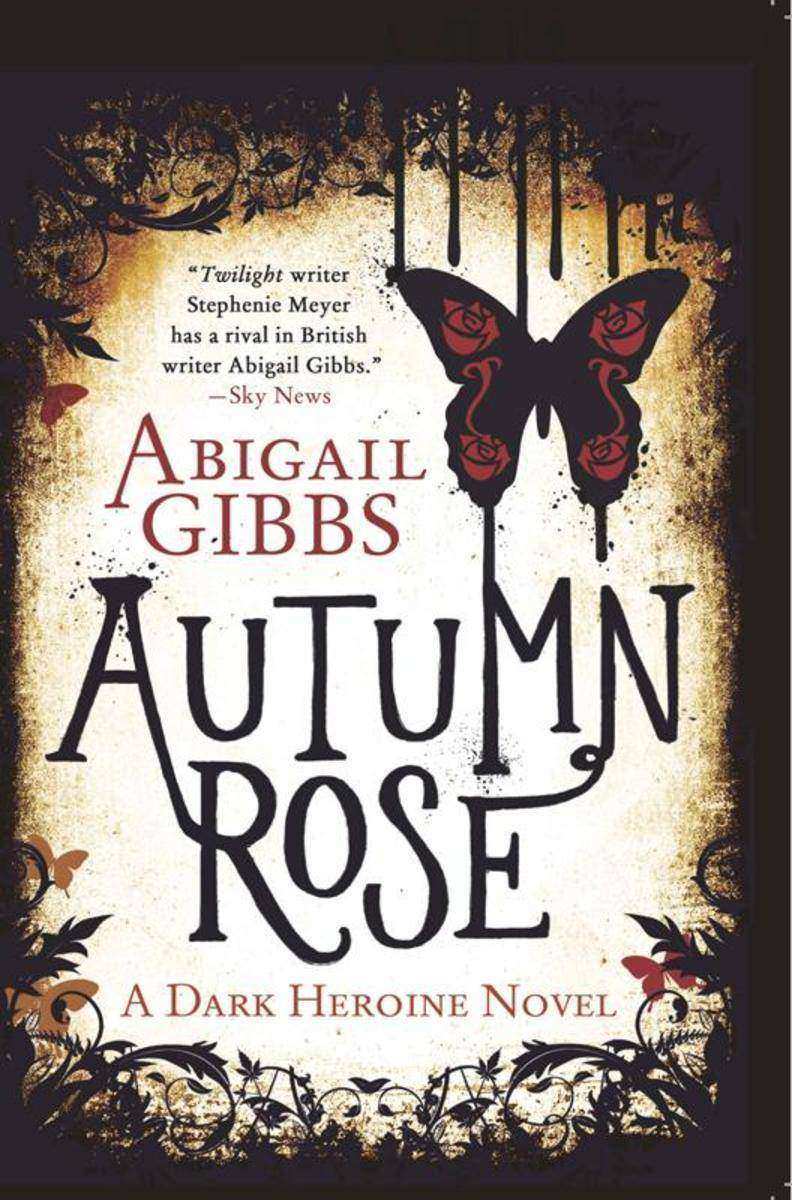
Autumn Rose
¥77.49
Autumn Rose has the chance to save the world she loves. But how much will she have to sacrificeAutumn Rose lives in a sleepy seaside town, but buried deep under the surface of her quiet life are dark secrets. Her grandmother is dead, murdered eighteen months ago, and the vibrant London social scene in which she was brought up is a world away. Even worse, at her new school she is shunned and condemned––all because of the swirling marks on her skin that prevent her from blending in with the crowd. Then the appearance at her school of a handsome young man—who has the same curious markings as Autumn—sends her world into turmoil. Suddenly the marks are deemed cool, and Autumn is thrust into the limelight. But her sudden popularity brings danger as her secrets threaten to come to light. And then there are her recurring dreams about a girl who is about to be seduced by a very dark prince . . . and Autumn must figure out how to save her before it is too late.
The Art of Mindfulness
¥54.46
This selection from Thich Nhat Hanh's bestselling The Art of Power illuminates the core Buddhist concept of mindfulness for the Western readerIn The Art of Mindfulness, one of the most revered Buddhist teachers in the world, Thich Nhat Hanh delivers a life changing practice to overcome our overdriven mind, to let go of preoccupations and multitasking and focus solely on the task at hand. By devoting 100% of our attention 100% of the time on what we are doing in the moment, we can alleviate suffering, fear, and anxiety. With the energy of mindfulness and the capacity of looking deeply, we can find the insights to transform and heal any situation.
Catastrophe
¥90.77
It's time to take back our country.Now. It's that simple. It's that urgent.So begins Dick Morris and Eileen McGann's latest and most important book. They say that we must act before President Barack Obama fully implements his radical political agenda. Because after Obama has won his war on prosperity and canceled the war on terror, it will be too late to regain our liberty or our security.At a time when we needed a pragmatic centrist to lead us out of recession, we got a doctrinaire socialist who wants to use the crisis to put the government in charge of the economy and enact European socialism here in the United States. Cars, banks what's nextHe will keep at it until Washington governs every major business in America and sets all our salaries.It's a catastrophe.Dick Morris and Eileen McGann saw the meltdown coming. In their book Outrage, they called out the house of cards that was Fannie Mae. In Fleeced, they went after the credit card companies, the subprime mortgage lenders, and the hedge fund billionaires who conspired to wreck the economy and Barack Obama, whose policies, they predicted last summer, would "trigger a stock market crash." Now, in Catastrophe, Morris and McGann take a hard look at America in free fall and at how Obama is transforming a vulnerable America into a socialist state.They tell the truth about Obama and his radical policies: He will destroy our health care system so that no one gets adequate care. He designed his bank rescue plan to pave the way for nation-alization of the banks and socialization of the economy. He firmly believes in government control of our major industries he's already commandeered the banks and the automobile industry. He plans to reshape the political landscape to keep the left in power for decades by cooking the census, enfranchising illegal immigrants, muzzling talk radio, and coercing workers into unions. He is attacking those who fight terrorism while letting the terrorists go free. He gives aid to Hamas while Shariah Law threatens to take over America. He has repealed the Declaration of Independence and put us under a worldwide, European-dominated financial regulatory system. But Obama is not working alone. Morris and McGann spell out how Congress is complicit: How Senator Chris Dodd and Congressman Charlie Rangel use special interests and special friends for their own enrichment and glorification. How Ted Kennedy Jr. is exploiting his father's health care power. "This is no time for apathy or alienation or hopelessness," Morris and McGann remind us. "It's a time for action." And that action must begin now before it's too late.
Neverisms
¥88.56
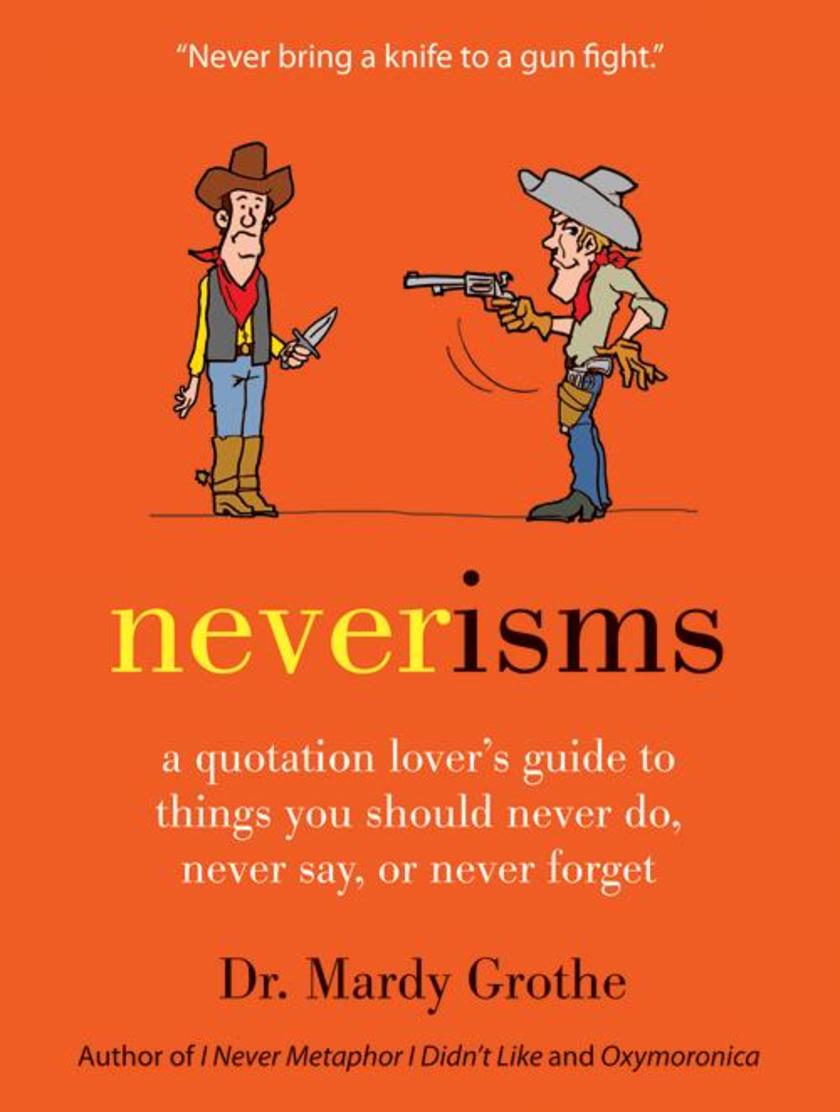
"Never let 'em see you sweat." "Never change diapers in mid-stream." "Never let a crisis go to waste." "Never ruin an apology with an excuse." "Never go to a doctor whose office plants have died." When we strongly encourage people to do something, it's called an exhortation. But what is the proper term for strongly discouraging peopleOne candidate is admonition. Another is dehortation, the opposite of exhortation. But perhaps the best term for an emphatic piece of dissuasive advice is neverism. You won't find the term in any dictionary (at least not yet) because quotation anthologist Dr. Mardy Grothe coined it himself for this collection of nearly two thousand quotable cautionary warnings. With the whimsical and witty intermixed with the serious and profound, contributors range from Aesop and Marcus Aurelius to John Wayne and Mae West. Grothe also tells the fascinating "back stories" of scores of classic quotations as well as the history of hundreds more that have never before appeared in a quotation anthology. Organized by topics such as Wit & Wordplay, Politics & Government, Sports, Stage & Screen, and The Literary Life, this is a book about quotations as well as a book of them. Neverisms is sure to delight quotation lovers and language aficionados everywhere.
Why Science Does Not Disprove God
¥94.10
The renowned science writer, mathematician, and bestselling author of Fermat's Last Theorem masterfully refutes the overreaching claims of the "New Atheists," providing millions of educated believers with a clear, engaging explanation of what science really says, how there's still much space for the Divine in the universe, and why faith in both God and empirical science are not mutually exclusive In recent years a highly publicized coterie of scientists and thinkers, including Richard Dawkins, the late Christopher Hitchens, and Lawrence Krauss, have vehemently contended that breakthroughs in modern science have disproven the existence of God, asserting we must accept that the creation of the universe came out of nothing, that religion is evil, that evolution fully explains the dazzling complexity of life, and more. However, in this much-needed book, veteran science journalist Amir Aczel profoundly disagrees and convincingly demonstrates that science has not, as yet, provided any definitive proof refuting the existence of God. Based on interviews with eleven Nobel Prize winners and many other prominent physicists, biologists, anthropologists, and psychologists, as well as leading theologians and spiritual leaders, Why Science Does Not Disprove God is a fascinating tour through the history of science and a brilliant and incisive analysis of the religious implications of our ever-increasing understanding of life and the universe. Throughout, Aczel reminds us that science, at its best, is about the dispassionate pursuit of truth not a weapon in cultural debates. Respectful of both science and faith and argued from the perspective of no single religious tradition Aczel's book is an essential corrective that should be read by all.
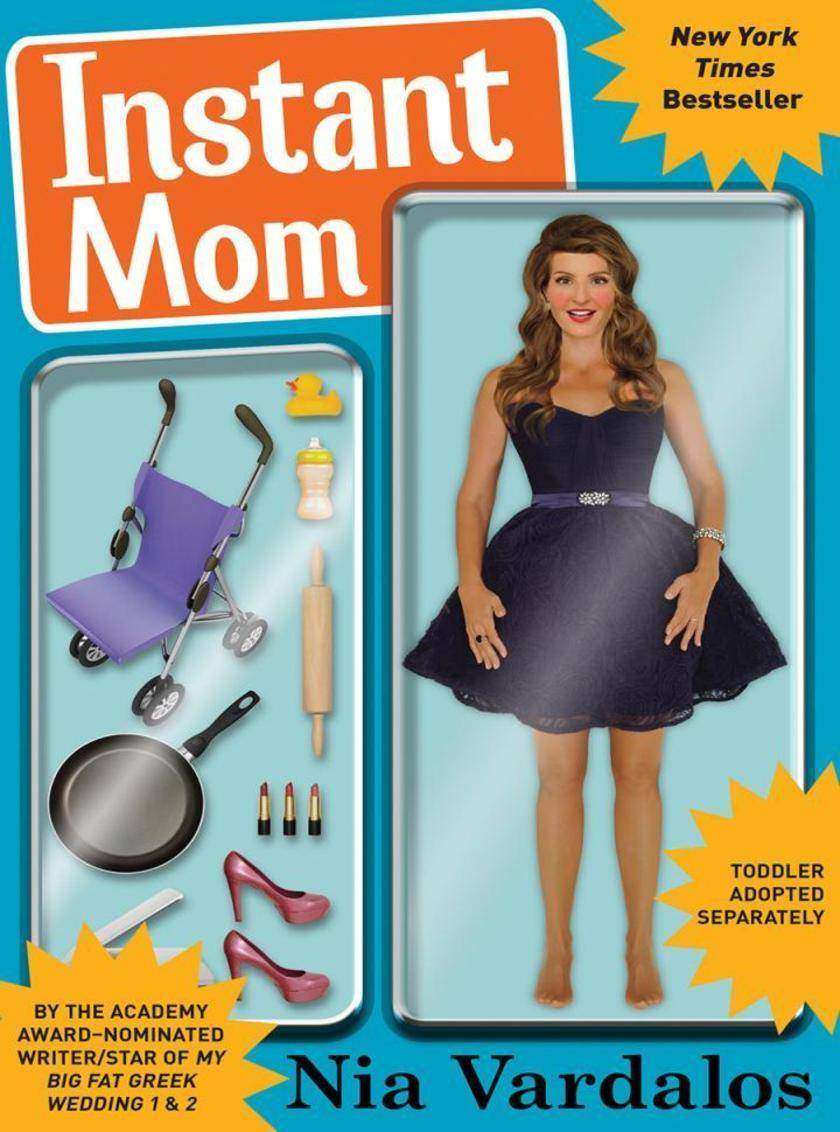
Instant Mom
¥88.56
For the first time, Nia Vardalos, writer and star of My Big Fat Greek Wedding, tells her hilarious and heartfelt bumpy-road-to-parenting story that eventually leads to her meeting an almost-three-year old girl who she knows instantly is her daughter.Vardalos chronicles it all with her signature wit and candor but also weaves in delicious behind-the-scenes Hollywood stories on the making of her films from working with Tom Hanks to meeting Oprah to having dinner with the Queen of England.In Instant Mom, Vardalos writes how moments after she finds out she has been nominated for an Academy Award, she is alone and en route to a fertility clinic, trying yet again for a chance at motherhood, wondering how long she can continue. When she finally adopts her daughter via American Foster Care, Vardalos reveals what really came next how, with only fourteen hours' notice, she and her husband transitioned their preschool aged daughter into their home. The Appendix includes information on how to adopt from all over the world. Vardalos will donate proceeds from the book sales to charities.In her memoir, Instant Mom, Vardalos reveals how she broke into the movie industry, became a working screenwriter and actress . . . and finally became a mom. Instantly.
The Little Big Things
¥94.10
#131 The Case of the Two-Cent CandyYears ago, I wrote about a retail store in the Palo Alto environs a good one, which had a box of two-cent candies at the checkout. I subsequently remember that "little" parting gesture of the two-cent candy as a symbol of all that is Excellent at that store. Dozens of people who have attended seminars of mine from retailers to bankers to plumbing-supply-house owners have come up to remind me, sometimes 15 or 20 years later, of "the two-cent candy story," and to tell me how it had a sizable impact on how they did business, metaphorically and in fact.Well, the Two-Cent Candy Phenomenon has struck again with oomph and in the most unlikely of places.For years Singapore's "brand" has more or less been Southeast Asia's "place that works." Its legendary operational efficiency in all it does has attracted businesses of all sorts to set up shop there. But as "the rest" in the geographic neighborhood closed the efficiency gap, and China continued to rise-race-soar, Singapore decided a couple of years ago to "rebrand" itself as not only a place that works but also as an exciting, "with it" city. (I was a participant in an early rebranding conference that also featured the likes of the late Anita Roddick, Deepak Chopra, and Infosys founder and superman N. R. Narayana Murthy.)Singapore's fabled operating efficiency starts, as indeed it should, at ports of entry the airport being a prime example. From immigration to baggage claim to transportation downtown, the services are unmatched anywhere in the world for speed and efficiency.Saga . . . Immigration services in Thailand, three days before a trip to Singapore, were a pain. ("Memorable.") And entering Russia some months ago was hardly a walk in the park, either. To be sure, and especially after 9/11, entry to the United States has not been a process you'd mistake for arriving at Disneyland, nor marked by an attitude that shouted "Welcome, honored guest."Singapore immigration services, on the other hand:The entry form was a marvel of simplicity. The lines were short, very short, with more than adequate staffing.The process was simple and unobtrusive.And:The immigration officer could have easily gotten work at Starbucks; she was all smiles and courtesy.And:Yes!Yes!And . . . yes!There was a little candy jar at each Immigration portal!The "candy jar message" in a dozen ways:"Welcome to Singapore, Tom!! We are absolutely beside ourselves with delight that you have decided to come here!"Wow!Wow!Wow!Ask yourself . . . now:What is my (personal, department, project, restaurant, law firm) "Two-Cent Candy"?Does every part of the process of working with us/me include two-cent candies?Do we, as a group, "think two-cent candies"?Operationalizing: Make "two-centing it" part and parcel of "the way we do business around here." Don't go light on the so-called substance but do remember that . . . perception is reality . . . and perception is shaped by two-cent candies as much as by that so-called hard substance.Start: Have your staff collect "two-cent candy stories" for the next two weeks in their routine "life" transactions. Share those stories. Translate into "our world." And implement.Repeat regularly.Forever.(Recession or no recession you can afford two cents.)(In fact, it is a particularly Brilliant Idea for a recession you doubtless don't maximize Two-Cent Opportunities. And what opportunities they are.)
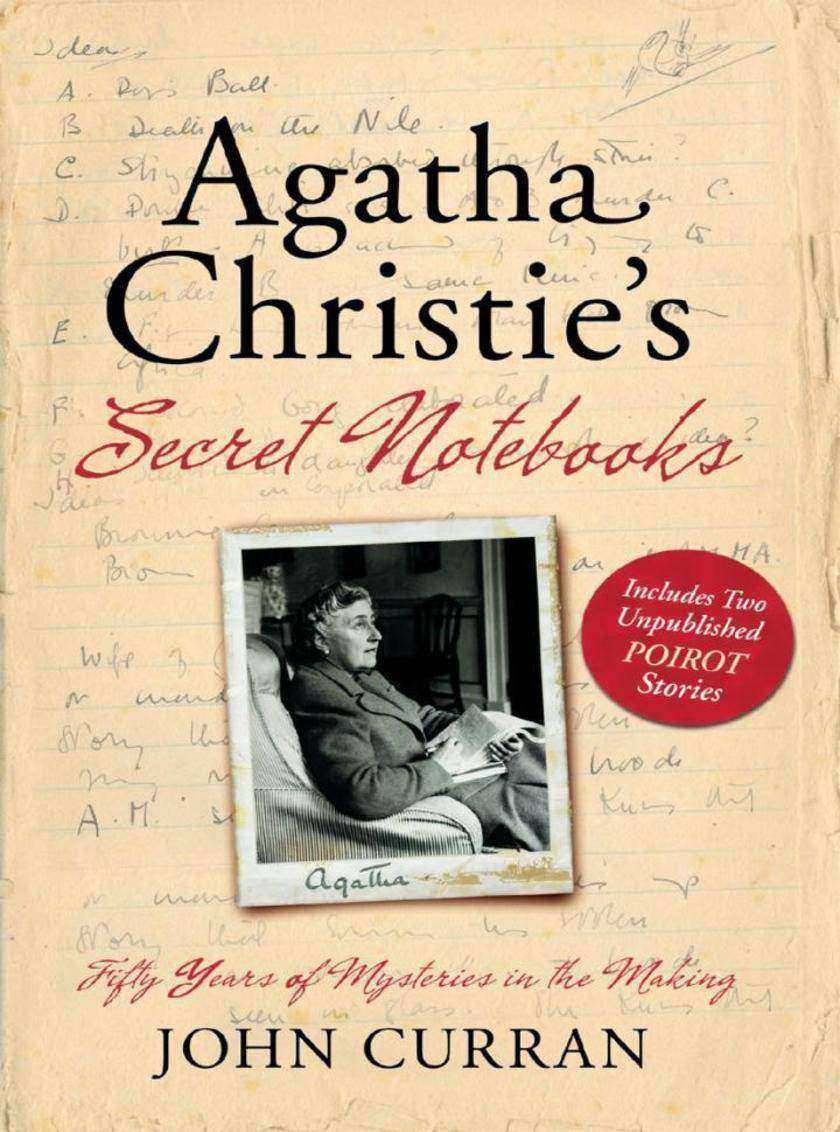
Agatha Christie's Secret Notebooks
¥94.10
A fascinating exploration of the contents of Agatha Christie's seventy-three private notebooks, including illustrations and two unpublished Poirot stories When Agatha Christie died in 1976, at age eighty-five, she had become the world's most popular author. With sales of more than two billion copies worldwide, in more than one hundred countries, she had achieved the impossible more than one book every year since the 1920s, every one a bestseller.So prolific was Agatha Christie's output sixty-six crime novels, twenty plays, six romance novels under a pseudonym and more than one hundred and fifty short stories it was often claimed that she had a photographic memory. Was this trueOr did she resort over those fifty-five years to more mundane methods of working out her ingenious crimesFollowing the death of Agatha's daughter, Rosalind, at the end of 2004, a remarkable legacy was revealed. Unearthed among her affairs at the family home of Greenway were Agatha Christie's private notebooks, seventy-three handwritten volumes of notes, lists and drafts outlining all her plans for her many books, plays and stories. Buried in this treasure trove, all in her unmistakable handwriting, are revelations about her famous books that will fascinate anyone who has ever read or watched an Agatha Christie story.How did the infamous twist in The Murder of Roger Ackroyd really come aboutWhich very famous Poirot novel started life as an adventure for Miss MarpleWhich books were designed to have completely differ-ent endings, and what were theyWhat were the plot ideas that she considered but rejected?Full of details she was too modest to reveal in her own autobiography, this remarkable new book includes a wealth of excerpts and pages reproduced directly from the notebooks and her letters, plus, for the first time, two newly discovered complete Hercule Poirot short stories never before published.
Crossing the Chasm
¥101.00
Here is the bestselling guide that created a new game plan for marketing in high-tech industries. Crossing the Chasm has become the bible for bringing cutting-edge products to progressively larger markets. This edition provides new insights into the realities of high-tech marketing, with special emphasis on the Internet. It's essential reading for anyone with a stake in the world's most exciting marketplace.
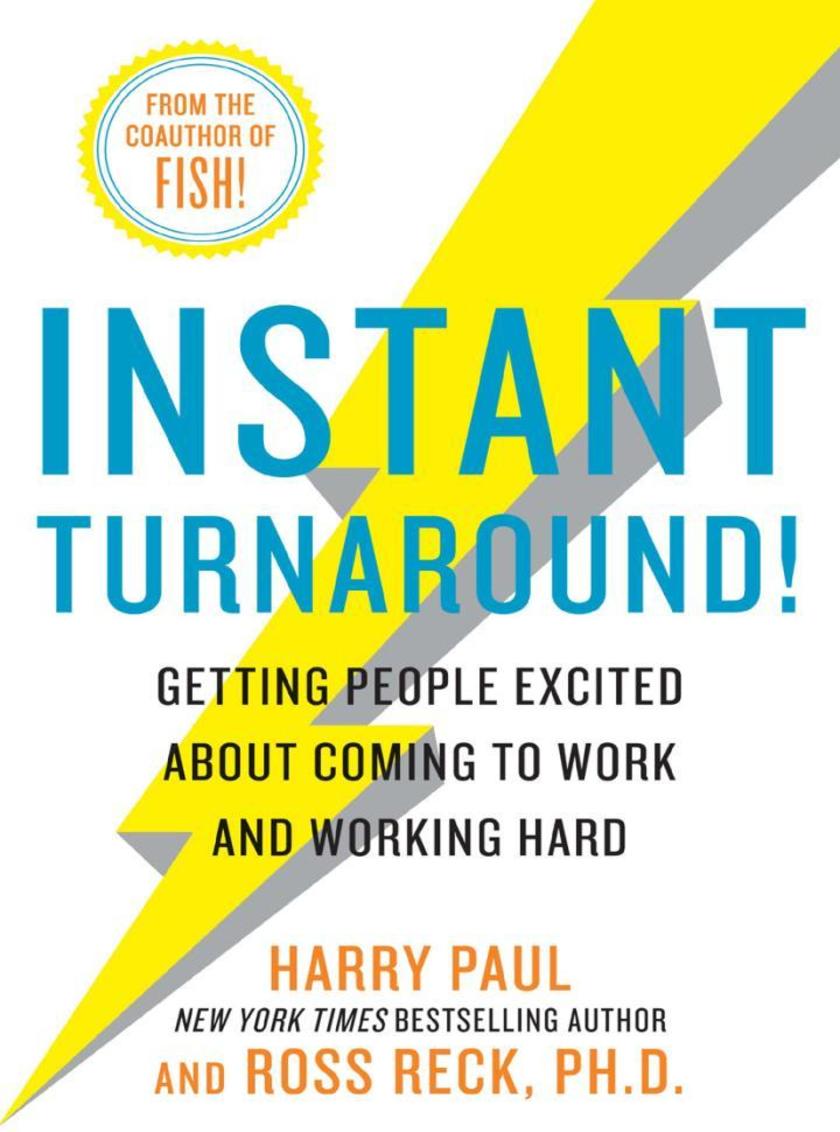
Instant Turnaround!
¥130.45
Transform Your Workplace!Imagine a company where people are excited about coming to work and giving their best efforts every day. In this innovative and engrossing business parable, Harry Paul and Ross Reck show managers at all levels how they can immediately and easily increase productivity by tapping into the discretionary effort of the people who work for them. Starting from the most basic aspect of business reality that people intentionally regulate the amount of effort they put into their jobs based upon how they feel they're being treated the authors point out that the most important part of the job of every manager, team leader, supervisor, and executive is to treat people in such a way that they become excited about applying all their discretionary effort toward performing their jobs.At the book's center is the story of Nancy Kim, a human resources director at a magazine that is struggling with all the problems associated with unhappy employees low productivity and morale along with high absenteeism and turnover. After she openly challenges the CEO's new management-by-the-numbers system, she's charged with turning the situation around immediately. Filled with real-world studies, Instant Turnaround! shows anyone how to turn the workplace into a destination a place where working hard feels like hardly working because it's engaging, enjoyable, and fulfilling.

My Drunk Kitchen
¥129.07
One day, sad cubicle dweller and otherwise bored New York transplant Hannah Hart decided, as a joke, to make a fake cooking show for her friend back in California. She turned on the camera, pulled out some bread and cheese, and then, as one does, started drinking. (Doesn't everyone cook with a spoon in one hand and a bottle of wine in the other?) The video went viral and an online sensation was born. My Drunk Kitchen includes recipes, stories, full color photos, and drawings to inspire your own culinary adventures in tipsy cooking. It is also a showcase for Hannah Hart's great comedic voice. Hannah offers key drink recommendations, cooking tips (like, remember to turn the oven off when you go to bed) and shares never-before-seen recipes such as: ?The Hartwich (Knowledge is ingenuity! Learn from the past!) ?Can Bake (Inventing things is hard! You don't have to start from scratch!) ?Latke Shotkas (Plan ahead to avoid a night of dread!) ?Tiny Sandwiches (Size doesn't matter! Aim to satisfy.) ?Saltine Nachos (It's not about resources! It's about being resourceful.) This is a book for anyone who believes they have what it takes to make a soufflé for the holiday party and show up the person who apparently has nothing better to do than bake things from scratch. It also recommends the drink you'll need to accompany any endeavor of this magnitude. In the end, My Drunk Kitchen may not be your go-to guide for your next dinner party . . . but it will make you laugh and drink . . . I mean think . . . about life.
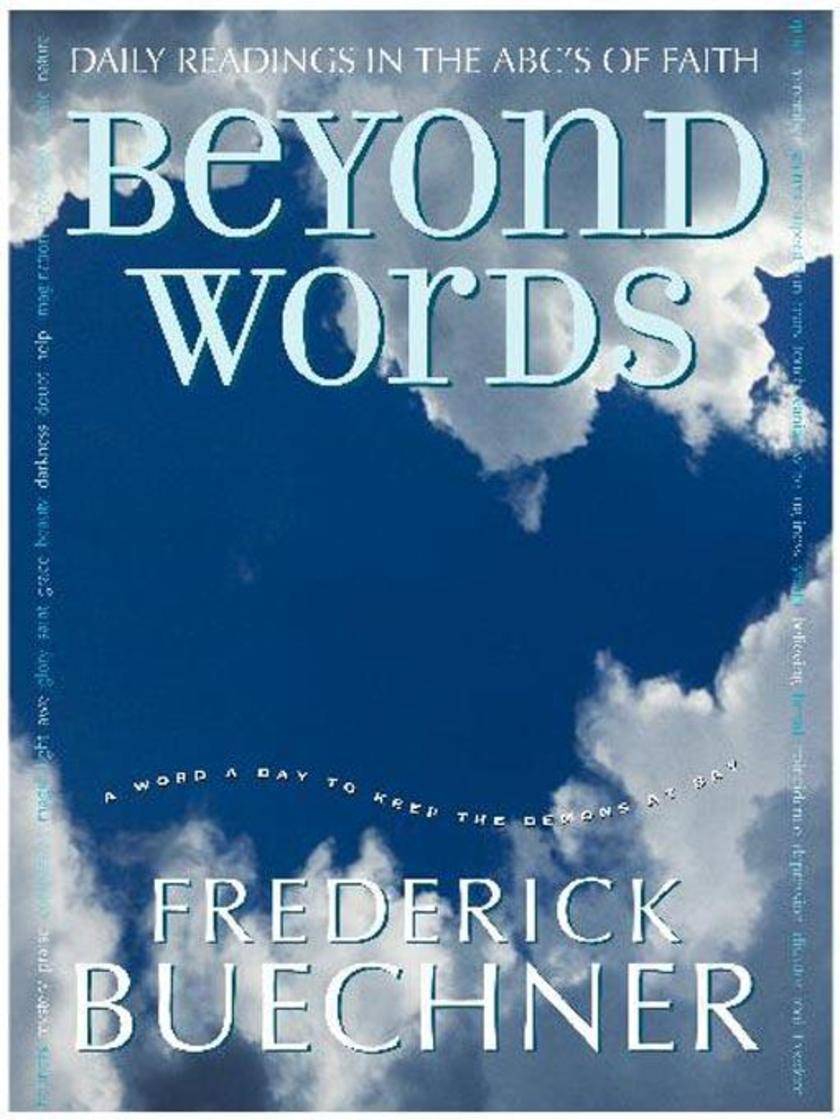
Beyond Words
¥139.90
Beyond Words n (1.) Terms or names that point to the realm of mystery and depth that lies beyond our ordinary experience. (2.) The reality that is beyond even the power of beyond words to convey, and that can be known only by experiencing it for yourself."A word a day to keep the demons at bay." This is how Frederick Buechner likes to describe this witty and incisive dictionary. A daily devotional from one of today's greatest spiritual writers, Beyond Words offers 366 entries from Buechner's three alphabet books, Wishful Thinking, Peculiar Treasures, and Whistling in the Dark, including a new Introduction and nineteen new entries.Providing definitions of both sacred and ordinary words, as well as biblical characters, Buechner unabashedly brings his fresh perspective to words, concepts, and characters we thought we understood. This is a great introduction to Buechner's work as well as a library staple for those already well versed in his writing. It is Buechner at his best. Whether readers find themselves tearful from a deeply moving insight or laughing out loud at an unexpected turn of phrase, they will always feel uplifted, illuminated, and enchanted by the wisdom of Frederick Buechner.
Balancing Heaven and Earth
¥138.41
One of this century's most popular psychology scholars, Robert A.Johnson was among the first to present Carl Jung's rich but complex theories with simple elegance and grace,opening them to an entirely new and hungry audience. His masterful works--including the best selling He, She, Inner Work, and Owning Your Own Shadow-are known and loved as much for their beautiful retellings of timeless myths and folktales as for their deep wisdom and profound insight. Balancing Heaven and Earth reveals, for the first time, Johnson's own fascinating and mystical life-from his near-death experience at the age of eleven to the lifelong soul journey that has informed his writing and taught him how to live a spiritual life in the endlessly challenging modern world. Full of compelling, humorous, and surprising stories of encounters with an assortment of "sages, saints, and sinners," it lays bare Johnson's own inner world and its dazzeling landscape of powerful dreams, mystical visions, and synchronistic events. Beginnning with a vivid retelling of the childhood accident that claimed the lower part of his right leg, Johnson describes the life-defining moment when he was transported by a mystical vision to a realm that exists just beyond ordinary consciousness-a realm he calls the "Golden World." With this experience, described as "both my curse and my blessing," Johnson is launched on a spiritual quest that leads him in search of Eastern wisdom, to encounters with such wise men as J. Krishnamurti and D.T. Suzuki, and finally to Carl Jung, who shows him his destiny revealed in a dream. Johnson's experiences lead him to a unique understanding and acceptance of the slender connecting threads at work in all our lives, guiding us and shaping who we are-"call it fate, destiny, or the hand of God." As much a personal guide as a memoir, Balancing Heaven and Earth teaches us to follow , as Johnson has, the subtle influences of dreams, visions, and even our deepest sufferings in order to live attuned to our spiritual selves. A pure delight for Johnson's many fans and a splendid example of his trademark blend of illustrative myth and psychological insight, this is a work of incomparable beauty and inspiration showcasing the wisdom of a lifetime.
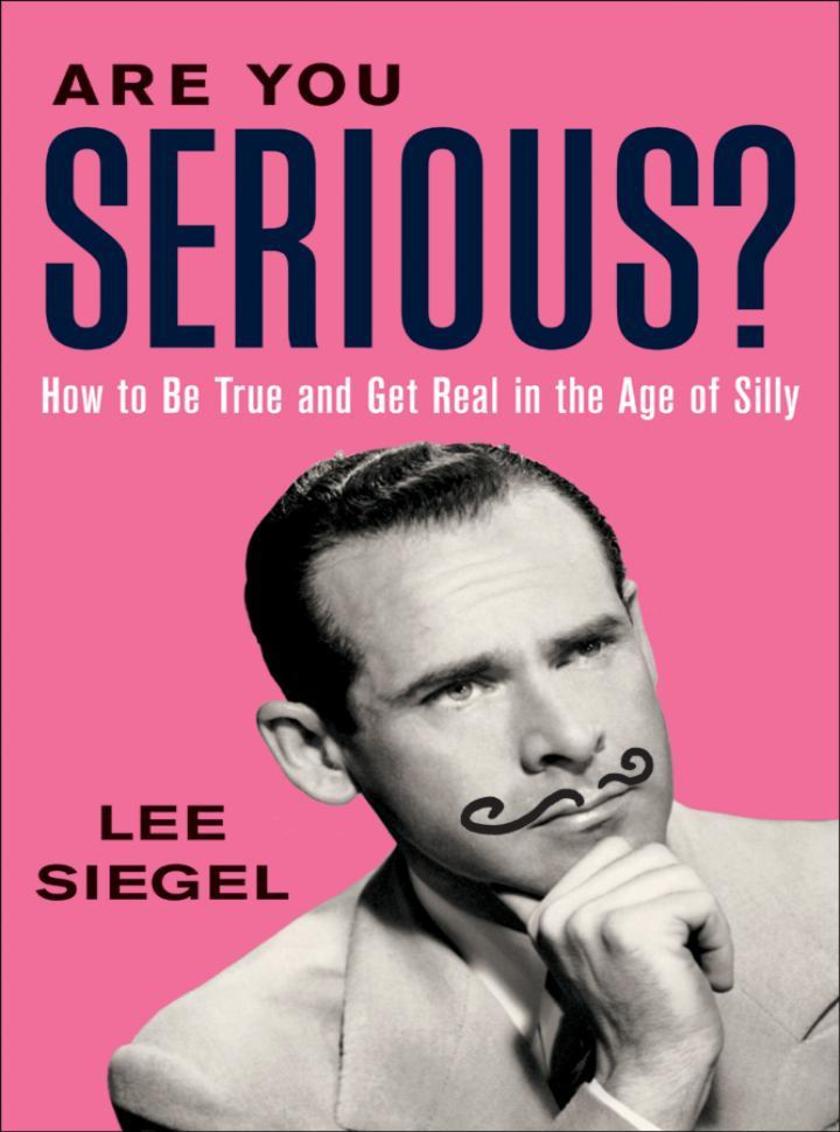
Are You Serious?
¥140.29
A provocative critique of modern frivolity and a guide to being serious in an unserious age We used to live in a world run by serious people: politicians and religious leaders, writers and artists, journalists and academics, lawyers and business executives, who approached their work with maturity and mindfulness. Today it seems as if most of these figures have all but disappeared, leaving our country and our culture in the hands of amateurs, buffoons, and professional clowns. Yet, according to Lee Siegel, seriousness has been elusive in every age, and every age has its own particular obstacles to living seriously. In a unique combination of fiction, memoir, history, social criticism, satire, and spiritual reflection, Siegel illuminates our contemporary distractions of profit, popularity, and instant pleasure as we search for ways to be serious in culture, in politics, and in everyday life.Are You Seriousis a thoughtful and enlightening exploration of seriousness in all its incarnations, from the heights of intellectual endeavor to the depths of political conflict to how the word itself is used in ordinary situations, from romance to business. Siegel lays bare the forces in modern life that create the silliness all around us, and he describes how seriousness may be attained through the qualities of attention, purpose, and continuity, in satisfying lives forged in bonds of work and love.
Paper
¥90.51
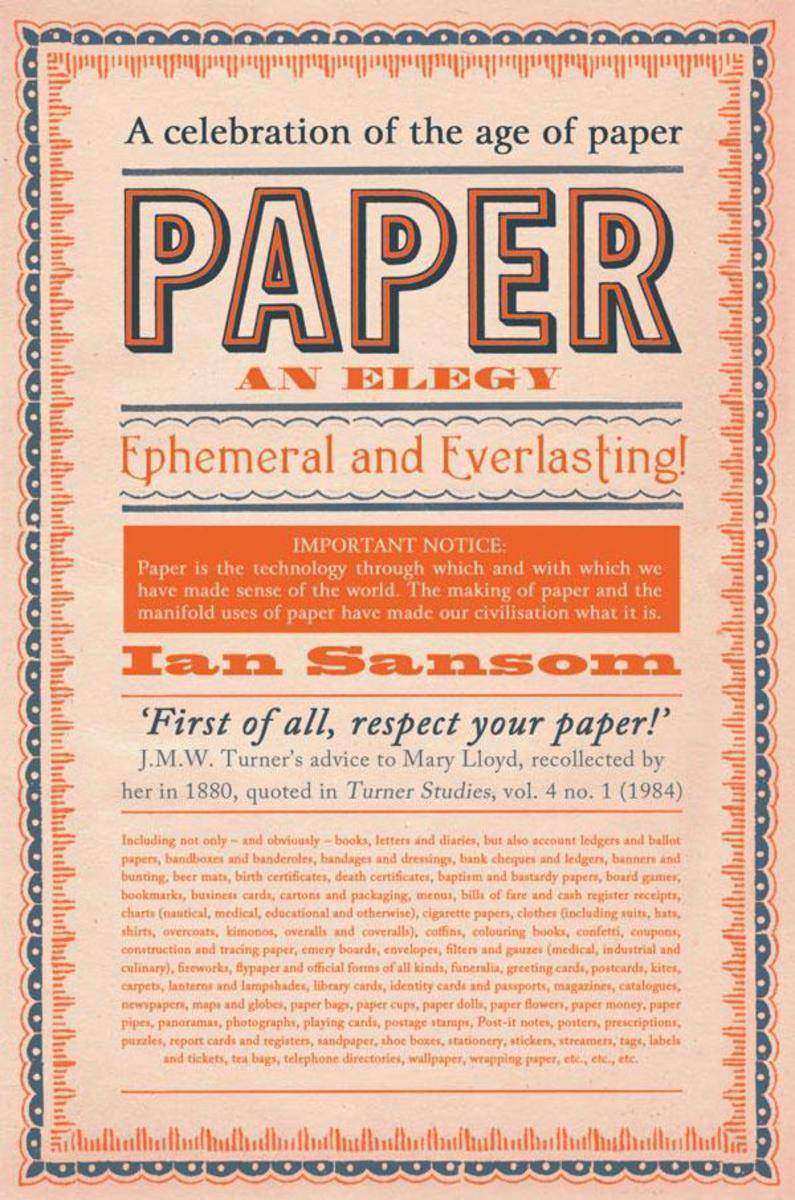
Let us suppose for a moment that paper were to disappear.Would anything be lost?Everything would be lost.aper surrounds us. Not only as books, letters and diaries, but as beer mats and birth certificates, board games and business cards, fireworks and flypaper, photographs and playing cards, tickets and tea bags. We are paper people.But the age of paper is coming to an end. E-books regularly outsell physical books. E-tickets replace the paper variety. Archives are digitized. The world we know was made from paper, and yet everywhere we look, paper is beginning to disappear. As we enter a world beyond paper, Ian Sansom explores the paradoxes of the greatest of man-made materials and shows how some kinds of paper, and the ghosts and shadows of paper, will always be with us.Paper: An Elegy is a history of paper in all its forms and functions. Both a cultural study and a series of personal reflections on the meaning of paper, this book is a timely meditation on the very paper it is printed on.
Miss Jessie's
¥88.56
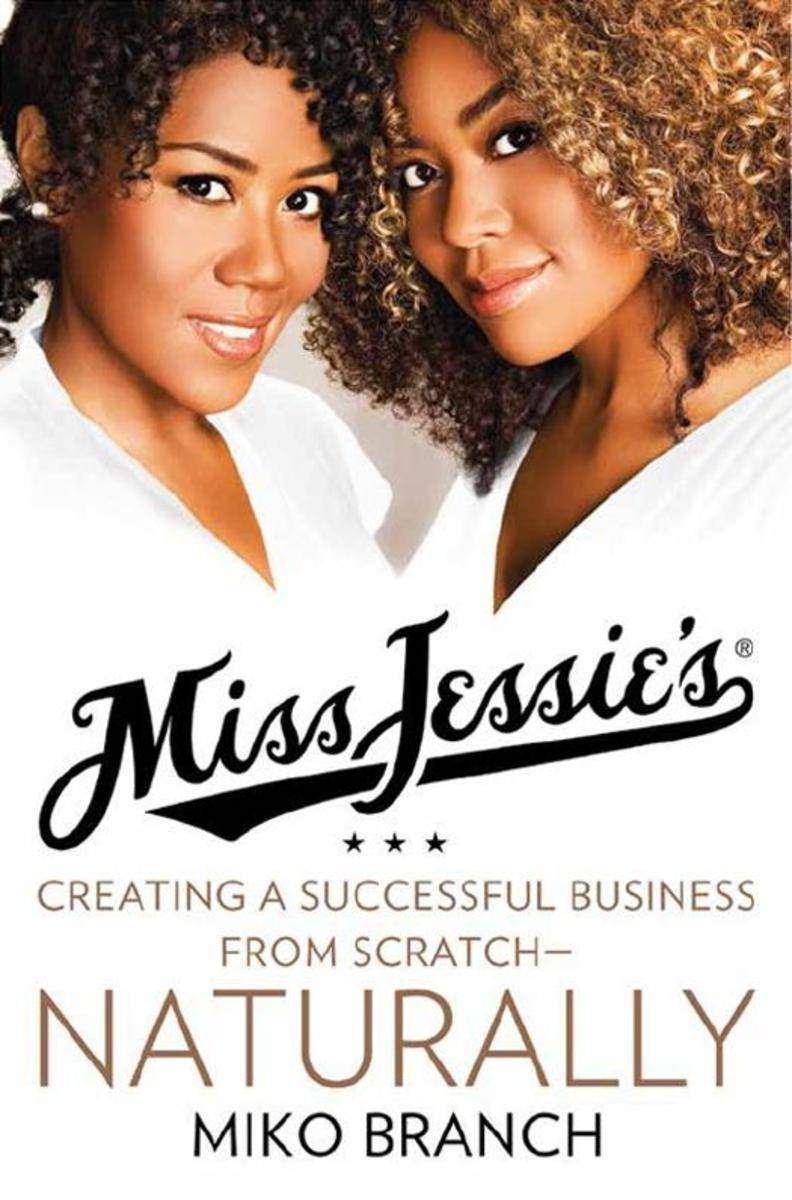
Miss Jessie's is a memoir and business guide rich with inspirational life lessons and unique business advice from Miko Branch, the Chief Executive Officer of the dynamic Miss Jessie's the company that revolutionized the hair-care industry.When Miko and her sister, Titi, were children, their grandmother Miss Jessie taught them independence and showed them the value of being "do it yourself" women, all while whipping up homemade hair concoctions at her kitchen table. As a co-founder of Miss Jessie's, Miko reveals how she and Titi applied their grandmother's lessons to create a successful business from scratch. Miss Jessie's chronicles the Branch sisters' remarkable story. When they were children, their stern father encouraged them to become self-reliant and not to depend on their looks to get ahead. Taking this message to heart, they blossomed into business owners and leaders in their field, using ingenuity and without borrowing a dime. They soaked up the entrepreneurial and creative culture of the early hip-hop era on the streets of Brooklyn in the late 1990s, and in the high-end salons of Manhattan. They blended these inspirations to establish a business that has gone from their kitchen table to the shelves of major retailers around the globe, revolutionizing the hair-care industry. A charming and enlightening look at the women behind the brand, Miss Jessie's is chock-full of entertaining stories and invaluable instruction that can be applied to any business: an authentic expression that the American Dream is possible.


