


 购物车
 个人中心

The Absentee
¥40.79
Lord Colambre finds that his mother Lady Clonbrony's attempts to buy her way into the high society of London are only ridiculed, while his father, Lord Clonbrony, is in serious debt as a result of his wife's lifestyle. His mother wishes him to marry an heiress, Miss Broadhurst, who is a friend of Grace Nugent. However, Colambre has already fallen in love with his cousin, Grace Nugent, who lives with the family as a companion to Lady Clonbrony. Worried that his mother will pressure him into a marriage with someone he does not love, Colambre decides to leave the London social scene and visit his ancestral home in County Wicklow in Ireland.

Where There is Love, There is God Also
¥40.79
In the town there was a shoemaker by the name of Martin, who lived in a basement with a tiny little window looking out into the street. Martin could see the people pass, and though he only got a glimpse of their feet, he still knew every one, for Martin could recognize people by their boots. Martin had lived in that basement for many a long year and had numbers of acquaintances.
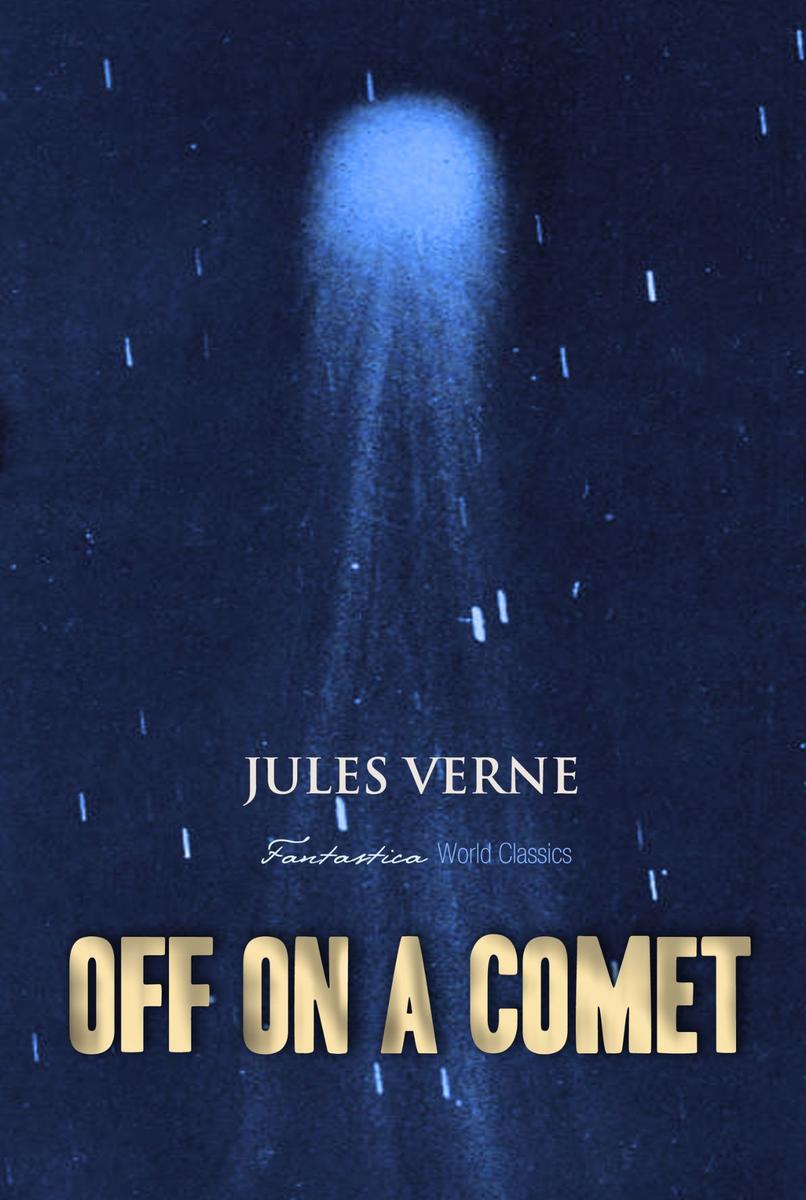
Off on a Comet
¥40.79
A comet called Gallia touches the Earth in its flight and collects a few small chunks of it. On the territory that was carried away by the comet there remained a total of thirty-six people of French, English, Spanish and Russian nationality. These people did not realize at first what had happened, and considered the collision an earthquake.

New Grub Street
¥40.79
Milvain, one of the two central characters of the novel is a modern young man driven by pure financial ambition in navigating his literary career. He accepts that he will always despise the people he writes for, networks within the appropriate social circle to create opportunity, and authors articles for popular periodicals. Reardon prefers to write novels of a more literary bent and refuses to pander to contemporary tastes until, as a last-gasp measure against financial ruin, he attempts a popular novel.
Delphi Complete Works of Juvenal (Illustrated)
¥16.27
Juvenal’s ‘Satires’ are a vital source for the study of Latin literature, offering a lurid, comic and fascinating window into the world of ancient Rome. Delphi’s Ancient Classics series provides eReaders with the wisdom of the Classical world, with both English translations and the original Latin and Greek texts. This comprehensive eBook presents Juvenal’s complete extant works, with beautiful illustrations, rare texts and the usual Delphi bonus material. (Version 1) * Beautifully illustrated with images relating to Juvenal's life and works * Features the complete works of Juvenal, in both English translation and the original Latin * Concise introduction to the ‘Satires’ * Includes Ramsay’s translations, which previously appeared in Loeb Classical Library editions of Juvenal’s works * Excellent formatting of the texts * Easily locate the Satires you want to read with individual contents tables * Includes line numbers in both the English and Latin texts – ideal for students * Provides a special dual English and Latin text, allowing readers to compare each Satire paragraph by paragraph – ideal for students * Features a bonus biography – discover Juvenal's ancient world * Scholarly ordering of texts into chronological order and literary genres Please visit www.delphiclassics.com to browse through our range of exciting titles CONTENTS: The Translations THE SATIRES The Latin Text CONTENTS OF THE LATIN TEXT The Dual Text DUAL LATIN AND ENGLISH TEXT The Biography THE LIFE OF JUVENAL by G. G. Ramsay Please visit www.delphiclassics.com to browse through our range of exciting titles
The Last Man by Mary Shelley - Delphi Classics (Illustrated)
¥8.09
This eBook features the unabridged text of ‘The Last Man by Mary Shelley - Delphi Classics (Illustrated)’ from the bestselling edition of ‘The Complete Works of Mary Shelley’. Having established their name as the leading publisher of classic literature and art, Delphi Classics produce publications that are individually crafted with superior formatting, while introducing many rare texts for the first time in digital print. The Delphi Classics edition of Shelley includes original annotations and illustrations relating to the life and works of the author, as well as individual tables of contents, allowing you to navigate eBooks quickly and easily. eBook features: * The complete unabridged text of ‘The Last Man by Mary Shelley - Delphi Classics (Illustrated)’ * Beautifully illustrated with images related to Shelley’s works * Individual contents table, allowing easy navigation around the eBook * Excellent formatting of the text Please visit www.delphiclassics.com to learn more about our wide range of titles
Plato Complete Works – World’s Best Collection: 100+ Works
¥8.09
Plato Complete Works – World’s Best Collection This is the world’s best Plato collection, including the most complete set of Plato’s works available plus many free bonus materials. Plato Plato was a philosopher in Ancient Greece, a student of Socrates, writer of philosophical dialogues, and founder of the Academy in Athens, the first institution of higher learning in the Western world. Plato, with his teacher Socrates, and student, Aristotle, Plato helped to lay the foundations of Western philosophy and science The ‘Must-Have’ Complete Collection In this irresistible collection you get all of Plato’s work, including all his dialogues and other writings, with several comprehensive set of notes, interpretations and annotations of Plato’s writings . Plus Bonus Material. Works Included: Each Dialogue contains both the dialogue and an in depth introduction and analysis, including all Plato's works, such as: Republic Symposium Timaeus Meno Phaedo Gorgias Sophist Statesman Philebus Laws Your Free Special Bonuses Introduction To The Philosophy And Writings Of Plato -?Explanations Of Certain Platonic Terms Plato And Platonism – A biography of Plato’s life, and a commentary on Plato’s works. Essentials of Plato's Philosophy - Written specially for this collection. Get This Collection Right Now This is the best Plato collection you can get, so get it now and start enjoying and being inspired by his world like never before.

Walden and Civil Disobedience
¥40.79
Walden follows Thoreau's experiences over the course of two years, two months, and two days in a cabin he built near Walden Pond, amidst woodland owned by his friend and mentor Ralph Waldo Emerson. In Civil Disobedience Thoreau argues that individuals should not permit governments to overrule or atrophy their consciences, and that they have a duty to avoid allowing such acquiescence to enable the government to make them the agents of injustice.

Excursions
¥40.79
An anthology of several essays by American transcendentalist Henry David Thoreau. The book includes an introduction entitled 'Biographical Sketch' in which fellow transcendentalist Ralph Waldo Emerson provides a description of Thoreau and nine of nine of Thoreau's essays: Natural History of Massachusetts, A Walk to Wachusett, The Landlord, A Winter Walk, The Succession of Forest Trees, Walking, Autumnal Tints, Wild Apples, and Night and Moonlight.

Areopagitica
¥40.79
Areopagitica is among history's most influential and impassioned philosophical defences of the principle of a right to freedom of speech and expression. Today, Areopagitica is regarded as one of the most eloquent defences of press freedom ever written – and as one of the most influential, because many of its expressed principles have formed the basis for modern justifications.
Meteorology
¥40.79
We have already discussed the first causes of nature, and all natural motion, also the stars ordered in the motion of the heavens, and the physical element-enumerating and specifying them and showing how they change into one another-and becoming and perishing in general. There remains for consideration a part of this inquiry which all our predecessors called meteorology. It is concerned with events that are natural, though their order is less perfect than that of the first of the elements of bodies. They take place in the region nearest to the motion of the stars. Such are the milky way, and comets, and the movements of meteors.
On the Motion of Animals
¥40.79
Elsewhere we have investigated in detail the movement of animals after their various kinds, the differences between them, and the reasons for their particular characters (for some animals fly, some swim, some walk, others move in various other ways); there remains an investigation of the common ground of any sort of animal movement whatsoever.
There is No Thinker Only Thought
¥73.49
In these talks given in New Delhi, Bombay, London, Saanen, Paris and Madras, Krishnamurti begins by defining what he means by the word discussion and what it means to go beyond thought. "I think, before we begin, it should be made clear what we mean by discussion. To me it is a process of discovery through exposing oneself to the fact. That is, in discussing I discover myself, the habit of my thought, the way I proceed to think, my reactions, the way I reason, not only intellectually but inwardly. It is really exposing oneself not merely verbally but actually so that the discussion becomes a thing worth while - to discover for ourselves how we think. Because, I feel if we could be serious enough for an hour or a little more and really fathom and delve into ourselves as much as we can, we shall be able to release, not through any action of will, a certain sense of energy which is all the time awake, which is beyond thought."
Choiceless Awareness
¥73.49
In these talks in India , Krishnamurti begins by stating his intention to begin answering questions put forth to him by others. He points out that if an answer is to be right, the question itself must also be. "...a serious question put by a serious person, by an earnest person who is seeking out the solution of a very difficult problem, then, obviously, there will be an answer befitting that question."? An extensive compendium of Krishnamurti's talks and discussions in the USA, Europe, India, New Zealand, and South Africa from 1933 to 1967—the Collected Works have been carefully authenticated against existing transcripts and tapes. Each volume includes a frontispiece photograph of Krishnamurti , with question and subject indexes at the end. The content of each volume is not limited to the subject of the title, but rather offers a unique view of Krishnamurti's extraordinary teachings in selected years. The Collected Works offers the reader the opportunity to explore the early writings and dialogues in their most complete and authentic form.
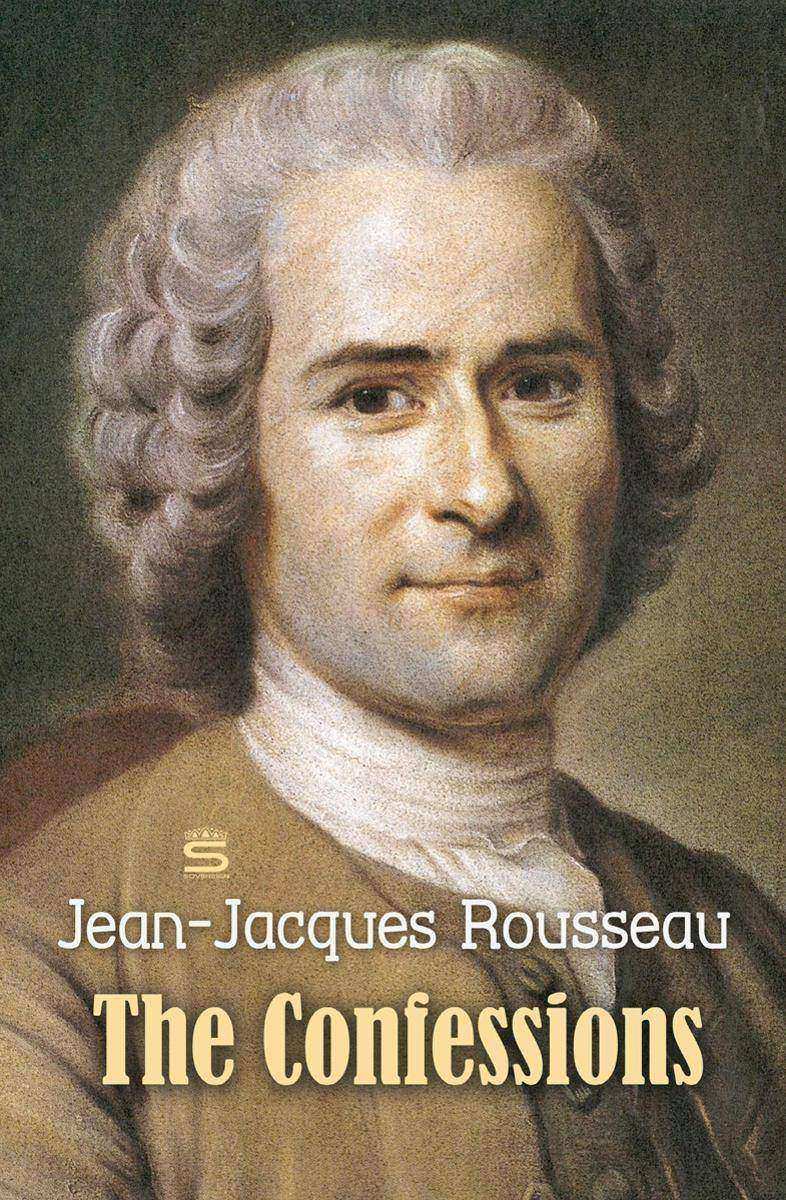
The Confessions
¥40.79
The Confessions is an autobiographical work of Jean-Jacques Rousseau which initiated modern autobiography. Covering the first fifty-three years of Rousseau's life the book provides an account of the experiences that shaped his personality and ideas.
Demonii m?run?i
¥65.32
Avem o carte preponderent de sondare a mentalit??ii ruse, care este rezultatul unei radiografieri a societ??ii pe mai multe pali?ere, dintre care se deta?eaz? cel istoric ?i cel religios. (…) Rusia bolnav? este scris? ?n primii ani dup? evenimentele revolu?ionare din 1905?l907, ?n cursul c?rora autorul a avut o participare activ?, mai ales ?n ce prive?te punerea acestei revolu?ii sub semnul lui Hris?tos. Este o carte important? tocmai pentru c? oglinde?te deziluziile unei naturi pasiona?le, care, ?n centrul istoriei ?i al religiei, pune mereu fapta. Fire?te acum, dup? Arhipelagul lui Soljeni??n, pamfletele lui Merejkovski par simple exerci?ii de stil, ?nelibertatea” deza?vuat? ?n ele, Rusia ?arist? ca ??nchisoare a popoarelor” ap?r?nd chiar foarte apropiat? de ceea ce s?ar putea numi ?stat de drept”. ?n privin?a ?demasc?rii” ororilor contemporane?it??ii, putem spune c? – a?a cum au dovedit?o deceniile bol?evice – ?ntotdeauna este loc de mai r?u. (Emil Iordache)

Zorii din Alexanderplatz
¥40.79
innd seama de multiplele referiri la istorie, ct i de importana i relevana perspectivei temporal-istorice pentru orice alt tem, ajungem firesc la cardinalitatea istoriei n discursul lui Emil Cioran. n noianul tuturor temelor sale obsesive, istoria este o mega-tem, aflat n puternice raporturi cu celelalte. Aderena i entuziasmul pentru studiul problemelor de filosofia istoriei le gsim mrturisite nc de la nceputul traseului, n cteva scrisori ctre Bucur incu din anii ‘30. n acele scrisori vorbete de pasiune, de gndire spontan i personal, de adaptare natural asupra domeniului, i se arat ncredinat c, alturi de problemele de filosofia culturii i antropologiei filosofice, problemele de filosofia istoriei nu pot concepe c lea prsi vreodat. Dintre multiplele justificri ulterioare – opuse ca atitudine fa de cele din perioada iniial, dar care marcheaz aceeai aderen –, s punem dou n corelaie, scrise n ani apropiai, n care preocuparea pentru istorie este descris prin stri de dependen: slbiciune, sete, patim.“ – Ioan Costea

Analiza conflictelor internationale
¥50.30
Istoriile excentricit??ii din Logica elefan?ilor adopt? tonul comentariului pe dou? voci, simul?nd (?i stimul?nd) un canon care dubleaz?, prin reluare, recuperarea detaliului ca fiind princip(i)al. Fiziologiile devin ilustre, consecven?a ??i expune abera?ia, apetitul pentru trecut este inevitabil patologic, iar neao?ismele curente rezoneaz?, fire?te, cu globalizarea. ?ntr-o logic? elefantin?, inteligen?a are a se v?di, chiar gigantesc, ?n nimicnicia ?faptului divers“. Supraabunden?a concentr?rii miniaturale exacerbeaz? efectele ?ngurgit?rii unei mu?te ori ale studierii timpului liber al felinelor de cas?. Lenjeria intim? necesit? un tratament aristocratic, iar ?njur?tura ?i b?taia se sacralizeaz? ?ntr-un univers ?n care guvernarea p?r?se?te modelul pastoral pentru recursul la structuri galinacee. Textele lui Ciprian V?lcan ?i ale Danei Percec (sur)prind acest nesa? cu care lumea ?ns??i pare a-?i exprimenta limitele, n?ucit? parc? de proliferarea propriilor excese.

Emigra?ia alb? ?i Biserica Rus? pe teritoriul Rom?niei Socialiste, 1950-1952
¥61.83
Publicat? ini?ial, ?n prima edi?ie ?n 1785, cu titlul Grundlegung zur Metaphysik der Sitten, este una dintre cele mai influente crea?ii din ?ntreaga oper? filosofic? a lui Immanuel Kant ?i, totodat?, un reper ?n istoria filosofiei universale. Lucrarea filosofului german cuprinde o prefa??, trei sec?iuni – Trecerea de la cunoa?terea ra?ional? comun? a moravurilor la aceea filosofic?, Trecerea de la ?n?elepciunea moral? popular? la metafizica moravurilor, Trecerea de la metafizica moravurilor la critica ra?iunii pure practice – ?i o remarc? final?, precedate de nota traduc?torului, Valentin Mure?an. ?n prefa??, Kant pledeaz? pentru o metafizic? a moravurilor ?i discut? despre metodologia pe care a folosit-o. El porne?te de la ?mp?r?irea filosofiei grece?ti ?n fizic?, etic? ?i logic?. ?n prima sec?iune, dup? cum ?i titlul sugereaz?, se face trecerea de la forma cunoa?terii comune privind moravurile la cea filosofic?. El discut?, printre altele, despre voin?a bun? ?i datorie. ?n sec?iunea a doua se aprofundeaz? problema imperativelor. ?n ultima sec?iune, Kant discut? despre voin??, libertate. De fapt, cea de-a treia sec?iune reprezint? punctul de pornire de la care Kant a dezvoltat Critica ra?iunii practice, publicat? ?n 1788.
Discovery of the Future: Illustrated
¥13.98
Such is the system which underlies the Meditations of Marcus Aurelius. Some knowledge of it is necessary to the right understanding of the book, but for us the chief interest lies elsewhere. We do not come to Marcus Aurelius for a treatise on Stoicism. He is no head of a school to lay down a body of doctrine for students; he does not even contemplate that others should read what he writes. His philosophy is not an eager intellectual inquiry, but more what we should call religious feeling. The uncompromising stiffness of Zeno or Chrysippus is softened and transformed by passing through a nature reverent and tolerant, gentle and free from guile; the grim resignation which made life possible to the Stoic sage becomes in him almost a mood of aspiration. His book records the innermost thoughts of his heart, set down to ease it, with such moral maxims and reflections as may help him to bear the burden of duty and the countless annoyances of a busy life. It is instructive to compare the Meditations with another famous book, the Imitation of Christ. There is the same ideal of self-control in both. It should be a man's task, says the Imitation, 'to overcome himself, and every day to be stronger than himself.' 'In withstanding of the passions standeth very peace of heart.' 'Let us set the axe to the root, that we being purged of our passions may have a peaceable mind.' To this end there must be continual self-examination. 'If thou may not continually gather thyself together, namely sometimes do it, at least once a day, the morning or the evening. In the morning purpose, in the evening discuss the manner, what thou hast been this day, in word, work, and thought.' But while the Roman's temper is a modest self-reliance, the Christian aims at a more passive mood, humbleness and meekness, and reliance on the presence and personal friendship of God. The Roman scrutinises his faults with severity, but without the self-contempt which makes the Christian 'vile in his own sight.' The Christian, like the Roman, bids 'study to withdraw thine heart from the love of things visible'; but it is not the busy life of duty he has in mind so much as the contempt of all worldly things, and the 'cutting away of all lower delectations.' Both rate men's praise or blame at their real worthlessness; 'Let not thy peace,' says the Christian, 'be in the mouths of men.' But it is to God's censure the Christian appeals, the Roman to his own soul. The petty annoyances of injustice or unkindness are looked on by each with the same magnanimity. 'Why doth a little thing said or done against thee make thee sorry? It is no new thing; it is not the first, nor shall it be the last, if thou live long. At best suffer patiently, if thou canst not suffer joyously.' The Christian should sorrow more for other men's malice than for our own wrongs; but the Roman is inclined to wash his hands of the offender. 'Study to be patient in suffering and bearing other men's defaults and all manner infirmities,' says the Christian; but the Roman would never have thought to add, 'If all men were perfect, what had we then to suffer of other men for God?' The virtue of suffering in itself is an idea which does not meet us in the Meditations. Both alike realise that man is one of a great community. 'No man is sufficient to himself,' says the Christian; 'we must bear together, help together, comfort together.' But while he sees a chief importance in zeal, in exalted emotion that is, and avoidance of lukewarmness, the Roman thought mainly of the duty to be done as well as might be, and less of the feeling which should go with the doing of it. To the saint as to the emperor, the world is a poor thing at best. 'Verily it is a misery to live upon the earth,' says the Christian; few and evil are the days of man's life, which passeth away suddenly as a shadow. ? ? ? ? ? ? ? ? ? ? ? ? ? ? ? ? ? ? ? ? ? ? ? ? ? ? ? ? ? ? ? ? ? ? ? ? ? ? ? ? ? ?*** ? "MARCUS AURELIUS ANTONINUS" was born on April 26, A.D. 121. His real name was M. Annius Verus, and he was sprung of a noble family which claimed descent from Numa, second King of Rome. Thus the most religious of emperors came of the blood of the most pious of early kings. His father, Annius Verus, had held high office in Rome, and his grandfather, of the same name, had been thrice Consul. Both his parents died young, but Marcus held them in loving remembrance. On his father's death Marcus was adopted by his grandfather, the consular Annius Verus, and there was deep love between these two. On the very first page of his book Marcus gratefully declares how of his grandfather he had learned to be gentle and meek, and to refrain from all anger and passion. The Emperor Hadrian divined the fine character of the lad, whom he used to call not Verus but Verissimus, more Truthful than his own name. He advanced Marcus to equestrian rank when six years of age, and at the age of eight made him a member of the ancient Salian priesthood. The boy's aunt, A

Misterul de la London Eye. Ce urc? trebuie s? ?i coboare... nu?
¥65.32
Lucrarea adun? eseuri filozofice ?i evoc? figuri de marc? ale culturii rom?ne.


