


 购物车
购物车 个人中心
个人中心
The Art of Mindfulness
¥54.46
This selection from Thich Nhat Hanh's bestselling The Art of Power illuminates the core Buddhist concept of mindfulness for the Western readerIn The Art of Mindfulness, one of the most revered Buddhist teachers in the world, Thich Nhat Hanh delivers a life changing practice to overcome our overdriven mind, to let go of preoccupations and multitasking and focus solely on the task at hand. By devoting 100% of our attention 100% of the time on what we are doing in the moment, we can alleviate suffering, fear, and anxiety. With the energy of mindfulness and the capacity of looking deeply, we can find the insights to transform and heal any situation.
Catastrophe
¥90.77
It's time to take back our country.Now. It's that simple. It's that urgent.So begins Dick Morris and Eileen McGann's latest and most important book. They say that we must act before President Barack Obama fully implements his radical political agenda. Because after Obama has won his war on prosperity and canceled the war on terror, it will be too late to regain our liberty or our security.At a time when we needed a pragmatic centrist to lead us out of recession, we got a doctrinaire socialist who wants to use the crisis to put the government in charge of the economy and enact European socialism here in the United States. Cars, banks what's nextHe will keep at it until Washington governs every major business in America and sets all our salaries.It's a catastrophe.Dick Morris and Eileen McGann saw the meltdown coming. In their book Outrage, they called out the house of cards that was Fannie Mae. In Fleeced, they went after the credit card companies, the subprime mortgage lenders, and the hedge fund billionaires who conspired to wreck the economy and Barack Obama, whose policies, they predicted last summer, would "trigger a stock market crash." Now, in Catastrophe, Morris and McGann take a hard look at America in free fall and at how Obama is transforming a vulnerable America into a socialist state.They tell the truth about Obama and his radical policies: He will destroy our health care system so that no one gets adequate care. He designed his bank rescue plan to pave the way for nation-alization of the banks and socialization of the economy. He firmly believes in government control of our major industries he's already commandeered the banks and the automobile industry. He plans to reshape the political landscape to keep the left in power for decades by cooking the census, enfranchising illegal immigrants, muzzling talk radio, and coercing workers into unions. He is attacking those who fight terrorism while letting the terrorists go free. He gives aid to Hamas while Shariah Law threatens to take over America. He has repealed the Declaration of Independence and put us under a worldwide, European-dominated financial regulatory system. But Obama is not working alone. Morris and McGann spell out how Congress is complicit: How Senator Chris Dodd and Congressman Charlie Rangel use special interests and special friends for their own enrichment and glorification. How Ted Kennedy Jr. is exploiting his father's health care power. "This is no time for apathy or alienation or hopelessness," Morris and McGann remind us. "It's a time for action." And that action must begin now before it's too late.
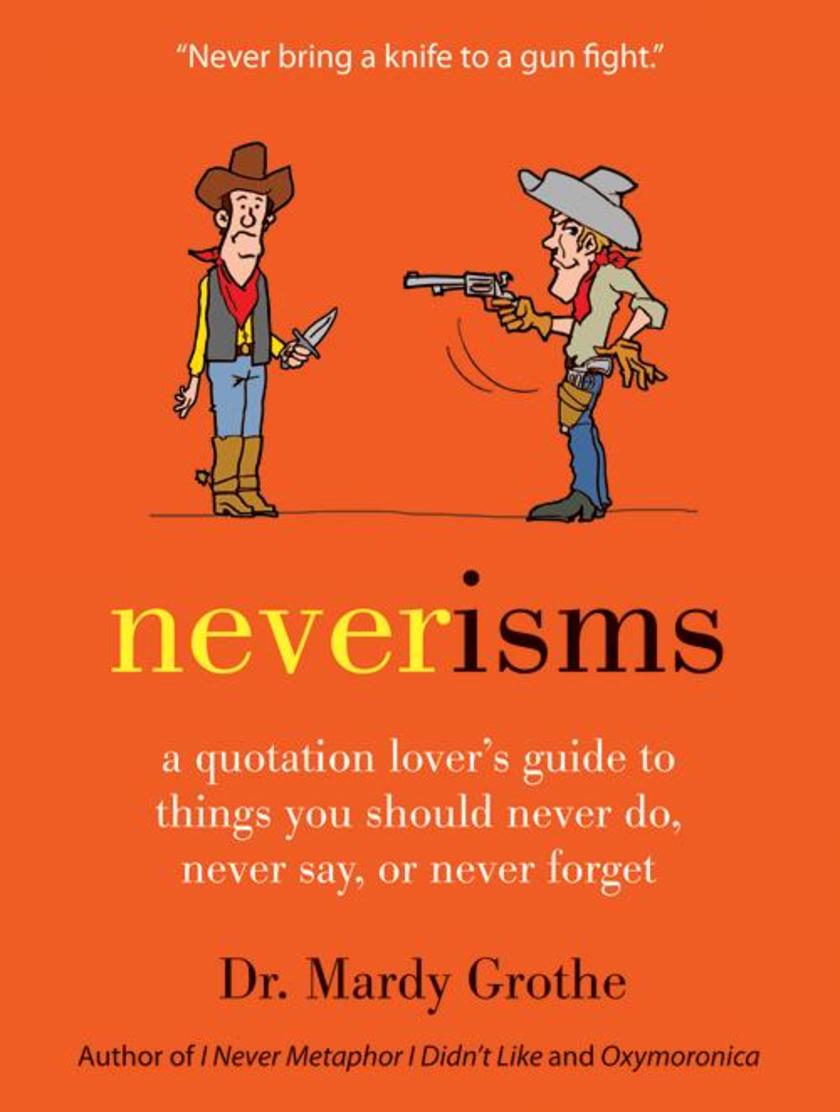
Neverisms
¥88.56
"Never let 'em see you sweat." "Never change diapers in mid-stream." "Never let a crisis go to waste." "Never ruin an apology with an excuse." "Never go to a doctor whose office plants have died." When we strongly encourage people to do something, it's called an exhortation. But what is the proper term for strongly discouraging peopleOne candidate is admonition. Another is dehortation, the opposite of exhortation. But perhaps the best term for an emphatic piece of dissuasive advice is neverism. You won't find the term in any dictionary (at least not yet) because quotation anthologist Dr. Mardy Grothe coined it himself for this collection of nearly two thousand quotable cautionary warnings. With the whimsical and witty intermixed with the serious and profound, contributors range from Aesop and Marcus Aurelius to John Wayne and Mae West. Grothe also tells the fascinating "back stories" of scores of classic quotations as well as the history of hundreds more that have never before appeared in a quotation anthology. Organized by topics such as Wit & Wordplay, Politics & Government, Sports, Stage & Screen, and The Literary Life, this is a book about quotations as well as a book of them. Neverisms is sure to delight quotation lovers and language aficionados everywhere.

Why Science Does Not Disprove God
¥94.10
The renowned science writer, mathematician, and bestselling author of Fermat's Last Theorem masterfully refutes the overreaching claims of the "New Atheists," providing millions of educated believers with a clear, engaging explanation of what science really says, how there's still much space for the Divine in the universe, and why faith in both God and empirical science are not mutually exclusive In recent years a highly publicized coterie of scientists and thinkers, including Richard Dawkins, the late Christopher Hitchens, and Lawrence Krauss, have vehemently contended that breakthroughs in modern science have disproven the existence of God, asserting we must accept that the creation of the universe came out of nothing, that religion is evil, that evolution fully explains the dazzling complexity of life, and more. However, in this much-needed book, veteran science journalist Amir Aczel profoundly disagrees and convincingly demonstrates that science has not, as yet, provided any definitive proof refuting the existence of God. Based on interviews with eleven Nobel Prize winners and many other prominent physicists, biologists, anthropologists, and psychologists, as well as leading theologians and spiritual leaders, Why Science Does Not Disprove God is a fascinating tour through the history of science and a brilliant and incisive analysis of the religious implications of our ever-increasing understanding of life and the universe. Throughout, Aczel reminds us that science, at its best, is about the dispassionate pursuit of truth not a weapon in cultural debates. Respectful of both science and faith and argued from the perspective of no single religious tradition Aczel's book is an essential corrective that should be read by all.

Instant Mom
¥88.56
For the first time, Nia Vardalos, writer and star of My Big Fat Greek Wedding, tells her hilarious and heartfelt bumpy-road-to-parenting story that eventually leads to her meeting an almost-three-year old girl who she knows instantly is her daughter.Vardalos chronicles it all with her signature wit and candor but also weaves in delicious behind-the-scenes Hollywood stories on the making of her films from working with Tom Hanks to meeting Oprah to having dinner with the Queen of England.In Instant Mom, Vardalos writes how moments after she finds out she has been nominated for an Academy Award, she is alone and en route to a fertility clinic, trying yet again for a chance at motherhood, wondering how long she can continue. When she finally adopts her daughter via American Foster Care, Vardalos reveals what really came next how, with only fourteen hours' notice, she and her husband transitioned their preschool aged daughter into their home. The Appendix includes information on how to adopt from all over the world. Vardalos will donate proceeds from the book sales to charities.In her memoir, Instant Mom, Vardalos reveals how she broke into the movie industry, became a working screenwriter and actress . . . and finally became a mom. Instantly.
The Little Big Things
¥94.10
#131 The Case of the Two-Cent CandyYears ago, I wrote about a retail store in the Palo Alto environs a good one, which had a box of two-cent candies at the checkout. I subsequently remember that "little" parting gesture of the two-cent candy as a symbol of all that is Excellent at that store. Dozens of people who have attended seminars of mine from retailers to bankers to plumbing-supply-house owners have come up to remind me, sometimes 15 or 20 years later, of "the two-cent candy story," and to tell me how it had a sizable impact on how they did business, metaphorically and in fact.Well, the Two-Cent Candy Phenomenon has struck again with oomph and in the most unlikely of places.For years Singapore's "brand" has more or less been Southeast Asia's "place that works." Its legendary operational efficiency in all it does has attracted businesses of all sorts to set up shop there. But as "the rest" in the geographic neighborhood closed the efficiency gap, and China continued to rise-race-soar, Singapore decided a couple of years ago to "rebrand" itself as not only a place that works but also as an exciting, "with it" city. (I was a participant in an early rebranding conference that also featured the likes of the late Anita Roddick, Deepak Chopra, and Infosys founder and superman N. R. Narayana Murthy.)Singapore's fabled operating efficiency starts, as indeed it should, at ports of entry the airport being a prime example. From immigration to baggage claim to transportation downtown, the services are unmatched anywhere in the world for speed and efficiency.Saga . . . Immigration services in Thailand, three days before a trip to Singapore, were a pain. ("Memorable.") And entering Russia some months ago was hardly a walk in the park, either. To be sure, and especially after 9/11, entry to the United States has not been a process you'd mistake for arriving at Disneyland, nor marked by an attitude that shouted "Welcome, honored guest."Singapore immigration services, on the other hand:The entry form was a marvel of simplicity. The lines were short, very short, with more than adequate staffing.The process was simple and unobtrusive.And:The immigration officer could have easily gotten work at Starbucks; she was all smiles and courtesy.And:Yes!Yes!And . . . yes!There was a little candy jar at each Immigration portal!The "candy jar message" in a dozen ways:"Welcome to Singapore, Tom!! We are absolutely beside ourselves with delight that you have decided to come here!"Wow!Wow!Wow!Ask yourself . . . now:What is my (personal, department, project, restaurant, law firm) "Two-Cent Candy"?Does every part of the process of working with us/me include two-cent candies?Do we, as a group, "think two-cent candies"?Operationalizing: Make "two-centing it" part and parcel of "the way we do business around here." Don't go light on the so-called substance but do remember that . . . perception is reality . . . and perception is shaped by two-cent candies as much as by that so-called hard substance.Start: Have your staff collect "two-cent candy stories" for the next two weeks in their routine "life" transactions. Share those stories. Translate into "our world." And implement.Repeat regularly.Forever.(Recession or no recession you can afford two cents.)(In fact, it is a particularly Brilliant Idea for a recession you doubtless don't maximize Two-Cent Opportunities. And what opportunities they are.)
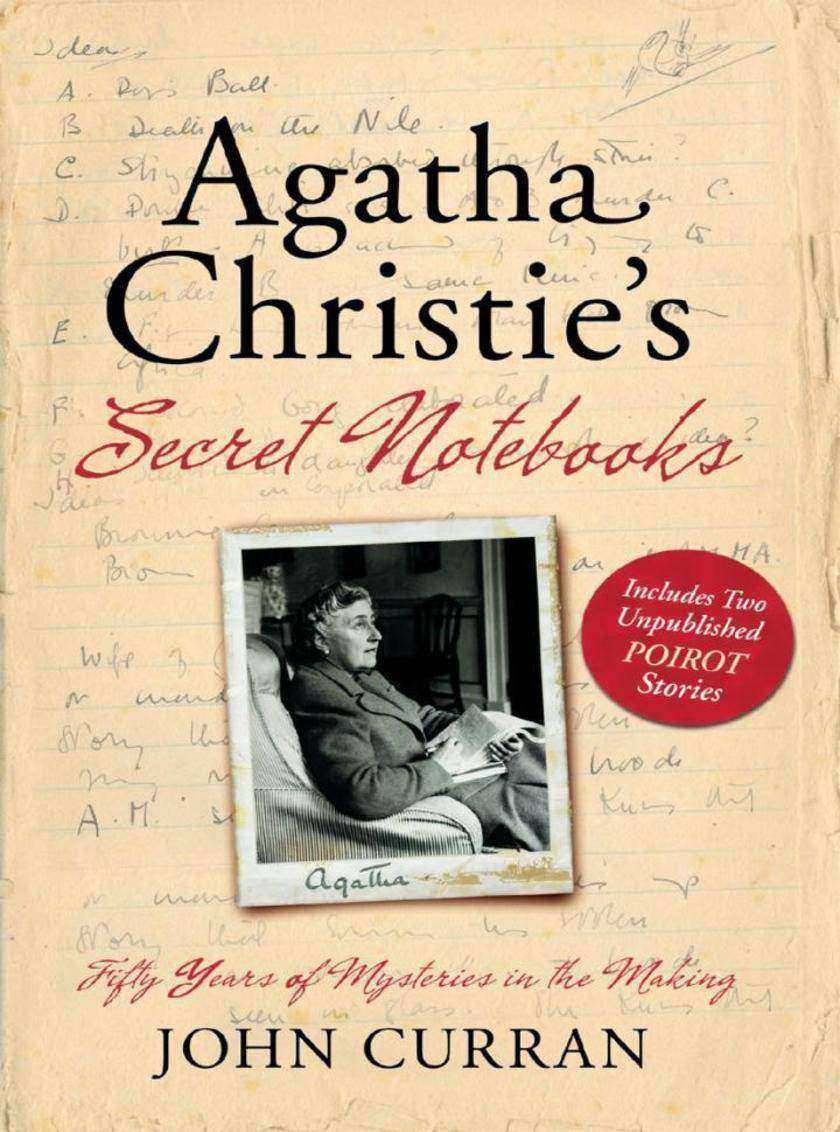
Agatha Christie's Secret Notebooks
¥94.10
A fascinating exploration of the contents of Agatha Christie's seventy-three private notebooks, including illustrations and two unpublished Poirot stories When Agatha Christie died in 1976, at age eighty-five, she had become the world's most popular author. With sales of more than two billion copies worldwide, in more than one hundred countries, she had achieved the impossible more than one book every year since the 1920s, every one a bestseller.So prolific was Agatha Christie's output sixty-six crime novels, twenty plays, six romance novels under a pseudonym and more than one hundred and fifty short stories it was often claimed that she had a photographic memory. Was this trueOr did she resort over those fifty-five years to more mundane methods of working out her ingenious crimesFollowing the death of Agatha's daughter, Rosalind, at the end of 2004, a remarkable legacy was revealed. Unearthed among her affairs at the family home of Greenway were Agatha Christie's private notebooks, seventy-three handwritten volumes of notes, lists and drafts outlining all her plans for her many books, plays and stories. Buried in this treasure trove, all in her unmistakable handwriting, are revelations about her famous books that will fascinate anyone who has ever read or watched an Agatha Christie story.How did the infamous twist in The Murder of Roger Ackroyd really come aboutWhich very famous Poirot novel started life as an adventure for Miss MarpleWhich books were designed to have completely differ-ent endings, and what were theyWhat were the plot ideas that she considered but rejected?Full of details she was too modest to reveal in her own autobiography, this remarkable new book includes a wealth of excerpts and pages reproduced directly from the notebooks and her letters, plus, for the first time, two newly discovered complete Hercule Poirot short stories never before published.
Crossing the Chasm
¥101.00
Here is the bestselling guide that created a new game plan for marketing in high-tech industries. Crossing the Chasm has become the bible for bringing cutting-edge products to progressively larger markets. This edition provides new insights into the realities of high-tech marketing, with special emphasis on the Internet. It's essential reading for anyone with a stake in the world's most exciting marketplace.
Instant Turnaround!
¥130.45
Transform Your Workplace!Imagine a company where people are excited about coming to work and giving their best efforts every day. In this innovative and engrossing business parable, Harry Paul and Ross Reck show managers at all levels how they can immediately and easily increase productivity by tapping into the discretionary effort of the people who work for them. Starting from the most basic aspect of business reality that people intentionally regulate the amount of effort they put into their jobs based upon how they feel they're being treated the authors point out that the most important part of the job of every manager, team leader, supervisor, and executive is to treat people in such a way that they become excited about applying all their discretionary effort toward performing their jobs.At the book's center is the story of Nancy Kim, a human resources director at a magazine that is struggling with all the problems associated with unhappy employees low productivity and morale along with high absenteeism and turnover. After she openly challenges the CEO's new management-by-the-numbers system, she's charged with turning the situation around immediately. Filled with real-world studies, Instant Turnaround! shows anyone how to turn the workplace into a destination a place where working hard feels like hardly working because it's engaging, enjoyable, and fulfilling.

My Drunk Kitchen
¥129.07
One day, sad cubicle dweller and otherwise bored New York transplant Hannah Hart decided, as a joke, to make a fake cooking show for her friend back in California. She turned on the camera, pulled out some bread and cheese, and then, as one does, started drinking. (Doesn't everyone cook with a spoon in one hand and a bottle of wine in the other?) The video went viral and an online sensation was born. My Drunk Kitchen includes recipes, stories, full color photos, and drawings to inspire your own culinary adventures in tipsy cooking. It is also a showcase for Hannah Hart's great comedic voice. Hannah offers key drink recommendations, cooking tips (like, remember to turn the oven off when you go to bed) and shares never-before-seen recipes such as: ?The Hartwich (Knowledge is ingenuity! Learn from the past!) ?Can Bake (Inventing things is hard! You don't have to start from scratch!) ?Latke Shotkas (Plan ahead to avoid a night of dread!) ?Tiny Sandwiches (Size doesn't matter! Aim to satisfy.) ?Saltine Nachos (It's not about resources! It's about being resourceful.) This is a book for anyone who believes they have what it takes to make a soufflé for the holiday party and show up the person who apparently has nothing better to do than bake things from scratch. It also recommends the drink you'll need to accompany any endeavor of this magnitude. In the end, My Drunk Kitchen may not be your go-to guide for your next dinner party . . . but it will make you laugh and drink . . . I mean think . . . about life.
Beyond Words
¥139.90
Beyond Words n (1.) Terms or names that point to the realm of mystery and depth that lies beyond our ordinary experience. (2.) The reality that is beyond even the power of beyond words to convey, and that can be known only by experiencing it for yourself."A word a day to keep the demons at bay." This is how Frederick Buechner likes to describe this witty and incisive dictionary. A daily devotional from one of today's greatest spiritual writers, Beyond Words offers 366 entries from Buechner's three alphabet books, Wishful Thinking, Peculiar Treasures, and Whistling in the Dark, including a new Introduction and nineteen new entries.Providing definitions of both sacred and ordinary words, as well as biblical characters, Buechner unabashedly brings his fresh perspective to words, concepts, and characters we thought we understood. This is a great introduction to Buechner's work as well as a library staple for those already well versed in his writing. It is Buechner at his best. Whether readers find themselves tearful from a deeply moving insight or laughing out loud at an unexpected turn of phrase, they will always feel uplifted, illuminated, and enchanted by the wisdom of Frederick Buechner.

Miss Jessie's
¥88.56
Miss Jessie's is a memoir and business guide rich with inspirational life lessons and unique business advice from Miko Branch, the Chief Executive Officer of the dynamic Miss Jessie's the company that revolutionized the hair-care industry.When Miko and her sister, Titi, were children, their grandmother Miss Jessie taught them independence and showed them the value of being "do it yourself" women, all while whipping up homemade hair concoctions at her kitchen table. As a co-founder of Miss Jessie's, Miko reveals how she and Titi applied their grandmother's lessons to create a successful business from scratch. Miss Jessie's chronicles the Branch sisters' remarkable story. When they were children, their stern father encouraged them to become self-reliant and not to depend on their looks to get ahead. Taking this message to heart, they blossomed into business owners and leaders in their field, using ingenuity and without borrowing a dime. They soaked up the entrepreneurial and creative culture of the early hip-hop era on the streets of Brooklyn in the late 1990s, and in the high-end salons of Manhattan. They blended these inspirations to establish a business that has gone from their kitchen table to the shelves of major retailers around the globe, revolutionizing the hair-care industry. A charming and enlightening look at the women behind the brand, Miss Jessie's is chock-full of entertaining stories and invaluable instruction that can be applied to any business: an authentic expression that the American Dream is possible.
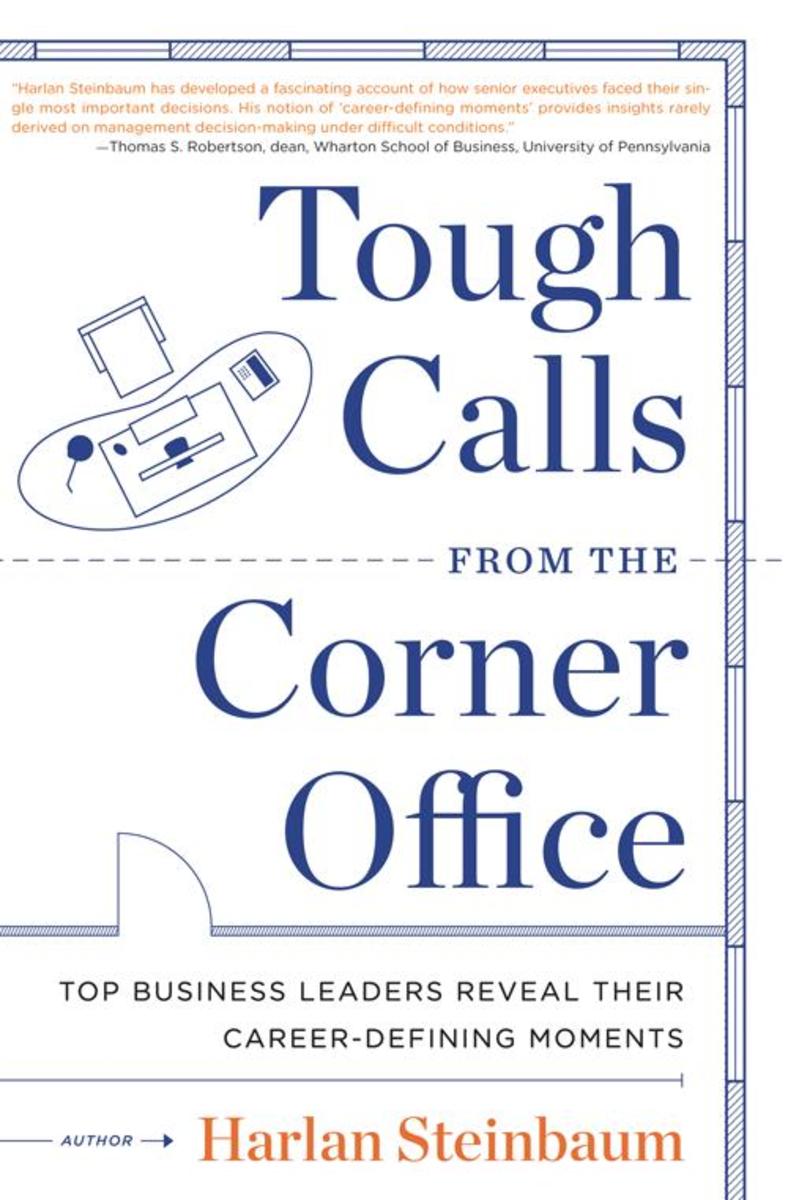
Tough Calls from the Corner Office
¥145.91
Thirty-nine of America's most successful business leaders share the most important decisions of their careers and the life and career lessons they hold for us all. When former CEO Harlan Steinbaum decided to buy back his retail drug chain with his partners, his life changed dramatically. The personal impact that this one business decision this "tough call" had on Steinbaum made him wonder if others had experienced similar kinds of defining moments in their own careers. To find out, he reached out to some of the most successful people in the country leaders from companies such as Verizon, Chrysler, ESPN, Ogilvy & Mather, Enterprise Rent-A-Car, WellPoint, and Panera Bread Company to pinpoint the career-defining decisions that were integral to their success. The result is Tough Calls from the Corner Office, a treasure trove of rich business wisdom, stories of tough decisions and hard-won victories, and lessons from a lifetime of achievement in the world of business.Tough Calls from the Corner Office offers inspiring stories, lessons, principles, strategies, ideas, and solutions drawn from every stage in a successful career, from early key choices to the final leave-taking from the world of work. Given unprecedented access to such visionaries as Union Square Hospitality Group's Danny Meyer, ESPN's Bill Rasmussen, Build-A-Bear's Maxine Clark, and Let's Make a Deal's Monty Hall, Steinbaum shares their experiences, told in their own words, so that others may learn from them. In a time when many people are at professional crossroads, Tough Calls from the Corner Office offers inspiration and the confidence to believe that tough decisions can be the first step to extraordinary success.
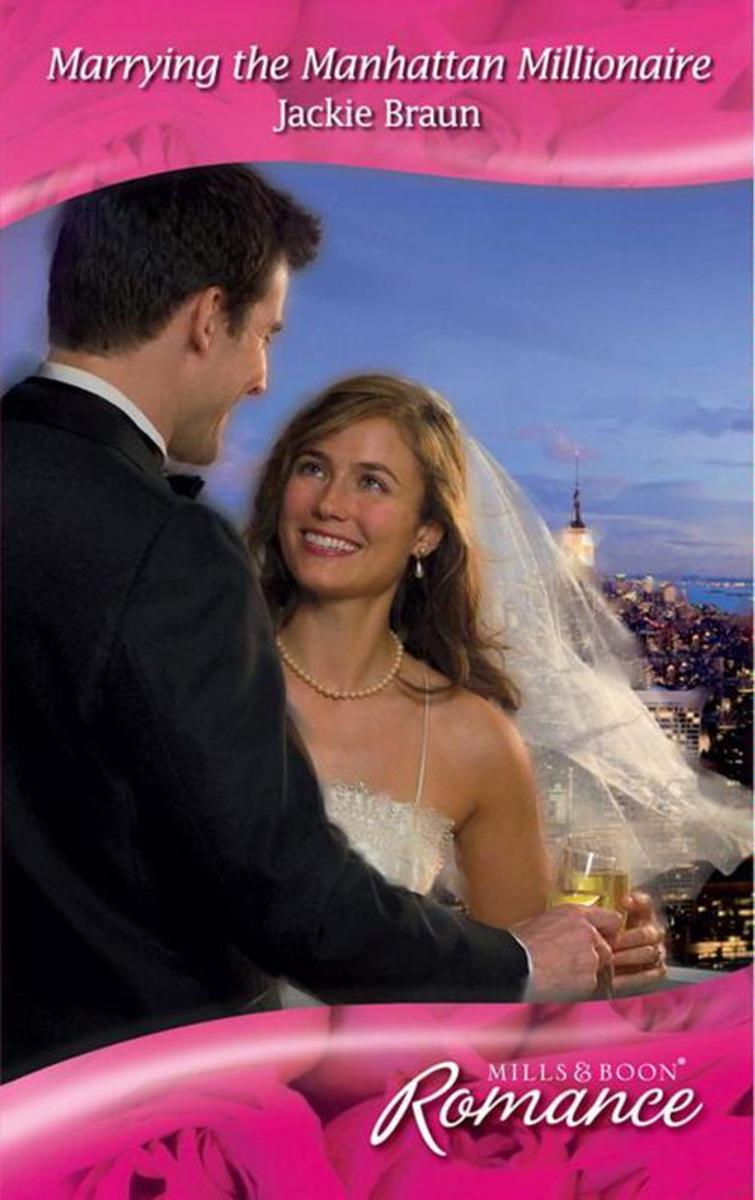
Marrying the Manhattan Millionaire (Mills & Boon Romance)
¥23.05
Successful executive Samantha Bradford never underestimates the opposition. So when her ex-fiance and business rival, Michael Lewis, comes back to town, she thinks she's ready for all his tricks. The confident swagger. The devastating smile. The irresistible sex appeal. And the uncompromising determination that had pulled them together--and then pushed them apart.Now they're both bidding to land the same huge account. The stakes are high...and the buzz of working together is intoxicating. But the real merger on the table is more than strictly business....

Adopted:Family in a Million (Mills & Boon Romance)
¥23.05
When Zack Morgan discovers he's a father, and that his little boy was given up for adoption, he decides to find him. He has to know his son is okay.Life is a struggle for single mom Susan Johnson, but she loves being Danny's mother. When Zack unexpectedly comes into their lives, he lights up their world.Zack intended to keep his distance, but he's found the family of his dreams. Only, Susan has no idea who he really is....

Hired:Nanny Bride (Mills & Boon Romance)
¥23.05
Playboy tycoon Cole doesn't expect to be confronted with a frumpy nanny and a howling baby in his expensively furnished office. But the child is his nephew, so he steps in to help!Dannie Springer has been hiding behind her staid nanny uniform since she got her heart broken. Yet over the weeks with , she starts to see the man beneath the designer suits--and she is secretly wishing he could see the real her....

Love: The Owner's Manual
¥10.86
Cutting-edge, user-friendly, and comprehensive: the revolutionary guide to the brain, now fully revised and updatedAt birth each of us is given the most powerful and complex tool of all time: the human brain. And yet, as we well know, it doesn't come with an owner's manual until now. In this unsurpassed resource, Dr. Pierce J. Howard and his team distill the very latest research and clearly explain the practical, real-world applications to our daily lives. Drawing from the frontiers of psychology, neurobiology, and cognitive science, yet organized and written for maximum usability, The Owner's Manual for the Brain, Fourth Edition, is your comprehensive guide to optimum mental performance and well-being. It should be on every thinking person's bookshelf. What are the ingredients of happinessWhich are the best remedies for headaches and migrainesHow can we master creativity, focus, decision making, and willpowerWhat are the best brain foodsHow is it possible to boost memory and intelligenceWhat is the secret to getting a good night's sleepHow can you positively manage depression, anxiety, addiction, and other disordersWhat is the impact of nutrition, stress, and exercise on the brainIs personality hard-wired or fluidWhat are the best strategies when recovering from trauma and lossHow do moods and emotions interactWhat is the ideal learning environment for childrenHow do love, humor, music, friendship, and nature contribute to well-beingAre there ways of reducing negative traits such as aggression, short-temperedness, or irritabilityWhat is the recommended treatment for concussionsCan you delay or prevent Alzheimer's and dementiaWhat are the most important ingredients to a successful marriage and familyWhat do the world's most effective managers know about leadership, motivation, and persuasionPlus 1,000s more topics!
It Books
¥415.39
Who can forget the over-the-top, white-on-white, high-gloss interiors through which Fred Astaire danced in Top HatThe modernist high-rise architecture, inspired by the work of Frank Lloyd Wright, in the adaptation of Ayn Rand's The FountainheadThe lavish, opulent drawing rooms of Martin Scorsese's The Age of InnocenceThrough the use of film design called both art direction and production design in the film industry movies can transport us to new worlds of luxury, highlight the ornament of the everyday, offer a vision of the future, or evoke the realities of a distant era. In Designs on Film, journalist and interior designer Cathy Whitlock illuminates the often undercelebrated role of the production designer in the creation of the most memorable moments in film history. Through a lush collection of rare archival photographs, Whitlock narrates the evolving story of art direction over the course of a century from the massive Roman architecture of Ben-Hur to the infamous Dakota apartment in Rosemary's Baby to the digital CGI wonders of Avatar's Pandora.Drawing on insights from the most prominent Hollywood production designers and the historical knowledge of the venerable Art Directors Guild, Whitlock delves into the detailed process of how sets are imagined, drawn, built, and decorated. Designs on Film is the must-have look book for film lovers, movie buffs, and anyone looking to draw interior design inspiration from the constructions and confections of Hollywood. Whitlock lifts the curtain on movie magic and celebrates the many ways in which art direction and set design allow us to lose ourselves in the diverse worlds showcased on the big screen.
JavaScript for .NET Developers
¥90.46
Unlock the potential of evergreen browsers and increase the efficiency of your ASP.NET applications by learning how to write JavaScript About This Book Boost your skillset and start bringing JavaScript into your web development projects Leverage your existing ASP.NET knowledge to develop dynamic and responsive SPAs Learn effective design patterns for sustainable, and scalable web development Who This Book Is For This book is for ASP.NET developers that want to bring JavaScript into their skillset to build applications that are truly dynamic and responsive. It's for developers who are focused on developing for users who want to deliver a great end product and a fantastic experience. What You Will Learn Get to grips with the basic to advanced concepts of JavaScript Learn how to use JavaScript on server side using Node.js Develop web applications in ASP.NET using JavaScript Get to know with industry-wide best practices and design patterns that provide maintainability and scalability Build an ASP.NET application using Angular 2 with TypeScript and Web API Explore WinJS and see how to use mobile capabilities from web applications Use JavaScript to develop scalable ASP.NET applications See how to test and debug JavaScript In Detail If you want to improve responsiveness or the UX in your ASP.NET applications, JavaScript can be a life saver. In an age where server-side operations have shifted to the client, being able to handle JavaScript with confidence and fluency is vital for ASP.NET developers. There’s no point trying to fight it, so start learning with this book. Make sure your projects exceed user expectations. Begin by getting stuck into the basics of JavaScript, and explore the language in the context of ASP.NET Core. You’ll then find out how to put the principles into practice, as you learn how to develop a basic ASP.NET application using Angular 2 and TypeScript. You’ll also develop essential skills required to develop responsive apps, with a little help from AJAX, ensuring that you’re building projects that can be easily accessed across different devices. With guidance on Node.js and some neat techniques to test and debug a range of JavaScript libraries in Visual Studio, you’ll soon be well on your way to combining JavaScript with ASP.NET in a way that’s capable of meeting the challenges of modern web development head-on. Style and approach This book will build the skillset of every .NET developer, so they can build stronger and more responsive web apps with confidence.
Mastering KVM Virtualization
¥90.46
Dive in to the cutting edge techniques of Linux KVM virtualization, and build the virtualization solutions your datacentre demands About This Book Become an expert in Linux virtualization Migrate your virtualized datacenter to the cloud Find out how to build a large scale virtualization solution that will transform your organization Who This Book Is For Linux administrators – if you want to build incredible, yet manageable virtualization solutions with KVM this is the book to get you there. It will help you apply what you already know to some tricky virtualization tasks. What You Will Learn Explore the ecosystem of tools that support Linux virtualization Find out why KVM offers you a smarter way to unlock the potential of virtualization Implement KVM virtualization using oVirt Explore the KVM architecture – so you can manage, scale and optimize it with ease Migrate your virtualized datacenter to the cloud for truly resource-efficient computing Find out how to integrate OpenStack with KVM to take full control of the cloud In Detail A robust datacenter is essential for any organization – but you don’t want to waste resources. With KVM you can virtualize your datacenter, transforming a Linux operating system into a powerful hypervisor that allows you to manage multiple OS with minimal fuss. This book doesn’t just show you how to virtualize with KVM – it shows you how to do it well. Written to make you an expert on KVM, you’ll learn to manage the three essential pillars of scalability, performance and security – as well as some useful integrations with cloud services such as OpenStack. From the fundamentals of setting up a standalone KVM virtualization platform, and the best tools to harness it effectively, including virt-manager, and kimchi-project, everything you do is built around making KVM work for you in the real-world, helping you to interact and customize it as you need it. With further guidance on performance optimization for Microsoft Windows and RHEL virtual machines, as well as proven strategies for backup and disaster recovery, you’ll can be confident that your virtualized data center is working for your organization – not hampering it. Finally, the book will empower you to unlock the full potential of cloud through KVM. Migrating your physical machines to the cloud can be challenging, but once you’ve mastered KVM, it’s a little easie. Style and approach Combining advanced insights with practical solutions, Mastering KVM Virtualization is a vital resource for anyone that believes in the power of virtualization to help a business use resources more effectively.

Building a 3D Game with LibGDX
¥54.49
Learn how to build an exciting 3D game with LibGDX from scratch About This Book Implement an exhaustive list of features that LibGDX unleashes to build your 3D game. Write, test, and debug your application on your desktop and deploy them on multiple platforms. Gain a clear understanding of the physics behind LibGDX and libraries like OpenGL and WebGL that make up LibGDX. Who This Book Is For If you are a game developer or enthusiasts who want to build 3D games with LibGDX, then this book is for you. A basic knowledge of LibGDX and Java programming is appreciated. What You Will Learn Learn the potential of LibGDX in game development Understand the LibGDX architecture and explore platform limitation and variations Explore the various approaches for game development using LibGDX Learn about the common mistakes and possible solutions of development Discover the 3D workflow with Blender and how it works with LibGDX Implement 3D models along with textures and animations into your games Familiarize yourself with Scene2D and its potential to boost your game’s design In Detail LibGDX is a hugely popular open source, cross-platform, Java-based game development framework built for the demands of cross-platform game development. This book will teach readers how the LibGDX framework uses its 3D rendering API with the OpenGL wrapper, in combination with Bullet Physics, 3D Particles, and Shaders to develop and deploy a game application to different platforms You will start off with the basic Intellij environment, workflow and set up a LibGDX project with necessary APIs for 3D development. You will then go through LibGDX’s 3D rendering API main features and talk about the camera used for 3D. Our next step is to put everything together to build a basic 3D game with Shapes, including basic gameplay mechanics and basic UI. Next you will go through modeling, rigging, and animation in Blender. We will then talk about refining mechanics, new input implementations, implementing enemy 3D models, mechanics, and gameplay balancing. The later part of this title will help you to manage secondary resources like audio, music and add 3D particles in the game to make the game more realistic. You will finally test and deploy the app on a multitude of different platforms, ready to start developing your own titles how you want! Style and approach A step by step guide on building a 3D game with LibGDX and implementing an exhaustive list of features that you would wish to incorporate into your 3D game


