


 购物车
购物车 个人中心
个人中心

Bloody Crimes
¥94.10
On the morning of April 2, 1865, Jefferson Davis, president of the Confederacy, received a telegram from General Robert E. Lee. There is no more time the Yankees are coming, it warned. Shortly before midnight, Davis boarded a train from Richmond and fled the capital, setting off an intense and thrilling chase in which Union cavalry hunted the Confederate president. Two weeks later, President Lincoln was assassinated, and the nation was convinced that Davis was involved in the conspiracy that led to the crime. Lincoln's murder, autopsy, and White House funeral transfixed the nation. His final journey began when soldiers placed his corpse aboard a special train that would carry him home on the 1,600-mile trip to Springfield. Along the way, more than a million Americans looked upon their martyr's face, and several million watched the funeral train roll by. It was the largest and most magnificent funeral pageant in American history.To the Union, Davis was no longer merely a traitor. He became a murderer, a wanted man with a $100,000 bounty on his head. Davis was hunted down and placed in captivity, the beginning of an intense and dramatic odyssey that would transform him into a martyr of the South's Lost Cause. The saga that began with Manhunt continues with the suspenseful and electrifying Bloody Crimes. James Swanson masterfully weaves together the stories of two fallen leaders as they made their last expeditions through the bloody landscape of a wounded nation.
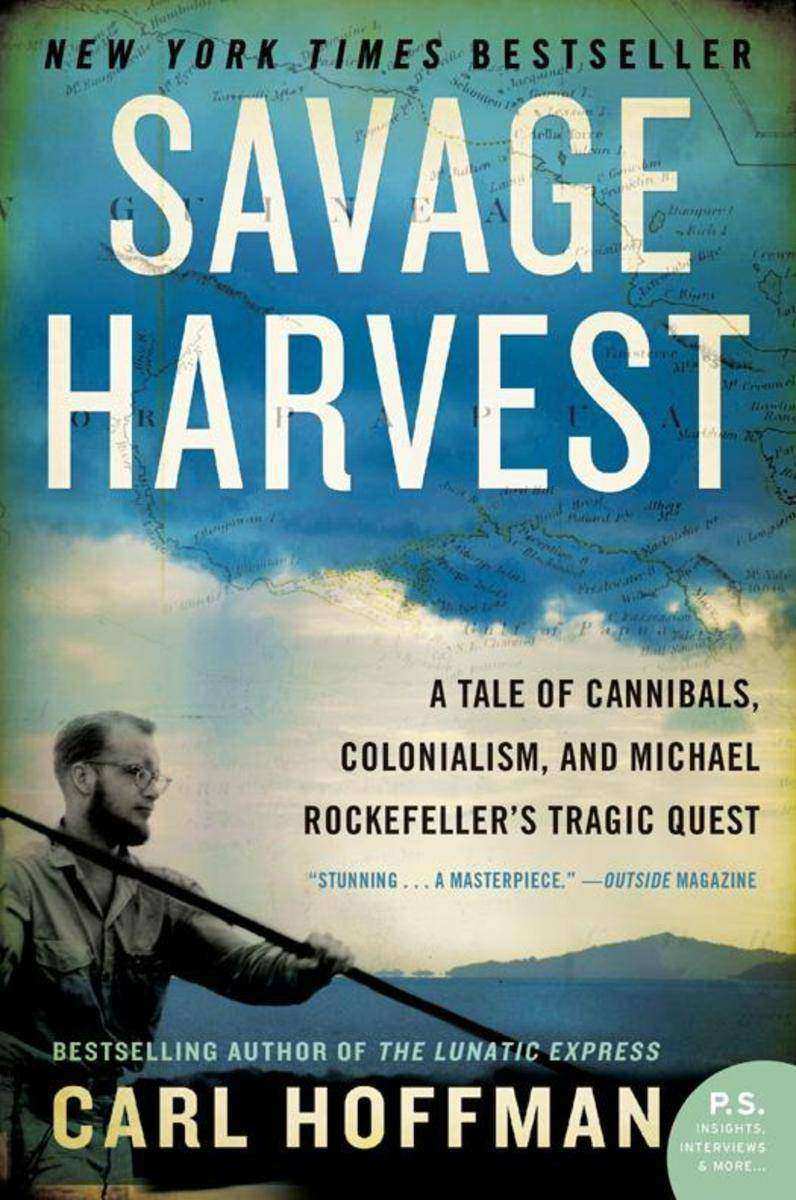
Savage Harvest
¥88.56
The mysterious disappearance of Michael Rockefeller in remote New Guinea in 1961 has kept the world, and even Michael's powerful, influential family, guessing for years. Now, Carl Hoffman uncovers startling new evidence that finally tells the full, astonishing story. On November 21, 1961, Michael C. Rockefeller, the twenty-three-year-old son of New York governor Nelson Rockefeller, vanished off the coast of southwest New Guinea when his catamaran capsized while crossing a turbulent river mouth. He was on an expedition to collect art for the Museum of Primitive Art, which his father had founded in 1957, and his expedition partner who stayed with the boat and was later rescued shared Michael's final words as he swam for help: "I think I can make it."Despite exhaustive searches by air, ground, and sea, no trace of Michael was ever found. Soon after his disappearance, rumors surfaced that he'd made it to shore, where he was then killed and eaten by the local Asmat a native tribe of warriors whose complex culture was built around sacred, reciprocal violence, headhunting, and ritual cannibalism. The Dutch government and the Rockefeller family vehemently denied the story, and Michael's death was officially ruled a drowning. While the cause of death was accepted publicly, doubts lingered and sensational stories circulated, fueling speculation and intrigue for decades. The real story has long waited to be told until now. Retracing Michael's steps, award-winning journalist Carl Hoffman traveled to the jungles of New Guinea, immersing himself in a world of former headhunters and cannibals, secret spirits and customs, and getting to know generations of Asmat. Through exhaustive archival research, he uncovered hundreds of pages of never-before-seen original documents and located witnesses willing to speak publicly for the first time in fifty years. In Savage Harvest Hoffman finally solves this decades-old mystery and illuminates a culture transformed by years of colonial rule, whose people continue to be shaped by ancient customs and lore. Combining history, art, colonialism, adventure, and ethnography, Savage Harvest is at once a mesmerizing whodunit and a fascinating portrait of the clash between two civilizations that resulted in the death of one of America's richest and most powerful scions.

Teach Your Children Well
¥94.10
Psychologist Madeline Levine brings together cutting-edge research and thirty years of clinical experience to explode once and for all the myth that good grades, high test scores, and college acceptances should define the parenting endgame.Parents, educators, and the media wring their hands about the plight of America's children and teens soaring rates of emotional problems, limited coping skills, disengagement from learning and yet there are ways to reverse these disheartening trends. Teach Your Children Well acknowledges that every parent wants successful children. However, until we are clearer about our core values and the parenting choices that are most likely to lead to authentic, and not superficial, success, we will continue to raise exhausted, externally driven, impaired children who believe they are only as good as their last performance. Real success is always an inside job, argues Levine, and is measured not by today's report card but by the people our children become fifteen or twenty years down the line.Refusing to be diverted by manufactured controversies such as "tiger moms versus coddling moms," Levine confronts the real issues behind the way we push some of our kids to the breaking point while dismissing the talents and interests of many others. She shows us how to shift our focus from the excesses of hyperparenting and the unhealthy reliance on our children for status and meaning to a parenting style that concentrates on both enabling academic success as well as developing a sense of purpose, well-being, connection, and meaning in our children's lives.Teach Your Children Well is a call to action. And while it takes courage to make the changes we believe in, the time has come, says Levine, to return our overwrought families to a healthier and saner version of themselves.

The Social Sex
¥90.51
In today's culture, the bonds of female friendship are taken as a given. But only a few centuries ago, the idea of female friendship was completely unacknowledged, even pooh-poohed. Dating back to the Greeks and the Romans, women were long considered weaker than men and constitutionally unsuited for friendship at the highest level. Only men, the reasoning went, had the emotional and intellectual depth to develop and sustain these meaningful relationships.Surveying history, literature, philosophy, religion, and pop culture, acclaimed author Marilyn Yalom and coauthor Theresa Donovan Brown demonstrate how women were able to co-opt the public face of friendship throughout the years. Chronicling shifting attitudes toward friendship both female and male from the Bible and the Romans to the Enlightenment, to the women's rights movements of the 1960s up to Sex and the City and Broad City, they reveal how the concept of female friendship has been inextricably linked to the larger social and cultural movements that have defined human history.With Yalom and Brown as our guides, we delve into the fascinating historical episodes and trends that illuminate the story of friendship between women: the literary salon as the original book club, the emergence of female professions and the working girl, the phenomenon of gossip, the advent of women's sports, and more.Lively, informative, and richly detailed, The Social Sex is a revelatory cultural history.
Secrets of Breaking into the Film and TV Business
¥90.77
A highly successful, award-winning independent producer shares his funny, practical, and innovative approach to breaking into film or television, whether you want to direct, act, write, or produceIt doesn't take film school or expensive, high-tech equipment to make a brilliant and marketable movie today, says successful maverick producer Dean Silvers. For aspiring filmmakers, it's easier than ever to produce and sell their work. Secrets of Breaking into the Film and TV Business is packed with concrete, proven advice to help you follow in the footsteps of today's cinematic giants, many of whom broke out with runaway independent successes. Drawing from his own experience as a filmmaker, Silvers offers essential tips and a wealth of invaluable knowledge about every aspect of the moviemaking business, from Internet shorts to how to adapt, option, and collaborate on feature-length films (with shoestring budgets).

Sociology Through the Eyes of Faith
¥88.56
Colorfully written by two popular and respected sociologists, this volume shows how sociology has evolved, how it became divided from Christian faith, and how Christian sociologists can make sense of this branch of social science.

I Didn't Come Here to Make Friends
¥88.56
Courtney Robertson joined season 16 of The Bachelor looking for love. A working model and newly single, Courtney fit the casting call: She was young, beautiful, and a natural in front of the cameras. Although she may have been there for all the right reasons, as the season unfolded and sparks began to fly something else was clear: She was not there to make friends. Courtney quickly became one of the biggest villains in Bachelor franchise history. She unapologetically pursued her man, steamrolled her competition, and broke the rules—including partaking in an illicit skinny-dip that sealed her proposal. Now, after a very public breakup with her Bachelor, Ben Flajnik, Courtney opens up and tells her own story—from her first loves to her first moments in the limo. She dishes on life before, during, and after the Bachelor, including Ben’s romantic proposal to her on a Swiss mountaintop and the tabloid frenzy that continued after the cameras stopped rolling. For the first time ever, a former Bachelor contestant takes us along on her journey to find love and reveals that “happily ever after” isn't always what it seems. Complete with stories, tips, tricks, and advice from your favorite Bachelor alumni, and filled with all the juicy details Courtney fans and foes alike want to know, I Didn’t Come Here to Make Friends is a must-read for every member of Bachelor nation.
Notes from a Small Island
¥90.51
Veering from the ludicrous to the endearing and back again, Notes From a Small Island is a delightfully irreverent jaunt around the unparalleled floating nation that has produced zebra crossings, Shakespeare, Twiggie Winkie's Farm, and places with names like Farleigh Wallop and Titsey.

The Italian American Reader
¥95.39
This anthology -- the first general-reader collection of writing by Italian American authors -- is part manifesto, part Sunday dinner. A gathering of voices old and new, some speak in the accents of another age, some completely contemporary and assured, and all together for the first time. To stand with all the other popular media images we represent, now, at last, one exists in written form, the literature of Italian American life.Inside, there are excerpts from novels, memoirs, short stories, essays, and poems -- by the living and the dead, the famous and the obscure. The excerpts are variously moving, funny, poignant, lusty, biting, reverent, witty, loving, angry, and wise, dealing in the most profound aspects of our lives no matter who we are: home, love, sex, family, food, work, God, death.Characters range from gangsters to grandmas, lovers to fighters, thinkers to doers, sinners to saints, with special appearances by Frank Sinatra and the Virgin Mary.

Healing Touch for Cats
¥72.71
The landmark The Healing Touch: The Proven Massage Program, now updated and revised.Distinguished veterinarian and animal psychologist Dr. Michael W. Fox shares his pioneering 6-step massage technique through detailed illustrations, photos, and easy-to-read instructions, and provides information on how to understand your cat's anatomy, develop a massage routine, use massage to diagnose illness, and integrate it as part of overall care for your cat.This proven massage program for cats helps affirm the human-animal bond by providing instruction on why cats need massage, how to understand your cat's body language, how to give a diagnostic or therapeutic massage, and how to keep your cat healthy. 60 black & white drawings, photos, resources, index.

Spanning the World
¥84.16
Go Spanning the World with Len Berman in this wildly entertaining, insightful, and often hilarious book that takes sports fans behind the scenes and inside locker rooms.One of the most popular television sports personalities known for his "Spanning the World" segments on NBC's Today show Len Berman delivers his unique view of the world of sports, from the bizarre to the historic, all with his characteristic wit.Over the years sports and sports reporting have changed, but Spanning the World puts it all in perspective in this irreverent take on the heroes and iconic moments. Barry Bonds massages the media: "If you put that camera in my face, I'll slit your throat." Mickey Mantle reveals his most pleasurable Yankee Stadium experience (it didn't happen on the field). Bobby Orr loses his cool and chairs start flying from the upper decks. Bill Parcells finally spills his Super Bowl–winning formula: "Power wins!" And much more ... Berman guides us through the world he knows like no one else, from intimate recollections of his heroes to postgame celebrations, exhibiting the most hilarious and shocking moments from the whole cast of characters from the last decades in sports: John McEnroe, Muhammad Ali, Larry Bird, Derek Jeter, and many more. He also addresses the more serious issues facing sports today, including steroids, overpaid stars, athletes and violence, and the place of sports in society.A must read for every sports fan, Spanning the World is an irresistible blend of humor, history, and contemporary commentary on the state of sports from the ultimate fan who has seen it all.
Winter World
¥94.10
From flying squirrels to grizzly bears, and from torpid turtles to insects with antifreeze, the animal kingdom relies on some staggering evolutionary innovations to survive winter. Unlike their human counterparts, who must alter the environment to accommodate physical limitations, animals are adaptable to an amazing range of conditions.Examining everything from food sources in the extremely barren winter land-scape to the chemical composition that allows certain creatures to survive, Heinrich's Winter World awakens the largely undiscovered mysteries by which nature sustains herself through winter's harsh, cruel exigencies.

Shockwave
¥83.03
A riveting, minute-by-minute account of the momentous event that changed our world forever On a quiet Monday morning in August 1945, a five-ton bomb dubbed Little Boy by its creators was dropped from an American plane onto the Japanese city of Hiroshima. On that day, a firestorm of previously unimagined power was unleashed on a vibrant metropolis of 300,000 people, leaving one third of its population dead, its buildings and landmarks incinerated. It was the terrifying dawn of the Atomic Age, spawning decades of paranoia, mistrust, and a widespread and very real fear of the potential annihilation of the human race.Author Stephen Walker brilliantly re-creates the three terrible weeks leading up to the wartime detonation of the atomic bomb from the first successful test in the New Mexico desert to the cataclysm and its aftermath presenting the story through the eyes of pilots, scientists, civilian victims, and world leaders who stood at the center of earth-shattering drama. It is a startling, moving, frightening, and remarkable portrait of an extraordinary event a shockwave whose repercussions can be felt to this very day.
The Storm of the Century
¥100.71
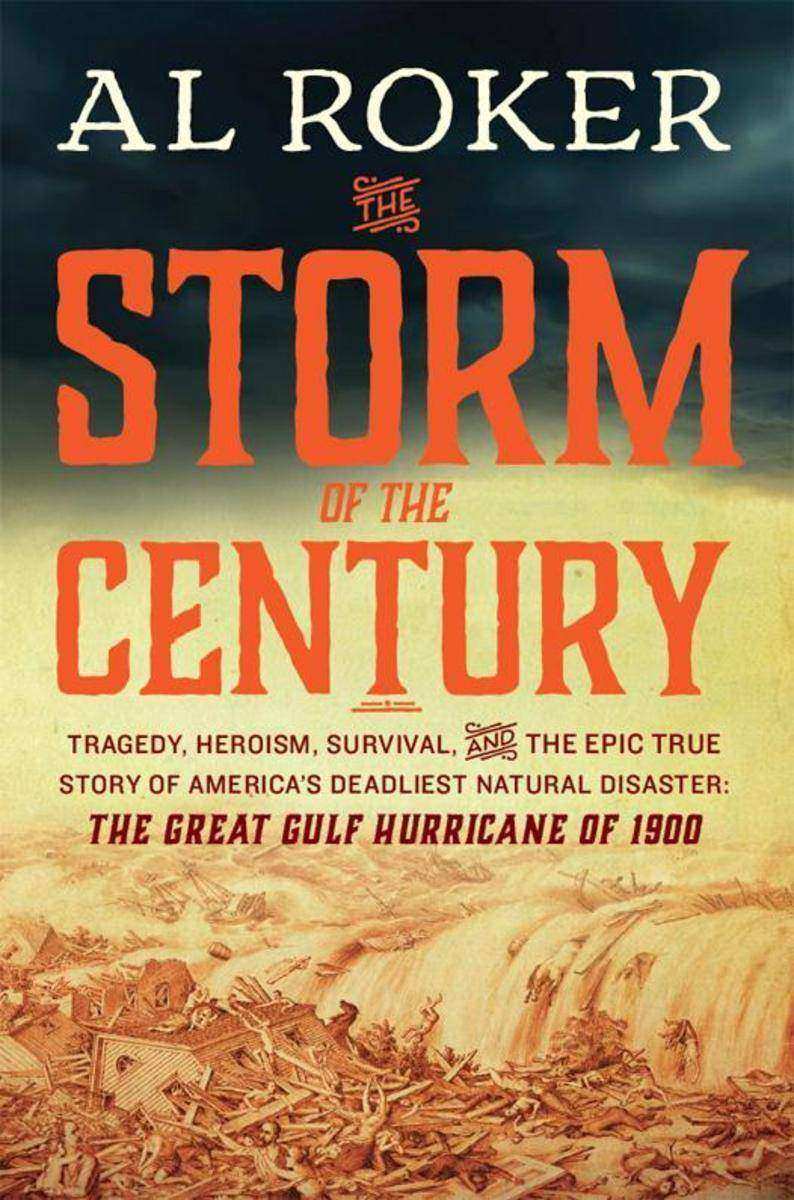
In this gripping narrative history, Al Roker from NBC’s Today and the Weather Channel vividly examines the deadliest natural disaster in American history—a haunting and inspiring tale of tragedy, heroism, and resilience that is full of lessons for today’s new age of extreme weather. On the afternoon of September 8, 1900, two-hundred-mile-per-hour winds and fifteen-foot waves slammed into Galveston, the booming port city on Texas’s Gulf Coast. By dawn the next day, the city that hours earlier had stood as a symbol of America’s growth and expansion was now gone. Shattered, grief-stricken survivors emerged to witness a level of destruction never before seen: Eight thousand corpses littered the streets and were buried under the massive wreckage. Rushing water had lifted buildings from their foundations, smashing them into pieces, while wind gusts had upended steel girders and trestles, driving them through house walls and into sidewalks. No race or class was spared its wrath. In less than twenty-four hours, a single storm had destroyed a major American metropolis—and awakened a nation to the terrifying power of nature. Blending an unforgettable cast of characters, accessible weather science, and deep historical research into a sweeping and dramatic narrative, The Storm of the Century brings this legendary hurricane and its aftermath into fresh focus. No other natural disaster has ever matched the havoc caused by the awesome mix of winds, rain, and flooding that devastated Galveston and shocked a young, optimistic nation on the cusp of modernity. Exploring the impact of the tragedy on a rising country’s confidence—the trauma of the loss and the determination of the response—Al Roker illuminates the United States’s character at the dawn of the “American Century,” while also underlining the fact that no matter how mighty they may become, all nations must respect the ferocious potential of our natural environment.
Drinking Problems at the Fountain of Youth
¥140.08
Short of spending every waking hour engaged in antiaging treatments, is there anything the average woman can do to shave even a few months from her appearanceDo any of the miracle creams, procedures, or magic potions actually make a person look more youthfulDoes a woman have to worry about her nasolabial folds if she doesn't even know where they're located on her bodyVeteran journalist Beth Teitell aims to find the answers to these questions and many more in her hilarious travels looking for the elusive elixir of youth. If you feel bad about your neck (or any other body part), if the idea of Botox-filled syringes fills you with horror, if you don't want to empty your wallet to pay for $475 serums that promise to cheer up aging skin or the hourly cost of a facial-fitness coach, or if you don't believe the claims of antiaging gummy bears or age-defying bottled water, then Drinking Problems at the Fountain of Youth is the book for you. There's not a woman in America who won't see herself in Teitell's struggles or come away feeling that the enormous amount of energy, time, and money we spend trying to restore our bodies to the way they were when we were twenty could be better spent elsewhere. With honesty, outrage, and wit, Teitell goes deep into the youth-at-any-cost culture and takes it apart from the inside out. And then she reassures us that there is hope there are things we can do to look and feel younger, and ways we can learn to stop worrying about looking older.Drinking Problems at the Fountain of Youth is for every woman who isn't as young as she used to be a book of wisdom and advice, and a laugh-out-loud look at our age-obsessed culture.

God and Hillary Clinton
¥90.54
For nearly three decades political observers have sought to understand the complex relationship between Hillary Clinton's faith and her politics. Now, in this first spiritual biography of the former first lady, acclaimed historian Paul Kengor sets out to answer the elusive question: What does Hillary Clinton believeBased on exhaustive research, God and Hillary Clinton tells the surprising story of Hillary's spiritual evolution, detailing the interaction between her lifelong religious beliefs and her personal history that has made her the politician she is today. Offering an in-depth spiritual chronology of Clinton's life, author Paul Kengor also analyzes the fraught relationship between her faith and her secular policies most notably how she reconciles her pro-choice stance on abortion with her Christian beliefs and scrutinizes how these policies have changed over the course of her political career. What emerges is an unexpected portrait of a political figure whose ideals have been shaped by both the power of her politics and the depth of her religious devotion.

101 Poems to Get You Through the Day (and Night)
¥90.54
This is an anthology designed to help you get through the stresses of modern life. For rapid and effective relief around the clock, 24-7, without side effects, try a poem -- whatever the time of the day (or night), you can be sure that some poet, past or present, has been there too.To help you find the right poem at the right time, the organization of the book is like that of a book of hours. Starting with Getting Up, it then moves on to those other morning traumas: Stepping on the Scale and Looking into the Mirror.As the day moves on there are sections to cover everything, from Office Politics to Off to School. And if by five p.m. your head is throbbing, dig into the poems in the Take 5 section and let the world recede. By the end of the day you may want to look for inspiration among the poems in Going Home, but if you are intent on veering from the straight and narrow, then turn to the Behaving Badly poems and you'll find you're in good company. Anyone who feels vaguely guilty about settling down in front of the TV instead of taking café society by storm should turn to the poems in the Not Tonight section.

Introduction to Business
¥90.54
The Collins College Outline for Introduction to Business provides students with a detailed overview of the basic business studies curriculum. This guide covers business foundations, the global economy, company structure and formation, personnel and production management, labor-management relations, marketing concepts and logistics, statistical analysis, financial strategies, careers in business, and much more. Completely revised and updated by Dr. H. James Williams, Introduction to Business includes practical "test yourself" sections with answers and complete explanations at the end of each chapter. Also included are bibliographies for further reading, as well as charts, graphs, and illustrations.The Collins College Outlines are a completely revised, in-depth series of study guides for all areas of study, including the Humanities, Social Sciences, Mathematics, Science, Language, History, and Business. Featuring the most up-to-date information, each book is written by a seasoned professor in the field and focuses on a simplified and general overview of the subject for college students and, where appropriate, Advanced Placement students. Each Collins College Outline is fully integrated with the major curriculum for its subject and is a perfect supplement for any standard textbook.
What is Your Life's Work?
¥128.85
What Is Your Life's Workcaptures a most extraordinary moment in each of our lives the time when we sit down with loved ones and attempt to answer the big question about what really matters. Bill Jensen has created a wonderfully practical space for you to explore who you are, what you stand for, what you believe in, what's risky, what's not, what's worth it, what you're struggling with, and what you've accomplished.He has captured the intimate exchanges between mothers and daughters, fathers and sons, and caring teammates all talking about what really matters at work, and in life. Their conversations are as real as yours would be: "Don't kiss tush, beware carnivorous sheep." "Honey, there are no shortcuts." "My daughter was limp with pain ... and I'm worried about deadlines. What was I thinking?!?!" "Speak up if you don't agree." "Be a respectful rebel." In What Is Your Life's Workyou will discover a new way to see and know who you are in today's more-better-faster world. Exposed is what usually stays private; the raw truths we've all experienced, the personal frailties and mistakes we'd like to hide, and the proudest achievements we'd like to celebrate.In the letters and work diaries of others, we see ourselves. In their struggles, we see our own.Bill Jensen has made it his life's work to battle corporate stupidity and help us all simplify our workdays, take more control, and rediscover our passions. As your trail guide and partner, he will take you through five distinct discoveries that thousands have encountered in finding their voices: Finding Yourself Finding the Lessons to Be Learned,the Questions to Be Asked Finding the Choices That Really Matter Finding the Courage to Choose Finding Joy, Serenity, and FulfillmentWhile it touches your heart and lifts your soul, What Is Your Life's Workdoes not shy away from difficult introspection. You are an active participant in this book. Yes, you will find value here stories of people like you, new ways of looking at what really matters, or simple confirmation that others have chosen the same path as you.But the ultimate takeaway asks something of you in return: Take something from this book and pay it forward. Start a new conversation with a loved one about what really matters about your own life's work.You will get back even more than you give. You will have brought these pages to life.

Alek
¥78.55
Since the day she was scouted by a modeling agent while shopping at a London street fair when she was just nineteen, Alek Wek's life has been nothing short of a fantasy. When she's not the featured model in print campaigns for hip companies, or gracing the cover of Elle, she is working the runways of Paris, New York, and Milan to model for the world's leading designers, including Karl Lagerfeld for Chanel. But nothing in her early years prepared her for the life of a model.Born in Wau, in the southern Sudan, Alek knew only a few years of peace with her family before they were caught up in a ruthless civil war that pitted outlaw militias, the Muslim-dominated government, and southern rebels against each other in a brutal conflict that killed nearly two million people. Here is her daring story of fleeing the war on foot and her escape to London, where her rise from young model to supermodel was all the more notable because of Alek's non-European looks. A probe into the Sudanese conflict and an inside look into the life of a most unique supermodel, Alek is a book that will inspire as well as inform.
Autumn Rose
¥77.49
Autumn Rose has the chance to save the world she loves. But how much will she have to sacrificeAutumn Rose lives in a sleepy seaside town, but buried deep under the surface of her quiet life are dark secrets. Her grandmother is dead, murdered eighteen months ago, and the vibrant London social scene in which she was brought up is a world away. Even worse, at her new school she is shunned and condemned––all because of the swirling marks on her skin that prevent her from blending in with the crowd. Then the appearance at her school of a handsome young man—who has the same curious markings as Autumn—sends her world into turmoil. Suddenly the marks are deemed cool, and Autumn is thrust into the limelight. But her sudden popularity brings danger as her secrets threaten to come to light. And then there are her recurring dreams about a girl who is about to be seduced by a very dark prince . . . and Autumn must figure out how to save her before it is too late.


