


 购物车
购物车 个人中心
个人中心
How Paul Robeson Saved My Life and Other Stories
¥56.15
Carl Reiner has been making people laugh since the days of The Dick Van Dyke Show. His showbiz bits with Mel Brooks about the 2000 Year Old Man have become the stuff of comedy legend. Jerry Seinfeld, Alan Alda, Neil Simon, Steve Allen, and Richard Lewis were all bowled over by the comic genius of The 2000 Year Old Man in the Year 2000: The Book. Now, in his wonderful new book, Carl Reiner shows off the talent and humor that have made him a comedic superstar.Filled with rich, multidimensional tales, this collection of short stories from one of America's truly great comedic minds is at once poignant, nostalgic, and laugh-out-loud funny. "How Paul Robeson Saved My Life." the story of Reiner's experiences in the army during World War II, is a darkly funny look at racism. "Lance and Gwendolyn" is a modern-day fairy tale with some surprising twists. "Dial 411 for Legal Smut" is a tongue-in-cheek look at phone sex. Whatever topic he tackles, Reiner always manages to capture the highs and lows, the follies and foibles of everyday life.
Imponderables
¥72.01
Why does an "X" stand for a kiss?Which fruits are in Juicy Fruit gumWhy do people cry at happy endings?Why do you never see baby pigeons?Pop-culture guru David Feldman demystifies these topics and so much more in Why Don't Cats Like to Swim-- the unchallenged source of answers to civilization's most perplexing questions. Part of the Imponderables series, Feldman's book arms readers with information about everyday life -- from science, history, and politics to sports, television, and radio -- that encyclopedias, dictionaries, and almanacs just don't have. Where else will you learn what makes women open their mouths when applying mascara?
My Drunk Kitchen
¥129.07
One day, sad cubicle dweller and otherwise bored New York transplant Hannah Hart decided, as a joke, to make a fake cooking show for her friend back in California. She turned on the camera, pulled out some bread and cheese, and then, as one does, started drinking. (Doesn't everyone cook with a spoon in one hand and a bottle of wine in the other?) The video went viral and an online sensation was born. My Drunk Kitchen includes recipes, stories, full color photos, and drawings to inspire your own culinary adventures in tipsy cooking. It is also a showcase for Hannah Hart's great comedic voice. Hannah offers key drink recommendations, cooking tips (like, remember to turn the oven off when you go to bed) and shares never-before-seen recipes such as: ?The Hartwich (Knowledge is ingenuity! Learn from the past!) ?Can Bake (Inventing things is hard! You don't have to start from scratch!) ?Latke Shotkas (Plan ahead to avoid a night of dread!) ?Tiny Sandwiches (Size doesn't matter! Aim to satisfy.) ?Saltine Nachos (It's not about resources! It's about being resourceful.) This is a book for anyone who believes they have what it takes to make a soufflé for the holiday party and show up the person who apparently has nothing better to do than bake things from scratch. It also recommends the drink you'll need to accompany any endeavor of this magnitude. In the end, My Drunk Kitchen may not be your go-to guide for your next dinner party . . . but it will make you laugh and drink . . . I mean think . . . about life.
The Best Thing About My Ass Is That It's Behind Me
¥145.49
Follow one woman's bumpy, cellulite-riddled ride through size-0 Hollywood and learn how she went from body-dysmorphic to sassy-asstastic in only twenty-five short years of dieting, thousands of dollars in "procedures,". . . and one pair of industrial-strength Spanx.From the best girlfriend you didn't know you had comes this "I Can't Believe She Said That" guide to life in the real world. Actress and comic Lisa Ann Walter dishes about parenthood and the dangers of girl-on-girl snarking, explains why skinny actresses act crazy, and gives riotous advice on everything from the dating mistakes we all make to ten things you should subtract when you weigh yourself (self-tanner and dental work, for starters . . .).So what do you get when you drop a longtime self-loather into the glitz and glamour of HollywoodThis hysterical, and brutally honest, look at the impossible standard of perfection for which so many of us strive. Walter boldly shares her lifelong struggle with low self-esteem which, in her case, includes plenty of painful auditions, failed relationships, and awkward celebrity encounters, plus lots of impossible diets, questionable injectables, and dubious cosmetic procedures. Along the way, the "celebrity adjacent" Walter also tells her sometimes warm, often cringeworthy, and always funny Hollywood stories (including the reason she'd kill for Richard Gere). She also shares her sage advice by offering features such as ways to improve your self-esteem that won't cost you a dime:Four words:Push-up. Bra. Construction. Site. You don't even have to look good to get a response. Just wear sunglasses, square your shoulders, and toss your hair. Then count the whistles.Start frequenting your local gay bar. Both gays and lesbians are much more effusive about how fabulous you are! And you'll get free drinks! Always be seen with decrepit old men you'll look young and beautiful in comparison. Think how well this works for those Girls Next Door.
The Southern Belle's Handbook
¥55.86
Learn how to navigate life with the effortless savior faire of a true daughter of the South with The Southern Belle's Handbook.Sissy LeBlanc's rules to live by will teach you how to hook, hold on to, and handle any man as well as conquer any personal situation with the poise and confidence of a sophisticated southern stunner.And because every woman possesses her own sassy instincts, you can also record your own rules for unstoppable fabulousness and success.
Why Girls Can't Throw
¥72.70
Warning: the truth can be shocking, seductive, offensive, outrageous...even disgusting!Are you perplexed by the mysteries of the universe, confounded by the workings of the human body, prone to pondering the great imponderablesAt long last, the answers are here for every inquiring mind that's not afraid to face up to the cold, hard facts of life. The author who brought you That Book . . . of Perfectly Useless Information now addresses the quirky, the eclectic, and the essential conundrums of our age in Why Girls Can't Throw . . . and Other Questions You Always Wanted Answered, including: What's the kindest way to tell a friend he has halitosisIs it cheaper to send yourself as a package to Australia rather than fly on an airplaneAre there any benefits to smokingIs it true that Keith Richards used to regularly replace all the blood in his body?
Fifteen Candles
¥84.05
For the uninitiated, the quincea era celebrates the passage of a fifteen-year-old girl into adulthood: It's a bit bat mitzvah with a dash of debutante ball, and loaded with the same potential for hilarity and adolescent angst. In this original anthology, fifteen of the brightest and funniest Latino writers, men and women alike, share their own memories of these moving and often absurd extravaganzas tales of that unique form of familial humiliation that is borne of the best intentions, fierce love, and the infectious joy of parents finally allowing their little girl to grow up.
It's Not Easy Bein' Me
¥77.49
An American comic icon tells the story of his second act rise from obscurity to multimedia stardom. "When I was a kid," writes Rodney Dangerfield, "I worked tough places in show business places like Fonzo's Knuckle Room. Or Aldo's, formerly Vito's, formerly Nunzio's. That was a tough joint. I looked at the menu. They had broken leg of lamb." For once, one of America's most beloved comic icons isn't kidding. Dangerfield has seen every aspect of the entertainment industry: the rough and tumble nightclubs, the backstage gag writing sessions, the drugs, the hookers, the lousy day jobs and the red carpet star treatment. As he traces his route from a poor childhood on Long Island to his enshrinement as a comedy legend, he takes readers on a roller coaster ride through a life that has been alternately touching, sordid, funny, raunchy, and uplifting equal parts "Little Orphan Annie" and "Caligula." And unlike most celebrity autobiographers, he seems to have no qualms about delivering the unfiltered whole story, warts and all. Dangerfield's personal story is also a rollicking show business tale, full of marquee name droppings (Adam Sandler, Sam Kinison, Jim Carrey, Johnny Carson, Jerry Seinfeld) and good stories about same. Defying the old saws about the fleeting nature of fame and the dearth of second acts in American life, Dangerfield transformed himself from a debt ridden aluminium siding salesman named Jack Roy to a multimedia superstar and stayed an icon for decades. His catchphrase "I get no respect" has entered the lexicon, and he remains a visible cultural presence and perennial talk show guest. Dangerfield's hilarious and inspiring musings should thrill comedy fans and pop culture watchers, and his second act comeback will strike a chord with readers of all stripes. Maybe he'll even get some respect.
The Freedom Manifesto
¥90.77
The author of How to Be Idle, Tom Hodgkinson, now shares his delightfully irreverent musings on what true independence means and what it takes to be free. The Freedom Manifesto draws on French existentialists, British punks, beat poets, hippies and yippies, medieval thinkers, and anarchists to provide a new, simple, joyful blueprint for modern living. From growing your own vegetables to canceling your credit cards to reading Jean-Paul Sartre, here are excellent suggestions for nourishing mind, body, and spirit witty, provocative, sometimes outrageous, yet eminently sage advice for breaking with convention and living an uncluttered, unfettered, and therefore happier, life.

President Me
¥88.56
My fellow Americans,President John F. Kennedy once famously said, "Hey, is that blond intern eighteen yet?" He also said, "Ask not what your country can do for you, but what you can do for your country."We've changed a lot since JFK asked us all to pitch in. We've become a nation of narcissistic, yoga-mat-toting, service-dog-having, absentee dads and gluten-free, hand-wringing, hypochondriac moms of overcaffeinated (yet somehow still lazy) twerking tweens. And our government is an inept bureaucracy incapable of doing anything except getting in our wallets and in our way. We've got to get it together, America.That is why I, Adam Carolla, hereby declare myself Candidate Carolla. The tome you hold in your hands is a statement of my intent to whip our country back into fighting shape, to eliminate the "what are you going to do for me?" mentality that has invaded our country.President Me is my manifesto, my vision for a better place . . . free of Big Government, barefoot fliers, lazy hipsters who'd rather "Occupy" than work, and the other things that are bringing our country down. With my cabinet appointees, my list of worthy and necessary presidential ManDates, and tons of great ideas for fixing our health care, education, energy, and even national parks systems . . . behold an America we can be proud of. The America I see in my head.You're welcome in advance.Your future leader,Adam

Last of the Summer Wine (The Best of British Comedy)
¥50.62
Compo: I thought you'd be open. Sid: Well that's a natural assumption if you ignore the drawn blinds and the forty foot sign that says closed. Set and filmed in and around Holmfirth, West Yorkshire, Last of the Summer Wine follows the adventures of three quirky pensioners and their equally unusual neighbours. A true British classic that appeals to all generations, it is our nation's longest running comedy programme. The line-up of the comedy trio has changed numerous times over the years, but the calibre of the family-friendly humour Roy Clarke creates has remained the same, and it's as funny and eccentric now as it was in the first episodes he wrote over 25 years ago. Including the pilot, broadcast ten months before the first series, 29 series, made up of 279 episodes, have been screened to date, with the 30th series set to air this autumn. The sitcom has consistently been a favourite in the ratings, with viewing figures peaking at 18.8 million in the mid-eighties. Famous fans include Prince Charles, the Queen Mother and the Queen, who said it was her favourite TV show. The Best of British Comedy - Last of the Summer Wine includes: ”? The History: an overview of how Last of the Summer Wine was born and developed ”? Gags and Catchphrases: a collection of classic quotes ”? Did You Know?: snippets of info about the show, cast, etc. ”? Favourite scenes: the most memorable scenes in full ”? A LOSW quiz 'If God's omnipotent, what could he possibly want with my old woman?' Clegg Compo: Your old lady's dog is crapping all over the pavement. Blamire: That's funny. He usually sews it up in little bags and sends it by post.

The Little Book of Calorie Burning
¥31.59
A quirky guide to counting the calories as they come off, through ways you may never have considered possible Exactly how long would you have to kiss in order to burn off a bottle of beer? Or how long would you have to argue with someone to burn off a Mars bar? From playing ping-pong to having sex (at different levels of intensity!), this little guide contains over 100 activities and their calorie-burning powers. For instance, have you ever thought about the calories you burn simply by eating and digesting? Activities are arranged A-Z and show the calories burned for four different weights (yes, sadly the heavier you are, the more calories you’ll burn even when asleep). Each entry also gives an example food, telling you how long you must do that activity to burn it off.

People in Watercolour (Collins 30-Minute Painting)
¥66.02
This practical and inspirational guide, in a handy sketchbook format, is aimed at the practised beginner and shows how to achieve successful watercolour paintings of people in just 30 minutes – ideal for the busy amateur artist who doesn't have much time to paint. Many people think they don't have enough time to paint, but in this attractive guide Trevor Waugh encourages quick and simple painting. By working with just a few materials and focusing on the key techniques it is possible to achieve successful, realistic paintings of people in no more than half an hour. And for those artists who already have a little painting experience, learning to work more quickly enables them to free up their style and paint more spontaneously. All the key topics are covered, from watercolour techniques, colour and tone to learning about proportions, simple silhouettes, facial features, and backgrounds.

The Gospel of the Flying Spaghetti Monster
¥87.51
It all began in June 2005 when Bobby Henderson wrote an open letter to the Kansas School Board proposing a third alternative to the teaching of evolution and intelligent design in schools. Bobby is a prophet of sorts, the spiritual leader of a growing, world-wide group of followers who worship the teachings of The Flying Spaghetti Monster (FSM). The FSM appeared to Bobby as a giant ball of spaghetti, with meatballs for eyes, and touched Bobby with “His noodly appendage” – resulting in the revelation that the FSM is the real creator of the universe. The FSM faithful look to Bobby as their prophet and spiritual leader. Shortly after Bobby’s revelation a website (www.flyingspaghettimonster.org) came into existence to promote the word. Then came the articles, which were worldwide: The New York Times, The Washington Post, The Guardian (UK), Die Welt (Germany), Surprise (Austria), and many others chimed in to report the existence of the FSM. Bobby received letters of support from academics and Kansas School Board members alike – not to mention a couple million hits per day on the website – and it was all-too-clear that there needed to be a book to lay out FSM *ure, rites and observances, proofs, and answers to the Big Questions. This is that book.
Pottery Analysis, Second Edition
¥453.22
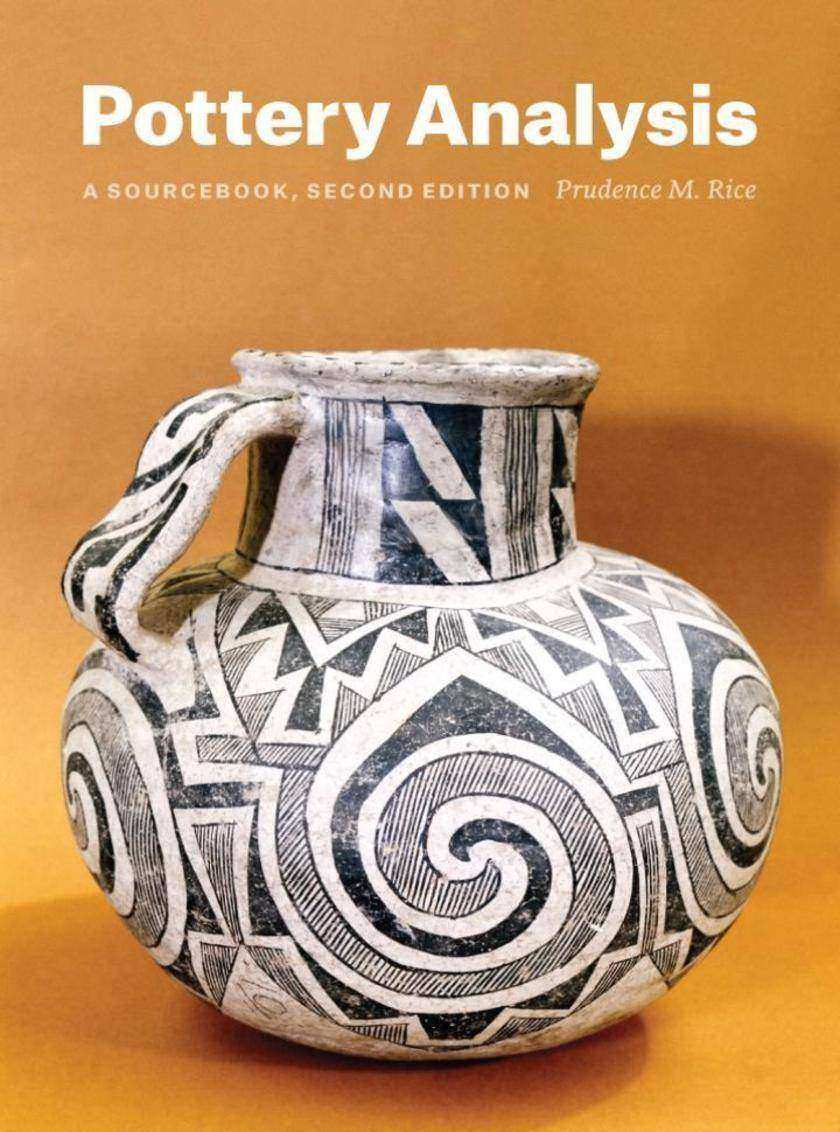
Just as a single pot starts with a lump of clay, the study of a piece's history must start with an understanding of its raw materials. This principle is the foundation of Pottery Analysis, the acclaimed sourcebook that has become the indispensable guide for archaeologists and anthropologists worldwide. By grounding current research in the larger history of pottery and drawing together diverse approaches to the study of pottery, it offers a rich, comprehensive view of ceramic inquiry.This new edition fully incorporates more than two decades of growth and diversification in the fields of archaeological and ethnographic study of pottery. It begins with a summary of the origins and history of pottery in different parts of the world, then examines the raw materials of pottery and their physical and chemical properties. It addresses ethnographic and ethnoarchaeological perspectives on pottery production; reviews the methods of studying pottery's physical, mechanical, thermal, mineralogical, and chemical properties; and discusses how proper analysis of artifacts can reveal insights into their culture of origin. Intended for use in the classroom, the lab, and out in the field, this essential text offers an unparalleled basis for pottery research.
Poet's Freedom
¥229.55
Why do we need new artHow free is the artist in makingAnd why is the artist, and particularly the poet, a figure of freedom in Western cultureThe MacArthur Award-winning poet and critic Susan Stewart ponders these questions in The Poet's Freedom. Through a series of evocative essays, she not only argues that freedom is necessary to making and is itself something made, but also shows how artists give rules to their practices and model a self-determination that might serve in other spheres of work.Stewart traces the ideas of freedom and making through insightful readings of an array of Western philosophers and poets-Plato, Homer, Marx, Heidegger, Arendt, Dante, and Coleridge are among her key sources. She begins by considering the theme of making in the Hebrew Scriptures, examining their accountof a god who creates the world and leaves humans free to rearrange and reform the materials of nature. She goes on to follow the force of moods, sounds, rhythms, images, metrical rules, rhetorical traditions, the traps of the passions, and the nature of language in the cycle of making and remaking. Throughout the book she weaves the insight that the freedom to reverse any act of artistic making is as essential as the freedom to create.?A book about the pleasures of making and thinking as means of life, The Poet's Freedom explores and celebrates the freedom of artists who, working under finite conditions, make considered choices and shape surprising consequences. This engaging and beautifully written notebook on making will attract anyone interested in the creation of art and literature.
A Grammar of Murder
¥282.53
The dark shadows and offscreen space that force us to imagine violence we cannot see. The real slaughter of animals spliced with the fictional killing of men. The missing countershot from the murder victim's point of view. Such images, or absent images, Karla Oeler contends, distill how the murder scene challenges and changes film.?Reexamining works by such filmmakers as Renoir, Hitchcock, Kubrick, Jarmusch, and Eisenstein, Oeler traces the murder scene's intricate connections to the great breakthroughs in the theory and practice of montage and the formulation of the rules and syntax of Hollywood genre. She argues that murder plays such a central role in film because it mirrors, on multiple levels, the act of cinematic representation. Death and murder at once eradicate life and call attention to its former existence, just as cinema conveys both the reality and the absence of the objects it depicts. But murder shares with cinema not only this interplay between presence and absence, movement and stillness: unlike death, killing entails the deliberate reduction of a singular subject to a disposable object. Like cinema, it involves a crucial choice about what to cut and what to keep.

Sorcery in the Black Atlantic
¥253.10
Girls abused in London and torsos of black boys found in the Thames; African boys disappearing from school and child traffic in Africa; child sacrifice and Brazilian Pentecostal exorcism. Unrelated events are swiftly connected in an uncanny work of prestidigitation, including hitech digital images of torsos and forensic drawings of abused children. Les correspondances symboliques, Baudelaire would say, or contiguous magic, in Frazer’s more prosaic de*ion. It all could make sense, if we believe in our fears, suspicions, gossip, and prejudices. Furthermore, this incredible work of prestidigitation was engineered by two respectable institutions, known for their enlightened search of truth: the BBC and Scotland Yard. But where was the evidence that all these things were connectedThe “exorcism scandal” bewitched the media in Britain for the whole month of June, until some dissenting voices started to talk about a “racist witch hunt.” 5 By then, however, a population of hundreds of thousands of Africans, in particular Pentecostal Africans, was already under suspicion. “What if some of that was true?” some people still may ask. In fact, shortly before completing this introduction, the local London newspaper Evening Standard published a two-page report on an African church in the United Kingdom, with the title “Miracles and claims of baby-snatching,” mixing rumors of child trafficking, sorcery, syncretism, and extreme wealth. 6 That is how sorcery works: not by fully demonstrating its power, but by opening a possible doubt; one is never fully sure it is not true.
Paul Klee
¥370.82
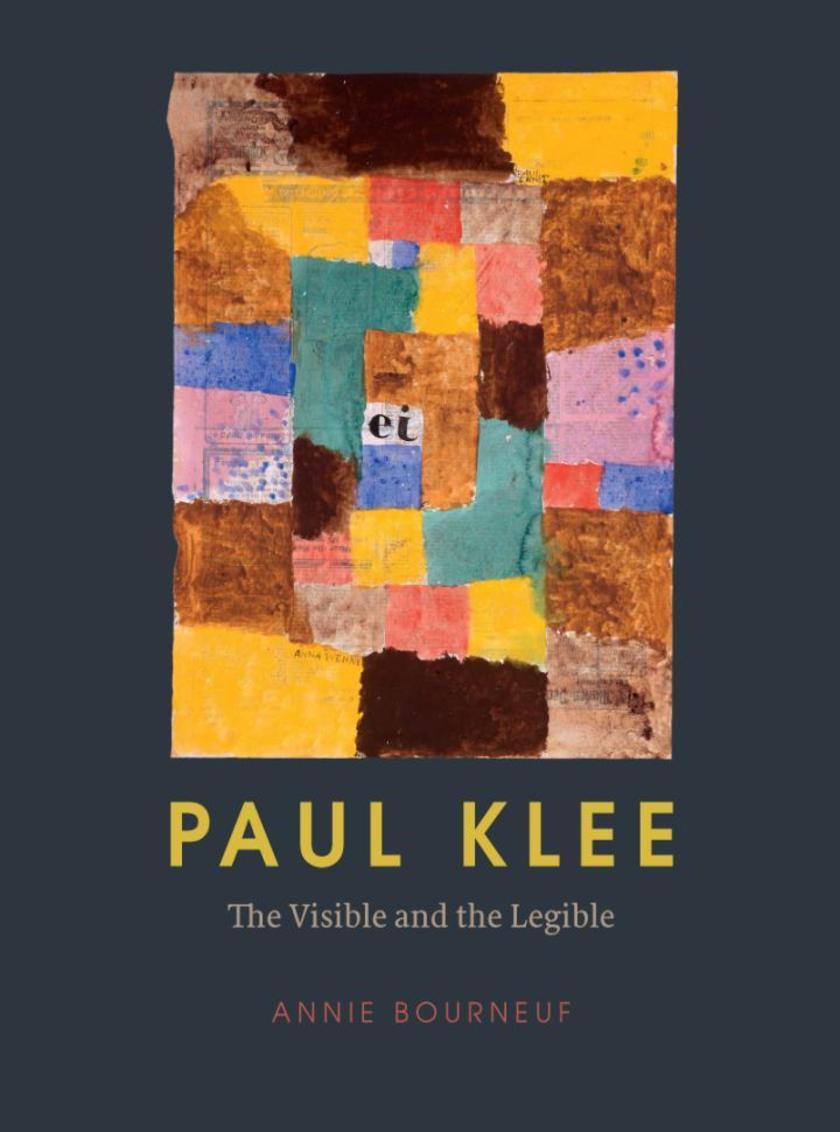
The fact that Paul Klee (1879-1940) consistently intertwined the visual and the verbal in his art has long fascinated commentators from Walter Benjamin to Michel Foucault. However, the questions it prompts have never been satisfactorily answered-until now. In?Paul Klee, Annie Bourneuf offers the first full account of the interplay between the visible and the legible in Klee's works from the 1910s and 1920s.Bourneuf argues that Klee joined these elements to invite a manner of viewing that would unfold in time, a process analogous to reading. From his elaborate titles to the small scale he favored to his metaphoric play with materials, Klee created forms that hover between the pictorial and the written. Through his unique approach, he subverted forms of modernist painting that were generally seen to threaten slow, contemplative viewing. Tracing the fraught relations among seeing, reading, and imagining in the early twentieth century, Bourneuf shows how Klee reconceptualized abstraction at a key moment in its development.

Daddy, Stop Talking!
¥94.10
Last Will & Testament of Adam CarollaI, Adam Carolla, being of beaten-down mind, declare this to be my Last Will and Testament. I revoke all wills and addendums previously made by me. (You guys never did listen, anyway.) Article II appoint the rest of the world's unappreciated dads as Personal Representatives to administer this Will. I bequeath to them the right to crack a couple cold ones in the garage after working their asses off all week and ask that they be permitted to watch all the porn they like and not have to change diapers and get dragged to every preschool "graduation" and PTA meeting. Article IITo my wife, I leave a safe-deposit box, the sole content of which is a note reading "Get a job. I'm dead," and my best wishes on trying to keep up with the unending demands of our houses, cars, dog, and kids.Article IIII devise, bequeath, and give my kids this book, Daddy, Stop Talking. Since you guys were the death of me, I leave you these pages of wisdom. But no cash, cars, or property. You've got to earn those. On that note, I further demand that the following message be placed on the marker of my grave: "You're All on Your Own Now. Enjoy."
Drinking Problems at the Fountain of Youth
¥140.08
Short of spending every waking hour engaged in antiaging treatments, is there anything the average woman can do to shave even a few months from her appearanceDo any of the miracle creams, procedures, or magic potions actually make a person look more youthfulDoes a woman have to worry about her nasolabial folds if she doesn't even know where they're located on her bodyVeteran journalist Beth Teitell aims to find the answers to these questions and many more in her hilarious travels looking for the elusive elixir of youth. If you feel bad about your neck (or any other body part), if the idea of Botox-filled syringes fills you with horror, if you don't want to empty your wallet to pay for $475 serums that promise to cheer up aging skin or the hourly cost of a facial-fitness coach, or if you don't believe the claims of antiaging gummy bears or age-defying bottled water, then Drinking Problems at the Fountain of Youth is the book for you. There's not a woman in America who won't see herself in Teitell's struggles or come away feeling that the enormous amount of energy, time, and money we spend trying to restore our bodies to the way they were when we were twenty could be better spent elsewhere. With honesty, outrage, and wit, Teitell goes deep into the youth-at-any-cost culture and takes it apart from the inside out. And then she reassures us that there is hope there are things we can do to look and feel younger, and ways we can learn to stop worrying about looking older.Drinking Problems at the Fountain of Youth is for every woman who isn't as young as she used to be a book of wisdom and advice, and a laugh-out-loud look at our age-obsessed culture.


