


 购物车
购物车 个人中心
个人中心

The Puppy Listener
¥73.58
An indispensible guide to raising your new puppy from the author of The Dog Listener. From teething to training, this book follows the development of your puppy from new pet to best friend. In The Puppy Listener Jan Fennell presents a simple-to-follow yet detailed handbook for puppy owners. Whether this is your first pup or you are a seasoned dog-owner, the hints and tips in this concise guide are valuable and well informed. This handy guide follows the life of your puppy from weaning to walking. Jan Fennell covers every aspect of caring for your new best friend – from introducing a puppy into its new home and handling it in public, to dealing with behavioural problems. With detailed sections on everything from exercise to diet, there are problem-solving guides dealing with worries such as biting or anxiety. Once again Jan illustrates her points with entertaining and inspiring real-life cases from her own work with damaged and delinquent dogs. Her love of animals is contagious and she inspires owners to persevere with their pups and show them who is boss. The book contains photographs and plate sections which accompany the text.

Illumination
¥66.22
A powerful story of revolution, love and intense rivalry set in 1870 during the four-month siege of Paris. 1870. All over Paris the lights are going out. The Prussians are encircling the city and Europe’s capital of decadent pleasure and luxury is becoming a prison, its citizens caught between defiance and despair. Desperate times lie ahead as the worst winter for decades sets in and starvation looms. One man seems to shine like a beacon in the shadows. Jean-Jacques Allix promises to be the leader the people need, to save the city itself. Painter Hannah Pardy, his young English lover, believes in him utterly; taking up arms for his cause, she is drawn into the heart of the battle for Paris. But as the darkness and panic spreads it is harder and harder to see things as they really are, and Hannah struggles to separate love from self-interest and revolutionaries from traitors. Faced with impossible decisions, Hannah must confront the devastating reality of her beloved Paris to establish what truly matters to her – and what she will do to protect it.

Will & Tom
¥66.22
Will & Tom is a glimpse into the life of the infamous artist JMW Turner as a young man during a week spent at Harewood House fighting for a commission against his childhood friend and rival Tom Girtin. 1797, West Yorkshire. When rising artist Will Turner arrives at Harewood House in high summer, his intention is to sketch the house and grounds, receive his commission and return to London, where he has started attracting serious attention at the Royal Academy. But things at the grand house are not quite as he expects. The atmosphere is strange, both above and below stairs, and Will’s treatment by his hosts is surprisingly offhand. Most perplexing of all, however, is the appearance of another painter – his childhood friend and now rival, Tom Girtin. While Tom is welcomed into the aristocratic circle, Will finds few allies. As it becomes harder to ignore the whispers of scandal , Will witnesses something that will threaten both his commission and his friendship. Alive with intrigue, artistic rivalry, Will & Tom offers a glimpse into the early life of Britain’s greatest painter, J M W Turner, through the story of a complicated, vibrant friendship, and how it is tested by the dark dynamic of art and power.

Everything and Nothing
¥61.51
A family near breaking point hire a nanny with secrets of her own in this gripping novel from an exciting new talent. On the surface, Ruth and Christian seem like an ordinary working couple with two kids – and a home in chaos. As the cracks in their marriage widen, they decide to get their very own super-nanny, Aggie. Quietly efficient, she brings calm and order, and the children adore her. But why is Aggie so eager to gain their trust? Is there something sinister about her efforts to create the perfect family? And what is she really doing in their home? ‘Everything and Nothing’ builds to a mesmerising climax in a story that is, at its heart, about thwarted and damaged love.
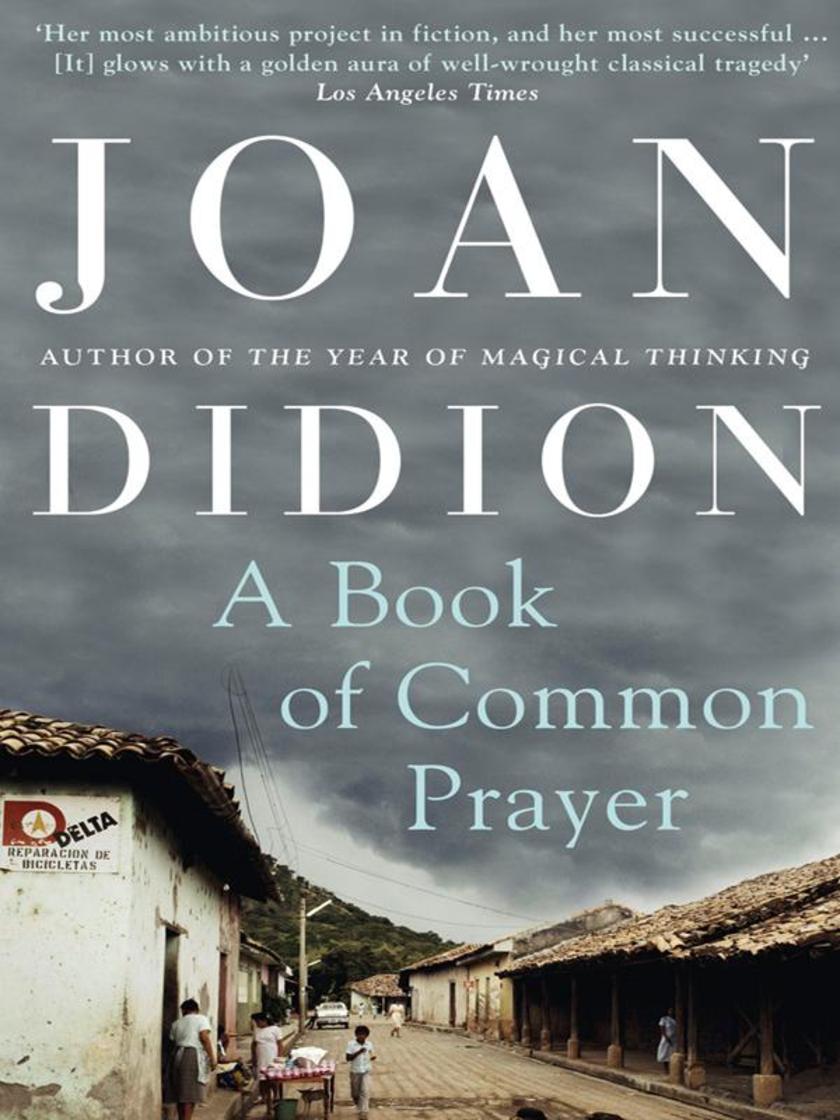
A Book of Common Prayer
¥66.22
An engrossing novel about political and personal life in Central America, from the award-winning author of The Year of Magical Thinking. Set in the ruined Central American nation of Boca Grande, A Book of Common Prayer is the story of two American women and their conflicting experiences of wealth, politics and personal history. We follow the intriguing life of Grace Strasser-Mendana – an American expatriate and member of one of Boca Grande’s most influential families – alongside the story of Charlotte Douglas, whose daughter Medin has run off with a group of Marxist radicals. What follows is an exploration of the women’s ability to make sense of the behaviour that surrounds them, as their worlds are made hazy by the atmosphere of evil and innocence that envelops their strained and entangled lives.

The Hour Before Dawn
¥57.09
A rich, multi-generational saga, set in Singapore and New Zealand. The mysterious disappearance of a young child sets in motion a series of events that will haunt future generations of the family. Singapore in the 1970s. A handsome army officer falls in love with the young daughter of his captain. Although she is determined to become a ballerina, Fleur falls deeply for David and abandons her aspirations to become an army wife and mother. After their first blissfully happy years together, tragedy strikes and Fleur is left widowed with her young twin daughters, Nikki and Saffie. Grief-stricken, she prepares to take her daughters back to England – and then one of them mysteriously vanishes, without a trace. New Zealand, present day. Nikki Montrose, pregnant, is still haunted by the disappearance of her twin sister. Unable to reconcile with her mother, the ghosts of the past haunt her dreams. Fleur’s impending visit forces her to confront her fears. Then when her mother goes missing en route, Nikki must journey to Singapore and attempt a reconciliation. But what they discover back in Port Dickson will send shockwaves through the entire family. Sara MacDonald has written another rich, absorbing family saga which will appeal to all fans of Rosamunde Pilcher and Anita Shreve.

You: Staying Young: Make Your RealAge Younger and Live Up to 35% Longer
¥114.58
International bestselling authors of YOU: The Owner's Manual and YOU: On a Diet give you all the tools and know-how to stay young and defy the ageing process. Drawing lively parallels between your body and aspects of city life, Drs Roizen and Oz show you how to balance your ‘biological budget’ to ensure your life is long and strong. Million-copy-bestselling authors, Michael F. Roizen, M.D. and Mehmet C. Oz, M.D., explain the mysteries of ageing and how you can dramatically slow the process to live a longer, more vibrant life. Written with their irrepressible quirky humour and granite-solid research, YOU: Staying Young is set to become the definitive manual to remaining young, fit and healthy. If your body is a city, the authors explain, it is up to you as mayor, resident and street cleaner to ensure it remains a vibrant city – after all, who wants to live in a run-down, one-horse town? We all have different genes that influence us in same the way as cities are affected by different geographies. However, it is the way in which a city is run and the residents treat it that have the most overwhelming influence. Posing as local inspectors, Roizen and Oz club together to tackle your city's education system (stem cells), power plants (mitochondria), electrical grids (brains), transportation routes (blood vessels), landfills (fat), and parks (skin). They then give you the tools to clean up your act and turn your city back into the cutting-edge, party destination everybody will want to see. Look after your body and it will look after YOU.

Dry Store Room No. 1: The Secret Life of the Natural History Museum (Text Only)
¥80.25
This edition does not include illustrations. ‘Dry Store Room No. 1’ is an intimate biography of the Natural History Museum, celebrating the eccentric personalities who have peopled it and capturing the wonders of scientific endeavour, academic rigour and imagination. Behind the public fa?ade of any great museum there lies a secret domain: one of unseen galleries, locked doors, priceless specimens and hidden lives.Through the stories of the numerous eccentric individuals whose long careers have left their mark on the study of evolutionary science, Richard Fortey, former senior paleaontologist at London's Natural History Museum, celebrates the pioneering work of the Museum from its inception to the present day. He delves into the feuds, affairs, scandals and skulduggery that have punctuated its long history, and formed a backdrop to extraordinary scientific endeavour from Darwin to the present day. He explores the staying power and adaptability of the Museum as it responds to changes wrought by advances in technology and molecular biology – 'spare' bones from an extinct giant bird suddenly become cutting-edge science with the new knowledge that DNA can be extracted from them, and ancient fish are tested with the latest equipment that is able to measure rises in pollution. 'Dry Store Room No.1’ is a fascinating and affectionate account of a hidden world of untold treasures, where every fragment tells a story about time past, by a scientist who combines rigorous professional learning with a gift for prose that sparkles with wit and literary sensibility. Note that it has not been possible to include the same picture content that appeared in the original print version.

City of Lies
¥57.09
A fast-paced thriller from Alafair Burke, where no-one in Manhattan is safe. And no-one is innocent. In New York City nights are dangerous. Days are numbered. When New York University student Megan Gunther is brutally murdered, NYPD Detective Ellie Hatcher and partner J.J. Rogan discover that Megan has been on the receiving end of some sinister online threats. Is her death the result of a campus feud that got out of hand or could there be a twisted cyber fanatic at work? And when a link is revealed between Megan and a murdered real-estate agent, Ellie comes to wonder if there was something else behind the student’s death. Ellie learns that the dead woman shared a secret connection to a celebrity mogul whose bodyguard was mysteriously killed a few months earlier. When Megan's roommate disappears, the hunt for the killer is really on… With fans including everyone from Michael Connelly, Harlan Coben, and Lee Child to Tess Gerritsen, Lisa Gardner and Kathy Reichs, Alafair Burke gives us another nail-biting thriller to keep us on the edge of our seats.

Hold the Dream
¥104.48
The continuing story of Emma Harte, indomitable heroine of A Woman of Substance. Emma Harte was the heroine of Barbara Taylor Bradford’s multi-million copy bestseller, A Woman of Substance. Now she is eighty years old and ready to hand over the reins of the vast business empire she has created. To her favourite grandchild, Paula McGill Fairley, Emma bequeaths her mighty retailing empire with these heartfelt words: ‘I charge you to hold my dream.’ A towering international success, this is the powerfully moving tale of one woman’s determination to ‘hold the dream’ which was entrusted to her, and in so doing find the happiness and passion which is her legacy.

Rock that Frock! (Coleen Style Queen, Book 3)
¥46.11
Introducing Coleen Style Queen – a fictional character inspired by the childhood of leading style icon, Coleen McLoughlin. This is a gorgeous series about boys, friendship, family and fashion. It's the summer holidays and the local youth club is having a battle of the bands competition. Coleen’s best friend Lucy is a fantastic singer so the girls start practising and are determined to win, but not if Summer has her way… As well as a great story this book includes top style and fashion tips, and advice on how to customise your clothes and make your own cool accessories. So there’s no excuse not to look super stylish!

Sun, Sand & Sequins (Coleen Style Queen, Book 4)
¥73.58
Introducing Coleen Style Queen – a fictional character inspired by the childhood of leading style icon, Coleen McLoughlin. This is a gorgeous new series about boys, friendship, family and fashion. Coleen goes on holiday to Spain with her parents and little sister. She meets a cute boy and has a great time, but what about Coleen’s crush Ben back at home… And can Coleen and her little sis win the hotel’s talent contest? As well as a great story this book includes top style and fashion tips, and advice on how to customise your clothes and make your own cool accessories. So there’s no excuse not to look super stylish!
Peter Jackson: A Film-maker’s Journey
¥110.46
Authorised and fully illustrated insight into the life and career of the award-winning director, from his childhood film projects up to King Kong, together with Jackson's revealing personal account of his six-year quest to film The Lord of the Rings. Once, Peter Jackson was a name unknown to all but a small band of loyal fans and fellow film-makers. Now he is the newest member of Hollywood's elite fellowship, with his name on the most successful movie trilogy of all time. Written with Jackson's full participation, this extensive biography, illustrated with never-before-seen photos from Jackson's personal collection, tells the inside story of how a New Zealander became Hollywood's hottest property – from the early cult classics, through Academy Award?-winning success with Kate Winslet's Heavenly Creatures, the abandoned King Kong remake, and the filming of The Lord of the Rings, a project which was abandoned two years into pre-production, rejected by most of the other studios and then picked up by New Line Cinema in the biggest gamble in film history. Drawing upon interviews with fifty of Peter Jackson's colleagues and contemporaries, author Brian Sibley paints a portrait of a true auteur, a man gifted with single-minded determination and an artist's vision. Jackson himself is both revealing and insightful about his entire film-making life, from his first childhood steps filming in Super 8 to the grand realisation of his life’s dream: King Kong. Together, these joint narratives provide a truly unique and compelling insight into one of the finest cinematic minds at work today.

Graveminder
¥14.32
When Rebekkah returns to her small-town home for her beloved Grandmother’s funeral, she little suspects that she is about to inherit a darkly dangerous family duty on behalf of Claysville’s most demanding residents – the dead. Everyone in Claysville knows that the Barrows are no ordinary family, but no one can really explain why. When respected matriarch Maylene Barrow dies suddenly her granddaughter Rebekkah returns to the small town she grew up in, where she must face the demons of her past – the suicide of her half-sister Ella, the person she was closest to in the world, and the subsequent break-up of her parents marriage. And she also re-encounters Byron, Ella’s old boyfriend, someone to whom she has always felt a deep and mysterious connection. But the demons of the past are nothing compared with what the future has in store for Rebekkah. Her grandmother has left her an inheritance both wonderful and terrible. An onerous responsibility now rests on her shoulders – one for which she is ill-prepared to say the least. For behind Claysville’s community-spirited, small-town facade lies a dark secret. One that ties Rebekkah and Byron together in an inextricable bond, and that will require them both to sacrifice everything to keep their friends and neighbours from harm.

The Fireman Finds a Wife (Mills & Boon Love Inspired) (Cedar Springs, Book 1)
¥31.10
Her Unexpected Hero Widow Summer Spencer is eager for a quiet life–without the worry of loving a man who lives life in the fast lane. But when fire chief Cameron Jackson starts to woo her, it's tough to resist his charms. Chief Cam can't ignore the sparks between him and the stately beauty. But when he learns she's from the richest family in town, he's not sure he can ever measure up to her expectations. Can he set aside his fears and give true love another chance?

The Horseman's Frontier Family (Mills & Boon Love Inspired Historical) (Bridegro
¥31.10
The Cowboy Meets His Match Everything Gideon Thornton has worked for is in jeopardy, all because of one stubborn woman. Evelyn Montgomery insists that Gideon's new claim from the Oklahoma Land Rush legally belongs to her. Both refuse to budge–even when the law says that until their dispute is settled, they must share the land. Their family feud has taught Evelyn that Thortons can't be trusted. Yet day by day Gideon's thoughtfulness to Evelyn, and especially to her young son, shows the real truth. A truth that may mean the end of her claim…and the start of a future big enough to encompass both their dreams. Bridegroom Brothers: True love awaits three siblings in the Oklahoma Land Rush

The Millionaire's Homecoming (Mills & Boon Cherish)
¥11.77
Returning home to Blossom Valley was the last thing millionaire David Blaze wanted to do, but his family must come first. And seeing widow Kayla Jaffrey, as beautiful as ever, caused David to wonder if maybe they were being given a chance to rewrite history…this time together…
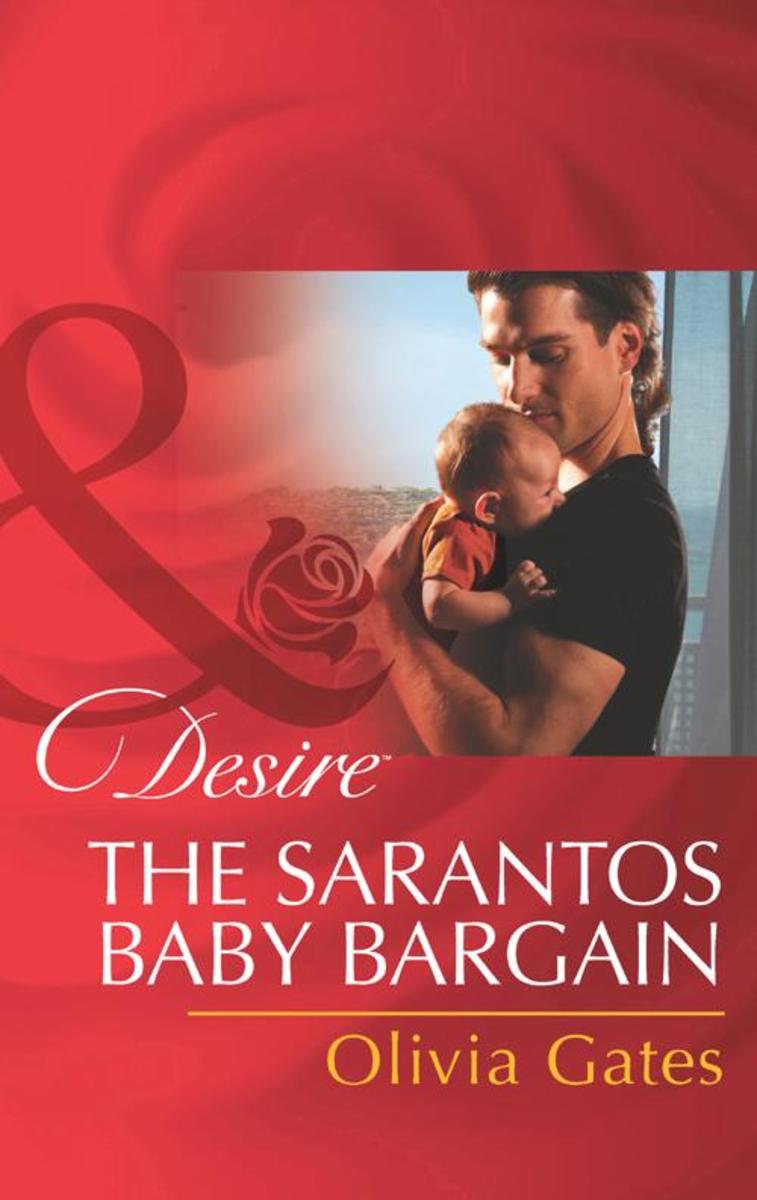
The Sarantos Baby Bargain (Mills & Boon Desire)
¥31.10
Greek venture capitalist Andreas Sarantos let Naomi Sinclair get away once. But adopting his best friend’s baby gives him the leverage he needs to bring his unwilling ex-wife back to his bed. Will having the only woman he’s ever wanted erase the scars of his dark past? Or will he risk driving Naomi away again?

The SEAL's Special Mission (Mills & Boon Superromance)
¥31.10
"You and the boy are coming with me." Navy SEAL Kenneth Nash has one objective–protect the son he's never known. If that means dragging along his former sister-in-law Mallory Ward, then so be it. But while hiding out in a rustic cabin in the Rockies, Nash faces an unexpected problem. Suddenly he's feeling things for Mallory that he has no right to feel. Regardless of how this turns out, he could never be the family man that his son and Mallory deserve. Yet as danger approaches, Nash and Mallory's attraction persists–and it could jeopardize the entire mission.

Total Siyapaa
¥15.50
"Sum of Two Wholes TOTAL SIYAPAA" Aasha Singh, fiery and confident, can't wait to get her hands dirty with hard news, and uncover scandals and controversies. A Punjabi desi in London, from India. Aman Ali, smart-aleck and suave, a promising musician, has left the security of a career in finance to follow his passion in music. A different kind of a Punjabi desi in London, from Pakistan. When Aasha meets Aman during her last assignment at the South Asian Hour before moving onto the news beat, they start off at loggerheads. Then fate and friends nudge them together. Their sassy banter blossoms into a delicious romance. But will reality manage to keep them together? From Edinburgh to London and onwards to Udaipur, friendship, love, family and geographical boundaries make their journey a mix of emotions and delight. Sum of Two Wholes – Total Siyapaa is an extension of the screenplay of the Hindi film, Total Siyapaa, Written by Neeraj Pandey, Directed by Eshvar Niwas.
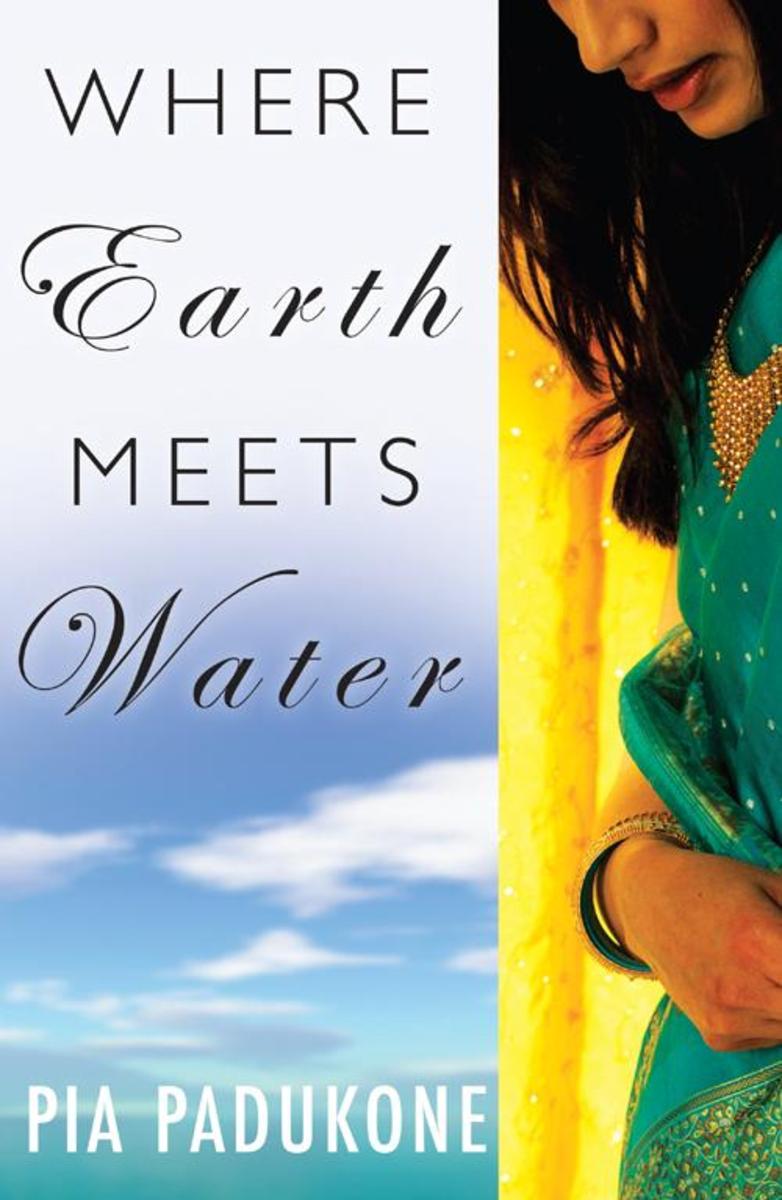
Where Earth Meets Water
¥45.03
IN THIS POIGNANT AND BREATHTAKING DEBUT, ONE MAN SEARCHES FOR MEANING IN THE WAKE OF INCOMPARABLE TRAGEDY… Karom Seth should have been in the Twin Towers on the morning of 9/11, and on the Indian shores in 2004, when the tsunami swept his entire family into the ocean. Whether it's a curse or a blessing, Karom can't be sure, but his absence from these disasters has left him with crushing guilt–and a belief that fate has singled him out for invincibility. Karom's affliction consumes everyone around him, from his best friend, Lloyd, to his girlfriend, Gita, who hopes that a trip to India will help him find peace. It is in Delhi that he meets Gita's grandmother, Kamini–a quirky but wise woman with secrets of her own. At first Karom dismisses Kamini, but little does he realize that she will ultimately lead him to the clarity he's been looking for. Spanning the globe from New York to India, Where Earth Meets Water is a stunning portrait of a quest for human understanding, and a wise exploration of grief, survival and love in all its forms.


