


 购物车
 个人中心

OpenStack for Architects
¥71.93
Design and implement successful private clouds with OpenStack About This Book Explore the various design choices available for cloud architects within an OpenStack deployment Craft an OpenStack architecture and deployment pipeline to meet the unique needs of your organization Create a product roadmap for Infrastructure as a Service in your organization using this hands-on guide Who This Book Is For This book is written especially for those who will design OpenStack clouds and lead their implementation. These people are typically cloud architects, but may also be in product management, systems engineering, or enterprise architecture. What You Will Learn Familiarize yourself with the components of OpenStack Build an increasingly complex OpenStack lab deployment Write compelling documentation for the architecture teams within your organization Apply Agile configuration management techniques to deploy OpenStack Integrate OpenStack with your organization's identity management, provisioning, and billing systems Configure a robust virtual environment for users to interact with Use enterprise security guidelines for your OpenStack deployment Create a product roadmap that delivers functionality quickly to the users of your platform In Detail Over the last five years, hundreds of organizations have successfully implemented Infrastructure as a Service (IaaS) platforms based on OpenStack. The huge amount of investment from these organizations, industry giants such as IBM and HP, as well as open source leaders such as Red Hat have led analysts to label OpenStack as the most important open source technology since the Linux operating system. Because of its ambitious scope, OpenStack is a complex and fast-evolving open source project that requires a diverse skill-set to design and implement it. This guide leads you through each of the major decision points that you'll face while architecting an OpenStack private cloud for your organization. At each point, we offer you advice based on the experience we've gained from designing and leading successful OpenStack projects in a wide range of industries. Each chapter also includes lab material that gives you a chance to install and configure the technologies used to build production-quality OpenStack clouds. Most importantly, we focus on ensuring that your OpenStack project meets the needs of your organization, which will guarantee a successful rollout. Style and approach This is practical, hands-on guide to implementing OpenStack clouds, where each topic is illustrated with real-world examples and then the technical points are proven in the lab.
Deep Learning with Hadoop
¥71.93
Build, implement and scale distributed deep learning models for large-scale datasets About This Book Get to grips with the deep learning concepts and set up Hadoop to put them to use Implement and parallelize deep learning models on Hadoop’s YARN framework A comprehensive tutorial to distributed deep learning with Hadoop Who This Book Is For If you are a data scientist who wants to learn how to perform deep learning on Hadoop, this is the book for you. Knowledge of the basic machine learning concepts and some understanding of Hadoop is required to make the best use of this book. What You Will Learn Explore Deep Learning and various models associated with it Understand the challenges of implementing distributed deep learning with Hadoop and how to overcome it Implement Convolutional Neural Network (CNN) with deeplearning4j Delve into the implementation of Restricted Boltzmann Machines (RBM) Understand the mathematical explanation for implementing Recurrent Neural Networks (RNN) Get hands on practice of deep learning and their implementation with Hadoop. In Detail This book will teach you how to deploy large-scale dataset in deep neural networks with Hadoop for optimal performance. Starting with understanding what deep learning is, and what the various models associated with deep neural networks are, this book will then show you how to set up the Hadoop environment for deep learning. In this book, you will also learn how to overcome the challenges that you face while implementing distributed deep learning with large-scale unstructured datasets. The book will also show you how you can implement and parallelize the widely used deep learning models such as Deep Belief Networks, Convolutional Neural Networks, Recurrent Neural Networks, Restricted Boltzmann Machines and autoencoder using the popular deep learning library deeplearning4j. Get in-depth mathematical explanations and visual representations to help you understand the design and implementations of Recurrent Neural network and Denoising AutoEncoders with deeplearning4j. To give you a more practical perspective, the book will also teach you the implementation of large-scale video processing, image processing and natural language processing on Hadoop. By the end of this book, you will know how to deploy various deep neural networks in distributed systems using Hadoop. Style and approach This book takes a comprehensive, step-by-step approach to implement efficient deep learning models on Hadoop. It starts from the basics and builds the readers’ knowledge as they strengthen their understanding of the concepts. Practical examples are included in every step of the way to supplement the theory.
Learning PowerCLI - Second Edition
¥90.46
Learn to leverage the power of PowerCLI to automate your VMware vSphere environment with ease About This Book This is first book on the market that will enlighten you on the latest version of PowerCLI and how to implement it Effectively manage virtual machines, networks, and reports with the latest features of PowerCLI A comprehensive and practical book on automating VMware vSphere Who This Book Is For This book is ideal for you if you want to learn how to automate your VMware vSphere or vCloud infrastructure by getting the most out of PowerCLI. It’s assumed that you have some experience in administrating a vSphere or vCloud environment. Knowledge of Microsoft’s Windows PowerShell is not a prerequisite. What You Will Learn Explore PowerShell and PowerCLI cmdlets and their output objects See how to manage virtual machines and work with virtual networks Manage vCloud Director from PowerCLI Use Site Recovery Manager from PowerCLI to create a disaster recovery solution Manage NSX and vRealize Automation using REST API with PowerCLI Create and configure vSphere HA and DRS clusters Use vSphere Update Manager with PowerCLI to create patch baselines and scan hosts Explore reporting techniques to retrieve log files In Detail VMware vSphere PowerCLI, a free extension to Microsoft Windows PowerShell, enables you to automate the management of a VMware vSphere or vCloud environment. This book will show you how to automate your tasks and make your job easier. Starting with an introduction to the basics of PowerCLI, the book will teach you how to manage your vSphere and vCloud infrastructure from the command line. To help you manage a vSphere host overall, you will learn how to manage vSphere ESXi hosts, host profiles, host services, host firewall, and deploy and upgrade ESXi hosts using Image Builder and Auto Deploy. The next chapter will not only teach you how to create datastore and datastore clusters, but you’ll also work with profile-driven and policy-based storage to manage your storage. To create a disaster recovery solution and retrieve information from vRealize Operations, you will learn how to use Site Recovery Manager and vRealize Operations respectively. Towards the end, you’ll see how to use the REST APIs from PowerShell to manage NSX and vRealize Automation and create patch baselines, scan hosts against the baselines for missing patches, and re-mediate hosts. By the end of the book, you will be capable of using the best tool to automate the management and configuration of VMware vSphere. Style and approach This comprehensive book will teach system administrators everything about PowerCLI 6 and how to utilize it to automate VMware vSphere.
Microsoft System Center 2016 Service Manager Cookbook - Second Edition
¥107.90
Discover over 100 practical recipes to help you master the art of IT service management for your organization About This Book Unleash the capabilities of Microsoft System Center 2016 Service Manager Master the skills of configuring, deploying, managing, and troubleshooting your Service Manager 2016 This book contains practical recipes that leverage the key and newly added features and functionalities of Microsoft System Center 2016 Service Manager Who This Book Is For This book will be useful to IT professionals including SCSM administrators who want to configure and administer System Center Service Manager 2016 and understand how to solve specific problems and scenarios that arise. It will also be useful to users of Service Manager 2012 who want to learn about the new features and capabilities of the Service Manager 2016 release. It will be ideal if you have Service Manager experience as well as experience with other System Center products. What You Will Learn See a practical implementation of the ITSM framework and processes based on ITIL Deploy and configure the new Service Manager HTML5 Self-Service Portal along with Service Catalog design and configuration Get to know about Incident, Problem, and Change Management processes and configuration Get to grips with performing advanced personalization in Service Manager Discover how to set up and use automation with and within Service Manager 2016 Work with Service Manager Data Warehouse Find out what Security Roles are and how to implement them Learn how to upgrade from SCSM 2012 R2 to SCSM 2016 In Detail System Center Service Manager (SCSM) is an integrated platform that offers a simplified data center management experience by implementing best practices such as Incident Management, Service Request, and Change Control to achieve efficient service delivery across your organization. This book provides you with real-world recipes that can be used immediately and will show you how to configure and administer SCSM 2016. You’ll also find out how to solve particular problems and scenarios to take this tool further. You’ll start with recipes on implementing ITSM frameworks and processes and configuring Service Level Agreements (SLAs). Then, you'll work through deploying and configuring the HTML5 Self-Service Portal, configuring Incident and Problem Management, and designing and configuring Change and Release Management. You'll also learn about security roles and overall Microsoft SCSM 2016 administration. Toward the end of the book, we’ll look at advanced topics, such as presenting the wealth of information stored within the Service Manager Data Warehouse, standardizing SCSM deployments, and implementing automation. Style and approach This book will enlighten you on Microsoft System Center 2016 Service Manager through recipes that can be implemented directly in any enterprise. You can read the book from start to end if you’re a beginner, or just open up any chapter and start following the recipes as a reference for advanced users. This book consists of a pool of step-by-step recipes on how to perform activities in Service Manager.
Alfresco One 5.x Developer’s Guide - Second Edition
¥80.65
Discover what it means to be an expert developer by exploring the latest features available to you in Alfresco One 5.x About This Book Create reliable and secure enterprise apps with the latest Alfresco One 5.x platform Explore all the latest Alfresco One 5.x APIs such as the CMIS API, Alfresco One API, and the integrated RESTful API to get more out of your enterprise apps Unleash the power of the latest JavaScript engine and the JavaScript API for Alfresco to customize your existing apps for the Alfresco 5 platform Who This Book Is For If you’re an enterprise app developer who wants to create custom applications with Alfresco, then this book is for you. Previous knowledge with Alfresco would be helpful but is not necessary. What You Will Learn Create and manage a custom content model Configure the Alfresco Share user interface Build a new AngularJS 2.0 application Create business process definitions using Activiti Designer Discover the most common extensions provided by Alfresco Configure Alfresco to authenticate against LDAP, including & chaining" LDAP with Alfresco authentication Get familiar with the latest features of Alfresco Mobile SDK, Smart Search, and the new Angular framework In Detail Do you want to create more reliable and secure solutions for enterprise appsAlfresco One 5.x is your gateway to developing the best industry-standard enterprise apps and this book will help you to become a pro with Alfresco One 5.x development. This book will help you create a complete fully featured app for your organization and while you create that perfect app, you will explore and implement the new and intriguing features of Alfresco. The book starts with an introduction to the Alfresco platform and you’ll see how to configure and customize it. You will learn how to work with the content in a content management system and how you can extend it to your own use case. Next, you will find out how to work with Alfresco Share, an all-purpose user interface for general document management, and customize it. Moving on, you write web *s that create, read, and delete data in the back-end repository. Further on from that, you’ll work with a set of tools that Alfresco provides; to generate a basic AnglularJS application supporting use cases, to name a few authentication, document list, document view. Finally, you’ll learn how to develop your own Alfresco Mobile app and understand how Smart Folders and Search manager work. By the end of the book, you’ll know how to configure Alfresco to authenticate against LDAP, be able to set up Single Sign-On (SSO), and work with Alfresco’s security services. Style and approach This book takes a step-by-step practical tutorial-style approach helping you create a complete enterprise app using Alfresco.
Natural Language Processing: Python and NLTK
¥152.59
Learn to build expert NLP and machine learning projects using NLTK and other Python libraries About This Book Break text down into its component parts for spelling correction, feature extraction, and phrase transformation Work through NLP concepts with simple and easy-to-follow programming recipes Gain insights into the current and budding research topics of NLP Who This Book Is For If you are an NLP or machine learning enthusiast and an intermediate Python programmer who wants to quickly master NLTK for natural language processing, then this Learning Path will do you a lot of good. Students of linguistics and semantic/sentiment analysis professionals will find it invaluable. What You Will Learn The scope of natural language complexity and how they are processed by machines Clean and wrangle text using tokenization and chunking to help you process data better Tokenize text into sentences and sentences into words Classify text and perform sentiment analysis Implement string matching algorithms and normalization techniques Understand and implement the concepts of information retrieval and text summarization Find out how to implement various NLP tasks in Python In Detail Natural Language Processing is a field of computational linguistics and artificial intelligence that deals with human-computer interaction. It provides a seamless interaction between computers and human beings and gives computers the ability to understand human speech with the help of machine learning. The number of human-computer interaction instances are increasing so it’s becoming imperative that computers comprehend all major natural languages. The first NLTK Essentials module is an introduction on how to build systems around NLP, with a focus on how to create a customized tokenizer and parser from scratch. You will learn essential concepts of NLP, be given practical insight into open source tool and libraries available in Python, shown how to analyze social media sites, and be given tools to deal with large scale text. This module also provides a workaround using some of the amazing capabilities of Python libraries such as NLTK, scikit-learn, pandas, and NumPy. The second Python 3 Text Processing with NLTK 3 Cookbook module teaches you the essential techniques of text and language processing with simple, straightforward examples. This includes organizing text corpora, creating your own custom corpus, text classification with a focus on sentiment analysis, and distributed text processing methods. The third Mastering Natural Language Processing with Python module will help you become an expert and assist you in creating your own NLP projects using NLTK. You will be guided through model development with machine learning tools, shown how to create training data, and given insight into the best practices for designing and building NLP-based applications using Python. This Learning Path combines some of the best that Packt has to offer in one complete, curated package and is designed to help you quickly learn text processing with Python and NLTK. It includes content from the following Packt products: NTLK essentials by Nitin Hardeniya Python 3 Text Processing with NLTK 3 Cookbook by Jacob Perkins Mastering Natural Language Processing with Python by Deepti Chopra, Nisheeth Joshi, and Iti Mathur Style and approach This comprehensive course creates a smooth learning path that teaches you how to get started with Natural Language Processing using Python and NLTK. You’ll learn to create effective NLP and machine learning projects using Python and NLTK.
Mastering React Native
¥80.65
Leverage frontend development skills to build impressive iOS and Android applications with React Native About This Book Apply flexbox to get layout and build rich animations that bring your React Native application to life Integrate third-party libraries and develop customized components that run natively on iOS and Android platforms Combine React Native with Redux, Redux middleware, and a remote API to build scalable data-driven applications Who This Book Is For This book is for anyone who wants to build cross-platform native mobile applications using only JavaScript and the React Native framework. In particular, this book is especially useful for front-end developers who want to use their current skillset to build mobile applications. An existing working knowledge of JavaScript will help you get the most out of this book. What You Will Learn Implement native React Native components and APIs Explore React’s JSX syntax Manage data using Redux and Redux middleware Build applications with React Native on both iOS and Android platforms Perform animations in your applications using the animation APIs Understand routing and Navigator comparison Create your own Native module In Detail React Native has completely revolutionized mobile development by empowering JavaScript developers to build world-class mobile apps that run natively on mobile platforms. This book will show you how to apply JavaScript and other front-end skills to build cross-platform React Native applications for iOS and Android using a single codebase. This book will provide you with all the React Native building blocks necessary to become an expert. We’ll give you a brief explanation of the numerous native components and APIs that come bundled with React Native including Images, Views, ListViews, WebViews, and much more. You will learn to utilize form inputs in React Native. You’ll get an overview of Facebook’s Flux data architecture and then apply Redux to manage data with a remote API. You will also learn to animate different parts of your application, as well as routing using React Native’s navigation APIs. By the end of the book, you will be able to build cutting-edge applications using the React Native framework. Style and approach This comprehensive guide will take your React Native skills to the next level. It shows you how to develop a clear workflow to build scalable applications, and how to implement the architectural concepts covered to build applications that shine in the real world.
Object-Oriented JavaScript - Third Edition
¥80.65
Learn everything you need to know about object-oriented JavaScript with this comprehensive guide. Enter the world of cutting-edge development! About This Book This book has been updated to cover all the new object-oriented features introduced in ECMAScript 6 It makes object-oriented programming accessible and understandable to web developers Write better and more maintainable JavaScript code while exploring interactive examples that can be used in your own *s Who This Book Is For This book is ideal for new to intermediate JavaScript developers who want to prepare themselves for web development problems solved by object-oriented JavaScript! What You Will Learn Apply the basics of object-oriented programming in the JavaScript environment Use a JavaScript Console with complete mastery Make your programs cleaner, faster, and compatible with other programs and libraries Get familiar with Iterators and Generators, the new features added in ES6 Find out about ECMAScript 6’s Arrow functions, and make them your own Understand objects in Google Chrome developer tools and how to use them Use a mix of prototypal inheritance and copying properties in your workflow Apply reactive programming techniques while coding in JavaScript In Detail JavaScript is an object-oriented programming language that is used for website development. Web pages developed today currently follow a paradigm that has three clearly distinguishable parts: content (HTML), presentation (CSS), and behavior (JavaScript). JavaScript is one important pillar in this paradigm, and is responsible for the running of the web pages. This book will take your JavaScript skills to a new level of sophistication and get you prepared for your journey through professional web development. Updated for ES6, this book covers everything you will need to unleash the power of object-oriented programming in JavaScript while building professional web applications. The book begins with the basics of object-oriented programming in JavaScript and then gradually progresses to cover functions, objects, and prototypes, and how these concepts can be used to make your programs cleaner, more maintainable, faster, and compatible with other programs/libraries. By the end of the book, you will have learned how to incorporate object-oriented programming in your web development workflow to build professional JavaScript applications. Style and approach Filled with practical instructions, the book shows you how to implement object-oriented features of JavaScript in the real world. The to-the-point nature of the book will benefit developers who are looking for a fast-paced guide to learn object-oriented JavaScript.
React Design Patterns and Best Practices
¥80.65
Build modular applications that are easy to scale using the most powerful components and design patterns that React can offer you right now About This Book Dive into the core patterns and components of React.js in order to master your application's design Improve their debugging skills using the DevTools This book is packed with easy-to-follow examples that can be used to create reusable code and extensible designs Who This Book Is For If you want to increase your understanding of React and apply it to real-life application development, then this book is for you. What You Will Learn Write clean and maintainable code Create reusable components applying consolidated techniques Use React effectively in the browser and node Choose the right styling approach according to the needs of the applications Use server-side rendering to make applications load faster Build high-performing applications by optimizing components In Detail Taking a complete journey through the most valuable design patterns in React, this book demonstrates how to apply design patterns and best practices in real-life situations, whether that's for new or already existing projects. It will help you to make your applications more flexible, perform better, and easier to maintain – giving your workflow a huge boost when it comes to speed without reducing quality. We'll begin by understanding the internals of React before gradually moving on to writing clean and maintainable code. We'll build components that are reusable across the application, structure applications, and create forms that actually work. Then we'll style React components and optimize them to make applications faster and more responsive. Finally, we'll write tests effectively and you'll learn how to contribute to React and its ecosystem. By the end of the book, you'll be saved from a lot of trial and error and developmental headaches, and you will be on the road to becoming a React expert. Style and approach The design patterns in the book are explained using real-world, step-by-step examples. For each design pattern, there are hints about when to use it and when to look for something more suitable. This book can also be used as a practical guide, showing you how to leverage design patterns.
Enduring CSS
¥71.93
Learn to really THINK about CSS, and how to create CSS that endures continual iteration, multiple authors, and yet always produces predictable results About This Book Address the problems of CSS at scale, avoiding the shortfalls of scaling CSS. The shortfalls of conventional approaches to scaling CSS. Develop consistent and enforceable selector naming conventions with ECSS. Learn how to organize project structure to more easily isolate and decouple visual components. Who This Book Is For This is a book for working CSS authors involved in large projects. This is a book that tackles create enduring CSS for large-scale projects. What You Will Learn The problems of CSS at scale—specificity, the cascade and styles intrinsically tied to element structure. The shortfalls of conventional approaches to scaling CSS. The ECSS methodology and the problems it solves. How to develop consistent and enforceable selector naming conventions with ECSS. How to organise project structure to more easily isolate and decouple visual components. How to handle state changes in the DOM with ARIA or override selectors. How to apply ECSS to web applications and visual modules. Considerations of CSS tooling and processing: Sass/PostCSS and linting. Addressing the notion of CSS selector speed with hard data and browser representative insight In Detail Learn with me, Ben Frain, about how to really THINK about CSS and how to use CSS for any size project! I'll show you how to write CSS that endures continual iteration, multiple authors, and yet always produces predictable results. Enduring CSS, often referred to as ECSS, offers you a robust and proven approach to authoring and maintaining style sheets at scale. Enduring CSS is not a book about writing CSS, as in the stuff inside the curly braces. This is a book showing you how to think about CSS, and be a smarter developer with that thinking! It's about the organisation and architecture of CSS—the parts outside the braces. I will help you think about the aspects of CSS development that become the most difficult part of writing CSS in larger projects. You’ll learn about the problems of authoring CSS at scale—including specificity, the cascade and styles intrinsically tied to document structure. I'll introduce you to the ECSS methodology, and show you how to develop consistent and enforceable selector naming conventions. We'll cover how to apply ECSS to your web applications and visual model, and how you can organize your project structure wisely, and handle visual state changes with ARIA, providing greater accessibility considerations. In addition, we'll take a deep look into CSS tooling and process considerations. Finally we will address performance considerations by examining topics such as CSS selector speed with hard data and browser-representative insight. Style and approach Learn with me, Ben Frain, about how to really think about CSS. This is a book to deal with writing CSS for large-scale, rapidly changing web projects and applications. This isn't a book about writing CSS, as in the stuff inside the curly braces - this is a book about the organisation and architecture of CSS; the parts outside the braces!
Extending Microsoft Dynamics NAV 2016 Cookbook
¥99.18
Make the most of your NAV deployment by extending and customizing it with a variety of expert tools About This Book Extend Dynamics in a cost-effective manner by using tools that are ready at your disposal Solve common business problems with the valuable features and flexibility of Dynamics NAV Follow practical and easy-to-grasp examples, illustrations, and coding to make the most out of Dynamics NAV in your organisation Who This Book Is For This book is for Dynamics NAV developers and administrators who have a good knowledge level and understanding of Dynamics NAV application development and administration. What You Will Learn Develop a module in Dynamics NAV using C/AL Build relationships with COM technologies Develop and integrate COM with Dynamics NAV 2016 Call the framework members from C/AL Develop an event in the .NET framework and see how to subscribe to it using C/AL Automate the deployment into Dynamics NAV Develop Windows Client Control add-Ins Deploy your resource automatically from Visual Studio Install and Configure Windows Client Control add-Ins Integrate Dynamics NAV with Sharepoint In Detail Microsoft Dynamics NAV is an enterprise resource planning (ERP) software suite for organizations. The system offers specialized functionality for manufacturing, distribution, government, retail, and other industries. Its integrated development environment enables customizations with minimal disruption to business processes. The book starts explaining the new features of Dynamics NAV along with how to create and modify a simple module. Moving on, you will learn the importance of thinking beyond the boundaries of C/AL development and the possibilities opened by with it. Next, you will get to know how COM can be used to extend the functionalities of Dynamics NAV. You’ll find out how to extend the Dynamics NAV 2016 version using .NET interoperability and will see the steps required to subscribe to .NET events in order to extend Dynamics NAV. Finally, you’ll see the cmdlets available to manage extension packages. By the end of the book, you will have the knowledge needed to become more efficient in selecting the extending methods, developing and deploying them to the Dynamics NAV, and practicing the best practices. Style and approach The book follows a practical recipe-based approach focusing on real-world scenarios and giving you all the information you need to build a strong Dynamics NAV implementation.
Implementing Oracle Integration Cloud Service
¥99.18
Understand everything you need to know about Oracle’s Integration Cloud Service and how to utilize it optimally for your business About This Book The only guide to Integration Cloud Service in the market Focused on practical action to deliver business value A professional’s guide to an expensive product, providing comprehensive training, and showing how to extract real business value from the product Who This Book Is For This book is ideal for any IT professional working with ICS, any Oracle application or cloud solution developer or analyst who wants to work with ICS to deliver business value. What You Will Learn Use ICS to integrate different systems together without needing to be a developer Gain understanding of what a number of technologies and standards provide – without needing to understand the fine details of those standards and technologies Understand the use of connectors that Oracle provide from technology based connections such as file and database connections to SaaS solutions ranging from Salesforce to Twitter Enrich data and extend SaaS integration to route to different instances Utilize a number of tools to help develop and check that your integrations work before connecting to live systems Introduce and explain integration concepts so that the integrations created are maintainable and sustainable for the longer term Provide details on how to keep up to date with the features that Oracle and partners provide in the future Get special connections developed to work with ICS In Detail Businesses are built on data, and applications that access that data. In modern businesses the same cloud-based data stores and applications might be accessed by hundreds of different applications from thousands of different devices via APIs. To make this happen, APIs must be wired together i.e. integrated. Oracle Integration Cloud Service provides a complete method for integrating enterprise applications in the cloud. Integration Cloud Service (ICS) provides a cloud hosted means to integrate systems together using a graphical means to define and represent integrations. This book will be a comprehensive, hands-on guide to building successful, high-availability integrations on ICS. This book sets out to demonstrate how ICS can be used to effectively implement integrations that work both in the cloud and on premise. It starts with a fast, practical introduction to what ICS can do for your business and then shows how ICS allows you to develop integrations not only quickly but in a way that means they are maintainable and extensible. Gradually it moves into more advanced integrations, showing how to achieve sophisticated results with ICS and work with external applications. Finally the book shows you how to monitor cloud apps and go beyond ICS to build even more powerful integrated applications. By the end of the book, you will the knowledge on how to use ICS to solve your own integration needs and harness the technologies in a maintainable and sustainable manner. Style and approach This book will take a pragmatic approach and will be a business-focused guide to delivering business value with ICS.
Angular 2 Cookbook
¥90.46
Discover over 70 recipes that provide the solutions you need to know to face every challenge in Angular 2 head on About This Book · A first-rate reference guide with a clear structure and intuitive index that gives you as a developer exactly the information you want in exactly the way you want it · Covers no legacy material from the outdated Angular release candidates; it is up-to-date with the latest release of Angular 2.4 · All the code in the book is explicitly written out, and every piece of code shown is a step towards building a simple working example Who This Book Is For This book is for developers who are competent with JavaScript and are looking to dive headfirst into the TypeScript edition of Angular 2. This book is also geared towards developers with experience in Angular 1 who are looking to make the transition. What You Will Learn · Understand how to best move an Angular 1 application to Angular 2 · Build a solid foundational understanding of the core elements of Angular 2 such as components, forms, and services · Gain an ability to wield complex topics such as Observables and Promises · Properly implement applications utilizing advanced topics such as dependency injection · Know how to maximize the performance of Angular 2 applications · Understand the best ways to take an Angular 2 application from TypeScript in a code editor to a fully function application served on your site · Get to know the best practices when organizing and testing a large Angular 2 application In Detail Angular 2 introduces an entirely new way to build applications. It wholly embraces all the newest concepts that are built into the next generation of browsers, and it cuts away all the fat and bloat from Angular 1. This book plunges directly into the heart of all the most important Angular 2 concepts for you to conquer. In addition to covering all the Angular 2 fundamentals, such as components, forms, and services, it demonstrates how the framework embraces a range of new web technologies such as ES6 and TypeScript syntax, Promises, Observables, and Web Workers, among many others. This book covers all the most complicated Angular concepts and at the same time introduces the best practices with which to wield these powerful tools. It also covers in detail all the concepts you'll need to get you building applications faster. Oft-neglected topics such as testing and performance optimization are widely covered as well. A developer that reads through all the content in this book will have a broad and deep understanding of all the major topics in the Angular 2 universe. Style and approach This book follows a cookbook approach—each recipe presents a unique problem to which the solution is presented in a clear, concise, and manner step-by-step manner. With practical hands-on guidance in each and every recipe, you’ll be able to get to grips with the concepts.
Docker Orchestration
¥80.65
A concise, fast-paced guide to orchestrating and deploying scalable services with Docker About This Book Explore the new features added to the core Docker Engine to make multi-container orchestration easy Leverage tools such as Docker Machine, Swarm, Compose, and third-party tools such as Kubernetes, Mesosphere, and CoreOS to orchestrate containers Use Docker Compose with Swarm and apply rolling updates for zero downtime deployments Who This Book Is For This book is aimed at Sysadmins and DevOps engineers who know what Docker does and are now looking to manage multiple containers on multiple hosts using the orchestration feature. What You Will Learn Build scalable, reliable services with Docker See how to manage a service in Docker using Docker Swarm, Kubernetes, and Mesosphere Discover simpler orchestration tools such as CoreOS/Fleet and Rancher Cattle Understand cluster-wide logging, system monitoring, and troubleshooting Build, test, and deploy containers using Continuous Integration Deploy cluster hosts on cloud services and automate your infrastructure In Detail Docker orchestration is what you need when transitioning from deploying containers individually on a single host to deploying complex multi-container apps on many machines. This book covers the new orchestration features of Docker 1.12 and helps you efficiently build, test, and deploy your application using Docker. You will be shown how to build multi-container applications using Docker Compose. You will also be introduced to the building blocks for multi-host Docker clusters such as registry, overlay networks, and shared storage using practical examples. This book gives an overview of core tools such as Docker Machine, Swarm, and Compose which will enhance your orchestration skills. You’ll learn how to set up a swarm using the decentralized building block. Next, you’ll be shown how to make the most out of the in-built orchestration feature of Docker engine and you’ll use third-party tools such as Kubernetes, Mesosphere, and CoreOS to orchestrate your existing process. Finally, you will learn to deploy cluster hosts on cloud services and automate your infrastructure. Style and approach This comprehensive guide will take you through the orchestration feature of Docker. Using practical examples, you will discover various tools that can be used to manage multiple containers with ease.
Python: Real-World Data Science
¥171.12
Unleash the power of Python and its robust data science capabilities About This Book Unleash the power of Python 3 objects Learn to use powerful Python libraries for effective data processing and analysis Harness the power of Python to analyze data and create insightful predictive models Unlock deeper insights into machine learning with this vital guide to cutting-edge predictive analytics Who This Book Is For Entry-level analysts who want to enter in the data science world will find this course very useful to get themselves acquainted with Python’s data science capabilities for doing real-world data analysis. What You Will Learn Install and setup Python Implement objects in Python by creating classes and defining methods Get acquainted with NumPy to use it with arrays and array-oriented computing in data analysis Create effective visualizations for presenting your data using Matplotlib Process and analyze data using the time series capabilities of pandas Interact with different kind of database systems, such as file, disk format, Mongo, and Redis Apply data mining concepts to real-world problems Compute on big data, including real-time data from the Internet Explore how to use different machine learning models to ask different questions of your data In Detail The Python: Real-World Data Science course will take you on a journey to become an efficient data science practitioner by thoroughly understanding the key concepts of Python. This learning path is divided into four modules and each module are a mini course in their own right, and as you complete each one, you’ll have gained key skills and be ready for the material in the next module. The course begins with getting your Python fundamentals nailed down. After getting familiar with Python core concepts, it’s time that you dive into the field of data science. In the second module, you'll learn how to perform data analysis using Python in a practical and example-driven way. The third module will teach you how to design and develop data mining applications using a variety of datasets, starting with basic classification and affinity analysis to more complex data types including text, images, and graphs. Machine learning and predictive analytics have become the most important approaches to uncover data gold mines. In the final module, we'll discuss the necessary details regarding machine learning concepts, offering intuitive yet informative explanations on how machine learning algorithms work, how to use them, and most importantly, how to avoid the common pitfalls. Style and approach This course includes all the resources that will help you jump into the data science field with Python and learn how to make sense of data. The aim is to create a smooth learning path that will teach you how to get started with powerful Python libraries and perform various data science techniques in depth.
Advanced Splunk
¥90.46
Master the art of getting the maximum out of your machine data using Splunk About This Book A practical and comprehensive guide to the advanced functions of Splunk,, including the new features of Splunk 6.3 Develop and manage your own Splunk apps for greater insight from your machine data Full coverage of high-level Splunk techniques including advanced searches, manipulations, and visualization Who This Book Is For This book is for Splunk developers looking to learn advanced strategies to deal with big data from an enterprise architectural perspective. It is expected that readers have a basic understanding and knowledge of using Splunk Enterprise. What You Will Learn Find out how to develop and manage apps in Splunk Work with important search commands to perform data analytics on uploaded data Create visualizations in Splunk Explore tweaking Splunk Integrate Splunk with any pre-existing application to perform data crunching efficiently and in real time Make your big data speak with analytics and visualizations using Splunk Use SDK and Enterprise integration with tools such as R and Tableau In Detail Master the power of Splunk and learn the advanced strategies to get the most out of your machine data with this practical advanced guide. Make sense of the hidden data of your organization – the insight of your servers, devices, logs, traffic and clouds. Advanced Splunk shows you how. Dive deep into Splunk to find the most efficient solution to your data problems. Create the robust Splunk solutions you need to make informed decisions in big data machine analytics. From visualizations to enterprise integration, this well-organized high level guide has everything you need for Splunk mastery. Start with a complete overview of all the new features and advantages of the latest version of Splunk and the Splunk Environment. Go hands on with uploading data, search commands for basic and advanced analytics, advanced visualization techniques, and dashboard customizing. Discover how to tweak Splunk to your needs, and get a complete on Enterprise Integration of Splunk with various analytics and visualization tools. Finally, discover how to set up and use all the new features of the latest version of Splunk. Style and approach This book follows a step by step approach. Every new concept is built on top of its previous chapter, and it is full of examples and practical scenarios to help the reader experiment as they read.
React: Building Modern Web Applications
¥171.12
Master the art of building dynamic, modern web applications with React About This Book Learn the hot new frontend web framework from Facebook – ReactJS, an easy way of developing the V in MVC and a better approach to software engineering in JavaScript A fast-paced guide to designing and building scalable and maintainable web apps with React.js Learn all the new ES6 features and be among the most prominent JavaScript developers who can write efficient JS programs as per the latest standards Master the art of building modern web applications using React Learn to build modern native iOS and Android applications using JavaScript and the incredible power of React Who This Book Is For This course is for web developers that want to unlock high performance dynamism in the applications that they create. If you want a comprehensive journey into one of the most important JavaScript frameworks around today, dive into this course. What You Will Learn Take control of the front end with reactive JavaScript programming Discover what ReactJS offers your development - before mastering it Create React elements with properties and children Use JSX to speed up your React development process Test your React components with the Jest test framework Learn the latest syntax of ES6 Execute ES6 in a non-supported ES6 environment Learn the principles of object-oriented programming Create a complete single-page application Use an application design plan to write smarter, more meaningful code Learn how to use animations to give extra style to your application Get to grips with the React Native environment Write your own custom native UI components Integrate native modules in Objective-C and Java that interact with JavaScript In Detail ReactJS has helped to transform the web as we know it. Designed by Facebook to help developers build rapid, responsive UI that can deal with data-intensive usage, it’s an essential component in any web developer’s skillset. This ReactJS course, in five connected modules, provides you with a fast, engaging and practical route into ReactJS—so you can build powerful, elegant, and modern web applications. Beginning with the Reactive Programming with JavaScript module, you will learn how to take advantage of a reactive and functional programming paradigm to rethink how you approach your JavaScript code. It’s built to help you understand the concepts, relevant and applicable for any frontend developer. You’ll then dive a little deeper into ReactJS. The second module gives you a rapid look through the fundamentals of ReactJS, showing you how to build a basic application and demonstrating how to implement the Flux architecture. In the third module you will get to grips with ES6—this will make you a more fluent JavaScript developer, giving you control over ReactJS. You can put your old JavaScript hacks aside and instead explore how to create ES6 custom iterators. In the final two modules you’ll learn how to fully master ReactJS, exploring its wider ecosystem of tools that have helped to make it one of the most important tools in web development today. Ending with insights and guidance on React Native, the tool built for today’s demand for native, intuitive user experiences and interfaces, with this course you can be confident in building dynamic and modern apps with React. Style and approach Consisting of five separate modules, journey from the fundamentals of reactive programming to the exciting possibilities of React Native. Each module builds on each other, helping you to incrementally develop your skills and knowledge.
Extending Docker
¥90.46
Master the art of making Docker more extensible, composable, and modular by leveraging plugins and other supporting tools About This Book Get the first book on the market that shows you how to extend the capabilities of Docker using plugins and third-party tools Master the skills of creating various plugins and integrating great tools in order to enhance the functionalities of Docker A practical and learning guide that ensures your investment in Docker becomes more valuable Who This Book Is For This book is for developers and sys admins who are well versed Docker and have knowledge on basic programming languages. If you can’t wait to extend Docker and customize it to meet your requirements, this is the book for you! What You Will Learn Find out about Docker plugins and the problems they solve Gain insights into creating your own plugin Use Docker tools to extend the basic functionality of the core Docker engine Get to grips with the installation and configuration of third-party tools available to use with Docker plugins Install, configure, and use a scheduling service to manage the containers in your environment Enhance your day-to-day Docker usage through security, troubleshooting, and best practices In Detail With Docker, it is possible to get a lot of apps running on the same old servers, making it very easy to package and ship programs. The ability to extend Docker using plugins and load third-party plugins is incredible, and organizations can massively benefit from it. In this book, you will read about what first and third party tools are available to extend the functionality of your existing Docker installation and how to approach your next Docker infrastructure deployment. We will show you how to work with Docker plugins, install it, and cover its lifecycle. We also cover network and volume plugins, and you will find out how to build your own plugin. You’ll discover how to integrate it with Puppet, Ansible, Jenkins, Flocker, Rancher, Packer, and more with third-party plugins. Then, you’ll see how to use Schedulers such as Kubernetes and Amazon ECS. Finally, we’ll delve into security, troubleshooting, and best practices when extending Docker. By the end of this book, you will learn how to extend Docker and customize it based on your business requirements with the help of various tools and plugins. Style and approach An easy to follow guide with plenty of hands-on practical examples which can be executed both on your local machine or externally hosted services.
ASP.NET Core 1.0 High Performance
¥90.46
Create fast, scalable, and high performance applications with C#, ASP.NET Core 1.0, and MVC 6 About This Book Learn the importance of measuring, profiling, and locating the most impactful problems Discover the common areas you might encounter performance problems and areas you don’t need to worry about Understand the differences between development workstations and production infrastructure and how these can amplify problems Design workflows that run asynchronously and are resilient to transient performance issues Who This Book Is For This book is for ASP.NET and C# developers who have experience with the MVC framework for web application development and are looking to deploy applications that will perform well in live production environments. These could be virtual machines or hosted by a cloud service provider such as AWS or Azure. What You Will Learn Why performance matters and when it should be considered Use different tools to measure performance Spot common performance issues, their root causes, and how to easily mitigate them Improve performance at the network level and I/O level, and how to optimize the application as a whole Work with caching and message queuing tools, including patterns and strategies Discover the dark side of performance improvement and find out how to manage complexity Monitor performance as part of continuous integration and regression testing Assess and solve performance issues with other advanced technologies In Detail ASP.NET Core is the new, open source, and cross-platform, web-application framework from Microsoft. It's a stripped down version of ASP.NET that's lightweight and fast. This book will show you how to make your web apps deliver high performance when using it. We'll address many performance improvement techniques from both a general web standpoint and from a C#, ASP.NET Core, and .NET Core perspective. This includes delving into the latest frameworks and demonstrating software design patterns that improve performance. We will highlight common performance pitfalls, which can often occur unnoticed on developer workstations, along with strategies to detect and resolve these issues early. By understanding and addressing challenges upfront, you can avoid nasty surprises when it comes to deployment time. We will introduce performance improvements along with the trade-offs that they entail. We will strike a balance between premature optimization and inefficient code by taking a scientific- and evidence-based approach. We'll remain pragmatic by focusing on the big problems. By reading this book, you'll learn what problems can occur when web applications are deployed at scale and know how to avoid or mitigate these issues. You'll gain experience of how to write high-performance applications without having to learn about issues the hard way. You'll see what's new in ASP.NET Core, why it's been rebuilt from the ground up, and what this means for performance. You will understand how you can now develop on and deploy to Windows, Mac OS X, and Linux using cross-platform tools, such as Visual Studio Code. Style and approach Starting with a drill down into the nuts and bolts of various performance parameters, you will get an understanding of the ASP.NET MVC 6 framework with the help of rich code-based examples that will equip you to build highly scalable and optimized applications.
Spring Microservices
¥90.46
Build scalable microservices with Spring, Docker, and Mesos About This Book Learn how to efficiently build and implement microservices in Spring, and how to use Docker and Mesos to push the boundaries of what you thought possible Examine a number of real-world use cases and hands-on code examples. Distribute your microservices in a completely new way Who This Book Is For If you are a Spring developers and want to build cloud-ready, internet-scale applications to meet modern business demands, then this book is for you Developers will understand how to build simple Restful services and organically grow them to truly enterprise grade microservices ecosystems. What You Will Learn Get to know the microservices development lifecycle process See how to implement microservices governance Familiarize yourself with the microservices architecture and its benefits Use Spring Boot to develop microservices Find out how to avoid common pitfalls when developing microservices Be introduced to end-to-end microservices written in Spring Framework and Spring Boot In Detail The Spring Framework is an application framework and inversion of the control container for the Java platform. The framework's core features can be used by any Java application, but there are extensions to build web applications on top of the Java EE platform. This book will help you implement the microservice architecture in Spring Framework, Spring Boot, and Spring Cloud. Written to the latest specifications of Spring, you'll be able to build modern, Internet-scale Java applications in no time. We would start off with the guidelines to implement responsive microservices at scale. We will then deep dive into Spring Boot, Spring Cloud, Docker, Mesos, and Marathon. Next you will understand how Spring Boot is used to deploy autonomous services, server-less by removing the need to have a heavy-weight application server. Later you will learn how to go further by deploying your microservices to Docker and manage it with Mesos. By the end of the book, you'll will gain more clarity on how to implement microservices using Spring Framework and use them in Internet-scale deployments through real-world examples. Style and approach The book follows a step by step approach on how to develop microservices using Spring Framework, Spring Boot, and a set of Spring Cloud components that will help you scale your applications.
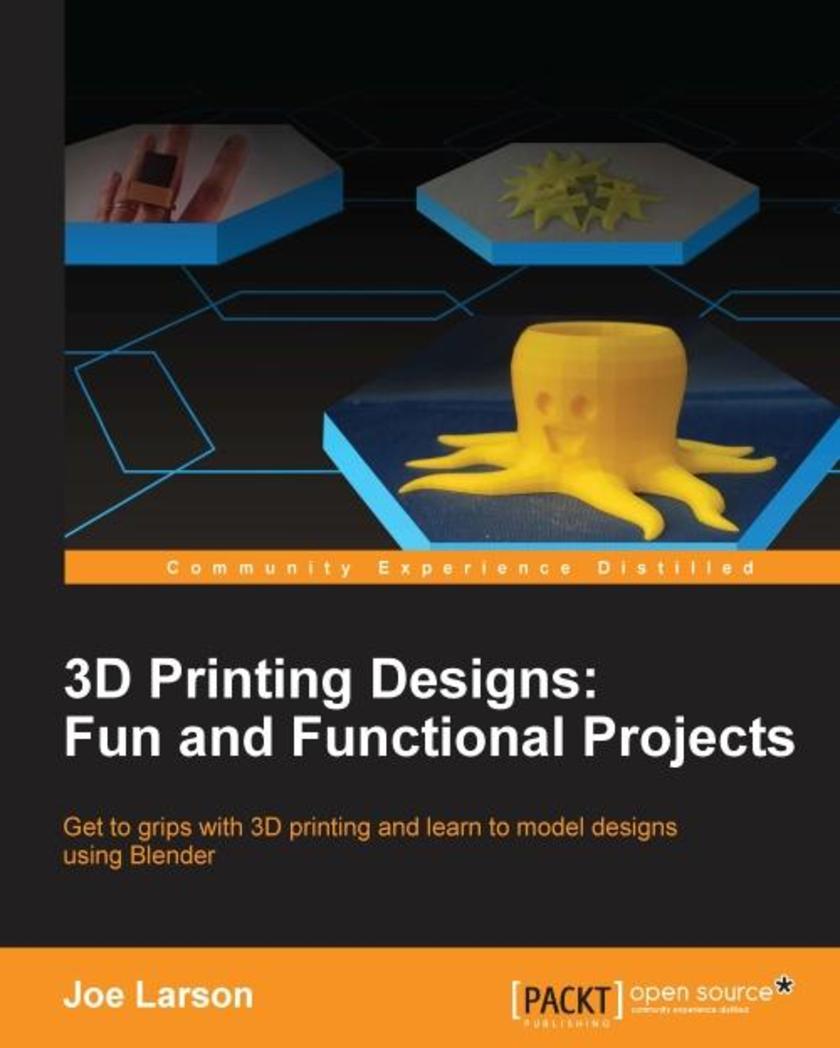
3D Printing Designs: Fun and Functional Projects
¥54.49
Get to grips with 3D printing and learn to model designs using Blender About This Book From the author who brought you the first practical look at 3D printing with 3D Printing Blueprints Get a comprehensive coverage of the prototyping techniques you need to know to start printing your own 3D designs Rekindle your mathematical genius to design personalized objects for complex puzzles Who This Book Is For If you’re new to the world of 3D printing, this is the book for you. Some basic knowledge of Blender and geometry would be helpful, but is not necessary. What You Will Learn Get to know about the different types of 3D printers and their limitations See how Y, H, and T shapes illustrate different ideas of successful 3D design for home 3D printers Set up and configure Blender to model a file for 3D printing Understand material characteristics, printing specifications, tolerances, and design tips Work through the techniques of editing complex meshes, smoothing, combining shapes, and exporting them into STL files for printing Break down complex geometries into multiple simple shapes and model them in layers using Blender Design, manipulate, and export 3D models for 3D printing with Blender Master the art of creating meshes, scaling, subdivision, and adding detail with the Boolean modifier as well as sculpting a custom shape Cut a model into small pieces and understand how to design complex interlocking joints that form a part of a jigsaw puzzle In Detail 3D printing has revolutionized the way that global industries conceptualize and design products for mass consumption. Considered as the next “trillion-dollar” business, every industry is in the race to equip its personnel with techniques to prototype and simplify complex manufacturing process. This book will take you through some simple to complex and effective principles of designing 3D printed objects using Blender. There is a comprehensive coverage of projects such as a 3D print-ready octopus pencil holder, which will teach you how to add basic geometric shapes, and use techniques such as extruding and subdividing to transform these shapes into complex meshes. Furthermore, you’ll learn to use various techniques to derive measurements for an object, model these objects using Blender, organize the parts into layers, and later combine them to create the desired object with the help of a 3D printable SD card holder ring design project. The final project will help you master the techniques of designing simple to complex puzzles models for 3D printing. Through the course of the book, we'll explore various robust sculpting methods supported by Blender to create objects. You’ll move, rotate, and scale the object, and manipulate the view. You’ll edit objects with actions such as bends or curves, similar to drawing or building up a clay structure of different shapes and sizes. By the end of the book, you will have gained thorough practical hands-on experience to be able to create a real-world 3D printable object of your choice. Style and approach This is a hands-on guide to the world of 3D printing. With the help of simple to complex projects, you'll learn various techniques to design 3D printable objects using Blender.


