


 购物车
购物车 个人中心
个人中心

Enough About You
¥67.09
The Complete Narcissist's GuideMimi E. Gotist delivers a gift for our times: practical, simple guidance to help you cope with the self-loving people in your life-while nurturing your own inner narcissist.At once utterly self-absorbed, and charmingly aware of it, Gotist offers advice on: Dating: You're not looking for the person you want to marry -- you're looking for the person you want to change Career: Don't work -- work it Spirituality: Me Here Now Personal Growth: You can't help anyone who won't help you

Code Name: Johnny Walker
¥88.56
This is the unforgettable story of how an ordinary Iraqi became a hero to America's elite warriors and how that debt was repaid with the gift of freedom. He was the seals' most trusted interpreter . . . and moreNight after night, while his homeland was being destroyed around him, he guided the U.S. Navy SEALs through Iraq's most dangerous regions. Operating under the code name "Johnny Walker," he risked his life on more than a thousand missions and became a legend in the U.S. special-ops community, many of whose members credit him with saving their lives. But in the eyes of Iraq's terrorists and insurgents, he and his family were marked for death because he worked with the Americans. . . . Then the SEALs stood up to protect the man who had watched their backs through the entire war.Over the course of eight years, the Iraqi native traveled around the country with nearly every SEAL and special-operations unit deployed there. Using his wits to outthink the insurgency, Johnny Walker unmasked countless terrorists and helped foil an untold number of plots against Americans and their allies. He went on hundreds of missions, saved dozens of American lives both SEAL and civilian and risked his own life daily. He and his family lived in constant jeopardy, surviving multiple assassination attempts and a host of threats in Mosul, until a desperate escape through the desert late in the war took them to the relative safety of Baghdad.Fearing for Johnny's long-term safety after the war, the SEALs now as close as brothers to Johnny took it upon themselves to bring him to the United States, where today he and his family live their version of the American Dream. He remains in the fight by helping train the next generation of American special-operations warriors.For the first time ever, a "terp" tells what it was like in Iraq during the American invasion and the brutal insurgency that followed. With inside details on SEAL operations and a humane understanding of the tragic price paid by ordinary Iraqis, Code Name: Johnny Walker reveals a side of the war that has never been told before.
The Last Dive
¥88.56
Chris and Chrissy Rouse, an experienced father-and-son scuba diving team, hoped to achieve widespread recognition for their outstanding but controversial diving skills. Obsessed and ambitious, they sought to solve the secrets of a mysterious, undocumented World War II German U-boat that lay under 230 feet of water, only a half-day's mission from New York Harbor. In doing so, they paid the ultimate price in their quest for fame. Bernie Chowdhury, himself an expert diver and a close friend of the Rouses', explores the thrill-seeking world of deep-sea diving, including its legendary figures, most celebrated triumphs, and gruesome tragedies. By examining the diver's psychology through the complex father-and-son dynamic, Chowdhury illuminates the extreme sport diver's push toward and sometimes beyond the limits of human endurance.

Western Civilization to 1500
¥90.54
Master Your Coursework with Collins College OutlinesThe Collins College Outline for Western Civilization to 1500 covers all major events from the earliest known civilizations of Egypt and Sumer to the Greek and Roman Empires through the feudal times, the Middle Ages and the Renaissance, finally concluding with the threshold of the Modern Age. Completely revised and updated by Dr. John Chuchiak, Western Civilization to 1500 includes a test yourself seion with answers and complete explanations at the end of each chapter. Also included are bibliographies for further reading, as well as maps, timelines, and illustrations.The Collins College Outlines are a completely revised, in-depth series of study guides for all areas of study, including the Humanities, Social Sciences, Mathematics, Science, Language, History, and Business. Featuring the most up-to-date information, each book is written by a seasoned professor in the field and focuses on a simplified and general overview of the subje for college students and, where appropriate, Advanced Placement students. Each Collins College Outline is fully integrated with the major curriculum for its subje and is a perfe supplement for any standard textbook.

Red Sox Rule
¥90.77
The story of the changing face of baseball and the inner workings of its finest organization After a hundred "cursed" years, the Boston Red Sox rose gloriously to baseball domination. Under the leadership of manager Terry Francona, an extraordinary team of wildly disparate personalities from the inscrutable Manny Ramirez to the affable David "Big Papi" Ortiz pulled off two improbable post-season comebacks to make it to the World Series twice in three years . . . and ultimately emerged victorious. In Red Sox Rule, Michael Holley, bestselling author of Patriot Reign, provides a fascinating, insightful, and surprising inside look at how it all happened.With the exclusive cooperation of Terry Francona and stories from the clubhouse and the conference room, Holley reveals the private sessions and the dugout and front-office strategies that have made the Red Sox a budding dynasty, overtaking their archrivals, the powerful New York Yankees, as the American League's elite team.
Judging Thomas
¥88.56
Clarence Thomas, the youngest and most controversial member of the Supreme Court, could become the longest-serving justice in history, influencing American law for decades to come. Who is this enigmatic manAnd what does he believe in?Judging Thomas tells the remarkable story of Clarence Thomas's improbable journey from hardscrabble beginnings in the segregated South to the loftiest court in the land. With objectivity and balance, author Ken Foskett chronicles Thomas's contempt for upper-crust blacks who snubbed his uneducated, working-class roots; his flirtation with the priesthood and, later, Black Power; the resentment that fueled his opposition to affirmative action; the conservative beliefs that ultimately led him to the Supreme Court steps; and the inner resilience that propelled him through the doors.Based on interviews with Thomas himself, fellow justices, family members, and hundreds of friends and associates, Judging Thomas skillfully unravels perhaps the most complex, controversial, and powerful public figure in America today.
Unlocking The Sky
¥90.77
Unlocking the Sky tells the extraordinary tale of the race to design, refine, and manufacture a manned flying machine, a race that took place in the air, on the ground, and in the courtrooms of America. While the Wright brothers threw a veil of secrecy over their flying machine, Glenn Hammond Curtiss -- perhaps the greatest aviator and aeronautical inventor of all time -- freely exchanged information with engineers in America and abroad, resulting in his famous airplane, the June Bug, which made the first ever public flight in America. Fiercely jealous, the Wright brothers took to the courts to keep Curtiss and his airplane out of the sky and off the market. Ultimately, however, it was Curtiss's innovations and designs, not the Wright brothers', that served as the model for the modern airplane.
Anam Cara
¥94.10
Discover the Celtic Circle of Belonging John O'Donohue, poet, philosopher, and scholar, guides you through the spiritual landscape of the Irish imagination. In Anam Cara, Gaelic for "soul friend," the ancient teachings, stories, and blessings of Celtic wisdom provide such profound insights on the universal themes of friendship, solitude, love, and death as: Light is generous The human heart is never completely born Love as ancient recognition The body is the angel of the soul Solitude is luminous Beauty likes neglected places The passionate heart never ages To benatural is to be holy Silence is the sister of the divine Death as an invitation to freedom
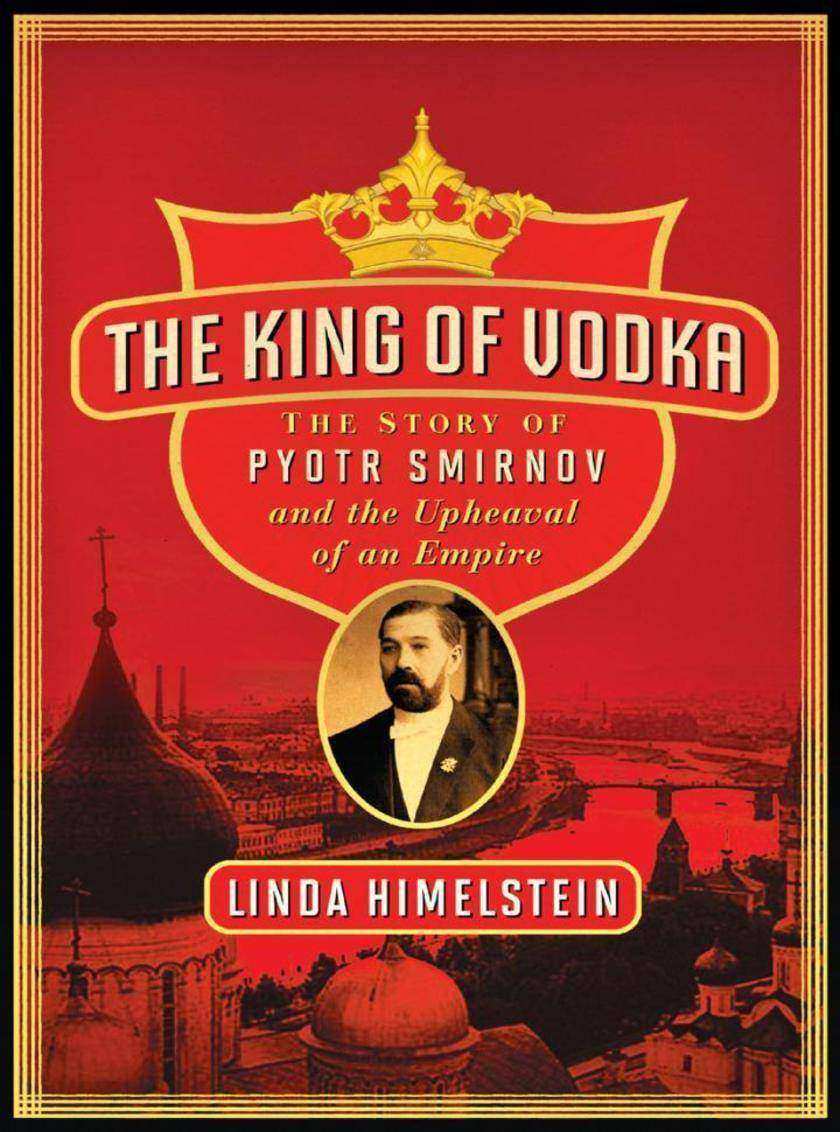
The King of Vodka
¥101.00
In this sweeping history of vodka scion Pyotr Smirnov and his family, distinguished journalist Linda Himelstein plumbs a great riddle of Russian history through the story of a humble serf who rose to create one of the most celebrated business empires the world has ever known. At the center of this vivid narrative, Pyotr Smirnov comes to life as a hero of wonderful complexity a man of intense ambition and uncanny business sense, a patriarch of a family that would help define Russian society and suffer from the Revolution's aftermath, and a loyalist to a nation that would one day honor him as a treasure of the state.Born in a small village in 1831, Smirnov relied on vodka a commodity that in many ways defines Russia to turn a life of scarcity and anonymity into one of immense wealth and international recognition. Starting from the backrooms and side streets of 19th century Moscow, Smirnov exploited a golden age of emancipation and brilliant grassroots marketing strategies to popularize his products and ensconce his brand within the thirsts and imaginations of drinkers around the world. His vodka would be gulped in the taverns of Russia and Europe, praised with accolades at World Fairs, and become a staple on the tables of Tsars. His improbable ascent set against a sobriety crusade supported by Chekhov and Tolstoy, mounting political uprisings and labor strikes, the eventual monopolization of the vodka trade by the state would crumble amidst the chaos of the Bolshevik revolution. Only a set of bizarre coincidences including an incredible prison escape by one of Smirnov's sons in 1919 would prevent Smirnov's legacy from fading into oblivion.Set against a backdrop of political and ideological currents that would determine the course of global history from the fall of the Tsars to the rise of Communism, from vodka's popularization by none other than James Bond to Smirnoff's emergence as a multi-billion dollar brand Smirnov's story of triumph and tragedy is a captivating historical touchstone. The King of Vodka is much more than a biography of an extraordinary man. It is a work of narrative history on an epic scale.

Hit Hard
¥88.56
In 1997, amid Aerosmith's sold-out world tour and number one album release, word about Joey's troubles was reported in the press.Despite the advice he had received to play it down, Joey revealed in an interview his ongoing struggles with depression. The response from fans and people battling those same internal demons was overwhelming. Joey who has been the drummer in Aerosmith since it was founded in 1970 and is the first member of the band to release his own book now tells the complete story: the early days of the band, glamorous drug-addled events leading up to their eventual sobriety, battles within his family and among bandmates, and the explosive internal dynamics in Aerosmith that continue to unleash a fury of endless creativity. This is not just another rock 'n' roll memoir. In addition to the never-before-told Aerosmith war stories that abound in the book, Hit Hard unpacks the history of a rock star who was both fragile and tough, who after years of insane wildness became willing to accept help and finally kick a serious alcohol and drug addiction, only to find that the real terrors and hard work were still ahead. It's the story of an average kid from an average American suburb who went through physical and emotional trauma. It's about years of depression and the nervous breakdown at the height of the band's comeback success. Ultimately, Hit Hard is about how Joey recognized his confusion between love and abuse, awakening to the kind of self-acceptance and compassion that make relationships possible in the "real world" as a member of the biggest band in American history.

Kiss Me, Annabel
¥55.91
The rules of marriage . . . according to Miss Annabel Essex A husband must be:Rich.Make that very rich. She's had enough of leaky roofs and thread-worn clothing.English.London is the center of the civilized world, and Annabel has a passion for silk and hot water.Amiable.Good-looking would be nice, but not necessary. Same for intelligent.Isn't she luckyShe's found just the man! And her chosen spouse is nothing like the impoverished Scottish Earl of Ardmore, who has nothing but his gorgeous eyes, his brain and his kisses to recommend him.So what cruel twist of fate put her in a carriage on her way to Scotland with just that impoverished earl and all the world thinking they're man and wifeSleeping in the same bedNot to mention the game of words started by the earl in which the prize is a kiss. And the forfeit . . . Well. They are almost married, after all!

A Visit From Sir Nicholas
¥56.07
Everyone knows that an Effington always getsher way ... but this time it's not going to be easy!Lady Elizabeth Effington simply could not suitably feel the joy of the Christmas season. Ten years had passed since she had boldly declared her love for Sir Nicholas Collingsworth. He rebuffed her and set out to seek his fortunes, while Elizabeth was left a woman scorned. Now, she discovers in horror that the inheritance she's managed beautifully was never hers to control. No, power over her finances lay in the hands of the last man she ever wants to see again: Nicholas!But running Elizabeth's life isn't part of Nick's plans. He's intrigued when he discovers that the frivolous and flighty girl he once knew has turned into a beautiful and capable woman. Nick vows to woo -- and win -- her, and while she seems unmoved by his fervent seduction, he swears he will not rest until she accepts that most precious gift of all -- the gift of love.
The Taming of the Duke
¥56.07
Imogen, Lady Maitland, has decided to dance on the wild side. After all, she's in the delicious position of being able to take a lover. A discreet male who knows just when to leave in the morning.But Lady Maitland is still under the watchful eye of her former guardian, the wildly untamed Rafe, the Duke of Holbrook. He believes she is still in need of a "watchdog." She laughs at the idea that someone so insufferably lazy and devoted to drink can demand that she behave with propriety.It's Rafe's long-lost brother, a man who looks precisely like the duke but with none of his degenerate edge, who interests Imogen. To Imogen, he's the shadow duke . . . the man who really should hold the title. But when Imogen agrees to accompany Gabe to a masquerade...whose masked eyes watch her with that intense look of desireWho exactly is she dancing withThe duke or the shadow dukeRafe . . . or Gabe?

Eden Burning
¥55.31
Paradise calls to Chase Wilcox. A man of science fascinated by the rebirth of life in the wake of cataclysmic natural upheaval, he is drawn to the lush beauty of the island of Hawaii and the secrets it holds while escaping the destruction of his own personal world. Here where warm breezes caress the skin and vibrant colors assault the senses and where dangerous fires rage unseen beneath the earth's surface Chase plans to immerse himself in his work...and somehow heal and forget. The last thing he needs or wants is love.But the island is home to many unexpected wonders, which is why Nicole Ballard could never leave it. A research assistant, an artist, and a dancer a tall, stunning redhead who goes by the stage name of Pele, the goddess of fire she, too, hides a secret pain, releasing her pent-up sensuality to the accompaniment of native drums before a mesmerized audience. Nicole has never met a man quite like Chase, strong, intense, and brilliant. And he, in turn, is fascinated by this remarkable woman who seems to be a breathtaking force of nature in her own right. Fate has cast them together, causing a chain reaction that neither imagined in their most secret dreams.Joined on an important scientific project that carries them into the verdant heart of a tropical wonder land, Nicole and Chase will be forced to confront their own lingering inner darkness, while resisting a newly inflamed need to touch, to give...to care. But in the shadows of Kilauea, all restraints will be broken, as emotions flow as hot and free as rivers of molten lava. And desire will erupt, as unpredictable and dangerous as the living volcano, transforming the very landscape of their lives a torrent that no power on earth can contain, a passion that bums like fire.

Remember Summer
¥55.31
The most grueling challenge of Raine Smith's equestrian career looms before her the Olympic Games. Little does she realize that she's about to face greater perils in the arms of a stranger than she's ever found on the back of her horse.Cord Elliot is a man trained to deflect disaster and his mission is to ensure that Raine Smith remains untouched by sudden gunfire at the Summer Games. Yet from the moment Raine Meets Cord's ice-blue glance, she knows he's more hazardous to her heart than a sniper's bullet. Falling for a man who answers to the call of intrigue and holds secrets that can never be shared is to endure the broken promises, unexplained absences, and constant danger that come with his profession. But in the fiery passion of irresistible love, a summer to remember seems worth any risk.

It Only Takes a Moment
¥55.91
A seasoned television professional the host of the top-rated KEY News morning show Eliza Blake has reported on tragedies many times from behind the anchor's desk . . . and she has survived devastating crises of her own. But only now is she learning the true meaning of terror when her seven-year-old daughter, Janie, is kidnapped from summer camp. Forced to suffer through a mother's worst nightmare in the glare of the camera lights, Eliza finds herself trapped in a media circus as the police and FBI explore every avenue . . . and every lead winds up at a dead end.But Eliza isn't going to just sit around and wait for answers because every minute wasted in the desperate race to reveal the shocking motives of a ruthless abductor brings a frightened little girl one minute closer to her death.

Seduction of a Proper Gentleman
¥55.31
To break a centuries-old curse, beautiful, headstrong Lady Kathleen MacDavid knows she must ignore every rule of propriety by seducing and marrying the Earl of Norcroft. So she sets off for London, braving scandal and ruin to achieve her goal . . . until a crazy bump on the head makes her forget nearly everything.The thrill of winning a bet that he'd be the last of his set to wed hasn't eased the earl's pain of losing his friends to marriage. Still, he'd be willing to settle down if he could meet someone worthy of his love and desire. But he has met no such woman, until Kathleen is brought to him. Suspicious of her motives, he's determined to resist her seductive ways. But sometimes even the most proper gentleman finds it expedient to act improperly . . .

Sweet Ember
¥55.31
A classic love story by New York Times bestselling author Barbara Delinsky, back in print for the first time in years and guaranteed to delight her fans, old and new.Stephanie Wright was just 19 the first time she ran, heartbroken and angry, out of Douglas Weston's life. She and Douglas, a devastatingly handsome tennis camp instructor, shared a summer marked by a gentle love, capped by one night of sensuous passion -- followed by a terrible, unforgivable betrayal that sent her fleeing. Eight years later, upon her return to the camp, Stephanie must fight the feelings that first drew him to her And now there is Melissa, her beautiful seven-year-old daughter; who smiles up at her tennis teacher with gray eyes that mirror his own.
When Day Breaks
¥55.91
On the day she died, Constance Young was the undisputed star of morning television. But her plans to move herself and her loyal audience to another network were cancelled when she ended up at the bottom of her swimming pool. And the fabled unicorn amulet that Constance had been wearing during her final hours a gift from King Arthur to his beloved Guinevere and the centerpiece of the upcoming Camelot exhibit at New York's Cloisters museum is missing.A morning show veteran and now anchor of the KEY Evening Headlines, Eliza Blake is shocked by the death of her former colleague, and is determined to discover who wanted Constance out of the way . . . and why. To do so, she enlists the aid of three KEY News coworkers: "Jane-of-all-trades" Annabelle Murphy, who can switch from producing to sleuthing at a moment's notice; charming and fearless cameraman extraordinaire B.J. D'Elia to add brains, brawn, and a much-needed male perspective to the team; and Dr. Margo Gonzalez, on-air psychiatrist, who understands the complex puzzles of the human mind. Calling themselves "The Sunrise Suspense Society," they set out to get to the bottom of the heinous murder, in a case that will test their ingenuity and their courage to the very limits.The deeper they dig, the more twisted the trail to Constance's killer becomes as the list of suspects grows longer by the minute. Was it her spurned and enraged medievalist lover, or a muckraking author who blamed her for ruining her lifePerhaps money was the motive, and Constance's sister, jealous of her wealth and fame, was responsible. Or possibly someone at Key News was angry enough or frightened enough to commit cold-blooded murder. The one sure thing is that Constance Young made a lot of enemies and now one of them is Eliza's enemy as well. And the closer she and the Society get to unmasking the murderer, the closer they each get to dying, suddenly . . . and brutally.
Fast Courting
¥55.31
New York Times bestselling author Barbara Delinsky entralls in this powerful novel first published in 1983, of a man, a woman, ans the exciting game of love. Magazine writer Nia Phillips latest assisgnment is a feature on east Coast's five most eligible bachelors. But her research hits a snag when she meets number five, Daniel Strahan, the head coach for Boston professional basketball team. Daniel wants no part of the story , And though he refuses her interview request, he's instantly drawn to Nia's quick intelligence and dark beauty. As for Nia, she finds Daniel intriguing, but she knows that a man constantly on road, who lives and breathes basketball, isn't right for her. There's only one thing she's forgotten -- love doesn't play by the rules.

Perfect Murder, Perfect Town
¥55.31
In Perfect Murder, Perfect Town, Lawrence Schiller thoroughly recreates every aspect of the complex case of the death of JonBent Ramsey. A brilliant portrait of an inscrutable family thrust under the spotlight of public suspicion and an affluent, tranquil city torn apart by a crime it couldn't handle, Perfect Murder, Perfect Town uncovers the mysteries that have bewildered the nation. Why were the Ramseys, the targets of the investigation, able to control the direction of the police inquiryCan the key to the murder be found in the pen and writing pad used for the ransom noteWas it possible for an intruder to have killed JonBent?


