


 购物车
购物车 个人中心
个人中心

Getting Rid of Bradley (Mills & Boon M&B)
¥27.27
Lucy Savage is not having a good week. Her cheating husband, Bradley, lobbed the final insult when he stood her up in divorce court. A dye job gone wrong has left her hair green. And someone is trying to kill her. To top it off, sexy cop Zack Warren is certain that the very same man Lucy is trying to wash right out of her hair is the same Bradley he wants to arrest for embezzlement. When someone shoots at her and then her car blows up, Zack decides she needs twenty-four-hour police protection. Next thing Lucy knows, Zack has moved in to her big Victorian house, making them both sleepless…and not just from things that go bump in the night!

Gloss
¥51.50
It's a new day, U.S.A.! And possibly a whole new world. It was a harmless human-interest story for breakfast television: who would've thought it would land her in jail? New York producer Annabelle Kapner's report on a beauty-industry job-creation plan for refugee women in the Middle East earns her kudos from the viewers, her bosses, even the network suits. But several threatening phone calls and tightlipped, edgy executives suggest the cosmetics program is covering up more than just uneven skin. All this intrigue is seriously hampering Annabelle's romance with handsome, sexy and funny speechwriter Mark Thurber (Washington's Most Eligible Bachelor). Being with him is just getting Annabelle used to A-list treatment at Manhattan's hottest nightspots when journalistic idealism earns her a spot on cell block six. It'll take more than a few thousand "Free Annabelle" T-shirts to clear her name and win back her beau. Especially when she discovers just how high up the scandal reaches–and how far the players will go to keep their secret…

His Brother's Fiancee (Mills & Boon M&B) (The Trueblood Dynasty, Book 2)
¥27.27
Isabella Trueblood made history reuniting people torn apart by war and an epidemic. Now, generations later, Lily and Dylan Garrett carry on her work with their agency, Finders Keepers. Circumstances may have changed, but the goal remains the same. Lost One groom. Emily Sutton is up to her ears in the final plans for her lavish society wedding when her fiancé informs her that he can't marry her. Found A stand-in at the altar: her fiancé's black sheep brother. Emily assumes Jordan Chambers has saved her from the embarrassment of being publicly jilted in order to salvage an important business merger between their families. But Jordan's not motivated by family at all. What he's always wanted is Emily, and he's not about to squander his only chance. Finders Keepers: bringing families together

Kiss of Death
¥51.50
A young woman's body is found with puncture marks on her neck, and soon the delicious word vampire is on everyone's lips. All of FBI profiler Sophie Anderson's skills–psychic and psychological–will be needed for her to determine whether this was a thrill kill or something even more sinister. Exploring the blood bars and Goth clubs of L.A., Sophie immerses herself in the seductive culture of self-styled vampires. Posing as the alluring Lady Veronica and infiltrating a notorious clan, Sophie will learn just how deep the fantasy goes for some believers. When life requires death, nothing is sacred.

Lost in Plain Sight (Mills & Boon M&B) (Brotherhood of the Raven, Book 4)
¥54.74
Leah Miller's peaceful life as a member of the Spring Township Amish church shatters when she's accused of theft from an Englisch home in which she works. Even if she is not charged, if the crime is never solved, she will live under the taint of the theft and may never be able to participate fully in her Amish community. Josiah King, friend of Leah's brother, is drawn into helping Leah–and discovers the 'little sister' he'd always tolerated has grown into a strong, appealing woman. But what future can they have together if suspicion makes Leah an outcast? As they attempt to learn the facts behind the accusation, danger grows around them. It's only through their trust in each other and the support of a faithful Englisch friend that Leah and Josiah can find their way through a tangled, dangerous maze to the truth. An ebook exclusive novella from Marta Perry's The Brotherhood of the Raven series.

Next of Kin (Mills & Boon M&B) (Code Red, Book 10)
¥24.13
A tractor trailer jackknifes. E.R. nurse Jackie Kellison's car is slammed into the ensuing pileup. She climbs free and rushes amid the flames and wreckage to help others. And then Jackie hears a baby cry…. Jackie Kellison pulls the injured baby from the wreckage as motorcycle policeman Casey Guthrie reaches the scene. The woman in the car is dead. With no time to waste, Casey transports Jackie and the infant to the E.R. on his motorbike. But attempts to find the baby girl's identity lead to a chilling conclusion–the woman in the car was a kidnapper. The baby's fate is now in the hands of Jackie and Casey…and in their hearts.

Nighthawk's Child (Mills & Boon M&B) (Montana Mavericks, Book 39)
¥27.27
"Marry me, and I'll give you back your name…and your baby." In the hearts and minds of Whitehorn, Montana, Gavin Nighthawk was guilty of murder. But Summer Kincaid's spirit–her very soul–whispered that he was innocent. True, Gavin had a Big Sky-size chip on his shoulder concerning his Native American heritage, but Summer knew him to be a healer…and a loving father. So to protect her childhood friend and his baby, she married Gavin, knowing the legitimizing power of the Kincaid name. And then she promptly lost her heart–something she'd vowed not to do. Something as unstoppable as the final judgment regarding her husband's future….

Renegade (Mills & Boon M&B) (Long, Tall Texans, Book 38)
¥39.24
Newly appointed police chief Cash Grier makes it his personal mission to keep law and order in the streets of Jacobsville. As a true renegade, Cash has learned never to take anything at face value–especially not his gorgeous sworn enemy, "Georgia Firefly" Tippy Moore. But Tippy is no longer a spoiled Hollywood starlet, just an unassuming beauty who has almost as many skeletons in her closet as Cash. The hard-edged Texan finds himself powerless to resist their explosive chemistry. Just as Cash is about to believe that Tippy might be the one for him, an unforgivable betrayal leads to despair, deceit–and unexpected danger. Now all roads lead to this one pivotal moment that will test the very fabric of a love that had once known no bounds….

Royal Seduction (Mills & Boon M&B) (Logan's Legacy, Book 22)
¥27.27
On her visit to Portland's popular Healthy Living Clinic, royal beauty Catherine Von Husden wanted oh-so-serious Dr. Riley Jacobs to notice her. But the good doctor was all business and didn't give her the attention she so craved. Nevertheless Princess Catherine loved a challenge, and helping Riley open up resulted in her discovering riches beyond her wildest dreams. Riley was handsome, strong in spirit and possessed all the qualities she'd ever watned in a man. And when he returned her love, she was handed a royal dilemma. Would Catherine have to take up her duty to her country and leave behind the love of a lifetime.

Harry Potter and the Chamber of Secrets
¥40.00
"'There is a plot, Harry Potter. A plot to make most terrible things happen at Hogwarts School of Witchcraft and Wizardry this year.'"Harry Potter's summer has included the worst birthday ever, doomy warnings from a house-elf called Dobby, and rescue from the Dursleys by his friend Ron Weasley in a magical flying car! Back at Hogwarts School of Witchcraft and Wizardry for his second year, Harry hears strange whispers echo through empty corridors - and then the attacks start. Students are found as though turned to stone ... Dobby's sinister predictions seem to be coming true.

Harry Potter and the Order of the Phoenix
¥40.00
You are sharing the Dark Lord's thoughts and emotions. The Headmaster thinks it inadvisable for this to continue. He wishes me to teach you how to close your mind to the Dark Lord.'Dark times have come to Hogwarts. After the Dementors' attack on his cousin Dudley, Harry Potter knows that Voldemort will stop at nothing to find him. There are many who deny the Dark Lord's return, but Harry is not alone: a secret order gathers at Grimmauld Place to fight against the Dark forces. Harry must allow Professor Snape to teach him how to protect himself from Voldemort's savage assaults on his mind. But they are growing stronger by the day and Harry is running out of time ...

Harry Potter and the Deathly Hallows
¥40.00
"'Give me Harry Potter,' said Voldemort's voice, 'and none shall be harmed. Give me Harry Potter, and I shall leave the school untouched. Give me Harry Potter, and you will be rewarded.'As he climbs into the sidecar of Hagrid's motorbike and takes to the skies, leaving Privet Drive for the last time, Harry Potter knows that Lord Voldemort and the Death Eaters are not far behind. The protective charm that has kept Harry safe until now is broken, but he cannot keep hiding. The Dark Lord is breathing fear into everything Harry loves and to stop him Harry will have to find and destroy the remaining Horcruxes. The final battle must begin - Harry must stand and face his enemy ...
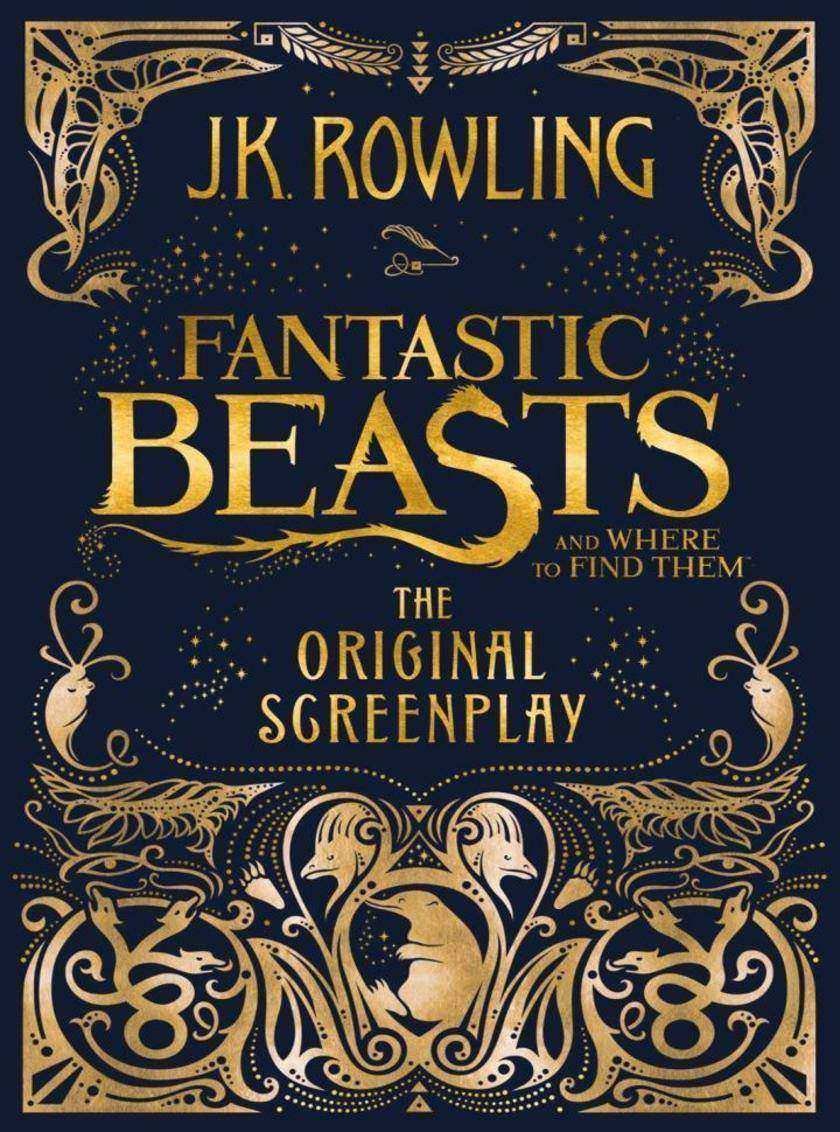
Fantastic Beasts and Where to Find Them: The Original Screenplay
¥30.00
J.K. Rowling's screenwriting debut is captured in this ebook edition of the Fantastic Beasts and Where to Find Them screenplay. When Magizoologist Newt Scamander arrives in New York, he intends his stay to be just a brief stopover. However, when his magical case is misplaced and some of Newt's fantastic beasts escape, it spells trouble for everyone... Inspired by the original Hogwart’s textbook by Newt Scamander, Fantastic Beasts and Where to Find Them: The Original screenplay marks the screenwriting debut of J.K. Rowling, author of the beloved and internationally bestselling Harry Potter books. A feat of imagination and featuring a cast of remarkable characters and magical creatures, this is epic adventure-packed storytelling at its very best. Whether an existing fan or new to the wizarding world, this is a perfect addition for any film lover or reader’s bookshelf. The film Fantastic Beasts and Where to Find Them received its theatrical release on 18th November 2016.
Practical Predictive Analytics
¥90.46
Make sense of your data and predict the unpredictable About This Book ? A unique book that centers around develop six key practical skills needed to develop and implement predictive analytics ? Apply the principles and techniques of predictive analytics to effectively interpret big data ? Solve real-world analytical problems with the help of practical case studies and real-world scenarios taken from the world of healthcare, marketing, and other business domains Who This Book Is For This book is for those with a mathematical/statistics background who wish to understand the concepts, techniques, and implementation of predictive analytics to resolve complex analytical issues. Basic familiarity with a programming language of R is expected. What You Will Learn ? Master the core predictive analytics algorithm which are used today in business ? Learn to implement the six steps for a successful analytics project ? Classify the right algorithm for your requirements ? Use and apply predictive analytics to research problems in healthcare ? Implement predictive analytics to retain and acquire your customers ? Use text mining to understand unstructured data ? Develop models on your own PC or in Spark/Hadoop environments ? Implement predictive analytics products for customers In Detail This is the go-to book for anyone interested in the steps needed to develop predictive analytics solutions with examples from the world of marketing, healthcare, and retail. We'll get started with a brief history of predictive analytics and learn about different roles and functions people play within a predictive analytics project. Then, we will learn about various ways of installing R along with their pros and cons, combined with a step-by-step installation of RStudio, and a de*ion of the best practices for organizing your projects. On completing the installation, we will begin to acquire the skills necessary to input, clean, and prepare your data for modeling. We will learn the six specific steps needed to implement and successfully deploy a predictive model starting from asking the right questions through model development and ending with deploying your predictive model into production. We will learn why collaboration is important and how agile iterative modeling cycles can increase your chances of developing and deploying the best successful model. We will continue your journey in the cloud by extending your skill set by learning about Databricks and SparkR, which allow you to develop predictive models on vast gigabytes of data. Style and Approach This book takes a practical hands-on approach wherein the algorithms will be explained with the help of real-world use cases. It is written in a well-researched academic style which is a great mix of theoretical and practical information. Code examples are supplied for both theoretical concepts as well as for the case studies. Key references and summaries will be provided at the end of each chapter so that you can explore those topics on their own.
Daniel Arbuckle’s Mastering Python
¥71.93
Gain a thorough understanding of operating in a Python development environment, and some of the most important advanced topics with Daniel Arbuckle. This dynamic, concise book is full of real-world solutions for Python 3.6 problems, and advanced-level concepts such as reactive programming, microservices, ctypes and Cython. About This Book ? Covers the latest and advanced concepts of Python such as parallel processing with Python 3.6 ? Explore the Python language from its basic installation and setup to concepts such as reactive programming and microservices ? Get introduced to the mechanism for rewriting code in a compiled language along with ctypes and Cython tools Who This Book Is For If you are a programmer and are familiar with the basics of Python, and you want to broaden your knowledge base to develop projects better and faster, this book is for you. Even if you are not familiar with Python, Daniel Arbuckle's Mastering Python starts with the basics and takes you on a journey to become an expert in the technology. What You Will Learn ? Get to grips with the basics of operating in a Python development environment ? Build Python packages to efficiently create reusable code ? Become proficient at creating tools and utility programs in Python ? Use the Git version control system to protect your development environment from unwanted changes ? Harness the power of Python to automate other software ? Distribute computational tasks across multiple processors ? Handle high I/O loads with asynchronous I/O to get a smoother performance ? Take advantage of Python's metaprogramming and programmable syntax features ? Get acquainted with the concepts behind reactive programming and RxPy In Detail Daniel Arbuckle's Mastering Python covers the basics of operating in a Python development environment, before moving on to more advanced topics. Daniel presents you with real-world solutions to Python 3.6 and advanced-level concepts, such as reactive programming, microservices, ctypes, and Cython tools. You don't need to be familiar with the Python language to use this book, as Daniel starts with a Python primer. Throughout, Daniel highlights the major aspects of managing your Python development environment, shows you how to handle parallel computation, and helps you to master asynchronous I/O with Python 3.6 to improve performance. Finally, Daniel will teach you the secrets of metaprogramming and unit testing in Python, helping you acquire the perfect skillset to be a Python expert. Daniel will get you up to speed on everything from basic programming practices to high-end tools and techniques, things that will help set you apart as a successful Python programmer. Style and Approach Daniel Arbuckle's Mastering Python covers basic to advanced-level concepts in computer science. If you are a beginner, then Daniel will help you get started. If you are experienced, he will expand your knowledge base.
Learning Elasticsearch
¥90.46
Store, search, and analyze your data with ease using Elasticsearch 5.x About This Book ? Get to grips with the basics of Elasticsearch concepts and its APIs, and use them to create efficient applications ? Create large-scale Elasticsearch clusters and perform analytics using aggregation ? This comprehensive guide will get you up and running with Elasticsearch 5.x in no time Who This Book Is For If you want to build efficient search and analytics applications using Elasticsearch, this book is for you. It will also benefit developers who have worked with Lucene or Solr before and now want to work with Elasticsearch. No previous knowledge of Elasticsearch is expected. What You Will Learn ? See how to set up and configure Elasticsearch and Kibana ? Know how to ingest structured and unstructured data using Elasticsearch ? Understand how a search engine works and the concepts of relevance and scoring ? Find out how to query Elasticsearch with a high degree of performance and scalability ? Improve the user experience by using autocomplete, geolocation queries, and much more ? See how to slice and dice your data using Elasticsearch aggregations. ? Grasp how to use Kibana to explore and visualize your data ? Know how to host on Elastic Cloud and how to use the latest X-Pack features such as Graph and Alerting In Detail Elasticsearch is a modern, fast, distributed, scalable, fault tolerant, and open source search and analytics engine. You can use Elasticsearch for small or large applications with billions of documents. It is built to scale horizontally and can handle both structured and unstructured data. Packed with easy-to- follow examples, this book will ensure you will have a firm understanding of the basics of Elasticsearch and know how to utilize its capabilities efficiently. You will install and set up Elasticsearch and Kibana, and handle documents using the Distributed Document Store. You will see how to query, search, and index your data, and perform aggregation-based analytics with ease. You will see how to use Kibana to explore and visualize your data. Further on, you will learn to handle document relationships, work with geospatial data, and much more, with this easy-to-follow guide. Finally, you will see how you can set up and scale your Elasticsearch clusters in production environments. Style and approach This comprehensive guide will get you started with Elasticsearch 5.x, so you build a solid understanding of the basics. Every topic is explained in depth and is supplemented with practical examples to enhance your understanding.
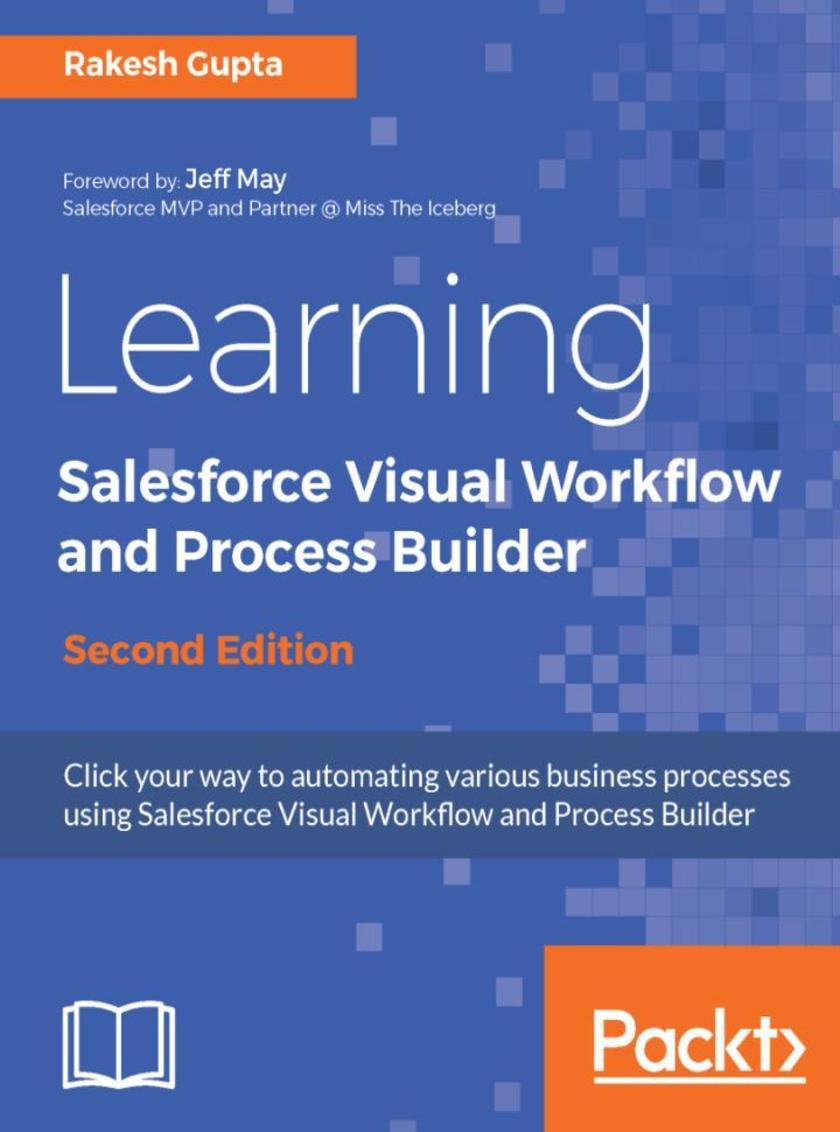
Learning Salesforce Visual Workflow and Process Builder - Second Edition
¥90.46
Click your way to automating various business processes using Salesforce Visual Workflow About This Book ? Develop an application using Point and Click with the help of Flow ? Get to grips with various ways to launch a Flow ? Capture data from an external user without using the Visualforce page ? Save user input into the database, and learn how to query and manipulate the data ? Discover various ways to debug and deploy Flow and Process Builder ? Understand the concepts of Subflow and Login Flow ? Handle complex business processes using Process builder and keep them clean ? Use existing or new Flows to work with Salesforce Lightning Experience. Who This Book Is For This book is intended for those who want to use Flows to automate their business requirements by clicking, not coding. No previous experience in computer coding or programming is required. What You Will Learn ? Develop an application using point and click with the help of Flow ? Get to grips with various ways to launch a Flow ? Capture data from an external user without using the Visualforce page ? Save user input into the database, and learn how to query and manipulate the data ? Discover various ways to debug and deploy Flow and Process Builder ? Understand the concepts of Subflow and Login Flow ? Handle complex business processes using Process builder and keep them clean ? Use existing or new Flows to work with Salesforce Lightning Experience. In Detail Salesforce Management System is an information system used in CRM to automate the business processes like sales and marketing. To implement this, Force.com developed a powerful tool called Visual Workflow to automate business processes by creating applications also called Flows. Learning Salesforce Visual Workflow, Second Edition is a practical guide on Flows that will enable you to develop custom applications in Salesforce with minimized code usage. The book starts with an introduction to Visual Workflows that teaches all the building blocks of creating Flows and use it efficiently. You will learn how to easily automate business processes and tackle complex business scenarios using Flows. The book explains the working of the Process Builder so you can create reusable processes. The book also covers how you can integrate existing or newly created Flows with the Salesforce Lightening Experience. By the end of the book, you will get a clear understanding on how to use Flows and Process Builder in your organization to optimize code usage. Style and approach Step by step approch to use Process Builder to solve complex business requirements with the help of Flow
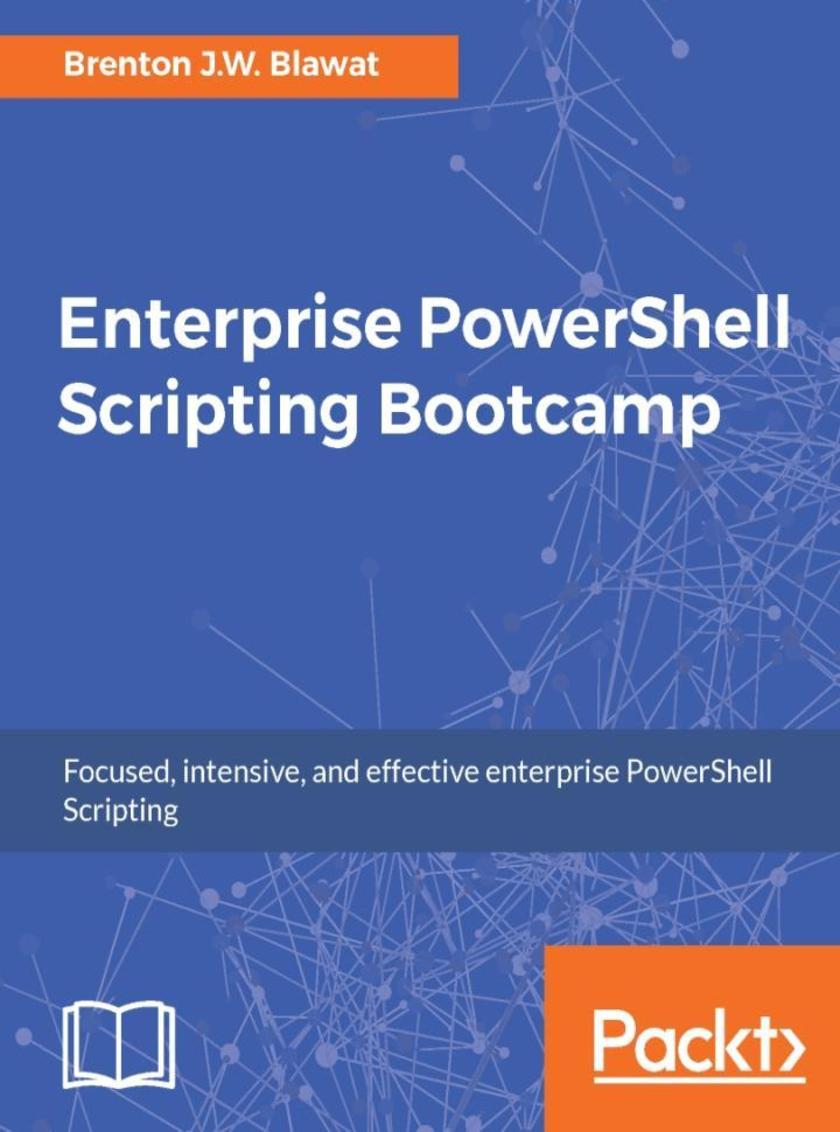
Enterprise PowerShell Scripting Bootcamp
¥80.65
The quick start guide for an advanced enterprise PowerShell framework About This Book ? Introduces industry-proven techniques that improve * efficiency and reliability ? Example-rich guide based on real-world scenarios ? Facilitates building a * that can fully scan a Windows server and identify components Who This Book Is For This book is for IT professionals and Windows administrators who would like to gain intensive, hands-on knowledge and skills on PowerShell without spending hours and hours in learning. If you have been struggling to find the time to gain proficiency and confidence with PowerShell and everyday *ing tasks What You Will Learn ? Create an advanced PowerShell *ing template that provides repeatable code to jumpstart all of your *ing projects ? Learn how to securely encrypt and store usernames, passwords, and other sensitive data in PowerShell *s and answer files ? Understand how to optimize the performance of *s to help process large datasets quickly and avoid time-consuming mistakes ? Develop a * to scan for non-standard Windows Server configurations and identify service accounts used on Windows Servers ? Gather a large list of data from a Windows server without locally or remotely logging in interactively In Detail Enterprise PowerShell Scripting Bootcamp explains how to create your own repeatable PowerShell *ing framework. This framework contains * logging methodologies, answer file interactions, and string encryption and decryption strategies. This book focuses on evaluating individual components to identify the system’s function, role, and unique characteristics. To do this, you will leverage built-in CMDlets and Windows Management Instrumentation (WMI) to explore Windows services, Windows processes, Windows features, scheduled tasks, and disk statistics. You will also create custom functions to perform a deep search for specific strings in files and evaluate installed software through executable properties. We will then discuss different *ing techniques to improve the efficiency of *s. By leveraging several small changes to your code, you can increase the execution performance by over 130%. By the end of this book, you will be able to tie all of the concepts together in a PowerShell-based Windows server scanning *. This discovery * will be able to scan a Windows server to identify a multitude of components. Style and approach This book is all about fast and intensive learning. This means, we don’t waste time in helping readers get started. The new content is about leveraging highly-effective examples to build new things, help solving problems in newer and unseen ways, and providing an enterprise-ready platform to create PowerShell Scripts.
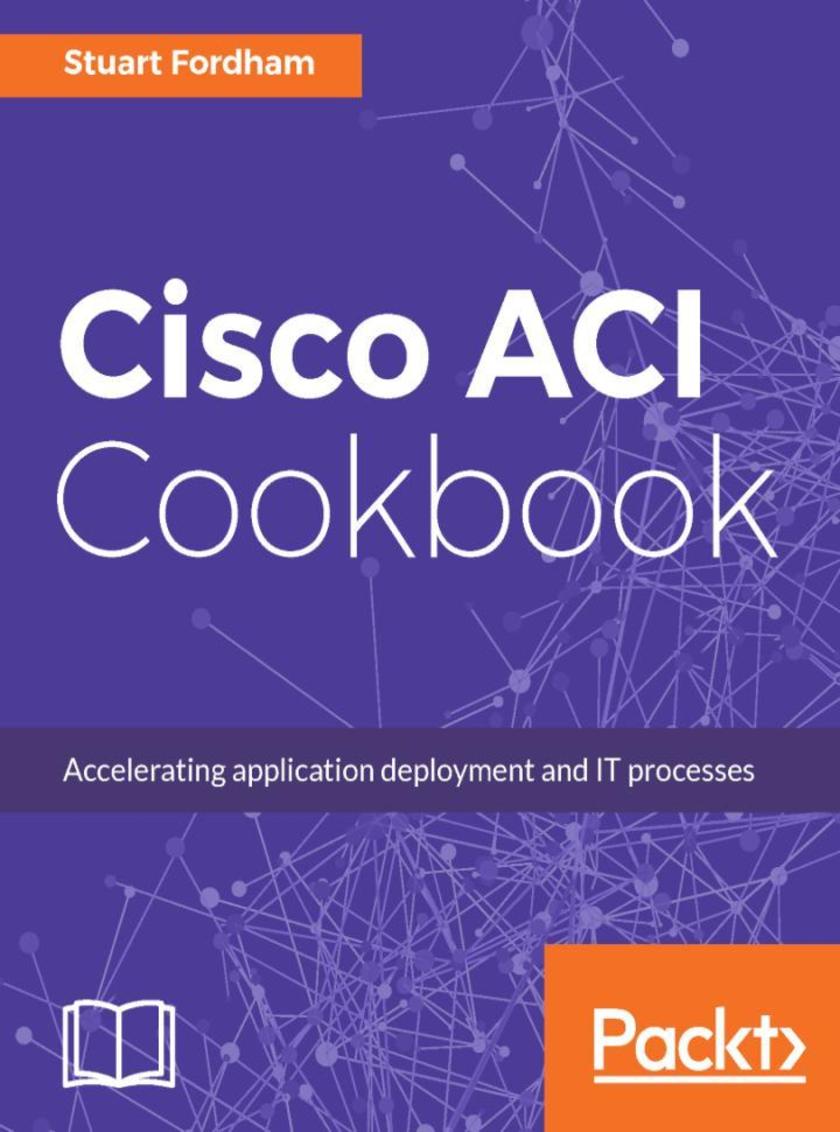
Cisco ACI Cookbook
¥90.46
Over 90 recipes to maximize automated solutions and policy-drive application profiles using Cisco ACI About This Book ? Confidently provision your virtual and physical infrastructure for application deployment ? Integrate Cisco ACI with hypervisors and other third party devices ? Packed with powerful recipes to automate your IT operations Who This Book Is For If you are a network administrator, system administrator, or engineer and are aware of the basics of Cisco ACI but want to start using it to automate your tasks, then this book is for you What You Will Learn ? Master the Cisco ACI architecture ? Discover the ACI fabric with easy-to-follow steps ? Set up quality of service within ACI ? Configure external networks with Cisco ACI ? Integrate with VMware and track VMware virtual machines ? Configure apply and verify access policies ? Extend or migrate a VMware virtual-machine LAN inside the ACI fabric ? Monitor ACI with third party tools and troubleshoot issues In Detail Cisco Application Centric Infrastructure (ACI) is a tough architecture that automates IT tasks and accelerates data-center application deployments. This book focuses on practical recipes to help you quickly build, manage, and customize hybrid environment for your organization using Cisco ACI. You will begin by understanding the Cisco ACI architecture and its major components. You will then configure Cisco ACI policies and tenants. Next you will connect to hypervisors and other third-party devices. Moving on, you will configure routing to external networks and within ACI tenants and also learn to secure ACI through RBAC. Furthermore, you will understand how to set up quality of service and network programming with REST, XML, Python and so on. Finally you will learn to monitor and troubleshoot ACI in the event of any issues that arise. By the end of the book, you will gain have mastered automating your IT tasks and accelerating the deployment of your applications. Style and approach A set of exciting recipes to automate your IT operations related to datacenters, the Cloud, and networking tasks
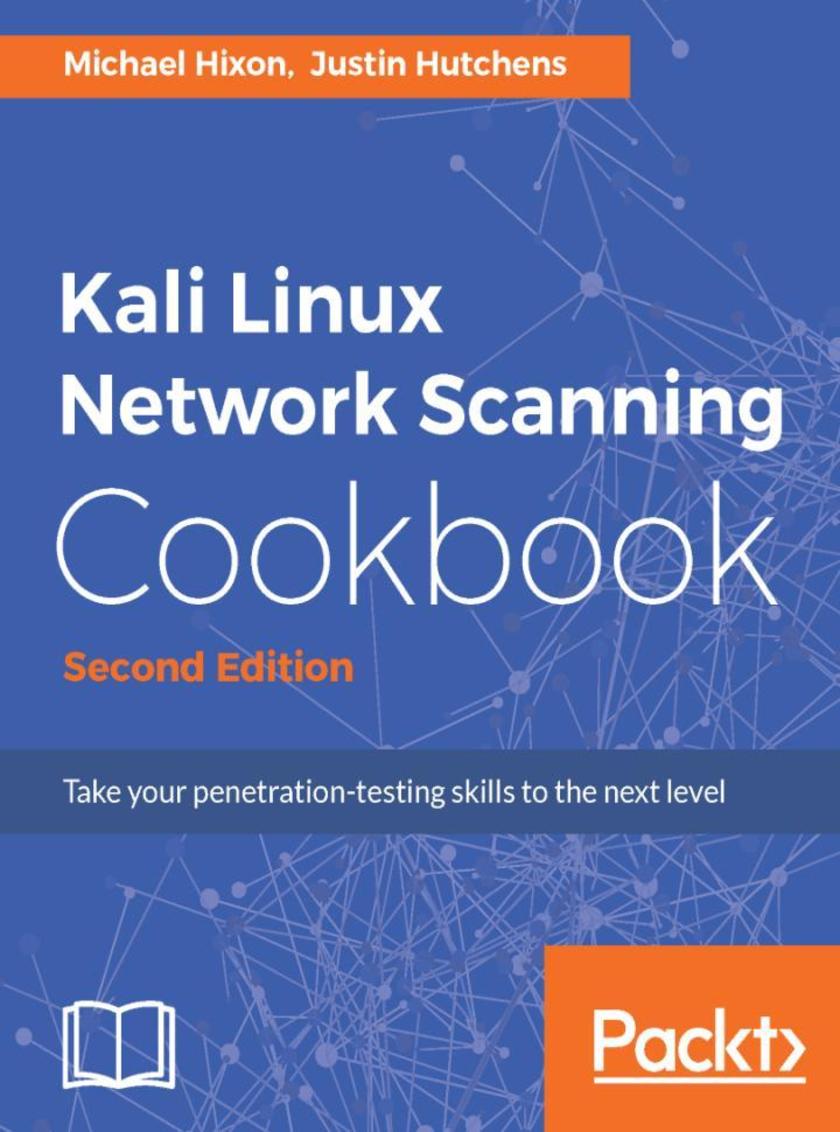
Kali Linux Network Scanning Cookbook - Second Edition
¥90.46
Over 100 practical recipes that leverage custom *s and integrated tools in Kali Linux to help you effectively master network scanning About This Book ? Learn the fundamentals behind commonly used scanning techniques ? Deploy powerful scanning tools that are integrated into the Kali Linux testing platform ? The practical recipes will help you automate menial tasks and build your own * library Who This Book Is For This book is for information security professionals and casual security enthusiasts alike. It provides foundational principles if you’re a novice, but will also introduce *ing techniques and in-depth analysis if you’re more advanced. Whether you are brand new to Kali Linux or a seasoned veteran, this book will help you both understand and ultimately master many of the most powerful and useful scanning techniques in the industry. It is assumed that you have some basic security testing experience. What You Will Learn ? Develop a network-testing environment to test scanning tools and techniques ? Understand the principles of network-scanning tools by building *s and tools ? Identify distinct vulnerabilities in web apps and remote services and learn how they are exploited ? Perform comprehensive scans to identify listening on TCP and UDP sockets ? Get started with different Kali desktop environments--KDE, MATE, LXDE, and Xfce ? Use Sparta for information gathering, port scanning, fingerprinting, vulnerability scanning, and more ? Evaluate DoS threats and learn how common DoS attacks are performed ? Learn how to use Burp Suite to evaluate web applications In Detail With the ever-increasing amount of data flowing in today’s world, information security has become vital to any application. This is where Kali Linux comes in. Kali Linux focuses mainly on security auditing and penetration testing. This step-by-step cookbook on network scanning trains you in important scanning concepts based on version 2016.2. It will enable you to conquer any network environment through a range of network scanning techniques and will also equip you to * your very own tools. Starting with the fundamentals of installing and managing Kali Linux, this book will help you map your target with a wide range of network scanning tasks, including discovery, port scanning, fingerprinting, and more. You will learn how to utilize the arsenal of tools available in Kali Linux to conquer any network environment. The book offers expanded coverage of the popular Burp Suite and has new and updated *s for automating scanning and target exploitation. You will also be shown how to identify remote services, how to assess security risks, and how various attacks are performed. You will cover the latest features of Kali Linux 2016.2, which includes the enhanced Sparta tool and many other exciting updates. This immersive guide will also encourage the creation of personally *ed tools and the skills required to create them. Style and approach This step-by-step guide is full of recipes that will help you use integrated scanning tools in Kali Linux and develop custom *s to make new and unique tools of your own.
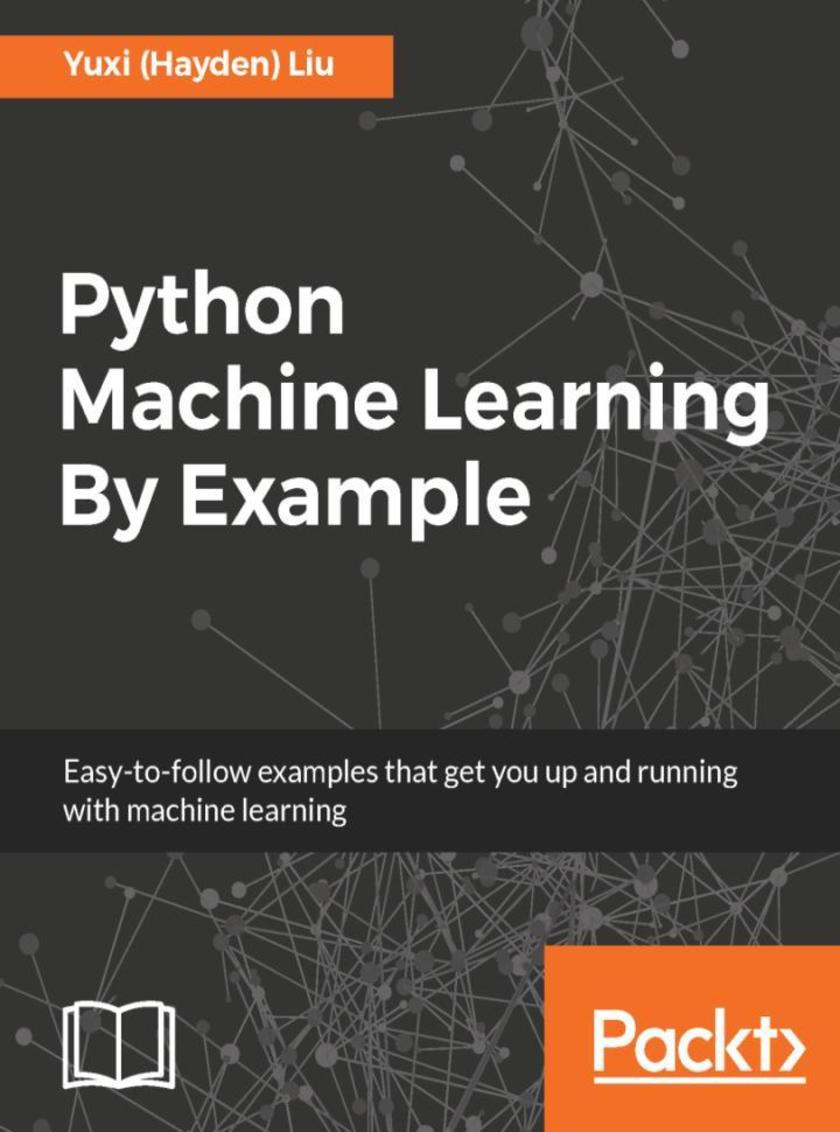
Python Machine Learning By Example
¥90.46
Take tiny steps to enter the big world of data science through this interesting guide About This Book ? Learn the fundamentals of machine learning and build your own intelligent applications ? Master the art of building your own machine learning systems with this example-based practical guide ? Work with important classification and regression algorithms and other machine learning techniques Who This Book Is For This book is for anyone interested in entering the data science stream with machine learning. Basic familiarity with Python is assumed. What You Will Learn ? Exploit the power of Python to handle data extraction, manipulation, and exploration techniques ? Use Python to visualize data spread across multiple dimensions and extract useful features ? Dive deep into the world of analytics to predict situations correctly ? Implement machine learning classification and regression algorithms from scratch in Python ? Be amazed to see the algorithms in action ? Evaluate the performance of a machine learning model and optimize it ? Solve interesting real-world problems using machine learning and Python as the journey unfolds In Detail Data science and machine learning are some of the top buzzwords in the technical world today. A resurging interest in machine learning is due to the same factors that have made data mining and Bayesian analysis more popular than ever. This book is your entry point to machine learning. This book starts with an introduction to machine learning and the Python language and shows you how to complete the setup. Moving ahead, you will learn all the important concepts such as, exploratory data analysis, data preprocessing, feature extraction, data visualization and clustering, classification, regression and model performance evaluation. With the help of various projects included, you will find it intriguing to acquire the mechanics of several important machine learning algorithms – they are no more obscure as they thought. Also, you will be guided step by step to build your own models from scratch. Toward the end, you will gather a broad picture of the machine learning ecosystem and best practices of applying machine learning techniques. Through this book, you will learn to tackle data-driven problems and implement your solutions with the powerful yet simple language, Python. Interesting and easy-to-follow examples, to name some, news topic classification, spam email detection, online ad click-through prediction, stock prices forecast, will keep you glued till you reach your goal. Style and approach This book is an enticing journey that starts from the very basics and gradually picks up pace as the story unfolds. Each concept is first succinctly defined in the larger context of things, followed by a detailed explanation of their application. Every concept is explained with the help of a project that solves a real-world problem, and involves hands-on work—giving you a deep insight into the world of machine learning. With simple yet rich language—Python—you will understand and be able to implement the examples with ease.


