


 购物车
购物车 个人中心
个人中心

Amnesia
¥51.50
You’ll be up all night with this addictive thriller from the New York Times bestselling author. What if, one by one, your exes were being murdered – and all the evidence pointed at you? Hotshot lawyer Quinn Cortez is infamous for his prowess in the courtroom – and the bedroom. But when his latest conquest – notorious party girl Lulu Vanderley – is found butchered, Cortez becomes the prime suspect. Suffering paralysing blackouts, and with no memory of his actions at the time of the murder, Cortez must fight to clear his name. Lulu's cousin Annabelle is willing to believe he is innocent – until more bodies are discovered, and all the clues lead back to him. To catch a killer, Cortez must explore the blackness within him, and confront the shocking truth…
Lessons in Love
¥51.50
A warm romantic comedy about teaching old dogs new tricks… Two women: one small difference between them - The letter Y,. Firstly there's Jane Mills - she's suffering from a broken heart, no job and a house she can't afford. Meanwhile, on the other side of town, Jayne Mills can afford anything she wants, but at what cost to herself? In her late 20s, Jane's up for a challenge. Fast approaching 50, Jayne's had more than enough of them. Meeting Jane after a mail mix-up, gives her the chance to assess her choices, and the glorious opportunity to remake the one that she most regrets. It seems that even late along the road, you are never too old to learn new tricks… For anyone who's ever wondered what became of the one who got away or dreamed of escaping on a grown-up gap year, this is a wonderfully warm read about finding answers to life's troubles in the unlikeliest of places. A sparkling romantic comedy about lost chances found and walking in someone else's shoes, perfect for fans of Jane Green and Tess Stimson.

The Trafficked
¥57.09
DETECTIVE JOHNNY MANN IS BACK Missing children. An evil racket. A race against time … Summoned to meet his boss, rebellious Detective Johnny Mann expects to be told that he is being demoted. Instead he is ordered to lead the investigation into the kidnapping of Amy Tang - the illegitimate daughter of a major player in the skin trade, CK Leung. Mann is reluctant to help - he has crossed paths with CK before- but he has no choice. Nine-year-old Amy is the third child to be kidnapped and held for a vast sum of money, but while the other two children were released after the vast ransom was paid, Amy is still being held captive. Mann's investigation takes him to London, where he teams up with DC Becky Stamp. Within days of his arrival, an arson attack kills twelve women and children. The charred bodies of the victims are found chained to their beds - their injuries rendering them identifiable… What is the link between the kidnapping of Amy in Hong Kong and the deaths of these women and children and can Mann discover the truth before it's too late. Prepare to be terrorised all over again with this disturbingly addictive thriller from the writer hailed as the female James Patterson.

Wedding Tiers
¥63.77
The path of true love never runs smooth. But for some, it's one seriously bumpy ride… Josie Gray and her childhood sweetheart Ben Richards always dreamt of living a life of rural bliss. And when Josie inherits her beloved Grandmother's cottage in Neatslake, Lancashire, it seems they might have got just that. Josie throws herself into her wedding cake business, whilst Ben gains increasing acclaim as an artist. The tranquil village turns into a hive of activity when Josie's childhood friend Libby Martin returns to the village, planning a lavish wedding to rival any celeb bash. But amidst all this romance, Josie's fairytale relationship with Ben turns into a nightmare, and she quickly becomes Love's number one cynic – until charming wedding photographer Noah Sephton arrives in Neatslake with a very different outlook on love… A heartwarming new romantic comedy from Sunday Times bestselling author Trisha Ashley

The Triumph of Katie Byrne
¥34.14
A riveting novel that begins with a murder in an old Connecticut barn and reaches its climax on Broadway. We first meet Katie Byrne at seventeen. A tall beauty with reddish-gold hair, she has always wanted to be an actress. Her two best friends share her passion for the theatre, and the three girls have spent much of their childhood rehearsing plays in an old barn in Connecticut. Leaving early one day to help her mother prepare dinner, Katie realizes she has left her schoolbooks at the barn and she and her older brother return to retrieve them. When they arrive, they find the barn, the setting of so many happy dreams, has become the scene of a nightmare: one of Katie's friends has been raped and murdered, and the other lies unconscious. Ten years later, Katie, a struggling actress in New York, is still haunted by the tragedy. Her friend Carly remains in a coma, and Katie desperately wants to achieve success and stardom not only for herself but also for her two old friends. Her big chance comes when she is discovered and wins a major role in a Broadway play. A promising love affair adds to the excitement of working on Broadway; but Katie must face the demons of the past before she can embrace the possibilities of the future.

A Secret Affair
¥48.07
Thirty-three-year-old Bill Fitzgerald is an acclaimed American television foreign correspondent. War-weary and exhausted after a long stint in Bosnia, he travels to Venice to meet Francis Xavier Peterson, and old friend and war correspondent for Time magazine. Vanessa Stewart is a twenty-seven-year-old glass designer from New York. She's also in Venice , visiting the glass-blowing works in Murano. Whilst at the bar of the Gritti Palace Hotel on the Grand Canal with Frankie, Bill is struck by the dark beauty of a young woman seated alone. The young woman is Vanessa. The three expatriates meet and decide that, as Americans in Venice , they should celebrate Thanksgiving together. And that evening, full of warmth and comaraderie, begins an illicit though fateful love affair.

Pop Tart
¥53.76
She was America's sweetheart. Until the love affair ended with a bang… Young make-up artist Jackie Reilly has always dreamed of making it big in TinselTown, concealing the flaws of the rich and famous. Stuck in a rut with a crazy boss, she thinks her big break will never come - until she meets a girl who guarantees her life will never be the same again… 16-year-old Brooke Parker is bubbly, vivacious, charming - and about to become the world's most famous teenager. A pop singer on the verge of superstardom, Brooke instantly takes a shine to Jackie and draws her into a world of white-stretch limos, screaming fans and invitations to VIP events. But as Jackie quickly finds out, fame has its dark side. Forced to juggle the various egos of Brooke's entourage - from bitchy stylists to over-eager publicists and a manager that serves his own interests before all else - all preserving the golden girl image of brand Brooke. Caught in the tight grip of the P.R machine, Brooke starts to rebel, taking Jackie along for the ride. At first her bad girl antics are a blast, earning her even more column inches, but when her heavy partying brings Brooke's demons to the surface she begins to fall apart and soon, she is taking Jackie down with her. When Jackie is forced to learn the rules of showbusiness the hard way, her friendship with Brooke is put to the ultimate test - will she be yet another casualty of Brooke's increasing quest for fame? Or can she save herself - and Brooke?

The Blue Zone
¥45.62
A breathtaking novel of suspense from the co-author of five bestselling James Patterson novels, including ‘Judge and Jury’ and ‘Lifeguard’. THERE ARE NO RULES IN THE BLUE ZONE. They were the perfect family. And he was the perfect family man. One day changed it all. Arrested for racketeering, Ben Raab must take his family into America’s Witness Protection Programme. Only his eldest daughter, Kate, chooses to stay on the outside. But the Programme's perfect success rate is about to come to a shocking end. A case agent is tortured to death and Ben vanishes. The one person who might be able to find him is Kate. Pursued by killers, forced to question everything she knows about her life so far, Kate is plunged into a terrifying existence for which nothing has prepared her. Most people would call it certain death. The FBI calls it the Blue Zone.

Last of the Summer Wine (The Best of British Comedy)
¥50.62
Compo: I thought you'd be open. Sid: Well that's a natural assumption if you ignore the drawn blinds and the forty foot sign that says closed. Set and filmed in and around Holmfirth, West Yorkshire, Last of the Summer Wine follows the adventures of three quirky pensioners and their equally unusual neighbours. A true British classic that appeals to all generations, it is our nation's longest running comedy programme. The line-up of the comedy trio has changed numerous times over the years, but the calibre of the family-friendly humour Roy Clarke creates has remained the same, and it's as funny and eccentric now as it was in the first episodes he wrote over 25 years ago. Including the pilot, broadcast ten months before the first series, 29 series, made up of 279 episodes, have been screened to date, with the 30th series set to air this autumn. The sitcom has consistently been a favourite in the ratings, with viewing figures peaking at 18.8 million in the mid-eighties. Famous fans include Prince Charles, the Queen Mother and the Queen, who said it was her favourite TV show. The Best of British Comedy - Last of the Summer Wine includes: ”? The History: an overview of how Last of the Summer Wine was born and developed ”? Gags and Catchphrases: a collection of classic quotes ”? Did You Know?: snippets of info about the show, cast, etc. ”? Favourite scenes: the most memorable scenes in full ”? A LOSW quiz 'If God's omnipotent, what could he possibly want with my old woman?' Clegg Compo: Your old lady's dog is crapping all over the pavement. Blamire: That's funny. He usually sews it up in little bags and sends it by post.

Sharpe’s Christmas
¥9.71
A Richard Sharpe short story, featuring scenes of action and adventure at Christmas. ‘You’ll like Irati,’ Colonel Hogan said. ‘It’s a nothing place, Richard. Hovels and misery, that’s all it is and all it ever will be, but that’s where you’re going for Christmas.’ Sharpe was sent to Irati because maybe the French were going there. The garrison planned to march at Christmas in the hope that their enemies would be too bloated with beef and wine to fight, but Hogan had got wind of their plans and was now setting his snares on the only two routes that the escaping French could use. One, the eastern road, was by far the easier route, for it entered France through a low pass, and Hogan guessed it was that route that the French would choose. But there was a second road, a tight, hard, steep road, and that had to be blocked as well and so the Prince of Wales’s Own Volunteers, Sharpe’s regiment, would climb into the hills and spend their Christmas at a place of hovels and misery called Irati. Soldier, hero, rogue – Sharpe is the man you always want on your side. Born in poverty, he joined the army to escape jail and climbed the ranks by sheer brutal courage. He knows no other family than the regiment of the 95th Rifles whose green jacket he proudly wears.

Second Chance
¥51.50
Every woman needs a best friend… And Deena Munger needs one more than most. Faced with an almost empty nest, a marriage that's as stale as week-old bread, and hot flushes that are driving her mad, no wonder she feels running away. Despite her twenty extra pounds, Deena feels invisible and wonders when she started to disappear. And how come she never even noticed. Until the day Heloise enters her life. To the astonishment of her family, Deena volunteers to raise a Guide dog-and suddenly her world is turned upside down. Can this messy, boisterous, playful Labrador puppy show her the way out of the darkness? Seeing really is believing…
Drowned Wednesday (The Keys to the Kingdom, Book 3)
¥53.76
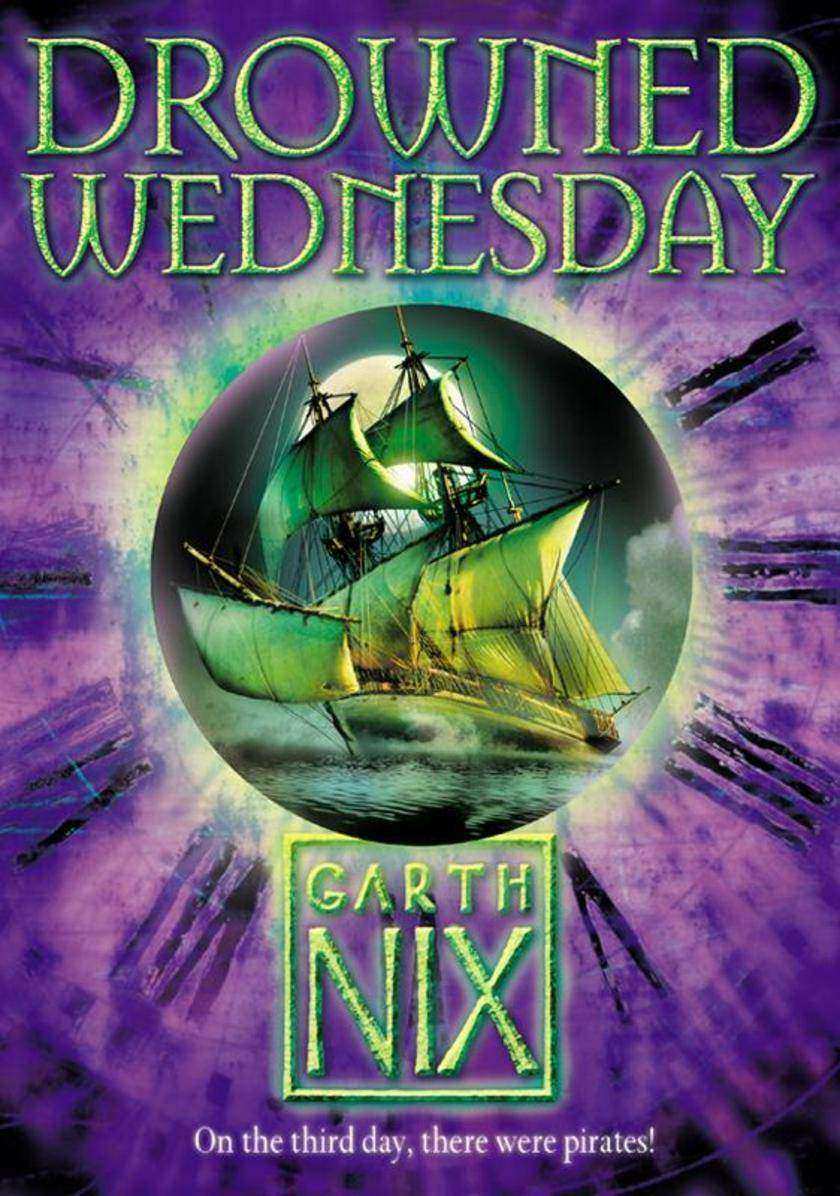
On the third day, there were PIRATES! Arthur Penhaligon finds himself on an adventure that will pit him against pirates, storms, explosions and a vast beast that eats everything it encounters. Will our unwitting hero be able to find the third part of the Will and claim the Third Key? No rest for poor Arthur Penhaligon. As Grim Tuesday ends, he discovers a square of stiff cardboard under his pillow, gilt-edged and inscribed with the following words: LADY WEDNESDAY Trustee of the Architect and Duchess of the Border Sea has great pleasure in inviting ARTHUR PENHALIGON to a Particular Luncheon of Seventeen Removes Transport has been arranged RSVP not required… It’s an invitation he cannot refuse. From hospital room to the high seas, Arthur finds himself on an adventure that will pit him against pirates, storms, explosions of Nothing-laced gunpowder, and a vast beast that eats everything it encounters. Through it all, he is drawn deeper into the central mystery of the House. Arthur must find the third part of the Will and claim the Third Key – not just for himself, but for the millions (if not trillions) who will suffer if he doesn't. The first step? Surviving life aboard ship on the Border Sea…
Grim Tuesday (The Keys to the Kingdom, Book 2)
¥31.49
Second title in Garth Nix’s gripping new fantasy adventure series. Arthur Penhaligon didn't think he would ever have to return to the strange house that nearly killed him on Monday – the house that contains a fantastical and sinister realm inside. But the next day brings new challenges – in the form of an enemy named Grim Tuesday, who threatens the safety of both Arthur's family and his world. Arthur must retrieve the Second Key from Grim Tuesday in order to save everything – an adventure that will force him to steal a Sunship, survive a very weird work camp, befriend a bearlike spirit and fight the void Nithlings. Even after all that, he will still have to venture into the scary Far Reaches for an ultimate showdown.

Lady Friday (The Keys to the Kingdom, Book 5)
¥53.76
Friday is here! The race is on to find the secret of the Middle House. The fifth eagerly awaited installment in Garth Nix’s best selling fantasy series,The Keys to the Kingdom. Arthur Penhaligon’s adventures in the House get ever more perilous as the week unfolds. On the fifth day, there was fear… Four of the seven Trustees have been defeated and their Keys taken, but for Arthur, the week is still getting worse. Suzy Blue and Fred Initial Numbers Gold have been captured by the Piper, and his New Nithling army still controls most of the Great Maze. Superior Saturday is causing trouble wherever she can, including turning off all the elevators in the House and blocking the Front Door. Arthur can't even find out what is happening back home. All he knows is that Leaf isn't on earth any more. She's missing and so are hundreds of other people who were transferred from regular hospitals to a private institution run by a 'Doctor Friday'. From there they have been taken somewhere else in the Secondary Realms, for Lady Friday's own horrible purposes. Amid all this trouble, Arthur’s mother is also missing, and he must weigh up an offer from Lady Friday that is either a cunning trap for the Rightful Heir or a golden opportunity he must seize – before Superior Saturday or the Piper beats him to it.

Forest Mage (The Soldier Son Trilogy, Book 2)
¥70.63
The second book in the brand new trilogy from the author of the Tawny Man trilogy, following on from the bestselling Shaman’s Crossing. The King's Cavalla Academy has been ravaged by the Speck plague. The disease has decimated the ranks of both cadets and instructors, and even the survivors remain sickly. Many have been forced to relinquish their military ambitions and return to their families to face lives of dependency and disappointment. As the Academy infirmary empties, Cadet Nevare Burvelle also prepares to journey home, to attend his brother Rosse's wedding. Far from being a broken man, Nevare is hale and hearty after his convalescence. He has defeated his nemesis, Tree Woman and freed himself of the Speck magic that infected him and attempted to turn him against his own people. A bright future awaits him as a commissioned officer betrothed to a beautiful young noblewoman. Yet his nights are still haunted by dreams of the voluptuous Tree Woman, dreams in which his Speck self betrays everything he holds dear in his waking life. Has the plague infected him in ways far more mysterious than the merely physical? Despite his fears, Nevare will journey back to Widevale in high spirits, in full expectation of a jubilant homecoming and a tender reunion with his beautiful fiancée, Carsina. But his life is about to take a shocking turn, as the magic in his blood roars to life and forces him to recognize that his most dangerous enemy, an enemy that seeks to destroy all he loves, might dwell within him.

Forget Me Not
¥57.09
The sparkling new novel from the bestselling author of ‘A Question of Love.’ It’s never easy putting down new roots… After the sudden death of her mother, Anna Temple realises she needs to live for the moment and pursue her dream of becoming a garden designer. Swapping hedge funds for herbaceous borders, and shares for scented stocks, she says goodbye to City life for a fresh start in the country. But on the eve of her sparkling new future she meets the gorgeous Xan and their chance encounter changes her world in more ways than she could ever imagined – enter baby Milly. Juggling her new business with the joys and fears of motherhood is a struggle, especially alone and when Anna unearths a long-buried family secret, skeletons tumble from the closet. Suddenly nothing is as it seems, past or present…

An Angel By My Side: Amazing True Stories of the Afterlife
¥51.50
Following the hugely popular ‘An Angel Saved My Life’, comes another collection of powerful true stories of communication with those in the Afterlife. Includes real-life amazing rescues, mysterious dream visitations, near death experiences and miraculous recoveries. In the follow up to her first collection of stories entitled ‘An Angel Saved My Life’, Jacky Newcomb is back with more incredible, inspiring true life dramas and what happens when those from the afterlife intervene in our darkest hour of need. The book includes: ? Miraculous survival stories which defy explanation. ? Amazing rescues – mysterious strangers who proved to be angels in disguise. ? People who came back from the brink of death – what is it really like to die? ? Remarkable medical recoveries – spirit intervention to set the clock back on a person's 'time to go'. ? Dream visitations by spirits – angels and spirit friends entering or creating dreams to give important messages. ? The psychic power of children and their interaction with angels. ? Incredible psychic animals – pets who came back from the dead to protect their owners.

Derek Acorah: Extreme Psychic
¥62.59
The UK's number one TV psychic is back as you've never seen him before. Derek shares stories of his scariest, most bloodcurdling encounters with the other side. From possession by demons, violent spirits that have thrown him bodily across the room and encounters with dead serial killers, to ghosts that have made him fear for his very life, here is a collection of shocking experiences that have made Derek stare into the darkest places of the spirit world. Warning: this is not for the faint-hearted. Read it, if you dare.
Humble Pie
¥63.18
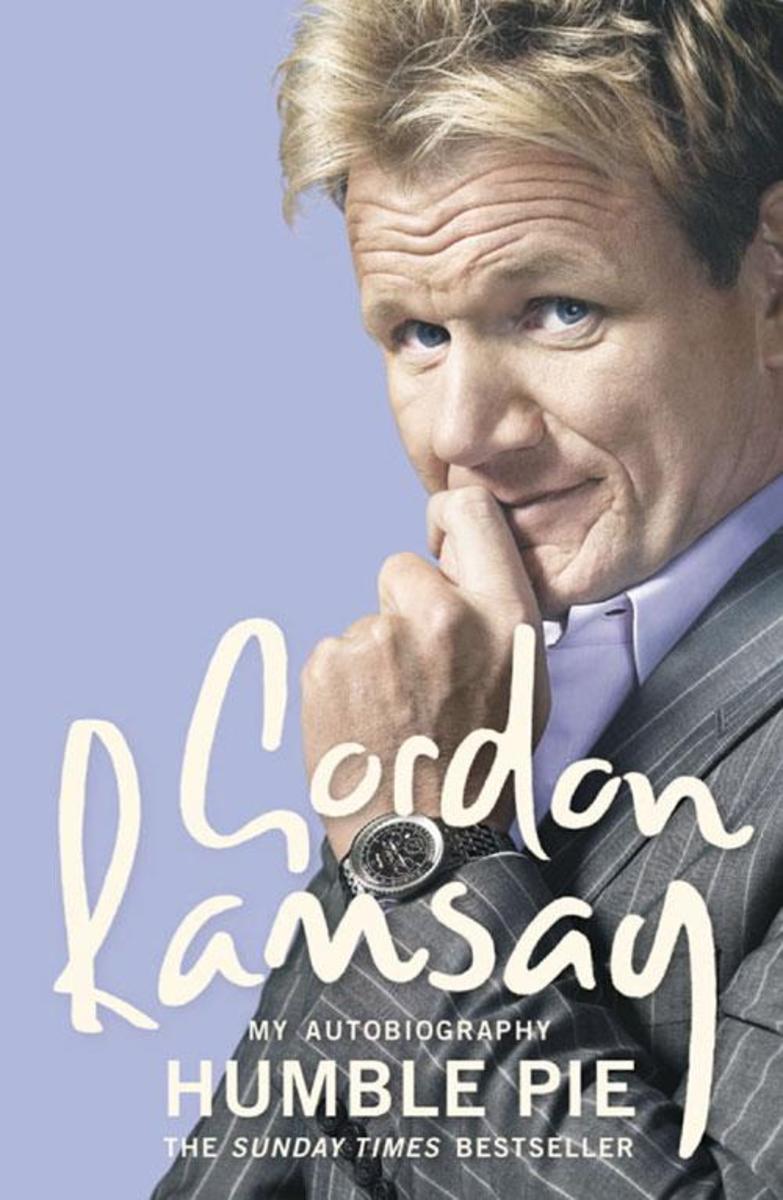
Everyone thinks they know the real Gordon Ramsay: rude, loud, pathologically driven, stubborn as hell. But this is his bestselling real story… Humble Pie tells the full story of how he became the world’s most famous and infamous chef: his difficult childhood, his brother’s heroin addiction and his failed first career as a footballer: all of these things have made him the celebrated culinary talent and media powerhouse that he is today. Gordon talks frankly about: ? his tough childhood: his father’s alcoholism and violence and the effects on his relationships with his mother and siblings, ? his first career as a footballer: how the whole family moved to Scotland when he was signed by Glasgow Rangers at the age of fifteen, and how he coped when his career was over due to injury just three years later, ? his brother’s heroin addiction. ? Gordon’s early career: learning his trade in Paris and London; how his career developed from there: his time in Paris under Albert Roux and his seven Michelin-starred restaurants. ? Kitchen life: Gordon spills the beans about life behind the kitchen door, and how a restaurant kitchen is run in Anthony Bourdain-style. ? How he copes with the impact of fame on himself and his family: his television career, the rapacious tabloids, and his own drive for success.

Tana Ramsay’s Family Kitchen
¥80.25
Bestselling author, Tana Ramsay, knows the challenges of cooking for a demanding family – as a mother of four and the wife of Gordon Ramsay, she's certainly put to the test. Now, for the first time in paperback, Tana shares the delicious recipes, kitchen secrets and shortcuts she uses to satisfy the Ramsay family. Time-pressed parents will swear by Tana's simple and delicious recipes – although not in the traditional Gordon way. Tana has a tasty solution for every occasion, from lunch bites and tea-time treats to weekend lunches and party foods. She also offers personal tips on a wide range of issues all parents face, including how to adapt dishes to suit different ages and tastes and how to encourage children to experiment with food. Whether you only have minutes to rustle up Lime and Ginger Salmon Fillets or fancy a fun afternoon with the kids creating Gingerbread Lollies, this lavishly illustrated book is an adventure in the kitchen for adults and children alike.

Pirates (Collins Gem)
¥38.36
An entertaining and authoritative introduction to the world of piracy – history comes to life through a compelling factual narrative and enlightening illustrations.


