万本电子书0元读

万本电子书0元读

Evolution of the Culture
Augustus Henry Lane-Fox Pitt Rivers
¥28.04
Paradise Lost is an epic poem in blank verse by the 17th-century English poet John Milton (1608–1674). The first version, published in 1667, consisted of ten books with over ten thousand lines of verse. A second edition followed in 1674, arranged into twelve books (in the manner of Virgil's Aeneid) with minor revisions throughout and a note on the versification. It is considered by critics to be Milton's "major work", and helped solidify his reputation as one of the greatest English poets of his time. The poem concerns the Biblical story of the Fall of Man: the temptation of Adam and Eve by the fallen angel Satan and their expulsion from the Garden of Eden. Milton's purpose, stated in Book I, is to "justify the ways of God to men" Short Summary:The poem is separated into twelve "books" or sections, the lengths of which vary greatly (the longest is Book IX, with 1,189 lines, and the shortest Book VII, with 640). The Arguments at the head of each book were added in subsequent imprints of the first edition. Originally published in ten books, a fully "Revised and Augmented" edition reorganized into twelve books was issued in 1674, and this is the edition generally used today. The poem follows the epic tradition of starting in medias res (Latin for in the midst of things), the background story being recounted later.Milton's story has two narrative arcs, one about Satan (Lucifer) and the other following Adam and Eve. It begins after Satan and the other rebel angels have been defeated and banished to Hell, or, as it is also called in the poem, Tartarus. In Pand?monium, Satan employs his rhetorical skill to organise his followers; he is aided by Mammon and Beelzebub. Belial and Moloch are also present. At the end of the debate, Satan volunteers to poison the newly created Earth and God's new and most favoured creation, Mankind. He braves the dangers of the Abyss alone in a manner reminiscent of Odysseus or Aeneas. After an arduous traversal of the Chaos outside Hell, he enters God's new material World, and later the Garden of Eden. At several points in the poem, an Angelic War over Heaven is recounted from different perspectives. Satan's rebellion follows the epic convention of large-scale warfare. The battles between the faithful angels and Satan's forces take place over three days. At the final battle, the Son of God single-handedly defeats the entire legion of angelic rebels and banishes them from Heaven. Following this purge, God creates the World, culminating in his creation of Adam and Eve. While God gave Adam and Eve total freedom and power to rule over all creation, He gave them one explicit command: not to eat from the Tree of the knowledge of good and evil on penalty of death.
Heart of Darkness
Heart of Darkness
Joseph Conrad
¥9.07
The Republic (Greek: Politeia) is a Socratic dialogue, written by Plato around 380 BC, concerning the definition of (justice), the order and character of the just city-state and the just man, reason by which ancient readers used the name On Justice as an alternative title (not to be confused with the spurious dialogue also titled On Justice). The dramatic date of the dialogue has been much debated and though it must take place some time during the Peloponnesian War, "there would be jarring anachronisms if any of the candidate specific dates between 432 and 404 were assigned". It is Plato's best-known work and has proven to be one of the most intellectually and historically influential works of philosophy and political theory. In it, Socrates along with various Athenians and foreigners discuss the meaning of justice and examine whether or not the just man is happier than the unjust man by considering a series of different cities coming into existence "in speech", culminating in a city (Kallipolis) ruled by philosopher-kings; and by examining the nature of existing regimes. The participants also discuss the theory of forms, the immortality of the soul, and the roles of the philosopher and of poetry in society. Short Summary (Epilogue):X.1—X.8. 595a—608b. Rejection of Mimetic ArtX.9—X.11. 608c—612a. Immortality of the SoulX.12. 612a—613e. Rewards of Justice in LifeX.13—X.16. 613e—621d. Judgment of the Dead The paradigm of the city — the idea of the Good, the Agathon — has manifold historical embodiments, undertaken by those who have seen the Agathon, and are ordered via the vision. The centre piece of the Republic, Part II, nos. 2–3, discusses the rule of the philosopher, and the vision of the Agathon with the allegory of the cave, which is clarified in the theory of forms. The centre piece is preceded and followed by the discussion of the means that will secure a well-ordered polis (City). Part II, no. 1, concerns marriage, the community of people and goods for the Guardians, and the restraints on warfare among the Hellenes. It describes a partially communistic polis. Part II, no. 4, deals with the philosophical education of the rulers who will preserve the order and character of the city-state.In Part II, the Embodiment of the Idea, is preceded by the establishment of the economic and social orders of a polis (Part I), followed by an analysis (Part III) of the decline the order must traverse. The three parts compose the main body of the dialogues, with their discussions of the “paradigm”, its embodiment, its genesis, and its decline.The Introduction and the Conclusion are the frame for the body of the Republic. The discussion of right order is occasioned by the questions: “Is Justice better than Injustice?” and “Will an Unjust man fare better than a Just man?” The introductory question is balanced by the concluding answer: “Justice is preferable to Injustice”. In turn, the foregoing are framed with the Prologue (Book I) and the Epilogue (Book X). The prologue is a short dialogue about the common public doxai (opinions) about “Justice”. Based upon faith, and not reason, the Epilogue describes the new arts and the immortality of the soul. ? About Author: Plato (Greek: Platon, " 428/427 or 424/423 BC – 348/347 BC) was a philosopher in Classical Greece. He was also a mathematician, student of Socrates, writer of philosophical dialogues, and founder of the Academy in Athens, the first institution of higher learning in the Western world. Along with his mentor, Socrates, and his most-famous student, Aristotle, Plato helped to lay the foundations of Western philosophy and science. Alfred North Whitehead once noted: "the safest general characterization of the European philosophical tradition is that it consists of a series of footnotes to Plato." Plato's sophistication as a writer is evident in his Socratic dialogues; thirty-six dialogues and thirteen letters have been ascribed to him, although 15–18 of them have been contested. Plato's writings have been published in several fashions; this has led to several conventions regarding the naming and referencing of Plato's texts. Plato's dialogues have been used to teach a range of subjects, including philosophy, logic, ethics, rhetoric, religion and mathematics. Plato is one of the most important founding figures in Western philosophy. His writings related to the Theory of Forms, or Platonic ideals, are basis for Platonism. ? Early lifeThe exact time and place of Plato's birth are not known, but it is certain that he belonged to an aristocratic and influential family. Based on ancient sources, most modern scholars believe that he was born in Athens or Aegina between 429 and 423 BC. His father was Ariston. According to a disputed tradition, reported by Diogenes Laertius, Ariston traced his descent from the king of Athens, Codrus, and the king of Messenia, Melanthus. Plato's mother was Perictione, whose family boasted of a relationship with the famous Athenian lawmaker an
每满80减40 半小时喵星哲学史
半小时喵星哲学史
胖乐胖乐
¥44.40
写给大忙人的喵喵漫画哲学书 不读哲学,少了文青感;想读哲学,又怕深奥难懂? 这套书破你对哲学的认知! 国内以猫猫形象来讲解哲学的图书,用独创的漫画形式,按时间线为横轴,融合了中西方的哲学思想,随手翻,就能轻松有趣的哲学世界。 本套书分为古代·中世纪、现代和近代三册,全部精选当时*有代表性的大咖喵! 37位有着人类大智慧的哲学喵,例如“有哲学就够了”的苏格喵底(地球名:苏格拉底)、改变世界的大神牛顿喵(地球名:牛顿);一统哲学江山的康德喵(地球名:康德);“英年早疯”的尼采喵(地球名:尼采)等等。大家平时对他们耳熟能详,但未必真正了解他们的生平事迹和观主张,我们把它画出来给你看,保证你是哲学小白也能看得懂、学得会!
每满80减40 南怀瑾国学八经典(套装共12册)(南怀瑾独家授权定本种子书)
南怀瑾国学八经典(套装共12册)(南怀瑾独家授权定本种子书)
南怀瑾
¥218.00
南怀瑾先生的著述涉及儒、释、道等中国传统文化经典,他常以经史合参的讲述方式、生动幽默语言,结合古今中外历史人文典故,结合当下的日常生活,引领新世代的人们直入文化的核心智慧,让读者更乐于了解历史人文的博大精深。本套装收录东方出版社已出版的南怀瑾作品。
每满80减40 半小时漫画中国哲学史(套装全2册)
半小时漫画中国哲学史(套装全2册)
陈磊·半小时漫画团队
¥99.80
你是不是也对种类繁多的国学典籍头疼不已?你是不是想要一套轻松有趣的国学入门书?通过手绘漫画和段子,陈磊(笔名:混子哥)领衔的半小时漫画团队就带读者分清了国学的各大门派,理清了国学的来龙去脉——儒家、道家、法家、墨家、兵家、魏晋玄学、程朱理学、陆王心学: 儒家就像HR,会处理人际关系,把国家秩序安排得明明白白; 道家向往自由,推崇无为而治,offer送到手里都不接; 法家都是职业经理人,他们用开公司的套路,把国家一步步做大做强; 墨家的核心思想“非攻,兼爱”用一句话来概括就是“peace and love”; 玄学就是摸鱼哲学,清谈就像在公司例会上扯淡; 理学是儒学的全新款式,说社会秩序也是自然规律,要追求“天理”; 心学专门跟理学抬杠,说人心就是“天理”,要知行合一,追求“良知”。 本书延续了半小时漫画系列严谨又搞笑的风格,从孔孟老庄,到程朱陆王(程颐、程颢、朱熹、陆九渊、王阳明),各门派宗师爆笑登场。让你在哈哈大笑中秒懂各大门派的思想主张和历史发展,不知不觉就入门国学、爱上国学! 翻开本书,在笑出腹肌的同时,分清国学各大门派,理清国学来龙去脉!
每满80减40 知行合一
知行合一
鸿飞扬
¥33.99
中国历史上取得“立德、立功、立言三不朽”成就者几希,明代大儒王阳明便是其中之一。他少年丧母,青年染疾,中年仕途更是屡屡受挫,但这些困难均未能阻挡他大放异彩,*终跻身圣人之列。这位传奇人物是如何在生活、思考中探索和实践,成就了一番辉煌业绩的?我们或许可以从他知行合一的心学智慧中找到答案。 本书从王阳明的心学典籍中精选了经典语录165条,分为立志、良知、教育、用兵、修行、处友、政治、为学、修心九个部分,用通俗易懂的语言对其行了全面而深的阐述。希望助你从中获得顿悟,不再困惑和纠结,内心平静而强大,人生从此破局,勇猛而精。
每满80减40 多元理论视野下的朱光潜美学
多元理论视野下的朱光潜美学
曹谦
¥21.00
本书在朱光潜美学与中国传统文化的关系、朱光潜美学与西方近现代哲学及美学的关系、朱光潜美学与中国马克思主义美学的关系这三大领域行深研究。主要内容有:朱光潜美学与中国儒道传统、与中国晚明文学传统以及与近代王国维美学的关系;朱光潜美学与西方近代审美心理学、与康德哲学美学以及与海德格尔存在主义的关系;朱光潜美学对中国马克思主义美学做出的贡献,包括20世纪50、60年代在“美学大讨论”中提出了“美是主客观统一”和实践论美学观;晚年致力于人道主义、人性论、“共同美”的美学探索,等等。本书在细读朱光潜原著的基础上做系统、详细的实证研究,脉络清晰地展示了朱光潜美学的“多元理论有机融合”的基本特征。而对朱光潜美学的这种“多元理论有机融合”特征追根溯源,又可以概括出:朱光潜美学有“三大思想来源”,即中国古典文化、西方近现代哲学及美学、马克思主义及其美学。朱光潜美学的这种理论来源及其建构特,对新世纪中国美学的发展走向具有重要的启示性意义。
每满80减40 高效能人士行动法则(套装共8册)
高效能人士行动法则(套装共8册)
茂木健一郎,本・伊利亚,菲尔・多布森等
¥159.00
本套装包括:《逻辑思考的100个关键》、《高效赋能》、《脑力赋能:一看就会的用脑秘籍,拿来即用的高效指南》、《超级大脑的七个习惯:激发大脑潜能,激活高效人生》、《出众,从改变习惯开始:迈向卓越人生的七大习惯法则!》、《高效人士的问题解决术》、《NLP思维:高效人士都在用的影响力沟通技能》、《赢在下班后:知名咨询专家倾力打造34种高效思维模式》
每满80减40 听培根谈人生哲理
听培根谈人生哲理
徐苑琳
¥14.00
弗兰西斯·培根被马克思称为“英国唯物主义和整个现代实验科学的真正始祖”。他的思想博大精深,是文艺复兴以来欧洲古典人文主义价值观念和政治理想的集中体现,深受各国读者的追捧。 《听培根谈人生哲理》立足于培根的主体思想,精选了《培根随笔》中的经典段落和名言警句,深探讨关于人生真谛、社会发展、自身情感等诸多方面的问题,帮助读者展对人生的思考,帮助人们指引正确的方向,摆脱困难的纠缠,走上美好的人生之路。
胡居仁儒学思想研究
胡居仁儒学思想研究
罗才成
¥22.66
暂无
每满80减40 脑洞大开的哲学简史:8世纪后60个有趣的灵魂(从8世纪启航,带你畅游5大哲学海域,相遇60位哲学先贤。当哲学成为每个人的标配,人人都可以成为一名“不思考”的哲学家)
脑洞大开的哲学简史:8世纪后60个有趣的灵魂(从8世纪启航,带你畅游5大哲学海域,相遇60位哲学先贤。当哲学成为每个人的标配,人人都可以成为一名“不思考”的哲学家)
七格
¥35.00
哲学一直给人一种远在云端的感觉,很多人对哲学总有种刻板印象,认为哲学太过玄奥,读不读哲学对自己没有多少影响。但其实这种高高在上的哲学是被经院化和学科化了的,这是对哲学原来面貌的*扭曲! 七格说,哲学与我们的距离并不遥远。哲学家可以很有趣,哲学可以很“普遍”。哲学其实与我们的生活息息相关,它可以启发我们从不同的角度看待生活中的问题。 本书带你认识60位哲学先贤的前世今生。风趣幽默的观剖析,独具一格的人物短评,各类学科与哲学的激情碰撞,让你畅游哲学海洋,重塑不一样的哲学态度!
每满80减40 中国哲学元理
中国哲学元理
张立文
¥46.80
依据中国哲学元理逻辑体系的天、地、人和合生生道体,中国哲学可以生发为七大原理:元亨利贞论、体用一源论、理一分殊论、能所相资论、不离不杂论、内圣外王论、融突和合论。中国哲学的七大原理(元理)是特定时空环境内在世哲学家通过思维、思想所构建的,其哲学理论思维是那个时代哲学家对人与自然、社会、人生关系的自我体认的升华;是反思人与自然、社会、人生互相关系,超越一般性的诠释而构建的概念、范畴的逻辑;是对人与自然、社会、人生的价值、理想、审美地再反思。这是在哲学家理论思维所把握的那个时代的精神,也即哲学的时代精神。中国哲学是在“继往圣之绝学”哲学理论思维成就基础上,在世哲学家在其理论思维方式引导下地再反思、再体认,以赋予价值理想、伦理道德、审美旨趣、终极关切新生面、新创造、新品格、新气质。
每满80减40 周易(国学大书院)(儒道之源:十三经之首 探讨“变化”的书 《易》之道,即君子之道,每天都用)
周易(国学大书院)(儒道之源:十三经之首 探讨“变化”的书 《易》之道,即君子之道,每天都用)
佚名
¥13.05
智慧中的智慧 ?预测学中的行为学《周易》是群经之首,是经典中之经典,哲学中之哲学,谋略中之谋略。从《周易》中,哲学家看到辩证思维,史学家看到历史兴衰,政治家看到治世方略,军事家可参悟兵法,企业家亦可从中找到经营的方法,同样,芸芸众生也可将其视为为人处世、提高修养的不二法宝。 本书将《周易》的六十四卦分别予以详细解读,每卦独立自成一体,各节皆有原文、译文、启示,每卦之后附有中外著名事例,以期抛砖引玉之效。 《周易》一书作为中国早熟的思想文化体系,它在中国传统思想文化中的重要地位,已为世所公认。《周易》被称为六经之首,就是一种证明。
每满80减40 霍布斯的修辞(“经典与解释”第26期)
霍布斯的修辞(“经典与解释”第26期)
刘小枫 / 陈少明 主编 
¥28.00
重拾中西方古典学问坠绪,不仅因为现代性问题迫使学问古共智慧,更因为古学问关乎亘古不移的人世问题。古学经典需要解释,解释是涵养精神的活动,也是思想取向的抉择;宁可跟随柏拉图犯错,也不与那伙人一起正确。举凡疏证诠解中国古学经典、移译西学整理旧故的晚近成果,不外乎愿与中西方古典大智慧一起思想,以期寻回精神的涵养,不负教书育人的人类亘古基业。   本书是《经典与解释》系列之一的《霍布斯的修辞》分册,内中具体研究了“霍布斯的哲学思想”,主要收录了:霍布斯《利维坦》中的推理与修辞、霍布斯的“非亚里士多德”政治修辞学、“教条”对抗“数理”、基督教国家的自然法等内容。
每满80减40 不抱怨的世界
不抱怨的世界
连山编著
¥29.80
本书从抱怨的危害出发,以励志而暖心的有关人生经历的故事给你勇气和力量,让你改变自己,改变世界,与更好的生活相遇,教会人们摒弃抱怨,努力改变,在漫漫黑夜中努力坚持,在艰难的日子里恬静安然,感受到快乐和幸福。
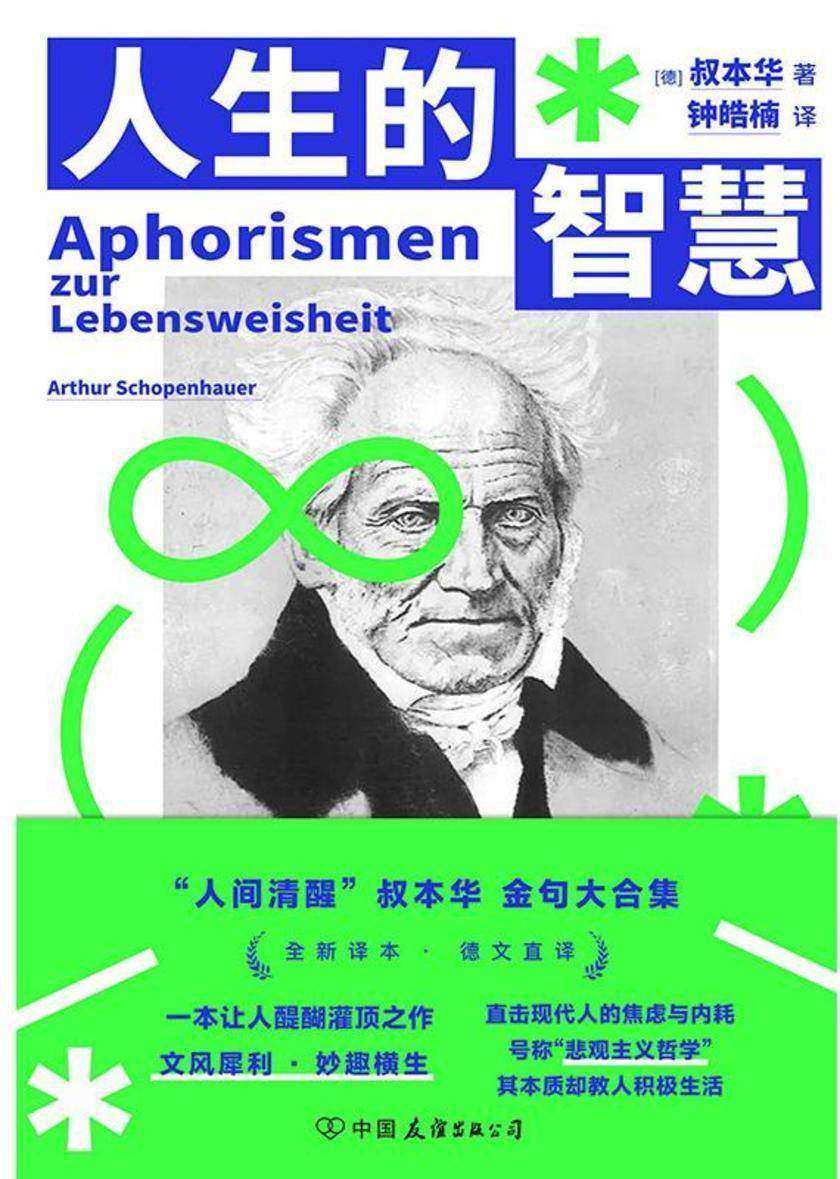
未读小经典:建议与箴言
未读小经典:建议与箴言
(德)叔本华
¥21.99
叔本华(Arthur Schopenhauer,1788—1860),德国哲学家,哲学史上个公开反对理性主义哲学的人,开创了非理性主义哲学的先河,创立了唯意志论哲学,他认为生命意志是主宰世界运作的力量。他毕生致力思考人类幸福的问题,深刻影响了尼采和萨特等20世纪哲学家,也为现代心理疗法提供了哲学依据。代表著作有《作为意志和表象的世界》《建议与箴言》等。
每满80减40 探索“良政”:章太炎思想论集
探索“良政”:章太炎思想论集
王锐
¥39.99
本书通过解读章太炎在清末撰写的几篇重要的政治文献,深分析他的思想特征。既涉及对于章氏《明独》《代议然否论》《秦政记》《五朝法律索引》《思乡原》等文章的阐释,也有对于章学的其他议题,如章氏对阳明心学的认识和阐释、章氏对民初政局的批评、章氏的辛亥记忆等的探讨。
每满80减40 异在论与比较视域下的老子新解--国家社科基金后期资助项目  中华书局出品
异在论与比较视域下的老子新解--国家社科基金后期资助项目 中华书局出品
田义勇著
¥52.80
本书基于“异在论”立场,对老子思想行总体把握与具体分析,而对《道德经》逐章阐释与深思辨;同时,从中西比较视域,揭示老子与西方著名哲学家,诸如康德、黑格尔、尼采、海德格尔、萨特,相互之间存在的观念差异与价值冲突,认为“求异”比“求同”更重要。本书着重挖掘老子的价值批判精神,认为“道”是针对世俗价值观行批判的z高尺度,并落实为“价值颠倒机制”。通常认为“强”、“壮”、“荣”、“敢”是正面价值,但老子反过来证明“弱”、“柔”、“辱”、“不敢”有更高价值。本书重新阐释老子辩证法。通常讲辩证法局限于对立面关系,比如相互斗争、相互转化等等。但老子更强调超越这一“相对”“相争”的低阶层次,而独标一种“*”“无争”的高阶境界,“反者道之动”是强调“返回道的本原”。本书立足于文本细读,纠正习见的语义误解。
鬼谷子智谋全解·第二卷
鬼谷子智谋全解·第二卷
野谷道人 编著
¥1.92
“鬼谷子”是先秦诸子之一,《鬼谷子》一书是其后学者根据其言论整理而成的,内容十分丰富,涉及政治、军事、外交等领域,主要讲的是攻守谋略的理论。纵横家所崇尚的是权谋策略及言谈辩论之技巧,其指导思想与儒家所推崇之仁义道德大相径庭。《鬼谷子》一书,历来被人们称为“智慧之禁果,旷世之奇书”,它在中国传统文化中独具特色,是乱世之慧说,乱世之哲学。它的哲学是实用主义的,讲求名利与进取,是一种讲求行动的实践哲学,其方法论是顺应时势,知权善变。因为千百年来中国一直以儒家思想为正统,所以鬼谷子的学说没有得到后人应有的重视,因此,历代学者对《鬼谷子》一书推崇者甚少,讥诋者极多。其实,《鬼谷子》一书并非等闲之书,它一直为中国古代军事家、政治家和外交家所研究,现又成为当代商家的之书。它所揭示的智谋权术的各类表现形式,被广泛运用于内政,外交、战争、经贸及公关等领域,其思想深深影响今人,享誉海内外。
每满80减40 第一哲学对话录
第一哲学对话录
杨东睿
¥36.00
如果您曾在大道流行中感受到一丝渺小,会否对命运或是天道作一番思考?   如果有幸可以窥知命运,我们是承天受命,成就自我,还是欲拒还迎,尝试跳出今日之我?   《哲学对话录》是一本因感受命运而起的著作,作者沉潜于占星术多年,不久前因缘际会对天道有所体悟,虽苦于表达之艰,仍借演化占星术为天梯,与读者展开一场对话,通过分析大量长期积累下来的历史人物与事件,邀您重走荣格关于人类“集体无意识”的神秘探险,寻找天王星、海王星与冥王星对于人世的深层意义。   那么何为“哲学”呢?或者只说说思想吧,一般而言,思想更引人如何看世界,哲学的思想也不例外,但那是来自遗忘之泉的暗涌,是划过天际的倚天剑,刺入那遮蔽思想的成见之中,将人们对以往思想的理解置于可疑的境地。而当您领悟何为思想,或许将发现这并无多少意义,终而懂得思想与成见的意义。   读罢此书,您也许会为其中论及的“天人感应”或是“历史重演”感到不安,也可能会由此参透命运的公平与不公。无论如何,本书作者都希望您能在偶尔突然袭来的空虚中找到生命的支点,了解更深层的自己,同时谨记老子的“知止不殆”,过上一种更丰富、更美好的生活!
超越主体主义:反思20世纪传播学的哲学源流
吴志远
¥15.00
【内容简介】 本书对20世纪西方传播学的起源、范式和方法等问题进行了回顾和反思,并试图回答处于历史流变中的传播学,其建构背后的学科史前史是什么,这些认识论和观念,又如何在学术的场域中互动建构。