


 购物车
购物车 个人中心
个人中心

The Viscount's Revenge
¥24.44
The handsome Viscount Trent finally makes up his mind to accede to the pleadings of his family and get married. He is twenty-seven and for a long time they have been begging him to take a wife and produce an heir to his illustrious title, his famous stately home and his vast estate. On the whole he finds debutantes extremely boring and has enjoyed a number of affaires-de-coeur with older married women. However there is one girl, Marigold Marlow, he considers outstanding and she is the acknowledged great beauty of the Season. As she is so beautiful, the Viscount is convinced that Marigold will make him a perfect wife, but he is astonished when, having proposed to her, she tells him that she has not quite made up her mind. She will let him know on Wednesday if she accepts his proposal of marriage. As the Viscount expects her to fall immediately into his arms, he is surprised, but content to wait until Wednesday for her answer, which he is certain will be ‘yes’. As he drives away from Marigold’s house, a young girl holding a white Pekingese in her arms begs him to give her a lift to London. He sees no reason to refuse and finds as they drive off that she is Salvia, a cousin of the beautiful Marigold. He then learns that Marigold has her eyes on the son of the Duke of Northerncliff, who is seriously ill. In fact if he dies as expected, she intends to marry his heir as one day soon he will be a Duke. Feeling surprised and angry, he is even more astonished to learn that Marigold is cruel to animals and that Salvia is running away because she is so unkind to her dog as well as to her. How the Viscount dreams up a way to avenge himself on Marigold and, if the Duke does recover, how he can escape marrying her as he has now changed his mind. How the Viscount’s plan succeeds. And how Salvia takes London by storm, faces appalling danger and finally finds the love of her life is all told in this unusual story by BARBARA CARTLAND.

Web Scraping with Python
¥63.21
Successfully scrape data from any website with the power of PythonAbout This BookA hands-on guide to web scraping with real-life problems and solutionsTechniques to download and extract data from complex websitesCreate a number of different web scrapers to extract information Who This Book Is For This book is aimed at developers who want to use web scraping for legitimate purposes. Prior programming experience with Python would be useful but not essential. Anyone with general knowledge of programming languages should be able to pick up the book and understand the principals involved.What You Will LearnExtract data from web pages with simple Python programmingBuild a threaded crawler to process web pages in parallelFollow links to crawl a websiteDownload cache to reduce bandwidthUse multiple threads and processes to scrape fasterLearn how to parse JavaScript-dependent websitesInteract with forms and sessionsSolve CAPTCHAs on protected web pagesDiscover how to track the state of a crawl In Detail The Internet contains the most useful set of data ever assembled, largely publicly accessible for free. However, this data is not easily reusable. It is embedded within the structure and style of websites and needs to be carefully extracted to be useful. Web scraping is becoming increasingly useful as a means to easily gather and make sense of the plethora of information available online. Using a simple language like Python, you can crawl the information out of complex websites using simple programming. This book is the ultimate guide to using Python to scrape data from websites. In the early chapters it covers how to extract data from static web pages and how to use caching to manage the load on servers. After the basics we'll get our hands dirty with building a more sophisticated crawler with threads and more advanced topics. Learn step-by-step how to use Ajax URLs, employ the Firebug extension for monitoring, and indirectly scrape data. Discover more scraping nitty-gritties such as using the browser renderer, managing cookies, how to submit forms to extract data from complex websites protected by CAPTCHA, and so on. The book wraps up with how to create high-level scrapers with Scrapy libraries and implement what has been learned to real websites.Style and approach This book is a hands-on guide with real-life examples and solutions starting simple and then progressively becoming more complex. Each chapter in this book introduces a problem and then provides one or more possible solutions.

VMware vSphere Troubleshooting
¥90.46
Gain expertise in troubleshooting most common issues to implement vSphere environments with easeAbout This BookPlan, analyze, and design effective solutions for your vSphere environmentTroubleshoot problems related to vSphere performanceFamiliarize yourself with the advanced troubleshooting conceptsand become an xpert level administrator Who This Book Is For The books is intended for mid-level System Engineers and System Integrators who want to learn VMware power tools to troubleshoot and manage the vSphere infrastructure. Good knowledge level and understanding of virtualization is expected.What You Will LearnConfigure vSphere management assistant and troubleshooting toolsUse troubleshooting tools to monitor performance and troubleshoot different issuesLearn how to troubleshoot High Availability and other commonly known problems with clusters such as insufficient resources, failing heartbeatsUse Direct Console User Interface (DCUI) to verify configurationDiagnose storage issues including iSCSI, NFS and VMFS problemsManage vSphere Network Virtual and Distributed Switches, Trunks, VLANSMonitor and shape network traffic, configure routes and DNSQuickly resolve common day-to-day problems by analysing logs of VMware vSphere hosts and VMware vCenter ServerDebug and resolve commonly known vSphere Cluster problems In Detail VMware vSphere is the leading server virtualization platform with consistent management for virtual data centers. It enhances troubleshooting skills to diagnose and resolve day to day problems in your VMware vSphere infrastructure environment. This book will provide you practical hands-on knowledge of using different performance monitoring and troubleshooting tools to manage and troubleshoot the vSphere infrastructure. It begins by introducing systematic approach for troubleshooting different problems and show casing the troubleshooting techniques. You will be able to use the troubleshooting tools to monitor performance, and troubleshoot issues related to Hosts and Virtual Machines. Moving on, you will troubleshoot High Availability, storage I/O control problems, virtual LANS, and iSCSI, NFS, VMFS issues. By the end of this book, you will be able to analyze and solve advanced issues related to vShpere environment such as vcenter certificates, database problems, and different failed state errors.Style and approach A step-by-step guide full of real world scenarios that will enhance advanced knowledge, skills, and abilities to achieve competence in troubleshooting the VMware vSphere environment. Basic concepts of vSphere and the most common vSphere infrastructure problems are explained with practical solutions to resolve it.

Amazon S3 Essentials
¥63.21
Get started with Amazon S3 for virtually unlimited cloud and Internet storageAbout This BookFamiliarize yourself with the concepts of Amazon S3Understand basic operations of bucket, folders, and objects using Amazon S3 SDK JavaLeverage the power of Amazon S3 to effectively store and retrieve data Who This Book Is For This book is intended for System Engineers/ Developers, Software Architects, Project managers, and users who want to explore Amazon S3 SDK Java. If you want to learn about Amazon S3 quickly, then this book is for you. Basic knowledge of Java programming is expected.What You Will LearnStart with the basic concepts of Amazon S3 to get you goingUse Copy Object and Multipart Copy Object for objects of different sizesUnderstand how to use the amazon management console for Amazon S3Learn how to use the AWS SDK of Java and consume the Amazon S3Get to grips with managing the bucket life cycleConfigure CORS to share resources to a different domainDiscover how to develop and deploy the static website on Amazon S3 using different services of Amazon In Detail Amazon Simple Storage Service (Amazon S3), provides developers and IT teams with secure, durable, and highly-scalable object storage. Amazon S3 is easy to use, with a simple web services interface to store and retrieve any amount of data from anywhere on the web. S3 is automatically web scalable and responds to the requirements of your application and traffic, and therefore offers a key element to help companies deal dynamically with any spike in traffic for their application (such as a free e-book offer). This book starts with the basics of the Amazon S3 and its features, and you will quickly get an understanding how to use the Amazon Management Console for Amazon S3 which is the simplest way to manage Amazon S3. Next, we will cover basic operations on bucket, folder, objects. Once the basic operations are understood, you will know how to use Amazon S3 using Java SDK. Following that, you will learn about Copy Objects and Multipart copy objects for large objects size. You will also learn to manage the life cycle of bucket and how to share resources to the different domain by configuring CORS. The book will then guide you through the development and deployment of a static website on Amazon S3 using different services of Amazon. By the end of the book, you will be able to create a scalable application using Amazon S3.Style and approach This fast-paced book is a pragmatic guide to writing Amazon S3 applications. Each chapter is blended beautifully with lucid concepts and pertinent examples.
Antique Furniture (Collins Gem)
¥38.36
Collins Gem Antique Furniture is a guide to take with you to auctions or car boot sales for it provides a visual guide to identifying the age and style of furniture, combined with advice on caring, buying, and selling antique furniture. This new Gem is produced in flexibinding, providing the durability of a hardback and the flexibility of a paperback. The stylish new cover design, this new Gem Antique Furniture will provide an essential friendly introduction to Antiques. After an introductory section on periods and styles of furniture, and how to look after antique furniture this Gem looks at the main furniture types -- chairs, tables, cupboards and so on -- showing the detailed changes in style that happens over the years -- for example, much can be learnt from understanding the changing shape of chair legs to help you date a chair. * An introduction to identifying antique furniture through understanding the key features of pieces of furniture * Guidance on the care and repair of furniture and advice on buying and selling * Lavishly illustrated with photographs to help identification

Postcard From The Past
¥73.58
Tom Jackson started putting old postcards on Twitter in 2016. He lives in South London. @pastpostcard

Border Collie (Collins Dog Owner’s Guide)
¥73.58
Writer and canine behaviourist Carol Price has owned, trained and bred Border Collies for over 15 years. She is a member of The UK Registry of Canine Behaviourists, specialising particularly in Border Collies and rescue dogs, and the author of the best-selling books Understanding the Border Collie and Understanding the Rescue Dog. She has written extensively for The Times on canine and other animal behaviour subjects, and is a regular contributor and training advisor for both of the UK’s top-selling dog magazines, Dogs Today and Your Dog.
Exotic Pets (Collins Need to Know?)
¥73.58
By picking up this book, you are probably either considering keeping exotic pets, or you already have an interest in them. Not only are many of these creatures extremely beautiful to look at but they are also much simpler to look after than some of the more traditional pet mammals and birds with whom we choose to share our lives.Among the most popular pet amphibians, tree frogs are remarkably easy to look after and many species are suitable for handling by keepers.

Farming and Birds (Collins New Naturalist Library, Book 135)
¥220.14
Ian Newton is an ornithologist and applied scientist, and a leading expert on bird ecology and biogeography, specialising in finches, waterfowl and birds of prey, especially the sparrowhawk. He graduated from Bristol University and gained his doctorate at Oxford. He joined the NERC in 1967, initially studying population ecology of geese and finches, followed by the impact of pesticides on birds of prey. He has written three previous New Naturalist volumes, Finches (1972), Bird Migration (2010) and Bird Populations (2013).
The New Forest (Collins New Naturalist Library, Book 73)
¥476.96
I recall the New Forest in childhood and explored it in the 1950s. It has been my home and I have been involved in its affairs since 1960 when almost by accident I found myself working in the Nature Conservancy (since 1974 the NCC). The Forest has not been my only professional concern or research interest since then, but it has been of constant and absorbing interest. The absorption grows with time – partly because over long time spans, it becomes possible to measure and witness changes which illuminate the relationships between soils, vegetation, animals and management in ways which no short-term study can achieve; and partly because time increases rather than diminishes the degree of spiritual renewal and intellectual wonder to be derived from the familiar woods and heaths.
Care for your Pony (The Official RSPCA Pet Guide)
¥25.21
Owning and caring for a pony can be one of the most rewarding experiences in life. It teaches self-discipline and self-reliance and helps to develop a sense of responsibility in young people. In return for good care, a pony will provide years of pleasure and a wonderful way to get and stay fit.But ponies can be extremely demanding animals in terms of time, land and money. There may seem nothing to match the fervour of a child’s longing for his or her own pony, but if parents do not give the matter careful thought, or if they make a hasty purchase, then they may find out too late that they have created an impossible situation.A pony must have daily attention at regular times not just when its owner finds it convenient. It must have a safe, well-fenced field or paddock, and field shelter if it is to live out all year. The field must be well-drained and preferably large enough to divide into two or three sections to allow for controlled grazing. If the pony is to be stabled during the winter, a loose box of adequate size must be provided, with plenty of bedding, changed daily. The cost of winter feed is another factor to be considered before taking on ownership of a pony, for even hardy ponies which live out all year need supplementary food from late autumn to early summer. There will also be regular blacksmith’s and vet’s bills to be taken into account.
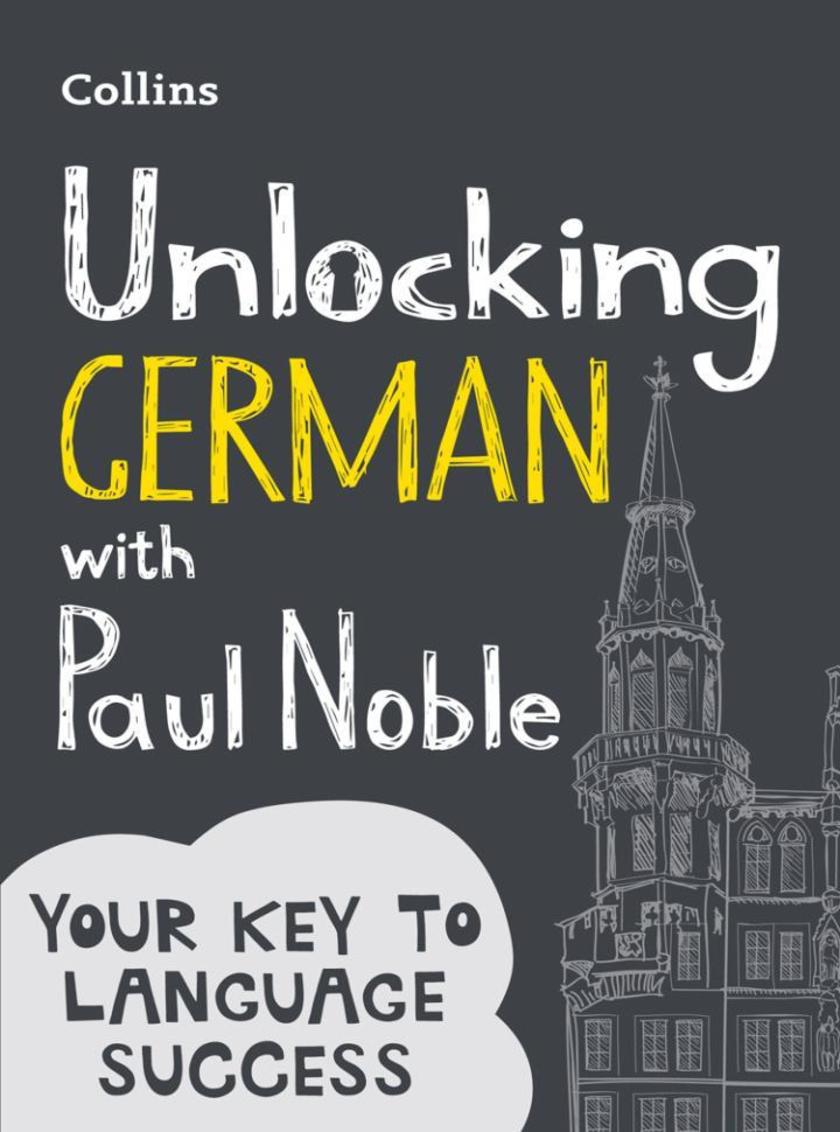
Unlocking German with Paul Noble: Your key to language success
¥73.58
Who is Paul Noble?Paul Noble is a genius, yet he still left school unable to speak a language – he found that the traditional learning methods left him feeling ‘confused, incapable and unable to really say anything’. Determined that there must be a better way to learn, Paul spent years devising his own unique method of learning languages which cuts out all of the grammar, all of the rote learning, and all of the stress. He began using his method to teach in his Language Institute and, hundreds of students later, he prides himself on never having had a student fail.
Cat and Kitten Care (Collins Need to Know?)
¥76.91
Cats are now the most popular pets, and it is not surprising that they have overtaken dogs in the popularity stakes. They are small, relatively silent, economical to keep, exercise themselves, easy to feed, and are ideal companions for a wide range of people, from the elderly to those who are out at work all day.Whether you want an ordinary moggie or an expensive pedigree cat, the principles of ownership and looking after them are the same. As an increasing number of owners live in big cities and small, high-rise apartment blocks, house cats are becoming more widespread. Although they may not be allowed outside like their free-roaming, predatory cousins, they share a common ancestry and owning a cat of any description is like having a relatively wild creature living with you in your home. Domestication is anathema to many cats who prefer to think that they are independent animals, under the control of nobody but themselves.
Dog Training (Collins Need to Know?)
¥76.91
Stella Smyth and co-author Sally Bergh-Roose have been training dogs since 1978 and have been involved in competition work with a variety of dogs. Together they have been running a successful dog training course for many years.

Wildfowl (Collins New Naturalist Library, Book 110)
¥206.30
New Naturalist Wildfowl provides a much-anticipated overview of the fascinating birds that have become icons of our diminishing wilderness areas. Wildfowl – swans, geese and ducks – have been the subject of poetry, fables, folklore and music, and a source of inspiration to writers, artists, historians and naturalists alike. Historically, they have featured prominently in our diet – more recently they have become the most widely domesticated group of birds. Wildfowl have been scientifically studied more intensively than any other group of birds and were one of the first groups to highlight more general issues of conservation. Their status as the most popular group of birds is underlined by the success of the original Wildfowl Trust (now the Wildfowl & Wetlands Trust). David Cabot has been obsessed with wildfowl for nearly sixty years. In this seminal new work, he discusses the 56 species of wildfowl that have been recorded either in a natural state, or that have been introduced and now maintain self-sustaining populations in Britain and Ireland. He focuses on their social behaviour, feeding ecology and population dynamics, and in particular their seasonal migration patterns. He also explores the evolution and history of wildfowl and our long relationship with them, through popular mythology and legends, which continue to fascinate us with a sense of mystery and awe.
Bird Migration (Collins New Naturalist Library, Book 113)
¥206.30
The phenomenon of bird migration has fascinated people from time immemorial. The arrivals and departures of different species marked the seasons, heralding spring and autumn, and providing a reliable calendar long before anything better became available. Migration is shown by many kinds of animals, including butterflies and other insects, mammals, marine turtles and fish, but in none is it as extensively developed as in birds. The collective travel routes of birds span almost the entire globe, with some extreme return journeys covering more than 30,000 km. As a result of migration, bird distributions are continually changing – in regular seasonal patterns, and on local, regional or global scales. Migration has repeatedly prompted familiar questions, such as where birds go or come from, why do they do it, how do they know when and where to travel, and how do they find their way? In this book, Ian Newton sets out to answer these – and other – questions. The book is divided into four main sections: the first is introductory, describing the different types of bird movements, methods of study, and the main migration patterns seen around the British Isles; the second part is concerned mainly with the process of migration – with timing, energy needs, weather effects and navigation; the third with evolution and change in migratory behaviour; and the fourth with the geographical and ecological aspects of bird movements.

Witnessing Waterloo: 24 Hours, 48 Lives, A World Forever Changed
¥73.58
‘Of all the books marking the bicentenary Waterloo, this has to be the best’ Spectator ‘A book to die for’ Evening Standard From Samuel Johnson Prize shortlisted author David Crane, this is a breathtaking portrait of the Britain that fought the battle of Waterloo. As Wellington’s rain-sodden army retreated towards an obscure valley called Waterloo, the men and women of Britain were still going to the theatre and science lectures, working in the fields and the factories, reading and writing books and sermons, painting their pictures and sitting in front of Lord Elgin’s marbles. David Crane’s stunning freeze-frame of Britain on this day of momentous change shifts hour by hour between Britain and Belgium. The Britain that fought Waterloo – its radicals and patriots, artisans and aristocrats, prisoners and poets – appears through the smoke of battle and the mythology of Waterloo in this magnificent and original tracing of the endless, overlapping connections between people’s lives.

Birds Britannia
¥132.53
Birds and bird lore provide a fascinating window onto our social and cultural history, and can tell us much about our changing relationship with the British landscape, our people and society. We Brits love our birds. They hold a special place in our hearts – whether it's the sound of birdsong on a spring morning, the sight of a Barn Owl hunting on a summer's evening, or a Robin perched on our garden spade. In this book, Stephen Moss focusses on some of our most beloved and charismatic birds. He explores their fascinating biology, and their place in the evolving culture and history of the British people. The author delves into the worlds of Sea Birds (Puffin, Sea Eagle and Gannet), Water Birds (Kingfisher, Swan and Avocet), Countryside Birds (Red Grouse, Nightingale and Skylark ) and Town & Garden Birds (Robin, House Sparrow and Magpie), weaving their stories together to tell four very different stories about the changing face of Britain.
On Nature: Unexpected Ramblings on the British Countryside
¥154.12
A diverse and entertaining collection of writing examining and celebrating the British Countryside, from falconry to foraging and from the musings of a nighttime angler to tips for seasonal drinking. LAND Stuart Maconie (Radio 2) on hill walking / Wainwright walks Nick Small (CAUGHT BY THE RIVER regular) how to get nature into your garden, no matter how urban it is Richard King (Loops magazine editor) on the Winter Solstice and on the Summer Solstice John Wright (www.wild-food.net/ on the basics of getting started in foraging Bill Drummond (Damsons in Distress) Dan Kieran (Crap Towns/I Fought The Law) on falconry RIVER / INLAND WATERS John Andrews (CAUGHT BY THE RIVER regular) on winter pike fishing Jon Berry (CAUGHT BY THE RIVER regular) writing about the night from a fishermen's perspective, the sounds, shadows, the hallucinatory effects of sleep deprivation when the sun rises COASTLINE Ian Vince (The Lie of the Land) on the Jurassic coast and fossils Martin Noble (British Sea Power) the Exmoor to Dartmoor coastal walk Nick Hand (http://www.slowcoast.co.uk/) on what you see when cycling the entire coastline of the UK Michael Smith (BBC4 Drivetime) on the coastline in the north of England ISLAND LIFE Sarah Boden (The Observer) on fleeing London to move and become a sheep farmer on Eigg
Victorians Undone: Tales of the Flesh in the Age of Decorum
¥73.58
‘Intriguing, gleefully contentious and – appropriately enough – fizzing with life, Victorians Undone is the most original history book I have read in a long while’ John Preston, Daily Mail A groundbreaking account of what it was like to live in a Victorian body from one of our best historians. Why did the great philosophical novelist George Eliot feel so self-conscious that her right hand was larger than her left? Exactly what made Darwin grow that iconic beard in 1862, a good five years after his contemporaries had all retired their razors? Who knew Queen Victoria had a personal hygiene problem as a young woman and the crisis that followed led to a hurried commitment to marry Albert? What did John Sell Cotman, a handsome drawing room operator who painted some of the most exquisite watercolours the world has ever seen, feel about marrying a woman whose big nose made smart people snigger? How did a working-class child called Fanny Adams disintegrate into pieces in 1867 before being reassembled into a popular joke, one we still reference today, but would stop, appalled, if we knew its origins? Kathryn Hughes follows a thickened index finger or deep baritone voice into the realms of social history, medical discourse, aesthetic practise and religious observance – its language is one of admiring glances, cruel sniggers, an implacably turned back. The result is an eye-opening, deeply intelligent, groundbreaking account that brings the Victorians back to life and helps us understand how they lived their lives.

Fighter: The True Story of the Battle of Britain
¥66.22
Summer, 1940: western Europe has been conquered, and all that stands between Hitler and the invasion of England is the matter of air supremacy. And the RAF… Hitler’s top-secret Directive No. 16, July 1940: ‘The English air force must be beaten down to such an extent, that it can no longer muster any power of attack worth mentioning against the German advance.’ ‘Fighter’ is Len Deighton’s thrilling history of the ensuing Battle of Britain – the aerial combat between the RAF and the Luftwaffe that was fought over the summer of 1940. Ex-RAF pilot Deighton has written a balanced study of strategies and tactics that also expertly recounts the development of the aeroplanes that fought each other in the skies – the Spitfires and Messerschmitts – and of radar. Behind the strategies and tactics, and in the cockpits of the aeroplanes, are the men brought vividly to life by Deighton’s skill as a novelist.


