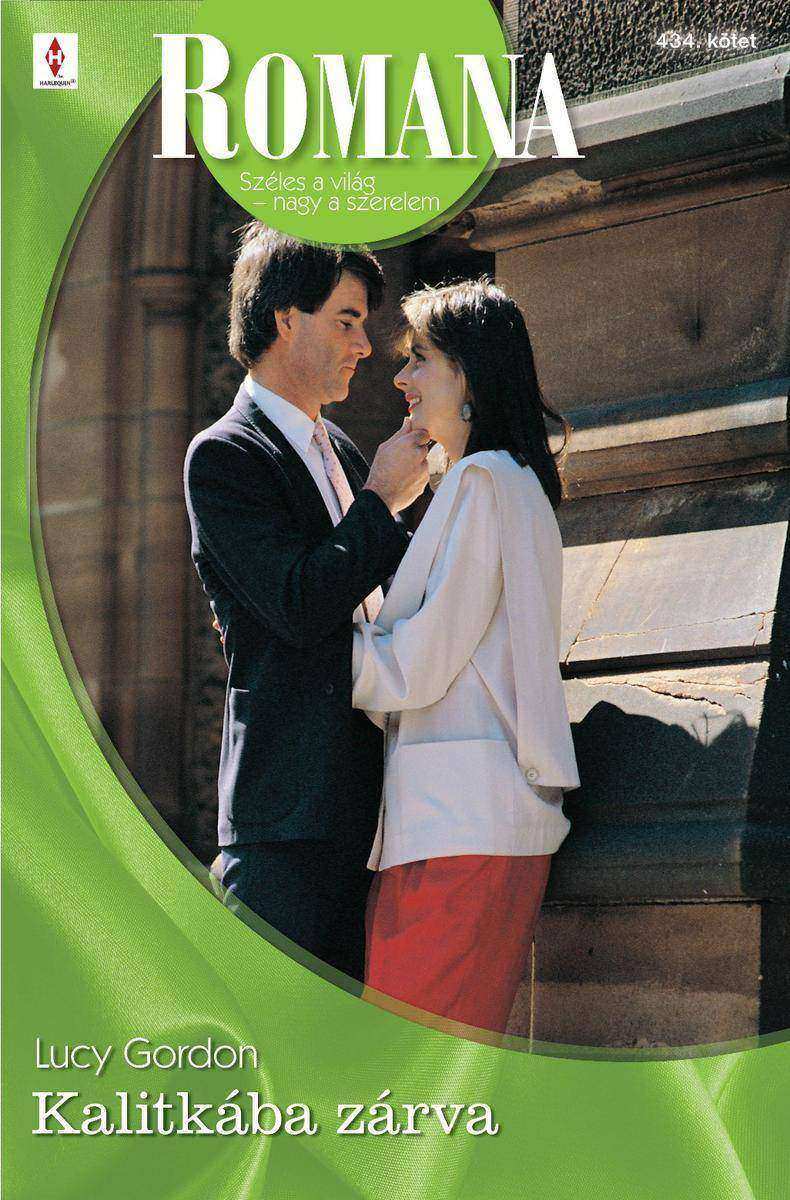
Lány a jég alatt
¥75.86
Lány a jég alatt
A jég és vér birodalma
¥51.58
A jég és vér birodalma
Királyi vérvonal
¥51.58
Királyi vérvonal
Az inkvizítor
¥58.04
Az inkvizítor
A kuruc király
¥58.04
A kuruc király
V?r?s-kék lobogók
¥51.58
V?r?s-kék lobogók
A fekete sas
¥58.04
A fekete sas
Nyílt titkok
¥57.14
Nyílt titkok
Vah?etin ?a?r?s?
¥2.62
Vah?etin ?a?r?s?
Yeralt?ndan Notlar
¥2.62
Yeralt?ndan Notlar
A?l?k Sanat??s?
¥2.62
A?l?k Sanat??s?
A recria??o da comédia romana no teatro português
¥71.29
A recria??o da comédia romana no teatro português
Sosyal Sigortalar ve Genel Sa?l?k Sigortas? Kanunu
¥2.70
Sosyal Sigortalar ve Genel Sa?l?k Sigortas? Kanunu
Túl a parán: Minden, amir?l az apák nem beszélnek
¥66.79
Túl a parán: Minden, amir?l az apák nem beszélnek
BDZS Y?ntemi ?le Kal?c? Olarak Zay?flay?n!
¥1.39
BDZS Y?ntemi ?le Kal?c? Olarak Zay?flay?n!
Ekvilibrista
¥37.20
Ekvilibrista
Krf
¥37.20
Krf
Modern Husband
¥21.09
Henry Fielding was born at Sharpham Park, near Glastonbury, in Somerset on April 22nd 1707. His early years were spent on his parents' farm in Dorset before being educated at Eton. An early romance ended disastrously and with it his removal to London and the beginnings of a glittering literary career; he published his first play, at age 21, in 1728. He was prolific, sometimes writing six plays a year, but he did like to poke fun at the authorities. His plays were thought to be the final straw for the authorities in their attempts to bring in a new law. In 1737 The Theatrical Licensing Act was passed. At a stroke political satire was almost impossible. Fielding was rendered mute. Any playwright who was viewed with suspicion by the Government now found an audience difficult to find and therefore Theatre owners now toed the Government line. Fielding was practical with the circumstances and ironically stopped writing to once again take up his career in the practice of law and became a barrister after studying at Middle Temple. By this time he had married Charlotte Craddock, his first wife, and they would go on to have five children. Charlotte died in 1744 but was immortalised as the heroine in both Tom Jones and Amelia. Fielding was put out by the success of Samuel Richardson's Pamela, or Virtue Rewarded. His reaction was to spur him into writing a novel. In 1741 his first novel was published; the successful Shamela, an anonymous parody of Richardson's novel. Undoubtedly the masterpiece of Fielding's career was the novel Tom Jones, published in 1749. It is a wonderfully and carefully constructed picaresque novel following the convoluted and hilarious tale of how a foundling came into a fortune. Fielding was a consistent anti-Jacobite and a keen supporter of the Church of England. This led to him now being richly rewarded with the position of London's Chief Magistrate. Fielding continued to write and his career both literary and professional continued to climb. In 1749 he joined with his younger half-brother John, to help found what was the nascent forerunner to a London police force, the Bow Street Runners. Fielding's ardent commitment to the cause of justice in the 1750s unfortunately coincided with a rapid deterioration in his health. Such was his decline that in the summer of 1754 he travelled, with Mary and his daughter, to Portugal in search of a cure. Gout, asthma, dropsy and other afflictions forced him to use crutches. His health continued to fail alarmingly. Henry Fielding died in Lisbon two months later on October 8th, 1754.
Professor - That to begin with; let respect be the foundation
¥15.21
The Professor is Charlotte Bronte's first novel, even though it was only published posthumously. The novel's protagonist and first-person narrator is the orphan William Crimsworth, a young educated man who rejects the career of a clergyman proposed by his adoptive uncle. He first decides to work as a clerk for his wealthy brother who owns a mill in the north of the country. However, his brother's jealousy of his superior education and intelligence eventually pushes him to quit the job and travel to Brussels where he is hired as a professor of English at a girls' school. In Brussels, he falls in love with a younger colleague, Frances Henri, yet he has to endure the wickedness of the Catholic headmistress, Mr. Reuter. Coveting their nascent love, the latter ends up dismissing Frances from her school and hiding her whereabouts from William. The professor leaves the establishment and luckily comes across her beloved in a graveyard. Thanks to a new job with a very high wage, the couple are eventually allowed to open their own school, marry and have a child. The narrative closes as they succeed in making a little fortune and decide to settle in the English countryside.
Mikado - or The Town of Titipu
¥26.98
The partnership between William Schwenck Gilbert and Arthur Seymour Sullivan and their canon of Savoy Operas is rightly lauded by all lovers of comic opera the world over. Gilbert's sharp, funny words and Sullivan's deliciously lively and hummable tunes create a world that is distinctly British in view but has the world as its audience. Both men were exceptionally talented and gifted in their own right and wrote much, often with other partners, that still stands the test of time. However, together as a team they created Light or Comic Operas of a standard that have had no rivals equal to their standard, before or since. That's quite an achievement. To be recognised by the critics is one thing but their commercial success was incredible. The profits were astronomical, allowing for the building of their own purpose built theatre - The Savoy Theatre. Beginning with the first of their fourteen collaborations, Thespis in 1871 and travelling through many classics including The Sorcerer (1877), H.M.S. Pinafore (1878), The Pirates of Penzance (1879), The Mikado (1885), The Gondoliers (1889) to their finale in 1896 with The Grand Duke, Gilbert & Sullivan created a legacy that is constantly revived and admired in theatres and other media to this very day.
Love For Love - Heaven has no rage like love to hatred turned, Nor hell a fury l
¥21.09
William Congreve was born on January 24th, 1670 in Bardsey, West Yorkshire. Congreve's childhood was spent in Ireland (his father, a Lieutenant in the British Army had received a posting there). He was educated at Kilkenny College and then Trinity College in Dublin. After graduating he returned to London to study law at Middle Temple. However his interest in studying law soon lessened as the attraction of literature, drama, and the fashionable life began to exert its pull. This first play, The Old Bachelor, was written, to amuse himself during convalescence, and was produced at the Drury Lane Theatre in 1693. It was an enormous success. Although his playwrighting career was successful it was also very brief. Five plays authored from 1693 to 1700 would prove the entirety of his output. Although no further plays were to flow from his pen Congreve did write librettos for two operas and to begin translating the works of Moliere as well as Homer, Ovid and Horace and to write poetry. He also took an interest in politics and obtained various minor political posts, including being named Secretary of the Island of Jamaica by George I in 1714. Congreve suffered a carriage accident in late September 1728, from which he never recovered (having probably received an internal injury); William Congreve died in London on January 19th, 1729, and was buried in Poets' Corner in Westminster Abbey.

购物车
个人中心