


 购物车
 个人中心


Shaky Game
¥265.87
In this new edition, Arthur Fine looks at Einstein's philosophy of science and develops his own views on realism. A new Afterword discusses the reaction to Fine's own theory."e;What really led Einstein . . . to renounce the new quantum orderFor those interested in this question, this book is compulsory reading."e;-Harvey R. Brown, American Journal of Physics"e;Fine has successfully combined a historical account of Einstein's philosophical views on quantum mechanics and a discussion of some of the philosophical problems associated with the interpretation of quantum theory with a discussion of some of the contemporary questions concerning realism and antirealism. . . . Clear, thoughtful, [and] well-written."e;-Allan Franklin, Annals of Science"e;Attempts, from Einstein's published works and unpublished correspondence, to piece together a coherent picture of 'Einstein realism.' Especially illuminating are the letters between Einstein and fellow realist Schrdinger, as the latter was composing his famous 'Schrdinger-Cat' paper."e;-Nick Herbert, New Scientist"e;Beautifully clear. . . . Fine's analysis is penetrating, his own results original and important. . . . The book is a splendid combination of new ways to think about quantum mechanics, about realism, and about Einstein's views of both."e;-Nancy Cartwright, Isis
Charleston Orphan House
¥265.87
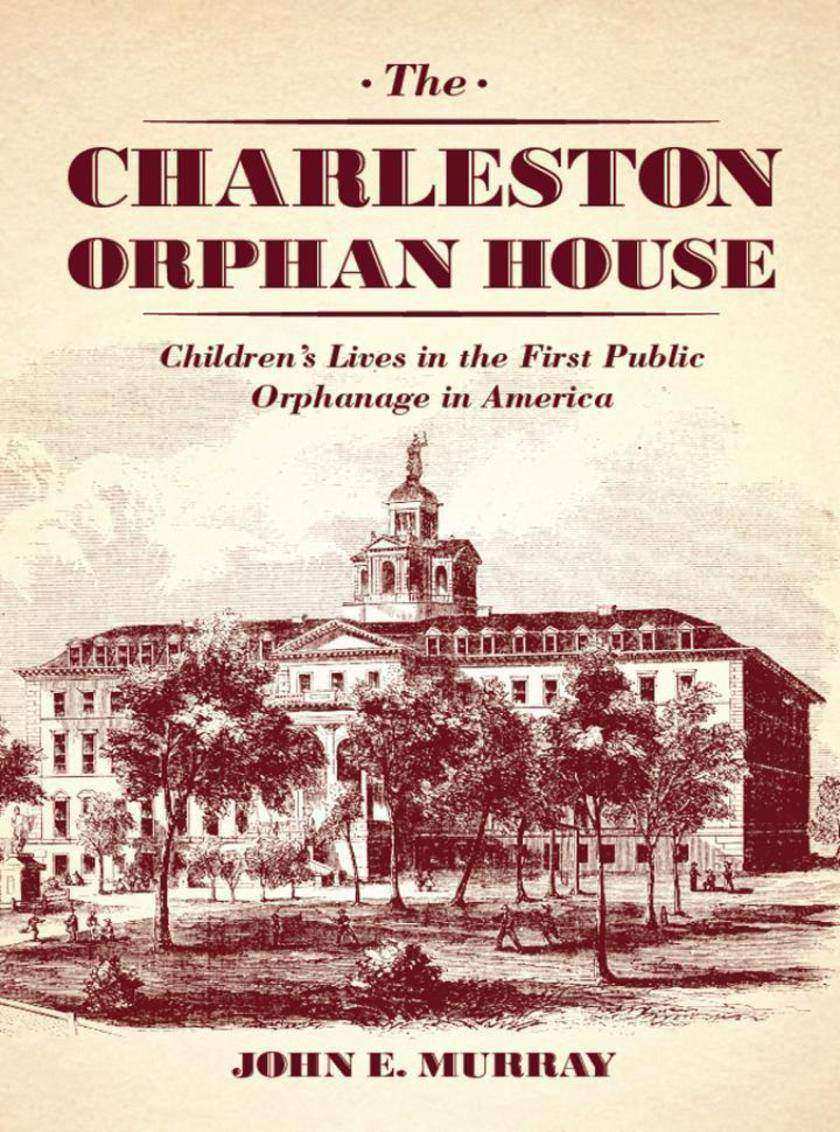
The first public orphanage in America, the Charleston Orphan House saw to the welfare and education of thousands of children from poor white families in the urban South. From wealthy benefactors to the families who sought its assistance to the artisans and merchants who relied on its charges as apprentices, the Orphan House was a critical component of the city's social fabric. By bringing together white citizens from all levels of society, it also played a powerful political role in maintaining the prevailing social order.?John E. Murray tells the story of the Charleston Orphan House for the first time through the words of those who lived there or had family members who did. Through their letters and petitions, the book follows the families from the events and decisions that led them to the Charleston Orphan House through the children's time spent there to, in a few cases, their later adult lives. What these accounts reveal are families struggling to maintain ties after catastrophic loss and to preserve bonds with children who no longer lived under their roofs.?An intimate glimpse into the lives of the white poor in early American history, The Charleston Orphan House is moreover an illuminating look at social welfare provision in the antebellum South.

Rereading the Fossil Record
¥288.41
Rereading the Fossil Record presents the first-ever historical account of the origin, rise, and importance of paleobiology, from the mid-nineteenth century to the late 1980s.?Drawing on a wealth of archival material, David Sepkoski shows how the movement was conceived and promoted by a small but influential group of paleontologists and examines the intellectual, disciplinary, and political dynamics involved in the ascendency of paleobiology. By tracing the role of computer technology, large databases, and quantitative analytical methods in the emergence of paleobiology, this book also offers insight into the growing prominence and centrality of data-driven approaches in recent science.
Lyric Powers
¥288.41
The authority of poetry varies from one period to another, from one culture to another. For Robert von Hallberg, the authority of lyric poetry has three sources: religious affirmation, the social institutions of those who speak the idioms from which particular poems are made, and the extraordinary cognition generated by the formal and musical resources of poems. Lyric Powers helps students, poets, and general readers to recognize the pleasures and understand the ambitions of lyric poetry.To explain why a reader might prefer one kind of poem to another, von Hallberg analyzes-beyond the political and intellectual significance of poems-the musicality of both lyric poetry and popular song, including that of Tin Pan Alley and doo-wop. He shows that poets have distinctive intellectual resources-not just rhetorical resources-for examining their subjects, and that the power of poetic language to generalize, not particularize, is what justly deserves a critic's attention.The first book in more than a decade from this respected critic, Lyric Powers will be celebrated as a genuine event by readers of poetry and literary criticism.

Plant Physics
¥329.62
From Galileo, who used the hollow stalks of grass to demonstrate the idea that peripherally located construction materials provide most of the resistance to bending forces, to Leonardo da Vinci, whose illustrations of the parachute are alleged to be based on his study of the dandelion's pappus and the maple tree's samara, many of our greatest physicists, mathematicians, and engineers have learned much from studying plants.?A symbiotic relationship between botany and the fields of physics, mathematics, engineering, and chemistry continues today, as is revealed in Plant Physics. The result of a long-term collaboration between plant evolutionary biologist Karl J. Niklas and physicist Hanns-Christof Spatz, Plant Physics presents a detailed account of the principles of classical physics, evolutionary theory, and plant biology in order to explain the complex interrelationships among plant form, function, environment, and evolutionary history. Covering a wide range of topics-from the development and evolution of the basic plant body and the ecology of aquatic unicellular plants to mathematical treatments of light attenuation through tree canopies and the movement of water through plants' roots, stems, and leaves-Plant Physics is destined to inspire students and professionals alike to traverse disciplinary membranes.

Once Out of Nature
¥353.16
Once Out of Nature offers an original interpretation of Augustine's theory of time and embodiment. Andrea Nightingale draws on philosophy, sociology, literary theory, and social history to analyze Augustine's conception of temporality, eternity, and the human and transhuman condition.?In Nightingale's view, the notion of embodiment illuminates a set of problems much larger than the body itself: it captures the human experience of being an embodied soul dwelling on earth. In Augustine's writings, humans live both in and out of nature-exiled from Eden and punished by mortality, they are "e;resident aliens"e; on earth. While the human body is subject to earthly time, the human mind is governed by what Nightingale calls psychic time. For the human psyche always stretches away from the present moment-where the physical body persists-into memories and expectations. As Nightingale explains, while the body is present in the here and now, the psyche cannot experience self-presence. Thus, for Augustine, the human being dwells in two distinct time zones, in earthly time and in psychic time. The human self, then, is a moving target.?Adam, Eve, and the resurrected saints, by contrast, live outside of time and nature: these transhumans dwell in an everlasting present.?Nightingale connects Augustine's views to contemporary debates about transhumans and suggests that Augustine's thought reflects our own ambivalent relationship with our bodies and the earth. Once Out of Nature offers a compelling invitation to ponder the boundaries of the human.
Economy of Glory
¥370.82
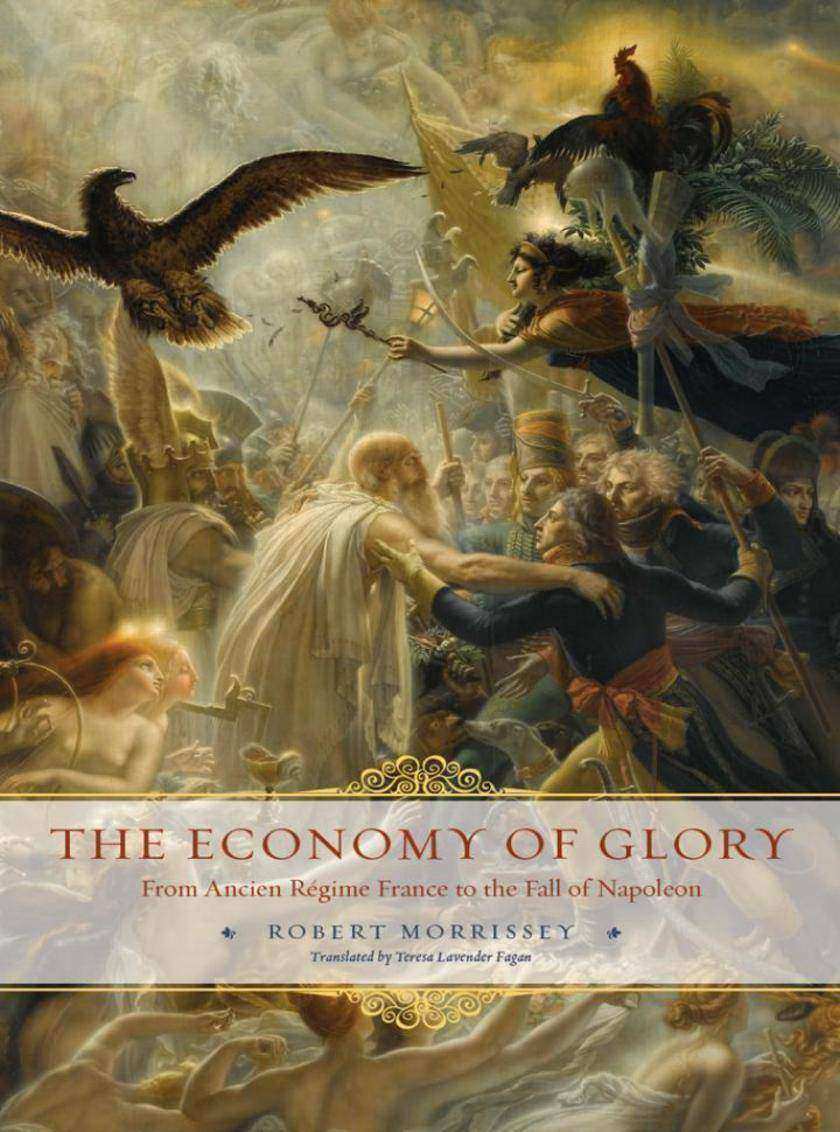
From the outset of Napoleon's career, the charismatic Corsican was compared to mythic heroes of antiquity like Achilles, and even today he remains the apotheosis of French glory, a value deeply embedded in the country's history. From this angle, the Napoleonic era can be viewed as the final chapter in the battle of the Ancients and Moderns. In this book, Robert Morrissey presents a literary and cultural history of glory and its development in France and explores the "e;economy of glory"e; Napoleon sought to implement in an attempt to heal the divide between the Old Regime and the Revolution. ?Examining how Napoleon saw glory as a means of escaping the impasse of Revolutionary ideas of radical egalitarianism, Morrissey illustrates the challenge the leader faced in reconciling the antagonistic values of virtue and self-interest, heroism and equality. He reveals that the economy of glory was both egalitarian, creating the possibility of an aristocracy based on merit rather than wealth, and traditional, being deeply embedded in the history of aristocratic chivalry and the monarchy-making it the heart of Napoleon's politics of fusion. Going beyond Napoleon, Morrissey considers how figures of French romanticism such as Chateaubriand, Balzac, and Hugo constantly reevaluated this legacy of glory and its consequences for modernity. Available for the first time in English, The Economy of Glory is a sophisticated and beautifully written addition to French history.

Nature of Diversity
¥376.70
All living things on earth-from individual species to entire ecosystems-have evolved through time, and evolution is the acknowledged framework of modern biology. Yet many areas of biology have moved from a focus on evolution to much narrower perspectives.Daniel R. Brooks and Deborah A. McLennan argue that it is impossible to comprehend the nature of life on earth unless evolution-the history of organisms-is restored to a central position in research. They demonstrate how the phylogenetic approach can be integrated with ecological and behavioral studies to produce a richer and more complete picture of evolution. Clearly setting out the conceptual, methodological, and empirical foundations of their research program, Brooks and McLennan show how scientists can use it to unravel the evolutionary history of virtually any characteristic of any living thing, from behaviors to ecosystems. They illustrate and test their approach with examples drawn from a wide variety of species and habitats.The Nature of Diversity provides a powerful new tool for understanding, documenting, and preserving the world's biodiversity. It is an essential book for biologists working in evolution, ecology, behavior, conservation, and systematics. The argument in The Nature of Diversity greatly expands upon and refines the arguments made in the authors' previous book Phylogeny, Ecology, and Behavior.
Shock of the Ancient
¥447.34
The cultural battle known as the Quarrel of the Ancients and Moderns served as a sly cover for more deeply opposed views about the value of literature and the arts. One of the most public controversies of early modern Europe, the Quarrel has most often been depicted as pitting antiquarian conservatives against the insurgent critics of established authority. The Shock of the Ancient turns the canonical vision of those events on its head by demonstrating how the defenders of Greek literature-rather than clinging to an outmoded tradition-celebrated the radically different practices of the ancient world.At a time when the constraints of decorum and the politics of French absolutism quashed the expression of cultural differences, the ancient world presented a disturbing face of otherness. Larry F. Norman explores how the authoritative status of ancient Greek texts allowed them to justify literary depictions of the scandalous. The Shock of the Ancient surveys the diverse array of aesthetic models presented in these ancient works and considers how they both helped to undermine the rigid codes of neoclassicism and paved the way for the innovative philosophies of the Enlightenment. Broadly appealing to students of European literature, art history, and philosophy, this book is an important contribution to early modern literary and cultural debates.

Sciences of the Soul
¥529.74
The Sciences of the Soul is the first attempt to explain the development of the disciplinary conception of psychology from its appearance in the late sixteenth century to its redefinition at the end of the seventeenth and its emergence as an institutionalized field in the eighteenth. Fernando Vidal traces this development through university courses and textbooks, encyclopedias, and nonacademic books, as well as through various histories of psychology.?Vidal reveals that psychology existed before the eighteenth century essentially as a "e;physics of the soul,"e; and it belonged as much to natural philosophy as to Christian anthropology. It remained so until the eighteenth century, when the "e;science of the soul"e; became the "e;science of the mind."e; Vidal demonstrates that this Enlightenment refashioning took place within a Christian framework, and he explores how the preservation of the Christian idea of the soul was essential to the development of the science. Not only were most psychologists convinced that an empirical science of the soul was compatible with Christian faith; their perception that psychology preserved the soul also helped to elevate its rank as an empirical science. Broad-ranging and impeccably researched, this book will be of wide importance in the history and philosophy of psychology, the history of the human sciences more generally, and in the social and intellectual history of eighteenth-century Europe.
Political Economy of Pipelines
¥576.83
With global demand for energy poised to increase by more than half in the next three decades, the supply of safe, reliable, and reasonably priced gas and oil will continue to be of fundamental importance to modern economies. Central to this supply are the pipelines that transport this energy. And while the fundamental economics of the major pipeline networks are the same, the differences in their ownership, commercial development, and operation can provide insight into the workings of market institutions in various nations.?Drawing on a century of the world's experience with gas and oil pipelines, this book illustrates the importance of economics in explaining the evolution of pipeline politics in various countries. It demonstrates that institutional differences influence ownership and regulation, while rents and consumer pricing depend on the size and diversity of existing markets, the depth of regulatory institutions, and the historical structure of the pipeline businesses themselves. The history of pipelines is also rife with social conflict, and Makholm explains how and when institutions in a variety of countries have controlled pipeline behavior-either through economic regulation or government ownership-in the public interest.
Economic Regulation and Its Reform
¥906.54
The past thirty years have witnessed a transformation of government economic intervention in broad segments of industry throughout the world. Many industries historically subject to economic price and entry controls have been largely deregulated, including natural gas, trucking, airlines, and commercial banking. However, recent concerns about market power in restructured electricity markets, airline industry instability amid chronic financial stress, and the challenges created by the repeal of the Glass-Steagall Act, which allowed commercial banks to participate in investment banking, have led to calls for renewed market intervention.Economic Regulation and Its Reform collects research by a group of distinguished scholars who explore these and other issues surrounding government economic intervention. Determining the consequences of such intervention requires a careful assessment of the costs and benefits of imperfect regulation. Moreover, government interventions may take a variety of forms, from relatively nonintrusive performance-based regulations to more aggressive antitrust and competition policies and barriers to entry. This volume introduces the key issues surrounding economic regulation, provides an assessment of the economic effects of regulatory reforms over the past three decades, and examines how these insights bear on some of today's most significant concerns in regulatory policy.
History of Trust in Ancient Greece
¥447.34
An enormous amount of literature exists on Greek law, economics, and political philosophy. Yet no one has written a history of trust, one of the most fundamental aspects of social and economic interaction in the ancient world. In this fresh look at antiquity, Steven Johnstone explores the way democracy and markets flourished in ancient Greece not so much through personal relationships as through trust in abstract systems-including money, standardized measurement, rhetoric, and haggling.Focusing on markets and democratic politics, Johnstone draws on speeches given in Athenian courts, histories of Athenian democracy, comic writings, and laws inscribed on stone to examine how these systems worked. He analyzes their potentials and limitations and how the Greeks understood and critiqued them. In providing the first comprehensive account of these pervasive and crucial systems, A History of Trust in Ancient Greece links Greek political, economic, social, and intellectual history in new ways and challenges contemporary analyses of trust and civil society.

Shareholder Democracies?
¥618.03
Understanding the challenges of corporate governance is central to our comprehension of the economic dynamics driving corporations today. Among the most important institutions in capitalism today, corporations and joint-stock companies had their origins in Europe during the seventeenth and eighteenth centuries. And as they became more prevalent, the issue of internal governance became more pressing. At stake-and very much contested-was the allocation of rights and obligations among shareholders, directors, and managers.This comprehensive account of the development of corporate governance in Britain and Ireland during its earliest stages highlights the role of political factors in shaping the evolution of corporate governance as well as the important debates that arose about the division of authority and responsibility. Political and economic institutions confronted similar issues, including the need for transparency and accountability in decision making and the roles of electors and the elected, and this book emphasizes how political institutions-from election procedures to assemblies to annual reporting-therefore provided apt models upon which companies drew readily. Filling a gap in the literature on early corporate economy, this book provides insight into the origins of many ongoing modern debates.
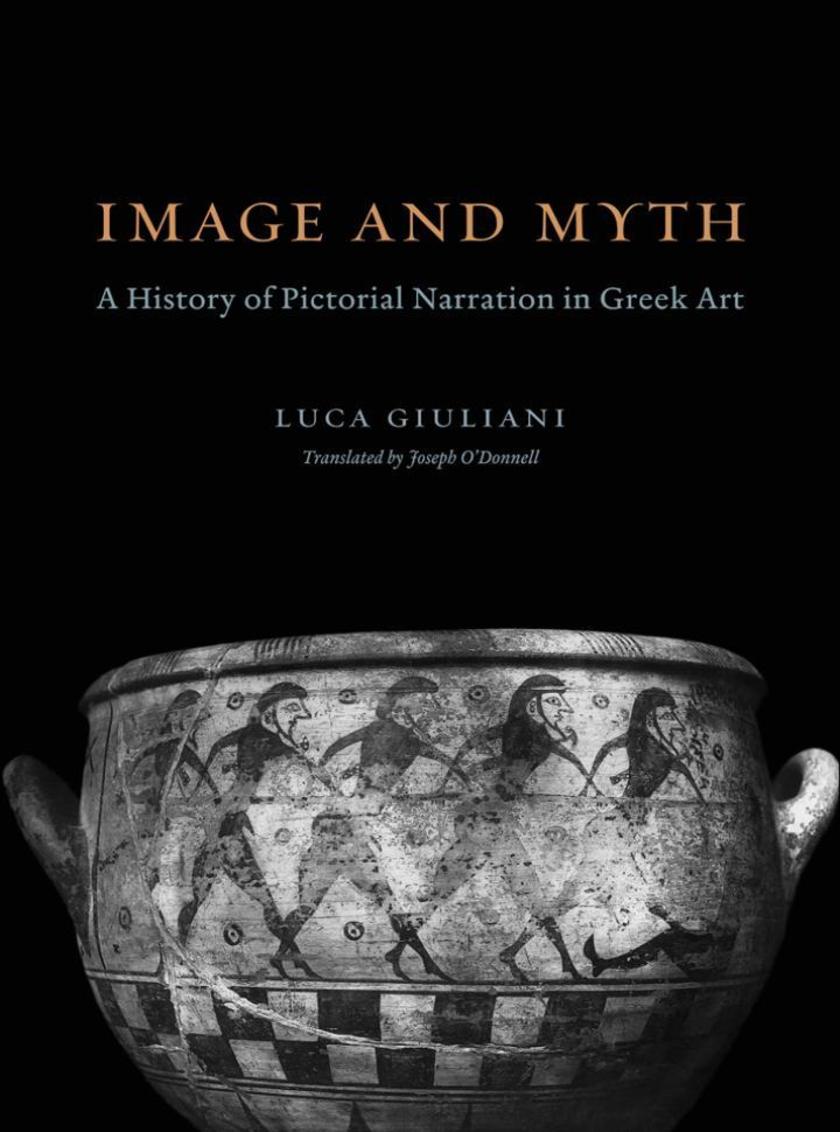
Image and Myth
¥535.63
On museum visits, we pass by beautiful, well-preserved vases from ancient Greece-but how often do we understand what the images on them depictIn Image and Myth, Luca Giuliani tells the stories behind the pictures, exploring how artists of antiquity had to determine which motifs or historical and mythic events to use to tell an underlying story while also keeping in mind the tastes and expectations of paying clients.?Covering the range of Greek style and its growth between the early Archaic and Hellenistic periods, Giuliani describes the intellectual, social, and artistic contexts in which the images were created. He reveals that developments in Greek vase painting were driven as much by the times as they were by tradition-the better-known the story, the less leeway the artists had in interpreting it. As literary culture transformed from an oral tradition, in which stories were always in flux, to the stability of written texts, the images produced by artists eventually became nothing more than illustrations of canonical works. At once a work of cultural and art history, Image and Myth builds a new way of understanding the visual culture of ancient Greece.

Making Modern Japanese-Style Painting
¥535.63
The Western discovery of Japanese paintings at nineteenth-century world's fairs and export shops catapulted Japanese art to new levels of international popularity. With that popularity, however, came criticism, as Western writers began to lament a perceived end to pure Japanese art and a rise in westernized cultural hybrids. The Japanese response: nihonga, a traditional style of painting that reframed existing techniques to distinguish them from Western artistic conventions.?Making Modern Japanese-Style Painting?explores the visual characteristics and social functions of nihonga and traces its relationship to the past, its viewers, and emerging notions of the modern Japanese state.Chelsea Foxwell sheds light on interlinked trends in Japanese nationalist discourse, government art policy, American and European commentary on Japanese art, and the demands of export. The seminal artist Kano Hogai (1828-88) is one telling example: originally a painter for the shogun, his art eventually evolved into novel, eerie images meant to satisfy both Japanese and Western audiences. Rather than simply absorbing Western approaches, nihonga as practiced by Hogai and others broke with pre-Meiji painting even as it worked to neutralize the rupture.By arguing that fundamental changes to audience expectations led to the emergence of nihonga-a traditional interpretation of Japanese art for a contemporary, international market-Making Modern Japanese-Style Painting?offers a fresh look at an important aspect of Japan's development into a modern nation.

Treasuring the Gaze
¥412.02
The end of the eighteenth century saw the start of a new craze in Europe: tiny portraits of single eyes that were exchanged by lovers or family members. Worn as brooches or pendants, these minuscule eyes served the same emotional need as more conventional mementoes, such as lockets containing a coil of a loved one's hair. The fashion lasted only a few decades, and by the early 1800s eye miniatures had faded into oblivion. Unearthing these portraits in Treasuring the Gaze, Hanneke Grootenboer proposes that the rage for eye miniatures-and their abrupt disappearance-reveals a knot in the unfolding of the history of vision.?Drawing on Alois Riegl, Jean-Luc Nancy, Marcia Pointon, Melanie Klein, and others, Grootenboer unravels this knot, discovering previously unseen patterns of looking and strategies for showing. She shows that eye miniatures portray the subject's gaze rather than his or her eye, making the recipient of the keepsake an exclusive beholder who is perpetually watched. These treasured portraits always return the looks they receive and, as such, they create a reciprocal mode of viewing that Grootenboer calls intimate vision. Recounting stories about eye miniatures-including the role one played in the scandalous affair of Mrs. Fitzherbert and the Prince of Wales, a portrait of the mesmerizing eye of Lord Byron, and the loss and longing incorporated in crying eye miniatures-Grootenboer shows that intimate vision brings the gaze of another deep into the heart of private experience.?With a host of fascinating imagery from this eccentric and mostly forgotten yet deeply private keepsake, Treasuring the Gaze provides new insights into the art of miniature painting and the genre of portraiture.

Rebellion in the Backlands
¥394.36
Euclides da Cunha's classic account of the brutal campaigns against religious mystic Antonio Conselheiro has been called the Bible of Brazilian nationality."e;Euclides da Cunha went on the campaigns [against Conselheiro] as a journalist and what he returned with and published in 1902 is still unsurpassed in Latin American literature. Cunha is a talent as grand, spacious, entangled with knowledge, curiosity, and bafflement as the country itself. . . . On every page there is a heart of idea, speculation, dramatic observation that tells of a creative mission undertaken, the identity of the nation, and also the creation of a pure and eloquent prose style."e;-Elizabeth Hardwick, Bartleby in Manhattan
Frankenstein of 1790 and Other Lost Chapters from Revolutionary France
¥394.36
The French Revolution brings to mind violent mobs, the guillotine, and Madame Defarge, but it was also a publishing revolution: more than 1,200 novels were published between 1789 and 1804, when Napoleon declared the Revolution at an end. In this book, Julia V. Douthwaite explores how the works within this enormous corpus announced the new shapes of literature to come and reveals that vestiges of these stories can be found in novels by the likes of Mary Shelley, E. T. A. Hoffmann, Honore de Balzac, Charles Dickens, Gustave Flaubert, and L. Frank Baum.?Deploying political history, archival research, and textual analysis with eye-opening results, Douthwaite focuses on five major events between 1789 and 1794-first in newspapers, then in fiction-and shows how the symbolic stories generated by Louis XVI, Robespierre, the market women who stormed Versailles, and others were transformed into new tales with ongoing appeal. She uncovers a 1790 story of an automaton-builder named Franknsten, links Baum to the suffrage campaign going back to 1789, and discovers a royalist anthem's power to undo Balzac's Pre Goriot. Bringing to light the missing links between the ancien rgime and modernity, The Frankenstein of 1790 and Other Lost Chapters from Revolutionary France is an ambitious account of a remarkable politico-literary moment and its aftermath.
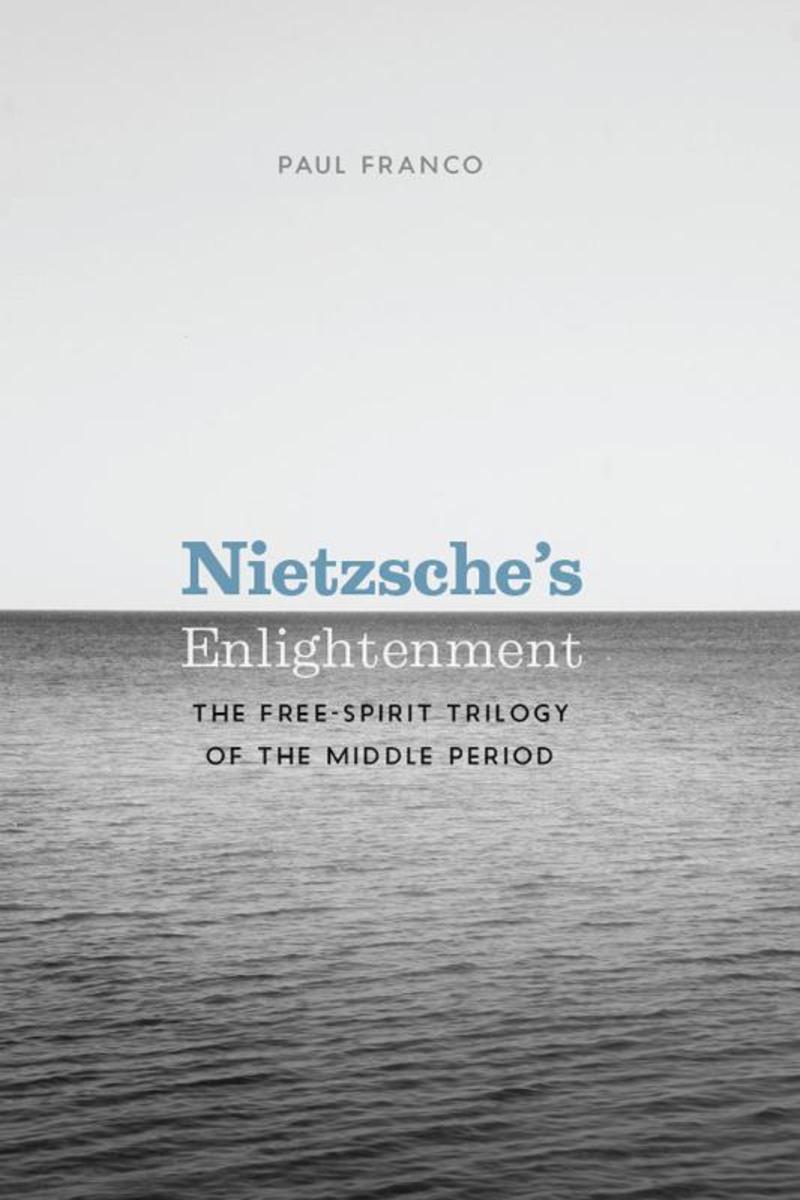
Nietzsche's Enlightenment
¥394.36
While much attention has been lavished on Friedrich Nietzsche's earlier and later works, those of his so-called middle period have been generally neglected, perhaps because of their aphoristic style or perhaps because they are perceived to be inconsistent with the rest of his thought. With Nietzsche's Enlightenment, Paul Franco gives this crucial section of Nietzsche's oeuvre its due, offering a thoughtful analysis of the three works that make up the philosopher's middle period: Human, All too Human; Daybreak; and The Gay Science.?It is Nietzsche himself who suggests that these works are connected, saying that their "e;common goal is to erect a new image and ideal of the free spirit."e; Franco argues that in their more favorable attitude toward reason, science, and the Enlightenment, these works mark a sharp departure from Nietzsche's earlier, more romantic writings and differ in important ways from his later, more prophetic writings, beginning with Thus Spoke Zarathustra. The Nietzsche these works reveal is radically different from the popular image of him and even from the Nietzsche depicted in much of the secondary literature; they reveal a rational Nietzsche, one who preaches moderation instead of passionate excess and Dionysian frenzy. Franco concludes with a wide-ranging examination of Nietzsche's later works, tracking not only how his outlook changes from the middle period to the later but also how his commitment to reason and intellectual honesty in his middle works continues to inform his final writings.
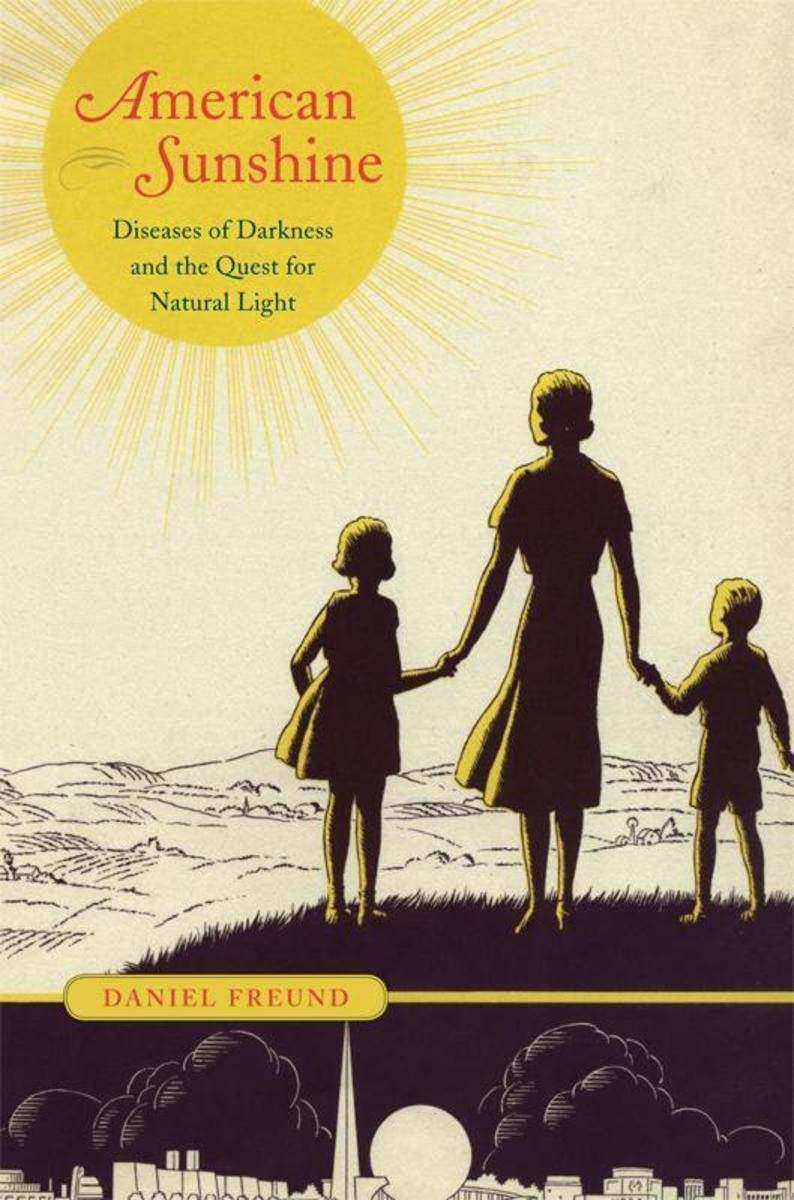
American Sunshine
¥394.36
In the second half of the nineteenth century, American cities began to go dark. Hulking new buildings overspread blocks, pollution obscured the skies, and glass and smog screened out the health-giving rays of the sun. Doctors fed anxities about these new conditions with claims about a rising tide of the "e;diseases of darkness,"e; especially rickets and tuberculosis.In American Sunshine, Daniel Freund ?tracks the obsession with sunlight from those bleak days into the twentieth century. ?Before long, social reformers, medical professionals, scientists, and a growing nudist movement proffered remedies for America's new dark age. Architects, city planners, and politicians made access to sunlight central to public housing and public health. and entrepreneurs, dairymen, and tourism boosters transformed the pursuit of sunlight and its effects into a commodity. Within this historical context, Freund sheds light on important questions about the commodification of health and nature and makes an original contribution to the histories of cities, consumerism, the environment, and medicine.


