


 购物车
 个人中心


Lost Classroom, Lost Community
¥370.82
In the past two decades in the United States, more than 1,600 Catholic elementary and secondary schools have closed, and more than 4,500 charter schools-public schools that are often privately operated and freed from certain regulations-have opened, many in urban areas. With a particular emphasis on Catholic school closures, Lost Classroom, Lost Community examines the implications of these dramatic shifts in the urban educational landscape.?More than just educational institutions, Catholic schools promote the development of social capital-the social networks and mutual trust that form the foundation of safe and cohesive communities. Drawing on data from the Project on Human Development in Chicago Neighborhoods and crime reports collected at the police beat or census tract level in Chicago, Philadelphia, and Los Angeles, Margaret F. Brinig and Nicole Stelle Garnett demonstrate that the loss of Catholic schools triggers disorder, crime, and an overall decline in community cohesiveness, and suggest that new charter schools fail to fill the gaps left behind.This book shows that the closing of Catholic schools harms the very communities they were created to bring together and serve, and it will have vital implications for both education and policing policy debates.
Leo Strauss and the Problem of Political Philosophy
¥370.82
Leo Strauss and his alleged political influence regarding the Iraq War have in recent years been the subject of significant media attention, including stories in the Wall Street Journal and New York Times.Time magazine even called him "e;one of the most influential men in American politics."e; With The Truth about Leo Strauss, Michael and Catherine Zuckert challenged the many claims and speculations about this notoriously complex thinker. Now, with Leo Strauss and the Problem of Political Philosophy, they turn their attention to a searching and more comprehensive interpretation of Strauss's thought as a whole, using the many manifestations of the "e;problem of political philosophy"e; as their touchstone.?For Strauss, political philosophy presented a "e;problem"e; to which there have been a variety of solutions proposed over the course of Western history. Strauss's work, they show, revolved around recovering-and restoring-political philosophy to its original Socratic form. Since positivism and historicism represented two intellectual currents that undermined the possibility of a Socratic political philosophy, the first part of the book is devoted to Strauss's critique of these two positions. Then, the authors explore Strauss's interpretation of the history of philosophy and both ancient and modern canonical political philosophers, including Plato, Aristotle, Machiavelli, and Locke. Strauss's often-unconventional readings of these philosophers, they argue, pointed to solutions to the problem of political philosophy. Finally, the authors examine Strauss's thought in the context of the twentieth century, when his chief interlocutors were Schmitt, Husserl, Heidegger, and Nietzsche.?The most penetrating and capacious treatment of the political philosophy of this complex and often misunderstood thinker, from his early years to his last works, Leo Strauss and the Problem of Political Philosophy reveals Strauss's writings as an attempt to show that the distinctive characteristics of ancient and modern thought derive from different modes of solving the problem of political philosophy and reveal why he considered the ancient solution both philosophically and politically superior.

Autonomy After Auschwitz
¥370.82
Ever since Kant and Hegel, the notion of autonomy-the idea that we are beholden to no law except one we impose upon ourselves-has been considered the truest philosophical expression of human freedom. But could our commitment to autonomy, as Theodor Adorno asked, be related to the extreme evils that we have witnessed in modernityIn Autonomy after Auschwitz, Martin Shuster explores this difficult question with astonishing theoretical acumen, examining the precise ways autonomy can lead us down a path of evil and how it might be prevented from doing so.Shuster uncovers dangers in the notion of autonomy as it was originally conceived by Kant. Putting Adorno into dialogue with a range of European philosophers, notably Kant, Hegel, Horkheimer, and Habermas-as well as with a variety of contemporary Anglo-American thinkers such as Richard Rorty, Stanley Cavell, John McDowell, and Robert Pippin-he illuminates Adorno's important revisions to this fraught concept and how his different understanding of autonomous agency, fully articulated, might open up new and positive social and political possibilities. Altogether, Autonomy after Auschwitz is a meditation on modern evil and human agency, one that demonstrates the tremendous ethical stakes at the heart of philosophy.?

THE Affect Effect
¥265.87
two sections branch out to explore how politics work at the societal level and suggest the next steps in modeling, research, and political activity itself. Opening up new paths of inquiry in an exciting new field, this volume will appeal not only to scholars of American politics and political behavior, but also to anyone interested in political psychology and sociology.
OpenStack Networking Cookbook
¥90.46
Harness the power of OpenStack Networking for public and private clouds using 90 hands-on recipesAbout This BookBuild and manage virtual switching, routing, and firewall-based networks in OpenStack using NeutronDevelop plugins and drivers for Neutron to enhance the built-in networking capabilitiesMonitor and automate OpenStack networks using tools like Ceilometer and Heat Who This Book Is For This book is aimed at network and system administrators who want to deploy and manage OpenStack-based cloud and IT infrastructure. If you have basic knowledge of OpenStack and virtualization, this book will help you leverage the rich functionality of OpenStack Networking in your cloud deployments.What You Will LearnOperate OpenStack Networking for public and private cloudsConfigure advanced routing services for your workloadsSecure data traffic using firewall-as-a-service capabilities of OpenStackDiscover how to leverage VXLAN to implement SDN in your OpenStack cloudMonitor the virtual networks using CeilometerDevelop plugins to enhance and customize OpenStack NetworkingProvide HA and VPN connectivity for your virtual machinesTroubleshoot and solve common problems with OpenStack Networking In Detail Networking in OpenStack has evolved from Nova Network to Neutron. This has resulted in a rich suite of networking services available to OpenStack users and administrators. Advanced services such as routers, firewall, and load balancers use building blocks such as network and subnets. Recent improvements support powerful customization using plugins. The evolution of Neutron continues as it integrates with tools like Ceilometer and Heat. This book will explore the built-in capabilities of Neutron to effectively deploy cloud solutions. You will begin with the most fundamental constructs of OpenStack Networking for switching and routing. You will then learn how to provide your tenants with services like firewalls and load-balancers. The step-by-step recipes will help you configure and troubleshoot networking problems in your cloud. This book will also introduce you to advanced topics like Ceilometer, Heat, and other upcoming tools in OpenStackStyle and approach The book is full of step-by-step recipes to configure and manage the networking aspects of your OpenStack cloud. In addition to covering basic configuration involved in OpenStack Networking, the books also shares various troubleshooting tips and techniques. As much as possible the book uses OpenStack dashboard (Horizon) to help the user get a feel of real OpenStack Networking
OpenStack Orchestration
¥71.93
Exploit the power of dynamic cloud formation and auto-scaling features to fully implement OpenStack orchestrationAbout This BookSet up, manage, and troubleshoot Heat and effectively automate your datacenter and cloud-based servicesAchieve high availability, minimize down-time, and automate the deployment of cloud-based services and resources with minimum effortUpgrade your skills and manipulate resources on virtual machines in an unattended fashion using Heat Who This Book Is For If you are a System Engineer, System Administrator, Cloud Administrator, or a Cloud Engineer, then this book is for you. You should have a background of working in a Linux-based setup. Any knowledge of OpenStack-based cloud infrastructure will help you create wonders using this book.What You Will LearnInstall an orchestration service for a private cloud environmentTackle errors that show up during the installation and configuration of heatConfigure a template for orchestration using the native HOT formatConfigure a template for orchestration using the AWS cloud formation formatDeploy a stack using the HOT templateDeploy a test stack using the AWS CloudFormation templateAutomate and orchestrate cloud-based services with OpenStack Heat In Detail This book is focused on setting up and using one of the most important services in OpenStack orchestration, Heat. First, the book introduces you to the orchestration service for OpenStack to help you understand the uses of the templating mechanism, complex control groups of cloud resources, and huge-potential and multiple-use cases. We then move on to the topology and orchestration specification for cloud applications and standards, before introducing the most popular IaaS cloud framework, Heat. You will get to grips with the standards used in Heat, overview and roadmap, architecture and CLI, heat API, heat engine, CloudWatch API, scaling principles, JeOS and installation and configuration of Heat. We wrap up by giving you some insights into troubleshooting for OpenStack. With easy-to-follow, step-by-step instructions and supporting images, you will be able to manage OpenStack operations by implementing the orchestration services of Heat.Style and approach The book is a step-by-step guide to implementing an orchestration (cloud formation) service for OpenStack-based cloud environments. This book uses real-world scenarios and examples to demonstrate the procedures in an easy-to-understand language with plenty of screenshots to help you get a better understanding.
Building a RESTful Web Service with Spring
¥54.49
A hands-on guide to building an enterprise-grade, scalable RESTful web service using the Spring FrameworkAbout This BookFollow best practices and explore techniques such as clustering and caching to achieve a scalable web serviceLeverage the Spring Framework to quickly implement RESTful endpointsLearn to implement a client library for a RESTful web service using the Spring Framework Who This Book Is For This book is intended for those who want to learn to build RESTful web services with the Spring Framework. To make best use of the code samples included in the book, you should have a basic knowledge of the Java language. Previous experience with the Spring Framework would also help you get up and running quickly.What You Will LearnDeep dive into the principles behind RESTExpose CRUD operations through RESTful endpoints with the Spring FrameworkDevise response formats and error handling strategies, offering a consistent and flexible structure to simplify integration for service consumersFollow the best approaches for dealing with a service’s evolution while maintaining backward compatibilityUnderstand techniques to secure web servicesComply with the best ways to test RESTful web services, including tips for load testingOptimise and scale web services using techniques such as caching and clustering In Detail REST is an architectural style that tackles the challenges of building scalable web services. In today’s connected world, APIs have taken a central role on the web. APIs provide the fabric through which systems interact, and REST has become synonymous with APIs. The depth, breadth, and ease of use of Spring makes it one of the most attractive frameworks in the Java ecosystem. Marrying the two technologies is therefore a very natural choice. This book takes you through the design of RESTful web services and leverages the Spring Framework to implement these services. Starting from the basics of the philosophy behind REST, you’ll go through the steps of designing and implementing an enterprise-grade RESTful web service. Taking a practical approach, each chapter provides code samples that you can apply to your own circumstances. This book goes beyond the use of Spring and explores approaches to tackle resilience, security, and scalability concerns. You’ll learn techniques to deal with security in Spring and discover how to implement unit and integration test strategies. Finally, the book ends by walking you through building a Java client for your RESTful web service, along with some scaling techniques for it.Style and approach This book is a step-by-step, hands-on guide to designing and building RESTful web services. The book follows the natural cycle of developing these services and includes multiple code samples to help you.
Troubleshooting Citrix XenDesktop?
¥90.46
The ultimate troubleshooting guide for clear, concise, and real-world solutions to a wide range of common Citrix XenDesktop problemsAbout This BookExplore the XenDesktop architecture and work with various troubleshooting tools that every Citrix admin should know aboutDiscover how to troubleshoot performance, VDA registration, and NetScaler integration issuesA fast-paced troubleshooting guide to help you identify and resolve any kind of problem you might face while working with Citrix XenDesktop Who This Book Is For Troubleshooting Citrix XenDesktop is targeted at Citrix Administrators or Citrix Engineers who are working on Xendesktop and want to learn tips and techniques required to deal with the issues they face in their day-to-day life. A working knowledge of core elements and concepts of Xendesktop would be an added advantage.What You Will LearnSolve VDA registration problems and Citrix session launch difficultiesIdentify and resolve XenDesktop service issuesTroubleshoot performance issues related to the XenDesktop architectureWork around common printing issuesUnderstand the Citrix XenDesktop HDX policies and deal with the HDX MediaStream challengesResolve the common MCS and PVS configuration issues in your XenDesktop environmentFind solutions to some general issues that have been identified and recorded by Citrix in their database that every administrator must be aware of In Detail In today’s world, many organizations have decided to move to secure and stable VDI platforms to benefit their organization to meet their security needs. To meet an organization’s requirements, Citrix XenDesktop serves as the best desktop virtualization solution available, providing the optimum user experience. Troubleshooting Citrix XenDesktop is a single resource guide that will help you dig deep into all the technical issues you encounter to resolve them using an autonomous and well-defined approach. The book starts by walking you through the XenDesktop architecture and the troubleshooting toolkit for Citrix XenDesktop. The subsequent chapters will help you identify possible causes of various types of Citrix XenDesktop problems that may arise while installing, configuring, or troubleshooting day-to-day problems. You will also be dealing with the most common and important VDA registration problems that you might often face while working with the XenDesktop product suite. Additionally, you will resolve issues that arise while launching Citrix sessions, troubleshoot performance issues, and learn how to integrate Citrix NetScaler with your XenDesktop environment.Style and approach This book is an easy-to-follow troubleshooting guide with real-world examples of resolving XenDesktop issues. Each chapter is focused on a specific troubleshooting area, giving you the time to learn about and apply relevant tools and practices to troubleshoot the problems using a systematic approach.

Swift 2 Blueprints
¥80.65
Sharpen your skills in Swift by designing and deploying seven fully functional applicationsAbout This BookDevelop a variety of iOS-compatible applications that range from health and fitness to utilities using this project-based handbookDiscover ways to make the best use of the latest features in Swift to build on a wide array of applicationsFollow step-by-step instructions to create Swift apps oriented for the real world Who This Book Is For If you are a competent iOS developer who wants to develop stunning applications with Swift, then this book is for you. Familiarity with Swift programming is assumed.What You Will LearnGet to grips with the basics of Xcode and Swift for application developmentCreate a Photo Sharing application to capture an image, edit it using different features and share it via social media.Develop applications using the WatchKit and exchange data between iPhone and the WatchUse advanced features such as SpriteKit to build a gameInstall third-party Swift frameworks to improvise on your application developmentDiscover how to simulate home automation with HomeKitBuild an application to monitor the user's weight, heart rate and the number of steps for Health Historic AnalysisManipulate media using AVFoundation framework to merge audio and video. In Detail In this book, you will work through seven different projects to get you hands-on with developing amazing applications for iOS devices. We start off with a project that teaches you how to build a utility app using Swift. Moving on, we cover the concepts behind developing an entertainment or social networking related application, for example, a small application that helps you to share images, audio, and video files from one device to another. You’ll also be guided through create a city information app with customized table views, a reminder app for the Apple Watch, and a game app using SpriteKit. By the end of this book, you will have the required skillset to develop various types of iOS applications with Swift that can run on different iOS devices. You will also be well versed with complex techniques that can be used to enhance the performance of your applications.Style and approach This book takes a step-by-step approach to help you build apps from scratch and learn the methodology to develop real-time applications using Swift.
Data Analysis and Business Modeling with Excel 2013
¥71.93
Manage, analyze, and visualize data with Microsoft Excel 2013 to transform raw data into ready to use informationAbout This BookCreate formulas to help you analyze and explain findingsDevelop interactive spreadsheets that will impress your audience and give them the ability to slice and dice dataA step-by-step guide to learn various ways to model data for businesses with the help of Excel 2013 Who This Book Is For If you want to start using Excel 2013 for data analysis and business modeling and enhance your skills in the data analysis life cycle then this book is for you, whether you’re new to Excel or experienced.What You Will LearnDiscover what Excel formulas are all about and how to use them in your spreadsheet developmentIdentify bad data and learn cleaning strategiesCreate interactive spreadsheets that engage and appeal to your audienceLeverage Excel’s powerful built-in tools to get the median, maximum, and minimum values of your dataBuild impressive tables and combine datasets using Excel’s built-in functionalityLearn the powerful *ing language VBA, allowing you to implement your own custom solutions with ease In Detail Excel 2013 is one of the easiest to use data analysis tools you will ever come across. Its simplicity and powerful features has made it the go to tool for all your data needs. Complex operations with Excel, such as creating charts and graphs, visualization, and analyzing data make it a great tool for managers, data scientists, financial data analysts, and those who work closely with data. Learning data analysis and will help you bring your data skills to the next level. This book starts by walking you through creating your own data and bringing data into Excel from various sources. You’ll learn the basics of SQL syntax and how to connect it to a Microsoft SQL Server Database using Excel’s data connection tools. You will discover how to spot bad data and strategies to clean that data to make it useful to you. Next, you'll learn to create custom columns, identify key metrics, and make decisions based on business rules. You’ll create macros using VBA and use Excel 2013’s shiny new macros. Finally, at the end of the book, you'll be provided with useful shortcuts and tips, enabling you to do efficient data analysis and business modeling with Excel 2013.Style and approach This is a step-by-step guide to performing data analysis and business modelling with Excel 2013, complete with examples and tips.
Ionic Cookbook
¥90.46
Over 35 exciting recipes to spice up your application development with IonicAbout This BookLearn how to utilize the robust features of Ionic CLI and its framework to create, develop, and build your mobile appExplore new integrations with various Backend-as-a-Services, along with AngularJS modules, for creative solutionsUse out-of-the-box Ionic functionalities, customize existing components, and add new components with this comprehensive, step-by-step guide Who This Book Is For If you are a front-end developer and want to take advantage of your existing mobile application development skills to develop cross-platform mobile apps, this book is for you. You will build up your Ionic knowledge with in-depth recipes on Angular.js, Cordova, and Sass.What You Will LearnAuthenticate users using an e-mail password, Twitter, Facebook, Google+, and LinkedInRetrieve data and store it using FirebaseAccess native device functionalities such as a camera, contact list, e-mail, and maps using ngCordovaWork with localStorage and SQLite for persistent data access on the client sideCommunicate to and from your app using push notifications or SMSLeverage AngularJS events and Ionic-specific events to communicate across pages, controllers, and directivesCustomize the color and theme of your Ionic appCreate new custom directives as componentsCompile your app for iOS, Android, and Windows Phone In Detail The world of mobile development is extremely fragmented with many platforms, frameworks, and technologies available. Ionic is intended to fill that gap, by enabling developers to build apps that have a native feel to them, using web technologies such as HTML, CSS, and AngularJS. Ionic makes it easy for front-end developers to become app developers. The framework provides superior performance with deep Cordova integration and a comprehensive set of tools for prototyping, backend support, and deployment. Ionic Cookbook takes you through the process of developing a cross-platform mobile app using just HTML5 and the JavaScript-based Ionic. You will start with an introduction to the CLI and then move on to building and running an app. You will explore common features of real-world mobile apps such as authenticating a user, and getting and saving data using either Firebase or Local Storage. Next, the book covers how Ionic integrates with Cordova to support native device features using ngCordova, and you will discover how to take advantage of existing modules around its ecosystem. You will also delve into advanced topics, including how to extend Ionic to create new components. Finally, the book will walk you through customizing the Ionic theme and building the app so that it can be deployed to all platforms.Style and approach This book follows a recipe-based approach to cross-platform mobile app development, where each task is explained in a conversational and easy-to-follow style. Every topic explains individual features or components of Ionic, and provides extra details for readers to come up with custom solutions based on real-world applications.
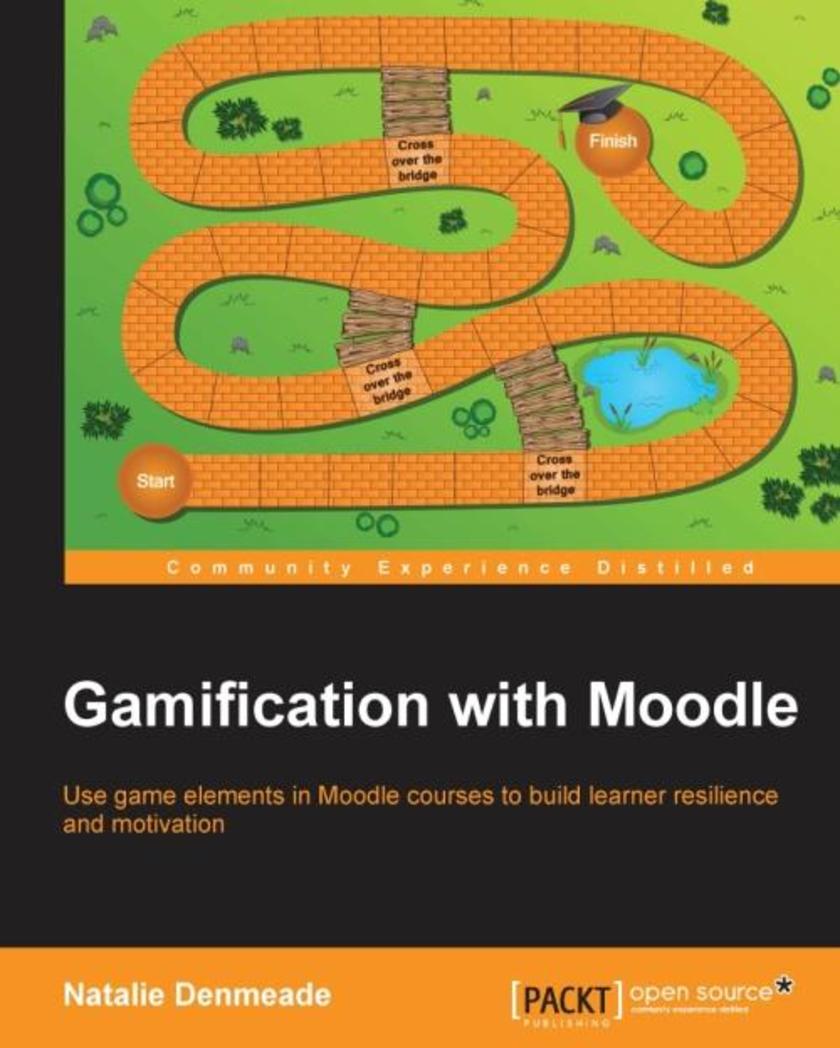
Gamification with Moodle
¥54.49
Use game elements in Moodle courses to build learner resilience and motivationAbout This BookFormulate a Moodle course that acts as a flexible framework ready for your own contentKeep learners engrossed and create opportunities for motivation through the concepts of status, access, and powerA resourceful guide to innovative learning using automatic reports, assessments, and conditional release of activities Who This Book Is For This book has been designed for teachers who to use technology to create more engaging learning experiences for both online learning and in face-to-face sessions. This book will especially appeal to people who are interested in the underlying mechanics of play and games and want to know more about applying these concepts in an educational context. It is assumed that you are a teacher and expert in your field, have basic computer skills, and have access to the Internet.What You Will LearnSet up a scoring system using Moodle GradebookEnable communication and collaboration in your class as a Learning Community using forumsAssess your learners’ abilities by setting up challenges and questsConfigure gateways to check and ensure progress before new content or activities are releasedCreate Moodle assignments to provide effective feedback through a comment bank and custom scaleIssue Open Badges to recognize achievements and set up an online backpack to share digital badgesReduce anxiety for learners by using the game-like concept of “Levelling Up” In Detail This book describes how teachers can use Gamification design within the Moodle Learning Management System. Game elements can be included in course design by using, badges, rubrics, custom grading scales, forums, and conditional activities. Moodle courses do not have to be solo-learning experiences that replicate Distance Education models. The Gamification design process starts by profiling players and creating levels of achievement towards meeting learning outcomes. Each task is defined, valued, and sequenced. Motivation loops are devised to keep the momentum going. In a gaming studio, this approach would require a team of specialists with a large budget and time frames. Preparing for a class rarely has these optimal conditions. The approach used in this book is to introduce game elements into the course design gradually. First, apply gamification to just one lesson and then build up to gamifying a series of lessons over a term. Each example will indicate the difficulty level and time investment. Try it out to see what is most effective with your learners and choose wisely in your use of technology. By the end of this book, you will be able to create Moodle courses that incorporate choice, communication, challenge, and creativity.Style and approach An easy-to-follow guide full of screenshots and step-by-step instructions with estimated time frames required to accomplish numerous tasks. Tips are offered for new Moodlers and plugin extensions are suggested for advanced Moodlers. The focus of the book is on why you would want to use each activity rather than detailed technical de*ions.
Learning Java Functional Programming
¥99.18
Create robust and maintainable Java applications using the functional style of programmingAbout This BookExplore how you can blend object-oriented and functional programming styles in JavaUse lambda expressions to write flexible and succinct codeA tutorial that strengthens your fundamentals in functional programming techniques to enhance your applications Who This Book Is For If you are a Java developer with object-oriented experience and want to use a functional programming approach in your applications, then this book is for you. All you need to get started is familiarity with basic Java object-oriented programming concepts.What You Will LearnUse lambda expressions to simplyfy codeUse function composition to achieve code fluencyApply streams to simply implementations and achieve parallelismIncorporate recursion to support an application’s functionalityProvide more robust implementations using OptionalsImplement design patterns with less codeRefactor object-oriented code to create a functional solutionUse debugging and testing techniques specific to functional programs In Detail Functional programming is an increasingly popular technology that allows you to simplify many tasks that are often cumbersome and awkward using an object-oriented approach. It is important to understand this approach and know how and when to apply it. Functional programming requires a different mindset, but once mastered it can be very rewarding. This book simplifies the learning process as a problem is described followed by its implementation using an object-oriented approach and then a solution is provided using appropriate functional programming techniques. Writing succinct and maintainable code is facilitated by many functional programming techniques including lambda expressions and streams. In this book, you will see numerous examples of how these techniques can be applied starting with an introduction to lambda expressions. Next, you will see how they can replace older approaches and be combined to achieve surprisingly elegant solutions to problems. This is followed by the investigation of related concepts such as the Optional class and monads, which offer an additional approach to handle problems. Design patterns have been instrumental in solving common problems. You will learn how these are enhanced with functional techniques. To transition from an object-oriented approach to a functional one, it is useful to have IDE support. IDE tools to refactor, debug, and test functional programs are demonstrated through the chapters. The end of the book brings together many of these functional programming techniques to create a more comprehensive application. You will find this book a very useful resource to learn and apply functional programming techniques in Java.Style and approach In this tutorial, each chapter starts with an introduction to the terms and concepts covered in that chapter. It quickly progresses to contrast an object-oriented approach with a functional approach using numerous code examples.
The Spirit of the Disciplines
¥88.56
How to Live as Jesus Lived Dallas Willard, one of today's most brilliant Christian thinkers and author of The Divine Conspiracy (Christianity Today's 1999 Book of the Year), presents a way of living that enables ordinary men and women to enjoy the fruit of the Christian life. He reveals how the key to self-transformation resides in the practice of the spiritual disciplines, and how their practice affirms human life to the fullest. The Spirit of the Disciplines is for everyone who strives to be a disciple of Jesus in thought and action as well as intention.

Just Kids
¥95.11
Due to copyright restrictions, this eBook may not contain all of the images available in the print edition. It was the summer Coltrane died, the summer of love and riots, and the summer when a chance encounter in Brooklyn led two young people on a path of art, devotion, and initiation. Patti Smith would evolve as a poet and performer, and Robert Mapplethorpe would direct his highly provocative style toward photography. Bound in innocence and enthusiasm, they traversed the city from Coney Island to Forty-second Street, and eventually to the celebrated round table of Max's Kansas City, where the Andy Warhol contingent held court. In 1969, the pair set up camp at the Hotel Chelsea and soon entered a community of the famous and infamous the influential artists of the day and the colorful fringe. It was a time of heightened awareness, when the worlds of poetry, rock and roll, art, and sexual politics were colliding and exploding. In this milieu, two kids made a pact to take care of each other. Scrappy, romantic, committed to create, and fueled by their mutual dreams and drives, they would prod and provide for one another during the hungry years. Just Kids begins as a love story and ends as an elegy. It serves as a salute to New York City during the late sixties and seventies and to its rich and poor, its hustlers and hellions. A true fable, it is a portrait of two young artists' ascent, a prelude to fame.

Total Freedom
¥110.71
Counted among his admirers are Jonas Salk, Aldous Huxley, David Hockney, and Van Morrison, along with countless other philosophers, artist, writers and students of the spiritual path. Now the trustees of Krishnamurti work have gathered his very best and most illuminating writings and talks to present in one volume the truly essential ideas of this great spiritual thinker.Total Freedom includes selections from Krishnamurti early works, his Commentaries on Living, and his discourses on life, the self, meditation, sex and love. These writings reveal Krishnamuri core teachings in their full eloquence and power: the nature of personal freedom; the mysteries of life and death; and the pathless land, the personal search for truth and peace. Warning readers away from blind obedience to creeds or teachers including himself Krishnamurti celebrated the individual quest for truth, and thus became on of the most influential guides for independent-minded seekers of the twentieth century and beyond.
Data Analysis with Stata
¥63.21
Explore the big data field and learn how to perform data analytics and predictive modelling in STATAAbout This BookVisualize and analyse data in STATA to devise a business strategyLearn STATA programming and predictive modelingDiscover how you can become a data scientist with the power of STATA Who This Book Is For This book is for all the professionals and students who want to learn STATA programming and apply predictive modelling concepts. This book is also very helpful for experienced STATA programmers as it provides advanced statistical modelling concepts and their application.What You Will LearnPerform important statistical tests to become a STATA data scientistBe guided through how to program in STATAImplement logistic and linear regression modelsVisualize and program the data in STATAAnalyse survey data, time series data, and survival dataPerform database management in STATA In Detail STATA is an integrated software package that provides you with everything you need for data analysis, data management, and graphics. STATA also provides you with a platform to efficiently perform simulation, regression analysis (linear and multiple) [and custom programming. This book covers data management, graphs visualization, and programming in STATA. Starting with an introduction to STATA and data analytics you’ll move on to STATA programming and data management. Next, the book takes you through data visualization and all the important statistical tests in STATA. Linear and logistic regression in STATA is also covered. As you progress through the book, you will explore a few analyses, including the survey analysis, time series analysis, and survival analysis in STATA. You’ll also discover different types of statistical modelling techniques and learn how to implement these techniques in STATA.Style and approach This book is a hands-onguide to STATA programming and statistical modelling providing many STATA code examples and taking. You through the working of the code in detail.
Learning Node.js for Mobile Application Development
¥80.65
Make use of Node.js to learn the development of a simple yet scalable cross-platform mobile applicationAbout This BookUse Node.js to satisfy the core backend requirements of modern apps, including user management, security, data access, and real-time data communicationBuild practical real-world mobile applications, which will give you the necessary knowledge to build your very own mobile solutionsStep-by-step development of projects using Ionic Framework as the frontend and Node.js for the backend supported by a MongoDB database Who This Book Is For This book is intended for web developers of all levels of expertise who want to deep dive into cross-platform mobile application development without going through the pains of understanding the languages and native frameworks that form an integral part of developing for different mobile platforms. This book is also for you if you are a developer who wants to capitalize on the MobileFirst strategy and so are going to use JavaScript for your complete stack.What You Will LearnDevelop an API from scratchSet up a MongoDB Database as part of your mobile application backendDeploy a cross-platform mobile application from the command lineIncorporate features within your mobile application that use native phone features such as a gyroscope, GPS, and accelerometerImplement mobile applications that use web-enabled APIsBuild a mobile application with real-time chat messaging featuresDevelop a secure mobile application that is capable of functioning with real-time data In Detail Node.js is a massively popular JavaScript library that lets you use JavaScript to easily program scalable network applications and web services. People approaching Node.js for the first time are often attracted by its efficiency, scalability, and the fact that it's based on JavaScript, the language of the Web, which means that developers can use the same language to write backend code. Also, it’s increasingly being seen as a "modern" replacement for PHP in web development, which relies on fast-paced data exchange. The growing community and the large amount of available modules makes Node.js one of the most attractive development environments. This book takes a step-wise and incremental approach toward developing cross-platform mobile technologies using existing web technologies. This will allow you to truly understand and become proficient in developing cross-platform mobile applications with Node.js, Ionic Framework, and MongoDB. The book starts off by introducing all the necessary requirements and knowledge to build a mobile application with a companion web service. It covers the ability to create an API from scratch and implement a comprehensive user database that will give you the opportunity to offer a mobile application with a personalized experience. Midway through the book, you will learn the basic processes to create a successful mobile application. You will also gain higher-level knowledge, allowing you to develop a functional and secure mobile application to ensure a seamless user experience for end users. Finally, the book ends with more advanced projects, which will bring together all the knowledge and expertise developed in the previous chapters to create a practical and functional mobile-application that has useful real-world features.Style and approach This book is an easy-to-follow guide that takes a step-wise approach in giving expertise and knowledge to help you truly understand what is needed to create a memorable user experience for end users. Each topic is placed in the context of the bigger picture, that is, to create cross-platform mobile applications using existing technologies.
Mastering PyCharm
¥80.65
Use PyCharm with fluid efficiency to write idiomatic python codeAbout This BookUnderstand how PyCharm works and how you can leverage its strength to develop applications quicklyMaster PyCharm’s editor to get a fast workflowFull of examples and illustrations that focus on the practical aspects of using PyCharm Who This Book Is For If you know PyCharm but want to understand it better and leverage its more powerful but less obvious tool set, this is the book for you. Serving as a launch pad for those who want to master PyCharm and completely harness its best features, it would be helpful if you were familiar with some of Python’s most prominent tools such as virtualenv and Python’s popular docstring formats such as reStructuredText and EpyType.What You Will LearnUnderstand the internal workings of the IntelliJ PlatformLeverage PyCharm’s powerful search tools, and learn which ones are the best for you and your workflowCustomize PyCharm’s enhanced Python interpreter and its inbuilt terminalDevelop web applications quickly and easily with different frameworks such as Flask and DjangoUnderstand how code completion works in PyCharm for Python and JavaScript In Detail PyCharm is addictive, with powerful and configurable code completion, superb editing tools, top-notch support, diverse plugins, and a vibrant ecosystem to boot. Learning how PyCharm works and maximising the synergy of its powerful tools will help you to rapidly develop applications. From leveraging the power of the editor to understanding PyCharm's internals, this book will give you a comprehensive view of PyCharm and allow you to make your own choices about which workflow and tools are best for you. You will start by getting comfortable with PyCharm and making it look exactly like you want. You can customize the tools and taskbars to suit individual developers' coding styles. You also learn how to assign keyboard shortcuts. You will master debugging by inserting breakpoints, collecting runtime data, and debugging from the console. You will understand how PyCharm works underneath and how plugins such as Codemap, Vim, Bitbucket, Assets compressor, markdown, bash file, shortcut translator, and .gitignore leverage the power of the IntelliJ platform. You will become comfortable using the VCS interface in PyCharm and see the benefits of using it for some simple tasks as well as some more complex tasks such as partial commits using changelists. You will take an in-depth look at the various tools in PyCharm, improving your workflow drastically. Finally, you will deploy powerful PyCharm tools for Django, Flask, GAE, and Pyramid Development, becoming well acquainted with PyCharm’s toolset for web development with popular platforms. Packed with insider tricks, this book will help you boost productivity with PyCharm.Style and approach An easy-to-follow guide with plenty of examples and screenshots. Each topic starts off with the goal of enhancing or changing a part of PyCharm to make it suit your needs.

Mastering Machine Learning with R
¥99.18
Master machine learning techniques with R to deliver insights for complex projectsAbout This BookGet to grips with the application of Machine Learning methods using an extensive set of R packagesUnderstand the benefits and potential pitfalls of using machine learning methodsImplement the numerous powerful features offered by R with this comprehensive guide to building an independent R-based ML system Who This Book Is For If you want to learn how to use R's machine learning capabilities to solve complex business problems, then this book is for you. Some experience with R and a working knowledge of basic statistical or machine learning will prove helpful.What You Will LearnGain deep insights to learn the applications of machine learning tools to the industryManipulate data in R efficiently to prepare it for analysisMaster the skill of recognizing techniques for effective visualization of dataUnderstand why and how to create test and training data sets for analysisFamiliarize yourself with fundamental learning methods such as linear and logistic regressionComprehend advanced learning methods such as support vector machinesRealize why and how to apply unsupervised learning methods In Detail Machine learning is a field of Artificial Intelligence to build systems that learn from data. Given the growing prominence of R—a cross-platform, zero-cost statistical programming environment—there has never been a better time to start applying machine learning to your data. The book starts with introduction to Cross-Industry Standard Process for Data Mining. It takes you through Multivariate Regression in detail. Moving on, you will also address Classification and Regression trees. You will learn a couple of “Unsupervised techniques”. Finally, the book will walk you through text analysis and time series. The book will deliver practical and real-world solutions to problems and variety of tasks such as complex recommendation systems. By the end of this book, you will gain expertise in performing R machine learning and will be able to build complex ML projects using R and its packages.Style and approach This is a book explains complicated concepts with easy to follow theory and real-world, practical applications. It demonstrates the power of R and machine learning extensively while highlighting the constraints.
Production Ready OpenStack - Recipes for Successful Environments
¥80.65
Over 90 practical and highly applicable recipes to successfully deploy various OpenStack configurations in productionAbout This BookGet a deep understanding of OpenStack’s internal structure and servicesLearn real-world examples on how to build and configure various production grade use cases for each of OpenStack's servicesUse a step-by-step approach to install and configure OpenStack’s services to provide Compute, Storage, and Networking as a services for cloud workloads Who This Book Is For If you have a basic understanding of Linux and Cloud computing and want to learn about configurations that OpenStack supports, this is the book for you. Knowledge of virtualization and managing Linux environments is expected. Prior knowledge or experience of OpenStack is not required, although beneficial.What You Will LearnPlan an installation of OpenStack with a basic configurationDeploy OpenStack in a highly available configurationConfigure Keystone Identity services with multiple types of identity backendsConfigure Glance Image Store with File, NFS, Swift, or Ceph image backends and use local image cachingDesign Cinder to use a single storage provider such as LVM, Ceph, and NFS backends, or to use multiple storage backends simultaneouslyManage and configure the OpenStack networking backendConfigure OpenStack's compute hypervisor and the instance scheduling mechanismBuild and customize the OpenStack dashboard In Detail OpenStack is the most popular open source cloud platform used by organizations building internal private clouds and by public cloud providers. OpenStack is designed in a fully distributed architecture to provide Infrastructure as a Service, allowing us to maintain a massively scalable cloud infrastructure. OpenStack is developed by a vibrant community of open source developers who come from the largest software companies in the world. The book provides a comprehensive and practical guide to the multiple uses cases and configurations that OpenStack supports. This book simplifies the learning process by guiding you through how to install OpenStack in a single controller configuration. The book goes deeper into deploying OpenStack in a highly available configuration. You’ll then configure Keystone Identity Services using LDAP, Active Directory, or the MySQL identity provider and configure a caching layer and SSL. After that, you will configure storage back-end providers for Glance and Cinder, which will include Ceph, NFS, Swift, and local storage. Then you will configure the Neutron networking service with provider network VLANs, and tenant network VXLAN and GRE. Also, you will configure Nova’s Hypervisor with KVM, and QEMU emulation, and you will configure Nova’s scheduler filters and weights. Finally, you will configure Horizon to use Apache HTTPD and SSL, and you will customize the dashboard’s appearance.Style and approach This book consists of clear, concise instructions coupled with practical and applicable recipes that will enable you to use and implement the latest features of OpenStack.


