


 购物车
 个人中心

Harper Perennial
¥94.10
On Writing Well has been praised for its sound advice, its clarity and the warmth of its style. It is a book for everybody who wants to learn how to write or who needs to do some writing to get through the day, as almost everybody does in the age of e-mail and the Internet. Whether you want to write about people or places, science and technology, business, sports, the arts or about yourself in the increasingly popular memoir genre, On Writing Well offers you fundamental priciples as well as the insights of a distinguished writer and teacher. With more than a million copies sole, this volume has stood the test of time and remains a valuable resource for writers and would-be writers.

The Food52 Cookbook, Volume 2
¥196.59
The team behind the bestselling The Food52 Cookbook and the James Beard Award–winning website Food52.com are back. Powered by a thriving online community and edited by noted food writers Amanda Hesser and Merrill Stubbs, Food52.com spotlights the best recipes from talented home cooks all over the world. The Food52 Cookbook, Volume 2, features seventy-five of the latest community favorites, including:Late-Night Coffee-Brined Chicken Roasted Carrot Soup Herbed Beef Skewers with Horseradish Cream Kentucky Hot Toddy Burnt Caramel Pudding

Signature Derrida
¥247.21
Throughout his long career, Jacques Derrida had a close, collaborative relationship with Critical Inquiry and its editors. He saved some of his most important essays for the journal, and he relished the ensuing arguments and polemics that stemmed from the responses to his writing that Critical Inquiry encouraged. Collecting the best of Derrida's work that was published in the journal between 1980 and 2002, Signature Derrida provides a remarkable introduction to the philosopher and the evolution of his thought.?These essays define three significant "e;periods"e; in Derrida's writing: his early, seemingly revolutionary phase; a middle stage, often autobiographical, that included spirited defense of his work; and his late period, when his persona as a public intellectual was prominent, and he wrote on topics such as animals and religion. The first period is represented by essays like "e;The Law of Genre,"e; in which Derrida produces a kind of phenomenological narratology. Another essay, "e;The Linguistic Circle of Geneva,"e; embodies the second, presenting deconstructionism at its best: Derrida shows that what was imagined to be an epistemological break in the study of linguistics was actually a repetition of earlier concepts. The final period of Derrida's writing includes the essays "e;Of Spirit"e; and?"e;The Animal That Therefore I Am (More to Follow),"e; and three eulogies to the intellectual legacies of Michel Foucault, Louis Marin, and Emmanuel Lvinas, in which Derrida uses the ideas of each thinker to push forward the implications of their theories.?With an introduction by Francoise Meltzer that provides an overview of the oeuvre of this singular philosopher, Signature Derrida is the most wide-ranging, and thus most representative, anthology of Derrida's work to date.
Accompaniment
¥229.55
In this culmination of his search for anthropological concepts and practices appropriate to the twenty-first century, Paul Rabinow contends that to make sense of the contemporary anthropologists must invent new forms of inquiry. He begins with an extended rumination on what he gained from two of his formative mentors: Michel Foucault and Clifford Geertz. Reflecting on their lives as teachers and thinkers, as well as human beings, he poses questions about their critical limitations, unfulfilled hopes, and the lessons he learned from and with them.?This spirit of collaboration animates The Accompaniment, as Rabinow assesses the last ten years of his career, largely spent engaging in a series of intensive experiments in collaborative research and often focused on cutting-edge work in synthetic biology. He candidly details the successes and failures of shifting his teaching practice away from individual projects, placing greater emphasis on participation over observation in research, and designing and using websites as a venue for collaboration. Analyzing these endeavors alongside his efforts to apply an anthropological lens to the natural sciences, Rabinow lays the foundation for an ethically grounded anthropology ready and able to face the challenges of our contemporary world.
Learning Java Functional Programming
¥99.18
Create robust and maintainable Java applications using the functional style of programmingAbout This BookExplore how you can blend object-oriented and functional programming styles in JavaUse lambda expressions to write flexible and succinct codeA tutorial that strengthens your fundamentals in functional programming techniques to enhance your applications Who This Book Is For If you are a Java developer with object-oriented experience and want to use a functional programming approach in your applications, then this book is for you. All you need to get started is familiarity with basic Java object-oriented programming concepts.What You Will LearnUse lambda expressions to simplyfy codeUse function composition to achieve code fluencyApply streams to simply implementations and achieve parallelismIncorporate recursion to support an application’s functionalityProvide more robust implementations using OptionalsImplement design patterns with less codeRefactor object-oriented code to create a functional solutionUse debugging and testing techniques specific to functional programs In Detail Functional programming is an increasingly popular technology that allows you to simplify many tasks that are often cumbersome and awkward using an object-oriented approach. It is important to understand this approach and know how and when to apply it. Functional programming requires a different mindset, but once mastered it can be very rewarding. This book simplifies the learning process as a problem is described followed by its implementation using an object-oriented approach and then a solution is provided using appropriate functional programming techniques. Writing succinct and maintainable code is facilitated by many functional programming techniques including lambda expressions and streams. In this book, you will see numerous examples of how these techniques can be applied starting with an introduction to lambda expressions. Next, you will see how they can replace older approaches and be combined to achieve surprisingly elegant solutions to problems. This is followed by the investigation of related concepts such as the Optional class and monads, which offer an additional approach to handle problems. Design patterns have been instrumental in solving common problems. You will learn how these are enhanced with functional techniques. To transition from an object-oriented approach to a functional one, it is useful to have IDE support. IDE tools to refactor, debug, and test functional programs are demonstrated through the chapters. The end of the book brings together many of these functional programming techniques to create a more comprehensive application. You will find this book a very useful resource to learn and apply functional programming techniques in Java.Style and approach In this tutorial, each chapter starts with an introduction to the terms and concepts covered in that chapter. It quickly progresses to contrast an object-oriented approach with a functional approach using numerous code examples.
Gabriel Tarde On Communication and Social Influence
¥282.53
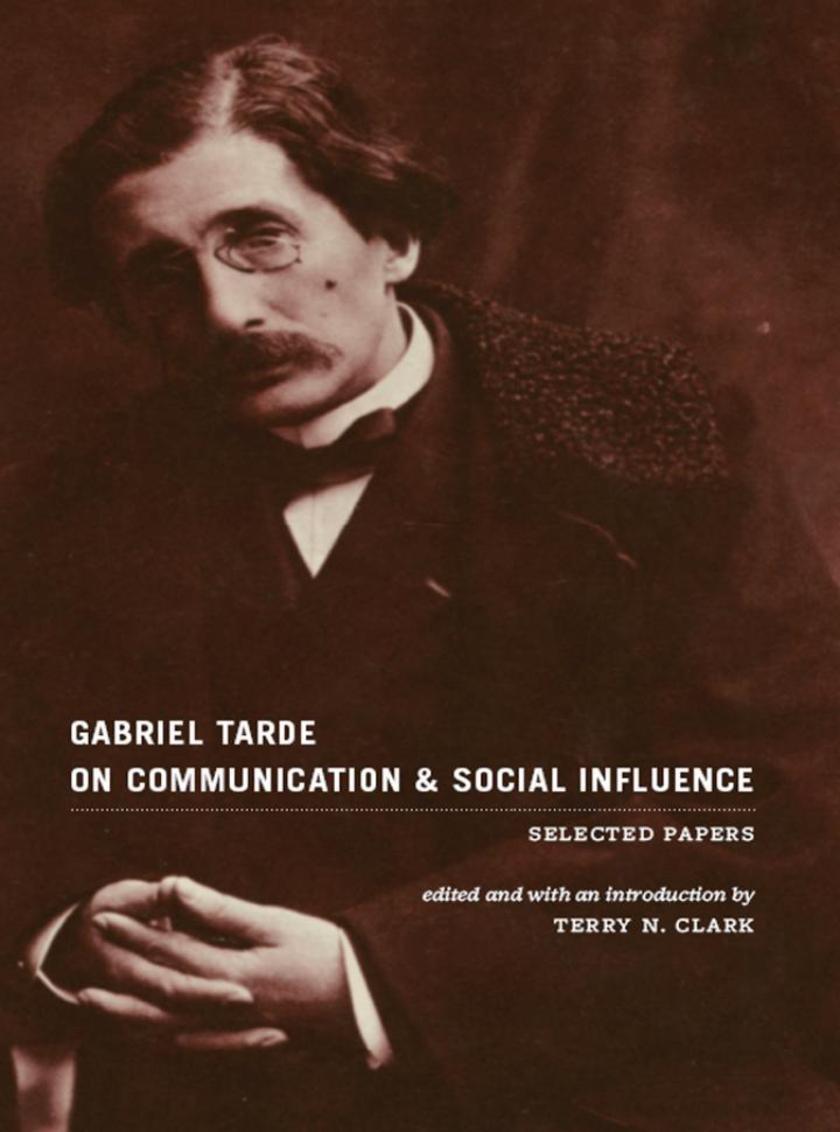
Gabriel Tarde ranks as one of the most outstanding sociologists of nineteenth-century France, though not as well known by English readers as his peers Comte and Durkheim. This book makes available Tarde's most important work and demonstrates his continuing relevance to a new generation of students and thinkers.Tarde's landmark research and empirical analysis drew upon collective behavior, mass communications, and civic opinion as elements to be explained within the context of broader social patterns. Unlike the mass society theorists that followed in his wake, Tarde integrated his discussions of societal change at the macrosocietal and individual levels, anticipating later twentieth-century thinkers who fused the studies of mass communications and public opinion research.Terry N. Clark's introduction, considered the premier guide to Tarde's opus, accompanies this important work, reprinted here for the first time in forty years.
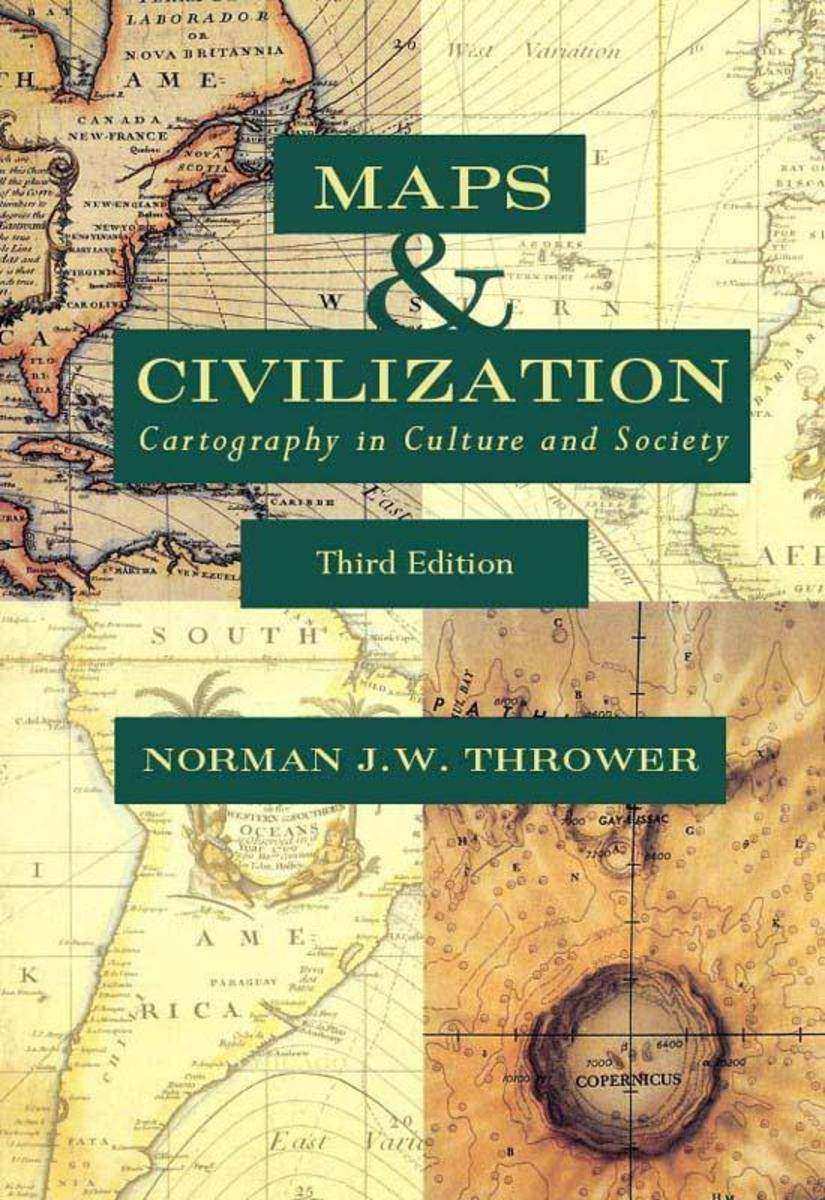
Maps and Civilization
¥282.53
In this concise introduction to the history of cartography, Norman J. W. Thrower charts the intimate links between maps and history from antiquity to the present day. A wealth of illustrations, including the oldest known map and contemporary examples made using Geographical Information Systems (GIS), illuminate the many ways in which various human cultures have interpreted spatial relationships.The third edition of Maps and Civilization incorporates numerous revisions, features new material throughout the book, and includes a new alphabetized bibliography.?Praise for previous editions of Maps and Civilization:"e;A marvelous compendium of map lore. Anyone truly interested in the development of cartography will want to have his or her own copy to annotate, underline, and index for handy referencing."e;-L. M. Sebert, Geomatica
Animal Personalities
¥394.36
Ask anyone who has owned a pet and they'll assure you that, yes, animals have personalities. And science is beginning to agree. Researchers have demonstrated that both domesticated and nondomesticated animals-from invertebrates to monkeys and apes-behave in consistently different ways, meeting the criteria for what many define as personality. But why the differences, and how are personalities shaped by genes and environmentHow did they evolveThe essays in Animal Personalities reveal that there is much to learn from our furred and feathered friends.?The study of animal personality is one of the fastest-growing areas of research in behavioral and evolutionary biology. Here Claudio Carere and Dario Maestripieri, along with a host of scholars from fields as diverse as ecology, genetics, endocrinology, neuroscience, and psychology, provide a comprehensive overview of the current research on animal personality. Grouped into thematic sections, chapters approach the topic with empirical and theoretical material and show that to fully understand why personality exists, we must consider the evolutionary processes that give rise to personality, the ecological correlates of personality differences, and the physiological mechanisms underlying personality variation.
Wasting a Crisis
¥370.82
The recent financial crisis led to sweeping reforms that inspired countless references to the financial reforms of the New Deal. Comparable to the reforms of the New Deal in both scope and scale, the 2,300-page Dodd-Frank Act of 2010-the main regulatory reform package introduced in the United States-also shared with New Deal reforms the assumption that the underlying cause of the crisis was misbehavior by securities market participants, exacerbated by lax regulatory oversight.With Wasting a Crisis, Paul G. Mahoney offers persuasive research to show that this now almost universally accepted narrative of market failure-broadly similar across financial crises-is formulated by political actors hoping to deflect blame from prior policy errors. Drawing on a cache of data, from congressional investigations, litigation, regulatory reports, and filings to stock quotes from the 1920s and '30s, Mahoney moves beyond the received wisdom about the financial reforms of the New Deal, showing that lax regulation was not a substantial cause of the financial problems of the Great Depression. As new regulations were formed around this narrative of market failure, not only were the majority largely ineffective, they were also often counterproductive, consolidating market share in the hands of leading financial firms. An overview of twenty-first-century securities reforms from the same analytic perspective, including Dodd-Frank and the Sarbanes-Oxley Act of 2002, shows a similar pattern and suggests that they too may offer little benefit to investors and some measurable harm.
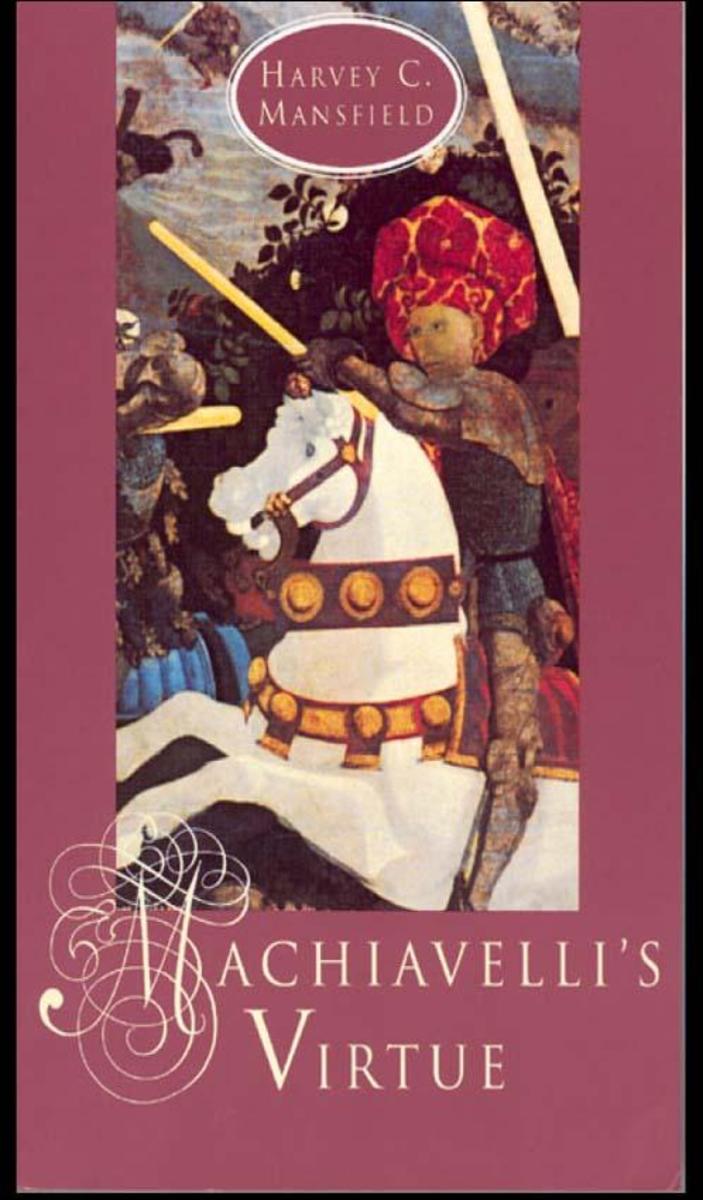
Machiavelli's Virtue
¥147.15
Uniting thirty years of authoritative scholarship by a master of textual detail, Machiavelli's Virtue is a comprehensive statement on the founder of modern politics. Harvey Mansfield reveals the role of sects in Machiavelli's politics, his advice on how to rule indirectly, and the ultimately partisan character of his project, and shows him to be the founder of such modern and diverse institutions as the impersonal state and the energetic executive. Accessible and elegant, this groundbreaking interpretation explains the puzzles and reveals the ambition of Machiavelli's thought."e;The book brings together essays that have mapped [Mansfield's] paths of reflection over the past thirty years. . . . The ground, one would think, is ancient and familiar, but Mansfield manages to draw out some understandings, or recognitions, jarringly new."e;-Hadley Arkes, New Criterion"e;Mansfield's book more than rewards the close reading it demands."e;-Colin Walters, Washington Times"e;[A] masterly new book on the Renaissance courtier, statesman and political philosopher. . . . Mansfield seeks to rescue Machiavelli from liberalism's anodyne rehabilitation."e;-Roger Kimball, The Wall Street Journal
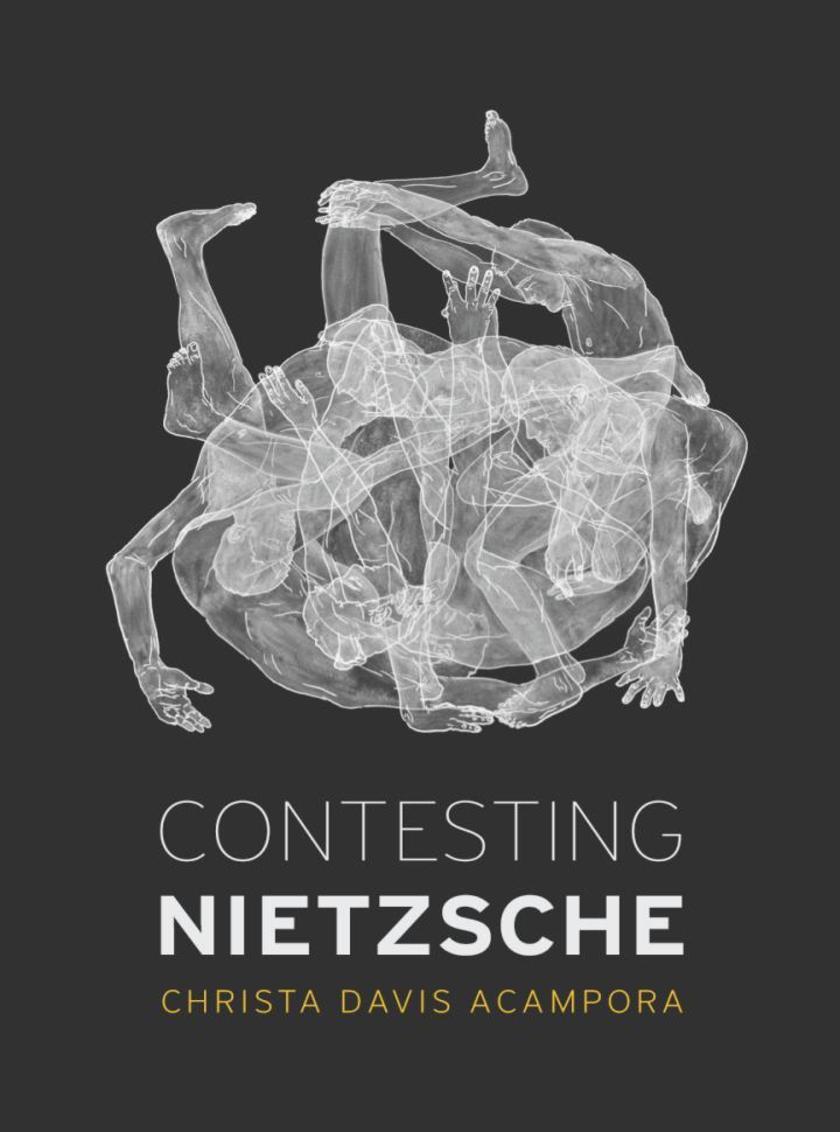
Contesting Nietzsche
¥311.96
In this groundbreaking work, Christa Davis Acampora offers a profound rethinking of Friedrich Nietzsche's crucial notion of the agon. Analyzing an impressive array of primary and secondary sources and synthesizing decades of Nietzsche scholarship, she shows how the agon, or contest, organized core areas of Nietzsche's philosophy, providing a new appreciation of the subtleties of his notorious views about power. By focusing so intensely on this particular guiding interest, she offers an exciting, original vantage from which to view this iconic thinker: Contesting Nietzsche.?Though existence-viewed through the lens of Nietzsche's agon-is fraught with struggle, Acampora illuminates what Nietzsche recognized as the agon's generative benefits. It imbues the human experience with significance, meaning, and value. Analyzing Nietzsche's elaborations of agonism-his remarks on types of contests, qualities of contestants, and the conditions in which either may thrive or deteriorate-she demonstrates how much the agon shaped his philosophical projects and critical assessments of others. The agon led him from one set of concerns to the next, from aesthetics to metaphysics to ethics to psychology, via Homer, Socrates, Saint Paul, and Wagner. In showing how one obsession catalyzed so many diverse interests, Contesting Nietzsche sheds fundamentally new light on some of this philosopher's most difficult and paradoxical ideas.
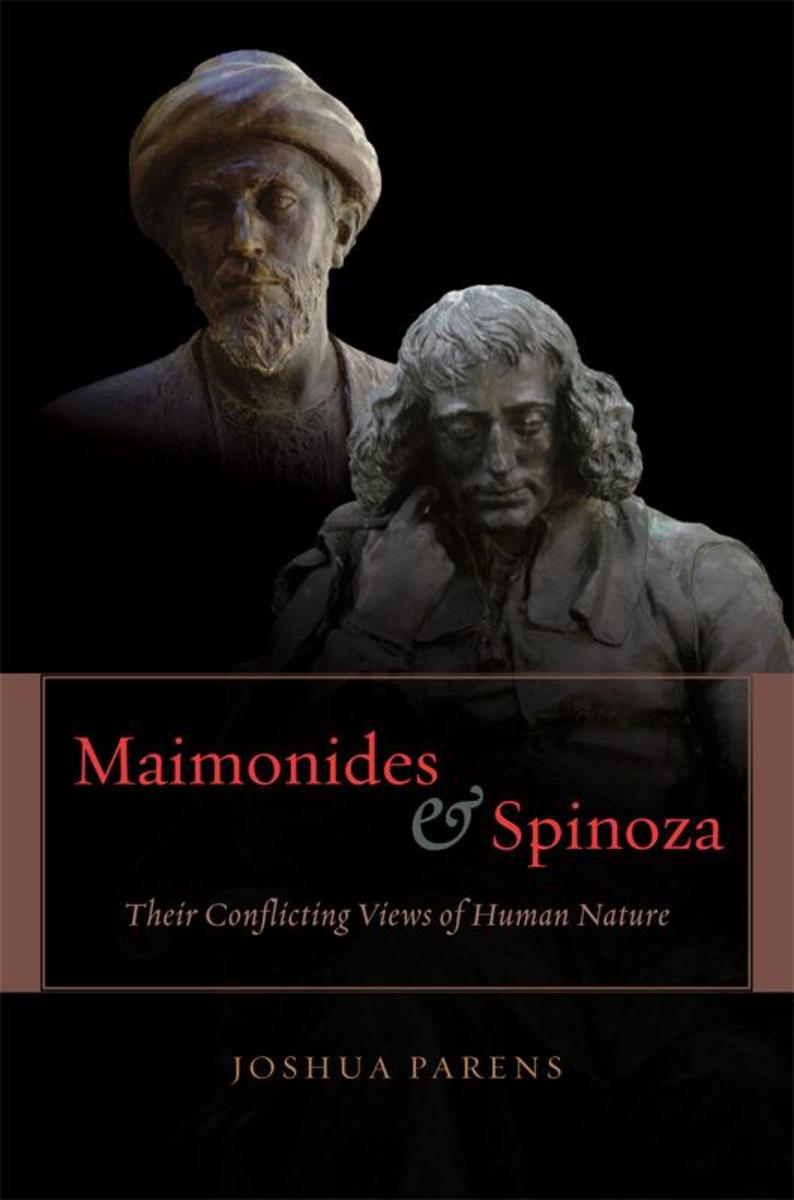
Maimonides and Spinoza
¥353.16
Until the last century, it was generally agreed that Maimonides was a great defender of Judaism, and Spinoza-as an Enlightenment advocate for secularization-among its key opponents. However, a new scholarly consensus has recently emerged that the teachings of the two philosophers were in fact much closer than was previously thought. In his perceptive new book, Parens sets out to challenge the now predominant view of Maimonides as a protomodern forerunner to Spinoza-and to show that a chief reason to read Maimonides is in fact to gain distance from our progressively secularized worldview.Turning the focus from Spinoza's oft-analyzed Theologico-Political Treatise, this book has at its heart a nuanced analysis of his theory of human nature in the Ethics. Viewing this work in contrast to Maimonides's Guide of the Perplexed, it makes clear that Spinoza can no longer be thought of as the founder of modern Jewish identity, nor should Maimonides be thought of as having paved the way for a modern secular worldview. Maimonides and Spinoza dramatically revises our understanding of both philosophers.

Street Boys
¥73.58
The shocking, powerful true story of the lives of 7 young kids, marred by guns, gangs and violence on one of Britain’s toughest estates. ‘Eight years old. That’s when life went downhill. From eight years old nobody looked after me. I just lived on the streets and made do by myself. There was no one except me and my friends.’ Simon This is the story of 7 young boys who have one thing in common – they grew up in a London street gang. JaJa looks out of his kitchen window and sees drug dealers, pimps and whores. He ends up as a kid leading a street gang. Phat Si comes home from school one day to find his mother gone so he takes to the streets. He’s 8 years old. Ribz's mother sells crack and is sent to prison. He doesn't know who his father is but does know that his dad has an unknown number of children living on the same estate. He’s determined to find some kind of family. Street Boys tells a powerful and important true story of courage, determination and hope – of creating a family from your friends and starting again when the world seems against you.

Chocolate Wars: From Cadbury to Kraft
¥80.25
The delicious true story of the early chocolate pioneers by the award-winning writer, and direct descendant of the famous chocolate dynasty, Deborah Cadbury In 'Chocolate Wars' bestselling historian and award-winning documentary maker Deborah Cadbury takes a journey into her own family history to uncover the rivalries that have driven 250 years of chocolate empire-building. Beginning with an account of John Cadbury, who founded the first Cadbury's coffee and chocolate shop in Birmingham in 1824, 'Chocolate Wars' goes on to chart the astonishing transformation of the company's fortunes under his grandson George. But while the Cadbury dynasty is the fulcrum of the narrative, this is also the story of their Quaker rivals, the Frys and Rowntrees, and their European competitors, the Nestles, Suchards and Lindts. These rivalries drove the formation of the huge chocolate conglomorates that still straddle the corporate world today, and have first call on our collective sweet tooth. This is narrative history at its most absorbing, peopled by wonderfully colourful characters - the true story of the chocolate pioneers, the visions and ideals that inspired them and the mouth-watering concoctions they created.

Britain in the Middle Ages: An Archaeological History (Text only)
¥81.03
As in ‘Britain B.C.’ and ‘Britain A.D.’ (also accompanied by Channel 4 series), eminent archaeologist Francis Pryor challenges familiar historical views of the Middle Ages by examining fresh evidence from the ground. The term 'Middle Ages' suggests a time between two other ages: a period when nothing much happened. In his radical reassessment, Francis Pryor shows that this is very far from the truth, and that the Middle Ages (approximately 800-1550) were actually the time when the modern world was born. This was when Britain moved from Late Antiquity into a world we can recognize as more or less familiar: roads and parishes became fixed; familiar institutions, such as the church and local government, came into being; industry became truly industrial; and international trade was now a routine process. Archaeology shows that the Middle Ages were far from static. Based on everyday, often humdrum evidence, it demonstrates that the later agricultural and industrial revolutions were not that unexpected, given what we now know of the later medieval period. Similarly, the explosion of British maritime power in the late 1700s had roots in the 15th century. The book stresses continuous development at the expense of ‘revolution', though the Black Death (1348), which killed a third of the population, did have a profound effect in loosening the grip of the feudal system. Labour became scarce and workers gained power; land became more available and the move to modern farming began. The Middle Ages can now be seen in a fresh light as an era of great inventiveness, as the author examines such topics as 'upward mobility'; the power of the Church; the role of the Guilds as precursors of trade unions; the transport infrastructure of roads, bridges and shipbuilders; and the increase in iron production.

Ground Truth: 3 Para Return to Afghanistan
¥45.62
Afghanistan, 2008. After their eighteen-month epic tour of Helmand Province, the troops of 3 Para are back. This time, the weight of experience weighs heavily on their shoulders. In April 2006 the elite 3 Para Battle Group was despatched to Helmand Province, Afghanistan, on a tour that has become a legend. All that summer the Paras were subjected to relentless Taliban attacks in one of the most gruelling campaigns fought by British troops in modern times. Two years later the Paras are back in the pounding heat of the Afghanistan front lines. The conflict has changed. The enemy has been forced to adopt new weaponry and tactics. But how much progress are we really making in the war against the insurgents? And is there an end in sight? In this searing account of 3 Para’s return, bestselling author Patrick Bishop combines gripping, first-person accounts of front-line action with an unflinching look at the hard realities of our involvement in Afghanistan. Writing from a position of exclusive access alongside the Paras, he reveals the ‘ground truth’ of the mission our soldiers have been given. It’s a sombre picture. But shining out from it are stories of courage, comradeship and humour, as well as a gripping account of an epic humanitarian operation through Taliban-infested country to deliver a vitally needed turbine to the Kajaki Dam. Frank, action-packed and absorbing, ‘Ground Truth’ is a timely and important book that will set the agenda for discussion of the Afghan conflict for years to come.

The Bitter Sea: The Struggle for Mastery in the Mediterranean 1935–1949
¥73.58
A gripping history of the Mediterranean campaigns from the first rumblings of conflict through the Second World War and into the uneasy peace of the late 1940s. The Mediterranean Sea lies at the very heart of recent world history. To the British during the Second World War, the Mediterranean was the world’s great thoroughfare. To the Americans, it represented the answer to anti-imperialism. And to Mussolini, it encapsulated his violent vision of conquest. These three great powers attempted to overthrow the existing order in the Mediterranean, resulting in a collision of allies as well as enemies that hadn’t been seen before: the Germans fought against the Italians, the Americans against the Arabs, the Jews against the British, the French against nearly everyone. The Mediterranean was indeed ‘the bitter sea’. In this masterly history, Simon Ball takes us through the tumultuous events set in motion by Mussolini’s lust for conquest that ended with the creation of Israel. Long drawn-out battles on land, sea and air – dominated by WWII’s most illustrious leaders, Churchill, Eisenhower and Rommel amongst them – resulted in Allied victory in the battle of El Alamein, the terrifying desert campaigns of Africa and the eventual defeat of Italy and then Germany. The wars in the Mediterranean had huge consequences for all those who fought in them, but none more profound than those experienced by the lands, nations and peoples that lived around the sea itself. Based on entirely original research, ‘The Bitter Sea’ is expertly written, utterly compelling and unquestionably important.

The Dog that Saved My Life
¥63.77
Five incredible true stories of canine bravery in wartime. For as long as dogs have lived alongside man, they have saved their lives in wartime with their bravery, loyalty and companionship. From the WWII dog that was adopted by the Royal Navy as a mascot, torpedoed, shot at and registered as a prisoner of war, to the more recent heroics of explosives dog, Bonnie, in Afghanistan and Iraq where she saved hundreds of military and civilian lives, this is a collection of the most incredible and heartwarming accounts from around the world. Capturing the fear, uncertainly, determination and undying devotion of these amazing dogs and the young soldiers, sailors and airmen they befriended, these are truly inspirational tales of loyalty and companionship beyond all boundaries.

The Hell of Burma
¥9.71
This is Harry Verlander’s story, one of five true-life recollections from the Second World War in Tales From The Special Forces Club. The Special Forces Club is a fabled gentlemen’s club, based in the heart of London. It has a closely guarded secret: you have to be a genuine hero to be a member. Harry had volunteered aged 16 in 1942. By 1944, he was parachuting into France on D-Day as part of the Jedburgh espionage teams. His main adventure, though, was in the jungles of Burma fighting the Japanese. This is his story.
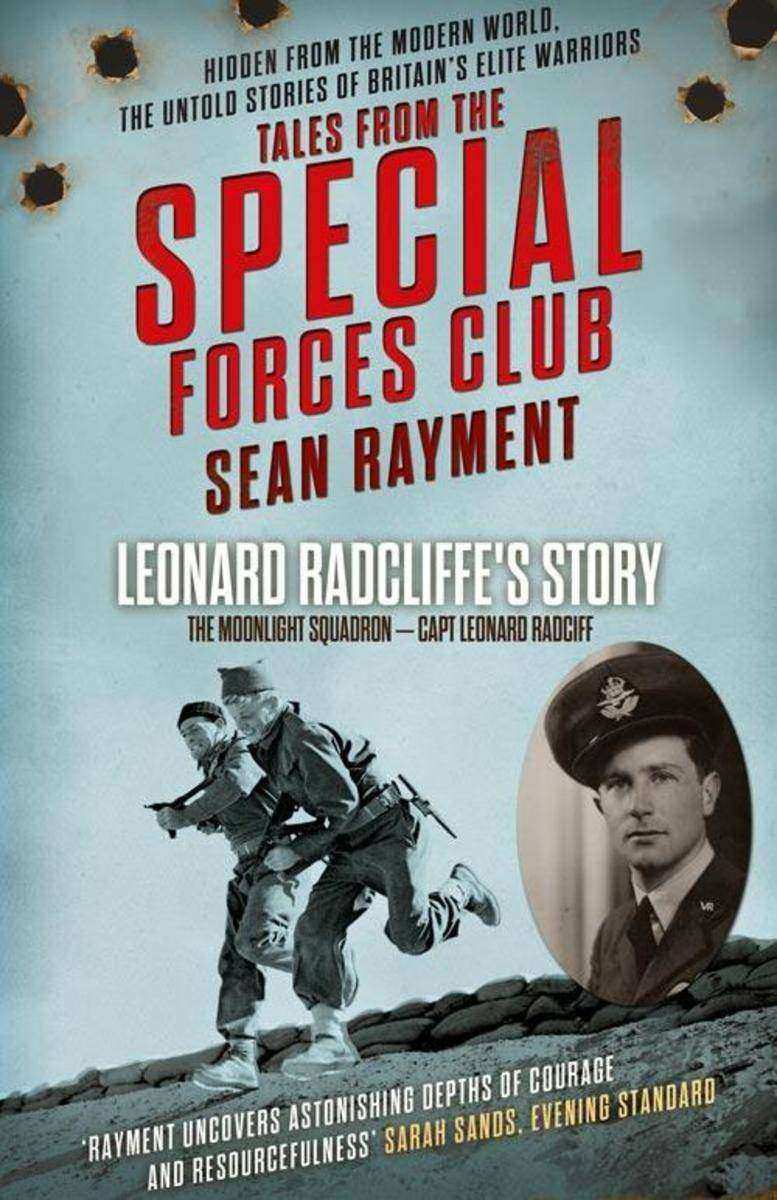
The Moonlight Squadron
¥9.71
This is Leonard Ratcliff’s story, one of five true-life recollections from the Second World War in Tales From The Special Forces Club. The Special Forces Club is a fabled gentlemen’s club, based in the heart of London. It has a closely guarded secret: you have to be a genuine hero to be a member. Leonard commanded a squadron tasked with flying Special Forces agents into Nazi-occupied Europe. His missions came with enormous risk and casualties were exceptionally high. By the end of the war the entire squadron had been lost three times over. Yet despite the dangers there was always a steady stream of volunteers ready to risk all. This is Leonard’s story.

Madge’s story (Individual stories from THE SWEETHEARTS, Book 1)
¥11.77
This is Madge’s story, one of five stories extracted from THE SWEETHEARTS. Whether in wartime or peace, tales of love, laughter and hardship from the girls in the Rowntrees factory in Yorkshire. “On the morning of her Rowntrees job interview, on a warm Monday morning in July 1932, Fourteen-year-old Madge Fisher stood fidgeting in the hallway of her terraced house while her mother, Margaret, pinned up her hair and then inspected her from top to toe. ‘Hands,’ her mother said, and Madge presented them meekly for inspection, glad that she’d remembered to wash them at the kitchen sink…” From the 1930s through to the 1980s, as Britain endured war, depression, hardship and strikes, the women at the Rowntree’s factory in York kept the chocolates coming. This is the true story of The Sweethearts, the women who roasted the cocoa beans, piped the icing and packed the boxes that became gifts for lovers, snacks for workers and treats for children across the country. More often than not, their working days provided welcome relief from bad husbands and bad housing, a community where they could find new confidence, friendship and when the supervisor wasn’t looking, the occasional chocolate.


