


 购物车
购物车 个人中心
个人中心

O, How the Wheel Becomes It!
¥123.61
The first novel Anthony Powell published following the completion of his epic A Dance to the Music of Time, O, How the Wheel Becomes It! fulfills perhaps every author's fantasy as it skewers a conceited, lazy, and dishonest critic. A writer who avoids serving in World War II and veers in and out of marriage, G. F. H. Shadbold ultimately falls victim to the title's spinning-and righteous-emblem of chance. Sophisticated and a bit cruel, Wheel's tale of posthumous vengeance is, nonetheless, irresistible.Written at the peak of the late British master's extraordinary literary career, this novel offers profound insight into the mind of a great artist whose unequaled style, ear for dialogue, and eye for irony will delight devotees and new readers alike.

Walking
¥123.61
Thomas Bernhard is "e;one of the masters of contemporary European fiction"e; (George Steiner); "e;one of the century's most gifted writers"e; (Newsday); "e;a virtuoso of rancor and rage"e; (Bookforum). And although he is favorably compared with Franz Kafka, Samuel Beckett, and Robert Musil, it is only in recent years that he has gained a devoted cult following in America.A powerful, compact novella, Walking provides a perfect introduction to the absurd, dark, and uncommonly comic world of Bernhard, showing a preoccupation with themes-illness and madness, isolation, tragic friendships-that would obsess Bernhard throughout his career. Walking records the conversations of the unnamed narrator and his friend Oehler while they walk, discussing anything that comes to mind but always circling back to their mutual friend Karrer, who has gone irrevocably mad. Perhaps the most overtly philosophical work in Bernhard's highly philosophical oeuvre, Walking provides a penetrating meditation on the impossibility of truly thinking.
Cycling City
¥265.87
Cycling has experienced a renaissance in the United States, as cities around the country promote the bicycle as an alternative means of transportation. In the process, debates about the nature of bicycles-where they belong, how they should be ridden, how cities should or should not accommodate them-have played out in the media, on city streets, and in city halls. Very few people recognize, however, that these questions are more than a century old.The Cycling City?is a sharp history of the bicycle's rise and fall in the late nineteenth century. In the 1890s, American cities were home to more cyclists, more cycling infrastructure, more bicycle friendly legislation, and a richer cycling culture than anywhere else in the world.Evan Friss unearths the hidden history of the cycling city, demonstrating that diverse groups of cyclists managed to remap cities with new roads, paths, and laws, challenge social conventions, and even dream up a new urban ideal inspired by the bicycle. When cities were chaotic and filthy, bicycle advocates imagined an improved landscape in which pollution was negligible, transportation was silent and rapid, leisure spaces were democratic, and the divisions between city and country were blurred. Friss argues that when the utopian vision of a cycling city faded by the turn of the century, its death paved the way for today's car-centric cities-and ended the prospect of a true American cycling city ever being built.

Hegel's Theory of Intelligibility
¥265.87
Hegel's Theory of Intelligibility?picks up on recent revisionist readings of Hegel to offer a productive new interpretation of his notoriously difficult work, the Science of Logic. Rocio Zambrana transforms the revisionist tradition by distilling the theory of normativity that Hegel elaborates in the?Science of Logic?within the context of his signature treatment of negativity, unveiling how both features of his system of thought operate on his theory of intelligibility. ?Zambrana clarifies crucial features of Hegel's theory of normativity previously thought to be absent from the argument of the?Science of Logic-what she calls normative precariousness and normative ambivalence. She shows that Hegel's theory of determinacy views intelligibility as both precarious, the result of practices and institutions that gain and lose authority throughout history, and ambivalent, accommodating opposite meanings and valences even when enjoying normative authority. In this way, Zambrana shows that the Science of Logic provides the philosophical justification for the necessary historicity of intelligibility. Intervening in several recent developments in the study of Kant, Hegel, and German Idealism more broadly, this book provides a productive new understanding of the value of Hegel's systematic ambitions.
Making of Tocqueville's America
¥265.87
Alexis de Tocqueville was among the first to draw attention to Americans' propensity to form voluntary associations-and to join them with a fervor and frequency unmatched anywhere in the world. For nearly two centuries, we have sought to understand how and why early nineteenth-century Americans were, in Tocqueville's words, "e;forever forming associations."e; In The Making of Tocqueville's America, Kevin Butterfield argues that to understand this, we need to first ask: what did membership really mean to the growing number of affiliated Americans?Butterfield explains that the first generations of American citizens found in the concept of membership-in churches, fraternities, reform societies, labor unions, and private business corporations-a mechanism to balance the tension between collective action and personal autonomy, something they accomplished by emphasizing law and procedural fairness. As this post-Revolutionary procedural culture developed, so too did the legal substructure of American civil society. Tocqueville, then, was wrong to see associations as the training ground for democracy, where people learned to honor one another's voices and perspectives. Rather, they were the training ground for something no less valuable to the success of the American democratic experiment: increasingly formal and legalistic relations among people.
On Hysteria
¥365.93
These days, hysteria is known as a discredited diagnosis that was used to group and pathologize a wide range of conditions and behaviors in women. But for a long time, it was seen as a legitimate category of medical problem-and one that, originally, was applied to men as often as to women.In On Hysteria, Sabine Arnaud traces the creation and rise of hysteria, from its invention in the eighteenth century through nineteenth-century therapeutic practice. Hysteria took shape, she shows, as a predominantly aristocratic malady, only beginning to cross class boundaries (and be limited to women) during the French Revolution. Unlike most studies of the role and status of medicine and its categories in this period, On Hysteria focuses not on institutions but on narrative strategies and writing-the ways that texts in a wide range of genres helped to build knowledge through misinterpretation and recontextualized citation.Powerfully interdisciplinary, and offering access to rare historical material for the first time in English, On Hysteria will speak to scholars in a wide range of fields, including the history of science, French studies, and comparative literature.
Rhetorical Memory
¥329.62
Institutions have regimes-policies that typically come from the top down and are meant to align the efforts of workers with the goals and mission of an institution. Institutions also have practices-day-to-day behaviors performed by individual workers attempting to interpret the institution's missives. Taken as a whole, these form a company's memory regime, and they have a significant effect on how employees analyze, mix, translate, sort, filter, and repurpose everyday information in order to meet the demands of their jobs, their customers, their colleagues, and themselves.In Rhetorical Memory, Stewart Whittemore demonstrates that strategies we use to manage information-techniques often acquired through trial and error, rarely studied, and generally invisible to us-are as important to our success as the end products of our work. First, he situates information management within the larger field of rhetoric, showing that both are tied to purpose, audience, and situation. He then dives into an engaging and tightly focused workplace study, presenting three cases from a team of technical communicators making use of organizational memory during their everyday work. By examining which techniques succeed and which fail, Whittemore illuminates the challenges faced by technical communicators. He concludes with a number of practical strategies to better organize information, that will help employees, managers, and anyone else suffering from information overload.
Politics of Pain Medicine
¥329.62
Chronic pain is a medical mystery, debilitating to patients and a source of frustration for practitioners. It often eludes both cause and cure and serves as a reminder of how much further we have to go in unlocking the secrets of the body. A new field of pain medicine has evolved from this landscape, one that intersects with dozens of disciplines and subspecialties ranging from psychology and physiology to anesthesia and chiropractic medicine. Over the past three decades, researchers, policy makers, and practitioners have struggled to define this complex and often contentious field as they work to establish standards while navigating some of the most challenging philosophical issues of Western science.In The Politics of Pain Medicine: A Rhetorical-Ontological Inquiry, S. Scott Graham offers a rich and detailed exploration of the medical rhetoric surrounding pain medicine. Graham chronicles the work of interdisciplinary pain management specialists to found a new science of pain and a new approach to pain medicine grounded in a more comprehensive biospychosocial model. His insightful analysis demonstrates how these materials ultimately shape the healthcare community's understanding of what pain medicine is, how the medicine should be practiced and regulated, and how practitioner-patient relationships are best managed. It is a fascinating, novel examination of one of the most vexing issues in contemporary medicine.

Second-Best Justice
¥329.62
It's long been known that Japanese file fewer lawsuits per capita than Americans do. Yet explanations for the difference have tended to be partial and unconvincing, ranging from circular arguments about Japanese culture to suggestions that the slow-moving Japanese court system acts as a deterrent.With?Second-Best Justice, J. Mark Ramseyer offers a more compelling, better-grounded explanation: the low rate of lawsuits in Japan results not from distrust of a dysfunctional system but from trust in a system that works-that sorts and resolves disputes in such an overwhelmingly predictable pattern that opposing parties rarely find it worthwhile to push their dispute to trial. Using evidence from tort claims across many domains, Ramseyer reveals a court system designed not to find perfect justice, but to "e;make do"e;-to adopt strategies that are mostly right and that thereby resolve disputes quickly and economically.An eye-opening study of comparative law,?Second-Best Justice?will force a wholesale rethinking of the differences among alternative legal systems and their broader consequences for social welfare.?
Making the Mission
¥294.30
In the aftermath of the 1906 San Francisco earthquake, residents of the city's iconic Mission District bucked the city-wide development plan, defiantly announcing that in their neighborhood, they would be calling the shots. Ever since, the Mission has become known as a city within a city, and a place where residents have, over the last century, organized and reorganized themselves to make the neighborhood in their own image.In Making the Mission, Ocean Howell tells the story of how residents of the Mission District organized to claim the right to plan their own neighborhood and how they mobilized a politics of place and ethnicity to create a strong, often racialized identity-a pattern that would repeat itself again and again throughout the twentieth century. Surveying the perspectives of formal and informal groups, city officials and district residents, local and federal agencies, Howell articulates how these actors worked with and against one another to establish the very ideas of the public and the public interest, as well as to negotiate and renegotiate what the neighborhood wanted. In the process, he shows that national narratives about how cities grow and change are fundamentally insufficient; everything is always shaped by local actors and concerns.
From Boom to Bubble
¥294.30
During the Great Recession, the housing bubble took much of the blame for bringing the American economy to its knees, but commercial real estate also experienced its own boom-and-bust in the same time period. In Chicago, for example, law firms and corporate headquarters abandoned their historic downtown office buildings for the millions of brand-new square feet that were built elsewhere in the central business district. What causes construction booms like this, and why do they so often leave a glut of vacant space and economic distress in their wake?In From Boom to Bubble, Rachel Weber debunks the idea that booms occur only when cities are growing and innovating. Instead, she argues, even in cities experiencing employment and population decline, developers rush to erect new office towers and apartment buildings when they have financial incentives to do so. Focusing on the main causes of overbuilding during the early 2000s, Weber documents the case of Chicago's "e;Millennial Boom,"e; showing that the Loop's expansion was a response to global and local pressures to produce new assets. An influx of cheap cash, made available through the use of complex financial instruments, helped transform what started as a boom grounded in modest occupant demand into a speculative bubble, where pricing and supply had only tenuous connections to the market. Innovative and compelling, From Boom to Bubble is an unprecedented historical, sociological, and geographic look at how property markets change and fail-and how that affects cities.
Significant Life
¥147.15
What makes for a good life, or a beautiful one, or, perhaps most important, a meaningful oneThroughout history most of us have looked to our faith, our relationships, or our deeds for the answer. But in A Significant Life, philosopher Todd May offers an exhilarating new way of thinking about these questions, one deeply attuned to life as it actually is: a work in progress, a journey-and often a narrative. Offering moving accounts of his own life and memories alongside rich engagements with philosophers from Aristotle to Heidegger, he shows us where to find the significance of our lives: in the way we live them.?May starts by looking at the fundamental fact that life unfolds over time, and as it does so, it begins to develop certain qualities, certain themes. Our lives can be marked by intensity, curiosity, perseverance, or many other qualities that become guiding narrative values. These values lend meanings to our lives that are distinct from-but also interact with-the universal values we are taught to cultivate, such as goodness or happiness. Offering a fascinating examination of a broad range of figures-from music icon Jimi Hendrix to civil rights leader Fannie Lou Hamer, from cyclist Lance Armstrong to The Portrait of a Lady's Ralph Touchett to Claus von Stauffenberg, a German officer who tried to assassinate Hitler-May shows that narrative values offer a rich variety of criteria by which to assess a life, specific to each of us and yet widely available. They offer us a way of reading ourselves, who we are, and who we might like to be. ?Clearly and eloquently written, A Significant Life is a recognition and a comfort, a celebration of the deeply human narrative impulse by which we make-even if we don't realize it-meaning for ourselves. It offers a refreshing way to think of an age-old question, of quite simply, what makes a life worth living.?
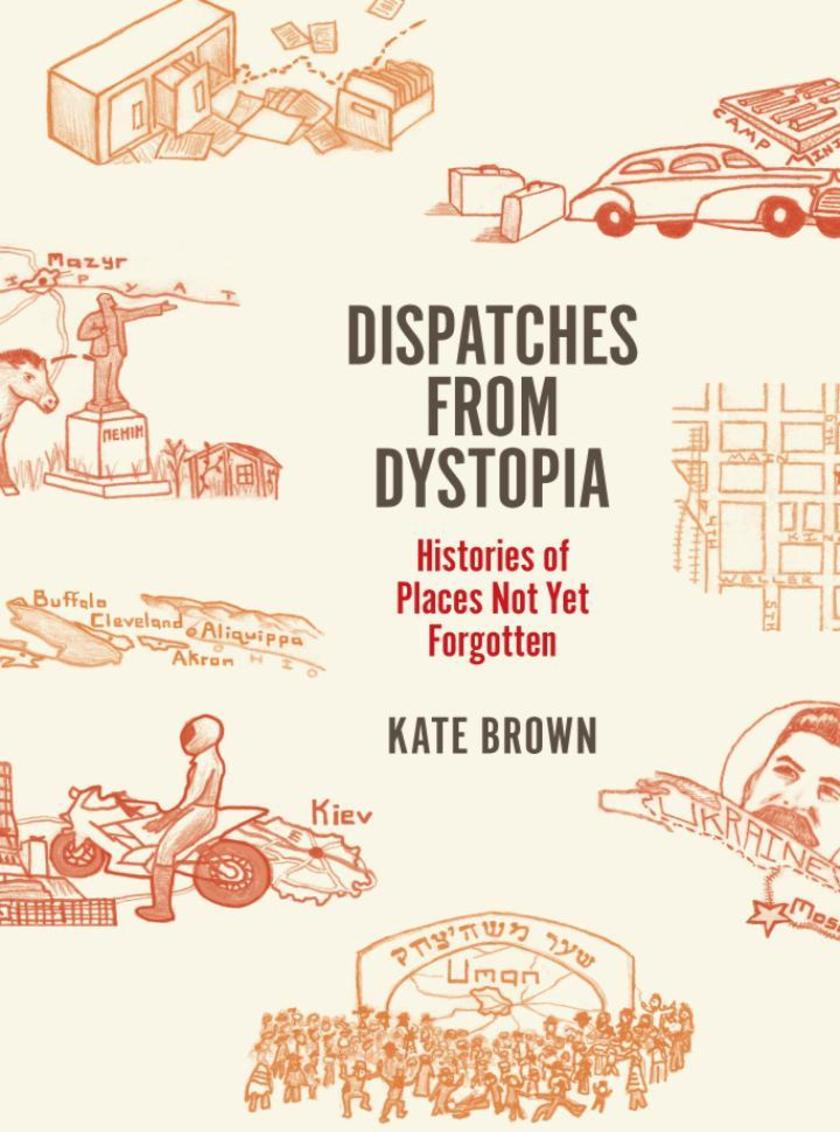
Dispatches from Dystopia
¥147.15
"e;Why are Kazakhstan and Montana the same place?"e; asks one chapter of Kate Brown's surprising and unusual journey into the histories of places on the margins, overlooked or erased. It turns out that a ruined mining town in Kazakhstan and Butte, Montana-America's largest environmental Superfund site-have much more in common than one would think thanks to similarities in climate, hucksterism, and the perseverance of their few hardy inhabitants. Taking readers to these and other unlikely locales, Dispatches from Dystopia delves into the very human and sometimes very fraught ways we come to understand a particular place, its people, and its history.In Dispatches from Dystopia, Brown wanders the Chernobyl Zone of Alienation, first on the Internet and then in person, to figure out which version-the real or the virtual-is the actual forgery. She also takes us to the basement of a hotel in Seattle to examine the personal possessions left in storage by Japanese-Americans on their way to internment camps in 1942. In Uman, Ukraine, we hide with Brown in a tree in order to witness the annual male-only Rosh Hashanah celebration of Hasidic Jews. In the Russian southern Urals, she speaks with the citizens of the small city of Kyshtym, where invisible radioactive pollutants have mysteriously blighted lives. Finally, Brown returns home to Elgin, Illinois, in the midwestern industrial rust belt to investigate the rise of "e;rustalgia"e; and?the ways?her formative experiences have inspired her obsession with modernist wastelands.?Dispatches from Dystopia powerfully and movingly narrates the histories of locales that have been silenced, broken, or contaminated. In telling these previously unknown stories, Brown examines the making and unmaking of place, and the lives of the people who remain in the fragile landscapes that are left behind.
Secret Lives of Teachers
¥147.15
Welcome to "e;East Hudson,"e; an elite private school in New York where the students are attentive, the colleagues are supportive, and the tuition would make the average person choke on its string of zeroes. You might think a teacher here would have little in common with most other teachers in America, but as this veteran educator-writing anonymously-shows in this refreshingly honest account, all teachers are bound by a common thread. Stripped of most economic obstacles and freed up by anonymity, he is able to tell a deeper story about the universal conditions, anxieties, foibles, generosities, hopes, and complaints that comprise every teacher's life. The results are sometimes funny, sometimes scandalous, but always recognizable to anyone who has ever walked into a classroom, closed the door, and started their day.?This is not a how-to manual. Rather, the author explores the dimensions of teaching that no one else has, those private thoughts few would dare put into a book but that form an important part of the day-to-day experience of a teacher. We see him ponder the clothes that people wear, think frankly about money (and the imbalance of its distribution), get wrangled by parents, provide on-the-fly psychotherapy, drape niceties over conversations that are actually all-out warfare, drop an f-bomb or two, and deal with students who are just plain unlikeable. We also see him envy, admire, fear, and hope; we see him in adulation and uncertainty, and in energy and exhaustion. We see him as teachers really are: human beings with a complex, rewarding, and very important job.There has been no shortage of commentary on the teaching profession over the decades, but none quite like this. Unflinching, wry, and at times laugh-out-loud funny, it's written for every teacher out there who has ever scrambled, smirked, or sighed-and toughed it out nonetheless.?
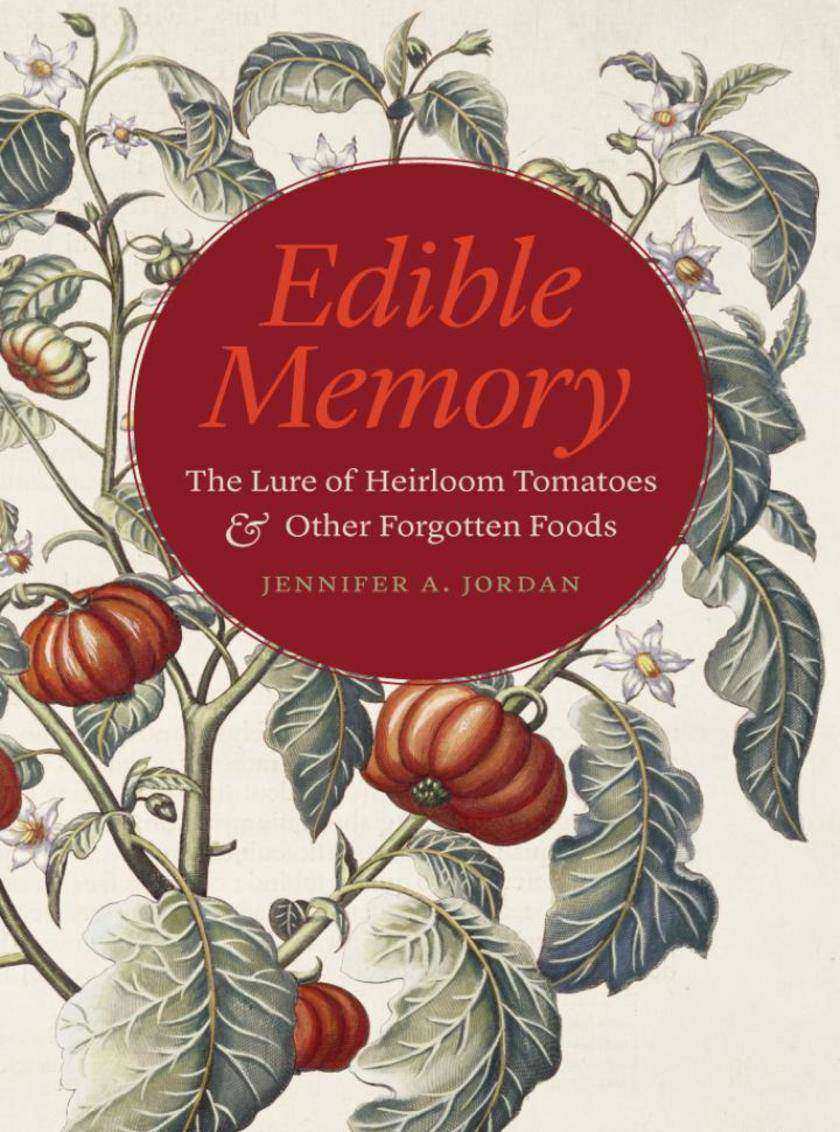
Edible Memory
¥147.15
Each week during the growing season, farmers' markets offer up such delicious treasures as brandywine tomatoes, cosmic purple carrots, pink pearl apples, and chioggia beets-varieties of fruits and vegetables that are prized by home chefs and carefully stewarded by farmers from year to year. These are the heirlooms and the antiques of the food world, endowed with their own rich histories. While cooking techniques and flavor fads have changed from generation to generation, a Ribston Pippin apple today can taste just as flavorful as it did in the eighteenth century. But how does an apple become an antique and a tomato an heirloomIn Edible Memory, Jennifer A. Jordan examines the ways that people around the world have sought to identify and preserve old-fashioned varieties of produce. In doing so, Jordan shows that these fruits and vegetables offer a powerful emotional and physical connection to a shared genetic, cultural, and culinary past.?Jordan begins with the heirloom tomato, inquiring into its botanical origins in South America and its culinary beginnings in Aztec cooking to show how the homely and homegrown tomato has since grown to be an object of wealth and taste, as well as a popular symbol of the farm-to-table and heritage foods movements. ?She shows how a shift in the 1940s away from open pollination resulted in a narrow range of hybrid tomato crops. But memory and the pursuit of flavor led to intense seed-saving efforts increasing in the 1970s, as local produce and seeds began to be recognized as living windows to the past. In the chapters that follow, Jordan combines lush de*ion and thorough research as she investigates the long history of antique apples; changing tastes in turnips and related foods like kale and parsnips; the movement of vegetables and fruits around the globe in the wake of Columbus; and the poignant, perishable world of stone fruits and tropical fruit, in order to reveal the connections-the edible memories-these heirlooms offer for farmers, gardeners, chefs, diners, and home cooks. This deep culinary connection to the past influences not only the foods we grow and consume, but the ways we shape and imagine our farms, gardens, and local landscapes.?From the farmers' market to the seed bank to the neighborhood bistro, these foods offer essential keys not only to our past but also to the future of agriculture, the environment, and taste. By cultivating these edible memories, Jordan reveals, we can stay connected to a delicious heritage of historic flavors, and to the pleasures and possibilities for generations of feasts to come.
Purposeful Graduate
¥147.15
We all know that higher education has changed dramatically over the past two decades. Historically a time of exploration and self-discovery, the college years have been narrowed toward an increasingly singular goal-career training-and college students these days forgo the big questions about who they are and how they can change the world and instead focus single-mindedly on their economic survival. In The Purposeful Graduate, Tim Clydesdale elucidates just what a tremendous loss this is, for our youth, our universities, and our future as a society. At the same time, he shows that it doesn't have to be this way: higher education can retain its higher cultural role, and students with a true sense of purpose-of personal, cultural, and intellectual value that cannot be measured by a wage-can be streaming out of every one of its institutions.The key, he argues, is simple: direct, systematic, and creative programs that engage undergraduates on the question of purpose. Backing up his argument with rich data from a Lilly Endowment grant that funded such programs on eighty-eight different campuses, he shows that thoughtful engagement of the notion of vocational calling by students, faculty, and staff can bring rich rewards for all those involved: greater intellectual development, more robust community involvement, and a more proactive approach to lifelong goals. Nearly every institution he examines-from internationally acclaimed research universities to small liberal arts colleges-is a success story, each designing and implementing its own program, that provides students with deep resources that help them to launch flourishing lives.Flying in the face of the pessimistic forecast of higher education's emaciated future, Clydesdale offers a profoundly rich alternative, one that can be achieved if we simply muster the courage to talk with students about who they are and what they are meant to do.
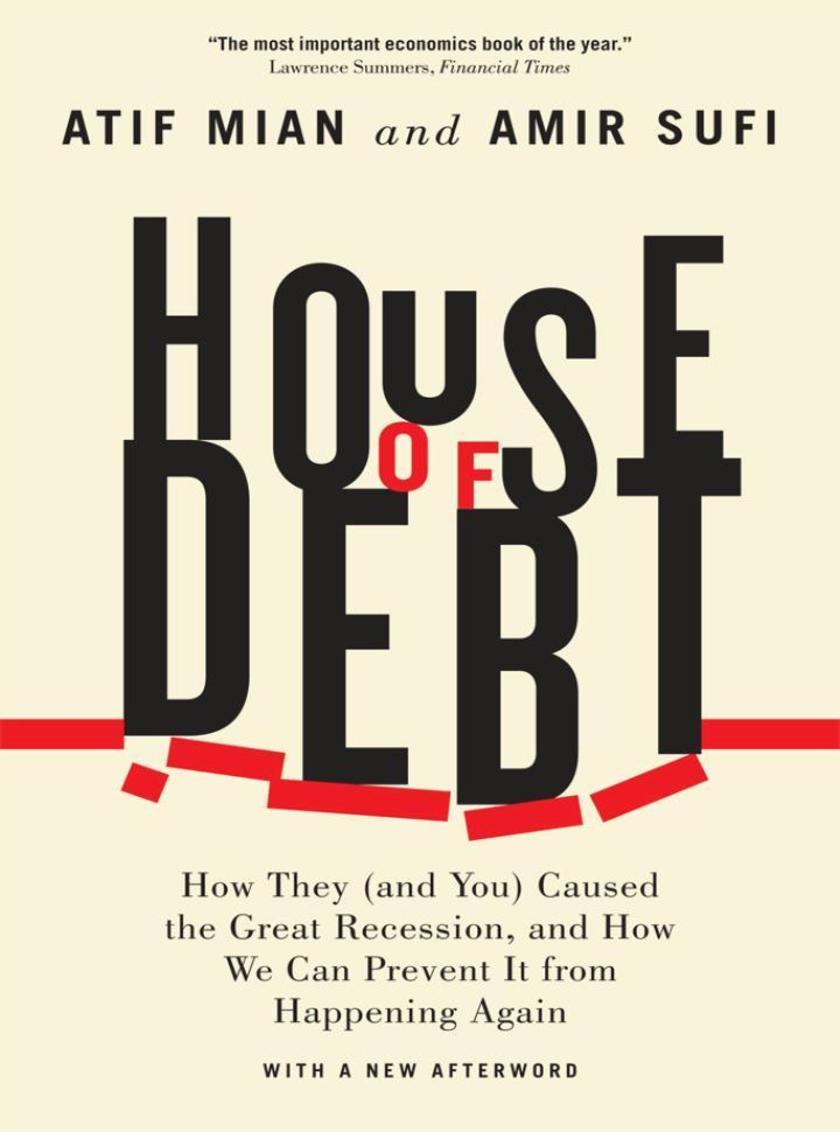
House of Debt
¥123.61
The Great American Recession resulted in the loss of eight million jobs between 2007 and 2009. More than four million homes were lost to foreclosures. Is it a coincidence that the United States witnessed a dramatic rise in household debt in the years before the recession-that the total amount of debt for American households doubled between 2000 and 2007 to $14 trillionDefinitely not. Armed with clear and powerful evidence, Atif Mian and Amir Sufi reveal in House of Debt how the Great Recession and Great Depression, as well as the current economic malaise in Europe, were caused by a large run-up in household debt followed by a significantly large drop in household spending.Though the banking crisis captured the public's attention, Mian and Sufi argue strongly with actual data that current policy is too heavily biased toward protecting banks and creditors. Increasing the flow of credit, they show, is disastrously counterproductive when the fundamental problem is too much debt. As their research shows, excessive household debt leads to foreclosures, causing individuals to spend less and save more. Less spending means less demand for goods, followed by declines in production and huge job losses. How do we end such a cycleWith a direct attack on debt, say Mian and Sufi. ?More aggressive debt forgiveness after the crash helps, but as they illustrate, we can be rid of painful bubble-and-bust episodes only if the financial system moves away from its reliance on inflexible debt contracts. As an example, they propose new mortgage contracts that are built on the principle of risk-sharing, a concept that would have prevented the housing bubble from emerging in the first place.Thoroughly grounded in compelling economic evidence, House of Debt offers convincing answers to some of the most important questions facing the modern economy today: Why do severe recessions happenCould we have prevented the Great Recession and its consequencesAnd what actions are needed to prevent such crises going forward?
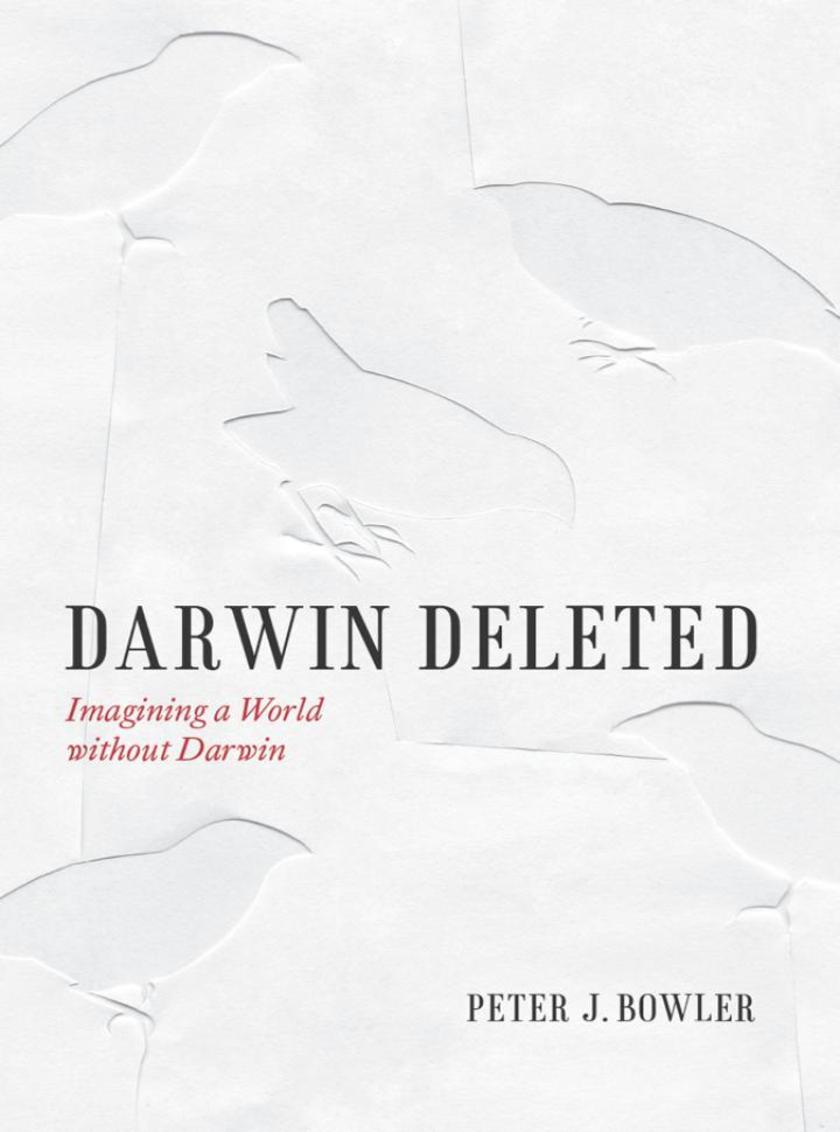
Darwin Deleted
¥147.15
The ideas and terminology of Darwinism are so pervasive these days that it seems impossible to avoid them, let alone imagine a world without them. But in this remarkable rethinking of scientific history, Peter J. Bowler does just that. He asks:?What if Charles Darwin had not returned from the voyage of the Beagle and thus did not write On the Origin of SpeciesWould someone else, such as Alfred Russel Wallace, have published the selection theory and initiated a similar transformationOr would the absence of Darwin's book have led to a different sequence of events, in which biology developed along a track that did not precipitate a great debate about the impact of evolutionismWould there have been anything equivalent to social Darwinism, and if so would the alternatives have been less pernicious and misappropriated?In Darwin Deleted, Bowler argues that no one else, not even Wallace, was in a position to duplicate Darwin's complete theory of evolution by natural selection.?Evolutionary biology would almost certainly have emerged, but through alternative theories, which were frequently promoted by scientists, religious thinkers, and moralists who feared the implications of natural selection. Because non-Darwinian elements of evolutionism flourished for a time in the real world, it is possible to plausibly imagine how they might have developed, particularly if the theory of natural selection had not emerged until decades after the acceptance of the basic idea of evolution. Bowler's unique approach enables him to clearly explain the non-Darwinian tradition-and in doing so, he reveals how the reception of Darwinism was historically contingent. By taking Darwin out of the equation, Bowler is able to fully elucidate the ideas of other scientists, such as Richard Owen and Thomas Huxley, whose work has often been misunderstood because of their distinctive responses to Darwin.Darwin Deleted boldly offers a new vision of scientific history. It is one where the sequence of discovery and development would have been very different and would have led to an alternative understanding of the relationship between evolution, heredity, and the environment-and, most significantly, a less contentious relationship between science and religion. Far from mere speculation, this fascinating and compelling book forces us to reexamine the preconceptions that underlie many of the current controversies about the impact of evolutionism. It shows how contingent circumstances surrounding the publication of On the Origin of Species polarized attitudes in ways that still shape the conversation today.?

Nature and Nurture of Love
¥247.21
The notion that maternal care and love will determine a child's emotional well-being and future personality has become ubiquitous. In countless stories and movies we find that the problems of the protagonists-anything from the fear of romantic commitment to serial killing-stem from their troubled relationships with their mothers during childhood. How did we come to hold these views about the determinant power of mother love over an individual's emotional developmentAnd what does this vision of mother love entail for children and mothersIn The Nature and Nurture of Love, Marga Vicedo examines scientific views about children's emotional needs and mother love from World War II until the 1970s, paying particular attention to John Bowlby's ethological theory of attachment behavior. Vicedo tracks the development of Bowlby's work as well as the interdisciplinary research that he used to support his theory, including Konrad Lorenz's studies of imprinting in geese, Harry Harlow's experiments with monkeys, and Mary Ainsworth's observations of children and mothers in Uganda and the United States. Vicedo's historical analysis reveals that important psychoanalysts and animal researchers opposed the project of turning emotions into biological instincts. Despite those substantial criticisms, she argues that attachment theory was paramount in turning mother love into a biological need. This shift introduced a new justification for the pre*ive role of biology in human affairs and had profound-and negative-consequences for mothers and for the valuation of mother love.
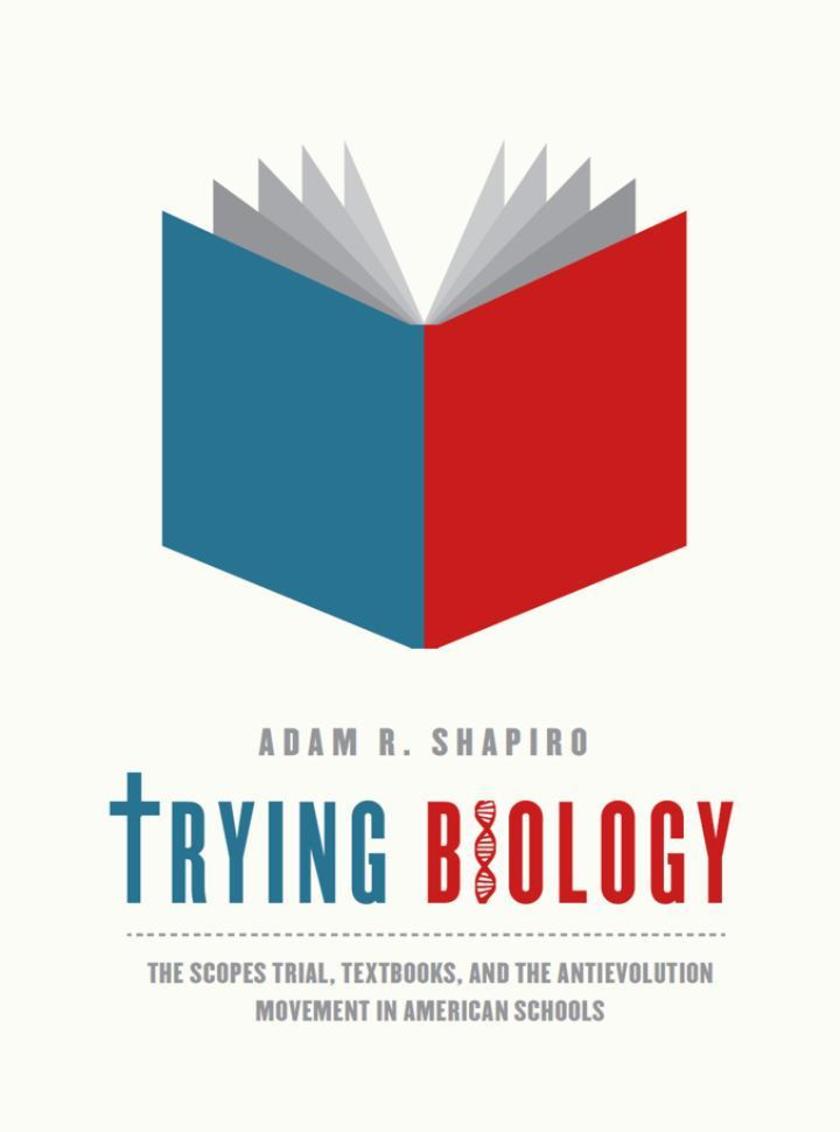
Trying Biology
¥170.69
In Trying Biology, Adam R. Shapiro convincingly dispels many conventional assumptions about the 1925 Scopes "e;monkey"e; trial. Most view it as an event driven primarily by a conflict between science and religion. Countering this, Shapiro shows the importance of timing: the Scopes trial occurred at a crucial moment in the history of biology textbook publishing, education reform in Tennessee, and progressive school reform across the country. He places the trial in this broad context-alongside American Protestant antievolution sentiment-and in doing so sheds new light on the trial and the historical relationship of science and religion in America.?For the first time we see how religious objections to evolution became a prevailing concern to the American textbook industry even before the Scopes trial began. Shapiro explores both the development of biology textbooks leading up to the trial and the ways in which the textbook industry created new books and presented them as "e;responses"e; to the trial. Today, the controversy continues over textbook warning labels, making Shapiro's study-particularly as it plays out in one of America's most famous trials-an original contribution to a timely discussion.
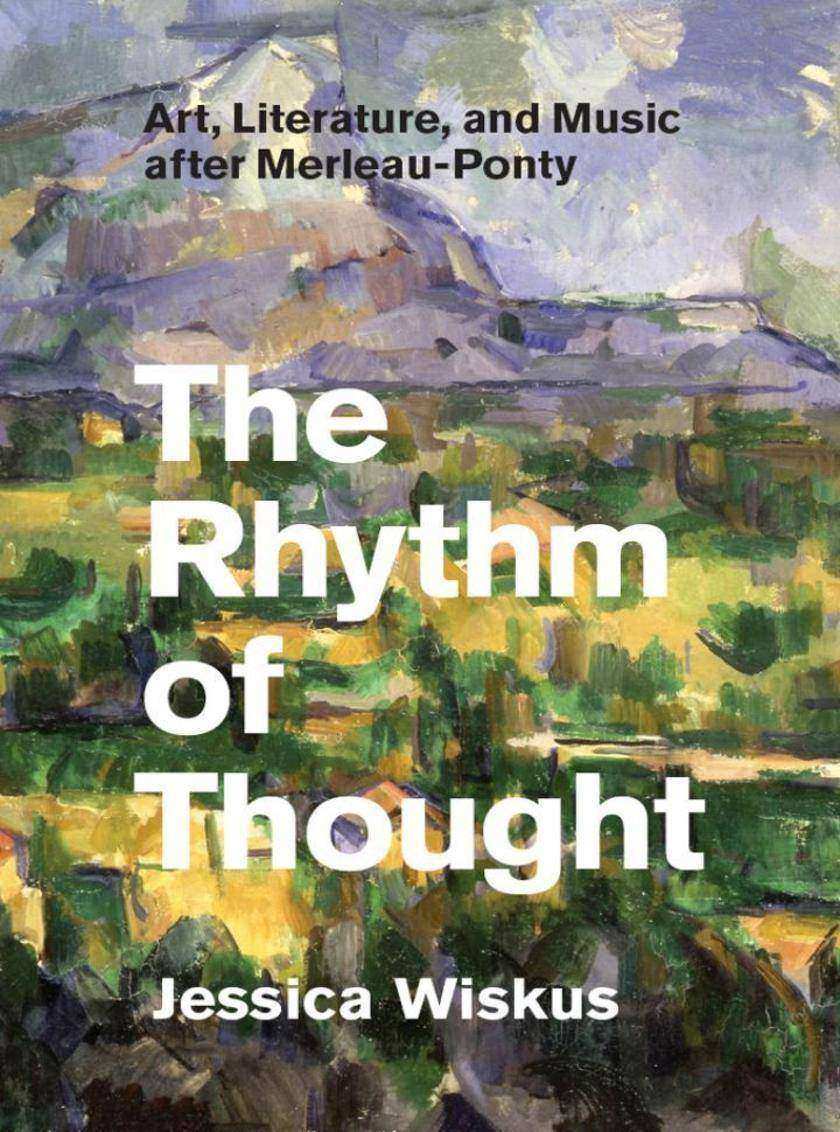
Rhythm of Thought
¥170.69
Between present and past, visible and invisible, and sensation and idea, there is resonance-so philosopher Maurice Merleau-Ponty argued and so Jessica Wiskus explores in The Rhythm of Thought. Holding the poetry of Stephane Mallarme, the paintings of Paul Cezanne, the prose of Marcel Proust, and the music of Claude Debussy under Merleau-Ponty's phenomenological light, she offers innovative interpretations of some of these artists' masterworks, in turn articulating a new perspective on Merleau-Ponty's philosophy.?More than merely recovering Merleau-Ponty's thought, Wiskus thinks according to it. First examining these artists in relation to noncoincidence-as silence in poetry, depth in painting, memory in literature, and rhythm in music-she moves through an array of their artworks toward some of Merleau-Ponty's most exciting themes: our bodily relationship to the world and the dynamic process of expression. She closes with an examination of synesthesia as an intertwining of internal and external realms and a call, finally, for philosophical inquiry as a mode of artistic expression. Structured like a piece of music itself, The Rhythm of Thought offers new contexts in which to approach art, philosophy, and the resonance between them.


