


 购物车
购物车 个人中心
个人中心

Confessions from an Arranged Marriage
¥55.91
They couldn't be more different but there's one thing they agree on . . .In London after a two-year exile, Lord Blakeney plans to cut a swathe through the bedchambers of the demimonde. Marriage is not on his agenda, especially to an annoying chit like Minerva Montrose, with her superior attitude and a tendency to get into trouble. And certainly the last man Minerva wants is Blake, a careless wastrel without a thought in his handsome head.The lights and din of her debutante ball set Minerva's teeth on edge. Surely a moment's rest could do no harm . . . until Blake mistakes her for another lady, leaving Minerva'sguests to catch them in a very compromising position. To her horror, the scandal will force them to do the unthinkable: marry. Their mutual loathing blazes into unexpected passion but Blake remains distant, desperate to hide a shameful secret. Minerva's never been a woman to take things lying down, and she'll let nothing stop her from winning his trust . . . and his heart.

Heroes Are My Weakness
¥56.07
New York Times bestselling author Susan Elizabeth Phillips is back with a delightful novel filled with her sassy wit and dazzling charmDeepest winter.An isolated island off the coast of Maine.A man. A woman.Puppets. (Yes, puppets . . .)And . . .A mysterious house looming over the sea . . .He's a reclusive writer whose imagination creates chilling horror novels. She's a down-on-her-luck actress reduced to staging kids' puppet shows. He knows a dozen ways to kill his characters with his bare hands. She knows a dozen ways to kill an audience with laughs. But she's not laughing now.Annie Hewitt has arrived on Peregrine Island in the middle of a snowstorm and at the end of her resources. She's broke, dispirited, but not quite ready to give up. Her red suitcases hold the puppets she uses to make her living: sensible Dilly, spunky Scamp, and Leo, the baddest of bad guys. Her puppets, the romantic novels she loves, and a little bit of courage are all she has left.Annie couldn't be more ill prepared for what she finds when she reaches Moonraker Cottage or for the man who dwells in Harp House, the mysterious mansion that hovers above the cottage. When she was a teenager, he betrayed her in a way she can never forget or forgive. Now they're trapped together on a frozen island along with a lonely widow, a mute little girl, and townspeople who don't know how to mind their own business.Is he the villain she remembers, or has he changedHer head says no. Her heart says yes.It's going to be a long, hot winter.
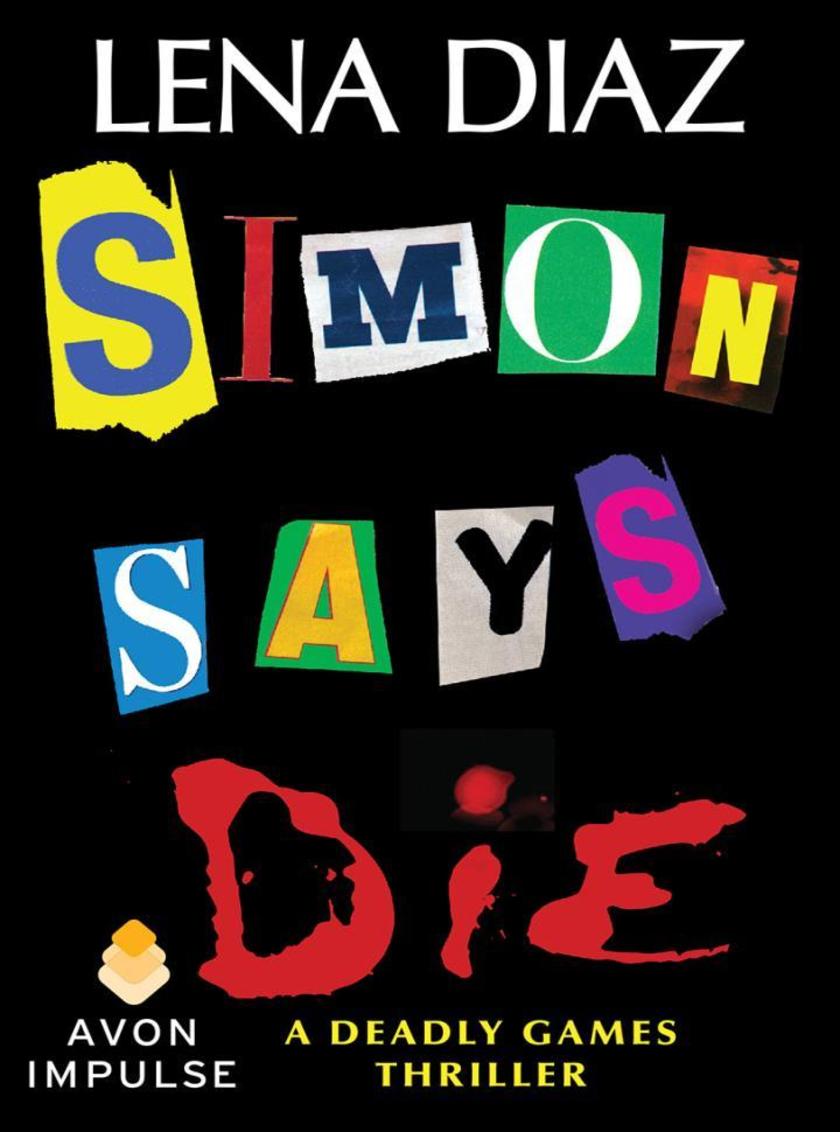
Simon Says Die
¥55.31
Madison McKinley knows someone is stalking her. The police tell her she's imagining things, and they're too busy trying to find the "Simon Says" killer to investigate. But day by day, hour by hour, Madison's terror grows stronger, and not even the return of FBI Special Agent Pierce Buchanan into her life can calm her fears. Besides, how can she ask Pierce for his help after the way she ended things between them?Pierce still wants Madison's love, and his drive to protect her is more powerful than ever. He believes she's in danger, even if the cops don't. Finally, as more people start dying and the evidence mounts, the police turn their attention to Madison as a suspect. Was Pierce a fool to trust her again, or are they both caught in a complex game that neither will survive?

The Groom Says Yes
¥55.31
New York Times bestselling author Cathy Maxwell continues her dazzling series, The Brides of WishmoreHe had a noose around his neck and a price on his head . . . Sabrina Davidson, dutiful daughter, avowed spinster, thought she'd secured a place for herself in Aberfeldy society until her hard-earned acceptance of her fate is challenged by the arrival of Cormac Enright, earl of Ballin, trained physician, soldier of fortune, and convicted felon.A prim and proper miss was the last thing he needed . . . Mac is determined to clear his name, but first he has to find the man whose testimony sentenced him to a hangman's noose. Of course, Robert Davidson is missing and protecting Mac is Davidson's daughter, the most entrancing, frustrating, beguiling, stubborn woman Mac has ever met.And it doesn't help that he has already tasted her kisses. Or that he has found in her a passion for life and adventure to rival his own. Mac has turned Sabrina's world inside out but what will happen when he leaves?Or will the Groom Say Yes?

The Match of the Century
¥55.31
In New York Times bestselling author Cathy Maxwell's glittering new series, wedding bells are ringing… until the return of a rake throws a bride's plans— and heart—into a tailspin Every debutante aspires to snag a duke. Elin Morris just happens to have had one reserved since birth. But postponements of her marriage to London's most powerful peer give Elin time to wonder how she will marry Gavin Baynton when she cannot forget his brother, Benedict. Already exasperated at being yanked from the military to meet "family obligations," now Ben must suffer watching his arrogant sibling squire the only woman he has ever loved. Joining the army saved Ben from sinking into bitterness, but seeing Elin again takes him back to the day they surrendered to their intoxicating desire. As the wedding draws near, Elin tries to push Ben far from her thoughts. When danger brings them together, there is no denying their feelings. But can Elin choose love over duty...?
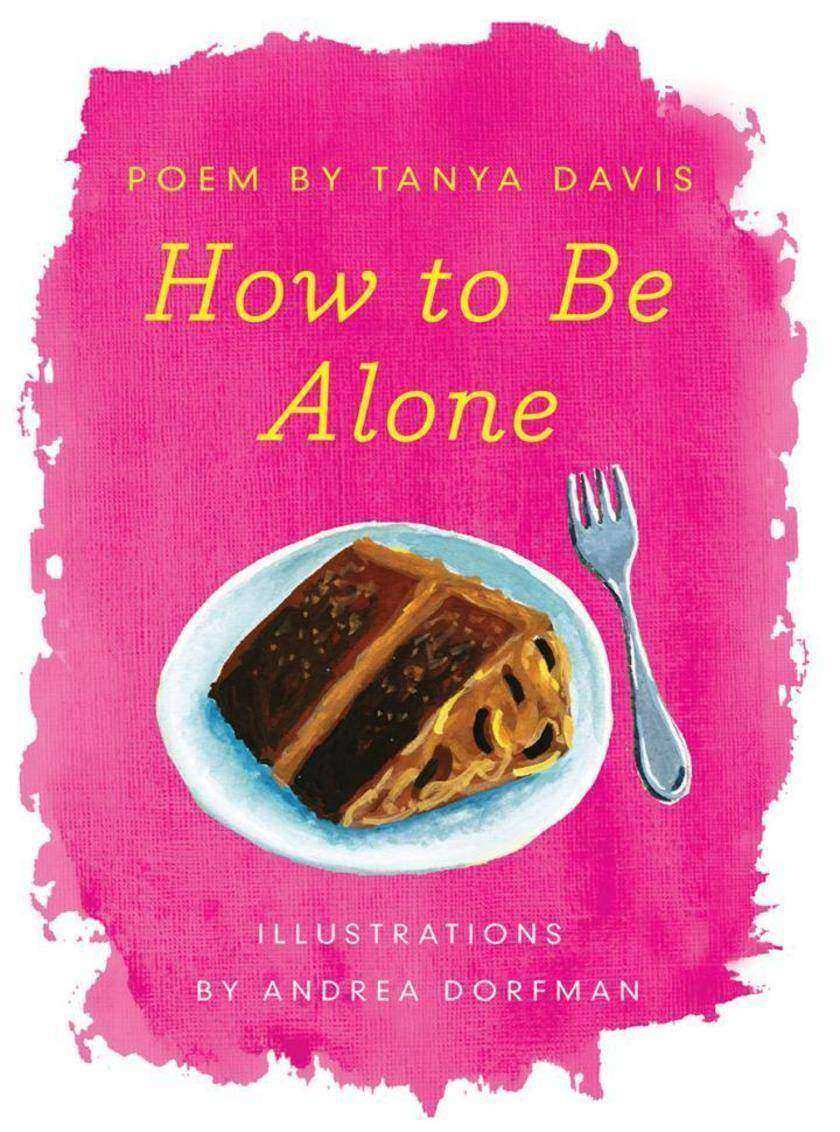
How to Be Alone
¥72.93
If you are at first lonely, be patient.If you're not been alone much, or if when you were, you weren't okay with it, then just wait . . .From a solitary walk in the woods to sitting unaccompanied on a city park bench to eating a meal and even dancing alone, certain activities can feel strange when you're on your own. We rarely treasure those moments, even though there are abundant possibilities and delights waiting to be discovered when we have the time to just be with ourselves. Tanya Davis's words and Andrea Dorfman's beautiful illustrations soothe the disquiet that accompanies this fear of aloneness, and celebrate the power of solitude to change our views of ourselves and the world. How to Be Alone reveals how, removed from the noise and distractions of other lives, we can find acceptance and grace within.For those who have never been by themselves, or for those who relish being on their own, this moving work encourages us to recognize and embrace the possibilities of being alone and reminds us of a universe of joy, peace, and discovery waiting to unfold.
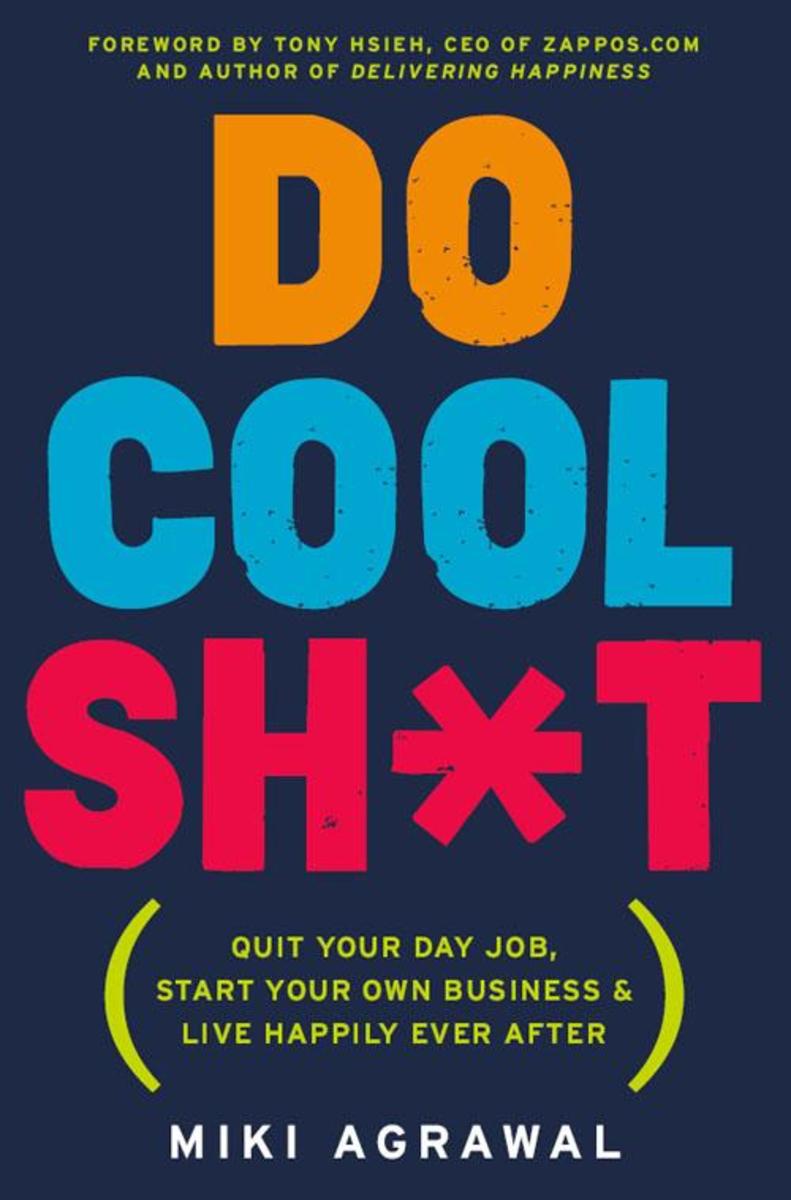
Do Cool Sh*t
¥88.56
An inspiring, irreverent manifesto for those seeking to blaze their own path to entrepreneurship and find fulfillment and happiness through bold action and big ideasHave you ever wondered if it's possible to make a career out of something you loveOr how to march through life with a purpose and get the most out of every secondMiki Agrawal, entrepreneur, angel investor, and cool-sh*t-doer, has figured it out. Here Miki shares her own adventures in entrepreneurship and life, from learning to step out of her comfort zone in a foreign country to achieving her dream of playing soccer for the New York Magic to partnering with Tony Hsieh of Zappos.com to launch her dream business.In Do Cool Sh*t, Miki shows you how to start your own business, fund it on a shoestring budget, convene the perfect group to brainstorm your business plan, test your product, get great (free) press coverage, and more all while living a life you're proud of.Miki pulls back the curtain to reveal how you can live out loud, honor your hunches, and leave nothing on the table. She reminds you that it's cool to care and be excited about ideas and to be proactive; it's cool to mess up; it's cool to work your ass off on something that is meaningful to you; and it's cool to keep trying when the odds are stacked against you. Whether you're about to graduate from college and are wondering what the heck you want to do with your life, or you are in a dead-end job, dreaming about starting your own business, Do Cool Sh*t will make you open your eyes, laugh out loud, and shout, "I can do that!"

In My Skin
¥83.03
Hailed by ESPN as the world's most famous female basketball player, Brittney Griner has been shattering stereotypes and breaking boundaries ever since she burst onto the national scene as a dunking high school phenom. Now, she shares her coming-of-age story, revealing how she found the strength to overcome bullies and to embrace her authentic self.Brittney Griner, the No. 1 pick in the 2013 WNBA Draft, is a once-in-a-generation player, possessing a combination of size and athleticism never before seen in women's basketball. But the sport's "most transformative figure" (Sports Illustrated) is equally famous for making headlines off the court, for speaking out on issues of gender, sexuality, body image, and self-esteem.At six foot eight with an eighty-eight-inch wingspan and a size 17 men's shoe, the Phoenix Mercury star and three-time All-American has heard every vicious insult in the book. Bullied for being different, she has endured years of taunting, from middle school to the present day. Through the highs and lows, Brittney has learned to remain true to herself, rising above the haters who try to take her down.The journey has often been lonely. Feeling uncomfortable in her own skin for much of her adolescence, Brittney struggled with anger, the Achilles heel that often got her into trouble, usually with her fists. Her transformation began when she discovered basketball in high school. "The court has almost always been a safe place for me, a space where I can rejuvenate myself," she says. "It has always been the one place I feel free."In this heartfelt memoir, Brittney reflects on painful episodes in her life, from the confrontations she dealt with as a kid, to the infamous on-court punch she threw during her freshman season at Baylor University, to the final moments of her college career and the crushing loss to Louisville that ended her dream of back-to-back national championships. Brittney also explores her complicated relationships with two people she loves and respects her father, Ray, and her coach at Baylor, Kim Mulkey as well as her mixed feelings about playing for a school that has a policy against homosexuality.Here, too, are the highs: Brittney's close bonds with her mother, Sandra, and her supportive siblings and friends; her amazing accomplishments at Baylor, including the team's 74-2 record her last two seasons; her adventurous new life as a pro in the WNBA; and her distinct sense of style, exemplified by the tattoos she proudly wears. Throughout the book, Brittney describes how she came to celebrate what makes her unique inspiring lessons she now shares with readers.Filled with all the humor and personality that Brittney Griner has become known for, In My Skin is more than a glimpse into one of the most original people in sports; it's a powerful call to readers to be true to themselves, to love who they are on the inside and out.

An Uncomplicated Life
¥84.16
A father's exhilarating and inspiring love letter to his daughter with Down syndrome, whose vibrant and infectious approach can teach us all how to live a little better"Jillian was born October 17, 1989. It was the last bad day."Jillian Daugherty was born with Down syndrome. The day her parents, Paul and Kerry, brought her home from the hospital, they were flooded with worry and uncertainty, but also with overwhelming love, which they channeled to "the job of building the better Jillian." They knew their daughter had special needs, but they refused to have her grow up needy. They were resolved that Jillian's potential would not be limited by preconceptions of who she was or what she could be.In this charming and often heart-stirring book, Paul tells stories about Jillian making her way through the world of her backyard and neighborhood, going to school in a "normal" classroom, learning to play soccer and ride a bike. As she grows older, he traces her journey to find happiness and purpose in her adult life, including vignettes about her inspiring triumphs and the guardian angels teachers, neighbors, friends who believed in Jillian and helped her become the exceptional young woman she is today.In An Uncomplicated Life, the parent learns as much about life from the child as the child does from the parent. Being with Jillian, Paul discovered the importance of every moment and the power of the human spirit how we are each put here to benefit the other. Through her unmitigated love for others, her sparkling charisma, and her boundless capacity for joy, Jillian has inspired those around her to live better and more fully. As Paul writes, "Jillian is a soul map of our best intentions," a model of grace, happiness, and infectious enthusiasm. She embraces all that she is, all that she has "I love my life. I just love my life," she says. In her uncomplicated life, we see the possibility, the hope, and the beauty of our own.
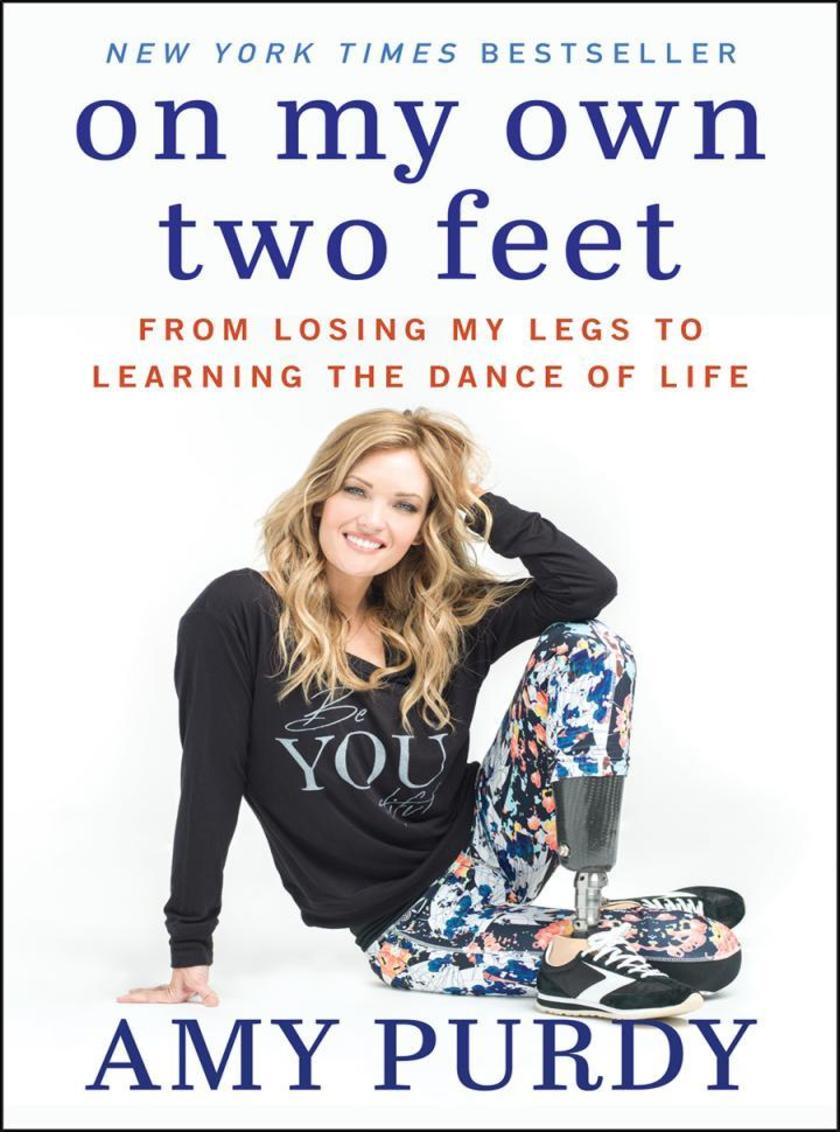
On My Own Two Feet
¥83.03
Oprah Winfrey calls Amy Purdy her inspiration. Now, read Amy's story in her own words and prepare to be inspired . . .America fell in love with Amy Purdy as the incredible girl with bionic legs who managed to out-dance her competitors all the way to the season 18 finale of Dancing with the Stars with her partner, Derek Hough. But viewers were only given a glimpse into her past and how she managed to get there. Now, for the first time, Amy reveals the powerful, moving story of her personal spiritual awakening as a result of a sudden and often fatal blood infection that caused her to lose both of her legs. When the Las Vegas native was just nineteen, she contracted the deadly bacterial meningitis and was given less than a two percent chance of survival. In a near-death experience that Amy has never talked about until now, she saw three beings who told her: "You can come with us, or you can stay. No matter what happens in your life, it's all going to make sense in the end." As she hovered between life and death, Amy knew she had to make a choice. And in that moment, she chose life.In On My Own Two Feet, Amy takes readers inside her childhood and up to the defining life or death moment. Despite the grim prognosis, she was determined to not just beat the odds and walk again but to create a life filled with bold adventures, big dreams, and boundless vitality and share that spirit with the world. Amy seized her second chance at life and earned a bronze medal in adaptive snowboarding at the 2014 Paralympic Games. Her life is a testament to the resilience of the human spirit and the capacity we all have to defy expectations and rewrite our stories. Amy's poignant, uplifting memoir reminds us to live life to the fullest, because we are all much more capable than we could ever imagine.
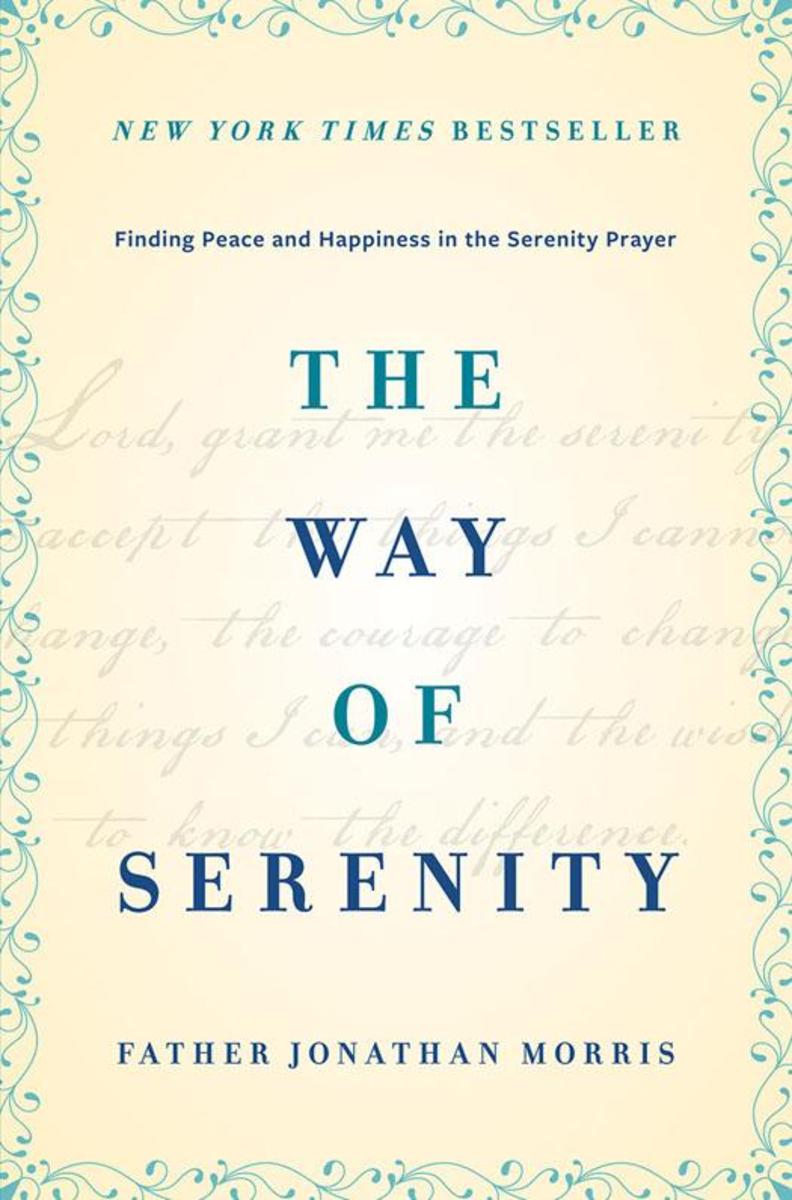
The Way of Serenity
¥95.39
Father Jonathan Morris, Fox News religion analyst, bestselling author, and parish priest, has seen firsthand how easily our day-to-day lives are consumed with anxiety and stress as we focus on our failures and troubles, while peace feels unattainable. When he re-discovered the Serenity Prayer, he realized that this little prayer can be, in fact, a powerful roadmap for our spiritual journey toward God. As he began to share this prayer with others, he saw that living these simple lines became a source of profound peace and happiness: Lord, grant me the serenity to accept the things I cannot change,The courage to change the things I can,And the wisdom to know the difference. For years a mainstay of recovery programs, this prayer has proven it can change lives. What's more, through it we all can find comfort and support, including an active collaboration with God's grace as he works alongside us to grant the serenity we seek. Unpacking the prayer phrase by phrase, Father Jonathan shows how we can gain a deeper spiritual understanding by practicing its message. Through powerful personal stories, illuminating historical anecdotes, and biblical passages that show us God's plan for our lives, The Way of Serenity will help us grow closer to God and find serenity, regardless of our circumstances.Join Father Jonathan and the many others who have made this prayer an integral part of their lives, and find lasting peace and happiness today.

Priscilla
¥88.56
When Nicholas Shakespeare stumbled across a trunk full of his late aunt’s personal belongings, he was unaware of where this discovery would take him and what he would learn about her hidden past. The glamorous, mysterious figure he remembered from his childhood was very different from the morally ambiguous young woman who emerged from the trove of love letters, journals and photographs, surrounded by suitors and living the precarious existence of a British citizen in a country controlled by the enemy during World War II. As a young boy, Shakespeare had always believed that his aunt was a member of the Resistance and had been tortured by the Germans. The truth turned out to be far more complicated. Piecing together fragments of his aunt’s remarkable and tragic story, Priscilla is at once a stunning story of detection, a loving portrait of a flawed woman trying to survive in terrible times, and a spellbinding slice of history.
The Southern Belle's Handbook
¥55.86
Learn how to navigate life with the effortless savior faire of a true daughter of the South with The Southern Belle's Handbook.Sissy LeBlanc's rules to live by will teach you how to hook, hold on to, and handle any man as well as conquer any personal situation with the poise and confidence of a sophisticated southern stunner.And because every woman possesses her own sassy instincts, you can also record your own rules for unstoppable fabulousness and success.
HarperCollins e-books
¥134.46
According to her colorful Mami Dearest, the life of young Gigi Anders will be simple if she can remember three maxims be pretty, get married, and always drink TaB. Thus begins her instruction in the art of being a lady and the side effects of falling in love. As the granddaughter of Eastern European and Russian shtetl-reared grandparents who immigrated as teenagers in the early 1920s to the fierce tropical beauty of Cuba, Anders is heir apparent to a legacy of transatlantic alienation. With dazzling wit and hilarity mined from the depths of loss and yearning, Anders chronicles her journey from beach baby to ostracized exile to vibrant intellectual, along the way balancing her obsession with killer outfits and zaftig, orgasmic meals always with a can of TaB! with the more serious pursuits of love, sanity, and lipstick in perfect siren red.

Love and the Single Heiress
¥55.31
An anonymous author has turned English society upside down, and only one man can protect her identity from being revealed, and her life from being destroyed, in this sexy new romance from reader favourite Jacquie D Alessandro.The scandalous book, A Ladies Guide to the Pursuit of Personal Happiness and Marital Fulfilment has taken English society by storm. The slim but erotically explicit volume was penned by an unknown author, and now all of London is trying to discover the mysterious writer's true identity. But the search doesn't scare Catherine Ashfield, Viscountess Bickley, the proper woman who transcribed the book for her dear friend, a very elderly and experienced widow. Disgusted by the shallow values and morals of the town, Catherine was excited to help her friend and set the uppity nobility on its ear. And maybe by giving women a little more knowledge they could finally have happier marriages, instead of loveless unions as she had her with her own late husband.But Catherine didn't anticipate the violent backlash against the book. With threats being made against the unknown author, Catherine fears for her safety and that of her son. When she is the victim of a near fatal accident, she wonders how hidden her identity truly is.Knowing she needs protection, she turns to her brother's best friend, an accomplished pugilist and fencer. She invites him to stay at her country estate under the guise of a simple visit, not realizing that she has invited a fugitive with a dangerous past into her home--a man she soon finds herself powerfully attracted to...

The Price of Indiscretion
¥55.31
New York Times and USA Today bestselling author Cathy Maxwell delivers another passionate romance that is sure to delight her dedicated fans and increase her readership.When three impoverished young ladies brought up in America decide to fulfill their late mother's dream of successful marriages and seasons, they concentrate their resources on sending the prettiest to London to make a brilliant match. But whom does she see but the man who had broken her heart years beforeAlexander Haddon is no longer the rough and tumble man she once fell for, but a wealthy gentleman whose passionate nature is only just hidden under a veneer of sophistication ...

A Rogue's Proposal
¥62.90
Demon Cynster has seen love bring his brethren to their knees and he's vowed that he will not share their fate ... until he spies Felicity Parteger sneaking about his racing stable. Demon remembers Felicity as a mere chit of a girl but now she stands before him all lush curves and sparkling eyes... Felicity knows Demon was one of the town's most eligible bachelors and a rogue of the worst sort but he was the only one capable of getting her friend out of trouble. She knows Demon will never yield her the love she desperately seeks but could a marriage of passion alone be enough?
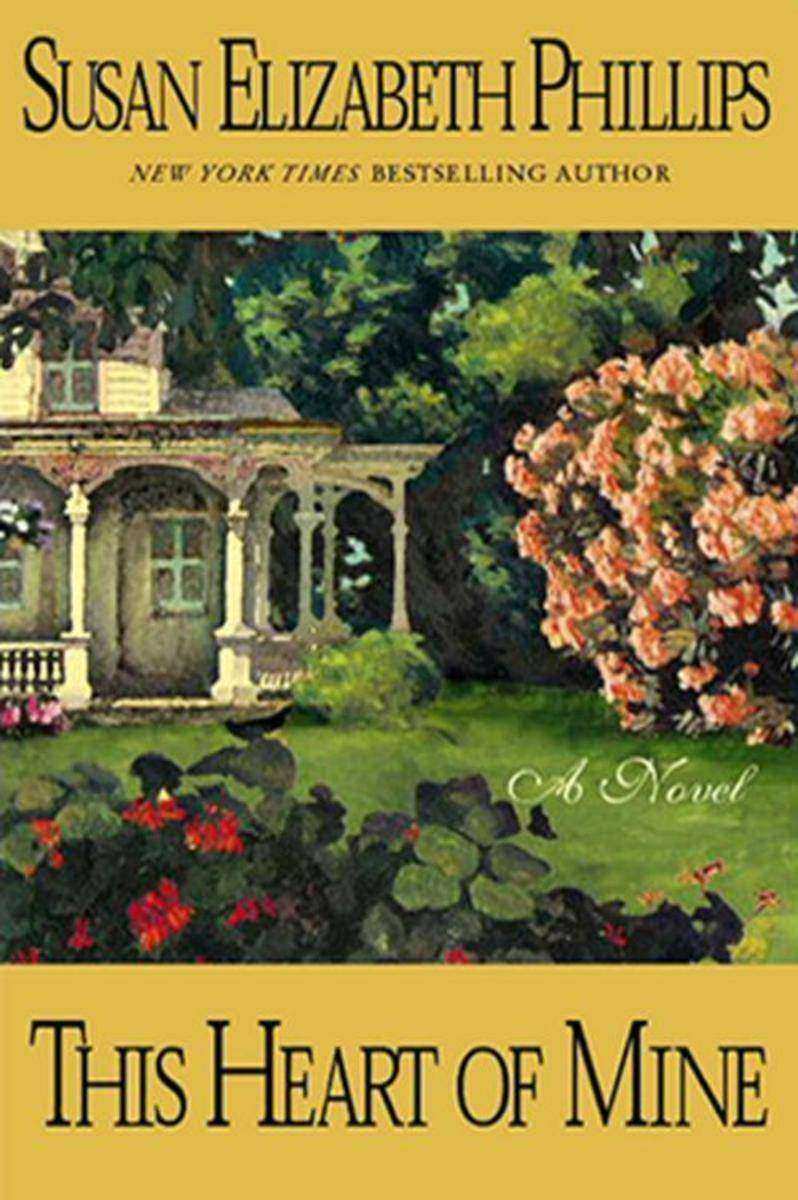
This Heart of Mine
¥56.07
Molly Somerville loves her career as the creator of the Daphne the Bunny children's book series, but the rest of her life could use some improvement. She has a reputation for trouble that started even before she gave away her fifteen-million-dollar inheritance. Then there's her long-term crush on the quarterback for the Chicago Stars football team her sister owns that awful, gorgeous Kevin Tucker, a man who can't even remember Molly's name!One night Kevin barges into Molly's not-quite-perfect life and turns it upside down. Unfortunately, the Ferrari-driving riving, poodle-hating jock isn't as shallow as she wishes he were, and she soon finds herself at a place called Wind Lake. Surrounded by paintbox cottages, including a charming old bed-and-breakfast, Molly and Kevin battle their attraction and each other as they face one of life's most important lessons. Sometimes love hurts, sometimes it makes you mad as hell, and sometimes if you're lucky it can heal in a most unexpected way.

To Distraction
¥55.31
The gentlemen of the Bastion Club have proven their courage while fighting England's enemies, but nothing has prepared them for dealing with that most formidable of challenges: the opposite sex.Deverell, Viscount Paignton, is in desperate need of a wife. Unmoved by the matchmaking herd, he seeks help from his aunt, who directs him to a lady she vows is perfect for him. Dispatched to a country house party to look the lady over, he discovers her not swanning about among the guests but with her nose buried in a book in the library.Phoebe Malleson is tempted to distraction by Deverell, but marrying him isn't part of her plan. Moved by an incident in her past, Phoebe has a secret cause to which she's committed. Unfortunately, telling Deverell to go away doesn't work, and he quickly learns of her secret. But someone powerful has her cause targeted for destruction and her in their sights. Phoebe must accept Deverell's help though the cost to them both might be dear and deadly.

Where's My Hero?
¥55.91
Dear Avon Books,Where are my heroesWhenever I'm reading a book by one of my favorite authors I find I'm falling for the wrong guy -- not the hero, but the other man -- and what I really want is for him to have his own story.Like Jake Linley, from Someone to Watch Over Me by Lisa Kleypas that doctor could sit by my bedside if I ever got sick. And Ned Blydon in Splendid by Julia Quinn...he makes me want to learn to waltz! I never thought living in a drafty castle would be much fun until Simon of Ravenswood in Master of Desire by Kinley MacGregor came along.Anyway, I just wanted to let you know that these are my men -- when do they get their stories?Sincerely,A Romance FanSome books are so special that there is more than one hero to love, but only a single story is told. So if you find yourself asking, "Where is my hero?" you'll discover the answer right here in this delicious collection by New York Times bestseller Lisa Kleypas, New York Times bestseller Julia Quinn and USA Today bestseller Kinley MacGregor.

You and No Other
¥55.31
The constraints of quiet widowhood have become too much for Lady Caroline Pearson to bear especially now that her brother-in law has idiotically, and illegally, gambled away her house. Boldly, she confronts the new owner in person. But not only does the dashing rogue, James Ferrington, refuse to return Caroline's deed, he tries to take scandalous advantage of her as well. Sheepish and repentant, James arrives on Caroline's doorstep to make amends unaware that the young widow and her eccentric aunt are intent on retaliation. James merely meant to seduce a bewitching minx and have done with it and, suddenly, he's a kidnapped prisoner in Caroline's cellar. But most shocking of all, James realizes that he has no desire whatsoever to be free for the audacious Caroline has inflamed his senses, destroyed his reason . . . and completely captured his heart.


