Sin
¥90.03
Zakhar Prilepin’s novel-in-stories, Sin, has become a literary phenomenon in Russia, where it was published in 2007. It has been hailed as the epitome of the spirit of the opening decade of the 21st century, and was called “the book of the decade” by the prestigious Super Natsbest Award jury. Now available for the first time in English, it not only embodies the reality of post-perestroika Russia, but also shows that even in this reality, just like in any other, it is possible to maintain a positive attitude while remaining human. Zakharka is young, strong, in love with love and with life’s random, telling moments. In the episodes of his life, presented here in non-chronological order, we see him as a little boy, a lovelorn teenager, a hard-drinking grave-digger, a nightclub bouncer, a father, and a soldier in Chechnya. He even writes poetry, and his stylistically varied verses are presented in the penultimate chapter of the book. Loving life, he looks boldly, and even with curiosity, into the face of death – taking pictures of the deceased at a funeral, staring with agitation at the entrails of a just-disembowelled pig, chronicling the death of a childhood friend – and values the freedom of not fearing his own end. It is family that ultimately defines happiness for Zakharka; but it is also family that makes him realize, on the desolate Chechen border, that his love for them has deprived him of this freedom. Sin offers a fascinating glimpse into the recent Russian past, as well as its present, with its unemployment, poverty, violence, and local wars – social problems that may be found in many corners of the world. Zakhar Prilepin presents these realities through the eyes of Zakharka, taking us along on the life-affirming journey of his unforgettable protagonist.
55 Years of Thoughts & Meditations: Practical Experiential Philosophy
¥84.20
The book “55 years of Thoughts & Meditations” is the result of the constant efforts, inquiries, reflections, thoughts and meditations of one man. All matters analysed derive from our everyday lives and include social, political, philosophical and love issues, as well as more general reflections on life. These matters are delivered in a thematic manner, which varies in both form and substance and is expressed in prose mainly, but also in poetic form. Many of the issues posed occur to every thinking person, who follows his/her own path on earth and who seeks answers and solutions to life’s problems: Why do nations engage in battle? Why do people fight? What makes human contact difficult? What are art and beauty? What are sciences and what are their true limits? Should we trust them? What is “wisdom” and “beauty” and which knowledge is truly worthwhile? Is there objective knowledge? What is the unique truth? Is there good and evil? What are the three ideals, “Love”, “Knowledge” and the “Truth”?So one morning, I began to gather and then document all my random thoughts, the remnants of everything that has triggered my observations, all the questions I have documented throughout my life and everything I had noted here and there and I turned it into a book of personal thoughts and meditations. This book is therefore the book of life, taken straight from life, rich with the reflec-tions of a lifetime. It is a book about life and is aimed at every thinking and honest reader with good intentions. This includes young readers who are gifted with the clarity of soul and are in a better position to be aware of the just and the beautiful. Fifty five years of thoughts and meditations is what this book is. It is a quest of “Love”, of “Knowledge” and of the “Truth”.
Plato’s Republic: The Myth of ER
¥63.19
The Myth of Er is the epilogue of Plato’s Republic. It could be considered as an independent text that refers to the greatest philosophical question of all times."Where does our soul go when we die and where does it come from when we are born?"Socrates in order to give an answer that would lead to a safe conclusion connects the journey of our soul to the function of our planetary system and tries to analyze the following sacramental but also scientific issues:- What is the difference between a developed soul and a developed mind?- Why is the cultivation of virtues necessary?- Which are the three roads of Hades and their connection to the "Van Allen belts"?- How are the penalties and rewards to our soul defined?- Where is Tartarus?- What does the spindle of necessity symbolize?- How are space time and the "Cuiper belt" connected?- What does the existence of Sirens and the three fates mean?- What is the procedure our incarnation?- What contract do we sign before we reincarnate on planet earth?- Which is the role of free will?- What does the mystery of the Dionysial theatre symbolize?- What difference is there between reincarnation and metempsychosis?- What is Socrates’ genius or our guardian angel?
Utopia. Imaginarul social ?ntre proiec?ie ?i realitate
¥40.79
La acest ?nceput de secol XXI, ?n ?ntreaga lume se intensific? studierea problemelor fundamentale, eterne, ca via?a ?i moartea, rostul vie?ii, originile ?i destina?iile noastre ultime, c?t ?i ?ntrebarea cu privire la existen?a de dup? moarte. Cartea examineaz? filosofia de via?? a budismului Nichiren ?n lumina ideilor de ultim? or? despre via?? ?i moarte, de?i cuprinderea exhaustiv? ?ntr?un singur volum a unei probleme at?t de vaste este imposibil?. Budismul Nichiren ofer? oamenilor mijloacele de a??i transforma destinele prin ?nf?ptuirea propriei revolu?ii umane individuale ?i dezv?luie calea spre pace ?i fericire.
Autoritate
¥73.49
„Greu este s? fii bun“. A?a suna verdictul unui filozof presocratic la care m? încruntam abitir pe la 20 de ani. Acum, la 60, dup? ce am înv??at de la aceia?i în?elep?i c? „to?i oamenii sunt r?i“, dar c? „nu trebuie s?-i judeci“, nu m? mai gr?besc cu încruntarea. Doar zâmbesc pu?in ofilit, în dulce resemnare. Cu un astfel de zâmbet – trist, admirativ, îng?duitor ?i comp?timitor totodat? – trebuie întâmpinat (?i f?r? îndoial? iertat) Tomas H., personajul axial din romanul Cameliei Cavadia. Destinat fericirii, dar e?uat lamentabil. Vinovat inocent ?i egofil culpabil. ?i totu?i înseninat, dureros de triumf?tor în final, dup? ce altruismul învinge mizantropia, iar d?ruirea de sine absolv? vinov??ia. În fond, ce ar fi vina f?r? isp??ire? Un roman despre povara fericirii (chiar a?a!) ?i chinul permanent al demonicului de a surpa – prin patologia patimii oarbe – iubirea curat?, armonia conjugal?, farmecul divin al copil?riei ?i nobila condi?ie de p?rinte. Un debut surprinz?tor prin precizia arhitecturii narative ?i siguran?a rotirii caruselului cu multe ?i subtile rela?ii psihologice. În plus, îmbucur?tor prin op?iunea preponderent moral?, într-o vreme dominat? de anarhie, relativism ?i etic? în r?sp?r. – Dan C. Mih?ilescu ?„De când m? ?tiu am vrut s? devin scriitoare. PR de meserie, am scris pove?tile altora, dar mi-am dat seama c? am în?untrul meu propriile pove?ti care a?teapt? s? le dau via??. Tot ceea ce am f?cut pîn? acum a roit în jurul cuvintelor. Prin prisma meseriei mele, am scris sute de comunicate, am luat zeci de interviuri, m-am trezit cu zeci de fraze construite-n cap ?i am adormit cu altele bâzâindu-mi în ureche. Am hot?rât ca e timpul s?-mi urmez visul ?i s? devin ceea ce m-am sim?it mereu.“ – Camelia Cavadia
400 de re?ete culinare pentru copilul t?u. 0-3 ani. Cre?te?i mari ?i s?n?to?i!
¥73.49
Dac? Riscul g?ndirii nu s-a bucurat de aten?ia meritat?, probabil din cauza exploziei nea?teptate de produc?ii culturale – ?i mai ales pseudoculturale – care s-a petrecut dup? decembrie 1989, noua lucrare a celor doi g?nditori, scris? dup? aproape dou? decenii, ar trebui s? aib? toate premisele pentru a fi receptat? cum se cuvine.Sub forma ?n?el?toare a dialogului ?ntre cinci personaje caracterizate – fiecare – de un stil de g?ndire bine determinat cei doi ascund nenum?rate giuvaere ale g?ndirii originale, penetrante ?i vizionare. Cititorul obi?nuit s? caute pe copert? elementele care s?-i permit? m?car printr-un exerci?iu deductiv descifrarea ingredientelor discursului celor doi autori va fi surprins la fiecare pagin?.Dac? ?cele 5 lucruri esen?iale pe care trebuie s? le ?tii despre via??“ reprezint? de cele mai multe ori o simpl? etichet?, sub care compozi?ia eterogen? a con?inutului, superficialitatea ?i caracterul facil al expunerii mul?umesc ?i conving doar pe termen scurt, ?n cazul lucr?rii celor doi filosofi rom?ni lucrurile stau exact pe dos. ?n cele cinci capitole care analizeaz? avatarurile g?ndirii sunt ascunse nenum?rate modele de ?n?elepciune ?i de disciplin? a logosului, f?r? a fi anun?ate, explicate cu toate determina?iile conexe sau accentuate ?n vreun fel. Acesta este probabil cel mai elegant mod de a r?spl?ti cititorii: spun?ndu-le cum f?r? a-i avertiza c?.Pentru cine ??i dore?te totu?i o etichet? care s? u?ureze clasificarea acestui volum, cea mai concis? ?i mai potrivit? este oferit? de un binecunoscut dicton latin: Sapienti sat. ?ntr-un ocean de solu?ii, Sorin Vieru ?i Terente Robert construiesc o insul? de probleme a c?rei tr?inicie este alarmant? ?i, ?n acela?i timp, reconfortant?.
Analiza conflictelor internationale
¥50.30
Istoriile excentricit??ii din Logica elefan?ilor adopt? tonul comentariului pe dou? voci, simul?nd (?i stimul?nd) un canon care dubleaz?, prin reluare, recuperarea detaliului ca fiind princip(i)al. Fiziologiile devin ilustre, consecven?a ??i expune abera?ia, apetitul pentru trecut este inevitabil patologic, iar neao?ismele curente rezoneaz?, fire?te, cu globalizarea. ?ntr-o logic? elefantin?, inteligen?a are a se v?di, chiar gigantesc, ?n nimicnicia ?faptului divers“. Supraabunden?a concentr?rii miniaturale exacerbeaz? efectele ?ngurgit?rii unei mu?te ori ale studierii timpului liber al felinelor de cas?. Lenjeria intim? necesit? un tratament aristocratic, iar ?njur?tura ?i b?taia se sacralizeaz? ?ntr-un univers ?n care guvernarea p?r?se?te modelul pastoral pentru recursul la structuri galinacee. Textele lui Ciprian V?lcan ?i ale Danei Percec (sur)prind acest nesa? cu care lumea ?ns??i pare a-?i exprimenta limitele, n?ucit? parc? de proliferarea propriilor excese.
Ancheta
¥33.03
Ce este adev?rul? De unde ?tiu cine sunt? De ce ar trebui s? fim buni? Exist? multe c?r?i despre filosofie. Cu toate acestea, Cine sunt eu? difer? fa?? de celelalte lucr?ri de introducere ?n filosofie. Nimeni nu a reu?it p?n? acum s? pun? cititorul fa??-n fa?? cu marile ?ntreb?ri ale omenirii ?ntr-o manier? at?t de documentat?, de competent? ?i, ?n acela?i timp, cu umor ?i cu elegan??. Prezenta lucrare reprezint? o c?l?torie unic? prin noianul de cuno?tin?e pe care le avem despre om. Precht ne prezint? tot ceea ce este mai nou ?n neuro?tiin??, ?n psihologie ?i ?n filosofie. Fie c? pleac? ?n cercetarea sensului vie?ii pornind de la analiza unui episod din Star Trek sau de la melodia Lucy in the Sky with Diamonds a celor de la Beatles, cartea ne pune ?n fa?a unui traseu captivant, ?n care vom descoperi cele mai surprinz?toare lucruri despre noi ?n?ine.
The World Set Free
¥18.74
Kitab?n ba?l?ca vasf? olarak, Antik Yunan polisinden günümüze uzanan yolda, ?ocuk ve gen? yeti?tirmenin kamusal ve insan? ?nemini ortaya koyarken, fizik?, ahl?k? ve kültürel y?nleriyle bir bütün olarak e?itim felsefesi üzerine kaleme al?nm?? en temel eserlerden biri olmas? g?sterilebilir… ?Bu noktada, Rousseau’nun, “Tüm yazd?klar?m i?inde en iyi eserim” diye takdim etti?i?Emile’in 1762’de yay?nland???nda lanetlenip, 30 y?l sonra, Frans?z Devrimi’nin ?ncüleri i?in Frans?z milli e?itiminin ilham kayna?? addedildi?i dikkate al?nd???nda, Kant’?n e?itim üzerine sarf etti?i s?zlerin tarihsel ve toplumsal ba?lam? da ortaya ??kar. 18.yüzy?l?n ortalar?ndan 19.yüzy?l?n ba?lar?na dek ge?en bir ?mürlük sürede k?ta Avrupas? büyük bir do?umun sanc?lar?yla sars?lmaktad?r. ?ncesi ve sonras? diye tarihi ikiye ay?ran ?ifte Devrim (Sanayi ve Frans?z Devrimi) büyük bir zihinsel d?nü?üme yol a?mak üzeredir. Kant’? büyüten, ya da büyüklü?üne ayr?ca de?er katan bir unsur da, onun i?te bu ?a??n insan? olmas?d?r. ?Kant, 1806’daki Jena Sava??n? ve Napoleon i?galinin Alman milleti üzerinde yaratt??? ?ok ve deh?eti g?remeden vefat etse de, Wilhelm von Humboldt gibi e?itim reformcular? arac?l???yla Prusya (genel itibar?yla da Alman) e?itim sistemi i?in ne denli ?nemli bir yol a?t???n? tüm kitap boyunca seziyor gibidir. Bununla birlikte Kant’?nE?itim ?zerine’si, milli dilde ibadet edip, okumay? yazmay? te?vik eden Luhterci gelene?in Pietizmle kendini yenilemi? ve Büyük Frederich taraf?ndan te?vik edilmi? olan e?itim anlay???n?n olgunla?ma ?a??n?n da bir ürünüdür. Bu sebeple, kitab?n tamam?na h?kim olan motif, Ayd?nlanmac? bir “i?sel ?zgürle?im” ve “ruhan? terbiye” aras?nda kurulmas? gereken büyük dengedir. ? ? ?Bu arka plan? dikkate alarak, ?imdi kitaba biraz daha yak?ndan bakabiliriz… E?itim ?zerine, memleketin sayg?n ?evirmenlerinden biri olan Ahmet Aydo?an’?n sunu? ve ?ns?züyle ba?l?yor. ?stü kapal? fakat sitem dolu bir de?erlendirme yaz?s? olan “’Sapere Aude!’ Diye ??kt?k Yola”, Kant’a s?zü teslim etmeden evvel, 30 sayfada, Kant’?n dü?ünce dünyas?ndan ne denli uzakta kald???m?z?n ele?tirisini yap?yor. Bu arada, kitab?n ortaya ??k?? ?yküsüne de 22.sayfada a??klay?c? bir notla yer veriliyor. K?ningsberg ?niversitesi’nde muhtelif zamanlarda verilen dersler i?in haz?rlanan notlardan derlendi?i anla??lan?E?itim ?zerine, modern Türk?e’nin bir felsefe dili olamamas?n?n da etkisiyle, ?e?itli dipnotlar arac?l???yla kavramlar?n ve kelimelerin daha anla??l?r k?l?nd??? bir h?lde okura sunuluyor. ? “?nsan E?itilmesi Gereken Bir Varl?kt?r”: ? ?Kant, dü?üncelerini temellendirdi?i giri? sayfalar?nda insan?n e?itime muhta? ten varl?k oldu?u ger?e?inden hareket ediyor ve insan?n ancak e?itimle insan olabilece?ini dile getiriyor. (s.35) E?itime y?nelik bu yakla??m, Kant’?n idealizm felsefesinin ger?ekle?mesine giden yolu a?an anahtarlardan biri say?labilir.? ? ???NDEK?LER: ? KANT'IN YA?AMI…KANT'A G?RE AYDINLANMA NED?R?AHLAKIN METAF?Z???…KANT VE E??T?M ?ZER?NE….KANT VE TANRIKANT IN ELE?T?REL FELSEFES?KANT’IN ELE?T?REL FELSEFES?NE PLATON VE PARMEN?DES?N KATKILARI Kritisizm Nedir? KANT FELSEFES?N?N TEMEL KAVRAMLARIKANT’IN KURAMSAL METAF?Z?K ELE?T?R?S? HAKKINDAK? D???NCELER?..I. KANT'IN LE?BN?Z- WOLFF VE HUME'UN FELSEFELER?NE Y?NEL?K ELE?T?R?S?II. KANT'TA METAF?Z?K B?LG?N?N OLANA?I: METAF?Z?K OLANAKLI MIDIR?SONU?LARKANT’IN D?NYA YURTTA?LI?I AMACINA Y?NEL?K GENEL B?R TAR?H D???NCES?KANT’?I EBED? BARI?” D???NCES?S?YAS? HAKLARDA TEOR? VE PRAT?K ?L??K?S? ?ZER?NEK?RESELLE?EN SORUNLAR KAR?ISINDA KANT ET???UNUTULMAZ KANT S?ZLER?…..
Перегляд позитивного мислення
¥16.35
A compreens?o de Contos d’Escárnio n?o poderia restringir-se à constru??o do horizonte no qual nasce, o século XX. A inten??o de escrever lixo e bestagem, anunciada pelo narrador, aos poucos, revela um grotesco vindo de um longínquo, de um aquém. Por isto, faz-se necessário também compreender o fluxo histórico-estético que encontra acolhida na imagina??o de Hilda Hilst, cujo amparo conceitual buscou-se à estética da recep??o e do efeito. Na Teoria Estética, o feio insurge como fen?meno da realidade artística contempor?nea; refúgio de sobrevivência da arte e dos belos escritos, deixa livre à plasticidade do presente a tarefa da denúncia da realidade. Em protesto, o dissonante reivindica cidadania e se mantém como possibilidade da arte. Neste sentido, tem lugar em Hilda Hilst a atualidade do grotesco.
A, mint alibi
¥66.79
Magyarázatok a Srimad-Bhagavatam tizedik éneke harminckettedik fejezetének 16-22. versáhez, az el?z? acaryák írásai alapján. A Na pāraye ’ham három része ?rī K???a, ?rī Caitanya Mahāprabhu és ?rīmatī Rādhārā?ī szeretetét mutatja be. Szeretetük egy-egy hatalmas folyóként h?mp?ly?g a prema óceánja felé. ?cāryáink kegyéb?l a bhakták megérinthetik ennek az óceánnak a partját, s néhány cseppnyi nektárt megízlelhetnek bel?le.
Discovery of the Future: Illustrated
¥13.98
Such is the system which underlies the Meditations of Marcus Aurelius. Some knowledge of it is necessary to the right understanding of the book, but for us the chief interest lies elsewhere. We do not come to Marcus Aurelius for a treatise on Stoicism. He is no head of a school to lay down a body of doctrine for students; he does not even contemplate that others should read what he writes. His philosophy is not an eager intellectual inquiry, but more what we should call religious feeling. The uncompromising stiffness of Zeno or Chrysippus is softened and transformed by passing through a nature reverent and tolerant, gentle and free from guile; the grim resignation which made life possible to the Stoic sage becomes in him almost a mood of aspiration. His book records the innermost thoughts of his heart, set down to ease it, with such moral maxims and reflections as may help him to bear the burden of duty and the countless annoyances of a busy life. It is instructive to compare the Meditations with another famous book, the Imitation of Christ. There is the same ideal of self-control in both. It should be a man's task, says the Imitation, 'to overcome himself, and every day to be stronger than himself.' 'In withstanding of the passions standeth very peace of heart.' 'Let us set the axe to the root, that we being purged of our passions may have a peaceable mind.' To this end there must be continual self-examination. 'If thou may not continually gather thyself together, namely sometimes do it, at least once a day, the morning or the evening. In the morning purpose, in the evening discuss the manner, what thou hast been this day, in word, work, and thought.' But while the Roman's temper is a modest self-reliance, the Christian aims at a more passive mood, humbleness and meekness, and reliance on the presence and personal friendship of God. The Roman scrutinises his faults with severity, but without the self-contempt which makes the Christian 'vile in his own sight.' The Christian, like the Roman, bids 'study to withdraw thine heart from the love of things visible'; but it is not the busy life of duty he has in mind so much as the contempt of all worldly things, and the 'cutting away of all lower delectations.' Both rate men's praise or blame at their real worthlessness; 'Let not thy peace,' says the Christian, 'be in the mouths of men.' But it is to God's censure the Christian appeals, the Roman to his own soul. The petty annoyances of injustice or unkindness are looked on by each with the same magnanimity. 'Why doth a little thing said or done against thee make thee sorry? It is no new thing; it is not the first, nor shall it be the last, if thou live long. At best suffer patiently, if thou canst not suffer joyously.' The Christian should sorrow more for other men's malice than for our own wrongs; but the Roman is inclined to wash his hands of the offender. 'Study to be patient in suffering and bearing other men's defaults and all manner infirmities,' says the Christian; but the Roman would never have thought to add, 'If all men were perfect, what had we then to suffer of other men for God?' The virtue of suffering in itself is an idea which does not meet us in the Meditations. Both alike realise that man is one of a great community. 'No man is sufficient to himself,' says the Christian; 'we must bear together, help together, comfort together.' But while he sees a chief importance in zeal, in exalted emotion that is, and avoidance of lukewarmness, the Roman thought mainly of the duty to be done as well as might be, and less of the feeling which should go with the doing of it. To the saint as to the emperor, the world is a poor thing at best. 'Verily it is a misery to live upon the earth,' says the Christian; few and evil are the days of man's life, which passeth away suddenly as a shadow. ? ? ? ? ? ? ? ? ? ? ? ? ? ? ? ? ? ? ? ? ? ? ? ? ? ? ? ? ? ? ? ? ? ? ? ? ? ? ? ? ? ?*** ? "MARCUS AURELIUS ANTONINUS" was born on April 26, A.D. 121. His real name was M. Annius Verus, and he was sprung of a noble family which claimed descent from Numa, second King of Rome. Thus the most religious of emperors came of the blood of the most pious of early kings. His father, Annius Verus, had held high office in Rome, and his grandfather, of the same name, had been thrice Consul. Both his parents died young, but Marcus held them in loving remembrance. On his father's death Marcus was adopted by his grandfather, the consular Annius Verus, and there was deep love between these two. On the very first page of his book Marcus gratefully declares how of his grandfather he had learned to be gentle and meek, and to refrain from all anger and passion. The Emperor Hadrian divined the fine character of the lad, whom he used to call not Verus but Verissimus, more Truthful than his own name. He advanced Marcus to equestrian rank when six years of age, and at the age of eight made him a member of the ancient Salian priesthood. The boy's aunt, A
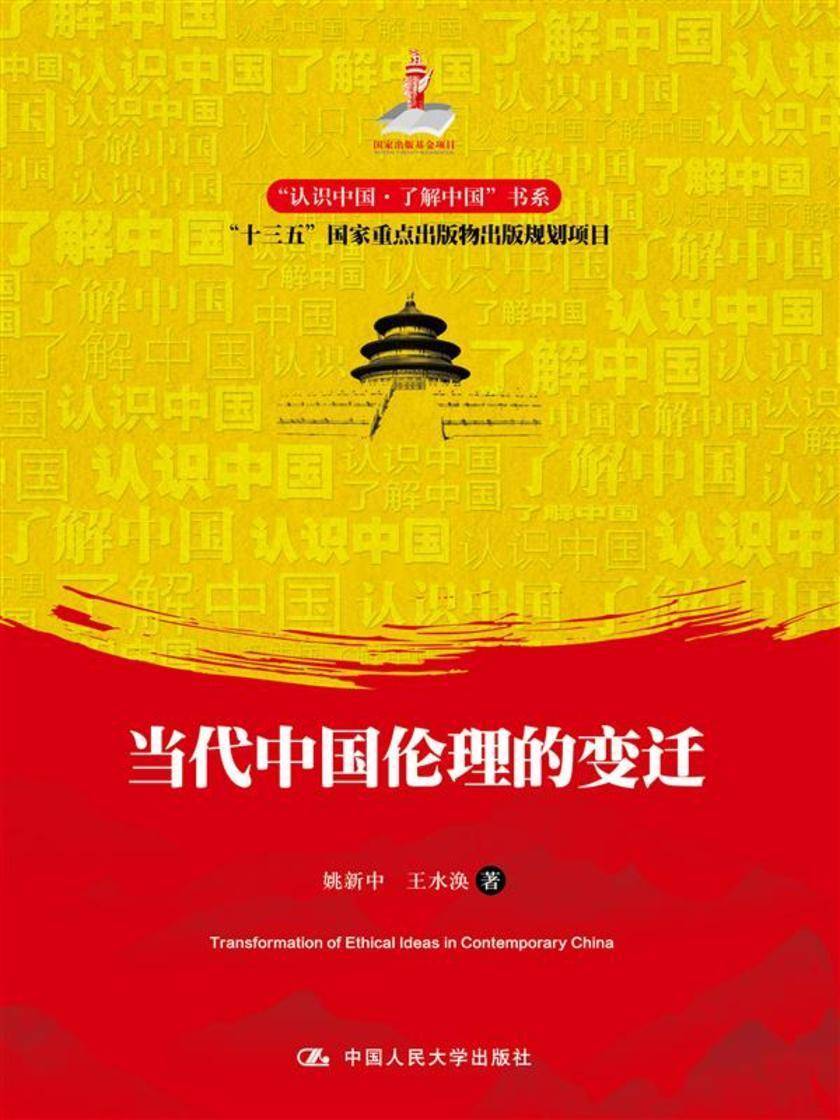
陌生人社会的伦理问题研究(当代中国社会道德建设理论与实践研究丛书)
¥40.80
“陌生人社会”的来临,为当代中国展示了全新的生活场景和伦理视野,同时导致了许多未曾遇到的新挑战、新困惑:面对数不清的“陌生人”,我们应该以怎样的伦理经验与其交往?以往的伦理规范和处事准则能否被简单移植到“陌生人”身上?在喧闹的现代都市,陌生的居民之间如何和睦相处?以往人们对“陌生人”的道德想象,能否作为直面“陌生人”时的道德推理机制?如何解决“人情味”与“公德心”之间的内在冲突?……本书围绕“陌生人社会”所生发的一系列伦理道德问题,从思辨和经验两个层面做出了有益思考和尝试性回答,对解决“陌生人社会”的道德困境有所助益。
赫尔墨斯的口误(增订)(曹卫东学术文集)
¥25.00
《赫尔墨斯的口误(增订)》是作者的学术译文合集,涉及形而上学批判、话语政治、文艺理论等,收录了霍克海默、哈贝马斯、伽达默尔、克吕格、巴尔塔萨、罗曼·茵伽登、顾彬等著名学者的经典文章。译文难度较大,可见译者译笔矫健,这些文章也为学术界提供了颇具学术价值的成果。
什么是主体性?
¥59.00
《什么是主体性?》由法国存在主义哲学家让-保罗·萨特1961年12月在罗马应葛兰西学院之邀讲学的记录整理而成。当年的课堂记录尤其是萨特与现场听众讨论的部分,五十多年后重获发现,2013年在法国出版,主体为题为“马克思主义与主体性”的报告,同时收数位意大利的马克思主义知识分子(如Enzo Paci, Cesare Luporini, Galvano Della Volpe)与萨特讨论的文字。并由Michel Kail与Raoul Kirchmayer作序言“意识与主体性”,跋文是詹明信的“萨特的现实意义”。 “主体性”是萨特强调的重要概念之一,“什么是主体性”这一问题因为与当代批评理论中针对“主体”的讨论相关而重获重要性。自1930年代以来,主体性问题就困扰着萨特。萨特认为,正是人的主体性给了我们在生活中选择走自己的道路的能力。因为并不存在客观的标准、客观的价值,也不存在确定的决定我们是谁或我们是什么的本质,我们能够把握的只有主观的标准、主观的价值以及由此而来的本质,而这些只能从一个主观的视角来拓展和理解。 正如“序言”所言:本书的出版,使人们得以一瞥萨特著作的整体性,并可为他艰涩的《辩证理性批判》一书提供理想的门导读,而《辩证理性批判》一书正好在讲座前一年出版,构成了一次与马克思主义的交锋。这种交锋的前提是萨特对马克思主义的悖论性评价:马克思主义已停止不前,同时也构成我们时代不可逾越的地平线。 萨特这次报告的抱负即为将主体性置于马克思主义分析的核心,以重新赋予它一度失去的活力。他同时抨了主观主义和客观主义,他想指出为什么主体性对于认识社会来说必不可少。萨特的特有方法就是通过分析实例来紧紧抓住自己的对象。而抓住主体性,就是理解客观条件如何被内在化和被体验,使自己有能力说明集体实践的形式如何得以建立。主体性是“特殊的普遍”,是历史的产物,是历史的基本结构,是可能的创造!
Conscious by Nature: Understanding the nature of consciousness through nature it
¥40.79
Come on a journey into the nature of consciousness, finding the space 'between thoughts' as the most obvious place to recognize your true and eternal Self. We recognize overlooked aspects of the natural world around us; as ourselves, as well as using nature to demonstrate spiritual concepts such as God, union and liberation. Your true 'nature' awaits...---------------------------"No matter how it is approached, no amount of words will ever transmit to another person the indescribable 'ultimate Truth'. The fact that it's described as indescribable should be enough to stop us trying. Yet it's made even more difficult because of our troublesome human mind. As intelligent and magnificent as it is, it has a deep and tragic habit of confusing the symbols we use (for simple convenience) in our lives, for the actual things or ideas they represent. As Alan Watts used to say, it's like climbing a signpost rather than walking in the direction it points. Our greatest of misunderstandings is that we confuse the story and idea of who we are, with what is actually true; pure and simple. We make a false judgment on who or what we are, and you wouldn't believe the amount of mischief that arises in result.As exaggerated or humorous as all this may sound on first impressions, this habit of confusing symbols for reality is a very real problem plaguing our human world, and the implications are exceptionally far reaching. We have confused such things as money for wealth, status or fame for character and even the virtual world for real - but most appropriate to this book, is that religious or spiritual concepts are always confused for the things they are pointing towards. That's particularly true of our concepts of 'God', particularly true of Buddha's Dharma, particularly true of any teaching towards enlightenment or liberation."---------------------------"OmniscienceOh father in heaven, omniscience cannot be. It makes no sense, no sense to me....***Between thoughts, your functioning remains flawless. Between thoughts you are ego-less, yet still exist...?How is it so that your heart beats without your control?How do migrating birds travel without directions, newborn horses stand straight up and embryos form without instruction. How does a plant know how to flower and a seed mature into a tree??Without thought or instruction, nature around you is already omniscient. Are you different from nature, or one and the same?***Young one, nature already exists in an omniscient state with no mind…?Between thoughts, are you omniscient?Mid-thought, do you believe you're not?"
文德尔班哲学导论(文德尔班代表作,关注哲学主题蕴含的内在力量,呈现新康德主义哲学的基本纲领!)
¥19.92
本书是新康德主义弗莱堡学派创始人文德尔班的代表作,与广为人知的《哲学史教程》相互配合,构成新康德主义哲学的基本纲领,对哲学门者也有很好的引导作用。全书以存在(理论)问题和价值问题的区分为基础,以价值的存在与存在的价值之间的关系立论,探讨了本体论、发生论、认识论、伦理学、美学、宗教等各类哲学问题。作者关注重大哲学主题所蕴含的内在力量,以日常生活和科学中的朴素预设为出发,从哲学史的流变手,试图解释处理这些问题的各种趋势及其分歧,并将生命中的基本问题简明扼要地呈现出来,旨在呼唤读者思索生命中的重大问题。
Getting Used to Weird: A very different sort of Love Story
¥8.63
Are you awakening spiritually and feeling weird?You’re not alone. Truly, you are not alone. You have many spiritual helpers, and just like Angela, you can learn to communicate with them and enlist their support. Lorelle Taylor’s extraordinary book traces Angela’s journey from normal to weird. Join her as she confronts challenges and undertakes deeply spiritual lessons while exploring the biggest questions. Learn about life and death from angels, spirit guides, Jesus and God. Discover how to overcome obstacles in your own path as you too discover the secrets for a fulfilled and happy life. Start reading?Getting Used to Weird: A very different sort of Love Story?today and you’ll discover that on this journey, you’re also getting used to love. You’ll come away with the knowledge that “Love is the answer to all questions.”
Inigo: a play about Ignatius of Loyola
¥32.62
Inigo (Ignatius de Loyola) begins as a hot-headed, street-fighting sensualist, in this action-packed play but due to serious injury in a sword-fight, he has to spend time recovering and reassessing his dissolute life. This stage version of his life follows his transformation to become the co-founder of the Jesuits in the sixteenth century, battling the powers of the day and the Inquisition. In Moore's bold, funny play, he asserts Inigo's position as a radical figure bent on changing the Catholic Church.?? This play is not only for those interested in Inigo and the Jesuits. It is also about individuals who fight for change against an implacable Establishment and it is ideal for performing in schools, colleges and theatres. Of special interest to schools and colleges, many of which are named after Inigo (Ignatius de Loyola).?Inigo's spiritual tools for change have informed other self-development programs such as the 12 step program for recovering drug and alcohol addicts. As Pope Francis is a Jesuit, this is a timely exploration of one of history's major spiritual leaders and reformers. "This is the most interesting play text to have reached me for a while... Ignatius of Loyala, founder of the Jesuits is not the most obvious choice for a play subject until you remember that he was effectively a counter-cultural radical fighting an implacable establishment suddenly it s both topical and relevant. I hope this thoughtful, engaging and very funny in places eight-hander will get more outings very soon. If not read the text anyway." --Susan Elkin, The Stage"Brilliantly written... a great evening of thoughtful and dynamic theatre." --Mark Lawson, arts correspondent"The structure and dynamism of the play, the art with which Jonathan Moore makes Ignatius accessible to us, capturing much of the drama of the Spiritual Exercises themselves, would also make I?igo an excellent discovery for schools and colleges." --James Hanvey SJ, Master of Campion Hall, University of Oxford, Thinking Faith Jonathan Moore is an award-winning actor, writer and director. As an actor he has played leading roles at the Royal Shakespeare Co, Royal Court, Donmar, the Royal Exchange and on BBC TV. He has directed theatre and opera world premieres at the Almeida, Donmar, West End, Royal Exchange, Gate, English National Opera, Covent Garden, La Fenice in Venice and on TV among many others. He has directed world premieres by composers such as Turnage, MacMillan, Henze, Schnittke, Nyman, Copeland and more, and his early work was sponsored by Joe Strummer of The Clash. He has collaborated with members of punk band Killing Joke and on several projects with Industrial group Test Dept. A published playwright and librettist, his work has been performed at leading theatres including the Donmar, Royal Exchange, Gate, BBC TV, radio and internationally. Jonathan was asked by Mark Rylance to direct the large-scale immersive project for over fifty performers What You Will, a co-production for Shakespeare s Globe, The Cultural Olympiad and Mayor s Office and several subsequent Shakespeare projects. He is due to direct a large-scale site-specific immersive project for Ludovico Einaudi in Italy and a new opera project with Stewart Copeland. He is on the Artistic Advisory Committee of the Royal Academy of Dramatic Art. He has had a Who s Who entry since 2007. A collection of Moore's plays has been previously published by Aurora Metro Books. www.jonathanmooreuk.com
马克思主义如何中国化(马克思主义研究论库·第二辑)
¥34.80
马克思主义如何由西方形态变为东方形态,由欧洲形态变为亚洲形态,由德国形态变为中国形态,一句话,马克思主义如何中国化,是一个特别重要的理论前沿问题。本书从马克思主义中国化的历史进程、文化意蕴、当代视野,中国特色社会主义理论体系的创立和发展,马克思主义中国化的理论创新及其成果,中国传统文化与马克思主义中国化,发展当代中国马克思主义等多个方面,梳理、总结马克思主义中国化的基本经验,展望在新的历史条件下如何推进马克思主义中国化、发展当代中国马克思主义。
沉思录
¥9.99
《沉思录》的作者是古罗马帝国皇帝马可?奥勒留。他把一切事情都不看成是恶,认为痛苦和不安仅仅是来自内心,并且可以由自己的内心加以消除。书中记录了他摆脱激情和欲望、希望获得冷静而达观的生活态度,阐述了理性与死亡的关系,分析了个人德行以及个人对社会的责任,同时要求人们常常自省,并付诸行动。

购物车
个人中心