


 购物车
购物车 个人中心
个人中心

The Swap
¥44.25
This smart and funny twist on Freaky Friday is perfect for fans of Wendy Mass, Jerry Spinelli, and Jon Scieszka.With one random wish, Jack and Ellie are living life in each other's shoes. He's her. And she's him. ELLIE assumed popular guys didn't worry about body image, being perfect, or talking to girls, but acting like you're cool with everything is tougher than it looks.JACK thought girls had it easy—no fights with bullies, no demanding dads, no power plays—but facing mean girls at sleepovers and getting grilled about your period is way harder than taking a hit to the face at sports practice.Now they're dealing with each other's middle school dramas—locker room teasing, cliques, video game battles, bra shopping, and a slew of hilariously awkward moments—until they hopefully switch back! Told in both Jack's and Ellie's voices, The Swap offers a fresh and honest take on tween friendship, all while exploring more serious themes of family, loss, empathy, and what it really means to be yourself. And as Jon Scieszka says, it's "seriously, truly, fearlessly funny!"
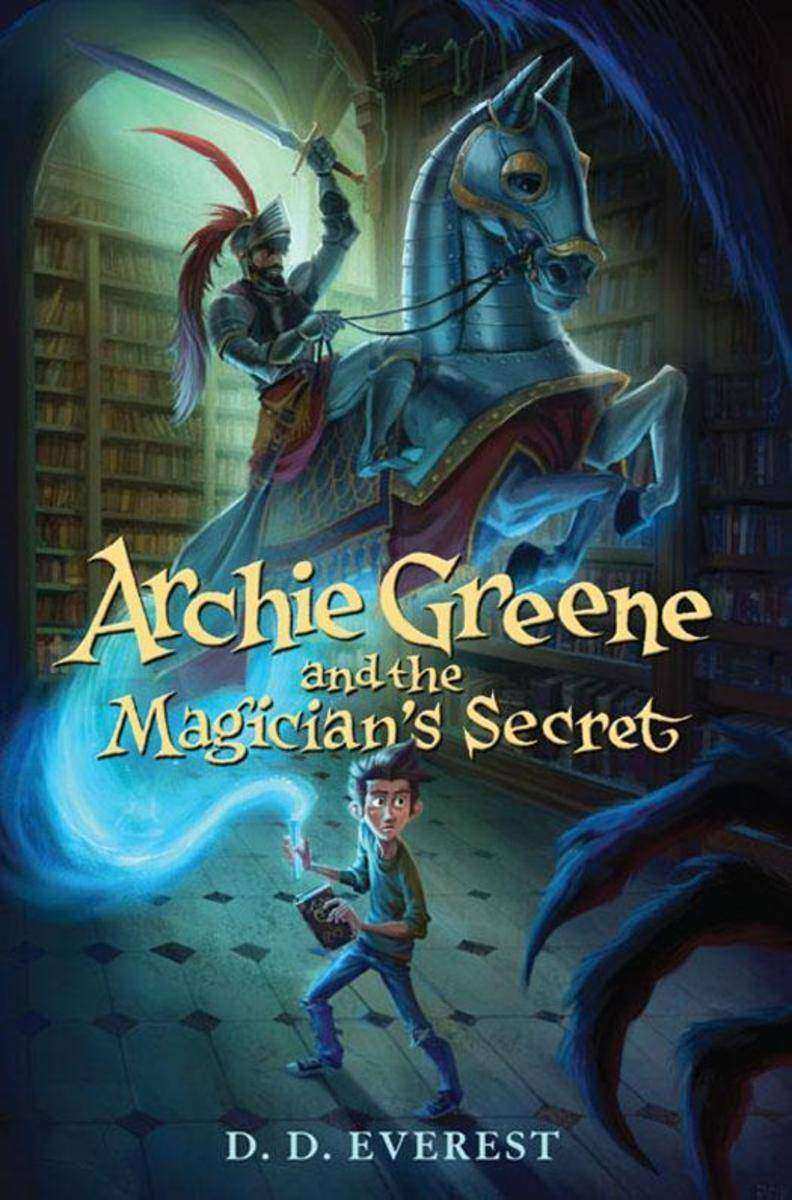
Archie Greene and the Magician's Secret
¥39.24
D. D. Everest's magical middle grade debut, filled with enchanted books and mysterious activity, is sure to captivate readers. Open this book . . . if you dare to face what awaits you inside!On his twelfth birthday, Archie Greene receives a mysterious package containing an ancient book in a language he doesn't recognize. The gift leads him to a family he didn't know he had and a world he never knew existed.With the help of his cousins, Bramble and Thistle, Archie tries to unravel the mystery behind his book, but he begins to realize that his gift is something more powerful than he could have imagined. And the only thing more perilous than its contents is being its owner. The book waited four hundred years for Archie Greene. Now Archie must discover why.
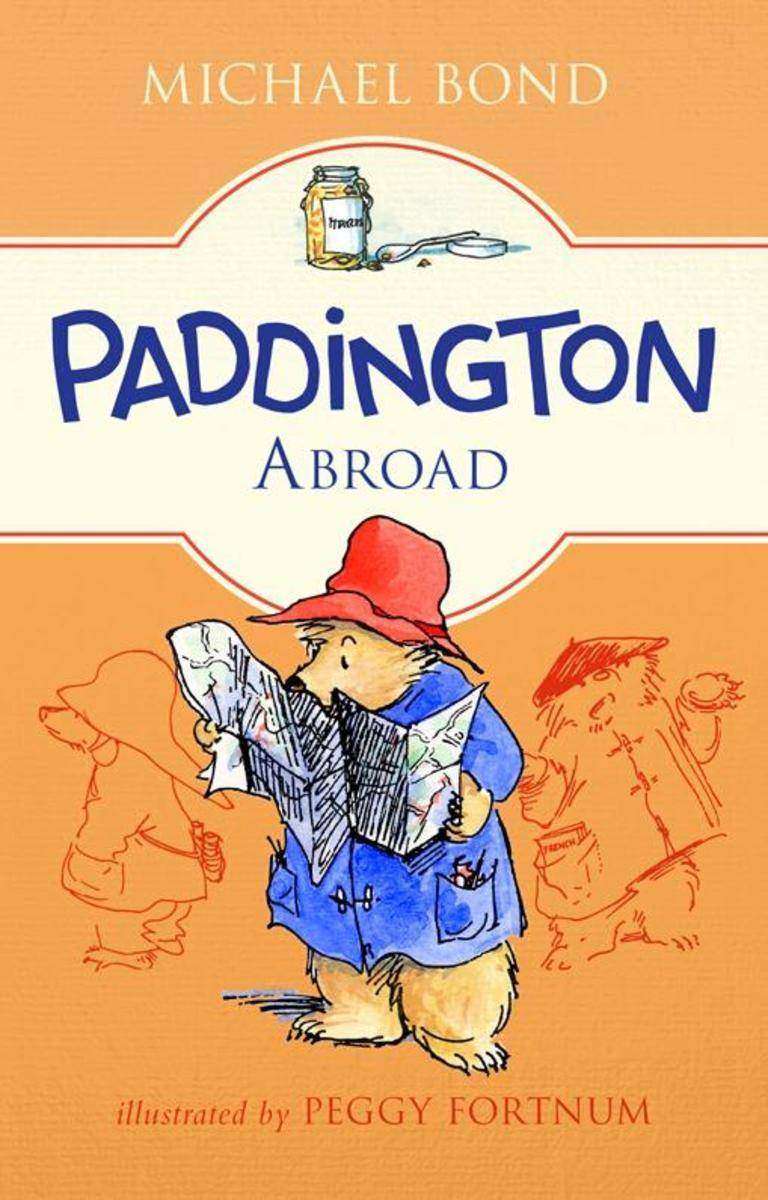
Paddington Abroad
¥33.18
When the Browns go on holiday to France, Paddington is put in charge of the "eyetinnery." But even with the whole trip planned down to the last marmalade sandwich, somehow Paddington takes the family off the beaten path on a voyage no one could forget. With Paddington in charge, one should always plan on a little bit of adventure!First published in 1961, Paddington Abroad is the fourth novel by Michael Bond chronicling the adventures of this classic character. Paddington has warmed the hearts of generations of readers with his earnest good intentions and humorous misadventures. This brand-new edition of the classic novel contains the original text by Michael Bond and illustrations by Peggy Fortnum.

Paddington Helps Out
¥33.63
Paddington Bear loves to lend a paw. From taking a saw to Mr. Curry's kitchen table to extinguishing a surprise flambé, each time Paddington helps out, things tend to get messier before they improve. But with his special tool kit, playful wits, and just a little bit of marmalade, Paddington can take any day and make it extraordinary!First published in 1960, Paddington Helps Out is the third novel by Michael Bond chronicling the adventures of this classic character. Paddington has warmed the hearts of generations of readers with his earnest good intentions and humorous misadventures. This brand-new paper-over-board edition of the classic novel contains the original text by Michael Bond and illustrations by Peggy Fortnum.
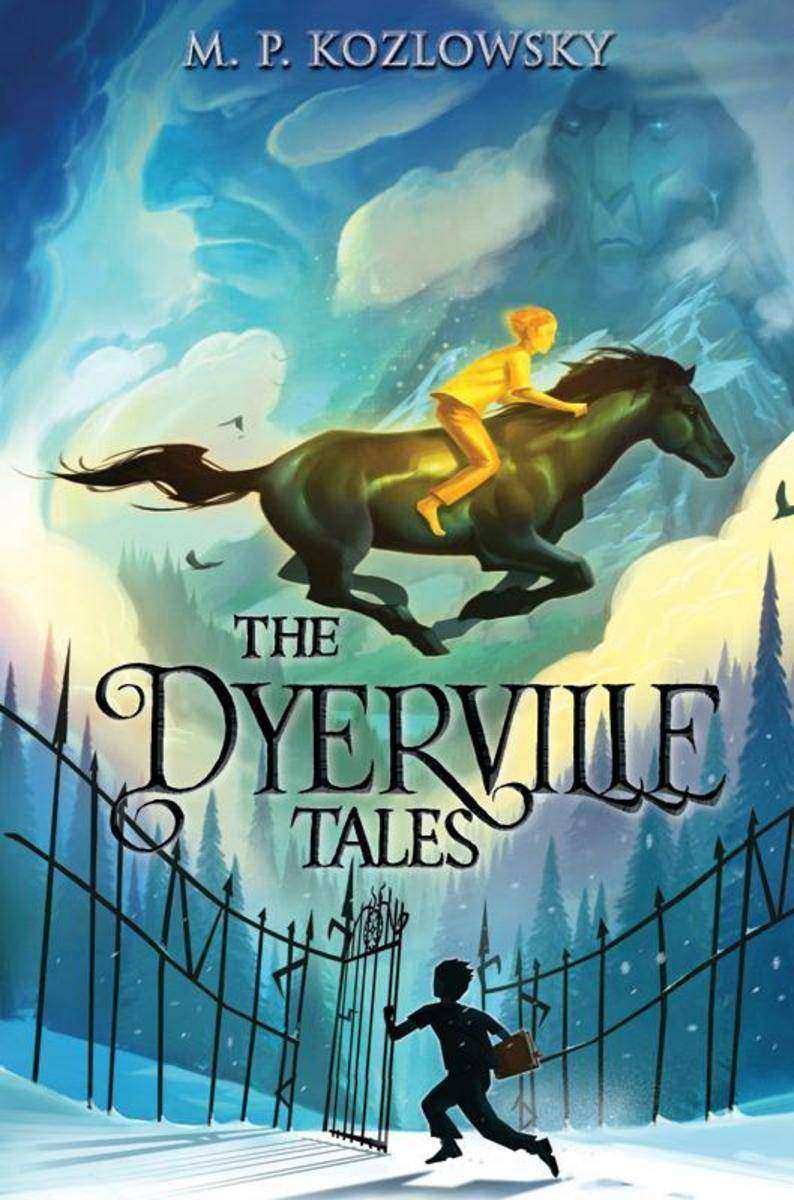
The Dyerville Tales
¥96.50
"Kozlowsky deftly intertwines imagination and adventure with sobering realities; while the story arc itself engrosses and the grandfather's fairy tale–like quest enchants, he underpins the novel with an unceasing melancholy that remembers the human heart, its pain, and its need for hope."—The Bulletin of the Center for Children's Books (starred review)M. P. Kozlowsky's The Dyerville Tales is a powerfully imaginative middle grade novel that blurs the line between fairy tale and reality. Vince Elgin is an orphan, having lost his mother and father in a fire when he was young. With only a senile grandfather he barely knows to call family, Vince was interned in a group home, dreaming that his father, whose body was never found, might one day return for him. When a letter arrives, telling Vince his grandfather has passed away, he is convinced that if his father is still alive, he'll find him at the funeral. He strikes out for the small town of Dyerville, carrying only one thing with him: his grandfather's journal. The journal tells a fantastical story of witches and giants and magic, one that can't be true. But as Vince reads on, he finds that his very real adventure may have more in common with his grandfather's than he ever could have known.
Me Cheeta: The Autobiography
¥63.18
The incredible, and moving true story of Cheeta the Chimp, star of countless Hollywood blockbusters, told in his own words The greatest Hollywood Tarzan, Johnny Weissmuller, died in 1984. His coffin was lowered into the ground to the recorded sounds of his famous jungle call. Maureen O'Sullivan, his Jane, died in 1998. Weissmuller's son, who first played Boy in the 1939 film Tarzan finds a Mate, has gone too. But Cheeta the Chimp, who starred with them all, is alive and well, retired in Palm Springs. At the incredible age of seventy-five, he is by far the oldest living chimpanzee ever recorded. Now, in his own words, Cheeta (aka Jiggs) finally tells his extraordinary story. He was just a baby when snatched from the jungle of Liberia in 1932, by the great animal importer Henry Trefflich, who went on to supply NASA with its 'Monkeys for Space' programme. That same year, Cheeta appeared in Tarzan the Ape Man, and in 1934 Tarzan and His Mate, in which he famously stole the clothes from a naked O'Sullivan, dripping wet from an underwater swimming scene with Weissmuller. Other Tarzan films followed until Cheeta finally retired from the big screen after the 1967 film Doctor Dolittle with Rex Harrison, whose finger he accidentally bit backstage while being offered a placatory banana. Cheeta tells it all, a life lived with the stars, a monkey stolen from deepest Africa forced to make a living in the fake jungles of Hollywood. He tells us too of his journey beyond the screen: his struggle with drink and addiction to cigars; his breakthrough with a radical new form of abstract painting, 'Apeism'; his touching relationship with his retired nightclub-performing grandson Jeeta, now a considerable artist in his own right; his fondness for hamburgers and his battle in later life with diabetes; and, through thick and thin, carer Dan Westfall, his loving companion who has helped this magnificent monkey come to terms with his peculiar past. Funny, moving, searingly honest, Cheeta transports us back to a lost Hollywood. He is a real star, and this the greatest celebrity memoir of recent times.
Barefoot in Mullyneeny: A Boy’s Journey Towards Belonging
¥73.58
Bryan Gallagher's reminiscences of the Ireland of his youth, first heard on Radio 4's 'Home Truths', transport you to a world of boyhood pranks, playground politics and the confusion of growing up in a land that is every bit as magical and captivating as the stories he has to tell. Barefoot in Mullyneeny is Bryan Gallagher's evocative tale of a childhood remembered through the people and landscape of Fermanagh, near the beautiful shores of Lough Erne in Ireland. Bryan chronicles a time when all the big boys went to school in bare feet and secretly watched the Saturday night bands and dances in halls lit by Tilley lamps; where it was known to be nothing less than the biblical truth that if you put a horse-hair across the palm of your hand when you were about to be punished at school, the cane would split in two. Gallagher's writing will touch the hearts of those who long for the innocence of childhood and the simplicity of an era long past. Whether relating tales of murderous bicycle chases through the darkened streets of Cavan, of ghosts and fairy forts or the anguish of emigration, this remarkable memoir vividly recreates life in rural Ireland in the 1940s and 50s. For those who thought that life in Ireland was one of the poverty and misery of James Joyce or Frank McCourt, Barefoot in Mullyneeny offers a view of the Ireland of yesteryear that combines the touching, homely nostalgia of Nigel Slater's Toast and Laurie Lee's Cider with Rosie with a humorous optimism that is unmistakably Ireland at its best.
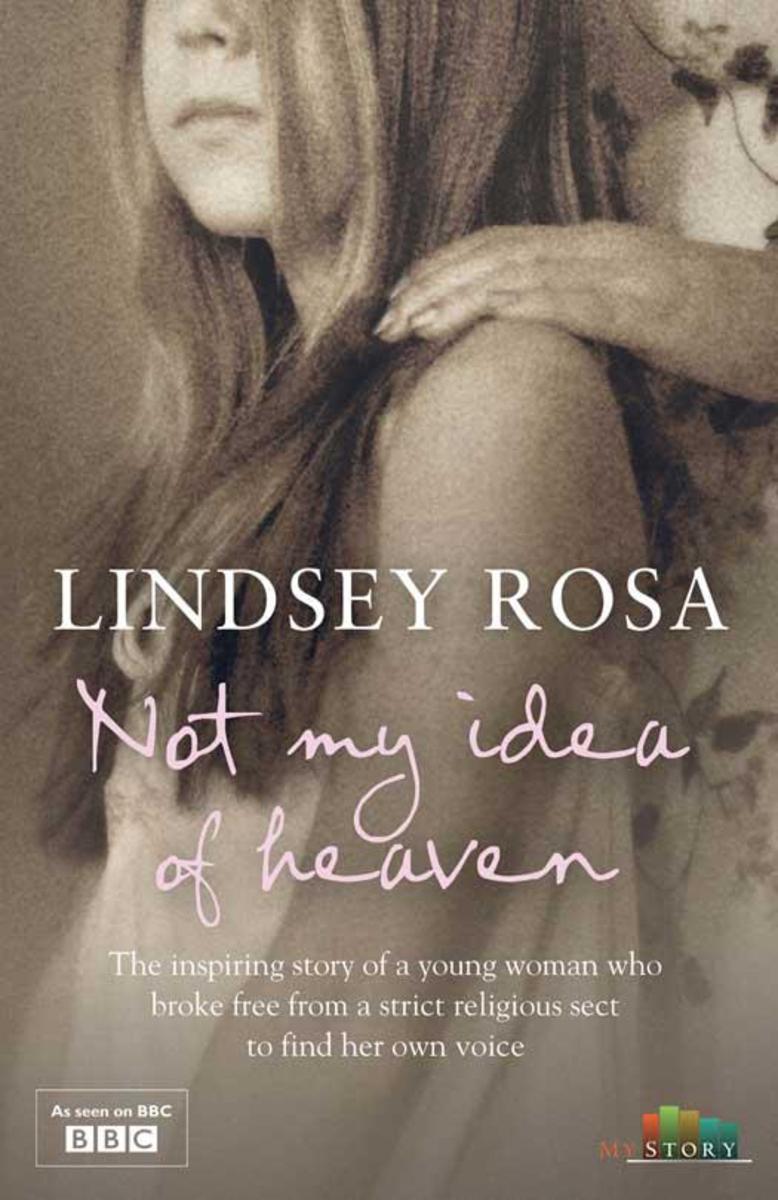
Not My Idea of Heaven
¥51.50
Those who had not discovered our truth had Satan in their hearts. We lived amongst them, but not with them, ‘in the world, but not of the world’. We were special. We were the disciples of the Fellowship. When she was a child, Lindsey Rosa’s every waking moment was governed by the rules of an extreme separatist sect. It controlled what she wore and what she ate; it forbade her to listen to music, to cut her hair, to watch television, to use a computer. The Fellowship said her family was special. Why would she believe otherwise? Then, when Lindsey was seven, her elder brother was caught listening to music and the family were expelled from the sect. But Lindsey’s parents knew nothing but the ways of the Fellowship, so they remained in hope that they would be accepted and continued to make the family live by the sect’s strict rules--cutting themselves off from their local community. But as Lindsey grew, so too did her awareness of a world outside. And, feeling increasingly isolated, she struggled with her own identity. Until finally she was faced with a devastating choice: to continue to live by the rules of the religious sect or to be brutally cast out and leave the family she loved behind forever.
The Times Great Irish Lives
¥67.49
For the first time, The Times brings together a unique collection of obituaries of Ireland's most distinguished individuals from the last two centuries.
The Friendship: Wordsworth and Coleridge
¥91.23
The first book to explore the extraordinary story of the legendary friendship – and quarrel – between Wordsworth and Coleridge, two giants of English Romanticism. Wordsworth and Coleridge’s passionate intimacy, shared ambition and subsequent estrangement contribute to a tragic tale. But Sisman’s biography of this most remarkable friendship – the first to devote itself wholly to exploring the impact of their relationship on each other – seeks to re-examine the orthodox assumption that these two poets flourished as a result of it. Instead, Sisman argues that it was a meeting that may well have been disastrous for both: for it was Wordsworth’s rejection of Coleridge, and not primarily his opium addiction, that destroyed the latter as a poet, and that Coleridge’s impossible ambitions for Wordsworth pushed the latter towards failure and disappointment. Underlying the poignancy of the tale is the intriguing subject of the influence one writer can have on another. Sisman seeks to answer fundamental questions about this relationship: why was Wordsworth so reliant on Coleridge, and why was he so easily swayed in the most critical decision of his career? Was it in Coleridge’s nature to play second fiddle? Would it, in fact, have been better for both men if they had never met?
The Mitfords: Letters between Six Sisters
¥100.26
Carefree, revelatory and intimate, this selection of unpublished letters between the six legendary Mitford sisters, compiled by Diana Mitford’s daughter-in-law, is alive with wit, passion and heartbreak. The letters chronicle the social quirks and political upheavals of the twentieth century but also chart the stormy, enduring relationships between the uniquely gifted – and collectively notorious – Mitford sisters. There’s Nancy, the scalding wit and bestselling novelist; Pamela, who craved a quiet country life; Diana, the fascist wife of Sir Oswald Mosley; Unity, whose obsession with Adolf Hitler led to personal tragedy; Jessica, the runaway communist; and Deborah, the socialite who became Duchess of Devonshire. Writing to one another to confide, tease, rage and gossip, the Mitford sisters set out, above all, to amuse. A correspondence of this scope is rare; a collection penned by six born storytellers is irreplaceable.
Elizabeth and Mary: Cousins, Rivals, Queens
¥81.52
This is the first biography of the fateful relationship between Elizabeth I and Mary Queen of Scots. It was the defining relationship of their lives and marked the intersection of the great Tudor and Stuart dynasties. At its core were their rival claims to the throne of England. Distinguished biographer Jane Dunn reveals an extraordinary story of two queens ruling in one isle, both embodying opposing qualities of character, ideals of womaliness and divinely ordained kingship. Theirs is a drama of sex and power, recklessness, ambition and political intrigue, with a rivalry that could only be resolved by death. As regnant queens in an overwhelmingly masculine world they were deplored for their femaleness, compared unfavourably with each other, and courted by the same men. By placing this dynamic and ever-changing relationship at the centre of the book, Dunn throws new light and meaning on the complexity of their natures. She reveals an Elizabeth revolutionary in her insistence on ruling alone and inspired in her use of celibacy as a political tool, yet deeply feeling and more sympathetic than the usual picture of the virgin queen. Mary, too, is not the romantic victim of history but a courageous adventurer with a reckless heart, and a magnetic influence over men and women alike. Vengeful against her enemies and the more ruthless of the two, she was untroubled by plotting Elizabeth’s murder. Elizabeth, however, was in anguish at having to sanction Mary’s death warrant for treason. Jane Dunn brings her skills as a biographer to bear on history’s two most charismatic queens. Working almost exclusively from contemporary letters and writings, she lets them speak to us across more than 400 years, their voices and responses surprisingly familiar to our own, their characters vivid, by turns touching and terrible. The death in 1603 of Elizabeth, our greatest English queen, was to mark the end of the Tudors and the posthumous triumph of Mary, whose son, James I united the English and Scottish thrones under a Stuart king.

Silent Boy
¥45.62
From the author of Sunday Times bestsellers One Child and Ghost Girl comes a heartbreaking story of a boy trapped in silence and the teacher who rescued him. When special education teacher Torey Hayden first met fifteen-year-old Kevin, he was barricaded under a table. Desperately afraid of the world around him, he hadn’t spoken a word in eight years. He was considered hopeless, incurable. But Hayden refused to believe it, though she realised it might well take a miracle to break through the walls he had built around himself. With unwavering devotion and gentle, patient love, she set out to free him – and slowly uncovered a shocking violent history and a terrible secret that an unfeeling bureaucracy had simply filed away and forgotten. Torey refused to give up on this tragic “lost case.” For a trapped and frightened boy desperately needed her help – and she knew in her heart she could not rest easy until she had rescued him from the darkness.
Humble Pie
¥12.56
Everyone thinks they know the real Gordon Ramsay: rude, loud, driven, stubborn. But this is his real story… In this fast-paced, bite-sized edition of his bestselling autobiography Ramsay tells the real story of how he became the world’s most famous and infamous chef: his difficult childhood, his brother’s heroin addiction, his failed first career as a footballer, his fanatical pursuit of gastronomic perfection and his TV persona - all the things that have made him the celebrated culinary talent and media powerhouse that he is today. Gordon talks frankly about: ? his tough childhood: his father’s alcoholism and violence and the effects on his relationships with his mother and siblings ? his first career as a footballer: how the whole family moved to Scotland when he was signed by Glasgow Rangers at the age of fifteen, and how he coped when his career was over due to injury just three years later ? his brother’s heroin addiction. ? Gordon’s early career: learning his trade in Paris and London; how his career developed from there: his time in Paris under Albert Roux and his seven Michelin-starred restaurants. ? kitchen life: Gordon spills the beans about life behind the kitchen door, and how a restaurant kitchen is run in Anthony Bourdain-style. ? and how he copes with the impact of fame on himself and his family: his television career, the rapacious tabloids, and his own drive for success.
Queen Victoria: A Personal History
¥80.25
Christopher Hibbert’s acclaimed biography of Queen Victoria is as impressive and authoritative as the great woman herself. In 1837 an eighteen-year-old girl, raised by a German mother, inherited the throne of the United Kingdom. She was to reign as queen – and later Empress of India – for almost sixty-four years, presiding over twenty prime ministers and a period of unprecedented social and political change. Her era became synonymous with moral rigidity and colonial expansion, and this absorbing biography of Queen Victoria, the unlikely figurehead of a vast and powerful empire, explores how the young monarch transformed herself into a formidable matriarch and the epitome of an age. Embracing her life and family, her politics and personality, her love for Prince Albert and her relationship with John Brown, Hibbert’s touching biography is a persuasive portrait of a remarkable woman.
Tommy’s Honour: The Extraordinary Story of Golf’s Founding Father and Son
¥81.03
The definitive account of golf’s founding father and son, Old and Young Tom Morris. For the first time, the two will be portrayed as men of flesh and blood – heroic but also ambitious, loving but sometimes confused and angry. Two men from one household, with ambitions that made them devoted partners as well as ardent foes. Tommy's Honour is a compelling story of the two Tom Morrises, father and son, both supremely talented golfers but utterly different, constituting a record-breaking golfing dynasty that has never been known before or since. Father, Old Tom Morris, grew up a stone's throw away from golf's ancestral home at St Andrews, a whisky-fuelled caddie, a wonderful 19th century character who became an Open Champion three times before running the Royal & Ancient, then sole governing body of the game. His son, Young Tom, arguably an even more prodigious talent than his father, was a golfing genius, the Tiger Woods of his era, who at 17 became the youngest player, to this day, to win the Open Championship. He then went on to win it four times in a row, an unprecedented achievement. On one occasion, father and son fought it out at the last hole of the Championship before the son finally triumphed. But then came the pivotal day that would change their lives forever, the death of Young Tom’s wife and unborn child. The cataclysmic events of that day eventually lead to Young Tom’s tragic death, aged 24, with his father living on for another 20 years in deep remorse. So on the one hand, you have the story of one of the most influential figures in the history of golf, a pioneer in the birth of the modern game and of Scottish and Open Championship golf. And on the other hand – and this is the real appeal of this book – you have an extraordinary father-and-son story. It’s for every son who ever competed with his father, and every father who has guided his son towards manhood, then found it hard to let go.
Unravelled: Life as a Mother
¥54.65
Maria Housden tells of her own transformation, as a mother, a wife and a woman, as she struggled to cope with the death of her daughter Hannah and make the hardest decision of her life. From the author of the bestselling Hannah’s Gift. At the age of 36, instead of enjoying the perfect family life she had imagined as a child, Maria felt judged and found wanting by others. She realised that, no matter how much she still loved her husband and how powerful her bond of love was with her children, she had to change her life radically – she had to make it her own again. What followed was an emotional and enlightening search for herself. Written in the same moving, lyrical style as Hannah’s Gift, the story unfolds in a series of painful, joyful and humorous moments. At times the story is heart-wrenchingly sad but ultimately it is uplifting and inspiring.
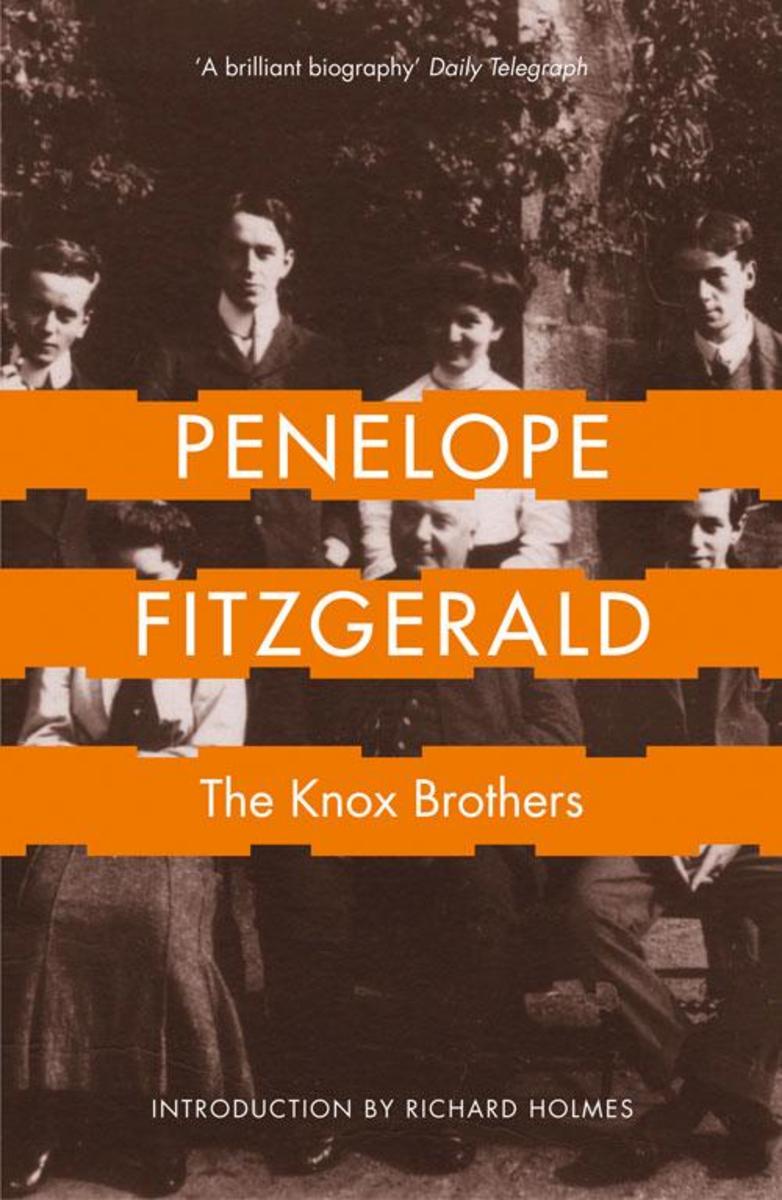
The Knox Brothers
¥76.52
Penelope Fitzgerald’s biography of her remarkable family. ‘When I was very young I took my uncles for granted, and it never occurred to me that everyone else in the world was not like them.’ In this, only her second book, Penelope Fitzgerald turned her novelist’s gaze on the quite extraordinary lives of her father and his three brothers. A masterly work of biography, within which we see Penelope Fitzgerald exercising her pen magnificently before she began her novel-writing career. Edmund Knox, her father, was one of the most successful editors of Punch. Dillwyn, a Cambridge Greek scholar, was the first to crack the Nazi’s message decoding system, Enigma, and in so doing, is estimated to have shortened the Second World War by six months. Wilfred became an Anglo-Catholic priest and an active welfare worker in the East End of London. Ronald, the best known of the four during his lifetime, was Roman Catholic chaplain to Oxford University’s student body, preacher, wit, scholar, crime-writer and translator of the Bible. A homage to a long-forgotten world and a fascinating account of the generation straddling the divide between late Victorian and Edwardian.
Lime Street at Two
¥54.25
The fourth and final part of Helen Forrester’s bestselling autobiography continues the moving story of her early poverty-stricken life with an account of the war years in Blitz-torn Liverpool In 1940 Helen, now twenty, reeling from the news that her fiance Harry has been killed on an Atlantic convoy, is working long hours at a welfare centre in Bootle, five miles from home. Her wages are pitifully low and her mother claims the whole of them for housekeeping. Then, early in 1941, she gets a new job and begins to enjoy herself a little. But in May the bombing starts again and another move brings more trouble to Helen, trouble which will be faced, as ever, with courage and determination.
The Tiger’s Child
¥58.47
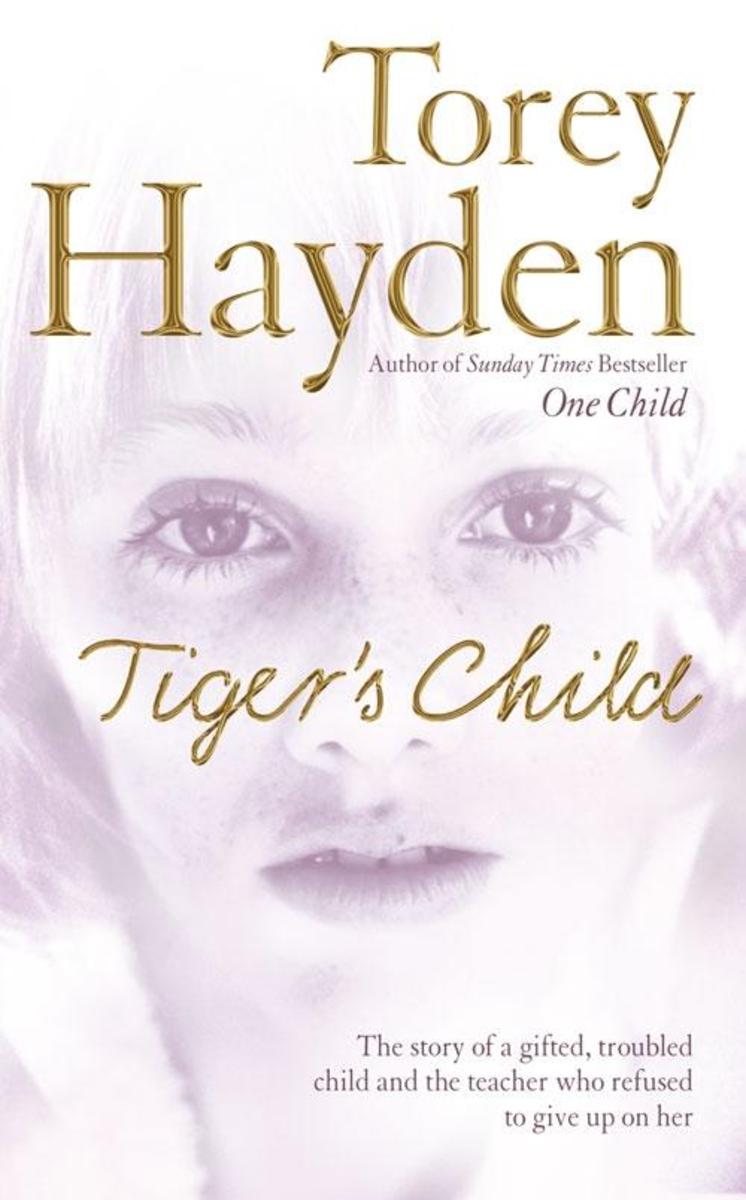
Torey Hayden returns with this deeply-moving sequel to her first book, One Child (the Sunday Times bestseller). After seven years, Torey is reunited with Sheila, the disturbed 6-year-old she tried to rescue. Sheila was a deeply disturbed six-year-old when she came into Torey Hayden's life – a story poignantly chronicled One Child. The Tiger's Child picks up the story seven years later. Hayden has lost touch with the child she helped to free from a hellish inner prison of rage and silence. But now Sheila is back, now a gangly teenager with bright orange hair – no longer broken and lost, but still troubled and searching for answers. This story of dedication and caring that began in childhood moves into a new and extraordinary chapter that tests the strength and heart of both Sheila and her one-time teacher. In The Tiger's Child the skilled and loving educator answers the call once again to help a child in need through her difficult yet glorious transition into young womanhood.
Child of the North
¥54.25
A fascinating insight into the life of one of the country's bestselling and best-loved authors, marrying her work with her extraordinary life, and looking at her rise to fame and fortune against all the odds. ‘Everything I have touched in my life figures in my books. Every single book I write has something that has happened to me or my family or to my friends.’ Josephine Cox was born in Blackburn during its decline as the cotton-weaving capital of the world. Life was hard but characterful, the joys and tragedies of her youth later inspiring her multi-million selling novels. One of ten children, Josephine knew poverty, hunger and charity. Between births, her mother worked in the cotton mills, her father on the roads. Sleeping up to six in a bed, her family lived in the tightly packed, working-class terraces of Blackburn. But Josephine never felt victimised or shamed. Transforming their closed-in community into one that inspired ‘another kind of love, a deep sense of belonging’ were the characters Josephine writes about in her novels with such fondness and feeling. But alas reality was not always so easy. Hand in hand with poverty came deprivation and domestic difficulties. At the end of her tether, Jo’s mother gathered her children around her in the bus station one day and announced they were leaving Blackburn. Josephine was fourteen years old. Not only did she lose her friends, she also lost her brothers too who were left behind. ‘Belonging to a street, to a place, to a family, is the most important thing.’ Out of this tremendous loss, Josephine’s novels were born.


