


 购物车
购物车 个人中心
个人中心

Wicked Intelligence
¥453.22
In late seventeenth-century London, the most provocative images were produced not by artists, but by scientists. Magnified fly-eyes drawn with the aid of microscopes, apparitions cast on laboratory walls by projection machines, cut-paper figures revealing the "e;exact proportions"e; of sea monsters-all were created by members of the Royal Society of London, the leading institutional platform of the early Scientific Revolution. Wicked Intelligence reveals that these natural philosophers shaped Restoration London's emergent artistic cultures by forging collaborations with court painters, penning art theory, and designing triumphs of baroque architecture such as St Paul's Cathedral. ?Matthew C. Hunter brings to life this archive of experimental-philosophical visualization and the deft cunning that was required to manage such difficult research. Offering an innovative approach to the scientific image-making of the time, he demonstrates how the Restoration project of synthesizing experimental images into scientific knowledge, as practiced by Royal Society leaders Robert Hooke and Christopher Wren, might be called "e;wicked intelligence."e; Hunter uses episodes involving specific visual practices-for instance, concocting a lethal amalgam of wax, steel, and sulfuric acid to produce an active model of a comet-to explore how Hooke, Wren, and their colleagues devised representational modes that aided their experiments. Ultimately, Hunter argues, the craft and craftiness of experimental visual practice both promoted and menaced the artistic traditions on which they drew, turning the Royal Society projects into objects of suspicion in Enlightenment England.?The first book to use the physical evidence of Royal Society experiments to produce forensic evaluations of how scientific knowledge was generated, Wicked Intelligence rethinks the parameters of visual art, experimental philosophy, and architecture at the cusp of Britain's imperial power and artistic efflorescence.
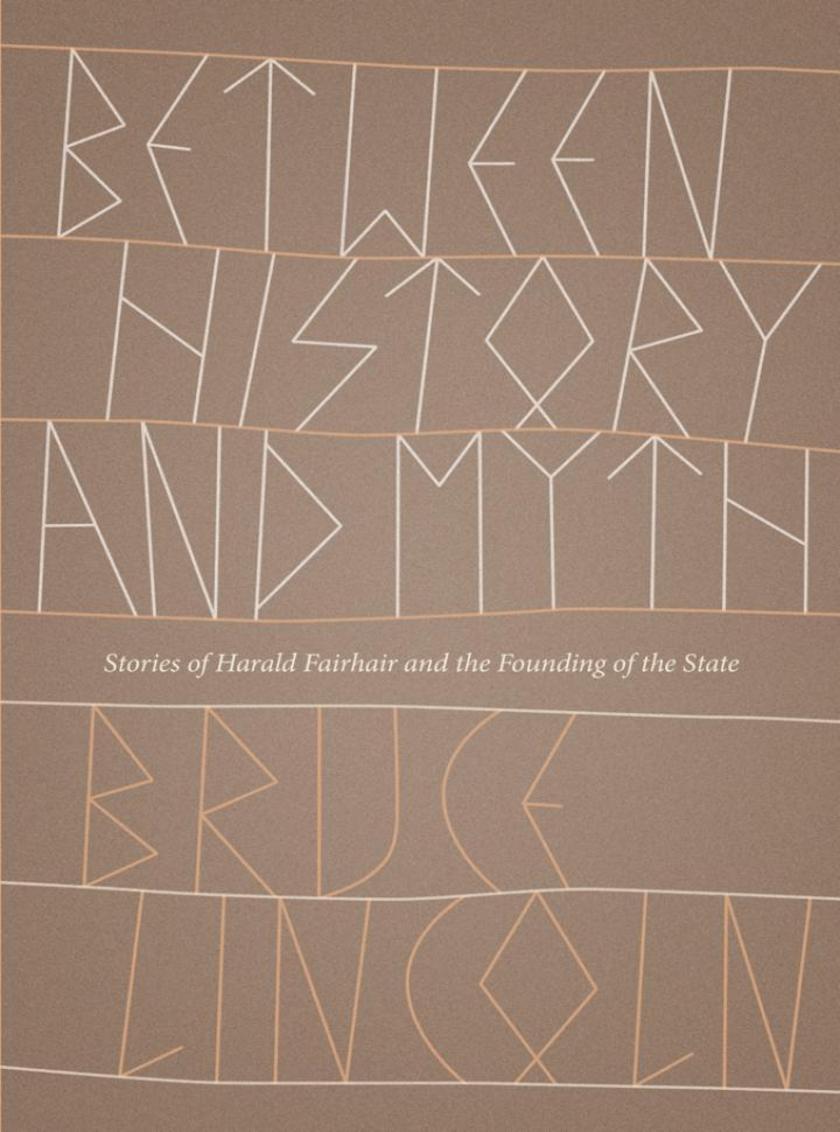
Between History and Myth
¥453.22
All groups tell stories about their beginnings. Such tales are oft-repeated, finely wrought, and usually much beloved. Among those institutions most in need of an impressive creation account is the state: it's one of the primary ways states attempt to legitimate themselves. But such founding narratives invite revisionist retellings that modify details of the story in ways that undercut, ironize, and even ridicule the state's ideal self-representation. Medieval accounts of how Norway was unified by its first king provide a lively, revealing, and wonderfully entertaining example of this process.?Taking the story of how Harald Fairhair unified Norway in the ninth century as its central example, Bruce Lincoln illuminates the way a state's foundation story blurs the distinction between history and myth and how variant tellings of origin stories provide opportunities for dissidence and subversion as subtle-or not so subtle-modifications are introduced through details of character, incident, and plot structure. Lincoln reveals a pattern whereby texts written in Iceland were more critical and infinitely more subtle than those produced in Norway, reflecting the fact that the former had a dual audience: not just the Norwegian court, but also Icelanders of the twelfth and thirteenth centuries, whose ancestors had fled from Harald and founded the only non-monarchic, indeed anti-monarchic, state in medieval Europe.?Between History and Myth will appeal not only to specialists in Scandinavian literature and history but also to anyone interested in memory and narrative.

Reading Clocks, Alla Turca
¥453.22
Up until the end of the eighteenth century, the way Ottomans used their clocks conformed to the inner logic of their own temporal culture. However, this began to change rather dramatically during the nineteenth century, as the Ottoman Empire was increasingly assimilated into the European-dominated global economy and the project of modern state building began to gather momentum.In Reading Clocks, Alla Turca, Avner Wishnitzer unravels the complexity of Ottoman temporal culture and for the first time tells the story of its transformation. He explains that in their attempt to attain better surveillance capabilities and higher levels of regularity and efficiency, various organs of the reforming Ottoman state developed elaborate temporal constructs in which clocks played an increasingly important role. As the reform movement spread beyond the government apparatus, emerging groups of officers, bureaucrats, and urban professionals incorporated novel time-related ideas, values, and behaviors into their self-consciously "e;modern"e; outlook and lifestyle. Acculturated in the highly regimented environment of schools and barracks, they came to identify efficiency and temporal regularity with progress and the former temporal patterns with the old political order.Drawing on a wealth of archival and literary sources, Wishnitzer's original and highly important work presents the shifting culture of time as an arena in which Ottoman social groups competed for legitimacy and a medium through which the very concept of modernity was defined. Reading Clocks, Alla Turca breaks new ground in the study of the Middle East and presents us with a new understanding of the relationship between time and modernity.

Golden Rules
¥453.22
Fresh water has become scarce and will become even more so in the coming years, as continued population growth places ever greater demands on the supply of fresh water. At the same time, options for increasing that supply look to be ever more limited. No longer can we rely on technological solutions to meet growing demand. What we need is better management of the available water supply to ensure it goes further toward meeting basic human needs. But better management requires that we both understand the history underlying our current water regulation regime and think seriously about what changes to the law could be beneficial.For Golden Rules, Mark Kanazawa draws on previously untapped historical sources to trace the emergence of the current framework for resolving water-rights issues to California in the 1850s, when Gold Rush miners flooded the newly formed state. The need to circumscribe water use on private property in support of broader societal objectives brought to light a number of fundamental issues about how water rights ought to be defined and enforced through a system of laws. Many of these issues reverberate in today's contentious debates about the relative merits of government and market regulation. By understanding how these laws developed across California's mining camps and common-law courts, we can also gain a better sense of the challenges associated with adopting new property-rights regimes in the twenty-first century.

Geographies of Philological Knowledge
¥447.34
Geographies of Philological Knowledge examines the relationship between medievalism and colonialism in the nineteenth-century Hispanic American context through the striking case of the Creole Andres Bello (1781-1865), a Venezuelan grammarian, editor, legal scholar, and politician, and his lifelong philological work on the medieval heroic narrative that would later become Spain's national epic, the Poem of the Cid. Nadia R. Altschul combs Bello's study of the poem and finds throughout it evidence of a "e;coloniality of knowledge."e;?Altschul ?reveals how, during the nineteenth century, the framework for philological scholarship established in and for core European nations-France, England, and especially Germany-was exported to Spain and Hispanic America as the proper way of doing medieval studies. She argues that the global designs of European philological scholarship are conspicuous in the domain of disciplinary historiography, especially when examining the local history of a Creole Hispanic American like Bello, who is neither fully European nor fully alien to European culture. Altschul likewise highlights Hispanic America's intellectual internalization of coloniality and its understanding of itself as an extension of Europe. A timely example of interdisciplinary history, interconnected history, and transnational study, Geographies of Philological Knowledge breaks with previous nationalist and colonialist histories and thus forges a new path for the future of medieval studies.
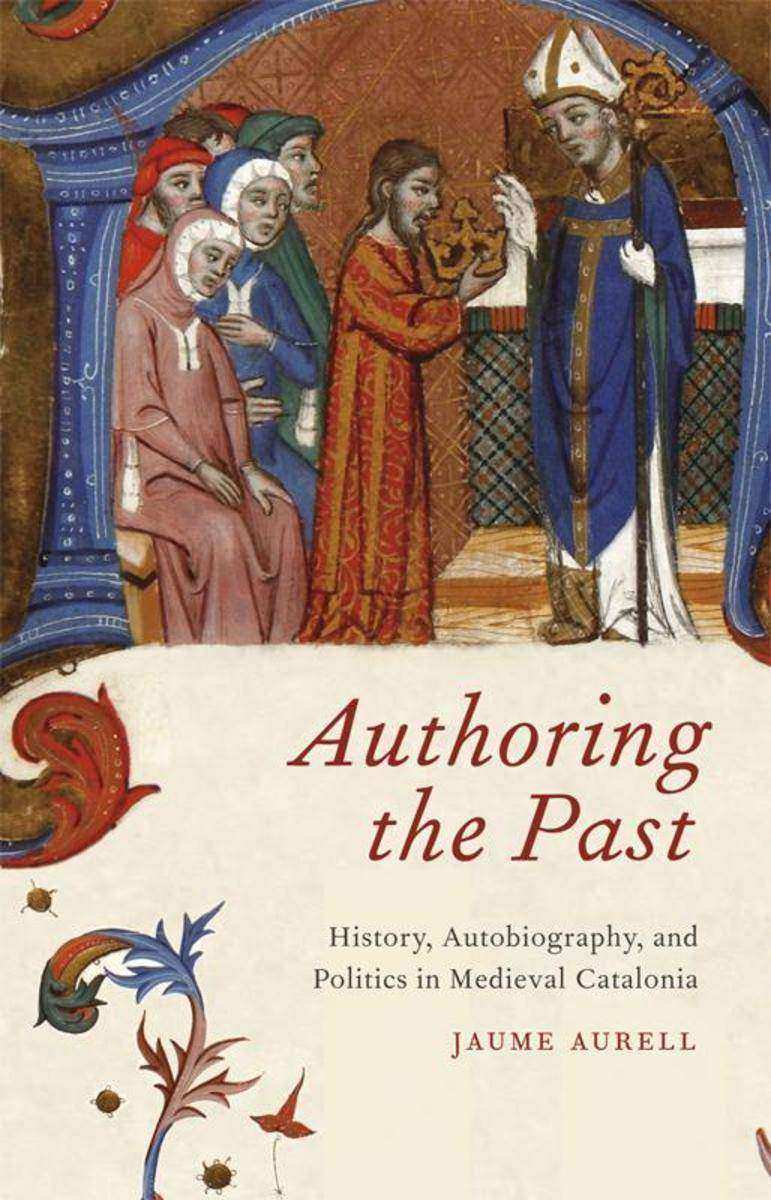
Authoring the Past
¥447.34
Authoring the Past surveys medieval Catalan historiography, shedding light on the emergence and evolution of historical writing and autobiography in the Middle Ages, on questions of authority and authorship, and on the links between history and politics during the period. Jaume Aurell examines texts from the late twelfth to the late fourteenth century-including the Latin Gesta comitum Barcinonensium and four texts in medieval Catalan: James I's Llibre dels fets, the Crnica of Bernat Desclot, the Crnica of Ramon Muntaner, and the Crnica of Peter the Ceremonious-and outlines the different motivations for the writing of each.?For Aurell, these chronicles are not mere archaeological artifacts but rather documents that speak to their writers' specific contemporary social and political purposes. He argues that these Catalonian counts and Aragonese kings were attempting to use their role as authors to legitimize their monarchical status, their growing political and economic power, and their aggressive expansionist policies in the Mediterranean. By analyzing these texts alongside one another, Aurell demonstrates the shifting contexts in which chronicles were conceived, written, and read throughout the Middle Ages.The first study of its kind to make medieval Catalonian writings available to English-speaking audiences, Authoring the Past will be of interest to scholars of history and comparative literature, students of Hispanic and Romance medieval studies, and medievalists who study the chronicle tradition in other languages.
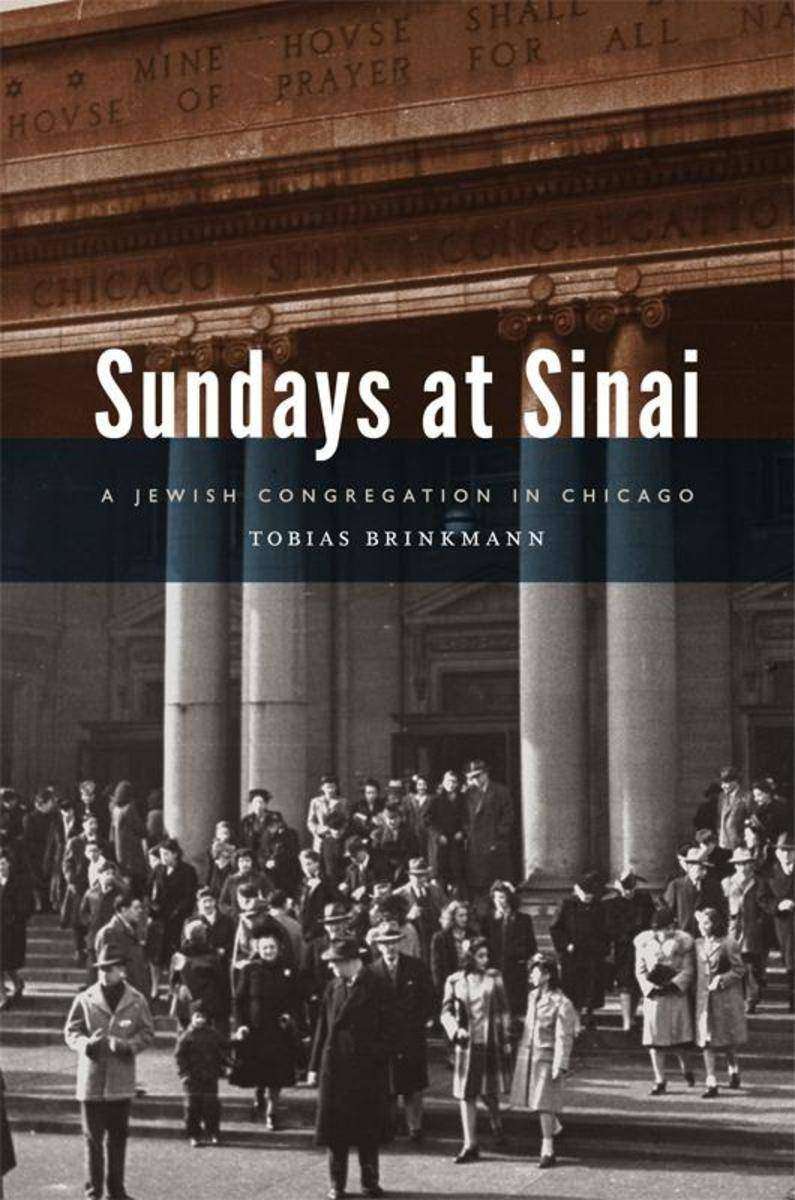
Sundays at Sinai
¥447.34
First established 150 years ago, Chicago Sinai is one of America's oldest Reform Jewish congregations. Its founders were upwardly mobile and civically committed men and women, founders and partners of banks and landmark businesses like Hart Schaffner & Marx, Sears & Roebuck, and the giant meatpacking firm Morris & Co. As explicitly modern Jews, Sinai's members supported and led civic institutions and participated actively in Chicago politics. Perhaps most radically, their Sunday services, introduced in 1874 and still celebrated today, became a hallmark of the congregation.In Sundays at Sinai, Tobias Brinkmann brings modern Jewish history, immigration, urban history, and religious history together to trace the roots of radical Reform Judaism from across the Atlantic to this rapidly growing American metropolis. ?Brinkmann shines a light on the development of an urban reform congregation, illuminating Chicago Sinai's practices and history, and its contribution to Christian-Jewish dialogue in the United States. Chronicling Chicago Sinai's radical beginnings in antebellum Chicago to the present, Sundays at Sinai is the extraordinary story of a leading Jewish Reform congregation in one of America's great cities.
Protocols of Liberty
¥370.82
The fledgling United States fought a war to achieve independence from Britain, but as John Adams said, the real revolution occurred "e;in the minds and hearts of the people"e; before the armed conflict ever began. Putting the practices of communication at the center of this intellectual revolution, Protocols of Liberty shows how American patriots-the Whigs-used new forms of communication to challenge British authority before any shots were fired at Lexington and Concord. ?To understand the triumph of the Whigs over the Brit-friendly Tories, William B. Warner argues that it is essential to understand the communication systems that shaped pre-Revolution events in the background. He explains the shift in power by tracing the invention of a new political agency, the Committee of Correspondence; the development of a new genre for political expression, the popular declaration; and the emergence of networks for collective political action, with the Continental Congress at its center. From the establishment of town meetings to the creation of a new postal system and, finally, the Declaration of Independence, Protocols of Liberty reveals that communication innovations contributed decisively to nation-building and continued to be key tools in later American political movements, like abolition and women's suffrage, to oppose local custom and state law.

After They Closed the Gates
¥370.82
In 1921 and 1924, the United States passed laws to sharply reduce the influx of immigrants into the country. By allocating only small quotas to the nations of southern and eastern Europe, and banning almost all immigration from Asia, the new laws were supposed to stem the tide of foreigners considered especially inferior and dangerous. However, immigrants continued to come, sailing into the port of New York with fake passports, or from Cuba to Florida, hidden in the holds of boats loaded with contraband liquor. Jews, one of the main targets of the quota laws, figured prominently in the new international underworld of illegal immigration. However, they ultimately managed to escape permanent association with the identity of the "e;illegal alien"e; in a way that other groups, such as Mexicans, thus far, have not.In?After They Closed the Gates,?Libby Garland tells the untold stories of the Jewish migrants and smugglers involved in that underworld, showing how such stories contributed to growing national anxieties about illegal immigration. Garland also helps us understand how Jews were linked to, and then unlinked from, the specter of illegal immigration. By tracing this complex history, Garland offers compelling insights into the contingent nature of citizenship, belonging, and Americanness.

Cartophilia
¥370.82
The period between the French Revolution and World War II was a time of tremendous growth in both mapmaking and map reading throughout Europe. There is no better place to witness this rise of popular cartography than in Alsace-Lorraine, a disputed borderland that the French and Germans both claimed as their national territory. Desired for its prime geographical position and abundant natural resources, Alsace-Lorraine endured devastating wars from 1870 to 1945 that altered its borders four times, transforming its physical landscape and the political allegiances of its citizens. For the border population whose lives were turned upside down by the French-German conflict, maps became essential tools for finding a new sense of place and a new sense of identity in their changing national and regional communities.?Turning to a previously undiscovered archive of popular maps, Cartophilia reveals Alsace-Lorraine's lively world of citizen mapmakers that included linguists, ethnographers, schoolteachers, hikers, and priests. Together, this fresh group of mapmakers invented new genres of maps that framed French and German territory in original ways through experimental surveying techniques, orientations, scales, colors, and iconography. In focusing on the power of "e;bottom-up"e; maps to transform modern European identities, Cartophilia argues that the history of cartography must expand beyond the study of elite maps and shift its emphasis to the democratization of cartography in the modern world.
The Friendship: Wordsworth and Coleridge
¥91.23
The first book to explore the extraordinary story of the legendary friendship – and quarrel – between Wordsworth and Coleridge, two giants of English Romanticism. Wordsworth and Coleridge’s passionate intimacy, shared ambition and subsequent estrangement contribute to a tragic tale. But Sisman’s biography of this most remarkable friendship – the first to devote itself wholly to exploring the impact of their relationship on each other – seeks to re-examine the orthodox assumption that these two poets flourished as a result of it. Instead, Sisman argues that it was a meeting that may well have been disastrous for both: for it was Wordsworth’s rejection of Coleridge, and not primarily his opium addiction, that destroyed the latter as a poet, and that Coleridge’s impossible ambitions for Wordsworth pushed the latter towards failure and disappointment. Underlying the poignancy of the tale is the intriguing subject of the influence one writer can have on another. Sisman seeks to answer fundamental questions about this relationship: why was Wordsworth so reliant on Coleridge, and why was he so easily swayed in the most critical decision of his career? Was it in Coleridge’s nature to play second fiddle? Would it, in fact, have been better for both men if they had never met?
The Mitfords: Letters between Six Sisters
¥100.26
Carefree, revelatory and intimate, this selection of unpublished letters between the six legendary Mitford sisters, compiled by Diana Mitford’s daughter-in-law, is alive with wit, passion and heartbreak. The letters chronicle the social quirks and political upheavals of the twentieth century but also chart the stormy, enduring relationships between the uniquely gifted – and collectively notorious – Mitford sisters. There’s Nancy, the scalding wit and bestselling novelist; Pamela, who craved a quiet country life; Diana, the fascist wife of Sir Oswald Mosley; Unity, whose obsession with Adolf Hitler led to personal tragedy; Jessica, the runaway communist; and Deborah, the socialite who became Duchess of Devonshire. Writing to one another to confide, tease, rage and gossip, the Mitford sisters set out, above all, to amuse. A correspondence of this scope is rare; a collection penned by six born storytellers is irreplaceable.
Elizabeth and Mary: Cousins, Rivals, Queens
¥81.52
This is the first biography of the fateful relationship between Elizabeth I and Mary Queen of Scots. It was the defining relationship of their lives and marked the intersection of the great Tudor and Stuart dynasties. At its core were their rival claims to the throne of England. Distinguished biographer Jane Dunn reveals an extraordinary story of two queens ruling in one isle, both embodying opposing qualities of character, ideals of womaliness and divinely ordained kingship. Theirs is a drama of sex and power, recklessness, ambition and political intrigue, with a rivalry that could only be resolved by death. As regnant queens in an overwhelmingly masculine world they were deplored for their femaleness, compared unfavourably with each other, and courted by the same men. By placing this dynamic and ever-changing relationship at the centre of the book, Dunn throws new light and meaning on the complexity of their natures. She reveals an Elizabeth revolutionary in her insistence on ruling alone and inspired in her use of celibacy as a political tool, yet deeply feeling and more sympathetic than the usual picture of the virgin queen. Mary, too, is not the romantic victim of history but a courageous adventurer with a reckless heart, and a magnetic influence over men and women alike. Vengeful against her enemies and the more ruthless of the two, she was untroubled by plotting Elizabeth’s murder. Elizabeth, however, was in anguish at having to sanction Mary’s death warrant for treason. Jane Dunn brings her skills as a biographer to bear on history’s two most charismatic queens. Working almost exclusively from contemporary letters and writings, she lets them speak to us across more than 400 years, their voices and responses surprisingly familiar to our own, their characters vivid, by turns touching and terrible. The death in 1603 of Elizabeth, our greatest English queen, was to mark the end of the Tudors and the posthumous triumph of Mary, whose son, James I united the English and Scottish thrones under a Stuart king.

Silent Boy
¥45.62
From the author of Sunday Times bestsellers One Child and Ghost Girl comes a heartbreaking story of a boy trapped in silence and the teacher who rescued him. When special education teacher Torey Hayden first met fifteen-year-old Kevin, he was barricaded under a table. Desperately afraid of the world around him, he hadn’t spoken a word in eight years. He was considered hopeless, incurable. But Hayden refused to believe it, though she realised it might well take a miracle to break through the walls he had built around himself. With unwavering devotion and gentle, patient love, she set out to free him – and slowly uncovered a shocking violent history and a terrible secret that an unfeeling bureaucracy had simply filed away and forgotten. Torey refused to give up on this tragic “lost case.” For a trapped and frightened boy desperately needed her help – and she knew in her heart she could not rest easy until she had rescued him from the darkness.
Humble Pie
¥12.56
Everyone thinks they know the real Gordon Ramsay: rude, loud, driven, stubborn. But this is his real story… In this fast-paced, bite-sized edition of his bestselling autobiography Ramsay tells the real story of how he became the world’s most famous and infamous chef: his difficult childhood, his brother’s heroin addiction, his failed first career as a footballer, his fanatical pursuit of gastronomic perfection and his TV persona - all the things that have made him the celebrated culinary talent and media powerhouse that he is today. Gordon talks frankly about: ? his tough childhood: his father’s alcoholism and violence and the effects on his relationships with his mother and siblings ? his first career as a footballer: how the whole family moved to Scotland when he was signed by Glasgow Rangers at the age of fifteen, and how he coped when his career was over due to injury just three years later ? his brother’s heroin addiction. ? Gordon’s early career: learning his trade in Paris and London; how his career developed from there: his time in Paris under Albert Roux and his seven Michelin-starred restaurants. ? kitchen life: Gordon spills the beans about life behind the kitchen door, and how a restaurant kitchen is run in Anthony Bourdain-style. ? and how he copes with the impact of fame on himself and his family: his television career, the rapacious tabloids, and his own drive for success.
Queen Victoria: A Personal History
¥80.25
Christopher Hibbert’s acclaimed biography of Queen Victoria is as impressive and authoritative as the great woman herself. In 1837 an eighteen-year-old girl, raised by a German mother, inherited the throne of the United Kingdom. She was to reign as queen – and later Empress of India – for almost sixty-four years, presiding over twenty prime ministers and a period of unprecedented social and political change. Her era became synonymous with moral rigidity and colonial expansion, and this absorbing biography of Queen Victoria, the unlikely figurehead of a vast and powerful empire, explores how the young monarch transformed herself into a formidable matriarch and the epitome of an age. Embracing her life and family, her politics and personality, her love for Prince Albert and her relationship with John Brown, Hibbert’s touching biography is a persuasive portrait of a remarkable woman.
Tommy’s Honour: The Extraordinary Story of Golf’s Founding Father and Son
¥81.03
The definitive account of golf’s founding father and son, Old and Young Tom Morris. For the first time, the two will be portrayed as men of flesh and blood – heroic but also ambitious, loving but sometimes confused and angry. Two men from one household, with ambitions that made them devoted partners as well as ardent foes. Tommy's Honour is a compelling story of the two Tom Morrises, father and son, both supremely talented golfers but utterly different, constituting a record-breaking golfing dynasty that has never been known before or since. Father, Old Tom Morris, grew up a stone's throw away from golf's ancestral home at St Andrews, a whisky-fuelled caddie, a wonderful 19th century character who became an Open Champion three times before running the Royal & Ancient, then sole governing body of the game. His son, Young Tom, arguably an even more prodigious talent than his father, was a golfing genius, the Tiger Woods of his era, who at 17 became the youngest player, to this day, to win the Open Championship. He then went on to win it four times in a row, an unprecedented achievement. On one occasion, father and son fought it out at the last hole of the Championship before the son finally triumphed. But then came the pivotal day that would change their lives forever, the death of Young Tom’s wife and unborn child. The cataclysmic events of that day eventually lead to Young Tom’s tragic death, aged 24, with his father living on for another 20 years in deep remorse. So on the one hand, you have the story of one of the most influential figures in the history of golf, a pioneer in the birth of the modern game and of Scottish and Open Championship golf. And on the other hand – and this is the real appeal of this book – you have an extraordinary father-and-son story. It’s for every son who ever competed with his father, and every father who has guided his son towards manhood, then found it hard to let go.
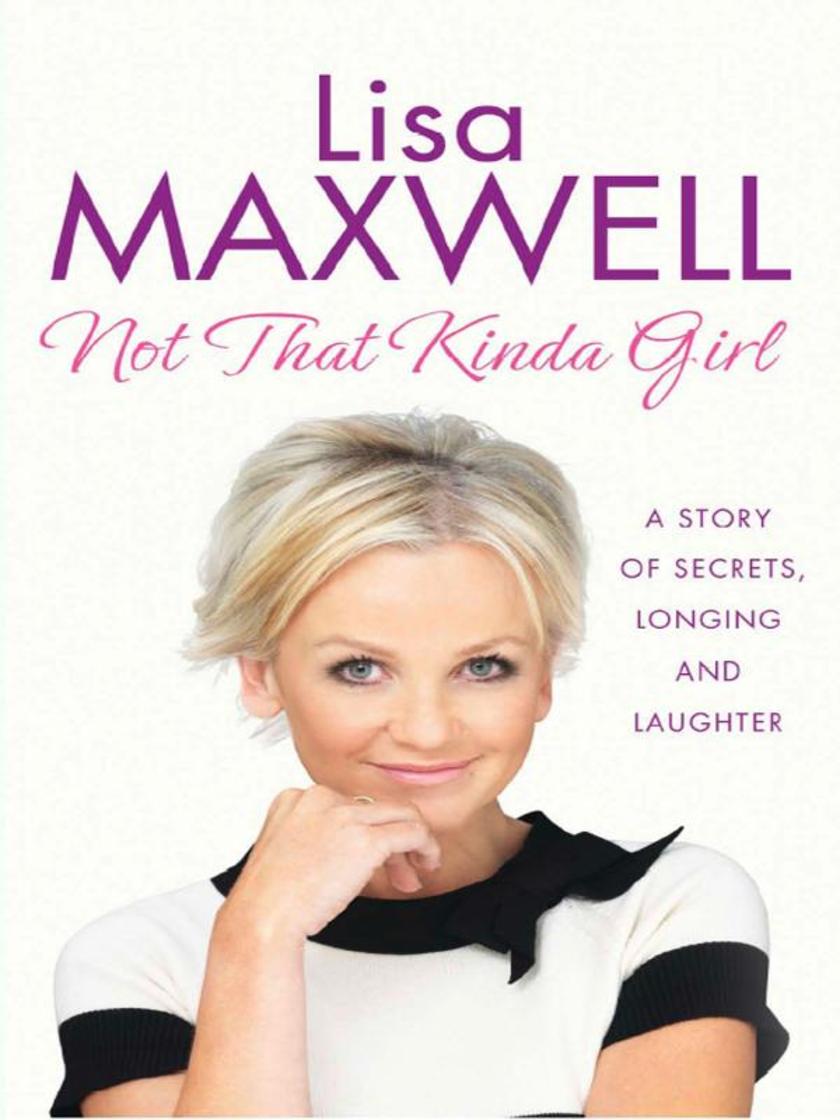
Not that Kinda Girl
¥58.86
Lisa Maxwell, an addition to the quick-witted Loose Women team, is a bundle of fun and laughter and a natural storyteller. Here, for the first time, she tells her astonishing story - a tale of remarkable spirit, incredible experiences and family secrets. A much-loved presenter and respected actress, Lisa got her first onscreen role at the age of just 11. In the eighties she became a TV presenter on series like Splash and No Limits, interviewing the icons of the time and partying with the likes of George Michael, Robert Downey Junior and Michael Hutchence, before moving more firmly into comedy, appearing on sketch shows like, The Les Dennis Laughter Show, The Russ Abbott Show and her very own, self-titled, The Lisa Maxwell Show. She narrowly missed out on the part of Daphne in a little show called Frasier. And then for seven years played the part of The Bill's DI Sam Nixon, before joining Loose Women in 2009, where she quickly became an audience favourite. But behind the fun, glamour and onscreen success, is a south London girl, hiding the secret she's been taught never to talk about. An illegitimate child, brought up in Elephant and Castle, Lisa's life very nearly took a different path. Lucky for her, her dear old Nan had a kind heart, and in a last minute change of plan she was brought home to her grandparent's flat on the Rockingham Estate. With warmth, honesty and humour, Lisa takes us to the heart of the Elephant, revealing a home filled with love, laughter and drama. From having the drawer of an old chest for her bed to hiding from the Tally Man, waiting for her Nan outside the betting shop to dabbling in petty crime, discovering her dad was still alive, and always looking for a way to be in the lime light, Lisa has written a colourful memoir of life as a daughter, a granddaughter, a mother, and an actress.

A Small Dog Saved My Life
¥88.39
A story of survival, transformation and love. In a beautiful and powerful memoir which mixes honest, personal revelation with literature, history, and inspirational self-help, Bel Mooney tells the story of her rescue dog, Bonnie, who in turn rescued Bel when her world fell apart with the all-too public break-up of her 35-year marriage. SMALL DOGS CAN SAVE YOUR LIFE really is a story of survival, and also one of love. This is an account of six years in Bel's life, from when she first acquired Bonnie from a rescue home, through Bel’s years of personal heartbreak and disappointment, and on to the happiness which she has now found in a new marriage and a new life, with the Maltese at her side all the way. This is a book about transformation and change, about picking yourself up and attacking life in the way that a small dog will go for the postman's trousers - and about celebrating life, much as your canine companion will always celebrate your return, even from the shortest trip. Beautifully engaging, entertaining, full of personal anecdotes and deeply moving, SMALL DOGS CAN SAVE YOUR LIFE will take the reader on an inspirational walk with one very small but very remarkable dog - a dog who became a symbol for all that is best about dogs, and about we humans too. Bel Mooney is a journalist with almost forty years' experience. Well-loved by millions for her advice columns, first for the Times and now in the Daily Mail, as well as countless programmes for radio and television, Bel takes the reader on a journey of discovery, in which she finds herself transformed into a dog-lover by one small and lively bundle of white fur, as well as telling her own gripping story.
Jumbo to Jockey: Fasting to the Finishing Post
¥81.03
How one man turned a midlife crisis into the realisation of a childhood dream at 4pm at Wincanton Dominic Prince, journalist, documentary-maker, racing enthusiast and bon viveur hit the scales at nearly 16 stone on his 45th birthday. It was not always so. His first love was and still is horses. As a child he would bunk off school to ride his first horse, Conker, and it was only after an horrific accident that left him and his horse wound up in barbed wire that he stepped down off his mount and gave in to the lure of Fleet Street and the three hour lunch. But the smell of oats and the mist of early morning canters were never far away, even if he was living it from the other side of the paddock. In the 20 years since he last rode a horse he has made a film on Lester Piggott, bought and sold one race horse and won and lost thousands on 'the occasional flutter'. Through the drastic changes to his overindulgent lifestyle that he has had to go through to make the weight for the 4pm at Wincanton in October, is weaved an insider's account of the very particular world of jockeys, racing and the multi-billionaire owners who pull the strings at the world's greatest race courses. Memoir, sports book, exposé of the dark world of horse racing, at heart Jumbo to Jockey is the story that all middle aged men will know well of the realisation of a childhood dream before it is too late.
Memories of Milligan
¥73.58
An arresting collection of interviews, collated by Norma Farnes, Spike Milligan's close friend and longstanding agent, bringing to life the late, great Milligan in all his various guises. Heralded as brilliant and difficult in equal measure, Spike Milligan is one of the most prolific and mould-breaking writers of the twentieth century. Fantastically funny and incredibly talented, on his death in 2002, Spike left behind him one of the most diverse legacies in British entertainment history. Creative, inspirational, and at times doggedly loyal, yet famously tempestuous and fickle, Spike was many things to many people. In Memories of Milligan, Norma Farnes sets out to interview those who knew him best, amassing an array of personal memories from fellow performers and comedians, long time friends and former girlfriends. Compiled of intimate stories, small exchanges and habits that go into making up a relationship, be it personal or professional, Memories of Milligan captures another side to the performer's well-known public persona, to build a complete picture of one of the greatest British comic writers to date. Ranging from interviews with fellow comedian Barry Humphries, *writers Galton and Simpson, director Jonathan Miller, stalwart presenters Michael Palin and Terry Wogan, to comic geniuses such as Eric Sykes and producer George Martin, this original book encapsulates a moving portrait of a man who is synonymous with a unique era in post-war entertainment.


