


 购物车
 个人中心


Music, the Arts, and Ideas
¥265.87
Meyer makes a valuable statement on aesthetics, criteria for assessing great works of music, compositional practices and theories of the present day, and predictions of the future of Western culture. His postlude, written for the book's twenty-fifth anniversary, looks back at his thoughts on the direction of music in 1967.
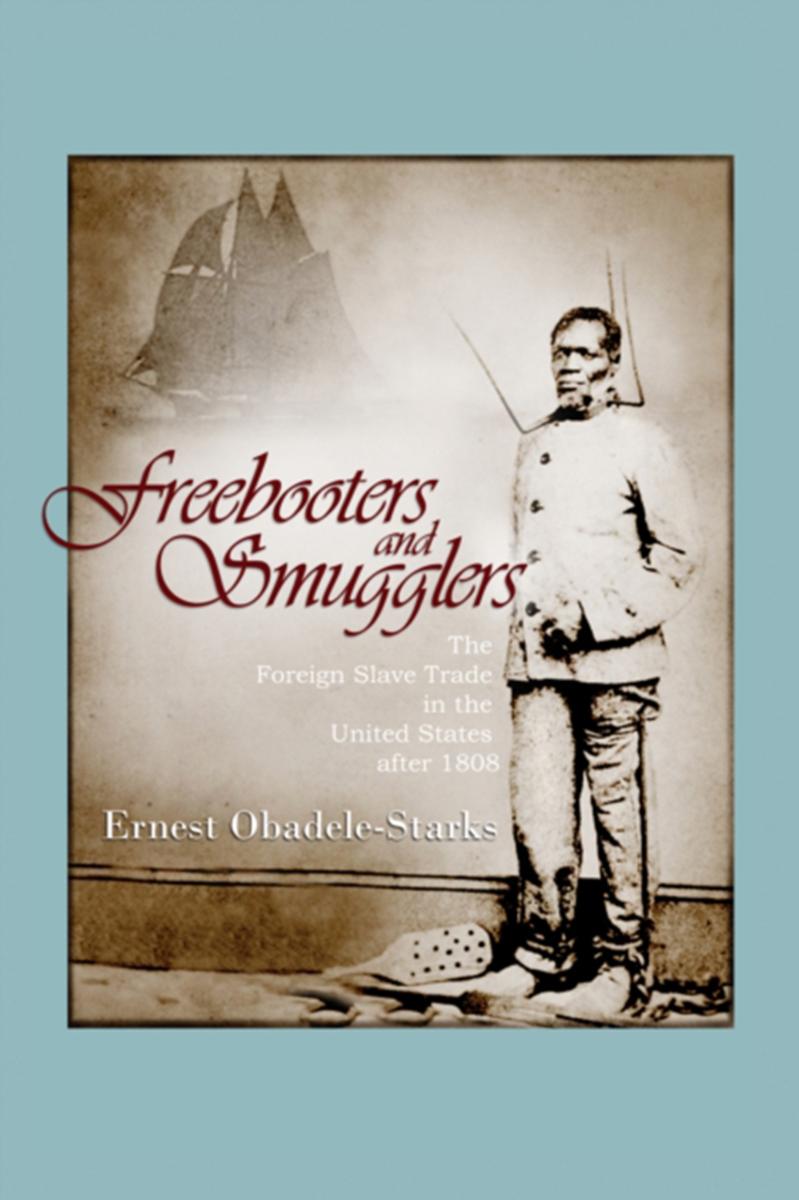
Freebooters and Smugglers
¥280.96
This book is the result of several years of collaboration with historians, students, archivists, and friends.The final product owes much to a collection of individuals who offered insight, analysis, recommendations, and sometimes their gut-level opinion about the project. In reflecting on its evolution, this study benefited greatly from two individuals in particular. In the embryonic stages of this work, Cynthia Bouton, being the true colleague that she is, took time from her own hectic academic schedule to offer several critiques, probing questions, and trenchant comments about the manu*.At a later stage in the writing, Gwendolyn Midlo Hall canvassed the study, detected gaps, and then pointed me toward additional sources without which the final product would not have been as thorough.

Shakespeare and the Law
¥311.96
William Shakespeare is inextricably linked with the law. Legal documents make up most of the records we have of his life, and trials, lawsuits, and legal terms permeate his plays. Gathering an extraordinary team of literary and legal scholars, philosophers, and even sitting judges,?Shakespeare and the Law demonstrates that Shakespeare's thinking about legal concepts and legal practice points to a deep and sometimes vexed engagement with the law's technical workings, its underlying premises, and its social effects.The book's opening essays offer perspectives on law and literature that emphasize both the continuities and contrasts between the two fields. The second section considers Shakespeare's awareness of common law thinking and common law practice, while the third inquires into Shakespeare's general attitudes toward legal systems. The fourth part of the book looks at how law enters into conversation with issues of politics and community, whether in the plays, in Shakespeare's world, or in our own world. Finally, a colloquy among Supreme Court Justice Stephen Breyer, Judge Richard Posner, Martha C. Nussbaum, and Richard Strier covers everything from the ghost in?Hamlet?to the nature of judicial discretion.

Document Raj
¥394.36
Historians of British colonial rule in India have noted both the place of military might and the imposition of new cultural categories in the making of Empire, but Bhavani Raman, in Document Raj, uncovers a lesser-known story of power: the power of bureaucracy. Drawing on extensive archival research in the files of the East India Company's administrative offices in Madras, she tells the story of a bureaucracy gone awry in a fever of documentation practices that grew ever more abstract-and the power, both economic and cultural, this created.?In order to assert its legitimacy and value within the British Empire, the East India Company was diligent about record keeping. Raman shows, however, that the sheer volume of their document production allowed colonial managers to subtly but substantively manipulate records for their own ends, increasingly drawing the real and the recorded further apart. While this administrative sleight of hand increased the company's reach and power within the Empire, it also bolstered profoundly new orientations to language, writing, memory, and pedagogy for the officers and Indian subordinates involved. Immersed in a subterranean world of delinquent scribes, translators, village accountants, and entrepreneurial fixers, Document Raj maps the shifting boundaries of the legible and illegible, the legal and illegitimate, that would usher India into the modern world.

Novel Science
¥394.36
Novel Science is the first in-depth study of the shocking, groundbreaking, and sometimes beautiful writings of the gentlemen of the "e;heroic age"e; of geology and of the contribution these men made to the literary culture of their day. For these men, literature was an essential part of the practice of science itself, as important to their efforts as mapmaking, fieldwork, and observation. The reading and writing of imaginative literatures helped them to discover, imagine, debate, and give shape and meaning to millions of years of previously undiscovered earth history.?Borrowing from the historical fictions of Walter Scott and the poetry of Lord Byron, they invented geology as a science, discovered many of the creatures we now call the dinosaurs, and were the first to unravel and map the sequence and structure of stratified rock. As Adelene Buckland shows, they did this by rejecting the grand narratives of older theories of the earth or of biblical cosmogony: theirs would be a humble science, faithfully recording minute details and leaving the big picture for future generations to paint. Buckland also reveals how these scientists-just as they had drawn inspiration from their literary predecessors-gave Victorian realist novelists such as George Eliot, Charles Kingsley, and Charles Dickens a powerful language with which to create dark and disturbing ruptures in the too-seductive sweep of story.
Seeing Double
¥447.34
The poet Charles Baudelaire (1821-1867) has been labeled the very icon of modernity, the scribe of the modern city, and an observer of an emerging capitalist culture. Seeing Double reconsiders this iconic literary figure and his fraught relationship with the nineteenth-century world by examining the way in which he viewed the increasing dominance of modern life. In doing so, it revises some of our most common assumptions about the unresolved tensions that emerged in Baudelaire's writing during a time of political and social upheaval.Franoise Meltzer argues that Baudelaire did not simply describe the contradictions of modernity; instead, his work embodied and recorded them, leaving them unresolved and often less than comprehensible. Baudelaire's penchant for looking simultaneously backward to an idealized past and forward to an anxious future, while suspending the tension between them, is part of what Meltzer calls his "e;double vision"e;-a way of seeing that produces encounters that are doomed to fail, poems that can't advance, and communications that always seem to falter. In looking again at the poet and his work, Seeing Double helps to us to understand the prodigious transformations at stake in the writing of modern life.
Miss Cutler and the Case of the Resurrected Horse
¥488.54
Social workers produced thousands of case files about the poor during the interwar years. Analyzing almost two thousand such case files and traveling from Boston, Minneapolis, and?Portland to London and Melbourne, Miss Cutler and the Case of the Resurrected Horse is a pioneering comparative study that examines how these stories of poverty were narrated and reshaped by ethnic diversity, economic crisis, and war.Probing the similarities and differences in the ways Americans, Australians, and Britons understood and responded to poverty, Mark Peel draws a picture of social work that is based in the sometimes fraught encounters between the poor and their interpreters. He uses dramatization to bring these encounters to life-joining Miss Cutler and that resurrected horse are Miss Lindstrom and the fried potatoes and Mr. O'Neil and the seductive client-and to give these people a voice. Adding new dimensions to the study of charity and social work, this book is essential to understanding and tackling poverty in the twenty-first century.
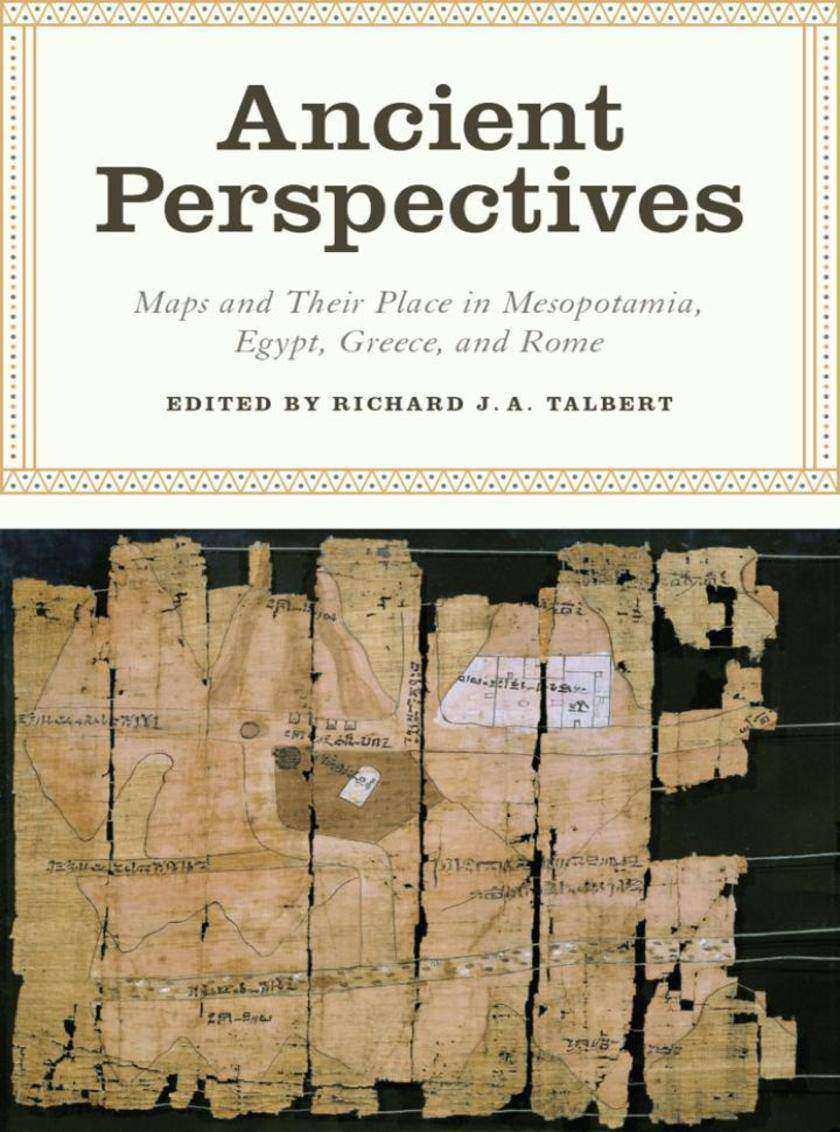
Ancient Perspectives
¥576.83
Ancient Perspectives encompasses a vast arc of space and time-Western Asia to North Africa and Europe from the third millennium BCE to the fifth century CE-to explore mapmaking and worldviews in the ancient civilizations of Mesopotamia, Egypt, Greece, and Rome. In each society, maps served as critical economic, political, and personal tools, but there was little consistency in how and why they were made. Much like today, maps in antiquity meant very different things to different people.Ancient Perspectives presents an ambitious, fresh overview of cartography and its uses. The seven chapters range from broad-based analyses of mapping in Mesopotamia and Egypt to a close focus on Ptolemy's ideas for drawing a world map based on the theories of his Greek predecessors at Alexandria. The remarkable accuracy of Mesopotamian city-plans is revealed, as is the creation of maps by Romans to support the proud claim that their emperor's rule was global in its reach. By probing the instruments and techniques of both Greek and Roman surveyors, one chapter seeks to uncover how their extraordinary planning of roads, aqueducts, and tunnels was achieved.?Even though none of these civilizations devised the means to measure time or distance with precision, they still conceptualized their surroundings, natural and man-made, near and far, and felt the urge to record them by inventive means that this absorbing volume reinterprets and compares.
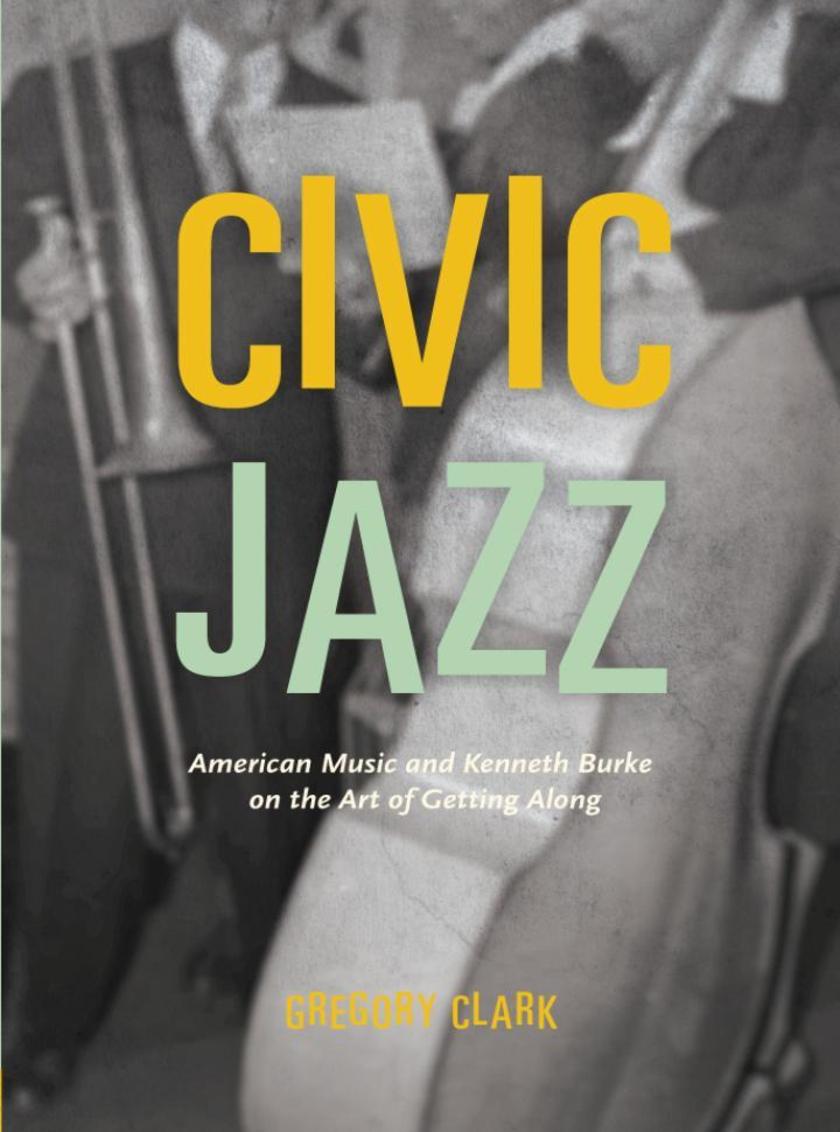
Civic Jazz
¥206.01
Jazz is born of collaboration, improvisation, and listening. In much the same way, the American democratic experience is rooted in the interaction of individuals. It is these two seemingly disparate, but ultimately thoroughly American, conceits that Gregory Clark examines in Civic Jazz. Melding Kenneth Burke's concept of rhetorical communication and jazz music's aesthetic encounters with a rigorous sort of democracy, this book weaves an innovative argument about how individuals can preserve and improve civic life in a democratic culture.Jazz music, Clark argues, demonstrates how this aesthetic rhetoric of identification can bind people together through their shared experience in a common project. While such shared experience does not demand agreement-indeed, it often has an air of competition-it does align people in practical effort and purpose. Similarly, Clark shows, Burke considered Americans inhabitants of a persistently rhetorical situation, in which each must choose constantly to identify with some and separate from others. Thought-provoking and path-breaking, Clark's harmonic mashup of music and rhetoric will appeal to scholars across disciplines as diverse as political science, performance studies, musicology, and literary criticism.
Organizing Locally
¥206.01
We love the local. From the cherries we buy, to the grocer who sells them, to the school where our child unpacks them for lunch, we express resurgent faith in decentralizing the institutions and businesses that arrange our daily lives. But the fact is that huge, bureaucratic organizations often still shape the character of our jobs, schools, the groceries where we shop, and even the hospitals we entrust with our lives. So how, exactly, can we work small, when everything around us is so big, so global and standardizedIn Organizing Locally, Bruce Fuller shows us, taking stock of America's rekindled commitment to localism across an illuminating range of sectors, unearthing the crucial values and practices of decentralized firms that work.?Fuller first untangles the economic and cultural currents that have eroded the efficacy of-and our trust in-large institutions over the past half century. From there we meet intrepid leaders who have been doing things differently. Traveling from a charter school in San Francisco to a veterans service network in Iowa, from a Pennsylvania health-care firm to the Manhattan branch of a Swedish bank, he explores how creative managers have turned local staff loose to craft inventive practices, untethered from central rules and plain-vanilla routines. By holding their successes and failures up to the same analytical light, he vividly reveals the key cornerstones of social organization on which motivating and effective decentralization depends. Ultimately, he brings order and evidence to the often strident debates about who has the power-and on what scale-to structure how we work and live locally.Written for managers, policy makers, and reform activists, Organizing Locally details the profound decentering of work and life inside firms, unfolding across postindustrial societies. Its fresh theoretical framework explains resurging faith in decentralized organizations and the ingredients that deliver vibrant meaning and efficacy for residents inside. Ultimately, it is a synthesizing study, a courageous and radical new way of conceiving of American vitality, creativity, and ambition.?

Securing Approval
¥265.87
Among the most momentous decisions that leaders of a state are called upon to make is whether or not to initiate warfare. How their military will fare against the opponent may be the first consideration, but not far behind are concerns about domestic political response and the reaction of the international community.Securing Approval makes clear the relationship between these two seemingly distinct concerns, demonstrating how multilateral security organizations like the UN influence foreign policy through public opinion without ever exercising direct enforcement power. While UN approval of a proposed action often bolsters public support, its refusal of endorsement may conversely send a strong signal to domestic audiences that the action will be exceedingly costly or overly aggressive. With a cogent theoretical and empirical argument, Terrence L. Chapman provides new evidence for how multilateral organizations matter in security affairs as well as a new way of thinking about the design and function of these institutions.

Top Student, Top School?
¥229.55
Most of us think that valedictorians can write their own ticket. By reaching the top of their class they have proven their merit, so their next logical step should be to attend the nation's very best universities. Yet in Top Student, Top School?, Alexandria Walton Radford, of RTI International, reveals that many valedictorians do not enroll in prestigious institutions. Employing an original five-state study that surveyed nine hundred public high school valedictorians, she sets out to determine when and why valedictorians end up at less selective schools, showing that social class makes all the difference.?Radford traces valedictorians' paths to college and presents damning evidence that high schools do not provide sufficient guidance on crucial factors affecting college selection, such as reputation, financial aid, and even the application process itself. Left in a bewildering environment of seemingly similar options, many students depend on their parents for assistance-and this allows social class to rear its head and have a profound impact on where students attend. Simply put, parents from less affluent backgrounds are far less informed about differences in colleges' quality, the college application process, and financial aid options, which significantly limits their child's chances of attending a competitive school, even when their child has already managed to become valedictorian.?Top Student, Top Schoolpinpoints an overlooked yet critical juncture in the education process, one that stands as a barrier to class mobility. By focusing solely on valedictorians, it shows that students' paths diverge by social class even when they are similarly well-prepared academically, and this divergence is traceable to specific failures by society, failures that we can and should address.Watch an interview of Alexandria Walton Radford discussing her book here:?http://www.youtube.com/watch?v=F81c1D1BpY0

Not Tonight
¥229.55
Pain. Vomiting. Hours and days spent lying in the dark. Migraine is an extraordinarily common, disabling, and painful disorder that affects over 36 million Americans and costs the US economy at least $32 billion per year. Nevertheless, it is frequently dismissed, ignored, and delegitimized.In?Not Tonight, Joanna Kempner argues that this general dismissal of migraine can be traced back to the gendered social values embedded in the way we talk about, understand, and make policies for people in pain. Because the symptoms that accompany headache disorders-like head pain, visual auras, and sensitivity to sound-lack an objective marker of distress that can confirm their existence, doctors rely on the perceived moral character of their patients to gauge how serious their complaints are. Kempner shows how this problem plays out in the history of migraine, from nineteenth-century formulations of migraine as a disorder of upper-class intellectual men and hysterical women to the influential concept of "e;migraine personality"e; in the 1940s, in which women with migraine were described as uptight neurotics who withheld sex, to contemporary depictions of people with highly sensitive "e;migraine brains."e;?Not Tonight?casts new light on how cultural beliefs about gender, pain, and the distinction between mind and body influence not only whose suffering we legitimate, but which remedies are marketed, how medicine is practiced, and how knowledge about disease is produced.

Riotous Flesh
¥229.55
Nineteenth-century America saw numerous campaigns against masturbation, which was said to cause illness, insanity, and even death. Riotous Flesh explores women's leadership of those movements, with a specific focus on their rhetorical, social, and political effects, showing how a desire to transform the politics of sex created unexpected alliances between groups that otherwise had very different goals.As April R. Haynes shows, the crusade against female masturbation was rooted in a generally shared agreement on some major points: that girls and women were as susceptible to masturbation as boys and men; that "e;self-abuse"e; was rooted in a lack of sexual information; and that sex education could empower women and girls to master their own bodies. Yet the groups who made this education their goal ranged widely, from "e;ultra"e; utopians and nascent feminists to black abolitionists. Riotous Flesh explains how and why diverse women came together to popularize, then institutionalize, the condemnation of masturbation, well before the advent of sexology or the professionalization of medicine.

Peak Oil
¥229.55
In recent years, the concept of "e;peak oil"e;-the moment when global oil production peaks and a train of economic, social, and political catastrophes accompany its subsequent decline-has captured the imagination of a surprisingly large number of Americans, ordinary citizens as well as scholars, and created a quiet, yet intense underground movement.In Peak Oil, Matthew Schneider-Mayerson takes readers deep inside the world of "e;peakists,"e; showing how their hopes and fears about the postcarbon future led them to prepare for the social breakdown they foresee-all of which are fervently discussed and debated via websites, online forums, videos, and novels. By exploring the worldview of peakists, and the unexpected way that the fear of peak oil and climate change transformed many members of this left-leaning group into survivalists, Schneider-Mayerson builds a larger analysis of the rise of libertarianism, the role of oil in modern life, the political impact of digital technologies, the racial and gender dynamics of post-apocalyptic fantasies, and the social organization of environmental denial.

Why Washington Won't Work
¥229.55
Polarization is at an all-time high in the United States. But contrary to popular belief, Americans are polarized not so much in their policy preferences as in their feelings toward their political opponents: To an unprecedented degree, Republicans and Democrats simply do not like one another. No surprise that these deeply held negative feelings are central to the recent (also unprecedented) plunge in congressional productivity. The past three Congresses have gotten less done than any since scholars began measuring congressional productivity.?In Why Washington Won't Work, Marc J. Hetherington and Thomas J. Rudolph argue that a contemporary crisis of trust-people whose party is out of power have almost no trust in a government run by the other side-has deadlocked Congress. On most issues, party leaders can convince their own party to support their positions. In order to pass legislation, however, they must also create consensus by persuading some portion of the opposing party to trust in their vision for the future. Without trust, consensus fails to develop and compromise does not occur. Up until recently, such trust could still usually be found among the opposition, but not anymore. Political trust, the authors show, is far from a stable characteristic. It's actually highly variable and contingent on a variety of factors, including whether one's party is in control, which part of the government one is dealing with, and which policies or events are most salient at the moment.Political trust increases, for example, when the public is concerned with foreign policy-as in times of war-and it decreases in periods of weak economic performance. Hetherington and Rudolph do offer some suggestions about steps politicians and the public might take to increase political trust. Ultimately, however, they conclude that it is unlikely levels of political trust will significantly increase unless foreign concerns come to dominate and the economy is consistently strong.
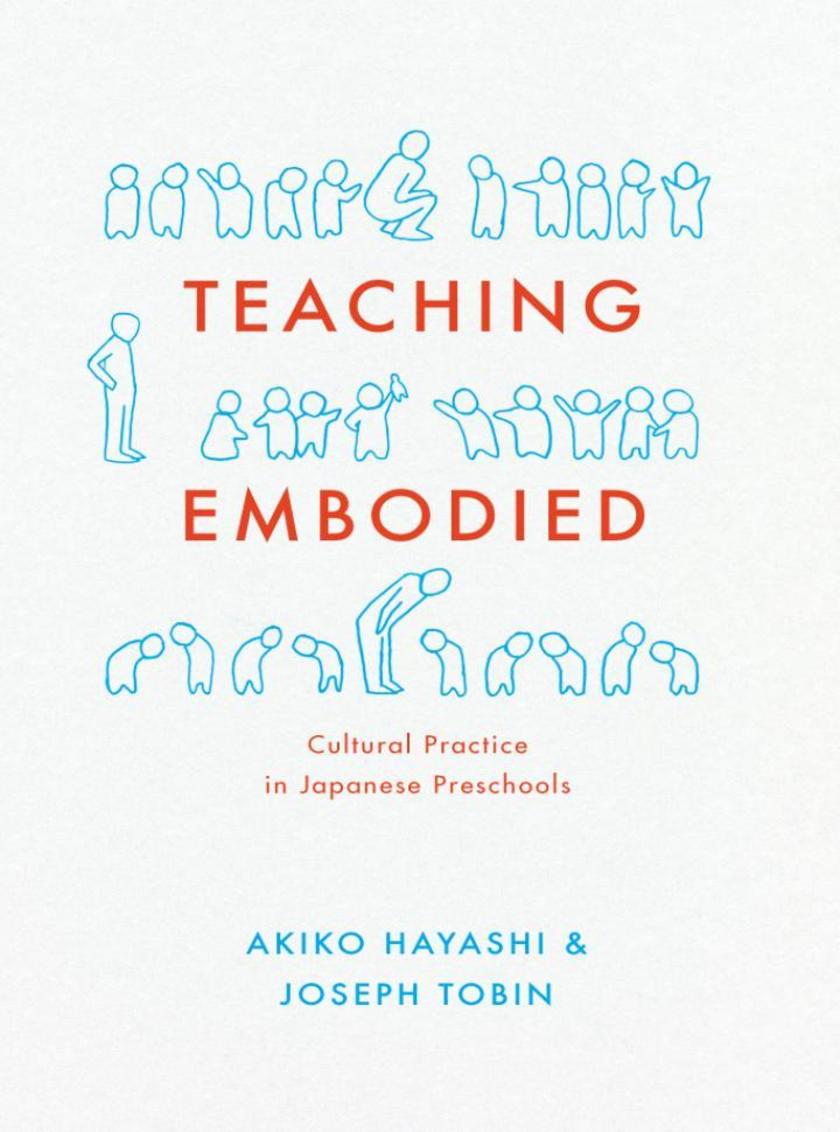
Teaching Embodied
¥247.21
When we look beyond lesson planning and curricula-those explicit facets that comprise so much of our discussion about education-we remember that teaching is an inherently social activity, shaped by a rich array of implicit habits, comportments, and ways of communicating. This is as true in the United States as it is in Japan, where Akiko Hayashi and Joseph Tobin have long studied early education from a cross-cultural perspective. Taking readers inside the classrooms of Japanese preschools, Teaching Embodied explores the everyday, implicit behaviors that form a crucially important-but grossly understudied-aspect of educational practice.?Akiko Hayashi and Joseph Tobin embed themselves in the classrooms of three different teachers at three different schools to examine how teachers act, think, and talk. Drawing on extended interviews, their own real-time observations, and hours of video footage, they focus on how teachers embody their lessons: how they use their hands to gesture, comfort, or discipline; how they direct their posture, gaze, or physical location to indicate degrees of attention; and how they use the tone of their voice to communicate empathy, frustration, disapproval, or enthusiasm. Comparing teachers across schools and over time, they offer an illuminating analysis of the gestures that comprise a total body language, something that, while hardly ever explicitly discussed, the teachers all share to a remarkable degree. Showcasing the tremendous importance of-and dearth of attention to-this body language, they offer a powerful new inroad into educational study and practice, a deeper understanding of how teaching actually works, no matter what culture or country it is being practiced in.?

Children of the Greek Civil War
¥253.10
At the height of the Greek Civil War in 1948, thirty-eight thousand children were evacuated from their homes in the mountains of northern Greece. The Greek Communist Party relocated half of them to orphanages in Eastern Europe, while their adversaries in the national government placed the rest in children's homes elsewhere in Greece. A point of contention during the Cold War, this controversial episode continues to fuel tensions between Greeks and Macedonians and within Greek society itself. Loring M. Danforth and Riki Van Boeschoten present here for the first time a comprehensive study of the two evacuation programs and the lives of the children they forever transformed.Marshalling archival records, oral histories, and ethnographic fieldwork, the authors analyze the evacuation process, the political conflict surrounding it, the children's upbringing, and their fates as adults cut off from their parents and their homeland. They also give voice to seven refugee children who poignantly recount their childhood experiences and heroic efforts to construct new lives in diaspora communities throughout the world. A much-needed corrective to previous historical accounts, Children of the Greek Civil War is also a searching examination of the enduring effects of displacement on the lives of refugee children.

Who Freed the Slaves?
¥147.15
In the popular imagination, slavery in the United States ended with Abraham Lincoln's Emancipation Proclamation. The Proclamation may have been limited-freeing only slaves within Confederate states who were able to make their way to Union lines-but it is nonetheless generally seen as the key moment, with Lincoln's leadership setting into motion a train of inevitable events that culminated in the passage of an outright ban: the Thirteenth Amendment.?The real story, however, is much more complicated-and dramatic-than that. With Who Freed the Slaves?, distinguished historian Leonard L. Richards tells the little-known story of the battle over the Thirteenth Amendment, and of James Ashley, the unsung Ohio congressman who proposed the amendment and steered it to passage. Taking readers to the floor of Congress and the back rooms where deals were made, Richards brings to life the messy process of legislation-a process made all the more complicated by the bloody war and the deep-rooted fear of black emancipation. We watch as Ashley proposes, fine-tunes, and pushes the amendment even as Lincoln drags his feet, only coming aboard and providing crucial support at the last minute. Even as emancipation became the law of the land, Richards shows, its opponents were already regrouping, beginning what would become a decades-long-and largely successful-fight to limit the amendment's impact.?Who Freed the Slavesis a masterwork of American history, presenting a surprising, nuanced portrayal of a crucial moment for the nation, one whose effects are still being felt today.
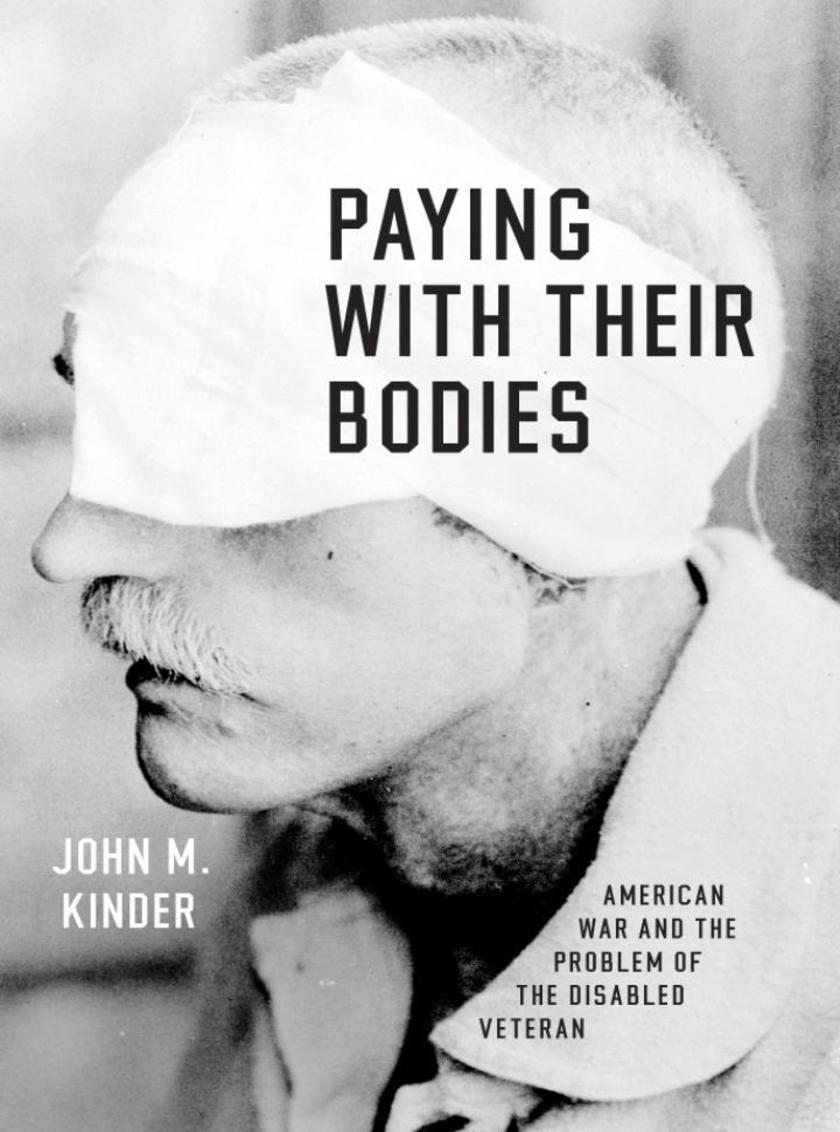
Paying with Their Bodies
¥147.15
Christian Bagge, an Iraq War veteran, lost both his legs in a roadside bomb attack on his Humvee in 2006. Months after the accident, outfitted with sleek new prosthetic legs, he jogged alongside President Bush for a photo op at the White House. The photograph served many functions, one of them being to revive faith in an American martial ideal-that war could be fought without permanent casualties, and that innovative technology could easily repair war's damage. When Bagge was awarded his Purple Heart, however, military officials asked him to wear pants to the ceremony, saying that photos of the event should be "e;soft on the eyes."e; Defiant, Bagge wore shorts.America has grappled with the questions posed by injured veterans since its founding, and with particular force since the early twentieth century: What are the nation's obligations to those who fight in its nameAnd when does war's legacy of disability outweigh the nation's interests at home and abroadIn Paying with Their Bodies, John M. Kinder traces the complicated, intertwined histories of war and disability in modern America. Focusing in particular on the decades surrounding World War I, he argues that disabled veterans have long been at the center of two competing visions of American war: one that highlights the relative safety of US military intervention overseas; the other indelibly associating American war with injury, mutilation, and suffering. Kinder brings disabled veterans to the center of the American war story and shows that when we do so, the history of American war over the last century begins to look very different. War can no longer be seen as a discrete experience, easily left behind; rather, its human legacies are felt for decades.The first book to examine the history of American warfare through the lens of its troubled legacy of injury and disability, Paying with Their Bodies will force us to think anew about war and its painful costs.
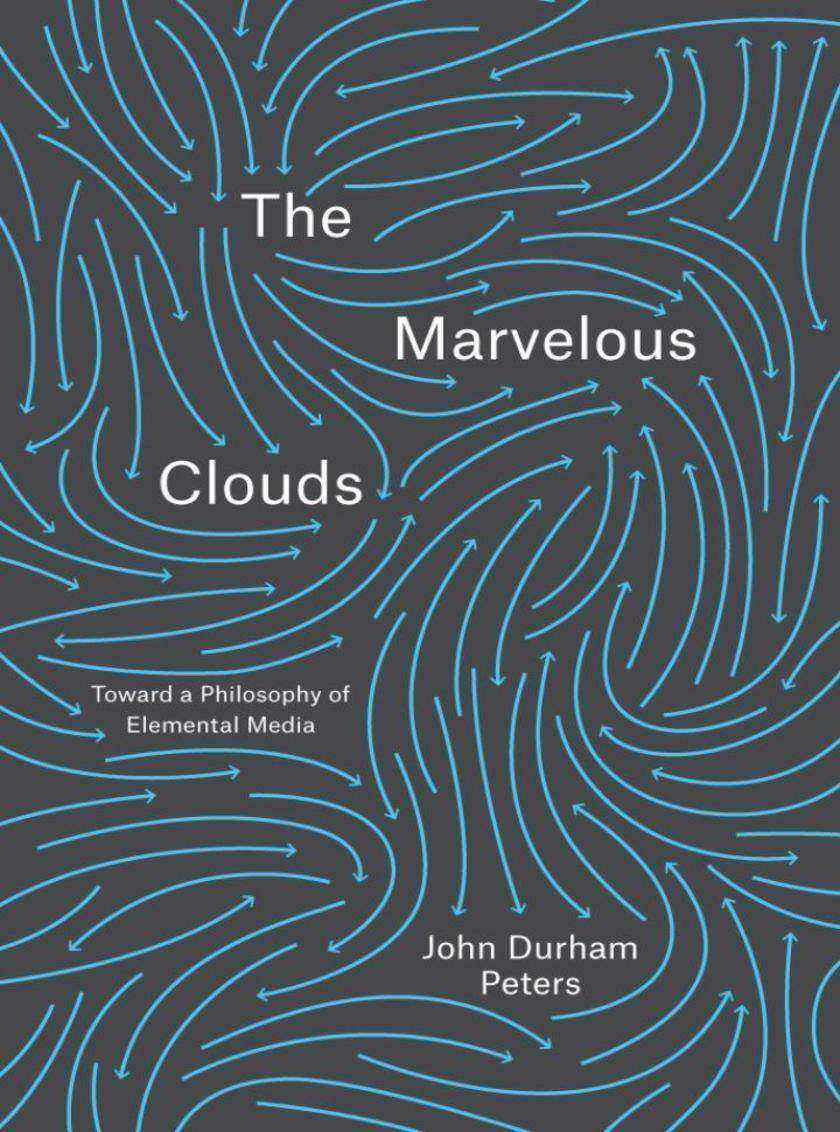
Marvelous Clouds
¥147.15
When we speak of clouds these days, it is as likely that we mean data clouds or network clouds as cumulus or stratus. In their sharing of the term, both kinds of clouds reveal an essential truth: that the natural world and the technological world are not so distinct. In The Marvelous Clouds, John Durham Peters argues that though we often think of media as environments, the reverse is?just as true-environments are media.Peters defines media expansively as elements that compose the human world. Drawing from ideas implicit in media philosophy, Peters argues that media are more than carriers of messages: they are the very infrastructures combining nature and culture that allow human life to thrive. ?Through an encyclopedic array of examples from the oceans to the skies, The Marvelous Clouds reveals the long prehistory of so-called new media. Digital media, Peters argues, are an extension of early practices tied to the establishment of civilization such as mastering fire, building calendars, reading the stars, creating language, and establishing religions. New media do not take us into uncharted waters, but rather confront us with the deepest and oldest questions of society and ecology: how to manage the relations people have with themselves, others, and the natural world.A wide-ranging meditation on the many means we have employed to cope with the struggles of existence-from navigation to farming, meteorology to Google-The Marvelous Clouds shows how media lie at the very heart of our interactions with the world around us. ?Peters's ?book will not only change how we think about media but provide a new appreciation for the day-to-day foundations of life on earth that we so often take for granted.


